De geloofsleer (Aqeedah) en wat daaruit voortvloeit in termen van Ahkaam en wat daarop is gebouwd in termen van gedachten, is de basis van At-Taghyeer (verandering).
The Aqeedah and what emanates from it in terms of Ahkaam and what is built upon it in terms of thoughts, is the basis of At-Taghyeer (change).
Het gedrag van de mens is verbonden aan wat hij draagt in termen van concepten. De concepten (Mafaaheem) zijn overtuigingen (Qanaa’aat) die voortvloeien uit een begrip van zaken en hun eigenschappen, naast wat op dit begrip is gebouwd of wat eruit voortvloeit in de vorm van andere overtuigingen.
The conduct of the human is tied to what he carries in terms of concepts. The concepts (Mafaaheem) are convictions (Qanaa’aat) resulting from a comprehension of things and their attributes in addition to what is built upon this comprehension or emanates from it in terms of other convictions.
Concepten zijn van twee soorten:
Concepts are of two types:
De eerste:
The first:
Concepten over zaken. Dit zijn overtuigingen of Ahkaam (rechtsregels [Hukm]) waarvan de bron de zaken zelf zijn. Dit zou uitspraken omvatten zoals: ‘Vuur brandt’, ‘Vergif doodt’, ‘Alcohol berust’, ‘Vlees wordt gegeten terwijl aarde niet wordt gegeten’, ‘De toenemende opbouw van druk genereert een explosie (van een bepaalde soort)’, ‘De samenleving bestaat uit een verzameling individuen die verbonden zijn door permanente relaties’ en ‘Verrijzen zou niet plaatsvinden behalve via verlicht denken’.
: Concepts about things. These are convictions or Ahkaam (rulings) whose source is the things themselves. This would include statements like: ‘Fire burns’, ‘Poison kills’, ‘Alcohol intoxicates’, ‘Meat is eaten whilst soil is not eaten’, ‘The increased build-up of pressure generates an explosion (of sorts)’, ‘The society is composed of a collection of individuals bound by permanent relationships’ and ‘Revival would not occur except by way of the enlightened thought’.
Al deze gedachten zijn beschrijvingen of Ahkaam waarvan de bron het onderwerp zelf is. Ze kunnen correct of incorrect zijn, afhankelijk van hun overeenstemming met de werkelijkheid of hun tegenstrijdigheid ermee. In al deze gevallen worden ze beschouwd als concepten met betrekking tot degene die erin gelooft. Het menselijk gedrag en handelen is verbonden aan zijn concepten over zaken; zo zou degene die ervan overtuigd is dat zijn voedsel is vergiftigd, er nooit van eten, zelfs niet als hij honger heeft. Op dezelfde manier zou degene die dorst heeft naar water zoeken en niet naar iets anders, terwijl degene die dronken wilde worden naar alcohol zou zoeken en niets anders.
All of these thoughts are descriptions or Ahkaam whose source is its subject. They could be correct or incorrect depending on their conformity to the reality or their contradiction to it. In all of these cases they are considered to be concepts in respect to the one who has believed in them. The human behaviour and conduct is tied to his concepts about things and so whoever is convinced that his food has been poisoned would never eat from it and even if he was hungry. Similarly the one who was thirsty would seek water and not something else whilst the one who wanted to be intoxicated would seek alcohol and nothing else.
Het tweede type:
The second type:
Concepten (Mafaaheem) over het leven. Dit zijn overtuigingen of Ahkaam waarvan de bron extern is aan het onderwerp zelf. Dit is vergelijkbaar met de uitspraken: ‘Het gebed (Salah) is verplicht (Fard)’, ‘Fraude is verboden (Haram)’ en ‘Iemand doden is verboden (Haram)’, enzovoort... De bron van deze rechtsregel (Hukm) is niet het ding zelf of de handeling; deze vertegenwoordigen slechts het onderwerp of de realiteit waarop wordt geoordeeld, terwijl de bron van het oordeel iets anders is en elders ligt.
Concepts (Mafaaheem) about life. These are convictions or Ahkaam whose source is external to its subject. This is like the statements: ‘The Salaah is Fard’, ‘Fraud is Haraam’ and ‘Killing someone is Haraam’ etc... The source of this Hukm is not the thing itself or the action and these only represent the subject area or the reality that is being judged upon whilst the source of the judgement is something else and lies elsewhere.
Dus onze uitspraak: ‘Alcohol maakt dronken’ weerspiegelt een beschrijving of een interne eigenschap die aan alcohol verbonden is. Het is een oordeel dat over een zaak wordt geveld vanwege wat het bevat of wat het teweegbrengt. De uitspraak ‘Alcohol is verboden (Haram)’ is echter geen oordeel dat over een zaak wordt geveld op basis van wat erin zit, maar het vertegenwoordigt eerder een rechtsregel (Hukm) van Allah (SWT).
So our statement: ‘Alcohol intoxicates’ reflects a description or an internal attribute associated to alcohol. It is a judgement made upon a thing due to what it contains or results in. The statement however ‘Alcohol is Haraam’ is not a judgement passed upon a thing on the basis of what is in it but rather it represents a Hukm from Allah (swt)
Wie bepaalt wat verboden (Haram) is en wat toegestaan (Mubah) is.
who decides what to make Haraam and what to make Mubaah (permissible).
Het gedrag van een persoon is ook verbonden aan zijn concepten over het leven. Als hij het concept of het begrip hanteert dat het vlees van een varken eetbaar is en de honger zou stillen, dan zou dit een concept over een zaak vertegenwoordigen. Het concept over het leven is echter dat het varken verboden (Haram) is, wat betekent dat het voor hem verplicht is om het te vermijden en er afstand van te houden. Het zou een concept worden voor degene die deze rechtsregel (Hukm) heeft begrepen en erin heeft geloofd, en het zou een effect hebben op zijn gedrag en hem ervan weerhouden zijn honger te stillen met varken.
The behaviour of the person is also tied to his concepts about life. If he held the concept or understanding about the flesh of pig that it was edible and would satisfy hunger, then this would represent a concept about a thing. The concept about life however is that the pig is Haraam meaning that is obligatory for him to avoid and keep away from it. It would become a concept for the one who has comprehended this Hukm and believed in it and it would have an effect upon his behaviour and prevent him from satisfying his hunger from pig.
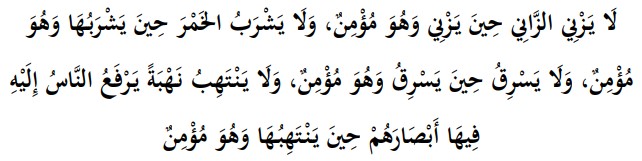
Wanneer de overspelige Zinaa pleegt, is hij geen gelovige; wanneer de alcoholdrinker alcohol drinkt, is hij geen gelovige; wanneer de dief steelt, is hij geen gelovige; en geen plunderaar die een waardevol voorwerp rooft dat de aandacht van mensen trekt, is een gelovige terwijl hij deze daad pleegt (AlBukhaari).
When the fornicator is committing Zinaa he is not a believer, when the alcohol drinker is drinking alcohol he is not a believer, when the thief steals he is not a believer and no plunderer who plunders a valuable thing that attracts the attention of people is a believer whilst he commits this act (AlBukhaari).
Het is daarom verplicht om de waarheden (Haqaa’iq) te herstellen in de geest om het gedrag te corrigeren en te verbeteren. Deze omvatten: de Haqaa’iq (waarheden) van de zaken en de Shar’iyah-waarheden met betrekking tot de overtuigingen en de Ahkaam. Zij moeten hiermee worden herinnerd, zodat deze weer levendig, stevig verankerd en aanwezig worden, en als zodanig een effect hebben op het gedrag.
It is therefore obligatory to restore the truths (Haqaa’iq) to the minds to correct the behaviour and to rectify it. These include: The Haqaa’iq (truths) of things and the Shar’iyah truths in terms of beliefs and Ahkaam. They must be reminded with them so that they become fresh, firmly embodied and present, and as such have an effect upon the behaviour.
Allah (SWT) zei:
Allah (swt) said:

En herinner, want voorwaar de herinnering is van baat voor de gelovigen (Adh-Dhaariyaat 55).
And remind for verily the reminder benefits the believers (Adh-Dhaariyaat 55).
Het tegenovergestelde is het geval met betrekking tot de ongelovigen, omdat het hen herinneren aan de waarheden en Shar’iyah-concepten hen niet tot voordeel dient. Zij horen deze als gedachten, maar zij vertegenwoordigen voor hen geen waarheden en zij vertegenwoordigen voor hen geen concepten, en als zodanig hebben zij geen invloed op hun gedrag.
The opposite is the case in respect to the disbelievers because reminding them of the truths and Shar’iyah concepts does not benefit them. They hear them as thoughts but they do not represent truths for them nor do they represent concepts for them and as such they have no effect upon their behaviour.
Daarom zijn de concepten over het leven bepalend voor de wijze waarop de mens leeft. Zijn belangrijkste zorg is niet enkel het leven zelf, maar eerder de wijze waarop hij zou moeten leven; en zijn belangrijkste zorg gaat niet over het bevredigen van zijn behoeften, maar eerder over de wijze waarop hij deze zal bevredigen. Om deze reden vormen zijn concepten over het leven voor hem een specifieke wijze en stijl van leven.
Therefore the concepts about life are what define the manner by which the human lives. His main concern is not just living but rather how he should live and his main concern is not about satisfying his needs but rather it concerns the manner by which he will satisfy them. For this reason his concepts about life fashion for him a specific manner and style of living.
In het geval dat de bron van de concepten in het leven extern is aan de zaken en handelingen zelf, is het niet mogelijk om deze te adopteren, behalve nadat men ervan overtuigd is dat de bron waar is of de kracht of autoriteit bezit om er een oordeel over te vellen, en dat de rechtsregels (Ahkaam) ervan geldig en correct zijn.
In the case where the source of the concepts in life are external to the things and actions themselves, it is not possible to adopt them except after being convinced that the source is true or has the power or authority to make a judgment upon them, and that its Ahkaam are valid and correct.
De Islam heeft vastgesteld dat de Haakim (Rechter) Allah (SWT) is en dat de bron van de Ahkaam (rechtsregels) de Wahy (openbaring) is.
Islaam has established that the Haakim (Judge) is Allah (swt) and that the source of the Ahkaam (rulings) is the Wahi (divine revelation)
geopenbaard aan Sayyidunaa Muhammad ﷺ.
revealed upon Sayyidunaa Muhammad (saw).
Allah (SWT) zei:
Allah (swt) said:

Voorwaar, de rechtsregel (Hukm) behoort niets anders toe dan aan Allah. Hij heeft bevolen dat jullie niets anders dan Hem aanbidden (Yousuf 40).
Verily the Hukm (rule) is not but for Allah. He commanded that you do not worship other than him (Yousuf 40).
En Hij (SWT) zei:
And He (swt) said:

En wie niet oordeelt naar dat wat Allah heeft geopenbaard, zij zijn de ongelovigen (Al-Maa’idah 44).
And whosoever does not judge by what Allah has revealed then it those who are the disbelievers (Al-Maa’idah 44).
Elke rechtsregel of uitspraak anders dan de rechtsregel (Hukm) van Allah is Taaghoot:
Every ruling or judgement other than the Hukm of Allah is Taaghoot:
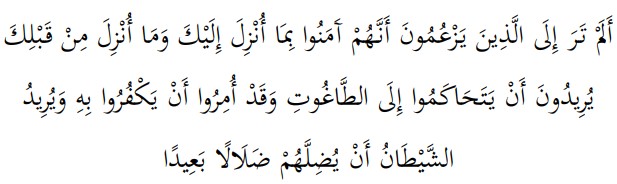
Heb je niet gezien wie beweren te hebben geloofd in wat aan jou is geopenbaard, [o Muhammad], en in wat er vóór jou is geopenbaard? Zij wensen wetgeving aan Taghoot toe te kennen, terwijl hen is bevolen het te verwerpen; en Satan wenst hen ver in het dwaalspoor te leiden (An-Nisaa 60).
Have you not seen those who claim to have believed in what was revealed to you, [O Muhammad], and what was revealed before you? They wish to refer legislation to Taghoot, while they were commanded to reject it; and Satan wishes to lead them far astray (An-Nisaa 60).
Zoals zodanig blijft er geen oordeel over aan het verstand of de mens, en dit betekent niet dat de rol van het verstand is weggenomen of dat er een beperking is opgelegd aan de capaciteiten ervan. Het komt eerder doordat het verstand en de mens niet over de nodige middelen beschikken om een oordeel te vellen of een uitspraak te doen. Dit komt doordat de bron van de uitspraak niet het ding zelf is, of het onderwerp waarop de uitspraak zal worden gedaan.
As such there is no judgement left to the mind or the human and this does not mean that the role of the mind has been taken away or that a limitation has been placed upon its capabilities. It is rather because the mind and the human do not possess the necessary tools to make judgement or pass a ruling. This is because the source of the ruling is not the thing itself or the subject that the ruling will be made upon.
Dus zij die de voorziening van de rechtsregel (Hukm) aan de mensen hebben toegewezen, hebben dit bijvoorbeeld niet gebaseerd op bewijs, maar zijn eerder dwaalsporen ingeslagen en verdwaald. Zij hebben een concept gedragen dat niet waarachtig is en geen realiteit bezit, terwijl zij tegelijkertijd de waarheid hebben ontkend door de religie (Deen) van het leven te scheiden, wat betekent dat er geen rechtsregel (Hukm) toebehoort aan Allah.
So those who have allocated the provision of the ruling to the people, for example, have not based this upon evidence and have rather wandered and gone astray. They have carried a concept which is not truthful and has no reality to it, whilst at the same time they have denied the truth by separating the Deen from life which means that there is no Hukm belonging to Allah.
Als het recht en de macht om oordelen en regels uit te vaardigen aan de mens zou worden gegeven, terwijl hij niet over de noodzakelijke middelen beschikt om dat te doen, dan zou niets overheersen behalve zijn verlangens, neigingen en belangen volgens zijn eigen standpunt. Deze zouden veranderlijk zijn en fluctueren, en hij zou iets dat schadelijk is als voordelig kunnen zien, en hij zou een ziekte als medicijn en genezing kunnen beschouwen.
If the right and power of issuing judgements and rulings was given to the human whilst he does not possess the necessary tools to do that, then nothing would prevail apart from his desires, inclinations and interests according to his viewpoint. These would be changing and fluctuate and he could see something that is damaging as being beneficial and he could see a disease as a medicine and cure.
In deze context komt het belang van geloof (Iman) in Allah, het Profentschap en de Qur’aan naar voren. Dit geloof (Iman) is de geloofsleer (Aqeedah) die een effect heeft op het gedrag, aangezien het de mens voorziet van concepten over het leven die voor hem bepalen hoe hij moet leven, zijn doel in het leven en het doel achter zijn gedrag en handelen, wat is het verkrijgen van de welgevalligheid van Allah ‘Azza Wa Jalla.

Zeg: "Zullen Wij jullie informeren over de grootste verliezers met betrekking tot (hun) daden? Zij zijn degenen wiens inspanning in het wereldse leven verloren is gegaan, terwijl zij dachten dat zij goed deden" (Al-Kahf 103-104).
Say: Shall We inform you of the greatest losers in respect to (their) deeds? [They are] those whose effort is lost in worldly life, whilst they were thinking that they are doing good (Al-Kahf 103-104).
Ja, de individuen worden dwaalsporen opgelegd en de volkeren worden dwaalsporen opgelegd, net als een vis in de oceaan wanneer deze het aas neemt, of de muis die naar het voedsel haast dat in een muizenval is geplaatst.
Yes the individuals are led astray and the peoples are led astray just like a fish in the ocean when it takes the bait or the mouse that rushes to the food placed in a mouse trap.
De mens dwaalt rond en bereikt zijn doel niet wanneer hij een pad bewandelt waarvan hij ervan overtuigd is dat het ertoe zal leiden, terwijl hij in werkelijkheid precies de tegenovergestelde richting opgaat.
The human wanders around and does not arrive at his aim when he proceeds along a path that he is convinced will lead to it whilst in reality he is actually going in the exact opposite direction.
Hij wordt ook dwaalspoor geleid wanneer hij onjuiste concepten over het leven met zich meedraagt als gevolg van onwetendheid of verdraaiing, zoals degene die ziet of wordt doen zien dat woeker (Riba) toegestaan (Halal) is, dat democratie uit de Islam voortkomt en dat het leren van de sharia is om in het levensonderhoud te voorzien, net als elk ander specialisme of beroep. Wanneer de Haqaa’iq (waarheden/feiten) van de Islam afwezig worden en de geest wordt gevuld met valse gedachten, zoals de gedachten over algemene vrijheden, of dat het veranderen van de vergane realiteit onmogelijk is in onze huidige generatie of over honderd jaar, of dat deze verandering een geschenk van Allah is en dat er voor ons niets te doen is behalve wachten of wachten op de Mahdi. Al dit transformeert individuen, volkeren of de moslimgemeenschap (Ummah) in een verzameling luie mensen die traag worden voortgestuwd in welke richting dan ook degenen die hen deze concepten hebben gegeven willen, en het leidt hen ertoe instrumenten voor hun vijanden te worden, terwijl zij geloven dat zij daadwerkelijk tegen hen strijden.
He is also led astray when he carries incorrect concepts about life as a result of ignorance or distortion like the one who sees or is made to see that Ribaa is Halaal, that democracy is from Islaam and that learning the Sharee’ah is for the sake of earning a living just like any other area of specialisation or profession. When the Haqaa’iq (truths/facts) of Islaam become absent and the minds are filled with false thoughts like the thoughts of general freedoms or that changing the declined reality is impossible in our current generation or one hundred years, or that this change is a gift from Allah and that there is nothing for us to do apart from wait or to wait for the Mahdi. All of this transforms the individuals, peoples or the Ummah into a collection of lazy people sluggishly being driven in whatever direction those who have given them these concepts want them to and it leads them into becoming tools for their enemies whilst they believe that they are actually struggling against them.

Zoals degene die zijn handen naar water uitstrekt [van een afstand, roepend om het] om zijn mond te bereiken, maar het bereikt hem niet (Ar-Ra’d 14).
Like the one who stretches his hands toward water [from afar, calling it] to reach his mouth, but it does not reach it (Ar-Ra’d 14).

Hun gelijkenis is die van iemand die een vuur aanstak, maar toen het dat wat om hem heen was verlichtte, nam Allah hun licht weg en liet hen in duisternis achter, zodat zij niet konden zien (Al-Baqarah 17).
Their example is that of one who kindled a fire, but when it illuminated what was around him, Allah took away their light and left them in darkness [so] they could not see (Al-Baqarah 17).
Daarom herhalen wij dat het, om het gedrag te veranderen, te corrigeren en het tot een correct, verheven gedrag te maken dat zijn doel bereikt, essentieel is om correcte concepten over de dingen en het leven te genereren. Op dat moment zal de persoon in een goede positie zijn om de dingen en hun eigenschappen succesvol te onderwerpen en te benutten, en zal hij in een goede positie zijn om het gedrag aan te nemen dat zijn doel bereikt en het grootste van alle doelstellingen, namelijk het verkrijgen van de welgevalligheid van Allah ‘Azza Wa Jall:
Therefore, we repeat, that in order to change the conduct, rectify it and make it a correct elevated conduct that arrives at its purpose, it is essential to generate correct concepts about things and life. At that time the person will be in a good position to subjugate and utilise the things and their attributes successfully and will be in a good position to adopt the conduct that arrives to his purpose and the greatest of all objectives which is the attainment of the pleasure of Allah ‘Azza Wa Jall:

Maar zoek met datgene wat Allah aan jou heeft gegeven het Huis van het Hiernamaals; en vergeet niet je deel in deze wereld. En doe goed, zoals Allah goed heeft gedaan tegen jou (Al-Qasas 77).
But seek, through that which Allah has given you, the home of the Hereafter; and [yet], do not forget your share of the world. And do good as Allah has done good to you (Al-Qasas 77).
Het eerste van de Haqaa’iq (waarheden) en absoluut de belangrijkste ervan is de geloofsleer (Aqeedah) die de concepten van de mens over het leven definieert. De geloofsleer (Aqeedah) is dat alle dingen zijn geschapen door een Schepper die Allah (SWT) is, dat Allah een Boodschapper heeft gestuurd die Muhammad ﷺ is met de Risaalah (boodschap) van Al-Islaam, die alles verklaart wat betrekking heeft op de menselijke wezens, en dat Hij (SWT) hem zal verantwoorden op basis van geloof (Iman) of ongeloof (Kufr) en op basis van het naleven van wat de Profeet (Nabi) ﷺ bracht of het niet naleven daarvan.
The first of the Haqaa’iq (truths) and absolutely its most important is the Aqeedah that defines the human’s concepts about life. The Aqeedah is that all things have been created by a creator who is Allah (swt), that Allah sent a Messenger who is Muhammad (saw) with the Risaalah (message) of Al-Islaam which explains everything that relates to the human being and that He (swt) will account him upon the basis of Imaan or Kufr and upon the basis of his abiding by what the Nabi (saw) came with or by his non-abidance to it.
Het doel van de moslim in het leven:
The Muslim’s purpose in life:
Onder de belangrijkste Haqaa’iq (waarheden) na het geloof (Iman) is dat de mens het doel van zijn schepping begrijpt, namelijk datgene wat hij moet nastreven om te bereiken.
From amongst the most important Haqaa’iq (truths) after Imaan is that the human understands the purpose of his creation i.e. that which he must strive to accomplish.
Allah (SWT) zei:
Allah (swt) said:
En Ik heb de djinn en de mensheid niet geschapen om Mij te aanbidden (AdDhaariyaat 56).
And I have not created the Jinn or humankind except to worship me (AdDhaariyaat 56).
De aanbidding (Ibadah) aan Allah betekent geloof (Iman) in Hem hebben en gehoorzaamheid aan Hem. Gehoorzaamheid aan Hem Ta’Aalaa betekent toewijding en naleving (Al-Iltizaam) van al Zijn Ahkaam. Dit is niet beperkt tot de daden van aanbidding (Ibadah), Akhlaaq (moraal) en Mu’aamalaat (maatschappelijke transacties), maar omvat eerder alles wat Allah (SWT)
The worship (‘Ibaadah) to Allah means having Imaan in Him and obedience to Him. Obedience to Him Ta’Aalaa means commitment and abidance (Al-Iltizaam) to all of His Ahkaam. This is not restricted to the acts of ‘Ibaadah, Akhlaaq (morals) and Mu’aamalaat (societal transactions) but rather includes everything that Allah (swt)
heeft geboden of verboden. Het omvat dat niets het recht heeft om aanbeden te worden behalve Allah en dat geen enkel gebod of verbod kan voortkomen uit iemand anders dan Hem (SWT).
has commanded or forbidden. It includes that nothing has a right to be worshipped other than Allah and that no command or forbiddance can come from anyone besides Him (swt).
Ahmad en At-Tirmidhi hebben overgeleverd dat ‘Adiy Bin Haatim (vrede zij met hem) naar de Boodschapper van Allah ﷺ kwam terwijl hij het vers (Ayah) reciteerde:
Ahmad and At-Tirmidhi related that ‘Adiy Bin Haatim (ra) came to the Messenger of Allah (saw) whilst he was reciting the Aayah:
Zij hebben hun rabbijnen en monniken als heren genomen naast Allah, en [ook] de Maseeh, de zoon van Maryam. En zij werden niets bevolen dan om één God te aanbidden; er is geen godheid behalve Hem. Verheven is Hij boven alles wat zij aan Hem toekennen (At-Taubah 31).
They have taken their Rabbis and monks as lords besides Allah, and [also] the Maseeh, the son of Mary. And they were not commanded except to worship one God; there is no deity except Him. Exalted is He above whatever they associate with Him (At-Taubah 31).
‘Adiy zei toen: ‘Zij aanbaden hen niet’. Dus zei de Boodschapper van Allah ﷺ:
‘Adiy then said: ‘They did not worship them’. So the Messenger of Allah (saw) said:
Integendeel, zij maakten het toegestane (Halal) verboden (Haram) voor henzelf en maakten het verboden (Haram) toegestaan (Halal) voor hen, en vervolgens volgden zij hen hierin. Daarom was dit hun aanbidding aan hen.
On the contrary, they made the Halaal Haraam upon them and made the Haraam Halaal for them, then they followed them (in this). Therefore this was their worship to them.
Het op die manier verlenen van het Haqq (recht) aan iemand om te bepalen wat toegestaan (Halal) is en wat verboden (Haram) is, of het recht om wetgeving te maken en het recht op gehoorzaamheid, vormt aanbidding (Ibadah) aan die persoon.
As such giving the Haqq (right) to anyone to decide the Halaal and decide the Haraam or the right to make legislation and the right of obedience represents ‘Ibaadah to that person.
Allah (SWT) zei:
Allah (swt) said:
Jullie aanbidden niets anders dan Hem, behalve [slechts] namen die jullie hen hebben gegeven, jullie en jullie vaderen, waarvoor Allah geen bewijs heeft neergezonden.
You worship nothing besides Him except [mere] names you have named them with, you and your fathers, for which Allah has sent down no authority.
Wetgeving is niets anders dan voor Allah. Hij heeft bevolen dat jullie Hem niet aanbidden behalve Hem. Dat is de juiste religie (Deen), maar de meeste mensen weten het niet (Yusuf 40).
Legislation is not but for Allah. He has commanded that you worship not except Him. That is the correct Deen, but most of the people do not know (Yusuf 40).
Wat betreft het recht op gehoorzaamheid dat toebehoort aan de Hakim (heerser), Ameer (leider) of ouders, dan is dit vanwege het Haqq (recht) dat Allah (SWT)
As for the right of obedience that belongs to the Hakim (ruler), Ameer or parents then this is due to the Haqq (right) that Allah (swt)
heeft hen geschonken.
has provided to them.
Aanbidding (Ibadah) aan Allah (SWT) omvat de gehoorzaamheid met betrekking tot het laten aanbidden van de mensheid aan Hem (SWT), dat wil zeggen: hen te laten onderwerpen aan de sharia van Allah, en te strijden tegen het bestaan van enige Haakimiyah (het recht om regels te maken) aan een ander dan Allah of aan een ander dan de sharia van de Islam, naast het strijden tegen het uitstappen (Khurooj) uit de rechtsregel (Hukm) van Allah (SWT). Dit is wat de teksten hebben aangegeven en de betekenis waarmee zij zijn gekomen; de teksten die zijn gekomen met het bevel tot het 'Amr Bil Ma’rouf' (het gebieden van het goede) en het 'Nahi ‘An il-Munkar' (het verbieden van het kwade). Zij hebben het ondernemen van discussies, uitleg, het overtuigen van mensen en het uitnodigen van hen via de weg van de oproep tot de islam (Da’wah) geboden. Daarnaast hebben zij het slaan, het afhakken, het doden (als straffen en afschrikking) en het strijden en Al-Jihaad geboden om de rechtsregel van Allah op de aarde te verspreiden en om Zijn woord het hoogste te maken.
‘Ibaadah to Allah (swt) includes the obedience in respect to making mankind worship Him (swt) i.e. to make them submit to the Shar’a of Allah and to fight against the existence of any Haakimiyah (right to make rules) to other than Allah or to other than the Sharee’ah of Islaam in addition to fighting against the exiting (Khurooj) from the Hukm (rule) of Allah (swt). This is what the texts have indicated and the meaning that they have come with; those which have come commanding the ‘Amr Bil Ma’rouf’ (Commanding the good) and the ‘Nahi ‘An il-Munkar’ (Forbidding the evil). They have commanded the undertaking of discussions, explanations, convincing people and inviting them by way of Da’wah. Additionally they have commanded lashing, cutting, killing (as punishments and deterrents) and fighting and Al-Jihaad to spread the rule of Allah upon the Earth and to raise His word the highest.
Zoals we hebben gezien, stuurde de Boodschapper van Allah ﷺ, nadat hij de Islamitische Staat in Al-Madinah Al-Munawaarah had gevestigd en de zuilen ervan stevig had neergezet, gezanten naar de koningen en heersers om hen uit te nodigen tot de Islam. Vervolgens zagen we de Khulafaa’ (rah) die na hem ﷺ kwamen, die boodschappers van de oproep tot de islam (Da’wah), Mujaahideen en legers uitzonden om de mensen uit te nodigen tot geloof (Iman) en hen uit de duisternis te halen en in het licht te brengen. Zij vochten met het doel om de landen en de dienaren te laten onderwerpen aan de autoriteit van de Islam.
Allah Azza wa Jall heeft ons gezonden om jullie te bevrijden van de aanbidding van de dienaren (mensen) om jullie te brengen tot de aanbidding van de Heer van de dienaren (mensen), en om jullie te bevrijden van de onderdrukking van andere Deens en jullie te brengen tot de rechtvaardigheid van Islaam, en van de beklemming van deze wereld om jullie te brengen tot de weidsheid van deze wereld en het hiernamaals.
Allah Azza wa Jall has sent us to deliver you from the worship of the servants (people) to bring you to the worship of the Lord of the servants (people) and to deliver you from the oppression of other Deens and bring you to the justice of Islaam and from the narrowness of this world and bring you to the vastness of this world and the hereafter.
Deze gedachte is zeer duidelijk gemaakt in de Qur’aan, de profetische traditie (Sunnah) en de daden van de Boodschapper ﷺ binnen teksten die te talrijk zijn om een grens aan te stellen. We zullen echter enkele van deze teksten vermelden:
This thought has been made very clear in the Qur’aan, the Sunnah and the actions of the Messenger (saw) within texts that are too numerous for a limit to be placed upon them. We will however make a mention of some of them:
Allah (SWT) zei:
Allah (swt) said:
Zeg: O mensen! Voorwaar, ik ben de Boodschapper van Allah voor jullie allen (Al-Aa’raaf 158).
Say: O people! Verily I am the Messenger of Allah to you all (Al-Aa’raaf 158).
Hij (SWT) zei:
He (swt) said:
En Wij hebben u niets gezonden dan als brenger van goede nieuwigheden en als waarschuwer voor de gehele mensheid (Saba’ 28).
And we have not sent you except to the entirety of mankind as a bringer of glad tidings and as a warner (Saba’ 28).
En Hij (SWT) zei:
And He (swt) said:
Hij is Degene die Zijn Boodschapper ﷺ heeft gezonden met de leiding en de religie (Deen) van de waarheid, zodat deze boven alle andere religies (Deens) zegeviert, ook al haten de afgodendienaars (Mushrikeen) het (At-Taubah 33, As-Saff 9).
He its is who has sent His Messenger with the guidance and the Deen of truth so that it prevails over all other Deens and even if the Mushrikeen hate it (AtTaubah 33, As-Saff 9).
En:
And:
O jullie die geloven, bevecht de ongelovigen die nabij jullie zijn en laat hen strengheid in jullie vinden. En weet dat Allah met de rechtvaardigen is (AtTaubah 123).
O you who have believed, fight those adjacent to you of the disbelievers and let them find in you harshness. And know that Allah is with the righteous (AtTaubah 123).
En: Bevecht degenen die niet geloven in Allah of in de Laatste Dag en die datgene wat Allah en Zijn Boodschapper ﷺ onhalal hebben gemaakt, niet onhalal achten, en die de religie van de waarheid niet aannemen van degenen aan wie de Schrift is gegeven – [bevecht] totdat zij de hoofdelijke belasting (Jizyah) bereidwillig betalen terwijl zij onderworpen zijn ().
Dus het doel en het oogmerk is dat er geen wet die wordt gehoorzaamd of geen wetgeving die wordt aangenomen kan bestaan, behalve die welke Allah (SWT)
So the objective and purpose is that no law that is obeyed or no legislation that is adopted can exist except for that which Allah (swt)
heeft bevolen en dat er geen Haakim (wetgever) is behalve Allah. Wat het betreft het laten van de ongelovigen in hun overtuigingen en aanbidding, zij worden in deze zaken gelaten in overeenstemming met en in naleving van het gebod van Allah (SWT).
has commanded and that there is no Haakim (law maker) other than Allah. As far as leaving the disbelievers upon their beliefs and worships then they are left upon these matters in accordance to and in compliance to the command of Allah (swt).
Allah (SWT) heeft dit doel en deze bedoeling met betrekking tot de schepping van de mensen duidelijk gemaakt en toegelicht toen Hij (SWT) zei:
Allah (swt) has made clear and explained this objective and purpose in respect to His creation of the people when He (swt) said:
En zo hebben Wij u een rechtvaardige/beste moslimgemeenschap (Ummah) gemaakt, opdat u getuigen zult zijn over de mensheid en de Boodschapper een getuige over u zal zijn (Al-Baqarah 143).
And thus we have made you a just/best Ummah so that you will be witnesses over mankind and the Messenger will be a witness over you (Al-Baqarah 143).
Deze aanspraak is gericht aan de moslimgemeenschap (Ummah) en draagt haar de juridische verantwoordelijkheid (Takleef) op om de Boodschap, na de Boodschapper van Allah ﷺ, aan de gehele mensheid over te dragen. En voorwaar, de Profeet (Nabi) ﷺ heeft het gedragen en na het overbrengen van de boodschap, het vervullen van zijn Amaanah en nadat hij Al-Jihaad voor het aangezicht van Allah had verricht met al het kracht, inspanning en vermogen dat hij bezat. Hij ﷺ sprak tijdens de laatste afscheidshadj, richtte zich tot zijn moslimgemeenschap (Ummah) en zei:
This address is to the Islamic Ummah and it entrusts her with the legal responsibility (Takleef) to carry the Message, after the Messenger of Allah (saw), to the whole of mankind. And indeed the Nabi (saw) carried it and after conveying the message, fulfilling his Amaanah and after having performed Al-Jihaad for Allah’s sake with all that he possessed of strength, effort and capability. He (saw) stood in the final farewell Hajj, addressed his Ummah and said:
Reference: Taghyeer (verandering) - Mahmoud Abdul-Kareem Hasan
‘En voorwaar, ik heb onder jullie iets achtergelaten dat, als jullie je daar stevig aan vasthouden, nooit zullen dwalen: het Kitaab (boek) van Allah, en jullie zijn verantwoordelijk tegenover mij (d.w.z. na mij). Dus wat zeggen jullie allen?’. Zij zeiden: ‘Wij getuigen dat u heeft overgebracht, heeft vervuld en heeft geadviseerd’. Hij zei vervolgens, terwijl hij zijn wijsvinger naar de hemel en daarna naar de mensen opstak: ‘O Allah, getuig, O Allah, getuig, O Allah, getuig’ (Abu Daawood).
‘And indeed I have left amongst you that which if you hold on firmly to you will never go astray: The Kitaab (book) of Allah, and you are responsible from me (i.e. after me). So what do you all say?’. They said: ‘We bear witness that you have conveyed, fulfilled and advised’. He then said whist raising his index finger to the sky and then towards the people: ‘O Allah bear witness, O Allah bear witness, O Allah bear witness’ (Abu Daawood).
Zo getuigde de Profeet (Nabi) ﷺ over ons met de verantwoordelijkheid om de Amaanah (vertrouwen) over te dragen en te dragen, en zocht de getuigenis van Allah over ons met betrekking tot hetgeen. Daarom is het na datgens verplicht voor ons om getuigen te zijn over de mensen in overeenstemming met exact dezelfde methodologie die de Edele Boodschapper ﷺ hanteerde. Voorwaar, Allah (SWT) heeft duidelijk gemaakt dat dit het doel en het oogmerk van de schepping is, nog vóór Zijn schepping van Aadam (vrede zij met hem).
So in this way the Nabi (saw) bore witness over us with the responsibility of conveying and carrying the Amaanah (trust) and sought Allah’s witness upon us in regards to that. Therefore, after that it is obligatory upon us to be witnesses over the people in accordance to exactly the same methodology that the Noble Messenger (saw) undertook. Indeed Allah (swt) made clear that this is the purpose and objective of the creation before His creation of Aadam (as).
Allah (SWT) zei:
Allah (swt) said:
En [denk] aan toen uw Heer tegen de engelen zei: "Voorwaar, Ik zal op de aarde een opvolger aanstellen." Zij zeiden: "Zal U daarin iemand aanstellen die daar corruptie zaait en bloed vergiet, terwijl wij Uw lof prijzen en U heiligen?" Allah zei: "Voorwaar, Ik weet wat jullie niet weten." (AlBaqarah 30).
And [remember] when your Lord said to the angels, "Verily, I will make upon the earth a successive authority." They said, "Will You place upon it one who causes corruption therein and sheds blood, while we declare Your praise and sanctify You?" Allah said, "Indeed, I know that which you do not know." (AlBaqarah 30).
De Malaa’ikah (Engelen) zijn de dienaren van Allah (SWT) en ongehoorzamen Hem niet:
The Malaa’ikah (Angels) are the servants of Allah (swt) and do not disobey Him:
Over wie engelen [gesteld zijn], streng en hard; zij ongehoorzamen Allah niet in wat Hij hen gebiedt, maar doen slechts wat hen bevolen is (At-Tahreem 6).
Over which are [appointed] angels, harsh and severe; they do not disobey Allah in what He commands them but do what they are commanded (At-Tahreem 6).
Toen Allah (SWT) tegen hen zei:
When Allah (swt) said to them:
Voorwaar, Ik zal een opvolger (kalief) op de aarde aanstellen
Verily, I will make upon the earth a successive authority (Khalifah)
Zij beseften en begrepen dat Hij (SWT) op de aarde degenen zal maken die ongehoorzaam zullen zijn. Dit wordt begrepen uit de bewoording ‘kalief’, omdat dit in deze context betekent: degene aan wie Allah opvolging zal geven en die zal delegeren om de handelingen van het corrigeren en het verzorgen, onder andere zaken, uit te voeren die degene aan wie het vertrouwen is toevertrouwd, zou uitvoeren. Deze rol van het corrigeren en het verzorgen van zaken betekent dat er degenen zullen zijn die gecorrigeerd moeten worden en die behoefte hebben aan Ri’aayah (verzorging). Dit betekent dat er degenen zullen zijn die buiten het gebod van Allah treden en dat dit zal leiden tot ellende, angst en wanorde. Dit is waarom zij zeiden:
They realised and comprehended that He (swt) will make upon the earth those who will be disobedient. This is understood from the wording ‘Khalifah’ because here in this context it means the one who Allah will give succession and delegate to undertake the acts of correcting and caretaking amongst other matters that the one who is entrusted would undertake. This role or rectifying and taking care of affairs means that their will exist those who need to be rectified and who are need of Ri’aayah (caretaking). This means that there will be those who go outside of the command of Allah and that this will lead to misery, anguish and disorder. This is why they said:
Zij zeiden: "Zal U hen aanstellen die daar corruptie zaaien en bloed vergieten?" (Al-Baqarah 30).
They said: Will you make those who will make corruption in it (the earth) and spill blood (Al-Baqarah 30).
Met andere woorden, als de schepping niets had bevat dat ongehoorzaam zou zijn, dan zou alles verlopen in overeenstemming met het gebod van Allah (SWT). Dus toen Allah (SWT) iemand wilde scheppen die de daden van verbetering en leiding zou verrichten, betekende dit dat er mensen zouden bestaan die zullen kiezen voor misleiding en ongehoorzaamheid aan Allah.
In other words, if the creation did not include something that would be disobedient then everything would proceed in accordance to the command of Allah (swt). So when Allah (swt) wanted to create someone who will undertake the actions of rectifying and guidance then this means that there will exist those who will choose misguidance and disobedience to Allah.
Daarom is het doel in het leven dat Allah (SWT) duidelijk heeft gemaakt en heeft uitgelegd vóór de schepping van Aadam (as), dat er een menselijk wezen zal zijn dat een slaaf (‘Abd) van Allah is, en dat hij de taak op zich zal nemen om anderen die zijn afgedwaald van Zijn aanbidding of deze hebben verworpen, te laten aanbidden Allah (SWT).
Therefore the purpose in life which Allah (swt) has made clear and explained before the creation of Aadam (as) is that there will be a human being who is a slave (‘Abd) to Allah and that he will undertake the work of making others worship Allah (swt) from those who have gone astray from His worship or have rejected it.
Het leven is daarom een intellectuele, op geloof (Iman) gebaseerde en politieke botsing en strijd tussen geloof (Iman) en ongeloof (Kufr). Het is op geloof gebaseerd in die zin dat het is om het woord van Allah te verheffen tot het hoogste, zodat de religie (Deen) van de mensen volledig en uitsluitend voor Allah is. Zodat er geen rechtsregel (Hukm) bestaat behalve die voor Allah, dat Hij (SWT) geen Shareek (partner) heeft, dat niets of niemand anders dan Allah wordt aanbeden en dat onderwerping slechts aan de sharia van Allah is. Op deze manier vertegenwoordigt het een politieke strijd waarbij het beheer van de zaken van menselijke wezens verplicht is gesteld om niet toe te vertrouwen aan enige vorm van wetgeving buiten de sharia van Al-Islaam.
The life is therefore an intellectual, belief based and political clash and struggle between Imaan and Kufr. It is belief based in terms of it being for the sake of raising the word of Allah the highest and so that the Deen of the people is all and only for Allah. So that no Hukm exists except that it is for Allah, that He (swt) has no Shareek (partner), that nothing or no one is worshiped aside from Allah and that submission is only to the Shar’a of Allah. In this way it represents a political struggle where the caretaking of the affairs of human beings has been made obligatory to not be entrusted to any form of legislation other than the Sharee’ah of Al-Islaam.