5.5 कथीर बिन अब्दुल्लाह बिन ‘अम्र बिन ‘औफ़ अल-मुज़नी के साथ इंसाफ़
5.5 Fairness to Kathir bin Abdullah bin ‘Amr bin ‘Awf Al- Muzani
- निम्नलिखित बात "Taqrib At-Tahdhib" [इब्न हजर] (1/460/5617) में कही गई है: [कसीर बिन अब्दुल्लाह बिन अम्र बिन औफ़ अल-मुज़नी अल-मदनी ज़ईफ़ (कमज़ोर) है। जिन लोगों ने उस पर झूठ बोलने का आरोप लगाया, वे हद से आगे बढ़ गए। (वह) सातवीं (यानी पीढ़ी या रिवायत की कड़ी) में से था।]
- The following came stated in in “Taqrib At-Tahdhib” [Ibn Hajar] (1/460/5617): [Kathir bin Abdullah bin ‘Amr bin ‘Awf Al-Muzani Al- Madani is Da’if (weak). Those who attributed lying to him were excessive. (He was from) the seventh (i.e. generation or line of transmission)].
"लेकिन, अल-अल्बानी की "इरवाउल-ग़लील" (5/155) में यह बात कही गई है: [अल-हाफ़िज़ (यानी इब्न हजर) ने [अल-फ़तह – (4/371)] में कहा: [और कसीर बिन अब्दुल्लाह जमहूर के नज़दीक ज़ईफ़ हैं, लेकिन अल-बुख़ारी और उनका अनुसरण करने वाले, जैसे अत-तिर्मिज़ी और इब्न ख़ुज़ैमा, उनके मामले (या दर्जे) को मज़बूत करते हैं]।"
- However, in “Irwaa’ Al-Ghalil”, by Al-Albani (5/155), the following was stated: [Al-Hafizh (i.e. ibn Hajar) said [in Al-Fat’h – (4/371)]: [And Kathir bin Abdullah is Da’if in the view of the majority however Al- Bukahri and those who followed him like At-Tirmidhi and Ibn Khuzaimah strengthen his affair (or status)].
- “अत-तारीख अल-कबीर” [अल-बुखारी] (7/217/945) में यह दर्ज आया है: [कसीर बिन अब्दुल्लाह बिन अम्र बिन औफ़ अल-मुज़नी अल-मदनी ने अपने पिता से सुना (या उनसे रिवायत लिया), जबकि मरवान बिन मुआविया, इस्माईल बिन अबी उवैस और याह्या अल-अंसारी ने उनसे रिवायत की]। यह “अत-तारीख अल-कबीर” (अल-बुखारी) के एक अन्य संस्करण (7/96/945) में भी दर्ज है। अल-बुखारी ने उन्हें ज़ईफ़ (कमज़ोर) नहीं ठहराया और उनके बारे में एक हर्फ़ भी नहीं कहा! - “अल-जर्ह वत-तादील” [इब्न अबी हातिम] (7/154/858) में यह बयान दर्ज आया है: [कसीर बिन अब्दुल्लाह बिन अम्र बिन औफ़ अल-मुज़नी ने अपने पिता से, इसके अलावा मुहम्मद बिन का’ब और रुबैह बिन अब्दुर्रहमान से रिवायत की, जबकि उनसे अब्दुल अज़ीज़ बिन मुहम्मद, मरवान बिन मुआविया, मअन बिन ईसा, अब्दुल्लाह बिन वहब, अब्दुल्लाह बिन नाफ़े’ अस-सा’इग़, मुहम्मद बिन खालिद बिन अथमा, अबू आमिर अल-अक़दी, खालिद बिन मख़्लद, इब्न क़ानब और इब्न अबी उवैस ने रिवायत की। मैंने अपने पिता को यह कहते सुना। अब्दुर्रहमान ने हमसे मुहम्मद बिन हमावैह बिन अल-हसन के हवाले से बयान किया, जिन्होंने कहा: मैंने अबू तालिब को कहते सुना: मैंने अहमद (यानी अहमद बिन हंबल) से कसीर बिन अब्दुल्लाह बिन अम्र बिन औफ़ के बारे में पूछा तो उन्होंने कहा: “मुंकर (यानी हदीस में कमी के कारण रद्द योग्य) अल-हदीस, किसी काम का नहीं”। अब्दुर्रहमान ने हमसे बयान किया: उन्होंने कहा: अल-अब्बास बिन मुहम्मद अद-दौरी को याह्या बिन मुईन से पढ़कर सुनाया गया कि उन्होंने कहा: “कसीर बिन अब्दुल्लाह अल-मुज़नी हदीस में ज़ईफ़ (कमज़ोर) है”। अब्दुर्रहमान ने हमसे बयान किया। उन्होंने कहा: मैंने अबू ज़रअह से कसीर बिन अब्दुल्लाह बिन अम्र बिन औफ़ के बारे में पूछा। उन्होंने कहा: “हदीस में कमज़ोर और मज़बूत नहीं”। मैंने उनसे कहा: बहज़ बिन हकीम, अब्दुल मुहैमिन और कसीर बिन अब्दुल्लाह में से आपको कौन सबसे प्रिय है? उन्होंने कहा: “बहज़ और अब्दुल मुहैमिन मुझे उनसे अधिक प्रिय हैं”। अब्दुर्रहमान ने हमसे बयान किया: उन्होंने कहा: मेरे पिता से कसीर बिन अब्दुल्लाह बिन अम्र बिन औफ़ के बारे में पूछा गया तो उन्होंने कहा: “वह मज़बूत (मतीन) नहीं है”।
- The following came recorded in “At-Tarikh Al-Kabir” [Al-Bukhari] (7/217/945): [Kathir bin Abdullah bin ‘Amr bin ‘Awf Al-Muzani Al- Madani listened to (or received from) his father, while Marwan bin Mu’awiyah, Isma’il bin Abu Uwais and Yahya Al-Ansari related from him]. It is recorded in another edition of “At-Tarikh Al-Kabir” by Al- Bukhari (7/96/945). Al-Bukhari did not classify him as Da’if (weak) and he did not speak about him, not even a single letter! - The following came stated in “Al-Jarh Wa At-Ta’dil” [Ibn Abu Hatim] (7/154/858): [Kathir bin Abdullah bin ‘Amr bin ‘Awf Al-Muzani related from his father in addition to Muhammad bin Ka’b and Rubaih bin Abdur Rahman, while Abdul ‘Aziz bin Muhammad, Marwan bin Mu’awiyah, Ma’n bin ‘Eisa, Abdullah bin Wahb, Abdullah bin Nafi’ As-Sa’igh, Muhammad bin Khalid bin ‘Athma, Abu ‘Amir Al-‘Aqadiy. Khalid bin Makhlad, Ibn Qa’nab and Ibn Abu Uwais related from him. I heard my father saying that. Abdur Rahman related to us from Muhammad bin Hamawaih bin Al-Hasan who said: I heard Abu Talib who said: I asked Ahmad (meaning Ahmad bin Hanbal) concerning Kathir bin Abdullah bin ‘Amr bin ‘Awf and he said: “Munkar (i.e. rejectable due to defectiveness in respect to) Al-Hadith, of no worth”. Abdur Rahman related to us: He said: It was read to Al-‘Abbas bin Muhammad Ad- Dawri from Yahya bin Ma’een That he said: “Kathir bin Abdullah Al- Muzani is Da’if (weak) in Hadith”. Abdur Rahman related to us. He said: I asked Abu Zur’ah about Kathir bin Abdullah bin ‘Amr bin ‘Awf. He said: “Feeble/weak in Hadith and not strong”. I said to him: Out of Bahz bin Hakim, Abdul Muhaimin and Kathir bin Abdullah, which of them is the most beloved to you? He said: “Bahz and Abdul Muhaiman are more beloved to me than him”. Abdur Rahman related to us: He said: My father was asked about Kathir bin Abdullah bin ‘Amr bin ‘Awf and he said: “He is not solid/strong (Matin)”.
मैं कहता हूँ: यह कथन कि "वह ठोस/मज़बूत नहीं है (Matin)" उस कथन के समान नहीं है कि "वह क़वी (मज़बूत) नहीं है" और न ही यह "ज़ईफ़" (कमज़ोर) कहने के समानार्थी है। इसका कारण यह है कि "मतीन" रावी वह है जो मज़बूती और विश्वसनीयता के मामले में शिखर तक पहुँच चुका है। - परस्पर विरोधी कथन "तारीख़ुल-इस्लाम" (10/224/330) में वर्णित हुए हैं: [कसीर बिन अब्दुल्लाह बिन अम्र बिन औफ़ बिन ज़ैद बिन तल्हा अल-यश्कुरी अल-मुज़नी अल-मदनी … उन्होंने अपने पिता और अपने दादा से (लिखित प्रतिलिपि द्वारा) रिवायत की, इसके अतिरिक्त नाफ़े' और मुहम्मद बिन का'ब अल-क़ुरज़ी से भी। और उनसे निम्नलिखित ने रिवायत की: इब्न वहब, अब्दुल्लाह बिन नाफ़े', अल-क़ा'नबी, इस्माईल बिन अबी उवैस और ख़लक़।]
I say: This statement “He is not solid/strong (Matin)” is not like the statement “He is not Qawiy (strong))” and it is not synonymous with the statement “Da’if” (weak). That is because the “Matin” narrator is the one who has reached the pinnacle in respect to strength and reliability. - Contradictory statements came stated in “Tarikh ul-Islam” (10/224/330): [Kathir bin Abdullah bin ‘Amr bin ‘Awf bin Zaid bin Talha Al-Yashkuri Al-Muzani Al-Madani … He related from his father and from his grandfather (by transcript), in addition to Nafi’ and Muhammad bin Ka’b Al-Qurazhi. And the following related from him: Ibn Wahb, Abdullah bin Nafi’, Al-Qa’nabi, Isma’il bin Abi Uwais and Khalq.
उन्होंने उनके कमज़ोरी (ज़ईफ़) के वर्गीकरण पर सहमति जताई, और अहमद बिन हंबल ने उनकी हदीस को अस्वीकार कर दिया।
They agreed upon his classification of weakness and Ahmad bin Hanbal rejected his Hadith.
अश-शाफ़िई ने कहा: वह अल-कज़िब (झूठ/असत्य) के स्तंभों में से एक स्तंभ है। अबू दाऊद ने भी इसी के समान कहा।
Ash-Shafi’iy said: He is a pillar from among the pillars of Al-Kadhib (deceit/untruth). Abu Dawud said similar to that.
अब्बास ने इब्न मa'ईन से रिवायत किया (कि वह यानी कसीर है): "ज़ईफ़ (कमज़ोर)"। अद-दारिमी ने इब्न मa'ईन से रिवायत किया: उसकी कोई क़ीमत नहीं है।
‘Abbas related from Ibn Ma’een (that he i.e. Kathir is): “Da’if (weak)”. Ad-Darimiy related from Ibn Ma’een: He has no worth.
अन-नसाई ने कहा: "वह छोड़ा गया है या उसकी उपेक्षा की जाती है (यानी उससे रिवायत नहीं की जाती)।" और अद-दारकुतनी ने भी यही कहा।
An-Nasa’i said: “He is left or disregarded (i.e. not related from)” and Ad-Daraqutniy said the same.
जहाँ तक अत-तिर्मिज़ी की बात है, तो उन्होंने बोलकर लिखवाना शुरू किया और कहा: "मैंने मुहम्मद ﷺ से कहा: जुमुआ की नमाज़ के समय से संबंधित (विषय क्षेत्र) में कसीर बिन अब्दुल्लाह की हदीस है, जो उनके पिता से, और उनके दादा से रिवायत की गई है। उन्होंने कहा: यह हसन हदीस है, लेकिन अहमद बिन हंबल कसीर को ज़ईफ़ (कमज़ोर) करार देते हैं।"
As for At-Tirmidhi, then he began to dictate and said: “I said to Muhammad: There is the Hadith of Kathir bin Abdullah, from his father, from his grandfather, related to the (subject area) of the time of the Jumu’ah prayer. He said: It is a Hasan Hadith, however Ahmad bin Hanbal classifies Kathir as being Da’if (weak)”.
इब्न हिब्बान ने कहा: "कसीर अपने पिता से, और वह अपने दादा से एक मनगढ़ंत प्रति (हदीस) बयान करता है। उसका ज़िक्र करना जायज़ नहीं है, सिवाय आश्चर्य के दृष्टिकोण से।" मैंने कहा: उसकी मृत्यु हिजरी सन 163 में हुई। [उद्धरण का अंत]
Ibn Hibban said: “Kathir relates from his father, from his grandfather a fabricated transcript. It is not permissible to mention him except from the angle of astonishment”. I said: He died in the year 163 AH] [End of quote].
मेरे अनुसार यह कहना कि "उन्होंने उसकी कमज़ोरी के वर्गीकरण पर सहमति की", तब कोई अर्थ या महत्व नहीं रखता जब इंसाफ़ और संतुलन के प्रमुख इमाम अल-बुख़ारी की ओर से उसकी विश्वसनीयता का प्रमाण मौजूद है, और इसके अतिरिक्त अबू हातिम की महत्वहीन बात भी है, जो अति और हठ की ओर झुकाव रखने वाले व्यक्ति हैं! सच्चाई यह है कि अद-दारक़ुतनी ने उसका उल्लेख केवल एक सूची के भाग के रूप में किया, बिना किसी टिप्पणी के, रावियों के एक समूह के बीच, अपनी पुस्तक "अज़-ज़ु'आफ़ा वल-मतरूकीन" (अद-दु'आफ़ा' वा अल-मतरूकीन) में। अबू दाऊद से जुड़ी बात इस तथ्य के विपरीत है कि उन्होंने कसीर बिन अब्दुल्लाह की कुछ हदीसें प्रकाशित कीं और उन पर कोई मतभेद नहीं हुआ, जब उन्होंने मक्का के लोगों को उनके साथ पत्र लिखा। मेरी राय में सबसे संभावित व्याख्या यह है कि उन्होंने इमाम अश-शाफ़िई की बात नक़ल की और शुरू में उसका अनुसरण किया, जैसा कि "तहज़ीब अल-कमाल" (24/136/4948) और "तहज़ीब अत-तहज़ीब" (8/377/753) में स्पष्ट है; जिनके पाठ शीघ्र ही प्रस्तुत किए जाएँगे। फिर (उसके बाद) उन्हें आरोप की अशुद्धि स्पष्ट हो गई, इसलिए उन्होंने अपनी सुनन में उसकी रिवायतें दर्ज कीं। स्वयं अल-हाफ़िज़ बिन हजर दो मतों में प्रतीत होते हैं, क्योंकि "अल-फ़त्ह" में उनकी बात वैसी नहीं है जैसी उन्होंने "अत-तक़रीब" में अपने सारांश में कही है। अतः मामला अस्पष्ट है और इसलिए इस व्यक्ति की स्थिति और परिस्थितियों का सटीक अध्ययन करना आवश्यक है।
I say: There is no meaning (or significance) to the statement: “They agreed upon his classification of weakness” when there exists an attestation of credibility from the chief of fairness and moderation Imam Al-Bukhari, in addition to the insignificant speech of Abu Hatim, who is from the prone to extremity and stubbornness! The truth is that Ad-Daraqutni only mentioned him as part of a list, without commentary, amongst a group of narrators, in his book “The weak and disregarded” (Ad-Du’afa’ Wa Al-Matrukin”. The speech attributed to Abu Dawud contradicts the fact that he published some of the Hadith of Kathir bin Abdullah and no disagreement resulted over them, when he wrote with them to the people of Makkah. The most likely explanation in my view, is that he related the speech of Imam Ash-Shafi’iy and followed it in the beginning, as is evident in “Tahdhib Al-Kamal” (24/136/4948) and in “Tahdhib At-Tahdhib” (8/377/753); the texts of which will be presented soon. Then (after that), it the incorrectness of the accusation became evident to him and so he recorded his relations within his Sunan. Al-Hafizh bin Hajar himself appears to be of two minds as his speech in “Al-Fat’h” is not consistent with what he stated in his summary in “At-Taqrib”. The matter is therefore ambiguous and as such it is necessary to undertake a precise study of the circumstances or status of this man.
"अल-‘उक़ैली ने “अद-दुआफ़ा’ अल-कबीर” (4/4/1555) में यह दर्ज किया है: [कसीर बिन अब्दुल्लाह बिन ‘अम्र बिन ‘औफ़ अल-मुज़नी। अहमद बिन ज़ुकैर अल-हज़रमी ने हमसे बयान किया, उन्होंने अहमद बिन सईद अल-फ़िहरी से, उन्होंने इब्राहीम बिन अल-मुंज़िर से, उन्होंने मुतर्रिफ़ बिन अब्दुल्लाह से, जिन्होंने कहा: “मैंने कसीर बिन अब्दुल्लाह बिन ‘अम्र बिन ‘औफ़ अल-मुज़नी को देखा। वह बहुत झगड़ालू था और हमारे साथियों में से कोई भी उससे (हदीस) नहीं लेता था”। तो इब्न ‘इमरान अल-क़ाज़ी ने उससे कहा: “ऐ कसीर, तुम एक मूर्ख इंसान हो, तुम उस चीज़ के बारे में झगड़ते हो जिसे हम नहीं जानते। तुम उस चीज़ का दावा करते हो जो तुम्हारे पास नहीं है और जिसकी तलाश करते हो उसके लिए तुम्हारे पास कोई दलील नहीं है। इसलिए मेरे पास मत आना, जब तक तुम मुझे मूर्ख या बेकार लोगों के लिए समय निकालते हुए न देखो। और अगर तुम मेरी संगत में मूर्ख लोगों को देखो तो तब आ जाना”। इब्राहीम ने कहा: मुतर्रिफ़ ने मुझसे कहा: एक दिन इब्न ‘इमरान हमारे बीच थे, तभी कसीर बिन अब्दुल्लाह उनके पास आया, तो उन्होंने कहा: “क्या मैंने तुमसे नहीं कहा था कि मेरे पास मत आना जब तक तुम मुझे मूर्ख (या बेकार) लोगों के साथ न देखो?” तब कसीर ने उनसे कहा: “आपने सच कहा, अल्लाह क़ाज़ी के मामले को दुरुस्त करे। मैं तो केवल तब आपके पास आया था जब मूर्ख लोग आपके पास आए थे। फलाँ और फलाँ आपके पास आए थे। ये दोनों ही मूर्ख (या बेकार) लोगों में से हैं, इसलिए मैं इन दोनों के साथ आ गया था”। अब्दुल्लाह बिन अहमद ने हमसे बयान किया: उन्होंने कहा: मैंने अपने वालिद को कहते सुना: “हुसैन बिन अब्दुल्लाह बिन दुमैरा और कसीर बिन अब्दुल्लाह बिन ‘अम्र बिन ‘औफ़ एक साथ मिलकर कुछ भी नहीं हैं, वे एक जैसे हैं, किसी काम के नहीं”। मेरे वालिद ने कसीर बिन अब्दुल्लाह बिन ‘अम्र बिन ‘औफ़ की हदीसों को रद्द कर दिया था, इसलिए उन्होंने वे हदीसें हमसे बयान नहीं कीं। मुहम्मद बिन ‘ईसा ने हमसे ‘अब्बास के हवाले से बयान किया, जिन्होंने कहा: मैंने यहया को कहते सुना: कसीर बिन अब्दुल्लाह बिन ‘अम्र बिन ‘औफ़ अल-मुज़नी, उनके दादा को सुहबत (यानी नबी ﷺ की सोहबत) प्राप्त थी, (लेकिन) कसीर हदीस के मामले में ज़ईफ़ (कमज़ोर) है”। अहमद बिन महमूद ने हमें उस्मान बिन सईद से यह रिवायत किया: मैंने यह्या बिन मعين से कहा: "कसीर बिन अब्दुल्लाह अल-मुज़नी, जिनसे मअन रिवायत करते हैं, उनका क्या हाल है?" उन्होंने कहा: "वह कुछ नहीं हैं, या उनकी कोई क़द्र नहीं है।"
- The following came recorded in “Ad-Du’afaa’ Al-Kabir” by Al- ‘Uqailiy (4/4/1555): [Kathir bin Abdullah bin ‘Amr bin ‘Awf Al-Muzani. Ahmad bin Zukair Al-Hadrami related to us from Ahmad bin Sa’id Al-Fihriy, from Ibrahim bin Al-Mundhir, from Mutarrif bin Abdullah, who said: “I saw Kathir bin Abdullah bin ‘Amr bin Awf Al-Muzani. He was very quarrelsome and none of our companions would take from him”. So, Ibn ‘Imran Al-Qadi said to him: “O Kathir, you are a foolish person, you quarrel in respect to that which we don’t know. You make claims to that which you don’t have and you don’t have evidence for what you seek. So, don’t approach me unless you see me making time for the people of foolishness or idleness. If you see the people of foolishness in my company then come on over”. Ibrahim said: Mutarrif said to me: Ibn ‘Imran was among us one day, when Kathir bin Abdullah came to him and so he said: “Did I not say to you, don’t approach me unless you see me with the foolish (or idle) people?” Kathir then said to him: “You have said the truth, may Allah make good the affair of the Qadi. Indeed, I only came to you when the people of foolishness came to you. So and so and so and so came to you. They are both from the people of foolishness (or idleness) and so I came along with them both”. Abdullah bin Ahmad related to us: He said: I heard my father saying: “Hussein bin Abdullah bin Dumairah and Kathir bin Abdullah bin ‘Amr bin ‘Awf do not add up to anything together, they are similar, not worth anything”. My father rejected the Ahadeeth of Kathir bin Abdullah bin ‘Amr bin ‘Awf and as such, he did not relate them to us. Muhammad bin ‘Eisa related to us from ‘Abbas who said: I heard Yahya saying: Kathir bin Abdullah bin ‘Amr bin ‘Awf Al-Muzani, his grandfather had companionship (Suhbah i.e. with the Prophet), (but) Kathir is weak (Da’if) in respect to the Hadith”. Ahmad bin Mahmud related to us from Uthman bin Sa’id: I said to Yahya bin Ma’een: “Kathir bin Abdullah Al-Muzani, (the one) who Ma’n relates from, how is he (i.e. his condition)?” He said: “He is nothing or of no worth”].
“तहज़ीब अल-कमाल” [अल-मिज़्ज़ी] (24/136/4948) में यह बात कही गई है: [कसीर बिन अब्दुल्लाह बिन अम्र बिन अव्फ़ बिन ज़ैद बिन मिल्हा अल-मुज़नी अल-मदनी ने बकर बिन अब्दुर रहमान अल-मुज़नी अल-बसरी से, रबीह बिन अब्दुर रहमान बिन अबू सईद अल-ख़ुदरी से, उनके पिता अब्दुल्लाह बिन अम्र बिन अव्फ़ अल-मुज़नी से, मुहम्मद बिन काब अल-क़ुरज़ी से और इब्न उमर के मौला नाफ़े' से रिवायत की है। और उनसे निम्नलिखित सभी ने रिवायत की है: इब्राहीम बिन अली अर-रफ़ीई, अबू इस्हाक़ इब्राहीम बिन मुहम्मद अल-फ़ज़ारी, इस्हाक़ बिन इब्राहीम अल-हनीनी, इस्हाक़ बिन जाफ़र अल-अलवी, इस्माईल बिन अबू उवैस, खालिद बिन मख़लद अल-क़त्वानी, ज़ैद बिन अल-हब्बाब, अल-अब्बास बिन अबू शमला अत-तैमी, अबू उवैस अब्दुल्लाह बिन अल-मदनी, अब्दुल्लाह बिन कसीर बिन जाफ़र बिन अख़ी (भाई) इस्माईल बिन जाफ़र, अब्दुल्लाह बिन मस्लमा अल-क़ानबी, अब्दुल्लाह बिन नाफ़े' अस-साईग़, अब्दुल्लाह बिन वह्ब अल-मिस्री, अबुल-जाद अब्दुर रहमान बिन अब्दुल्लाह अस-सिल्मी, अब्दुल अज़ीज़ बिन अबू साबित अज़-ज़ुरी, अब्दुल अज़ीज़ बिन मुहम्मद अद-दरावर्दी, अबू आमिर अब्दुल मलिक बिन अम्र अल-अक़दी, अत्ताफ़ बिन खालिद अल-मख़ज़ूमी, अल-क़ासिम बिन अब्दुल्लाह बिन उमर अल-उमरी, मुहम्मद बिन इस्माईल बिन अबू फ़ुदैक, मुहम्मद बिन खालिद बिन अथमा, मुहम्मद बिन उमर अल-वाक़िदी, मुहम्मद बिन फ़ुलैह बिन सुलैमान, अबू ग़ज़िया मुहम्मद बिन मूसा अल-अंसारी (मदीना के क़ाज़ी), मरवान बिन मुआविया अल-फ़ज़ारी, अल-मुआफ़ी बिन इमरान अल-मूसिली, मअन बिन ईसा अल-क़ज़्ज़ाज़, याह्या बिन सईद अल-अंसारी (और वह उनसे उम्र में बड़े थे)। अबू तालिब ने कहा: मैंने अहमद बिन हंबल से उनके बारे में पूछा तो उन्होंने कहा: "मुंकर अल-हदीस (यानी उनकी हदीसें अस्वीकार्य हैं); किसी काम की नहीं।" अब्दुल्लाह बिन अहमद बिन हंबल ने कहा: "मेरे पिता ने 'मुसनद' में कसीर बिन अब्दुल्लाह की हदीस को छोड़ दिया और उनसे रिवायत नहीं की।" अबू ख़ैसमा ने कहा: अहमद बिन हंबल ने मुझसे कहा: "उनसे कुछ भी रिवायत मत करो।" अब्बास अद-दौरी ने रिवायत किया कि याह्या बिन मुईन ने अपने दादा से कहा: "कसीर हदीस में ज़ईफ़ (कमज़ोर) है।" एक अन्य स्थान पर उन्होंने कहा: "वह किसी काम का नहीं है।"] उस्मान बिन सईद अद-दारिमी ने यह्या बिन मुईन से रिवायत किया कि उन्होंने कहा: "उसकी कोई क़द्र नहीं।" अबू उबैद अल-आजिरी ने कहा: अबू दाऊद से कसीर बिन अब्दुल्लाह बिन अम्र बिन औफ़ अल-मुज़नी के बारे में पूछा गया, तो उन्होंने कहा: "वह झूठों में से एक था। मैंने मुहम्मद बिन अल-वज़ीर अल-मिस्री को कहते सुना: मैंने अश-शाफ़िई को सुना, जब कसीर बिन अम्र बिन औफ़ का ज़िक्र हुआ, तो वे कह रहे थे: "वह झूठों में से एक है, या झूठ और धोखे के स्तंभों में से एक है।" अब्दुर रहमान बिन अबू हातिम ने कहा: मैंने अबू ज़ुरआ से उसके बारे में पूछा, तो उन्होंने कहा: "वह हदीस में कमज़ोर है और मज़बूत नहीं।" मैंने उनसे कहा: "बहज़ बिन हकीम, अब्दुल मुहैमिन और कसीर बिन अब्दुल्लाह: इनमें से आपको सबसे प्यारा कौन है?" उन्होंने कहा: "बहज़ और अब्दुल मुहैमिन मुझे उससे ज़्यादा प्यारे हैं।" अबू हातिम ने कहा: "वह मतीन (मज़बूत, भरोसेमंद) नहीं है।" अत-तिरमिज़ी ने कहा: मैंने मुहम्मद से कसीर बिन अब्दुल्लाह की, उसके पिता से, उसके दादा से रिवायत की गई उस हदीस के बारे में पूछा जो जुमे के दिन की उस घड़ी से संबंधित है जिसकी आस की जाती है: वह (यानी कसीर) कैसा है? उन्होंने कहा: "हदीस हसन है, लेकिन अहमद बिन हंबल कसीर को ज़ईफ़ (कमज़ोर) करार देते हैं।" यह्या बिन सईद अल-अंसारी (जो एक इमाम थे) ने कसीर बिन अब्दुल्लाह से रिवायत किया। अन-नसाई और अद-दारकुतनी ने कहा कि हदीस के मामले में वह मतरूक (छोड़ा हुआ) है। अन-नसाई ने दूसरी जगह कहा: "वह सिक़ह (भरोसेमंद) नहीं है।" अबू हातिम बिन हिब्बान ने कहा: "उसने अपने पिता से, उसके दादा से एक गढ़ी हुई पांडुलिपि रिवायत की। उसकी (यानी उसकी हदीसों की) किताबों में चर्चा करना या उससे रिवायत करना जायज़ नहीं, सिवाय हैरानी के दायरे में।" इब्न अदी ने कहा: "उसकी ज़्यादातर रिवायतों की पैरवी नहीं की जाती।" इब्राहीम बिन अल-मुंज़िर अल-हिज़ामी ने मुतर्रिफ़ बिन अब्दुल्लाह अल-मदनी से रिवायत किया जिन्होंने कहा: "मैंने उसे देखा; वह बहुत झगड़ालू था और हमारे साथियों में से कोई उससे नहीं लेता था।" फिर इब्न इमरान अल-क़ाज़ी ने उससे कहा: "ऐ कसीर, तुम एक नादान इंसान हो, तुम उस चीज़ में झगड़ते हो जिसे तुम नहीं जानते।" आप ऐसे दावे करते हैं जो आपके पास नहीं हैं, और जिसकी आप तलाश करते हैं उसके लिए आपके पास कोई प्रमाण नहीं है। इसलिए मेरे पास तब तक न आइए जब तक आप मुझे मूर्खों या बेकार लोगों को समय देते न देखें। यदि आप मूर्ख लोगों को मेरी संगति में देखें, तभी आइए। मुतर्रिफ़ ने कहा: एक दिन इब्न इमरान हमारे बीच थे, तभी कसीर बिन अब्दुल्लाह उनके पास आए, तो उन्होंने कहा: "क्या मैंने तुमसे नहीं कहा था कि मेरे पास तब तक न आना जब तक तुम मुझे मूर्ख (या बेकार) लोगों के साथ न देखो?" कसीर ने उनसे कहा: "आपने सच कहा, अल्लाह क़ाज़ी के मामले को सुधारे। मैं आपके पास तभी आया जब मूर्ख लोग आपके पास आए। फलाँ और फलाँ आपके पास आए। वे दोनों मूर्ख (या बेकार) लोगों में से हैं, इसलिए मैं उन दोनों के साथ आ गया।" [यह उद्धरण समाप्त] इसे इमाम अल-बुखारी ने "इमाम के पीछे क़िरात" और "बंदों के कर्म" नामक अध्यायों में रिवायत किया है, और अबू दाऊद, अत-तिरमिज़ी और इब्न माजा ने भी इनसे रिवायत किया है।
"तहज़ीब अत-तहज़ीब" (8/377/753) में यह बात बयान की गई है:
- The following came stated in “Tahdhib At-Tahdhib” (8/377/753):
[अल-बुखारी ने क़िरात वाले भाग में, अबू दाऊद, अत-तिर्मिज़ी और इब्न माजह के अतिरिक्त: कसीर बिन अब्दुल्लाह बिन अम्र बिन औफ़ बिन ज़ैद बिन मिलहा अल-यशकुरी अल-मुज़नी अल-मदनी ने अपने पिता से रिवायत की है, मुहम्मद बिन का'ब अल-क़ुरज़ी, इब्न उमर के मवाली नाफ़े', रबीह बिन अब्दुर रहमान बिन अबू सईद अल-खुदरी और बुकैर बिन अब्दुर रहमान अल-मुज़नी से। और एक समूह ने उनसे रिवायत की है (जिनमें शामिल हैं): यह्या बिन सईद अल-अंसारी, अबू उवैस, ज़ैद बिन अल-हब्बाब, अब्दुल्लाह बिन वहब, अब्दुल्लाह बिन नाफ़े', इब्राहीम बिन अली अर-राफ़ी', इसहाक़ बिन जा'फ़र अल-अलवी बिन इसहाक़ बिन इसहाक़ अल-हनीनी, अबू आमिर अल-अक़दी, मरवान बिन मुआविया, अबुल जअद अब्दुर रहमान बिन अब्दुल्लाह अस-सुलमी, मुहम्मद बिन खालिद बिन अथमा, खालिद बिन मख़लद बिन अबू उवैस, अल-क़ा'नबी और अन्य। अबू तालिब ने अहमद से रिवायत किया कि उन्होंने (कसीर के बारे में) कहा: "वह मुंकर अल-हदीस हैं (यानी उनकी हदीसें अस्वीकार्य हैं) और उनकी कोई क़ीमत नहीं है"। अब्दुल्लाह बिन अहमद ने कहा: "मेरे पिता ने अपनी मुसनद में कसीर बिन अब्दुल्लाह की हदीस को रद्द कर दिया और उनसे हमें कुछ नहीं सुनाया"। अबू खैसमा ने कहा: अहमद ने मुझसे कहा: "उनसे कुछ भी रिवायत मत करो"। अद-दवरी ने इब्न मुईन से रिवायत किया: "उनके दादा को सुहबत (नबी ﷺ की संगति) प्राप्त थी और वह हदीस में कमज़ोर हैं"। एक अवसर पर उन्होंने कहा: "वह किसी काम के नहीं हैं"। अद-दारिमी ने भी यह्या बिन मुईन से रिवायत किया कि उन्होंने कहा: "उनकी कोई क़ीमत नहीं है"। अबू उबैद अल-आजुरी ने कहा: अबू दाऊद से उनके बारे में पूछा गया तो उन्होंने कहा: "वह झूठों में से एक थे। मैंने मुहम्मद बिन अल-वज़ीर अल-मिस्री को कहते सुना, जिन्होंने कहा: मैंने अश-शाफ़ई को सुना, जब कसीर बिन अम्र बिन औफ़ का ज़िक्र हुआ, तो वह कह रहे थे: "वह झूठों में से एक है या झूठ/धोखे के स्तंभों में से एक है"। इब्न अबू हातिम ने कहा: मैंने अबू ज़ुरआ से उनके बारे में पूछा तो उन्होंने कहा: "वह हदीस में कमज़ोर हैं और मज़बूत नहीं हैं"। मैंने उनसे कहा: "बहज़ बिन हकीम, अब्दुल मुहैमिन और कसीर बिन अब्दुल्लाह: इनमें से आपको सबसे प्रिय कौन है?" उन्होंने कहा: "बहज़ और अब्दुल मुहैमिन मुझे उनसे अधिक प्रिय हैं"।] अबू हातिम ने कहा: "वह मतीन (मज़बूत/बहुत विश्वसनीय) नहीं है।" अत-तिरमिज़ी ने कहा: मैंने मुहम्मद से कसीर बिन अब्दुल्लाह की हदीस के बारे में पूछा, जो उनके पिता से, और उनके दादा से है, उस समय के बारे में जिसकी जुमे के दिन आस की जाती है: वह कैसे हैं? (यानी कसीर)। उन्होंने कहा: "यह हदीस हसन है, लेकिन अहमद बिन हंबल कसीर को ज़ईफ़ (कमज़ोर) करार देते हैं।" यह्या बिन सईद अल-अंसारी ने कसीर बिन अब्दुल्लाह से रिवायत की है। अन-नसाई और अद-दारक़ुतनी ने कहा कि वह हदीस के मामले में मत्रूक (त्याज्य) है। अन-नसाई ने दूसरी जगह कहा: "वह सिक़ह (भरोसेमंद, विश्वसनीय) नहीं है।" इब्न हिब्बान ने कहा: "उसने अपने पिता से, और उसने अपने दादा से एक गढ़ी हुई पांडुलिपि रिवायत की। उनकी (यानी उसकी हदीसों की) किताबों में ज़िक्र करना या उससे रिवायत करना जायज़ नहीं है, सिवाय हैरत के तौर पर।" अबू अहमद बिन अदी ने कहा: "जो कुछ वह रिवायत करता है उसका अधिकांश भाग किसी और से समर्थित नहीं होता।" इब्राहीम बिन अल-मुंज़िर अल-हिज़ामी ने मुतर्रिफ़ बिन अब्दुल्लाह अल-मदनी से रिवायत की, जिन्होंने कहा: "मैंने कसीर बिन अब्दुल्लाह बिन अम्र बिन औफ़ अल-मुज़नी को देखा। वह बहुत झगड़ालू था, और हमारे साथियों में से कोई उससे (हदीस) नहीं लेता था।" तो इब्न इमरान अल-क़ाज़ी ने उससे कहा: "ऐ कसीर, तुम एक मूर्ख व्यक्ति हो, तुम उस चीज़ के बारे में झगड़ते हो जो तुम नहीं जानते। तुम उस चीज़ का दावा करते हो जो तुम्हारे पास नहीं है, और जो चीज़ तलाश की जाती है वह तुम्हारे पास नहीं है।" मैं कहता हूँ: और अबू नईम ने कहा: "अली बिन अल-मदीनी ने उसे ज़ईफ़ करार दिया।" इब्न साद ने कहा: "उसकी कुछ ही हदीसें थीं जिन्हें ज़ईफ़ करार दिया गया।" इब्न अस-सक्कन ने कहा: "वह अपने पिता से, और अपने दादा से ऐसी हदीसें रिवायत करता है जिनकी जाँच-परख की ज़रूरत है।" अल-हाकिम ने कहा: "उसने अपने पिता से, और अपने दादा से एक ऐसी पांडुलिपि रिवायत की जिसमें मनाकीर (ऐसी हदीसें जो दोषों या सही हदीसों के विरोध के कारण त्याग दी गई हों) थीं।" और अस-साजी, याक़ूब बिन सुफ़यान और इब्न अल-बरक़ी ने उसे ज़ईफ़ करार दिया। इब्न अब्दुल बर्र ने कहा: "उसकी कमज़ोरी पर आम सहमति है।" इब्न हज़म के कथन में कसीर बिन ज़ैद के बारे में एक पूर्व-निर्णय (तज़्ब़ीह या जरह) मौजूद है, जबकि अल-बुख़ारी ने उन्हें "अल-औसात" में, उस अध्याय (या विषय) में जिसका शीर्षक है "जो 150-160 हिजरी के बीच मृत्यु को प्राप्त हुए", उल्लेख किया है। [उद्धरण का अंत]
- ابن حبان نے اپنی کتاب "المجروحین" (ضعیف و متروک راویوں کا بیان) (2/221/893) میں اس کے بارے میں مبالغے سے کام لیا، جیسا کہ انہوں نے کہا: [کثیر بن عبداللہ بن عمرو بن عوف المزنی اپنے والد سے، وہ اپنے دادا سے روایت کرتا ہے۔ اس سے مروان بن معاویہ اور اسماعیل بن ابی اویس نے روایت کیا ہے۔ وہ بہت زیادہ منکر الحدیث ہے (یعنی اس کی احادیث عیب کی وجہ سے ردّ کی جاتی ہیں)۔ وہ اپنے والد سے، وہ اپنے دادا سے ایک من گھڑت نسخہ روایت کرتا ہے۔ کتابوں میں اس کا ذکر کرنا جائز نہیں اور نہ ہی اس سے روایت کرنا جائز ہے]।
- Ibn Hibban was excessive in his speech concerning him as he stated in his “Al-Majroohin” (Those examined for defects) (2/221/893): [Kathir bin Abdullah bin ‘Amr bin ‘Awf Al-Muzani relates from his father from his grandfather. Marwan bin Mu’awiyah, Isma’il bin Abu Uwais related from him. He is very Munkar Al-Hadith (i.e. his Hadith are rejected due to defects). He relates from his father from his grandfather a fabricated manuscript. It is not permissible to mention it in the books nor to narrate from him].
- लेकिन "अल-कामिल फ़ी दुआफ़ा अर-रिजाल" [इब्न अदी] (7/187/1599) में यह बात दर्ज है: [कसीर बिन अब्दुल्लाह बिन अम्र बिन अव्फ़ अल-मुज़नी अल-मदनी: यह्या बिन ज़करिया बिन हवावैह ने हमसे रिवायत किया, उन्होंने अय्यूब बिन सुलैमान बिन सफ़ीरी से, जिन्होंने कहा: अबू ख़ैसमा ने मुझसे कहा: "अहमद बिन हंबल कसीर बिन अब्दुल्लाह अल-मुज़नी से कोई हदीस रिवायत नहीं करते"।
- However, the following came stated in “Al-Kamil Fee Du’afaa’ Ar- Rijal” [Ibn ‘Adiy] (7/187/1599): [Kathir bin Abdullah bin ‘Amr bin ‘Awf Al-Muzani Al-Madani: Yahya bin Zakariya bin Hawawaih related to us from Ayub bin Sulaiman bin Safiri who said: Abu Khaithama said to me: “Ahmad bin Hanbal does not narrate anything from Kathir bin Abdullah Al-Muzani”.
इब्न अबी उस्मान ने अबू तालिब अहमद बिन हुमैद से रिवायत किया, जिन्होंने कहा: मैंने अहमद बिन हंबल से कसीर बिन अब्दुल्लाह बिन अम्र बिन औफ़ के बारे में पूछा, तो उन्होंने कहा: (वह) "मुंकर अल-हदीस" हैं (यानी उनकी हदीसें उनमें मौजूद कमियों की वजह से रद्द की जाती हैं)। उनकी कोई क़द्र-ओ-क़ीमत नहीं है।
Ibn Abu ‘Usmah related from Abu Talib Ahmad bin Humaid who said: I asked Ahmad bin Hanbal about Kathir bin Abdullah bin ‘Amr bin ‘Awf and he said: (He is) “Munkar Al-Hadith (i.e. his Hadith are rejected due to defects). He is not of any worth”.
और मैंने उनसे कसीर बिन अब्दुल्लाह बिन 'अम्र बिन 'औफ़ अल-मुज़नी के बारे में पूछा, जो अपने पिता से, और वे अपने दादा से रिवायत करते हैं, जिन्होंने कहा: "मैंने नबी ﷺ को फ़रमाते हुए सुना: 'जो हमारे विरुद्ध तलवार (या हथियार) खींचे, वह हम में से नहीं है।'" उन्होंने कहा: "(वह) मुंकर अल-हदीस है" (यानी उसकी हदीसें दोषों के कारण रद्द कर दी जाती हैं)।
And I asked him about Kathir bin Abdullah bin ‘Amr bin ‘Awf Al- Muzani, from his father, from his grandfather who said: “I heard the Prophet (peace be upon him) saying: “Whoever draws a sword (or weapon) against us, he is not from us”. He said: “(He is) Munkar Al- Hadith” (i.e. his Hadith are rejected due to defects).
इब्न हम्माद ने अब्दुल्लाह से रिवायत किया, उन्होंने अपने पिता से, जिन्होंने कहा: "कसीर बिन अब्दुल्लाह बिन अम्र बिन औफ़ किसी चीज़ के बराबर नहीं (या उसमें कुछ नहीं जुड़ता)।" अब्दुल्लाह ने कहा: "मेरे पिता ने अपनी मुसनद में कसीर बिन अब्दुल्लाह की हदीसों को रद्द कर दिया था और उन्होंने उन्हें रिवायत नहीं किया।"
Ibn Hammad related from Abdullah, from his father who said: “Kathir bin Abdullah bin ‘Amr bin ‘Awf does not equal (or add up to) anything”. Abdullah said: “My father rejected the Hadith of Kathir bin Abdullah in his Musnad and he did not relate them”.
‘अलान ने हमें इब्न अबू मरयम से वर्णन किया, जिन्होंने कहा: मैंने यह्या बिन मुईन को कहते सुना: “कसीर बिन अब्दुल्लाह अल-मुज़नी; उनकी हदीसों की कोई क़ीमत/महत्व नहीं है और उन्हें लिखा (या दर्ज किया) नहीं जाता”। मुहम्मद बिन अली ने हमें उस्मान बिन सईद से वर्णन किया (जिन्होंने कहा): मैंने यह्या बिन मुईन से कहा: “और कसीर बिन अब्दुल्लाह अल-मुज़नी; उनका क्या हाल है (यानी उनकी स्थिति/दर्जा)?” उन्होंने कहा: “उनकी कोई क़ीमत नहीं है।”
‘Alaan related to us from Ibn Abu Maryam who said: I heard Yahya bin Ma’een saying: “Kathir bin Abdullah Al-Muzani; his Hadith are not of any worth/significance and they are not written (or recorded)”. Muhammad bin ‘Ali related to us from Uthman bin Sa’id (who said): I said to Yahya bin Ma’een: “And Kathir bin Abdullah Al-Muzani; how is he (i.e. his status/condition)?” He said: “He is not of any worth”.
इब्न हम्माद ने मुआविया से, उन्होंने यह्या से रिवायत किया (कि उन्होंने कहा): मैंने यह्या बिन मुईन को कहते हुए सुना: "कसीर बिन अब्दुल्लाह अल-मदनी ज़ईफ़ (कमज़ोर) है।" अब्दुर्रहमान बिन अबी बक्र और इब्न हम्माद ने हमसे बयान किया: उन्होंने कहा: 'अब्बास ने हमसे यह्या से रिवायत किया, जिन्होंने कहा: "कसीर बिन अब्दुल्लाह बिन 'अम्र बिन 'औफ़; उनके दादा को सुहबा (यानी नबी ﷺ की सोहबत) हासिल थी और कसीर (यानी वे स्वयं) ज़ईफ़ (कमज़ोर) हैं।"
Ibn Hammad related from Mu’awiyah from Yahya (who said): I heard Yahya bin Ma’een saying: “Kathir bin Abdullah Al-Madani is Da’if (weak)”. Abdur Rahman bin Abu Bakr and Ibn Hammad related to us: They said: ‘Abbas related to us from Yahya, who said: “Kathir bin Abdullah bin ‘Amr bin ‘Awf; his grandfather had Suhbah (i.e. companionship to the Prophet) and Kathir (i.e. himself) is Da’if (weak)”.
अल-जुनैदी ने हमसे अल-बुखारी के हवाले से वर्णन किया, जिन्होंने कहा: इस्माईल बिन अबू उवैस ने हमसे वर्णन किया। उन्होंने कहा: "मैंने (या उनसे प्राप्त किया) कसीर बिन अब्दुल्लाह बिन अम्र बिन औफ़ बिन यज़ीद बिन मिलह अल-मुज़नी से सुना, वर्ष 158 में, फिर वर्ष 161 या 162 में। यह्या बिन सईद अल-अंसारी ने कसीर बिन अब्दुल्लाह से वर्णन किया। अन-नसाई ने कहा: "कसीर बिन अब्दुल्लाह बिन अम्र बिन औफ़ मत्रूक अल-हदीस हैं (अर्थात् उनकी हदीसें छोड़ दी गई हैं और त्याग दी गई हैं)।"
Al-Junaidi related to us from Al-Bukhari, who said: Isma’il bin Abu Uwais related to us. He said: “I heard (or received from) Kathir bin Abdullah bin ‘Amr bin ‘Awf bin Yazid bin Milhah Al-Muzani in the year 158 then the year 161 or 162. Yahya bin Sa’id Al-Ansari related from Kathir bin Abdullah. An-Nasa’i said: “Kathir bin Abdullah bin ‘Amr bin ‘Awf is Matruk Al-Hadith (i.e. his Hadith are left and discarded)”.
बहलूल बिन इशाक़ बिन बहलूल ने हमसे बयान किया, उन्होंने मुहम्मद बिन जाफ़र अल-इमाम से, उन्होंने इस्माईल बिन अबू उवैस से, उन्होंने कसीर बिन अब्दुल्लाह बिन अम्र बिन औफ़ बिन ज़ैद बिन मिलहा अल-माज़िनी से, उन्होंने अपने पिता से, उन्होंने अपने दादा से, जिन्होंने कहा:
- Bahlul bin Ishaq bin Bahlul related to us from Muhammad bin Ja’far Al-Imam, from Isma’il bin Abu Uwais, from Kathir bin Abdullah bin ‘Amr bin ‘Awf bin Zaid bin Milhah Al-Mazina, from his father, from his grandfather, who said:

हम अल्लाह के रसूल ﷺ के साथ अबवाʾ (मक्का और मदीना के बीच का एक पर्वत) की पहली सैन्य मुहिम पर निकले, यहाँ तक कि हम अर-रव्हाʾ तक पहुँचे। वे अरक़ अज़-ज़िब्यह पर उतरे और फिर नमाज़ पढ़ी। फिर उन्होंने फ़रमाया: "क्या तुम जानते हो कि इस पर्वत का नाम क्या है?" उन्होंने कहा: "अल्लाह और उसका रसूल ही बेहतर जानते हैं।" उन्होंने फ़रमाया: "यह हम्न है। यह जन्नत के पर्वतों में से एक पर्वत है। ऐ अल्लाह, इसे बरकत दे और इसमें रहने वालों को बरकत दे।" फिर उन्होंने फ़रमाया: "यह रव्हाʾ (स्थान) समतल भूमि है, इसकी घाटी जन्नत की घाटियों में से है। इससे पहले सत्तर नबियों ने इस मस्जिद में नमाज़ पढ़ी है। मूसा (अलैहिस्सलाम) इसके पास से गुज़रे, वे दो ऊनी चादरें पहने हुए थे, एक भूरी ऊँटनी पर सवार थे, उनके साथ बनी इस्राईल के सत्तर हज़ार लोग थे, जो पवित्र घर (काबा) के हज के लिए जा रहे थे। और क़यामत तब तक नहीं आएगी जब तक ईसा बिन मरयम, जो अल्लाह के बंदे और उसके रसूल हैं, हज या उमरह के लिए इसके पास से नहीं गुज़रेंगे, या अल्लाह उनके लिए दोनों को एक साथ जमा कर देगा।"
We went out on a military expedition with the Messenger of Allah (peace be upon him), the first expedition of the Abwaa’ (mountain between Makkah and Al-Madinah), until we reached Ar-Rawhaa’. He set down at ‘Araq Azh-Zhibya and then prayed. He then said: “Do you know the name of this mountain?” They said: “Allah and his Messenger know best”. He said: “This is Hamn. It is a mountain from among the mountains of Jannah (paradise). O Allah, bless it and bless its people in it”. He then said: “This Rawhaa’ (place) has moderate land, it’s valley is from the valleys of paradise. Seventy Prophets have prayed in this Masjid before him. Musa (peace be upon him) passed by it, wearing two cloaks with short fibres upon a grey she-camel, with seventy thousand from the children of Israel, going to perform Hajj to the sacred house. And the hour (i.e. Day of Judgement) will not come until ‘Eisa bin Maryam the slave of Allah and his Messenger will pass by it on the way to Hajj or ‘Umrah or Allah will combine that for him”..
- बहलूल ने हमें इस्माईल बिन अबी उवैस से रिवायत किया, उन्होंने कसीर अल-मुज़नी से, उन्होंने अपने पिता से, और उन्होंने अपने दादा से, जिन्होंने कहा:
- Bahlul related to us from Isma’il bin Abu Uwais, from Kathir Al- Muzani, from his father, from his grandfather, who said:

मैंने अल्लाह के रसूल ﷺ को यह कहते हुए सुना: "मुझे अपने बाद अपनी उम्मत (समुदाय) के लिए तीन बातों का डर है।" लोगों ने पूछा: "ऐ अल्लाह के रसूल! वे कौन-सी हैं?" आपने फ़रमाया: "आलिम (विद्वान) की लग़ज़िश (चूक), या ज़ालिम हुक्मरानी, या उन ख़्वाहिशात (इच्छाओं) की पैरवी जो की जाएँ।"
I heard the Messenger of Allah (peace be upon him) saying: “I fear three actions (or matters) for my Ummah (nation) after my passing”. They asked: “What are they, O Messenger of Allah?” He said: “The slip (or error) of the ‘Alim (scholar), or the oppressive rule, or the desires which are followed”.
- अपने दादा के उसी इसनाद (वर्णन-श्रृंखला) के साथ, कि अल्लाह के रसूल ﷺ ने फ़रमाया:
- With the same Isnad (chain of transmission) from his grandfather, that the Messenger of Allah (peace be upon him) said:

"जो कोई किसी मृत भूमि को आबाद करे और उसमें किसी मुसलमान का हक़ न ले, तो वह उसी की है, और अन्यायी जड़ (या मूल) का उसमें कोई हक़ नहीं [यानी वह व्यक्ति जो अवैध रूप से किसी ऐसी चीज़ पर क़ब्ज़ा करता है जो उसकी नहीं है]।"
“Whoever revives a dead land without taking the right of a Muslim, then it is his and not to the unjust vein (or root) [i.e. the one who unlawfully takes possession of that which isn’t his]”.
- उसी इस्नाद के साथ, उनके दादा से, नबी ﷺ से, जिन्होंने फ़रमाया:
- With the same Isnad, from his grandfather, from the Prophet (peace be upon him), who said:

"कुएँ (यानी वह जो दुर्घटनावश मर जाए) के लिए कोई दायित्व (या दियत) नहीं है, जानवरों के घावों के लिए कोई दायित्व नहीं है, खानों के लिए भी कोई दायित्व नहीं है, और रिकाज़ (दफ़न किए हुए ख़ज़ाने) से पाँचवाँ हिस्सा देना ज़रूरी है।" . - उसी इसनाद (रिवायत की श्रृंखला) के साथ, उनके दादा से:
“There is no liability (or blood money) for the well (i.e. the one who dies accidentally), there is no liability for the wounds of beasts and for the mines, and a fifth is due from the Rikaz (buried treasure)”. . - With the same Isnad (chain of transmission) from his grandfather:

"यह कि अल्लाह के रसूल ﷺ दोनों ईद की नमाज़ों में पहली रकात में क़िरात से पहले सात तकबीरें और दूसरी रकात में क़िरात से पहले पाँच तकबीरें कहा करते थे।"
“That the Messenger of Allah (peace be upon him) used to make Takbir in the two ‘Eid prayers with seven Takbirs in the first Rak’ah and with five Takbirs in the second Rak’ah, before the recital”.
- अपने दादा के उसी इसनाद (वर्णन-श्रृंखला) के साथ, कि अल्लाह के रसूल ﷺ ने फ़रमाया:
- With the same Isnad (chain of transmission) from his grandfather, that the Messenger of Allah (peace be upon him) said:

“न जलब है, न जनब (अर्थात् ज़कात वसूल करने वाले के पास ले जाने के लिए जानवरों को उनकी चरागाह से दूर न हटाया जाए), न कोई रुकावट है, और न किसी शहरी का किसी देहाती के साथ सौदा (व्यापार) है।”
“There is no Jalab and no Janab (meaning that animals should not be moved away from their place of grazing to the collector of Zakah), there is no obstruction and there is no trade of a townsperson for a Bedouin”.
अपने दादा से उसी इसनाद के साथ, जिन्होंने कहा:
- With the same Isnad from his grandfather who said:


मैंने अल्लाह के रसूल ﷺ को यह फ़रमाते सुना: "कोई जान तब तक नहीं निकलेगी जब तक मुसलमानों का एक संघ (गठबंधन) न बन जाए।" उन्होंने (सहाबा ने) पूछा: "ऐ 'अली!" (अल-मुज़न्नी ने कहा: यानी 'अली बिन अबी तालिब)। उन्होंने कहा: "हाज़िर हूँ, ऐ अल्लाह के रसूल!" उन्होंने फ़रमाया: "मुझे मालूम है कि तुम पीली नस्ल के लोगों से लड़ोगे, और तुम्हारे बाद हिजाज़ के लोगों में से मोमिन उनसे लड़ेंगे; अल्लाह की राह में जिहाद करेंगे और अल्लाह के मामले में किसी निंदा करने वाले की निंदा की परवाह नहीं करेंगे। यहाँ तक कि वे क़ुस्तुंतुनिया (Constantinople) और रोम को फ़तह कर लेंगे, तसबीह और तकबीर के साथ। वे उनके क़िले गिरा देंगे और ऐसा बड़ा माल हासिल करेंगे जैसा पहले कभी हासिल नहीं हुआ। यहाँ तक कि तुम ढालों (यानी हथियारों) के बँटवारे में लगे होगे, तभी एक पुकारने वाला पुकारेगा: 'ऐ इस्लाम के लोगो, दज्जाल तुम्हारी ज़मीनों में और तुम्हारे प्रियजनों (या रिश्तेदारों) में आ गया है।' तब लोग उस माल को छोड़कर लौट पड़ेंगे। उनमें से कुछ लोग (कुछ माल) ले लेंगे और कुछ उसे छोड़ देंगे। जिसने लिया और जिसने छोड़ा, दोनों पछताएँगे। वे पूछेंगे: यह पुकारने वाला कौन था? और उन्हें पता नहीं चलेगा कि वह कौन था। फिर वे कहेंगे: ज़मीन की ओर एक दस्ता भेजो; अगर मसीह (दज्जाल) निकल आया है, तो वह अपनी जानकारी (या निशानी) के साथ तुम्हारे पास आएगा। वे पहुँचेंगे और मामले की जाँच करेंगे, पर उन्हें कुछ दिखाई नहीं देगा। वे लोगों को ख़ामोशी में देखेंगे। तब वे कहेंगे: पुकारने वाले ने बड़ी ख़बर की वजह से ही पुकारा होगा। फिर वे दृढ़ निश्चय करेंगे और संतुष्ट हो जाएँगे। और वे सब मिलकर अल्लाह 'अज़्ज़ा व जल्ल की ओर निकलने का संकल्प करेंगे। अगर मसीह दज्जाल निकल आया होगा, तो हम उससे लड़ेंगे यहाँ तक कि अल्लाह हमारे और उसके बीच फ़ैसला कर दे, और वह सबसे अच्छा फ़ैसला करने वाला है। लेकिन अगर मामला दूसरा हो (यानी वह नहीं निकला हो), तो वे तुम्हारी ज़मीनें, तुम्हारे परिवार और तुम्हारी सेना हैं, अगर तुम उनकी ओर लौट जाओ।"
I heard the Messenger of Allah (peace be upon him) saying: “A soul will not depart until there is a confederation of Muslim”. They said: “O ‘Ali” (Al-Muzanni said: Meaning ‘Ali bin Abu Talib). He said: “At your service O Messenger of Allah”. He said: “I know that you will fight the sons of the yellow people and that after you believers from the people of the Hijaz will fight them; undertaking Jihad in the way of Allah and not paying any regard of the blame of the blamer in Allah’s way. That is until they conquer Constantinople and Rome accompanied by Tasbih and Takbir. They will bring down their fortress and gain great wealth, the like of which has never been gained. That is until you will be dealing with the (distribution) of the shields (i.e. weaponry) and then a caller will cry out “O people of Islam, the Dajjal is in your lands and among your loved ones (or kinfolk). The people will then disperse from the wealth. From among them will be those who take (some of the spoils) and from them will be some who leave (the spoils). Both the one who took and the one who left will be in regret. They will then ask: Who is this one who cried out? And they won’t know who it was. They will then say: Dispatch a detachment to the land and then if the Masih (Dajjal) has come out, then he will come to you with his knowledge (or sign). They will arrive and look into the matter but they will not see anything. They will see the people in silence. They will then say: The one who called out did not do so except due to great news. So, they will be resolved and then become satisfied. And so they resolved that we would go out altogether to Allah ‘Azza Wa Jalla. Then if the Masih Dajjal had come out, we would fight against him until Allah decides between us and him, and He is the best of judges. If, however it is the other (i.e. he has not come out), then they are your lands, families and army, if you return to them”..

हम नबी ﷺ के साथ थे जब आप मदीना आए। आपने सोलह महीने तक बैतुल-मक़दिस की ओर मुख करके नमाज़ पढ़ी।
“We were with the Prophet (peace be upon him) when he came to Al- Madinah. He prayed towards Bait ul-Maqdis for 16 months”.
उसी इस्नाद के साथ
- With the same Isnad,

कि अल्लाह के रसूल ﷺ ने खजूर के रेशों को काटने और दो क़ामा (लगभग 12 फुट) की अनुमति दी, और ऊँचे पठार (या पठार) वाला भाग सवारी के जानवर की छड़ी है।
that the Messenger of Allah (peace be upon him) permitted cutting the palm fibres and two Qaamah (about 12 foot) and the highlands (or plateau) is the stick of the riding animal.
- उसी इसनाद के साथ, उनके दादा से, जिन्होंने कहा: रसूलुल्लाह ﷺ ने फ़रमाया:
- With the same Isnad, from his grandfather, who said: The Messenger of Allah (peace be upon him) said:

निःसंदेह दीन हिजाज़ की ओर इस तरह लौट जाएगा जैसे साँप अपने बिल की ओर लौट जाता है, और दीन हिजाज़ में इस तरह शरण लेगा जैसे पहाड़ी बकरी पहाड़ की चोटी में शरण लेती है। दीन की शुरुआत अजनबीपन की हालत में हुई थी और वह फिर उसी हालत की ओर लौट जाएगा जिसमें उसकी शुरुआत हुई थी। मुबारक हैं ये अजनबी लोग, और वे वही हैं जो उस चीज़ को सुधारेंगे जिसे मेरे बाद के लोगों ने मेरी सुन्नत से बिगाड़ दिया होगा।ﷺ
“Verily, the Deen will retreat back to the Hijaz as a snake retreats back to its hole, and the Deen will seek refuge in the Hijaz as the mountain goat seeks refuge in the mountain top. The Deen began as something strange and will return to the state it began. Blessed are the strangers and they are those who will rectify what the people after me have corrupted from my Sunnah”.
- उसी इसनाद के साथ उन्होंने कहा:
- With the same Isnad, he said:
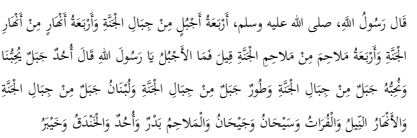
अल्लाह के रसूल ﷺ ने फ़रमाया: "जन्नत के पहाड़ों में से चार पहाड़ हैं, जन्नत की नदियों में से चार नदियाँ हैं, और जन्नत की लड़ाइयों में से चार भीषण बड़ी लड़ाइयाँ होंगी।" पूछा गया: "ऐ अल्लाह के रसूल ﷺ, वे पहाड़ कौन-से हैं?" उन्होंने फ़रमाया: "उहुद, वह पहाड़ जो हमसे प्यार करता है और हम उससे प्यार करते हैं, जन्नत के पहाड़ों में से एक पहाड़ है, तूर जन्नत के पहाड़ों में से एक पहाड़ है, और लुबनान जन्नत के पहाड़ों में से एक पहाड़ है। और नदियाँ हैं नील, फ़ुरात, सैहान (ऑक्सस) और जैहान (जैक्सार्टीज़), जबकि भीषण बड़ी लड़ाइयाँ हैं बद्र, उहुद, ख़ंदक़ और ख़ैबर।"
The Messenger of Allah (peace be upon him) said: “Four mountains are from the mountains of Jannah (paradise) and four rivers are from the rivers of paradise and four fierce great battles will be from the battles of paradise” It was asked: “Which mountains O Messenger of Allah?” He said: “Uhud, a mountain that loves us and we love it, is a mountain from the mountains of paradise, Tur is a mountain from the mountains of paradise and Lubnan is a mountain from among the mountains of paradise. And the rivers are the Nile, Euphrates, Saihan (Oxus) and Jaihan (Jaxartes), while the fierce great battles are Badr, Uhud, Khandaq and Khaibar”.
- मुहम्मद बिन अली बिन मुआइम अल-बलादी ने हमसे रिवायत किया, मुहम्मद बिन अब्दुल्लाह बिन उमर से, उन्होंने मआफ़ा बिन इमरान से, उन्होंने कसीर बिन अब्दुल्लाह बिन अम्र से, उन्होंने अपने पिता से, उन्होंने अपने दादा से कि नबी ﷺ ने फ़रमाया:
- Muhammad bin ‘Ali bin Mu’aim Al-Baladi related to us from Muhammad bin Abdullah bin ‘Umar, from Ma’afa bin ‘Imran, from Kathir bin Abdullah bin ‘Amr, from his father, from his grandfather: That the Prophet (peace be upon him) said:

“हे कुरैश की जमात, मेरे साथियों, उनके बेटों और उनके पोतों के मामले में मुझे याद रखना।”
“O gathering of the Quraish, keep me in mind in respect to my companions, their sons and the sons of their sons”.
- मुहम्मद बिन रबी' बिन सुलैमान अल-जिज़ी ने हमसे रिवायत किया, अबू उमैय्याह अत-तर्सूसी से, उन्होंने मुआविया बिन अम्र से, उन्होंने अबू इसहाक़ अल-फ़ज़ारी से, उन्होंने इब्न कसीर बिन अब्दुल्लाह से, उन्होंने अपने पिता से, उन्होंने अपने दादा से, जिन्होंने कहा:
- Muhammad bin Rabi’ bin Sulaiman Al-Jiziy related to us from Abu Umayyah At-Tarsusiy, from Mu’awiyah bin ‘Amr, from Abu Ishaq Al- Fazariy, from Ibn Kathir bin Abdullah, from his father, from his grandfather, who said:

रसूलुल्लाह ﷺ ने फ़रमाया: "न लूट-मार है, न छीना-झपटी है, और न ही माल-ए-ग़नीमत में चोरी है, और जो कोई माल-ए-ग़नीमत में से चोरी करेगा, वह क़यामत के दिन उसी चीज़ के साथ आएगा जो उसने चुराई थी।"
The Messenger of Allah (peace be upon him) said: “There is no plundering, no looting and no stealing from the spoils and whoever steals from the spoils will come on the Day of Judgement with that which he stole”.
- मुहम्मद बिन अहमद बिन अल-हुसैन अल-अहवाज़ी ने हमसे रिवायत किया, उन्होंने अम्र बिन अली से, उन्होंने मुहम्मद बिन ख़ालिद बिन अत्मा से, उन्होंने कसीर बिन अब्दुल्लाह अल-मुज़नी से, उन्होंने अपने पिता से, उन्होंने अपने दादा से, जिन्होंने कहा:
- Muhammad bin Ahmad Bin Al-Hussein Al-Ahwaziy related to us from ‘Amr bin ‘Ali, from Muhammad bin Khalid bin ‘Athmah, from Kathir bin Abdullah Al-Muzani, from his father, from his grandfather, who said:

रसूलुल्लाह ﷺ ने फ़रमाया: “क़यामत तब तक क़ायम नहीं होगी जब तक अल्लाह क़ुस्तुंतुनिया और रोम को तस्बीह और तकबीर के साथ फ़तह न करा दे।”
The Messenger of Allah (peace be upon him) said: “The final hour will not come until Allah conquers Constantinople and Rome accompanied by Tasbih and Takbir”.
अहमद बिन मुहम्मद बिन अब्दुल अज़ीज़ बिन अल-जा'द ने हमें मुहम्मद बिन इस्हाक़ अल-मसीबी से बयान किया, उन्होंने अब्दुल्लाह बिन मुहम्मद बिन सलम से, उन्होंने अब्दुर रहमान बिन इब्राहीम से, उन्होंने अब्दुल्लाह बिन नाफ़ि' से, उन्होंने कसीर बिन अब्दुल्लाह से, उन्होंने अपने पिता से, उन्होंने अपने दादा से, कि नबी ﷺ ने फ़रमाया:
- Ahmad bin Muhammad bin Abdul ‘Aziz bin Al-Ja’d related to us from Muhammad bin Ishaq Al-Masibi, from Abdullah bin Muhammad bin Salm, from Abdur Rahman bin Ibrahim, from Abdullah bin Nafi’, from Kathir bin Abdullah, from his father, from his grandfather, from the Prophet (peace be upon him):

"जो व्यक्ति ज़कात देता है, वह सफल हो गया।" उन्होंने कहा: ज़कात-उल-फ़ित्र।
“The one who gives Zakah has attained success” He said: Zakat ul-Fitr.
- इब्न सलम ने हमें अब्दुर रहमान से, उन्होंने अब्दुल्लाह बिन नाफ़ि' से, उन्होंने कसीर बिन अब्दुल्लाह से, उन्होंने उनके पिता से, उन्होंने उनके दादा से बयान किया कि नबी ﷺ ने फ़रमाया:
- Ibn Salm related to us from Abdur Rahman, from Abdullah bin Nafi’, from Kathir bin Abdullah, from his father , from his grandfather, that the Prophet (peace be upon him) said:

“विद्वान (‘आलिम) की फिसलन से बचो और फिर उसके दोहराए जाने की प्रतीक्षा करो।” अहमद बिन हफ़्स ने हमसे अज़-ज़ुबैर बिन बक्कार से, उन्होंने अब्दुल्लाह बिन नाफ़ी’ से ऊपर के समान बयान किया। अहमद बिन ‘अली अल-मदाइनी ने हमसे, अहमद बिन मुहम्मद अबू बक्र अल-ख़तीबी से, उन्होंने इसहाक़ अल-जंबी से बयान किया, जिन्होंने कहा: कसीर बिन अब्दुल्लाह अल-मुज़नी ने अपने पिता से, उन्होंने उनके दादा से इसका उल्लेख किया, जिन्होंने कहा: अल्लाह के रसूल ﷺ ने फ़रमाया: ऊपर के समान (यानी “विद्वान की फिसलन से बचो”)।
“Take guard from the slip or lapse of the ‘Aalim (scholar) and so await its recurrence”. Ahmad bin Hafs related to us from Az-Zubair bin Bakkar, from Abdullah bin Nafi’ the same as above. Ahmad bin ‘Ali Al-Mada’ini related to us, from Ahmad bin Muhammad Abu Bakr Al-Hatibi, from Ishaq Al-Janbiy who said: Kathir bin Abdullah Al-Muzani mentioned it from his father, from his grandfather, who said: The Messenger of Allah (peace be upon him) said: The same as above (i.e. “Take guard from the lapse of the ‘Aalim”).
- अहमद बिन अली ने हमें मुहम्मद बिन ख़ुरैम अल-क़ज़्ज़ाज़ से रिवायत किया, उन्होंने हिशाम बिन ख़ालिद से, उन्होंने मरवान बिन मुआविया से, उन्होंने कसीर बिन अब्दुल्लाह अल-मुज़नी से, उन्होंने उनके पिता से, उन्होंने उनके दादा से:
- Ahmad bin ‘Ali related to us from Muhammad bin Khuraim Al- Qazzaz, from Hisham bin Khalid, from Marwan bin Mu’awiyah, from Kathir bin Abdullah Al-Muzani, from his father, from his grandfather:

यह कि नबी ﷺ ने बिलाल बिन अल-हारिस से फ़रमाया: “ऐ बिलाल, जान लो!” उन्होंने कहा: “मैं जानने के लिए तैयार हूँ, ऐ अल्लाह के रसूल!” उन्होंने (फिर से) फ़रमाया “ऐ बिलाल, जान लो!” उन्होंने कहा: “मैं जानने के लिए तैयार हूँ, ऐ अल्लाह के रसूल!” उन्होंने फ़रमाया: “ऐ बिलाल, जान लो कि निश्चय ही जो कोई मेरी सुन्नत में से किसी सुन्नत को ज़िंदा करे, जो मेरे बाद मिट चुकी हो, तो उसके लिए उतना ही सवाब है जितना उस पर अमल करने वाले का है, और इससे उनके सवाब में से कुछ भी कम नहीं होगा। और जो कोई कोई ऐसी गुमराह बिदअत (नई ईजाद) पैदा करे जिससे अल्लाह राज़ी नहीं और न उसका रसूल, तो उस पर उतने ही गुनाह होंगे जितने उस पर अमल करने वाले लोगों पर होते हैं, और इससे लोगों के गुनाहों में से कुछ भी कम नहीं होगा।”
“That the Prophet (peace be upon him) said to Bilal bin Al-Harith: “O Bilal, Know!”. He said: “I am ready to know O Messenger of Allah!” He said (again) “O Bilal, know!” He said: “I am ready to know O Messenger of Allah!” He said: “O Bilal, know that indeed whoever revives a Sunnah from my Sunnah which has died out after me, then for him is a reward similar to whoever acts upon it without diminishing anything from their rewards. And whoever introduces an erroneous innovation which Allah is not pleased with, nor His Messenger, then he shall receive sins similar to whoever acts upon it, without that diminishing anything from the sins of the people”.
- उसी इसनाद के साथ, अपने दादा से, जिन्होंने कहा:
- With the same Isnad from his grandfather, who said:

मैंने अल्लाह के रसूल ﷺ से दीन की बुनियादों में से 16 बुनियादें याद की हैं। उन्होंने कहा: अल्लाह के रसूल ﷺ ने फ़रमाया:
“I memorised from the Messenger of Allah (peace be upon him) 16 foundations from the foundations of the Deen”. He said: The Messenger of Allah (peace be upon him) said:

"जानवरों (यानी उनके हमले से होने वाले नुकसान) का कोई दायित्व (दियत) नहीं है, कुओं (यानी उनसे संबंधित दुर्घटनाओं) का कोई दायित्व नहीं है, और दबे हुए ख़ज़ाने (रिकाज़) से एक-पाँचवाँ हिस्सा देना अनिवार्य है।"
“There is no liability (blood money) for beasts (i.e. from being attacked), there is no liability for wells (i.e. accidents related to them) and a fifth is due from the buried treasure (Rikaz)”.

उन्होंने कहा: "न जलब है और न जनब (अर्थात जानवरों को उनके चरागाह से हटाकर ज़कात वसूल करने वाले के पास नहीं ले जाना चाहिए), न रोक-टोक है, और न ही शहरी व्यक्ति का (देहाती के माल का) व्यापार है।"
He said: “There is no Jalab and no Janab (meaning that animals should not be moved away from their place of grazing to the collector of Zakah), there is no obstruction and there is no trade of a townsperson
बेदुइन के लिए। और इसमें कोई अवैध रूप से कब्ज़ा करना, लूटपाट, छीना-झपटी या लूट के माल (ग़नीमत) में से चोरी नहीं है, और जो कोई लूट के माल में से चोरी करेगा, वह क़ियामत के दिन उसी चीज़ के साथ आएगा जो उसने चुराई थी।
for a Bedouin. And there is no unlawful taking of possession, no plundering, no looting and no stealing from the spoils and whoever steals from the spoils will come with that which he stole on the Day of Judgement”.

उन्होंने कहा: "जो व्यक्ति अपने मौलाओं (मवाली) के अलावा किसी और को अपना मौला बनाए, उस पर अल्लाह की लानत और उसका ग़ज़ब होगा, और उससे कुछ भी क़बूल नहीं किया जाएगा।"
He said: “Whoever takes charge of a Mawla from other than his Mawali, then the curse of Allah and His anger will be upon him, and nothing will be accepted from him”.

उन्होंने कहा: "जो कोई अपराध करेगा (यानी दूसरों के अधिकारों या वचन का उल्लंघन करेगा), उस पर अल्लाह की लानत और उसका क्रोध होगा, और उसकी कोई भी चीज़ स्वीकार नहीं की जाएगी।"
He said: “Whoever commits a crime (i.e. breaching the rights of others or the covenant), then the curse of Allah and His anger will be upon him, and nothing will be accepted from him”.
उसी इसनाद के साथ, उन्होंने अपने दादा से रिवायत किया कि उन्होंने कहा: रसूलुल्लाह ﷺ ने फ़रमाया:
- With the same Isnad from his grandfather, he said: The Messenger of Allah (peace be upon him) said:

मुसलमान अपनी शर्तों पर कायम रहते हैं, सिवाय उस शर्त के जो हलाल (जायज़) को हराम (नाजायज़) बना दे, या उस शर्त के जो हराम (नाजायज़) को हलाल (जायज़) बना दे।
“The Muslims are upon their conditions apart from the condition which makes the Halal (lawful) Haram (unlawful) or a condition that makes the Haram (unlawful) Halal (lawful)”.
- अब्दुल वह्हाब बिन अबू उस्मा ने हमसे इस्माईल बिन यज़ीद अल-अस्बहानी से वर्णन किया, उन्होंने मअन बिन ईसा से, उन्होंने कसीर बिन अब्दुल्लाह अल-मुज़नी से, उन्होंने अपने पिता से, उन्होंने अपने दादा से, जिन्होंने कहा:
- Abdul Wahhab bin Abu ‘Usmah related to us from Isma’il bin Yazid Al-Asbahani, from Ma’n bin ‘Eisa, from Kathir bin Abdullah Al- Muzani, from his father, from his grandfather who said:

मैंने अल्लाह के रसूल ﷺ से सुना: "वे खड़े हुए, अल्लाह की हम्द (प्रशंसा) की और उसकी बड़ाई बयान की। फिर उन्होंने कहा: ऐ लोगो, जो लोग हज और उमरा करते हैं और जो लोग सफ़र में हैं, और जो वीरान ज़मीन पर हैं, उनका पानी और छाया पर अधिक अधिकार है, इसलिए ज़मीन (यानी उस तक पहुँच) से लोगों को न रोको।"
I heard the Messenger of Allah (peace be upon him): “He stood, praised Allah and extolled Him. He then said: O people, whoever from those undertaking Hajj and ‘Umrah and those who are travelling are upon deserted land have more right to water and shade and so do not prevent the people from the land (i.e. access)”.
इसके बाद, इस मुद्रित संस्करण में कुछ ऐसी असंबंधित हदीसें आ गईं जिनका कसीर बिन अब्दुल्लाह से कोई संबंध ही नहीं था। प्रतीत होता है कि इस त्रुटि का मूल स्रोत स्वयं पांडुलिपि है, और यदि दूसरी पांडुलिपियाँ मिल जाएँ तो उन्हें इसी से मिलाकर संशोधित किया जा सकता है… (उन असंबंधित हदीसों के उल्लेख के बाद इब्न अदी आगे कहते हैं):
Following this, there came, in this printed edition, a number of unconnected Ahadeeth which had no relationship with Kathir bin Abdullah at all. It appears that the origin of the error is the manuscript itself and other manuscripts can be revised and compared to this one if they can be found … (Following the mention of those unrelated Ahadeeth Ibn Adiy continues):
उन्होंने (इब्न ‘अदिय ने) कहा: अहमद बिन हफ़्स अस-सा‘दी ने हमें अहमद बिन इब्राहीम अद-दुरक़ी से सुनाया, उन्होंने अब्दुल्लाह बिन नाफ़ि‘ से, उन्होंने कसीर बिन अब्दुल्लाह अल-मुज़नी से, उन्होंने उनके पिता से, उन्होंने उनके दादा से, जिन्होंने कहा:
- He (Ibn ‘Adiy) said: Ahmad bin Hafs As-Sa’diy related to us from Ahmad bin Ibrahim Ad-Duraqiy, from Abdullah bin Nafi’, from Kathir bin Abdullah Al-Muzani, from his father, from his grandfather, who said:

रसूलुल्लाह ﷺ ने फ़रमाया: "उन हब्शियों को छोड़े रखो जब तक वे तुम्हें छोड़े रखें।"
The Messenger of Allah (peace be upon him) said: “Leave be those Abyssinians as long as they leave you be”.
मुहम्मद बिन अल-हसन अल-बसरी ने मुहम्मद बिन बक्कार अल-ऐशी से रिवायत किया, उन्होंने मुहम्मद बिन इस्माईल बिन अबू फ़दैक से, उन्होंने कसीर बिन अब्दुल्लाह अल-मुज़नी से, उन्होंने अपने पिता से, उन्होंने अपने दादा से, जिन्होंने कहा:
- Muhammad bin Al-Hasan Al-Basriy related from Muhammad bin Bakkar Al-‘Aishi, from Muhammad bin Isma’il bin Abu Fadaik, from Kathir bin Abdullah Al-Muzani, from his father, from his grandfather, who said:

नबी ﷺ ने एक व्यक्ति को उसे हरा-भरा (रसीला) कहते हुए सुना, तो आपने फ़रमाया: हम हाज़िर हैं। हमने लिया और तुम्हारे पास जो कुछ है उसमें से तुमने (लिया)।
“The Prophet (peace be upon him) heard a man calling it green (luscious) and so he said: We are at your service. We have taken and you have from what is among you” .
- मुहम्मद बिन अल-हसन अल-बसरी ने अल-अब्बास बिन अब्दुल अज़ीम से रिवायत किया, उन्होंने अब्दुल्लाह बिन जाफ़र बिन अबू कसीर अल-अंसारी से, उन्होंने कसीर बिन अब्दुल्लाह बिन अम्र बिन औफ़ अल-मुज़नी से, उन्होंने अपने पिता से, उन्होंने अपने दादा से, और उन्होंने बिलाल बिन अल-हारिस अल-मुज़नी से:
- Muhammad bin Al-Hasan Al-Basriy related from Al-‘Abbas bin Abdul ‘Azhim, from Abdullah bin Ja’far bin Abu Kathir Al-Ansari, from Kathir bin Abdullah bin ‘Amr bin ‘Awf Al-Muzani, from his father, from his grandfather, from Bilal bin Al-Harith Al-Muzani:

यह कि जब नबी ﷺ शौच के लिए जाना चाहते, तो बहुत दूर चले जाते थे।
“That when the Prophet (peace be upon him) wanted to relive himself, he would move away at a distance”.
- अब्दुल्लाह बिन अब्दुल हमीद अल-वासिती ने अन-नज़र बिन सलामा से वर्णन किया, उन्होंने अबू उज़ियह मुहम्मद बिन मूसा अल-अंसारी से, जो मदीना के काज़ी (न्यायाधीश) थे, उन्होंने कसीर बिन अब्दुल्लाह से, उन्होंने अपने पिता से, उन्होंने अपने दादा 'अम्र बिन 'औफ़ से, जिन्होंने कहा:
- Abdullah bin Abdul Hamid Al-Wasitiy related from An-Nadr bin Salamah, from Abu ‘Uziyyah Muhammad bin Musa Al-Ansari, the Qadi (Judge) of Al-Madinah, from Kathir bin Abdullah, from his father, from his grandfather ‘Amr bin ‘Awf, who said:

मैंने अल्लाह के रसूल ﷺ को मकाम पर खड़े देखा और वे फ़रमा रहे थे: "ऐ लोगो, यह क़िबला, यह मस्जिद का क़िबला है, और मस्जिद दुनिया का क़िबला है।"
“I saw the Messenger of Allah (peace be upon him) standing upon the Maqam and he was saying: O people, this Qiblah, it is the Qiblah of the Masjid and the Masjid is the Qiblah of the Dunyaa (world)”.
- मुहम्मद बिन यूसुफ़ बिन आसिम अल-बुख़ारी ने हमें अहमद बिन इस्माईल अल-क़ुरशी से रिवायत किया, उन्होंने अब्दुल्लाह बिन नाफ़िअ' से, उन्होंने कसीर बिन अब्दुल्लाह से, उन्होंने उनके वालिद से, उन्होंने उनके दादा से:
- Muhammad bin Yusuf bin ‘Asim Al-Bukhari related to us from Ahmad bin Isma’il Al-Qurashi, from Abdullah bin Nafi’, from Kathir bin Abdullah, from his father, from his grandfather:

मस्जिद में अल्लाह के रसूल ﷺ मौजूद थे। उन्होंने अपने पीछे किसी के बोलने की आवाज़ सुनी, और जो बोल रहा था वह कह रहा था: "ऐ अल्लाह, मेरी मदद कर उस चीज़ से जो मुझे उस चीज़ से बचाए जिससे तूने मुझे डराया है।" तो अल्लाह के रसूल ﷺ ने यह सुनकर फ़रमाया: "क्या तुम इसके साथ इसका जोड़ा (बहन) शामिल नहीं करोगे?" फिर उस व्यक्ति ने कहा: "ऐ अल्लाह, मुझे उस चीज़ की तड़प अता फ़रमा जो तूने उनके लिए पसंदीदा बनाई है।" फिर अल्लाह के रसूल ﷺ ने अपने साथ मौजूद अनस बिन मालिक से फ़रमाया: "ऐ अनस, उसके पास जाओ और उससे कहो कि अल्लाह के रसूल ﷺ तुमसे कहते हैं: 'मेरे लिए माफ़ी की दुआ करो।'" तो अनस उसके पास गए और उसे यह बात पहुँचाई। उस व्यक्ति ने कहा: "ऐ अनस, तुम मेरी तरफ़ अल्लाह के रसूल ﷺ के दूत हो?" उन्होंने जवाब दिया: "जैसे तुम हो।" वह इसकी पुष्टि करने के लिए लौटा। तब अल्लाह के रसूल ﷺ ने फ़रमाया: "उससे हाँ कहो।" तो उसने (उस व्यक्ति ने) उनसे कहा: "जाओ और उससे कहो कि अल्लाह ने तुम्हें नबियों पर वैसे ही फ़ज़ीलत दी है जैसे उसने रमज़ान के महीने को दूसरे महीनों पर फ़ज़ीलत दी है, और उसने तुम्हारी उम्मत (क़ौम) को क़ौमों पर वैसे ही फ़ज़ीलत दी है जैसे उसने जुमे के दिन को बाक़ी सब दिनों पर फ़ज़ीलत दी है।" वे उसे ढूँढने गए, तो देखा कि वह ख़िज़्र थे, उन पर सलाम हो।
“That the Messenger of Allah (peace be upon him) was in the Masjid. He heard speech behind him and the one saying it was saying: “O Allah assist me with which will save me from that which you have made me fearful of”. So, the Messenger of Allah (peace be upon him) said when he heard that: “Will you not include its sister alongside it?” The man then said: “O Allah bestow upon me the longing of the truthful to that which you have made desirable for them”. The Messenger of Allah (peace be upon him) then said to Anas bin Malik who was in his company: “Go to him O Anas and say to him that the Messenger of Allah (peace be upon him) says to you: “Seek forgiveness for me”. So, Anas went to him and conveyed that to him. The man then said: “O Anas, you are the messenger of the Messenger of Allah (peace be upon him), to me. He replied: “Just as you are”. He returned to verify it. The Messenger of Allah (peace be upon him) then said: “Say to him yes”. So, he (the man) said to him: “Go and say to him that Allah has favoured you over the Prophets like He has favoured the month of Ramadan over other months and that He has favoured your Ummah (nation) over the nations like He has favoured the day of Jumu’ah over all of the other days”. They went looking and behold it was Khadir, peace be upon him”.
अहमद बिन जाफ़र ने हमें याक़ूब बिन इब्राहीम अद-दुरक़ी से रिवायत किया, उन्होंने इब्राहीम बिन अब्दुल्लाह अर-रिफ़ाई से, उन्होंने कसीर बिन अब्दुल्लाह से, उन्होंने अपने वालिद से, उन्होंने अपने दादा से:
- Ahmad bin Ja’far related to us from Ya’qub bin Ibrahim Ad-Duraqi, from Ibrahim bin Abdullah Ar-Rafa’iy, from Kathir bin Abdullah, from his father, from his grandfather:

यह कि अल्लाह के रसूल ﷺ ने नजाशी (अबीसीनिया के बादशाह) की जनाज़े की नमाज़ पढ़ी और उस पर पाँच तकबीरें कहीं।
“That the Messenger of Allah (peace be upon him) prayed over the Najashi (Negus of Abyssinia) and did five Takbirs”.
'इमरान बिन मूसा ने हमें इब्राहीम बिन अल-मुंधिर से रिवायत किया, उन्होंने अबू अल-जअद अब्दुर रहमान बिन अब्दुल्लाह अस-सलमी से, उन्होंने कसीर बिन अब्दुल्लाह अल-मुज़नी से, उन्होंने अपने पिता से, उन्होंने अपने दादा से, जिन्होंने कहा:
- ‘Imran bin Musa related to us from Ibrahim bin Al-Mundhir, from Abu Al-Ja’d Abdur Rahman bin Abdullah As-Salmiy, from Kathir bin Abdullah Al-Muzani, from his father, from his grandfather, who said:

अल्लाह के रसूल ﷺ ने फ़रमाया: "घोड़े को उसके पानी पिलाने के दिन पेश किया जाता है।"
“The Messenger of Allah (peace be upon him) said: “the horse is offered the day of its watering”.
अब भी कथीर बिन अब्दुल्लाह द्वारा, उनके पिता से, और उनके दादा से वर्णित कुछ हदीसें शेष हैं, और उनकी अधिकतर हदीसें, जिनका मैंने उल्लेख किया है और जो उन्होंने वर्णित की हैं, उनके समर्थन में कोई ऐसी बात नहीं है जो उनका समर्थन करे (अर्थात वे उन्हें वर्णित करने में अकेले हैं)। - बहलूल बिन इसहाक ने हमसे वर्णन किया, इस्माईल बिन अबू उवैस से, उन्होंने कथीर बिन अब्दुल्लाह अल-मुज़नी से, उन्होंने रुबैह बिन अब्दुर्रहमान बिन अबू सईद अल-खुदरी से, उन्होंने अपने पिता से, उन्होंने अपने दादा से, जिन्होंने कहा:
There are still a small number of Ahadeeth related by Kathir bin Abdullah from his father, from his grandfather remaining and most of his Ahadeeth which I mentioned and most of what he related, does not have that which conforms (or supports) them (i.e. he is alone in narrating them). - Bahlul bin Ishaq related to us from Isma’il bin Abu Uwais, from Kathir bin Abdullah Al-Muzani, from Rubaih bin Abdur Rahman bin Abu Sa’id Al-Kudri, from his father, from his grandfather, who said:

मैंने अरब के कुछ लोगों (यानी बेदुईन) को अल्लाह के रसूल ﷺ के पास आते देखा। उन्होंने कहा: "ऐ अल्लाह के रसूल ﷺ, हम ऐसे लोग हैं जिनके पास मवेशी हैं, और हम उनमें से अपना सदक़ा (यानी ज़कात) निकालते हैं, तो क्या रमज़ान की ज़कात भी उसी से हमारे लिए काफ़ी हो जाएगी?" अल्लाह के रसूल ﷺ ने फ़रमाया: "नहीं, वह बच्चे और बड़े से, आज़ाद और ग़ुलाम से ली जाती है। यह तुम्हारे लिए पाकीज़गी है।" अबू सईद अल-ख़ुदरी ने कहा: मैंने वह साल देखा जिसमें रेवड़ें बहुतायत में थीं और सफ़ेद फ़सलें काली फ़सलों से ज़्यादा घट गईं। फिर मैंने अगले साल देखा कि फ़सलें बहुतायत में थीं और काले रेवड़ सफ़ेद रेवड़ों से ज़्यादा घट गए। मैं रुबैह से यह हदीस रिवायत करने वाले कथीर बिन अब्दुल्लाह के अलावा किसी और को नहीं जानता। [इब्न 'अदी के उद्धरण का अंत]
“I saw men from the Arabs (i.e. Bedouins) approaching the Messenger of Allah (peace be upon him). They said: “O Messenger of Allah, we are people possessing livestock and we take out from them our Sadaqah (i.e. Zakat) and so does that also cover for us the Zakat of Ramadan?” The Messenger of Allah (peace be upon him) said: “No, it is taken from the child and the adult, from the free and the slave. It is a purification for you”. Abu Sa’id Al-Khudri said: I saw in the year that the herds were plentiful and that the white crops diminished more than the black. I then saw in the year following that the crops were plentiful and that the black herds were diminished more than the white”. I do not know anyone relating this Hadith from Rubaih apart from Kathir bin Abdullah] [End of quote of Ibn ‘Adiy].
इब्न अदी के इस कथन के बारे में: "कसीर बिन अब्दुल्लाह से, उनके पिता से, और उनके दादा से रिवायत की गई कुछ अहादीस अब भी बची हैं, और उनकी ज़्यादातर अहादीस जो मैंने ज़िक्र कीं और जो कुछ उन्होंने रिवायत किया, उनमें से अधिकांश के समर्थन में (यानी उनकी ताईद करने वाला) कुछ नहीं मिलता (यानी वे उन्हें अकेले रिवायत करते हैं)", तो इसका यह अर्थ नहीं कि उन्हें अविश्वसनीय घोषित किया गया या उनकी कमज़ोरी का फ़ैसला किया गया। इसकी वजह यह है कि केवल हदीस रिवायत करने में अकेला होना, "उनकी ज़्यादातर रिवायतों के समर्थन में कुछ नहीं मिलता", ख़ासकर उस व्यक्ति के मामले में जो सहाबा के बदनाम पोतों में से हो (जैसे बहज़ बिन हकीम का मामला), कमज़ोरी या अविश्वसनीयता का सबूत नहीं होता। ऐसा लगता है कि इब्न अदी ने सुरक्षित रहना पसंद किया और उस व्यक्ति पर फ़ैसला देने से बचे रहे। क्योंकि जब वे किसी रावी की अविश्वसनीयता या दोष बताना चाहते हैं तो आमतौर पर कहते हैं: "और उसकी हदीस में कमज़ोरी स्पष्ट है" या इसके समान शब्द। जबकि जब वे किसी रावी की विश्वसनीयता और सुदृढ़ता बताना चाहते हैं तो कहते हैं: "मुझे उसके बारे में कोई मुनकर (अस्वीकार्य) चीज़ नहीं मिली" या "मुझे उसकी कोई मुनकर चीज़ नहीं मिली, जब उससे कोई सिक़ा (विश्वसनीय और भरोसेमंद रावी) रिवायत करे"। स्पष्ट है कि इमाम अल-बुख़ारी से उनके पास केवल वही पहुँचा जो उनके शेख़ इस्माईल बिन अबू उवैस ने उनसे रिवायत किया: "मैंने कसीर बिन अब्दुल्लाह बिन अम्र बिन औफ़ बिन यज़ीद बिन मिल्हा अल-मुज़नी से (या उनसे प्राप्त करके) 158 हिजरी में, फिर 161 या 162 हिजरी में सुना।"
I say: Concerning the statement of Ibn ‘Adiy: “There are still a small number of Ahadeeth related by Kathir bin Abdullah from his father, from his grandfather remaining and most of his Ahadeeth which I mentioned and most of what he related, does not have that which conforms (or supports) them (i.e. he is alone in narrating them)”, then this does not mean the declaration of unreliability or classification of weakness. That is because the mere being alone in relating Ahadeeth “most of what he related, does not have that which conforms (or supports) them”, especially in respect to the one who is from the infamous grandchildren of the Sahabah (like the case of Bahz bin Hakim for instance), does not dictate weakness or unreliability. It is as if Ibn ‘Adiy preferred to remain safe and chose to escape from issuing a verdict upon the man. That is because when he wants to express the unreliability or defectiveness of a man, he usually states: “And the weakness is evident in his Hadith” or words which are similar to that. That is whilst if he wants to declare the reliability and soundness of a narrator he says: “I did not find anything Munkar (rejectable) in relation to him” or “I did not find anything Munkar of his if a Thiqah (reliable and trustworthy narrator) related from him”. It is apparent that nothing reached him from Al-Bukhari apart from what his Sheikh Isma’il bin Abu Uwais related to him: “I heard (or received from) Kathir bin Abdullah bin ‘Amr bin ‘Awf bin Yazid bin Milhah Al-Muzani in the year 158 then the year 161 or 162”.


मस्जिद में अल्लाह के रसूल ﷺ मौजूद थे। उन्होंने अपने पीछे किसी के बोलने की आवाज़ सुनी, और जो बोल रहा था वह कह रहा था: "ऐ अल्लाह, मेरी मदद कर उस चीज़ से जो मुझे उस चीज़ से बचाए जिससे तूने मुझे डराया है।" तो अल्लाह के रसूल ﷺ ने यह सुनकर फ़रमाया: "क्या तुम इसके साथ इसका जोड़ा (बहन) शामिल नहीं करोगे?" फिर उस व्यक्ति ने कहा: "ऐ अल्लाह, मुझे उस चीज़ की तड़प अता फ़रमा जो तूने उनके लिए पसंदीदा बनाई है।" फिर अल्लाह के रसूल ﷺ ने अपने साथ मौजूद अनस बिन मालिक से फ़रमाया: "ऐ अनस, उसके पास जाओ और उससे कहो कि अल्लाह के रसूल ﷺ तुमसे कहते हैं: 'मेरे लिए माफ़ी की दुआ करो।'" तो अनस उसके पास गए और उसे यह बात पहुँचाई। उस व्यक्ति ने कहा: "ऐ अनस, तुम मेरी तरफ़ अल्लाह के रसूल ﷺ के दूत हो?" उन्होंने जवाब दिया: "जैसे तुम हो।" वह इसकी पुष्टि करने के लिए लौटा। तब अल्लाह के रसूल ﷺ ने फ़रमाया: "उससे हाँ कहो।" तो उसने (उस व्यक्ति ने) उनसे कहा: "जाओ और उससे कहो कि अल्लाह ने तुम्हें नबियों पर वैसे ही फ़ज़ीलत दी है जैसे उसने रमज़ान के महीने को दूसरे महीनों पर फ़ज़ीलत दी है, और उसने तुम्हारी उम्मत (क़ौम) को क़ौमों पर वैसे ही फ़ज़ीलत दी है जैसे उसने जुमे के दिन को बाक़ी सब दिनों पर फ़ज़ीलत दी है।" वे उसे ढूँढने गए, तो देखा कि वह ख़िज़्र थे, उन पर सलाम हो।
“That the Messenger of Allah (peace be upon him) was in the Masjid. He heard speech behind him and the one saying it was saying: “O Allah assist me with which will save me from that which you have made me fearful of”. So, the Messenger of Allah (peace be upon him) said when he heard that: “Will you not include its sister alongside it?” The man then said: “O Allah bestow upon me the longing of the truthful to that which you have made desirable for them”. The Messenger of Allah (peace be upon him) then said to Anas bin Malik who was in his company: “Go to him O Anas and say to him that the Messenger of Allah (peace be upon him) says to you: “Seek forgiveness for me”. So, Anas went to him and conveyed that to him. The man then said: “O Anas, you are the messenger of the Messenger of Allah (peace be upon him), to me. He replied: “Just as you are”. He returned to verify it. The Messenger of Allah (peace be upon him) then said: “Say to him yes”. So, he (the man) said to him: “Go and say to him that Allah has favoured you over the Prophets like He has favoured the month of Ramadan over other months and that He has favoured your Ummah (nation) over the nations like He has favoured the day of Jumu’ah over all of the other days”. They went looking and behold it was Khadir, peace be upon him”.
हमने इस रिवायत को हर संभव स्थान पर खोजा, लेकिन यह इमाम इब्न 'अदी के इस सिलसिले-ए-सनद के अलावा कहीं नहीं मिली। यह रिवायत किताब "उनैस अस-सारी फ़ी तख़रीज अहादीस फ़त्ह अल-बारी" (9/6578/4610) में भी उन्हीं की ओर मंसूब की गई है।
We searched for this narration in every conceivable place but we were unable to find it except from this path of Imam Ibn ‘Adiy. The narration is also attributed to him in the book “Unais As-Saari Fee Takhrij Ahadeeth Fat’h ul-Baari” (9/6578/4610):

‘अम्र बिन ‘औफ़ से रिवायत है: “नबी ﷺ ने मस्जिद में रहते हुए एक बात सुनी, फिर फ़रमाया: ‘ऐ अनस, जिसने यह बात कही है उसके पास जाओ और उससे कहो कि वह मेरे लिए मग़फ़िरत की दुआ करे।’ अनस उस आदमी के पास गए और उसने उनसे कहा: ‘(नबी ﷺ से) कह दो कि बेशक अल्लाह ने आपको अंबिया पर वह फ़ज़ीलत दी है जो उसने रमज़ान को बाक़ी महीनों पर दी है।’ फिर वे लोग देखने गए तो क्या देखते हैं कि वह ख़िज़्र थे।” अल-हाफ़िज़ (इब्न हजर) ने कहा: “यह एक ज़ईफ़ हदीस है जिसे इब्न अदी ने कसीर बिन अम्र बिन ‘औफ़ के रास्ते से, उनके वालिद से, उनके दादा से रिवायत किया है, और इसकी इसनाद (सनद) ज़ईफ़ है।” इब्न ‘असाकिर ने इसी के मिस्ल अनस की हदीस से रिवायत किया है, जिसकी सनद इससे भी ज़्यादा कमज़ोर है” (7/245 – किताबुल अहादीसुल अंबिया – बाब: ख़िज़्र का मूसा अलैहिस्सलाम के साथ वाक़िआ)। यह बहुत ज़ईफ़ है। इसे ‘अम्र बिन ‘औफ़ और अनस की हदीसों से रिवायत किया गया है। जहाँ तक ‘अम्र बिन ‘औफ़ की हदीस का सवाल है, तो इब्न अदी ने (6/2083) इसे अब्दुल्लाह बिन नाफ़िअ’ अस-साइग़ के रास्ते से, उन्होंने कसीर बिन अब्दुल्लाह से, उन्होंने उनके वालिद से, उन्होंने उनके दादा से नक़्ल किया है: “कि रसूलुल्लाह ﷺ मस्जिद में थे, फिर आपने एक बात सुनी … वग़ैरह … ।”
[‘Amr bin ‘Awf related: “That the Prophet (peace be upon him) heard speech whilst he was in the Masjid and then said: “O Anas, go to the one who said that and ask him to seek forgiveness for me”. Anas went to the man and he (the man) said to him: “Say (to him i.e. the Prophet) that verily Allah has favoured you over the Prophets by that which he has favoured Ramadan over the remaining months”. He said: They then went to see and behold it was Khadir”. Al-Hafizh (Ibn Hajar) said: “It is a weak Hadith which Ibn ‘Adiy extracted via the path of Kathir bin ‘Amr bin ‘Awf, from his father, from his grandfather, and it is a weak Isnad (chain of transmission)”. Ibn ‘Asakir related similar to it from the Hadith of Anas, with a chain of transmission which is weaker than it” (7/245 – The book of the Ahadeeth of the Prophets – Chapter: The Hadith of Al-Khadir with Musa, peace be upon him). It is very weak. He related from the Hadith of ‘Amr bin ‘Awf and the Hadith of Anas. As for the Hsdith of ‘Amr bin ‘Awf, then Ibn ‘Adiy extracted it (6/2083) via the path of Abdullah bin Nafi’ As-Sa’igh from Kathir bin Abdullah, from his father, from his grandfather: “That the Messenger of Allah (peace be upon him) was in the Masjid and then he heard speech … etc …].
जैसा देखा जा सकता है, अल-हाफ़िज़ (इब्न हजर) ने इस रिवायत को कसीर बिन अब्दुल्लाह से जोड़ा, जबकि अबू हुज़ैफ़ा नबील बिन मंसूर बिन या'क़ूब बिन सुल्तान अल-बिसारा अल-कुवैती, जो "उनैस अस-सारी" के लेखक हैं, उन्होंने इसे कसीर बिन अब्दुल्लाह के हवाले से अब्दुल्लाह बिन नाफ़ी' अस-साइग़ से जोड़ा। लेकिन इस मामले में इन दोनों से एक घिनौनी कोताही हुई है।
As can be seen, Al-Hafizh (Ibn Hajar) attributed the narration to Kathir bin Abdullah whilst Abu Hudhaifah Nabil bin Mansur bin Ya’qub bin Sultan Al-Bisarah Al-Kuwitiy, the author of “Unais As- Saari”, attributed it to Abdullah bin Nafi’ As-Sa’igh from Kathir bin Abdullah. However, both of them are guilty of an obscene shortcoming in respect to this.

कि अल्लाह के रसूल ﷺ ने फ़रमाया: "निश्चय ही दीन हिजाज़ की ओर इस तरह लौट जाएगा जैसे साँप अपने बिल की ओर लौट जाता है, और दीन हिजाज़ में इस तरह शरण लेगा जैसे पहाड़ की चोटी में पहाड़ी बकरी शरण लेती है। दीन की शुरुआत अजनबीयत के साथ हुई और वह फिर अजनबीयत के साथ लौटेगा। मुबारक हैं वे अजनबी लोग, जो मेरे बाद के लोगों द्वारा मेरी सुन्नत में बिगाड़े गए को सुधारेंगे।"
That the Messenger of Allah (peace be upon him) said: “Verily, the Deen will retreat back to the Hijaz as a snake retreats back to its hole, and the Deen will seek refuge in the Hijaz as the mountain goat seeks refuge in the mountain top. The Deen began as something strange and will return as something strange. Blessed are the strangers; those who will rectify what the people after me have corrupted from my Sunnah”.
कुछ लोगों ने कसीर के बारे में बात की है; यदि वे उसके बारे में चुप रहते तो अधिक लाभकारी होता। वास्तव में, केवल अज्ञानी लोगों ने उसके और उसके उद्देश्यों (या संबंधों) के बारे में बात की है। मैंने इब्न उवैस को कहते सुना: मालिक ने मुझसे उसकी हदीस के बारे में पूछा, और यह्या बिन सईद अल-अंसारी ने उससे वर्णन किया। मुझे कोई संदेह नहीं कि मैंने इब्राहीम बिन अल-मुंधिर से सुना (और यदि मैंने उनसे नहीं सुना, तो एक विश्वसनीय (thiqah) व्यक्ति ने मुझसे इसका वर्णन किया) कि उन्होंने कहा: "कसीर दावा करता था कि नबी ﷺ ने उसके दादा को भूमि प्रदान की थी, और वह उस क्षेत्र के लोगों से झगड़ा करता था। वह बहुत झगड़ालू था। वह इब्न इमरान के पास झगड़ने गया, तो इमरान ने उससे कहा: 'ऐ कसीर, निश्चय ही तुम एक निकम्मे आदमी हो जो उस चीज़ के बारे में बहुत झगड़ते हो जिसे तुम नहीं जानते, तुम ऐसी चीज़ का दावा करते हो जो तुम्हारी नहीं है, और जो तुम माँगते हो उसका तुम्हारे पास कोई प्रमाण नहीं है। इसलिए मेरे पास मत आना, और मैं तुम्हें तब तक नहीं देखूँगा जब तक तुम यह न देख लो कि मैंने झूठ के लोगों के लिए अपना समय खाली कर दिया है। यदि तुम यह देखो, तो आ जाना।'" एक दिन इब्न इमरान हमारे साथ थे, तभी देखो, कसीर बिन अब्दुल्लाह उनके पास आया। उन्होंने (इब्न इमरान ने) कहा: "क्या मैंने तुमसे नहीं कहा था कि मेरे पास मत आना जब तक तुम मुझे झूठ के लोगों के लिए अपना समय खाली न देखो?" तब कसीर ने उत्तर दिया: "आपने सच कहा, अल्लाह क़ाज़ी का मामला सुधारे। निश्चय ही मैं आपके पास तभी आया जब झूठ के लोग आपके पास आए। अमुक व्यक्ति और अमुक व्यक्ति आपके पास आए। ये दोनों झूठ के लोग हैं, इसलिए मैं उन दोनों के साथ आया।" यह इब्न इमरान की ओर से उसे दिया गया आदेश था। अबू यूसुफ़ ने कहा: "उन्होंने आदेश दिया कि जब तक वह न्यायिक कार्यवाही से उठ न जाए, तब तक स्तंभ से चिपका रहे।" अबू यूसुफ़ ने कहा: "ये लोग इब्न इमरान के अनुयायियों में से थे।" यह बात "अश-शामेला लिल-मारिफ़ा वा अत-तारीख़" की प्रतिलिपि (पृ. 62 – शामेला ई-लाइब्रेरी की गिनती के अनुसार) में भी दर्ज है।
Some have spoken about Kathir who had they been silent about him it would have been more beneficial. Indeed, only the ignorant have spoken about him and his motives (or relations). I heard Ibn Uwais saying: Malik asked me about his Hadith and Yahya bin Sa’id Al-Ansari related from him. I have no doubt that I heard Ibrahim bin Al- Mundhir (And if I didn’t hear it from him, then a Thiqah related it to me) that he said: “Kathir used to claim that the Prophet (peace be upon him) had granted his grandfather land and he used to dispute with those in that area. He used to quarrel a lot. He went to Ibn ‘Imran to quarrel and so ‘Imran said to him: “O Kathir, indeed you are an idle man who quarrels a lot in respect to that which you don’t know, you claim that which does not belong to you and you have no evidence from what you demand. So, don’t approach me and I will not let me see you unless you see that I have freed my time for the people of falsehood. If you see that, then come”. One day Ibn ‘Imran was with us and then behold Kathir bin Abdullah had approached him. He (Ibn ‘Imran) said: “Did I not tell you to not come to me unless you see me having freed my time for the people of falsehood?” Kathir then replied: ““You have said the truth, may Allah make good the affair of the Qadi. Indeed, I only came to you when the people of falsehood came to you. So and so and so and so person came to you. They are both people of falsehood and so I came along with them both”. It was from the command of Ibn ‘Imran to him. Abu Yusuf said: “He commanded to remain fast to the column until he had stood from judicial proceedings”. Abu Yusuf said: “They were from those devoted to Ibn ‘Imran]. This has also been recorded in the transcript of “Ash-Shamela Lil- Ma’rifah Wa At-Tarikh” (p. 62 – by the numbering of the Shamela E- library).