1.4 "مواخات" (بھائی چارے کا معاہدہ) کب طے پایا اور "صحیفہ" (مدینہ کا دستور) کب لکھا گیا؟
1.4 When was the “Mu’akhaah” (brotherhood pact) concluded and when was the Sahifah (of Al-Madinah) written?
جو متن پیش کیا جا چکا ہے وہ کافی ہے اور ان سے ہم درج ذیل نتائج اخذ کرتے ہیں:
The texts that have already been presented should be sufficient and from them we deduce the following:
1) صحیح نظریہ یہ ہے کہ مہاجرین اور انصار کے درمیان یہ بھائی چارہ اسد بن زرارہ رضی اللہ عنہ کی وفات سے پہلے، مسجد کی تعمیر کے دوران، یعنی نبی ﷺ کی آمد کے تقریباً سات ماہ بعد، ممکن ہی نہیں تھا۔ یہ تصور کرنا ناممکن ہے کہ یہ انصار کے سردار اور نقباء (بیعتِ عقبہ دوم میں انصار کے منتخب کردہ رہنماؤں) میں سے ایک ہونے کے باوجود ان کی زندگی میں اس طرح ہو گیا ہو کہ ان کا ذکر ہی نہ کیا گیا ہو۔ لہٰذا، ابو عمر ابن عبد البر کا یہ قول:
1) The correct view is that this brotherhood between the Muhajirin and the Ansar could not possibly have taken place prior to the death of As’ad bin Zurarah (May Allah be pleased with him), during the building of the Masjid, about seven months following the arrival of the Prophet (peace be upon him). It is not conceivable that it took place in his lifetime without him having been mentioned in it, as he was chief of the Ansar and one of the Naqeebs (selected leaders of the Ansar at the second pledge of ‘Aqabah). Therefore, the statement of Abu ‘Umar ibn Abd AlBarr:
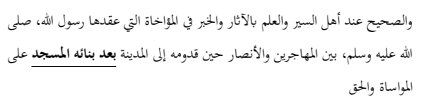
"سیرت کے علماء کا صحیح نظریہ اور وہ روایات جو 'مواخات' (بھائی چارے) کے متعلق ہیں جو رسول اللہ ﷺ نے مدینہ تشریف لانے پر مہاجرین اور انصار کے درمیان قائم فرمائی تھی، یہ ہے کہ یہ مسجد کی تعمیر کے بعد ہوئی تھی اور یہ امداد و تعاون اور حق کی بنیاد پر تھی۔۔۔"
“The correct view as held by the scholars of Seera and reports in respect to the “Mu’akhaah” (brotherhood) which the Messenger of Allah (peace be upon him) concluded between the Muhajirin (emigrants) and the Ansar (helpers), when he came to Al-Madinah, was that it took place after his building of the Masjid and it was upon the basis of the provision of assistance/support and the Haqq (truth) …” .
یہ بہت ممکن ہے، خاص طور پر اس لیے کہ مسجد کی تعمیر کی تکمیل اور اس کے افتتاح کی تقریب نے اس طرح کے قدم اٹھانے کے لیے ایک اچھا موقع فراہم کیا۔ مزید برآں، یہ قدم جنگِ بدر سے پہلے اٹھایا گیا ہوگا کیونکہ اس میں عبیدہ بن حارث (بن المطلب بن عبد مناف بن قصی القرشی المتبلی) کا ذکر ان کے بھائی عمیر بن ہمام (بن الجموہ بن زید بن حرام بن کعب) کے ساتھ ہے اور وہ دونوں جنگِ بدر میں شہید ہوئے، رضی اللہ عنہما۔ وہ زندگی میں بھی بھائی تھے اور موت میں بھی، اور ہم اللہ سے امید رکھتے ہیں کہ قیامت کے دن بھی وہ ایسے ہی ہوں گے۔ 2) صحیح نظریہ یہ ہے کہ مہاجرین اور انصار کے درمیان یہ بھائی چارہ اصل میں تحریری طور پر طے شدہ نہیں تھا کیونکہ اس کی نوعیت اس کے منافی تھی۔ اس کی وجہ یہ ہے کہ تمام روایات، بغیر کسی استثنا کے، کسی تحریری دستاویز کا ذکر بالکل نہیں کرتی ہیں۔ سیرت، تاریخ اور حدیث کی کتب کا جائزہ لینے سے صحیفہ مدینہ سے قبل کسی بھی میثاق، تحریری دستاویز یا ضابطہ کے ذکر کا فقدان ظاہر ہوتا ہے۔ اس میں استثنائی طور پر درج ذیل شامل ہیں:
is very conceivable, and particularly as the completion of the building of the Masjid and the celebration for its opening, represented a good occasion for such a step to be undertaken. I addition, it must have been undertaken prior to the battle of Badr because Ubaida bin Al- Harith (bin Al-Muttalib bin Abd Manaf bin Qusayy Al-Qurashi Al-Muttalibi) is mentioned in it along with his brother ‘Umair bin Al- Humam (bin Al-Jamuh bin Zaid bin Haram bin Ka’b) and they were both martyred at the battle of Badr, may Allah be pleased with them. They were brothers in life and at death, and we hope from Allah that they be like that also, on the Day of Judgement. 2) The correct view is that this brotherhood between the Muhajirin and the Ansar was not written in origin as its nature was incompatible with that. That is because all of the narrations, without exception, do not mention a written document at all. An examination of the books of Seera, history and Hadith reveal the absence of the mention of any charter, written document or code prior to the Sahifah of Al-Madinah. The exception to that included:
الف) قرآن کے صحیفے: ان میں سے سب سے زیادہ معروف وہ صحیفہ تھا جس کا ذکر حضرت عمرؓ کے اسلام قبول کرنے کے حوالے سے ملتا ہے اور اس میں سورۃ طہٰ شامل تھی۔ نیز وہ صحیفہ جسے حضرت عمرؓ نے اپنے ہاتھ سے لکھا اور ہشام بن العاصؓ کو بھیجا، اس میں درج ذیل چیزیں شامل تھیں:
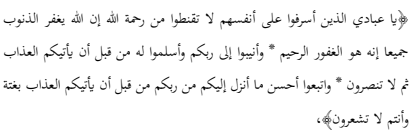
کہہ دیجیے، "اے میرے بندو جنہوں نے اپنی جانوں پر زیادتی کی ہے، اللہ کی رحمت سے مایوس نہ ہو، بے شک اللہ تمام گناہوں کو معاف فرما دیتا ہے۔ یقیناً وہی بخشنے والا، نہایت رحم کرنے والا ہے"۔ اور اپنے رب کی طرف رجوع کرو اور اس کے فرمانبردار ہو جاؤ اس سے پہلے کہ تم پر عذاب آ جائے، پھر تمہاری مدد نہیں کی جائے گی۔ اور اس بہترین چیز کی پیروی کرو جو تمہارے رب کی طرف سے تم پر نازل کی گئی ہے اس سے پہلے کہ تم پر اچانک عذاب آ جائے جبکہ تم اس سے بے خبر ہو" [TMQ 39:53-55]۔
“Say, “O My servants who have transgressed against themselves [by sinning], do not despair of the mercy of Allah. Indeed, Allah forgives all sins. Indeed, it is He who is the Forgiving, the Merciful”. And return [in repentance] to your Lord and submit to Him before the punishment comes upon you; then you will not be helped. And follow the best of what was revealed to you from your Lord before the punishment comes upon you suddenly while you do not perceive” [TMQ 39:53-55].
ب) لقمان کی مجلہ: المجلہ اور اسی طرح السجلی ایک صحیفہ (تحریری دستاویز) ہے جسے پلٹا جاتا ہے یا (اس کے صفحات) پلٹے جاتے ہیں۔ یہ بالکل ویسا ہی ہے جیسا کہ البیہقی کی "دلائل النبوۃ" (2/419) میں ذکر آیا ہے۔ (سند کی مکمل لائن کے ذکر کے بعد) عاصم بن عمر بن قتادہ الانصاری نے اپنی قوم کے شیوخ سے روایت کی ہے کہ انہوں نے کہا:
b) The Majallah of Luqman: Al-Majallah and likewise As-Sijli are a Sahifah (written document) that is turned or (its pages) turned over. That is like what came mentioned in “Dala’il An-Nubuwwah” of Al- Baihaqi (2/419). (After mentioning the full line of transmission) ‘Asim bin ‘Umar bin Qatadah Al-Ansaariy related from the Shuyukh (elders) of his people, that they said:
بنی عمرو بن عوف کے بھائی سوید بن صامت، حج اور عمرہ کے لیے مکہ آئے۔ سوید کی اپنی قوم میں اس کی عمر، رنگت اور بالوں کی وجہ سے کمال کی مثال کے طور پر تعریف کی جاتی تھی۔ (راوی) کہتے ہیں:
“Suwaid bin As-Samit, the brother of Bani ‘Amr bin ‘Awf, came to Makkah as a pilgrim for Hajj of ‘Umrah. Suwaid was described by his people as being the model of perfection among them, due to his age, skin and hair. He (the narrator) said:
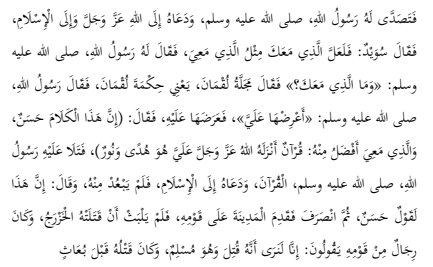
پھر رسول اللہ ﷺ اس کے پاس آئے اور اسے اللہ عزوجل اور اسلام کی طرف دعوت دی۔ سوید نے کہا: "ممکن ہے کہ تمہارے پاس جو ہے وہ ویسا ہی ہو جیسا میرے پاس ہے۔" چنانچہ رسول اللہ ﷺ نے پوچھا: "اور تمہارے پاس کیا ہے؟" اس نے جواب دیا کہ اس کے پاس لقمان کی مجلہ ہے، یعنی لقمان کی حکمت۔ رسول اللہ ﷺ نے پھر فرمایا: "اسے مجھے دکھاؤ" اور اس نے دکھا دیا۔ آپ ﷺ نے فرمایا: "یہ کلام تو اچھا ہے لیکن جو میرے پاس ہے وہ اس سے بہتر ہے۔ یہ وہ قرآن ہے جسے اللہ عزوجل نے نازل فرمایا ہے اور یہ ہدایت اور نور ہے۔" پھر رسول اللہ ﷺ نے اسے قرآن سنایا اور اسے اسلام کی دعوت دی۔ اس نے اس سے دوری اختیار نہیں کی اور کہا: "بے شک، یہ بہت اچھا کلام ہے۔" پھر وہ چلا گیا اور بعد میں اپنے لوگوں کے پاس مدینہ پہنچا۔ اس کے کچھ عرصہ بعد ہی اسے خزرج نے قتل کر دیا۔ اس کے لوگوں میں سے کچھ لوگ کہتے تھے: "ہمارا خیال ہے کہ وہ مسلمان کی حالت میں قتل ہوا تھا" اور اس کا قتل جنگِ بعاث سے پہلے ہوا تھا۔ [اقتباس کا اختتام]۔ ج) اس (ظالم اور ملعون) بائیکاٹ کی صحیفہ جسے قریش نے کعبہ کے اندر لٹکایا تھا؛ اس کا قصہ، اس کے (دیمکوں کے ذریعے) کھا لیے جانے کا قصہ اور پھر اس کے منسوخ ہونے کے بارے میں اس کا مشہور متواتر قصہ۔ د) وہ صحیفے جو رسول اللہ ﷺ نے فوجی مہمات کے کمانڈروں کو دیے تھے، جن میں ہدایات شامل تھیں، اور وہ مہر بند یا پیوند لگے ہوئے تھے۔ اس کی ایک مثال وہ ہے جو الواقدی کی "کتاب المغازی" [1/13] میں بیان کی گئی ہے:
Then, the Messenger of Allah (peace be upon him) approached him and invited him to Allah ‘Azza Wa Jalla and to Islam. Suwaid said: “It may be that what you have is like that which I have”. So, the Messenger of Allah (peace be upon him) asked: “And what do you have?” He responded by saying that he had the Majallah of Luqman, meaning the Hikmah (wisdom) of Luqman. The Messenger of Allah (peace be upon him) then said: “Show it to me” and so he did. He (peace be upon him) said: “This speech is good but what I have is better than it. It is a Qur’an that Allah ‘Azza Wa Jalla has revealed and it is guidance and light”. The Messenger of Allah (peace be upon him) then recited the Qur’an to him and invited him to Islam. He didn’t distance himself from it and said: “Verily, this is a good speech”. He then left and later arrived to Al-Madinah to his people. It was not long thereafter that he was killed by the Khazraj. There were men from his people who would say: “We view that he was killed whilst he was a Muslim” and his killing occurred before the war of Bu’ath” [End of Quote]. c) The Sahifah (written document) of the (oppressive and accursed) Boycott which the Quraish hung inside the Ka’ba along; its story, the story of the termites eating it and then its well-known Mutawatir story concerning its nullification. d) The pages (Suhuf) which the Messenger of Allah (peace be upon him) gave to the commanders of the military expeditions, containing instructions, and they were sealed or patched together. And example of that is what came stated in Al-Waqidi’s “Kitab ul-Maghazi” (1/13):
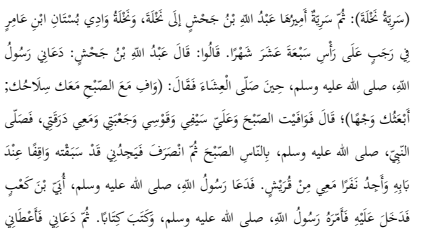
عبداللہ بن جہش کی قیادت میں نخلہ کا غزوہ (نخلہ ابن عامر کے باغ میں ایک وادی ہے) ماہِ رجب میں ہوا، جو کہ ہجری سال کا سترہواں مہینہ تھا۔
“The expedition to Nakhla commanded by Abdullah bin Jahsh (Nakhla is a valley in the Bustan (Orchard) of Ibn ‘Amir) took place in the month of Rajab, the seventeenth month AH.
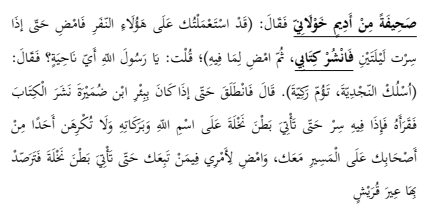
انہوں نے کہا: عبداللہ بن جہش رضی اللہ عنہ نے بیان کیا کہ رسول اللہ ﷺ نے عشاء کی نماز کے بعد مجھے بلایا اور فرمایا: "صبح کے وقت اپنے ہتھیاروں کے ساتھ میرے پاس آنا، کیونکہ میں تمہیں ایک مشن پر بھیجوں گا"۔ انہوں نے کہا: چنانچہ میں صبح کے وقت اپنی تلوار، اپنا کمان، اپنا تیر دان اور اپنی ڈھال لے کر حاضر ہوا۔ نبی ﷺ نے لوگوں کے ساتھ صبح کی نماز پڑھی، پھر آپ ﷺ روانہ ہوئے اور مجھے پایا۔ آپ ﷺ نے مجھے اپنے دروازے پر پہلے سے کھڑا پایا جبکہ میں نے وہاں اپنے ساتھ قریش کے ایک گروہ (یعنی مہاجرین) کو پایا۔ رسول اللہ ﷺ نے ابی بن کعب کو بلایا اور انہیں ایک دستاویز لکھنے کا حکم دیا۔ پھر آپ ﷺ نے مجھے بلایا اور مجھے خولان کا چمڑے کا ورق دیا اور فرمایا: "میں نے تمہیں اس گروہ پر مقرر کیا ہے۔ دو راتوں کا سفر طے کرنے تک آگے بڑھتے رہو، پھر میرا خط کھولنا اور جو اس میں لکھا ہے وہی کرنا"۔ میں نے عرض کیا: "اے اللہ کے رسول ﷺ، کس سمت میں؟" آپ ﷺ نے جواب دیا: "نجدیہ کی طرف جاؤ یہاں تک کہ ایک چھوٹے کنویں تک پہنچ جاؤ"۔ راوی نے کہا: عبداللہ بن جہش نے جلدی کی یہاں تک کہ وہ ابن دمیرہ کے کنویں تک پہنچ گئے۔ پھر انہوں نے خط کھولا اور اسے پڑھا، اس میں لکھا تھا: "اللہ کے نام اور اس کی برکتوں کے ساتھ نکلو، یہاں تک کہ نخلہ کی وادی میں پہنچ جاؤ، لیکن اپنے کسی بھی ساتھی کو اپنے ساتھ جانے پر مجبور نہ کرنا۔ جو بھی تمہارے پیچھے آئے اس کے ساتھ میرے احکامات کے مطابق آگے بڑھتے رہو، یہاں تک کہ نخلہ کی وادی میں پہنچ جاؤ اور وہاں سے قریش کے قافلے کا انتظار کرو" [قول کا اختتام]۔
They said: Abdullah bin Jahsh said: The Messenger of Allah (peace be upon him) called for me when he prayed Ishaa’, and said: “Come to me at dawn with your weapons, as I will send you on a mission”. He said: So, I approached at dawn with my sword, my bow, my quiver and my shield. The Prophet prayed Subh (i.e. Fajr) with the people, and then he left and found me. He found me having preceded him already standing at his door whilst I found a group of the Quraysh (i.e. Muhajirun) with me there. The Messenger of Allah (peace be upon him) called for Ubayy bin Ka’b and commanded him to write a document. Then he called me and gave me the sheet of leather from Khawlan, saying: “I have appointed you over this group. Proceed until you have travelled for two nights. Then open my letter and do as it says”. I said: “O Messenger of God, in which direction?” He replied, “Go towards Najdiyya until you reach a small well”. The narrator said: Abdullah bin Jahsh hastened, until he reached the well of Ibn Dumayra. He then opened the letter and read it. It said: “Go, in the name of Allah and with His blessings, until you come to the valley of Nakhla, but do not force any one of your companions to go with you. Proceed according to my commands with whoever follows you, until you reach the valley of Nakhla and lie in wait for the caravan of Quraysh from there” [End of Quote].
خلاصہ اور نتیجہ
Summary Conclusion
جہاں بھی ہمیں مہاجرین اور انصار کے درمیان کسی صحیفہ یا تحریری دستاویز کے بارے میں، یا خون بہا کے حقوق، جنگ یا امن کے متعلق کوئی روایت ملتی ہے، تو ہم ناگزیر طور پر جانتے ہیں کہ اس کا اس "مواخات" (بھائی چارہ قائم کرنے) سے کوئی تعلق نہیں ہے۔ وہ یا تو صحیفہ مدینہ سے متعلق ہوگی یا کسی ایسی چیز سے جو اس کے (بہت) بعد آئی یا لکھی گئی۔ احمد ابو زید کی "السیرۃ النبویہ" (صفحہ 71) میں عنوان "یہود کے ساتھ معاہدہ (معاہدہ) لکھنے کی تاریخ" کے تحت جو کچھ بیان کیا گیا ہے اس میں بھی کوئی صحت نہیں ہے: "موجودہ دور کے ایک محقق نے اس بات کو راجح پایا کہ وہ دستاویز اصل میں دو دستاویزات تھیں اور پھر مورخین نے انہیں ملا کر ایک کر دیا۔ ان میں سے ایک اللہ کے رسول ﷺ کا یہودیوں کے ساتھ معاہدہ تھا اور وہ غزوہ بدر سے پہلے لکھا گیا تھا۔ جبکہ دوسری دستاویز مہاجرین اور انصار میں سے مسلمانوں کے فرائض، ان کے حقوق اور ذمہ داریوں کی وضاحت کرتی تھی۔ انہوں نے کہا: 'میرے نزدیک یہ راجح ہے کہ یہودیوں کے ساتھ امن کے معاہدے (مواضعت) کی دستاویز غزوہ بدر سے پہلے لکھی گئی تھی۔ جہاں تک دوسری دستاویز کا تعلق ہے، تو وہ اس کے بعد لکھی گئی تھی'۔ کلاسیکی مآخذ نے اس راجح قول کی تائید میں باتیں بیان کی ہیں۔ ابو عبید القاسم بن سلام نے کہا: 'وثیقہ (دستاویز) دو مواقع پر لکھی گئی تھی، جب نبی ﷺ مدینہ تشریف لائے، اسلام کے غلبہ اور اس کے مضبوط ہونے سے پہلے، اور اس سے پہلے کہ آپ ﷺ کو اہل کتاب سے جزیہ لینے کا حکم دیا گیا ہو'۔ البلاذری نے کہا: 'جب اللہ کے رسول ﷺ مدینہ تشریف لائے تو آپ ﷺ نے یہودیوں کے ساتھ ایک معاہدہ (مواضعت) کیا اور اپنے اور ان کے درمیان ایک دستاویز لکھی۔ آپ ﷺ نے ان پر یہ شرط عائد کی کہ وہ آپ ﷺ کے دشمنوں کی حمایت یا ان کا ساتھ نہیں دیں گے، بلکہ ان لوگوں کے خلاف آپ ﷺ کی مدد کریں گے جو آپ ﷺ پر حملہ کریں، اور آپ ﷺ اہل الذمہ کے دفاع میں جنگ نہیں کریں گے'۔" پھر انہوں نے کسی کے خلاف جنگ نہیں کی، نہ ہی انہوں نے ان کی توہین کی اور نہ ہی انہوں نے کوئی فوجی مہم بھیجی، یہاں تک کہ اللہ عزوجل نے یہ نازل فرمایا: "اجازت دی گئی ہے ان لوگوں کو جن سے جنگ کی جا رہی ہے کیونکہ ان پر ظلم کیا گیا، اور بے شک اللہ انہیں فتح دینے پر قادر ہے۔ (یہ وہ لوگ ہیں) جنہیں ناحق ان کے گھروں سے نکالا گیا" [سورۃ الحج 22:39-40]۔
Wherever we find a narration about a Sahifah or a written document between the Muhajirin and the Ansar, or concerning blood money rights, war or peace, we know, by necessity, that it bears no relation to this “Mu’akhaah” (formation of brotherhood). It would either be related to the Sahifah of Al-Madinah or something that came or was written (much) later than it. There is also no validity in what came related in “As-Seera An- Nabawiyah” by Ahmad Abu Zaid (p. 71) under the heading “The date of the writing of the treaty (Mu’ahadah) with the Jews”: “One of the contemporary researchers found preponderant that the document was actually two documents in origin and then the historians combined them into one. One of them dealt with the treaty of the Messenger of Allah (peace be upon him) with the Jews and was written prior to the great battle of Badr. That is whilst the second clarified the commitments (duties) of the Muslims from the Muhajirin and the Ansar, their rights and obligations. He said: “It is preponderant in my view that the peace agreement (Muwada’ah) document with the Jews was written before the great battle of Badr. As for the second document, then it was written after it”. The classical sources have expressed that which supports this preponderance. Abu ‘Ubaid Al-Qasim bin Salam said: “The Wathiqa (document) was written on two occurrences, when the Prophet (peace be upon him) arrived in Al-Madinah, prior to the dominance of Islam and its becoming strong and before he was commanded to take the Jizyah from Ahl ul-Kitab (the people of the book)”. Al-Baladhari said: “When the Messenger of Allah (peace be upon him) arrived in Al-Madinah he made a treaty (Muwada’ah) with the Jews and wrote between himself and them a document. He stipulated upon them that they should not support or side with his enemies, to support him against those who attack him and that he would not fight in defence of the Ahl udh-Dhimmah. He did not then wage war against anyone, they did not defame him and he did not dispatch a military expedition, until Allah ‘Azza Wa Jalla revealed: “Permission [to fight] has been given to those who are being fought, because they were wronged. And indeed, Allah is capable of providing them victory. [They are] those who have been evicted from their homes without right” (TMQ 22:39- 40)”.

"اجازت دی گئی ہے ان لوگوں کو جن سے جنگ کی جا رہی ہے، کیونکہ ان پر ظلم کیا گیا، اور بے شک اللہ انہیں فتح دینے پر قادر ہے۔"
“Permission [to fight] has been given to those who are being fought, because they were wronged. And indeed, Allah is capable of providing them victory.
[وہ لوگ] جنہیں ان کے گھروں سے ناحق نکالا گیا [TMQ 22:39-40]
[They are] those who have been evicted from their homes without right” [TMQ 22:39-40]
اس کی وجہ یہ ہے کہ "مواَدعہ" (امن اور صلح) ایک فطری اور اصل صورتحال ہے اور اسے قائم کرنے کے لیے کسی معاہدے کی ضرورت نہیں ہوتی۔ پھر، اگر جنگ چھڑ جائے تو "مواَدعہ" ختم ہو جائے گا اور وہ اس وقت تک بحال نہیں ہوگا جب تک جنگ کسی صلح، معاہدے یا امن کے ذریعے ختم نہ ہو جائے۔
That is because the “Muwada’ah” (peace and truce) is the natural and original situation and is not in need of being convened in order to establish it. Then, if war was to take place, the “Muwada’ah” would cease and it would not return until the war ends by way of a truce, treaty or peace agreement.
نتیجتاً، "مواَدعہ" ایک ایسی حیثیت کی نمائندگی کرتا ہے جو موجود بھی ہو سکتی ہے اور نہیں بھی۔ لہٰذا، رسول اللہ ﷺ کا یہ فرمان: "حبشہ والوں کو اس وقت تک چھوڑ دو جب تک وہ تمہیں چھوڑ دیں" ناگزیر طور پر اس کا مطلب یہ ہے کہ: جب تک حبشہ والے ایسا کرتے رہیں، مواَدعہ (امن اور معاہدے) کی موجودہ صورتحال کی تصدیق کرو اور اسے برقرار رکھو۔ چنانچہ، سیرت کے علماء کے استعمال کردہ بیانات اور نبی ﷺ کے بارے میں ایسی روایات کے حوالے سے کہ: "جب آپ ﷺ مدینہ پہنچے تو آپ ﷺ نے وہاں مقیم تمام یہودیوں کے ساتھ امن کا معاہدہ کیا"، اس کا یہ مطلب لینا جائز نہیں کہ آپ ﷺ نے کوئی باقاعدہ "مواَدعہ" قائم کیا یا کوئی عہد نامہ (سرکاری معاہدہ) طے کیا۔ بلکہ اس کا مطلب یہ ہے کہ آپ ﷺ نے ان کے درمیان پہلے سے موجود امن اور معاہدے کی اصل صورتحال کی تصدیق کی اور اسے برقرار رکھا۔
Consequently, the “Muwada’ah” represents a status that could be present or absent. Therefore, the statement of the Messenger of Allah (peace be upon him): “Leave the Abyssinians be as long as they leave you be” means by necessity: Affirm and continue upon the status quo of the Muwada’ah (peace and truce) as long as Abyssinia does so. As such, in respect to the statement used by the scholars of Seera and reports concerning the Prophet (peace be upon him) like: “When he arrived in Al-Madinah he made peace with all of the Jews who were residing there”, it is not permissible to be understood to mean that he established an official “Muwada’ah” or contracted a covenant (official treaty). Rather, it means that he affirmed and continued upon the original status quo of the truce and peace existing between them.
اگر ہم اس بات پر توجہ دیں جو آپ ﷺ سے مروی ہے کہ: "اگر وہ اس پر قائم رہتا جس پر اس کے ہم خیال دوسرے لوگ قائم رہے، تو اسے قتل نہ کیا جاتا۔ لیکن اس نے شاعری کے ذریعے ہمیں گالی دی اور ہمارا مذاق اڑایا، اور تم میں سے کوئی ایسا نہ کرتا اگر اس کے پاس تلوار نہ ہوتی" تو ہم دیکھیں گے کہ یہ ہمارے اس نظریے کی مکمل طور پر تصدیق کرتا ہے۔ اس کی وجہ یہ ہے کہ اس میں کعب بن اشرف کی جانب سے کسی عہد یا معاہدے کی خلاف ورزی کا کوئی ذکر نہیں ہے۔ بلکہ، اس نے اس صلح (مواڈعہ) پر عمل درآمد اور اس کی توثیق نہیں کی جس پر دوسرے لوگ قائم رہے تھے۔ امام ابن القیم (اللہ ان پر رحم فرمائے) اس کے بارے میں واقف تھے۔ انہوں نے اپنی کتاب "احکام اہل الذمہ" (3/1404) میں بیان فرمایا ہے:
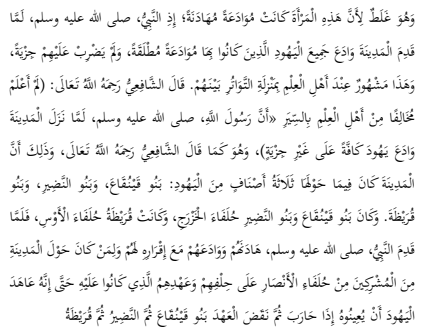
"اور یہ ایک غلطی ہے کیونکہ یہ عورت امن اور معاہدے (مہادنہ) کے تحت تھی۔ اس کی وجہ یہ ہے کہ جب نبی ﷺ مدینہ تشریف لائے تو آپ ﷺ نے وہاں مقیم تمام یہودیوں کے ساتھ بلا قید و بند کے امن کا معاہدہ کیا اور ان پر جزیہ عائد نہیں کیا۔ اہل علم کے درمیان یہ بات تواتر کے درجے تک مشہور ہے۔ شافعی (اللہ ان پر رحم فرمائے) نے فرمایا: 'میں سیرت کے اہل علم میں سے کسی کو بھی ایسا نہیں جانتا جو اس نکتے پر اختلاف کرتے ہوں کہ جب رسول اللہ ﷺ مدینہ میں مقیم ہوئے تو آپ ﷺ نے بغیر جزیہ کے عائد کیے تمام یہودیوں کے ساتھ امن کا معاہدہ کیا تھا۔' جیسا کہ شافعی (اللہ ان پر رحم فرمائے) نے بیان کیا ہے۔ اس کی وجہ یہ ہے کہ مدینہ کے گرد یہودیوں کے تین گروہ موجود تھے: بنو قینقاع، بنو النضیر اور بنو قریظہ۔ بنو قینقاع اور بنو النضیر خزرج کے اتحادی تھے، جبکہ بنو قریظہ اوس کے اتحادی تھے۔ پھر جب رسول اللہ ﷺ مدینہ تشریف لائے، تو آپ ﷺ نے ان کے ساتھ ان کی رضامندی کے ساتھ معاہدہ اور امن قائم کیا، اور ساتھ ہی مدینہ کے گرد موجود ان مشرکین کے ساتھ بھی جو انصار کے اتحادی تھے، ان کے اس اتحاد اور عہد کی بنیاد پر جو وہ پہلے سے رکھتے تھے۔ آپ ﷺ نے یہودیوں سے یہ عہد بھی لیا کہ اگر آپ ﷺ کے خلاف جنگ کی گئی تو وہ آپ ﷺ کی مدد کریں گے۔ پھر بنو قینقاع نے عہد توڑ دیا، اس کے بعد بنو النضیر اور پھر بنو قریظہ نے" [اقتباس کا اختتام]۔
“And it is a mistake because this woman was at peace and under a truce (Muhadanah). That is because when the Prophet (peace be upon him) came to Al-Madinah he made peace with all of the Jews residing there an unrestricted manner and he did not impose Jizyah upon them. This is well-known by the people of knowledge to the level of Tawatur (decisive concurrent transmission) among them. Ash- Shafi’iy (may Allah’s mercy be upon him) said: “I do not of any from the people of knowledge of Seera who disagree upon the point “That when the Messenger of Allah (peace be upon him) settled in Al- Madinah, he made peace with all of the Jews without the imposition of the Jizyah”. It is as Ash-Shafi’iy (May Allah’s mercy be upon him) stated. That is because Al-Madinah had three groups of Jews surrounding it: Banu Qainuqaa’, Banu An-Nadir and Banu Quraizha. Banu Qainuqaa’ and Banu An-Nadir were allies of the Khazraj, while Banu Quraizha were allies of the Aws. Then when the Messenger of Allah (peace be upon him) came to Al-Madinah, he made a truce and peace with them with his approval of them, alongside those who were around Al-Madinah from the polytheists who were allies of the Ansar, upon the basis of their alliance and covenant that they had previously been upon. He even took a covenant from the Jews that they would support him if he was fought against. Then, Banu Qainuqaa’ broke the covenant, followed by An-Nadir and then Quraizha” [End of Quote].
یہ اس صورت میں بھی ہے اگر یہاں استعمال ہونے والے بعض الفاظ شاید سب سے زیادہ درست نہ ہوں، جیسے کہ ان کا یہودی عورت کے بارے میں یہ بیان کرنا کہ وہ "مہادنہ" (صلح) کے تحت تھی، جبکہ ابھی تک کوئی لڑائی ہوئی ہی نہیں تھی کہ اس کے بعد کوئی صلح نافذ ہوتی۔ ہو سکتا ہے کہ یہ محض الفاظ کا ایک غلط استعمال ہو۔
That is even if some of the expressions used here were possibly not the most accurate, like his statement describing the Jewish woman as being under a “truce” (Muhadanah), as there had not even been any fighting, for a truce to have come into effect followed it. It may be that this was merely a slip of expression.

"وثیقہ (دستاویز) دو مواقع پر لکھی گئی تھی، ایک جب نبی ﷺ مدینہ پہنچے، اسلام کے غلبہ اور اس کے مضبوط ہونے سے پہلے، اور دوسرا اس سے پہلے کہ آپ ﷺ کو اہل کتاب سے جزیہ لینے کا حکم دیا گیا تھا۔"
“The Wathiqa (document) was written on two occurrences (Hadathani), when the Prophet (peace be upon him) arrived in Al- Madinah, prior to the dominance of Islam and its becoming strong and before he was commanded to take the Jizyah from Ahl ul-Kitab (the people of the book)” .
یہ مبہم ہے کیونکہ لفظ "حدثنی" ہمارے لیے کوئی ایسا متعین وقت کا تعین نہیں کرتا جسے مدنظر رکھا جا سکے۔ اسلام صرف اس وقت بڑے پیمانے پر ظاہر ہوا اور حقیقی معنوں میں طاقتور بنا جب احزاب (یعنی غزوہ خندق) کو شکست ہوئی۔ اس کی وجہ یہ تھی کہ نبی ﷺ نے لوگوں کے خلاف جارحانہ کارروائی شروع کر دی تھی اور اب وہ (لوگ) آپ ﷺ کے خلاف جارحانہ کارروائی نہیں کر رہے تھے۔ مزید برآں، ہمیں یہ معلوم نہیں کہ آپ ﷺ کو لوگوں سے جزیہ لینے کا حکم کب دیا گیا تھا۔ اگرچہ آپ ﷺ کا یہ بیان کہ "اہلِ کتاب سے جزیہ لو" ایک مشہور غلطی کی تکرار ہے، کیونکہ حقیقت یہ ہے کہ جزیہ مشرکین سے بھی لیا جاتا تھا، جن میں مجوس بھی شامل تھے، جیسا کہ النعمان بن مقرن کی حدیث میں بیان آیا ہے، جو صحیح مسلم اور دیگر کتب میں درج ہے۔ 2) جہاں تک البلاذری کے بیان کا تعلق ہے
is vague because the word “Hadathani” does not establish for us a determined time frame that can be taken into consideration. Islam only manifested in a prevalent manner and truly became powerful following the defeat of the confederates (Ahzab i.e. battle of the trench). That is because the Prophet (peace be upon him) began to go on the offensive against the people and they were no longer on the offensive against him. In addition, we do not know when he was commanded to take the Jizyah from the people. That is whilst his statement “take the Jizyah from Ahl ul-Kitab (the people of the book)” is a repetition of a well-known error, as the truth is that the Jizyah was taken even from the polytheists, including the Majus, as has come stated in the Hadith of An-Nu’man bin Muqarrin, recorded in Sahih Muslim and other collections. 2) As for the statement of Al-Baladhari
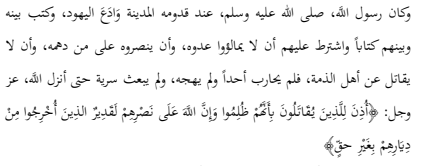
"جب اللہ کے رسول ﷺ مدینہ پہنچے تو آپ ﷺ نے یہودیوں کے ساتھ ایک معاہدہ (مواodont) کیا اور اپنے اور ان کے درمیان ایک دستاویز لکھی۔ آپ ﷺ نے ان پر یہ شرط لگائی کہ وہ آپ ﷺ کے دشمنوں کی حمایت یا ساتھ نہیں دیں گے، اور (یہ شرط بھی تھی کہ) وہ ان لوگوں کے خلاف آپ ﷺ کی مدد کریں گے جو آپ ﷺ پر حملہ کریں، جبکہ آپ ﷺ اہل الذمہ کے دفاع میں جنگ نہیں کریں گے۔ اس کے بعد آپ ﷺ نے کسی کے خلاف جنگ نہیں چھیڑی، نہ ہی انہوں نے آپ ﷺ کی توہین کی اور نہ ہی آپ ﷺ نے کوئی فوجی مہم بھیجی، یہاں تک کہ اللہ عزوجل نے یہ نازل فرمایا: {جن لوگوں پر ظلم کیا گیا ہے انہیں (لڑنے کی) اجازت دے دی گئی ہے، کیونکہ انہیں ناحق ظلم کیا گیا ہے، اور بے شک اللہ ان کی مدد کرنے پر قادر ہے۔ (یہ وہ لوگ ہیں جنہیں) ان کے گھروں سے ناحق نکالا گیا ہے} [سورۃ الحج 22:39-40]"۔
“When the Messenger of Allah (peace be upon him) arrived in Al- Madinah he made a treaty (Muwada’ah) with the Jews and wrote between himself and them a document. He stipulated upon them that they should not support or side with his enemies, to support him against those who attack him and that he would not fight in defence of the Ahl udh-Dhimmah. He did not then wage war against anyone, they did not defame him and he did not dispatch a military expedition, until Allah ‘Azza Wa Jalla revealed: “Permission [to fight] has been given to those who are being fought, because they were wronged. And indeed, Allah is capable of providing them victory. [They are] those who have been evicted from their homes without right” (TMQ 22:39-40)”.
یہ تقریر متضاد ہے کیونکہ آیت کے نزول سے قبل اصل میں آپ ﷺ کو لڑائی میں مشغول ہونے کی اجازت نہیں دی گئی تھی اور آپ ﷺ کسی کے ساتھ جنگ کی حالت میں بھی نہیں تھے۔ نیز مدینہ پر حملے کا کوئی امکان بھی نہ تھا۔ لہٰذا، آپ ﷺ کی تقریر کا یہ جملہ: "انہوں نے ان پر یہ شرط عائد کی کہ وہ اس کے دشمنوں کی حمایت یا ان کا ساتھ نہ دیں، تاکہ وہ ان لوگوں کے خلاف اس کی مدد کریں جو اس پر حملہ آور ہوں"، جو کہ "صحیفہ" میں بیان کردہ کچھ باتوں کا خلاصہ تھا، ناقابلِ تصور ہے اور اس دور میں اس کی کوئی حقیقت نہیں تھی۔ اس سے بھی زیادہ ہولناک یہ بیان ہے: "اور یہ کہ وہ اہل الذمہ کے دفاع میں نہیں لڑیں گے"، بشرطیکہ طباعت میں کوئی غلطی نہ ہو۔ اول یہ کہ اصل میں وہاں کوئی "اہل الذمہ" موجود نہیں تھے۔ دوم، یہ کیسے ہو سکتا ہے کہ وہ ان لوگوں کے خلاف آپ ﷺ کی مدد کرنے کے پابند ہوں جو آپ ﷺ پر حملہ آور ہوں، جبکہ آپ ﷺ ان لوگوں کے خلاف ان کی مدد کرنے کے پابند نہ ہوں جو ان پر حملہ آور ہوں؟! 3) بنو قینقاع کے متعلق البلاذری کا بیان:
This speech is contradictory because he (peace be upon him) had not been permitted in origin to engage in fighting prior to the revelation of the Aayah and was not in a state of war with anyone. There was also no expectation for Al-Madinah to be attacked. Therefore, the sentence from his speech: “He stipulated upon them that they should not support or side with his enemies, to support him against those who attack him”, which summarized some of what came stated in the “Sahifah”, is inconceivable and has no reality to it during that time period. Even more atrocious is the statement: “And that he would not fight in defence of the Ahl udh-Dhimmah”, assuming there was no error in the printing. Firstly, there were no “Ahl udh-Dhimmah” there in origin. Secondly, how could it be that they are obliged to support him against those who attack him, whilst he is not obliged to support them against those who attack them?! 3) The statement of Al-Baladhariy concerning Banu Qainuqaa’:
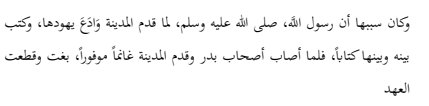
"اس کی وجہ یہ تھی کہ جب رسول اللہ ﷺ مدینہ پہنچے تو آپ ﷺ نے وہاں کے یہودیوں کے ساتھ امن کا معاہدہ کیا اور اپنے اور ان کے درمیان ایک دستاویز لکھی۔ پھر جب مسلمانوں کو بدر میں فتح حاصل ہوئی اور وہ کثیر مالِ غنیمت کے ساتھ مدینہ واپس آئے، تو یہودیوں نے بغاوت کر دی اور عہد توڑ دیا"، پھر اس کا کوئی مطلب نہیں رہتا۔ اس کی وجہ یہ ہے کہ "مواضاہ" (امن کی حالت) اصل بنیاد ہے اور اس کے لیے باقاعدہ طور پر باہمی طور پر معاہدہ کرنے یا لکھنے کی ضرورت نہیں ہوتی۔ یہ اس وقت ہوا جب کعب بن اشرف نے سب سے پہلے حد سے تجاوز کیا، جنگ کی اور "مواضاہ" (امن یا معاہدہ کی حالت) کو توڑ دیا، جو کہ جیسا کہ پہلے ذکر کیا جا چکا ہے، متواتر روایات کے ذریعے ثابت شدہ ہے، اور پھر اس نے "صحفہ" لکھا جس کا مقصد "مواضاہ" قائم کرنا نہیں بلکہ "اتحادِ کنفیڈری" (Confederal Union) قائم کرنا تھا۔ اس کے بعد بنی قینقاع اس "اتحاد" سے نکل گئے اور جنگ شروع کر دی، جس کے بعد بنو النضیر اور پھر قریظہ نے اس سے غداری کی۔ 4) الطبری کے بیان کے متعلق:
“The reason for it was that the Messenger of Allah (peace be upon him), when he arrived in Al-Madinah, made a peace agreement with its Jews and wrote a document between himself and them. Then, when the Muslims were victorious at Badr and came back to Al- Madinah with abundant booty, the Jews rebelled and broke the covenant”, then this also has no meaning to it. That is because the “Muwada’ah” (state of peace) is the origin and does not need to be officially mutually contracted or write. That is while Ka’b bin Al-Ashraf was the first to transgress, war and cut the “Muwada’ah” (state of peace or truce) which, as previously mentioned, has been established via Mutawatir (decisive concurrent) transmissions and he then wrote the “Sahifah” which was not the purpose of establishing a “Muwada’ah” but rather to establish a “Confederal Union (Ittihad Confedarali)”. Thereafter, Bani Qainuqaa’ exited from the “union” and waged war, followed by Banu An-Nadir and then Quraizhah betrayed it. 4) Concerning the statement of At-Tabari:
"پھر اللہ کے رسول ﷺ بدر سے واپسی کے بعد مدینہ میں مقیم رہے۔ جب آپ ﷺ مدینہ پہنچے تو آپ ﷺ نے وہاں کے یہودیوں کے ساتھ اس شرط پر امن کا معاہدہ کیا کہ وہ آپ ﷺ کے خلاف کسی کی مدد نہیں کریں گے اور اگر مدینہ میں کسی دشمن نے آپ ﷺ پر حملہ کیا تو وہ آپ ﷺ کی مدد کریں گے۔ پھر جب اللہ کے رسول ﷺ نے قریش کے مشرکین میں سے ان لوگوں کو قتل کیا جنہیں آپ ﷺ نے قتل کیا تھا، تو انہوں نے آپ ﷺ کے خلاف حسد اور سرکشی کا مظاہرہ کیا اور عہد کی خلاف ورزی کی۔"
“Then the Messenger of Allah (peace be upon him) remained in Al- Madinah after his return from Badr. When he had arrived in Al- Madinah he had made a peace agreement with its Jews upon the stipulation that they do not assist anyone against him and that if he was attacked in Al-Madinah by an enemy, they would support him. Then when the Messenger of Allah (peace be upon him) killed those whom he had killed from the Mushrikin (polytheists) of Quraish, they demonstrated envy and rebelliousness towards him and demonstrated the breaching of the covenant”,
پس یہ اوپر مذکورہ البلاذری کے قول کے عین مطابق ہے اور اس کا رد بھی وہی ہے، اگرچہ یہ (قول) کہیں زیادہ بہتر ہے۔ اس کی وجہ یہ ہے کہ انہوں نے یہ دعویٰ نہیں کیا کہ بدر سے پہلے کی پرانی "مواضہ" (امن یا جنگ بندی کا معاہدہ) کوئی تحریری دستاویز تھی، جیسا کہ البلاذری سے غلطی ہوئی، اور بالکل اسی طرح ان کا متن اس ہولناک جملے کے برابر بھی نہیں ہے کہ "اور یہ کہ وہ اہل الذمہ کے دفاع میں نہیں لڑیں گے"۔ اس کے باوجود، الطبری کا یہ بیان کہ "عہد کی خلاف ورزی (نقض العہد)"، حقیقت کے مطابق نہیں ہے۔ اس کی وجہ یہ ہے کہ اصل میں پہلے سے کوئی "عہد" موجود ہی نہیں تھا بلکہ وہ اپنی اصل حالت میں ایک "مواضہ" تھا۔ الا یہ کہ ہم اس کی قبولیت اور اس پر عمل پیرا ہونے کو ضمناً ایک "عہد" (معاہدہ) تصور کریں؟! جیسا کہ احمد ابو زید کا بیان ہے:
then it is in line with the speech of Al-Baladhariy above and the refutation to it is the same, although it is much better. That is because he did not assert that the old “Muwada’ah” (agreement of peace/truce), prior to Badr, was a written document, as Al-Baladhariy slipped up in, just as his text does not include something equal to the atrocious sentence “And that he would not fight in defence of the Ahl udh-Dhimmah”. Despite that, the statement of At-Tabari “breaching of the covenant (Naqdh Al‘Ahd)” is not something that fits with reality. That is because there was no prior “Ahd” (covenant) in origin but rather a “Muwada’ah” upon its original state. That is unless we were to consider its acceptance and adherence to it as being an “Ahd” (Covenant/treaty) implicitly?! As the statement of Ahmad Abu Zaid:

"ان متواتر شہادتوں میں اتنا کافی ہے کہ اس بات کا غالب گمان قائم ہو سکے کہ یہودیوں کے ساتھ امن معاہدے کی دستاویز ہجرت کے پہلے سال لکھی گئی تھی۔ مزید برآں، اس کے مضامین اور متن کا تجزیہ یہ ظاہر کرتا ہے کہ وہ نبی ﷺ اور یہودیوں کے درمیان کسی تناؤ کی نشاندہی نہیں کرتے۔ چنانچہ، ان تمام باتوں کی وجہ سے، اسلامی انسائیکلوپیڈیا کے دعوے دم توڑ جاتے ہیں اور ان کے شکوک و شبہات مسترد ہو جاتے ہیں"، پھر اس میں اہم، بلکہ مہلک غلطیاں موجود ہیں۔
“In these Mutawatir (concurrent transmissions indicating decisiveness) testimonies, there is enough to establish preponderance to conclude that the peace agreement document with the Jews was written in the first year of the Hijrah. In addition, an analysis of its articles and texts indicate that they are not indicative of any tension between the Prophet (peace be upon him) and the Jews. As such, due to all of this, the claims of the Islamic encyclopaedia fall down and their doubts are refuted”, then there are significant, indeed fatal errors in it.
۱) مورخین کے بیانات یا نظریات کو اس وقت تک شہادت نہیں کہا جا سکتا جب تک کہ وہ کسی معاصر (براہِ راست) گواہ کی طرف سے نہ ہوں۔ بصورتِ دیگر، ایسا نظریہ محض درست یا غلط معلومات یا مقدمات پر مبنی ایک رائے ہوتی ہے۔ ایک بڑی تعداد میں ہم آہنگ یا ملتے جلتے نظریات کو تواتر (یعنی متواتر طریقے سے قطعی طور پر ثابت شدہ) نہیں کہا جاتا اور نہ ہی وہ اثبات کی تواتری (فیصلہ کن) شہادتوں کی حیثیت رکھتے ہیں۔
1) The statements or views of the historians are not called testimonies (shahada) unless it is from a contemporary (first-hand) witness. Otherwise, such a view is merely an opinion based upon correct or incorrect information or premises. A large number of conforming or similar opinions is not called Tawatur (i.e. established definitely by concurrent transmission) and they do not hold the value of Tawatur (decisive) testimonies of affirmation.
2) بعض دستور (قوانین) کسی خانہ جنگی کے بعد لکھے جا سکتے ہیں اور پھر بھی ان کے متن سے شامل فریقین کے درمیان کسی تنازع کا پتہ نہیں چلتا۔ اس کی وجہ یہ ہے کہ دستور کا مقصد ریاست کے نظم و نسق (مثلاً وحدت یا وفاق کی شکل وغیرہ) کا تعین کرنا ہوتا ہے۔ چنانچہ، اس سے پہلے ہونے والے تنازع یا تصادم کی تاریخ نہ تو اس میں لکھی جاتی ہے اور نہ ہی اس کا ذکر کیا جاتا ہے۔ نتیجتاً، اس بیان کے حوالے سے کہ "وہ (یعنی متن) نبی ﷺ اور یہودیوں کے درمیان کسی تنازع کی نشاندہی نہیں کرتے"، تو اس کا الٹ بھی درست ہے۔ کیونکہ کسی کنفیڈرل (وفاقی) دستور یا بین الاقوامی معاہدے کی تحریر بذاتِ خود اس سے پہلے کسی تنازع، تصادم یا جنگ کے وجود کی دلیل نہیں ہے۔ ایسا ہو بھی سکتا تھا اور شاید نہ بھی ہو۔ اس کا علم صرف دیگر تاریخی اشاروں سے ہو سکتا ہے جن کا جائزہ اس دستاویز سے آزاد ہو کر لیا جائے جس کا معائنہ کیا جا رہا ہے، یا خود اس دستاویز کے متن سے جو کسی تنازع کے خاتمے، لڑائی کے رک جانے، یا معاوضوں اور دیت وغیرہ کے مسائل کے حل کی طرف اشارہ کرتے ہوں... استاد احمد ابو زید "اسلامک انسائیکلوپیڈیا" کے ان دعووں کی تردید کرنا چاہتے ہیں جو انہوں نے اس سے کچھ عرصہ قبل احمد ابو زید کی "السیرۃ النبویہ" (صفحہ: 70) میں درج ذیل طور پر مرتب کیے تھے:
"انسائیکلوپیڈیا میں اس کے بعد یہ ذکر کیا گیا کہ اس معاہدہ (معاہدہ) میں حکمت پر مبنی نبوی پالیسی سازی کے حوالے سے کیا چیزیں شامل تھیں، اور اس کے بعد ابن اسحاق کی طرف اشارہ کیا گیا جنہوں نے اس معاہدے کے متن کو محفوظ کیا ہے، پھر یہ بیان کیا گیا کہ: ایسا معلوم ہوتا ہے کہ یہ متن، اپنی تحریر کی تاریخ کے لحاظ سے، ہجرت کے پہلے سال سے تعلق نہیں رکھتا، کیونکہ یہ نبی ﷺ اور یہودیوں کے درمیان کشیدہ تعلقات کی عکاسی کرتا ہے۔"
“After the encyclopaedia mentioned what the contracting of that treaty (Mu’ahadah) contained in terms of wise prophetic policy making and after it indicated to Ibn Ishaq having preserved the text of that treaty, it stated: It appears that this text does not go back, in respect to the date of its writing, to the first year of the Hijrah, because it reflects the tense relations between the Prophet (peace be upon him) and the Jews”.
حقیقت یہ ہے کہ صحیفہ مدینہ ہجرت کے تیسرے سال کے آغاز میں لکھا گیا تھا، جیسا کہ ان تاریخی مرویات سے ثابت ہے جو ہم نے پہلے پیش کیے ہیں۔ اس لحاظ سے، اس معاملے میں انسائیکلوپیڈیا درست تھا۔ جہاں تک ان مستشرقین کے استنتاج کا تعلق ہے، جو اس انسائیکلوپیڈیا کے مصنف ہیں، کہ یہ متن (یعنی صحیفہ)
The truth is that the Sahifah of Al-Madinah was written at the beginning of the third year of Hijrah based upon the evidence of the historical transmitted texts that we have presented earlier. As such, the encyclopaedia was correct regarding this matter. As for the deduction of the orientalists, who are the authors of the encyclopaedia, that the text (i.e. Sahifah)

"نبی ﷺ اور یہودیوں کے درمیان کشیدہ تعلقات کی عکاسی کی گئی"،
“reflected tense relations between the Prophet (peace be upon him) and the Jews”, .
تو پھر یہ بات قائل کرنے والی نہیں ہے اور بے ربط ہے۔ یہاں لوگوں نے اپنے تخیل کو مکمل آزادی دے دی ہے۔ جبکہ تاریخ محض وہ واقعات اور حقائق ہیں جو گزر چکے ہیں، اور اس کی رپورٹنگ براہِ راست چشم دید گواہوں اور اس وقت کے رہنے والوں کے ریکارڈ سے لی جانی چاہیے، نہ کہ تخیلات یا منطقی استدلال سے۔ جی ہاں، یہ سچ ہے کہ صحیفہ کی تحریر کے گرد و نواح کے حالات یہ ظاہر کرتے ہیں کہ یہ یہودیوں میں سے بعض (خاص طور پر کعب بن الاسرف) کے ساتھ تعلقات میں تناؤ کے واقع ہونے کی وجہ سے لکھا گیا تھا۔ تاہم، اس کے متن میں ایسی کوئی چیز شامل نہیں ہے جو کسی سابقہ تناؤ یا تصادم کی طرف اشارہ کرتی ہو، اور نہ ہی دور دور تک!
then this is not convincing and out of place. People have given free reign to their imaginations here. That is whilst history is merely events and realities that have passed by and its reports must be taken from first-hand witnesses and records of those living at the time, not from imaginations or even logical deductions. Yes, it is true that the circumstances surrounding the writing of the Sahifah reveal that it was written due to the occurrence of a tension in the relations with some of the Jews (Ka’b in Al-Ashraf specifically). However, its text does not include anything indicating to any prior tension or conflict and not even remotely!