1.2 पूंजीवाद: जटिल व्यवस्था और दोष का तरीका
1.2 Capitalism: The Complex System and the Fault Mode
पूंजीवाद एक जटिल सामाजिक-राजनीतिक-आर्थिक व्यवस्था है। किसी भी अन्य व्यवस्था की तरह, चाहे वह यांत्रिक हो या सामाजिक, उसकी विफलताएं कुछ निश्चित प्रारूपों का पालन करती हैं। विफलता की प्रकृति को समझने के लिए, या किसी विफलता के घटित होने पर उसे पहचानने के लिए, यह समझना बहुत महत्वपूर्ण है कि विफलताएं किस प्रारूप में घटित होती हैं और स्वयं को कैसे प्रकट करती हैं। सिस्टम की विफलताओं का वर्णन करने के लिए प्रयुक्त सबसे सामान्य प्रारूपों में से एक चित्र 2 में दर्शाया गया है। व्यवस्था की मूल संरचना में एक या अधिक दोष या त्रुटियां हो सकती हैं। ये दोष यदि व्यवस्था के विकास के प्रारंभिक चरणों में पहचान लिए जाएं, तो उन्हें हटा दिया जाता है और/या ठीक कर दिया जाता है। यदि डिज़ाइनरों की असावधानी या पूर्ण ज्ञान की कमी के कारण कोई दोष व्यवस्था में बना रह जाता है, तो वह एक सुप्त दोष बन जाता है। सुप्त दोष तब तक व्यवस्था को कोई हानि नहीं पहुंचाता जब तक उसे किसी ट्रिगर द्वारा उत्तेजित न किया जाए। ट्रिगर वह कोई विशेष स्थिति या वातावरण है जो व्यवस्था के किसी दोष को उत्तेजित या सक्रिय करता है। भौतिक व्यवस्थाओं में सुप्त दोषों का पता व्यापक परीक्षण के माध्यम से लगाया जाता है, जिसमें व्यवस्था को हर प्रकार की स्थितियों और वातावरणों में डाला जाता है। दुर्भाग्यवश, सामाजिक-राजनीतिक-आर्थिक व्यवस्थाओं की प्रयोगशाला में जांच नहीं की जा सकती! इसलिए ऐसी व्यवस्थाओं के सुप्त दोष तभी प्रकट हो सकते हैं जब व्यवस्था वास्तव में लागू हो और लंबे समय तक व्यवहार में रहे, और किसी दिए गए समय पर किसी दिए गए वातावरण में उचित परिस्थितियां उत्पन्न हों। एक बार दोष सक्रिय हो जाने पर, व्यवस्था में एक त्रुटि उत्पन्न होती है, जिससे व्यवस्था अपने सामान्य व्यवहार से विचलित हो जाती है। यदि त्रुटि को समय रहते नियंत्रित और अलग न किया जाए, तो वह पूर्ण व्यवस्था-विफलता का कारण बन सकती है। व्यवस्था की विफलता उसे अपने मुख्य कार्य प्रदान करने या अपने उद्देश्यों को प्राप्त करने में असमर्थ बना देती है।
capitalism is a complex socio-politico-economic system. As in any other system, mechanical or social, failure modes follow certain models. In order to understand the nature of failure or to detect a failure once it occurs, it is very important to understand the model in which failures occur and manifest themselves. One of the most general models used for describing system failures is depicted in figure 2. At the core design of the system, there could be one or more defects or faults. These faults, if detected in the early stages of the system development, are removed and/or fixed. If a fault remains in the system due to oversight by the designers or lack of complete knowledge, it becomes a dormant fault. A dormant fault will not do any harm to the system until it gets excited or provoked by a trigger. A trigger is a certain condition or environment which provokes or excites a certain fault in the system. In physical systems, dormant faults are uncovered and detected through extensive testing which exposes the system to all types of conditions and environments. Unfortunately, social-political-economic systems cannot be tested in a lab! Therefore, dormant faults in such systems can only be exposed when the system is actually implemented and practiced over a long period of time and the proper conditions occur at a given time within a given environment. Once a fault is triggered, the system will experience an error which causes the system to deviate from its normal behavior. An error can lead to complete system failure if not contained and isolated in due time. The failure of the system renders the system unable to provide its main functions or achieve its objectives.
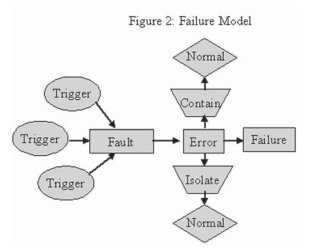
उदाहरण के तौर पर, किसी घर के तहख़ाने (बेसमेंट) के डिज़ाइन में एक कमज़ोर बिंदु को दोष या ख़राबी मान लीजिए। यह कमज़ोर बिंदु वह जगह है जहाँ बारिश या बाढ़ से अत्यधिक पानी घर के अंदर घुस सकता है। इस ख़राबी को सक्रिय करने वाली स्थिति थोड़े समय में बहुत अधिक बारिश है। तहख़ाने के रास्ते घर में पानी का प्रवाह ही त्रुटि है, क्योंकि सामान्य परिस्थितियों में पानी घर के अंदर नहीं आना चाहिए। यह त्रुटि (घर में पानी) घर में रहने वाले लोग या किसी निगरानी उपकरण द्वारा पहचानी जा सकती है। इस प्रकार त्रुटि की पहचान और अलगाव होता है। त्रुटि को इस तरह सीमित करने के लिए कि वह नुकसान तक न पहुँचे, तहख़ाने से अतिरिक्त पानी निकालकर बाहर फेंकने के लिए एक जल पंप का उपयोग किया जाता है। यदि जल पंप नहीं है, या किसी कारण से पंप चालू नहीं होता, तो त्रुटि सीमित नहीं होगी और बाढ़ का पानी घर में बना रहेगा। इससे गंभीर नुकसान हो सकता है, जिसमें घर का ढह जाना भी शामिल है।
As an example, think of a weak spot in the design of a house basement as the defect or fault. The weak spot is where excessive water due to rain or floods can penetrate the house. The triggering condition for this fault is too much rain in a short period of time. The flow of water into the house through the basement is the error, because in normal circumstances water should not come into the house. This error (water in the house) can be detected by people living in the house or some monitoring device. This is how the error is identified and isolated. To contain the error such that it does not lead to damage, a water pump is used to remove the excess water from the basement and push it outside. If there is no water pump, or the pump fails to kick in for some reason, the error will not be contained and the floodwater persists in the house. This may lead to serious damages, including the collapse of the house.
यह विफलता मॉडल हमारे जीवन में बहुत आम है। एक कमज़ोर हृदय, आंशिक रूप से अवरुद्ध धमनियाँ, दोषपूर्ण फेफड़े या अस्वस्थ गुर्दे हर तरह की बीमारियों और दर्द का कारण बनते हैं, जो यदि समय पर इलाज और नियंत्रण न किए जाएँ तो मृत्यु का कारण बन सकते हैं। हमारी कारों में यांत्रिक दोष (रिसने वाले पुर्ज़े, असंतुलित पहिए, अनियमित विद्युत वोल्टेज) गाड़ी में हर तरह की समस्याएँ पैदा कर सकते हैं, जो वाहन के पूरी तरह क्षतिग्रस्त होने या यहाँ तक कि भयंकर दुर्घटनाओं का कारण बन सकते हैं।
This failure model is very common in our life. A weak heart or partially blocked arteries or defective lungs or unhealthy kidneys cause all types of sicknesses and pains, which if not treated and contained in due time may lead to death. Mechanical defects in our cars (leaky parts, unbalanced wheels, irregular electric voltage) can cause all types of problems in the car which can lead to total damage of the vehicle or even to catastrophic accidents.
राजनीतिक, आर्थिक और सामाजिक व्यवस्थाएँ एक-दूसरे से बहुत अलग नहीं हैं। सभी व्यवस्थाओं में दोष और सुप्त खामियाँ हो सकती हैं। इन खामियों को पहचानना, परिभाषित करना और उनका पता लगाना भौतिक व्यवस्थाओं की तुलना में कहीं अधिक कठिन है। विश्लेषण की समस्या का एक हिस्सा यह तथ्य है कि राजनीतिक, आर्थिक और सामाजिक व्यवस्थाओं को आम तौर पर दृढ़ विश्वास रखने वाले लोगों का समर्थन प्राप्त होता है, और कभी-कभी सत्ता और अधिकार रखने वाले लोगों का भी। जब तक सोवियत संघ सशक्त और शक्तिशाली था, समाजवादी व्यवस्था में किसी भी खामी की ओर इशारा करना लगभग असंभव था, उससे उत्पन्न होने वाली त्रुटियों और समस्याओं की तो बात ही छोड़िए। इस कट्टर दृष्टिकोण ने त्रुटियों को उचित रोकथाम के बिना फैलने दिया, जिसके परिणामस्वरूप अंततः पूरी व्यवस्था विफल हो गई। सोवियत संघ और समाजवाद का मामला एक दिलचस्प उदाहरण है और सामाजिक-राजनीतिक-आर्थिक व्यवस्थाओं में दोष-त्रुटि-विफलता मॉडल को समझने के लिए एक उत्कृष्ट उदाहरण है।