6.2 学校教育の段階
6.2 School education stages
教育を段階に分けるにあたっては、それぞれの段階において生徒が子どもであるか、あるいは成人(バーリグ)であるかという現実に注意を払わなければなりません。そして、その段階で保護者(ワリイ・アル=アムル)、ひいては教師や教育者が子どもや成人にどのように接すべきかに関わる、子ども又は成人に関連するシャリーアの根拠と規定に言及しなければなりません。なぜなら、イスラームにおいては、創造主であり統治者(アル=ムダッビル)、世界の主である方が、人間同士の関わり方を規律する拘束力のある体系を定めておられるからです。
While dividing teaching into stages, we must pay attention to the student’s reality as a child or mature (baaligh) person at each stage. And we must refer to the Shari’ah evidences and rules they denote as related to the child or mature person with respect to how his guardian (waliyy al-amr), and consequently the teacher and educator deals with him, since in Islam, the Creator the Director (Al-Mudabir), the Lord of the World, has brought a binding system to regulate how humans deal with each other.
この主題に関する証拠の一つは、アッラーのお言葉(スーラ・アン=ヌール、第58節)です。
Among the evidences related to this subject is Allah Ta’ala’s saying (Surah An-Nur Ayah 58):
﴿يَا أَيُّهَا الَّذِينَ آمَنُوا لِيَسْتَأْذِنكُمُ الَّذِينَ مَلَكَتْ أَيْمَانُكُمْ وَالَّذِينَ لَمْ يَبْلُغُوا الْحُلُمَ مِنكُمْ ثَلَاثَ مَرَّاتٍ مِّن قَبْلِ صَلَاةِ الْفَجْرِ وَحِينَ تَضَعُونَ ثِيَابَكُم مِّنَ الظَّهِيرَةِ وَمِن بَعْدِ صَلَاةِ الْعِشَاءِ ثَلَاثُ عَوْرَاتٍ لَّكُمْ لَيْسَ عَلَيْكُمْ وَلَا عَلَيْهِمْ جُنَاحٌ بَعْدَهُنَّ طَوَّافُونَ عَلَيْكُم بَعْضُكُمْ عَلَىٰ بَعْضٍ كَذَٰلِكَ يُبَيِّنُ اللَّهُ لَكُمُ الْآيَاتِ وَاللَّهُ عَلِيمٌ حَكِيمٌ﴾ 「信仰する者たちよ、あなたがたの右手が所有する者たちと、あなたがたのうちまだ成年に達していない者たちは、三つの時間帯において、あなたがたの許可を求めるように。すなわち、夜明けの礼拝の前、正午ごろに衣服を脱いで休むとき、そして夜の礼拝の後である。これらはあなたがたにとって三つの覆いの時間である。これらの時間以外は、あなたがたにも彼らにも咎めはない。彼らは常にあなたがたの間を行き来しているからである。このようにアッラーはあなたがたに節々を明示される。アッラーは全知にして英明であられる。」 そして、至高なるアッラーは次の節でこう仰せられた。
﴿يََ أَيُّ هَا الَّ ي ذينَ آمَنُوا لييَسْتَأْيذنكُمُ الَّ ي ذينَ مَلَكَتْ أَيَْْانُكُمْ وَالَّ ي ذينَ لََْ يَ بْ لُغُوا الُْْلُمَ يمنكُ مْ ثَلََثَ مَرَّا ت يمِّن قَ بْيل صَلََية الْفَجْير وَي حينَ تَضَعُونَ ثييَابَكُم يمِّنَ الظَّيهيرَية وَيمن بَ عْ ي د صَلََية الْيعشَايء ثَلََثُ عَوْرَا ت لَّكُمْ لَيْسَ عَلَيْكُمْ وَلَا عَلَيْيهمْ جُنَاحٌ بَ عْدَهُنَّ طَوَّافُونَ عَلَيْكُم بَ عْضُكُمْ عَلَىٰ بَ عْ ض كَذَٰليكَ ي بَُييِّنُ اللَّ هُ لَكُمُ الْآيََ ي ت وَاللَّ هُ عَلييمٌ حَ ي كيمٌ ﴾ “O you who have believed, let those whom your right hands possess and those who have not [yet] reached puberty among you ask permission of you [before entering] at three times: before the dawn prayer and when you put aside your clothing [for rest] at noon and after the night prayer. [These are] three times of privacy for you. There is no blame upon you nor upon them beyond these [periods], for they continually circulate among you - some of you, among others. Thus does Allah make clear to you the verses; and Allah is Knowing and Wise.” And He Ta’ala said in the following Ayah:
﴿وَإِذَا بَلَغَ الْأَطْفَالُ مِنكُمُ الْحُلُمَ فَلْيَسْتَأْذِنُوا كَمَا اسْتَأْذَنَ الَّذِينَ مِن قَبْلِهِمْ كَذَٰلِكَ يُبَيِّنُ اللَّهُ لَكُمْ آيَاتِهِ وَاللَّهُ عَلِيمٌ حَكِيمٌ ﴾ 「そして、あなたがたの中の子供たちが成人に達したときは、彼らより前の人々が許可を求めたように、許可を求めさせなさい。このようにアッラーは、ご自身の印をあなたがたに明らかにされる。アッラーは全知にして、英明であられる。」[アン=ヌール章:59] そして預言者ﷺは言われた。
﴿وَإيذَا بَ لَغَ الْأَطْفَالُ يمنكُمُ الُْْلُمَ فَ لْيَسْتَأْيذنُوا كَمَا اسْتَأْذَنَ الَّ ي ذينَ يمن قَ بْيليهمْ كَذَٰليكَ ي بَُييِّنُ اللَّ هُ لَكُمْ آيََتييه وَاللَّ هُ عَلييمٌ حَ ي كيمٌ ﴾ “And when the children among you reach puberty, let them ask permission [at all times] as those before them have done. Thus does Allah make clear to you His verses; and Allah is Knowing and Wise.” [An-Nur: 59] And the Prophet (SAW) said:
「ペンは三者から上げられる。正気を失って意識が覆われた狂人は、正気に戻るまで。眠っている者は、目覚めるまで。子どもは、精通に至るまで」(アブー・ダーウードがその『スナン』に伝えた。)そして預言者ﷺは仰った。「アスマーよ、女性が月経の年齢に達したら、見えてよいのはこれとこれだけである」と仰り、ご自身の顔と両手のひらを指し示された。(アブー・ダーウードがその『スナン』に伝えた。)そして、アティーヤー・アル=クラディーによれば、彼はこう言った。
رفع القلم عن ثلَثة، عن المجنون المغلوب على عقله حتى يفيق، وعن النائم حتى « » يستيقظ، وعن الصبي حتى يحتلم “The pen (i.e. accountability) is lifted from three persons: The insane whose mind is overcome until he recovers, the sleeper until he awakes and the child until he attains puberty.” (Narrated by Abu Dawud in his Sunan). And he (SAW) said: » يَ أسماء إن المرأة إذا بلغت المحيض لَ تصلح أن يرى منها إلا هذا وهذا « “‘O Asma, when the female reaches the age of menstruation, nothing should be seen of her except this and this’ and he indicated his face and palms.” (Narrated by Abu Dawud in his Sunan). And from ‘Atiya Al-Quradhi who said:
「私たち(すなわちバヌ・クラィザ族)は、クライザの日に預言者ﷺの前に連れて行かれました。陰毛が生えている者は殺され、生えていない者は解放されました。私は陰毛が生えていなかったので解放されました」(ティルミズィーが『スナン』において伝えたもの)。彼はまた次のように伝えています。
)عُيرضنا على النبي يوم قريظة فكان من أنبت قُتيل، ومن لَ ينبت خُلِّى سبيله، فكنت ممن لَ ينبت فخُلِّى سبيلي( “We (i.e. Bani Quraydha) were shown to the Prophet on the Day of Quradhya. Whoever had grown pubic hairs was killed while the one without growth was released. I was among those without growth so I was released.” (Narrated by Tirmidhi narrated in his Sunan). He also narrated,
「S'ad がバヌ・クライザに裁定を下したあと、預言者はその者たちの腰布を外して(陰部を)確認するよう命じた」。そしてウスマーンは、ある少年が連れてこられたとき、こう言った。「その者の腰布を見よ」。そして、陰毛が生えていないことがわかったので、(その手を)切らなかった。このことに異を唱えた教友は一人もいなかった。また預言者ﷺは言われた。「子どもたちが七歳になったら礼拝をするよう命じなさい。十歳になっても(礼拝をしない場合)はそのことで叩きなさい。そして寝床は別々にしなさい」(イマーム・アフマドが『ムスナド』で伝えている)。これらの証拠は、子ども時代が思春期、すなわち成人の年齢に達したときに終わることを示している。イスラームは、子ども時代と成人を区別する明確で具体的な指標を定めた。男性の場合は夢精または陰毛の出現、女性の場合は月経または妊娠である。また、思春期に達した者に適用される規定は、それ以前には適用されないことも示している。さらに預言者ﷺは言われた。「子どもたちが七歳になったら礼拝をするよう命じなさい。十歳になったら(礼拝をしないことで)叩きなさい」(イマーム・アフマドが『ムスナド』で伝えている)。このハディースは、子どもの躾が二段階に分かれることを示している。子どもが十歳に達する前は、叩いて躾けることは用いられない。ハディースは、礼拝を命じることに限定し、叩くことを禁じているからである。したがって、礼拝以外のことを教える場合も、なおさら叩いてはならない。この段階の躾は、言葉による諭しと脅しの方法に限られ、叩くことはない。一方、十歳に達してから思春期までの段階では、必要な場合に叩いて躾けることを含む。 しかし、フドゥード(hudood)およびシャリーア上の刑罰(ʿuqūbāt)は、彼が思春期、すなわち成熟の段階に達するまで彼に適用されない。これは預言者(ﷺ)の次の言葉に基づく。
» أنَّ النبي لما حكَّم سعد اً فِ بني قريظة كان يكشف عن مؤتزرهم « “That after S’ad adjudicated regarding Quraydha, the Prophet commanded with exposing their wrappings (covering their private parts).” And Uthman said when a young boy was brought to him: » انظروا إلى مؤتزره، فوجدوه لَ ينبت فلم يقطع « “Look at his wrapper. They found him without pubic hair so they did not cut (his hand)” and no Sahabah denied this. And he (SAW) said: مروا صبيانكم بالصلَة إذا بلغوا سبعاً، واضربوهم عليها إذا بلغوا عش راً، وفرقوا بينهم « » فِ المضاجع “Command your children to pray when they attain seven years, and beat them over it (not praying) when they attain ten years. And separate between them in the beds.” (Narrated by Imam Ahmed in his Musnad). These evidences indicate that childhood ends when children attain puberty i.e. the age of maturity. Islam assigned distinctive tangible milestones separating childhood from maturity: when wet dreams occur or pubic hairs appear in males, and menstruation or pregnancy for females. It also indicated that the rules that are applied upon those attaining puberty do not apply upon them beforehand. And he (SAW) said: » مُ ر وا أبناءكم بالصلَة لسبع سنين واضربوهم عليها لعشر سنين « “Command your children to pray when they attain seven years, and beat them over it (for not praying) when they attain ten years” (Narrated by Imam Ahmed in his Musnad). The hadith shows that disciplining children is divided into two stages: The stage before the child attains ten years where beating is not used to discipline him because the hadith restricts one to command him with prayer without beating him. Thus, by greater reason, he is not beaten for being taught other than the prayer. His discipline is restricted to styles of exhortation and threats without beating. And the stage after he attains ten years until puberty his discipline includes beating him if necessary. However the hudood and Shari’ah punishments (‘uqoobaat) do not apply upon him until after attaining puberty i.e. the stage after maturity due to his (SAW) saying:
「筆は三種の人から上げられる。子供は成人するまで、眠っている者は目覚めるまで、精神障害者は回復するまで」(アブー・ダーウードがその『スナン』で伝えている)。ここでの「筆が上げられる」という表現の意味は、責任を問われないということである。子供が思春期に達すると、シャリーアはその者に責任があるとみなすため、シャリーアの規定や禁止事項に違反した場合には、司法の判断によって罰せられる。これには、成熟した生徒や高等教育の学校に裁判官がいることが必要である。
رُفع القلم عن ثلَثة، عن الصبيِّ حتى يبلغ، وعن النائم حتى يستيقظ، وعن المعتوه « » حتى يبرأ “The pen (i.e. accountability) is lifted from three persons: The child until he matures, the sleeper until he awakes and the imbecile until he recovers” (Narrated by Abu Dawud in his Sunan). The meaning of » رُفع القلم عن ثلَثة « “lifting the pen” here is non-accountability. When children attain puberty, the Shar’a deems them accountable so they are punished by judicial decree if they commit a violation (of the Shari’ah rules) or a haram. This requires the presence of judges in schools of mature students and higher level education.
これらの、子どもと成熟した人間に関する規則は、教育段階を設計する際に遵守されなければならない。なぜなら、タルビヤ(子どもの養育)と規律は教育の前提条件だからである。第一段階は、子どもが学校に入学してから十歳に達するまでである。第二段階は、十歳に達してから思春期までであり、温暖な気候の国々では通常十五歳で思春期を迎える。そして第三段階は、十五歳から学校教育を修了するまでである。
These rules with respect to the child and mature person must be observed when devising teaching stages since tarbiyyah (raising of children) and discipline are prerequisites of education. The primary stage extends from the child’s entry into school until he reaches ten years. The second stage extends from his attaining ten years until puberty which normally occurs at fifteen years of age in countries of moderate climate. And the third stage extends from fifteen years until he completes school education.
これらの証拠と規則に基づき、ハリーファ国家における学校教育の段階は、学科ではなく生徒の年齢を基準として区分される。学校は次のように三つの種類に分けられる。
Based upon these evidences and rules, school teaching stages in the Khilafah State are divided upon the basis of student ages and not subjects offered by the school. Schools are divided into three types in the following manner:
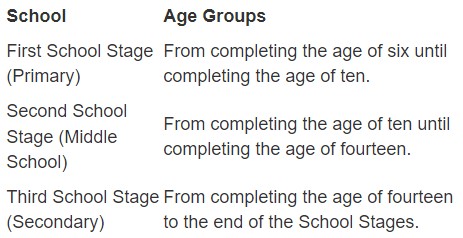
生徒が十歳に達すると、学業成績にかかわらず第二段階の学校へ進級させるよう配慮がなされる。また、思春期に達した場合には、学業面でその段階に到達していなくても、第三段階の学校(思春期に達した生徒の学校)へ進級させる。教育省が公立学校で実施する学期制度が、生徒を年齢層に応じて学校に配属することをどのように保証するのかについては、まもなく説明する。
Once the student completes ten years of age, care is taken to transfer him to the second stage of schooling irrespective of his academic achievement. And once he attains puberty, he is transferred to the third school stage (schools of students who reached puberty) whether or not he has attained that stage academically. We shall soon demonstrate how the system of school terms that will be implemented by the Education Department in State schools, guarantees the assigning of students to schools according to their age groups.
6歳以前の教育(保育園および幼稚園)については、人々の裁量に委ねられる。この目的で私立の学校を設立することを望む者は、国家がその教科内容とカリフが採用する教育政策との適合性について、この教育を監督することを条件として、それが許される。
As for education before six years, (Nurseries and Kindergarten), this is at the people’s discretion. If one wishes to establish a private school for this purpose, one is allowed to do so provided the State supervises this teaching with respect to study subjects and their conformity to the education policy adopted by the Khalifah.