6.2 Etapas de la educación escolar
6.2 School education stages
Al dividir la enseñanza en etapas, debemos prestar atención a la realidad del alumno como niño o como persona madura (baaligh) en cada etapa. Y debemos remitirnos a las evidencias de la Shari'ah y a las normas que estas señalan en relación con el niño o la persona madura, en cuanto a cómo lo trata su tutor (waliyy al-amr), y en consecuencia cómo lo tratan el maestro y el educador, pues en el Islam, el Creador, el Administrador (Al-Mudabir), Señor de los mundos, ha establecido un sistema vinculante que regula el modo en que los seres humanos se relacionan entre sí.
While dividing teaching into stages, we must pay attention to the student’s reality as a child or mature (baaligh) person at each stage. And we must refer to the Shari’ah evidences and rules they denote as related to the child or mature person with respect to how his guardian (waliyy al-amr), and consequently the teacher and educator deals with him, since in Islam, the Creator the Director (Al-Mudabir), the Lord of the World, has brought a binding system to regulate how humans deal with each other.
Entre las pruebas relacionadas con este tema está el dicho de Allah Ta'ala (Surat An-Nur, aleya 58):
Among the evidences related to this subject is Allah Ta’ala’s saying (Surah An-Nur Ayah 58):
﴿يََ أَيُّ هَا الَّ ي ذينَ آمَنُوا لييَسْتَأْيذنكُمُ الَّ ي ذينَ مَلَكَتْ أَيَْْانُكُمْ وَالَّ ي ذينَ لََْ يَ بْ لُغُوا الُْْلُمَ يمنكُ مْ ثَلََثَ مَرَّا ت يمِّن قَ بْيل صَلََية الْفَجْير وَي حينَ تَضَعُونَ ثييَابَكُم يمِّنَ الظَّيهيرَية وَيمن بَ عْ ي د صَلََية الْيعشَايء ثَلََثُ عَوْرَا ت لَّكُمْ لَيْسَ عَلَيْكُمْ وَلَا عَلَيْيهمْ جُنَاحٌ بَ عْدَهُنَّ طَوَّافُونَ عَلَيْكُم بَ عْضُكُمْ عَلَىٰ بَ عْ ض كَذَٰليكَ ي بَُييِّنُ اللَّ هُ لَكُمُ الْآيََ ي ت وَاللَّ هُ عَلييمٌ حَ ي كيمٌ ﴾ «¡Oh, creyentes! Que pidan permiso para entrar a vuestra presencia los esclavos que poseéis y los que de entre vosotros no han alcanzado la pubertad, en tres momentos: antes de la oración del amanecer, cuando os quitáis la ropa al mediodía y después de la oración de la noche. Estos son tres momentos de intimidad para vosotros. No hay culpa para vosotros ni para ellos fuera de estos momentos, pues continuamente andáis entre vosotros unos con otros. Así os aclara Allah los aleyas, y Allah es Omnisciente, Sabio.» Y el Altísimo dijo en la siguiente aleya:
﴿يََ أَيُّ هَا الَّ ي ذينَ آمَنُوا لييَسْتَأْيذنكُمُ الَّ ي ذينَ مَلَكَتْ أَيَْْانُكُمْ وَالَّ ي ذينَ لََْ يَ بْ لُغُوا الُْْلُمَ يمنكُ مْ ثَلََثَ مَرَّا ت يمِّن قَ بْيل صَلََية الْفَجْير وَي حينَ تَضَعُونَ ثييَابَكُم يمِّنَ الظَّيهيرَية وَيمن بَ عْ ي د صَلََية الْيعشَايء ثَلََثُ عَوْرَا ت لَّكُمْ لَيْسَ عَلَيْكُمْ وَلَا عَلَيْيهمْ جُنَاحٌ بَ عْدَهُنَّ طَوَّافُونَ عَلَيْكُم بَ عْضُكُمْ عَلَىٰ بَ عْ ض كَذَٰليكَ ي بَُييِّنُ اللَّ هُ لَكُمُ الْآيََ ي ت وَاللَّ هُ عَلييمٌ حَ ي كيمٌ ﴾ “O you who have believed, let those whom your right hands possess and those who have not [yet] reached puberty among you ask permission of you [before entering] at three times: before the dawn prayer and when you put aside your clothing [for rest] at noon and after the night prayer. [These are] three times of privacy for you. There is no blame upon you nor upon them beyond these [periods], for they continually circulate among you - some of you, among others. Thus does Allah make clear to you the verses; and Allah is Knowing and Wise.” And He Ta’ala said in the following Ayah:
﴿وَإذَا بَلَغَ الْأَطْفَالُ مِنكُمُ الْحُلُمَ فَلْيَسْتَأْذِنُوا كَمَا اسْتَأْذَنَ الَّذِينَ مِن قَبْلِهِمْ كَذَٰلِكَ يُبَيِّنُ اللَّهُ لَكُمْ آيَاتِهِ وَاللَّهُ عَلِيمٌ حَكِيمٌ ﴾ “Y cuando los niños de entre vosotros alcancen la pubertad, que pidan permiso [en todo momento] como lo hicieron los que estuvieron antes que ellos. Así es como Allah os aclara Sus aleyas; y Allah es Conocedor, Sabio.” [An-Nur: 59] Y el Profeta ﷺ dijo:
﴿وَإيذَا بَ لَغَ الْأَطْفَالُ يمنكُمُ الُْْلُمَ فَ لْيَسْتَأْيذنُوا كَمَا اسْتَأْذَنَ الَّ ي ذينَ يمن قَ بْيليهمْ كَذَٰليكَ ي بَُييِّنُ اللَّ هُ لَكُمْ آيََتييه وَاللَّ هُ عَلييمٌ حَ ي كيمٌ ﴾ “And when the children among you reach puberty, let them ask permission [at all times] as those before them have done. Thus does Allah make clear to you His verses; and Allah is Knowing and Wise.” [An-Nur: 59] And the Prophet (SAW) said:
«Se alza la pluma (es decir, la responsabilidad) de tres personas: del loco cuya mente está dominada hasta que se recupera, del que duerme hasta que despierta, y del niño hasta que alcanza la pubertad». (Narrado por Abu Dawud en su Sunan). Y el Profeta ﷺ dijo: «¡Oh Asma, cuando la mujer llega a la edad de la menstruación, no debe verse de ella sino esto y esto!», e indicó su rostro y sus palmas. (Narrado por Abu Dawud en su Sunan). Y de ‘Atiyya Al-Qurazi, quien dijo:
رفع القلم عن ثلَثة، عن المجنون المغلوب على عقله حتى يفيق، وعن النائم حتى « » يستيقظ، وعن الصبي حتى يحتلم “The pen (i.e. accountability) is lifted from three persons: The insane whose mind is overcome until he recovers, the sleeper until he awakes and the child until he attains puberty.” (Narrated by Abu Dawud in his Sunan). And he (SAW) said: » يَ أسماء إن المرأة إذا بلغت المحيض لَ تصلح أن يرى منها إلا هذا وهذا « “‘O Asma, when the female reaches the age of menstruation, nothing should be seen of her except this and this’ and he indicated his face and palms.” (Narrated by Abu Dawud in his Sunan). And from ‘Atiya Al-Quradhi who said:
)عُيرضنا على النبي يوم قريظة فكان من أنبت قُتيل، ومن لَ ينبت خُلِّى سبيله، فكنت ممن لَ ينبت فخُلِّى سبيلي( "Fuimos presentados al Profeta ﷺ el día de Quraiza. Quien ya había desarrollado vello púbico era ejecutado, y quien no lo había desarrollado era liberado. Yo estaba entre los que no lo habían desarrollado, por lo que fui liberado." (Narrado por Tirmidhi en su Sunan). También narró,
)عُيرضنا على النبي يوم قريظة فكان من أنبت قُتيل، ومن لَ ينبت خُلِّى سبيله، فكنت ممن لَ ينبت فخُلِّى سبيلي( “We (i.e. Bani Quraydha) were shown to the Prophet on the Day of Quradhya. Whoever had grown pubic hairs was killed while the one without growth was released. I was among those without growth so I was released.” (Narrated by Tirmidhi narrated in his Sunan). He also narrated,
"Que después de que Sa'd dictara sentencia sobre los de Quraiza, el Profeta ﷺ ordenó que se les descubriera la vestimenta (que cubría sus partes íntimas)". Y Uthman, cuando le trajeron a un joven, dijo: "Miren su vestimenta", y encontraron que no le había salido vello púbico, así que no le cortaron (la mano), y ninguno de los Compañeros lo negó. Y el Profeta ﷺ dijo: "Ordenad a vuestros hijos que recen cuando cumplan siete años, y golpeadlos por ello (por no rezar) cuando cumplan diez años, y separad sus camas." (Narrado por el Imam Ahmad en su Musnad). Estas evidencias indican que la infancia termina cuando los niños alcanzan la pubertad, es decir, la edad de la madurez. El Islam asignó hitos tangibles y distintivos que separan la infancia de la madurez: en los varones, las poluciones nocturnas o la aparición del vello púbico; en las hembras, la menstruación o el embarazo. También indicó que las normas que se aplican a quienes alcanzan la pubertad no se aplican a ellos antes. Y el Profeta ﷺ dijo: "Ordenad a vuestros hijos que recen a los siete años, y golpeadlos por ello (por no rezar) a los diez años." (Narrado por el Imam Ahmad en su Musnad). El hadiz muestra que la disciplina de los niños se divide en dos etapas: la etapa anterior a que el niño cumpla diez años, en la que no se emplea el golpe para disciplinarlo, pues el hadiz limita la orden de rezar sin golpearlo; por tanto, con mayor razón no se le golpea por aprender otra cosa distinta a la oración, y su disciplina se limita a estilos de exhortación y amenaza sin golpes. Y la etapa posterior, desde que cumple diez años hasta la pubertad, en la que su disciplina incluye golpearlo si es necesario. Sin embargo, los hudud y los castigos de la Sharía (‘uqubat) no se le aplican hasta después de alcanzar la pubertad, es decir, la etapa posterior a la madurez, debido a su dicho ﷺ:
» أنَّ النبي لما حكَّم سعد اً فِ بني قريظة كان يكشف عن مؤتزرهم « “That after S’ad adjudicated regarding Quraydha, the Prophet commanded with exposing their wrappings (covering their private parts).” And Uthman said when a young boy was brought to him: » انظروا إلى مؤتزره، فوجدوه لَ ينبت فلم يقطع « “Look at his wrapper. They found him without pubic hair so they did not cut (his hand)” and no Sahabah denied this. And he (SAW) said: مروا صبيانكم بالصلَة إذا بلغوا سبعاً، واضربوهم عليها إذا بلغوا عش راً، وفرقوا بينهم « » فِ المضاجع “Command your children to pray when they attain seven years, and beat them over it (not praying) when they attain ten years. And separate between them in the beds.” (Narrated by Imam Ahmed in his Musnad). These evidences indicate that childhood ends when children attain puberty i.e. the age of maturity. Islam assigned distinctive tangible milestones separating childhood from maturity: when wet dreams occur or pubic hairs appear in males, and menstruation or pregnancy for females. It also indicated that the rules that are applied upon those attaining puberty do not apply upon them beforehand. And he (SAW) said: » مُ ر وا أبناءكم بالصلَة لسبع سنين واضربوهم عليها لعشر سنين « “Command your children to pray when they attain seven years, and beat them over it (for not praying) when they attain ten years” (Narrated by Imam Ahmed in his Musnad). The hadith shows that disciplining children is divided into two stages: The stage before the child attains ten years where beating is not used to discipline him because the hadith restricts one to command him with prayer without beating him. Thus, by greater reason, he is not beaten for being taught other than the prayer. His discipline is restricted to styles of exhortation and threats without beating. And the stage after he attains ten years until puberty his discipline includes beating him if necessary. However the hudood and Shari’ah punishments (‘uqoobaat) do not apply upon him until after attaining puberty i.e. the stage after maturity due to his (SAW) saying:
«رُفع القلم عن ثلاثة: عن الصبيِّ حتى يبلغ، وعن النائم حتى يستيقظ، وعن المعتوه حتى يبرأ» (رواه أبو داود في سننه). "Rafa'a al-qalam" (es decir, la rendición de cuentas) se levanta de tres personas: el niño hasta que alcanza la pubertad, el que duerme hasta que despierta y el demente hasta que se recupera. El significado de «رُفع القلم عن ثلاثة» aquí es la ausencia de responsabilidad. Cuando los niños alcanzan la pubertad, la Sharía los considera responsables, de modo que son castigados por decisión judicial si cometen una transgresión (de las normas de la Sharía) o un haram. Esto requiere la presencia de jueces en las escuelas de estudiantes maduros y de educación superior.
رُفع القلم عن ثلَثة، عن الصبيِّ حتى يبلغ، وعن النائم حتى يستيقظ، وعن المعتوه « » حتى يبرأ “The pen (i.e. accountability) is lifted from three persons: The child until he matures, the sleeper until he awakes and the imbecile until he recovers” (Narrated by Abu Dawud in his Sunan). The meaning of » رُفع القلم عن ثلَثة « “lifting the pen” here is non-accountability. When children attain puberty, the Shar’a deems them accountable so they are punished by judicial decree if they commit a violation (of the Shari’ah rules) or a haram. This requires the presence of judges in schools of mature students and higher level education.
Estas normas referidas al niño y a la persona madura deben observarse al diseñar las etapas de enseñanza, pues la tarbiyyah (crianza de los hijos) y la disciplina son requisitos previos de la educación. La etapa primaria se extiende desde el ingreso del niño en la escuela hasta que cumple diez años. La segunda etapa abarca desde los diez años hasta la pubertad, que normalmente se produce a los quince años en países de clima templado. Y la tercera etapa va desde los quince años hasta que completa la educación escolar.
These rules with respect to the child and mature person must be observed when devising teaching stages since tarbiyyah (raising of children) and discipline are prerequisites of education. The primary stage extends from the child’s entry into school until he reaches ten years. The second stage extends from his attaining ten years until puberty which normally occurs at fifteen years of age in countries of moderate climate. And the third stage extends from fifteen years until he completes school education.
Sobre la base de estas evidencias y reglas, las etapas de la enseñanza escolar en el Estado del Califato se dividen según la edad de los estudiantes y no según las materias que ofrece la escuela. Las escuelas se dividen en tres tipos de la siguiente manera:
Based upon these evidences and rules, school teaching stages in the Khilafah State are divided upon the basis of student ages and not subjects offered by the school. Schools are divided into three types in the following manner:
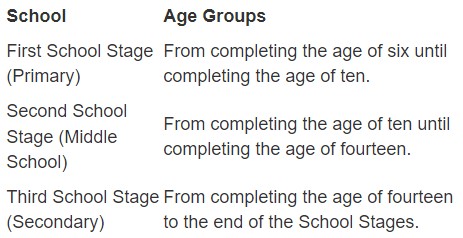
Una vez que el alumno cumple diez años de edad, se procura trasladarlo a la segunda etapa de la escolarización, independientemente de su rendimiento académico. Y cuando alcanza la pubertad, se le traslada a la tercera etapa escolar (escuelas de alumnos que han alcanzado la pubertad), tanto si ha logrado o no ese nivel académicamente. Pronto demostraremos cómo el sistema de trimestres escolares que implementará el Departamento de Educación en las escuelas estatales garantiza la asignación de los alumnos a las escuelas según sus grupos de edad.
Once the student completes ten years of age, care is taken to transfer him to the second stage of schooling irrespective of his academic achievement. And once he attains puberty, he is transferred to the third school stage (schools of students who reached puberty) whether or not he has attained that stage academically. We shall soon demonstrate how the system of school terms that will be implemented by the Education Department in State schools, guarantees the assigning of students to schools according to their age groups.
En cuanto a la educación antes de los seis años (guarderías y jardín de infantes), esta queda a discreción de la gente. Si alguien desea establecer una escuela privada para este fin, se le permite hacerlo, siempre que el Estado supervise esta enseñanza en cuanto a las materias de estudio y su conformidad con la política educativa adoptada por el Jalifa.
As for education before six years, (Nurseries and Kindergarten), this is at the people’s discretion. If one wishes to establish a private school for this purpose, one is allowed to do so provided the State supervises this teaching with respect to study subjects and their conformity to the education policy adopted by the Khalifah.