۵.۵ انصاف درباره کثیر بن عبدالله بن عمرو بن عوف المزنی
5.5 Fairness to Kathir bin Abdullah bin ‘Amr bin ‘Awf Al- Muzani
- جاء في «تقريب التهذيب» لابن حجر (1/460/5617): [كثير بن عبد الله بن عمرو بن عوف المزني المدني ضعيف، ونسبه بعضهم إلى الكذب فبالغ. (وهو) من السابعة].
- The following came stated in in “Taqrib At-Tahdhib” [Ibn Hajar] (1/460/5617): [Kathir bin Abdullah bin ‘Amr bin ‘Awf Al-Muzani Al- Madani is Da’if (weak). Those who attributed lying to him were excessive. (He was from) the seventh (i.e. generation or line of transmission)].
- اما در «إرواء الغليل» از آلبانی (۵/۱۵۵) چنین آمده است: [الحافظ (یعنی ابن حجر) گفته است [در «فتح الباری» (۴/۳۷۱)]: و کثیر بن عبدالله در نظر اکثریت ضعیف است، اما البخاری و کسانی که از او پیروی کردند، مانند الترمذی و ابن خزیمه، شأن او را تقویت کردهاند.]
- However, in “Irwaa’ Al-Ghalil”, by Al-Albani (5/155), the following was stated: [Al-Hafizh (i.e. ibn Hajar) said [in Al-Fat’h – (4/371)]: [And Kathir bin Abdullah is Da’if in the view of the majority however Al- Bukahri and those who followed him like At-Tirmidhi and Ibn Khuzaimah strengthen his affair (or status)].
- نقل شده در «التاريخ الكبير» [البخاری] (۷/۲۱۷/۹۴۵): [كثير بن عبد الله بن عمرو بن عوف المزني المدني از پدرش شنیده (یا از او دریافت کرده) است، و مروان بن معاویه، اسماعیل بن ابی اویس و یحیی الأنصاری از او روایت کردهاند]. این مطلب در نسخهای دیگر از «التاريخ الكبير» اثر البخاری (۷/۹۶/۹۴۵) نیز آمده است. البخاری او را ضعیف ندانسته و حتی حرفی هم دربارهاش نزده است، حتی یک حرف! - نقل شده در «الجرح والتعديل» [ابن ابی حاتم] (۷/۱۵۴/۸۵۸): [كثير بن عبد الله بن عمرو بن عوف المزني از پدرش و نیز از محمد بن كعب و ربيعة بن عبد الرحمن روایت کرده است، و عبد العزيز بن محمد، مروان بن معاویه، معن بن عیسی، عبد الله بن وهب، عبد الله بن نافع الصائغ، محمد بن خالد بن عثمة، ابو عامر العقدی، خالد بن مخلد، ابن قانع و ابن ابی اویس از او روایت کردهاند. پدرم این را گفته است. عبد الرحمن برای ما روایت کرد از محمد بن حمّاویه بن الحسن که گفت: شنیدم ابوطالب میگفت: از احمد (یعنی احمد بن حنبل) درباره کثیر بن عبد الله بن عمرو بن عوف پرسیدم و گفت: «منکر الحدیث، لا شیء». عبد الرحمن برای ما روایت کرد: گفت: بر العباس بن محمد الدوری از یحیی بن معین خوانده شد که گفت: «كثير بن عبد الله المزني ضعيف في الحديث». عبد الرحمن برای ما روایت کرد. گفت: از ابو زرعه درباره کثیر بن عبد الله بن عمرو بن عوف پرسیدم. گفت: «ضعيف في الحديث، ليس بقوي». به او گفتم: از میان بهز بن حکیم، عبد المهیمن و کثیر بن عبد الله، کدامیک نزد شما محبوبتر است؟ گفت: «بهز و عبد المهیمن نزد من از او محبوبترند». عبد الرحمن برای ما روایت کرد: گفت: از پدرم درباره کثیر بن عبد الله بن عمرو بن عوف پرسیده شد و گفت: «او قوی (متین) نیست».
- The following came recorded in “At-Tarikh Al-Kabir” [Al-Bukhari] (7/217/945): [Kathir bin Abdullah bin ‘Amr bin ‘Awf Al-Muzani Al- Madani listened to (or received from) his father, while Marwan bin Mu’awiyah, Isma’il bin Abu Uwais and Yahya Al-Ansari related from him]. It is recorded in another edition of “At-Tarikh Al-Kabir” by Al- Bukhari (7/96/945). Al-Bukhari did not classify him as Da’if (weak) and he did not speak about him, not even a single letter! - The following came stated in “Al-Jarh Wa At-Ta’dil” [Ibn Abu Hatim] (7/154/858): [Kathir bin Abdullah bin ‘Amr bin ‘Awf Al-Muzani related from his father in addition to Muhammad bin Ka’b and Rubaih bin Abdur Rahman, while Abdul ‘Aziz bin Muhammad, Marwan bin Mu’awiyah, Ma’n bin ‘Eisa, Abdullah bin Wahb, Abdullah bin Nafi’ As-Sa’igh, Muhammad bin Khalid bin ‘Athma, Abu ‘Amir Al-‘Aqadiy. Khalid bin Makhlad, Ibn Qa’nab and Ibn Abu Uwais related from him. I heard my father saying that. Abdur Rahman related to us from Muhammad bin Hamawaih bin Al-Hasan who said: I heard Abu Talib who said: I asked Ahmad (meaning Ahmad bin Hanbal) concerning Kathir bin Abdullah bin ‘Amr bin ‘Awf and he said: “Munkar (i.e. rejectable due to defectiveness in respect to) Al-Hadith, of no worth”. Abdur Rahman related to us: He said: It was read to Al-‘Abbas bin Muhammad Ad- Dawri from Yahya bin Ma’een That he said: “Kathir bin Abdullah Al- Muzani is Da’if (weak) in Hadith”. Abdur Rahman related to us. He said: I asked Abu Zur’ah about Kathir bin Abdullah bin ‘Amr bin ‘Awf. He said: “Feeble/weak in Hadith and not strong”. I said to him: Out of Bahz bin Hakim, Abdul Muhaimin and Kathir bin Abdullah, which of them is the most beloved to you? He said: “Bahz and Abdul Muhaiman are more beloved to me than him”. Abdur Rahman related to us: He said: My father was asked about Kathir bin Abdullah bin ‘Amr bin ‘Awf and he said: “He is not solid/strong (Matin)”.
این گفته که «او متین (استوار) نیست» همان گفتهی «او قوی (نیرومند) نیست» نیست، و هممعنای «ضعیف» هم نیست. زیرا راوی «متین» کسی است که در نیرومندی و اعتماد به بالاترین مرتبه رسیده است. - سخنان متناقضی در «تاریخ الإسلام» (۱۰/۲۲۴/۳۳۰) آمده است: [کثیر بن عبدالله بن عمرو بن عوف بن زید بن طلحه الیشکری المزنی المدنی … او از پدرش و از پدربزرگش (به نقل از نسخه) روایت کرده است، افزون بر نافع و محمد بن کعب القرظی. و از او روایت کردهاند: ابن وهب، عبدالله بن نافع، القعنبی، اسماعیل بن ابی اویس و خلق کثیری.]
I say: This statement “He is not solid/strong (Matin)” is not like the statement “He is not Qawiy (strong))” and it is not synonymous with the statement “Da’if” (weak). That is because the “Matin” narrator is the one who has reached the pinnacle in respect to strength and reliability. - Contradictory statements came stated in “Tarikh ul-Islam” (10/224/330): [Kathir bin Abdullah bin ‘Amr bin ‘Awf bin Zaid bin Talha Al-Yashkuri Al-Muzani Al-Madani … He related from his father and from his grandfather (by transcript), in addition to Nafi’ and Muhammad bin Ka’b Al-Qurazhi. And the following related from him: Ibn Wahb, Abdullah bin Nafi’, Al-Qa’nabi, Isma’il bin Abi Uwais and Khalq.
آنان بر تضعیف او اتفاق کردند، و احمد بن حنبل حدیث او را رد کرد۔
They agreed upon his classification of weakness and Ahmad bin Hanbal rejected his Hadith.
الشافعیّ قال: «هو عمودٌ من أعمدة الكَذِب». وقال أبو داود مثل ذلك.
Ash-Shafi’iy said: He is a pillar from among the pillars of Al-Kadhib (deceit/untruth). Abu Dawud said similar to that.
عباس از ابن معین نقل کرده که (یعنی کثیر) «ضعیف است». الدارمی از ابن معین نقل کرده: او هیچ ارزشی ندارد.
‘Abbas related from Ibn Ma’een (that he i.e. Kathir is): “Da’if (weak)”. Ad-Darimiy related from Ibn Ma’een: He has no worth.
النسائی گفت: «او متروک است یا مورد بیاعتنایی است (یعنی از او روایت نمیشود)»، و الدارقطنی نیز همین را گفته است.
An-Nasa’i said: “He is left or disregarded (i.e. not related from)” and Ad-Daraqutniy said the same.
اما ترمذی، پس او شروع به املا کرد و گفت: «به محمد گفتم: حدیثی از کثیر بن عبدالله، از پدرش، از جدش هست که دربارهی (موضوع) وقت نماز جمعه روایت شده است. او گفت: این حدیث حسن است، با این حال احمد بن حنبل کثیر را ضعیف میداند.»
As for At-Tirmidhi, then he began to dictate and said: “I said to Muhammad: There is the Hadith of Kathir bin Abdullah, from his father, from his grandfather, related to the (subject area) of the time of the Jumu’ah prayer. He said: It is a Hasan Hadith, however Ahmad bin Hanbal classifies Kathir as being Da’if (weak)”.
ابن حبان گفت: «کثیر از پدرش، از پدربزرگش، نسخهای جعلی روایت میکند. جایز نیست که او را جز از روی شگفتی یاد کرد.» من گفتم: او در سال ۱۶۳ هجری درگذشت. [پایان نقلقول]
Ibn Hibban said: “Kathir relates from his father, from his grandfather a fabricated transcript. It is not permissible to mention him except from the angle of astonishment”. I said: He died in the year 163 AH] [End of quote].
میگویم: این سخن که «بر تضعیف او اتفاق کردند» هیچ معنا (یا اهمیتی) ندارد، در حالی که تزکیه و توثیق او از سوی امام البخاری، سرور انصاف و میانهروی، وجود دارد، افزون بر سخن بیاعتبار ابو حاتم که از کسانی است که به افراط و لجاجت گرایش دارد! حقیقت این است که الدارقطنی او را صرفاً در فهرستی و بدون هیچ توضیحی، در میان گروهی از راویان، در کتاب «الضعفاء والمتروکین» یاد کرده است. سخنی که به ابوداود نسبت داده میشود با این واقعیت در تضاد است که او برخی از احادیث کثیر بن عبدالله را منتشر کرده و در مورد آنها اختلافی پدید نیامده است، آنجا که با آنها به مردم مکه نوشت. به نظر من محتملترین توجیه این است که او سخن امام الشافعی را نقل کرده و در آغاز از آن پیروی کرده است، چنانکه در «تهذیب الکمال» (۲۴/۱۳۶/۴۹۴۸) و «تهذیب التهذیب» (۸/۳۷۷/۷۵۳) آشکار است؛ متن این دو بهزودی ارائه خواهد شد. سپس، پس از آن، نادرستی این اتهام برای او آشکار شد و از این رو روایات او را در سنن خود ثبت کرد. خود الحافظ ابن حجر نیز به نظر میرسد که دو دل است، زیرا سخن او در «الفتح» با آنچه در خلاصهاش در «التقریب» آورده، سازگار نیست. پس موضوع مبهم است و بنابراین ضروری است که وضعیت یا جایگاه این مرد به دقت بررسی شود.
I say: There is no meaning (or significance) to the statement: “They agreed upon his classification of weakness” when there exists an attestation of credibility from the chief of fairness and moderation Imam Al-Bukhari, in addition to the insignificant speech of Abu Hatim, who is from the prone to extremity and stubbornness! The truth is that Ad-Daraqutni only mentioned him as part of a list, without commentary, amongst a group of narrators, in his book “The weak and disregarded” (Ad-Du’afa’ Wa Al-Matrukin”. The speech attributed to Abu Dawud contradicts the fact that he published some of the Hadith of Kathir bin Abdullah and no disagreement resulted over them, when he wrote with them to the people of Makkah. The most likely explanation in my view, is that he related the speech of Imam Ash-Shafi’iy and followed it in the beginning, as is evident in “Tahdhib Al-Kamal” (24/136/4948) and in “Tahdhib At-Tahdhib” (8/377/753); the texts of which will be presented soon. Then (after that), it the incorrectness of the accusation became evident to him and so he recorded his relations within his Sunan. Al-Hafizh bin Hajar himself appears to be of two minds as his speech in “Al-Fat’h” is not consistent with what he stated in his summary in “At-Taqrib”. The matter is therefore ambiguous and as such it is necessary to undertake a precise study of the circumstances or status of this man.
- به نقل از «الضعفاء الکبیر» اثر العقیلی (۴/۴/۱۵۵۵): [کثیر بن عبدالله بن عمرو بن عوف المزنی. احمد بن زکیر الحضرمی برای ما روایت کرد از احمد بن سعید الفهری، از ابراهیم بن المنذر، از مطرف بن عبدالله، که گفت: «کثیر بن عبدالله بن عمرو بن عوف المزنی را دیدم. او بسیار پرخاشگر بود و هیچ یک از دوستان ما از او چیزی نمیگرفتند». پس ابن عمران القاضی به او گفت: «ای کثیر، تو انسانی نادان هستی، در موردِ چیزی که ما نمیدانیم مجادله میکنی. ادعایی میکنی که آن را نداری و برای آنچه میجویی دلیلی نداری. پس به من نزدیک نشو، مگر آنکه مرا ببینی که به اهل نادانی یا بیکاری وقت میدهم. اگر اهل نادانی را در کنار من دیدی، آنگاه بیا». ابراهیم گفت: مطرف به من گفت: روزی ابن عمران در میان ما بود که کثیر بن عبدالله نزد او آمد، پس گفت: «آیا به تو نگفتم که به من نزدیک نشو مگر آنکه مرا با افراد نادان (یا بیکار) ببینی؟» کثیر سپس به او گفت: «راست گفتی، خدا کار قاضی را نیکو گرداند. همانا من فقط زمانی نزد تو آمدم که اهل نادانی نزد تو آمدند. فلانی و فلانی و فلانی و فلانی نزد تو آمدند. هر دو از اهل نادانی (یا بیکاری) هستند، پس من همراه آن دو آمدم». عبدالله بن احمد برای ما روایت کرد: گفت: شنیدم پدرم میگفت: «حسین بن عبدالله بن دمیره و کثیر بن عبدالله بن عمرو بن عوف با هم هیچ ارزشی ندارند، همانندند و هیچ ارزشی ندارند». پدرم احادیث کثیر بن عبدالله بن عمرو بن عوف را رد میکرد و از این رو آنها را برای ما روایت نکرد. محمد بن عیسی برای ما روایت کرد از عباس که گفت: شنیدم یحیی میگفت: کثیر بن عبدالله بن عمرو بن عوف المزنی، جدش صحابی بود (یعنی با پیامبر ﷺ همنشینی داشت)، اما کثیر در حدیث ضعیف است». احمد بن محمود برای ما از عثمان بن سعید روایت کرد: به یحیی بن معین گفتم: «کثیر بن عبدالله المزنی، آن کسی که معن از او روایت میکند، وضعش چگونه است؟» او گفت: «او هیچ است یا بیارزش است».
- The following came recorded in “Ad-Du’afaa’ Al-Kabir” by Al- ‘Uqailiy (4/4/1555): [Kathir bin Abdullah bin ‘Amr bin ‘Awf Al-Muzani. Ahmad bin Zukair Al-Hadrami related to us from Ahmad bin Sa’id Al-Fihriy, from Ibrahim bin Al-Mundhir, from Mutarrif bin Abdullah, who said: “I saw Kathir bin Abdullah bin ‘Amr bin Awf Al-Muzani. He was very quarrelsome and none of our companions would take from him”. So, Ibn ‘Imran Al-Qadi said to him: “O Kathir, you are a foolish person, you quarrel in respect to that which we don’t know. You make claims to that which you don’t have and you don’t have evidence for what you seek. So, don’t approach me unless you see me making time for the people of foolishness or idleness. If you see the people of foolishness in my company then come on over”. Ibrahim said: Mutarrif said to me: Ibn ‘Imran was among us one day, when Kathir bin Abdullah came to him and so he said: “Did I not say to you, don’t approach me unless you see me with the foolish (or idle) people?” Kathir then said to him: “You have said the truth, may Allah make good the affair of the Qadi. Indeed, I only came to you when the people of foolishness came to you. So and so and so and so came to you. They are both from the people of foolishness (or idleness) and so I came along with them both”. Abdullah bin Ahmad related to us: He said: I heard my father saying: “Hussein bin Abdullah bin Dumairah and Kathir bin Abdullah bin ‘Amr bin ‘Awf do not add up to anything together, they are similar, not worth anything”. My father rejected the Ahadeeth of Kathir bin Abdullah bin ‘Amr bin ‘Awf and as such, he did not relate them to us. Muhammad bin ‘Eisa related to us from ‘Abbas who said: I heard Yahya saying: Kathir bin Abdullah bin ‘Amr bin ‘Awf Al-Muzani, his grandfather had companionship (Suhbah i.e. with the Prophet), (but) Kathir is weak (Da’if) in respect to the Hadith”. Ahmad bin Mahmud related to us from Uthman bin Sa’id: I said to Yahya bin Ma’een: “Kathir bin Abdullah Al-Muzani, (the one) who Ma’n relates from, how is he (i.e. his condition)?” He said: “He is nothing or of no worth”].
کثیر بن عبدالله بن عمرو بن عوف بن زید بن ملحہ المزنی المدنی، از بکر بن عبدالرحمن المزنی البصری، ربیح بن عبدالرحمن بن ابی سعید الخدری، پدرش عبدالله بن عمرو بن عوف المزنی، محمد بن کعب القرظی و نافع مولای ابن عمر روایت کرده است. و تمام افراد زیر از او روایت کردهاند: ابراہیم بن علی الرافعی، ابواسحاق ابراہیم بن محمد الفزاری، اسحاق بن ابراہیم الحنینی، اسحاق بن جعفر العلوی، اسماعیل بن ابی اویس، خالد بن مخلد القطوانی، زید بن الحباب، العباس بن ابی شملة التیمی، ابواویس عبدالله بن المدنی، عبدالله بن کثیر بن جعفر بن أخی اسماعیل بن جعفر، عبدالله بن مسلمة القعنبی، عبدالله بن نافع الصائغ، عبدالله بن وہب المصری، ابوالجعد عبدالرحمن بن عبدالله السلمی، عبدالعزیز بن ابی ثابت الزہری، عبدالعزیز بن محمد الدراوردی، ابوعامر عبدالملک بن عمرو العقدی، عطاف بن خالد المخزومی، القاسم بن عبدالله بن عمر العمری، محمد بن اسماعیل بن ابی فدیک، محمد بن خالد بن عثمہ، محمد بن عمر الواقدی، محمد بن فليح بن سليمان، ابوغزیہ محمد بن موسی الانصاری (قاضی مدینہ)، مروان بن معاویہ الفزاری، المعافی بن عمران الموصلی، معن بن عیسی القزاز، یحییٰ بن سعید الانصاری (و او از وی بزرگتر بود). ابوطالب گفت: از احمد بن حنبل درباره او پرسیدم و او گفت: «منکر الحدیث است (یعنی احادیثش مردود است)؛ هیچ ارزشی ندارد». عبدالله بن احمد بن حنبل گفت: «پدرم احادیث کثیر بن عبدالله را در المسند کنار گذاشت و از او روایت نکرد». ابوخیثمه گفت: احمد بن حنبل به من گفت: «چیزی از او روایت نکن». عباس الدوری روایت کرده که یحییٰ بن معین به پدربزرگش گفت: «کثیر در حدیث ضعیف است (ضعیف)». و در جای دیگری گفت: «او هیچ ارزشی ندارد». عثمان بن سعید دارمی از یحیی بن معین نقل کرده که گفت: «او هیچ ارزشی ندارد». ابوعبید آجری گفت: از ابوداوود درباره کثیر بن عبدالله بن عمرو بن عوف مزنی پرسیده شد و او گفت: «او یکی از دروغگویان است». من از محمد بن وزیر مصری شنیدم که میگفت: از شافعی شنیدم که هنگام ذکر کثیر بن عمرو بن عوف میگفت: «او یکی از دروغگویان یا یکی از ستونهای دروغ و فریب است». عبدالرحمن بن ابی حاتم گفت: از ابوزرعه درباره او پرسیدم و گفت: «او در حدیث ضعیف و قوی نیست». به او گفتم: «بَهز بن حکیم، عبدالمهیمن و کثیر بن عبدالله: کدام یک نزد شما محبوبتر است؟» گفت: «بهز و عبدالمهیمن نزد من محبوبتر از او هستند». ابوحاتم گفت: «او متین (استوار و بسیار قوی) نیست». ترمذی گفت: از محمد درباره حدیث کثیر بن عبدالله، از پدرش، از جدش، دربارهٔ زمانی که در روز جمعه مورد انتظار است پرسیدم: او چگونه است؟ (یعنی کثیر). گفت: «حدیث حسن است، اما احمد بن حنبل کثیر را ضعیف میداند». یحیی بن سعید انصاری (با وجود امام بودنش) از کثیر بن عبدالله روایت کرده است. نسائی و دارقطنی گفتند که او در حدیث متروک است. نسائی در جای دیگری گفت: «او ثقه (مورد اعتماد و قابل اطمینان) نیست». ابوحاتم بن حبان گفت: «او (یعنی کثیر) از پدرش از جدش نوشتهای ساختگی روایت کرده است. جایز نیست که احادیث او در کتابها ذکر شود یا از او روایت گردد، مگر از جهت شگفتی». ابن عدی گفت: «بیشتر آنچه او روایت میکند پیروی نشده است». ابراهیم بن منذر حزامی از مطرف بن عبدالله مدنی روایت کرده که گفت: «او را دیدم؛ بسیار ستیزهجو بود و هیچیک از یاران ما از او نمیگرفتند». پس ابن عمران قاضی به او گفت: «ای کثیر، تو مردی نادانی، دربارهٔ چیزی که نمیدانی ستیزه میکنی». شما ادعاهایی مطرح میکنید که به آنها دست نیافتهاید و برای آنچه میجویید دلیلی ندارید. پس اگر نمیبینید که من وقتم را به افراد نادان یا بیکار اختصاص میدهم، نزد من نیایید. و اگر دیدید که افراد نادان در جمع من هستند، آنگاه بیایید. مُطَرِّف گفت: روزی ابن عِمران نزد ما بود که کَثیر بن عبدالله نزدش آمد. پس [ابن عمران] به او گفت: «آیا به تو نگفتم که نزد من نیا، مگر آنکه مرا با افراد نادان (یا بیکار) ببینی؟» کثیر در پاسخ گفت: «راست گفتی، خداوند کار قاضی را به نیکی سامان دهد. من تنها زمانی نزد تو آمدم که افراد نادان نزد تو آمده بودند. فلانی و فلانی و فلانی و فلانی نزد تو آمدند. این دو نفر از افراد نادان (یا بیکار) هستند و من هم همراه آن دو آمدم.» بخاری از او در باب «قرائت پشت سر امام» و در «اعمال بندگان» روایت کرده است، و همچنین ابوداوود، ترمذی و ابن ماجه نیز از او نقل کردهاند. [پایان نقل قول]
- در «تهذیب التهذیب» (۸/۳۷۷/۷۵۳) آمده است:
- The following came stated in “Tahdhib At-Tahdhib” (8/377/753):
[البخاری در بخش مربوط به قراءت، افزون بر ابوداوود، الترمذی و ابن ماجه: کثیر بن عبدالله بن عمرو بن عوف بن زید بن ملحه الیشکری المزنی المدنی از پدرش، محمد بن کعب القرظی، نافع مولای ابن عمر، رابیح بن عبدالرحمن بن ابی سعید الخدری و بکیر بن عبدالرحمن المزنی روایت کرده است. و گروهی از او روایت کردهاند (از جمله): یحیی بن سعید الانصاری، ابوأویس، زید بن الحباب، عبدالله بن وهب، عبدالله بن نافع، ابراهیم بن علی الرافعی، اسحاق بن جعفر العلوی، بن اسحاق بن اسحاق الحنینی، ابوعامر العقدی، مروان بن معاویه، ابوالجعد عبدالرحمن بن عبدالله السلمی، محمد بن خالد بن عثمه، خالد بن مخلد بن ابی أویس، القعنبی و دیگران. ابوطالب از احمد روایت کرده که او درباره کثیر گفته است: «او منکر الحدیث است (یعنی احادیثش مردود است) و هیچ ارزشی ندارد». عبدالله بن احمد گفت: «پدرم حدیث کثیر بن عبدالله را در مسندش رد کرد و از او برای ما روایت نکرد». ابوخیثمه گفت: احمد به من گفت: «چیزی از او روایت نکن». الدوری از ابن معین روایت کرده: «جدش صحابی بوده و او در حدیث ضعیف است». او یک بار گفت: «او هیچ ارزشی ندارد». الدارمی نیز از یحیی بن معین روایت کرده که گفت: «او هیچ ارزشی ندارد». ابوعبید الآجری گفت: از ابوداوود درباره او پرسیده شد و او گفت: «او از دروغگویان بود. من از محمد بن الوزیر المصری شنیدم که میگفت: شنیدم الشافعی هنگامی که نام کثیر بن عمرو بن عوف برده شد میگفت: "او یکی از دروغگویان یا یکی از ستونهای دروغ و نیرنگ است"». ابن ابی حاتم گفت: از ابوزرعه درباره او پرسیدم و گفت: «او در حدیث ضعیف و قوی نیست». به او گفتم: «بَحز بن حکیم، عبدالمهیمن و کثیر بن عبدالله: کدام یک نزد تو محبوبترند؟» گفت: «بحز و عبدالمهیمن نزد من از او محبوبترند».] ابو حاتم گفت: «او متین (استوار و بسیار قوی) نیست». ترمذی گفت: درباره حدیث کثیر بن عبدالله، از پدرش، از پدربزرگش، که دربارهٔ زمانی است که در روز جمعه به آن امید میرود، از محمد پرسیدم که او (یعنی کثیر) چگونه است؟ گفت: «حدیث حسن است، اما احمد بن حنبل کثیر را ضعیف میشمارد». یحیی بن سعید انصاری از کثیر بن عبدالله روایت کرده است. نسائی و دارقطنی گفتند که او در حدیث متروک است. نسائی در جای دیگری گفت: «او ثقه (مورد اعتماد و قابل اعتماد) نیست». ابن حبان گفت: «او (یعنی کثیر) از پدرش، از پدربزرگش، نسخهای جعلی روایت کرده است. نقل احادیث او در کتابها یا روایت از او جز از روی شگفتی جایز نیست». ابو احمد بن عدی گفت: «بیشتر آنچه او روایت میکند پیروی نمیشود». ابراهیم بن المنذر الحزامی از مطرف بن عبدالله المدنی روایت کرد که گفت: «کثیر بن عبدالله بن عمرو بن عوف المزنی را دیدم. او بسیار ستیزهجو بود و هیچیک از یارانمان از او نمیگرفت». پس ابن عمران القاضی به او گفت: «ای کثیر، تو انسانی نادان هستی، دربارهٔ آنچه نمیدانی ستیزه میکنی. ادعای چیزی را داری که نداری و آنچه را که جستجو میشود نداری». میگویم: و ابو نعیم گفت: «علی بن المدینی او را ضعیف شمرد». ابن سعد گفت: «او احادیثی اندک داشت که ضعیف شمرده شدهاند». ابن السکن گفت: «او از پدرش، از پدربزرگش احادیثی روایت میکند که نیازمند بررسی و کندوکاو است». حاکم گفت: «او از پدرش، از پدربزرگش نسخهای حاوی منکرات (یعنی احادیث مردود به سبب عیب یا تناقض با حدیث صحیح) روایت کرده است». و السّاجی، یعقوب بن سفیان و ابن البرقی او را ضعیف شمردند. ابن عبدالبر گفت: «بر ضعف او اجماع وجود دارد». سخنِ ابنِ حزم در مورد کثیر بن زید [تقدیم/ترجیح] دارد، در حالی که البخاری او را در باب «من مات ما بین ۱۵۰ تا ۱۶۰ هجری» در شمارِ «الأوسط» ذکر کرده است. [پایان نقلقول]
[Al-Bukhari in the part about the recitation, in addition to Abu Dawud, At-Tirmidhi and Ibn Majah: Kathir bin Abdullah bin ‘Amr bin ‘Awf bin Zaid bin Milhah Al-Yashkuri Al-Muzani Al-Madani related from his father, Muhammad bin Ka’b Al-Qurazhi, Nafi’ the Mawla of Ibn ‘Umar, Rabih bin Abdur Rahman bin Abu Sa’id Al-Khudri and Bukair bin Abdur Rahman Al-Muzani. And a group related from him (including): Yahya bin Sa’id Al-Ansari, Abu Uwais, Zaid bin Al-Habbab, Abdullah bin Wahb, Abdullah bin Nafi’, Ibrahim bin ‘Ali Ar-Rafi’, Ishaq bin Ja’far Al-‘Alawiy bin Ishaq bin Ishaq Al-Hanini, Abu ‘Amir Al- ‘Aqadiy, Marwan bin Mu’awiyah, Abu Al-Ja’d Abdur Rahman bin Abdullah As-Salmi, Muhammad bin Khalid bin ‘Athamah, Khalid bin Makhlad bin Abu Uwais, Al-Qa’nabi and others. Abu talib related from Ahmad that he said (concerning Kathir): “He is Munkar Al-Hadith (i.e. his Hadith are rejected) and he has no worth”. Abdullah bin Ahmad said: “My father rejected the Hadith of Kathir bin Abdullah in his Musnad and he did not narrate to us from him”. Abu Khaithamah said: Ahmad said to me: “Do not narrate anything from him”. Ad- Dawriy related from Ibn Ma’een: “His grandfather had Suhbah (companionship with the Prophet) and he is weak in Hadith”. He said on one occasion: “He is not worth anything”. Ad-Darimi also related from Yahya bin Ma’een that he said: “He is not of any worth”. Abu ‘Ubaid Al-Aajiri said: Abu Dawud was asked about him and so he said: “He was one of the liars. I heard Muhammad bin Al-Wazir Al-Misriy who said: I heard Ash-Shafi’iy when Kathir bin ‘Amr bin ‘Awf was mentioned saying: “That is one of the liars or one of the pillars of lying/deceit”. Ibn Abu Hatim said: I asked Abu Zur’ah about him and he said: “He is weak in Hadith and not strong”. I said to him: “Bahz bin Hakim, Abdul Muhaiman and Kathir bin Abdullah: Which of them is most beloved to you?” He said: Bahz and Abdul Muhaiman are more beloved to me than him”. Abu Hatim said: “He is not Matin (solid/very strong)”. At-Tirmidhi said: I asked Muhammad in respect to the Hadith of Kathir bin Abdullah, from his father, from his grandfather concerning the time that is aspired for on the day of Jumu’ah: How is he? (i.e. Kathir). He said: “The Hadith is Hasan, however Ahmad bin Hanbal classifies Kathir as Da’if (weak)”. Yahya bin Sa’id Al-Ansari related from Kathir bin Abdullah. An-Nasa’i and Ad-Daraqutni said he is Matruk (discarded) in respect to the Hadith. An-Nasa’i said in another place: “He is not Thiqah (trustworthy, reliable)”. Ibn Hibban said: “He (i.e. Kathir) related from his father from his grandfather a fabricated manuscript. It is not permissible to mention them (i.e. his Ahadeeth) in the books or to relate from him, except from the angle of astonishment”. Abu Ahmad bin ‘Adi said: “The majority of what he relates is not followed”. Ibrahim bin Al- Mundhir Al-Hizami related from Mutarrif bin Abdullah Al-Madani who said: “I saw Kathir bin Abdullah bin ‘Amr bin Awf Al-Muzani. He was very quarrelsome and none of our companions would take from him”. So, Ibn ‘Imran Al-Qadi said to him: “O Kathir, you are a foolish person, you quarrel in respect to that which you don’t know. You make claims to that which you don’t have and you don’t have that which is sought”. I say: And Abu Na’eem said: “‘Ali bin Al-Madini classified him as Da’if (weak)”. Ibn Sa’d said: “He had few Hadith which were classified as weak”. Ibn As-Sakan said: “He relates Ahadeeth from his father from his grandfather which require examination/scrutiny”. Al-Hakim said: “He related from his father from his grandfather a manuscript containing Manakir (i.e. rejected Hadith due to defects or contradictions with sound Hadith)”. And As- Sajiy, Ya’qub bin Sufyan and Ibn Al-Barqiy classified him as Da’if (weak). Ibn Abdul Barr said: “There is a consensus over his weakness”. The speech of Ibn Hazam contains precedence in respect to Kathir bin Zaid while Al-Bukhari mentioned him among “Al-Awsat” in the chapter (or topic) “Those who died between 150-160 AH] [End of quote].
- ابن حبان در سخن گفتن درباره او افراط کرد، چنانکه در کتاب «المجروحین» (کسانی که از جهت نقص مورد بررسی قرار گرفتهاند) (۲/۲۲۱/۸۹۳) گفته است: [کثیر بن عبدالله بن عمرو بن عوف المزنی از پدرش و او از جدش روایت میکند. مروان بن معاویه و اسماعیل بن ابی اویس از او روایت کردهاند. او بسیار منکر الحدیث است (یعنی احادیثش به سبب نقص مردود است). او از پدرش و او از جدش نوشتهای ساختگی روایت میکند. جایز نیست که آن را در کتابها ذکر کرد و نه از او روایت نمود].
- Ibn Hibban was excessive in his speech concerning him as he stated in his “Al-Majroohin” (Those examined for defects) (2/221/893): [Kathir bin Abdullah bin ‘Amr bin ‘Awf Al-Muzani relates from his father from his grandfather. Marwan bin Mu’awiyah, Isma’il bin Abu Uwais related from him. He is very Munkar Al-Hadith (i.e. his Hadith are rejected due to defects). He relates from his father from his grandfather a fabricated manuscript. It is not permissible to mention it in the books nor to narrate from him].
- با این حال، در «الکامل فی ضعفاء الرجال» [ابن عدی] (۷/۱۸۷/۱۵۹۹) چنین آمده است: [کثیر بن عبدالله بن عمرو بن عوف المزنی المدنی: یحیی بن زکریا بن حواویه از ایوب بن سلیمان بن صفری برای ما نقل کرد که گفت: ابوخیثمہ به من گفت: «احمد بن حنبل از کثیر بن عبدالله المزنی هیچ چیزی روایت نمیکند»].
- However, the following came stated in “Al-Kamil Fee Du’afaa’ Ar- Rijal” [Ibn ‘Adiy] (7/187/1599): [Kathir bin Abdullah bin ‘Amr bin ‘Awf Al-Muzani Al-Madani: Yahya bin Zakariya bin Hawawaih related to us from Ayub bin Sulaiman bin Safiri who said: Abu Khaithama said to me: “Ahmad bin Hanbal does not narrate anything from Kathir bin Abdullah Al-Muzani”.
ابن ابی عاصم از ابوطالب روایت کرده که احمد بن حمید گفت: از احمد بن حنبل درباره کثیر بن عبدالله بن عمرو بن عوف پرسیدم و او گفت: (او) «منکر الحدیث» است (یعنی احادیثش به سبب عیوب آن رد میشود). او هیچ ارزشی ندارد.
Ibn Abu ‘Usmah related from Abu Talib Ahmad bin Humaid who said: I asked Ahmad bin Hanbal about Kathir bin Abdullah bin ‘Amr bin ‘Awf and he said: (He is) “Munkar Al-Hadith (i.e. his Hadith are rejected due to defects). He is not of any worth”.
و از او درباره کثیر بن عبدالله بن عمرو بن عوف المزنی پرسیدم، از پدرش، از جدش که گفت: «شنیدم پیامبر ﷺ میفرمود: هر کس شمشیر (یا سلاح) علیه ما بکشد، از ما نیست.» او گفت: «(او) منکر الحدیث است» (یعنی احادیثش به سبب عیوب مردود است).
And I asked him about Kathir bin Abdullah bin ‘Amr bin ‘Awf Al- Muzani, from his father, from his grandfather who said: “I heard the Prophet (peace be upon him) saying: “Whoever draws a sword (or weapon) against us, he is not from us”. He said: “(He is) Munkar Al- Hadith” (i.e. his Hadith are rejected due to defects).
ابن حماد از عبدالله روایت کرده که از پدرش نقل کرد: «کثیر بن عبدالله بن عمرو بن عوف به هیچ چیزی نمیارزد». عبدالله گفت: «پدرم حدیث کثیر بن عبدالله را در مسندش رد کرد و آنها را روایت نکرد».
Ibn Hammad related from Abdullah, from his father who said: “Kathir bin Abdullah bin ‘Amr bin ‘Awf does not equal (or add up to) anything”. Abdullah said: “My father rejected the Hadith of Kathir bin Abdullah in his Musnad and he did not relate them”.
عَلاَّنُ روایت کرد برای ما از ابن ابی مریم که گفت: شنیدم یحیی بن معین میگفت: «کثیر بن عبدالله المزنی؛ احادیثش هیچ ارزش و اعتباری ندارد و نوشته (یا ثبت) نمیشود». محمد بن علی برای ما روایت کرد از عثمان بن سعید (که گفت): به یحیی بن معین گفتم: «و کثیر بن عبدالله المزنی؛ حال او چگونه است (یعنی وضعیت او)؟» گفت: «او هیچ ارزشی ندارد».
‘Alaan related to us from Ibn Abu Maryam who said: I heard Yahya bin Ma’een saying: “Kathir bin Abdullah Al-Muzani; his Hadith are not of any worth/significance and they are not written (or recorded)”. Muhammad bin ‘Ali related to us from Uthman bin Sa’id (who said): I said to Yahya bin Ma’een: “And Kathir bin Abdullah Al-Muzani; how is he (i.e. his status/condition)?” He said: “He is not of any worth”.
ابن حماد از معاویه از یحیی روایت کرده است (که گفت): شنیدم یحیی بن معین میگفت: «کثیر بن عبدالله المدنی ضعیف است». عبدالرحمن بن ابی بکر و ابن حماد برای ما روایت کردند. گفتند: عباس از یحیی برای ما روایت کرد، که گفت: «کثیر بن عبدالله بن عمرو بن عوف؛ پدربزرگش صحبت پیامبر ﷺ را درک کرده بود و کثیر (یعنی خود او) ضعیف است».
Ibn Hammad related from Mu’awiyah from Yahya (who said): I heard Yahya bin Ma’een saying: “Kathir bin Abdullah Al-Madani is Da’if (weak)”. Abdur Rahman bin Abu Bakr and Ibn Hammad related to us: They said: ‘Abbas related to us from Yahya, who said: “Kathir bin Abdullah bin ‘Amr bin ‘Awf; his grandfather had Suhbah (i.e. companionship to the Prophet) and Kathir (i.e. himself) is Da’if (weak)”.
الجنيدی برای ما روایت کرد از البخاری، که گفت: اسماعیل بن ابی اویس برای ما روایت کرد. او گفت: «از کثیر بن عبدالله بن عمرو بن عوف بن یزید بن ملحه المزنی شنیدم (یا از او دریافت کردم) در سال ۱۵۸، سپس سال ۱۶۱ یا ۱۶۲. یحیی بن سعید الانصاری از کثیر بن عبدالله روایت کرد. النسائی گفت: «کثیر بن عبدالله بن عمرو بن عوف متروک الحدیث است (یعنی حدیثش ترک شده و کنار گذاشته میشود)».
Al-Junaidi related to us from Al-Bukhari, who said: Isma’il bin Abu Uwais related to us. He said: “I heard (or received from) Kathir bin Abdullah bin ‘Amr bin ‘Awf bin Yazid bin Milhah Al-Muzani in the year 158 then the year 161 or 162. Yahya bin Sa’id Al-Ansari related from Kathir bin Abdullah. An-Nasa’i said: “Kathir bin Abdullah bin ‘Amr bin ‘Awf is Matruk Al-Hadith (i.e. his Hadith are left and discarded)”.
بَهلول بن اسحاق بن بَهلول برای ما روایت کرد از محمد بن جعفر الإمام، از اسماعیل بن ابی اویس، از کثیر بن عبدالله بن عمرو بن عوف بن زید بن ملحه المازنی، از پدرش، از جدش، که گفت:
- Bahlul bin Ishaq bin Bahlul related to us from Muhammad bin Ja’far Al-Imam, from Isma’il bin Abu Uwais, from Kathir bin Abdullah bin ‘Amr bin ‘Awf bin Zaid bin Milhah Al-Mazina, from his father, from his grandfather, who said:

ما با پیامبر خدا ﷺ در نخستین غزوه به سوی ابواء بیرون رفتیم، تا آنکه به روحاء رسیدیم. ایشان در عَرَقِ الظِّبْيَة فرود آمدند و نماز گزاردند. سپس فرمودند: «آیا نام این کوه را میدانید؟» گفتند: «خدا و فرستادهاش داناترند». فرمودند: «این حَمْن است، کوهی از کوههای بهشت است. خداوندا، آن را و مردمانش را در آن برکت ده». سپس فرمودند: «این روحاء سرزمینی معتدل است، و درهاش از درههای بهشت است. هفتاد پیامبر پیش از او در این مسجد نماز گزاردهاند. موسی ﷺ... (علیه السلام) از کنار آن گذشت، در حالی که دو جامه از پشم کوتاه پوشیده و بر شتر مادهای خاکستریرنگ سوار بود، و هفتاد هزار نفر از بنیاسرائیل همراهش بودند و به سوی خانهی محترم برای حج میرفتند. و قیامت برپا نخواهد شد تا عیسی بن مریم، بندهی خدا و فرستادهی او، در حالی که برای حج یا عمره میرود از آن بگذرد، یا خداوند آن دو را برای او جمع کند».
We went out on a military expedition with the Messenger of Allah (peace be upon him), the first expedition of the Abwaa’ (mountain between Makkah and Al-Madinah), until we reached Ar-Rawhaa’. He set down at ‘Araq Azh-Zhibya and then prayed. He then said: “Do you know the name of this mountain?” They said: “Allah and his Messenger know best”. He said: “This is Hamn. It is a mountain from among the mountains of Jannah (paradise). O Allah, bless it and bless its people in it”. He then said: “This Rawhaa’ (place) has moderate land, it’s valley is from the valleys of paradise. Seventy Prophets have prayed in this Masjid before him. Musa (peace be upon him) passed by it, wearing two cloaks with short fibres upon a grey she-camel, with seventy thousand from the children of Israel, going to perform Hajj to the sacred house. And the hour (i.e. Day of Judgement) will not come until ‘Eisa bin Maryam the slave of Allah and his Messenger will pass by it on the way to Hajj or ‘Umrah or Allah will combine that for him”..
بهلول از اسماعیل بن ابی اویس روایت کرد، از کثیر المزنی، از پدرش، از جدّش، که گفت:
- Bahlul related to us from Isma’il bin Abu Uwais, from Kathir Al- Muzani, from his father, from his grandfather, who said:

از پیامبر خدا ﷺ شنیدم که فرمود: «از سه چیز برای امّتم پس از درگذشتم میترسم». پرسیدند: «آنها کداماند، ای پیامبر خدا؟» فرمود: «لغزش عالِم، یا حکومت ستمگر، یا هواهای نفسانیای که از آنها پیروی میشود».
I heard the Messenger of Allah (peace be upon him) saying: “I fear three actions (or matters) for my Ummah (nation) after my passing”. They asked: “What are they, O Messenger of Allah?” He said: “The slip (or error) of the ‘Alim (scholar), or the oppressive rule, or the desires which are followed”.
- با همین اسناد (زنجیرهی راویان) از جدش، که رسول الله ﷺ فرمود:
- With the same Isnad (chain of transmission) from his grandfather, that the Messenger of Allah (peace be upon him) said:

«هرکس زمینِ مُردهای را آباد کند، بیآنکه حقِّ مسلمانی را ضایع کند، آن زمین از آنِ اوست و برای ریشهدارِ ستمگر (یعنی کسی که بیحق به چیزی که از آنِ او نیست دست میاندازد) حقّی نیست.»
“Whoever revives a dead land without taking the right of a Muslim, then it is his and not to the unjust vein (or root) [i.e. the one who unlawfully takes possession of that which isn’t his]”.
- با همین اسناد، از جدّش، از پیامبر ﷺ، که فرمود:
- With the same Isnad, from his grandfather, from the Prophet (peace be upon him), who said:

«هیچ دیهای برای چاه (یعنی کسی که بهطور اتفاقی در آن میمیرد) نیست، و برای زخمهای حیوانات و برای معادن دیهای نیست، و یکپنجم از رِکاز (گنج دفنشده) واجب است.» . - با همان اسناد (زنجیرهی راویان) از جدّش:
“There is no liability (or blood money) for the well (i.e. the one who dies accidentally), there is no liability for the wounds of beasts and for the mines, and a fifth is due from the Rikaz (buried treasure)”. . - With the same Isnad (chain of transmission) from his grandfather:

این که رسول الله ﷺ در دو نماز عید، در رکعت اول هفت تکبیر و در رکعت دوم پنج تکبیر میگفت، پیش از قرائت.
“That the Messenger of Allah (peace be upon him) used to make Takbir in the two ‘Eid prayers with seven Takbirs in the first Rak’ah and with five Takbirs in the second Rak’ah, before the recital”.
- با همین اسناد (زنجیرهی راویان) از جدش، که رسول الله ﷺ فرمود:
- With the same Isnad (chain of transmission) from his grandfather, that the Messenger of Allah (peace be upon him) said:

«لَا جَلَبَ وَلَا جَنَبَ، وَلَا تَصْرِيَةَ، وَلَا إِعْرَاضَ»، یعنی: نباید حیوانات را از جایگاه چرایشان به سوی گردآورندهٔ زکات برد، و هیچ بازداشتی (از رساندن کالا به بازار) و هیچ معاملهای از شهرنشینی برای بادیهنشین نباشد.
“There is no Jalab and no Janab (meaning that animals should not be moved away from their place of grazing to the collector of Zakah), there is no obstruction and there is no trade of a townsperson for a Bedouin”.
- به همان اسناد از جدّش که گفت:
- With the same Isnad from his grandfather who said:


از پیامبر خدا ﷺ شنیدم که فرمود: «جان هیچکس (از دنیا) نمیرود تا اینکه اتحادیهای از مسلمانان پدید آید». گفتند: «ای علی!» (المزنی گفته است: منظور علی بن ابی طالب است). او گفت: «لبیک ای پیامبر خدا!» فرمود: «میدانم که تو با فرزندان قوم زرد خواهی جنگید و پس از تو مؤمنان از مردم حجاز با آنان خواهند جنگید؛ در راه خدا جهاد میکنند و به سرزنش سرزنشکنندگان در راه خدا توجهی نمیکنند. تا اینکه قسطنطنیه و روم را با تسبیح و تکبیر فتح کنند. دژهای آنان را فرو میریزند و غنیمتهای فراوانی به دست میآورند که مانندش هرگز به دست نیامده است. تا آنجا که تو به تقسیم سپرها (یعنی سلاحها) مشغول خواهی بود که ناگهان فریادگری فریاد میزند: "ای مردم اسلام، دجال در سرزمینهای شما و در میان عزیزان (یا خویشان) شماست!" پس مردم از غنیمت پراکنده میشوند. از میان آنان کسانی هستند که (بخشی از غنایم را) برمیدارند و کسانی هستند که آن را رها میکنند. هم آنکه برداشت و هم آنکه رها کرد، پشیمان خواهند شد. سپس میپرسند: این کسی که فریاد زد کیست؟ و نمیدانند او کیست. آنگاه میگویند: گروهی را به آن سرزمین بفرستید؛ اگر مسیح (دجال) خروج کرده باشد، با نشانهاش نزد شما خواهد آمد. آنان میروند و به بررسی میپردازند اما چیزی نمیبینند. مردم را در سکوت میبینند. آنگاه میگویند: فریادگر جز به سبب خبری بزرگ فریاد نزد. پس تصمیم میگیرند و سپس آرام میشوند. و چنین تصمیم میگیرند که همگی به سوی خداوند عزّ وجل بیرون رویم. پس اگر مسیح دجال خروج کرده باشد، با او خواهیم جنگید تا خداوند میان ما و او داوری کند، و او بهترین داوران است. و اگر غیر از این باشد (یعنی خروج نکرده باشد)، آنگاه سرزمینها، خانوادهها و سپاه شما همانهاست، اگر به آنها بازگردید.
I heard the Messenger of Allah (peace be upon him) saying: “A soul will not depart until there is a confederation of Muslim”. They said: “O ‘Ali” (Al-Muzanni said: Meaning ‘Ali bin Abu Talib). He said: “At your service O Messenger of Allah”. He said: “I know that you will fight the sons of the yellow people and that after you believers from the people of the Hijaz will fight them; undertaking Jihad in the way of Allah and not paying any regard of the blame of the blamer in Allah’s way. That is until they conquer Constantinople and Rome accompanied by Tasbih and Takbir. They will bring down their fortress and gain great wealth, the like of which has never been gained. That is until you will be dealing with the (distribution) of the shields (i.e. weaponry) and then a caller will cry out “O people of Islam, the Dajjal is in your lands and among your loved ones (or kinfolk). The people will then disperse from the wealth. From among them will be those who take (some of the spoils) and from them will be some who leave (the spoils). Both the one who took and the one who left will be in regret. They will then ask: Who is this one who cried out? And they won’t know who it was. They will then say: Dispatch a detachment to the land and then if the Masih (Dajjal) has come out, then he will come to you with his knowledge (or sign). They will arrive and look into the matter but they will not see anything. They will see the people in silence. They will then say: The one who called out did not do so except due to great news. So, they will be resolved and then become satisfied. And so they resolved that we would go out altogether to Allah ‘Azza Wa Jalla. Then if the Masih Dajjal had come out, we would fight against him until Allah decides between us and him, and He is the best of judges. If, however it is the other (i.e. he has not come out), then they are your lands, families and army, if you return to them”..

ما با پیامبر ﷺ بودیم که به مدینه آمد. او به مدت ۱۶ ماه به سوی بیت المقدس نماز میگزارد.
“We were with the Prophet (peace be upon him) when he came to Al- Madinah. He prayed towards Bait ul-Maqdis for 16 months”.
- با همین اسناد،
- With the same Isnad,

که رسول الله ﷺ اجازه داد که الیاف نخل بریده شود و دو قامه (حدود ۱۲ فوت) و مرتفعات (یا فلات) عصای حیوان سواری است.
that the Messenger of Allah (peace be upon him) permitted cutting the palm fibres and two Qaamah (about 12 foot) and the highlands (or plateau) is the stick of the riding animal.
- به همان اسناد، از جدّش، که گفت: پیامبر خدا ﷺ فرمود:
- With the same Isnad, from his grandfather, who said: The Messenger of Allah (peace be upon him) said:

«بیگمان دین به حجاز باز میگردد، همانگونه که مار به سوراخ خود باز میگردد، و دین در حجاز پناه میگیرد، همانگونه که بز کوهی در قله کوه پناه میگیرد. دین غریب آغاز شد و به همان حالتی که آغاز شد بازخواهد گشت. خوشا به حال غریبان، و آنان کسانیاند که آنچه را مردمِ پس از من از سنت من تباه کردهاند، اصلاح خواهند کرد.» ﷺ
“Verily, the Deen will retreat back to the Hijaz as a snake retreats back to its hole, and the Deen will seek refuge in the Hijaz as the mountain goat seeks refuge in the mountain top. The Deen began as something strange and will return to the state it began. Blessed are the strangers and they are those who will rectify what the people after me have corrupted from my Sunnah”.
- و با همین اسناد، او گفت:
- With the same Isnad, he said:
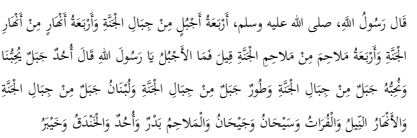
پیامبر خدا ﷺ فرمودند: «چهار کوه از کوههای بهشتاند، و چهار رود از رودهای بهشتاند، و چهار نبرد بزرگ و سخت از نبردهای بهشت خواهد بود». پرسیده شد: «کدام کوهها، ای پیامبر خدا؟» فرمودند: «اُحُد، کوهی که ما را دوست دارد و ما آن را دوست داریم، کوهی از کوههای بهشت است، طور کوهی از کوههای بهشت است، و لبنان کوهی از میان کوههای بهشت است. و رودها نیل، فرات، سیحان (جیحون) و جیحان (سیحون) هستند، و نبردهای بزرگ و سخت، بدر، اُحد، خندق و خیبراند».
The Messenger of Allah (peace be upon him) said: “Four mountains are from the mountains of Jannah (paradise) and four rivers are from the rivers of paradise and four fierce great battles will be from the battles of paradise” It was asked: “Which mountains O Messenger of Allah?” He said: “Uhud, a mountain that loves us and we love it, is a mountain from the mountains of paradise, Tur is a mountain from the mountains of paradise and Lubnan is a mountain from among the mountains of paradise. And the rivers are the Nile, Euphrates, Saihan (Oxus) and Jaihan (Jaxartes), while the fierce great battles are Badr, Uhud, Khandaq and Khaibar”.
محمد بن علی بن معیّم البلدی برای ما روایت کرد از محمد بن عبدالله بن عمر، از معافی بن عمران، از کثیر بن عبدالله بن عمرو، از پدرش، از جدّش: که پیامبر ﷺ فرمود:
- Muhammad bin ‘Ali bin Mu’aim Al-Baladi related to us from Muhammad bin Abdullah bin ‘Umar, from Ma’afa bin ‘Imran, from Kathir bin Abdullah bin ‘Amr, from his father, from his grandfather: That the Prophet (peace be upon him) said:

«ای گروه قریش، در حق یاران من، فرزندان ایشان و فرزندان فرزندان ایشان، مرا به یاد داشته باشید.»
“O gathering of the Quraish, keep me in mind in respect to my companions, their sons and the sons of their sons”.
- محمد بن ربیع بن سلیمان الجیزی برای ما روایت کرد از ابو امیه الطرسوسی، از معاویة بن عمرو، از ابو اسحاق الفزاری، از ابن کثیر بن عبدالله، از پدرش، از جدش، که گفت:
- Muhammad bin Rabi’ bin Sulaiman Al-Jiziy related to us from Abu Umayyah At-Tarsusiy, from Mu’awiyah bin ‘Amr, from Abu Ishaq Al- Fazariy, from Ibn Kathir bin Abdullah, from his father, from his grandfather, who said:

رسول الله ﷺ فرمودند: «هیچ غارت و چپاول و دزدی از غنیمت وجود ندارد، و هر کس از غنیمت بدزدد، روز قیامت با آنچه دزدیده است خواهد آمد».
The Messenger of Allah (peace be upon him) said: “There is no plundering, no looting and no stealing from the spoils and whoever steals from the spoils will come on the Day of Judgement with that which he stole”.
- محمد بن احمد بن الحسین الاهوازی برای ما روایت کرد از عمرو بن علی، از محمد بن خالد بن عثمہ، از کثیر بن عبدالله المزنی، از پدرش، از جدش، که گفت:
- Muhammad bin Ahmad Bin Al-Hussein Al-Ahwaziy related to us from ‘Amr bin ‘Ali, from Muhammad bin Khalid bin ‘Athmah, from Kathir bin Abdullah Al-Muzani, from his father, from his grandfather, who said:

رسول الله ﷺ فرمودند: «قیامت برپا نمیشود تا آنکه الله قسطنطنیه و روم را به دست مسلمانان فتح کند، در حالی که تسبیح و تکبیر گفته میشود».
The Messenger of Allah (peace be upon him) said: “The final hour will not come until Allah conquers Constantinople and Rome accompanied by Tasbih and Takbir”.
- احمد بن محمد بن عبدالعزیز بن الجعد برای ما روایت کرد از محمد بن اسحاق المَسِیبی، از عبداللہ بن محمد بن سَلْم، از عبدالرحمن بن ابراہیم، از عبداللہ بن نافع، از کثیر بن عبداللہ، از پدرش، از جدش، از پیامبر ﷺ:
- Ahmad bin Muhammad bin Abdul ‘Aziz bin Al-Ja’d related to us from Muhammad bin Ishaq Al-Masibi, from Abdullah bin Muhammad bin Salm, from Abdur Rahman bin Ibrahim, from Abdullah bin Nafi’, from Kathir bin Abdullah, from his father, from his grandfather, from the Prophet (peace be upon him):

«قد أفلح من زكّى» قال: زكاة الفطر. Note: the Arabic text above is the Qur'an-style phrase in the original, which the rules did not ask me to translate; the Persian translation is: «کسی که زکات بدهد رستگار شده است». فرمود: زکات الفطر.
“The one who gives Zakah has attained success” He said: Zakat ul-Fitr.
- ابن سلم از عبدالرحمن، از عبدالله بن نافع، از کثیر بن عبدالله، از پدرش، از جدش برای ما روایت کرد که پیامبر ﷺ فرمود:
- Ibn Salm related to us from Abdur Rahman, from Abdullah bin Nafi’, from Kathir bin Abdullah, from his father , from his grandfather, that the Prophet (peace be upon him) said:

«احذروا زلة العالم وانتظروا فيئته». أخبرنا أحمد بن حفص، عن الزبير بن بكار، عن عبد الله بن نافع مثله. وحدثنا أحمد بن علي المدائني، عن أحمد بن محمد أبي بكر الخطيبي، عن إسحاق الجنبي قال: ذكره كثير بن عبد الله المزني عن أبيه، عن جده، قال: قال رسول الله ﷺ: مثل ما تقدم (أي: «احذروا زلة العالم»).
“Take guard from the slip or lapse of the ‘Aalim (scholar) and so await its recurrence”. Ahmad bin Hafs related to us from Az-Zubair bin Bakkar, from Abdullah bin Nafi’ the same as above. Ahmad bin ‘Ali Al-Mada’ini related to us, from Ahmad bin Muhammad Abu Bakr Al-Hatibi, from Ishaq Al-Janbiy who said: Kathir bin Abdullah Al-Muzani mentioned it from his father, from his grandfather, who said: The Messenger of Allah (peace be upon him) said: The same as above (i.e. “Take guard from the lapse of the ‘Aalim”).
- احمد بن علی برای ما روایت کرد از محمد بن خُرَیم القزّاز، از هشام بن خالد، از مروان بن معاویه، از کثیر بن عبدالله المُزَنی، از پدرش، از جدّش:
- Ahmad bin ‘Ali related to us from Muhammad bin Khuraim Al- Qazzaz, from Hisham bin Khalid, from Marwan bin Mu’awiyah, from Kathir bin Abdullah Al-Muzani, from his father, from his grandfather:

که پیامبر (صلیاللهعلیهوسلم) به بلال بن حارث فرمود: «ای بلال، بدان!» گفت: «آمادهام که بدانم، ای فرستادهٔ خدا!» باز فرمود: «ای بلال، بدان!» گفت: «آمادهام که بدانم، ای فرستادهٔ خدا!» فرمود: «ای بلال، بدان که هرکس سنتی از سنت مرا که پس از من از میان رفته باشد زنده کند، برای اوست پاداشی همانند پاداش کسانی که به آن عمل کنند، بیآنکه از پاداش ایشان چیزی کاسته شود. و هرکس بدعتی گمراهکننده پدید آورد که خداوند و فرستادهٔ او از آن خشنود نیستند، بر اوست گناهی همانند گناه کسانی که به آن عمل کنند، بیآنکه از گناهان مردم چیزی کاسته شود.»
“That the Prophet (peace be upon him) said to Bilal bin Al-Harith: “O Bilal, Know!”. He said: “I am ready to know O Messenger of Allah!” He said (again) “O Bilal, know!” He said: “I am ready to know O Messenger of Allah!” He said: “O Bilal, know that indeed whoever revives a Sunnah from my Sunnah which has died out after me, then for him is a reward similar to whoever acts upon it without diminishing anything from their rewards. And whoever introduces an erroneous innovation which Allah is not pleased with, nor His Messenger, then he shall receive sins similar to whoever acts upon it, without that diminishing anything from the sins of the people”.
- با همین اسناد از جدّش، که گفت:
- With the same Isnad from his grandfather, who said:

«من از رسول الله ﷺ شانزده اصل از اصول دین را حفظ کردم». او گفت: رسول الله ﷺ فرمود:
“I memorised from the Messenger of Allah (peace be upon him) 16 foundations from the foundations of the Deen”. He said: The Messenger of Allah (peace be upon him) said:

«لَا دِيَةَ فِي الْعَجْمَاءِ، وَلَا فِي الْبِئْرِ جُبَارٌ، وَفِي الرِّكَازِ الْخُمُسُ»
“There is no liability (blood money) for beasts (i.e. from being attacked), there is no liability for wells (i.e. accidents related to them) and a fifth is due from the buried treasure (Rikaz)”.

ایشان فرمود: «نه جَلَب و نه جَنَب است» (یعنی نباید دامها را از محل چرایشان به سوی گردآورندهی زکات برد)، «نه نجش است» و «نه فروش شهری برای بادیهنشین است».
He said: “There is no Jalab and no Janab (meaning that animals should not be moved away from their place of grazing to the collector of Zakah), there is no obstruction and there is no trade of a townsperson
و برای یک بادیهنشین. و هیچ تصرف ناروایی، غارت، چپاول و دزدی از غنیمت وجود ندارد، و هر کس از غنیمت بدزدد، آنچه را دزدیده است در روز قیامت با خود خواهد آورد.
for a Bedouin. And there is no unlawful taking of possession, no plundering, no looting and no stealing from the spoils and whoever steals from the spoils will come with that which he stole on the Day of Judgement”.

او فرمود: «هر که سرپرستی (مولایی) را از غیر موالی خود بپذیرد، لعنت خدا و خشم او بر او خواهد بود، و هیچ عملی از او پذیرفته نخواهد شد.»
He said: “Whoever takes charge of a Mawla from other than his Mawali, then the curse of Allah and His anger will be upon him, and nothing will be accepted from him”.

او فرمود: «هر کس جنایتی مرتکب شود (یعنی حقوق دیگران یا پیمان را زیر پا بگذارد)، لعنت خدا و خشم او بر او خواهد بود، و هیچ چیزی از او پذیرفته نخواهد شد».
He said: “Whoever commits a crime (i.e. breaching the rights of others or the covenant), then the curse of Allah and His anger will be upon him, and nothing will be accepted from him”.
- با همین اسناد از جدش، او گفت: رسول الله ﷺ فرمود:
- With the same Isnad from his grandfather, he said: The Messenger of Allah (peace be upon him) said:

المسلمون عند شروطهم، إلا شرطاً أحلَّ حراماً أو حرَّم حلالاً.
“The Muslims are upon their conditions apart from the condition which makes the Halal (lawful) Haram (unlawful) or a condition that makes the Haram (unlawful) Halal (lawful)”.
- عبد الوهاب بن أبي عثمان حدثنا إسماعيل بن يزيد الأصبهاني، عن معن بن عيسى، عن كثير بن عبد الله المزني، عن أبيه، عن جده قال:
- Abdul Wahhab bin Abu ‘Usmah related to us from Isma’il bin Yazid Al-Asbahani, from Ma’n bin ‘Eisa, from Kathir bin Abdullah Al- Muzani, from his father, from his grandfather who said:

از رسول خدا ﷺ شنیدم که فرمود: «او ایستاد، خدا را ستایش کرد و بزرگش داشت. سپس فرمود: ای مردم، هر کس از میان کسانی که حج و عمره به جا میآورند و کسانی که در سرزمینهای بیآب و علف سفر میکنند، به آب و سایه سزاوارتر است؛ پس مردم را از دسترسی به آن سرزمین بازندارید.»
I heard the Messenger of Allah (peace be upon him): “He stood, praised Allah and extolled Him. He then said: O people, whoever from those undertaking Hajj and ‘Umrah and those who are travelling are upon deserted land have more right to water and shade and so do not prevent the people from the land (i.e. access)”.
پس از این، در این چاپ، تعدادی از احادیث بیارتباط آمده که هیچ ربطی به کثیر بن عبدالله ندارند. به نظر میرسد منشأ این خطا خود نسخه خطی است، و اگر نسخههای خطی دیگری یافت شوند، میتوان آنها را با این نسخه بازبینی و مقایسه کرد… (پس از ذکر آن احادیث بیارتباط، ابن عدی ادامه میدهد):
Following this, there came, in this printed edition, a number of unconnected Ahadeeth which had no relationship with Kathir bin Abdullah at all. It appears that the origin of the error is the manuscript itself and other manuscripts can be revised and compared to this one if they can be found … (Following the mention of those unrelated Ahadeeth Ibn Adiy continues):
- او (ابن عدی) گفت: احمد بن حفص السعدی برای ما روایت کرد از احمد بن ابراهیم الدورقی، از عبدالله بن نافع، از کثیر بن عبدالله المزنی، از پدرش، از جدش، که گفت:
- He (Ibn ‘Adiy) said: Ahmad bin Hafs As-Sa’diy related to us from Ahmad bin Ibrahim Ad-Duraqiy, from Abdullah bin Nafi’, from Kathir bin Abdullah Al-Muzani, from his father, from his grandfather, who said:

فرمود رسول خدا ﷺ: «آن حبشیان را تا زمانی که شما را به حال خود میگذارند، به حال خودشان واگذارید.»
The Messenger of Allah (peace be upon him) said: “Leave be those Abyssinians as long as they leave you be”.
محمد بن الحسن البصری روى عن محمد بن بکّار العیشی، عن محمد بن إسماعيل بن أبی فدیک، عن کثير بن عبدالله المزنی، عن أبيه، عن جده، أنه قال:
- Muhammad bin Al-Hasan Al-Basriy related from Muhammad bin Bakkar Al-‘Aishi, from Muhammad bin Isma’il bin Abu Fadaik, from Kathir bin Abdullah Al-Muzani, from his father, from his grandfather, who said:

پیامبر ﷺ شنید که مردی آن را سبز و شاداب خواند، پس فرمود: «لَبَّیْکَ، ما گرفتیم و تو نیز از آنچه نزد توست [گرفتی]».
“The Prophet (peace be upon him) heard a man calling it green (luscious) and so he said: We are at your service. We have taken and you have from what is among you” .
- محمد بن الحسن البصری روایت کرد از العباس بن عبد العظیم، از عبد الله بن جعفر بن ابو کثیر الانصاری، از کثیر بن عبد الله بن عمرو بن عوف المزنی، از پدرش، از جدش، از بلال بن الحارث المزنی:
- Muhammad bin Al-Hasan Al-Basriy related from Al-‘Abbas bin Abdul ‘Azhim, from Abdullah bin Ja’far bin Abu Kathir Al-Ansari, from Kathir bin Abdullah bin ‘Amr bin ‘Awf Al-Muzani, from his father, from his grandfather, from Bilal bin Al-Harith Al-Muzani:

که هنگامی که پیامبر ﷺ میخواست حاجت خود را برآورد، به فاصلهای دور از مردم میرفت.
“That when the Prophet (peace be upon him) wanted to relive himself, he would move away at a distance”.
- عبدالله بن عبدالحمید الواسطی از النضر بن سلامه روایت کرد، از ابو عُزّیه محمد بن موسی الأنصاری، قاضی مدینه، از کثیر بن عبدالله، از پدرش، از جدّش عمرو بن عوف، که گفت:
- Abdullah bin Abdul Hamid Al-Wasitiy related from An-Nadr bin Salamah, from Abu ‘Uziyyah Muhammad bin Musa Al-Ansari, the Qadi (Judge) of Al-Madinah, from Kathir bin Abdullah, from his father, from his grandfather ‘Amr bin ‘Awf, who said:

«من رسولالله ﷺ را دیدم که بر مقام ایستاده بود و میفرمود: ای مردم، این قبله، قبلهٔ مسجد است و مسجد، قبلهٔ دنیاست.»
“I saw the Messenger of Allah (peace be upon him) standing upon the Maqam and he was saying: O people, this Qiblah, it is the Qiblah of the Masjid and the Masjid is the Qiblah of the Dunyaa (world)”.
- محمد بن یوسف بن عاصم البخاری از احمد بن اسماعیل القرشی، از عبدالله بن نافع، از کثیر بن عبدالله، از پدرش، از جدش برای ما روایت کرد:
- Muhammad bin Yusuf bin ‘Asim Al-Bukhari related to us from Ahmad bin Isma’il Al-Qurashi, from Abdullah bin Nafi’, from Kathir bin Abdullah, from his father, from his grandfather:

آنگاه که پیامبر خدا ﷺ در مسجد بود، سخنی را از پشت سر خود شنید و گوینده آن میگفت: «ای خدا، مرا یاری ده به آنچه که مرا از آنچه از آن بیمناک ساختهای نجات میدهد». پس پیامبر خدا ﷺ چون این را شنید فرمود: «آیا خواهر آن را همراه آن نمیآوری؟» آن مرد سپس گفت: «ای خدا، اشتیاق راستگویان را به آنچه برای ایشان مطلوب ساختهای به من عطا فرما». سپس پیامبر خدا ﷺ به انس بن مالک که در همراه او بود فرمود: «ای انس، نزد او برو و به او بگو که پیامبر خدا ﷺ به تو میگوید: "برای من طلب مغفرت کن"». پس انس نزد او رفت و این را به او رساند. آن مرد گفت: «ای انس، تو فرستاده فرستاده خدا ﷺ به من هستی». او پاسخ داد: «همانگونه که تو هستی». آن مرد بازگشت تا آن را تحقیق کند. پیامبر خدا ﷺ سپس فرمود: «به او بگو آری». پس او (آن مرد) به او گفت: «برو و به او بگو که خداوند تو را بر پیامبران برتری داده، همانگونه که ماه رمضان را بر سایر ماهها برتری داده، و امت تو را بر امتها برتری داده، همانگونه که روز جمعه را بر سایر روزها برتری داده است». آنان به جستجو رفتند و ناگاه دیدند که او خضر، علیه السلام، بود.
“That the Messenger of Allah (peace be upon him) was in the Masjid. He heard speech behind him and the one saying it was saying: “O Allah assist me with which will save me from that which you have made me fearful of”. So, the Messenger of Allah (peace be upon him) said when he heard that: “Will you not include its sister alongside it?” The man then said: “O Allah bestow upon me the longing of the truthful to that which you have made desirable for them”. The Messenger of Allah (peace be upon him) then said to Anas bin Malik who was in his company: “Go to him O Anas and say to him that the Messenger of Allah (peace be upon him) says to you: “Seek forgiveness for me”. So, Anas went to him and conveyed that to him. The man then said: “O Anas, you are the messenger of the Messenger of Allah (peace be upon him), to me. He replied: “Just as you are”. He returned to verify it. The Messenger of Allah (peace be upon him) then said: “Say to him yes”. So, he (the man) said to him: “Go and say to him that Allah has favoured you over the Prophets like He has favoured the month of Ramadan over other months and that He has favoured your Ummah (nation) over the nations like He has favoured the day of Jumu’ah over all of the other days”. They went looking and behold it was Khadir, peace be upon him”.
- احمد بن جعفر از یعقوب بن ابراهیم الدورقی، از ابراهیم بن عبدالله الرفاعی، از کثیر بن عبدالله، از پدرش، از جدش برای ما روایت کرد:
- Ahmad bin Ja’far related to us from Ya’qub bin Ibrahim Ad-Duraqi, from Ibrahim bin Abdullah Ar-Rafa’iy, from Kathir bin Abdullah, from his father, from his grandfather:

که رسول الله ﷺ بر نجاشی (پادشاه حبشه) نماز گزارد و پنج تکبیر گفت.
“That the Messenger of Allah (peace be upon him) prayed over the Najashi (Negus of Abyssinia) and did five Takbirs”.
عِمْرَانُ بْنُ مُوسَى حَدَّثَنَا إِبْرَاهِيمُ بْنُ الْمُنْذِرِ، عَنْ أَبِي الْجَعْدِ عَبْدِ الرَّحْمَنِ بْنِ عَبْدِ اللَّهِ السُّلَمِيِّ، عَنْ كَثِيرِ بْنِ عَبْدِ اللَّهِ الْمُزَنِيِّ، عَنْ أَبِيهِ، عَنْ جَدِّهِ، أَنَّهُ قَالَ:
- ‘Imran bin Musa related to us from Ibrahim bin Al-Mundhir, from Abu Al-Ja’d Abdur Rahman bin Abdullah As-Salmiy, from Kathir bin Abdullah Al-Muzani, from his father, from his grandfather, who said:

رسول الله ﷺ فرمود: «اسب در روز آب دادنش عرضه میشود».
“The Messenger of Allah (peace be upon him) said: “the horse is offered the day of its watering”.
باقیماندهٔ احادیثی که کثیر بن عبدالله از پدرش، از جدّش روایت کرده اندک است، و بیشتر احادیثی که ذکر کردم و بیشتر آنچه او روایت کرده، آنچه آنها را تأیید کند ندارد (یعنی او در روایت آنها تنهاست). - بهلول بن اسحاق برای ما روایت کرد از اسماعیل بن ابی اویس، از کثیر بن عبدالله المزنی، از ربیع بن عبدالرحمن بن ابی سعید الخدری، از پدرش، از جدّش، که گفت:
There are still a small number of Ahadeeth related by Kathir bin Abdullah from his father, from his grandfather remaining and most of his Ahadeeth which I mentioned and most of what he related, does not have that which conforms (or supports) them (i.e. he is alone in narrating them). - Bahlul bin Ishaq related to us from Isma’il bin Abu Uwais, from Kathir bin Abdullah Al-Muzani, from Rubaih bin Abdur Rahman bin Abu Sa’id Al-Kudri, from his father, from his grandfather, who said:

«من بادیهنشینان عرب را دیدم که نزد پیامبر خدا ﷺ آمدند. گفتند: ای پیامبر خدا، ما مردمی هستیم که دارای چهارپایانیم و صدقه (یعنی زکات) آنها را میپردازیم؛ آیا زکات فطر رمضان هم از ما ساقط میشود؟» پیامبر خدا ﷺ فرمودند: «نه، از کودک و بزرگسال، و از آزاد و برده گرفته میشود. این برای شما پاکیزگی است.» ابوسعید خدری گفت: در سالی دیدم که گلهها فراوان بود و محصولات سفید کمتر از سیاه شد. سپس در سال بعد دیدم که محصولات فراوان بود و گلههای سیاه بیش از گلههای سفید کاهش یافت. نمیدانم کسی جز کثیر بن عبدالله این حدیث را از ربیعه روایت کرده باشد. [پایان نقل از ابن عدی]
“I saw men from the Arabs (i.e. Bedouins) approaching the Messenger of Allah (peace be upon him). They said: “O Messenger of Allah, we are people possessing livestock and we take out from them our Sadaqah (i.e. Zakat) and so does that also cover for us the Zakat of Ramadan?” The Messenger of Allah (peace be upon him) said: “No, it is taken from the child and the adult, from the free and the slave. It is a purification for you”. Abu Sa’id Al-Khudri said: I saw in the year that the herds were plentiful and that the white crops diminished more than the black. I then saw in the year following that the crops were plentiful and that the black herds were diminished more than the white”. I do not know anyone relating this Hadith from Rubaih apart from Kathir bin Abdullah] [End of quote of Ibn ‘Adiy].
میں میگویم: دربارهٔ سخن ابن عدی که: «هنوز تعداد اندکی از احادیثی که کثیر بن عبدالله از پدرش، از پدربزرگش روایت کرده باقی است، و بیشتر احادیث او که من یاد کردم و بیشتر آنچه او روایت کرده، آنچه آنها را تأیید یا پشتیبانی کند ندارد (یعنی او در روایت آنها تنها است)»، این سخن به معنای اعلام ناپذیرفتنی بودن یا طبقهبندی او در ضعف نیست. زیرا تنها بودن در روایت احادیث، «بیشتر آنچه او روایت کرده، آنچه آنها را تأیید کند ندارد»، بهویژه دربارهٔ کسی که از نوههای بدنام صحابه است (مانند مورد بهز بن حکیم برای نمونه)، مستلزم ضعف یا ناپذیرفتنی بودن نیست. گویی ابن عدی ترجیح داده است در امان بماند و از صدور حکم دربارهٔ آن مرد دوری گزیند. زیرا وقتی او بخواهد ناپذیرفتنی بودن یا نقص راوی را بیان کند، معمولاً میگوید: «و ضعف در حدیث او آشکار است» یا سخنانی شبیه به آن. در حالی که اگر بخواهد اعتماد و درستی راوی را اعلام کند میگوید: «در روایات او چیز منکری نیافتم» یا «چیز منکری از او نیافتم، اگر ثقهای از او روایت کرده باشد». آشکار است که از بخاری جز آنچه شیخ او، اسماعیل بن ابی اویس، برای او روایت کرده چیزی به ابن عدی نرسیده است: «از کثیر بن عبدالله بن عمرو بن عوف بن یزید بن ملحه مزنی شنیدم (یا از او دریافت کردم) در سال ۱۵۸، سپس در سال ۱۶۱ یا ۱۶۲».
I say: Concerning the statement of Ibn ‘Adiy: “There are still a small number of Ahadeeth related by Kathir bin Abdullah from his father, from his grandfather remaining and most of his Ahadeeth which I mentioned and most of what he related, does not have that which conforms (or supports) them (i.e. he is alone in narrating them)”, then this does not mean the declaration of unreliability or classification of weakness. That is because the mere being alone in relating Ahadeeth “most of what he related, does not have that which conforms (or supports) them”, especially in respect to the one who is from the infamous grandchildren of the Sahabah (like the case of Bahz bin Hakim for instance), does not dictate weakness or unreliability. It is as if Ibn ‘Adiy preferred to remain safe and chose to escape from issuing a verdict upon the man. That is because when he wants to express the unreliability or defectiveness of a man, he usually states: “And the weakness is evident in his Hadith” or words which are similar to that. That is whilst if he wants to declare the reliability and soundness of a narrator he says: “I did not find anything Munkar (rejectable) in relation to him” or “I did not find anything Munkar of his if a Thiqah (reliable and trustworthy narrator) related from him”. It is apparent that nothing reached him from Al-Bukhari apart from what his Sheikh Isma’il bin Abu Uwais related to him: “I heard (or received from) Kathir bin Abdullah bin ‘Amr bin ‘Awf bin Yazid bin Milhah Al-Muzani in the year 158 then the year 161 or 162”.


آنگاه که پیامبر خدا ﷺ در مسجد بود، سخنی را از پشت سر خود شنید و گوینده آن میگفت: «ای خدا، مرا یاری ده به آنچه که مرا از آنچه از آن بیمناک ساختهای نجات میدهد». پس پیامبر خدا ﷺ چون این را شنید فرمود: «آیا خواهر آن را همراه آن نمیآوری؟» آن مرد سپس گفت: «ای خدا، اشتیاق راستگویان را به آنچه برای ایشان مطلوب ساختهای به من عطا فرما». سپس پیامبر خدا ﷺ به انس بن مالک که در همراه او بود فرمود: «ای انس، نزد او برو و به او بگو که پیامبر خدا ﷺ به تو میگوید: "برای من طلب مغفرت کن"». پس انس نزد او رفت و این را به او رساند. آن مرد گفت: «ای انس، تو فرستاده فرستاده خدا ﷺ به من هستی». او پاسخ داد: «همانگونه که تو هستی». آن مرد بازگشت تا آن را تحقیق کند. پیامبر خدا ﷺ سپس فرمود: «به او بگو آری». پس او (آن مرد) به او گفت: «برو و به او بگو که خداوند تو را بر پیامبران برتری داده، همانگونه که ماه رمضان را بر سایر ماهها برتری داده، و امت تو را بر امتها برتری داده، همانگونه که روز جمعه را بر سایر روزها برتری داده است». آنان به جستجو رفتند و ناگاه دیدند که او خضر، علیه السلام، بود.
“That the Messenger of Allah (peace be upon him) was in the Masjid. He heard speech behind him and the one saying it was saying: “O Allah assist me with which will save me from that which you have made me fearful of”. So, the Messenger of Allah (peace be upon him) said when he heard that: “Will you not include its sister alongside it?” The man then said: “O Allah bestow upon me the longing of the truthful to that which you have made desirable for them”. The Messenger of Allah (peace be upon him) then said to Anas bin Malik who was in his company: “Go to him O Anas and say to him that the Messenger of Allah (peace be upon him) says to you: “Seek forgiveness for me”. So, Anas went to him and conveyed that to him. The man then said: “O Anas, you are the messenger of the Messenger of Allah (peace be upon him), to me. He replied: “Just as you are”. He returned to verify it. The Messenger of Allah (peace be upon him) then said: “Say to him yes”. So, he (the man) said to him: “Go and say to him that Allah has favoured you over the Prophets like He has favoured the month of Ramadan over other months and that He has favoured your Ummah (nation) over the nations like He has favoured the day of Jumu’ah over all of the other days”. They went looking and behold it was Khadir, peace be upon him”.
ما این حدیث را در همه جایی که امکان داشت جستجو کردیم، اما آن را جز از این طریق امام ابن عدی نیافتیم. این روایت در کتاب «أنیس الساری فی تخریج أحادیث فتح الباری» (۹/۶۵۷۸/۴۶۱۰) نیز به او نسبت داده شده است.
We searched for this narration in every conceivable place but we were unable to find it except from this path of Imam Ibn ‘Adiy. The narration is also attributed to him in the book “Unais As-Saari Fee Takhrij Ahadeeth Fat’h ul-Baari” (9/6578/4610):

از عَمرو بن عَوف روایت شده که: «پیامبر ﷺ در مسجد بود که سخنی را شنید و سپس فرمود: "ای انس، برو نزد کسی که آن سخن را گفت و از او بخواه که برای من آمرزش بطلبد"». انس نزد آن مرد رفت و او به وی گفت: «به او بگو که بیشک خداوند تو را بر پیامبران برتری داده، همانگونه که ماه رمضان را بر سایر ماهها برتری داده است». [راوی] گفت: سپس رفتند تا ببینند، و ناگهان آن شخص خضر بود. الحافظ (ابن حجر) گفته است: «این حدیثی ضعیف است که ابن عدی آن را از طریق کثیر بن عَمرو بن عَوف، از پدرش، از جدش نقل کرده، و سندش ضعیف است». ابن عساکر نیز حدیثی مشابه آن را از حدیث انس آورده که سندش از آن هم ضعیفتر است (۷/۲۴۵ – کتاب احادیث انبیا – باب: حدیث خضر با موسی، علیه السلام). این حدیث بسیار ضعیف است. آن را از حدیث عَمرو بن عَوف و حدیث انس روایت کردهاند. اما حدیث عَمرو بن عَوف را ابن عدی (۶/۲۰۸۳) از طریق عبدالله بن نافع الصائغ، از کثیر بن عبدالله، از پدرش، از جدش نقل کرده است: «که پیامبر ﷺ در مسجد بود و سپس سخنی را شنید… و غیره…».
[‘Amr bin ‘Awf related: “That the Prophet (peace be upon him) heard speech whilst he was in the Masjid and then said: “O Anas, go to the one who said that and ask him to seek forgiveness for me”. Anas went to the man and he (the man) said to him: “Say (to him i.e. the Prophet) that verily Allah has favoured you over the Prophets by that which he has favoured Ramadan over the remaining months”. He said: They then went to see and behold it was Khadir”. Al-Hafizh (Ibn Hajar) said: “It is a weak Hadith which Ibn ‘Adiy extracted via the path of Kathir bin ‘Amr bin ‘Awf, from his father, from his grandfather, and it is a weak Isnad (chain of transmission)”. Ibn ‘Asakir related similar to it from the Hadith of Anas, with a chain of transmission which is weaker than it” (7/245 – The book of the Ahadeeth of the Prophets – Chapter: The Hadith of Al-Khadir with Musa, peace be upon him). It is very weak. He related from the Hadith of ‘Amr bin ‘Awf and the Hadith of Anas. As for the Hsdith of ‘Amr bin ‘Awf, then Ibn ‘Adiy extracted it (6/2083) via the path of Abdullah bin Nafi’ As-Sa’igh from Kathir bin Abdullah, from his father, from his grandfather: “That the Messenger of Allah (peace be upon him) was in the Masjid and then he heard speech … etc …].
همانطور که دیده میشود، الحافظ (ابن حجر) این روایت را به کثیر بن عبدالله نسبت داده، در حالی که ابو حذیفہ نبیل بن منصور بن یعقوب بن سلطان البِسَاره الکویتی، مؤلف کتاب «أنیس الساری»، آن را به عبدالله بن نافع الصائغ از کثیر بن عبدالله نسبت داده است. با این حال، هر دوی آنان در این زمینه دچار کوتاهی زشتی شدهاند.
As can be seen, Al-Hafizh (Ibn Hajar) attributed the narration to Kathir bin Abdullah whilst Abu Hudhaifah Nabil bin Mansur bin Ya’qub bin Sultan Al-Bisarah Al-Kuwitiy, the author of “Unais As- Saari”, attributed it to Abdullah bin Nafi’ As-Sa’igh from Kathir bin Abdullah. However, both of them are guilty of an obscene shortcoming in respect to this.
حقیقت این است که این حدیث نه از حدیث کثیر بن عبداللہ است و نه از حدیث عبداللہ بن نافع الصائغ از کثیر، بلکه از جعلیات احمد بن اسماعیل القرشی است۔

از آن جا که پیامبر خدا ﷺ فرمود: «همانا دین به حجاز بازمیگردد، همانگونه که مار به سوراخ خود بازمیگردد، و دین در حجاز پناه میگیرد، همانگونه که بز کوهی در قله کوه پناه میگیرد. دین غریبانه آغاز شد و غریبانه بازخواهد گشت. خوشا به حال غریبان؛ همان کسانی که آنچه را مردم پس از من از سنت من تباه کردهاند، اصلاح میکنند».
That the Messenger of Allah (peace be upon him) said: “Verily, the Deen will retreat back to the Hijaz as a snake retreats back to its hole, and the Deen will seek refuge in the Hijaz as the mountain goat seeks refuge in the mountain top. The Deen began as something strange and will return as something strange. Blessed are the strangers; those who will rectify what the people after me have corrupted from my Sunnah”.
برخی دربارهٔ کَثیر سخن گفتهاند، و اگر دربارهاش سکوت میکردند برایشان سودمندتر بود. در حقیقت، تنها نادانان دربارهٔ او و انگیزهها (یا روابطش) سخن گفتهاند. شنیدم که ابن اُوَیس میگفت: مالک دربارهٔ حدیث او از من پرسید، و یحیی بن سعید الأنصاری از او روایت کرده است. هیچ شکی ندارم که از ابراهیم بن المنذر شنیدم (و اگر از او نشنیده باشم، ثقهای آن را برایم روایت کرده است) که گفت: «کَثیر ادعا میکرد که پیامبر ﷺ زمینی به جدش داده است، و با کسانی که در آن ناحیه بودند نزاع میکرد. بسیار جدال میکرد. نزد ابن عِمران رفت تا جدال کند، و عِمران به او گفت: "ای کَثیر، تو مردی بیکار هستی که دربارهٔ آنچه نمیدانی بسیار مجادله میکنی؛ ادعا میکنی آنچه از آنِ تو نیست، و برای آنچه میخواهی هیچ دلیلی نداری. پس نزد من نیا و تا وقتی ندیدهای که من وقتم را برای اهل باطل خالی کردهام، مرا نبینی. اگر چنین دیدی، آنگاه بیا"». روزی ابن عِمران با ما بود که ناگهان کَثیر بن عبدالله نزد او آمد. (ابن عِمران) گفت: "آیا به تو نگفتم که نزد من نیایی مگر وقتی ببینی که من وقتم را برای اهل باطل خالی کردهام؟" کَثیر پاسخ داد: "راست گفتی، خداوند کار قاضی را نیکو گرداند. من جز وقتی که اهل باطل نزد تو آمدند نزد تو نیامدم؛ فلان و فلان نزد تو آمدند. آن دو از اهل باطلاند و من با آن دو آمدم." این از دستور ابن عِمران به او بود. ابویوسف گفت: "او فرمان داد که به ستون بچسبد تا از دادرسی برخیزد." ابویوسف گفت: "آنان از دوستداران و وابستگان ابن عِمران بودند." این [مطلب] در نسخهٔ «الشاملة للمعرفة والتاريخ» (ص ۶۲ – بر اساس شمارش کتابخانهٔ الکترونیکی الشاملة) نیز ثبت شده است.
Some have spoken about Kathir who had they been silent about him it would have been more beneficial. Indeed, only the ignorant have spoken about him and his motives (or relations). I heard Ibn Uwais saying: Malik asked me about his Hadith and Yahya bin Sa’id Al-Ansari related from him. I have no doubt that I heard Ibrahim bin Al- Mundhir (And if I didn’t hear it from him, then a Thiqah related it to me) that he said: “Kathir used to claim that the Prophet (peace be upon him) had granted his grandfather land and he used to dispute with those in that area. He used to quarrel a lot. He went to Ibn ‘Imran to quarrel and so ‘Imran said to him: “O Kathir, indeed you are an idle man who quarrels a lot in respect to that which you don’t know, you claim that which does not belong to you and you have no evidence from what you demand. So, don’t approach me and I will not let me see you unless you see that I have freed my time for the people of falsehood. If you see that, then come”. One day Ibn ‘Imran was with us and then behold Kathir bin Abdullah had approached him. He (Ibn ‘Imran) said: “Did I not tell you to not come to me unless you see me having freed my time for the people of falsehood?” Kathir then replied: ““You have said the truth, may Allah make good the affair of the Qadi. Indeed, I only came to you when the people of falsehood came to you. So and so and so and so person came to you. They are both people of falsehood and so I came along with them both”. It was from the command of Ibn ‘Imran to him. Abu Yusuf said: “He commanded to remain fast to the column until he had stood from judicial proceedings”. Abu Yusuf said: “They were from those devoted to Ibn ‘Imran]. This has also been recorded in the transcript of “Ash-Shamela Lil- Ma’rifah Wa At-Tarikh” (p. 62 – by the numbering of the Shamela E- library).