6.7 د مطالعې موضوعات او مرحلې
6.7 Study subjects and stages
هر څه چې مخکې یادونه شوې، ښوونځي زده کړه د ۳۶ ښوونیزو سمسترونو په ۳ پړاوونو ویشل شوې، د زده کونکو د عمرونو له مخې، داسې چې هر پړاو د اړوندو شرعي احکامو له مخې تنظیم کیږي. د زده کړې مضمونونو په اړه، هر پړاو ځانګړي مضامین لري، سربیره پر هغو ځانګړو قواعدو چې د ناکامۍ او پرمختګ (له یوې دورې څخه بلې ته تللو) پورې اړه لري. د هر پړاو زده کړې مضامین په دوو برخو ویشل شوي: بنسټیز مضامین، او د مهارتونو او فعالیتونو مضامین.
As we have said before, the school education is divided into 36 school terms distributed between 3 stages according to student ages such that each stage is regulated by the relevant Shari’ah rules. With respect to study subjects, each stage has specific subjects together with specific rules related to failure and progress (transferring from one course to the next). Study subjects in each stage are divided into two: Basic subjects and Skills and Activities Subjects.

په لومړني ښوونځي پړاو کې دوه ښوونکي له لومړۍ سمستر څخه زده کوونکو ته درس ورکول پیل کوي. لومړی ښوونکي دوی ته اسلامي کلتور او عربي ژبه درسوي، دویم ښوونکي ساینس او ریاضي درسوي. دواړه د مهارتونو او فعالیتونو په ورکولو کې ونډه اخلي. ښوونکي باید په دې پړاو کې د لږترلږه درې پرلهپسې ښوونیزو سمسترونو لپاره له خپلو زده کوونکو سره پاتې شي.
In the 1st school stage, two teachers begin teaching students from the first term. The first teaches them Islamic culture and Arabic language, the second teaches them sciences and mathematics. Both share in teaching skills and activities. The teacher should remain with his students in this stage for at least three consecutive school terms.
په مهارت کې مضمون کې، ښوونکی ماشوم ته داسې فعالیتونه ورکوي چې د هغه د اړیکو جوړولو او فکر کولو وړتیا وده وکړي، لکه د شیانو جوړول او بیا ترلاسه کول. باید پام وشي چې دا فعالیتونه او مهارتونه د دې مهالوېش د بنسټیزو زده کړو مضمونونو سره تړلي وي.
In the skills subject, the teacher gives the child activities to develop his ability to link and think e.g. building and dismantling of things. Care must be taken to relate these activities and skills to the term’s basic adopted subjects.
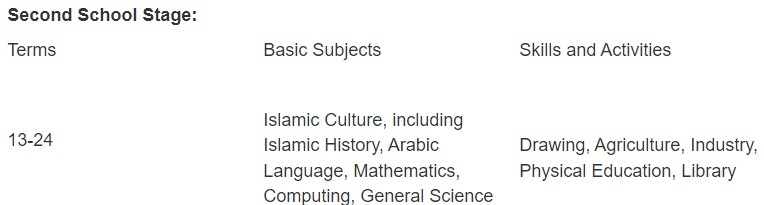
په دې پړاو کې "عمومي علوم" مضمون کې د کیمیا، بیولوژۍ، فزیک او جغرافیې اصول شامل دي.
The “General Sciences” subject in this stage includes principles of chemistry, biology, physics and geography.
دریم علمي مرحله
Third School Stage:
دا مرحله د ۲۵ څخه تر ۳۶ پورې ترمونو ته شامل ده. په دې مرحله کې ټول زده کوونکي یوازې د ۲۵ څخه تر ۳۰ پورې ترمونو کې د یو شان درسي مضامینو کې برخه اخلي. وروسته، د ۳۱ څخه تر ۳۶ پورې ترمونو کې زده کوونکي هغه اختیاري څانګې (فروع) غوره کوي چې دوی یې غواړي. دا اختیارونه عبارت دي له:
This stage covers the terms 25 to 36. In this stage, all students participate in the same study subjects in terms 25 to 30 only. Thereafter, in terms 31 to 36 students join the optional branches (furoo’) they prefer. These options are:
- کلتوري اختیار - علمي اختیار - صنعتي یا تخنیکي اختیار (کمپیوټر، میکانیک، برقي، مخابرات، نقشهکشي او نور)
- Cultural Option - Scientific Option - Industrial or Technical Option (computing, mechanics, electrical, communications, cartography etc.)
- د کرنې اختیار - د سوداګرۍ اختیار - د کورنۍ اختیار (ښځو لپاره)
- Agricultural Option - Commerce Option - Domestic Option (for females)
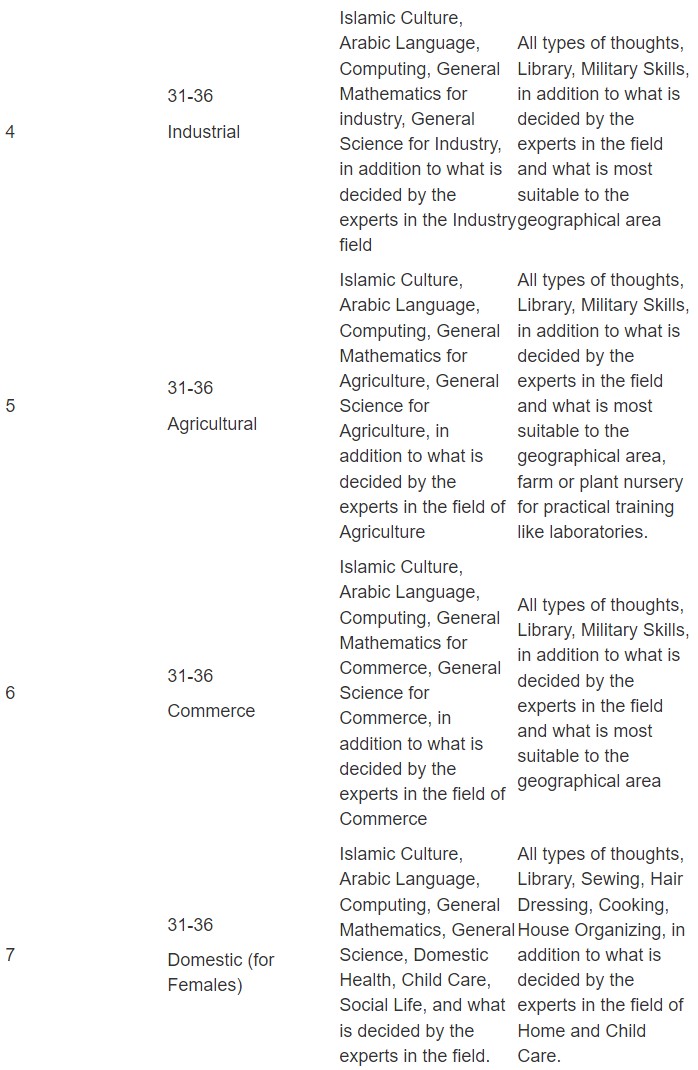
دې لاندې جدول هر یو له دې انتخابونو کې مطالعه شوو مضمونونه ښيي:
The following chart shows the subjects studied in each of these options:
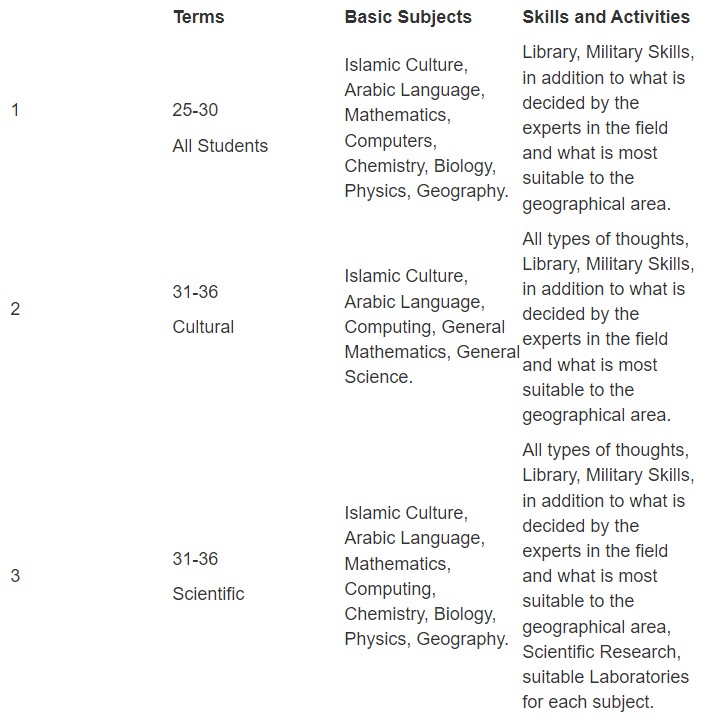
په درجې کې د ثالث ثانوي مرحلې د ثقافي اختیار په برخه کې، زده کوونکی د اسلامي ثقافت او عربي ژبې دواړو کې پراخې موضوعات اخلي. متخصصان د فقه، اصول، تفسیر، علوم الحدیث، تاریخ او نورو اسلامي ثقافتي اختیارونو په مضامینو کې اړین شرایط ټاکي. همدارنګه، دې مرحلې لپاره اړین عربي ژبې اختیارونو کې، لکه بلاغت او ادبي متنونو ته ورته، ځانګړې نصابي کورسونه (مناهج) غوره کوي.
In the cultural option of the third school stage, the student takes extended topics in both Islamic Culture and Arabic Language. Experts determine the requirements in the subjects of Fiqh, Usul, Tafseer, '‘Ulum Al-Hadith, History and other Islamic culture options. Likewise, they adopt specific courses (manaahij) in the Arabic language options required for this stage such as Eloquence (Balagha), Literature texts etc.
په غیر علمي اختیارونو کې زده کونکی ریاضي او ساینس په لنډه بڼه زده کوي، او یوازې هغو موضوعاتو ته ځانګړې پاملرنه کېږي چې د هغه د اختیار لپاره اړین دي. نو د تجارت اختیار زده کونکی د تجارت پورې اړوند ریاضي موضوعات زده کوي، لکه محاسبه، د زکات او میراث حسابونه، د ګټې او تاوان حسابونه، سره د بوک کیپنګ او د نغدو پیسو د کتاب حسابونه؛ همدارنګه هغه د احصاییې موضوعات هم زده کوي. په داسې حال کې چې د صنعت اختیار زده کونکی د صنعت ځانګړي موضوعات زده کوي، لکه هندسي ترسیم، شکلونه، د مساحت او حجم محاسبه او نور.
In non-scientific options, the student takes Mathematics and Sciences in a concise form with focus paid only to the topics required for their option. Thus the Commerce option student takes Mathematics topics related to Commerce e.g. Accounting, Zakat and Inheritance Accounts, Profits and Loss Accounts together with Bookkeeping and Cashbook Accounts; likewise he/she takes topics in Statistics. Whereas the Industrial option student takes topics specific to Industry such as Geometrical Drawing, Shapes, Area and Volume Calculation etc.
د غیر سائنسی اختیار عمومی سائنس کا طالب علم انسانی جسم کے مطالعے، بیماریوں، عامہ کی حفاظت نیز انسان اور اس کے ماحول سے متعلق سائنسی موضوعات پڑھتا ہے۔ زرعی اختیار میں زراعت اور غذائیت سے متعلق موضوعات شامل کیے جاتے ہیں، جیسے نباتاتی زراعت کے طریقے، ان کی بیماریاں اور علاج، مٹی کی اقسام، کھاد، کیڑے مار ادویات وغیرہ۔
The General Sciences student of the non-scientific option takes topics focusing upon studies of the Human Body, Diseases, Public Safety as well as scientific topics related to man and his environment. In the agricultural option, topics related to agriculture and nutrition are added such as methods of Plant Agriculture, their diseases and treatment, types of soil, fertilisers, insecticides etc.
د صنعتي اختیار زده کوونکی هغه مضامین لولي چې د موادو د علم او د هغوي د صفتونو پورې اړه لري، لکه کثافت (ډنسټي) او کتله، سره د میکانیکي ډینامیک (حرکي میکانیک) د اصولو او د عامه امنیت (پبلک سیفټي) سره.