২.৩ সাহাবীদের মাসাহিফ
2.3 The Masahif Of The Companions
হাদীসের সাহিত্যে এমন অনেক ইঙ্গিত রয়েছে যে নবী ﷺ-এর কয়েকজন সাহাবী ওহীর নিজস্ব লিখিত সংকলন প্রস্তুত করেছিলেন। [সুয়ূতী, আল-ইতকান, ১ম খণ্ড, পৃ. ৬২] এদের মধ্যে সবচেয়ে পরিচিত হলো ইবনু মাসউদ, উবাই ইবনু কা'ব ও যায়দ ইবনু সাবিত-এর সংকলন। [দেখুন: Dodge, B, The Fihrist of al-Nadim, New York, 1970 (সংক্ষেপে fihrist), পৃ. ৫৩-৬৩।] যেসব সাহাবীর সম্পর্কে বর্ণিত আছে যে তাঁদের নিজস্ব লিখিত সংকলন ছিল, তাঁদের একটি তালিকায় রয়েছেন: ইবনু মাসউদ, উবাই ইবনু কা'ব, 'আলী, ইবনু 'আব্বাস, আবূ মূসা, হাফসা, আনাস ইবনু মালিক, 'উমার, যায়দ ইবনু সাবিত, ইবনু যুবায়র, 'আবদুল্লাহ ইবনু 'আমর, 'আয়িশা, সালিম, উম্মু সালামা, 'উবায়দ ইবনু 'উমার। [দেখুন: Ibn Abi Dawud: Masahif, পৃ. ১৪। Ansari, M.: The Qur'anic Foundations and Structure of Muslim Society, Karachi, 1973 গ্রন্থে বিভিন্ন সূত্রের ভিত্তিতে বলা হয়েছে (১ম খণ্ড, পৃ. ৭৬, টীকা ২) যে নবী ﷺ-এর জীবদ্দশাতেই কুরআনের অন্তত ১৫টি লিখিত কপি ছিল। উপরের ১৫ জনের নামের তালিকার সঙ্গে তিনি আবূ বকর, 'উসমান, মু'আয ইবনু জাবাল, আবূ দারদা, আবূ আইয়ূব আনসারী, 'উবাদা ইবনুস সামিত, তামীম দারী-কেও যুক্ত করেন। এতে নবী ﷺ জীবিত থাকাকালে বিদ্যমান কুরআনের লিখিত কপির সংখ্যা দাঁড়ায় ২৩টি।] এটিও জানা যায় যে নবী ﷺ-এর ওফাতের পর 'আয়িশা ও হাফসা তাঁদের নিজস্ব লিপি লিখিয়ে নিয়েছিলেন। [Rahimuddin, M. (transl.):
There are numerous indications in the literature of hadith that several of the Companions of the Prophet had prepared their own written collections of the revelations. [Suyuti. Itqan, I, p 62] The best-known among these are from Ibn Mas'ud, Ubay bin Ka'b and Zaid bin Thabit. [See Dodge, B, The Fihrist of al-Nadim, New York, 1970 (abbr. as fihrist), pp 53-63.] A list of Companions of whom it is related that they had their own written collections included the following: Ibn Mas'ud, Ubay bin Ka'b, 'All, Ibn 'Abbas, Abu Musa, Hafsa, Anas bin Malik, 'Umar, Zaid bin Thabit, Ibn Al-Zubair, 'Abdullah ibn 'Amr, 'A'isha, Salim, Umm Salama, 'Ubaid bin 'Umar. [See Ibn Abi Dawud: Masahif, p 14 Ansari, M.: The qura'nic Foundations and Structure of Muslim Society; Karachi, 1973, drawing upon various sources, says (1, p.76, note 2) that there existed at least 15 written copies of the Qur'an in the Prophet's lifetime. In addition to the list of 15 names quoted above, he includes Abu Bakr, 'Uthman, Mu'adh b. Jabal, Abu Darda', Abu Ayyub Ansari, 'Ubada b. al-Samit, Tamim Dari. This would add up to 23 written copies of the Qur'an, which existed while the Prophet was alive.] It is also known that 'A'isha and Hafsa had their own scripts written after the Prophet had died. [Rahimuddin, M. (transl.):
মুওয়াত্তা) ইমাম মালিক, লাহোর, ১৯৮০, নং ৩০৭, ৩০৮; মালিক ইবনে আনাস: আল-মুওয়াত্তা', কায়রো, তারিখবিহীন, পৃ. ১০৫।] নিম্নলিখিত অংশে নবী ﷺ-এর সাহাবীদের প্রতি সম্পর্কিত কিছু মাসাহিফের অতি সংক্ষিপ্ত বিবরণ দেওয়া হলো।
Muwatta) Imam Malik, Lahore, 1980, No. 307, 308; Malik b. Anas: al-muwatta', Cairo, n.d., p. 105.] The following is a very brief description of some of the masdhif, which are attributed to the Companions of the Prophet.
সমস্ত তথ্য ক্লাসিক্যাল উৎসের উপর ভিত্তি করে। [For details see Ibn Abi Dawud, also fihrist and Itqan]
All the information is based on classical sources. [For details see Ibn Abi Dawud, also fihrist and Itqan]
ইবনে মাসউদের মুসহাফ (মৃ. ৩৩ হি./৬৫৩ খ্রি.)
The Mushaf Of Ibn Mas'ud (d. 33/653)
তিনি একটি মুসহাফ লিখেছিলেন, যাতে সূরা ১, ১১৩ ও ১১৪ অন্তর্ভুক্ত ছিল না। তবে ইবনুন নাদীম [Fihrist, I, pp. 57-8.] বলেছেন, তিনি ইবনে মাস'উদের একটি কুরআনের কপি দেখেছিলেন, যাতে আল-ফাতিহা (সূরা ১) ছিল না। সূরাগুলোর বিন্যাসও 'উসমানী পাঠ থেকে ভিন্ন ছিল। ইবনে মাস'উদের কপিতে নিম্নলিখিত ক্রম অনুযায়ী সূরাগুলো বর্ণিত হয়েছে: [Fihrist, I, pp. 53-7.] 2, 4, 3, 7, 6, 5, 10, 9, 16, 11, 12, 17, 21, 23, 26, 37, 33, 28, 24, 8, 19, 29, 30, 36, 25, 22, 13, 34, 35, 14, 38, 47, 31, 35, 40, 43, 41, 46, 45, 44, 48, 57, 59, 32, 50, 65, 49, 67, 64, 63, 62, 61, 72, 71, 58, 60, 66, 55, 53, 51, 52, 54, 69, 56, 68, 79, 70, 73, 74, 83, 80, 76, 75, 77, 78, 81, 82, 88, 87, 92, 89, 85, 84, 96, 90, 93, 94, 86, 100, 107, 101, 98, 91, 95, 104, 105, 106, 102, 97, 110, 108, 109, 111, 112।
He wrote a mushaf, in which sudras 1, 113 and 114 were not included. Ibn al-Nadim [Fihrist, I, pp. 57-8.] however said he had seen a copy of the Qur'an from Ibn Mas'ud which did not contain al-fatiha (Sura 1). The arrangement of the suras differed from the 'Uthmanic text. The following is the order attributed to Ibn Mas'ud's copy: [Fihrist, I, pp. 53-7.] 2, 4, 3, 7, 6, 5, 10, 9, 16, 11, 12, 17, 21, 23, 26, 37, 33, 28, 24, 8, 19, 29, 30, 36, 25, 22, 13, 34, 35, 14, 38, 47, 31, 35, 40, 43, 41, 46, 45, 44, 48, 57, 59, 32, 50, 65, 49, 67, 64, 63, 62, 61, 72, 71, 58, 60, 66, 55, 53, 51, 52, 54, 69, 56, 68, 79, 70, 73, 74, 83, 80, 76, 75, 77, 78, 81, 82, 88, 87, 92, 89, 85, 84, 96, 90, 93, 94, 86, 100, 107, 101, 98, 91, 95, 104, 105, 106, 102, 97, 110, 108, 109, 111, 112.
এই তালিকাটি স্পষ্টতই অসম্পূর্ণ। এতে মাত্র ১০৬টি সূরা রয়েছে, অথচ ইবনুন নাদিম যেমন লিখেছেন, সেখানে ১১০টি হওয়ার কথা।
This list is obviously incomplete. It contains only 106 suras and not 110, as Ibn Nadim wrote.
সূরা আল-বাকারায় আমি যেমন উদাহরণ হিসেবে ধরছি, মোট ১০১টি পাঠভেদ রয়েছে। এর অধিকাংশই বানানসংক্রান্ত, আবার কিছু কিছু শব্দচয়ন (সমার্থক শব্দ), অব্যয়ের ব্যবহার ইত্যাদি সংক্রান্ত।
In Sura al-baqara, which I take as an example, there are a total of 101 variants. Most of them concern spelling, some also choice of words (synonyms), use of particles, etc.
উদাহরণ:
Examples:
উচ্চারণ:
Pronunciation:
২:৭০ ইবনু মাসউদ "আল-বাকারা" এর পরিবর্তে "আল-বাকিরা" পড়েন। বানান:
2:70 Ibn Mas'ud reads al-baqira in place of al-baqara Spelling:
২:১৯ তিনি "কুল্লামা"-র পরিবর্তে "কুল্লা মা" পড়েন। সমার্থক শব্দ:
2:19 He reads kulla ma in place of kullama Synonyms:
উবাই ইবনু কা'ব-এর মুসহাফ (মৃ. ২৯ হি./৬৪৯ খ্রি.)
The Mushaf Of Ubay Bin Ka'b (d. 29 H/649)
তিনি একটি মুসহাফ লিখেছিলেন, যাতে বর্ণনা অনুযায়ী দুটি অতিরিক্ত সূরা এবং আরও একটি অতিরিক্ত আয়াত পাওয়া গিয়েছিল বলে জানা যায়।
He wrote a mushaf, in which two 'additional suras and another 'additional aya' were reportedly found.
[ইতকান, ১খণ্ড, পৃ. ৬৫; ইবনু আবি দাউদ, মাসাহিফ, পৃ. ১৮–১৯; এবং নোল্ডেকে, টি. প্রমুখ: Geschichte des Qorans, লাইপজিগ, ১৯০৯–৩৮ (সংক্ষেপে GdQ), ২য় খণ্ড, পৃ. ৩৩–৩৮।]
[Itqan, I, p. 65; Ibn Abi Dawud, masahif, pp. 18S1; also Noldeke, T. et al.: Ceschichte des Qorans, Leipzig, 1909-38 (abbr. as GdQ), 11, pp. 33-8.
প্রথম তথাকথিত সূরা, যার নাম আল-খালʿ (পৃথকীকরণ), তার অনুবাদ এইরূপ: "হে আল্লাহ, আমরা আপনারই সাহায্য চাই, আপনারই কাছে ক্ষমা প্রার্থনা করি, আমরা আপনারই প্রশংসা করি এবং আপনার প্রতি অবিশ্বাস করি না। যে আপনার অবাধ্যতা করে তার থেকে আমরা পৃথক হই এবং তাকে পরিত্যাগ করি।" দ্বিতীয় তথাকথিত সূরা, যার নাম আল-হাফদ (দ্রুততা), তার অনুবাদ এইরূপ: "হে আল্লাহ, আমরা আপনারই ইবাদত করি, আপনারই জন্য সালাত আদায় করি ও সিজদা করি, এবং আপনার সেবার জন্য আমরা দ্রুত ধাবিত হই ও তৎপর হই। আমরা আপনার রহমতের আশা করি এবং আপনার শাস্তিকে ভয় করি। নিশ্চয়ই আপনার শাস্তি কাফিরদের উপর অবশ্যই আপতিত হবে।" স্পষ্টতই এই দুই অংশ তথাকথিত 'কুনূত', অর্থাৎ সেইসব দোয়া, যা নবী ﷺ কখনও কখনও ফজরের সালাতে বা বিতরের সালাতে কুরআনের কিছু সূরা তিলাওয়াতের পর বলতেন। হাদীসের সংকলনসমূহে বর্ণিত কুনূতের কিছু অংশের সাথে এগুলো বস্তুত অভিন্ন। দেখুন: নববী, আল-আযকার, কায়রো, ১৯৫৫, পৃ. ৫৭-৫৮।
The first so called sura entitled al-khal' (separation), translates as follows: 'O Allah, we seek your help and ask your forgiveness, and we praise you and we do not disbelieve in you. We separate from and leave who sins against you.' The second so-called sura, entitled al-hafd (haste) translates as follows: 'O Allah, we worship You and to You we pray and prostrate and to You we run and hasten to serve You. We hope for Your mercy and we fear Your punishment. Your punishment will certainly reach the disbelievers.' Obviously these two pieces constitute so-called 'qunut', i.e. supplications which the Prophet sometimes said in the morning prayer or witr prayer after recitation of suras from the Qur'an. They are in fact identical to some parts of qunut reported in the collections of hadith. See: Nawawi, al-adhkar, Cairo, 1955, pp. 57-8.
একটি অতিরিক্ত তথাকথিত আয়াত হিসেবে এর অনুবাদ নিম্নরূপ: 'আদম-সন্তানকে যদি ধন-সম্পদে ভরা একটি উপত্যকা দেওয়া হয়, সে তার জন্য আরেকটি উপত্যকা কামনা করবে, আর যদি তাকে ধন-সম্পদে ভরা দুটি উপত্যকা দেওয়া হয়, সে অবশ্যই তৃতীয়টি চাইবে। মাটি ছাড়া আর কিছুই আদম-সন্তানের পেট ভরাতে পারবে না, আর আল্লাহ তওবাকারীর প্রতি ক্ষমাশীল।' এই বক্তব্যটিও যে নবী ﷺ-এর একটি হাদীস, তা সুপরিচিত। দেখুন বুখারী, ৮ম খণ্ড, নং ৪৪৪-৪৭। ইবনু আব্বাস (নং ৪৪৫) ও উবাই (নং ৪৪৬)-এর বর্ণনা অনুযায়ী, এই বাক্যটি কখনও কখনও কুরআনের অংশ বলে মনে করা হতো। তবে উবাই নিজেই স্পষ্ট করেছেন যে সূরা ১০২ (আত-তাকাসুর) অবতীর্ণ হওয়ার পর সাহাবিগণ (অর্থাৎ সাহাবায়ে কিরাম) উপরের বাক্যটিকে কুরআনের অংশ বলে গণ্য করেননি। দেখুন বুখারী, ৮ম খণ্ড, নং ৪৪৬। উবাইয়ের এই ব্যাখ্যা আরও স্পষ্টভাবে প্রমাণ করে যে, ওহী বন্ধ হয়ে যাওয়ার পর কুরআনের অংশ কী আর কী নয়, সে বিষয়ে সাহাবিগণের মধ্যে কোনো মতভেদ ছিল না। আর যদি এই হাদীসটি উবাইয়ের মুসহাফে উল্লেখ থাকে, তবে সেটি ছিল তাঁর নিজস্ব ব্যবহারের জন্য একটি মুসহাফ, অর্থাৎ তাঁর ব্যক্তিগত নোটবই। সেখানে তিনি সর্বদা কুরআনের বিষয় ও হাদীসের মধ্যে পার্থক্য করেননি, কারণ তা সাধারণ ব্যবহারের জন্য ছিল না এবং নিজের নোট সম্পর্কে তিনি নিজেই ভালো জানতেন। সাহাবিগণের মধ্যে কেউ কেউ নিজেদের ব্যক্তিগত ব্যবহারের জন্য যে কুরআনের অন্যান্য কপি রাখতেন, সে ক্ষেত্রেও একই কথা প্রযোজ্য। এছাড়া যারা সাহাবিগণের এসব কপি সম্পর্কিত বর্ণনা আমাদের কাছে পৌঁছে দিয়েছেন, তারাও তাদের কাছে পৌঁছানো রিপোর্ট অনুযায়ী সেখানে ঘটে যাওয়া বিভিন্ন পার্থক্যগুলোই কেবল বর্ণনা করেছেন (যেমন বুখারী, ৮ম খণ্ড, নং ৪৪৬-এর হাদীস)।
ইবনু 'আব্বাসের মুসহাফ (মৃ. ৬৮ হি./৬৮৭ খ্রি.)
The Mushaf of Ibn 'Abbas (d. 68H/687)
ইবনু 'আব্বাসও একটি মুসহাফ লিখেছিলেন। আল-ইতকান [খণ্ড ১, পৃ. ৬৫; ইবনু আবি দাউদ, মাসাহিফ, পৃ. ১৯৩]-এর মতে, এতে উবাই-এর কাছে থাকা দুটি অতিরিক্ত সূরাও অন্তর্ভুক্ত ছিল। আবারও, সূরাগুলোর বিন্যাস অন্যান্য কপি থেকে ভিন্ন ছিল। সূরা আল-বাকারায় তাঁর কাছে মোট ২১টি পাঠভেদ রয়েছে, যার কিছু ইবনু মাসউদ, উবাই এবং অন্যান্য সাহাবীদের পাঠের সঙ্গে অভিন্ন।
Ibn 'Abbas also wrote a mushaf, which according to the Itqan [I, p. 65; Ibn Abi Dawud, masahif, p. 193.] also included the two additional suras which Ubay had. Again his arrangement of the suras differed from the other copies. In Sura albaqara, he has a total of 21 variants, some of them identical with Ibn Mas'ud and Ubay as well as other Companions.
অন্যান্য সাহাবী
Some Other Companions
ইতকান (Itqan) অনুসারে [I, p. 65; ইবনু আবি দাউদ, মাসাহিফ, p. 210] আবু মূসা আল-আশআরি (মৃ. ৪৪ হিজরি/৬৬৪ খ্রিস্টাব্দ)-এর মুসহাফ
According to the Itqan [I, p. 65; Ibn Abi Dawud, masahif, p. 210.] the mushaf of Abu Musa al-Ash'ari (d. 44H/664)
তাতে উবাইয়ের কাছে যে উপাদান ছিল, সেই একই উপাদান ছিল।
contained the same material as Ubay had.
সূরা আল-বাকারায় তাঁর (ﷺ) থেকে কেবল একটি পাঠভেদই বর্ণিত হয়েছে, যে তিনি "ইবরাহীম" এর স্থলে "ইবরাহাম" পড়েছেন।
There is only one variant reported from him in Sura al- baqara, namely that he read Ibraham in place of Ibrahim.
হাফসা (মৃ. ৪৫ হিজরি/৬৬৫) একই সূরায় তিনটি পাঠভেদ বর্ণনা করেছেন, এবং আনাস ইবনু মালিক (মৃ. ৯১ হিজরি/৭০৯) পাঁচটি বর্ণনা করেছেন।
Hafsa (d. 45H/665) had three variants in the same sura, and Anas b. Malik (d. 91H/709) had five.
উদাহরণ:
Examples:
এটি আরও স্পষ্ট করার জন্য, এখানে কয়েকটি উদাহরণ দেওয়া হলো। এগুলো যতদূর সম্ভব সুপরিচিত সূরাসমূহ থেকে নেওয়া হয়েছে।
To further illustrate, here are a number of examples. They have been taken, as far as possible, from well-known suras.
যদিও এই বিষয়গুলো স্পষ্ট করার জন্য হয়তো আরও ভালো উদাহরণ পাওয়া যেত, তবে কুরআনের পাঠ্যের সঙ্গে কম পরিচিত পাঠকদের কাছে সেগুলো তেমন সহজে বোধগম্য নাও হতে পারে।
While perhaps better examples exist to illustrate the points under discussion, they might not be understood as easily by readers less familiar with the Qur'anic text.
Here is the translation, but I need the English text to translate. Please paste the passage "Difference in vowelling:" and any text that follows it, and I will translate it into Bengali.
Difference in vowelling:
ইবনু আব্বাস [I, p. 65; Ibn Abi Dawud, masahif, p. 208.] থেকে বর্ণিত আছে যে তিনি সূরা ১১১-তে এভাবে পাঠ করেছেন:4
Ibn 'Abbas [I, p. 65; Ibn Abi Dawud, masahif, p. 208.] is reported to have read in sura 111:4
হামিলাতুন আল-হাতাব, যা হামমালাতা-ল-হাতাব-এর পরিবর্তে পড়া হয়েছে। প্রাথমিক লিখিত পাঠে হারাকা (স্বরচিহ্ন) ও আলিফ উভয়ই বাদ পড়ে যাওয়ায় এই দুটি পাঠকে আলাদা করা সম্ভব হয়নি।
hamilatun al-hatab, in place of hammalata-l-hatab which could not be distinguished on the basis of the early written text, which omitted both haraka and alif.
পার্থক্য বানানে:
Difference In Spelling:
ইবনু আব্বাস [I, p. 65; Ibn Abi Dawud, masahif, p. 195.]-এর বর্ণনামতে, তিনি সূরা ১:৬সহ অন্যান্য সব জায়গায় "alsirat" শব্দটিকে "al-sirat" হিসেবে লিখেছেন।
Ibn 'Abbas [I, p. 65; Ibn Abi Dawud, masahif, p. 195.] reportedly wrote in sura 1:6 as well as all other places the word alsirat as al-sirat.
ইবনে মাসউদ থেকে বর্ণিত কিছু বর্ণনাভেদ: [I, p. 65; Ibn Abi Dawud, masahif, p. 25.]
Some variants attributed to Ibn Mas'ud: [I, p. 65; Ibn Abi Dawud, masahif, p. 25.]
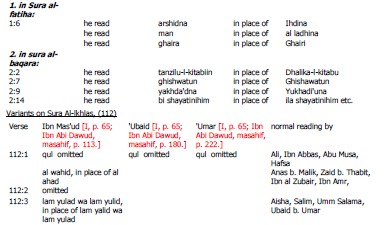
আজও সাহাবীদের সাথে সম্পর্কিত কুরআনের সেসব অনুলিপিতে বিভিন্ন পাঠ ও প্রতিশব্দ পাওয়া যায়, যেগুলো আমাদের কাছে কিছু মূল্য রাখে; কারণ এগুলো তাফসীরের একটি প্রাথমিক, অপরিণত রূপ হিসেবে কাজ করে থাকতে পারে। উদাহরণস্বরূপ, কিছু বর্ণনা অনুযায়ী হাফসা [মুওয়াত্তা মালিক; জেফরি, পৃ. ২১৪], উবাই [জেফরি, পৃ. ১২২] এবং ইবনু আব্বাস [জেফরি, পৃ. ১৯৬] "সালাতুল উসতা" (মধ্যবর্তী সালাত) শব্দগুলো পড়তেন ও লিখতেন "সালাতুল আসর" (অর্থাৎ আসরের সালাত) হিসেবে।
Even today the variants and synonyms are found in such copies of the text as are attributed to the Companions and are of some value to us in the sense that they may have served as an early rudimentary form of tafsir. For example, according to some reports the words 'salat al-wusta' (middle prayer) were read and written by Hafsa, [Muwatta' Malik; Jeffery, p. 214.] Ubay [Jeffery, p. 122.] and Ibn 'Abbas [Jeffery, p. 196.] as 'salat al-'asr' (i.e. afternoon prayer).
যতক্ষণ সাহাবীগণ নিজেদের ব্যক্তিগত ব্যবহারের জন্য নিজস্ব কপি লিখতেন, ততক্ষণ কুরআনের সূরাসমূহের ক্রম, যা ছিল কুরআনের ক্রম, সেটি কঠোরভাবে মেনে না চললেও কোনো দোষ ছিল না। পরবর্তীকালে যখন উসমান (রা.)-এর কপিটি প্রমিত সংস্করণে পরিণত হলো, তখন সাহাবীগণ, ইবনে মাসউদসহ যিনি সম্ভবত সবচেয়ে ভিন্নমত পোষণ করতেন, এই কপির ক্রম গ্রহণ করলেন। [ইবনে আবি দাউদ, পৃ. ১২; সালিহ, এস.: মাবাহিস ফি উলূমিল কুরআন, বৈরূত, ১৯৬৪] পূর্বে উল্লেখ করা হয়েছে যে, এসব কপিতে কিছু ভিন্ন কিরাআতও ছিল, যখন কিছু শব্দ কিছুটা ভিন্নভাবে উচ্চারিত ও বানান করা হতো, ইত্যাদি। [এ বিষয়ে নিচেও দেখুন, সাত কিরাআত ও কিরাআত।] তবে লক্ষণীয় যে, ভিন্ন কিরাআতসমূহ সাধারণত একজন ব্যক্তি দ্বারাই বর্ণিত হয়, কখনো হয়তো দুই বা তিনজন দ্বারা; অপরদিকে উসমানী পাঠ নামে পরিচিত সংস্করণটি মুতাওয়াতির, অর্থাৎ বহু সংখ্যক ব্যক্তির মাধ্যমে বর্ণিত, এবং এতে কোনো সন্দেহ নেই যে এটি নির্ভরযোগ্য।
As long as the sahaba wrote their own copies for personal use only, there was nothing wrong, if they did not strictly adhere to the order of suras which was the order of the Qur'an. Later on, when 'Uthman's copy became the standard version, the Companions adopted the order of this copy including Ibn Mas'ud who perhaps differed most. [Ibn Abi Dawud, p. 12; Salih, S.: Mabahith fi 'ulum al-qura'n, Beirut, 1964,] There were also, as indicated, some variant readings in these copies, [See also below, seven readings and qira'at.] when some words were pronounced and spelt in slightly different ways, etc. However, it should be noted that variant readings are usually reported by a single person only, and occasionally by perhaps two or three while the version called the 'Uthmanic text is mutawatir, i.e. transmitted by numerous people and is without doubt authentic.