৪.১ পাঠের বিভাগসমূহ
4.1 Divisions Of The Text
আয়াহ ও সূরাহ
Aya And Sura
আয়াত (একবচন: আয়াহ, বহুবচন: আয়াত) আসলে অর্থ 'নিদর্শন'। পারিভাষিক অর্থে এটি কুরআনের পাঠ্যাংশের সবচেয়ে ছোট বিভাজন, অর্থাৎ একটি বাক্যাংশ বা বাক্য। ওহী হলো আল্লাহর পক্ষ থেকে মানুষের জন্য হিদায়াত, তাই এর ক্ষুদ্রতম বিভাজনগুলোকে (পথনির্দেশক) 'নিদর্শন' বলা হয়েছে, এতে বিস্মিত হওয়ার কিছু নেই। 'verse' শব্দটি এখানে উপযুক্ত নয়, কারণ কুরআন কবিতা নয়।
Aya (pl. ayat) actually means 'sign'. In technical language it is the shortest division of the Qur'anic text, i.e. a phrase or sentence. The revelation is guidance from God to mankind and it is therefore not at all surprising to find that its smallest divisions are called (guiding) 'signs'. The term 'verse' is not appropriate since the Qur'an is not poetry.
সূরা (বহুবচন: সূওয়ার) আভিধানিক অর্থে 'সারি' বা 'বেড়া'। পারিভাষিক অর্থে এটি কুরআনের পাঠ্যের অনুচ্ছেদ-অনুযায়ী বিভাজন, অর্থাৎ এমন একটি অধ্যায় বা অংশ, যা এর আগের ও পরের পাঠ্য থেকে পৃথক করে রাখা হয়।
Sura (pl. Suwar) means literally 'row' or 'fence'. In technical language, it is the passage-wise division of the Qur'anic text,i.e. a chapter or part, set apart from the preceding and following text.
কুরআনে ১১৪টি সূরা রয়েছে, যেগুলোর দৈর্ঘ্য সমান নয়; সবচেয়ে ছোট সূরাটিতে চারটি আয়াত এবং সবচেয়ে দীর্ঘ সূরাটিতে ২৮৬টি আয়াত রয়েছে।
The Qur'an has 114 suras of unequal length, the shortest consisting of four and the longest of 286 ayat.
সব সূরা (নবম সূরা ব্যতীত) বিসমিল্লাহির রাহমানির রাহীম দিয়ে শুরু হয়। এটি পরবর্তীকালে পাঠে যোগ করা কোনো সংযোজন নয়, বরং মুহাম্মদ ﷺ-এর নবুওয়াতের আহ্বানের আগে থেকেই এটি ব্যবহৃত হয়ে আসছিল। [দেখুন সূরা ২৭: ৩০।] কুরআনের ১১৪টি সূরার প্রতিটির একটি করে নাম আছে, যা একধরনের শিরোনামের কাজ করে। এই নামগুলো প্রায়ই সূরার পাঠের মধ্যেকার কোনো গুরুত্বপূর্ণ বা স্বতন্ত্র শব্দ থেকে নেওয়া হয়, যেমন আল-আনফাল (৮) বা আল-বাকারা (২)। অন্য কিছু ক্ষেত্রে এটি সূরার শুরুর কয়েকটি শব্দের একটি, যেমন তা-হা (২০) বা আল-ফুরকান (২৫)।
All suras (with the exception of Sura 9) begin with the words bismillahir rahmanir rahim. This is not a later addition to the text, but was already used, even before Muhammad's call to prophethood. ' [See Sura 27: 30.] All 114 suras in the Qur'an have names, which serve as a sort of heading. The names are often derived from an important or distinguishing word in the text itself, such as e.g. al-anfal (8) or al-baqara (2). In other cases it is one of the first few words with which the sSra begins e.g. ta-ha (20) or al-furqan (25).
বিন্যাস ও সাজানো
Order And Arrangement
সুরাগুলোর ভেতরের আয়াতের ক্রম এবং সুরাগুলোর বিন্যাস, উভয়ই চূড়ান্তভাবে নির্ধারণ করেন নবী ﷺ, জিবরাঈলের নির্দেশনায়, তাঁর মৃত্যুর বছরে, যখন জিবরাঈল দু'বার এসে তাঁর সঙ্গে কুরআনের পাঠ সংশোধন করেন। [দেখুন উপরে, কুরআনি ওহির প্রেরণ, পৃ. ৩১।] আলেমগণ সুরাগুলোকে চার ধরনে ভাগও করেছেন।
Both the order of the ayat within each sura and the arrangement of the suras were finally determined by the Prophet under guidance from the Angel Gabriel in the year of his death, when Gabriel twice came to revise the text with him. [See above. transmission of the Qur'anic revelation, p. 31.] Scholars have also grouped the suras into four kinds:
আত-তিওয়াল (দীর্ঘ সূরাসমূহ): ২-১০।
al-tiwal (long ones): 2-10.
আল-মাউন: প্রায় ১০০ আয়াতবিশিষ্ট সূরাসমূহ: ১০-৩৫।
al-mi'un: suras with approximately 100 ayat: 10-35.
আল-মাসানী: একশোর কম আয়াতবিশিষ্ট সূরাসমূহ: ৩৬-৪৯।
al-mathani: suras with less than 100 ayat: 36-49.
আল-মুফাসসাল: কুরআনের শেষ অংশ, যা সূরা কাফ (৫০) থেকে শুরু হয়ে ১১৪ নম্বর সূরা পর্যন্ত বিস্তৃত।
al-mufassal: the last section of the Qur'an beginning with Sura qaf: 50-114.
অন্যান্য বিভাগ (Other Divisions) of the Text
Other Divisions Of The Text
জুয' (বহুবচন: আজযা') শব্দের আক্ষরিক অর্থ অংশ, ভাগ। কুরআনকে সমান প্রায় দৈর্ঘ্যের ৩০টি অংশে ভাগ করা হয়েছে, যাতে এক মাসের ত্রিশ রাতে, বিশেষত রমযান মাসে, সহজে তিলাওয়াত করা যায়। সাধারণত এগুলোকে "জুয'" শব্দ এবং তার পাশে লেখা সংখ্যা দিয়ে চিহ্নিত করা হয় (যেমন, জুয' ৩০, যা সূরা ৭৮ থেকে শুরু হয়)।
Juz' (pl. ajza') literally means part, portion. The Qur'an is divided into 30 portions of approximately equal length for easy recitation during the thirty nights of a month, especially of the month of Ramadan. Usually they are indicated by the word and the number of it given alongside, (e.g. juz' 30 beginning with Sura 78).
কোনো কোনো কুরআনের কপিতে সূরাগুলোকে রুকূ' নামক অনুচ্ছেদে ভাগ করা থাকে। এগুলো একটি প্রতীক দিয়ে চিহ্নিত করা হয়, এবং প্রতিটির সঙ্গে লেখা আরবি সংখ্যাগুলোর ব্যাখ্যা নিম্নরূপ, যেমন 2:20:
Some copies of the Qur'an have the suras divided into paragraphs called ruku'. They are indicated by the symbol and the explanation of the Arabic numerals written with each is as follows, e.g. 2:20:
উপরের সংখ্যাটি (২) নির্দেশ করে যে এটি সংশ্লিষ্ট সূরায় (এখানে সূরা আল-বাকারা) সম্পন্ন হওয়া দ্বিতীয় রুকূ'।
The top figure (2) indicates that this is the second completed ruku ' in the respective sura (here Sura albaqara)
.
.
এই মধ্যবর্তী চিত্রটি (১৩) নির্দেশ করে যে এই সম্পূর্ণ রুকূ'তে ১৩টি আয়াত রয়েছে।
The middle figure (13) indicates that this completed ruku' contains 13 ayat.
নিচের সংখ্যাটি (২) নির্দেশ করে যে এটি সংশ্লিষ্ট জুয়ের (এখানে প্রথম জুয়) দ্বিতীয় রুকূ'।
The lower figure (2) indicates that this is the second ruku' in the respective juz' (here first juz').
কুরআনের যেসব কপি বিশেষ করে মধ্যপ্রাচ্যে ছাপা হয়, সেখানে প্রতিটি জুয়ইকে চারটি হিযবে ভাগ করা থাকে এবং তা একটি চিহ্ন দিয়ে নির্দেশ করা হয়। যেমন ২:৭৪ হলো কুরআনের দ্বিতীয় হিযবের শুরু, যা সংখ্যা ২ দ্বারা চিহ্নিত।
Copies of the Qur'an printed in the Middle East in particular have each juz' subdivided into four hizb indicated by the sign e.g. 2:74 is the beginning of the second hizb of the Qur'an, indicated by the figure 2:
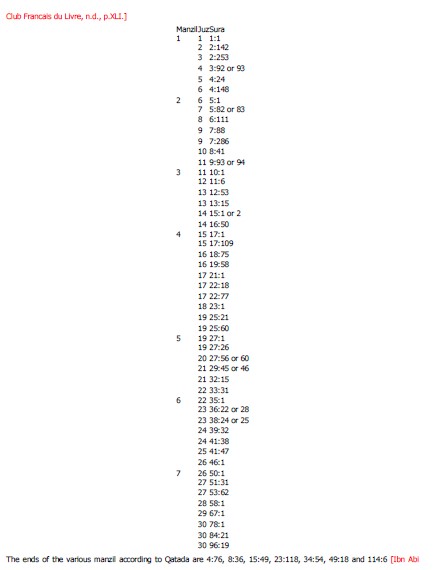
প্রতিটি হিযবকে আবার চতুর্থাংশে ভাগ করা হয়। কুরআনের পাঠ্যকেও সাতটি প্রায় সমান দৈর্ঘ্যের অংশে ভাগ করা হয়েছে, যাদের বলা হয় মানযিল, যাতে সাত দিনে তিলাওয়াত করা যায়। কিছু কপিতে এটি মার্জিনে "মানযিল" শব্দ ও সংশ্লিষ্ট সংখ্যা দিয়ে চিহ্নিত থাকে। নিচের সারণিতে জুয় ও মানযিল অনুযায়ী পাঠ্যের বিভাজন দেখানো হলো: [Hamidullah, Muhammad: Le Saint Coran. Traduction integraleetnores. Paris: