۶.۲ مراحل آموزش مدرسهای
6.2 School education stages
هنگام تقسیم آموزش به مراحل، باید به واقعیت دانشآموز در هر مرحله، یعنی اینکه کودک است یا بالغ (بالغ)، توجه کرد. همچنین باید به دلایل شرعی و احکامی که بر آنها دلالت دارند، و مربوط به کودک یا فرد بالغ است، مراجعه کرد؛ از این جهت که سرپرست (ولیّ الأمر) و در نتیجه معلم و مربی چگونه با او رفتار میکند، زیرا در اسلام، خالق، مدبّر (المدبّر)، پروردگار جهانیان، نظامی الزامآور برای تنظیم شیوهی رفتار انسانها با یکدیگر قرار داده است.
While dividing teaching into stages, we must pay attention to the student’s reality as a child or mature (baaligh) person at each stage. And we must refer to the Shari’ah evidences and rules they denote as related to the child or mature person with respect to how his guardian (waliyy al-amr), and consequently the teacher and educator deals with him, since in Islam, the Creator the Director (Al-Mudabir), the Lord of the World, has brought a binding system to regulate how humans deal with each other.
از جمله دلایلی که در این موضوع آمده، فرمودهی خداوند متعال است (سورهی النور، آیهی ۵۸):
Among the evidences related to this subject is Allah Ta’ala’s saying (Surah An-Nur Ayah 58):
﴿يَا أَيُّهَا الَّذِينَ آمَنُوا لِيَسْتَأْذِنكُمُ الَّذِينَ مَلَكَتْ أَيْمَانُكُمْ وَالَّذِينَ لَمْ يَبْلُغُوا الْحُلُمَ مِنكُمْ ثَلَاثَ مَرَّاتٍ مِّن قَبْلِ صَلَاةِ الْفَجْرِ وَحِينَ تَضَعُونَ ثِيَابَكُم مِّنَ الظَّهِيرَةِ وَمِن بَعْدِ صَلَاةِ الْعِشَاءِ ثَلَاثُ عَوْرَاتٍ لَّكُمْ لَيْسَ عَلَيْكُمْ وَلَا عَلَيْهِمْ جُنَاحٌ بَعْدَهُنَّ طَوَّافُونَ عَلَيْكُم بَعْضُكُمْ عَلَىٰ بَعْضٍ كَذَٰلِكَ يُبَيِّنُ اللَّهُ لَكُمُ الْآيَاتِ وَاللَّهُ عَلِيمٌ حَكِيمٌ﴾ «ای کسانی که ایمان آوردهاید، باید کسانی که بردگانتان مالک آنها هستند و کسانی از شما که به سن بلوغ نرسیدهاند، سه بار از شما اجازه بگیرند: پیش از نماز صبح، و هنگامی که لباسهای خود را در هنگام ظهر بیرون میآورید، و پس از نماز عشاء. این سه هنگام، هنگام خلوت شما هستند. نه بر شما و نه بر آنها هیچ گناهی نیست در غیر این اوقات، زیرا آنها همواره در میان شما رفتوآمد میکنند؛ بعضی از شما نزد بعضی دیگر. اینگونه خداوند آیات را برای شما روشن میسازد، و خداوند دانا و حکیم است.» و او تعالی در آیه بعدی فرمود:
﴿يََ أَيُّ هَا الَّ ي ذينَ آمَنُوا لييَسْتَأْيذنكُمُ الَّ ي ذينَ مَلَكَتْ أَيَْْانُكُمْ وَالَّ ي ذينَ لََْ يَ بْ لُغُوا الُْْلُمَ يمنكُ مْ ثَلََثَ مَرَّا ت يمِّن قَ بْيل صَلََية الْفَجْير وَي حينَ تَضَعُونَ ثييَابَكُم يمِّنَ الظَّيهيرَية وَيمن بَ عْ ي د صَلََية الْيعشَايء ثَلََثُ عَوْرَا ت لَّكُمْ لَيْسَ عَلَيْكُمْ وَلَا عَلَيْيهمْ جُنَاحٌ بَ عْدَهُنَّ طَوَّافُونَ عَلَيْكُم بَ عْضُكُمْ عَلَىٰ بَ عْ ض كَذَٰليكَ ي بَُييِّنُ اللَّ هُ لَكُمُ الْآيََ ي ت وَاللَّ هُ عَلييمٌ حَ ي كيمٌ ﴾ “O you who have believed, let those whom your right hands possess and those who have not [yet] reached puberty among you ask permission of you [before entering] at three times: before the dawn prayer and when you put aside your clothing [for rest] at noon and after the night prayer. [These are] three times of privacy for you. There is no blame upon you nor upon them beyond these [periods], for they continually circulate among you - some of you, among others. Thus does Allah make clear to you the verses; and Allah is Knowing and Wise.” And He Ta’ala said in the following Ayah:
﴿وَإِذَا بَلَغَ الْأَطْفَالُ مِنْكُمُ الْحُلُمَ فَلْيَسْتَأْذِنُوا كَمَا اسْتَأْذَنَ الَّذِينَ مِنْ قَبْلِهِمْ كَذَٰلِكَ يُبَيِّنُ اللَّهُ لَكُمْ آيَاتِهِ وَاللَّهُ عَلِيمٌ حَكِيمٌ﴾ «و چون کودکان شما به سن بلوغ برسند، باید [همواره] اجازه بگیرند، همانگونه که کسانی که پیش از آنان بودند اجازه میگرفتند. اینچنین خداوند آیات خود را برای شما روشن میسازد، و خداوند دانا و حکیم است.» [النور: ۵۹] و پیامبر ﷺ فرمود:
﴿وَإيذَا بَ لَغَ الْأَطْفَالُ يمنكُمُ الُْْلُمَ فَ لْيَسْتَأْيذنُوا كَمَا اسْتَأْذَنَ الَّ ي ذينَ يمن قَ بْيليهمْ كَذَٰليكَ ي بَُييِّنُ اللَّ هُ لَكُمْ آيََتييه وَاللَّ هُ عَلييمٌ حَ ي كيمٌ ﴾ “And when the children among you reach puberty, let them ask permission [at all times] as those before them have done. Thus does Allah make clear to you His verses; and Allah is Knowing and Wise.” [An-Nur: 59] And the Prophet (SAW) said:
رفع القلم عن ثلاثة: عن المجنون المغلوب على عقله حتى يفيق، وعن النائم حتى يستيقظ، وعن الصبي حتى يحتلم. «القلم» [یعنی مسئولیت] از سه کس برداشته شده است: دیوانهای که عقلش مغلوب است تا به هوش آید، خفته تا بیدار شود، و کودک تا به بلوغ برسد. (روایت ابوداود در سنن خود). و پیامبر ﷺ فرمود: «یا اسماء، إن المرأة إذا بلغت المحيض لم تصلح أن يُرى منها إلا هذا وهذا» «ای اسماء، زن چون به سن حیض برسد، شایسته نیست که از او جز این و این دیده شود» و [پیامبر ﷺ] به صورت و دو کف دست خود اشاره کرد. (روایت ابوداود در سنن خود). و از عطیه القرظی روایت است که گفت:
رفع القلم عن ثلَثة، عن المجنون المغلوب على عقله حتى يفيق، وعن النائم حتى « » يستيقظ، وعن الصبي حتى يحتلم “The pen (i.e. accountability) is lifted from three persons: The insane whose mind is overcome until he recovers, the sleeper until he awakes and the child until he attains puberty.” (Narrated by Abu Dawud in his Sunan). And he (SAW) said: » يَ أسماء إن المرأة إذا بلغت المحيض لَ تصلح أن يرى منها إلا هذا وهذا « “‘O Asma, when the female reaches the age of menstruation, nothing should be seen of her except this and this’ and he indicated his face and palms.” (Narrated by Abu Dawud in his Sunan). And from ‘Atiya Al-Quradhi who said:
عُرضنا على النبي ﷺ يوم قريظة، فكان من أنبت قُتل، ومن لم ينبت خُلّي سبيله، فكنت ممن لم ينبت فخُلّي سبيلي. (رواه الترمذي في سننه) وروى أيضاً،
)عُيرضنا على النبي يوم قريظة فكان من أنبت قُتيل، ومن لَ ينبت خُلِّى سبيله، فكنت ممن لَ ينبت فخُلِّى سبيلي( “We (i.e. Bani Quraydha) were shown to the Prophet on the Day of Quradhya. Whoever had grown pubic hairs was killed while the one without growth was released. I was among those without growth so I was released.” (Narrated by Tirmidhi narrated in his Sunan). He also narrated,
وقتی سعد در مورد بنی قریظه حکم داد، پیامبر ﷺ دستور داد که آنان را بازرسی کنند تا ببینند چه کسانی به بلوغ رسیدهاند؛ آنان را از نظر ستر (پوشاندن اندامهای خصوصی) بررسی میکردند.» و عثمان هنگامی که پسربچهای را نزد او آوردند، گفت: «به لنگش نگاه کنید.» پس دیدند که موی عانه نرُسته است، از این رو دستش را قطع نکرد، و هیچ یک از صحابه این را انکار نکردند. و پیامبر ﷺ فرمود: «فرزندانتان را هنگامی که به هفت سالگی رسیدند به نماز فرمان دهید، و اگر به ده سالگی رسیدند، به خاطر ترک نماز آنان را بزنید، و در بسترها میان آنان جدایی اندازید.» (روایت امام احمد در مسندش). این دلایل نشان میدهد که دوران کودکی با رسیدن کودکان به بلوغ، یعنی سن رشد، به پایان میرسد. اسلام نشانههای مشخص و ملموسی برای جدا کردن دوران کودکی از بزرگسالی قرار داده است: در پسران، احتلام یا رویش موی عانه، و در دختران، حیض یا بارداری. همچنین بیان کرده است که احکامی که بر بالغان جاری میشود، پیش از آن بر آنان جاری نمیشود. و پیامبر ﷺ فرمود: «فرزندانتان را در هفت سالگی به نماز فرمان دهید، و در ده سالگی اگر نماز نخواندند، آنان را بزنید.» (روایت امام احمد در مسندش). این حدیث نشان میدهد که تربیت کودک به دو مرحله تقسیم میشود: مرحلهی پیش از ده سالگی که در آن برای تربیت کودک از زدن استفاده نمیشود، زیرا حدیث تنها به فرمان دادن به نماز، بدون زدن، محدود کرده است. بنابراین، به طریق اولی، برای آموزش چیزی غیر از نماز نیز او را نمیزنند. تربیت او در این مرحله به شیوههای اندرز و تهدید، بدون زدن، محدود میشود. و مرحلهی پس از ده سالگی تا بلوغ، که در صورت لزوم، تربیت او شامل زدن نیز میشود. با این حال، حدود و مجازاتهای شرعی (عقوبات) تا پس از رسیدن به بلوغ، یعنی مرحلهای که پس از کمال عقل است، بر او جاری نمیشود، به دلیل فرمودهی پیامبر ﷺ که فرمود:
» أنَّ النبي لما حكَّم سعد اً فِ بني قريظة كان يكشف عن مؤتزرهم « “That after S’ad adjudicated regarding Quraydha, the Prophet commanded with exposing their wrappings (covering their private parts).” And Uthman said when a young boy was brought to him: » انظروا إلى مؤتزره، فوجدوه لَ ينبت فلم يقطع « “Look at his wrapper. They found him without pubic hair so they did not cut (his hand)” and no Sahabah denied this. And he (SAW) said: مروا صبيانكم بالصلَة إذا بلغوا سبعاً، واضربوهم عليها إذا بلغوا عش راً، وفرقوا بينهم « » فِ المضاجع “Command your children to pray when they attain seven years, and beat them over it (not praying) when they attain ten years. And separate between them in the beds.” (Narrated by Imam Ahmed in his Musnad). These evidences indicate that childhood ends when children attain puberty i.e. the age of maturity. Islam assigned distinctive tangible milestones separating childhood from maturity: when wet dreams occur or pubic hairs appear in males, and menstruation or pregnancy for females. It also indicated that the rules that are applied upon those attaining puberty do not apply upon them beforehand. And he (SAW) said: » مُ ر وا أبناءكم بالصلَة لسبع سنين واضربوهم عليها لعشر سنين « “Command your children to pray when they attain seven years, and beat them over it (for not praying) when they attain ten years” (Narrated by Imam Ahmed in his Musnad). The hadith shows that disciplining children is divided into two stages: The stage before the child attains ten years where beating is not used to discipline him because the hadith restricts one to command him with prayer without beating him. Thus, by greater reason, he is not beaten for being taught other than the prayer. His discipline is restricted to styles of exhortation and threats without beating. And the stage after he attains ten years until puberty his discipline includes beating him if necessary. However the hudood and Shari’ah punishments (‘uqoobaat) do not apply upon him until after attaining puberty i.e. the stage after maturity due to his (SAW) saying:
رُفع القلم عن ثلاثة؛ عن الصبيِّ حتى يبلغ، وعن النائم حتى يستيقظ، وعن المعتوه حتى يبرأ. «The pen (i.e. accountability) is lifted from three persons: The child until he matures, the sleeper until he awakes and the imbecile until he recovers» [Abu Dawud, Sunan]. معنای «رُفع القلم عن ثلاثة» که در اینجا آمده، عدم مسئولیت است. وقتی کودکان به بلوغ میرسند، شرع آنان را مسئول میداند، بنابراین اگر مرتکب تخلف از احکام شریعت یا حرامی شوند، بر اساس حکم قاضی مجازات میشوند. این امر مستلزم حضور قاضیان در مدارس دانشآموزان بالغ و آموزشهای عالیتر است.
رُفع القلم عن ثلَثة، عن الصبيِّ حتى يبلغ، وعن النائم حتى يستيقظ، وعن المعتوه « » حتى يبرأ “The pen (i.e. accountability) is lifted from three persons: The child until he matures, the sleeper until he awakes and the imbecile until he recovers” (Narrated by Abu Dawud in his Sunan). The meaning of » رُفع القلم عن ثلَثة « “lifting the pen” here is non-accountability. When children attain puberty, the Shar’a deems them accountable so they are punished by judicial decree if they commit a violation (of the Shari’ah rules) or a haram. This requires the presence of judges in schools of mature students and higher level education.
این قواعد دربارهٔ کودک و فرد بالغ باید هنگام طراحی مراحل آموزشی رعایت شود، زیرا تربیت کودکان و انضباط از شرایط لازم آموزشاند. مرحلهٔ نخست از ورود کودک به مدرسه تا رسیدن او به ده سالگی ادامه مییابد. مرحلهٔ دوم از ده سالگی تا بلوغ ادامه مییابد که معمولاً در کشورهای با آبوهوای معتدل در پانزده سالگی رخ میدهد. و مرحلهٔ سوم از پانزده سالگی تا پایان تحصیلات مدرسهای او ادامه مییابد.
These rules with respect to the child and mature person must be observed when devising teaching stages since tarbiyyah (raising of children) and discipline are prerequisites of education. The primary stage extends from the child’s entry into school until he reaches ten years. The second stage extends from his attaining ten years until puberty which normally occurs at fifteen years of age in countries of moderate climate. And the third stage extends from fifteen years until he completes school education.
بر اساس این دلایل و قواعد، مراحل آموزشی مدرسه در دولت خلافت بر پایه سن دانشآموزان تقسیم میشود، نه بر پایه موضوعاتی که مدرسه ارائه میدهد. مدارس به سه نوع به شرح زیر تقسیم میشوند:
Based upon these evidences and rules, school teaching stages in the Khilafah State are divided upon the basis of student ages and not subjects offered by the school. Schools are divided into three types in the following manner:
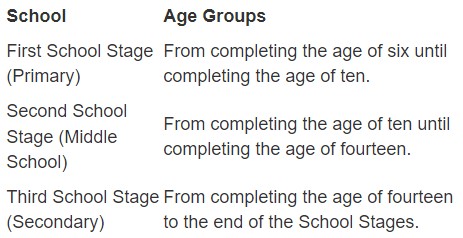
هنگامی که دانشآموز به سن ده سالگی میرسد، مراقبت میشود که صرفنظر از پیشرفت تحصیلیاش، او را به مرحله دوم آموزش منتقل کنند. و هنگامی که به بلوغ میرسد، به مرحله سوم آموزش (مدارس دانشآموزانی که به بلوغ رسیدهاند) منتقل میشود، خواه در آن مرحله از نظر تحصیلی پیشرفت کرده باشد یا نه. بهزودی نشان خواهیم داد که نظام دورههای تحصیلیای که اداره آموزش و پرورش در مدارس دولتی اجرا خواهد کرد، چگونه تضمین میکند که دانشآموزان بر اساس گروههای سنیشان به مدارس تخصیص داده شوند.
Once the student completes ten years of age, care is taken to transfer him to the second stage of schooling irrespective of his academic achievement. And once he attains puberty, he is transferred to the third school stage (schools of students who reached puberty) whether or not he has attained that stage academically. We shall soon demonstrate how the system of school terms that will be implemented by the Education Department in State schools, guarantees the assigning of students to schools according to their age groups.
در مورد آموزش پیش از شش سالگی (مهدکودکها و کودکستانها)، این امر به اختیار مردم واگذار شده است. اگر کسی بخواهد برای این منظور مدرسهای خصوصی تأسیس کند، مجاز است، به شرط آنکه دولت بر این آموزش نظارت کند، از جهت دروس تدریسشده و تطابق آنها با سیاست آموزشیای که خلیفه اتخاذ کرده است.
As for education before six years, (Nurseries and Kindergarten), this is at the people’s discretion. If one wishes to establish a private school for this purpose, one is allowed to do so provided the State supervises this teaching with respect to study subjects and their conformity to the education policy adopted by the Khalifah.