۶.۷ موضوعات و مراحل مطالعه
6.7 Study subjects and stages
همانطور که پیشتر گفتیم، آموزش مدرسهای به ۳۶ نوبت تحصیلی تقسیم شده و در ۳ مرحله و بر اساس سن دانشآموزان توزیع میشود، بهگونهای که هر مرحله تابع احکام شرعی مربوط به خود است. از نظر دروس، هر مرحله دروس ویژهی خود را دارد، همراه با قواعد خاصی دربارهی رد شدن و پیشرفت (انتقال از یک پایه به پایهی بعد). دروس هر مرحله به دو بخش تقسیم میشود: دروس پایه و دروس مهارتها و فعالیتها.
As we have said before, the school education is divided into 36 school terms distributed between 3 stages according to student ages such that each stage is regulated by the relevant Shari’ah rules. With respect to study subjects, each stage has specific subjects together with specific rules related to failure and progress (transferring from one course to the next). Study subjects in each stage are divided into two: Basic subjects and Skills and Activities Subjects.

در مرحلهٔ اول مدرسه، دو معلم از ترم اول تدریس به دانشآموزان را آغاز میکنند. معلم نخست، فرهنگ اسلامی و زبان عربی را به آنان میآموزد و معلم دوم، علوم و ریاضیات را. هر دو در آموزش مهارتها و فعالیتها سهیماند. معلم باید حداقل سه ترم تحصیلی پیاپی در این مرحله با دانشآموزان خود بماند.
In the 1st school stage, two teachers begin teaching students from the first term. The first teaches them Islamic culture and Arabic language, the second teaches them sciences and mathematics. Both share in teaching skills and activities. The teacher should remain with his students in this stage for at least three consecutive school terms.
در درس مهارتها، معلم فعالیتهایی به کودک میدهد تا توانایی او در ارتباطدادن و تفکر را پرورش دهد، مانند ساختن و از همجداکردن اشیا. باید دقت شود که این فعالیتها و مهارتها با موضوعات اصلی و پایهای همان ترم مرتبط شوند.
In the skills subject, the teacher gives the child activities to develop his ability to link and think e.g. building and dismantling of things. Care must be taken to relate these activities and skills to the term’s basic adopted subjects.
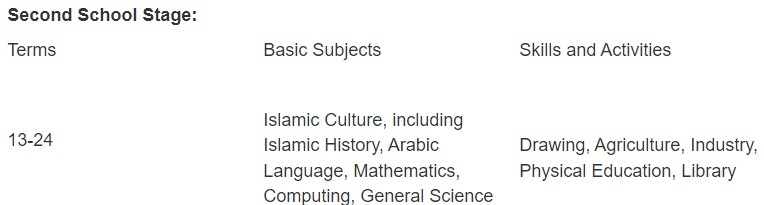
این درس «علوم عمومی» در این مرحله شامل اصول شیمی، زیستشناسی، فیزیک و جغرافیا است.
The “General Sciences” subject in this stage includes principles of chemistry, biology, physics and geography.
مرحلهٔ سوم مدرسه:
Third School Stage:
این مرحله شامل ترمهای ۲۵ تا ۳۶ است. در این مرحله، همه دانشجویان تنها در ترمهای ۲۵ تا ۳۰ در یک مجموعه از دروس مشترک شرکت میکنند. پس از آن، در ترمهای ۳۱ تا ۳۶، دانشجویان به شاخههای اختیاری (فروع) مورد علاقه خود میپیوندند. این گزینهها عبارتاند از:
This stage covers the terms 25 to 36. In this stage, all students participate in the same study subjects in terms 25 to 30 only. Thereafter, in terms 31 to 36 students join the optional branches (furoo’) they prefer. These options are:
- گزینه فرهنگی - گزینه علمی - گزینه صنعتی یا فنی (رایانه، مکانیک، برق، ارتباطات، نقشهبرداری و غیره)
- Cultural Option - Scientific Option - Industrial or Technical Option (computing, mechanics, electrical, communications, cartography etc.)
- گزینه کشاورزی - گزینه تجارت - گزینه داخلی (برای زنان)
- Agricultural Option - Commerce Option - Domestic Option (for females)
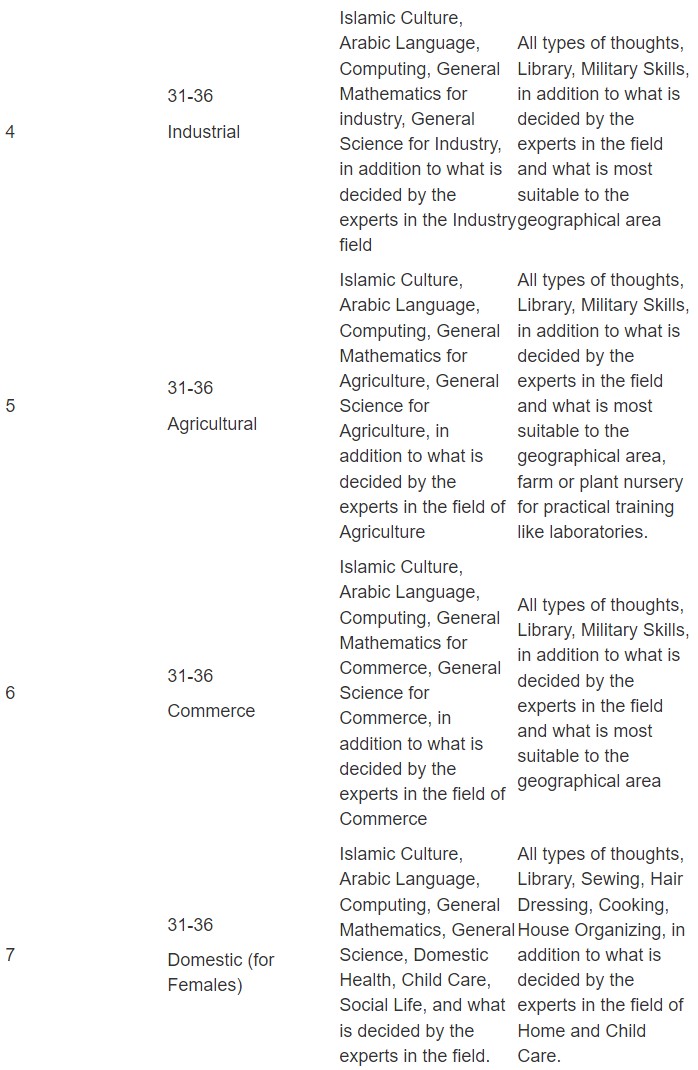
این نمودار مواد درسیِ مطالعهشده در هر یک از این گزینهها را نشان میدهد:
The following chart shows the subjects studied in each of these options:
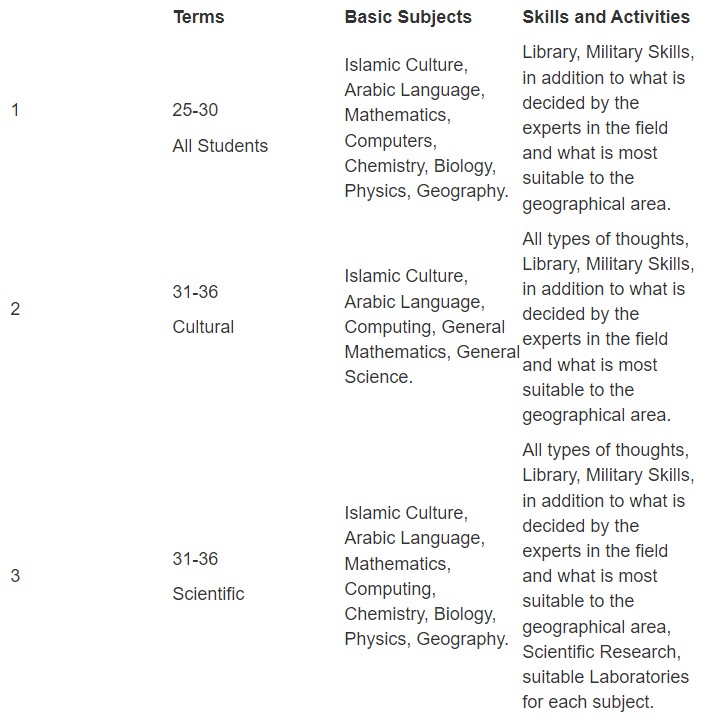
در بخش فرهنگی مرحلهٔ سوم متوسطه، دانشآموز مباحث گستردهتری را در فرهنگ اسلامی و زبان عربی فرا میگیرد. کارشناسان، الزامات درسهای فقه، اصول، تفسیر، علوم حدیث، تاریخ و دیگر گزینههای فرهنگ اسلامی را تعیین میکنند. همچنین، آنان برنامههای درسی (مناهج) ویژهای را در گزینههای زبان عربی این مرحله، مانند بلاغت، متون ادبی و غیره، به تصویب میرسانند.
In the cultural option of the third school stage, the student takes extended topics in both Islamic Culture and Arabic Language. Experts determine the requirements in the subjects of Fiqh, Usul, Tafseer, '‘Ulum Al-Hadith, History and other Islamic culture options. Likewise, they adopt specific courses (manaahij) in the Arabic language options required for this stage such as Eloquence (Balagha), Literature texts etc.
در رشتههای غیرعلمی، دانشآموز ریاضیات و علوم را به شکلی مختصر میگذراند و تمرکز تنها بر مباحثی است که برای رشتهاش لازم است. بنابراین دانشآموز رشته تجارت، مباحث ریاضیات مربوط به تجارت را فرا میگیرد، مانند حسابداری، حساب زکات و ارث، حسابهای سود و زیان، همراه با دفترداری و حسابهای صندوق؛ و به همین ترتیب مباحثی از آمار را نیز فرا میگیرد. در مقابل، دانشآموز رشته صنعت، مباحثی ویژه صنعت را میآموزد، مانند نقشهکشی هندسی، شکلها، محاسبه مساحت و حجم و مانند آن.
In non-scientific options, the student takes Mathematics and Sciences in a concise form with focus paid only to the topics required for their option. Thus the Commerce option student takes Mathematics topics related to Commerce e.g. Accounting, Zakat and Inheritance Accounts, Profits and Loss Accounts together with Bookkeeping and Cashbook Accounts; likewise he/she takes topics in Statistics. Whereas the Industrial option student takes topics specific to Industry such as Geometrical Drawing, Shapes, Area and Volume Calculation etc.
دانشآموز علوم عمومی در رشتهٔ غیرعلمی، مباحثی را میگذراند که بر مطالعهٔ بدن انسان، بیماریها، ایمنی عمومی و نیز موضوعات علمی مرتبط با انسان و محیط زیست او تمرکز دارد. در رشتهٔ کشاورزی، مباحثی مرتبط با کشاورزی و تغذیه افزوده میشود، مانند روشهای کشت گیاهان، بیماریها و درمان آنها، انواع خاک، کودها، حشرهکشها و مانند اینها.
The General Sciences student of the non-scientific option takes topics focusing upon studies of the Human Body, Diseases, Public Safety as well as scientific topics related to man and his environment. In the agricultural option, topics related to agriculture and nutrition are added such as methods of Plant Agriculture, their diseases and treatment, types of soil, fertilisers, insecticides etc.
دانشجوی گزینهٔ صنعتی، دروسی مرتبط با علم مواد و ویژگیهای آنها مانند چگالی و جرم را میگذراند، همراه با اصول دینامیک مکانیکی و ایمنی عمومی.
The Industrial option student takes subjects related to the science of materials and their attributes such as Density and Mass, together with the principles of Mechanical Dynamics and Public Safety.