1.1 تشریحِ ایک بحران
1.1 Anatomy Of A Crisis
لم يكن هناك نقص في الكتّاب الذين يتنبؤون بنهاية النظام كما نعرفه. بل إن كثيرًا من المؤلفين، ونحن نتحدث الآن، يرسلون على الأرجح مخطوطاتهم إلى الناشرين محاولين أن يكونوا أول من يظفر بعنوان "نهاية الرأسمالية"، منافسين بذلك مقالة فوكوياما سيئة الذكر (والمتجاوزة الآن) عن "نهاية التاريخ" عام 1989. لكن هل سيكون هذا الحدث حقًا نهاية الرأسمالية؟ الأرجح لا. أما هل هو بداية نهايتها؟ فالاحتمال كبير، ولا شك أن الرأسمالية تحتاج اليوم إلى رعاية مكثفة، وتواجه أعظم أزماتها.
There has been no shortage of writers predicting an end to the system as we know it. Indeed as we speak many authors are probably sending manuscripts to publishers trying to be first with the title “The End of Capitalism” to rival Fukuyama’s infamous (and now defunct) essay on the End of History in 1989. But will this event really be the end for Capitalism? Unlikely. But, is this the beginning of the end of capitalism? Quite probably, and it is without doubt that Capitalism currently needs intensive care and is facing its greatest crisis.
أحداث سبتمبر 2008 ستُسجَّل في التاريخ بوصفها واحدة من أحلك الفترات في تاريخ الرأسمالية. وقد صرّح آلان غرينسبان، الرئيس السابق للاحتياطي الفيدرالي الأمريكي، بأن الأحداث الجارية نادرة، إذ تقع مرة كل خمسين أو مئة عام. وبالنسبة للولايات المتحدة على وجه الخصوص، تُشكّل الأزمة الراهنة ما يعادل اقتصاديًا بيرل هاربر وأحداث الحادي عشر من سبتمبر مجتمعتين، وهي صدمة عميقة للنظام ستظل آثارها محسوسة لسنوات، إن لم تكن لعقود قادمة. ولم نشهد فقط نهاية نموذج بنوك الاستثمار المستقلة، الذي كان حجر الأساس في الرأسمالية المالية الحديثة، بل شهدنا أيضًا انهيار عقيدة اقتصاد السوق الحرة القائمة على عدم التدخل، فيما تتخبط الحكومات لإنقاذ المؤسسة المالية التالية.
The events of September 2008 will go down in history as one of the darkest times in the history of Capitalism. Alan Greenspan former Chairman of the US Federal Reserve stated that the current events were rare, once every fifty or hundred years. For the US, in particular the current crisis constitutes the economic equivalent of Pearl Harbour and 9-11 combined a profound shock to the system which will be felt for years if not decades ahead. Not only have we witnessed the end of the stand alone investment banking model which was the cornerstone of modern financial capitalism, we have also seen the dogma of laissez faire free market economics trashed as Governments scramble around to bail out the next financial institution.
غلط يا غرينسبان في قوله إن الأمر يحدث مرة كل قرن، فلم تمض سوى ثماني سنوات على فقاعة الإنترنت (dot com) التي محت ما يقارب سبعة تريليونات دولار من القيم السوقية للأسهم. فكيف وصلنا إلى هذه الفوضى؟ وكيف يمكن للولايات المتحدة، القوة العظمى صاحبة اقتصاد يبلغ 14 تريليون دولار، أن تصبح الآن أضحوكة للعالم؟ وكيف يمكن لبنوك الاستثمار التي كانت تُقدَّر قيمتها قبل فترة وجيزة بعشرات المليارات من الدولارات، والتي نجت من حربين عالميتين ومن الكساد الكبير، أن تُمحى بهذه السهولة؟ وكيف يمكن للحكومات الغربية، التي كانت تعظ العالم النامي بتعاظم وغرور في فن الكفاءة الاقتصادية، أن تتصرف الآن لا أفضل من جمهوريات الموز الهزيلة؟
Greenspan is wrong about a once a century occurrence, it has only been eight years since the dot com fiasco which wiped off almost 7 trillion dollars off stock market valuations. So how did we get into this mess, how could the United States, a superpower with a $14 trillion economy now become a laughing stock. How could investment banks valued only recently at tens of billions of dollars and who were able to survive two world wars and the great depression be wiped out so easily. How could western governments who used to smugly preach to the developing world the art of economic competence act no better than glorified banana republics?.
وقعت أحداث الشهر الماضي في جذورها في قطاع الرهن العقاري دون الممتاز، حين باع الوسطاء، المحفَّزون بعمولات ضخمة، الرهون العقارية بالجملة لملايين المقترضين. وقد اتبعت هذه السياسة، القائمة على تشجيع امتلاك المساكن على نطاق واسع، إدارات متعاقبة اعتقدت أن امتلاك المرء لبيته جزءٌ من الحلم الأمريكي. وبالنسبة لكثير من المقترضين، الذين دفعهم الطمع في الربح السريع وخفَّف عنهم الائتمان السهل، كان الحصول على رهن عقاري ثمنًا زهيدًا مقابل ربح هائل، إذ ارتفعت أسعار المنازل ارتفاعًا هائلًا. ولما حصل الوسطاء على عمولاتهم، قرروا بيع رهوناتهم، وسرعان ما صارت هذه الرهون تُجمَّع في حزم لتشكِّل أدوات مالية مضمونة بالرهن العقاري (MBS)، تُباع وتُعاد بيعها بين البنوك في شتى أنحاء العالم. وفي وقت انخفضت فيه أسعار الفائدة، دفعت البنوك في كل مكان، حثّها المساهمون والمحللون، وهم مروِّجو الرأسمالية المؤسسية، إلى السعي وراء عوائد أعلى فأعلى. ولذلك كانت هذه الأدوات المضمونة بالرهن العقاري أشبه بالنعيم المنزَّل من السماء، وبينما كانت أسعار المنازل ترتفع، ظل الطلب على هذه الأدوات وعلى غيرها من الأدوات البديلة مرتفعًا.
The events of the past month were rooted in the sub prime sector when brokers incentivised by fat commissions sold mortgages in their truck loads to millions of borrowers. This policy of encouraging widespread home ownership had been followed by successive administrations who believed that owning one’s house was part of the American dream. For many borrowers motivated by a quick buck and cushioned by easy credit, getting a mortgage was a small price to pay in exchange for a huge profit as house prices rose exponentially. Brokers having banked their commissions decided to sell their mortgages on and soon these would be parcelled up and form mortgage backed securities (MBS) sold and resold by banks throughout the world. At a time of low interest rates, banks throughout the world egged on by shareholders and analysts, the cheerleaders of corporate capitalism, were challenged to seek to gain higher and higher returns. MBSs therefore were like nirvana from heaven and while house prices rose, demand for such instruments and other alternative instruments remained high.
في ذلك الوقت، اعتبر المنظمون والمعلّقون على حد سواء هذا النموذج الجديد للبيع بهذه الأدوات مبتكرًا، إذ كانوا يرون أن هذه المنتجات تنوّع المخاطر وتضمن ألا تتحمل أي جهة بعينها تعرضًا مفرطًا لها. وبعد سنوات من ارتفاع أسعار المساكن، كان الجميع راضين إلى أن جاء الانهيار الحتمي. وفي ذلك الوقت، بعيدًا عن فوائد تنويع المخاطر، استولى الذعر الشديد على الجميع حين اكتشفت البنوك أنها لا تعرف في الحقيقة أين توجد المخاطر، فأدى ذلك إلى فقدان مزمن للثقة وتجميد الإقراض بين البنوك. فقد البنوك الثقة في بعضها بعضًا، إذ اعتقدت أن البنوك الأخرى قد تكون تحمل خسائر ضخمة مع تراجع قيمة الأوراق المالية المدعومة بالرهن العقاري، أو كما يُقال بالمصطلح الفني، حين أصبحت "سامة". وقد أدى هذا التجمّد إلى إعسار بعض البنوك، وإلى إفلاس أخرى بسبب نقص السيولة إثر رهانات مشتقة مالية عالية الرافعة. كما جعل الائتمان أغلى، وأحدث انعدامًا واسعًا للأمان في المدخرات، ورفع أسعار السلع، وأضعف العملات، فارتفعت الأسعار بذلك. وفيما يلي أهم الأحداث التي أصابت العالم منذ بداية الأزمة.
At the time, this new model of selling on such instruments was considered ingenious by regulators and commentators alike as they believed these products diversified risk and ensured that no one entity would be disproportionately exposed. After years of house price growth, everyone was happy until the inevitable crash. At the time, far from the benefits of diversified risk, deep panic set in as banks discovered that they actually didn’t know where the risk was, thereby leading to a chronic loss of confidence and the freezing of inter bank lending. Banks simply didn’t trust each other believing that other banks could be potentially sitting on huge losses as these MBSs lost value or to use the technical term became “toxic”. This freeze would make certain banks insolvent and others would go to the wall due to a lack of liquidity following highly leveraged derivative bets. It would also make credit more expensive, lead to mass insecurity around savings, increase commodity prices and weaken currencies, so making prices higher. The following are the key events that have hit the world since the crisis began.
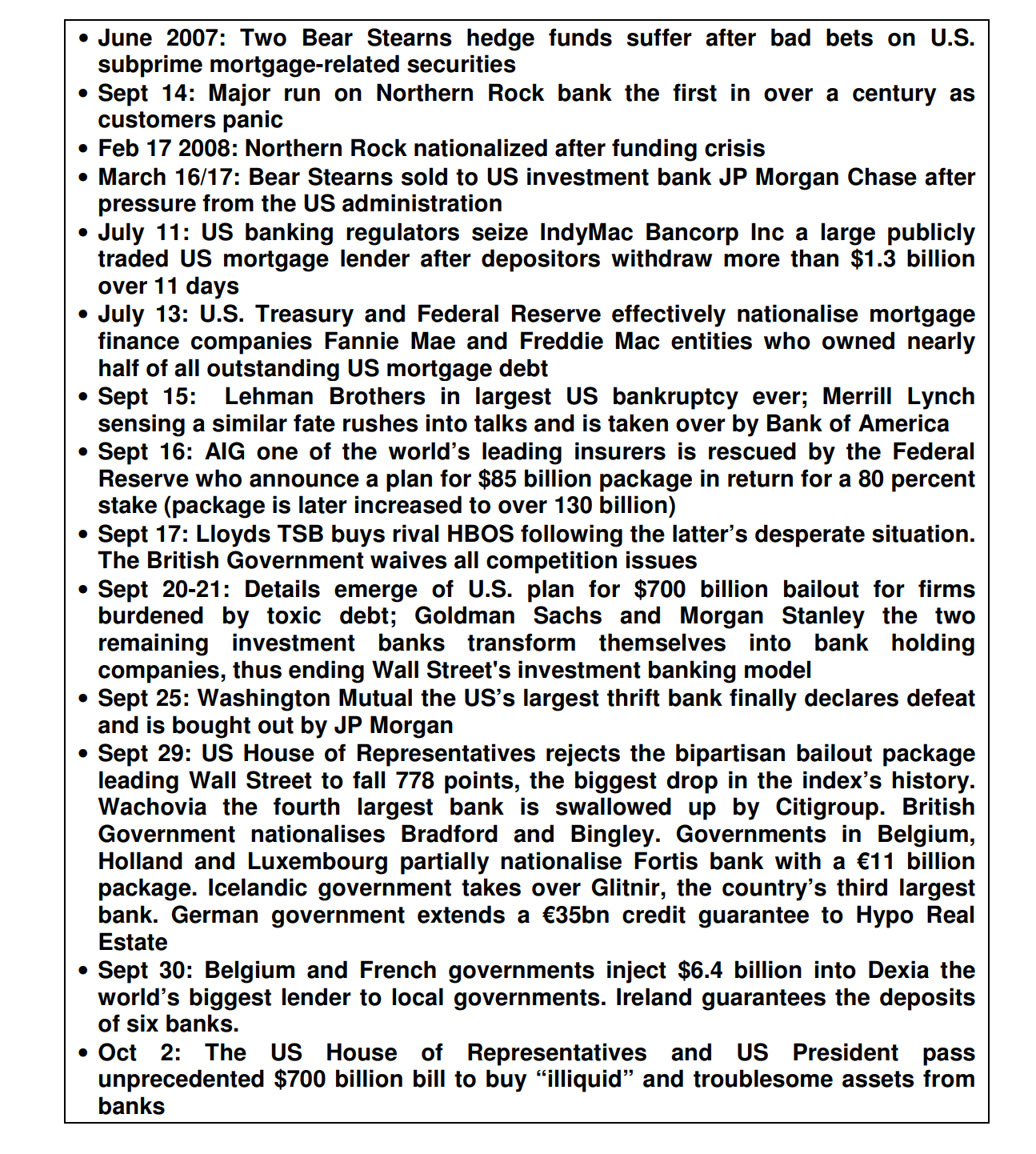

لقد كانت الأحداث على درجة غير مسبوقة من التقلب. فمنذ الكساد الكبير لم نشهد أحداثًا كهذه، ولم نرَ مثل هذا الهشاشة في النظام المالي. فقد هُزم مقترح الحكومة الأمريكية بشراء الأصول السامة من النظام المصرفي الأمريكي بمبلغ يصل إلى 700 مليار دولار، في البداية، بأغلبية 228 صوتًا مقابل 205 في مجلس النواب، مع إشارة كثيرين إلى عدم شعبية هذه الحزمة لدى الشعب الأمريكي. وقد أشار الناس بحق إلى أن وول ستريت كانت راضية تمامًا بالاحتفاظ بأرباحها التي تبلغ مليارات الدولارات لنفسها في الأوقات الجيدة، ومع ذلك تريد اليوم "تأميم" خسائرها، لتُدفع من جيب دافع الضرائب الأمريكي عندما تسوء الأمور. وبينما يستمر الناس في معاناة ارتفاع أسعار الغذاء والطاقة والرعاية الصحية، لا تزال حزم تعويضات مصرفيي وول ستريت تُصرف، إذ يتطلع موظفو ليمان السابقون إلى مكافآت ضخمة تبلغ مليارات الدولارات من أرباب عملهم الجدد في عام 2009. فلا عجب أن يكون الناس على هذا القدر من خيبة الأمل من وول ستريت ومن شركائهم في واشنطن. وإضافة إلى ذلك يتساءل البعض كيف يمكن للولايات المتحدة، وهي مثقلة أصلًا بديون تبلغ تريليونات، أن تتحمل مثل هذه الإنقاذات الضخمة، وكيف لها أن تستمر في توفير مئات المليارات من الدولارات من السيولة للسوق الأمريكية والأسواق العالمية. فليتقدم بن برنانكي، رئيس مجلس الاحتياطي الفيدرالي الحالي، وعصاه السحرية! ففي خطاب ألقاه قبل ست سنوات كشف برنانكي عن أسلحته السرية حين قال ما يلي.
The events have been of unprecedented volatility. Not since the Great Depression have we witnessed such events and seen such fragility in the financial system. The US government’s proposal to buy toxic assets up to $700 billion from the US banking system was initially defeated by 228-205 in the House of Representatives, with many citing the sheer unpopularity of the package with the American people. People have rightly pointed to the fact that Wall Street was more than happy to keep their billion dollar profits private in the good times and yet want to ‘nationalise’ their losses, to be paid for by the American taxpayer when the going got tough. While people continue to suffer from higher food, energy and healthcare costs, Wall Street bankers’ compensation packages continue to be paid with ex Lehman’s staff on course for huge multi billion dollar bonuses from their new employers in 2009. No wonder people are so disillusioned with Wall Street and their cohorts in Washington. In addition some ask how the US, already trillions in debt can afford such huge bailouts and how they can continue to be able to provide hundreds of billions of dollars in liquidity to the US and world markets. Step forward Ben Bernanke the current Chairman of the Federal Reserve and his magic wand! In a speech given six years ago Bernanke revealed his secret weapons when he stated the following.
كالذهب تماماً، لا تكتسب الدولارات الأمريكية قيمتها إلا بقدر ما تكون كميتها محدودة بصرامة. لكن حكومة الولايات المتحدة تملك تقنية تُعرف بالمطبعة (أو مكافئها الإلكتروني اليوم)، تمكّنها من إنتاج ما تشاء من الدولارات الأمريكية بتكلفة تكاد تكون معدومة.
“Like gold, U.S. dollars have value only to the extent that they are strictly limited in supply. But the US government has a technology, called a printing press (or, today, its electronic equivalent), that allows it to produce as many U.S. dollars as it wishes at essentially no cost.".