٢٫٣ مصاحفُ الصحابة
2.3 The Masahif Of The Companions
هناك دلائل كثيرة في أدب الحديث على أن عدداً من صحابة النبي ﷺ قد أعدّوا مجموعاتهم المكتوبة الخاصة بالوحي. [السيوطي، الإتقان، ج١، ص٦٢] وأشهر هذه المجموعات ما نُسب إلى ابن مسعود، وأُبيّ بن كعب، وزيد بن ثابت. [انظر: Dodge, B, The Fihrist of al-Nadim, New York, 1970 (abbr. as fihrist), pp 53-63.] وتضمنت قائمةٌ بالصحابة الذين رُوي أنهم كانت لهم مجموعات مكتوبة خاصة بهم الأسماء الآتية: ابن مسعود، وأُبيّ بن كعب، وعلي، وابن عباس، وأبو موسى، وحفصة، وأنس بن مالك، وعمر، وزيد بن ثابت، وابن الزبير، وعبد الله بن عمرو، وعائشة، وسالم، وأم سلمة، وعبيد بن عمير. [انظر: ابن أبي داود، المصاحف، ص١٤] أما الأنصاري، م.: The Qur'anic Foundations and Structure of Muslim Society، كراتشي، ١٩٧٣، فيذكر، معتمداً على مصادر متعددة، (ج١، ص٧٦، الحاشية ٢) أنه كان هناك على الأقل ١٥ نسخة مكتوبة من القرآن في حياة النبي ﷺ. وإضافة إلى القائمة السابقة من خمسة عشر اسماً، يذكر أبا بكر، وعثمان، ومعاذ بن جبل، وأبا الدرداء، وأبا أيوب الأنصاري، وعبادة بن الصامت، وتميم الداري، فيبلغ المجموع ٢٣ نسخة مكتوبة من القرآن كانت موجودة في حياة النبي ﷺ. ومن المعروف أيضاً أن عائشة وحفصة كان لهما صحفهما الخاصة المكتوبة بعد وفاة النبي ﷺ. [رحيم الدين، م. (ترجمة):
There are numerous indications in the literature of hadith that several of the Companions of the Prophet had prepared their own written collections of the revelations. [Suyuti. Itqan, I, p 62] The best-known among these are from Ibn Mas'ud, Ubay bin Ka'b and Zaid bin Thabit. [See Dodge, B, The Fihrist of al-Nadim, New York, 1970 (abbr. as fihrist), pp 53-63.] A list of Companions of whom it is related that they had their own written collections included the following: Ibn Mas'ud, Ubay bin Ka'b, 'All, Ibn 'Abbas, Abu Musa, Hafsa, Anas bin Malik, 'Umar, Zaid bin Thabit, Ibn Al-Zubair, 'Abdullah ibn 'Amr, 'A'isha, Salim, Umm Salama, 'Ubaid bin 'Umar. [See Ibn Abi Dawud: Masahif, p 14 Ansari, M.: The qura'nic Foundations and Structure of Muslim Society; Karachi, 1973, drawing upon various sources, says (1, p.76, note 2) that there existed at least 15 written copies of the Qur'an in the Prophet's lifetime. In addition to the list of 15 names quoted above, he includes Abu Bakr, 'Uthman, Mu'adh b. Jabal, Abu Darda', Abu Ayyub Ansari, 'Ubada b. al-Samit, Tamim Dari. This would add up to 23 written copies of the Qur'an, which existed while the Prophet was alive.] It is also known that 'A'isha and Hafsa had their own scripts written after the Prophet had died. [Rahimuddin, M. (transl.):
[الموطأ] الإمام مالك، لاهور، ١٩٨٠م، رقم ٣٠٧، ٣٠٨؛ مالك بن أنس: الموطأ، القاهرة، د.ت، ص ١٠٥.] فيما يلي وصف موجز جدًا لبعض المصاحف التي تُنسب إلى صحابة النبي ﷺ.
Muwatta) Imam Malik, Lahore, 1980, No. 307, 308; Malik b. Anas: al-muwatta', Cairo, n.d., p. 105.] The following is a very brief description of some of the masdhif, which are attributed to the Companions of the Prophet.
جميع المعلومات مستندة إلى المصادر الكلاسيكية۔ [For details see Ibn Abi Dawud, also fihrist and Itqan]
All the information is based on classical sources. [For details see Ibn Abi Dawud, also fihrist and Itqan]
مصحف ابن مسعود (ت ٣٣ھ / ٦٥٣م)
The Mushaf Of Ibn Mas'ud (d. 33/653)
كتب مصحفًا لم تُدرج فيه السور 1 و113 و114. غير أن ابن النديم [الفهرست، الجزء 1، ص 57-58] ذكر أنه رأى نسخةً من القرآن منسوبةً إلى ابن مسعود لا تتضمن الفاتحة (السورة 1). وكان ترتيب السور فيها مخالفًا لنص عثمان. وفيما يلي الترتيب المنسوب إلى نسخة ابن مسعود [الفهرست، الجزء 1، ص 53-57]: 2، 4، 3، 7، 6، 5، 10، 9، 16، 11، 12، 17، 21، 23، 26، 37، 33، 28، 24، 8، 19، 29، 30، 36، 25، 22، 13، 34، 35، 14، 38، 47، 31، 35، 40، 43، 41، 46، 45، 44، 48، 57، 59، 32، 50، 65، 49، 67، 64، 63، 62، 61، 72، 71، 58، 60، 66، 55، 53، 51، 52، 54، 69، 56، 68، 79، 70، 73، 74، 83، 80، 76، 75، 77، 78، 81، 82، 88، 87، 92، 89، 85، 84، 96، 90، 93، 94، 86، 100، 107، 101، 98، 91، 95، 104، 105، 106، 102، 97، 110، 108، 109، 111، 112.
He wrote a mushaf, in which sudras 1, 113 and 114 were not included. Ibn al-Nadim [Fihrist, I, pp. 57-8.] however said he had seen a copy of the Qur'an from Ibn Mas'ud which did not contain al-fatiha (Sura 1). The arrangement of the suras differed from the 'Uthmanic text. The following is the order attributed to Ibn Mas'ud's copy: [Fihrist, I, pp. 53-7.] 2, 4, 3, 7, 6, 5, 10, 9, 16, 11, 12, 17, 21, 23, 26, 37, 33, 28, 24, 8, 19, 29, 30, 36, 25, 22, 13, 34, 35, 14, 38, 47, 31, 35, 40, 43, 41, 46, 45, 44, 48, 57, 59, 32, 50, 65, 49, 67, 64, 63, 62, 61, 72, 71, 58, 60, 66, 55, 53, 51, 52, 54, 69, 56, 68, 79, 70, 73, 74, 83, 80, 76, 75, 77, 78, 81, 82, 88, 87, 92, 89, 85, 84, 96, 90, 93, 94, 86, 100, 107, 101, 98, 91, 95, 104, 105, 106, 102, 97, 110, 108, 109, 111, 112.
هذه القائمة ناقصة بوضوح، فهي تتضمن 106 سورًا فقط، لا 110 كما ذكر ابن النديم.
This list is obviously incomplete. It contains only 106 suras and not 110, as Ibn Nadim wrote.
في سورۃ البقرۃ، التي أتخذها مثالاً، توجد ما مجموعه 101 من الاختلافات القرائية. أغلبها يتعلق بالرسم الإملائي، وبعضها يتعلق أيضاً باختيار الألفاظ (المترادفات)، واستعمال الحروف، وغير ذلك.
In Sura al-baqara, which I take as an example, there are a total of 101 variants. Most of them concern spelling, some also choice of words (synonyms), use of particles, etc.
Examples: Please provide the English text you would like me to translate into Arabic.
Examples:
التلفظ:
Pronunciation:
2:70 ابن مسعود يقرأ «الْبَقِرَةَ» بدلاً من «الْبَقَرَةَ»
2:70 Ibn Mas'ud reads al-baqira in place of al-baqara Spelling:
قَرَأَ كُلَّ مَا بَدَلًا مِنْ كُلَّمَا ملاحظة: المترادفات
2:19 He reads kulla ma in place of kullama Synonyms:
مصحفُ أُبيِّ بنِ كعبٍ (ت ٢٩ هـ / ٦٤٩م)
The Mushaf Of Ubay Bin Ka'b (d. 29 H/649)
كتب مصحفاً، وقيل إنه وُجد فيه سورتان زائدتان وآية زائدة أخرى.
He wrote a mushaf, in which two 'additional suras and another 'additional aya' were reportedly found.
[الإتقان، ج١، ص٦٥؛ ابن أبي داود، المصاحف، ص١٨٥١؛ وأيضًا: نولدكه، ت. وآخرون: تاريخ القرآن، لايبزيغ، ١٩٠٩–١٩٣٨ (مختصرًا GdQ)، ج٢، ص٣٣–٣٨.]
[Itqan, I, p. 65; Ibn Abi Dawud, masahif, pp. 18S1; also Noldeke, T. et al.: Ceschichte des Qorans, Leipzig, 1909-38 (abbr. as GdQ), 11, pp. 33-8.
الأولى ما يُسمّى سورةَ الخَلْع، وترجمتها: «اللهم إنا نستعينك ونستغفرك، ونثني عليك ولا نكفرك، ونخلع ونترك مَن يفجُرك». أما الثانية، وتُسمّى سورةَ الحفد، فترجمتها: «اللهم إياك نعبد، ولك نصلي ونسجد، وإليك نسعى ونحفد، نرجو رحمتك ونخشى عذابك، إن عذابك بالكفار مُلحِق». ولا شك أن هذين النصّين هما ما يُعرف بالقنوت، أي الأدعية التي كان النبي ﷺ يقولها أحيانًا في صلاة الصبح أو في صلاة الوتر بعد قراءة بعض السور من القرآن. وهما في الحقيقة مطابقان لبعض أجزاء القنوت الواردة في كتب الحديث. انظر: النووي، الأذكار، القاهرة، 1955م، ص 57-58.
The first so called sura entitled al-khal' (separation), translates as follows: 'O Allah, we seek your help and ask your forgiveness, and we praise you and we do not disbelieve in you. We separate from and leave who sins against you.' The second so-called sura, entitled al-hafd (haste) translates as follows: 'O Allah, we worship You and to You we pray and prostrate and to You we run and hasten to serve You. We hope for Your mercy and we fear Your punishment. Your punishment will certainly reach the disbelievers.' Obviously these two pieces constitute so-called 'qunut', i.e. supplications which the Prophet sometimes said in the morning prayer or witr prayer after recitation of suras from the Qur'an. They are in fact identical to some parts of qunut reported in the collections of hadith. See: Nawawi, al-adhkar, Cairo, 1955, pp. 57-8.
وأما ما يُسمّى بالآية الزائدة، فترجمتها كما يلي: "لو أُعطي ابنُ آدم واديًا مملوءًا ذهبًا لتمنّى إليه ثانيًا، ولو أُعطي وادِيَين مملوءين لتمنّى ثالثًا، ولا يملأ جوفَ ابنِ آدم إلا التراب، واللهُ يتوبُ على من تاب." وهذا النص معروف بأنه حديث عن النبي ﷺ. انظر: البخاري، ٨، رقم ٤٤٤-٤٤٧. وقد ذُكر عن ابن عباس (رقم ٤٤٥) وأُبيّ (رقم ٤٤٦) أن هذا النص كان في بعض الأوقات يُظنّ أنه من القرآن. غير أن أُبيًّا نفسه بيّن أنه بعد نزول سورة ﴿ألهاكم التكاثر﴾ لم يعتبر الصحابة ما سبق جزءًا من القرآن. انظر: البخاري، ٨، رقم ٤٤٦. ويوضح هذا البيانُ من أُبيّ أيضًا أن الصحابة لم يختلفوا البتة فيما هو من القرآن وما ليس منه بعد انقطاع الوحي. وإن كان هذا الحديث قد ورد في مصحف أُبيّ، فإنه كان مصحفًا للاستعمال الشخصي، أي دفترًا خاصًا به، لم يكن يفصل فيه دائمًا بين القرآن والحديث، إذ لم يكن معدًّا للتداول العام، وكان هو نفسه يعرف ما يعنيه في ملاحظاته. والأمر ذاته في النسخ الأخرى من القرآن التي كان بعض الصحابة يحتفظون بها للاستعمال الشخصي. كما أن الذين نقلوا إلينا أخبار هذه المصاحف الخاصة لم يذكروا لنا سوى الاختلافات المتنوعة التي وقعت فيها بحسب الروايات التي بلغتهم، ومنها حديث البخاري، ٨، رقم ٤٤٦.
مصحف ابن عباس (ت ٦٨ھ/٦٨٧م)
The Mushaf of Ibn 'Abbas (d. 68H/687)
ونقل ابن عباس مصحفاً أيضاً، وذكر الإتقان [ج ١، ص ٦٥؛ ابن أبي داود، المصاحف، ص ١٩٣] أنه تضمّن السورتين الإضافيتين اللتين كانتا عند أُبيّ. كما أن ترتيبه للسور اختلف عن النسخ الأخرى. وفي سورة البقرة وردت عنه ما مجموعه ٢١ قراءة مختلفة، بعضها موافق لما عند ابن مسعود وأُبيّ وغيرهما من الصحابة.
Ibn 'Abbas also wrote a mushaf, which according to the Itqan [I, p. 65; Ibn Abi Dawud, masahif, p. 193.] also included the two additional suras which Ubay had. Again his arrangement of the suras differed from the other copies. In Sura albaqara, he has a total of 21 variants, some of them identical with Ibn Mas'ud and Ubay as well as other Companions.
بعض الصحابة الآخرين
Some Other Companions
وفقاً للإتقان [الإتقان، ج1، ص65؛ ابن أبي داود، المصاحف، ص210] فإنّ مصحف أبي موسى الأشعري (ت 44هـ/664م)
According to the Itqan [I, p. 65; Ibn Abi Dawud, masahif, p. 210.] the mushaf of Abu Musa al-Ash'ari (d. 44H/664)
كان يحتوي على نفس المادة التي كانت عند أبيّ.
contained the same material as Ubay had.
لم يُرْوَ عنه في سورة البقرة إلا قراءة واحدة، وهي أنه قرأ «إبراهام» بدلاً من «إبراهيم».
There is only one variant reported from him in Sura al- baqara, namely that he read Ibraham in place of Ibrahim.
حفصة (ت ٤٥ هـ / ٦٦٥ م) كان لها ثلاث قراءات في السورة نفسها، وكان لأنس بن مالك (ت ٩١ هـ / ٧٠٩ م) خمس قراءات.
Hafsa (d. 45H/665) had three variants in the same sura, and Anas b. Malik (d. 91H/709) had five.
Examples: Please provide the English text you would like me to translate into Arabic.
Examples:
وَلِتُوضِيحِ الأمر أكثر، إليك عدد من الأمثلة. وقد أُخِذَت، بقدر الإمكان، من سُوَرٍ معروفة.
To further illustrate, here are a number of examples. They have been taken, as far as possible, from well-known suras.
مع أن هناك ربما أمثلة أفضل لتوضيح النقاط محل النقاش، إلا أنها قد لا تُفهم بسهولة من القراء الأقل إلمامًا بالنص القرآني.
While perhaps better examples exist to illustrate the points under discussion, they might not be understood as easily by readers less familiar with the Qur'anic text.
اختلاف التشكيل
Difference in vowelling:
ورُوي عن ابنِ عبّاسٍ [الجزء الأول، ص 65؛ ابن أبي داود، المصاحف، ص 208] أنّه قرأ في سورة 111:4
Ibn 'Abbas [I, p. 65; Ibn Abi Dawud, masahif, p. 208.] is reported to have read in sura 111:4
حَمِيلَةَ الْحَطَبِ، بَدَلًا مِنْ حَمَّالَةَ الْحَطَبِ، وَهِيَ قِرَاءَةٌ لَا يُمْكِنُ التَّمْيِيزُ بَيْنَهُمَا عَلَى أَسَاسِ الرَّسْمِ الْكِتَابِيِّ الْأَوَّلِ، الَّذِي أَسْقَطَ الْحَرَكَةَ وَالأَلِفَ مَعًا.
hamilatun al-hatab, in place of hammalata-l-hatab which could not be distinguished on the basis of the early written text, which omitted both haraka and alif.
اختلافُ الرَّسم
Difference In Spelling:
روي عن ابن عباس [I، ص 65؛ ابن أبي داود، المصاحف، ص 195] أنه كتب في سورة الفاتحة: 1:6 وفي جميع المواضع الأخرى كلمة "الصراط" بصورة "الصِّراط"
Ibn 'Abbas [I, p. 65; Ibn Abi Dawud, masahif, p. 195.] reportedly wrote in sura 1:6 as well as all other places the word alsirat as al-sirat.
بعض الروايات المنسوبة إلى ابن مسعود [I, p. 65; Ibn Abi Dawud, masahif, p. 25.]
Some variants attributed to Ibn Mas'ud: [I, p. 65; Ibn Abi Dawud, masahif, p. 25.]
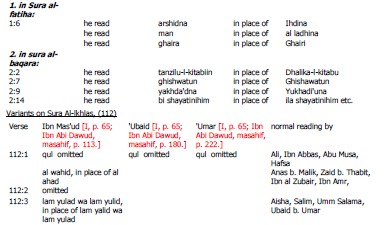
حتى اليوم، لا تزال الاختلافات والمترادفات موجودة في تلك النسخ من النص التي تُنسب إلى الصحابة، وهي ذات قيمة لنا من حيث إنها ربما كانت بمثابة صورة أولية بسيطة من التفسير. فعلى سبيل المثال، تذكر بعض الروايات أن عبارة «الصلاة الوسطى» قُرئت وكُتبت «صلاة العصر» (أي صلاة العصر) عند حفصة [موطأ مالك؛ Jeffery، ص 214.] وأُبيّ [Jeffery، ص 122.] وابن عباس [Jeffery، ص 196.].
Even today the variants and synonyms are found in such copies of the text as are attributed to the Companions and are of some value to us in the sense that they may have served as an early rudimentary form of tafsir. For example, according to some reports the words 'salat al-wusta' (middle prayer) were read and written by Hafsa, [Muwatta' Malik; Jeffery, p. 214.] Ubay [Jeffery, p. 122.] and Ibn 'Abbas [Jeffery, p. 196.] as 'salat al-'asr' (i.e. afternoon prayer).
ما دام الصحابة يكتبون نسخهم الخاصة للاستعمال الشخصي فحسب، فلم يكن في ذلك بأس، حتى وإن لم يلتزموا حرفياً بترتيب السور الذي كان عليه ترتيب القرآن. ثم لما أصبحت نسخة عثمان هي المصحف المعتمد، تبنّى الصحابة ترتيب هذه النسخة، بما فيهم ابن مسعود الذي ربما كان أكثرهم مخالفةً. [ابن أبي داود، ص ١٢؛ صالح، صبحي: مباحث في علوم القرآن، بيروت، ١٩٦٤م.] ووُجدت أيضاً، كما أُشير، بعض القراءات المختلفة في هذه النسخ، [انظر أيضاً أدناه: القراءات السبع.] حين كانت بعض الكلمات تُنطق وتُرسم بطرق مختلفة قليلاً، وغير ذلك. غير أنه يجب الانتباه إلى أن القراءات المختلفة يرويها عادةً شخص واحد فقط، وقد يرويها أحياناً اثنان أو ثلاثة، بينما المصحف المعروف بالمصحف العثماني متواتر، أي نقله عدد كبير من الناس، وهو بلا شك صحيح الثبوت.
As long as the sahaba wrote their own copies for personal use only, there was nothing wrong, if they did not strictly adhere to the order of suras which was the order of the Qur'an. Later on, when 'Uthman's copy became the standard version, the Companions adopted the order of this copy including Ibn Mas'ud who perhaps differed most. [Ibn Abi Dawud, p. 12; Salih, S.: Mabahith fi 'ulum al-qura'n, Beirut, 1964,] There were also, as indicated, some variant readings in these copies, [See also below, seven readings and qira'at.] when some words were pronounced and spelt in slightly different ways, etc. However, it should be noted that variant readings are usually reported by a single person only, and occasionally by perhaps two or three while the version called the 'Uthmanic text is mutawatir, i.e. transmitted by numerous people and is without doubt authentic.