٤.١ أقسام النص
4.1 Divisions Of The Text
آية وسورة
Aya And Sura
الآية (جمعها: آيات) في الأصل معناها «العلامة»، وهي في الاصطلاح الشرعي أقصر قسمة من النص القرآني، أي جملة أو عبارة. ولا غرابة أن تُسمّى أصغر أقسام الوحي، وهو هداية من الله للناس، «آياتٍ» بمعنى العلامات الهادية، إذ هو هداية من الله للبشر. ولذلك لا يُناسب وصفها بكلمة «verse» لأن القرآن ليس شعراً.
Aya (pl. ayat) actually means 'sign'. In technical language it is the shortest division of the Qur'anic text, i.e. a phrase or sentence. The revelation is guidance from God to mankind and it is therefore not at all surprising to find that its smallest divisions are called (guiding) 'signs'. The term 'verse' is not appropriate since the Qur'an is not poetry.
السُّورَةُ (جمعها: السُّوَرُ) تعني حرفياً "الصَّفُّ" أو "السِّياجُ". وفي الاصطلاح، هي التقسيمُ للنصِّ القرآنيِّ حسب المقاطع، أي فصلٌ أو جزءٌ، مفصولٌ عمّا قبله وعمّا بعده من النص.
Sura (pl. Suwar) means literally 'row' or 'fence'. In technical language, it is the passage-wise division of the Qur'anic text,i.e. a chapter or part, set apart from the preceding and following text.
يتألف القرآن الكريم من 114 سورة متفاوتة الطول، أقصرها تتكون من أربع آيات، وأطولها من 286 آية.
The Qur'an has 114 suras of unequal length, the shortest consisting of four and the longest of 286 ayat.
جميع السور (باستثناء السورة التاسعة) تبدأ بعبارة بسم الله الرحمن الرحيم. وليست هذه إضافة متأخرة إلى النص، بل كانت مستعملة من قبل، حتى قبل بعثة محمد ﷺ بالنبوة. [انظر سورة النمل: 30.] لكل سور القرآن الـ 114 أسماء، تعمل بمثابة عنوان. وغالبًا ما تُشتق الأسماء من كلمة مهمة أو مميزة في النص نفسه، مثل سورة الأنفال (8) أو سورة البقرة (2). وفي حالات أخرى يكون الاسم أحد الكلمات الأولى التي تبدأ بها السورة، مثل طه (20) أو الفرقان (25).
All suras (with the exception of Sura 9) begin with the words bismillahir rahmanir rahim. This is not a later addition to the text, but was already used, even before Muhammad's call to prophethood. ' [See Sura 27: 30.] All 114 suras in the Qur'an have names, which serve as a sort of heading. The names are often derived from an important or distinguishing word in the text itself, such as e.g. al-anfal (8) or al-baqara (2). In other cases it is one of the first few words with which the sSra begins e.g. ta-ha (20) or al-furqan (25).
الترتيب والتنظيم
Order And Arrangement
وقد حدّد النبي ﷺ ترتيب الآيات داخل كل سورة وترتيب السور نفسه أخيرًا، بتوجيه من الملَك جبريل عليه السلام، في العام الذي توفي فيه، إذ جاءه جبريل مرتين ليراجع معه النص. [انظر أعلاه. نقل الوحي القرآني، ص 31.] كما قسّم العلماء السور إلى أربعة أنواع:
Both the order of the ayat within each sura and the arrangement of the suras were finally determined by the Prophet under guidance from the Angel Gabriel in the year of his death, when Gabriel twice came to revise the text with him. [See above. transmission of the Qur'anic revelation, p. 31.] Scholars have also grouped the suras into four kinds:
الطِّوَال: من ٢ إلى ١٠.
al-tiwal (long ones): 2-10.
الماعون: سُوَر تقريباً ذات مئة آية: 10-35.
al-mi'un: suras with approximately 100 ayat: 10-35.
المثانی: السور التي فيها أقل من مائة آية: من 36 إلى 49.
al-mathani: suras with less than 100 ayat: 36-49.
المفصّل: القسم الأخير من القرآن الذي يبدأ بسورة ق: ٥٠–١١٤.
al-mufassal: the last section of the Qur'an beginning with Sura qaf: 50-114.
أقسام أخرى من النص
Other Divisions Of The Text
الجزء (جمعه: أجزاء) يعني الجزء والحصة. قُسِّم القرآن الكريم إلى ثلاثين جزءًا متقاربة في الطول تسهيلًا لتلاوته في ليالي الشهر الثلاثين، ولا سيما في شهر رمضان. وغالبًا ما يُشار إليها بلفظ «جزء» مع ذكر رقمه بجانبه، مثل: الجزء الثلاثون الذي يبدأ بسورة النبأ.
Juz' (pl. ajza') literally means part, portion. The Qur'an is divided into 30 portions of approximately equal length for easy recitation during the thirty nights of a month, especially of the month of Ramadan. Usually they are indicated by the word and the number of it given alongside, (e.g. juz' 30 beginning with Sura 78).
توجد في بعض نسخ القرآن الكريم تقسيم السور إلى فقرات تُسمّى الرُّكوع، وتُشار إليها بالرمز ، وبيان الأرقام العربية المكتوبة مع كل منها كما يلي، مثال: ٢:٢٠
Some copies of the Qur'an have the suras divided into paragraphs called ruku'. They are indicated by the symbol and the explanation of the Arabic numerals written with each is as follows, e.g. 2:20:
الشكل العلوي (2) يدل على أن هذا هو الركوع الثاني المكتمل في السورة المعنية (وهنا سورة البقرة).
The top figure (2) indicates that this is the second completed ruku ' in the respective sura (here Sura albaqara)
.
.
يُشير الرقم الأوسط (13) إلى أنّ هذا الركوع المكتمل يحتوي على 13 آيةً.
The middle figure (13) indicates that this completed ruku' contains 13 ayat.
الرقم الأسفل (2) يدل على أن هذا هو الركوع الثاني في الجزء المعني (وهنا الجزء الأول).
The lower figure (2) indicates that this is the second ruku' in the respective juz' (here first juz').
تُطبع نسخ القرآن الكريم، ولا سيما المطبوعة في الشرق الأوسط، ويُقسَّم فيها كل جزءٍ إلى أربعة أحزاب، يُشار إلى كل حزبٍ بالعلامة ﴿ ﴾ — مثلًا: ٢:٧٤ هو بداية الحزب الثاني من القرآن، ويُشار إليه بالرقم ٢.
Copies of the Qur'an printed in the Middle East in particular have each juz' subdivided into four hizb indicated by the sign e.g. 2:74 is the beginning of the second hizb of the Qur'an, indicated by the figure 2:
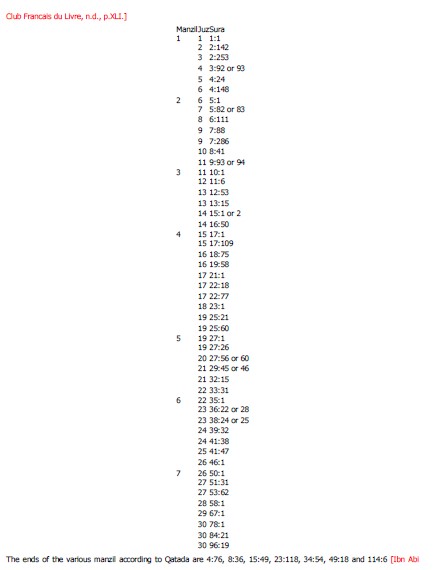
يُقسَّم كل حزب بدوره إلى أرباع. كما يُقسَّم نص القرآن الكريم إلى سبعة أجزاء متقاربة في الطول تُسمى منازل، تُقرأ على مدى سبعة أيام، وتُشار إليها في بعض النسخ بكلمة «منزل» مع رقمه المقابل في الهامش. ويبيّن الجدول التالي تقسيم النص إلى أجزاء ومنازل: [Hamidullah, Muhammad: Le Saint Coran. Traduction integraleetnores. Paris:
Each hizb is again subdivided into quarters The Qur'anic text is also divided into seven parts of approximately equal length, called manzil, for recitation over seven days, indicated in some copies by the word manzil and the respective number in the margin. The following table shows the division of the text into juz' and manzil: [Hamidullah, Muhammad: Le Saint Coran. Traduction integraleetnores. Paris: