1.4 د "مؤاخاة" (د ورورولۍ تړون) کله منعقد شو او د "صحيفه" (د مدينې) کله ولیکل شوه؟
1.4 When was the “Mu’akhaah” (brotherhood pact) concluded and when was the Sahifah (of Al-Madinah) written?
هغه متنونه چې دمخه وړاندې شوي دي کافي دي، او له هغو څخه لاندې نتیجه اخلو:
The texts that have already been presented should be sufficient and from them we deduce the following:
1) صحیح نظریہ یہ ہے کہ مہاجرین اور انصار کے درمیان یہ بھائی چارہ اسعد بن زرارہ رضی اللہ عنہ کی وفات سے پہلے نہیں ہو سکتا تھا، یعنی مسجد کی تعمیر کے دوران، نبی ﷺ کی ہجرت کے تقریباً سات ماہ بعد۔ یہ بات ناقابلِ تصور ہے کہ یہ بھائی چارہ ان کی زندگی میں ہوا ہو اور اس میں ان کا ذکر نہ آیا ہو، کیونکہ وہ انصار کے سردار اور عقبہ کی دوسری بیعت کے نقباء میں سے ایک تھے۔ لہٰذا ابو عمر ابن عبدالبر کا قول یہ ہے۔
1) The correct view is that this brotherhood between the Muhajirin and the Ansar could not possibly have taken place prior to the death of As’ad bin Zurarah (May Allah be pleased with him), during the building of the Masjid, about seven months following the arrival of the Prophet (peace be upon him). It is not conceivable that it took place in his lifetime without him having been mentioned in it, as he was chief of the Ansar and one of the Naqeebs (selected leaders of the Ansar at the second pledge of ‘Aqabah). Therefore, the statement of Abu ‘Umar ibn Abd AlBarr:
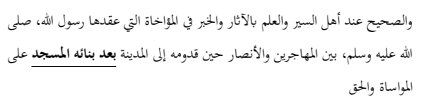
په سیرت پوهانو او هغو روایاتو ته په کتو سم صحیح نظر دا دی چې د «مؤاخاة» (ورورولۍ) هغه تړون چې رسول الله ﷺ د مهاجرینو او انصارو ترمنځ هغه وخت وتړ چې مدینې ته راغی، د مسجد له جوړولو وروسته وشو، او دا تړون د مرستې او د حق د ادا کولو په بنسټ وو …
“The correct view as held by the scholars of Seera and reports in respect to the “Mu’akhaah” (brotherhood) which the Messenger of Allah (peace be upon him) concluded between the Muhajirin (emigrants) and the Ansar (helpers), when he came to Al-Madinah, was that it took place after his building of the Masjid and it was upon the basis of the provision of assistance/support and the Haqq (truth) …” .
یوه ډېره ممکنه خبره ده، په ځانګړي توګه داچې د مسجد د جوړولو بشپړېدل او د پرانیستې جشن د دې کار لپاره ښه موقع وه. سربیره پردې، دا باید د بدر د جګړې څخه مخکې ترسره شوی وي، ځکه په دې کې د عبیدة بن الحارث (بن المطلب بن عبد مناف بن قصي القرشي المطلبي) ذکر شوی دی، او د هغه ورور عمیر بن الحمام (بن الجموح بن زید بن حرام بن کعب) سره، چې دواړه د بدر په جګړه کې شهیدان شول، الله ترې راضي وي. دوي په ژوند کې هم ورونه وو او په مرګ کې هم، او موږ له الله څخه امید لرو چې قیامت په ورځ هم داسې وي. ۲) سمه نظر دا دی چې د مهاجرینو او انصارو ترمنځ دا ورورولي په اصل کې لیکل شوې نه وه، ځکه د هغې ماهیت د دې سره سمون نه خوري. دا ځکه چې ټول روایتونه، بې له ځنډه، د لیکلي سند څخه هیڅ یادونه نه کوي. د سیرې، تاریخ او حدیثو کتابونو په پلټنه کې د صحیفه المدینه څخه مخکې د کوم منشور، لیکلي سند یا قانون یادونه نه ده ښکاره شوې. هغه استثناء چې دا یې شامل دي...
is very conceivable, and particularly as the completion of the building of the Masjid and the celebration for its opening, represented a good occasion for such a step to be undertaken. I addition, it must have been undertaken prior to the battle of Badr because Ubaida bin Al- Harith (bin Al-Muttalib bin Abd Manaf bin Qusayy Al-Qurashi Al-Muttalibi) is mentioned in it along with his brother ‘Umair bin Al- Humam (bin Al-Jamuh bin Zaid bin Haram bin Ka’b) and they were both martyred at the battle of Badr, may Allah be pleased with them. They were brothers in life and at death, and we hope from Allah that they be like that also, on the Day of Judgement. 2) The correct view is that this brotherhood between the Muhajirin and the Ansar was not written in origin as its nature was incompatible with that. That is because all of the narrations, without exception, do not mention a written document at all. An examination of the books of Seera, history and Hadith reveal the absence of the mention of any charter, written document or code prior to the Sahifah of Al-Madinah. The exception to that included:
الف) د قرآن کریم صحیفې (صحائف): د دې ترټولو مشهورو جملې څخه هغه صحیفه ده چې د عمر رضی الله عنه د اسلام قبلولو په هکله ذکر شوې ده او دې کې د سورۃ طه یوه برخه شامله وه. همدارنګه هغه صحیفه چې عمر رضی الله عنه په خپل لاس لیکلې وه او هشام بن العاص ته ولیږل شوه. په دې کې داسې شیان شامل وو:
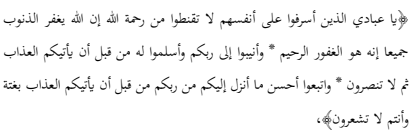
ووایه: "ووایه، ای زما هغه بندګانو چې په خپلو ځانونو یې ظلم کړی دی [د ګناه په کولو سره]، د الله د رحمت څخه مایوسه مه کیږئ. بې شکه الله ټول ګناهونه بخښي. بې شکه هغه دی چې بخښونکی، رحم کوونکی دی." او خپل رب ته رجوع وکړئ او د هغه تابع شئ مخکې لدې چې عذاب درباندې راشي؛ بیا به تاسو ته هیڅوک مرسته ونه کړي. او د هغه ښه څیز پیروي وکړئ چې ستاسو د رب له لوري تاسو ته نازل شوی دی، مخکې لدې چې عذاب ناڅاپه درباندې راشي پداسې حال کې چې تاسو نه پوهیږئ.» [TMQ 39:53-55]
“Say, “O My servants who have transgressed against themselves [by sinning], do not despair of the mercy of Allah. Indeed, Allah forgives all sins. Indeed, it is He who is the Forgiving, the Merciful”. And return [in repentance] to your Lord and submit to Him before the punishment comes upon you; then you will not be helped. And follow the best of what was revealed to you from your Lord before the punishment comes upon you suddenly while you do not perceive” [TMQ 39:53-55].
ب) د لقمان مجلّه: المجلّه او همدارنګه السِّجِلّ یو صحیفه (لیکلی سند) ده چې ورقونه یې اړول کېږي. دا هغه څه دي چې د بیهقي "دلائل النبوة" کې (2/419) ذکر شوي دي. (د ټول سند ذکر کولو وروسته) عاصم بن عمر بن قتاده انصاري د خپلې ټولنې له مشرانو نقل کړي، چې دوی ویلي:
b) The Majallah of Luqman: Al-Majallah and likewise As-Sijli are a Sahifah (written document) that is turned or (its pages) turned over. That is like what came mentioned in “Dala’il An-Nubuwwah” of Al- Baihaqi (2/419). (After mentioning the full line of transmission) ‘Asim bin ‘Umar bin Qatadah Al-Ansaariy related from the Shuyukh (elders) of his people, that they said:
«سُوَيد بن الصامت، د بني عمرو بن عوف ورور، د حج يا عمرې د ادا کولو لپاره مکې ته راغی. سُوَيد د خپلې قبيلې له خوا د عمر، پوټکي او ویښتانو له امله د دوی په منځ کې د کمال نمونه بلل کېده. (راوي) وويل:»
“Suwaid bin As-Samit, the brother of Bani ‘Amr bin ‘Awf, came to Makkah as a pilgrim for Hajj of ‘Umrah. Suwaid was described by his people as being the model of perfection among them, due to his age, skin and hair. He (the narrator) said:
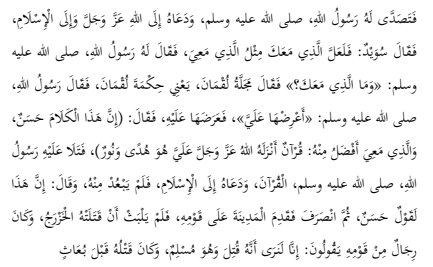
پس د الله رسول ﷺ هغه ته نږدې شو او هغه یې الله عزوجل ته او اسلام ته بلنه ورکړه. سوید وویل: "شاید هغه څه چې ته لري د هغه څه په شان وي چې زه لرم". نو د الله رسول ﷺ وپوښتل: "او ته څه لرې؟" هغه ځواب ورکړ چې هغه د لقمان مجله لري، یعنی د لقمان حکمت. د الله رسول ﷺ وفرمایل: "دا را ته وښایه" او هغه داسې وکړل. هغه ﷺ وفرمایل: "دا خبره ښه ده، خو هغه څه چې زه لرم دا څخه غوره دي. دا د قرآن کریم دی چې الله عزوجل نازل کړی دی او دا هدایت او رڼا ده". بیا د الله رسول ﷺ هغ ته قرآن ولوست او اسلام ته یې بلنه ورکړه. هغه له دې څخه ډډه ونه کړه او وې ویل: "بېشکه دا یوه ښه خبره ده". بیا هغه لاړ او وروسته د مدینې منورې ته خپلو خلکو ته راغی. لږ وخت وروسته هغه د خزرج له خوا ووژل شو. د هغه د قوم ځینو سړو به ویل: "موږ ګومان کوو چې هغه د مسلمان په حالت کې ووژل شو" او د هغه وژل د بعاث له جګړې دمخه وشول. [د نقل پای] ج) هغه صحیفه (لیکلی سند) د (ظالمانه او لعنت شوي) بایکاټ، چې قریشو د کعبې په دننه کې ځوړنده کړه؛ د هغې کیسه، د اوږو د خوړلو کیسه او بیا د هغې مشهوره متواتره کیسه چې د هغې د باطلېدو په اړه ده. د) هغه پاڼې (صحف) چې د الله رسول ﷺ د جنګي لښکرو قوماندانانو ته ورکړې، چې لارښوونې پکې وې او دوی نښلول شوي یا یوځای ټاکل شوي وو. یوه بېلګه یې هغه څه دي چې د واقدي په "کتاب المغازي" (1/13) کې راغلي دي:
Then, the Messenger of Allah (peace be upon him) approached him and invited him to Allah ‘Azza Wa Jalla and to Islam. Suwaid said: “It may be that what you have is like that which I have”. So, the Messenger of Allah (peace be upon him) asked: “And what do you have?” He responded by saying that he had the Majallah of Luqman, meaning the Hikmah (wisdom) of Luqman. The Messenger of Allah (peace be upon him) then said: “Show it to me” and so he did. He (peace be upon him) said: “This speech is good but what I have is better than it. It is a Qur’an that Allah ‘Azza Wa Jalla has revealed and it is guidance and light”. The Messenger of Allah (peace be upon him) then recited the Qur’an to him and invited him to Islam. He didn’t distance himself from it and said: “Verily, this is a good speech”. He then left and later arrived to Al-Madinah to his people. It was not long thereafter that he was killed by the Khazraj. There were men from his people who would say: “We view that he was killed whilst he was a Muslim” and his killing occurred before the war of Bu’ath” [End of Quote]. c) The Sahifah (written document) of the (oppressive and accursed) Boycott which the Quraish hung inside the Ka’ba along; its story, the story of the termites eating it and then its well-known Mutawatir story concerning its nullification. d) The pages (Suhuf) which the Messenger of Allah (peace be upon him) gave to the commanders of the military expeditions, containing instructions, and they were sealed or patched together. And example of that is what came stated in Al-Waqidi’s “Kitab ul-Maghazi” (1/13):
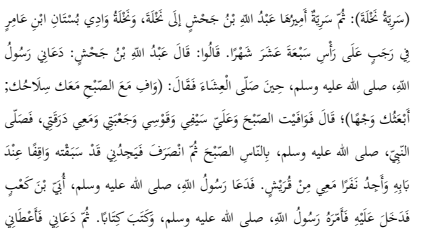
د عبدالله بن جحش په مشرۍ کې د نخلې طرف ته لیږل شوی لښکر (نخله د ابن عامر د باغ یوه وادۍ ده) د رجب په میاشت کې، د هجرت کال دریوځمه میاشت، ته پیښ شو.
“The expedition to Nakhla commanded by Abdullah bin Jahsh (Nakhla is a valley in the Bustan (Orchard) of Ibn ‘Amir) took place in the month of Rajab, the seventeenth month AH.
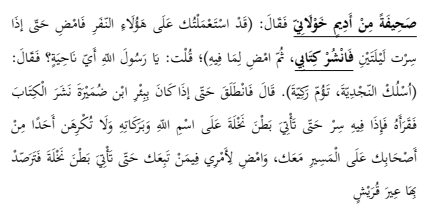
وویل: عبدالله بن جحش وویل: رسول الله ﷺ ماښام د عشا لمانځلو وروسته ما ته راغی او وې فرمایل: "سهار وخته د وسلو سره زما خوا ته راشه، ځکه زه تا یو ماموریت ته لیږم". هغه وویل: نو زه سهار وخته خپله توره، کمان، ترکش او سپر واخیست او راغلم. پیغمبر ﷺ د خلکو سره سهار لمونځ (یعنی فجر) وکړ، بیا ووت او ما ته راغی. هغه ما ته داسې وموند چې زه له هغه مخکې د هغه د دروازې په وړاندې ولاړ وم، او زما سره هلته د قریشو (یعنی مهاجرینو) یوه ډله هم وه. رسول الله ﷺ ابی بن کعب ته راوغوښت او هغې ته یې امر وکړ چې یو سند ولیکي. بیا یې ما ته راوغوښت او د ځوله ښار (ځولان) څرمنه ورکړه او وې فرمایل: "ما تا د دې ډلې مشر ټاکلی دی. روان شه تر دې چې دوه شپې سفر وکړې. بیا خپل لیک خلاص کړه او هغه څه وکړه چې په کې لیکل شوي دي". ما وویل: "ای د الله رسوله، په کومه لوری؟" هغه وفرمایل: "د نجدیې لوری ته لاړ شه تر دې چې یو کوچنی کوهی ته ورسیږې". راوی وایي: عبدالله بن جحش ګړندی شو، تر دې چې د ابن دمیرې کوهی ته ورسید. بیا یې لیک خلاص کړ او ولوست. په کې لیکل شوي وو: "لاړ شه، د الله په نوم او د هغه په برکت، تر دې چې د نخلې دره ته ورسیږې، خو د خپلو ملګرو له یو چا هم زور مه کوه چې ستا سره لاړ شي. د هغه چا سره چې ستا تعقیب کوي، زما امرونو سره سم لاړ شه، تر دې چې د نخلې دره ته ورسیږې او هلته د قریشو د کاروان په تاک کښېنه". [د نقل پای]
They said: Abdullah bin Jahsh said: The Messenger of Allah (peace be upon him) called for me when he prayed Ishaa’, and said: “Come to me at dawn with your weapons, as I will send you on a mission”. He said: So, I approached at dawn with my sword, my bow, my quiver and my shield. The Prophet prayed Subh (i.e. Fajr) with the people, and then he left and found me. He found me having preceded him already standing at his door whilst I found a group of the Quraysh (i.e. Muhajirun) with me there. The Messenger of Allah (peace be upon him) called for Ubayy bin Ka’b and commanded him to write a document. Then he called me and gave me the sheet of leather from Khawlan, saying: “I have appointed you over this group. Proceed until you have travelled for two nights. Then open my letter and do as it says”. I said: “O Messenger of God, in which direction?” He replied, “Go towards Najdiyya until you reach a small well”. The narrator said: Abdullah bin Jahsh hastened, until he reached the well of Ibn Dumayra. He then opened the letter and read it. It said: “Go, in the name of Allah and with His blessings, until you come to the valley of Nakhla, but do not force any one of your companions to go with you. Proceed according to my commands with whoever follows you, until you reach the valley of Nakhla and lie in wait for the caravan of Quraysh from there” [End of Quote].
خلاصه او نتیجه
Summary Conclusion
هرجا چې د صحيفې يا د مهاجرينو او انصارو ترمنځ د ليکلي سند، يا د وينې د بيې د حقونو، جګړې يا سولې په اړه روايت وموندل شي، موږ په ضرورت سره پوهيږو چې دا روايت د دې «مؤاخاة» (د ورورولۍ تړون) سره هيڅ اړيکه نه لري. يا به دا د «صحيفة المدينة» پورې اړه ولري، يا به هغه څه وي چې د هغې له وخته وروسته راغلي يا ليکل شوي دي. همدارنګه هغه څه هم اعتبار نه لري چې د احمد ابو زيد په «السيرة النبوية» کتاب (ص ۷۱) کې د «د يهودو سره د معاهدې د ليکلو نېټه» تر سرليک لاندې راغلي دي: «يو معاصر څېړونکي دا ترجيح وموندله چې دا سند په اصل کې دوه سندونه وو، او بيا تاريخ ليکونکو هغه په يو کې يوځای کړل. يو يې د رسول الله ﷺ د يهودو سره د تړون په اړه و او د لوی بدر د جګړې څخه مخکې ليکل شوی و. دويم يې د مسلمانانو، مهاجرينو او انصارو مسؤوليتونه، حقونه او واجبات روښانه کول. ده وويل: زما په نظر ترجيح دا ده چې د يهودو سره د سولې (موادعة) سند د لوی بدر د جګړې څخه مخکې ليکل شوی و، او دويم سند له هغې وروسته ليکل شوی دی.» کلاسيک سرچينې هم دې ترجيح ته ملاتړ کوي. ابو عبيد القاسم بن سلام وويل: «وثيقه په دوو مهالونو کې ليکل شوې وه، کله چې پيغمبر ﷺ مدينې ته راغی، د اسلام د غلبې او پياوړتيا څخه مخکې او هغه وخت چې هغۀ ته د اهل الكتاب څخه د جزيې اخيستل حکم شوي نه و.» البلاذري وويل: «کله چې رسول الله ﷺ مدينې ته راغی، يهودو سره يې موادعه وکړه او د هغوی او د ځان ترمنځ يې يو سند وليکه. په دوی يې شرط ايښود چې د هغه د دښمنانو سره به مرسته او ملګرتيا نه کوي، هغه ته به د هغه د بريدګرو په وړاندې مرسته کوي، او دا چې هغه به د اهل الذمه د دفاع لپاره جګړه نه کوي.» هغه بیا د هیچا سره جنګ ونه کړ، هغوی هغه ته تور ونه لګاوه، او نه یې لښکر ولیږه، تر دې چې الله عزوجل دا آیت نازل کړ: «دې کسانو ته اجازت ورکړل شوی چې له جګړې سره مخ کیږي، ځکه چې پر دوی ظلم شوی دی. او بې شکه الله د دوی د بریالیتوب پر ورکولو توان لري. هغه کسان چې له خپلو کورونو بې له حقه ایستل شوي دي». (سورت الحج، ۳۹-۴۰)
Wherever we find a narration about a Sahifah or a written document between the Muhajirin and the Ansar, or concerning blood money rights, war or peace, we know, by necessity, that it bears no relation to this “Mu’akhaah” (formation of brotherhood). It would either be related to the Sahifah of Al-Madinah or something that came or was written (much) later than it. There is also no validity in what came related in “As-Seera An- Nabawiyah” by Ahmad Abu Zaid (p. 71) under the heading “The date of the writing of the treaty (Mu’ahadah) with the Jews”: “One of the contemporary researchers found preponderant that the document was actually two documents in origin and then the historians combined them into one. One of them dealt with the treaty of the Messenger of Allah (peace be upon him) with the Jews and was written prior to the great battle of Badr. That is whilst the second clarified the commitments (duties) of the Muslims from the Muhajirin and the Ansar, their rights and obligations. He said: “It is preponderant in my view that the peace agreement (Muwada’ah) document with the Jews was written before the great battle of Badr. As for the second document, then it was written after it”. The classical sources have expressed that which supports this preponderance. Abu ‘Ubaid Al-Qasim bin Salam said: “The Wathiqa (document) was written on two occurrences, when the Prophet (peace be upon him) arrived in Al-Madinah, prior to the dominance of Islam and its becoming strong and before he was commanded to take the Jizyah from Ahl ul-Kitab (the people of the book)”. Al-Baladhari said: “When the Messenger of Allah (peace be upon him) arrived in Al-Madinah he made a treaty (Muwada’ah) with the Jews and wrote between himself and them a document. He stipulated upon them that they should not support or side with his enemies, to support him against those who attack him and that he would not fight in defence of the Ahl udh-Dhimmah. He did not then wage war against anyone, they did not defame him and he did not dispatch a military expedition, until Allah ‘Azza Wa Jalla revealed: “Permission [to fight] has been given to those who are being fought, because they were wronged. And indeed, Allah is capable of providing them victory. [They are] those who have been evicted from their homes without right” (TMQ 22:39- 40)”.

ټاکل شوی اجازت هغو کسانو ته ورکول شوې ده چې ورسره جګړه کیږي، ځکه چې دوی ظلم شوي دي. او یقیناً الله د دوی د بریالیتوب کولو وړتیا لري.
“Permission [to fight] has been given to those who are being fought, because they were wronged. And indeed, Allah is capable of providing them victory.
«هغه کسان چې له خپلو کورونو څخه په ناحقه ګړندي وشړل شول» [TMQ 22:39-40]
[They are] those who have been evicted from their homes without right” [TMQ 22:39-40]
دا ځکه چې "موادعہ" (سوله او د جنګ بندي) طبیعي او اصلي حالت دی، او دا د دې ضرورت نه لري چې د هغې د قایمولو لپاره یوځای راټول شي. بیا، که جنګ پیښ شي، نو "موادعہ" ختمه شي او بیا نه راګرځي تر هغه چې جنګ د بندۍ، تړون یا د سولې د هوکړې له لارې پای ته ورسیږي.
That is because the “Muwada’ah” (peace and truce) is the natural and original situation and is not in need of being convened in order to establish it. Then, if war was to take place, the “Muwada’ah” would cease and it would not return until the war ends by way of a truce, treaty or peace agreement.
لہٰذا «موادعہ» ایک ایسی حیثیت ہے جو موجود بھی ہو سکتی ہے اور غیر موجود بھی۔ اس لیے رسول اللہ ﷺ کا یہ فرمان: «الحبشہ ما ودعوکم فدعوہم» یعنی "حبشیوں کو چھوڑ دو جب تک وہ تمہیں چھوڑے رکھیں" ضرورتاً اس معنی میں ہے: موادعہ (صلح اور متارکہ) کی موجودہ حالت کو برقرار رکھنا اور اس پر قائم رہنا جب تک حبشہ اس پر قائم رہے۔ اسی طرح سیرت نگاروں کے اس قول اور نبی ﷺ سے منقول روایات میں جیسے: "جب آپ ﷺ مدینہ آئے تو آپ نے وہاں رہنے والے تمام یہودیوں کے ساتھ صلح کر لی"، اس کو یہ سمجھنا جائز نہیں کہ آپ ﷺ نے کوئی باقاعدہ "موادعہ" قائم کیا یا کوئی عہد (باقاعدہ معاہدہ) کیا۔ بلکہ اس کا مطلب یہ ہے کہ آپ ﷺ نے ان کے درمیان موجود اصل حالتِ متارکہ اور صلح کو برقرار رکھا اور اسی پر قائم رہے۔
Consequently, the “Muwada’ah” represents a status that could be present or absent. Therefore, the statement of the Messenger of Allah (peace be upon him): “Leave the Abyssinians be as long as they leave you be” means by necessity: Affirm and continue upon the status quo of the Muwada’ah (peace and truce) as long as Abyssinia does so. As such, in respect to the statement used by the scholars of Seera and reports concerning the Prophet (peace be upon him) like: “When he arrived in Al-Madinah he made peace with all of the Jews who were residing there”, it is not permissible to be understood to mean that he established an official “Muwada’ah” or contracted a covenant (official treaty). Rather, it means that he affirmed and continued upon the original status quo of the truce and peace existing between them.
اگر د هغه (ﷺ) له هغه څه ته پام وکړو چې له هغه نه روایت شوي دي: «که هغه څه چې د هغه (نبي) له نظره سره موافق دي، هغه ته غاړه کیښودې وای، هغه به نه وژل کیده. خو هغه زموږ په اړه شعرونه ویل او زموږ ټوکې یې کولې، او تاسو هیڅوک داسې نه کوئ مګر دا چې هغه یې تورې وه» نو به وګورو چې دا زموږ دې نظر ته په بشپړه توګه تاییدوي. ځکه په دې کې د هغه تړون یا هغه معاهدې څه یادونه نشته چې کعب بن الاشرف ماتې کړې وي. بلکې هغه د هغه صلحې (موادعة) په دوام او تایید کې نه و چې نورو ورباندې ساتنه کړې وه. امام ابن القیم (رحمه الله) په دې یوه برخه خبر و. هغه په خپل کتاب «احکام اهل الذمة» (3/1404) کې ویلي دي:
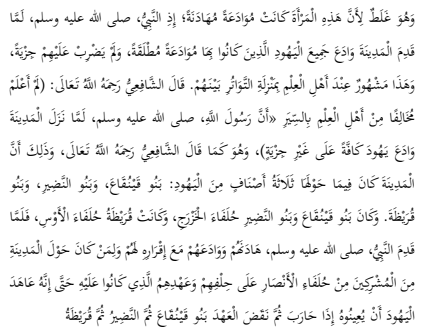
او دا یوه غلطي ده، ځکه چې دا ښځه په سوله او په مُهادنه (لنډمهاله تړون) کې وه۔ دا ځکه چې کله نبي ﷺ مدینې ته راغی نو له هغو یهودو سره چې هلته اوسېدل، ده په بېقیده ډول سوله وکړه او په دوی باندې جزیه نه وه لګولې۔ دا د پوهانو په منځ کې تر تواتر پورې مشهور دی۔ الشافعي (رحمه الله) وویل: "زه د سیرت پوهانو څخه یو داسې هم نه پیژنم چې په دې خبره کې اختلاف ولري چې کله رسول الله ﷺ مدینې کې استوګن شو نو له ټولو یهودو سره یې پرته له جزیې سوله وکړه۔" دا هماغسې ده لکه چې الشافعي (رحمه الله) بیان کړی۔ دا ځکه چې مدینې ته درې ډلې یهودان چاپېره وو: بنو قینقاع، بنو النضیر او بنو قریظه۔ بنو قینقاع او بنو النضیر د خزرج حلیفان وو، پداسې حال کې چې بنو قریظه د اوس حلیفان وو۔ بیا کله چې رسول الله ﷺ مدینې ته راغی، نو ده له دوی سره هم، او هغو مشرکانو سره هم چې د مدینې شاوخوا وو او د انصارو حلیفان وو، د دوی د ځانګړي حلف او تړون پر بنسټ چې پخوا یې درلود، تړون او سوله وکړه۔ حتی ده له یهودو څخه داسې تړون هم واخیست چې که د دوی په وړاندې جنګ وشي، نو هغوی به د ده مرسته کوي۔ بیا بنو قینقاع تړون مات کړ، وروسته النضیر، او بیا قریظه۔"
“And it is a mistake because this woman was at peace and under a truce (Muhadanah). That is because when the Prophet (peace be upon him) came to Al-Madinah he made peace with all of the Jews residing there an unrestricted manner and he did not impose Jizyah upon them. This is well-known by the people of knowledge to the level of Tawatur (decisive concurrent transmission) among them. Ash- Shafi’iy (may Allah’s mercy be upon him) said: “I do not of any from the people of knowledge of Seera who disagree upon the point “That when the Messenger of Allah (peace be upon him) settled in Al- Madinah, he made peace with all of the Jews without the imposition of the Jizyah”. It is as Ash-Shafi’iy (May Allah’s mercy be upon him) stated. That is because Al-Madinah had three groups of Jews surrounding it: Banu Qainuqaa’, Banu An-Nadir and Banu Quraizha. Banu Qainuqaa’ and Banu An-Nadir were allies of the Khazraj, while Banu Quraizha were allies of the Aws. Then when the Messenger of Allah (peace be upon him) came to Al-Madinah, he made a truce and peace with them with his approval of them, alongside those who were around Al-Madinah from the polytheists who were allies of the Ansar, upon the basis of their alliance and covenant that they had previously been upon. He even took a covenant from the Jews that they would support him if he was fought against. Then, Banu Qainuqaa’ broke the covenant, followed by An-Nadir and then Quraizha” [End of Quote].
دا که څه هم په دې ځای کې کارول شوې ځینې څرګندونې شاید ترټولو دقیقې نه وې، لکه د هغه دا وینا چې یهودي ښځه یې د «هدنه» (تړون) لاندې بللې، په داسې حال کې چې هیڅ جګړه هم نه وه شوې، چې د هدنې تړون د دې لپاره پلي شي. شاید دا یوازې د څرګندونې یوه ستونزه وه.
That is even if some of the expressions used here were possibly not the most accurate, like his statement describing the Jewish woman as being under a “truce” (Muhadanah), as there had not even been any fighting, for a truce to have come into effect followed it. It may be that this was merely a slip of expression.

«وثیقہ (لیکلی سند) دوو مرتبو (حدثین) لیکلی گئی، هغه وخت چې پیغمبر (صلی الله علیه وسلم) مدینې ته راغلل، د اسلام د غالبیدو او قوي کیدو څخه مخکې او د اهل کتابو (د کتاب والاو) څخه جزیه اخیستو ته د امر کیدو څخه مخکې.»
“The Wathiqa (document) was written on two occurrences (Hadathani), when the Prophet (peace be upon him) arrived in Al- Madinah, prior to the dominance of Islam and its becoming strong and before he was commanded to take the Jizyah from Ahl ul-Kitab (the people of the book)” .
ځکه چې لفظ "حدثانی" داسې یوه ټاکلې موده نه بیانوي چې په پام کې ونیول شي. اسلام په پراخه توګه ښکاره شو او حقیقتاً قدرت ومومه یوازې د احزابو (د خندق د جنګ) له ماتې وروسته، ځکه چې نبي ﷺ د خلکو پر وړاندې ترعرض پیل وکړ او دوی نور پر هغه تېرغل نه کاوه. سربیره پردې، موږ نه پوهیږو چې هغه ته کله امر وشو چې له خلکو څخه جزیه واخلي. په داسې حال کې چې د هغه دا خبره "له اهل الکتاب څخه جزیه واخلئ" یوه پیژندل شوې تېروتنه تکراروي، ځکه حقیقت دا دی چې جزیه حتی له مشرکانو څخه هم اخیستل کېده، پشمول د مجوسو، لکه څنګه چې د نعمان بن مقرن د حدیث په ډول چې په صحیح مسلم او نورو ټولګو کې روایت دی، راغلې ده. ۲) څه چې د البلاذري خبره ده...
is vague because the word “Hadathani” does not establish for us a determined time frame that can be taken into consideration. Islam only manifested in a prevalent manner and truly became powerful following the defeat of the confederates (Ahzab i.e. battle of the trench). That is because the Prophet (peace be upon him) began to go on the offensive against the people and they were no longer on the offensive against him. In addition, we do not know when he was commanded to take the Jizyah from the people. That is whilst his statement “take the Jizyah from Ahl ul-Kitab (the people of the book)” is a repetition of a well-known error, as the truth is that the Jizyah was taken even from the polytheists, including the Majus, as has come stated in the Hadith of An-Nu’man bin Muqarrin, recorded in Sahih Muslim and other collections. 2) As for the statement of Al-Baladhari
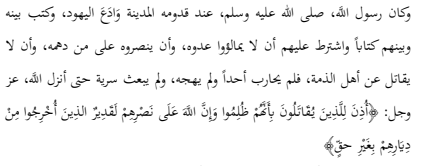
کله چې د الله رسول ﷺ المدينه ته ورسید، نو هغه د یهودو سره یو تړون (موادعه) وکړ او د دوی او د ځان ترمنځ یو لیکلی سند ولیکه. هغه دوی ته دا شرط کښېښود چې دوی به د هغه د دښمنانو ملاتړ یا مرسته نه کوي، د هغه سره به د هغو کسانو په وړاندې مرسته کوي چې هغه ته برید کوي، او دا چې هغه به د اهل الذمة د دفاع لپاره جنګ نه کوي. بیا هغه د هیچا سره جنګ ونه کړ، دوی هم هغه ته توهین ونه کړ، او نه یې د جنګي لښکر لېږلو، تر دې چې الله عزوجل دا آیت نازل کړ: ﴿اِذن لِلَّذِينَ يُقَاتَلُونَ بِأَنَّهُمْ ظُلِمُوا وَإِنَّ اللَّهَ عَلَى نَصْرِهِمْ لَقَدِيرٌ﴾ ﴿الَّذِينَ أُخْرِجُوا مِن دِيَارِهِم بِغَيْرِ حَقٍّ﴾ [الحج: ۳۹-۴۰]
“When the Messenger of Allah (peace be upon him) arrived in Al- Madinah he made a treaty (Muwada’ah) with the Jews and wrote between himself and them a document. He stipulated upon them that they should not support or side with his enemies, to support him against those who attack him and that he would not fight in defence of the Ahl udh-Dhimmah. He did not then wage war against anyone, they did not defame him and he did not dispatch a military expedition, until Allah ‘Azza Wa Jalla revealed: “Permission [to fight] has been given to those who are being fought, because they were wronged. And indeed, Allah is capable of providing them victory. [They are] those who have been evicted from their homes without right” (TMQ 22:39-40)”.
دا وینا متناقضه ده، ځکه چې پیغمبر ﷺ د آیت له نازلیدو مخکې په اصل کې د جګړې کولو اجازه نه درلوده، او له هېچا سره په جنګ کې نه و. همدارنګه د مدینې په برید کیدو تمه هم نه وه. له همدې امله، د هغه د وینا هغه جمله: «هغه دوی ته شرط کېښود چې د هغه دښمنانو ته مرسته و نه کړي او ملاتړ ورسره ونه کړي، هغه ته د هغو کسانو په وړاندې مرسته وکړي چې هغه ته برید کوي»، کوم چې د «صحیفې» د ځینو هغو خبرو لنډیز دی چې په هغې کې راغلي، د هغه وخت له شرایطو سره سم نه تصور کیږي او ځای یې نشته. له دې هم ډېر ناوړه بیان دا دی: «او دا چې هغه به د ذمو اهلو د دفاع لپاره نه جنګېږي»، که چېرې په چاپ کې کومه تېروتنه نه وي. لومړی، په اصل کې هلته «اهل الذمه» نه وو. دوهم، څنګه ممکن دی چې دوی هغه ته په هغو کسانو په وړاندې د مرستې مکلف وي چې هغه ته برید کوي، خو هغه دې د دوی په مرسته مکلف نه وي چې هغو کسانو په وړاندې چې دوی ته برید کوي؟! ۳) د البلاذري هغه ویناوې چې د بني قینقاع په اړه دي...
This speech is contradictory because he (peace be upon him) had not been permitted in origin to engage in fighting prior to the revelation of the Aayah and was not in a state of war with anyone. There was also no expectation for Al-Madinah to be attacked. Therefore, the sentence from his speech: “He stipulated upon them that they should not support or side with his enemies, to support him against those who attack him”, which summarized some of what came stated in the “Sahifah”, is inconceivable and has no reality to it during that time period. Even more atrocious is the statement: “And that he would not fight in defence of the Ahl udh-Dhimmah”, assuming there was no error in the printing. Firstly, there were no “Ahl udh-Dhimmah” there in origin. Secondly, how could it be that they are obliged to support him against those who attack him, whilst he is not obliged to support them against those who attack them?! 3) The statement of Al-Baladhariy concerning Banu Qainuqaa’:
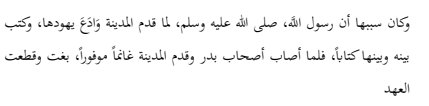
"د دې سبب دا و چې د الله رسول ﷺ کله چې المدینې ته راورسید، نو د هغې د یهودو سره یې د سولې تړون وکړ او د ځان او دوی ترمنځ یې یو لیکلی سند جوړ کړ. بیا کله چې مسلمانان بدر کې بریالي شول او د ډیرو غنیمتونو سره المدینې ته راستانه شول، یهودو بغاوت وکړ او تړون یې ماتکړ." که دا خبره هم بې معنا وي، ځکه "موادعه" (د سولې حالت) اصل دی او دا ضروري نه ده چې په رسمي ډول متقابل تړون یا لیکل شوی سند ولري. په داسې حال کې چې کعب بن اشرف لومړی کس و چې موادعه یې وماته، جګړه یې پیل کړه او هغه سولې یا آتشبس یې قطع کړ، کوم چې، لکه څنګه مخکې یادونه وشوه، د متواتر روایاتو په واسطه ثابت دی. بیا هغه "صحیفه" یې ولیکله، کوم چې د "موادعه" د تاسیس هدف نه و، بلکه د یوې "کنفډرال اتحادیې" (اتحاد کنفډرالي) د جوړولو هدف درلود. وروسته بنو قینقاع د "اتحادیې" څخه ووت او جګړه یې پیل کړه، ورپسې بنو نضیر او بیا قریظه خیانت وکړ. ۴) د طبري د قول په اړه:
“The reason for it was that the Messenger of Allah (peace be upon him), when he arrived in Al-Madinah, made a peace agreement with its Jews and wrote a document between himself and them. Then, when the Muslims were victorious at Badr and came back to Al- Madinah with abundant booty, the Jews rebelled and broke the covenant”, then this also has no meaning to it. That is because the “Muwada’ah” (state of peace) is the origin and does not need to be officially mutually contracted or write. That is while Ka’b bin Al-Ashraf was the first to transgress, war and cut the “Muwada’ah” (state of peace or truce) which, as previously mentioned, has been established via Mutawatir (decisive concurrent) transmissions and he then wrote the “Sahifah” which was not the purpose of establishing a “Muwada’ah” but rather to establish a “Confederal Union (Ittihad Confedarali)”. Thereafter, Bani Qainuqaa’ exited from the “union” and waged war, followed by Banu An-Nadir and then Quraizhah betrayed it. 4) Concerning the statement of At-Tabari:
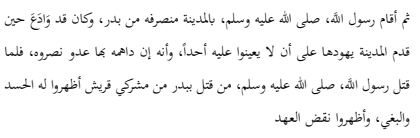
پس د الله رسول ﷺ د بدر له ستنیدو وروسته په مدینه کې پاتې شو. کله چې هغه مدینې ته راغی، نو د مدینې د یهودو سره یې داسې یو تړون وکړ چې دوی به د هغه په خلاف د چا مرسته نه کوي، او که د مدینې په دننه کوم دښمن د هغه پر وړاندې برید وکړي، نو دوی به د هغه ملاتړ کوي. بیا کله چې د الله رسول ﷺ د قریشو له هغو مشرکانو وژل چې هغه یې وژلي وو، نو دوی د هغه په وړاندې حسد او سرکشي وښوده، او د تړون د ماتولو څرګندونه یې وکړه.
“Then the Messenger of Allah (peace be upon him) remained in Al- Madinah after his return from Badr. When he had arrived in Al- Madinah he had made a peace agreement with its Jews upon the stipulation that they do not assist anyone against him and that if he was attacked in Al-Madinah by an enemy, they would support him. Then when the Messenger of Allah (peace be upon him) killed those whom he had killed from the Mushrikin (polytheists) of Quraish, they demonstrated envy and rebelliousness towards him and demonstrated the breaching of the covenant”,
په دې کې د البلاذري پورتنۍ خبرو سره سمون لري، او رد يې هم همغه دی، که څه هم دا ډېر ښه دی. دا ځکه چې هغه دا ادعا نه ده کړې چې د بدر مخکې پخوانی «موادعه» (د سوله او درېځې تړون) یو ليکلی سند و، لکه څنګه چې البلاذري په دې کې غلطی کړې، او د هغه متن هم د هغه ډېر بد جمله ښې نه لري: «او دا چې هغه به د ذمه والو د دفاع لپاره نه جګړه کوي». په دې سره سره، د الطبري دا خبره چې «د تړون ماتول (نقض العهد)» واقعیت سره سمون نه لري. دا ځکه چې په اصل کې مخکې هېڅ «عهد» (تړون) نه و، بلکه د اصلي حالت پر بنسټ یوه «موادعه» وه. مګر که موږ د دې منل او پابندي هم ضمني «عهد» (تړون/هوکړه) وګڼو؟! لکه د احمد ابو زيد خبره:
then it is in line with the speech of Al-Baladhariy above and the refutation to it is the same, although it is much better. That is because he did not assert that the old “Muwada’ah” (agreement of peace/truce), prior to Badr, was a written document, as Al-Baladhariy slipped up in, just as his text does not include something equal to the atrocious sentence “And that he would not fight in defence of the Ahl udh-Dhimmah”. Despite that, the statement of At-Tabari “breaching of the covenant (Naqdh Al‘Ahd)” is not something that fits with reality. That is because there was no prior “Ahd” (covenant) in origin but rather a “Muwada’ah” upon its original state. That is unless we were to consider its acceptance and adherence to it as being an “Ahd” (Covenant/treaty) implicitly?! As the statement of Ahmad Abu Zaid:

په دې متواتر (یو پر بل ډېرو او یو ډول ډېرو لېږدونو چې یقین پیدا کوي) شاهدیو کې دومره کفایت شته چې ترجیح ثابته شي، په دې نتیجې ته ورسېږو چې د یهودو سره د صلح د لیکلي سند متن د هجرت په لومړي کال لیکل شوی و. سربیره پردې، د دې مادو او متن تحلیل ښیي چې دا د پیغمبر ﷺ او یهودو ترمنځ د کوم ډول کشمکش نښه نه ده. له دې ټولو څخه دا ثابته شوه چې د اسلامي دایرة المعارف ادعاوې بې بنسټه دي او د هغوی شکونه ردیږي، خو په دې استدلال کې جدي او ځینې دې ډېرې ستونزمنې تېروتنې شته.
“In these Mutawatir (concurrent transmissions indicating decisiveness) testimonies, there is enough to establish preponderance to conclude that the peace agreement document with the Jews was written in the first year of the Hijrah. In addition, an analysis of its articles and texts indicate that they are not indicative of any tension between the Prophet (peace be upon him) and the Jews. As such, due to all of this, the claims of the Islamic encyclopaedia fall down and their doubts are refuted”, then there are significant, indeed fatal errors in it.
1) د تاریخ پوهانو څرګندونې یا نظرونه د شهادت په نوم یادېږي یوازې هغه وخت چې د معاصرو (لومړني شاهدانو) څخه وي۔ نورې دا یوه نظریه ده چې د سمو یا ناسمو معلوماتو او مقدمو پر بنسټ ولاړه ده۔ د ډېرو همغږو یا ورته نظرونو ته تواتر (يعنې د ډېرو لارو له مخې په قطعي ډول ثابت شوی خبر) نه ویل کېږي، او دوی د اثبات د قطعي شهادتونو ارزښت نه لري۔
1) The statements or views of the historians are not called testimonies (shahada) unless it is from a contemporary (first-hand) witness. Otherwise, such a view is merely an opinion based upon correct or incorrect information or premises. A large number of conforming or similar opinions is not called Tawatur (i.e. established definitely by concurrent transmission) and they do not hold the value of Tawatur (decisive) testimonies of affirmation.
۲) ځینې اساسي قانونونه د کورنۍ جګړې یا کړکېچ وروسته لیکل کېږي، خو د دوی متنونو کې د متخاصمو اړخونو ترمنځ د کوم کړکېچ شتون نه منعکس کېږي. دا ځکه چې د اساسي قانون موخه د دولت تنظیم (یعنې واحدي یا فدرالي ډول او نور) بیانول دي. په همدې دلیل د هغه کړکېچ یا جنجال نېټه چې له هغې مخکې پېښ شوی، نه په سند کې لیکل کېږي او نه یادېږي. له همدې امله، د هغه څرګندونې په اړه چې وايي: «دا متنونه د پیغمبر (صلی الله علیه وسلم) او یهودو ترمنځ د کوم کړکېچ شتون نه ښيي»، برعکس خبره هم سمه ده. ځکه یوې کنفډرالي اساسي قانون یا نړیوال تړون لیکل په ځان کې د هغه مخکښ کړکېچ، جنجال یا جګړې د شتون دلیل نه دی. امکان لري چې شتون ولري او امکان لري چې نه ولري. دا یوازې د نورو تاریخي نښو له لارې معلومېدای شي، هغه نښې چې د سند له مطالعې څخه بېلې څېړل کېږي، یا د سند د متن له لارې، هغه څرګندونې چې د جګړې پای، د جګړې درېدل، یا د تاوانونو او د وینو د بیې (دیت) د ستونزو حل ته اشاره کوي. استاد احمد ابو زید غواړي د «اسلامي دایرة المعارف» ادعاوې رد کړي، کومې چې هغه لږ وړاندې د ځان «السيرة النبوية» کتاب کې (احمد ابو زید، ص: ۷۰) په لاندې ډول بیان کړې وې:
2) Some constitutions could be written following a civil war and yet its texts do not reflect the existence of any tension between the parties involved. That is because the purpose of the constitution is to lay down the regulation of the state (i.e. Unitary or union form etc…). As such, the date of the tension or conflict that occurred leading up to it, is neither written or mentioned within it. Consequently, in respect to the statement “They (i.e. the texts) are not indicative of any tension between the Prophet (peace be upon him) and the Jews”, then the opposite is also correct. That is because the writing of a confederal constitution or international treaty in itself, is not an evidence for the existence of a tension, conflict or war proceeding it. There could have been just as there may well not have been. This would only be known via other historical indications which are looked at independently from the document that is under examination, or from the texts of the document itself which indicate to the ending of a conflict or cessation of fighting or the solving of problems of compensations and blood monies etc… Ustadh Ahmad Abu Zaid wishes to refute the claims of the “Islamic Encyclopaedia” which he had formulated shortly before that in “As- Seera An-Nabawiyah” by Ahmad Abu Zaid (p: 70) as follows:
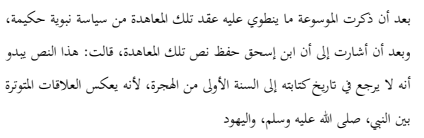
هغه دایرةالمعارف چې د هغه تړون (معاهدې) د ټاکلو په اړه یې وویل چې د نبوي عاقلانه سیاست له پلوه څه شیان لري، او دا چې ابن اسحاق د دې تړون متن ساتلی دی، وویل: ښکاري چې دا متن د لیکلو له نیټې له پلوه د هجرت په لومړي کال پورې نه اړه لري، ځکه دا د پیغمبر ﷺ او یهودو ترمنځ د ستونزمنو اړیکو عکس دی.
“After the encyclopaedia mentioned what the contracting of that treaty (Mu’ahadah) contained in terms of wise prophetic policy making and after it indicated to Ibn Ishaq having preserved the text of that treaty, it stated: It appears that this text does not go back, in respect to the date of its writing, to the first year of the Hijrah, because it reflects the tense relations between the Prophet (peace be upon him) and the Jews”.
حقیقت دا ده چې د مدینې صحیفه د هجرت په دریم کال کې د لومړۍ برخې په پیل کې ولیکل شوه، د هغو تاریخي نقلي متنونو په بنسټ چې مخکې مو وړاندې کړي وو. په دې توګه، دایرةالمعارف د دې خبرې په اړه سم وو. خو هغه استنباط چې د دایرةالمعارف لیکوال مستشرقینو کړی، هغه دا چې متن (یعنی صحیفه)
The truth is that the Sahifah of Al-Madinah was written at the beginning of the third year of Hijrah based upon the evidence of the historical transmitted texts that we have presented earlier. As such, the encyclopaedia was correct regarding this matter. As for the deduction of the orientalists, who are the authors of the encyclopaedia, that the text (i.e. Sahifah)

د نبي ﷺ او یهودو ترمنځ تر ډیره تاوتریخوالي باندې ښکاره کېدل.
“reflected tense relations between the Prophet (peace be upon him) and the Jews”, .
پس دا خبره قانع کوونکې نه ده او ځای نه لري. خلکو په دې کې خپل تصورات ته لګام نه دی ورکړی. تاریخ یوازې هغه پېښې او حقیقتونه دي چې تېر شوي دي، او د هغو خبرې باید د لیدونکو شاهدانو او هغو خلکو د ثبتونو څخه واخستل شي چې په هغه وخت کې ژوند کاوه، نه د تصوراتو یا حتی منطقي استنتاجاتو څخه. هو، دا ریښتیا ده چې د صحیفې د لیکلو شرایط دا ښیي چې دا د یهودو د ځینو کسانو (په ځانګړې توګه کعب بن اشرف) سره د اړیکو د کشمکش د پېښېدو له امله ولیکل شو. مګر د هغې متن کې داسې هیڅ شی نشته چې د مخکې کشمکش یا شخړې ته اشاره وکړي، حتی لږترلږه هم نه!
then this is not convincing and out of place. People have given free reign to their imaginations here. That is whilst history is merely events and realities that have passed by and its reports must be taken from first-hand witnesses and records of those living at the time, not from imaginations or even logical deductions. Yes, it is true that the circumstances surrounding the writing of the Sahifah reveal that it was written due to the occurrence of a tension in the relations with some of the Jews (Ka’b in Al-Ashraf specifically). However, its text does not include anything indicating to any prior tension or conflict and not even remotely!