۴.۱ تقسیمبندیهای متن
4.1 Divisions Of The Text
آیه و سوره
Aya And Sura
«آیه» (جمع آیات) در اصل به معنای «نشانه» است. در اصطلاح فنی، کوچکترین بخش متن قرآن است؛ یعنی یک عبارت یا جمله. وحی هدایتی است از جانب خداوند برای بشر، و از این رو جای شگفتی نیست که کوچکترین بخشهای آن «نشانههای» (هدایتگر) نامیده شدهاند. واژه «verse» [بیت] برای آن مناسب نیست، زیرا قرآن شعر نیست.
Aya (pl. ayat) actually means 'sign'. In technical language it is the shortest division of the Qur'anic text, i.e. a phrase or sentence. The revelation is guidance from God to mankind and it is therefore not at all surprising to find that its smallest divisions are called (guiding) 'signs'. The term 'verse' is not appropriate since the Qur'an is not poetry.
سوره (جمع: سُوَر) در لغت به معنای «ردیف» یا «حصار» است. در اصطلاح، سوره بخشی از متن قرآن است که به صورت مجزا، یعنی جدا از متن پیش و پس از خود، تقسیم شده است؛ یعنی فصل یا بابی از قرآن.
Sura (pl. Suwar) means literally 'row' or 'fence'. In technical language, it is the passage-wise division of the Qur'anic text,i.e. a chapter or part, set apart from the preceding and following text.
قرآن کریم ۱۱۴ سوره دارد که طول آنها با هم برابر نیست؛ کوتاهترین سوره چهار آیه و طولانیترین آن ۲۸۶ آیه دارد.
The Qur'an has 114 suras of unequal length, the shortest consisting of four and the longest of 286 ayat.
همه سورهها (به استثنای سوره ۹) با عبارت بسمالله الرحمن الرحيم آغاز میشوند. این عبارت افزودهای متأخر بر متن نیست، بلکه حتی پیش از دعوت محمد ﷺ به نبوت نیز به کار میرفته است. [نگاه کنید به سوره ۲۷: ۳۰.] هر یک از ۱۱۴ سوره قرآن نامی دارد که نوعی عنوان به شمار میآید. این نامها غالباً از واژهای مهم یا متمایز در خود متن گرفته شدهاند، مانند الأنفال (۸) یا البقرة (۲). در موارد دیگر، نام سوره یکی از نخستین چند واژهای است که سوره با آن آغاز میشود، مانند طه (۲۰) یا الفرقان (۲۵).
All suras (with the exception of Sura 9) begin with the words bismillahir rahmanir rahim. This is not a later addition to the text, but was already used, even before Muhammad's call to prophethood. ' [See Sura 27: 30.] All 114 suras in the Qur'an have names, which serve as a sort of heading. The names are often derived from an important or distinguishing word in the text itself, such as e.g. al-anfal (8) or al-baqara (2). In other cases it is one of the first few words with which the sSra begins e.g. ta-ha (20) or al-furqan (25).
نظم و ترتیب
Order And Arrangement
هم ترتیب آیات در داخل هر سوره و هم چینش خود سورهها سرانجام در سال وفات پیامبر ﷺ به راهنمایی فرشته جبرئیل تعیین شد، زمانی که جبرئیل دوبار نزد او آمد تا متن را با او بازبینی کند. [نگا. بالا. انتقال وحی قرآنی، ص ۳۱.] عالمان همچنین سورهها را به چهار نوع تقسیم کردهاند:
Both the order of the ayat within each sura and the arrangement of the suras were finally determined by the Prophet under guidance from the Angel Gabriel in the year of his death, when Gabriel twice came to revise the text with him. [See above. transmission of the Qur'anic revelation, p. 31.] Scholars have also grouped the suras into four kinds:
الطِّوال (سورههای بلند): ۲ تا ۱۰
al-tiwal (long ones): 2-10.
الماعون: سورههایی با حدود ۱۰۰ آیه: ۱۰ تا ۳۵.
al-mi'un: suras with approximately 100 ayat: 10-35.
المثانی: سورههایی که کمتر از صد آیه دارند: ۳۶ تا ۴۹.
al-mathani: suras with less than 100 ayat: 36-49.
المُفصَّل: آخرُ قسمٍ من القرآن الكريم، يبدأ من سورة ق (50) إلى سورة الناس (114).
al-mufassal: the last section of the Qur'an beginning with Sura qaf: 50-114.
سایر بخشهای متن
Other Divisions Of The Text
جزء (جمع: اجزاء) یعنی بخش یا قسمت۔ قرآن کریم برای سهولت تلاوت به ۳۰ جزء تقریباً هماندازه تقسیم شده است تا در سی شب یک ماه، بهویژه ماه رمضان، خوانده شود۔ معمولاً هر جزء با واژۀ «جزء» و شمارۀ آن مشخص میشود، مانند: جزء ۳۰ که از سورۀ النبأ آغاز میشود۔
Juz' (pl. ajza') literally means part, portion. The Qur'an is divided into 30 portions of approximately equal length for easy recitation during the thirty nights of a month, especially of the month of Ramadan. Usually they are indicated by the word and the number of it given alongside, (e.g. juz' 30 beginning with Sura 78).
برخی نسخههای قرآن، سورهها را به بخشهایی به نام رکوع تقسیم کردهاند. این بخشها با نماد مشخص میشوند و توضیح اعداد عربی که همراه هر یک نوشته میشود چنین است، برای نمونه ۲:۲۰:
Some copies of the Qur'an have the suras divided into paragraphs called ruku'. They are indicated by the symbol and the explanation of the Arabic numerals written with each is as follows, e.g. 2:20:
شکل بالایی (۲) نشان میدهد که این دومین رکوع کاملشده در سورهی مربوطه (در اینجا سورۃ البقرہ) است
The top figure (2) indicates that this is the second completed ruku ' in the respective sura (here Sura albaqara)
.
.
شکل میانی (۱۳) نشان میدهد که این رکوع کاملشده شامل ۱۳ آیه است.
The middle figure (13) indicates that this completed ruku' contains 13 ayat.
عدد پایینی (2) نشان میدهد که این دومین رکوع در جزء مربوطه (در اینجا جزء اول) است.
The lower figure (2) indicates that this is the second ruku' in the respective juz' (here first juz').
در نسخههای قرآن که بهویژه در خاورمیانه چاپ میشوند، هر جزء به چهار حزب تقسیم شده است که با نشانهای مشخص میشود؛ مثلاً آیهٔ ۲:۷۴ آغاز حزب دوم قرآن است که با عدد ۲ نشان داده میشود.
Copies of the Qur'an printed in the Middle East in particular have each juz' subdivided into four hizb indicated by the sign e.g. 2:74 is the beginning of the second hizb of the Qur'an, indicated by the figure 2:
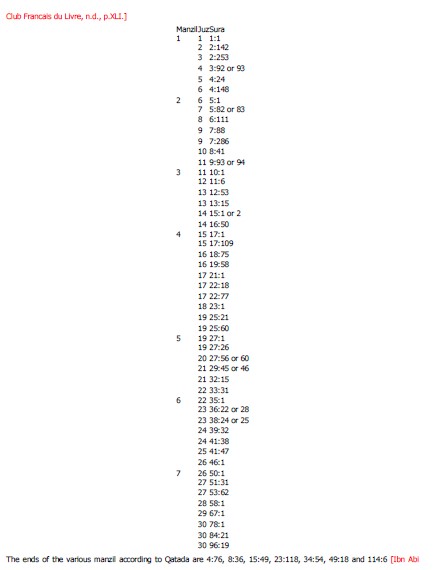
هر حزب نیز دوباره به ربعهایی تقسیم میشود. متن قرآنی همچنین به هفت بخش تقریباً هماندازه به نام منزل تقسیم شده است که برای تلاوت در طول هفت روز به کار میرود و در برخی نسخهها با واژه منزل و شماره مربوط در حاشیه مشخص شده است. جدول زیر تقسیم متن به جزء و منزل را نشان میدهد: [همیدالله، محمد: Le Saint Coran. Traduction integrale et notes. پاریس:
Each hizb is again subdivided into quarters The Qur'anic text is also divided into seven parts of approximately equal length, called manzil, for recitation over seven days, indicated in some copies by the word manzil and the respective number in the margin. The following table shows the division of the text into juz' and manzil: [Hamidullah, Muhammad: Le Saint Coran. Traduction integraleetnores. Paris: