4.1 テキストの区分
4.1 Divisions Of The Text
アーヤとスーラ
Aya And Sura
「アーヤ」(複数形アーヤート)は本来「印」「徴」を意味します。専門的な用語としては、クルアーン本文の最も短い区分、すなわち句または文を指します。啓示は神から人類への導きであるため、その最小の区分が(導きとなる)「印」と呼ばれるのは、少しも不思議なことではありません。「verse(節)」という訳語は、クルアーンが詩ではないため、適切ではありません。
Aya (pl. ayat) actually means 'sign'. In technical language it is the shortest division of the Qur'anic text, i.e. a phrase or sentence. The revelation is guidance from God to mankind and it is therefore not at all surprising to find that its smallest divisions are called (guiding) 'signs'. The term 'verse' is not appropriate since the Qur'an is not poetry.
スーラ(複数形:スワル)は、文字通りには「列」または「囲い」を意味します。専門用語としては、クルアーン本文を一節ごとに区切った区分、すなわち前後の本文から区別された章または部分を指します。
Sura (pl. Suwar) means literally 'row' or 'fence'. In technical language, it is the passage-wise division of the Qur'anic text,i.e. a chapter or part, set apart from the preceding and following text.
クルアーンには114のスーラ(章)があり、その長さはさまざまです。最も短いものは四節から成り、最も長いものは286節から成ります。
The Qur'an has 114 suras of unequal length, the shortest consisting of four and the longest of 286 ayat.
すべてのスーラ(第9章を除く)は「ビスミッラーヒッラフマーニッラヒーム」という言葉で始まります。これは後から本文に加えられたものではなく、ムハンマドが預言者として召命を受ける以前から用いられていたものです。[スーラ27:30を参照。]コーラン内の114のスーラにはすべて名前があり、それは一種の見出しの役割を果たしています。名前はしばしば本文中の重要または特徴的な語に由来し、例えばアル・アンファル(8)やアル・バカラ(2)などがそうです。その他の場合には、スーラの冒頭の数語のうちの一つが用いられており、例えばター・ハー(20)やアル・フルカーン(25)などがあります。
All suras (with the exception of Sura 9) begin with the words bismillahir rahmanir rahim. This is not a later addition to the text, but was already used, even before Muhammad's call to prophethood. ' [See Sura 27: 30.] All 114 suras in the Qur'an have names, which serve as a sort of heading. The names are often derived from an important or distinguishing word in the text itself, such as e.g. al-anfal (8) or al-baqara (2). In other cases it is one of the first few words with which the sSra begins e.g. ta-ha (20) or al-furqan (25).
秩序と配置
Order And Arrangement
スーラの中のアーヤの順序も、スーラの配列も、最終的にはその死の年に、預言者がジブリール天使の導きのもとで定めたものであり、そのときジブリールは二度来て、預言者とともに本文を改訂した。[上記参照。クルアーンの啓示の伝承、31ページ。] 学者たちはまた、スーラを四つの種類に分類してきた。
Both the order of the ayat within each sura and the arrangement of the suras were finally determined by the Prophet under guidance from the Angel Gabriel in the year of his death, when Gabriel twice came to revise the text with him. [See above. transmission of the Qur'anic revelation, p. 31.] Scholars have also grouped the suras into four kinds:
「アル=ティワール」(長い章):2〜10
al-tiwal (long ones): 2-10.
アル=マーウーン:約100節の章:10~35節。 Wait — the instruction says "Al-Ma'un: suras with approximately 100 ayat: 10-35." I should translate this faithfully and naturally, keeping the names as written. Let me correct that to a clean translation: アル=マーウーン:約100節の章:10~35節。
al-mi'un: suras with approximately 100 ayat: 10-35.
アル・マサーニー:百節未満の章:36〜49。
al-mathani: suras with less than 100 ayat: 36-49.
al-Mufassal:クルアーンの最後の部分で、スーラ・カーフ(50章)から始まり、114章まで。
al-mufassal: the last section of the Qur'an beginning with Sura qaf: 50-114.
その他の区分(テキストの分類)
Other Divisions Of The Text
ジュズウ(複数形はアジザー)は、「部分」「一部分」を文字通り意味します。クルアーンは、一か月、特にラマダーンの三十日間の夜に読誦しやすいように、ほぼ同じ長さの30の部分に分けられています。通常、それらは「ジュズウ」という語と、その番号を併記して示されます(例:スーラ78から始まるジュズウ30)。
Juz' (pl. ajza') literally means part, portion. The Qur'an is divided into 30 portions of approximately equal length for easy recitation during the thirty nights of a month, especially of the month of Ramadan. Usually they are indicated by the word and the number of it given alongside, (e.g. juz' 30 beginning with Sura 78).
コーランの写本の中には、スーラ(章)が「ルクゥ」と呼ばれる段落に区切られているものがあります。ルクゥは記号で示され、それぞれに付けられたアラビア数字の説明は次のとおりです。例:2:20
Some copies of the Qur'an have the suras divided into paragraphs called ruku'. They are indicated by the symbol and the explanation of the Arabic numerals written with each is as follows, e.g. 2:20:
上の図(2)は、そのスーラ(ここではスーラ・アルバカラ)において完了した二つ目のルクーウであることを示しています。
The top figure (2) indicates that this is the second completed ruku ' in the respective sura (here Sura albaqara)
.
.
この中央の数字(13)は、完了したルクウには13のアーヤが含まれていることを示しています。
The middle figure (13) indicates that this completed ruku' contains 13 ayat.
下段の数字(2)は、そのそれぞれのジュズウ(ここでは第1ジュズウ)における2番目のルクウであることを示しています。
The lower figure (2) indicates that this is the second ruku' in the respective juz' (here first juz').
中東で印刷されたクルアーンの写本では、特に各ジュズ(juz')が四つのヒズブ(hizb)に区切られており、その印で示されています。例えば、2:74は、クルアーンの第二ヒズブの始まりであり、数字の2によって示されています。
Copies of the Qur'an printed in the Middle East in particular have each juz' subdivided into four hizb indicated by the sign e.g. 2:74 is the beginning of the second hizb of the Qur'an, indicated by the figure 2:
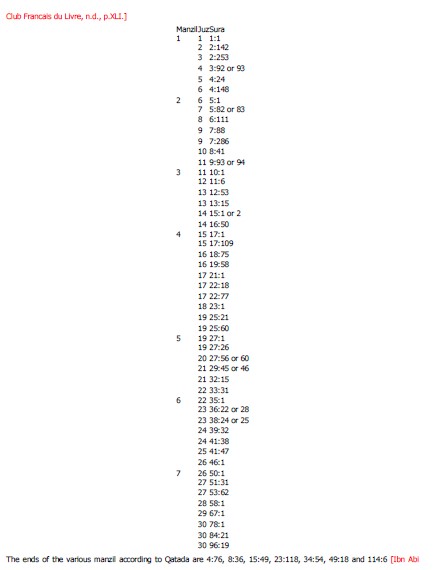
各ハizbはさらに四分の一に細分される。また、クルアーンの本文は、七日間で読誦するために、ほぼ等しい長さの七つの部分に分けられており、マンズィルと呼ばれる。写本によっては、欄外にマンズィルという語とそれぞれの番号で示されている。次の表は、本文のジュズウとマンズィルへの区分を示している。 [Hamidullah, Muhammad: Le Saint Coran. Traduction integraleetnores. Paris:
Each hizb is again subdivided into quarters The Qur'anic text is also divided into seven parts of approximately equal length, called manzil, for recitation over seven days, indicated in some copies by the word manzil and the respective number in the margin. The following table shows the division of the text into juz' and manzil: [Hamidullah, Muhammad: Le Saint Coran. Traduction integraleetnores. Paris: