1.1 先知身份的精神必要性
1.1 The Spiritual Necessity Of Prophethood
我们每个人心中都有一种不安的渴望,渴望获得精神上的满足。若被忽视,灵魂便会经历强烈的干渴,驱使它一次又一次追逐海市蜃楼,每一个幻影都给它带来片刻的希望,仿佛绿洲就在眼前,随后却又是一次新的失望。当人类试图从外部世界寻求内心的平静,或试图通过肉欲的追求来实现自我时,这便是人类处境的悲剧,而人被创造出来,原本是为了超越这一切、追求更高的目标。
Within us all is a restless craving for spiritual fulfillment. When ignored, the spirit experiences intense thirsts which send it chasing one mirage after another, each offering it momentary hope of an oasis before yet another letdown. This is the tragedy of the human condition whenever it seeks inner peace from the outer world, or seeks to self-actualize through carnal pursuits, when it was created to transcend all that for a higher purpose:
真诚地奉献于真主。真主在《古兰经》中说:"我创造精灵和人类,只是为了让他们崇拜我。"16
sincere devotion to God. Allah says in the Qur’an, “And I did not create the jinn and mankind except to worship Me.”16
因此,对真主的崇拜,不仅仅是对祂存在的天生认知,它既是一种义务,也是人类的根本需要。正如食物和氧气滋养我们的身体,崇拜也是滋养我们灵魂所必需的。它使我们认识到自己的真实身份:我们是身处肉体之中的灵性存在,而不是恰好拥有灵性维度的肉体存在。当然,如果没有造物主通过众先知向我们启示如何与祂建立有意义的关系,这一切都无从实现。没有这种启示,我们就无法在更深的层次上认识和爱祂;唯有为祂而活,我们才能真正体会到生命的意义。正如先知穆罕默德ﷺ所说:"记念真主的人与不记念真主的人,其比喻如同生者与死者。"17
Servitude to God, not just the inborn recognition of His existence, is therefore not only a duty but also a fundamental human need. It is necessary to nourish our spirit just as food and oxygen are necessary to nourish our body. It attunes us to our reality as spiritual beings in physical bodies, not physical beings that happen to enjoy a spiritual dimension. Of course, none of that is possible without the Creator communicating to us through prophets how to have a meaningful relationship with Him. Without this communication, we would be unable to know and love Him on deeper levels, and it is only through living for Him that we experience what it truly means to be alive. As the Prophet Muhammad صلى الله عليه وسلم once said, “The similitude of someone who is mindful of Allah and someone not mindful of Allah is that of the living and the dead.”17
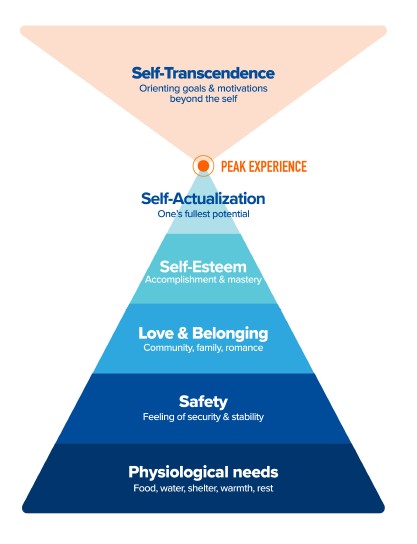
当亚伯拉罕·马斯洛修订他那著名的需求层次理论时,他把自我超越的渴望置于所有动机之首,高于自我实现。18
When Abraham Maslow amended his famous hierarchy of needs, he set the desire for self-transcendence as the greatest motivator of them all, above self-actualization.18
然而,若离开先知和天启,即便是这种洞见也仍然缺乏指引。它使得一些观念,例如一元论(与宇宙合一)或利他主义(无私奉献),可能被误认为与对真主的虔诚同样能带来圆满。利他主义者常常报告更高的生活满意度,这是可以预料的,因为从定义上说,无私本身就比以自我为中心更具超越性的目的。
However, without the prophets and divine revelation, even that insight remains somewhat uninstructive. It allows for notions such as monism (being one with the universe) or altruism (being selfless) to be misperceived as equally fulfilling as devotion to God. Altruistic people often report higher life satisfaction, and that is expected since being selfless is, by definition, a more transcendent purpose than being self-centered.
然而,仅仅投身于超越自身的事业(例如服务人类群体),永远无法完全满足超越自我的根本需求。有一种独特的安宁,其根基完全在于对至大者——全能的真主——的虔诚奉献。服务他人可以是这种奉献的一部分,但永远无法取代它,正如真主所说:“definitely,唯有凭借真主的记念,心才得以安宁。”19 著名的穆斯林神学家伊本·盖伊姆(卒于1350年)写道:“心中存在一种焦虑,唯有亲近真主才能使其平静;心中也笼罩着一种孤寂,唯有享受与祂的相伴才能将其驱散……”
But the essential need to self-transcend will never be fully satisfied by just any involvement in ends greater than oneself (such as serving the human collective). There is a unique tranquillity that hinges squarely on one’s devotion to the absolute greatest: the Almighty. Serving others can be part of that, but can never replace it, as Allah says, “Unquestionably, it is only by the remembrance of Allah that hearts are assured.”19 Ibn al-Qayyim (d. 1350), a renowned Muslim theologian, writes, In the heart, there exists an anxiousness that nothing can calm but drawing nearer to God. And a loneliness overcasts it that nothing can remove but enjoying His
在私下里的陪伴。其中有一种忧伤,除了认识真主并真心专注于祂,没有什么能够消解;其中有一种忧虑,除了专注于祂、从祂逃向祂,没有什么能够安抚。心中的悔恨之火不断燃烧,除了对祂的命令、禁令和前定感到满足,并耐心地坚守这一切直到与祂相见,没有什么能够熄灭它。其中存在一种迫切的需求,它不会停止,直到祂独自成为它所追求的对象。其中还有一种迫切的渴望,除了爱慕祂、时常纪念祂、对祂真诚虔敬,没有什么能够满足它。即使一个人拥有整个世界及其中的一切,也永远无法满足这种需求。20
company in private. And a sadness dwells within it that nothing can alleviate but the joy of knowing Him and genuinely devoting oneself to Him. And a worry unsettles it that nothing can reassure but focusing on Him and fleeing from Him to Him. And the flames of regret continue to flare inside it, and nothing can extinguish them but becoming content with His commands, prohibitions, and destiny, and patiently holding onto all that until the time one meets Him. And in it exists a pressing demand; it will not stop until He alone becomes its pursuit. And in it is a dire need; nothing will satisfy it except loving Him, constantly remembering Him, and being sincerely devout to Him. And if a person were given this entire world and all it contains, it would never fulfill that need.20
因此,为了避免这种身心灵层面的悲剧,并为了侍奉全能的真主而活,先知的使命是一种存在上的必然。那位至仁的主,既为我们在这个星球上赐予了生存所需的一切以及维持生命的事物,也通过先知的使命为我们赐予了我们最需要的东西:引导我们走向祂,并在今世与后世获得祂的喜悦。
Hence, to avert this psychospiritual tragedy, and to live for Almighty God, prophethood is an existential necessity. The same most compassionate God who afforded us all we need on this planet for life and what sustains it, has ensured for us through prophethood what we need most: guidance to Him and His pleasure in this life and the next.
16 《古兰经》51:56,Saheeh International 译本。
16 The Qur’an 51:56, Saheeh International Translation.
17 al-Bukhārī, Ṣaḥīḥ al-Bukhārī, 8:86 #6407;穆斯林·伊本·哈贾只·古沙伊里,《穆斯林圣训实录》(贝鲁特:阿拉伯遗产复兴出版社,1955年),1:539 #779。
17 al-Bukhārī, Ṣaḥīḥ al-Bukhārī, 8:86 #6407; Muslim ibn al-Ḥajjāj al-Qushayrī, Ṣaḥīḥ Muslim (Beirut: Dār Iḥyāʼ al-Kutub al-ʻArabīyah, 1955), 1:539 #779.
18 Lloyd Greene 与 George Burke,《超越自我实现》,《卫生与人类服务管理杂志》(2007):第116–128页。
18 Lloyd Greene and George Burke, “Beyond Self-Actualization,” Journal of Health and Human Services Administration (2007): 116-128.
19 《古兰经》13:28,萨希国际译本
19 The Qur’an 13:28, Saheeh International Translation.
20 Ibn Qayyim al-Jawzīyah, Madārij al-Sālikīn Bayna Manāzil Īyāka Na’budu wa Īyāka Nasta’īn(Beirut: Dār al-Kutub al-ʻArabī, 1996),第3卷,第156页。
20 Ibn Qayyim al-Jawzīyah, Madārij al-Sālikīn Bayna Manāzil Īyāka Na’budu wa Īyāka Nasta’īn (Beirut: Dār al-Kutub al-ʻArabī, 1996), 3:156.