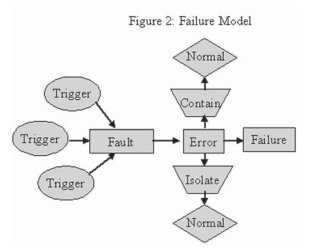
بهعنوان مثال، یک نقطه ضعف در طراحی زیرزمین یک خانه را بهعنوان عیب یا نقص در نظر بگیرید. این نقطه ضعف جایی است که آب بیشازحد ناشی از باران یا سیل میتواند به داخل خانه نفوذ کند. شرط آغازگر این نقص، بارش بیشازحد باران در مدت زمان کوتاه است. جریان آب به داخل خانه از طریق زیرزمین، خطا است، زیرا در شرایط عادی نباید آب وارد خانه شود. این خطا (آب در خانه) میتواند توسط ساکنان خانه یا برخی دستگاههای پایش شناسایی شود. بدینترتیب خطا شناسایی و جداسازی میشود. برای مهار خطا بهگونهای که به خسارت منجر نشود، از یک پمپ آب استفاده میشود تا آب اضافی را از زیرزمین خارج و به بیرون هدایت کند. اگر پمپ آب وجود نداشته باشد، یا به هر دلیلی پمپ به کار نیفتد، خطا مهار نخواهد شد و آب سیلزده در خانه باقی میماند. این امر ممکن است به خسارات جدی منجر شود، از جمله فروریختن خانه.
As an example, think of a weak spot in the design of a house basement as the defect or fault. The weak spot is where excessive water due to rain or floods can penetrate the house. The triggering condition for this fault is too much rain in a short period of time. The flow of water into the house through the basement is the error, because in normal circumstances water should not come into the house. This error (water in the house) can be detected by people living in the house or some monitoring device. This is how the error is identified and isolated. To contain the error such that it does not lead to damage, a water pump is used to remove the excess water from the basement and push it outside. If there is no water pump, or the pump fails to kick in for some reason, the error will not be contained and the floodwater persists in the house. This may lead to serious damages, including the collapse of the house.
این الگوی شکست بسیار رایج است در زندگی ما. قلبِ ضعیف، یا رگهای شریانی که تا حدی مسدود شدهاند، یا ریههای معیوب، یا کلیههای ناسالم، انواع بیماریها و دردها را پدید میآورند که اگر بهموقع درمان و مهار نشوند ممکن است به مرگ بینجامند. نقصهای مکانیکی در خودروهای ما (قطعات نشتیدار، چرخهای نامتعادل، ولتاژ برق نامنظم) میتوانند انواع مشکلات را در خودرو پدید آورند که ممکن است به آسیب کامل وسیله نقلیه یا حتی به تصادفات فاجعهبار منجر شوند.
This failure model is very common in our life. A weak heart or partially blocked arteries or defective lungs or unhealthy kidneys cause all types of sicknesses and pains, which if not treated and contained in due time may lead to death. Mechanical defects in our cars (leaky parts, unbalanced wheels, irregular electric voltage) can cause all types of problems in the car which can lead to total damage of the vehicle or even to catastrophic accidents.
سیستمهای سیاسی، اقتصادی و اجتماعی تفاوت زیادی با یکدیگر ندارند. همهی این سیستمها ممکن است نقصها و عیبهای نهفته داشته باشند. تشخیص، تعریف و کشف این عیبها در مقایسه با سیستمهای فیزیکی دشوارتر است. بخشی از مشکل تحلیل در این واقعیت نهفته است که سیستمهای سیاسی، اقتصادی و اجتماعی معمولاً از سوی افرادی با باورهای قوی و گاه از سوی افرادی با قدرت و اقتدار حمایت میشوند. در زمانی که اتحاد جماهیر شوروی قدرتمند و پابرجا بود، تقریباً ممکن نبود که به عیبی در درون نظام سوسیالیستی اشاره کرد، چه برسد به خطاها و مشکلاتی که از این عیبها ناشی میشوند. این نگرش جزماندیشانه اجازه میداد که خطاها بدون مهار مناسب گسترش یابند و سرانجام به فروپاشی کامل نظام منجر شوند. مورد اتحاد شوروی و سوسیالیسم، مثالی جالب و نمونهای عالی برای درک الگوی عیب–خطا–شکست در نظامهای اجتماعی–سیاسی–اقتصادی است.
The political, economic, and social systems are not much different. All systems may have defects and dormant faults. It is more difficult to diagnose and define these faults and detect than it is in physical systems. Part of the problem of the analysis is the fact that political, economic, and social systems are usually supported by people with strong convictions and sometimes by people with power and authority. While the Soviet Union was well and powerful, it was almost impossible to point to any defect within the socialist system, leave alone to errors and problems arising from these faults. This dogmatic view allowed the errors to propagate without proper containment, which eventually led to the failure of the system altogether. The case of the Soviet Union and socialism is an interesting case and an excellent example for understanding the fault-error-failure model in socio-politico-economic systems.
اما آنچه جالبتر است، کاربرد این الگو برای سرمایهداری است. سوسیالیسم همه مراحل این الگو را پشت سر گذاشته و سرانجام با فروپاشی و شکستی بزرگ روبهرو شده است. از منظر تاریخی، این مورد جالبی است. سرمایهداری اکنون در مرحله دوم این الگو قرار دارد. خطاهای نهفته، رفتارهای نادرست مالی و اقتصادی را پدید آوردهاند. سیاستها و راهبردهایی مانند نجات مالی و مداخله دولت به کار گرفته شدهاند تا خطاها را جدا و مهار کنند؛ و تلاشهایی در جریان است تا نظام به وضعیت عادی یا کارکرد طبیعی خود بازگردانده شود. از این رو، مورد سرمایهداری از منظر عملی اهمیت دارد.
What is more interesting, however, is the application of this model to capitalism. Socialism has passed through all the stages of the model and finally experienced a major collapse and failure. It is an interesting case from the historical perspective. Capitalism is going through the second stage of the model. Dormant faults have produced erroneous financial and economic behavior. Policies and strategies such as bailout and government intervention have been exercised to isolate and contain the errors; attempts are being made to return the system to normalcy or normal functionality. Hence, the case of capitalism is important from a practical perspective.
در بحثی که در ادامه خواهد آمد، به این پرسشها خواهیم پرداخت: نقصها یا عیوب نهفتهی نظام سرمایهداری کداماند؟ چه شرایطی این عیوب را فعال کرد؟ چه خطاهایی از فعال شدن این عیوب ناشی شد؟ آیا این خطاها در بازهی زمانی معقولی به درستی شناسایی شدند؟ آیا میتوان این خطاها را برطرف کرد؟ آیا این عیوب از هستهی نظام در حال زدوده شدن است؟ آیا سقوط نزدیک است؟ این خطاها چه تأثیری بر زندگی مردم دارند؟ و سقوط سرمایهداری چه پیامدی خواهد داشت؟
In the discussion to follow, we will address the following questions: What are the defects or dormant faults of the capitalist system? What are the conditions that triggered these faults? What are the errors that resulted from triggering the faults? Were the errors correctly identified within a reasonable time frame? Could these errors be resolved? Are the faults being eliminated from the core of the system? Is failure imminent? What is the impact of the errors on the life of people? What is the impact of the failure of capitalism?.