1.2 Kapitalizm: Karmaşık Sistem ve Arıza Modu
1.2 Capitalism: The Complex System and the Fault Mode
Kapitalizm, karmaşık bir sosyo-politik-ekonomik sistemdir. Diğer tüm sistemlerde olduğu gibi, mekanik ya da sosyal olsun, arıza biçimleri belirli modellere uyar. Bir sistemdeki arızanın doğasını anlamak ya da arıza meydana geldiğinde onu tespit etmek için, arızaların ortaya çıktığı ve kendini gösterdiği modeli kavramak çok önemlidir. Sistem arızalarını tanımlamak için kullanılan en genel modellerden biri Şekil 2'de gösterilmiştir. Sistemin çekirdek tasarımında bir ya da daha fazla kusur veya hata bulunabilir. Bu hatalar, sistem geliştirmenin erken aşamalarında tespit edilirse giderilir ve/veya onarılır. Tasarımcıların dikkatsizliği ya da bilginin eksikliği nedeniyle bir hata sistemde kalırsa, bu hata uyuyan bir hataya dönüşür. Uyuyan bir hata, bir tetikleyici tarafından uyarılana ya da kışkırtılana kadar sisteme zarar vermez. Tetikleyici, sistemde belirli bir hatayı kışkırtan ya da uyaran belirli bir koşul veya ortamdır. Fiziksel sistemlerde uyuyan hatalar, sistemi her türlü koşul ve ortama maruz bırakan kapsamlı testlerle ortaya çıkarılır ve tespit edilir. Ne yazık ki, sosyo-politik-ekonomik sistemler bir laboratuvarda test edilemez! Bu nedenle, bu tür sistemlerdeki uyuyan hatalar ancak sistem gerçekten uygulanıp uzun bir süre boyunca işletildiğinde ve belirli bir zamanda, belirli bir ortamda uygun koşullar oluştuğunda açığa çıkabilir. Bir hata tetiklendiğinde, sistem sapmasına neden olan bir hataya maruz kalır ve normal davranışından uzaklaşır. Hata, zamanında içerilip izole edilmezse tam sistem arızasına yol açabilir. Sistemin arızalanması, sistemin temel işlevlerini yerine getirememesine ya da hedeflerine ulaşamamasına neden olur.
capitalism is a complex socio-politico-economic system. As in any other system, mechanical or social, failure modes follow certain models. In order to understand the nature of failure or to detect a failure once it occurs, it is very important to understand the model in which failures occur and manifest themselves. One of the most general models used for describing system failures is depicted in figure 2. At the core design of the system, there could be one or more defects or faults. These faults, if detected in the early stages of the system development, are removed and/or fixed. If a fault remains in the system due to oversight by the designers or lack of complete knowledge, it becomes a dormant fault. A dormant fault will not do any harm to the system until it gets excited or provoked by a trigger. A trigger is a certain condition or environment which provokes or excites a certain fault in the system. In physical systems, dormant faults are uncovered and detected through extensive testing which exposes the system to all types of conditions and environments. Unfortunately, social-political-economic systems cannot be tested in a lab! Therefore, dormant faults in such systems can only be exposed when the system is actually implemented and practiced over a long period of time and the proper conditions occur at a given time within a given environment. Once a fault is triggered, the system will experience an error which causes the system to deviate from its normal behavior. An error can lead to complete system failure if not contained and isolated in due time. The failure of the system renders the system unable to provide its main functions or achieve its objectives.
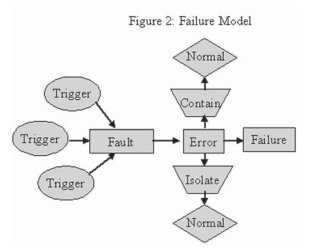
Örnek olarak, bir evin bodrum katındaki zayıf noktayı kusur veya arıza olarak düşünün. Bu zayıf nokta, yağmur veya sel nedeniyle aşırı suyun eve sızabileceği yerdir. Bu arızanın tetikleyici koşulu, kısa sürede aşırı miktarda yağmur yağmasıdır. Bodrum yoluyla eve su girmesi hatadır, çünkü normal koşullarda suyun eve girmemesi gerekir. Bu hata (evde su bulunması), evde yaşayan kişiler veya bir izleme cihazı tarafından fark edilebilir. Hata bu şekilde tespit edilir ve izole edilir. Hatanın hasara yol açmasını önlemek için, bodrumdaki fazla suyu uzaklaştırıp dışarı itmek amacıyla bir su pompası kullanılır. Su pompası yoksa veya herhangi bir nedenle devreye girmezse, hata kontrol altına alınamaz ve sel suyu evde kalmaya devam eder. Bu durum, evin çökmesi dahil ciddi hasarlara yol açabilir.
As an example, think of a weak spot in the design of a house basement as the defect or fault. The weak spot is where excessive water due to rain or floods can penetrate the house. The triggering condition for this fault is too much rain in a short period of time. The flow of water into the house through the basement is the error, because in normal circumstances water should not come into the house. This error (water in the house) can be detected by people living in the house or some monitoring device. This is how the error is identified and isolated. To contain the error such that it does not lead to damage, a water pump is used to remove the excess water from the basement and push it outside. If there is no water pump, or the pump fails to kick in for some reason, the error will not be contained and the floodwater persists in the house. This may lead to serious damages, including the collapse of the house.
Bu arıza modeli hayatımızda çok yaygındır. Zayıf bir kalp, kısmen tıkanmış atardamarlar, kusurlu akciğerler veya sağlıksız böbrekler her türlü hastalığa ve ağrıya yol açar; bunlar zamanında tedavi edilip kontrol altına alınmazsa ölümle sonuçlanabilir. Arabalarımızdaki mekanik kusurlar (sızdıran parçalar, dengesiz tekerlekler, düzensiz elektrik voltajı) araçta her türlü soruna yol açabilir; bu sorunlar aracın tamamen hasar görmesine, hatta felaket niteliğinde kazalara kadar gidebilir.
This failure model is very common in our life. A weak heart or partially blocked arteries or defective lungs or unhealthy kidneys cause all types of sicknesses and pains, which if not treated and contained in due time may lead to death. Mechanical defects in our cars (leaky parts, unbalanced wheels, irregular electric voltage) can cause all types of problems in the car which can lead to total damage of the vehicle or even to catastrophic accidents.
Siyasi, ekonomik ve toplumsal sistemler birbirinden pek farklı değildir. Bütün sistemlerin kusurları ve gizli arızaları olabilir. Bu tür arızaları teşhis etmek, tanımlamak ve tespit etmek, fiziksel sistemlerde olduğundan daha zordur. Analizin zorluğunun bir kısmı, siyasi, ekonomik ve toplumsal sistemlerin genellikle güçlü inançlara sahip insanlar ve bazen de güç ve otorite sahibi kişiler tarafından desteklenmesinden kaynaklanmaktadır. Sovyetler Birliği güçlü ve kudretli olduğu sürece, sosyalist sistemin içinde herhangi bir kusura, bir yana bırakalım bu kusurlardan doğan hata ve sorunlara işaret etmek neredeyse imkânsızdı. Bu dogmatik bakış, hataların uygun şekilde sınırlandırılmadan yayılmasına izin verdi ve bu da sonunda sistemin tamamen çökmesine yol açtı. Sovyetler Birliği ve sosyalizm örneği, arıza-hata-çöküş modelini sosyo-politik-ekonomik sistemlerde anlamak için ilginç bir vaka ve mükemmel bir örnektir.