5. Al-Hasan ibn Ali
5. Al-hasan Ibn Ali
Allah undan rozi bo'lsin
May Allah Be Pleased With Him
Al-Hasan ibn Ali ibn Abi Tolib, Alloh u bilan rozi bo‘lsin, Abu Muhammad, Alloh Elchisining nabirasi ﷺ, uning avlodi va Payg‘ambarning ﷺ aniq so‘zlari bilan aytilgan oxirgi xalifa.
Al-Hasan ibn Ali ibn Abi Talib, may Allah be pleased with him, Abu Muhammad, the grandson of the Messenger of Allah, may Allah bless him and grant him peace, his descendant and the last of the khulafa by his (the Prophet’s, may Allah bless him and grant him peace) explicit words.
Ibn Sa'd rivoyat qilishicha, Imron ibn Sulaymon shunday degan: "Al-Hasan va al-Husayn Jannat ahlining ismlaridan ikkitasidir. Arablar Johiliyyat davrida bu ismlardan foydalanishmagan."
Ibn Sacd narrated that Tmran ibn Sulayman safd: Al-Hasan and al-Hussein are two of the names of the people of the Garden. The Arabs did not use these names in the Jahiliyyah.
Hasan ibn Ali, Alloh u undan rozi bo'lsin, Ramazon oyining o'rtasida, Hijratning uchinchi yilida tug'ilgan. Undan Payg'ambar ﷺ dan hadislar rivoyat qilingan. Oyisha, Alloh u undan rozi bo'lsin, undan hadis rivoyat qilgan, shuningdek, Tobi'inlardan ko'p sonli kishilar, jumladan uning o'g'li al-Hasan, Abu'l-Havro' Rabi'a ibn Sinan, Ash-Sha'bi, Abu Vail va Ibn Sirin ham rivoyat qilganlar.
Al-Hasan, may Allah be pleased with him, was born in the middle of Ramadan in the third year of the Hijrah. Hadith have been related from him from the Prophet, may Allah bless him and grant him peace. cA’ishah, may Allah be pleased with her, related hadith from him, and a great number of the Followers, of them his son al-Hasan, Abu’l-Hawra’ Rabicah ibn Sinan, Ash-Shacbi, Abu Wa’il and Ibn Sirin.
U Payg'ambarga o'xshardi, ﷺ. Payg'ambar ﷺ uni al-Hasan deb atadi, yettinchi kunida uchun qo'y so'ydi, sochini oldirdi va sochining og'irligicha kumush sadaqa qilishni buyurdi. U "kisa" ahlidan beshinchi bo'lgan (Payg'ambar ﷺ: "Ey Alloh, mana bular mening ahlim", deganlarida). Abu Ahmad al-Askariy dedi: Bu ism Johiliyat davrida ma'lum bo'lmagan.
He resembled the Prophet, may Allah bless him and grant him peace. The Prophet, may Allah bless him and grant him peace, named him al-Hasan, slaughtered a sheep for him on his seventh day, shaved off his hair and ordered that the weight of the hair in silver should be given away as sadaqah. He was the fifth of the family of the mantle (when the Prophet, may Allah bless him and grant him peace, said, ‘O Allah, these are my family.’X Abu Ahmad al-cAskari said: This name was not known in the Jahiliyyah.
Al-Mufaddal dedi: Alloh al-Hasan va al-Husayn ismlarini Payg'ambar ﷺ ikki nevarasiga shu ism bilan ot qo'yguniga qadar yashirgan edi.
Al-Mufaddal said: Allah veiled the names of al-Hasan and alT h e H isto r y o f t h e K h a l ifa h s Hussein until the Prophet, may Allah bless him and grant him peace, used them to name his two grandsons.
Imom al-Buxoriy Anas roziyallohu anhudan rivoyat qilib aytadi: "Payg'ambar ﷺ ga al-Hasan ibn Aliydan ko'ra ko'proq o'xshaydigan kishi bo'lmagan."
Al-Bukhari narrated that Anas said: No-one more resembled the Prophet, may Allah bless him and grant him peace, than al-Hasan ibn cAli.
Buxoriy va Muslim rivoyat qilganlar: Al-Bara’ aytdi: Men Nabiy ﷺ ni ko‘rdim, al-Hasan uning yelkasida edi, va u ﷺ shunday deydi: “Ey Alloh, men uni sevaman, sen ham uni sev.” Al-Buxoriy rivoyat qilgan: Abu Bakra aytdi: Men Nabiy ﷺ ni minbarda turganda eshitdim, yonida al-Hasan bor edi. U bir marta odamlarga, bir marta esa unga qarab turardi va shunday deydi: “Mening bu o‘g‘lim sayyiddir, va ehtimolki, Alloh uning orqali musulmonlarning ikki guruhi o‘rtasida sulh o‘rnatadi.” Al-Buxoriy rivoyat qilgan: Ibn Umar aytdi: Nabiy ﷺ shunday dedi: “Ular dunyodagi mening ikki gulim (ya’ni ikki xushbo‘y o‘simlik yoki gul)dir”, ya’ni al-Hasan va al-Husayn.
The two Shaykhs narrated that al-Bara’ said: I saw the Prophet, may Allah bless him and grant him peace, with al-Hasan upon his shoulder, saying, ‘O Allah, I love him, so love him.’ Al-Bukhari narrated that Abu Bakrah said: I heard the Prophet, may Allah bless him and grant him peace, upon the minbar, with al-Hasan by his side looking at the people one time and looking at him one time, saying, ‘This son of mine is a chief, and it is likely that through him Allah will make peace between two parties of the Muslims.’ Al-Bukhari narrated that Ibn cUmar said: The Prophet, may Allah bless him and grant him peace, said, ‘They are my two descendants (literally ‘my two sprigs of basil’ or ‘my two sweet-smelling plants [or flowers]’) in the world,’ meaning al-Hasan and al-Hussein.
At-Termiziy va al-Hokim Abu Saʼid al-Xudriydan rivoyat qilishlaricha, u shunday degan: "Allohning Elchisi ﷺ shunday deganlar: "Hasan va Husayn jannat ahlining yoshlari orasidagi ikki sardordir"." At-Termiziy Usома ibn Zayddan rivoyat qilishicha, u shunday degan: "Men Nabiy ﷺni ko'rdim, Hasan va Husayn uning ikki sonida (har biri bir sonida) edi, u shunday dedi: "Bular mening ikki o'g'lim va qizimning ikki o'g'lidir. Ey Alloh, men ularni sevaman, sen ham ularni sev va ularni sevganlarni ham sev"." U Anasdan rivoyat qilishicha, u shunday degan: "Nabiy ﷺdan so'radilar: "Ahli baytingizdan kimlar sizga eng sevimlidir?" U dedi: "Hasan va Husayn"." Al-Hokim Ibn Abbosdan rivoyat qilishicha, u shunday degan: "Nabiy ﷺ Hasanni yelkasida ko'tarib kelardilar. Bir kishi ularga duch kelib dedi: "Ey yigit, sening mingan ulovingiz qanchalik muborak!" Nabiy ﷺ javob berdilar: "Va uni minib olgan kishi qanchalik muborak!"" Ibn Saʼd Abdulloh ibn az-Zubayrdan rivoyat qilishicha, u shunday degan: "Oila a'zolari orasida Nabiy ﷺga eng o'xshagan va unga eng sevimli bo'lgan kishi Hasan ibn Aliy edi. Men uni sajda holatida kelib, yelkalariga — yoki u "orqasiga" dedi — chiqqanini ko'rdim va o'zi tushmaguncha uni tushirmadi. Men uni rukuʼda turganida ko'rdim, u uchun oyoqlarini ajratib berardi, toki u narigi tomonga o'ta olsin"." Ibn Saʼd Abu Salama ibn Abdurrahmon ibn Avfdan rivoyat qilishicha, u shunday degan:
At-Tirmidhi and al-Hakim narrated that Abu Sacid al-Khudri said: The Messenger of Allah, may Allah bless him and grant him peace, said, ‘Al-Hasan and al-Hussein are the two lords of the youth of the people of the Garden.’ At-Tirmidhi narrated that Usamah ibn Zaid said: I saw the Prophet, may Allah bless him and grant him peace, and al-Hasan and al-Hussein were upon his hips (one on each), and he said, ‘These are my two sons and the two sons of my daughter. O Allah, I love them, so love them and love whoever loves them.’ He narrated that Anas said: The Prophet, may Allah bless him and grant him peace, was asked, ‘Who of the people of your house are most beloved to you?’ He said, ‘Al-Hasan and al-Hussein.’ Al-Hakim narrated that Ibn cAbbas said: The Prophet, may Allah bless him and grant him peace, approached carrying al-Hasan on his shoulder. A man met him and said, ‘What a blessed mount you have, boy!’ The Prophet, may Allah bless him and grant him peace, replied, And what a blessed rider is he.’ Ibn Sacd narrated that “Abdullah ibn az-Zubayr said: The one most like the Prophet, may Allah bless him and grant him peace, of his family and the most beloved to him is al-Hasan ibn cAli. I saw him come while he was prostrate and mount his shoulders — or he said, ‘his back’ - and he did not make him get down until he himself got down. I saw him while he was bowing in prayer and he would separate his legs for him so that he could pass through the other side.’ Ibn Sacd narrated that Abu Salamah ibn cAbd ar-Rahman said:
Payg'ambar ﷺ Hasan ibn Aliga o'z tilini chiqarar edilar, go'dak qizil tilni ko'rib, u bilan quvnar edi.
The Prophet, may Allah bless him and grant him peace, used to put forth his tongue for al-Hasan ibn cAli, then when the infant saw the redness of the tongue, he would be merry with him.
Hokim Al-Hakim rivoyat qilishicha, Zuhayr ibn al-Arqam aytgan: Al-Hasan ibn Aliy xutba o‘qish uchun turdi, shunda Azd Shanu’ah qabilasidan bir kishi o‘rnidan turib dedi: “Guvohlik beraman, men Payg‘ambarni ﷺ ko‘rdim, u zot uni (Hasanni) tizzasiga o‘tqazdi (hubwah – oyoqlarini qorniga tortib, ko‘pincha oyoqlari va beliga mato o‘rab, tayanib o‘tirish holati) va shunday dedi: “Kim meni sevsa, u ham uni sevsin, hozir bo‘lgan kishi esa bo‘lmaganlarga yetkazsin”. Agar Allohning Elchisi ﷺ ga bo‘lgan hurmat bo‘lmaganida, buni hech kimga aytmagan bo‘lardim.” Al-Hasan, Alloh undan rozi bo‘lsin, ko‘plab fazilatlarga ega edi: u sahiy, bosiq, vazmin, xotirjam va hayoli zot edi; juda saxovatli, ko‘p maqtovga sazovor bo‘lgan; fitnalar va qilichdan nafratlanardi; ko‘p nikoh qilgan; bir kishiga yuz ming (dirham) gacha in’om berardi.
Al-Hakim narrated that Zuhayr ibn al-Arqam said: Al-Hasan ibn cAli stood to deliver the khutbah, and a man from Azd Shanu’ah stood up and said, ‘I witness that I saw the Prophet, may Allah bless him and grant him peace, place him in his lap (hubwah denotes sitting on the haunches with the legs drawn in to the belly, often with a cloth wrapped around the legs and the back in support), saying, “Whoever loves me, let him love him, and let the one who is present convey it to whoever is absent,” and if it were not for high regard for the Messenger of Allah, may Allah bless him and grant him peace, I would not have related it to anyone.’ Al-Hasan, may Allah be pleased with him, had many virtues: he was lordly, forbearing, possessing tranquillity, gravity and modesty; he was liberally generous, much praised; he disliked seditions and the sword; he married a great deal; and he would bestow upon a single man as much as one hundred thousand.
Al-Hakim rivoyat qilishicha, Abdulloh ibn Ubayd ibn Umayr shunday degan:
Al-Hakim narrated that cAbdullah ibn cUbayd ibn cUmayr said:
Al-Hasan haj ibodatini yigirma besh marta piyoda bajardi, va yetaklangan zotdor otlar ham uning yonida yetaklanib borardi.
Al-Hasan performed the Hajj twenty-five times walking, and the high-bred, riding beasts were led along with him.
Ibn Sa'd rivoyat qilishicha, Umayr ibn Ishoq aytgan: "Mening huzurimda hech kim gapirganda, u gapirganda jim turmagani, Hasan ibn Aliydan afzalroq bo'lmagan. Men undan bir marta bundan tashqari noo'rin so'z eshitmaganman. Hasan bilan Amr ibn Usmon o'rtasida bir yer haqida nizo bo'lgan. Hasan Amr yoqtirmagan bir taklif kiritdi. Hasan: "Bizda uning ustidan ish qilishdan boshqa chora yo'q, (so'zma-so'z: uning burni tuproqqa yopishsin)", dedi. Bu men undan eshitgan eng noo'rin so'z edi."
Ibn Sacd narrated that cUmayr ibn Ishaq said: No-one ever spoke in my presence who it was more preferable, when he talked, that he should not be silent than al-Hasan ibn cAli. I never heard from him an improper word except for one time. There was a dispute between al-Hasan and cAmr ibn cUthman about some land. Al- Hasan proposed something which cAmr did not like. Al-Hasan said, ‘There is nothing for it with us but to act in spite of him (literally ‘that his nose cleave to the dust’).’ This was the most improper word I ever heard from him.
Ibn Sa'd rivoyat qildi: Umayr ibn Ishoq aytdi: Marvon bizning ustimizdagi amir edi, u har juma kuni minbardan Aliy ni so'kardi, al-Hasan esa tinglar va hech narsa javob bermas edi. Keyin u kishiga odam yuborib dedi: "Aliy ga qasamki, Aliy ga, Aliy ga, va sizga qasamki, sizga! Sizga o'xshash hech narsa topa olmayman, faqat xachirdan boshqa. Unga: 'Otang kim?' deyiladi, u esa javob beradi: 'Onam biya.'" Al-Hasan unga dedi: "Qaytib bor va unga ayt: 'Alloh haqqi, sen aytgan so'kinishlaringdan hech narsani sen uchun o'chirmayman. Lekin sen bilan men Alloh huzurida uchrashadigan vaqtimiz bor. Agar rost gapirgan bo'lsang, Alloh rostligingning mukofotini bersin. Agar yolg'onchi bo'lsang, Alloh qasos olishda undan ham yomonroqdir.'" Ibn Sa'd rivoyat qildi: Zuraayq ibn Savvor aytdi: al-Hasan bilan Marvon o'rtasida gap-so'z bo'ldi, keyin Marvon unga yaqinlashdi, unga juda qattiqlik qildi, al-Hasan esa jim turdi. Marvon o'ng qo'li bilan burnini qoqdi. Al-Hasan unga dedi: "Voy sendan! Bilmaysanmi, o'ng qo'l yuz uchun, chap qo'l esa shaxsiy joylar uchun (va umuman najas narsalar uchun) ekanini? Sendan jirkanaman!" Marvon jim bo'lib qoldi.
Ibn Sacd narrated that cUmayr ibn Ishaq said: Marwan was the amir over us, and he used to abuse cAli every Jumucah from the minbar, while al-Hasan would listen and make no reply. Then he sent a man to him saying, ‘I swear by cAli, by cAli, by cAli, and by you, by you! I don’t find any likeness for you except the mule, to which it is said, “Who is your father?” and it replies, “My mother is a mare.’” Al-Hasan said to him, ‘Return to him and say to him, “By Allah, I will not efface for you anything of what you have said by abusing you. However, you and I have an appointment together before Allah. Then, if you are truthful, may Allah recompense you for your truthfulness. If you are a liar, then Allah is worse in revenge.’” Ibn Sacd narrated that Zurayq ibn Sawwar said: There were some words between al-Hasan and Marwan, then Marwan approached him, became very tough on him — and al-Hasan was silent. Marwan blew his nose using his right hand. Al-Hasan said to him, ‘Woe to you! Do you not know that the right hand is for the face, and the left for the private parts (and for unclean matters generally)? I am disgusted with you (literally ‘filth to you’)!’ Marwan became silent.
Ibn Sa'd narrated from Ash'ath ibn Sawwar that a man said: A man sat down with al-Hasan, and he (al-Hasan) said: "You have sat down with us at the moment we were about to stand. Will you permit us?" Ibn Sa'd narrated that 'Ali ibn Zayd ibn Judd'an said: Al-Hasan gave away his property twice for the sake of Allah, and Allah divided up his property and shared it with him three times, to such an extent that he would give away one sandal and keep the other sandal with him, or give away one leather sock (known as khuff) and keep the other sock.
Ibn Sacd narrated from Ashcath ibn Sawwar that a man said: A man sat down with al-Hasan and he (al-Hasan) said, ‘You have sat down with us at the moment we were going to stand. Will you permit?’ Ibn Sacd narrated that cAli ibn Zaid ibn Judacan said: Al-Hasan gave forth his property twice for the sake of Allah, and Allah divided up his property and shared it with him three times, to such an extent that he used to give a sandal and keep a sandal with him, or give away a leather sock (known as khuff) and keep another sock.
Ibn Sa'd rivoyat qilishicha,Ali ibn al-Husayn aytdi: Hasan ayollarni tez-tez taloq qilardi va u biror ayoldan ajralmasdi, faqat o'sha ayol uni sevgan bo'lardi. U to'qson ayolga uylangan edi.
Ibn Sacd narrated that cAli ibn al-Hussein said: Al-Hasan was given to divorcing women, and he did not separate from a woman but that she loved him. He married ninety women.
Ibn Sa'd jaʻfar ibn Muhammad'dan rivoyat qilib, uning otasi shunday degan, deb aytdi:
Ibn Sacd narrated from Jacfar ibn Muhammad that his father said:
Al-Hasan ko'p marta turmush qurib, ajrashardi, shu darajada ko'p ediki, men uning qabilalar orasida bizga adovat keltirib chiqarishidan qo'rqardim.
Al-Hasan used to marry and divorce so much that I was afraid he would cause enmity towards us among the tribes.
Ibn Sa'd rivoyat qilishicha, Ja'far ibn Muhammad otasidan naql qildi: Ali aytdi: "Ey Kufa ahli, (qiz-ayollaringizni) al-Hasanga turmushga bermanglar, chunki u ko'p ajrashadigan erkakdir." Hamadanlik bir kishi dedi: "Allohga qasamki, biz (qiz-ayollarimizni) unga turmushga beramiz."
Ibn Sacd narrated from Jacfar ibn Muhammad that his father said: cAli said, ‘People of Kufa, do not marry (your womenfolk) to al-Hasan because he is a man much given to divorce.’ A man from Hamadan said, ‘By Allah, we will marry him (to our womenfolk).
"Kimni xohlasa, uni saqlab qoladi, kimni xohlamasa, unga talоq beradi." Ibn Sa'd rivoyat qilishicha, Abdulloh ibn Hasan shunday degan: Hasan ko'p ayollarga uylanadigan erkak edi, va ular kamdan-kam hollarda uning ko'ngliga yoqardi. U uylangan ayollarning juda oz qismi uni sevmas va unga shiddat bilan bog'lanmas edi.
Whosoever pleases him he can keep, and whosoever displeases him he can divorce.’ Ibn Sacd narrated that cAbdullah ibn Hasan said: Hasan was a man who used to marry women a great deal, and they very rarely found favour with him. There were very few women he married who did not love him and were not passionately attached to him.
Ibn ʿAsakir rivoyat qilishicha, Juvayriyya ibn Asma aytgan: Hasan vafot etganida, Marvon uning janoza namozida yig'ladi. Husayn unga dedi: "Sen unga ichirgan narsani ichirganingdan keyin yig'layapsanmi?" U javob berdi: "Men buni bundan ham sabrliroq kishiga qilganman", — va u tog' tomon ishora qildi. (Tog' sabr-bardoshning timsoli sifatida mashhur edi).
Ibn cAsakir narrated that Juwayriyyah ibn Asma’ said: When al- Hasan died, Marwan wept at his funeral prayer. Al-Hussein said to him, ‘Do you weep when you forced him to swallow that which you did?’ He said, ‘I used to do that to one more forbearing than this,’ and he pointed towards the mountain. (The mountain was proverbially the epitome of forbearance).
Ibn Asokir rivoyat qilishicha, al-Mubarrad aytdi: Kimdir al-Hasan ibn Aliga dedi: "Abu Zarr aytadi: "Menga boylikdan ko'ra kambag'allik, sog'liqdan ko'ra kasallik sevimliroqdir."" U dedi: "Allah Abu Zarrga rahm qilsin. Men esa aytaman: "Kim Allahning o'ziga xos tanlovining yaxshiligiga to'liq tayanadigan bo'lsa, Allah uning uchun tanlagan holatdan boshqa holatda bo'lishni istamaydi."" Bu – taqdir aylantirayotgan narsaga rozi bo'lish mavzusidagi tadqiqotning chegarasidir.
Ibn cAsakir narrated that al-Mubarrad said: Someone said to al- Hasan ibn cAli, ‘Abu Dharr says, “Poverty is more beloved to me than wealth, and illness more beloved to me than health.’” He said, ‘May Allah show mercy to Abu Dharr. As for me, I say, “Whoever is absolutely dependent on the goodness of Allah’s choosing for him does not wish to be in any state other than the one which Allah has chosen for him.’” This is the limit in research into the subject of contentment with that which destiny turns about.
Al-Hasan, Allah yo'lidan rozi bo'lsin, otasi vafotidan so'ng Kufa xalqining bay'ati bilan xalifalik ishini o'z zimmasiga oldi va u bu lavozimda olti oy va bir necha kun turdi. So'ng Muoviya unga qarshi chiqdi - bu ish Allohga havola - va shunda al-Hasan unga xabar yuborib, xalifalikni unga topshirishni taklif qildi, shu shart bilan: xalifalik uning vafotidan keyin ham o'ziniki bo'lsin, Madina, al-Hijoz va Iroq xalqidan hech kim otasining zamonida yuz bergan biror narsa uchun qasos yoki o'ch olish maqsadida izlanmasin va u (Muoviya) uning qarzlarini to'lab bersin. Muoviya so'ralganiga rozi bo'ldi, ular shu asosda sulh tuzdilar va u ﷺ ning so'zlarida nubuvat mo''jizasi namoyon bo'ldi: "Alloh u orqali musulmonlarning ikki guruhi o'rtasida sulh qildiradi". U xalifalikdan Muoviya foydasiga voz kechdi. Al-Balqiniy al-Hasanning xalifalikdan voz kechishidan - eng oliy martaba bo'lgan xalifalikdan - lavozim va mansablardan voz kechish va ulardan iste'foga chiqish joiz ekanligini isbotlashga harakat qildi. U xalifalikdan voz kechgan yili hijriy 41 yil, Rabi' al-Avval oyi edi. Shuningdek, bu Rabi' al-Oxir yoki Jumada al-Ula oyida bo'lgan, deyilgan. Sahobalari unga: "Ey mo'minlarning xo'rligi!" deyishardi, u esa: "Xo'rlik do'zaxdan yaxshiroqdir", deb javob berardi. Bir kishi unga: "Assalomu alaykum, ey mo'minlarni xor qiluvchi!" dedi. U aytdi: "Men mo'minlarni xor qiluvchi emasman, lekin hukmronlik uchun sizni o'ldirishni yoqtirmadim". So'ng al-Hasan Kufadan Madinaga ko'chib bordi va u yerda istiqomat qildi.
Al-Hasan, may Allah be pleased with him, took charge of the khilafah after the death of his father through the pledge of allegiance of the people of Kufa, and he remained in it for six months and some days. Then Mucawiyah came out against him - and the matter belongs to Allah — and so al-Hasan sent a message to him to offer to surrender the khilafah to him, on condition that the khilafah should be his after him, that no-one of the people of Madinah, al- Hijaz and Iraq should be sought out for revenge or retaliation for anything which had happened in the time of his father, and that he would pay off his debts for him. Mucawiyah agreed to what he asked, they concluded a treaty upon that basis, and the prophetic miracle became evident in his words, may Allah bless him and grant him peace, ‘Allah will make peace through him between two groups of the Muslims.’ He abdicated from the khilafah for him. Al-Balqini sought to prove from his abdication from the khilafah — which is the greatest rank - that it is permitted to abdicate from and renounce offices and positions. His abdication from it was in the year 41 AH, in the month of Rabic al-Awwal. It has also been said that it was in Rabic al-Akhir, or Jumada al-Ula. His companions said to him, ‘O disgrace of the mu’minin\’ and he would say, ‘Disgrace is better than the Fire.’ A man said to him, ‘Peace be upon you, humiliator of the believers!’ He said, ‘I am not the humiliator of the believers, but I disliked to kill you for the sovereignty.’ Then al-Hasan moved from Kufa to Madinah and resided there.
Al-Hokim Jubayr ibn Nufayrdan rivoyat qiladi: U aytdi: «Men al-Hasanga dedim: “Odamlar sizning xalifalikka intilayotganingizni aytishmoqda.”» U dedi: «Arab sardorlari men bilan birga edilar: men kimga qarshi urush qilsam, ular ham o‘sha bilan urush qilar edilar, men kim bilan tinchlik o‘rnatsam, ular ham o‘sha bilan tinchlik o‘rnatar edilar. Men buni Allohning yuzini istab tark etdim va Muhammad ﷺ ummatining qonini to‘kilishining oldini olish uchun.»
Al-Hakim narrated that Jubayr ibn Nufayr said: I said to al-Hasan, ‘People are saying that you want the khilafah.’ He said, ‘The chiefs of the Arabs were with me, at war with whomever I was at war with, and at peace with whomever I was at peace with. I abandoned that desiring the Face of Allah, and to prevent spilling the blood of the ummah of Muhammad, may Allah bless him and grant him peace.
"Endi esa, Hijoz xalqining echki podalari yordamida uni kuch bilan olaymi?" Al-Hasan, Alloh undan rozi bo'lsin, Madinada zaharlanib vafot etdi. Uning xotini Ja'dah bint al-Ash'ath ibn Qays uni zaharladi. Yazid ibn Mu'awiya unga yashirincha, uni zaharlashni va shundan keyin uning o'ziga uylanishini taklif qildi va u shunday qildi. Al-Hasan vafot etganda, u Yazidga xabar yuborib, unga va'da qilganini bajarishni so'radi. U dedi: "Biz al-Hasan uchun sendan rozi bo'lmagan edik, shunday ekan, o'zimiz uchun sendan rozi bo'lishimiz kerakmi?" Uning vafoti hijriy 49-yilda bo'lgan. Shuningdek, u hijriy 50-yilning Rabi' al-Avval oyining beshinchi kunida bo'lgan, deb ham aytilgan.
Now later, shall I take it by force with the help of the herds of goats of the people of al-Hijaz?’ Al-Hasan, may Allah be pleased with him, died in Madinah through poisoning. His wife, Jacdah bint al-Ashcath ibn Qais poisoned him. Yazid ibn Mucawiyah suggested secretly to her that she should poison him and that then he would marry her, and she did so. When al-Hasan died, she sent a message to Yazid asking him for the fulfilment of what he had promised her. He said, ‘We were not pleased with you for al-Hasan, so should we then be pleased with you for ourselves?’ His death was in 49 AH. It has also been said that it was on the fifth of Rabic al-Awwal in the year 50 AH.
Aytilishicha, bu 51 hijriy yilda bo‘lgan. Akasi uni (zaharlangan) ichimlikni kim bergani haqida gapirishga majbur qilish uchun u bilan bahslashdi, lekin u aytmadi. U dedi: “Agar gumon qilayotganim o‘sha kishi bo‘lsa, Alloh qasos olishda eng qattiqdir. Agar boshqa bo‘lsa, mening uchun hech bir aybsiz odam qasos sifatida o‘ldirilmasin.”14
And it has been said that it was in 51 AH. His brother argued with him to get him to tell him who had given him the (poisoned) drink, but he would not tell him. He said, ‘Allah is most severe in revenge if it should be the one I suspect. If not, then no innocent person must be killed in retaliation for me.’14
Ibn Sa'd rivoyat qilishicha, Imron ibn Abdulloh ibn Talha shunday degan:
Ibn Sacd narrated that cImran ibn “Abdullah ibn Talhah said:
Al-Hasan ko‘rdiki, go‘yo uning ko‘zlari orasiga yozilgan: “De: “U Alloh yagonadir”” (Qur’on 112:1), va uning oilasi bundan xursand bo‘ldi. Ular buni Sa‘id ibn al-Musayyabga aytishdi va u dedi: “Agar uning tushi rost bo‘lsa, unga yashash uchun juda kam kunlar qolgan.” U o‘lguncha bir necha kungina ko‘proq yashadi.
Al-Hasan saw as if there were written between his eyes, ‘Say, “He Allah is One"' (Qur’an 112: 1) and his family rejoiced at that. They told it to Sacid ibn al-Musayyab and he said, ‘If his dream is true, then he has very few days left to live.’ He only lived a few days more before he died.
Al-Bayhaqiy va Ibn Asokir Abu’l-Mundhir Hisham ibn Muhammad orqali rivoyat qilishadi, u esa otasidan naql qildi: Al-Hasan ibn Aliy moddiy ahvoli tang edi, uning nafaqasi yuz (dirham) edi. 14 Odatdagi usulidan farqli o‘laroq, as-Suyutiy bu hikoya uchun manba ko‘rsatmagan.
Al-Bayhaqi and Ibn cAsakir narrated by way of Abu’l-Mundhir Hisham ibn Muhammad that his father said: Al-Hasan ibn cAli was constricted (in his provision), and his stipend was one hundred 14 Contrary to his usual practice, as-Suyuti gives no source for this story.
Qadi Abu Bakr ibn al-Arabiy "Dafa'an Kuffar-dan" kitobida al-Hasanni zaharlash haqidagi da'vo haqida, Amir al-Mu’minin Mu'aviya, Allah undan rozi bo'lsin, to'g'risida shunday deydi: "...bu noma'lum ish edi. Uni faqat Allah biladi. Uni dalilsiz qanday taxmin qilasiz va uzoq zamonda, biz bu haqda hech qanday ishonchli rivoyatga ega bo'lmagan holda, Uning yaratiqlaridan biriga qanday nisbat berasiz?" (203-bet). Bu hikoyaga ham xuddi shu narsa taalluqlidir. Xuddi shu kitobda Qadi Yazidni unga qaratilgan ko'p tuhmatlardan oqlaydi va shunday deydi: "[Ahmad ibn Hanbal] uni zuhd ahli (dunyodan voz kechuvchilar) qatoriga kiritgan".
In Defence Against Disaster, Qadi Abu Bakr ibn al-Arabi says concerning the allegation that the Amir al-Mu’minin Mucawiyah, may Allah be pleased with him, poisoned al-Hasan, ‘...it was an unknown business. Only Allah knows about it. How can you assume it without proof and ascribe it to one of His creatures in a distant time when we do not have any sound transmission about it?’ (p. 203) The same applies to this story. In the same book, the Qadi exonerates Yazid of a great deal of the slander levelled at him and says, ‘[Ahmad ibn Hanbal] included him among the men of zuhd (doing without the world)
…Sahobalar va tobeinlar haqida... Haqiqatan, u (muallif) avval uni sahobalar guruhiga kiritgan, so‘ngra tobeinlarni zikr qilishga o‘tgan.
of the Companions and Followers... Indeed, he included him in the group of Companions before he proceeded to mention the Followers.’.
yillik ming dirham. Muoviya bir yil unga bu mablag'ni bermadi va u juda qiynaldi. U shunday dedi: «Muoviyaga o'zimni eslatish uchun siyoh idishini chaqirdim, so'ngra o'zimni tutib oldim. Men Allah Rasulini ﷺ (tushimda) ko'rdim, u menga: "Qalaysan, Hasan?" dedi. Men: "Yaxshiman, ota", dedim. Men unga mulkimning mendan to'xtatilganidan shikoyat qildim. U: "Shunday narsani eslatish uchun o'zingga o'xshagan bir jonzotga yozish uchun siyoh idishini chaqirdingmi?" dedi. Men: "Ha, Allah Rasuli. Men nima qilishim kerak?" dedim. U dedi: "Shunday de:
thousand a year. Muawiyah withheld it from him one year, and he was extremely constricted. He said, ‘I called for an ink-pot so that I might write to Muawiyah to remind him about myself, and then I controlled (myself). I saw the Messenger of Allah, may Allah bless him and grant him peace, (in a dream) and he said, “How are you, Hasan?” I said, “Well, father.” And I complained to him about the withholding of the property from me. He said, “Did you call for an ink-pot to write to a creature like yourself to remind him of that?” I said, “Yes, Messenger of Allah. What should I do?” He said, “Say:
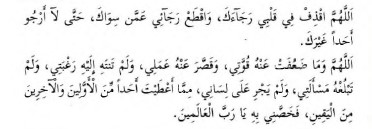
Ey Alloh, qalbimga Senga bo'lgan umidni solgin va Sendan boshqa hamma narsaga bo'lgan umidimni uzgin, to Senden boshqa hech kimdan umid qilmaguncha. Ey Alloh, mening kuchim ojiz qolgan, amalim yetmagan, irodam erisha olmagan, duoyim yetib bormagan va tilimdan o'tmagan — avvalgi va keyingi xalqlardan kimga bergan bo'lsang, o'sha yaqinlikni menga ham ato et, ey olamlar Parvardigori. U aytdi: "Shundan so'ng, Allohga qasamki, bir hafta ham bu ishda davom etmagan edim, Muoviya menga bir million besh yuz ming (dirham) yubordi. Men dedim: «Meni eslagan kishini unutmaydigan va Undan so'ragan kishini ko'ngli qolдирмайдиган Allohga hamdlar bo'lsin». Men uyquda Payg'ambarni ﷺ ko'rdim, u dedi: «Hasan, ahvoling qanday?» Men dedim: «Yaxshi, Allohning Elchisi», va unga hikoyamni aytib berdim. U dedi: «O'g'lim, yaratuvchidan umid qilgan, yaratilganlardan umid qilmagan kishining holi shunday bo'ladi»." at-Tuyuriyyat kitobida rivoyat qilinadiki, Kufa xalqining Qur'on qori Sulaym ibn Iso aytdi: Hasanga o'lim kelganda, u qattiq iztirob va qayg'uga tushdi. Husayn unga dedi: «Ukajon, bu iztirob va qayg'u nima? Sen Allohning Elchisi ﷺ huzuriga borasan, Ali esa ikki otang, Xadija va Fotima esa ikki onang, al-Qosim va at-Tohir esa ikki tog'ang, Hamza va Ja'far esa ikki amakingdir». Hasan unga dedi: «Aka, men Allohning, uning ulug'ligi va yuksakligi bo'lgan ishiga kirmoqdaman, bunga o'xshagan narsaga hali hech kirmaganman va Allohning shunday bir maxluqotini ko'ryapmanki, bunga o'xshagan narsani hech ko'rmaganman». Ibn Abd al-Barr dedi: Turli manbalardan rivoyat qilinishicha, uning (Hasanning) vafot vaqti yetganda, u akasiga dedi: «Ey birodarim, sening otang bu hokimiyatga ko‘z tikdi, lekin Alloh uni bundan qaytardi va hokimiyatni (xalifalikni) Abu Bakrga topshirdi. Keyinroq u yana bunga ko‘z tikdi, lekin u Umarga o‘tib ketdi. Yana keyinroq, Shuro majlisi paytida u hech shubhasiz o‘zini chetlab o‘tmasligiga ishondi, lekin u Ustmonga o‘tib ketdi. Ustmon o‘ldirilgach, Aliga bay’at berildi. Shundan keyin biz to qilichlar yalang‘ochlanguncha bezovta qilindik, shu sababli (xalifalik) hech qachon uning uchun tinch-osoyishta bo‘lmadi. Allohga qasamki, Alloh biz (Ahli bayt)da nubuvat bilan xalifalikni jamlamaydi, deb o‘ylamayman. Kufaning ahmoqlari seni xalifa qilib tayinlab, so‘ngra seni haydab chiqarishga urinishlaridan xavotirdaman. Men Oyisha roziyallohu anhodan so‘radimki, meni Allohning Rasuli ﷺ bilan birga dafn etishsin, u esa “Ha”, dedi. Men vafot etganimdan so‘ng, undan bu haqda so‘ra, lekin men faqat odamlarning seni (bunga) to‘sqinlik qilishga urinishlaridan xavotirdaman. Agar shunday qilishsa, ular bilan bahslashib o‘tirma», dedi. U vafot etganda, Husayn Mo‘minlarning onasi Oyisha roziyallohu anhoning oldiga keldi, u esa: «Ha, va bu sharaf», dedi, lekin Marvon ularga to‘sqinlik qildi. Shunda Husayn va u bilan birga bo‘lganlar qilichlarini tortdilar, to Abu Hurayra ularni to‘xtatmaguncha. Shunday qilib u onasi (Fotima) roziyallohu anhoning yonida Baqi’da dafn etildi.
O Allah, cast into my heart hope in You, and cut off my hope in everything other than You, until I don’t hope for anyone other than You. O Allah, that for which my strength is too weak, and my action falls short of, my desire does not attain, my supplication does not reach, and what does not flow upon my tongue, of that certainty which You have given anyone of the ancients and the later peoples, then single me out for it, Lord of the Worlds.’” He said, ‘Then, by Allah, I had not persisted in it for a week before Mucawiyah sent me one million and five hundred thousand, and I said, “Praise be to Allah Who does not forget whoever remembers Him and doesn’t disappoint whoever supplicates Him.” I saw the Prophet, may Allah bless him and his family and grant them peace, in sleep and he said, “Hasan, how are you?” I said, “Well, Messenger of Allah,” and I told him my story. He said, “My son, that is how it is for whoever hopes for (something) from the Creator and does not hope for (something) from the creature.’” There is in at-Tuyuriyyat that Sulaym ibn cIsa, the Qur’an reciter of the people of Kufa, said: When death came to al-Hasan he was overcome with agitation and grief. Al-Hussein said to him, ‘My brother, what is this agitation and grief? You are going to the Messenger of Allah, may Allah bless him and his family and grant them peace, and cAli and they are your two fathers, and to Khadijah and Fatimah and they are your two mothers, and to al-Qasim and at-Tahir and they are your two maternal uncles, and to Hamzah and Jacfar and they are your two paternal uncles.’ Al-Hasan said to him, ‘Brother, I am entering into a matter of Allah’s, exalted is He, the like of which I have never entered, and I see a creation of Allah’s the like of which I have never seen.’ Ibn cAbd al-Barr said: From various sources we relate that when his time came, he said to his brother, ‘My brother, your father raised his eyes to this authority and Allah averted him from it and put Abu Bakr in charge of it (the khilafah). Later, he raised his eyes to it, but it was turned away from him to cUmar. Later again, he had no doubt at the time of the Council that it would not pass him by, but it was turned away from him to cUthman. When TJthman was killed, then °Ali was pledged allegiance. Then we were restrained until swords were unsheathed and so it (the khilafah) was never undisturbedly his. By Allah, I don’t think that Allah will combine prophecy and khilafah in us. I don’t know but that the fools of Kufa will try to appoint you as khalifah and drive you out. I have asked cA’ishah, may Allah be pleased with her, that I should be buried with the Messenger of Allah, may Allah bless him and his family and grant them peace, and she said, “Yes.” When I die, ask her about that, but I only anticipate that people will try to prevent you. If they do, don’t bandy words with them.’ When he died, al-Hussein came to the Mother of the Believers, cA’ishah, may Allah be pleased with her, and she said, ‘Yes, and it is an honour,’ but Marwan prevented them. Then al-Hussein and those with him donned their swords, until Abu Hurayrah prevented them, and so he was buried in al- Baqic by the side of his mother, may Allah be pleased with her.