4.3 圣训的基本术语
4.3 Basic Terms in Hadith
• 圣训传述链(Sanad):指一连串的传述者,追溯至先知ﷺ。
• Sanad: ( ع ٕذ ) A chain of reporters leading back to the Prophet (saw).
• طبقة(تَبَقَة):指同一世代的传述者群体,即圣门弟子(Sahabah)、再传弟子(Tabi‘een)。
• Tabaqah: (غرمس ) A class of reporters in the same generation, i.e. Sahabah, Tabi‟een.
• 马尔福(Marfu'):(شِفٛع)指其isnad(传述链)上溯至先知ﷺ的圣训。
• Marfu‟: ( شِفٛع ) A Hadith whose Sanad leads to the Prophet (saw).
• 马尔富尔(Mawquf):指圣门弟子(Sahabi)处终止的圣训,即其传述线(Sanad)止于一位圣门弟子。
• Mawquf: (ِٛلٛف ) A Hadith whose Sanad ends with a Sahabi.
• 马尔萨尔(Mursal):(شِعً)指一段圣训,其传述链最终上溯至先知ﷺ,但遗漏了传述该圣训的圣门弟子的名字。
• Mursal: (شِعً ) A Hadith leading to the Prophet (saw) but missing the name of the Sahabi who reported it.
• 圣训(Qudsi):这是一段圣训,其传述链一直追溯到先知ﷺ,而先知ﷺ是从真主(SWT)那里转述这段话的。
• Qudsi: (لذعٟ ) A Hadith whose Sanad leads to Prophet (saw) and the Prophet (saw) is reporting it from Allah (swt).
圣训格狄西(Hadith Qudsi)的叙述可以有两种开头方式:
The report of Hadith Qudsi can begin in one of two ways:
a) 先知ﷺ 引述真主(SWT)的话说。
a) The Prophet (saw) says reporting from Allah (swt).
b) 真主(SWT)如祂的使者(ﷺ)所转述的那样说道。
b) Allah (swt) has said as reported by His Messenger (saw).
圣训的类型:
Types of Hadith:
圣训根据传述方式、每一层传述者的人数以及圣训的真实性,分为不同的类型。
Different types of Ahadith exist due to the method of transmission, number of reporters in each class, and the authenticity of the Hadith.
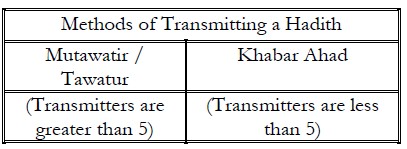
mutawātir / tawātur(通过多次传述):由数量不定的众人传述的证据(Daleel)。由于传述该证据的人数众多,他们居住地各异、可靠程度不同、信念各不相同,这一证据被伪造是不可想象的。
Mutawatir / Tawatur: a Daleel transmitted by an indefinite number of people. Due to the large number of people reporting the Daleel and their diversity of residence, reliability, and conviction, it is inconceivable that this Daleel could be fabricated.
判定一条圣训为“穆塔瓦提尔”(传闻普遍)所需的传述者最低人数,通常为五人。不过,也有一些学者的标准更为严格。传述“穆塔瓦提尔”圣训的传述者,品德必须高尚。
The minimum number of transmitters that are required to classify a Daleel as Mutawatir is generally five. However, some scholars may have more stringent criteria. The character of the reporters narrating Mutawatir Ahadith has to be noble.
Ahad: (آقحد) 解说:الآحاد(Ahad)的传述是指数量少于Mutawatir(متواتر,同传)的传述。
Ahad: (آقحد ) Riwayah Ahad is a number less than the Mutawatir.
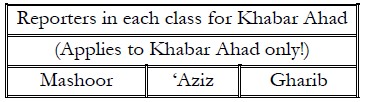
Mashoor:指在每一代(如圣门弟子、Tabi‟een等)中都至少由三人传述的圣训。
Mashoor: A Hadith reported by at least three individuals in every class (Sahabah, Tabi‟een, etc.).
阿齐兹:指每一层传述者中至少有两人传述的圣训。
„Aziz: A Hadith reported by at least two individuals in every class.
Gharib:指由仅一人在一个或多个传述层次中所传的圣训。
Gharib: A Hadith reported by only one individual in one or more classes.
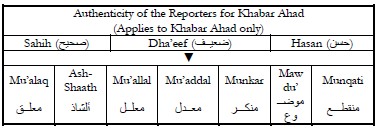
《圣训》(Sahih):
Sahih:
一段圣训,由一位“ʿAdl”(品行端正、未以不端行为著称者)和“Ḍābiṭ”(确保所传内容准确者)从另一位同样具备这些品质的人转述,直至传述链的末端。该传述还须排除“Shudhudh”(与其他可信传述者相抵触的情况)。
A Hadith narrated by an „Adl (not known for misconduct) and Daabit (maintains accuracy of the report) person from another person of similar qualities until the end of the report. The report should also exclude any Shudhudh (disagreement with other credible reporters).
Hasan:
Hasan:
它有两个定义:
It has two definitions:
a) 一段圣训,符合沙希德(Sahih)条件,但程度稍低。
a) A Hadith, which meets the requirements of Sahih to a lesser degree.
b) 一条被大多数教法学家(Fuqaha)接受的圣训。
b) A Hadith, which is acceptable by the majority of the Fuqaha.
Ḍaʿīf(ḍaʿīf):弱(ḍaʿīf,即"弱")
Dha‟eef:
一条不符合《圣训》中“沙希赫”或“哈桑”标准的弱圣训,可以归为以下几类之一:
A weak Hadith which does not meet the requirement of either the Sahih or the Hasan Hadith, it can be one of the following:
Mu‟alaq:指圣训的传述链(Isnad)开头、中间或末尾缺少一位或多位传述人的圣训。
Mu‟alaq: A Hadith which is missing one or more reporters either at the beginning of the Isnad, in the middle or in the end.
Mu‘addal(معضل):指缺少两位或两位以上连续传述人的圣训。
Mu‟addal: Hadith which is missing two or more consecutive reporters.
Munqati': 指圣训中的传述链在某处断裂的圣训。
Munqati: A Hadith which has interruption in the class.
Ash-Shaath:一段圣训,其中一位可靠的传述人所传的内容与其他可靠的传述人所传的内容相悖。
Ash-Shaath: A Hadith in which one credible reporter reports something that disagrees with other credible reporters.
Mu‟allal(معلّل):指表面上看似全部符合条件、其圣训传述线(Sanad)看起来没有问题,但经学者发现某些隐微的缺陷之后,被判定为不可信的圣训。
Mu‟allal: A Hadith whose Sanad seems to be fine, but due to some reasons discovered by scholars, it is discredited.
munkar(منكر,“不被接受的”):指一段圣训,其传述者不可靠,所传内容与可靠传述者所传的内容相悖。