21.1 Karya A Yaƙi
21.1 Lying In War
Duk karya ƙarya haramun ne sosai saboda wata ayar Alƙur'ani bayyananniya, kuma haramcinta yana cikin hukunce-hukuncen addini waɗanda aka sani da larura, ba tare da bambanci ba ko don amfanin Musulmai ne ko na addini ko akasin haka. Nassosi sun zo suna hana ta gabaɗaya, a sarari kuma ba tare da bayani ba. Allah (SWT) ya ce:
All lying is definitely haram due to a definite Qur’anic text, and its prohibition is among the rules known from the deen by necessity, without distinction as to whether it is for the benefit of Muslims or the interests of the deen or opposite to that. The texts came forbidding it generally, absolutely and without reasoning. Allah (swt) said:
Lalle waɗanda ke ƙirƙirar ƙarya su ne waɗanda ba su yi imani da ayoyin Allah ba. [TMQ 16:105]
“Verily those who fabricate lies are those who disbelieve in the ayat of Allah” [TMQ 16:105]
Kuma Allah (SWT) ya ce:
And Allah (swt) said:
"Sai mu roƙi (nabtahil) mu sanya la'nar Allah a kan maƙaryaci" [TMQ 3:61].
“Then let us invoke (nabtahil) and make the curse of Allah upon the liar” [TMQ 3:61].
Wannan hukunci, cikakkensa da yanayinsa na gaba ɗaya, ba za a iya yin tunani a kansa ko takaita shi ko ƙayyade shi sai da wata nassi, kuma babu wata hanya ga hankali face fahimtar nassi kawai, babu wani abu banda haka. Babu wani nassi a cikin Sahihi da ya zo da wani dalili ko takaitawa, a cikin Littafi ko Sunna. Dangane da ƙayyade nassi, an zo da wani nassi game da shi wanda ya keɓe daga haramcin ƙarya wasu abubuwa ƙayyadaddu kawai, kuma ba a halatta a wuce su ta kowace hanya ba. Ba a keɓe komai daga haramcin ƙarya sai abin da aka ƙayyade da dalili daga hadisan da aka ambata, wato: halin yaƙi, da magana da mace, da sulhunta mutum biyu, saboda nassin da ya zo game da su. Ahmad, Muslim da Abu Dawud sun ruwaito daga Umm Kulthum 'yar 'Uqbah, wadda ta ce:
This decision, its absoluteness and generality cannot be reasoned, restricted or specified except by another text, and there is no entry for the mind except to understand the text and nothing else. There did not come in the Sahih any text which gives any reasoning or restriction, whether in the Book or Sunnah. As for specifying the text, there came a text regarding it which excluded from the forbidding of lying specific things which alone were specified; it is not allowed to exceed them in any case whatsoever. Nothing is excluded from the forbidding of lying except what was specified by evidence of the mentioned in the ahadith namely: the situation of war, to the woman and reconciling between two due to the text about them. Ahmad, Muslim and Abu Dawud narrated from Umm Kulthum bint ‘Uqbah who said:
"Ban ji Annabi ﷺ yana ba da izini a cikin wani abu da mutane ke cewa (ƙarya) ba, sai dai a cikin uku: a yaƙi, da sasanta tsakanin mutane, da labarin mutum ga matarsa da hadisin mace ga mijinta."
“I did not hear the Prophet (saw) giving permission in anything over which the people say (lies) except in three: in war, reconciling between people, and the story of the man to his wife and the hadith of the woman to her husband.”
Daga Asma' 'yar Yazid, wadda ta ce: Manzon Allah ﷺ ya ce:
From Asma bint Yazid who said: The Messenger of Allah (saw) said:
"Ya ku mutane, me ya same ku, kuna bin ƙarya kamar yadda malam buɗe ido ke bin wuta? Duk ƙaryar da ɗan Adam ke yi haramun ce, sai dai a abubuwa uku: mutum ya yi ƙarya ga matarsa don ya faranta mata rai, mutum ya yi ƙarya a yaƙi domin yaƙi yaudara ce, da kuma mutum ya yi ƙarya tsakanin Musulmi don sasanta su."
“O you people, what has carried to you follow lying like the moths following fire? All lying from the son of Adam is haram except in three situations: the man lying to his wife to please her, the man lying in war as war is deceit and the man lying between Muslims to reconcile between them.”
Waɗannan uku suna cikin waɗanda aka keɓe daga haramcin ƙarya ta hanyar wata hadisi ingantacce, don haka ƙarya ba ta halatta ba a cikin wani abu banda wannan, domin babu abin da aka keɓe daga faɗin nassi sai abin da hujja ta ƙayyade shi kaɗai. Kalmar "a yaƙi" da ta zo a cikin hadisin tana da ma'ana ɗaya kawai ba fiye da haka ba, wato yanayin yaƙi mai gudana a al'amarin yaƙi, don haka ƙarya ba ta halatta gaba ɗaya ba sai a yanayin yaƙi. Amma abin da aka tabbatar daga Manzon Allah ﷺ
These three are of those excluded from the forbidding of lying by an authentic text, so lying is not allowed in other than that as nothing is excluded from the generality of the text except what the evidence specifies alone. The word “in war” which came in the hadith has only one meaning and no more which is the situation of active war in the matter of war, so lying is absolutely not allowed except in the situation of war. As for what is authenticated from the Prophet (saw)
Cewa idan ya yi niyyar yaƙi, yakan ɓoye ta da wata magana daban.
“That when he intended war, he would conceal in other than that”;
Ma'anar ita ce cewa idan ya yi niyyar wani al'amari ba ya nuna shi, misali idan ya yi niyyar yaƙi zuwa ga hanyar gabas sai ya tambaya game da wani al'amari zuwa ga hanyar yamma, domin wanda ya ji shi kuma ya gan shi ya yi tunanin cewa ya yi niyyar hanyar yamma. Amma maganarsa a fili cewa ya yi niyyar yamma alhali niyyarsa ta gaskiya gabas take, wannan bai taɓa faruwa ba. Don haka wannan ba bayani ne sabanin gaskiya ba, a maimakon haka tawriya ce. Haka kuma yana shiga cikin yaƙi mai aiki, da kuma al'amarin yaƙi, tun da yana zuwa filin yaƙi domin yaƙar abokin gaba a zahiri, don haka yaudara ce wadda ta zo a cikin maganarsa ﷺ.
The meaning is that when he intended a matter he would not show it, such as when he intended to fight towards the direction of the east he would ask about a matter in the direction of the west so that the one who heard and saw him would think that he intended the direction of the west. As for his saying clearly of his intending the west whereas his (true) intention was the east, this never occurred. So this is not informing contrary to the reality but was rather double- entendre (tawriyya). Moreover, it enters into active war, and the matter of war, since it is going to the battlefield to fight the enemy actively so it is deceit which came in his (saw) statement:
"Yaƙi yaudara ne" (Muslim ne ya ruwaito shi)
“War is deceit” (narrated by Muslim)
Game da abin da Jabir ya ruwaito cewa Manzon Allah ﷺ ya ce:
As for what was narrated by Jabir that the Messenger of Allah (saw) said:

"Wa zai yi maganin Ka'b bin Al-Ashraf, domin ya ɓata wa Allah da ManzonSa rai?" Muhammad bin Maslamah ya ce: "Kana so in kashe shi, ya Manzon Allah?" Ya ce: "Eh." Ya ce: "To ka ba ni izinin in faɗi ƙarya." Ya ce: "Na ba ka." Sai ya je wurinsa ya ce: "Lalle wannan mutum, watau Annabi ﷺ, ya ɗora mana nauyi, kuma ya nemi sadaka daga gare mu." Ya ce: "Ina rantsuwa da Allah, mu ma mun bi shi, kuma ba ma son barin shi har sai mun ga inda al'amarinsa zai kai." Ya ce: "Bai daina magana da shi ba sai da ya samu damar cin nasara a kansa, ya kashe shi."
“Who will deal with K’ab bin Al-Ashraf for he has annoyed Allah and His Messenger? Muhammad bin Maslamah: Would you like for me to kill him, O Messenger of Allah? He said: Yes. He said: Then give me permission to tell (lies). He said: I have done so. He said: So he reached him and said: Verily this one i.e. the Prophet (saw)—has put us to task and has asked us for sadaqah. He said: By Allah similarly we have followed him and we dislike leaving him until we see where his matter will reach: He said: He did not stop talking to him until he had a chance to overpower him and killed him.”
Wannan ma yana cikin halin yaƙi. Ko da yake lafazin hadisin ya nuna cewa abin da Muhammad bin Maslamah ya faɗa gaskiya ne, ba ƙarya ba ne, domin magana ce ta kwatance kawai, amma Muhammad bin Maslamah ya nemi izinin faɗar kowane abu, kuma an halatta masa hakan. Don haka a cikinsa akwai izinin yin ƙarya a fili da kuma a kwatance, kuma yana shiga cikin halin yaƙi. Game da abin da Ahmad da An-Nisa'i suka ruwaito daga labarin Al-Hajjaj bin 'Ilat, lokacin da ya nemi izinin faɗar abin da yake so game da shi don amfanin kansa wajen ceto dukiyarsa daga mutanen Makka, Annabi ﷺ ya ba shi izini, sai ya sanar da mutanen Makka cewa Khaibar ta ci Musulmi, wannan ma yana shiga cikin halin yaƙi, domin mutanen Makka suna cikin yanayin yaƙi na gaske da Musulmi. Al-Hajjaj bin 'Ilat yana daga cikin Musulmi, kuma yana zuwa wajen maƙiya kafirai waɗanda suke cikin yanayin yaƙi na gaske, don haka an halatta ƙarya a kansu. Izinin yin ƙarya ba a takaita shi ga fagen daga ko ga mayaƙa kawai ba; a maimakon haka, an halatta wa Musulmi yin ƙarya a kan maƙiyansu, kafirai, idan suna cikin yanayin yaƙi na gaske da su. Game da abin da At-Tabarani ya fitar a Al-Awsat:
This was also in the situation of war. Even if the words of the hadith state that the words which Muhammad bin Maslamah said were true, not false, as it was only allusion but Muhammad bin Maslamah asked permission to say everything and it was permitted to him. So it enters within it the permission to lie explicitly and metaphorically, and it enters into the situation of war. As for what Ahmad and An-Nisai narrated from the tale of Al-Hajjaj bin ‘Ilat in his seeking permission to say about him whatever he wished for his benefit in rescuing his property from the people of Makkah. The Prophet (saw) gave him permission and he informed the people of Makkah that Khayber had defeated the Muslims; this also enters into the situation of war because the people of Makkah were in a situation of active war with the Muslims. Al-Hajjaj bin ‘Ilat was from the Muslims and he was going to the enemy disbelievers who were in the situation of active war, so lying was allowed against them. The permission of lying is not restricted to the battlefield nor to fighters; rather it is allowed for the Muslims to lie against their enemies, the disbelievers, if they are in the situation of active war with them. As for was extracted by At-Tabarani in Al-Awsat:
"Duk karya da ƙarya ne zunubi ne, sai dai wadda Musulmi zai amfana da ita ko wadda ya kare addininsa da ita."
“All lying is sinful except that by which a Muslim benefits or by which he defends his deen”
Ina wannan hadisi a cikin Al-Bazzar, da kalmomin:
This is in Al-Bazzar with the words:
"Karya ce an rubuta karya, sai dai wacce Musulmi zai amfana da ita ko wacce zai kare ta da ita."
“Lying is written except that by which a Muslim benefits or by which he defends it”,
An cewa a cikin Majma' Az-Zawa'id: A cikin isnadinsa akwai Rushdayn da Abdurrahman bin Ziyad bin An'am, dukkansu rauni ne, don haka wannan hadisi ne mai rauni wanda aka ki, ba a amfani da shi a matsayin hujja. Saboda haka bai dace a yi amfani da shi a matsayin dalili ba.
It was said in Majmu’ Al-Zawaid: In its chain is Rushdayn and Abdurrahman bin Ziyad bin An’am, and both are weak so it is a weak hadith which is rejected and not used as a proof. So it is not suitable as evidence.
Saboda haka duk karya haram ne kuma ba a yarda da shi ba sai a abubuwa uku: a yaƙi, sasantawa tsakanin mutane, da labarin mutum ga matarsa da labarin mace ga mijinta. Sauran duka haram ne tabbas, domin haramcin karya ya zo gabaɗaya a cikin Alƙur'ani, yana rufe duk karya, sannan hadisi ya zo ya ƙayyade shi a wasu abubuwa banda yaƙi, sasantawa tsakanin mutane, da labarin mutum ga matarsa da labarin mace ga mijinta. Ya keɓe waɗannan uku daga haramcin, saboda haka su kaɗai ake yarda da su, sauran kuma duk haram ne. Musamman ma da yake hadisi ya takaita halaccin ga uku, kuma ya ce:
Accordingly all lying is haram and not allowed except in three (matters): in war, reconciling between people, and the story of the man to his wife and the story of the woman to her husband. Everything else is definitely haram as the forbiddance of lying came generally in the Qur’an covering all lying, then the hadith came specifying it in other than war, reconciling between people, and the story of the man to his wife and the story of the woman to her husband. It excluded these three from the forbidding so they alone are allowed and everything else is haram. Particularly since the hadith restricted the permissibility to three and said:
"Duk karya daga ɗan Adam haramun ne, sai dai a yanayi uku."
“All lying from the son of Adam is haram except in three situations”
Da
And
"Ban ji Annabi ﷺ yana ba da izini a cikin wani abu daga cikin abin da mutane ke faɗa ba sai a cikin uku: yaƙi…"
“I did not hear the Prophet giving permission in anything of what the people say except in three: war…”
Wannan takura tana nufin duk sauran abu haram ne. Dukkan hadisan da suka zo suna cikin yanayin yaki mai gudana; duk sauran hadisai ban da su suna da rauni kuma ba a amfani da su a matsayin hujja (s)
Etc. This restriction means all other is haram. All the ahadith which came are in the situation of active war; all ahadith other than them are weak and are not used as proof (s)
Game da ɓoye gaskiya ko kalmar da ke da ma'anoni biyu (tawriya) a wajen ba yaƙi ba: idan mai sauraro ya fahimci kalmar sabanin gaskiyar lamari, kamar inda kalmar ba ta nuna gaskiyar ba, sai dai wani abu daban a ma'anar harshe ko a ma'anar fasaha tsakanin mai magana da mai sauraro, to wannan ƙarya ce wadda ba a halatta ba. Misali, idan wata ƙungiya ta ba wata kalma ma'anar fasaha ta musamman, sannan ta faɗa wa wanda bai san wannan ma'anar fasaha ba, ko kuma idan kalmar ma'anar fasaha ce ga mai magana amma mai sauraro bai san ta ba, to duk wannan ƙarya ce wadda ba a halatta ba. Ko da a ce tawriya ce daga bangaren mai magana, amma mai sauraro ya fahimci daga kalmar akasin gaskiya, to ba a ɗaukar wannan a matsayin nau'in tawriya ba kuma ba a halatta ba. Amma inda aka fahimci daga kalmar gaskiya da wani abu daban, wannan yana cikin nau'in fasaha a magana (balagha). Gaskiya ce ba ƙarya ba, kamar yadda ake cewa ga mai kallon ƙwari: "Ina fatan idanunsa biyu su daidaita", wannan ya dace a matsayin addu'a a kansa ko a kan sa'ansa. Tawriya shi ne kalma mai ma'ana biyu, ɗaya kusa ɗaya kuma nesa; mai magana yana nufin ma'anar nesa, amma mai sauraro yana fahimtar ma'anar kusa. A irin wannan yanayi, ko da yake mai sauraro yana fahimtar sabanin abin da mai magana ya nufa, to bai fahimci sabanin gaskiyar da jumlar ta nuna ba. Annabi ﷺ ya yi amfani da tawriya. A cikin Sahih Al-Bukhari, Anas bin Malik (ra) ya ce:
As for dissimulation/double entendre in other than war, if the listener understands it contrary to the reality such as where the word does not indicate the reality and something else linguistically or in technical usage generally with the speaker and listener, it is lying which is not allowed. Such as where a specific group gives a technical definition for a word and then say it to someone who does not know this technical definition or where it is a technical definition for a speaker but the listener does not know it, all of this is lying which is not allowed. Even if it were dissimulation/double entendre by the speaker but the listener understands from the word the opposite to the reality, so it is not considered from the type of double entendre (tawriyya) and is not allowed. As for where it is understood from the word is the reality and something else, this is from the species of eloquence (balagha). It is truth and not lying like their saying to the squint eyed: ‘If only both his eyes were equal’, it is suitable as an invocation for or against him. Dissimulation is that the word has two meanings, one which is near and the other remote; the speaker intends the remote meaning while the listener understands (it as) the near meaning. In this situation, even though the listener understands contrary to what the speaker intends nevertheless he does not understand contrary to the reality indicated by the sentence. The Prophet (saw) used dissimulation. In Sahih Al-Bukhari that Anas bin Malik (ra) said:
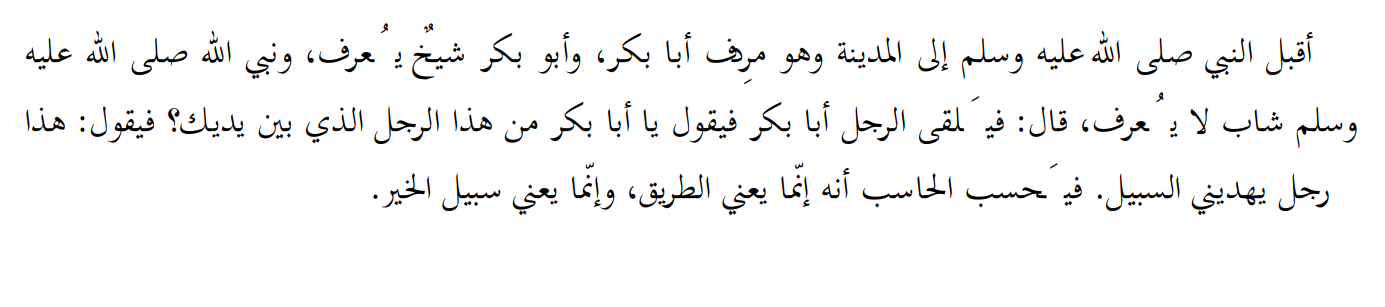
Annabi na Allah ﷺ ya nufi Madinah, Abu Bakr kuma yana bin sa. Abu Bakr tsoho ne sananne, Annabin Allah ﷺ kuwa matashi ne wanda ba a san shi ba. Ya ce: Wani mutum ya haɗu da Abu Bakr yana cewa: Ya Abu Bakr, wane ne wannan mutumin a gabanka? Ya ce: Wannan mutum yana nuna mini hanya. Ya ce: Mai tunani zai yi tunanin cewa yana nufin hanyar mota, alhali yana nufin hanyar alheri.
“The Prophet of Allah (saw) headed for Madinah and he was followed by Abu Bakr. Abu Bakr was a well known old man and the Prophet of Allah (saw) was an unknown youth. He said: A man met Abu Bakr saying: O Abu Bakr, who is this man before you? He said: This man is showing me the way. He said: A thinker would think that he meant the road whereas he meant the road to goodness.”