5. 阿里之子哈桑
5. Al-hasan Ibn Ali
愿安拉喜悦他
May Allah Be Pleased With Him
阿里·本·阿比·塔利卜之子哈桑(愿真主喜悦他),号艾布·穆罕默德,是安拉的使者ﷺ的外孙,是他ﷺ的后裔,也是依照先知ﷺ明确的圣训而成为最后一位哈里发的人。
Al-Hasan ibn Ali ibn Abi Talib, may Allah be pleased with him, Abu Muhammad, the grandson of the Messenger of Allah, may Allah bless him and grant him peace, his descendant and the last of the khulafa by his (the Prophet’s, may Allah bless him and grant him peace) explicit words.
伊本·萨阿德记载:伊姆兰·伊本·苏莱曼(Tmran ibn Sulayman)说:哈桑(Al-Hasan)和侯赛因(al-Hussein)是乐园居民的名字之一。阿拉伯人在蒙昧时期并不使用这些名字。
Ibn Sacd narrated that Tmran ibn Sulayman safd: Al-Hasan and al-Hussein are two of the names of the people of the Garden. The Arabs did not use these names in the Jahiliyyah.
al-Hasan رضي الله عنه 出生于伊斯兰历第三年的斋月中旬。有关他的圣训是从先知ﷺ那里流传下来的。‘A’ishah رضي الله عنها 从他那里传述了圣训,此外还有大量的再传弟子从他那里传述,其中包括他的儿子al-Hasan、Abu’l-Hawra’ Rabi‘ah ibn Sinan、Ash-Shi‘bi、Abu Wa’il 和 Ibn Sirin。
Al-Hasan, may Allah be pleased with him, was born in the middle of Ramadan in the third year of the Hijrah. Hadith have been related from him from the Prophet, may Allah bless him and grant him peace. cA’ishah, may Allah be pleased with her, related hadith from him, and a great number of the Followers, of them his son al-Hasan, Abu’l-Hawra’ Rabicah ibn Sinan, Ash-Shacbi, Abu Wa’il and Ibn Sirin.
他的相貌与先知相似,愿安拉赐福于他并使他平安。先知ﷺ为他取名哈桑,在他出生的第七天为他宰了一只羊,剃去了他的胎发,并下令将胎发的重量折算成银子施舍为萨达喀。他是披风家族中的第五人(当时先知ﷺ说:“主啊,他们是我的家人。”)。阿布·艾哈迈德·阿斯卡里说:这个名字在蒙昧时代并不为人所知。
He resembled the Prophet, may Allah bless him and grant him peace. The Prophet, may Allah bless him and grant him peace, named him al-Hasan, slaughtered a sheep for him on his seventh day, shaved off his hair and ordered that the weight of the hair in silver should be given away as sadaqah. He was the fifth of the family of the mantle (when the Prophet, may Allah bless him and grant him peace, said, ‘O Allah, these are my family.’X Abu Ahmad al-cAskari said: This name was not known in the Jahiliyyah.
穆法达勒说:真主遮蔽了哈桑与侯赛因的名字,直到先知ﷺ用它们为他的两个外孙取名。
Al-Mufaddal said: Allah veiled the names of al-Hasan and alT h e H isto r y o f t h e K h a l ifa h s Hussein until the Prophet, may Allah bless him and grant him peace, used them to name his two grandsons.
Al-Bukhari 记载,Anas 说:没有谁比 al-Hasan ibn cAli 更像先知ﷺ。
Al-Bukhari narrated that Anas said: No-one more resembled the Prophet, may Allah bless him and grant him peace, than al-Hasan ibn cAli.
两位谢赫(布哈里和穆斯林)记载:al-Bara'说:我看见先知ﷺ肩上扛着al-Hasan,说:“主啊,我爱他,求你也爱他。”布哈里记载:Abu Bakrah说:我听见先知ﷺ在讲坛上,al-Hasan在他身边,他一会儿看看众人,一会儿看看他,说:“我这个儿子是一位领袖,或许真主会借他使穆斯林的两派和解。”布哈里记载:Ibn cUmar说:先知ﷺ说:“他们是我在今世的两朵香草(或说两朵芬芳的花)”,指的是al-Hasan和al-Hussein。
The two Shaykhs narrated that al-Bara’ said: I saw the Prophet, may Allah bless him and grant him peace, with al-Hasan upon his shoulder, saying, ‘O Allah, I love him, so love him.’ Al-Bukhari narrated that Abu Bakrah said: I heard the Prophet, may Allah bless him and grant him peace, upon the minbar, with al-Hasan by his side looking at the people one time and looking at him one time, saying, ‘This son of mine is a chief, and it is likely that through him Allah will make peace between two parties of the Muslims.’ Al-Bukhari narrated that Ibn cUmar said: The Prophet, may Allah bless him and grant him peace, said, ‘They are my two descendants (literally ‘my two sprigs of basil’ or ‘my two sweet-smelling plants [or flowers]’) in the world,’ meaning al-Hasan and al-Hussein.
At-Tirmidhi和al-Hakim记载,Abu Sa'id al-Khudri说:安拉的使者ﷺ说:"al-Hasan和al-Hussein是乐园居民中青年的两位领袖。" At-Tirmidhi记载,Usamah ibn Zaid说:我看见先知ﷺ,al-Hasan和al-Hussein坐在他的两胯上(每人一边),他说:"这两个是我的儿子,也是我女儿的两个儿子。安拉啊,我爱他们,求你也爱他们,也爱爱他们的人。" 他记载,Anas说:有人问先知ﷺ:"您家人中,谁是您最喜爱的?"他说:"al-Hasan和al-Hussein。" Al-Hakim记载,Ibn 'Abbas说:先知ﷺ扛着al-Hasan走来。一个人遇见他,说:"孩子,你的坐骑真好!"先知ﷺ回答:"骑它的人也真好。" Ibn Sa'd记载,'Abdullah ibn az-Zubayr说:在他的家人中,最像先知ﷺ、也最为他所爱的,是al-Hasan ibn 'Ali。我看见他(al-Hasan)走来,当时先知ﷺ正在叩头,他便爬上先知ﷺ的肩背——或者说"背上"——先知ﷺ没有让他下来,直到他自己下来。我看见先知ﷺ鞠躬礼拜时,会为他分开双腿,好让他从另一边穿过。 Ibn Sa'd记载,Abu Salamah ibn 'Abd ar-Rahman说:
At-Tirmidhi and al-Hakim narrated that Abu Sacid al-Khudri said: The Messenger of Allah, may Allah bless him and grant him peace, said, ‘Al-Hasan and al-Hussein are the two lords of the youth of the people of the Garden.’ At-Tirmidhi narrated that Usamah ibn Zaid said: I saw the Prophet, may Allah bless him and grant him peace, and al-Hasan and al-Hussein were upon his hips (one on each), and he said, ‘These are my two sons and the two sons of my daughter. O Allah, I love them, so love them and love whoever loves them.’ He narrated that Anas said: The Prophet, may Allah bless him and grant him peace, was asked, ‘Who of the people of your house are most beloved to you?’ He said, ‘Al-Hasan and al-Hussein.’ Al-Hakim narrated that Ibn cAbbas said: The Prophet, may Allah bless him and grant him peace, approached carrying al-Hasan on his shoulder. A man met him and said, ‘What a blessed mount you have, boy!’ The Prophet, may Allah bless him and grant him peace, replied, And what a blessed rider is he.’ Ibn Sacd narrated that “Abdullah ibn az-Zubayr said: The one most like the Prophet, may Allah bless him and grant him peace, of his family and the most beloved to him is al-Hasan ibn cAli. I saw him come while he was prostrate and mount his shoulders — or he said, ‘his back’ - and he did not make him get down until he himself got down. I saw him while he was bowing in prayer and he would separate his legs for him so that he could pass through the other side.’ Ibn Sacd narrated that Abu Salamah ibn cAbd ar-Rahman said:
先知ﷺ曾把舌头伸出来给哈桑·伊本·阿里看,婴孩看见舌头的红色时,便会因此欢喜。
The Prophet, may Allah bless him and grant him peace, used to put forth his tongue for al-Hasan ibn cAli, then when the infant saw the redness of the tongue, he would be merry with him.
阿勒-哈基姆记载,祖海尔·本·阿尔喀姆说:阿里之子哈桑起身发表呼图白,一位来自阿兹德·舒努阿赫部族的男子站起来说:“我作证,我看见先知ﷺ把他抱在膝上(hubwah 指蹲坐时双腿屈向腹部,常用布裹住双腿和背部以作支撑),并说:‘谁爱我,就让他爱这个孩子;让在场的人转告不在场的人。’若不是出于对安拉使者ﷺ的尊重,我不会把这话讲给任何人听。”哈桑愿主喜悦他,有许多美德:他气度高贵,宽厚有忍耐,性情安详,庄重而谦逊;他极其慷慨,广受赞誉;他厌恶纷争和刀兵;他娶过很多妻子;他会一次赐予一个人多达十万之数的财物。
Al-Hakim narrated that Zuhayr ibn al-Arqam said: Al-Hasan ibn cAli stood to deliver the khutbah, and a man from Azd Shanu’ah stood up and said, ‘I witness that I saw the Prophet, may Allah bless him and grant him peace, place him in his lap (hubwah denotes sitting on the haunches with the legs drawn in to the belly, often with a cloth wrapped around the legs and the back in support), saying, “Whoever loves me, let him love him, and let the one who is present convey it to whoever is absent,” and if it were not for high regard for the Messenger of Allah, may Allah bless him and grant him peace, I would not have related it to anyone.’ Al-Hasan, may Allah be pleased with him, had many virtues: he was lordly, forbearing, possessing tranquillity, gravity and modesty; he was liberally generous, much praised; he disliked seditions and the sword; he married a great deal; and he would bestow upon a single man as much as one hundred thousand.
阿勒-哈基姆记载,阿卜杜拉·伊本·欧拜德·伊本·欧麦尔说:
Al-Hakim narrated that cAbdullah ibn cUbayd ibn cUmayr said:
阿尔-哈桑步行朝觐二十五次,那些良种坐骑被牵着跟在他身边。
Al-Hasan performed the Hajj twenty-five times walking, and the high-bred, riding beasts were led along with him.
Ibn Sa'd 叙述道:Umayr ibn Ishaq 说:在我面前说话的人中,没有哪一位比 al-Hasan ibn 'Ali 更令人希望他说话时不要沉默。我从他那里从未听到过不恰当的言辞,只有一次例外。al-Hasan 和 'Amr ibn 'Uthman 之间因某块土地发生了争执。al-Hasan 提出了一个 'Amr 不喜欢的主张。al-Hasan 说:"我们除了违背他的意愿去做之外别无选择(字面意思是'让他的鼻子贴在尘土里')。"这是我从他那里听到过的最不恰当的一句话。
Ibn Sacd narrated that cUmayr ibn Ishaq said: No-one ever spoke in my presence who it was more preferable, when he talked, that he should not be silent than al-Hasan ibn cAli. I never heard from him an improper word except for one time. There was a dispute between al-Hasan and cAmr ibn cUthman about some land. Al- Hasan proposed something which cAmr did not like. Al-Hasan said, ‘There is nothing for it with us but to act in spite of him (literally ‘that his nose cleave to the dust’).’ This was the most improper word I ever heard from him.
伊卜努·赛阿德记载:欧麦尔·本·易沙格说:麦尔万是我们的总督,他每逢主麻日都在讲坛上辱骂阿里,而哈桑则在一旁听着,不作任何回应。之后,麦尔万派人对他说:“我指着阿里发誓,指着阿里发誓,指着阿里发誓,也指着你发誓,指着你发誓!我找不到比你更像的东西,只有骡子:有人问它:‘你的父亲是谁?’它回答说:‘我的母亲是母马。’”哈桑对他说:“你回去告诉他:‘我指真主发誓,你因辱骂而说的任何话,我都不会为你抹去。然而,你和我将在真主面前有一个约定。如果你是诚实的,愿真主因你的诚实而报答你;如果你是说谎的,那么真主的报复更为严厉。’” 伊卜努·赛阿德记载:祖赖格·本·沙瓦尔说:哈桑与麦尔万之间发生了一些言语冲突,麦尔万走近他,对他态度十分强硬,而哈桑保持沉默。麦尔万用右手擤鼻涕。哈桑对他说:“你该受咒诅!难道你不知道右手是用于脸部的,而左手是用于私处(以及一般的秽物)的吗?我厌恶你!”麦尔万于是沉默了。
Ibn Sacd narrated that cUmayr ibn Ishaq said: Marwan was the amir over us, and he used to abuse cAli every Jumucah from the minbar, while al-Hasan would listen and make no reply. Then he sent a man to him saying, ‘I swear by cAli, by cAli, by cAli, and by you, by you! I don’t find any likeness for you except the mule, to which it is said, “Who is your father?” and it replies, “My mother is a mare.’” Al-Hasan said to him, ‘Return to him and say to him, “By Allah, I will not efface for you anything of what you have said by abusing you. However, you and I have an appointment together before Allah. Then, if you are truthful, may Allah recompense you for your truthfulness. If you are a liar, then Allah is worse in revenge.’” Ibn Sacd narrated that Zurayq ibn Sawwar said: There were some words between al-Hasan and Marwan, then Marwan approached him, became very tough on him — and al-Hasan was silent. Marwan blew his nose using his right hand. Al-Hasan said to him, ‘Woe to you! Do you not know that the right hand is for the face, and the left for the private parts (and for unclean matters generally)? I am disgusted with you (literally ‘filth to you’)!’ Marwan became silent.
伊本·萨阿德引述阿什卡斯·伊本·萨瓦尔的话说:一个人说:有个人在哈桑身边坐下,他(哈桑)说:“你在我们将要起身的时候坐到了我们这里。你允许吗?”伊本·萨阿德引述阿里·伊本·宰德·伊本·周德阿尔的话说:哈桑为了安拉的缘故两次施舍了自己的财产,而安拉把他的财产分配并三次与他分享,以至于他会施舍一只凉鞋,留下另一只凉鞋在身边;或者施舍一只皮袜(即khuff),留下另一只袜子。
Ibn Sacd narrated from Ashcath ibn Sawwar that a man said: A man sat down with al-Hasan and he (al-Hasan) said, ‘You have sat down with us at the moment we were going to stand. Will you permit?’ Ibn Sacd narrated that cAli ibn Zaid ibn Judacan said: Al-Hasan gave forth his property twice for the sake of Allah, and Allah divided up his property and shared it with him three times, to such an extent that he used to give a sandal and keep a sandal with him, or give away a leather sock (known as khuff) and keep another sock.
据伊本·萨阿德记载,阿里·伊本·侯赛因说:哈桑喜欢离婚,他与一位妇女离婚,她却仍然爱他。他娶过九十位妻子。
Ibn Sacd narrated that cAli ibn al-Hussein said: Al-Hasan was given to divorcing women, and he did not separate from a woman but that she loved him. He married ninety women.
伊本·萨阿德从贾阿法尔·伊本·穆罕默德处转述,他的父亲说:
Ibn Sacd narrated from Jacfar ibn Muhammad that his father said:
哈桑过去结婚又离婚,次数非常频繁,我担心他会在各部落之间引起对我们的敌意。
Al-Hasan used to marry and divorce so much that I was afraid he would cause enmity towards us among the tribes.
伊本·萨阿德引述贾法尔·伊本·穆罕默德的话,说他的父亲说:阿里说:"库法人啊,不要把你们的女眷嫁给哈桑,因为他是个非常爱休妻的人。"一位哈马丹人说:"以安拉发誓,我们偏要把女眷嫁给他。"
Ibn Sacd narrated from Jacfar ibn Muhammad that his father said: cAli said, ‘People of Kufa, do not marry (your womenfolk) to al-Hasan because he is a man much given to divorce.’ A man from Hamadan said, ‘By Allah, we will marry him (to our womenfolk).
“谁喜欢他,他就可以留住她;谁不喜欢他,他就可以休掉她。” 伊本·萨德记载:阿卜杜拉·伊本·哈桑说:哈桑是一个经常娶妻的人,而女子们很少能得到他的喜爱。他所娶的女子中,很少有不爱他、不深深依恋他的。
Whosoever pleases him he can keep, and whosoever displeases him he can divorce.’ Ibn Sacd narrated that cAbdullah ibn Hasan said: Hasan was a man who used to marry women a great deal, and they very rarely found favour with him. There were very few women he married who did not love him and were not passionately attached to him.
伊本·阿萨基尔记载,朱瓦伊丽耶·本·阿斯玛尔说:当哈桑去世时,马尔万在他的葬礼拜上哭了。侯赛因对他说:“你为他哭泣,而你曾经强迫他吞下那些东西?”他说:“我以前对比他更有忍耐力的人也这样做过。”他指向那座山。(这座山在俗语中是忍耐的象征。)
Ibn cAsakir narrated that Juwayriyyah ibn Asma’ said: When al- Hasan died, Marwan wept at his funeral prayer. Al-Hussein said to him, ‘Do you weep when you forced him to swallow that which you did?’ He said, ‘I used to do that to one more forbearing than this,’ and he pointed towards the mountain. (The mountain was proverbially the epitome of forbearance).
伊本·阿萨基尔记载,穆巴immed(al-Mubarrad)说:有人对哈桑·本·阿里说:“艾布·载尔(Abu Dharr)说:‘贫穷比富裕更让我喜爱,疾病比健康更让我喜爱。’”他说:“愿安拉怜悯艾布·载尔。至于我,我说:‘凡是完全依赖安拉为他所作的美好选择的人,不愿处于安拉为他所选定的状态之外的任何境况。’”这便是关于安于命运所转之境这一主题研究的极致。
Ibn cAsakir narrated that al-Mubarrad said: Someone said to al- Hasan ibn cAli, ‘Abu Dharr says, “Poverty is more beloved to me than wealth, and illness more beloved to me than health.’” He said, ‘May Allah show mercy to Abu Dharr. As for me, I say, “Whoever is absolutely dependent on the goodness of Allah’s choosing for him does not wish to be in any state other than the one which Allah has chosen for him.’” This is the limit in research into the subject of contentment with that which destiny turns about.
哈桑(愿安拉喜悦他),在其父去世后,凭借库法民众的效忠宣誓而接掌哈里发职位,任职六个月零若干天。随后穆阿维叶起兵反对他——此事由安拉裁决——于是哈桑派人向他提出愿意将哈里发职位让与他,条件是哈里发职位在他之后归他所有,麦地那、希贾兹和伊拉克的人不得因其父在位期间所发生的任何事而被追究或报复,并且他要替哈桑偿还债务。穆阿维叶同意了他的要求,双方依此达成和约,先知的预言神迹也由此显现:他的话"安拉将借他在穆斯林的两派之间促成和解",愿安拉赐福于他并赐他平安。哈桑为他而辞去了哈里发职位。巴尔基尼曾试图以哈桑辞去哈里发职位——而哈里发乃最高职位——来证明辞去和放弃官职与职位是被允许的。哈桑辞职的时间是公元41年,即伊历41年的赖比尔·敖外里月。也有人说是在赖比尔·阿赫尔月,或朱马达·敖拉月。他的同伴对他说:"信士们的耻辱啊!"他便回答:"耻辱胜过火狱。"有人对他说:"愿平安降临你,信士的羞辱者!"他说:"我并非信士的羞辱者,只是我不愿为了王权而杀你。"此后,哈桑从库法迁往麦地那并在那里定居。
Al-Hasan, may Allah be pleased with him, took charge of the khilafah after the death of his father through the pledge of allegiance of the people of Kufa, and he remained in it for six months and some days. Then Mucawiyah came out against him - and the matter belongs to Allah — and so al-Hasan sent a message to him to offer to surrender the khilafah to him, on condition that the khilafah should be his after him, that no-one of the people of Madinah, al- Hijaz and Iraq should be sought out for revenge or retaliation for anything which had happened in the time of his father, and that he would pay off his debts for him. Mucawiyah agreed to what he asked, they concluded a treaty upon that basis, and the prophetic miracle became evident in his words, may Allah bless him and grant him peace, ‘Allah will make peace through him between two groups of the Muslims.’ He abdicated from the khilafah for him. Al-Balqini sought to prove from his abdication from the khilafah — which is the greatest rank - that it is permitted to abdicate from and renounce offices and positions. His abdication from it was in the year 41 AH, in the month of Rabic al-Awwal. It has also been said that it was in Rabic al-Akhir, or Jumada al-Ula. His companions said to him, ‘O disgrace of the mu’minin\’ and he would say, ‘Disgrace is better than the Fire.’ A man said to him, ‘Peace be upon you, humiliator of the believers!’ He said, ‘I am not the humiliator of the believers, but I disliked to kill you for the sovereignty.’ Then al-Hasan moved from Kufa to Madinah and resided there.
据阿尔-哈基姆(Al-Hakim)记载,朱拜尔·本·努菲尔(Jubayr ibn Nufayr)说:我对哈桑(al-Hasan)说:“人们都在说你想要哈里发之位。”他说:“阿拉伯各部落的首领都与我同在,我与谁开战,他们便与谁开战;我与谁讲和,他们便与谁讲和。我放弃了这一切,只为求取真主的喜悦,并为了防止穆罕默德ﷺ的乌玛流血。”
Al-Hakim narrated that Jubayr ibn Nufayr said: I said to al-Hasan, ‘People are saying that you want the khilafah.’ He said, ‘The chiefs of the Arabs were with me, at war with whomever I was at war with, and at peace with whomever I was at peace with. I abandoned that desiring the Face of Allah, and to prevent spilling the blood of the ummah of Muhammad, may Allah bless him and grant him peace.
“那么以后,我是否要借助希贾兹人的羊群,用武力夺取?”哈桑(愿安拉喜悦他)在麦地那因被下毒而去世。他的妻子贾大赫·宾特·阿什阿ษ·本·盖斯下毒害他。叶齐德·本·穆阿维叶曾私下建议她下毒,并许诺事后娶她为妻,她便照做了。哈桑去世后,她派人向叶齐德询问,要求他兑现所许诺的事。他说:“我们因为哈桑而没有对你满意,难道现在还要因为我们自己而对你满意吗?”他的去世发生在伊历49年。也有人说,是在伊历50年冉比尔·敖瓦勒月的五日。
Now later, shall I take it by force with the help of the herds of goats of the people of al-Hijaz?’ Al-Hasan, may Allah be pleased with him, died in Madinah through poisoning. His wife, Jacdah bint al-Ashcath ibn Qais poisoned him. Yazid ibn Mucawiyah suggested secretly to her that she should poison him and that then he would marry her, and she did so. When al-Hasan died, she sent a message to Yazid asking him for the fulfilment of what he had promised her. He said, ‘We were not pleased with you for al-Hasan, so should we then be pleased with you for ourselves?’ His death was in 49 AH. It has also been said that it was on the fifth of Rabic al-Awwal in the year 50 AH.
据说这件事发生在公元669年(伊斯兰历51年)。他的兄弟与他争论,想让他说出是谁给他下了(毒)饮料,但他不肯说。他说:“如果是我所怀疑的那个人,那么真主的惩罚是最严厉的;如果不是,那么不能为了我而杀害任何无辜的人。”14
And it has been said that it was in 51 AH. His brother argued with him to get him to tell him who had given him the (poisoned) drink, but he would not tell him. He said, ‘Allah is most severe in revenge if it should be the one I suspect. If not, then no innocent person must be killed in retaliation for me.’14
伊本·赛阿德转述道:伊姆兰·本·阿卜杜拉·本·塔勒哈说:
Ibn Sacd narrated that cImran ibn “Abdullah ibn Talhah said:
al-Hasan 看见自己的两眼之间写着:"你说:'他是真主,是独一的。'"(《古兰经》112:1),他的家人为此感到高兴。他们把这件事告诉了赛义德·本·穆萨耶卜,他说:"如果他的梦是真的,那么他所剩的日子已经很少了。"此后他又只活了几天,便去世了。
Al-Hasan saw as if there were written between his eyes, ‘Say, “He Allah is One"' (Qur’an 112: 1) and his family rejoiced at that. They told it to Sacid ibn al-Musayyab and he said, ‘If his dream is true, then he has very few days left to live.’ He only lived a few days more before he died.
Al-Bayhaqi和Ibn cAsakir通过Abu’l-Mundhir Hisham ibn Muhammad转述,他的父亲说:Al-Hasan ibn cAli的生活拮据,他的俸禄是一百(注14:与他一贯的做法相反,as-Suyuti没有为这个故事给出出处。)
Al-Bayhaqi and Ibn cAsakir narrated by way of Abu’l-Mundhir Hisham ibn Muhammad that his father said: Al-Hasan ibn cAli was constricted (in his provision), and his stipend was one hundred 14 Contrary to his usual practice, as-Suyuti gives no source for this story.
在《抵御灾难》一书中,卡迪·阿布·伯克尔·伊本·阿拉比谈到关于众信士的长官穆阿维叶(愿真主喜悦他)毒害哈桑的指控时说:“……这是一件不为人知的事。只有真主知道其中的情况。在没有证据的情况下,你们怎能臆断,并把此事归于祂的一名受造者,而且是在一个遥远的时代,而我们并没有关于此事的任何可靠传述?”(第203页) 这一点同样适用于这个故事。在同一本书中,卡迪为叶齐德洗脱了加在他身上的许多诽谤,并说:“[艾哈迈德·伊本·罕百勒]把他列入苦行禁欲(远离尘世)之人的行列。”
In Defence Against Disaster, Qadi Abu Bakr ibn al-Arabi says concerning the allegation that the Amir al-Mu’minin Mucawiyah, may Allah be pleased with him, poisoned al-Hasan, ‘...it was an unknown business. Only Allah knows about it. How can you assume it without proof and ascribe it to one of His creatures in a distant time when we do not have any sound transmission about it?’ (p. 203) The same applies to this story. In the same book, the Qadi exonerates Yazid of a great deal of the slander levelled at him and says, ‘[Ahmad ibn Hanbal] included him among the men of zuhd (doing without the world)
……在"圣门弟子与再传弟子"之中……的确,他先把他列入圣门弟子之中,然后才开始提及再传弟子。
of the Companions and Followers... Indeed, he included him in the group of Companions before he proceeded to mention the Followers.’.
……每年一千。穆阿维叶有一年扣发了他的这笔钱,他感到极为窘迫。他说:"我叫人拿来墨水瓶,想写信给穆阿维叶,提醒他记得我,但随后又忍住了。我梦见了真主的使者ﷺ,他问:'哈桑,你好吗?'我说:'很好,父亲。'我便向他诉说穆阿维叶扣发了我的财产。他说:'你是不是叫人拿墨水瓶,要写信给像你一样的造物,去提醒他这件事?'我说:'是的,真主的使者。我该怎么办?'他说:'你说:'
thousand a year. Muawiyah withheld it from him one year, and he was extremely constricted. He said, ‘I called for an ink-pot so that I might write to Muawiyah to remind him about myself, and then I controlled (myself). I saw the Messenger of Allah, may Allah bless him and grant him peace, (in a dream) and he said, “How are you, Hasan?” I said, “Well, father.” And I complained to him about the withholding of the property from me. He said, “Did you call for an ink-pot to write to a creature like yourself to remind him of that?” I said, “Yes, Messenger of Allah. What should I do?” He said, “Say:
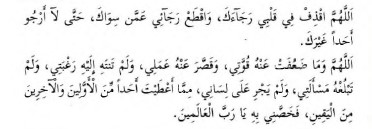
“O Allah, cast into my heart hope in You, and cut off my hope in everything other than You, until I do not hope for anyone other than You. O Allah, that for which my strength is too weak, and my action falls short of, my desire does not attain, my supplication does not reach, and what does not flow upon my tongue, of that certainty which You have given to anyone of the ancients and the later peoples, then single me out for it, Lord of the Worlds.” He said: “By Allah, I had not persisted in it for a week before Mu'awiyah sent me one million and five hundred thousand, and I said, ‘Praise be to Allah, Who does not forget whoever remembers Him and does not disappoint whoever supplicates Him.’ I saw the Prophet ﷺ in sleep, and he said, ‘Hasan, how are you?’ I said, ‘Well, Messenger of Allah,’ and I told him my story. He said, ‘My son, that is how it is for whoever hopes for (something) from the Creator and does not hope for (something) from the creature.’” In at-Tuyuriyyat it is related that Sulaym ibn ʿIsa, the Qur’an reciter of the people of Kufa, said: When death came to al-Hasan, he was overcome with agitation and grief. Al-Hussein said to him, “My brother, what is this agitation and grief? You are going to the Messenger of Allah ﷺ, and ʿAli and they are your two fathers, and to Khadijah and Fatimah and they are your two mothers, and to al-Qasim and at-Tahir and they are your two maternal uncles, and to Hamzah and Jaʿfar and they are your two paternal uncles.” Al-Hasan said to him, “Brother, I am entering into a matter of Allah’s, exalted is He, the like of which I have never entered, and I see a creation of Allah’s the like of which I have never seen.” Ibn cAbd al-Barr 说:我们从多方面的记载得知,当他(指al-Hasan)临终时,他对他的弟弟说:“我的兄弟,你的父亲曾把目光投向这一权位,但真主使他与之无缘,并让Abu Bakr主管它(哈里发职位)。之后,他又把目光投向它,但它却转而落到了cUmar手中。随后,在议事会(Shura)时,他毫不怀疑它不会越过他,然而它却转而落到了cUthman手中。cUthman被杀后,人们向cAli效忠。接着我们被阻止,直到刀剑出鞘,因此这一权位从未对他安然无扰。以真主发誓,我认为真主不会将先知身份与哈里发职位集于我们一族。我不知道库法的愚人们是否会推举你为哈里发并将你驱逐。我曾请求cA’ishah(愿真主喜悦她)允许我葬在真主的使者ﷺ身旁,她说:‘可以。’我死后,你可以去问她,但我只是预料到人们会设法阻止你。如果他们这样做,你不要与他们争辩。”他去世后,al-Hussein前去拜见信士们的母亲cA’ishah(愿真主喜悦她),她说:“可以,这是一种荣誉。”但Marwan阻止了他们。随后al-Hussein和他的随从拔剑相向,直到Abu Hurayrah劝阻了他们,于是他被葬在al-Baqic,与他的母亲相邻(愿真主喜悦她)。
O Allah, cast into my heart hope in You, and cut off my hope in everything other than You, until I don’t hope for anyone other than You. O Allah, that for which my strength is too weak, and my action falls short of, my desire does not attain, my supplication does not reach, and what does not flow upon my tongue, of that certainty which You have given anyone of the ancients and the later peoples, then single me out for it, Lord of the Worlds.’” He said, ‘Then, by Allah, I had not persisted in it for a week before Mucawiyah sent me one million and five hundred thousand, and I said, “Praise be to Allah Who does not forget whoever remembers Him and doesn’t disappoint whoever supplicates Him.” I saw the Prophet, may Allah bless him and his family and grant them peace, in sleep and he said, “Hasan, how are you?” I said, “Well, Messenger of Allah,” and I told him my story. He said, “My son, that is how it is for whoever hopes for (something) from the Creator and does not hope for (something) from the creature.’” There is in at-Tuyuriyyat that Sulaym ibn cIsa, the Qur’an reciter of the people of Kufa, said: When death came to al-Hasan he was overcome with agitation and grief. Al-Hussein said to him, ‘My brother, what is this agitation and grief? You are going to the Messenger of Allah, may Allah bless him and his family and grant them peace, and cAli and they are your two fathers, and to Khadijah and Fatimah and they are your two mothers, and to al-Qasim and at-Tahir and they are your two maternal uncles, and to Hamzah and Jacfar and they are your two paternal uncles.’ Al-Hasan said to him, ‘Brother, I am entering into a matter of Allah’s, exalted is He, the like of which I have never entered, and I see a creation of Allah’s the like of which I have never seen.’ Ibn cAbd al-Barr said: From various sources we relate that when his time came, he said to his brother, ‘My brother, your father raised his eyes to this authority and Allah averted him from it and put Abu Bakr in charge of it (the khilafah). Later, he raised his eyes to it, but it was turned away from him to cUmar. Later again, he had no doubt at the time of the Council that it would not pass him by, but it was turned away from him to cUthman. When TJthman was killed, then °Ali was pledged allegiance. Then we were restrained until swords were unsheathed and so it (the khilafah) was never undisturbedly his. By Allah, I don’t think that Allah will combine prophecy and khilafah in us. I don’t know but that the fools of Kufa will try to appoint you as khalifah and drive you out. I have asked cA’ishah, may Allah be pleased with her, that I should be buried with the Messenger of Allah, may Allah bless him and his family and grant them peace, and she said, “Yes.” When I die, ask her about that, but I only anticipate that people will try to prevent you. If they do, don’t bandy words with them.’ When he died, al-Hussein came to the Mother of the Believers, cA’ishah, may Allah be pleased with her, and she said, ‘Yes, and it is an honour,’ but Marwan prevented them. Then al-Hussein and those with him donned their swords, until Abu Hurayrah prevented them, and so he was buried in al- Baqic by the side of his mother, may Allah be pleased with her.