١.١ الضرورة الروحية للنبوة
1.1 The Spiritual Necessity Of Prophethood
في داخل كلٍّ منا توقٌ لا يهدأ إلى الإشباع الروحي. وحين يُهمَل هذا التوق، تعاني الروح عطشًا شديدًا يدفعها إلى ملاحقة سرابٍ تلو آخر، يمنحها كلُّ واحد منها أملًا عابرًا بواحةٍ قريبة، ثم يعقبه خيبةٌ جديدة. وهذه هي مأساة الإنسان كلما طلب السكينة الداخلية من العالم الخارجي، أو سعى إلى تحقيق ذاته بملذات الجسد، في حين خُلق ليرتقي فوق ذلك كله لغايةٍ أسمى.
Within us all is a restless craving for spiritual fulfillment. When ignored, the spirit experiences intense thirsts which send it chasing one mirage after another, each offering it momentary hope of an oasis before yet another letdown. This is the tragedy of the human condition whenever it seeks inner peace from the outer world, or seeks to self-actualize through carnal pursuits, when it was created to transcend all that for a higher purpose:
الإخلاص لله. قال الله تعالى في القرآن: ﴿وَمَا خَلَقْتُ الْجِنَّ وَالْإِنسَ إِلَّا لِيَعْبُدُونِ﴾16
sincere devotion to God. Allah says in the Qur’an, “And I did not create the jinn and mankind except to worship Me.”16
فالعبودية لله، لا مجرد الإدراك الفطري لوجوده، ليست واجبًا فحسب، بل هي أيضًا حاجة إنسانية أساسية. فمن الضروري أن نغذّي روحنا كما نغذّي أبداننا بالطعام والأكسجين. وهي تجعلنا نستشعر حقيقتنا بوصفنا كائنات روحية في أجساد مادية، لا كائنات مادية يتفق أن لها بعدًا روحيًا. ولا يتحقق شيء من ذلك بالطبع دون أن يبلّغنا الخالق على ألسنة الأنبياء كيف نقيم علاقة ذات معنى معه. فبدون هذا التبليغ لن نتمكن من معرفته وحبّه على مستويات أعمق، ولا نعرف معنى الحياة الحقيقية إلا بالعيش له. كما قال النبي محمد ﷺ: «مَثَلُ الَّذِي يَذْكُرُ رَبَّهُ وَالَّذِي لَا يَذْكُرُ رَبَّهُ مَثَلُ الْحَيِّ وَالْمَيِّتِ».17
Servitude to God, not just the inborn recognition of His existence, is therefore not only a duty but also a fundamental human need. It is necessary to nourish our spirit just as food and oxygen are necessary to nourish our body. It attunes us to our reality as spiritual beings in physical bodies, not physical beings that happen to enjoy a spiritual dimension. Of course, none of that is possible without the Creator communicating to us through prophets how to have a meaningful relationship with Him. Without this communication, we would be unable to know and love Him on deeper levels, and it is only through living for Him that we experience what it truly means to be alive. As the Prophet Muhammad صلى الله عليه وسلم once said, “The similitude of someone who is mindful of Allah and someone not mindful of Allah is that of the living and the dead.”17
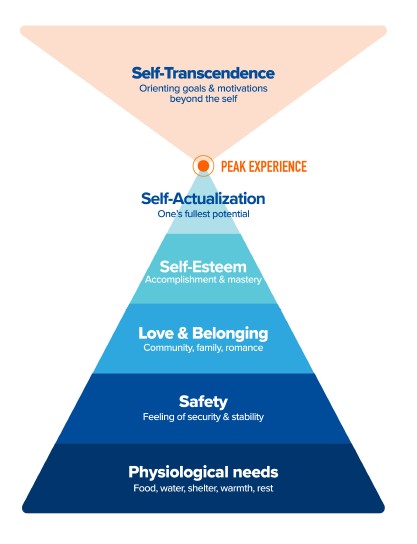
عندما عدّل إبراهام ماسلو هرمه الشهير للحاجات، جعل الرغبة في تجاوز الذات أعظم الدوافع على الإطلاق، فوق تحقيق الذات.18
When Abraham Maslow amended his famous hierarchy of needs, he set the desire for self-transcendence as the greatest motivator of them all, above self-actualization.18
لكن بدون الأنبياء والوحي الإلهي، يبقى حتى ذلك البصر غيرَ مُرشِدٍ إلى حدٍّ ما. فهو يتيح أن تُفهم مفاهيمُ مثل وحدة الوجود (أن يكون المرء واحدًا مع الكون) أو الإيثار (أن يكون المرء غيرَ أنانيّ) على أنها تحقّق الإشباع نفسه الذي يحققه التعبّدُ لله. ويُذكر أن الناس الإيثاريين يُبلغون عن رضا أعلى في الحياة، وهذا متوقَّع، إذ إن كون المرء غيرَ أنانيّ هو، بحكم تعريفه، غايةٌ أسمى من كون المرء محورَ نفسه.
However, without the prophets and divine revelation, even that insight remains somewhat uninstructive. It allows for notions such as monism (being one with the universe) or altruism (being selfless) to be misperceived as equally fulfilling as devotion to God. Altruistic people often report higher life satisfaction, and that is expected since being selfless is, by definition, a more transcendent purpose than being self-centered.
لكنّ الحاجة الأساسية إلى تجاوز الذات لن تُشبَع إشباعًا تامًّا بمجرد الانخراط في أي غايات أعظم من الذات (كخدمة المجتمع الإنساني). ثمة طمأنينة فريدة تتوقف تحديدًا على التعلّق بالأعظم مطلقًا: الله سبحانه. وخدمة الآخرين قد تكون جزءًا من ذلك، لكنها لا يمكن أن تحلّ محلّه، قال الله تعالى: {أَلَا بِذِكْرِ اللَّهِ تَطْمَئِنُّ الْقُلُوبُ}. ويكتب ابن القيم (ت 1350)، وهو عالم مسلم مشهور: "في القلب قلقٌ لا يسكّنه إلا التقرّب إلى الله، وفيه وحشةٌ لا يزيلها إلا الأنس بقربه".
But the essential need to self-transcend will never be fully satisfied by just any involvement in ends greater than oneself (such as serving the human collective). There is a unique tranquillity that hinges squarely on one’s devotion to the absolute greatest: the Almighty. Serving others can be part of that, but can never replace it, as Allah says, “Unquestionably, it is only by the remembrance of Allah that hearts are assured.”19 Ibn al-Qayyim (d. 1350), a renowned Muslim theologian, writes, In the heart, there exists an anxiousness that nothing can calm but drawing nearer to God. And a loneliness overcasts it that nothing can remove but enjoying His
company in private. And a sadness dwells within it that nothing can alleviate but the joy of knowing Him and genuinely devoting oneself to Him. And a worry unsettles it that nothing can reassure but focusing on Him and fleeing from Him to Him. And the flames of regret continue to flare inside it, and nothing can extinguish them but becoming content with His commands, prohibitions, and destiny, and patiently holding onto all that until the time one meets Him. And in it exists a pressing demand; it will not stop until He alone becomes its pursuit. And in it is a dire need; nothing will satisfy it except loving Him, constantly remembering Him, and being sincerely devout to Him. And if a person were given this entire world and all it contains, it would never fulfill that need.20
company in private. And a sadness dwells within it that nothing can alleviate but the joy of knowing Him and genuinely devoting oneself to Him. And a worry unsettles it that nothing can reassure but focusing on Him and fleeing from Him to Him. And the flames of regret continue to flare inside it, and nothing can extinguish them but becoming content with His commands, prohibitions, and destiny, and patiently holding onto all that until the time one meets Him. And in it exists a pressing demand; it will not stop until He alone becomes its pursuit. And in it is a dire need; nothing will satisfy it except loving Him, constantly remembering Him, and being sincerely devout to Him. And if a person were given this entire world and all it contains, it would never fulfill that need.20
ولهذا، ولتجنّب هذه المأساة النفسية الروحية، ولأجل أن يعيش الإنسان لله تعالى، فإنّ النبوّة ضرورة وجودية. فالله الرحمن الرحيم نفسه، الذي هيّأ لنا كلّ ما نحتاجه على هذا الكوكب من أسباب الحياة وما يحفظها، قد كفل لنا بالنبوّة ما نحتاجه أشدّ الحاجة: الهداية إليه، ورضاه في الحياة الدنيا والآخرة.
Hence, to avert this psychospiritual tragedy, and to live for Almighty God, prophethood is an existential necessity. The same most compassionate God who afforded us all we need on this planet for life and what sustains it, has ensured for us through prophethood what we need most: guidance to Him and His pleasure in this life and the next.
16 القرآن 51:56، ترجمة صحيح الدولية
16 The Qur’an 51:56, Saheeh International Translation.
17 البخاري، صحيح البخاري، 8:86 #6407؛ مسلم بن الحجاج القشيري، صحيح مسلم (بيروت: دار إحياء الكتب العربية، 1955)، 1:539 #779.
17 al-Bukhārī, Ṣaḥīḥ al-Bukhārī, 8:86 #6407; Muslim ibn al-Ḥajjāj al-Qushayrī, Ṣaḥīḥ Muslim (Beirut: Dār Iḥyāʼ al-Kutub al-ʻArabīyah, 1955), 1:539 #779.
[Lloyd Greene and George Burke، "Beyond Self-Actualization"، Journal of Health and Human Services Administration (2007): 116-128.]
18 Lloyd Greene and George Burke, “Beyond Self-Actualization,” Journal of Health and Human Services Administration (2007): 116-128.
19 القرآن 13:28، ترجمة صحیح الدولیة
19 The Qur’an 13:28, Saheeh International Translation.
20 ابن القيم الجوزية، مدارج السالكين بين منازل إياك نعبد وإياك نستعين (بيروت: دار الكتاب العربي، 1996)، 3:156.
20 Ibn Qayyim al-Jawzīyah, Madārij al-Sālikīn Bayna Manāzil Īyāka Na’budu wa Īyāka Nasta’īn (Beirut: Dār al-Kutub al-ʻArabī, 1996), 3:156.