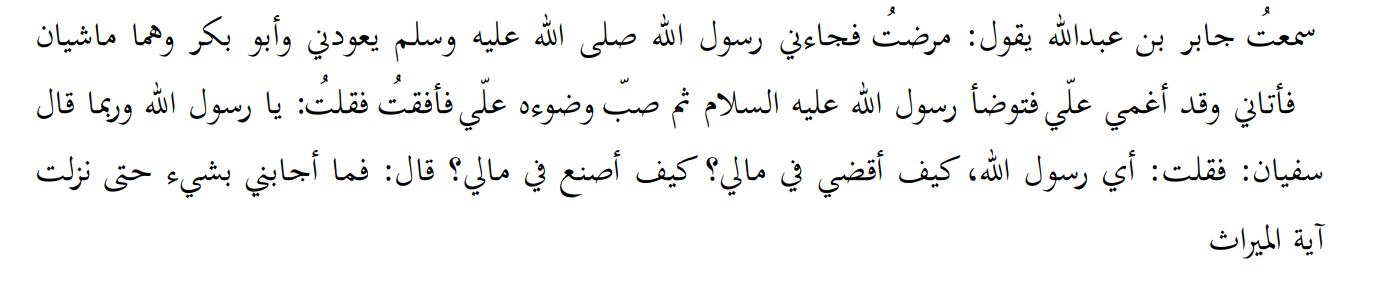
Tirmiziy bu hadisni rivoyat qilgan, unda aniq ko'rsatilganki, imom xato qilishi, unutishi va gunoh qilishi mumkin. Shunga qaramay, Rasulullah ﷺ uni itoat qilishga buyurganlar, to u Islom bilan hukm yuritar ekan, undan aniq kufr sodir bo'lmagan va gunohga buyurmagan ekan.
Rasulullah ﷺ xalifalar haqida, ular orasida musulmonlar yoqtirmaydigan kishilar bo'lishini xabar berganlaridan keyin ham itoat qilishni buyurdilar. Shunday ekan, xalifa ma'sum bo'lishi shart, va undan inson uchun ruxsat etilgan narsa ruxsat etilmaydi, deb aytishga biror imkoniyat qoladimi? Bu xalifaning haqiqati bilan, ma'sumlik shartining yo'qligi bilan, hatto uni shart qilish uchun ruxsatning yo'qligi bilan bog'liqdir. Ammo xalifaning ma'sum bo'lishi shart, deganlar o'z qarashlari uchun dalillar keltirganlar, shuning uchun ularning ichida nima borligini tekshirib, aniqlashimiz kerak. Bu dalillar to'rt dalilga jamlanadi.
Tirmidhi narrated this hadith which is clear that the Imam can err, forget and sin. Despite that, the Messenger (saw) commanded to continue obeying him as long as he rules by Islam and clear disbelief has not occurred from him and he has not commanded with sin. After the news of the Messenger (saw) about the Khulafaa that there will be some which the Muslims will dislike yet he commanded obedience, is there after that any possibility of saying that the Khalifah must be infallible and that it is not permitted from him what is permitted from human beings? This is from the reality of the Khalifah in relation to the absence of the condition of infallibility, rather even the absence of permission to even make it a condition. However, those who said it is required that the Khalifah be infallible have presented evidences for their view, so we must examine and clarify what is within them. These evidences are summarised in four evidences:
1. Imom Shariatni saqlash, uni yetkazish va o‘rgatish, fuqarolar ishlarini nazorat qilish, ular orasida adolat o‘rnatish, mazlumlarga yordam berish, hudud (belgilangan jazolar) va ta’zir (ixtiyoriy jazolar)ni joriy etish hamda Islomni shariat yo‘sinida amalga oshirishda Payg‘ambar ﷺning o‘rnida turadi. Shu sababli u hayotining boshidan oxirigacha, xoh ataylab, xoh unutish orqali sodir bo‘lgan bo‘lsin, katta yoki kichik barcha yomonliklardan ma’sum va pok bo‘lishi shart.
1. The Imam stands in the position of the Messenger in preserving the Shari’ah , conveying and teaching it, supervising the citizens’ affairs, establishing justice among them, assisting the oppressed, establishing the mandatory Islamic punishments (hudood) and discretionary punishments (ta’zeer) and implementing Islam in the Shari’ah way. Therefore it is inevitable that he be infallible and pure from all evil, large or small, whether they occurred deliberately or through forgetfulness, from the beginning of his life to the end.
2. Agar imomdan gunoh sodir bo'lishi mumkin bo'lsa, u holda uni gunoh qilishdan va xatoga yo'l qo'yishdan saqlaydigan ma'sum imom zarur bo'ladi. Agar ikkinchisi xato qilishi va gunohlar sodir etishi ruxsat etilsa, u holda undan buni man qiladigan yana bir ma'sum imom talab qilinadi va shu tartibda davom etaverib, ish oxir-oqibat na gunoh, na xato qilish mumkin bo'lgan ma'sum imomda to'xtaydi. Demak, ma'sum imom bo'lishi shart.
2. If sin is possible from the Imam, it will require an infallible Imam to prevent him from committing sins and erring. And if it is permitted for the second to err and perform sins, then it would require another infallible Imam to prevent this from him, and it would continue in this manner until the matter ends with an infallible Imam against whom it is not possible to commit sins or errors. Therefore there must be an infallible Imam.
3. Imom Allohning shariati qoidalarini himoya qilish uchun berilgan ilohiy mansabdir. U amal qilinishi va hayotga tatbiq etilishi maqsadida nozil qilingan qoidalarni saqlaydi; u xalqning qonuni emas. Shariat ham hukumatning oddiy konstitutsiyalari qatoriga kiradigan, o‘ynab bo‘ladigan qonun va konstitutsiya emas. Shuning uchun ishi ulug‘ langan xalq Rabbi o‘z xalqi ustiga faqat ma’sum bo‘lgan kishini hukmdor qilib qo‘yadi, toki xalq unga tinch-osoyishta bo‘lsin va undan chiqqan qoidalar, ular Allohning (swt) haqiqiy qoidalari ekanligi shubhasiz bo‘lsin, shu sababli ularga amal qilish yoki ularni bajarishga to‘sqinlik qiladigan hech qanday shubha paydo bo‘lmasin. Bu hukmdorning ma’sumligi, ya’ni Shariat himoyasini nazorat qiluvchi rahbarning gunohdan va xatodan xoli bo‘lishisiz mumkin emas. Chunki gunoh va xatoga yo‘l qo‘yishi mumkin bo‘lgan inson ishonchli emas, va u xalqni boshqarayotib, xalq oldida noaniq bo‘lgan narsada Allohning (swt) hukmini aytayotganiga ishonch hosil qilib bo‘lmaydi. Maqsad ba’zi qoidalarni saqlash, boshqalarini esa e’tiborsiz qoldirish emas, balki Payg‘ambardan (ﷺ) kelgan barcha narsani saqlashdir. Demak, barcha qoidalarni biladigan va ularning barchasini himoya qiladigan, dunyo bor ekan ularga amal qilinishini ta’minlaydigan kishi bo‘lishi shart. Agar faqat ba’zi qoidalarni biladigan yoki gunoh va xatoga yo‘l qo‘yishi mumkin bo‘lgan kishi tayinlansa, bu tayinlash mas’uliyat maqsadiga, ya’ni Shariat olib kelgan barcha narsaga itoat qilish va unga amal qilishga zid bo‘lardi. Qiyomat kunigacha qolishi ma’lum bo‘lgan bu narsalarga esa zid kelish Hikmat egasi (swt) uchun mumkin emas. Shunday ekan, xato qilishi mumkin bo‘lgan yoki faqat ba’zi qoidalarni biladigan kishini tayinlash ham mumkin emas.
3. The Imam is a divine post to protect the Shari’ah rule revealed with the objective to be followed and acted upon, not a rule of the people. Nor is the Shari’ah a law and constitution among the (normal) constitutions of government possible to be played with. So the Lord of the people whose matter is glorified would not entrust a ruler over the people except one who is infallible such that the people are at ease with him and the rules from him upon their truly being the rules of Allah (swt) without any doubt entering into it which would prevent acting upon or following them. This is not possible except with the infallibility of the ruler supervising the Shari’ah’s preservation as the fallible person due to the possibility of sin and error upon him cannot be depended upon nor can one be definite that what he leads the people to is the rule of Allah (swt) in that which is indefinite before the people. The objective is not his establishment to preserve some of the rules (while) not (preserving) other (rules), but rather all that came from the Prophet (saw) Thus there must be someone who knows all the rules and a protector for all of them to act according to them as long as there is a world; were there to be appointed one who knew (only) some of the rules, or upon whom sin and error is possible, his appointment would be contrary to the objective of responsibility i.e. obedience to and acting upon all that the Shari’ah came with which is known to remain until the Day of Judgement. Since contradiction of the objective is impossible from the All-Wise (swt), then appointing one who is fallible or knowing only some of the rules is impossible.
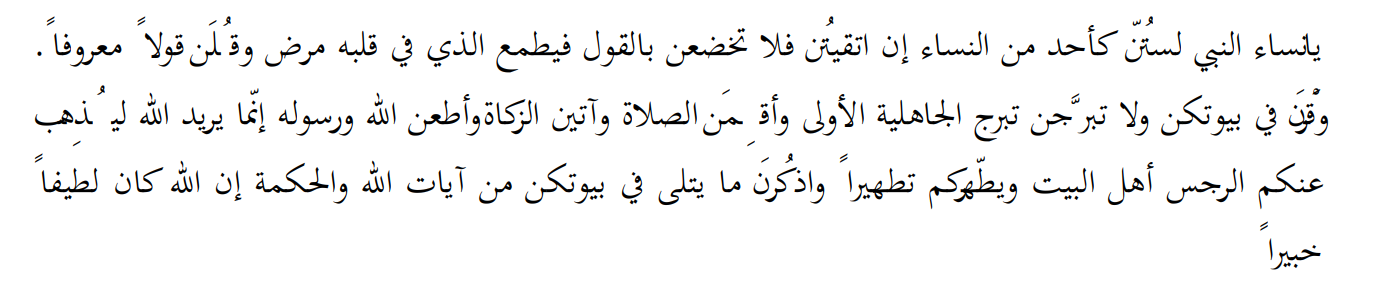
4. Matnlar xalifaning ma’sum bo‘lishi lozimligini bildiruvchi holda kelgan. Bu haqda Qur’onda uchta oyatdan aniq ko‘rinadigan oyatlar nozil bo‘lgan.
4. The texts came indicating the obligation that the Khalifah be infallible. There are Qur’anic ayat which came announcing this which is clear from three ayat.
a) Alloh (SWT) shunday deydi:
a) Allah (swt) says: