2.2 Kesederhanaan dan Kerendahan Hati Beliau
2.2 His Simplicity and Humility
Gaya hidup Nabi ﷺ yang sederhana dan zuhud merupakan indikasi besar bahwa dakwahnya tidak mungkin bertujuan untuk kepentingan pribadi, terutama jika dibandingkan dengan gaya hidup nabi-nabi palsu dalam sejarah dunia yang penuh kemewahan dan berlebihan. Bagaimanapun, beliau adalah seorang yang menguasai seluruh Jazirah Arab menjelang akhir hayatnya. Bahkan sebelum itu, beliau memiliki ribuan pengikut di Madinah, pengikut yang sangat memuliakan beliau dan siap melakukan apa pun untuk beliau. Namun, kita tidak melihat tanda-tanda kemewahan dalam bidang apa pun dari kehidupan beliau ﷺ.
The simple, austere lifestyle of the Prophet صلى الله عليه وسلم is a major indication that his mission could not have been self-serving, especially when contrasted with the decadent, extravagant lifestyles of so many false prophets in world history. After all, this was a man who controlled all of Arabia by the end of his life. Even before that, he had thousands of followers in Madinah, followers who obsessed over him and would have done anything in the world for him. Yet, we see no signs of luxury in any sphere of his life.
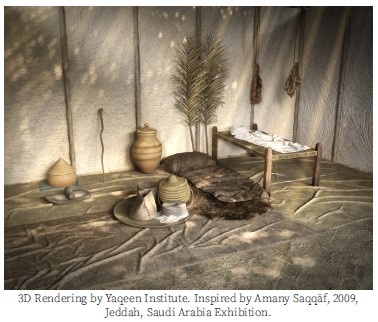
Tempat tinggalnya begitu sempit sehingga ketika beliau ﷺ hendak shalat, beliau akan menepuk 'Āishah agar menekuk kakinya untuk memberi ruang baginya untuk bersujud. Untuk minum atau mandi, beliau akan mengambil kantong air kulit kecil yang tergantung di kamarnya. Selama berbulan-bulan, tidak ada api yang dinyalakan untuk memasak di rumahnya, dan keluarganya merasa cukup dengan kurma dan air kecuali jika seseorang memberi mereka susu.58 'Umar ibn al-Khaṭṭāb meriwayatkan bahwa suatu ketika ia masuk ke kamar Rasulullah ﷺ dan mendapati beliau sedang berbaring, dan ia melihat bahwa kasarnya tikar jerami di bawah beliau telah meninggalkan bekas di sisi tubuh beliau. Setelah melihat hal itu, serta jatah barley dan dedaunan yang sedikit, dan kantong kulit yang tergantung di sudut, matanya berkaca-kaca. Nabi ﷺ bersabda, "Apa yang membuatmu menangis, wahai putra al-Khaṭṭāb?" Ia menjawab, "Wahai Nabi Allah, bagaimana aku tidak menangis setelah melihat tikar ini meninggalkan bekas di sisimu, dan betapa sedikit yang engkau miliki di lemari makananmu? Kaisar dan Kisra hidup dikelilingi buah-buahan dan mata air, sedangkan engkau adalah Rasulullah dan pilihan-Nya, namun inilah keadaanmu." Nabi ﷺ bersabda, "Wahai putra al-Khaṭṭāb, apakah engkau tidak senang bahwa semua ini untuk kita di akhirat dan untuk mereka di dunia ini?" Aku berkata, "Tentu saja."59 Dalam riwayat lain, beliau memulai jawabannya dengan, "Apakah engkau ragu, wahai putra al-Khaṭṭāb? Mereka adalah kaum yang kenikmatannya disegerakan dalam kehidupan dunia ini."60
His living quarters were so tight that when he صلى الله عليه وسلم wished to pray, he would tap ‘Āishah to bend her legs to make room for him to prostrate. To drink or bathe, he would reach for the small leather water skin that hung in his room. For months on end, no fire would be kindled for cooking in his home, and his family was content with dates and water unless someone gifted them some milk.58 ‘Umar ibn al-Khattāb reports that he once entered the room of the Messenger of Allah صلى الله عليه وسلم to find him lying down and noticed that the coarseness of the straw mat under him had left marks on his side. Upon noticing that, and the meager rations of barley and leaves, and the leather bag hanging in the corner, his eyes welled with tears. The Prophet صلى الله عليه وسلم said, “What makes you weep, O son of al-Khaṭṭāb?” He said, “O Prophet of Allah, how can I not cry after seeing how the mat has left these marks on your side, and how little you have in your food cupboard? Caesar and Chosroes live surrounded by fruits and springs of water, while you are the Messenger of God and His chosen one, and yet this is your condition.” The Prophet صلى الله عليه وسلم said, “O son of al-Khaṭṭāb, does it not please you that these [luxuries] are for us in the Hereafter and for them in this world?” I said, “Of course.”59 In another narration, he began his response with, “Are you in doubt, O son of al-Khaṭṭāb? These are a people whose pleasures have been expedited in the life of this world.”60
58 al-Bukhārī, Ṣaḥīḥ al-Bukhārī, 8:97 #6459.
58 al-Bukhārī, Ṣaḥīḥ al-Bukhārī, 8:97 #6459.
Muslim, Ṣaḥīḥ Muslim, 2:1105 #1479.
59 Muslim, Ṣaḥīḥ Muslim, 2:1105 #1479.
60 al-Bukhārī, Ṣaḥīḥ al-Bukhārī, 3:133 #2468.
60 al-Bukhārī, Ṣaḥīḥ al-Bukhārī, 3:133 #2468.
61 Edward Gibbon, Decline and Fall of the Roman Empire: Volume the Fifth (London:
61 Edward Gibbon, Decline and Fall of the Roman Empire: Volume the Fifth (London:
Electric Book Co, 2001), bab L, 252.
Electric Book Co, 2001), chapter L, 252.
62 Ibid., 251-252.
62 Ibid., 251-252.
Washington Irving dan Bertram R. Davis, The Life of Mahomet (London: G.
63 Washington Irving and Bertram R. Davis, The Life of Mahomet (London: G.
Routledge & Co, 1850), 186-187.
Routledge & Co, 1850), 186-187.
64 Ibid., 203.
64 Ibid., 203.
65 al-Tirmidhī, Sunan al-Tirmidhī, 5:90 #2754; dinilai sahih oleh al-Tirmidhī dalam komentarnya.
65 al-Tirmidhī, Sunan al-Tirmidhī, 5:90 #2754; authenticated by al-Tirmidhī in the comments.
66 Bosworth Smith, Mohammed and Mohammedanism (London: Smith, Elder, and Co., 1874), 235.
66 Bosworth Smith, Mohammed and Mohammedanism (London: Smith, Elder, and Co., 1874), 235.