الفصل الثاني: الزكاة في المواشي
3.2 Chapter Two Zakah On Livestock
عالَمُ الحيوان فيه أنواعٌ كثيرة. وقد انتفع الإنسان بقليلٍ منها فقط. وهذا ما يُعرف عند العرب بالأنعام. فالإبل والبقر والجاموس والضأن والماعز كلها من جملة ما أنعم الله به على عباده. وقد ذُكرت منافعها في مواضع متعددة من كتابه الكريم. ففي سورة النحل، وتُسمّى أحيانًا سورة الأنعام، يقول الله تعالى: {وَالْأَنْعَامَ خَلَقَهَا لَكُمْ فِيهَا دِفْءٌ وَمَنَافِعُ وَمِنْهَا تَأْكُلُونَ * وَلَكُمْ فِيهَا جَمَالٌ حِينَ تُرِيحُونَ وَحِينَ تَسْرَحُونَ * وَتَحْمِلُ أَثْقَالَكُمْ إِلَىٰ بَلَدٍ لَمْ تَكُونُوا بَالِغِيهِ إِلَّا بِشِقِّ الْأَنفُسِ إِنَّ رَبَّكُمْ لَرَءُوفٌ رَّحِيمٌ}. وقال أيضًا: {وَإِنَّ لَكُمْ فِي الْأَنْعَامِ لَعِبْرَةً نُّسْقِيكُم مِّمَّا فِي بُطُونِهِ مِن بَيْنِ فَرْثٍ وَدَمٍ لَّبَنًا خَالِصًا سَائِغًا لِّلشَّارِبِينَ}. وقال: {وَاللَّهُ جَعَلَ لَكُم مِّن بُيُوتِكُمْ سَكَنًا وَجَعَلَ لَكُم مِّن جُلُودِ الْأَنْعَامِ بُيُوتًا تَسْتَخِفُّونَهَا يَوْمَ ظَعْنِكُمْ وَيَوْمَ إِقَامَتِكُمْ وَمِنْ أَصْوَافِهَا وَأَوْبَارِهَا وَأَشْعَارِهَا أَثَاثًا وَمَتَاعًا إِلَىٰ حِينٍ}. وفي سورة يس: {أَوَلَمْ يَرَوْا أَنَّا خَلَقْنَا لَهُم مِّمَّا عَمِلَتْ أَيْدِينَا أَنْعَامًا فَهُمْ لَهَا مَالِكُونَ * وَذَلَّلْنَاهَا لَهُمْ فَمِنْهَا رَكُوبُهُمْ وَمِنْهَا يَأْكُلُونَ * وَلَهُمْ فِيهَا مَنَافِعُ وَمَشَارِبُ أَفَلَا يَشْكُرُونَ}. فقد خلق الله هذه الأنعام للإنسان، وسخّرها له ليركبها وينتفع بجلودها وأشعارها، ولا عجب أن يطلب الله من الناس أن يشكروه.
The animal kingdom has many species. Mankind has made use of only a few of them. This is what is known by Arabs as al an'am. Camels, cows, buffalo, sheep, and goats, are all part of what God bestowed on His servants. Their benefits are mentioned in several places in His Holy Book. In sura al Nahl - sometimes called sura al An'am (livestock) - God says "and cattle He has created for you, from which ye derive warmth, and numerous benefits, and of their meat ye eat. And ye have a sense of pride and beauty in them as ye drive them home in the evening, and as ye lead them forth to pasture in the morning, And they carry your heavy loads to lands that ye could not otherwise reach except with souls distressed, for your Lord is indeed most kind, moat merciful,"1 Also "and buried in cattle will ye find an instructive sign, from what is within their body between excretions and blood, we produce for your drink, milk, pure and agreeable to those who drink it,"2 "and made for you, out of the skins of animals, tents for dwellings, which ye find so light and handy when in travel and when ye stop, and out of their wool, and their soft fibers, and their hair, furniture and articles for all convenience to serve you for a time"3. In sura Yasin, "See they not that we have created for them among the things which our hands have fashioned, cattle which are under their domination. And that we have subjected them to their use: of them some do carry them and some they eat, and they have other profits from them besides, and they get milk to drink. Will they not then be grateful?".4 God fashioned this livestock for mankind, and He subjects then to humans to ride and to make use of their skin and hair. It is not surprising that God asks people to be thankful.
إنَّ أوضحَ شكرٍ وأيسرَه، الذي يحثُّ عليه القرآنُ الكريمُ والسنةُ النبويةُ المطهرةُ، هو وجوبُ الزكاةِ؛ فقد حُدِّدَ نصابُها ومقاديرُها، وتُرسَلُ كلَّ عامٍ جُباةٌ إلى أصحابِ الماشيةِ، وتُوجَّهُ التحذيراتُ لمن يمتنعُ عن أدائِها. وكانت الماشيةُ، ولا سيَّما الإبلُ، أنفعَ ما يملكُه العربُ في عصرِ النبيِّ ﷺ؛ ولهذا بيَّنتِ السنةُ نصابَها ومقاديرَها بوضوحٍ تامٍّ. وما زالت الماشيةُ في كثيرٍ من البلدانِ اليومَ، ولا سيَّما البلدانُ الإسلاميةُ، من أهمِّ الثرواتِ الوطنيةِ ومصادرِ الدخلِ.
The most obvious and practical thankfulness urged by the Holy Qur'an and the purified tradition of the Prophet (p) is the obligation of zakah. Its nisab and rates are determined, collectors are sent every year to owners of cattle, and warning to those who refuse its payment is put forth. Livestock, especially camels, were the most useful asset for the Arabs at the time of the Prophet (p). Consequently, Sunnah determined their nisab and rates very clearly. In many countries today especially Muslim countries, livestock still represent one of the most important national assets and source of income.
تُحاوِل المقاطِعُ التالية أن تُقدِّمَ بيانًا كامِلًا لزكاةِ الماشية.
The following sections attempt to provide full account of zakah on livestock.
القسم الأول: الشروط العامة لزكاة المواشي
SECTION ONE GENERAL CONDITIONS FOR ZAKAH ON LIVESTOCK
لا تجب الزكاة في المواشي مهما كانت كميتها ونوعها، بل هناك شروط معينة يجب توافرها حتى تكون المواشي خاضعة للزكاة، وهي مذكورة فيما يلي:
Zakah is not imposed on livestock of all quantity and kind. There are certain conditions that should be fulfilled for the zakatability of livestock which are ennumerated here:
1. الحد الأدنى لوجوب الزكاة (النِّصاب)
1. The minimum for zakatability (Nisab)
الشرط الأول هو النِّصاب، لأن الزكاة إنما تجب على الغني، وليس كل مالك للماشية يُعدّ غنياً. ولا بد من حدٍّ يُعتبر من بلغه المرء غنياً، وهذا الحد هو النِّصاب. وهو خمسُ إبلٍ باتفاق المسلمين منذ قرون. فلا زكاة واجبة فيما دون خمس من الإبل. ونصاب الغنم أربعون شاةً، وهو متفقٌ عليه أيضاً. ويُعرف النِّصاب بأقوال النبي ﷺ، وبفعله، وبتطبيق خلفائه من بعده. أما نصاب البقر فيتراوح بين خمسٍ وثلاثين وثلاثين واثنتين وخمسين، بحسب المذهب الفقهي الذي يُتبع.
The first condition is nisab, since zakah is only on the rich, and not every owner of livestock is rich. There always should be a limit above which persons are considered rich. This limit is nisab. It is five camels by unanimous agreement of Muslims for centuries. There is no obligated zakah for anything below five camel, nisab for sheep is forty sheep, also unanimous. Nisab is determined by sayings of the Prophet (p), by his actual practice and by the application of his successors. Nisab for cows varies from five to thirty-two to fifty, depending upon the school of jurisprudence one adopts.
2. مرورِ سال (سالانہ)
2. The passage of a Year (Annual)
هذا مروي بسند صحيح عن النبي ﷺ وعن خلفائه، وكانوا يبعثون مصدّقي الزكاة مرة في كل عام ليأخذوا عدد المواشي. وقد تبيّن في الباب السابق أن اشتراط مرور حول قمري كامل على الأموال غير المكتسبة مُجمَع عليه. ويمكن أن يضاف هنا أن جمهور من يشترطون هذا الشرط في الدخل المكتسب لا يشترطونه في نتاج المواشي الذي يتولد خلال العام، ويجعلون حول النتاج تابعاً لحول أمهاته.
This is reported authentically from the Prophet (p) and his successors. They used to send zakah collectors once every year to take the count on livestock. It was shown in the previous chapter that the condition of the passage of one full lunar year for non-earned assets is accepted unanimously. One can add here that the majority who assert this condition on earned income do not require it on the offspring of livestock that result from reproduction during the year, and accept the zakatable year for offspring to be that of their mothers.
٣۔ ينبغي أن تُرعى بشكل طبيعي
3. They should be pastured naturally
المواشي السائمة هي التي تُرعى في المراعي الطبيعية المجانية طوال معظم السنة، بغرض التناسل والحلب والتسمين.[5] وضدّ السَّوْم هو شراء العلف.
Pastured livestock are those that are grazed on natural and cost-free pasture land during the major part of the year for the purpose of breeding, milking, and putting on weight.5 The opposite of natural grazing is buying feed.
يَتَحَقَّقُ الشَّرْطُ إِذَا كَانَتِ الْمَاشِيَةُ تُرْعَى بِشَكْلٍ طَبِيعِيٍّ مُعْظَمَ السَّنَةِ.
The condition is satisfied if livestock is pastured naturally most of the year.
ينبغي أن يكون الإسامة للنماء والتناسل والدر، فإذا أُعدّت للركوب الشخصي أو للأكل، فلا تجب فيها الزكاة، لأن هذا التخصيص يخرجها من كونها أموالاً نامية، ويدخلها في باب الاستعمال الشخصي الذي لا تجب فيه الزكاة، كما سيأتي بيانه في المبحث الآتي.
Pasturing should be made for the purpose of growth, reproduction, and milking; thus if it is made for the purpose of personal riding or eating, these animals are not zakatable, since such allocation removes animals from being growth assets and put them in the category of personal use which is not zakatable as shall be shown in the next subsection.
لأنَّ هذا الشرطَ مُعتبَرٌ لأنَّ الزكاةَ تجبُ في الفاضلِ، وهو ما يسهُلُ على الناسِ إخراجُه، وذلك وفقَ قولِه تعالى: ﴿خُذِ الْعَفْوَ﴾ وقولِه تعالى: ﴿وَيَسْأَلُونَكَ مَاذَا يُنفِقُونَ قُلِ الْعَفْوَ﴾، أي: على ما لا يُكلِّفُ كثيرًا وينمو سريعًا. ولا يتحققُ ذلك إلا إذا كانت الماشيةُ ترعى بلا كُلفةٍ، إذ إنَّ الماشيةَ المعلوفةَ تتكلَّفُ نفقةً كبيرةً، مما يشقُّ على الناسِ إخراجُها زكاةً.
The reason for this condition is that zakah is obligated on the surplus, what is easy for persons to pay, in accordance to the verse, "take the surplus"6 and the verse "when they ask you what to spend, say the surplus"7, that is, on what does not cost much and grows rapidly. This can only be fulfilled if the animals pastured cost-free, since artificially fed animals have high cost, which makes it hard for people to give then away as zakah.
هذا الشرط مستنبط مما رواه أحمد، والنسائي، وأبو داود، عن بَهْز بن حكيم، عن أبيه، عن جده، قال: سمعتُ رسولَ اللهِ ﷺ يقول في الإبل السائمةِ: في كلِّ أربعين ابنةُ لبون... إلخ. وقد صحّح هذا الحديثَ جماعةٌ من كبار العلماء. ووصفُ الإبل بأنها "سائمة" هنا يدلُّ على أن المعلوفة لا زكاةَ فيها؛ إذ لو لم يكن كذلك لكان ذكرُ هذه الصفة عبثاً، والنبيُّ ﷺ لا يتكلم عبثاً. ومن الواضح من هذا الحديث أن الإبل الموصوفة بأنها سائمة، أي ترعى في المرعى المباح دون كُلفة، تختلف عن غيرها.
This condition is derived from what is reported by Ahmad, al Nasa'i, and Abu Daud from Bahz bin Hakim from his father from his grandfather, who said: I heard the Messenger of God (p) saying about naturally ( cost-free ) postured camels, for each forty, there is one as zakah ... etc. "This saying is graded correct by a group of leading scholars. The adjective "naturally, cost-free pastured" here implies that artificially fed camels are not subject to zakah; otherwise adding such an adjective becomes meaningless, and the Prophet (p) does not speak in vain. It is obvious from this saying that camels characterised, as naturally, cost-free pastured are unlike those that are not.
4. لا تجب الزكاة في المواشي العاملة
4. Zakatable livestock should not be working animals
هذا هو الشرط الرابع والأخير لوجوب الزكاة في المواشي، ومعناه أنها لا تُستعمل في الحرث، أو حمل الماء أو الأحمال، أو الركوب، ونحو ذلك. ولا يُشترط هذا الشرط إلا في الإبل والبقر. أخرج أبو عبيد عن علي رضي الله عنه قال: «ليس في البقر العوامل صدقة». وورد أيضاً عن جابر بن عبد الله قال: «العوامل من البقر ليس فيها زكاة». وأخرج أبو داود في سننه عن زهير: حدثنا أبو إسحاق، عن عاصم بن ضمرة والحارث، عن علي، (قال زهير: أحسبه قد رفعه إلى النبي ﷺ) قال: «هاتوا ربع العشر، من كل أربعين درهماً درهم، وليس في تسعين شيء، فإذا بلغت مائة وعشرين ففيها درهمان...» وقال: «وليس فيما عَمِل من الماشية شيء». ورواه ابن أبي شيبة مرفوعاً إلى النبي ﷺ، ورواه عبد الرزاق في مصنفه عن الثوري ومعمر موقوفاً على علي فقط.12
This is the fourth and last condition for zakatability of livestock. It means that they should not be used for cultivation, carrying water or loads or riding, etc. This condition only applies to camels and cows. Abu Ubaid reports from 'Ali, that " There is no sadaqah on working cows."There is also a report that Jabir bin 'Abd Allah said "Animals working in cultivation are not zakatable."11 Abu Daud, in his Sunan, reports from Zuhair "We are told by Abu Ishaq from 'Asem bin Damurah and al Harith from 'Ali, (Zuhair said "I think from the Prophet") that he said, "Bring me one-fourth of a tenth, i.e. on each forty dirhams one dirham..." and he continued, "and there is nothing due on working animals." This is reported also by Ibn Abi Shaibah linked to the Prophet, and by 'Abd Al Razzaq, in his Musannaf, via al Thawri and Mamar as from 'Ali only.12
وَرَدَت روايات مماثلة عن إبراهيم، ومجاهد، والزهري، وعمر بن عبد العزيز، وبعض التابعين الآخرين.١٣ وهو أيضًا قول أبي حنيفة، والثوري، والشافعي، والزيدية. وهو رأي الليث فيما يتعلق بالبقر.
Similar reports exist as coming from Ibrahim, Mujahid, al Zuhri, Umar bin 'Abd al Aziz, and some other Followers.13 It is also the view of Abu Hanifah, al Thawri, al Shafi'i, and the Zaidis. It is the opinion of al Layth as far as cows are concerned.
يُؤيِّد هذه الروايات وهذا الرأيَ أمران. الأول: القاعدة القائلة بأن الأموال المخصّصة للاستعمال الشخصي والخدمة لا تجب فيها الزكاة، وعلى هذا القياس فإن المواشي المخصّصة للحراثة أو للنقل الشخصي لا ينبغي أن تجب فيها الزكاة. ومن الواضح أن مثل هذه الحيوانات ليست من الأموال المستثمرة للنماء.14 والثاني: رواية أبي عبيد عن الزهري أن البقر والإبل التي تُستعمل لحمل الركّاب لا زكاة فيها، ولا زكاة في البقر المستعملة في الحرث.15 وكل هذه بمنزلة الأدوات الزراعية. ويقول سعيد بن عبد العزيز التنوخي: «البقر العوامل لا زكاة فيها، لأن الزكاة تُخرج من الحبوب الناتجة، وفي ذلك عمل البقر».16 فلو أُخرجت الزكاة من الحيوانات المستعملة في الزراعة، لوجبت الزكاة مرتين على الزراعة: مرة على وسيلة الإنتاج، ومرة على الناتج، كما قرر أبو عبيد بحق. وقد خالف مالكٌ الجمهورَ في هذا الحكم، فهو يرى وجوب الزكاة في البقر والإبل سواء كانت عاملة أو غير عاملة، وسواء كانت ترعى بالمرعى الطبيعي أو لم تكن. ولما ذُكر رأي مالك للثوري قال: «ما كنتُ أظن أن أحدًا يقول هذا». ومن الإنصاف أن يُضاف أن بعض فقهاء المالكية يميلون إلى رأي الجمهور.
القسم الثاني: زكاة الإبل
SECTION TWO ZAKAH ON CAMELS
أجمع المسلمون، وتدل على ذلك عدة أحاديث صحيحة عن رسول الله ﷺ وآثار عن أصحابه، على أن نصاب الإبل ومقادير الزكاة فيها كما يلي:
The unanimous agreement of Muslims, as well as several correct sayings of the Messenger of God (p) and reports from his Companions indicate nisab of camels and the rates of nisab on them are as follows:
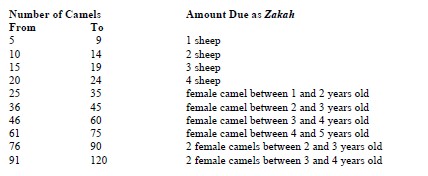
فيه إجماعٌ على هذا الجدول،١٩ عدا ما رُوي عن علي أنه في خمسٍ وعشرين من الإبل خمسُ شياه، وفي ست وعشرين من الإبل بنتُ مخاضٍ بين السنة والسنتين.٢٠ يقول ابن المنذر: لا يُنقض الإجماعُ، لأن ما رُوي عن علي غيرُ صحيح. وقولُ أنسٍ في هذه المقادير والأنصبة صحيح، وفيه إجماعٌ على مضمونه.٢١ وفيما زاد على مائة وعشرين من الإبل يرى الجمهورُ أنه في كل زيادةِ خمسين من الإبل تُؤخذ بنتُ لَبونٍ بين السنتين والثلاث، وفي كل زيادةِ أربعين من الإبل بنتُ لبونٍ بين الثلاث والأربع.٢٢ وهذا مبيّنٌ في الجدول الآتي:
There is ijma on this schedule,l9 except for a report from 'Ali that on 25 camels there is five sheep and on 26 camels there is one female camel between one and two years old.20 Ibn al Mundhir says. The unanimity is net broken, because what is reported from 'Ali is not authentic. The saying of Anas on these quantities and amounts is correct and there is a unanimous agreement on its content.21 For more than 120 camels the majority's view is that for each additional 50 camels the additional amount of zakah is a female camel between three and four years old while on each additional 40 camels the additional amount of zakah is a female camel between two and three years old.22 This is shown in the following table :
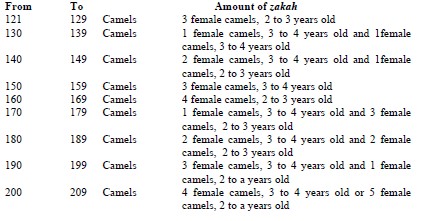
من الجدول يتبين أنه في الأعداد الكبيرة لا تؤثر الزيادة التي تقل عن عشرة من الإبل على مقدار الزكاة، فإذا زادت عشرة صعدت درجة في مقدار الزكاة الواجبة وفق القاعدة نفسها المذكورة آنفاً. ويتضح من هذين الجدولين أنه إذا كانت الإبل المملوكة أقل من خمس فلا زكاة فيها، فإذا بلغت خمساً وجبت شاة واحدة. ونقل صاحب المبسوط عن أحد العلماء قوله: "هذا يعني أنه يُعتبر قيمةُ الماشية؛ فكانت الإبل ما بين السنة والسنتين تُقوَّم بأربعين درهماً، والشاة بخمسة دراهم، فخمسُ إبلٍ تعادل مئتي درهم، وتعادل أيضاً أربعين شاة. وهذا يقتضي أن نصاب الإبل والغنم والفضة النقدية واحد." أما ابن الهمام في الفتح وابن نجيم في البحر فقد ردّا بأن هناك قولاً مفاده: "من وجبت عليه في الزكاة إبلٌ من سنٍّ معيّنة ولم تكن عنده إبل من تلك السن، جاز له أن يدفع بدلها متوسطاً قيمته عشرةُ دراهم عن الشاة إن لم تكن عنده شاة." وهذا نصٌّ صريح يخالف ما ذهب إليه السرخسي. والقول المشار إليه أورده صاحب البحر عن أنس.
It is seen from the table that for big numbers, an increase of less than ten camels does not affect the amount of zakah. Once it is increased by ten, then you go one step higher in the amount of zakah due according to the same rule mentioned above. It is obvious from these two tables that if the number of camels owned is less than five then there is no zakah. Once they reach five , the amount due is one sheep. The author of al Mabsut quotes a scholar as saying, "this means that the value of the livestock is considered. Camels between one and two years old used to be priced at forty dirhams and a sheep at five dirhams, so five camels equal 200 dirhams also equal 40 sheep. This implies that the minimum for zakatability of camels, sheep, and silver money is the same. Ibn al Humam in al Fath and Ibn Nujaim in al Bahr reply, there is a saying that states "Whoever is obliged to give as zakah a camel of a certain age group, but does not own any in that age, can pay in substitution on the average of 10 dirhams for a sheep, if he does not have a sheep. This is an explicit text that contradicts the explanation of al Sarakhsi.24 The saying referred to is reported by al Bahr from Anas.
تُوجِبُ الشَّرِيعَةُ الزَّكَاةَ من الغَنَمِ على الإبلِ إذا كان عددُ الإبلِ الزكويَّةِ أقلَّ من خمسةٍ وعشرين، وإن كانت الزَّكَاةُ عادةً تُؤدَّى من نفسِ جنسِ الأموالِ الزكويَّةِ.
Shari'ah obligates sheep as zakah on camels if the number of zakatable camels is lees than 25, though usually zakah is paid out of the same kind of the zakated assets.
السبب في ذلك واضح، وهو أن المقدار الواجب أقل من بعير واحد، وفي الوقت نفسه تعتبر الشريعة خمسة من الإبل كافية لتحديد من هو غني.25
The reason is obviously that the amount due is less than one camel, but at the same time Shari'ah considers five camels to sufficiently define who is rich.25
روى أنس أن أبا بكر الصديق كتب هذا الكتاب حين بعثه إلى البحرين:
Anas narrated that Abu Bakr, the Truthful wrote this message when he sent him to Bahrain:
بسم الله الرحمن الرحيم. هذه هي فريضة الصدقة التي فرضها رسول الله ﷺ على المسلمين، كما أمره الله بها.
In the name of God, most merciful, most gracious. This is the obligation of sadaqah imposed on Muslims by the Messenger of God (P), as ordained to him by God.
ومن طُلب منه أداء الزكاة وفق هذه القواعد وجب عليه إخراجها، ومن طُلب منه أكثر من ذلك فليمتنع. ففي كل أربعة وعشرين من الإبل فما دونها تجب الزكاة من الغنم، إذ تجب شاةٌ في كل خمس من الإبل. فإذا بلغت خمسًا وعشرين وصلت إلى خمس وثلاثين وجبت بنت مخاض، وهي الأنثى من الإبل التي دخلت في السنة الثانية. ومن ستٍّ وثلاثين إلى خمس وأربعين ففيها بنت لبون، وهي التي دخلت في السنة الثالثة.
Whoever is asked to pay it according to these rules must give it, and whoever is asked to pay more should refuse. On each 24 camels or less, zakah is due in sheep. On each five camels, one sheep is required. Once they reach 25 and up to 35 one female camel, one to two years old, is required. From 36 to 45, there is one she-camel two to three years old.
فَإِذَا بَلَغَتْ سِتًّا وَأَرْبَعِينَ إِلَى سِتِّينَ، فَفِيهَا بِنْتُ لَبُونٍ، وَهِيَ مَا دَخَلَتْ فِي الثَّالِثَةِ وَأَكْمَلَتْهَا، أَيِ الَّتِي تَكُونُ قَدْ أَتَمَّتْ ثَلَاثَ سِنِينَ وَدَخَلَتْ فِي الرَّابِعَةِ، وَهِيَ مَا يُمْكِنُ أَنْ تُحْمَلَ عَلَيْهَا. وَإِذَا بَلَغَتْ إِحْدَى وَسِتِّينَ إِلَى خَمْسٍ وَسَبْعِينَ، فَفِيهَا حِقَّةٌ، وَهِيَ مَا دَخَلَتْ فِي الرَّابِعَةِ وَأَكْمَلَتْهَا، أَيْ قَدْ أَتَمَّتْ أَرْبَعَ سِنِينَ وَدَخَلَتْ فِي الْخَامِسَةِ، وَهِيَ مَا يُمْكِنُ أَنْ تُحْمَلَ عَلَيْهَا. وَإِذَا بَلَغَتْ سِتًّا وَسَبْعِينَ
If they reach 46 to 60, there is one she-camel three to four years old due, one that can be bred. If they reach 61 to 75, one she-camel four to five years old is due. If they reach 76
إذا بلغت الإبل تسعين، ففيها بنتا لبون، أي ما بين السنتين والثلاث سنوات. وإذا بلغت من واحد وتسعين إلى مئة وعشرين، ففيها حقتان، أي ما بين الثلاث والأربع سنوات. وإذا زادت على مئة وعشرين، ففي كل أربعين بنت لبون
to 90, there is two she-camels two to three years old due. If they reach 91 to 120, there are two she-camels, three to four years old due. If they are more than 120, for each 40
في كل خمسٍ من الإبل شاةٌ، وفي كل عشرٍ شاتان، وفي كل خمسةَ عشرَ ثلاثُ شياهٍ، وفي كل عشرين أربعُ شياهٍ... (no, that is not from the original; translating the given text only) Here is the translation of your text: فيها بنت لبون واحدة إلى ... (?) Let me correct and give the faithful translation: ففي كل خمسين من الإبل بنت لبونٍ، وفي كل أربعين بنتُ... no. The translation of your text: فيها بنتُ مخاضٍ واحدةٌ، وفي كل خمسين حقةٌ... no. Final, faithful translation: في الإبل: في كلِّ خمسين منها بنتُ لبونٍ... no. I must stop guessing and give a clean translation of what you wrote: فيها بنتُ لبونٍ واحدةٌ ذات سنتين إلى ثلاث سنين، وفي كل خمسين منها حقةٌ ذات ثلاث سنين إلى أربع سنين. ومن كان يملك أربعَ إبلٍ فليس عليه زكاةٌ إلا أن يتطوع بها، فإذا بلغت خمسَ إبلٍ ففيها شاةٌ زكاةً. وفي صدقة الغنم، إذا كانت سائمةً لم تُعلف، وكانت بين أربعين ومائةٍ وعشرين شاةً، ففيها شاةٌ واحدةٌ. وإذا زادت على مائةٍ وعشرين إلى مائتين ففيها شاتان.
اختلاف الأنصبة بعد مئة وعشرين من الإبل
Variance on the Rates after 120 Camels
ذكرتُ قبلاً أن الفقهاء يختلفون في زكاة الإبل إذا زادت على مائة وعشرين. يرى مالك والشافعي وأحمد وجمهور العلماء أن الفريضة في كل زيادة خمسين بنت لبون، أي أنثى من الإبل دخلت في الرابعة، وفي كل زيادة أربعين حقة، أي أنثى دخلت في الثالثة، وذلك كما ورد في كتاب أبي بكر وعمر الذي رواه أنس وابن عمر متتابعاً، وكذلك جاء في كتابي ابن حزم وزياد بن لبيد إلى أهل حضرموت، وفي قول النبي ﷺ: «فإذا زادت على مائة وعشرين ففي كل أربعين حقة، وفي كل خمسين بنت لبون». وقد لخّص بعض الرواة هذا الحديث فقالوا: «في كل خمسين بنت لبون» دون ذكر الفريضة في كل زيادة أربعين، لكن الروايات المختلفة يكمل بعضها بعضاً.
I pointed out earlier that there are varying views among jurists on zakah on above 120 camels. Malik, Shafi'i, Ahmad, and the majority consider the rate to be one female camel, three to four years old for each additional 50, and one female camel, two to three years old, for each additional 40,39 as mentioned in the message of Abu Bakr and 'Umar narrated successively by Anas and Ibn 'Umar. The same also appears in the messages of Ibn Hazm and Ziad bin Labid to the people of Hadramut,40 in the words of the Prophet (p) "If they exceed 120, then for each 40 one female camel two to three years old, and for each 50 one female camel three to four years old". Some versions of the last saying are summarized by that narrator, as "In each 50 one female camel ..." without mentioning the rate for each additional 40, but the different versions complete each other.
رأي أبي حنيفة
Abu Hanifah's view
قال النخعي والثوري وأبو حنيفة: إنه فيما زاد على مئة وعشرين نبدأ الفرائض من جديد، أي إنه في الزيادة من خمسة إلى أربعة وعشرين من الإبل تكون الفريضة شاة عن كل خمسة من الإبل، وفي الزيادة بخمسة وعشرين من الإبل تكون الزكاة بنت مخاض، أي ما كمل له سنة إلى سنتين، وهكذا. ويبين الجدول التالي المقدار الواجب وفق هذا القول:
Al Nakha'i, Al Thawri, and Abu Hanifah41 say that "for what is above 120, we start the rates from the beginning, i,e., for an additional five to 24 camels, the rate is one sheep for each 5 camels, and for an additional 25 camels zakah due is one female camel, one to two years old, etc."The following table shows the amount due according to this opinion:
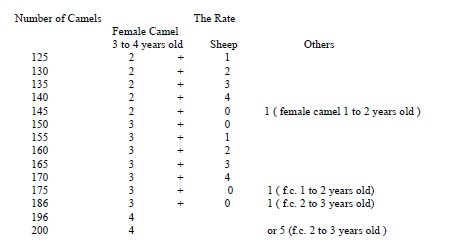
بعد مئتين يتكرر المقدار، فيجب في كل خمس إبل زائدة شاة، وكلما بلغت الإبل الزائدة التي تجب فيها الزكاة خمسين، فإن الواجب فيها بنتُ لبونٍ، وهي ما دخلت في السنة الرابعة.
After 200 the rate repeats itself, one sheep for each additional five camels, and each time the additional zakatable camels reach fifty, the amount of zakah due on it is one female camel three to four years old.
یستدل الحنفیة بما رواه أبو داود مرسلاً [أي: الحديث الذي لم يُذكر في سنده اسم الصحابي الراوي]، وإسحاق في مسنده، والطحاوي في مشكل الآثار، عن حماد بن سلمة، قال: قلت لقيس بن سعد: أحضِر لي رسالة محمد بن حزم، فأعطاني كتاباً زعم أنه أخذه من أبي بكر بن محمد بن حزم، قال: إن النبي ﷺ كتبه لجدي، فقرأته فوجدتُ فيه أنصبة الزكاة في الإبل... ثم ساق الحديث حتى قال: "فإذا زادت على مائة وعشرين ففي كل أربعين بنت لبون، وفي كل خمسين حقة، فإذا زادت على مائة وعشرين فتكون حِقّتان، ثم في كل خمسين حقة، وفي كل أربعين بنت لبون، فإذا زادت على مائة وعشرين ففي كل أربعين بنت لبون، ... وفي كل ثلاثين بعيراً باقة... وما دون خمس وعشرين من الإبل ففي كل خمس شاة" — وقد ذكره الزيلعي في نصب الراية. ويُروى نحو هذه الرواية عن عاصم بن ضمرة عن علي موصولةً إلى النبي ﷺ ومنتهيةً إلى علي، ويُروى عن ابن مسعود ما يشبه ذلك. ونقل ابن رشد عن الحنفية أنهم قالوا: إن مثل هذا الأمر لا يُقرَّر إلا بتوقيف من النبي ﷺ، لأنه ليس مما يُدرَك بالقياس.44
The Hanafites argue that Abu Daud reports as mursal [saying in whose chain the name of the reporting Companion is not mentioned], Ishaq in his Musnad and al Tahawi in his Mushkel from Hmmad bin Salamah, who said, "I told Qais bin Sa'd to get me the message of Mohammad bin Hazm, so he gave me a letter which he said he took from Abu Bakr bin Mohammad bin Hazm, who said that the Prophet (p), wrote it to my grandfather. I read it and found in it the rates of zakah on camels... " and he narrated the saying until, "Once they exceed 120 make due on each 30 one female camel three to four years old. For the increments, restart the rates from the beginning, and for what is less than 25 camel increments, the amount of zakah is due in sheep, one sheep for each five." This is reported in Nasb Al Rayah by al Zaila'i.42 A similar version is narrated by 'Asem bin Damurah from Ali, linked to the Prophet as well as ending at 'Ali,43 and Ibn Mas'ud is reported to have said similar things. The Hanafites are said by Ibn Rushd to have argued that such a thing cannot be decided but by instructions from the Prophet, because it is not anything that can be deducted by analogy.44
جمهور العلماء يُنكرون استدلالات الحنفية ويرون ضعفًا في ما ذهبوا إليه. وقد بيّن البيهقي أن ما يُروى عن ابن مسعود في هذه المسألة ليس بصحيح.٤٥ كما أن الرواية عن علي المنسوبة إلى النبي ﷺ غير صحيحة أيضًا، وفي الرواية المنسوبة إلى علي آراء مختلفة؛ فقد رُوي في إحدى الروايات على نحو يتفق مع كتابي أبي بكر وعمر، بينما رُوي في رواية أخرى على نحو مختلف. والقاعدة المعتادة في مثل هذه الحال أن نُرجّح الرواية الموافقة لسائر الأقوال الصحيحة غير المختلف فيها، وقد نبّه على ذلك الحازمي.٤٦ ثم إن الرواية نفسها (عن عاصم) تتضمن جملة أجمع العلماء على إطراحها لضعفها، وهي قوله إن الزكاة في كل خمس وعشرين من الإبل خمس شياه بدلًا من بنت مخاض. ومن جهة أخرى، يمكن تأويل تلك الروايات المختلفة تأويلًا يجعلها متسقة مع سائر الأقوال الصحيحة.
رأي الطبري
The view of Al Tabari
أبو جعفر الطبري يبيّن رأيًا ثالثًا يجمع بين الأقوال، فيقرر أن كلا الرأيين مقبول، وأن الأمر متروك لجهة جباية الزكاة في اختيار أيّهما تطبّق.52 وأرى أن هذا المسلك أولى، إذ لا ينبغي أن يُعدّ مضمون حديثٍ منسوخًا ملغًى ما دام هناك أدنى احتمالٍ للجمع بين جميع الروايات الواردة عن النبي ﷺ. والجمع الذي اقترحه الطبري مقبول بلا ريب إذا تذكّرنا أن تحديد الأسنان ومقدار الإبل الواجبة في الزكاة إنما قُصد به تيسير حساب الزكاة وأدائها وجبايتها، وتبسيط الإجراءات حتى تتمكن جهة الجباية من التصرف بشيء من الاجتهاد.
Abu Ja'far al Tabari expresses a third, reconciling view, stating that both opinions are acceptable, and it is up to the zakah collection agency to select which view to apply.52 In my opinion this is a better approach, since one should not consider the content of a saying superseded and annulled if there is the slightest chance of a reconciliation of all the reports from the Prophet (p). The reconciliation proposed by al Tabari is undoubtedly acceptable if we keep in mind that the determination of ages and quantity of camels due as zakah is meant to facilitate zakah calculation, payment, and collection, and to simplify the procedures so that the zakah collecting agency can exercise some discretion.
اختلافات یسیرة فی حروف "الزكاة"
The slight differences in the letters of zakah
جو اختلافات زکوٰۃ کے بارے میں رسول اللہ ﷺ اور آپ کے راشد خلفاء سے منقول روایات کے مختلف طرق میں پائی جاتی ہیں، ان میں سے بعض معمولی ہیں۔ مثال کے طور پر، مختلف عمر کے اونٹوں کے درمیان قیمت کا فرق دس درہم (یا دو بکریاں) ہے یا بیس درہم (یا دو بکریاں)؟ 53 حضرت علیؓ کے خط اور حضرت ابوبکرؓ اور حضرت عمرؓ کے خطوط کے درمیان اس فرق کی وضاحت کیسے کی جائے؟ یہ معلوم ہے کہ حضرت علیؓ کی روایت جو نبی ﷺ کی طرف منسوب ہے وہ درست نہیں، لیکن یہ بھی معلوم ہے کہ وہ قول جو حضرت علیؓ کا اپنا قول بتاتا ہے وہ درست ہے۔ حضرت علیؓ نبی ﷺ کے خط سے کیسے اختلاف کر سکتے تھے؟ اور وہ جو حضرت ابوبکرؓ اور حضرت عمرؓ کے زمانے میں رہے، ان کے خطوط اور ان پر عمل سے بے خبر کیسے ہو سکتے تھے؟ کیا وہ یہ سمجھتے تھے کہ ان کے پاس ایسی معلومات ہیں جو دوسرے خط میں موجود معلومات پر فوقیت رکھتی ہیں؟
Looking at the different versions of messages about zakah reported from the Messenger of God (p), and his Wise Successors, one would find some minor differences. An example is whether the difference in value between different age camels is ten dirhams (or two sheep) or twenty dirhams (or two sheep)53. How can the difference between the letter of 'Ali and those of Abu Bakr and 'Umar be explained? It is known that the report of 'Ali is incorrect as linked to the Prophet (p), but it is also known that the version stating that it is a saying of 'Ali himself is correct. How could 'Ali differ with the letter of the Prophet (p)? How could he, who lived the era of Abu Bakr and 'Umar not be aware of their letters and application? Did he believe that he had information which superseded that contained in the other letter?
في رأيي أن هذه الأسئلة كلها تُجاب بالنفي، ويبدو لي أن تلك الفروق اليسيرة تحتاج إلى تفسير آخر. وأعتقد أن بعض هذه المعادلات، كقيمة الشاه بالفضة، إنما وردت عن النبي ﷺ بصفته رئيسَ الدولة، فقد كانت أسعارها في عصره بحيث تعادل الشاةُ نحو عشرة دراهم. ومن المعلوم أن الأسعار تتفاوت من زمن إلى زمن، وحين ذكر النبي ﷺ النسبةَ بعشرين درهمًا لشاتين كان يحكي الأسعار الجارية في عصره. وفي خلافة علي رضي الله عنه كانت أسعار الشياه مختلفة، فقدّر شاتين بعشرة دراهم. وهذا ليس مخالفةً لقول النبي ﷺ، بل هو تطبيقٌ للقاعدة التي اعتمدها النبي ﷺ على ما يناسب زمن علي رضي الله عنه. وهذا التفسير أولى في نظري من أي محاولة لإهمال شيء من النصوص المختلفة، كما فعل يحيى بن معين حين زعم أنه لم يصح شيء في تقدير أنصبة الزكاة ومقاديرها. وقد شنّ ابن حزم على هذا الزعم بشدة، وتساءل كيف يقول مثل ابن معين ذلك دون أن يقيم عليه أدنى دليل. ويبالغ المستشرق شاخت في الاحتجاج لهذا الزعم إلى أقصى حد في محاولته رد كل ما صح من الأحاديث في الزكاة.
In my opinion all these questions are answered negatively and it seems to me that another interpretation of those minor differences is due. I believe that some of these equalities, like the value of sheep in silver, are given by the Prophet (p), in his capacity as the head of the state. Their prices at his time were such that a sheep equaled approximately ten dirhams. It is known that prices vary from time to time, and when the Prophet (p), gave the ratio as twenty dirhams for two sheep he was quoting his period's current prices. At the time of 'Ali's caliphate, prices of sheep were different, and his quotation of those prices were ten dirharms for two sheep. This is not a violation of the Prophet's saying, but rather an application of the rule used by the Prophet (p), to what suits the time of 'Ali. This interpretation is, in my opinion, better than any attempt to disregard any of the differing texts, like what Yahya bin Ma'in did in claiming that nothing correct is reported on the determination of rates and quantities of zakah.55 Ibn Hazm came down very hard on such a claim and asked how a person like Ibn Ma'in could state such a thing without even the slightest supporting evidence.56 An Orientalist like Schacht abuses to the utmost that claim in his attempt to reject all the correct sayings on zakah.
القسم الثالث: زكاة البقر
SECTION THREE ZAKAH ON COWS
تُعَدُّ الأبقار، التي يستعملها الإنسان في حرث الأرض، ولحومها، وألبانها، نعمةً أخرى من نِعَم الله على عباده. وقد بلغت منفعة هذا الجنس في بعض الأوقات حدًّا عظيمًا، حتى عبدت بعض الشعوب هذا الحيوان، كقدماء المصريين والهندوس في عصرنا.
Cows, used by mankind for land cultivation, meat and milk, are another bounty of God on His servants. The usefulness of this species was so great at times that some peoples, such as the ancient Egyptians and contemporary Hindus worshiped this animal.
اتفق جميع فقهاء المسلمين على عدّ الجاموس مع البقر، كما ذكر ذلك ابن المنذر.
Buffalo is counted with the cows by all Muslim jurists, as stated by Ibn al Mundhir.
تجب الزكاة في البقر بالسنة والإجماع. روى البخاري في صحيحه عن أبي ذر قال: «أتيتُ النبيَّ ﷺ فقال: "والذي نفسي بيده - أو قال: والذي لا إله غيره - ما من رجل تكون له إبل أو بقر أو غنم لا يؤدي زكاتها إلا أُتي بها يوم القيامة أعظم ما تكون وأسمنه، تطؤه بأظلافها وتنطحه بقرونها، كلما نفد أُخراها عادت عليه أولاها، حتى يُقضى بين الناس»". قال الإمام البخاري: "ورواه بكير عن أبي صالح عن أبي هريرة عن النبي ﷺ". و«الحق» المذكور في الحديث هو الزكاة قبل كل شيء. والزكاة هي الحق الواجب في المال كما بيّنه أبو بكر رضي الله عنه عند قتال مانعي الزكاة، وأقرّه عمر وسائر الصحابة، (رواه البخاري ومسلم). وفي رواية مسلم استُعمل لفظ «الزكاة» مكان لفظ «الحق». وقد اتفق المسلمون في جميع العصور على وجوب الزكاة في البقر، ولم يخالف في ذلك عالم واحد. غير أنّ العلماء اختلفوا في تحديد النصاب ومقدار الزكاة في البقر.
Zakah on cows is obligated by Sunnah and Ijma. Bukhari, in his correct collection, reports from Abu Dharr "I came to the Prophet (p)58 and he said 'I swear by He who holds my soul in His hand,' or 'I swear by the one beside whom there is no God. No man who has camels, cows or sheep and does not pay their right due but on the Day of Judgement will be trampled by them at their largest and heaviest. They will be stepping on him with their hooves and ramming him with their horns, and when the last one is done with him the first is brought back until judgement has been given to all people." Imam al Bukhari said "It is also narrated by Bakir from Abu Saleh from Abu Hurairah from the Prophet (p). The "right due" mentioned in the saying means zakah before any other thing. Zakah is the right due on wealth as defined by Abu Bakr at the time of fighting those who rejected zakah, this definition was approved by 'Umar and all other Companions, (reported by al Bukhari and Muslim). In the version reported by Muslim the word "zakah" is used in place of the word "right due", moreover, Muslims through all generations have unanimously confirmed that zakah is obligated on cows. Not a single scholar disagrees.59 There are however, differences in determining nisab and zakah rates on cows.
نِصَابُ الزَّكَاةِ فِي الْبَقَرِ وَمِقْدَارُهَا
Nisab and rates of zakah on cows
لا يوجد حديث صحيح يبيّن نصاب الزكاة ومقاديرها في البقر كما وردت في الإبل. ولعل ذلك لأن البقر كان قليلاً في منطقة الحجاز (حول مكة والمدينة)؛ ولعله أيضاً لأن البقر قريب من الإبل في الحجم والقيمة، فلم يحدد النبي ﷺ مقاديرها اعتماداً على ما بينهما من تشابه واضح. غير أن عدم وجود حديث صحيح في المسألة أدى إلى اختلاف الفقهاء في تحديد النصاب والمقادير.
There is no correct saying that provides us with the nisab and rates of zakah on cows as we have seen on camels. This may be because cows were rare in the area of Hijaz (around Makkah and Madinah); it may be also because cows are close in size and value to camels, so the Prophet did not determine their rates on the assumption of their obvious similarity. But the fact that there is no correct saying on the issue left the jurists with varying views on the determination of nisab and rates.
الرأي المشهور: النصاب ثلاثون بقرة
The popular opinion: Nisab is 30 cows
المشهور الذي تقرره المذاهب الفقهية الأربعة أن النصاب هو ٣٠
The reputed position upheld by the four schools of jurisprudence is that nisab is 30
ولا تجب الزكاة في أقل من ثلاثين بقرة. وفي ثلاثين بقرة يجب تبيع، وهو ما له سنة، وفي أربعين إلى تسع وخمسين بقرة تجب مسنّة، وهي ما لها سنتان. وفي ستين بقرة يجب تبيعان، وفي سبعين تبيع ومسنّة، وفي ثمانين
cows, and there is no obligated zakah on less than 30 cows. For 30 cows, a one-year old cow is due, and for 40 to 59 cows there is one cow, two years old, due. For 60 cows, two one-year-old cows are due; for 70 cows, a one-year-old and a two-year-old; for 80
البقر: في كل ثلاثين بقرة تبيع (تبيعٌ) ذكرٌ أو أنثى، وفي كل أربعين بقرة مسنّة (مسنّة) أنثى. ففي تسعين بقرة ثلاث تبيعات، وفي مئة بقرة تبيعةٌ ومسنّتان، وفي مئة وعشرة بقرتان مسنّتان وبقرةٌ تبيعة، وفي مئة وعشرين بقرة ثلاث مسنّات أو أربع تبيعات.
cows, two two-year olds; for 90 cows, three one- year-olds; for 100 cows, one two-year old and two one-year-olds; for 110, two cows two year olds and one cow one year old, and for 120 cows, three two-year olds or four one-year olds.
هذا الرأي يعتمد على الحديث الذي رواه أحمد، وكتب السنن الأربعة: الترمذي، والنسائي، وأبو داود، وابن ماجه، عن مسروق عن معاذ بن جبل رضي الله عنه قال: «بعثني رسول الله ﷺ إلى اليمن، وأمرني أن آخذ من كل ثلاثين بقرة تبيعاً، ومن كل أربعين مسنّة»[60]. وقد حسّنه الترمذي، وصححه ابن حبان والحاكم، وقال ابن عبد البر: «إسناده صحيح متصل ثابت»، وقال مثل ذلك ابن بطال. وقال ابن حجر في الفتح: «ينبغي التدقيق في أي حكم بصحة هذا الحديث، لأن مسروقاً لم يلقَ معاذاً». وحسّنه الترمذي لأن له شواهد تعضده، مثل ما في الموطأ عن طاوس عن معاذ، لكن طاوساً لم يلقَ معاذاً أيضاً.61
This opinion relies on the saying reported by Ahmad and the four books of Sunan al Tirmidhi, al Nasa'i, Abu Daud and Ibn Majah from Masruq from Mu'adh bin Jabal who said "The Messenger of God, (p) sent me to Yemen. He instructed me to collect on each 30 cows, a one year-old cow, and on each 40 cows one two-year-old"60. This saying is graded as good by al Tirmidhi and as correct by Ibn Habban and al Hakim, Ibn 'Abd al Barr comments "Its chain is correct, continuous and authentic" and similar statement is made by Ibn Battal. Ibn Hajar said in al Fath "We need to scrutinise any ruling about the correctness of this saying, because Masruq [The follower] did not meet Mu'adh." al Tirmidhi considers it good because there are other sayings that testify with it, such as the one in al Muwatta, from Taus from Mu'adh, but Taus did not meet Mu'adh either.61
أبو داود له حديث مشابه عن علي.
رأي الطبري أن النصاب خمسون
The view of al Tabari that nisab is 50
ذهب ابن جرير الطبري إلى أن نصاب الزكاة في البقر خمسون بقرة، وأن الإجماع منعقد بلا شك على أن في كل خمسين بقرة زكاة واجبة هي بقرة واحدة. أما ما دون الخمسين فهو محل خلاف، ولا يدل عليه نص صريح. ووافق ابن حزم في كتابه المحلى الطبري على رأيه بالحجة نفسها، فقال: "كل ما كان مختلفاً فيه ولم يرد نص بإيجابه فلا يجوز أن يُلزم به الناس، لأن فيه أخذ جزء من مال المسلم بغير يقين بوجوبه بنص صحيح من الله تعالى أو من رسوله ﷺ". ثم روى ابن حزم بسنده عن عمرو بن دينار قال: "كان عمال ابن الزبير وابن عوف يأخذون من كل خمسين بقرة بقرة، ومن كل مائة بقرتين، وفيما زاد على ذلك كان المعدل بقرة من كل خمسين". وكان هؤلاء العمال يؤدون أعمالهم بحضرة كثير من الصحابة في المدينة، ولم يُنكر ذلك أحد.
Ibn Jarir al Tabari argues that nisab must be 50 cows, that if is undoubtedly unanimous that for each 50 cows there is an obligatory zakah of one cow. Anything below 50 is controversial and not supported by a clear text.69 Ibn Hazm in al Muhalla supports this opinion on the same grounds as al Tabari. He comments "Anything that is controversial and on which there is no text making it obligatory must not be imposed on people, because it means confiscating a part of a Muslim's wealth without being certain about its requirement by virtue of a correct text from God or His messenger (p).70 He went on to quote, through his own chain, from 'Amr bin Dinar, "The commissioners of Ibn al Zubair as well as Ibn 'Auf used to collect one cow from each 50 cows,71 2 cow from each 100 and for more than that, the rate was one cow out of each 50.72 These commissioners were performing their duties in the presence of many, many Companions in Madinah, and this performance was not objected to.
لٰكن يمكن ردّ هذا الرأي من وجهين
But one may disprove this opinion on two grounds:
من حيث النص: إن الحديث الطويل لعمرو بن حزم في الزكاة يقول: «وفي كل ثلاثين من البقر تبيع جذع أو جذعة، وفي كل أربعين مسنة». وقد حكم بحسن هذا الحديث جماعة من كبار العلماء، واستدل به الطبري على رأي تقي الدين بن دقيق العيد في كتابه «الإمام».73
A. From the point of view of the text. The long saying of 'Amr bin Hazm on zakah says "and from each 30 cows, take one cow one-year-old, and from each 40 cows, one cow". This saying is graded good by a handful of leading scholars and it was used by al Tabari against the view of Taqiy al Din bin Daqiq al 'Id in his book Al Imam.73
وكذلك قول معاذ رضي الله عنه الذي فيه أن الزكاة تُؤخذ من كل ثلاثين
Additionally, the saying of Mu'adh according to which zakah should be collected on 30
وَأَرْبَعُونَ بَقَرَةً صَحِيحٌ بِاتِّفَاقِ جَمَاعَةٍ مِنْ كِبَارِ الْعُلَمَاءِ، وَبِهٰذَا الْحَدِيثِ رَجَعَ ابْنُ حَزْمٍ عَنْ رَأْيِهِ وَوَافَقَ قَوْلَ الْجُمْهُورِ.
رأيُ ابنِ المسيِّب والزُّهريّ
The opinion of Ibn al Musayyeb and Al Zuhri
يرى عالمان كبيران، سعيد بن المسيّب ومحمد بن شهاب الزهري، إلى جانب أبي قلابة وآخرين، أن نصاب الزكاة في البقر هو نفسه نصاب الإبل، وأن مقدار الزكاة في البقر كمقدارها في الإبل مع تغيير طفيف، وهو تجاهل أعمار الإبل. وقد رُوي رأي مماثل ضمن نسخة من كتاب عمر بن الخطاب في الزكاة، عن جابر بن عبد الله وغيره ممن أدّوا الزكاة في عهد النبي ﷺ. وروى أبو عبيد عن محمد بن عبد الرحمن أن ما كتب به عمر بن الخطاب في الزكاة يتضمن: "ومن البقر يُؤخذ مثلما يُؤخذ من الإبل". ويقول أبو عبيد: "وسُئل آخرون عن زكاة البقر، فكان الجواب أنها كالإبل".
Two leading scholars, Said bin al Musayyeb and Muhammad bin Shehab al Zuhri, along with Abu Qulabah and others view nisab on cows to be the same as nisab on camels, and the zakah rate of camels to be the same for cows with only a minor change, that is, disregarding the ages of camels. A similar opinion is reported as a version of the letter of 'Umar bin Al Khattab on zakah, from Jabir bin 'Abd Allah and others who paid zakah at the time of the Prophet (p). Abu 'Ubaid reported from Mohammad bin 'Abd al Rahman that the instructions 'Umar bin al Khattab wrote on zakah included "from cows one should take the same as from camels." Abu 'Ubaid continues "Others were asked about zakah on cows and the answer was it is the same on camels".
أخرج ابن حزم بسنده عن الزهري وقتادة، كلاهما عن جابر بن عبد الله، أنه قال: "في كل خمس من البقر شاة، وفي عشر شاتان، وفي خمس عشرة ثلاث شياه، وفي عشرين أربع شياه". وقال الزهري: "زكاة البقر كزكاة الإبل إلا في الأسنان، أي: إذا كانت البقر بين خمس وعشرين وخمس وسبعين".
Ibn Hazm reports with his own chain from al Zuhri and Qatadah, both from Jabir bin 'Abd Allah his saying that "in each five cows there is one sheep due, in ten two sheep, in 15, three sheep, and in 20, four sheep due." Al Zuhri says "zakah on cows is like zakah on camels except for the ages. That is, if the number of cows were between 25 and 75
فإنّ مقدار الزكاة الواجب فيها شاةٌ، وما بين ۷٦ إلى ١٢٠ شاتان، وما زاد على ١٢٠ ففي كل أربعين شاةٍ شاةٌ زائدة. قيل لنا إنّ قوله: «في كل ثلاثين بقرةً تبيعٌ، وفي كل أربعين مسنّةٌ» لم يكن إلا تبسيطًا وتخفيفًا في المقادير على أهل اليمن، ثم أُهمل ذلك بعد. وقد رُوي عن عكرمة بن خالد قوله: ثم وُليتُ الصدقة على «العِكّ»، فلقيتُ شيوخًا كانوا يؤدّون الزكاة على عهد رسول الله ﷺ، فاختلفوا: فقال بعضهم: اجعلوا زكاة البقر كزكاة الإبل، وقال بعضهم: في كل ثلاثين بقرةً تبيعٌ حولي، وقال آخرون: من كل أربعين بقرةً مسنّةٌ. وروى ابن حزم بسنده عن ابن المسيّب وأبي قلابة وعالمٍ آخر قولًا شبيهًا بقول الزهري. وروى عن عمر بن عبد الرحمن بن خلدة الأنصاري قوله: زكاة البقر كزكاة الإبل إلا في الأسنان.77
the amount of zakah due on it is one cow, between 76 and 120 two cows. Above 120, for an additional 40 cows there is one additional cow. We were told that the statement 'in each 30 cow there is one cow due one year old, and in each 40 cows there is due one cow ' was only a simplification and reduction in the rates for the people of Yemen which was disregarded later."76 It is also reported from 'Ikrimah bin Walid his saying: later I was commissioned on the zakah of 'Ikk and I met some old people who paid zakah at the time of the Messenger of God (p). They disagreed: some of them said make zakah on cows like zakah on camels, and some said from each 30 cows you take one cow, one year old, while yet some others said from each 40 cows you should take one two-year-old cow."76 Ibn Hazm reports through his own chain from Ibn al Musayyib, Abu Qulabah, and another scholar a view similar to that of al Zuhri. He also report from 'Umar bin 'Abd al Rahman bin Khildah al Ansari, "Zakah on cows is the same as zakah on camels except for the ages.77
الأدلة الداعمة لهذا الرأي
Evidence supporting this view
أ. وتؤيد هذا الرأي روايةٌ لأبي عُبيد بسنده عن محمد بن عبد الرحمن، قال: «في كتاب النبي ﷺ في الزكاة، وفي كتاب عمر بن الخطاب: أنه يُؤخذ من البقر مثل ما يُؤخذ من الإبل».78
A. This opinion is supported by a report of Abu Ubaid with his own chain from Muhammad bin 'Abd al Rahman, "It is in the Prophet's letter on zakah and in the letter of 'Umar bin al Khattab that from cows, one should take the same as from camels."78
وأيضاً، يُؤيِّد هذا القولَ ما رواه عبد الرزاق عن معمر، قال: أعطاني سمّاك بن الفضل كتاباً من النبي ﷺ إلى مالك بن كُفلانيس المعافري، فقرأتُ فيه: «وفي البقر مثلُ ما في الإبل».79
Also, this view is supported by what is reported by 'Abd al Razzaq from Ma'mar, who said, " Sammak bin al Fadl gave me a letter from the Prophet, to Malik bin Kuflanis Al Mus'abiyn, in which I read, 'and on cows is due the same as on camels.'"79
ب. ويؤكد هذا ما ذكره الزهري من أنه كان آخر ما وردَ عن رسول الله ﷺ، وأن أخذ تبيعٍ من كل ثلاثين بقرة كان في بداية الأمر من باب التيسير على أهل اليمن. وهذا الخبر مرسَل، لكنه معتضد بالحديث السابق وبأقوال بعض الصحابة.
B. This is confirmed by what is mentioned by al Zuhri that it was the latest report from the Messenger of God (p), and that taking a one-year-old cow of each 30 cows was, at the beginning, a matter of favor for the peoples of Yemen. This report is mursal, but it is supported by the previous saying and by statements from some Companions.
قال ابن حزم: «لو كان المرسل مقبولاً من أحد، لكان جديراً بالقبول من الزهري، لأنه كان عالماً بالسنة، وقد لقي عدداً من الصحابة».80
Ibn Hazm comments "If a mursal saying would be accepted from anyone, it deserves to be accepted from al Zuhri because he was well versed in Suunah and met a number of the Companions".80
ج. وتؤيد هذا الرأيَ أيضًا القاعدةُ العامةُ المستفادةُ من الحديث المذكور في أول الفصل الثالث: «وَمَنْ كَانَ لَهُ بَقَرٌ وَلَمْ يُؤَدِّ حَقَّهَا، فَإِنَّهُ يُبْطَحُ لَهَا يَوْمَ الْقِيَامَةِ تَطَؤُهُ». ويُحتجُّ بأن هذا نصٌّ عامٌّ يشمل البقرَ مهما بلغ عددُه، إلا ما خصّه نصٌّ أو إجماعٌ. ويُحتجُّ كذلك بأن الحديثَ القائلَ إنّ في كل ثلاثين بقرةً تبيعٌ جذعٌ، وفي كل أربعين مسنّةٌ، يدل على هذا الرأي، لأنه لا يُسقط الزكاةَ عن البقر الذي دون الثلاثين، وإنما هو بيانٌ لمقدار الزكاة الواجبة.
C. This view is also supported by the general rule implied in the saying mentioned at the beginning of Section 3 "And for anyone who owns cows and who does not pay their right due, he would be laid down for the cows to trample on the Day of Resurerction" It is argued that this is a general text that includes cows of any number except for restrictions brought in by a text or any Ijma'. It is further argued that the saying stating that there is one cow, one year old, due, on each 30, and a two-year-old due on each 40 also supports this opinion because it does not waive zakah from cows below 30. It is only a statement of the rate of zakah.
رأي رابع
A fourth opinion
ابنُ رشد يذكر رأيًا آخر دون أن يُسمّي قائله ولا يذكر دليله: في كل عشر بقرات شاةٌ واجبة، حتى تبلغ ثلاثين بقرة، ففيها تبيعٌ ذو سنة واحدة.٨٤ وقد وجدتُ أن ابنَ أبي شيبة ينسب هذا القول إلى شهر بن حوشب في كتابه المصنَّف، فيقول: "الزكاةُ في كل عشر بقرات شاةٌ واجبة، وفي كل عشرين شاتان، وفي ثلاثين تبيعٌ ذو سنة".
Ibn Rushd gives yet another opinion without providing the name of its author nor its argument: On each ten cows there is one sheep due, until they reach 30 cows, on which there is a one-year-old cow due.84 I find that Ibn Abi Shaibah attributes this view to Shahr bin Haushab in his al Musannaf. The latter says "zakah should be one sheep due on each ten cows, two sheep on each twenty cows, and one cow, one year old, on 30
"cows."85 هذا يعني أنّ نصاب البقر عشرةٌ، بخلاف الرأي المذكور سابقًا الذي جعله خمسةً. ولم يُقدِّم ابنُ أبي شيبة أيَّ دليلٍ يدعم ذلك. وقد يتبادر إلى الذهن أنّ هذا القول يمكن أن يُستند فيه إلى الحديث الذي يُقدِّر الدِّيةَ في القتل بمئةٍ من الإبل أو مئتين من البقر، وقد رُوي ذلك عن عمر، كما نُسب إلى النبي ﷺ.86 وهذا يقتضي أنّ البعيرَ يعادل بقرتين. فإذا كان نصاب الإبل خمسةً، فيجب أن يكون نصاب البقر عشرةً، وإذا كان الواجب في كل خمس من الإبل شاةً، فيجب أن تكون شاةٌ واحدةٌ في كل عشر من البقر.
cows."85 This means that nisab of cows is ten as compared to five in the previously mentioned opinion. No evidence of support is given by Ibn Abi Shaibah. It may come to mind that this argument can be supported by the saying that estimates the compensation for the loss of life at 100 camels or 200 cows. This is reported as said by 'Umar, as well as linked to the Prophet (p).86 This implies that one camel equals two cows. If nisab for camels is five, that of cows must be ten, and if for each five camels the amount of zakah due is one sheep, there should be one sheep due for each ten cows.
التحليل والموازنة
Analysis and weighing
بَعْدَ أَنْ عَرَضْتُ جَمِيعَ هَذِهِ الْأَقْوَالِ،87 يَبْدُو لِي أَنَّ رَأْيَ الْجُمْهُورِ فِي مِقْدَارِ الزَّكَاةِ فِي كُلِّ ثَلَاثِينَ وَأَرْبَعِينَ بَقَرَةً هُوَ الْأَرْجَحُ، اسْتِنَادًا إِلَى قَوْلِ مُعَاذٍ وَعَمْرِو بْنِ حَزْمٍ. غَيْرَ أَنَّ مِمَّا يُلَاحَظُ أَنَّ هَذَيْنِ الْقَوْلَيْنِ لَا يُبَيِّنَانِ شَيْئًا عَمَّا دُونَ الثَّلَاثِينَ بَقَرَةً، لَا بِالنَّفْيِ وَلَا بِالْإِثْبَاتِ، وَإِنَّمَا يُحَدِّدَانِ مِقْدَارَ الزَّكَاةِ لَا نِصَابَهَا، إِلَّا بِطَرِيقِ الْمُقَابَلَةِ. وَمِنَ الْلَّافِتِ لِلنَّظَرِ أَنَّ قَوْلَ ابْنِ حَزْمٍ يَتَابِعُ فَيَقُولُ: "وَفِي كُلِّ أَرْبَعِينَ دِينَارًا دِينَارٌ". وَيُجْمِعُ الْفُقَهَاءُ عَلَى أَنَّ نِصَابَ الذَّهَبِ عِشْرُونَ دِينَارًا لَا أَرْبَعُونَ، مَا يَدُلُّ عَلَى أَنَّ هَذَا الْقَوْلَ إِنَّمَا وُضِعَ لِتَحْدِيدِ مِقْدَارِ الزَّكَاةِ لَا نِصَابِهَا بِالضَّرُورَةِ، إِذِ الْمِقْدَارُ فِي الذَّهَبِ رُبْعُ الْعُشْرِ، أَيْ وَاحِدٌ مِنْ أَرْبَعِينَ.
After listing all these opinions,87 it seems to ms the view of the majority about the rate on each 30 and 40 cows is the one that carries more weight, on the basis of the saying of Mu'adh and Amr bin Hazm. However, it is notable that these two sayings do not give information about what is below 30 cows, whether negative or positive, but only determine the rate of zakah rather than its nisab, except by contrast. Interestingly enough, the saying of Ibn Hazm goes on to state, "And on each 40 dinars (of gold) there is due one dinar". The majority of jurists agree that nisab on gold is 20 dinar and not 40, which indicates that this saying was given to determine the rate of zakah and not necessarily its nisab, since the rate on gold is two-and-half percent or one-fortieth.
يمكن الجمع بين هذا الرأي وبين رأي ابن المسيب والزهري ومن تبعهم في جعل النصاب في البقر خمسة، خاصة وأنه ورد في إحدى روايات كتاب عمر في الزكاة أنه خمسة، رواه جابر بن عبد الله الصحابي، وينسب أحيانًا إلى كتاب النبي ﷺ. وقال أبو عبيد: إن هذا الرأي لم يكن معروفًا لدى الناس، لكن قد تبين فيما سبق أنه كان معروفًا لدى عدد من الصحابة والتابعين. ويمكن أيضًا القول بأن قياس البقر على الإبل قياس قوي، وأن اعتراض ابن حزم يمكن تجاهله لأنه مبني على رأيه الشخصي بأن القياس كله باطل. وجمهور العلماء متفقون على أن القياس الصحيح مصدر من مصادر الاستنباط في الشريعة.
It is possible to combine this opinion with that of Ibn al Musayyib, al Zuhri and their group of followers in putting nisab on cows at five, especially since it is put at five in a version of 'Umar's letter on zakah, as a report from Jabir bin 'Abd Allah, a Companion, and is sometimes attributed to the letter of the Prophet (p). Abu 'Ubaid comments that this opinion was not known by people, but it was shown earlier that it was in fact known to a number of Companions and Followers. Additionally, one can argue that the analogy of cows and camels is a strong one and the objection of Ibn Hazm can be disregarded as based on his personal view that all analogy is invalid. The majority of scholars are in accord on the principle that the correct analogy is a source of deduction in Shari'ah.
القسم الرابع: زكاة الغنم
SECTION FOUR ZAKAH ON SHEEP
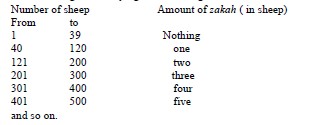
الزكاة في الغنم واجبةٌ بدليل السنة والإجماع. أما السنة فقد روى أنسٌ رضي الله عنه في كتاب أبي بكر الذي ذُكر من قبلُ، قال: «وفي صدقة الغنم في سائمتها إذا كانت أربعين إلى عشرين ومئة شاةٌ»
Zakah on sheep is obligating by virtue of Sunnah and Ijma'. In Sunnah, Anas narrates in the letter of instruction of Abu Bakr mentioned earlier that "As for sadaqah on sheep, naturally cost-free pastured, out of each 40 there is one sheep due, up to 120.
فَإِنْ زَادَتْ، فَفِيهَا شَاتَانِ إِلَى مِائَتَيْنِ، فَإِذَا زَادَتْ وَاحِدَةً إِلَى ثَلَاثِ مِائَةٍ، فَفِيهَا ثَلَاثُ شِيَاهٍ. فَإِذَا كَانَتْ فَوْقَ ثَلَاثِ مِائَةٍ، فَفِي كُلِّ مِائَةٍ شَاةٌ. وَإِذَا كَانَتِ السَّائِمَةُ أَقَلَّ مِنْ أَرْبَعِينَ، وَلَوْ بِوَاحِدَةٍ، فَلَا صَدَقَةَ فِيهَا إِلَّا أَنْ يَتَطَوَّعَ بِهَا صَاحِبُهَا. وَلَا يَجُوزُ فِي الزَّكَاةِ أَخْذُ الْهَرِمَةِ وَلَا الْمَعِيبَةِ وَلَا التَّيْسِ إِلَّا أَنْ يَتَطَوَّعَ بِهِ أَصْحَابُهَا. وَفِي مَعْنَاهُ أَحَادِيثُ مِثْلُ حَدِيثِ ابْنِ عُمَرَ، وَغَيْرِهِ مِنَ الرِّوَايَاتِ.
If the number increased, then two sheep are due up to 200, and if the number increases by one up to 300, there are three sheep due. If it is above 300,90 then one sheep is taken for each additional 100. If naturally, cost-free pastured sheep are less than 40, even by only one, there is no obligatory sadaqah on it unless the owner wishes to volunteer, As zakah one should not accept the old, the damaged, or the ram except when volunteered by the owners." Similar statements appear in the saying from Ibn 'Umar and in several others.
أجمع الفقهاء على أن الزكاة واجبة في الغنم. وأجمعوا أيضاً على أن لفظ "الغنم" يشمل الضأن والمعز، وأنهما يُضمّان بعضهما إلى بعض فيُعدّان جنساً واحداً.91
Jurists unanimously agree that zakah is obligatory on sheep. There is also unanimous opinion that the word "ghanam" includes both sheep and goats in such a way that they are combined together as one item.91
وفقًا لهذا القول يمكن رسم الجدول التالي:
According to this saying the following table can be drawn:
سنتناول في القسم السادس بيانَ الحيوان الذي يُؤخذ زكاةً من حيث حجمه وعمره وجنسه.
We will discuss in section 6 the description of what animal should be taken as zakah as for its size, age and sex.
مناقشة نصاب الغنم
Discussion of the rate on sheep
من الجدير بالملاحظة أن الشريعة خفّضت المقدار المستحق في الغنم كلما زاد عددها. ويُلاحظ من الجدول السابق أنه كلما تجاوز العدد مئة وعشرين استقرّ المقدار عند واحد بالمئة، على خلاف المقدار المعتاد وهو اثنان ونصف بالمئة في عروض التجارة والنقود وسائر الأموال. فما هو سبب هذا التخفيف؟ يحاول بعض الباحثين المعاصرين تفسير هذا التخفيف بأن الشريعة تقصد من خلاله تشجيع تربية الحيوان، إذ إن المقدار المستحق في أربعين
It is notable that Shari'ah reduced the rate on sheep as their number increases. From the previous schedule it is observed that as the number grows above 120 the rate stabilizes at one percent in contrast with the usual two-and-half percent on business assets, money and other assests. What is the rationale for this reduction? Some contemporary researchers92 attempt to explain this reduction with the argument that Shari'ah intends to encourage animal breeding by this reduction, since the rate on 40
الشاة نسبتها اثنان ونصف بالمئة، وتتناقص عند مئتين إلى نسبة واحد بالمئة. غير أن المرء يتساءل: إذا كان هذا التفسير صحيحًا، فلماذا لا يُطبَّق نفس الحكم على زكاة أنواع الماشية الأخرى؟ فالنسبة في الإبل والبقر تستقر عند نحو اثنين ونصف بالمئة في الأعداد الكبيرة، وهو ما يتوافق مع النسبة العامة للزكاة. فإن كان التفسير المذكور صحيحًا، فينبغي أن يسري على الحيوانات الأخرى أيضًا.
sheep is two-and-half percent and it regresses at 200, going clean to one percent. But one wonders, if this explanation is correct, why the same is not applied on zakah on other kinds of livestock. The rate on both camel and cows stabilizes around two-and half percent on big numbers, which is consistent with the general rate of zakah. If the above-mentioned interpretation is correct, it should apply to other animals as well.
في رأيي - واللهُ أعلمُ - أنَّه إذا زادَ عددُ الغنمِ فإنَّ مجموعَ أصولِ الغنمِ سيشتملُ على كثيرٍ من صغارِ الغنمِ، لأنَّ أكثرَ الغنمِ تلدُ أكثرَ من مرةٍ في السنةِ، وهذه الصغارُ تُحسَبُ في عددِ الغنمِ ولا تُقبَلُ في أداءِ الزكاةِ، كما سيُبيَّنُ في المسألتينِ التاليتينِ. ويبدو لي أنَّ العدلَ يقتضي تخفيضَ المعدلِ بعضَ الشيءِ لهذا السببِ؛ فإذا بقيَ المعدلُ واحدًا من كلِّ أربعينَ والقطيعُ يشتملُ على كثيرٍ من الصغارِ، فإنَّ المعدلَ الفعليَّ يصيرُ أعلى بكثيرٍ. أمَّا الأربعونَ الأولى فالمعدلُ فيها اثنانِ ونصفُ بالمئةِ، لأنَّه يُتوقَّعُ ألا تُحسَبَ الصغارُ ضمنَ الأربعينَ الأولى، كما سيأتي بيانُه في المسألةِ الخامسةِ.
The way I see it --God knows best-- is that once the number of sheep grows, the total assests of sheep shall contain many baby lambs because most sheep give birth more than once a year, These babies are counted in the number of sheep but not accepted as payment of zakah, as shall be shown in the following two sections. It seems to me that the justice requires certain reduction in the rate for this reason. If the rate is kept at one out of each 40 while the herd contains many babies, the actual rate becomes much higher. As for the first 40, the rate is two-and-half percent because it is expected that babies would not be counted in the first 40, as will be explained in Section five.
القسم الخامس: هل تجب الزكاة في صغار الحيوان؟
SECTION FIVE ARE BABY ANIMALS ZAKATABLE ?
أخرج أحمد وأبو داود والنسائي عن سُويد بن غفلة قال: «أتانا مُصدِّقُ رسولِ الله ﷺ، فجلسنا إليه، فسمعته يقول: "في عهدي أن لا آخذ من راضعٍ"». ٩٤ وهذا يدل على أن صغار المواشي لا تجب فيها الزكاة، وهو قول جماعة من كبار العلماء. لكن في سند هذا الحديث كلامٌ. وأما مالك فقد روى في الموطإ أن عمر قال لعامله سفيان بن عبد الله الثقفي: «اعدُدْ عليهم السخلة، ولا تأخذها، ولا تأخذ الأكولة والربا والماخض». ٩٥ وقد رواه الشافعي وأبو عبيد أيضًا. ٩٦ وهذا الأثر عن عمر يخالف الحديث السابق، ويدل على أن صغار المواشي تُعدّ في النصاب، وبالتالي تجب فيها الزكاة. وهذا ما ذهب إليه جماعة من الفقهاء، حتى إنهم قالوا: لو كانت جميع الماشية الزكوية صغارًا، لجاز أن يُؤخذ أحدها في الزكاة. ٩٧ وقال آخرون: يُطالَب المالك بشراء حيوانٍ أكبر من خارج ماله ليؤدي به الزكاة.98
Ahmad, Abu Daud, and al Nasa'i report from Suaid Bin Ghaflah that "the zakah commissioner of the Messenger of god (p), came to us. We sat close to him and I heard him saying 'In my instructions it is pleased that I should not take from nursing animals'.94 This indicates that baby livestock are not zakatable, and this is the opinion of a group of leading scholars. But the chain of this saying is contested. On the other hand, Malik in al Muwatta reports that 'Umar told his commissioner, Sufian bin 'Abd Allah al Thaqafi, to "Count the babies in them, even those carried by the shephered in his hands, but do not accept them in payment."95 This is also reported by al Shafi'i and 'Abu Ubaid.96 This report of 'Umar contradicts the previous report and indicates that baby animals are counted in nisab and consequently zakatable. This is what a group of jurists adopt, to the extent that if all the zakatable animals were babies, one of them would be acceptable as payment,"97 though others say the owner should be asked to buy an older animal from outside to fulfil the payment of the zakah.98
بعض العلماء يحاولون التوفيق بين أثر عمر وقول سُفيان بأن لا تجب الزكاة في صغار الحيوان إذا كانت تشكّل كامل النصاب الزكوي، ويقولون إن قول سُفيان ينطبق على ذلك، بينما تُحسب الصغار إذا كانت مع أمهاتها. غير أن بعض الفقهاء يرون أن صغار الحيوان لا تُحسب ضمن العدد الإجمالي للقطيع الزكوي إلا إذا كانت الحيوانات الكبيرة تكوّن النصاب المطلوب للزكاة. وهذا قول أبي حنيفة، والشافعي، وابن حزم وغيرهم. وهو في نظري أقرب إلى العدل الإسلامي، ويبدو أنه أرجح من الأقوال الأخرى. ففيه مخالفة لمبدأ العدل أن يُعفى من الزكاة من يملك، مثلاً، أربعة جمال مسنّة، بينما تُؤخذ الزكاة ممن يملك خمسة جمال صغيرة أو أربعة حملان صغيرة، لأن هذا أقل غنىً من ذاك. وإذا تحقق النصاب بعدّ الحيوانات الكبيرة وحدها، فيجوز حينئذ أن تُحسب الصغار في تحديد العدد الإجمالي الخاضع للزكاة. أما في الكميات الأكبر، فإن جدول المقادير نفسه مرن، لأنه يأخذ الكميات طبقات، ويطبّق المقدار نفسه على الحدّ الأدنى والحدّ الأعلى من كل طبقة. وهكذا تُزكّى خمسة جمال بشاة واحدة، كما تُزكّى تسعة جمال.
Some scholars attempt to reconcile the report of 'Umar with the saying of Suaid by not obligating zakah on baby animals if they comprise the entire zakatable, saying that is where the saying of Suaid applies, while counting baby animals if they are with their mothers. However, some jurists consider that baby animals are counted in the total number of the zakatable herd only if older animals make up the nisab required for zakatability. This is the view of Abu Hanifah, al Shafi'i, Ibn Hazm and others.99 It is, in my opinion, the closest to Islamic justice and it seems to outweigh other views. It violates the principle of justice to exempt from zakah a person who owns, for example, four old camels and collect it from a person who owns five baby camels or four baby lambs, since the latter is less rich than the former. Once nisab is fulfilled by counting adult animals alone, then baby animals can be counted in determining the total number subject to zakah. For larger quantities, the rate structure itself is flexible because it takes stratas of quantities and applies the same rate on the lower and the higher ends of each layer. Thus five camels are zakatable at the rate of one sheep, the same as nine camels.
الفصل السادس: شروط الحيوانات المُخرَجة زكاةً
SECTION SIX CONDITIONS OF ANIMALS GIVEN AS ZAKAH
يُشترط في الأنعام التي تُؤدّى منها الزكاة شروطٌ، منها:
A few conditions are required of the animals that can be paid as zakah, which include:
1. خالية من العيوب والنقائص. يجب أن تكون الدابة سليمة من المرض، وكسر العظم، والهرم، والعيوب أو الأضرار الخلقية أو الطارئة. قال الله تعالى: {وَلَا تَيَمَّمُوا الْخَبِيثَ مِنْهُ تُنْفِقُونَ} [البقرة: 267]، وقال النبي ﷺ: «ولا يُخرَجُ في الصدقةِ هرِمَةٌ ولا ذاتُ عَيْبٍ، إلا أن يشاءَ المصدِّقُ». وهذا جزء من حديث أنس. وأخذ الحيوانات المعيبة زكاةً ليس عدلًا مع الفقراء وسائر المستحقين، بل فيه ميلٌ لصالح صاحب المال، وهو أمر غير مناسب.
1. Free of defects and damage. The animal should be free of illness, bone fracture, old age, or birth and accidental defects or damages. The Qur'an says "and do not aim at getting anything which is bad, in order that out of it ye may spend "100 and the Prophet (p) states "and one should not give an old or defective animal, nor should a collector accept a ram unless the payer wishes to volunteer it". This is part of the saying from Anas. Accepting damaged animals as zakah payment is not fair to the poor and other deserving recipients; it is a bias in favor of the owner, which is improper.
فيما يتعلق بتعريف العيب أو الضرر، فإن جمهور العلماء على أنه التعريف نفسه المستخدم في عقود البيع، وإن كان بعضهم يرى أن كل ما لا يُقبل في الأضحية لا يُقبل زكاةً.[10] ومما ينبغي ذكره حالةٌ فريدة يُقبل فيها الحيوان المعيب أو المتضرر زكاةً، وهي ما إذا كانت جميع الحيوانات الخاضعة للزكاة مصابةً بالعيب أو الضرر نفسه، كمرضٍ عام. وذلك لأن الشرع في الزكاة يوجب الأداء مما يملكه المزكّي، دون أن يُلزمه بشراء حيوانٍ سليمٍ من خارج ماله لأجل أداء الزكاة فقط.[1]02
As for the definition of defect or damages, the majority are of the view that it is the same definition used in sales contracts, though some say that anything not accepted for sacrifice is not accepted as zakah.l0l One should mentions unique case where a defected or damaged animal is accepted as zakah, which is if all the animals being zakated have the same defect or damage, such as a common disease. This is because the ordinance of zakah asks payment from what the zakatable person owns without forcing him or her to purchase from outside a good animal only for the payment of zakah.l02
الزكاة في المواشي 101
Zakah on Livestock 101
2. تحديد جنس الحيوان: يجب أن يكون الحيوان المُخرَج زكاةً أنثى من جنسه. وهذا الحكم خاصٌّ بالإبل، إلا في الحالات المذكورة في حديث أنس، حيث يُقبل ذكرٌ من سنٍّ أعلى بدلاً من الأنثى الواجبة.
2. Specification of the animal's sex, The animal given as zakah must be a female of the species. This applies only to camels, except in the cases mentioned in the saying from Anas, whereby a male of a higher age group is accepted instead of the due female.
4. المتوسط لا ينبغي للعامل الذي يجمع الزكاة أن يأخذ أجودَ المال ولا أرذلَه، بل المتوسطَ من الحيوان الواجب. روى ابنُ عباسٍ أن النبيَّ ﷺ قال لمعاذٍ: «إياك وكرائمَ أموالِ الناس، واتقِ دعوةَ المظلوم، فإنه ليس بينها وبين الله حجاب». وروى ابنُ أبي شيبة أن النبيَّ ﷺ رأى بين الإبل المجموعة صدقةً ناقةً فائقةَ الجودة، فغضب على العامل وقال: «ما هذا؟» فأجاب العامل: «استبدلتُها باثنتين أدنى منها». فقال النبيُّ ﷺ: «إذن فلا بأس».115
4. The average The zakah collector should not take the best or the worst in quality, but the average of the animals owed. Ibn 'Abbas narrates that the Prophet (p) said to Mu'adh, "Avoid the best of people's wealth, and be fearful of the prayer of the oppressed, for there is no curtain between it and God." Ibn Abi Shaibah reports that the Prophet (p) saw among the camels collected as sadaqah, an excellent she-camel. He was furious at the collector and said, "What is this?" The collector answered "I exchanged it for two lesser quality camels". The Prophet said, "Then it is all right."115
وإنما كان ذلك لأن الزكاة مبنية على العدل بين الطرفين، أي المزكّي والمستحق، وأخذ الأفضل أو الأردأ يُفضي إلى تحيّز لأحدهما. غير أنه من الواضح أن الأفضل أو الأردأ يمكن أن يُؤخذ على أساس القيمة باختيار صاحب الماشية. وروى أبو داود بسنده عن النبي ﷺ قال: «ثلاثٌ مَن فعلهنّ وجد بهنّ حلاوة الإيمان: أن يعبد الله وحده، وأنه لا إله إلا الله، وأن يعطي زكاة ماله طيبةً بها نفسه كل عام... ولا يعطي الهَرِمة ولا المريضة ولا الشرط اللئيمة، ولكن من وسط أموالكم، فإن الله لم يسألكم خيره ولم يأمركم بشرّه». (أخرجه أبو داود) ولا يأخذ المصدّق في الزكاة الماشية المرضعة للأولاد، ولا الحوامل، ولا فحل الغنم، ولا التي تُعدّ لإطعام أهل المزكّي من اللحم. وروى مالك في الموطأ عن عائشة أن عمر بن الخطاب مرّ بالغنم المأخوذة صدقةً، فرأى فيها شاةً ذات ضرع عظيم، فقال: «ما هذه الشاة؟» فقيل له: «شاة أُخذت من الصدقة»، فقال: «لا تفتنوا الناس، لا تأخذوا حزرات أموال المسلمين».118
This is essentially because zakah is based on fairness to the two parties, payers and recipients, and taking the best or the worst means favoring one of them. However, it is obvious that the worst or the best can be taken on the basis of value at the option of the livestock owner. Abu Daud reports, through his own chain, from the Prophet (p) "There are three things, which whoever fulfills them will taste the sweetness of faith: to worship God alone, realizing that there is no deity but God, to give zakah on your wealth with your soul pleased at paying it year after year... and to give not the old, or the ill or the baby, or the defective animal that give little milk, but to give from the average of your wealth. God does not ask you to give the best of it, nor does He ordain you to give the worst of it."116 As zakah payment, the collector must not take the animal that nurses babies, nor pregnant animals, nor the ram out of sheep, nor the animal that is meant to provide meat for the household of the zakah payer.117 Malik reports in al Muwatta from 'Aishah that 'Umar bin al Khattab passed by the sheep taken as sadaqah, and saw one with big udders and asked, "What is this sheep? "He was answered, "One taken as sadaqah." He replied, "Its owners did not give it pleasantly, so do not force people to turn back, and do not take the best of the wealth of Muslims."118
القسم السابع: أثر الخلطة والشراكة في زكاة الماشية
SECTION SEVEN THE EFFECT OF MIXING AND PARTNERSHIP ON ZAKAH ON LIVESTOCK
من المعتاد أن يجمع أصحاب الماشية مواشيهم معاً لتوفير نفقات التشغيل. فهل ينبغي أن تُعامَل جميع الماشية المجموعة كوحدة واحدة في تحديد النصاب ومقدار الزكاة، أم ينبغي النظر إليها لكل مالك على حدة؟
It is common for livestock owners, to put together their cattles in order to save on overhead expenses. Should all gathered livestock be treated as one unit in determining the nisab and rate of zakah? or should they be considered for each owner alone?
لمعالجة هذه المسألة ينبغي أن يُلاحظ أن هناك صورتين رئيسيتين للتربية المشتركة للماشية. الأولى أن تبقى الملكية منفصلة مع الاشتراك في بعض النفقات، والثانية أن تكون الماشية مملوكة مشاعًا بين الشركاء. وفي الصورة الثانية لا يتحدد نصيب كل مالك بالعدد، وإنما يكون نسبةً من المجموع، بينما في الصورة الأولى تتميز ماشية كل شخص عن غيرها. وهاتان الصورتان من الاستثمار المشترك لا يلزم أن يكون لهما الأثر نفسه في وجوب الزكاة.
To deal with this question one should note that there are two leading forms of collective breeding. One involves keeping the ownership separate and sharing in certain expenses, and the other is when the cattle is owned commonly among the partners. In the latter form, the share of each owner is not determined in number but only as a proportion of the total, whereas in the former each person's own animals are distinguished. These two forms of investing together need not have the same effect on zakatability.
ابن رشد في بداية المجتهد، يلخص آراء الفقهاء وفق ما يلي:
Ibn Rushd in Bidayat al Mujtahid, summarizes the views of jurists according to the following:
يرى جمهور الفقهاء أن خلط المواشي يؤثر في وجوب الزكاة، إلا أبا حنيفة وأصحابه، إذ يرون أن خلط المواشي لا أثر له في النصاب ولا في المقدار الواجب فيها. ويتفق مالك والشافعي وجمهور الفقهاء على أن جماعة الرعاة الذين يخلطون مواشيهم يُعاملون معاملة المالك الواحد. غير أن هؤلاء الفقهاء يختلفون في أمرين: تحديد النصاب، وتعريف الخلط المؤثر.
Most jurists view mixing animals as affecting the zakatability except for Abu Hanifah and his disciples, who believe that mixing together of animals does not have any effect on nisab or on the applicable rate. Malik, al Shafi'i, and most jurists agree that the group of breeders who mix their cattles together are treated as if they were one owner. Those jurists however differ in two areas: the determination of nisab and the definition of effective mixing together.
ينبغي أن يُلاحظ أن سبب هذه الآراء المختلفة هو اختلاف فهم قول النبي ﷺ. وفي الكتاب الذي فيه الصدقة كتب النبي ﷺ
It should be noted that the reason for these different opinions is the different interpretation of the saying of the Prophet (p). In the letter on sadaqah the Prophet (p)
القسم الثامن: زكاة الخيل
SECTION EIGHT ZAKAH ON HORSES
الخيل التي تُستعمل للركوب الشخصي والقتال معفاةٌ من الزكاة.
Horses used for personal transportation and fighting are exempt from zakah.
على أنّ المسلمين متفقون على أنّ الخيل المملوكة للركوب الشخصي، وحمل الأمتعة الشخصية، والجهاد في سبيل الله، معفاة من الزكاة سواء كانت ترعى بشكل طبيعي أو تُعلف في المزارع، لأنها للاستعمال الشخصي والمنزلي، وليست أموالاً نامية زائدة عن الحاجات الشخصية.126 وفي المقابل، فقد اتفق جميع المسلمين عدا الظاهرية على أنّ الخيل المملوكة للتجارة لدى تجّار الخيل تجب فيها الزكاة، سواء كانت ترعى رعياً طبيعياً أو تُعلف يدوياً، على أساس أنّ الخيل المعدّة للتجارة عروض تجارة كغيرها من أموال التجارة.127 كما أنه متفق عليه أنّ الخيل التي يعلفها مالكوها معظم السنة، ولم تُملك لأيٍّ من الأغراض المذكورة آنفاً، فإنها معفاة من الزكاة، لأنّ الرعي الطبيعي الحر شرطٌ لوجوب الزكاة في الأنعام عند جمهور العلماء.128
It is agreed upon among Muslims that horses owned for the purpose of personal riding, carrying personal loads, and fighting for the sake of God are exempt whether they are naturally pastured or fed in ranches, because they are for personal and household use and are not growing assets in excess of personal needs.126 On the other hand, all Muslims except Zahirites have agreed that horses used as business inventory owned by horses' merchants, are zakatable whether they are naturally pastured or manually fed on the grounds that horses designed for business inventory are commodities, like other business asset.127 It is also agreed upon that horses that are fed by owners most of the year, which are not owned for any of the previously mentioned purposes, are exempt from zakah, because natural free pasturing is a condition for zakatability of animals, according to the majority of scholars.128
زكاة الخيل السائمة المعدّة للنسل
Zakatability of naturally pastured horses designated for breeding
في زكاة الخيل المرعية المعدّة للنّسل والتّناسل المباحةِ الرّعي خلافٌ؛ فذهب أبو حنيفة إلى وجوب الزكاة فيها بشرط ألا تكون ذكورًا كلُّها، إذ لا يحصل بها النّسل حينئذٍ. وذهب جمهور الفقهاء إلى عدم وجوب الزكاة فيها، وروي ذلك عن عليّ، وابن عمرو الشعبي، وعطاء، والحسين العبدي، وعمر بن عبد العزيز، والثوري، وأبي يوسف، ومحمد (صاحبي أبي حنيفة)، وأبي ثور، وأبي خيثمة، وأبي بكر بن أبي شيبة. ونُسب هذا القول إلى عمر، ومالك، والأوزاعي، والليث، وداود أيضًا.130
There are two opinions on the zakatability of naturally cost-free pastured horses that are designated for breeding and growth. Abu Hanifah believe they are zakatable, provided that not all horses owned are males since in this case they cannot breed.129 The majority of jurists consider these horses exempt from zakah, and this is narrated by Ibn al Mundhir from 'Ali, Ibn 'Amr al Sha'bi, 'Ata, al Husain al Abdi, 'Uamar bin 'Abd al Aziz, al Thawri, Abu Yusuf, Muhammad (the two disciples of Abu Hanifah) Abu Thawr, Abu Khaithamah, and Abu Bakr bin Shaibah. Others attribute this opinion to 'Umar, Malik, al Awza'i, al Laith and Daud.130
أدلّة الجمهور على عدم وجوب الزكاة في الخيل
Evidence of the majority for the non-zakatability of horses
1. وَرَدَ عن أبي هريرةَ في الصحيحين وغيرهما أنَّ النبيَّ ﷺ قال: «لَيْسَ عَلَى الْمُسْلِمِ فِي عَبْدِهِ وَلَا فَرَسِهِ صَدَقَةٌ»۔ وهذا الاستثناءُ يشمل جميعَ الخيل، سواءٌ كانت ترعى في المراعي الطبيعية أم لا، وسواءٌ كانت أنثى أم ذكرًا، لأنَّه لفظٌ عامٌّ۔
1. It is reported in the two correct books and in others from Abu Hurairah that the Prophet (p) said " There is no sadaqah obligated on Muslims on their slaves and mares."131 This exemption includes all horses, naturally pastured or not, female or male because it is general.
2. روایۃ أحمد، وأبي داود، والترمذي عن علي عن النبي ﷺ
2. The report of Ahmad, Abu Daud, and al Tirmidhi from Ali from the Prophet (p)
«قَدْ عَفَوْتُ لَكُمْ عَنْ صَدَقَةِ الْخَيْلِ وَالرَّقِيقِ، فَأَدُّوا زَكَاةَ الرِّقَّةِ، مِنْ كُلِّ أَرْبَعِينَ دِرْهَمًا دِرْهَمٌ». ﷺ132
"I waived for you sadaqah on horses and slaves. Pay sadaqah on silver money, one dirham for each 40."132
3. لم تتضمن أفعال النبي ﷺ جمع الزكاة على الخيل، مع أنها كانت تُجمع على الإبل والبقر والغنم. فالرسول ﷺ هو الذي يبيّن تفاصيل الفريضة المذكورة في القرآن، وقوله وفعله يدلان على أن الخيل غير زكوية.
3. The actions of the Prophet (p) did not include collecting zakah on horses, even though it was collected on camels, cows and sheep. The Messenger is the one who gives the details of the obligation outlined in the Qur'an, and his word and deed indicate that horses are not zakatable.
4. كما يحتجّون بأن الأنعام الزكوية تختلف اختلافًا واضحًا عن الخيل، ولا يمكن أن تُجعل الخيل زكوية بالقياس، وذلك لاختلاف أصل الانتفاع بهذه الأنواع المختلفة من الحيوان وغاية اقتنائها. فالخيل تُتخذ للقتال، ولإعلاء هذا الدين، وللدفاع عن الأعداء، فينبغي أن يُرغَّب الناس في اقتنائها وإمساكها لهذه الأغراض. يقول الله تعالى: ﴿وَأَعِدُّوا لَهُم مَّا اسْتَطَعْتُم مِّن قُوَّةٍ وَمِن رِّبَاطِ الْخَيْلِ﴾. والخيل الحربية من آلات القتال، كالسلاح وسائر أدوات الحرب، لا تجب فيها الزكاة ما لم تُستعمل سلعةً للتجارة.134
4. They also argue that livestock that are zakatable are obviously very different from horses and that horses cannot be made zakatable by analogy because of the basic differences in use and in the purpose of owning these different kinds of animals. Horses are obtained for use in fighting, in establishing this religion, and in defense against enemies, so people should be encouraged to obtain them and keep them for such purposes. God says "Against them make ready your strength to the utmost of your power, including seeds of war.133 Horses of war are fighting equipment, like weapons and like other fighting tools are not zakatable as long as they are not used as a commodity for trade.134
أبو حنيفة ورأيه ودليله
Abu Hanifah's opinion and its supporting evidence
يَرَى أَبُو حَنِيفَةَ أَنَّ الْخَيْلَ السَّائِمَةَ تَجِبُ فِيهَا الزَّكَاةُ، وَيَسْتَدِلُّ عَلَى ذَلِكَ بِالْأَدِلَّةِ التَّالِيَةِ:
Abu Hanifah, who believes that naturally pastured horses are zakatable, provides the following arguments:
أولاً، يروي البخاري في صحيحه عن أبي هريرة أن النبي ﷺ قال: «الخيل لرجل أجر، ولرجل ستر، وعلى رجل وزر؛ فأما الذي هي له أجر فرجل ربطها في سبيل الله، فأطال لها في مرج أو روضة، فما أصابت في طيلها من المرج أو الروضة كان له حسنات، ولو أنها قطعت طيلها فاستنت شرفا أو شرفين كانت آثارها وأرواثها حسنات له، ولو أنها مرت بنهر فشربت منه ولم يرد أن يسقيها كان ذلك له حسنات، فهي لذلك أجر، ورجل ربطها تغنيا وتعففا ولم ينس حق الله في رقابها ولا في ظهورها فهي لذلك ستر، ورجل ربطها فخرا ورياء ونواء لأهل الإسلام فهي على ذلك وزر». قال: «والحمر لم ينزل فيها شيء إلا هذه الآية الفاذة الجامعة: {فمن يعمل مثقال ذرة خيرا يره ومن يعمل مثقال ذرة شرا يره}». ويدل هذا الحديث على أن في الخيل حقا لله، وهو الزكاة، وإعارتها لمن يركبها. وذهب آخرون من أهل العلم إلى أن المراد بالحق الذي في الخيل استعمالها في القتال.137
Firstly, al Bukhari reports in his correct collection from Abu Hurairah that the Prophet (p) said "Steeds are for a person a source of reward, for another they are a source of sustenance, and for yet another they are a source of sin. He for whom they are a source of reward is the man who owns horses for the purpose of fighting for the sake of God, to ride it in battle or to give it to someone else to ride in battle. That is why they are a source of reward. For one who keeps horses for personal transportation so he does not need others, and does not forget God's right on the horses or the right of people to be given lifts on their backs, they are source of sustenance. And for the person who keeps steeds as a matter of pride and to fight against the people of Islam, they are a source of sin."135 This saying indicates that there is a right of God on horses, zakah and giving lifts on their backs.136 Other jurists argue that what is meant by the right on horses is the use of horses in fighting.137
ثانیاً: رُوِيَ عن جابرٍ عن النبيِّ ﷺ: «في كلِّ فرسٍ سائمةٍ دينارٌ أو عشرةُ دراهمَ». رواه الدارقطنيُّ والبيهقيُّ، وضعّفاه. ولهذا ذهب جمهورُ الفقهاءِ إلى أنّه لا يصلحُ لمعارضةِ الحديثِ الصحيحِ: «ليس على المسلمِ في عبدِه ولا فرسِه صدقةٌ». ثالثاً: قياساً على الإبلِ، فكلاهما حيوانٌ نامٍ ومُنتفَعٌ به، وفيهما يتحقّقُ شرطُ وجوبِ الزكاةِ، وهو السَّوْمُ (الرعيُ المباحُ دون علفٍ). والفروقُ المزعومةُ بين الخيلِ وسائرِ الماشيةِ ليست أكثرَ من الفروقِ القائمةِ بين أنواعِ الماشيةِ الأخرى، إذ لكلِّ حيوانٍ خصائصُه المميّزة، ومع ذلك فبين الإبلِ والغنمِ فروقٌ كثيرةٌ، وكلاهما تجبُ فيه الزكاةُ. وقد استدلّ أبو حنيفةَ لهذا القولِ بأنّ علّةَ وجوبِ الزكاةِ أمرٌ معقولُ المعنى، وليست أمراً تعبّدياً محضاً، وهذه العلّةُ هي النماءُ أو إمكانُ النماءِ، فإذا وُجد النماءُ في مالٍ آخرَ وجب أن تتعدّى إليه الزكاةُ.
النِّصابُ ومقدارُ زكاةِ الخيلِ
Nisab and rates of zakah on horses
لا يُقدِّر أبو حنيفة نصابًا للخيل. قال صاحب الدر المختار: «المشهور أن أبا حنيفة لا يقدّر نصاب الخيل، ولا نعلم عنه في ذلك رواية»۔146 وقال ابن عابدين في حاشيته ناقلًا عن القهستاني: «وقال بعضهم: النصاب ثلاثة، وقال بعضهم: خمسة»۔147 ويبدو أن تقدير الخمسة أرجح لمشابهته نصاب الإبل، ولكثرة استعمال الخمسة في النصب؛ فنصاب الإبل خمس، ونصاب الفضة خمس أواقٍ [وهي مائتا درهم]، ونصاب الحبوب خمسة أوسق۔
Abu Hanifah does not determine a nisab for horses. The author of al Durr al Mukhtar writes "It is best known that Abu Hanifah does not estimate nisab for horses; we have no report from him about that."146 Ibn 'Abidin in his commentary quotes al Qahastani as saying "Some indicate nisab at three and others indicate it at five."147 It seems that the estimation of five is mare correct because of its similarity to that of camels. The number five is often used in nisab . nisab is five camels, five 'uqiyyah of silver [equals 200 dirhams] and 5 wasq of grain.
يُذكر ابنُ عابدين عن أبي حنيفة أنَّ الزكاة تُحسب بمقدار: أصحاب الخيل العربية يُخيَّرون بين أن يدفعوا عن كل فرس دينارًا، أو أن يقوِّموا خيولهم ويدفعوا خُمس ...
The rate is explained by Ibn Abidin from Abu Hanifah: Owners of Arabian horses are given the choice of paying one dinar on each or evaluating their horses and paying 5
درهم عن كل مائتي درهم من القيمة، والنسبة اثنان ونصف في المائة. أما الخيل غير العربية فيُعتبر فيها القيمة فقط.148
dirhams for each 200 dirhams of value - the rate is just two-and-half. For non-arabian horses, only the value is considered.148
The user message is just "Analysis" — a heading to translate into Arabic. التحليل
Analysis
بعد مناقشة الدليلين، يبدو لي أن الرسول ﷺ لم ينفِ وجوب الزكاة في الخيل نفيًا صريحًا، ولا أوجبها إيجابًا صريحًا. وقول أبي هريرة: «ليس على المسلم في عبده ولا فرسه صدقة» لا يتناول إلا الفرس المتخذ للركوب الشخصي وللغزو. ويؤيد هذا التفسيرَ ما رُوي عن زيد بن ثابت وابن عباس، وهو مأثور عنهما بسند صحيح. كما أن عبارة «عبده وفرسه» في الحديث نفسه تدل على هذا المعنى. ومن جهة أخرى، فقد انعقد الإجماع بين الفقهاء - ما عدا الظاهرية - على أن الزكاة واجبة في الخيل والرقيق إذا كانت من عروض التجارة. وكان أبو هريرة يميل إلى التمسك بظواهر النصوص، واشتهر بين الصحابة بدقة الحفظ، ولم يكن له ما لزيد وابن عباس من شهرة في التحليل والتفصيل. أما قول علي: «قد عفوت لكم عن صدقة الخيل والرقيق»، فقد أورده الدارقطني وقال إنه صحيح موقوفًا على علي غير مرفوع إلى النبي ﷺ، والدارقطني هو الحَكَم في مثل هذه الأمور. غير أن عبارة «عفوت لكم» تدل على أن هذه الأموال في الأصل تجب فيها الزكاة، لكن النبي ﷺ عفا عن زكاتها لعلة معينة، وقد تكون هذه العلة حاجة المسلمين الماسة إلى الخيل للجهاد، أو كون الخيل لم تكن من الأموال المعتبرة الكثيرة في جزيرة العرب.
After discussing the two arguments, it seems to me that the Messenger (p) did not negate the existence of zakah on horses in a clear way, but neither did he obligate it clearly. The saying from Abu Hurairah, "There is no sadaqah on a Muslim's slave and mare" does not touch on anything other than the horse used for personal transportation and as a mount for war. This explanation is supported by the interpretation from Zaid bin Thabit and 'Abbas, correctly reported to him. The very words "His slave and his mare" in the saying seem to indicate this meaning. Also, that it is unanimous by Ijma' among jurists -- except Zahirites-- that zakah is obligatory on horses and slaves when they are part of business inventory. Abu Hurairah was inclined to hold to the letters of texts, and was known among the Companions for his precise memory, and did not have a reputation of analyzing and elaborating like Zaid and Ibn 'Abbas. The saying from 'Ali, "I have waived for you the sadaqah on horses and slaves" is noted by al Daraqutni as correct when it ends at 'Ali and is not linked to the Prophet. It is well known that al Daraqutni is the expert on such matters. However the words "waived for you" imply that these assets should be in principle zakatable but the Prophet (p) waived the zakah are them for certain reason.l49 This could be the desperate need for steeds of war or the fact that horses were not a substantial item of wealth in Arabia.
فقه الزكاة (الجزء الأول)، د. يوسف القرضاوي 108
Figq al Zakah (Vol. I), Dr. Yusuf al Qardawi 108
على كل حال، فإن عدم وجود نص صريح يوجب الزكاة في الخيل لا يعني بالضرورة أنها غير خاضعة للزكاة. ولم يُروَ عن النبي ﷺ أنه قال شيئًا يوجب الزكاة في الذهب. والظاهر أن أغلب النقود المستعملة في عصره كانت من الفضة، وأن الحكم في الذهب يُستنبط بالقياس لما بين المعدنين من تشابه ظاهر في الاستعمال. وقصة عمر مع يعلى بن أمية لها، في رأيي، وزن بالغ الأهمية، فالفعل الذي قام به عمر يدل على أن للقياس والاجتهاد مكانة مهمة في الزكاة. وكون النبي ﷺ أخذ الزكاة من أنواع معينة من الأموال لا يعني أن المسلمين من بعده لا يجوز لهم أخذها من أنواع أخرى مشابهة لها. بل إن كل مال نامٍ كبير ينبغي أن يكون خاضعًا للزكاة.
الاستطراد: الفرق بين أوامر النبي ﷺ بصفته رسولًا من الله، وأوامره بصفته رئيسًا زمنيًا للدولة.
Digression: The distinction between orders of the Prophet as a messenger of God orders as a temporal head of state.
بناءً على ما سبق من حديث، نرى أن من الضروري أن نخصص بضع فقرات لمعالجة هذه النقطة المهمة. ينبغي للمرء دائمًا أن ينظر إلى الظروف التي تحيط بقول النبي ﷺ وإلى موضوع الكلام، ليتبين هل يتعلق بالشؤون الدنيوية، أو السياسية، أو الاقتصادية، أو العسكرية، أو الإدارية، أم بمبادئ منهاج الحياة الإسلامي. وقد يوجد أحيانًا نص آخر يدل على أن المبدأ الدائم له تطبيق دنيوي خاص، أو قد تكون أحداث مشابهة قد عولجت بصورة مختلفة، مما يدل على أن هذه المعالجة قد تكون مؤقتة تتعلق بالدنيا لا دينية.
The previous discussion leads us to devote a few paragraphs to deal with this important point. One should always look at the circumstances that surround a statement made by the Prophet (p) and the subject matter of the saying to see whether it relates to temporal, political, economic, military, or administrative affairs, or to the principles of the Islamic way of life. There may exist sometimes another text that indicates the enduring principle of a special temporal application, or similar events may have been differently treated, which indicates this treatment may be temporal rather than religious.
ومن الأمثلة التي يذكرها القرافي في كتابه الإحكام على قوله ﷺ: «من قتل قتيلاً له عليه بينة فله سلبه»، أن مالكاً يرى أن هذا حكمٌ صدر عنه ﷺ بصفته إماماً للدولة، وليس قاعدةً عامة. فإذا أعلن قادةُ الدولة الإسلامية مثلَ هذا التنظيم عند بداية الحرب، وجب العمل به، وإلا فإن الأصل العام يبقى قائماً، وهو أن الغنائم تُقسَّم وفق نص القرآن الكريم في سورة الأنفال. وقد استدل مالك على هذا القول بالحجج الآتية:
An example is give by al Qarafi in his al Ihkam about the saying "One who kills an enemy soldier shall have his personal property". Malik says this is a decision by the Prophet (p) as a head of state and is not a general rule. If the leaders of the Islamic state declare such a regulation at the beginning of a war, then it should apply, but otherwise, the general principle that war booty is distributed according to the text of the Qur'an in sura eight (al Anfal) remains applicable. Malik gives the following arguments to support this view:
١. الآيةُ المتعلقةُ بتوزيعِ الغنائمِ في سورةِ (الأنفال) تتعارضُ مع هذا الحديث.
1. The verse about the distribution of war booties in sura (al Anfal) contradicts this saying.
قد يؤدي مثل هذا التنظيم إلى التداخل مع نيات المقاتلين وصرفها عن أن تكون لوجه الله، فتصبح الرغبة في مال العدو.
2. Such a regulation may interfere with, and divert the intentions of the fighters from being for the sake of God to being the desire for the enemy's property.
3. كان السبب في إلقاء النبي ﷺ لهذا القول هو تشجيع المقاتلين في معركة بعينها.51
3. The reason why this saying was given by the Prophet (p) was to encourage the fighters in a particular battle.l51
القسم التاسع: الحيوانات الداجنة الأخرى التي ترعى طبيعياً
SECTION NINE OTHER NATURALLY PASTURED DOMESTIC ANIMALS
يتناول هذا القسم الحكم العام المتعلق بالحيوانات الأليفة المرعية التي تُربّى للربح ولا تكلف علفها، هل يمكن تعميم حكم الزكاة على جميع هذه الحيوانات أم لا؟ بعبارة أخرى، هل ينبغي قصر الزكاة على الأنواع الأربعة المذكورة سابقاً، أم تشمل جميع الحيوانات الأليفة؟ وقد استنبط بعض كبار أساتذة الدراسات الإسلامية في عصرنا، ومنهم محمد أبو زهرة، وعبد الوهاب خلاف، وعبد الرحمن حسن، من عمل عمر بن الخطاب أنه يجوز تطبيق القياس في الزكاة.
This section deals with the general case of naturally cost-free pastured domestic animals maintained for profit. Can we generalize the case of zakah on all such animals or not? In other words should zakah be restricted to the four previously mentioned species or should it include all domestic animals? Some of today's leading professors of Islamic studies, including Muhammad Abu Zahra, 'Abd al 'Wahab Khallaf, and 'Abd al Rahman Hasan, deduct from the practice of 'Umar that one can apply analogy on zakah.
عمر بن الخطاب أوجب الزكاة في الخيل قياساً، على أساس أن الخيل أصبحت من الأموال ذات القيمة الكبيرة. وقد أخذ بهذا أبو حنيفة، سيد أهل القياس في التطبيق. أما من لم يوجب الزكاة في الخيل فلم يفعل ذلك إنكاراً للقياس، بل لأنهم يرون أن كون الأنعام مما يُؤكل علةً مهمة لوجوب زكاتها. ولما كانت الخيل غير مأكولة، أبَوْا أن يُلحقوها بها في وجوب الزكاة. يقول صاحب المغني: "قياس الخيل على الأنعام غير صحيح، لأن الأنعام أموال نامية تُستعمل في الدر واللحم، ويصح التضحية بها." وجمهور العلماء لا يعتبرون صفة النماء وحدها علةً لوجوب الزكاة.
'Umar bin al Khattab obligated zakah on horses by analogy, on the grounds that horses were becoming valuable assets. This is upheld by Abu Hanifah, the master in the application of analogy. Those who do not obligate zakah on horses do not do so in denial of analogy, but because they consider the edible character of livestock an important reason for their zakatability. Since horses are not edible, they refuse to extend zakatability to horses. The author of al Mughni writes "The analogy of horses and livestock is incorrect, because the latter are growing wealth that is used for milking and meat and can be used for sacrifice." The majority of scholars does not consider the character of growth alone the reason for zakatability.
وَيُضِيفُ هَؤُلَاءِ الْأَسَاتِذَةُ الثَّلَاثَةُ: فَإِنْ كَانَ الْخَلِيفَةُ الرَّاشِدُ عُمَرُ قَدِ اعْتَبَرَ النَّمَاءَ الشَّرْطَ الْأَسَاسِيَّ لِوُجُوبِ الزَّكَاةِ، وَتَابَعَهُ أَبُو حَنِيفَةَ، فَيُمْكِنُنَا تَوْسِيعُ تَطْبِيقِهِ عَلَى غَيْرِهَا مِنَ الْحَيَوَانَاتِ، وَنَحْكُمَ بِأَنَّ جَمِيعَ الْحَيَوَانَاتِ النَّامِيَةِ الَّتِي تَرْعَى بِصُورَةٍ طَبِيعِيَّةٍ وَدُونَ تَكْلِفَةٍ تَجِبُ فِيهَا الزَّكَاةُ، إِذَا بَلَغَتِ النِّصَابَ، وَهُوَ عِشْرُونَ دِينَارًا، بِنِسْبَةِ 2.5%. وَيُقَدَّرُ النِّصَابُ بِالْقِيَاسِ إِلَى الذَّهَبِ، لِأَنَّ عُمَرَ قَدْ أَخَذَ بِمَبْدَأِ تَقْوِيمِ الْخَيْلِ لِتَحْدِيدِ الزَّكَاةِ فِيهَا، وَالْقِيمَةُ تُقَدَّرُ حَالِيًّا بِالذَّهَبِ.158
القسم العاشر: المبادئ العامة المستنبطة من الأقسام السابقة
SECTION TEN GENERAL PRINCIPLES DERIVED FROM THE PREVIOUS SECTIONS
لقد طال النقاش في الأقسام السابقة من هذا الفصل، لأن الشريعة نفسها تقرّر كثيرًا من الأصول والأحكام المتعلقة بزكاة الماشية، وقد لا تكون مفصّلةً بهذا القدر في غيرها من أبواب الزكاة، ولأن التحليل المطوّل لهذه المسألة يكشف أصولًا مهمةً ستكون ذات فائدة عظيمة في فهم حقيقة الزكاة عامةً. ومن هذه الأصول ما يلي:
The discussion in the previous sections of this chapter has been lengthy because Shari'ah itself dictates many principles and rulings about zakah on livestock that may not be as detailed in other areas of zakah, and because the lengthy analysis of this issue uncovers important principles that will be of great benefit in understanding the essence of zakah in general. Among these principles are the following:
1. الزكاة، وإن كانت عبادةً، فهي أيضاً مؤسسةٌ عامةٌ تُشرف عليها الدولة الإسلامية. وتعيينُ عمّال الزكاة وإرسالُهم من واجبات الدولة الإسلامية.
1. Zakah, although a worship, is also a public institution supervised by the Islamic state. Appointing and sending zakah commissioners is the duty of the Islamic state.
٢. تُوازِنُ أحكامُ الزكاةِ بين حاجةِ الفقراءِ من جهةٍ ومصالحِ الأغنياءِ من جهةٍ أخرى، فيُعفى القليلُ من المالِ من الزكاةِ، ولا تُقبَلُ في أداءِ الزكاةِ إلا الأموالُ المتوسطةُ الجودةِ.
2. Zakah regulations balance the concerns of the poor on one hand and the interests of the rich on the other hand, so that small quantities of wealth are exempted from zakah and average quality assets only are accepted as zakah payment.
3. تُقلِّل المؤونةُ المرتفعةُ للأصل الزكاةَ أو تُسقطها عنه. ولهذا يرى جمهورُ كبارِ الفقهاء أنَّ السائمةَ المعلوفةَ لا زكاةَ فيها، على اعتبار أنَّ تكلفتَها تعادلُ ما تُدرُّه على مالكِها من ربح.
3. The expensive upkeep of an asset reduces zakah or waives it on that asset. For that reason, the majority of leading jurists consider manually fed animals exempt from zakah on the ground that they cost as much as they profit the owner.
4. تحوّل الأصل النامي من استعماله للربح إلى الاستعمال الشخصي يُسقط عنه الزكاة، وذلك عند جمهور العلماء في البقر والإبل المستعملة في السقي والحرث وحمل الأثقال الشخصية.
4. A transformation of a growing asset from its use for profit to personal use exempts it from zakah, according to the majority of scholars with regard to cows and camels used for watering, cultivation, and carrying personal loads.
5. تُعامِلُ الشريعةُ مالَ الشركاتِ المشتركةِ معاملةَ الوحدةِ الواحدةِ، وهذا قد يكون أساسًا لمعالجةِ الشركاتِ المعاصرةِ.
5. Shari'ah treats the common property of partnerships as one unit, which may constitute a foundation for handling contemporary corporations.
سورة النحل، ١٦:٥-٧
1. Sura al Nahl, 16:5-7.
2. المرجع نفسه.
2. Ibid.
3. المرجع نفسه.
3. Ibid.
4. سورة يس: 36:71-73.
4. Sura Yasin: 36:71-73.
5. الدر المختار وحاشيته رد المحتار، الجزء ۲، ص ۲۰-۲۱.
5. Al Durr al Mukhtar and its commentary, Rad al Muhtar, Vol. 2, p. 20-21.
٦۔ سورة الأعراف، ۷:۱۹۹
6. Sura al A'raf, 7:199.
7. سورۃ البقرۃ، ٢:٢١٩
7. Sura al Baqarah, 2:219.
8.. الروض النضير، الجزء الثاني، ص 399.
8.. Al Rawd al Nadir, Vol. 2, p. 399.
9. المرجع نفسه، ص ٤٠٠.
9. Ibid, p. 400.
10. المرجع السابق، ص399.
10. Ibid, p.399.
11. الأموال، ص ٣٨٠.
11. Al Amwal, p. 380.
12. نصب الرایہ، ج2، ص360.
12. Nasb al Rayah, Vol. 2, p. 360.
13. الأموال، ص ٣٨٠-٣٨٢، والروض النضير، ج ٢، ص ٤٠٨.
13. Al Amwal, pp. 380.382, and al Rawd al Nadir, Vol. 2, p. 408.
١٤۔ الروض النضير، المرجع نفسه۔
14. Al Rawd al Nadir, Ibid.
15. الأموال، ص ۳۸۱۔
15. Al Amwal, p. 381.
16. المرجع السابق، ص 382.
16. Ibid, p. 382.