2.1 بنية الدليل
2.1 Structure of Daleel
كما ذُكر سابقًا، فإنّ الدليل هو الحجّة على رأيٍ أو مفهومٍ أو حكمٍ أو فكرةٍ من الإسلام. وللدليل جانبان: الرواية (النقل) والدلالة (المعنى).
As mentioned earlier, a Daleel is an evidence for an opinion, concept, ruling, or a thought from Islam. There are two aspects related to any Daleel, Riwayah (reportage) and Dalalah (meaning).
تتناول الرواية المسائل المتعلقة بكيفية نقل المعلومات إلينا، ويشمل ذلك عدد رواتها وعدالتهم.
The Riwayah covers issues related to how the information was relayed to us, which includes the number and the integrity of its reporters.
الدَّلالة تتعلَّق بمعنى النَّص في الدَّليل. وهناك أيضاً مصطلحان يُستعملان في ما يتعلَّق بالرِّواية والدَّلالة: القطعيّ والظنّيّ.
The Dalalah is related to the meaning of the text in the Daleel. There are also two terms used in connection with Riwayah and Dalalah; Qata‟i and Dhanni.
القطعي هو ما يكون قاطعًا أو حاسمًا، بينما الظنّي هو نقيض القطعي ويعني غير الحاسم، أو المحتمل، أو غير المتيقَّن.
Qata‟i is defined as being conclusive or decisive, while Dhanni is the opposite of Qata‟i and means non-definite, speculative or indecisive.
الرواية
Riwayah
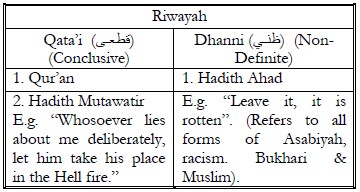
كُلُّ آيةٍ من القرآن الكريم أو حديثٍ متواترٍ يُعدُّ قطعيَّ الثبوت في روايته.
Any Ayah from the Qur‟an or Hadith Mutawatir is considered Qata‟i (conclusive) in its Riwayah (report).
القطعي في الرواية يعني أن الدليل ثابتٌ لا شك فيه، وهذا الثبوت يُعرف بالاعتماد على منهج النقل.
The Qata‟i in Riwayah implies that the evidence is authentic without any shadow of doubt. This authenticity is established based on the methodology of transmission.
إنّ المنهجيّة التي نُقل بها القرآن إلينا تستبعد أيّ احتمالٍ للتزوير. فقد نُقل الخبر جيلًا بعد جيل على الوجه ذاته تمامًا. ومن المستحيل أن يقوم جيلٌ كاملٌ بتزوير القرآن أو محوِ شيءٍ من مضمونه أو الزيادة فيه. ومن غير المتصوَّر أن يجتمع كلُّ فردٍ من ذلك الجيل ويتّفقوا على إضافة أجزاءٍ إلى القرآن أو حذفها منه. فقد كان جميع أفراد ذلك الجيل يتلون المضمون ذاته من القرآن، فكان ذلك تصديقًا لمحتواه.
The methodology by which the Qur‟an was transmitted to us precludes any possibility of fabrication. The report was transmitted generation by generation in exactly the same manner. It is impossible for an entire generation to fabricate, erase, or add contents to the Qur‟an. It is inconceivable to believe that every single individual in that generation assembled together and agreed to add or delete parts of the Qur‟an. Everyone in that generation was reciting the same contents of the Qur‟an, thus authentifying its contents.
الحديث المتواتر لم يُنقل جيلاً بعد جيل، بل نقله عددٌ كبيرٌ من الناس. ولكثرة الذين ينقلون الدليل، واختلاف أماكن إقامتهم، وثبوت عدالتهم وقناعتهم، يُتصوَّر أن يكون هذا الدليل خطأً. وأي خبرٍ يُنقل بغير القرآن أو الحديث المتواتر، كحديث الآحاد، يُعدّ ظنياً، بمعنى أن هناك احتمالاً ضئيلاً جداً بأن يحتوي الدليل على خطأ. وخلاصة القول:
Hadith Mutawatir was not transmitted generation-by-generation, but rather by a large number of people. Due to the large number of people reporting the Daleel, and their diversity of residence, their established reliability and conviction, it is inconceivable that this Daleel could be wrong. Any report of information other than through the Qur‟an or Hadith Mutawatir, such as Hadith Ahad, is considered Dhanni (non-definite), meaning that there is a minute possibility that the Daleel could contain error. To summarise:
الدَّلالة
Dalalah
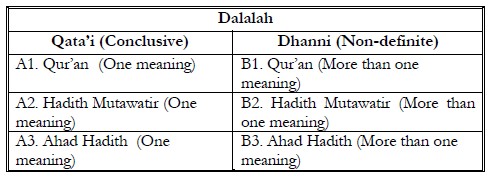
الجانب الثاني من الدليل هو الدلالة (المعنى). فإن كان نص القرآن، أو الحديث المتواتر، أو حديث الآحاد، واضحاً، ومحدداً، ولا يحتمل إلا معنى واحداً، فإنه يُعدّ قطعياً. ويجب أن يكون نص الدليل القطعي ذا معنى واحد فقط، ولا يقبل أي تأويل آخر. وإن كان النص يحتمل أكثر من تأويل، فإنه يُعدّ ظنياً. ولما كانت التأويلات راجعة إلى اللغة العربية، فإن كل تأويل يجب أن يُسنَد ويُبرَّر من خلال اللغة العربية. وخلاصة القول:
The second aspect of the Daleel is the Dalalah (meaning). If the text of Qur‟an, Hadith Mutawatir or Hadith Ahad is clear, specific, and has only one meaning, then it is considered Qata‟i. The text of a Qata‟i Daleel has to have only one meaning and cannot be open to any other interpretation. If the text is open to more than one interpretation, then it is considered Dhanni. Since interpretations are due to the Arabic language, any interpretation has to be justified through the Arabic language. To summarise:
مثال على القرآن ذي الدلالة القطعية:
A1. Example of Qur‟an with a Qata‟i (conclusive) meaning:
وَلَكُمْ نِصْفُ مَا تَرَكَ أَزْوَاجُكُمْ إِن لَّمْ يَكُن لَّهُنَّ وَلَدٌ
“What your wives leave, your share is a half, if they leave no child”. (TMQ An-Nisa: 12)
﴿وَالَّذِينَ يَرْمُونَ الْمُحْصَنَاتِ ثُمَّ لَمْ يَأْتُوا بِأَرْبَعَةِ شُهَدَاءَ فَاجْلِدُوهُمْ ثَمَانِينَ جَلْدَةً﴾
“Those who accuse chaste woman of zina (adultery) and fail to bring four witnesses (to prove it) flog them eighty stripes.” (TMQ An-Nur: 4)
الجانبُ الكمّيّ لهذه الأحكام، أي النصفُ والثمانون، واضحٌ، ولذلك لا يحتمل أيَّ تأويلٍ آخر.
The quantitative aspect of these rulings, namely one half and eighty are clear and therefore cannot be open to any other interpretations.
مثال على الحديث المتواتر ذي المعنى القطعي:
A2. Example of Hadith Mutawatir with Qata‟i (conclusive) meaning:
مَنْ كَذَبَ عَلَيَّ مُتَعَمِّدًا فَلْيَتَبَوَّأْ مَقْعَدَهُ مِنَ النَّارِ ﷺ (رواه البخاري ومسلم)
“Whosoever lies about me (Prophet Muhammad saw) deliberately let him take his place in the hell-fire.” (Bukhari & Muslim)
هذا الحديث المتواتر واضح جدًا في موضوعه؛ ولذلك لا يُفهم من النص إلا معنى واحد، وهو أن من كذب على النبي ﷺ عمدًا، فإنه يدخل النار.
This Mutawatir Hadith is very clear in its subject; thus there is only one understanding from the text that whoever lies about what Prophet (saw) said, intentionally, he will go to hell-fire.
مثال على حديث الآحاد ذي الدلالة القطعية:
A3. Example of Hadith Ahad with Qata‟i (conclusive) meaning:
رُوِيَ عن النبي ﷺ من حديثٍ غيرِ متواترٍ أنه صام ستة أيامٍ من شوال. والمعاني القطعية المستفادة من هذا الحديث ما يلي:
It is reported from a non-Mutawatir Hadith that the Prophet (saw) fasted 6 days in Shawwal. The conclusive meanings from this Hadith are the following:
أ) جواز صيام ستة أيام من شوال
a) Permissibility of fasting 6 days in Shawwal.
ب) إلا في أول يوم من شوال، لأنه يوم العيد، وصيامه حرام.
b) Except on the first day of Shawwal, since it is the day of Eid, and it is Haram to fast on Eid.
مثال على آيةٍ قرآنيةٍ ذاتِ دلالةٍ ظنّيّة
B1. Example of Quranic Ayah with a Dhanniy (non-definite) meaning:
قال الله تعالى:
Allah (swt) says:
يَا أَيُّهَا الَّذِينَ آمَنُوا إِذَا قُمْتُمْ إِلَى الصَّلَاةِ فَاغْسِلُوا وُجُوهَكُمْ وَأَيْدِيَكُمْ إِلَى الْمَرَافِقِ وَامْسَحُوا بِرُءُوسِكُمْ وَأَرْجُلَكُمْ إِلَى الْكَعْبَيْنِ، وَإِنْ كُنْتُمْ جُنُبًا فَاطَّهَّرُوا، وَإِنْ كُنْتُمْ مَرْضَىٰ أَوْ عَلَىٰ سَفَرٍ أَوْ جَاءَ أَحَدٌ مِنْكُمْ مِنَ الْغَائِطِ أَوْ لَامَسْتُمُ النِّسَاءَ فَلَمْ تَجِدُوا مَاءً فَتَيَمَّمُوا صَعِيدًا طَيِّبًا فَامْسَحُوا بِوُجُوهِكُمْ وَأَيْدِيكُمْ مِنْهُ.
“O you who believe! When you intend to offer As-Salat (the prayer), wash your faces and your hands (forearms) up to the elbows, rub (by passing wet hands over) your heads, and (wash) your feet up to ankles. If you are in a state of Janaba (i.e. had a sexual discharge), purify yourself (bathe your whole body). But if you are ill or on a journey or any of you comes from answering the call of nature, or you have been in contact with women and you find no water, then perform Tayammum with clean earth and rub therewith your faces and hands.” (TMQ Al-Maida: 6)
الآيةُ تقولُ إنَّ مَسَّ النِّساءِ ("لامَسْتُمُ النِّساءَ") ينقُضُ الوُضوءَ. وقد فُسِّرَتْ كلمةُ "لامَسْتُمْ" بمعنيَيْنِ:
The verse says if you „lamastum‟ the women, it breaks the Wudhu. The word „lamastum‟ has been interpreted as having two meanings:
أ) اللمس ب) الجماع وعليه فإن الآية لها دلالة ظنية، أي أنها تحتمل أن يكون المقصود أن لمس النساء ينقض الوضوء، أو أن الجماع مع المرأة ينقض الوضوء.
a) Touching b) Sexual intercourse Thus the Ayah has a Dhanni Dalalah, i.e. it could mean touching women breaks the Wudhu, or sexual intercourse with a woman breaks the Wudhu.
ب٢. مثال على الحديث المتواتر ذي المعنى الظني (غير القطعي):
B2. Example of Hadith Mutawatir with a Dhanniy (non-definite) meaning:
كان يُروى أنّ النبيَّ ﷺ كان يحلّ من إحرامه على كيفية معيّنة. غير أنّ الصحابة رضي الله عنهم لما أخبروا النبيَّ ﷺ بأنهم حلّوا من إحرامهم على كيفية تختلف عن الكيفية التي حلّ بها ﷺ، أقرّهم على فعلهم. ومع أنّ هذه الواقعة متواترة، فإنّ أحكام التحلّل من الإحرام كثيرة.
It was reported that the Prophet (saw) used to take off his Ihram in a specific manner. However, when the Sahabah (ra) told the Prophet (saw) that they took it off in a manner different from the way he (saw) took it off, the Prophet (saw) approved of their actions. Though this incident is Mutawatir, the rules to take off one‟s Ihram are many.
ب٣. مثالٌ على حديثِ آحادٍ ذو معنى ظنّيّ (غيرُ قطعيّ):
B3. Example of a Hadith Ahad with a Dhanniy (non-definite) meaning:
رُوِيَ من حديثٍ غيرِ متواترٍ أنّ النبيَّ ﷺ صام ستةَ أيامٍ من شوّالَ. والمعاني غيرُ القطعيةِ لهذا الحديثِ هي:
It is reported from a non-Mutawatir Hadith that the Prophet (saw) fasted 6 days in Shawwal. The non-definite meanings of this Hadith are:
أ) هل صيام الأيام الستة متتابعةً أم لا؟
a) Whether the six days of fasting are consecutive or not?
ب) الصيام في أي جزء من شوال؟
b) Fasting in which part of Shawwal?
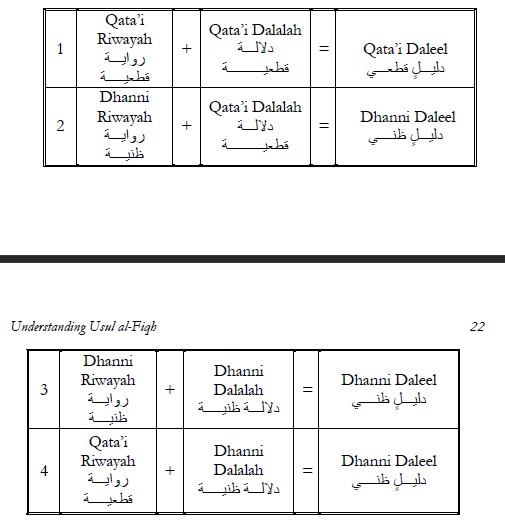
حتى الآن تناولنا جوانب القطعي والظني في كلٍّ من الرواية والدلالة كلٌّ على حدة۔ أمّا الطريقة التي يُعرَف بها ما إذا كان الدليل (سواء في الرواية أو في الدلالة) قطعيًّا أو ظنيًّا، فهي كالتالي:
So far we have discussed the Qata‟i and Dhanni aspects of both Riwayah and Dalalah separately. However, the method to determine whether the Daleel (both in Riwayah and Dalalah) is Qata‟i (conclusive) or Dhanni (non-definite) is the following:
كل فكرة أو تصور أو مفهوم يتعلق بالعقيدة يجب أن يُبنى على دليل قطعي. فعلى سبيل المثال، إن الاعتقاد بوجود الملائكة مبني على دليل قطعي لا على دليل ظني. وكذلك، في أصول الفقه، فإن المصدر الذي يُستنبط منه الأحكام الشرعية، على الرأي الأقوى، يجب أن يُبنى هو الآخر على دليل قطعي.
Any idea, thought, or concept related to the „Aqeedah has to be based upon a Qata‟i Daleel. As an example, the concept that Angels exists is based upon a Qata‟i Daleel not Dhanni. Also, in Usul al-Fiqh, to establish a source for extracting rulings according to the strongest view, the source must base upon a Qata‟i Daleel as well.
بطورِ مثال، لكي يُعتبر إجماعُ الصحابة مصدرًا من مصادر الأحكام، يجب أن يكون الدليلُ على حجية إجماع الصحابة قطعيًّا من حيث الرواية ومن حيث الدلالة، وإن كان الحكمُ الشرعيُّ يُستنبط من الدليل القطعي أو من الدليل الظني.
As an example, to consider Ijma‟ as-Sahabah (consensus of the Companions) as a source of rulings, the Daleel to prove the authority of Ijma‟ as-Sahabah has to be Qata‟i both in Riwayah and Dalalah, though a ruling can be derived from either Qata‟i or Dhanni Daleel.
لعلّ سائلاً يتساءل: لماذا يبدو فهمُ نصوصِ القرآنِ والسنّةِ أمراً معقّداً إلى هذا الحدّ؟
One might wonder why understanding the text of Qur‟an and Sunnah is so complicated?
بتأمل نصوص القرآن والسنة يتبين أنها محدودة في حجمها، ومع هذا النص المحدود يمكن استنباط أحكام لكل المشكلات التي تعرض لنا في أي مكان وفي أي زمان إلى يوم القيامة.
By examining the text of Qur‟an and Sunnah one can see that it is limited in its volume. With its limited text one can generate rulings to any problems affecting us anywhere and anytime until the Day of Judgment.
إنَّ من معجزات الله تعالى أنَّ نصوص القرآن والسنة لها القدرة على إفادة أحكامٍ عديدة من آيةٍ واحدةٍ وحديثٍ واحدٍ، في حين أنَّ القدرة على فهم معانٍ كثيرةٍ من نصٍّ واحدٍ لا توجد في أيِّ نصٍّ تشريعيٍّ آخر في العالم! والتحدي القائم أمام المسلمين في كل جيلٍ هو أن يحاولوا فهم النص وربطه بحياتهم، إذ إنَّ القرآن والسنة صالحان لكل زمانٍ ومكانٍ.
It is a miracle from Allah (swt) that the texts of the Qur‟an and Sunnah have the ability to express numerous rulings from a single Ayah and Hadith; whereas, the ability to understand many meanings from a single text cannot be found in any other legal text in the world! The challenge is for Muslims in each generation to try to understand the text and relate it to their lives since the Qur‟an and Sunnah are relevant to all times and places.
وإلى جانب النقطة المذكورة أعلاه، يجب أن ندرك أن هناك قواعد وضوابط تتعلق بفهم الأحكام واستنباطها من القرآن والسنة. لا يمكن لأحد، دون أن يكون على معرفة بهذه القواعد (اللغة العربية، والقواعد التي تميز نوعاً من النصوص عن غيره، وغير ذلك)، أن يفهم نصوص القرآن والسنة.
مصادر الحكم الشرعي
Sources of Hukm Shar‟i
كما تقدّم، فإنّ الحكم الشرعي هو خطاب الله سبحانه وتعالى المتعلّق بأفعال المكلّفين، وهذه الأحكام تُستنبط من مصادر معيّنة. ويجب أن تكون المصادر التي تُستنبط منها الأحكام مبنيّةً على أدلّة قطعيّة الدلالة.
As defined earlier, Hukm Shar‟i are the rulings of Allah (swt) addressing our actions. These rulings are derived from certain sources. The sources, which are used to extract rulings, have to be based on Adilla Qata‟iya (Decisive evidences).
إن المصادر القطعية الأربعة للحكم الشرعي هي: القرآن الكريم، والسنة النبوية ﷺ، وإجماع الصحابة، والقياس. وسيُناقَش كل منها في الفصول التالية. وبعد ذلك يأتي ملخص موجز للمصادر المختلف فيها التي اختلف فيها العلماء.
The four definitive sources of Hukm Shar‟i are; the Qur‟an, Sunnah, Ijma‟ as-Sahabah and Qiyas. These will be discussed in the following chapters. This will be followed by a brief summary of the disputed sources which the scholars disagree on.