18 伊斯兰国是一个人治国家,而不是神权国家。
18 The Islamic State Is A Human State And Not A Theocratic State.
伊斯兰国即哈里发,它是这样一种职位:担任者拥有统治与权威的全部权能,并采纳所有规则而无一例外。它是对全世界穆斯林的总领导权,用以依照其所带来的思想和所立法的规则,实施伊斯兰的一切沙里尔(Shar'a)规定,并向全世界传播伊斯兰的宣教(da'wah),即向世人介绍伊斯兰、号召他们信仰伊斯兰,以及在安拉之道上进行圣战(jihad)。它也被称为伊玛目职位,以及对信士的领导权。它是一种人的职分,而非神的职分,其存在是为了在人类中实施伊斯兰教义并将其传播于人群之中。它绝非先知身份,因为先知身份和使者身份是指先知或使者从安拉那里借启示之途径接受沙里尔,并将其传达给民众,而不关注他本人是否去实施它。安拉(swt)说:
The Islamic State is the Khilafah as it is the position in which the one who supervises it possesses all the competence of ruling and authority, and adopts all the rules without exception. It is the general leadership over all Muslims in the world to implement all the Islamic Shar’a rules, by the thoughts it came with and the rules it legislated, and to carry the Islamic da’wah to the world, by informing them of Islam, calling them to it and jihad in the way of Allah. It is also known as the Imamah and the leadership over the believers. It is a human role not a divine one, which exists to implement the deen of Islam over human beings and to spread it among them. It is definitely not the Prophethood as the Prophethood and Messengership conotates to the Prophet or the Messenger the Shar’a from Allah (saw) via the means of revelation to deliver it to the people without paying attention to his implementing it. Allah (swt) says:
使者的责任,只是清楚地传达(讯息)。 [TMQ 24:54]
"There is nothing upon the Messenger except the clear conveyance " [TMQ 24:54]
和:
And:
真的,传达的责任就在你身上。 [TMQ 3:20]
"Verily it is upon you the conveyance " [TMQ 3:20]
和:
And:
"除了传达之外,使者别无其他责任"[TMQ 5:99]。
"There is nothing upon the Messenger except the conveyance" [TMQ 5:99].
这与哈里发制度不同,哈里发是将安拉的沙利亚施行于人类之中。成为先知或使者的条件,并非先知或使者(愿安拉赐福他并使他平安)必须施行安拉启示给他的律法,而是安拉向他启示一部沙利亚并命令他传达。穆萨(阿莱赫·萨拉姆)、尔萨(阿莱赫·萨拉姆)和易卜拉欣(阿莱赫·萨拉姆)都是先知和使者,尽管他们并未施行所携带的沙利亚,也不是统治者。因此,先知和使者的职位并非哈里发的职位。先知身份是安拉赐予其所意欲之人的神圣职位,而哈里发则是人类的职位,穆斯林从穆斯林中选出他们所愿意拥立为领袖的人。我们的主人穆罕默德ﷺ是施行其所携律法的统治者,因此他既主持先知和使者的职责,同时也主持穆斯林领袖的职位,负责确立伊斯兰的律例。安拉(SWT)命令他统治,正如命令他传达讯息一样,安拉对他说:
This is different from the Khilafah which is the implementation of Allah’s Shar’a upon human beings. It is not a condition upon the Prophet (saw) or Messenger (saw) to implement what Allah (swt) revealed to him in order to be a Messenger, rather the condition to become a Messenger or Prophet is that Allah reveals a Shar’a to him and commands him to convey it. Musa (as), Isa (as) and Ibrahim (as) were Prophets and Messengers though they did not implement the Shariah they came with nor were they rulers. Therefore the post of Prophethood and Messengership is not the post of Khilafah. Prophethood is a divine post which Allah gives to whomever He wills, while the Khilafah is a human post in which the Muslims pledge whomever they wish over them from among the Muslims. Our master Muhammad (saw) was a ruler who implemented the Shari’ah he came with, so he would be in charge of the Prophethood and Messengership while at the same time he would be in charge of the post of leadership of the Muslims in establishing the Islamic rules. Allah (swt) commanded him to rule just like He commanded him to convey the message as He said to him:
"你要依照安拉所降示的(经典)在他们之间作出判决" [TMQ 5:47]
"Rule between them by what Allah revealed" [TMQ 5:47]
和:
And:
我们确已以真理向你降下这部天经,以便你依照安拉所昭示你的,在人们之间进行裁决。 [TMQ 4:105]
"Verily we revealed the Book to you in Truth so that you rule between the people by what Allah showed you" [TMQ 4:105]
正如祂(SWT)对他所说的那样:
Just like He (swt) said to him:
"啊,使者!你要传达从你的主那里降示给你的(经文)" [TMQ 5:67]
"O Messenger, convey what has been revealed to you from your Lord "[TMQ 5:67]
和:
And:
“这部古兰经是启示给我的,以便我警告你们,以及凡是它所传达到的人。” [TMQ 6:19]
"This Qur’an has been revealed to me so that I warn you and whoever it is conveyed to" [TMQ 6:19]
和:
And:
"你这裹着衣服的人啊!起来警告!"[TMQ 74:1]
"O you enshrouded in a cloak. Stand up and warn" [TMQ 74:1].
除非他负责以言语传达讯息,例如传达安拉的话语:
Except that when he was in charge of conveying the message by speech like conveying Allah’s saying:
真主允许买卖,并禁止利息(里巴)。 [TMQ 2:275]
Allah has permitted trade and forbidden riba" [TMQ 2:275]
或是如侯代比亚和约那样的行动,他会果断地传达并坚决下令实施。他不会与人商议,若有人建议与启示所带来的内容不同的意见,他便会加以拒绝。当有人询问一条尚未有启示降下的律例时,他会保持沉默,不作答复,直到启示降下。而当他要采取某项行动时,则会与众人协商,并依照专家的意见或多数人的意见行事,即使这与他自己的看法不同。当他在人们之间裁决时,也不会武断地宣称自己的裁决符合事实,而是依据他所听到的证据进行判断。 《忏悔章》降示时,ﷺ命令阿里·本·阿比·داليب(愿真主喜悦他)去追上艾布·伯克尔,并命令他在朝觐期间向众人宣读免责的声明。于是阿里在阿拉法特向众人宣读,并走遍各处,直至将其传达完毕。当他签订侯代比亚和约时,他拒绝了所有圣门弟子的意见,并将自己的主张强加于他们,因为那是来自真主(SWT)的启示。当哲比尔问他:“我该如何处置我的财产?”他没有回答,直到启示降下相应的律例。 布哈里引述了来自本·孟坤迪尔的传述,他说:
or by action like the Treaty of Hudaybiyya, he would be decisive in conveying and command decisively to undertake the action; nor would he consult but would rather reject all opinion if he was advised anything different from what the revelation came with. And when he was asked of a rule for which no revelation had descended yet, he would keep silent and not reply until the revelation descended. Whereas when he would undertake an action he would consult people and act according to the opinion of experts or the opinion of the majority even where it differed from his opinion, and when he would judge between people he would not be decisive saying that what he judged with conformed with the reality rather he was judging according to what he heard of the evidence. When Surah Bara’ah was revealed, he (saw) commanded Ali bin Abi Talib (ra) to go meet Abu Bakr and commanded him to announce inculpability “Bara’ah to the people during the Hajj period. So he read it to them Arafah and went around to the people until he had conveyed it. When he signed the Treaty of Hudaybiyya he rejected the opinion of all the Sahabah (ra) and compelled his opinion upon them as it was revelation from Allah (swt). When Jabir asked him: “How should I judge over my wealth?", He did not answer him until the revelation descended with the rule. Al-Bukhari narrated via bin al-Munkadir who said:
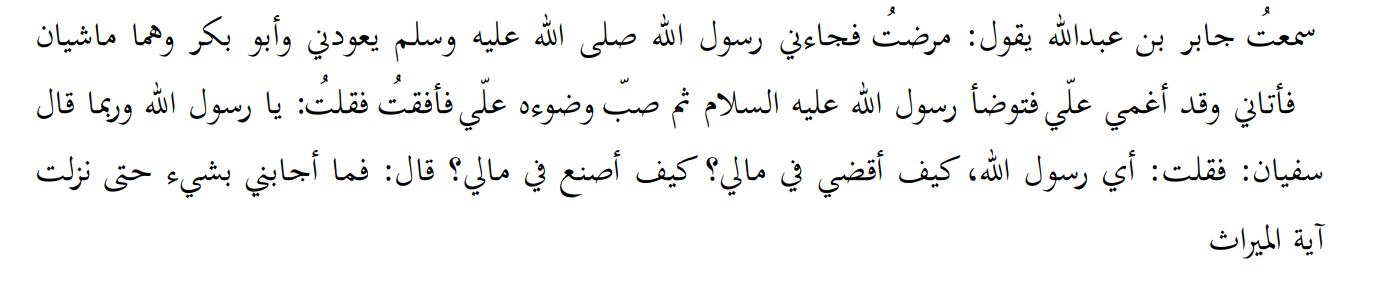
我听见贾比尔·本·阿卜杜拉说:我生病了,安拉的使者ﷺ与艾布·伯克尔步行来探望我。他们找到我时,我已失去知觉。安拉的使者ﷺ做了小净,然后把水洒在我身上。我醒过来,对安拉的使者ﷺ说:安拉的使者啊,我该如何处理我的财产?我该怎样处置我的财产?他没有回答我,直到继承的经文降示。
“I heard Jabir bin Abdullah saying: I was ill so the Messenger of Allah (saw) came to visit me together with Abu Bakr walking. They found me when I was unconscious. The Messenger of Allah (saw) made wudhu then poured some water upon me. I woke up and said to the Messenger of Allah (saw): O Messenger of Allah, how should I judge over my wealth? What should I do with my wealth? He said: He did not answer me at all until the ayah of inheritance was revealed.”
这是在承担先知与使者之职、向民众传达的责任之中;而在承担治理之责时,他的做法则有所不同。在乌候德战役中,他召集穆斯林到清真寺,就是在麦地那内作战还是出城作战进行协商。多数人的意见是出城作战,而使者ﷺ的意见是在麦地那内作战。他便依从多数人的意见,出城到麦地那之外作战。同样,他在人们之间裁决时,也会警告他们,不要让他去为他们裁定损害他人应得权利的事。布哈里记载,乌姆·赛莱麦传述:真主的使者ﷺ听到他家门口有争执,便走过去对他们说:
This was in the undertaking of the burden of Prophethood and Messengership and conveying to the people, whereas in undertaking the burden of rule he would behave differently. In Uhud he collected the Muslims in the mosque, consulted over whether to fight inside Madinah or outside; the opinion of the majority was to fight outside while the Messenger’s opinion was to fight inside. He acted upon the majority opinion, left and fought outside Madinah. Similarly when he judged between people, he would warn them from causing him to judge for them against someone else’s due right. Al-Bukhari narrated from Umm Salamah about the Messenger of Allah (saw) that he heard a dispute at the door of his house so he went to them and said:
“我只是一个人,有争端的诉讼人会来找我。你们中有人可能比另一人更善于陈述(他的案情),以致我认为他说的是实话,从而做出对他有利的判决。如果我判决某人胜诉,而他因此不正当地取得了一个穆斯林的权利,那么他所取得的,不过是一块火。他拿或不拿,由他自己决定。”ﷺ
“I am only a human being, and litigants with cases of dispute come to me, and someone of you may happen to be more eloquent (in presenting his case) than the other, whereby I may consider that he is truthful and pass a judgment in his favor. If ever I pass a judgment in favor of somebody whereby he takes a Muslim's right unjustly, then whatever he takes is nothing but a piece of Fire, and it is up to him to take or leave.”
同样,他也从他那里转述,说:先知ﷺ说道:
Similarly he narrated from him that he (saw) said:
“我实在希望与真主——尊贵全能的主——相见时,没有任何人因我曾对他犯下的不义,无论是在血命上还是财产上,向我索求。”
“Verily I wish to meet Allah ‘azza wa jalla without anyone seeking from me an injustice I committed against him, whether in blood or money.”
这表明他将承担两种角色:先知与使者的职位,以及在今世领导穆斯林、确立安拉所启示给他的沙里亚的职位。他在履行每一种角色时都会根据其所需而有所不同,因此他行事的方式会有所区别。他在统治方面接受了民众的效忠宣誓,既接受了来自女性的,也接受了来自男性的,但没有接受尚未到达青春期的幼童的效忠,这表明该宣誓是针对统治的,而非针对先知职分的。由此我们可以看出,安拉(swt)从未因他在传达使命或承担其重任方面的任何事情而责备他,反而要求他不要因民众未能回应他而感到困扰,因为承担使命的重任仅在于传达;因此,他除了传达之外别无其他责任。安拉说:
This goes to indicate that he would undertake two roles: the position of Prophethood and Messengership, and the position of leading the Muslims in this world in establishing the Shari’ah of Allah (swt) which was revealed to him. He would dispose in undertaking each role according to what it required, so he would conduct one differently from the other. He took the pledge of the people in ruling, taking it from both women and men but not from young children who had not yet reached puberty, which emphasises that it was a pledge upon ruling not upon Prophethood. From here we find we find that Allah (swt) never censured him in anything to do with conveying the message or undertaking its burden, rather he would request him not to be troubled due to people’s failure to respond to him as the undertaking of the burden of the message was conveying alone; so there was no duty upon him except to convey. Allah (swt) said:
"不要因为他们而让自己的心灵徒然叹息" [TMQ 35:8]
"Let not your souls go out in (vainly) sighing for them" [TMQ 35:8]
和:
And:
"不要为他们所策划的阴谋而忧伤" [TMQ 16:27]
"Do not grieve over what they are plotting" [TMQ 16:27]
和:
And:
"唯有传达(使命)是你的责任"[《古兰经》42:48]。
"The only (duty) upon you is conveying" [TMQ 42:48].
然而,安拉(SWT)因他在执行先前已向他启示并已传达的律法时,承担治理之责所做的行为而责备他。安拉(SWT)责备他做了与更好之事相违背的事情。安拉说:
However Allah (swt) censured him over his undertaking of the burden of ruling in the actions he performed in implementing rules previously revealed to him and already conveyed. Allah (swt) censured him over doing something contrary to what was better. Allah (swt) said:
“先知不应该俘虏战俘,除非他在大地上进行了大规模的屠杀。” [TMQ 8:67]
"It is not for a Prophet to have captives of war until he made great slaughter in the world" [TMQ 8:67]
和:
And:
"愿真主宽恕你!你为何准许他们(不参战)呢?"(古兰经 9:43)
"Allah forgive you! Why did you grant them permission?" [TMQ 9:43].
由此清楚可见,领导穆斯林治理国家的职责不同于先知身份的职责。由此可以明确,哈里发制度,即对全世界穆斯林的总体领导,是一种人的职位,而非神圣的职位。它是先知ﷺ曾经负责的职责,他离世时留下了这样的义务:穆斯林应当接任这一职位,代他承担,成为真主的使者ﷺ的哈里发,在治理上替代他,但不在先知身份上替代他。它是对使者ﷺ的哈里发,负责引导穆斯林实施伊斯兰律法、传达使命,而不是接受启示或从真主那里制定沙里亚。
All this is clear that the role of leading Muslims in the rule was different from the role of Prophethood. From this it becomes clear that the Khilafah, which is the general leadership over all Muslims in the world, is a human post not a divine one. Since it is a role which the Messenger (saw) used to be in charge of and he left it while obliging that a Muslim should take it over for him so that he takes the place of the Messenger of Allah (saw) and be his Khalifah in ruling but not in Prophethood. It is a Khilafah to the Messenger in leading the Muslims to implement the Islamic rules and conveying the message not in receiving revelation or taking a Shari’ah from Allah.
关于使者(愿主福安之)的无过错性,它来源于他是先知,而非来源于他是统治者。这是因为,无过错性是所有先知和使者的必备属性,无论他们自己是否通过其沙里亚统治人民并加以实施,还是仅限于传达而不以之统治或实施。我们的主人穆萨(愿主福安之)、我们的主人尔萨(愿主福安之)和我们的主人易卜拉欣(愿主福安之)都是无过错的,正如我们的主人穆罕默德(愿主福安之ﷺ)是无过错的一样,因为无过错性属于先知身份和使命,而非统治权。至于他(愿主福安之ﷺ)在承担治理重任期间没有做任何哈拉姆的行为,也没有遗漏任何义务的行为,这来源于他在先知身份和使命方面的无过错性,而非来源于他作为统治者的身份。因此,他(愿主福安之ﷺ)承担统治并不需要以无过错性为特征,但实际上,他因为是先知和使者而事实上是无过错的。据此,他会以人类统治人类的身份承担统治。《古兰经》已明确说明他是人类。安拉(至高无上)说:
As for the Messenger (saw)’s infallibility, it comes from his being a Prophet not from his being a ruler. This is because infallibility is an obligatory attribute for all Prophets and Messengers, irrespective of whether they themselves were the ones to rule over people by their Shari’ah and implement it or whether they were merely restricted to conveying it without ruling with it or implementing it. Our master Musa (as), our master Isa (as) and our master Ibrahim (as) were infallible just like our master Muhammad (saw) was infallible as the infallibility is for Prophethood and the Message not the rule. As for his (saw) not doing any haram action during his undertaking the burden of ruling nor leaving any obligatory action, this came from his being infallible in relation to Prophethood and the Message not in relation to his being a ruler. So his (saw) undertaking the rule did not require his being characterised with infallibility, but practically he was infallible due to his being a Prophet and Messenger. Accordingly, he would undertake the rule in his description as a human being ruling over human beings. The Qur’an has come explicitly stating that he is a human being. Allah (swt) said:
说:"我只是与你们一样的凡人。" [TMQ 18:110]
"Say: Verily I am only a human similar to you" [TMQ 18:110]
然后它明确区分了他与人类其他人(通过说):
Then it clarified distinguishing him from the rest of humanity (by saying):
"我所接受的,只是受到的启示"[TMQ 6:50]。
"It has been revealed to me" [TMQ 6:50].
与其他人类的区别在于他接受启示,即在先知身份上。除此之外,他与人类中的其他人一样,也是人。因此在治理方面,他与其他人一样是人,所以在他之后担任哈里发的人,无疑也会是与其他人一样的人,因为他是他的哈里发,是在治理上,而不是在先知身份或传达使命上。因此,无过性不是担任此职位的条件,因为它不属于需要无过性的事务,无过性只为先知身份所要求。他是统治者,仅此而已,所以对主持此事的人要求无过性毫无道理。事实上,不允许对承担此职位的人要求无过性,因为无过性仅限于众先知,而不允许适用于先知以外的人,因为它对先知和使者ﷺ的存在是为了传达而必需的。因此,这是传达上的无过性,而从不犯禁戒的无过性自然随之而来,因为传达上的无过性若不包括不犯禁戒的无过性,便无法完备。需要无过性的事务是传达。
The distinction from the rest of humanity is that he is revealed to i.e. in the Prophethood. Apart from that he is a human like the rest of mankind. So he is in the rule a human like other people so whoever becomes Khalifah after him would doubtless be a human being like the rest of the people since he is his Khalifah in the rule not in Prophethood or the Message. Therefore infallibility is not a condition for it since it is not one of the matters which require infallibility which is only required for Prophethood. He is a ruler, nothing else, so there is no place for requiring infallibility for those who are in charge of it. In fact, it is not allowed to require infallibility for the one undertaking it as infallibility is restricted to Prophets and it is not allowed for other than Prophets as its existence for the Prophet and Messenger (saw) is required for conveyance. So it is infallibility in conveyance and its acquirement in never performing a haram naturally follows the infallibility in conveyance as the infallibility in the latter cannot be complete save with the infallibility from performing haram. The matter which requires it is the conveyance, The Islamic Personality Vol 2 95
不是关于人们的信仰或不信仰,也不是关于行为上的错误或没有错误;而是所要求的事项仅仅是传达使命,别无其他。这是因为,如果他(先知)不是受到安拉(subhanahu wa ta'ala)的保护而免于错误,那么他就有可能隐瞒使命,对其增添或减少,假托安拉之名说出安拉未曾说过的话,或者出现失误,传达了与他所奉命传达的不同的内容。而这一切在安拉所降的使命中都是被否定的,并且在他作为一位必须被信从的使者这一点上也是被否定的。因此,使者必然具有在传达使命上的无误性,而免于犯禁戒(haram)的无误性也随之自然而然地产生。正因如此,学者们对先知是否无误于犯禁戒意见不一:有人说,他只免于犯大罪(kabā'ir),小罪(saghā'ir)则可能出现在他身上;也有人说,他既免于大罪,也免于小罪。他们的分歧取决于这些行为是否与完成传达相关联。如果使命的完成与这些行为相关联,那么传达上的无误性便涵盖这些行为,先知因此无误于它们,因为使命若非他无误于这些行为便无法完成。反之,如果使命的完成与这些行为无关,那么无误性便不涵盖它们,因此他并不无误于它们,因为使命无需这些行为即可完成。 据此,穆斯林之间没有分歧:使者(愿主赐福他并使他平安)在从事与更优之事相违背的行为上并非无误,因为使命的传达并不依赖于这些行为。由此可见,无误性是专属于传达使命的,因此它只存在于先知和使者身上,除他们之外的任何人都不可能具有。
not the people’s belief or non-belief or the error in actions or its absence; rather the matter requiring it is the conveyance of the message, nothing else. This is because were he not made infallible from Allah (swt), it would be possible for him to conceal the message, add to or reduce in it, lie against Allah (by saying) what He had not said or made a mistake and convey other than what he had been commanded to convey. All this is negated in a message from Allah (swt) and negated in his being a Messenger who must be believed. Therefore it is inevitable that the Messenger be characterised with infallibility in conveying the message, so the infallibility from committing haram naturally comes due to this. Due to this, the scholars differed in respect to the infallibility of Prophets from committing haram; some said he is infallible from committing the greater sins (kabair) only and the small sins (saghair) are acceptable from him, while some said he is infallible from committing both greater and smaller sins. They said this according to whether the actions are consequent upon the completion of the conveyance or not. If the fulfilment of the conveyance is consequent upon them, then the infallibility in conveyance covers them such that the Prophet becomes infallible from (committing) them as the conveyance is not completed save with his being infallible from them. Whereas if the completion in conveyance is not consequent upon them, then the infallibility does not cover them so he is not infallible from them as the conveyance is accomplished without it. Accordingly there is no difference among the Muslims that the Messenger (saw) is not infallible in committing actions which are contrary to what is better, as the conveyance of the message is not dependant upon them. Thus the infallibility is specific to conveyance and therefore it does not exist except for Prophets and Messengers nor is it possible in anyone other than them.
诚然,关于“无谬性”(ʿiṣma)的证据是理性的,而非经文的。因为并没有任何沙里亚文本,无论是《古兰经》中的明确经文还是圣训,证明任何人享有无谬性,无论是众先知、众使者,还是其他人。至于安拉的话语:
Verily the evidence for infallibility is rational not textual as there has not come any Shari’ah texts, whether a clear text in the Qur’an or Hadith, upon the existence of infallibility for anyone whether the Prophets, the Messengers or others. As for Allah’s statement:
"真主只欲使你们这些家人远离污秽,并使你们彻底纯洁。"[《古兰经》33:33]
"Verily, Allah only intends to remove filth (rijs) from you, the family of the house, and purify you completely" [TMQ 33:33],
它的意思是,祂想要消除你们心中的一切疑虑与指责。这节经文是三节经文中的一节。真主(SWT)说:
Its meaning is that He intends to remove from you any doubt and accusation. This ayah is a piece among three ayat. Allah (swt) said:
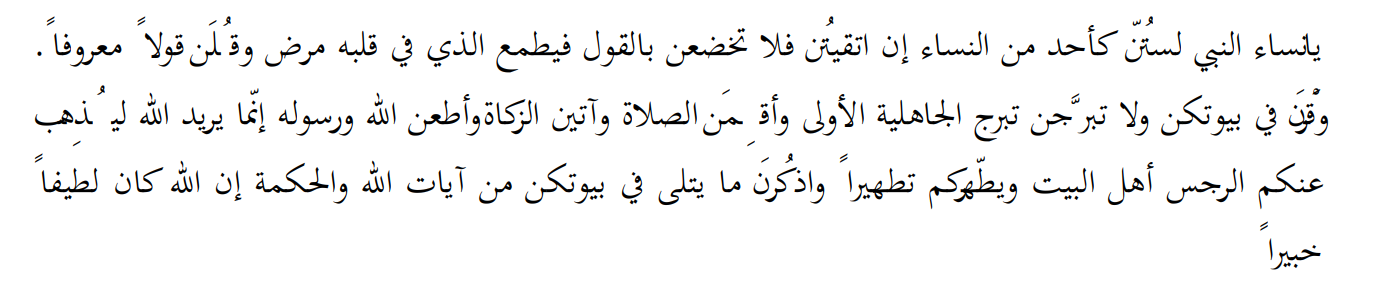
"先知的妻子们啊!你们不同于任何一个女人。如果你们敬畏(真主),就不要说话柔声细气,以免心中有病的人产生贪欲,你们要说合宜的话。你们要安静地居住在家里,不要像蒙昧时代的前人那样炫耀打扮,要谨守拜功,完纳天课,服从真主和祂的使者ﷺ。真主只欲在你们身上消除污秽,使你们的家属彻底纯洁。你们要记住,在你们家中所诵读的真主的迹象和智慧。真主确是至慈的,确是至知的」[TMQ 33:32-34]。
"O wives of the Prophet, you are not like any other woman. If you fear (Allah) then be not too complaisant of speech lest one in whose heart is a disease should be moved with desire but speak a speech (that is) just. And stay quietly in your houses and make not a dazzling display like that of the former times of ignorance, and establish prayer and give the zakat and obey Allah and His Messenger. Verily Allah only wishes to remove filth from you, O family of the house, and purify you completely. And remember what is recited in your homes of the signs of Allah and the Wisdom. Verily Allah is Courteous, All-Knowing" [TMQ 33:32-34].
这段经文与无谬性之间没有任何关系。从祂的话“要洗净你们的污秽”中,不可能理解出这是指使你们无谬。污秽的洗净,指的是清除一切污垢,而这里的污秽是比喻义,即疑虑和猜疑,这从这句话之前的两节经文中的上下文可以明显看出。这里的洗净,就是从疑虑和猜疑中洁净。因为“污秽”一词的含义有:物质上的污秽、比喻义的污秽,甚至刑罚,正如《古兰经》中以这些含义出现的那样。安拉(SWT)说:
There is no relationship between this ayah and infallibility in any way whatsoever. It is not possible to understand from His statement “to remove filth from you” i.e. to make you infallible. Rather the removing of filth is the removing of all dirt and the meaning here is metaphorical filth i.e. doubt and suspicion as is explicitly clear in the sentences before this sentence in the two ayat. The purification here is cleansing from doubt and suspicion because the meaning(s) of the word filth is material filth, metaphorical filth and even punishment as it has come in the Qur’an with these meanings. Allah (swt) said:
远离偶像的污秽 [TMQ 22:30]
"Avoid the filth of the idols" [TMQ 22:30]
和:
And:
同样,真主也会将污秽降临于不信者身上。{[TMQ 6:125]}
"Similarly does Allah ordain the filth upon those who do not believe" [TMQ 6:125].
在这两节经文中,“污秽”是比喻义上的污秽。真主(SWT)说:
In these two ayat, filth is metaphorical filth. And Allah (swt) said:
或者猪肉,因为它确实是不洁之物。 [TMQ 22:30]
"Or the meat of pig for verily it is filth" [TMQ 22:30]
即,仪式性不洁是指身体上的污秽。安拉(SWT)说:
i.e. ritual impurity meaning physical filth. And Allah (swt) said:
这样,真主使那些不信的人受到惩罚。
"Thus Allâh puts the wrath on those who believe not" [TMQ 6:125].
所以,他的话“要从你们身上除去污秽”,是指除去比喻意义上的污秽,即嫌疑。至于他的话“并使你们完全洁净”,那么,“yutahirukum”(使你们洁净)这个词和“洁净”一词,从来没有“无罪”的含义,无论是在语言中、在《古兰经》中,还是在圣训中。在语言上,“tahara”(洁净)某物,“tatheera”(净化)即是除去其中的不洁;女子从月经中洁净(tahir),从不洁和缺陷中洁净(tahira);在教法上,“tahara”(洁净)是除去“hadath”(小净所要除去的不洁)。先知ﷺ说:
So His statement in the ayah “to remove the filth from you” means to remove metaphorical filth i.e. suspicion. As for His saying: “And purify you completely” verily the word yutahirukum (to purify you) and the word purification never came with the meaning of infallibility, neither in the language, Qur’an or the Hadith. In the language, to purify (tahara) something purification (tatheera) means to remove impurity from it, and the woman is pure (tahir) from menstruation and (tahira) from impurity and defects, and (tahara) in the Shar’a is removing the (hadath). He (saw) said:
“安拉不接受没有洁净(tuhur)的拜功”
“Allah does not accept prayer without purity (tuhur)”
也有经文以此含义出现。安拉(SWT)说:
And it has come in the Qur’an with this meaning. Allah (swt) said:
"并洁净你的衣服" [TMQ 74:4]
"And purify your garment" [TMQ 74:4]
和:
And:
“借以清洁自己的水” [TMQ 8:11]
"Water so that you may be purified by it" [TMQ 8:11]
和:
And:
在他们洁净自己之前,不要靠近他们。 [TMQ 2:222]
Do not approach them until they purify themselves [TMQ 2:222]
"选择了你,并使你纯洁" [TMQ 3:42
"Chose you and purified you" [TMQ 3:42
即从过失中(而言),还有:
i.e. from faults and also:
"若你们是(junub),那就净身。" [TMQ 5:6]
"And if you are (junub) then purify yourselves" [TMQ 5:6]
即从不洁中(的净化)。信士的净化也随着安拉(SWT)的这句话而到来:
I.e from the impurity. The purification of the believers also came when Allah (swt) said:
"Allah does not wish to make difficulty (haraj) for you but rather He wishes to purify you and complete His blessing upon you" [TMQ 5:6]. Note: the Qur'an verse is inside { } in the rules, but here it appears in quotation marks rather than braces, so I'll translate it as given. 安拉不愿使你们遭受困难(haraj),而是要洁净你们,并完成对你们的恩典。"[TMQ 5:6]
"Allah does not wish to make difficulty (haraj) for you but rather He wishes to purify you and complete His blessing upon you" [TMQ 5:6].
这些文献都指出,该节经文的含义是:安拉(SWT)使他们远离疑惑和猜疑;并且它否定该经文的含义是“无过错性”(isma),因此这节经文并不表明无过错性。
All these texts specify that the meaning of the ayah is that Allah (swt) cleansed them from doubt and suspicion, and negates that its meaning is infallibility hence the ayah does not indicate infallibility.
因此,没有任何文本证据能证明任何人具有无误性(ʿiṣma),只有理性的证明。理性要求先知和使者在传达启示方面具有无误性,因为他作为先知和使者,若不具备无误性,就不可能成为先知或使者。理性还要求,未被赋予传达安拉(swt)讯息之责任的人,不可能具有无误性,因为他是人,安拉(swt)所造他的本性(fiṭra)中就有错误和遗忘发生。只要他未被赋予安拉(swt)讯息的责任,就没有任何东西要求他具有无误性。若有人声称他具有无误性,那就意味着他被赋予了安拉的讯息,而这是不被允许的,因为穆罕默德ﷺ之后不再有先知,他是安拉的使者。安拉(swt)说:
Therefore there is no textual evidence for the existence of infallibility for anyone; there is only rational proof for it. The mind is what compels that there be infallibility in conveyance for the Prophet and Messenger as his being a Prophet and Messenger requires that he be infallible otherwise he cannot be a Prophet or Messenger. The mind is the one which compels that one not given the responsibility to convey a message from Allah (swt) is not allowed to be infallible as he is a human being, and his nature (fitra) with which Allah (swt) created him is that error and forgetfulness occur in him. And as long as he is not given responsibility with a message from Allah (swt), this means there is nothing which requires that he be infallible. If it is claimed that he is infallible, then this means that he is responsible with a message from Allah which is not permitted since there is no Prophet after Muhammad, the Messenger of Allah (saw). Allah (swt) said:
“但他是真主的使者,是众先知的封印。”{33:40}
" But he is the Messenger of Allah and seal of the Prophets" [TMQ 33:40].
claiming infallibility means claiming Messengership,由于使者是来自真主的传达者,他身为人所具有的属性中就存在传达真主之言时出现错误与迷误的可能,而要保护真主的讯息免受错误与改变,就要求使者不犯错误、不陷于迷误。仅凭这一点,无误性便是使者的属性,也唯有使者才需要无误。若有人被说成具有无误性,而众所周知,唯一需要无误性的事项是传达真主的讯息,那么这就等同于把只有传达真主讯息这一原因才要求的无误性,归于另一人,也就是说,这等同于主张他负有传达真主(SWT)讯息的职责。因此,不允许为哈里发要求无误性,因为要求他无误,就意味着他负有传达真主(SWT)讯息的职责,从而要求他无误,而这是不被允许的。
Claiming infallibility means claiming Messengership since the Messenger is a conveyor from Allah, and there is within him due to his attributes as a human being the potential of error and misguidance in conveying from Allah, protecting the message of Allah from error and change in the conveyance requires that the Messenger be infallible from error and misguidance. For this reason alone, infallibility is an attribute of the Messenger and it alone requires infallibility. If it is claimed for anyone other than him while being known that the only matter requiring it is conveying the message from Allah then it is equivalent to claiming for this other person what requires infallibility and its cause i.e. conveying the message. Thus it would be claiming that he is responsible to convey a message from Allah (swt). Therefore it is not allowed to require infallibility for the Khalifah as requiring it means that he is responsible to convey a message from Allah (swt) thus requiring him to be infallible, and this is not permitted.
这清楚地表明,哈里发是一个人,他可能犯错,也可能正确;与任何人一样,他可能出现疏忽、健忘、说谎、背信以及犯罪等情况,因为他是人,而不是先知或使者。使者ﷺ告知,伊玛目有可能犯错,也告知,他可能会做出导致人们憎恨和诅咒他的事情,如不公正、罪过等。他甚至告知,他可能会出现明显的不信。穆斯林圣训集记载:Zuhayr bin Harb 告诉我,Shababa 告诉我们,Warqa 告诉我,来自 Aby Zayyad,来自 Al-‘Araj,来自 Abu Hurayray,他传述先知ﷺ说:
This makes it clear that the Khalifah is a human being who can make a mistake or be correct, and it is allowed to occur from him what occurs from any human being of neglect and forgetfulness, falsehood, treachery, sins as he is a human being and not a Prophet or Messenger. The Messenger (saw) informed that it is possible for the Imam to err, and he informed that it may occur from him what may cause people the hate him and curse him due to injustice, sins etc. He even informed that clear disbelief may occur from him. Muslim narrated: Zuhayr bin Harb related to me that Shababa related to us that Warqa related to me from Aby Zayyad from Al- ‘Araj from Abu Hurayray from the Prophet (saw) who said:
“的确,伊玛目是一面盾牌,人们在他身后作战,并借他得到保护。如果他以敬畏安拉(taqwa)的心态下令并秉公而行,那么他将因此获得回报;如果他下达的是其他命令,那么同样的后果将落在他身上。”
“Verily the Imam is a shield from behind whom they fight and by whom they are protected. If he commanded with the fear (taqwa) of Allah ‘azza wa jalla and does justice then there is reward for that for him. If he commands with other than that, then there is the same against him.”
这意味着伊玛目并非无过失的,他可能会下达违背敬畏安拉之命令。穆斯林也有记载:乌斯曼·本·阿比·舍拜把(圣训)传述给我们:贾里尔把传述给我们,他从阿穆什那里传述,阿穆什从宰德·本·瓦哈卜那里传述,宰德·本·瓦哈卜从阿卜杜拉那里传述,阿卜杜拉说:安拉的使者ﷺ说:
This means that the Imam is not infallible and it is possible for him to command other than the fear of Allah. Muslim also narrated: Uthman bin Abi Sheeba related to us that Jareer related to us from Al-‘Amash from Zayd bin Wahhab from Abdullah who said: The Messenger of Allah (saw) said:
“诚然,在我之后,将会出现一些偏私的做法和你们会反对的事情。”他们说:“安拉的使者啊,当这些事情临到我们其中一人时,您命令我们怎么做?”他说:“你们要履行你们应尽的义务,并向安拉祈求你们应得的权利。”ﷺ
“Verily there will be after me some improper preferences and matters which you will reject. They said: O Messenger of Allah, what would you command anyone of us when that reaches him? He said: Fulfill the rights due from you and ask Allah (for) what is due to you.”
穆斯林传述:伊斯哈格·本·易卜拉欣·安-汉达利说:伊萨·本·尤努斯告诉我们,阿瓦considered… Let me correct and give the full translation: 穆斯林传述:伊斯哈格·本·易卜拉欣·安-汉达利告诉我们,伊萨·本·尤努斯告诉我们,奥扎伊告诉我们,他从宰德·本·叶齐德·本·加比尔那里听闻,宰米格·本·哈延从穆斯林·本·古尔塔那里告诉他,穆斯林·本·古尔塔从奥夫·本·马立克那里告诉他,他说:真主的使者ﷺ说道:
Muslim narrated: Ishaq bin Ibrahim Al-Handhalee related to us that Isa bin Yunus informed us that Al-Awza’i related to us from Zayd bin Yazid bin Jabir from Zareeq bin Hayyan from Muslim bin Qurta from ‘Awf bin Malik from the Messenger of Allah (saw) who said:
“你们最好的统治者,是你们所爱戴、也爱戴你们的人;你们为他们祈求真主的赐福,他们也为你们祈求真主的赐福。你们最坏的统治者,是你们所憎恶、也憎恶你们的人;你们诅咒他们,他们也诅咒你们。”有人(在场者)问道:“难道我们不应该用刀剑推翻他们吗?”他说:“不,只要他们在你们中间谨守拜功。如果你们在他们身上看到任何可憎之事,那就憎恶他们的所作所为,但不要从他们的服从中抽身而出。”
“The best of your rulers are those whom you love and who love you, who invoke God's blessings upon you and you invoke His blessings upon them. And the worst of your rulers are those whom you hate and who hate you and whom you curse and who curse you. It was asked (by those present): Shouldn't we overthrow them with the help of the sword? He said: No, as long as they establish prayer among you. If you then find anything detestable in them. You should hate their administration, but do not withdraw yourselves from their obedience.”
布哈里记载:“伊斯玛仪告诉我们:伊本·瓦哈卜告诉我,他从阿慕尔那里听说,阿慕尔从布凯尔那里听说,布凯尔从布斯尔·本·赛义德那里听说,布斯尔·本·赛义德从朱纳达·本·阿布·尤迈耶那里听说。朱纳达说:我们进去探望患病的欧拜代·本·萨米特,我们说:愿真主使你康复。请给我们讲一段你从先知ﷺ那里听过的圣训,愿真主借此助你。他说:”
Al-Bukhari narrated: “Ismail related to us that Bin Wahhab related to me from Amru from Bukayr from Busr bin Said from Junada bin Abu Umayyah who said: We entered to ‘Ubadah bin As-Samit who was ill and we said: May Allah improve you. Relate to us a hadith which you heard from the Prophet by which Allah will help you. He said:
“先知ﷺ召集我们,我们便向他宣誓效忠。他在所要求我们的誓约中说:我们要听从并服从他,无论是我们所喜爱的还是所厌恶的,无论是在困难之时还是顺利之时,即使别人被优先于我们,也要我们不与掌权者争夺权位。(他说):除非你们看到明显的不信(kufr bawah),并且你们对此拥有来自安拉的明确证据(sultan)。”
“The Prophet (saw) called us so we gave him a pledge. So he said in what we took from us that we pledged him to hear and obey in what attracts us and what we hate, in hardship and ease, and when others are preferred over us and that we do not dispute the rule with those in authority (He said): Unless you see clear disbelief (kufr bawah) upon which you have from Allah a clear proof (sultan).”
而从阿伊莎处传来,她说:“安拉的使者ﷺ说:
And from Aisha who said: “The Messenger of Allah (saw) said:
“尽你所能为穆斯林避免刑罚。如果他有出路,就让他走自己的路,因为伊玛目在赦免上犯错,比在惩罚上犯错要好。”
" Avert the legal penalties from the Muslims as much as possible, if he has a way out then leave him to his way, for if the Imam makes a mistake in forgiving it would be better than making mistake in punishment.”
At-Tirmidhi narrated this hadith, which makes clear that the Imam can err, forget and sin. Despite that, the Messenger (saw) commanded that obedience to him continue as long as he rules by Islam, clear disbelief has not occurred from him, and he has not commanded sin. After the Messenger's (saw) report about the Khulafaa, that there will be some whom the Muslims will dislike, yet he still commanded obedience, is there any possibility after that of saying that the Khalifah must be infallible, and that what is permitted for human beings is not permitted for him? This is from the reality of the Khalifah in relation to the absence of the condition of infallibility, indeed even the absence of permission to make it a condition. However, those who said that the Khalifah must be infallible have presented evidences for their view, so we must examine and clarify what is within them. These evidences are summarised in four evidences:
Tirmidhi narrated this hadith which is clear that the Imam can err, forget and sin. Despite that, the Messenger (saw) commanded to continue obeying him as long as he rules by Islam and clear disbelief has not occurred from him and he has not commanded with sin. After the news of the Messenger (saw) about the Khulafaa that there will be some which the Muslims will dislike yet he commanded obedience, is there after that any possibility of saying that the Khalifah must be infallible and that it is not permitted from him what is permitted from human beings? This is from the reality of the Khalifah in relation to the absence of the condition of infallibility, rather even the absence of permission to even make it a condition. However, those who said it is required that the Khalifah be infallible have presented evidences for their view, so we must examine and clarify what is within them. These evidences are summarised in four evidences:
1. 伊玛目在保存、传达和教授伊斯兰教法、监督民众事务、在他们之间建立公正、扶助受压迫者、施行法定刑罚(哈都德)和酌定刑罚(塔兹尔)、并依照伊斯兰教法实施伊斯兰教的方面,处于先知的地位。因此,他必须是无过错的,从其一生之始到其终,都必须远离一切罪恶,无论大小,无论是故意所犯还是因遗忘而犯。
1. The Imam stands in the position of the Messenger in preserving the Shari’ah , conveying and teaching it, supervising the citizens’ affairs, establishing justice among them, assisting the oppressed, establishing the mandatory Islamic punishments (hudood) and discretionary punishments (ta’zeer) and implementing Islam in the Shari’ah way. Therefore it is inevitable that he be infallible and pure from all evil, large or small, whether they occurred deliberately or through forgetfulness, from the beginning of his life to the end.
2. 如果伊玛目有可能犯罪,那就需要一位无谬的伊玛目来阻止他犯罪和犯错。如果允许第二位伊玛目犯错和作恶,那就又需要另一位无谬的伊玛目来阻止他,如此推演下去,直到最终由一位不可能犯罪或犯错的无谬伊玛目来终止这一过程。因此,必然存在一位无谬的伊玛目。
2. If sin is possible from the Imam, it will require an infallible Imam to prevent him from committing sins and erring. And if it is permitted for the second to err and perform sins, then it would require another infallible Imam to prevent this from him, and it would continue in this manner until the matter ends with an infallible Imam against whom it is not possible to commit sins or errors. Therefore there must be an infallible Imam.
我的承诺不包括压迫者。 [TMQ 2:124]
"My promise does not include the oppressors" [TMQ 2:124]
安拉(SWT)的这句话,是证明必须有一位无误的伊玛目来守护沙里亚(伊斯兰教法)的依据。这节经文出自《古兰经》第二章《黄牛》。安拉(SWT)说:
The statement from Allah (swt) is an evidence upon the obligation of an infallible Imam who is a protector of Shari’ah. This ayah is in Surah Al-Baqarah. Allah (swt) said:
当易卜拉欣被他的主以某些言辞考验,他完成了这些考验时,主说:我要使你成为众人的表率。他说:那么我的后裔呢?主说:我的盟约不及于不义者。【古兰经 2:124】
"And when Ibrahim was tested by his Lord with certain words which he fulfilled. He said: I will make you an Imam for the people. He said: And of my offspring? He said: My promise will not reach the oppressors" [TMQ 2:124].
“让他成为伊玛目”这几个字,是指真主使他成为伊玛目的意思,这一点从紧接其后的经文中可以得到印证。当易卜拉欣听到真主的这句话时:
The words making him are those making him an Imam as the ayah coming after this ayah give sense to. When Ibrahim heard Allah’s statement:
“我必使你成为众人的领袖。” [TMQ 2:124]
"Verily I will make you an Imam for the people" [TMQ 2:124]
他看到了这一尊贵职位的伟大,于是希望他的后裔也能分享其中的荣耀。于是安拉(SWT)说:
And saw the greatness of this honourable post; he hoped that his descendants would have a share of it. So Allah (swt) said:
"我的盟约不会及于不义者"[TMQ 2:124]。
"My promise does not reach the oppressors" [TMQ 2:124].
它的意思是,这一职位不会授予有缺陷的人,也不会授予沾染不义的人。这比"此人是否对自己的灵魂或他人有不义,哪怕只是其一生中的短暂时刻"更为宽泛。实际上,它只授予在其一生中从未做过任何不义之事的人。
Its meaning is that this post will not be given to someone who is blemished or will become stained with injustice, which is more general than whether this one is unjust to his own soul or someone else even if only for a short time in his life. Rather it is given to someone who does not do any injustice in his life.
b) 安拉(SWT)说:
b) Allah (swt) said:
"那么,指引向真理的人是否更应当被跟随,还是不能自己指引、除非被指引的人更应当被跟随呢?"[TMQ 10:35]
"Is the one guided to the Truth of more right to be followed or the one who does not guide unless he is guided?" [TMQ 10:35].
这是关于伊玛目必须无过(infallibility)的证据之一:伊玛目引导人走向真理,而一个可能犯错的人并不能引导人走向真理,尽管他也可能偶然达到真理。
This is an evidence for the obligation of the infallibility of the Imam as he guides to the truth, and the one from whom an error is possible does not guide to it though it may happen that he achieves the truth.
c) 安拉(SWT)说:
c) Allah (swt) said:
"服从真主,服从使者,以及你们中的掌权者"[古兰经 4:59]。
"Obey Allah and obey the Messenger and those in authority among you" [TMQ 4:59].
这节经文是那些在权威之人,即伊玛目,必须无过错(infallibility,’isma)的证据,因为安拉(swt)无条件地命令服从掌权者,没有限定服从的特定对象或期限。这就要求被服从者必须是无过错的,因为一个会犯错的人可能会命令人犯罪与过失。如果在他这种情况下仍然要求服从他,而他的命令又是被禁止的,那么便会导致那位被尊崇其事的主命令人同时履行两个对立或相互矛盾的事情,而这是不可能的。因此,被服从者必须是无过错的。 另外,安拉(swt)将服从掌权者与服从使者(saw)相联系,而对使者的服从又与对祂(swt)的服从相联系,这便要求其地位崇高。此处所指的掌权者,即是无过错的伊玛目。 以上是那些主张伊玛目必须无过错之人的论据。对每一条论据的回应,概括如下:
This ayah is an evidence for the infallibility of those in authority i.e. infallibility of the Imam, because Allah (swt) commanded the obedience of those in authority in an unrestricted manner without specifying the obedience for a specific or period. This requires that the obeyed one is infallible as a fallible one can command with sin and error. If his obedience was obliged while this is (his) situation though it is forbidden, this obliges that the Lord whose matter is glorified has commanded to combine two opposites or contradictory matters which is impossible. The obeyed one must be infallible. Also, Allah (swt) linked obedience to those in authority with obedience to the Messenger (saw) whose obedience is linked to His (swt) obedience which requires exaltation. Those meant in authority here are the infallible Imams. These are the evidences of those who say that it is a condition that the Imam be infallible. The response to each one of this is summarised in the following:
首先:哈里发在统治上取代先知的位置,是通过执行伊斯兰教法,而非从安拉那里传达教法;他在统治上是先知的哈里发,而非在从安拉传达(教法)方面。这并不要求他必须是无误的,因为统治的职位无论从理性还是从教法上都不要求无误。诚然,哈里发需要具备一些条件,即:信仰伊斯兰教、男性、自由人(非奴隶)、成年(即已达到青春期)、神志健全、正直和有能力。每一项条件都是基于教法所依据的证据而设定的。然而,要求这些条件并不意味着哈里发不会违背它们;而是意味着担任此职位的人在被任命时有义务具备这些品质,而非意味着他不会失去这些品质。他有可能失去这些品质,届时他要么应当被罢免,要么离开哈里发职位(即他不再继续担任哈里发)。要求哈里发具备这些品质,就如同要求证人具备公正品质以便接受其证言一样;这并不意味着要求他不会违背公正。因此,哈里发在统治上处于先知的位置,并不能证明他必须是无误的。至于穆斯林传达教法,那并非从安拉那里传达。相反,这是履行安拉要求穆斯林承担的责任,即向人类传播伊斯兰的宣教、教导他们伊斯兰的思想及其律法,而它永远不可能意味着其他含义。这不是从安拉的传达,而是先知ﷺ所负担的责任之一,它与先知ﷺ从安拉处的传达并不相同。因此,它不要求无误;履行它就如同履行其他教法责任一样。 这并非哈里发以哈里发的身份所负的义务;相反,它是每一位通晓伊斯兰教法(Shari'ah)的穆斯林所负的义务。哈里发应当以穆斯林的身份传达伊斯兰教法;如果他是学者,则以学者的身份传达,因为传达是精通伊斯兰教法者对其所知所负的义务。传达者不必具备无谬性,无谬性也不是传达者的条件。至于哈里发以其哈里发身份所负的传播伊斯兰da'wah的义务,这是他以掌握权力的统治者身份所负的义务。他须通过一种特定的方式来履行,即圣战(jihad),而这并不要求无谬性。实际上,此处根本不存在要求无谬性的余地。
Firstly: The Khalifah takes the place of the Messenger in rule by implementing the Shari’ah not conveying it from Allah (swt); he is his (saw) Khalifah in rule not in conveying from Allah (swt). This does not require from him that he be infallible as the office of rule does not require infallibility, whether rationally or by Shari’ah. True, there are some attributes required for the Khalifah which are: Islam, being a man, being free (not a slave), maturity (i.e. having attained puberty), sanity, uprightness and ability. Each one of these attributes has been required based upon evidence(s) the Shari’ah came with. However, requiring these conditions does not mean that the Khalifah is infallible from contradicting them; rather they mean that the one who is in charge of this post is obliged to have these attributes when he is appointed to it not that he is infallible from losing them. It is possible for him to lose them upon which either he deserves removal or he leaves the Khilafah (i.e. he no longer remains the Khalifah). Requiring these attributes from the Khalifah is like requiring justice from the witness in relation to his description with it in order to accept his testimony; this does not mean requiring him to be infallible from contradicting it. Therefore the Khalifah’s standing in the Prophet’s place in rule is not evidence that he must be infallible. As for conveying the Shari’ah by the Muslims, it is not conveying it from Allah (swt). Rather it is performing what Allah (swt) demanded from the Muslims to carry the da’wah to mankind, to teach them the thoughts of Islam and its laws and it cannot ever mean anything other than that. It is not conveyance from Allah (swt); rather it is one of the responsibilities which the Messenger (saw) came with and it is not like the conveyance of the Messenger (saw) from Allah (swt). Therefore it does not require infallibility; performing it is like performing the other Shari’ah responsibilities. It is not obliged upon the Khalifah in his capacity as Khalifah; rather it is obligatory upon every Muslim who knows the Shari’ah. The Khalifah is commanded to convey the Shari’ah in his capacity as a Muslim; this is in his capacity as a scholar if he is one, as conveying is obligatory upon the Muslim knowledgeable in the Shari’ah in what he knows. Infallibility is not obligatory upon the conveyors nor is it a condition for them. As for carrying the Islamic da’wah obliged upon the Khalifah in his capacity as Khalifah, this is obliged upon him in his capacity as a ruler in whose hands is the authority. It is obliged upon him to carry it via a specific method i.e. jihad, which does not require infallibility. Rather there is no place for requiring it.
“必将有人统治你们。你们会认可他们的一些所作所为,也会否认他们的一些所作所为。厌恶其中之恶者便无罪,否认其恶者便得安全;但是,那些喜欢并追随者,则不能免于罪过,也不能得到安全。”他们问道:“真主的使者啊,我们不应该与他们作战吗?”他说:“不,只要他们还在礼拜。”
“Verily there will be appointed rulers over you. You will recognise (some of what they do) and deny (some of what they do). Whoever dislikes (the munkar from them) will be guiltless, and whoever denies it will be safe; but whoever is pleased and follows (will not be guiltless or safe). They said: O Messenger of Allah, should we not fight them? He said: No, not as long as they prayed.”
通过这一点,沙里尔阐明了阻止哈里发犯罪的方法。这种方法并非依靠一位阻止他的伊玛目,而是由乌玛来承担这一职责。那种认为哈里发需要另一位哈里发来阻止他犯罪的人,并不理解统治的含义,也没有对此形成正确的认识。因为哈里发并不会去阻止另一位哈里发,而是会为了统治权与他争斗;或者他会追随对方,从而成为总督或瓦利,而不再是哈里发;又或者他会因叛乱而与对方交战。那么,又怎能设想一位哈里发去阻止另一位哈里发犯罪呢?
Through this the Shar’a clarified the method to prevent the Khalifah form committing sins. It is not via the existence of an Imam who prevents him but rather the Ummah does that. The one who says that the Khalifah requires another Khalifah to prevent him from committing sins does not understand what ruling means and he does not have a vision of it because the Khalifah does not prevent another Khalifah but rather he fights him over for the rule. Or he follows him, thereby becoming a governor or Wali not the Khalifah, or he fights him for rebellion. So how can one imagine that a Khalifah prevents another Khalifah from committing sins?
第三:伊玛目职位并非神圣的职位,而是人为的职位。它的存在不是为了守护沙里亚的律例,而是为了执行安拉(swt)启示给我们的主人穆罕默德ﷺ的沙里亚。至于沙里亚的守护,确实,当安拉(swt)保证守护《古兰经》时,祂也保证守护它。安拉(swt)说:
Thirdly: The Imamah is not a divine post but a human one. It does not exist to protect the Shari’ah rule but rather to implement the Shari’ah which Allah (swt) revealed to our master Muhammad (saw). As for the protection of the Shari’ah, verily Allah (swt) guarantees to protect it when He (swt) guarantees to protect the Qur’an. Allah (swt) said:
"{我确已降示此训诫,我也必定保护它。}"[TMQ 15:9]
"Verily We revealed the Remembrance and We will be its protector" [TMQ 15:9].
设立哈里发的目的,并不在于要他去守护先知(愿主赐福他并使他平安)所带来的一切,以致于有人说他有义务了解所有的律法并守护它们。相反,设立他的目的是为了确立《古兰经》与逊奈的律法,即执行伊斯兰教并将其宣教(达瓦)传播到全世界,这并不要求他了解所有的律法并守护它们。因此,他无需是无谬的,所以任命他并不必然与任命的目的相违背。至于人们对他的信任,以致于他们在毫无疑问的情况下把他的所有律例都当作真主(愿主赞颂)的律例而接受,并因此妨碍了他们去履行和遵循这些律例,这并非来自哈里发是无谬还是有谬。相反,它来自律例本身的证据:如果它是沙里亚证据,并经由沙里亚推演而得出,人们就会相信这一律例是沙里亚律例,在这种情况下,他们心中不会产生任何疑虑,从而妨碍他们去履行和遵循它,而无需顾及哈里发是谁,即便他本人与他们所推演出的律例有分歧。这是因为推演中的意见分歧,不会使一条律例在某位穆贾台希德面前合法,而在另一位面前不合法。相反,只要在推演者面前存在来自沙里亚证据的些许隐晦证据(шубха daleel),并且依据语言和沙里亚知识,可以从中推演出这类结论,它对所有穆斯林而言就是沙里亚律例。至于他是有谬的,因为他可能犯罪和出错,从而导致人们对他缺乏信任,并且人们无法确定他所引导的就是真主的律法,这里的问题属于律例与执政者的范畴,即他所依据和得出的律例,以及进行统治并得出结论的执政者。 所要求的信任,并不在于统治者是否能够达到真主(swt)的律法,也不在于他是否依此统治。考量的唯一因素,在于他所实行并采纳的那条规则,是否属于伊斯兰律法。它与发布该规则的人是否无误无关。使民众对规则产生完全信任、从而不生怀疑、并愿意遵行的,正是他们对规则本身是否合法的判断。它不取决于他们所采纳规则的哈里发是否无误。
The objective in establishing the Khalifah is not that he is appointed to protect all that the Prophet (saw) came with such that it is said that it is obligatory for him to know all the rules and be a protector for all of them. Rather the objective in establishing him is to establish the rules of the Book and Sunnah i.e. to implement Islam and carry its da’wah to the world which does not require from him to know all the rules and protect all of them. Therefore it is not required for him to be infallible so accordingly appointing him does not neccesarily mean contradicting the objective for which he was appointed. As for the people’s trust in him such that they take all rules from him as the rules of Allah (swt) in reality without any doubt which prevents acting upon and following them, this does not come from the Khalifah being infallible or fallible. Rather it comes from the evidence of the rule itself; if it is a Shari’ah evidence and has been deduced by a Shari’ah deduction, the people will trust that this rule is a Shari’ah rule and no doubt will enter into them in this situation preventing them from acting upon and following it without looking to who the Khalifah is, even if he himself differs from the rule they deduced. This is because a difference of opinion in deduction does not make a rule legitimate before a mujtahid and illegitimate before another. Rather it is a Shari’ah rule before all Muslims as long as there is (even) obscure evidence (shubha daleel) from the Shari’ah evidence before the deducer of the rule and it is possible according to the linguistic and Shari’ah knowledge's that one can deduce this type of deduction. As for his being fallible due to the possibility of sin and error upon him leading to lack of trust in him, and that one is not definite that what he leads to is the law of Allah (swt), the issue here is one of the rule and the ruler i.e. the rule he rules by and arrives at and the ruler who rules and arrives at. The trust sought is not whether the ruler arrives at Allah’s (swt) law or whether he rules by it or not. The consideration is only in the rule which he rules by and adopts in relation to it being an Islamic law or not. It is not in relation to the person who gives it as to whether he is infallible or not. That which makes the people implicitly trust the rule so as to prevent doubt entering into it which would prevent them from acting upon or following it is their consideration of the rule itself as to whether it is legitimate or not. It does not depend on whether the Khalifah from whom they take the rule is infallible or not.
"我的盟约不及于不义者"[TMQ 2:124]
"My promise does not cover the oppressors" [TMQ 2:124],
"这里的"伊玛目"一词并不指哈里发制或统治权。"伊玛目"一词在《古兰经》中多次出现。安拉(SWT)说:
The word Imam therein does not mean the Khilafah or the rule. The word Imam came in the Glorious Qur'an in many ayat. Allah (swt) said:
在他之前,有穆萨(阿拉伊赫·赛俩姆)的经典作为指引和慈悲。 [TMQ 11:17]
"And before him the book of Musa (as an) Imam and mercy" [TMQ 11:17]
和:
And:
“以及那些说:我们的主啊,求你使我们的配偶和子女成为我们眼中的喜悦,使我们成为敬畏者的表率”{他们说:“我们的主啊!求你使我们从我们的配偶和子女中得到眼目的喜悦,求你使我们成为敬畏者的领袖。”}[《古兰经》25:74]
"And those who say: O our Lord, grant for us from our wives and our offspring the comfort of our eyes and make us Imams for the pious" [TMQ 25:74].
“这两节经文中‘伊玛目’一词的含义是引领者。”伊玛目布哈里说:“安拉(SWT)的话:”
The meaning of the word Imam in these two ayat is a guide. Imam Al-Bukhari said: “The statement of Allah (swt):
"并使我们成为敬畏者的领袖。"[TMQ 25:74]
"And make us Imams for the pious" [TMQ 25:74].
他说:"那些走在我们之前的人的追随者,以及那些在我们之后追随他们的人,就是领袖。"安拉的话语中"Imam"一词的含义:
He said: Leaders who follow those before us and are followed by those after us.” The word Imam in Allah’s statement:
当易卜拉欣被他的主以一些话语考验,他都完成了。主说:我要使你做世人的领袖。他说:那么我的后裔呢?主说:我的盟约不及于不义者。{TMQ 2:124}
"And when Ibrahim was tested by his Lord with some words which he fulfilled. He said: I make you an Imam for the people. He said: And my descendants? He said: My promise does not cover the oppressors" [TMQ 2:124 ].
这里的意思是圣职与榜样。因为其后的经文论及天房(克尔白)、以斯玛仪的后裔,然后是真主赐予易卜拉欣圣职,所以其含义是:“我使你成为一位被人效法的伊玛目,成为一位被人遵循的先知。”这里的“伊玛目”不可能指哈里发或统治权,尤其是因为易卜拉欣从未掌权,也不是统治者,而是一位先知和使者。因此,当易卜拉欣祈求真主将他所获得的同样恩赐赐予他的后裔时,真主(SWT)告诉他,这一职位即榜样与圣职,不授予不义者。所以,该经文中并没有哈里发无过错的证据。再者,“不义者”一词的反义是可信赖者,而非无过错者。因此,“非不义者”并不等于无过错,而是指具备不义之反面即公正之品质的人。至于第二段经文,即这节经文:
The meaning here is Prophethood and example as the ayat which are after it discuss about the Ka’abah, the people of Ismail then the granting of Prophethood to Ibrahim so the meaning becomes: We made you an Imam whom the people imitate and a Prophet whom people follow. It is not possible that the word Imam here means the Khilafah or rule, especially since Ibrahim was never in charge of the rule nor was he a ruler but was a Prophet and Messenger. So Allah (swt) said to him that this post which is the example and Prophethood is not for oppressors when he requested from Him (swt) to ordain for his descendants what He ordained for him. So there is no evidence in the ayah for the infallibility of the Khalifah. Moreover, the opposite meaning for the word oppressors is trustworthy not infallible persons. So those who are not oppressors does not mean that they are infallible; rather it means those who are characterised with the absence of oppression which is justice. As for the second text which is the ayah:
"真理的引导者"[TMQ 10:35],
"Is the one guided to the Truth" [TMQ 10:35],
它的含义是——真主至知:跟随正道者即使者(愿真主赐福他并使他平安)是否更值得被跟随,还是那迷失者,除非有人引导他,否则他自己也不能找到正道?整个主题是关于引导以及跟随引导者,它与统治权或哈里发制度毫无关系。伊玛目统治民众,他的职责是治理而非引导;他惩罚迷途和违抗的人,并与不信者作战。这里所说的“引导者”一词,只指使者(愿真主赐福他并使他平安)。这一含义不适用于哈里发,这段经文与哈里发的无谬性之间也没有任何关联。统治是引导,还是执行沙里亚?
Its meaning and Allah (swt) knows best is: Is the one who is following the guidance i.e. the Messenger (swt) more worthy to be followed or the one who is misguided nor does he guide except if another guides him. The whole subject is guidance and following the guide, and it has no relationship with the rule or Khilafah. The Imam rules the people and his duty is ruling not guidance; he punishes the misguided and disobedient persons, and fights the disbelievers. The word guide is not used here except for the Messenger. The meaning does not apply upon the Khalifah, and there is no relationship between this ayah and Khalifah’s infallibility. Is the rule guidance or the implementation of the Shari’ah ?
I don't see a third text in our conversation. Could you paste the text you'd like translated? I'll translate it into Simplified Chinese.
As for the third text which is the ayah:
"服从真主,服从使者,也服从你们中的主事人。"[《古兰经》4:59]
"Obey Allah and obey the Messenger and those in authority among you" [TMQ 4:59],
这是服从掌权者的命令,并将其与服从真主和服从使者(ﷺ)联系在一起。这表明其裁决与服从真主(SWT)和服从使者(ﷺ)的裁决相同,别无其他。该经文的普遍含义在实践中已有所应用;然而,其他经文和众多圣训对其作出了限定。这些限定经文和圣训针对的是:服从须以不涉及罪恶、不涉及否认信仰为前提;而且,其限定并未止步于此,还包括禁止对伊玛目发动战争。限定性的经文和圣训对此有明确说明。真主(SWT)说:
It is the command to obey those in authority, and linking this with obedience to Allah (swt) and obedience to the Messenger (saw). It is evidence that its rule is like the rule of obeying Him (swt) and obeying the Messenger (saw), nothing else. It came in practice generally within the ayah; it is, however, specified by other ayat and numerous ahadith. It was specified by those ayat and ahadith related to obedience in other than sin and other than disbelief; and it did not stop there but rather commanded fighting the Imam. The specifying ayat and ahadith are explicit upon this. Allah (swt) said:
不要服从那些我们使其心不再记念我们的人。 [TMQ 18:28]
"Do not obey the one whose heart we have made forget our remembrance" [TMQ 18:28]
和:
And:
不要服从那些不信道者。 [TMQ 25:52]
"Do not obey the disbelievers" [TMQ 25:52]
和:
And:
不要服从那些说谎的人 [TMQ 68:8]
"Do not obey the liars" [TMQ 68:8]
和:
And:
不要服从每一个卑贱的发誓者。 [TMQ 68:10]
"Do not obey each despicable swearer" [TMQ 68:10]
和:
And:
不要听从他们中的罪人或不信者。 [TMQ 76:24]
"Do not obey among them the sinful or the disbeliever" [TMQ 76:24]
对使者(愿主福安之)的训示,只要没有证据表明它是专为他本人、属于他的特殊之事,便同样是对他的乌玛(穆斯林群体)的训示。此处并无证据表明它专属于他,因此它是对他的乌玛的训示。布哈里传述:来自纳菲尔,来自阿卜杜拉(愿主喜悦他),他说:先知ﷺ说:
The speech to the Messenger (saw) is the speech to his Ummah as long as there came no evidence that it is specific for him and among his specificities; no evidence came here that it is specific for him so it is a speech to his Ummah. Al-Bukhari narrated from Nafi’ from Abdullah (ra) from the Prophet (saw) who said:
“穆斯林在自己喜欢或不喜欢的事情上,都有义务听从并服从,除非他被命令犯罪。若被命令犯罪,则无须听从,也无须服从。”
“To hear and to obey is obligatory upon the Muslim person in what he likes and dislikes except if he is commanded with a sin. If he is commanded with a sin, there is no hearing or obedience.”
据穆斯林所载,先知ﷺ在顺从哈里发和统治者的事情上说道:
And he (saw) said in the matter of obeying the Khalifahs and leaders according to what Muslim narrated:
他们问道:难道我们不该与他们作战吗?他说:不要,只要他们还在礼拜。
“They said: Should we not fight them? He said: Not as long as they prayed.”
他也有如下的叙述:
He also narrated:
有人问道:“安拉的使者啊,我们难道不应当用剑对抗他们吗?”他ﷺ说:“不,只要他们在你们中间谨守拜功。”以及:“……除非你们看见明显的kufr(不信)。”
“It was said: O Messenger of Allah, should we not confront them with the sword? He said: Not as long as they establish the prayer over you?” and: “…except if you see clear disbelief.”
布哈里和穆斯林共同记载:
And Al-Bukhari and Muslim narrated:
“谁厌恶(恶行),他便无罪;谁拒斥(恶行),他便安全;但谁随从(恶行),他既无罪也不安全。”(穆斯林圣训实录辑录)
“Whoever dislikes (then he) is guiltless and whoever rejects (then he) is safe, but whoever follows (is neither guiltless nor safe)” (Reported by Muslim)
这些经文和圣训只规定了服从哈里发的义务,且排除了罪恶和信仰上的悖逆。因此,不能由此推出一个会犯错的人可以命令人去犯罪、犯错,从而也就不会得出这样的结论:如果服从他是义务,那就必然意味着真主(SWT)通过命令服从哈里发、同时禁止罪恶,命令了两件相互矛盾之事的并存。这一推论并不成立,因为并不存在两件相互矛盾之事的并存:真主命令在罪恶和悖逆之外的事务中服从,命令在罪恶和悖逆之中不服从,并禁止罪恶。因此,真主(SWT)的命令在这一问题上并无矛盾。由此可见,这段经文不能作为要求哈里发必须无过错(infallibility)的证据,依此而作的推论也就站不住脚。
These ayat and ahadith specify the obedience to the Khalifah for other than sin or disbelief. Therefore the statement does not come that the fallible can command with sin and error such that if his obedience is obliged this would necessarily mean that Allah (swt) has commanded the joining between two contradictory matters by commanding obedience to the Khalifah and prohibiting sins. This statement does not come because there does not exist the joining between two contradictory matters as He commands obedience in other that sin and disbelief, commands with non-obedience in sin and disbelief, and commands the prohibition of sins. So there is no contradiction in His commands (swt) in this issue. This clarifies that this ayah is not suitable as evidence upon the requirement of infallibility so such deduction by it fails.
这些是主张必须具备无谬性(ʿiṣmah)者的证据。它们每一条都已失去推论的效力,不足以作为证明。因此由此可以阐明:哈里发并不被要求具备无谬性,反而不允许以此作为必然条件;哈里发职位是人的职位,而非神圣的职位。所以伊斯兰国是一个世俗的人的国家,而不是神权国家。
These are the evidences of those stating (the requirement) of infallibility. Each one of them has fallen from the rank of deduction and is not suitable as proof. Therefore from this it is clarified that it is not required from the Khalifah that he be infallible rather it is not allowed to entail this and that the Khilafah is a human post not a divine one. Thus the Islamic State is a human state and not a Theocratic state.