2.13 先知与使者
2.13 The Prophets And Messengers
“先知”(nabi)与“使者”(rasul)是两个相对的术语,它们的共同点在于:沙里亚(shari'ah)都是启示给他们的。二者的区别在于:使者是受到启示一部沙里亚的人,并被命令传播这部沙里亚;而先知同样受到启示,但被命令传播使者们的沙里亚。换言之,使者被命令传播他自己的沙里亚,而先知则传播使者们的沙里亚。
‘Prophet’ (nabi) and ‘Messenger’ (rasul) are two contrastive terms but they share in the respect that a shari’a is revelaed to both of them. The difference between the Messenger and the prophet is that the former is inspired with a Sharī’ah which he is commanded to propagate, whereas the latter, i.e. the prophet is also inspired, but commanded to propagate the Sharī’ah of the messengers. In other words, the messenger is commanded to propagate the Sharī’ah himself, whilst the prophet propagates the Sharī’ah of the messengers.
卡迪·阿尔-拜达维在解释安拉的这句经文时说:
Qadi al-Baydawi in commentary of the saying of Allah ,
“我在你之前派遣的使者和先知,每当他有所期望时,恶魔便会在他的期望中投放杂念。”
"Never did we send an apostle or a prophet before thee, but, when he framed a desire" [TMQ Hajj: 52];
“‘رسول是由安拉派遣,带着一部新的或重新启示的沙里亚,并号召人们遵从;而先知是由安拉派遣,用以确认此前的沙里亚。’因此,穆萨是先知,因为他被赋予了一部沙里亚;他也是使者,因为这部沙里亚是为他的使命而设。另一方面,哈伦虽然也因被赋予一部沙里亚而是先知,但他不是使者,因为降给他的那部沙里亚并非为他的使命而设,而是为穆萨的使命而设。同理,穆罕默德ﷺ既是先知,也是使者,因为他被赋予了一部沙里亚,而这部沙里亚是为他的使命而设。”
Says, ‘The messenger is sent by Allah with a revived or new Sharī’ah which he calls people to, whereas the prophet is sent by Allah to affirm the former Sharī’ah.’ Thus, Musa was a prophet because he was inspired with a Sharī’ah and a messenger because this Sharī’ah was for his mission. On the other hand, although Aaron was also a prophet because he was inspired with a Sharī’ah, he was not a messenger because the Sharī’ah, which was revealed to him was not for his mission, rather it was for the mission of Musa . By the same token, Muhammad was a prophet and a messenger because he was inspired with a Sharī’ah, which was for his mission.
讯息是真主与众仆之间的中介,用以阐明和说明满足今世与后世需求的方法。智慧要求派遣使者,因为他们带来律法,并为人类带来益处。
The message is the mediation between Allah and the slaves in order to explain and clarify the method of satisfying the needs of this world and the hereafter. Wisdom necessitates the sending of messengers as they bring laws and benefits for people.
因此,使者的派遣确已发生。安拉从人类中委任使者,并派遣他们向有信仰和顺从的人传报天堂与报酬的喜讯;向不信和悖逆的人作出火狱与惩罚的警告;并为人阐明今世与后世的需要与要求。这一切都是因为理智既无法判定善与恶,也无法理解人自身及其事务。
Thus, the sending of Messengers has actually occurred. Allah appointed messengers from amongst mankind and sent them as bearers of glad tidings of paradise and reward to the people of belief and obedience. They were warners of the hell fire and punishment to people of disbelief and disobedience and they clarified the needs and requirements of this world and the hereafter for man. All because the mind is incapable of either deciding the good and bad or able to comprehend man himself and his affairs.
安拉以违背常规的神迹来佐证众先知和众使者。神迹是安拉所赐的一种工具,它不仅违背现实,而且是由自称先知者在向无法做出类似之事的不信者发起挑战时显现出来的。如果使者没有神迹的佐证,就无需接受他的主张,因为无法区分冒充先知者与真正的先知。因此,神迹证实了先知的诚实,并使人信服,因为普通人无法做到这样的事情。
Allah consolidates the prophets and messengers with miracles which oppose the norm. The miracle is a tool from Allah that not only opposes the reality, but is rendered by the claimant of prophethood when he challenges the disbelivers who are incapable of achieving anything similar. If the messenger was not supported by a miracle it would not be necessary to accept his claim, since no distinction could be made between an impostor claiming prophethood and a genuine prophet. Hence, the miracle substantiates the prophet's truthfulness and convinces the people since an ordinary man can not achieve such a feat.
第一位先知是阿丹,最后一位先知是穆罕默德ﷺ。阿丹的先知身份可以通过三种不同的来源来证明:第一,通过《古兰经》。安拉说:
The first prophet was Adam whilst the last prophet was Muhammad . The prophethood of Adam can be proven through three different sources: Firstly through the Quran. Allah says,
"亚当违背了他主的命令,结果他所向往的,并未能得到。此后,他的主拣选了他,以慈悯接纳他的悔过,并为他指明通往蒙受喜爱的近主之路。" [TMQ Tā Hā: 121-2]
"Adam slipped the commandment of his Lord then what he had desired, did not get the way to it. Thereafter his Lord chose him and turned to him with his mercy and showed him the way to his favoured nearness" [TMQ Tā Hā: 121-2]
"Ijtaba"在此语境中的意思是选择他。古兰经也证明,安拉既命令过阿丹某些事,也禁止过他某些事。因此安拉说:
The meaning of Ijtaba in this context means selecting him. The Quran also proves that Allah both commanded and prohibited Adam certain things. Hence Allah says,
我们说:"亚当啊!你和你的妻子同住乐园,你们可以随意从中饮食,但不要靠近这棵树,否则你们就会成为不义者。" [TMQ Baqarah: 35]
"And we said, O Adam, dwell you and your wife in paradise and eat freely thereof where you will, but do not approach this tree lest you become of the transgressors" [TMQ Baqarah: 35]
这一点明确证明,在他(ﷺ)所处的时代并没有其他先知。因此,亚当是凭启示而成为先知,而且仅此而已。他是一位被启示了一部沙里亚的先知,因为每一条命令(amr)或禁令(nahi)都是沙里亚。既然他接受了启示,他便是先知。
This categorically proves that there was no other prophet during his time. Therefore, Adam was a prophet by revelation and nothing else. A prophet who was inspired with a Sharī’ah, as every commandment [amr] or prohibition [nahi] is Sharī’ah. Thus since he received inspiration he is a prophet.
第二个依据是圣训(逊奈)。提尔米兹迄穆罕默德之一位门徒阿布·赛义德·胡德里传述,先知ﷺ说:
The Second source is the Sunnah. Tirmidhi reported from Abu Said al-Khudri that the prophet said,
"我将成为复活日亚当子孙的领袖,但我并不自夸。我手中将持有赞美的旗帜,但我并不自夸。那一日,从亚当起的所有先知都将在我的旗帜之下。"ﷺ
"I will be the leader of the sons of Adam on the day of resurrection but I do not boast. I will have the banner of al-Hamd in my hand but I do not boast and on that day, all the prophets from Adam will be under my banner."
最后,众位圣门弟子的一致共识也证明了亚当是先知。
Lastly, the consensus of the Sahaba also proves that Adam was a prophet.
关于穆罕默德的先知身份,他既宣称自己是先知,又展现了奇迹,因此其先知身份通过穆塔瓦特尔(Mutawatir)的传述得以确立,毫无疑问。至于这一奇迹,即《古兰经》,它是安拉的言语,它挑战并驳斥了麦加雄辩而伟大的演说家,他们无法反驳《古兰经》中最短的一章,尽管他们竭力尝试。随后,尽管他们是当时最优秀、最受推崇的语言学者,却放弃了以言辞和修辞进行反驳的方式,转而诉诸武力和刀剑。即便是不信道的异教徒,也从未有人传述过有谁能够创作出与《古兰经》相似的东西,尽管他们若有需要,本有条件记录下这一信息。所有这些都确凿地证明,《古兰经》,即赐予穆罕默德ﷺ的奇迹,来自安拉,并毫无疑问地证实了这位先知ﷺ所宣称的真实性。
As for the prophethood of Muhammad , as he also claimed prophethood and brought forth miracles, the prophethood is known by Mutawatir narrations, which substantiates it beyond any doubt. As for the miracle (i.e. the Qur’ān) it is the speech of Allah , which challenged and defied the eloquent and great speakers of Mecca. They were unable to oppose the shortest Sura of the Qur’ān, although they strived to do so. They then abandoned their styles of opposition from talk and rhetoric, even though they were the best and most revered linguists of their time, to force and the sword. Not even one of the disbelieving Kuffars ever related that someone was ever able to produce anything similar to the Qur’ān, despite the fact that they had the means to relate this information if required. All this categorically proves that the Qur’ān, i.e. the miracle given to Muhammad is from Allah and without any doubt verifies the true claim of the prophet .
先知和使者的确切数目是不为人知的,因为安拉只告知了他的使者ﷺ这一点。
The number of prophets and messengers are unknown because Allah informs his messenger,
我们在你之前已经派遣过使者,我们曾将其中一些人的故事讲述给你,还有一些人的故事我们没有讲述给你。 [TMQ Ghafir:78]
"We have sent messengers before you, we have mentioned some of their stories to you, whilst we have not mentioned others." [TMQ Ghafir:78]
虽然有些圣训提到了这一数字,但这些圣训都属于艾哈德(Ahad)类别。因此它们在信条('Aqīdah)方面没有任何效力,也就是说,它们不构成信条的一部分。即使假设这些艾哈德圣训符合《法理学原理》(Usul al-Fiqh)的所有前提条件,它也只能导致推测,而推测不能被接受为信仰的一部分。因此,先知和使者的数量仅限于《古兰经》中提到的那些,因为这是确定的。此外,先知的数量也未在穆塔瓦提尔(Mutawatir)圣训中提及。关于《古兰经》中提到的先知,安拉说:
Although the number has been mentioned in some Ahadith, the Ahadith in question are of the Ahad category. Thus they do not have any value in ‘aqīdah (creed); i.e. they do not form part of the ‘aqīdah (creed). Assuming that the Ahad Hadith met all the pre-requisites of Usul-al-fiqh, it would only lead to conjecture, and conjecture can not be accepted as part of belief. Therefore the number is limited to the prophets and messengers mentioned in the Qur’ān because that is definite. Moreover, the number of prophets is neither mentioned in the Mutawatir Hadith. In respect to the prophets mentioned in the Qur’ān, Allah says,
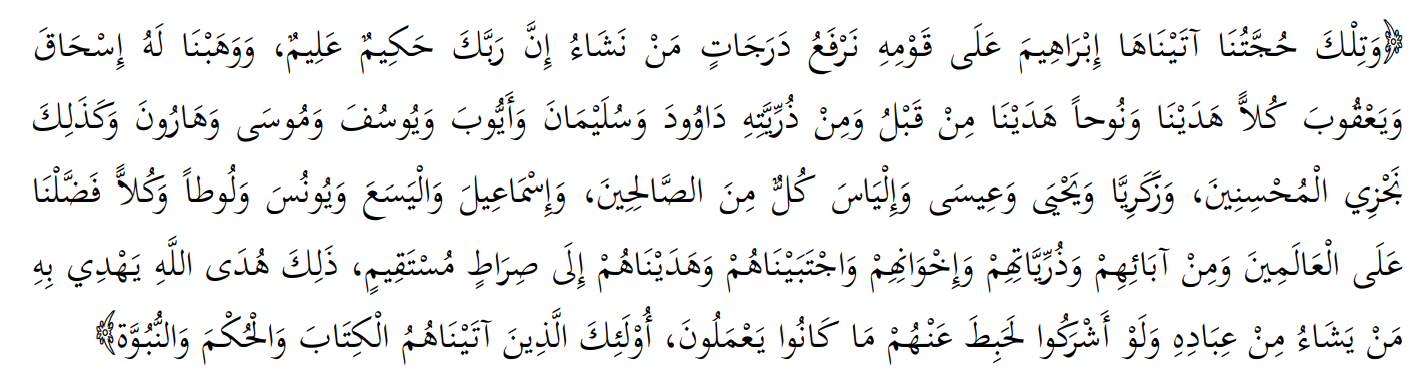
"这是我们赐予易卜拉欣以对抗他族人的论证,我们随意提升我们所愿者的品级。毫无疑问,你的主是至睿的,是全知的。我们赐予他伊斯哈格和叶尔孤白,我们为他们所有人指明了正道;在他之前,我们也为努哈指明了正道;在他的后裔中,我们为达五德、素莱曼、艾优卜、尤素福、穆萨和哈伦(指明了正道)。我们就是这样报酬行善者的。我们也(赐予)宰凯里雅、叶哈雅、爱萨和以利亚斯。他们都是我们所钟爱的近侍。我们也(赐予)伊斯玛仪、以利沙、优努斯和鲁特,我们使他们每一个人都超越于同时代的世人之上。我们还赐予他们的一些祖先、后裔和兄弟,我们拣选了他们,并指引他们走上正直的道路。这是安拉的引导,他以之引导他所意欲的仆人。如果他们以物配主,那么他们所做的一切都必定归于无效。这些人就是我们赐予经典、判断和先知身份的人。" [TMQ An’ām: 83-89]
"And this is our argument that we gave to Abraham against his people, we raise in degrees whom we please, undoubtedly, your lord is wise, knowing. And we gave him Ishaq and Yaqub, we showed the path to all of them and showed the path to Nuh before them, and of his progeny, to Daud and Sulaiman and Ayub and Yusuf and musa and Haroon, and thus we recompense the righteous. And to Zakaria, Yahya, Isa and Ilyas. These are all entitled to be our near ones. And to Ismail and Yasa and Yunus and lot, and to each one we preferred above all in his time. And also to some of their fathers and their progeny and some of their brothers, and we chose them and showed them the straight path. This is the guidance of Allah. He gives whom he will of his bondmen, and if they would have committed polytheism, then surely all that they had already done would have been destroyed. These are they to whom we gave the book and order and prophet hood" [TMQ An’ām: 83-89]
"并且以实玛利、以德里斯和祖勒基福勒,他们都是坚忍者,我已将我的慈悯降临他们。他们确是善人。" [TMQ Anbiya: 85-86]
"And Ismail and Idrees and Dhul-Kifl all were from the patient ones who we took into our mercy. Indeed they are from the righteous." [TMQ Anbiya: 85-86]
“我们又派遣了他们的兄弟舒阿伊布去麦德彦人那里。” [TMQ Araf: 85]
"And to Madyan, we sent their brother Shu'aib." [TMQ Araf: 85]
我们也派遣他们的兄弟萨利赫去见赛莫德人。 [TMQ Araf: 73]
"And to Thamud, we sent their brother Salih." [TMQ Araf: 73]
"并派遣他们的兄弟呼德去见阿德人。" [TMQ Araf:65]
"And to A'ad, we sent their brother Hud." [TMQ Araf:65]
我们说:"亚当啊!你和你的妻子住在乐园里吧。" [TMQ Baqarah: 35]
"And we said, o Adam dwell you and your wife in paradise." [TMQ Baqarah: 35]
穆罕默德ﷺ是安拉的使者。与他同在的人对不信道者严厉,彼此之间却充满怜悯。 [TMQ Fath: 29]
"Muhammad is the messenger of Allah. Those with him are severe on the Kuffar and merciful between themselves." [TMQ Fath: 29]
所有先知和使者都是从真主那里传达信息的人,因为这正是先知身份和使者身份的含义。他们诚实可信,是对被造物的警示者,以免使命和讯息变得徒劳无益;他们在传达过程中免于说谎和错误,正如他们免于犯任何罪过一样。此外,《古兰经》和先知穆罕默德ﷺ的圣训中,并没有确定性(Qati)的文本证据说明先知在被授予先知身份和使者身份之后会犯错。凡是有关此类记载的内容,要么见于传述上不确定的圣训(dhanni athuboot),要么见于证据含义上不确定的经文(dhanni ad-dalala),而不确定性的证据不能推翻关于无过失性的确定性理性证据。至于《古兰经》中关于阿丹(Adam)的记载,即他吃了真主禁止他吃的那棵树上的果实,这并不与先知在向地上之人传达讯息时必须无过失的要求相矛盾,因为阿丹所做之事发生在乐园中,其中的智慧唯有真主知晓。因此,这是一件独立的事情(即阿丹吃果实之事),因为无过失性只与向地上之人传达讯息相关。
All the prophets and messengers were informers from Allah because this is the meaning of prophethood and messengerhood. They are truthful, admonishers to creation lest the mission and message become futile and they are infallible from lying and error in their propagation, just as they are infallible from committing any sin. Further there is no definite [Qati] textual evidence in the Qur’ān or the Sunnah of the prophet informing about the erring of the prophets after their Prophethood of Messengership. Whatever has been reported is either in the ahadith that are indefinite in their transmission [dhanni athuboot] or in the ayat that are indefinite in their evidence [dhanni ad-dalala] and the Indefinite [dhanni] cannot over ride the definite rational evidence on infallibility. As for what was revealed regarding Adam in the Qur’ān about him eating from the tree which Allah had prohibited him to eat from, this does not contradict the requirement of infallibility in the propogation of the message to the people on the earth because what happened from Adam was in the Paradise, the wisdom of which is only known to Allah . Therefore this is separate matter (i.e Adam’s eating of the fruit of the tree) because infallibility is related to the propogation of the message to the people on the earth.