৩.২ অধ্যায় দুই: গবাদি পশুর যাকাত
3.2 Chapter Two Zakah On Livestock
প্রাণিজগতে অসংখ্য প্রজাতি রয়েছে। মানুষ তাদের মধ্যে মাত্র কয়েকটি ব্যবহার করেছে। আরবরা এদেরকে "আল-আনআম" বলে জানে। উট, গরু, মহিষ, ভেড়া ও ছাগল - এসবই সেই সম্পদের অংশ, যা আল্লাহ তাঁর বান্দাদের জন্য দান করেছেন। তাঁর পবিত্র কিতাবের বহু স্থানে এদের উপকারিতার কথা উল্লেখ করা হয়েছে। সূরা আন-নাহল - যাকে কখনো সূরা আল-আনআম (গবাদি পশু) বলা হয় - এ আল্লাহ বলেন, {আর গবাদি পশু, তিনি তোমাদের জন্য সৃষ্টি করেছেন। তাতে রয়েছে তোমাদের জন্য শীত নিবারণের উপকরণ ও নানা উপকার, এবং তা থেকে তোমরা আহার করে থাক। আর সন্ধ্যায় যখন তোমরা এদেরকে গৃহে ফিরিয়ে আনো এবং সকালে যখন এদেরকে চারণভূমিতে নিয়ে যাও, তখন এদের মধ্যে তোমাদের জন্য সৌন্দর্য ও গৌরব রয়েছে। আর এরা তোমাদের ভারী বোঝা বহন করে এমন দেশে নিয়ে যায়, যেখানে কষ্ট ছাড়া তোমরা পৌঁছাতে পারতে না। নিশ্চয়ই তোমাদের রব অত্যন্ত স্নেহশীল, পরম দয়ালু।}১ আরও বলেন, {আর নিশ্চয়ই গবাদি পশুর মধ্যে তোমাদের জন্য শিক্ষণীয় নিদর্শন রয়েছে। তাদের পেটের মধ্যে যা আছে - গোবর ও রক্তের মাঝখান থেকে আমরা তোমাদের পান করার জন্য বিশুদ্ধ, পানকারীদের জন্য সুস্বাদু দুধ উৎপন্ন করি।}২ {এবং পশুর চামড়া দ্বারা তোমাদের জন্য তাঁবু বানিয়েছেন, যা তোমরা ভ্রমণের সময় ও অবস্থানের সময় হালকা ও সহজবহনযোগ্য পাও। আর তাদের পশম, নরম তন্তু ও লোম থেকে একটি সময় পর্যন্ত ভোগের জন্য আসবাবপত্র ও নানা উপকরণ বানিয়েছেন।}৩ সূরা ইয়াসীনে {তারা কি দেখে না যে, আমার হাতের তৈরি বস্তুসমূহের মধ্যে আমি তাদের জন্য গবাদি পশু সৃষ্টি করেছি, যেগুলো তাদের আয়ত্তাধীন? আর আমি সেগুলোকে তাদের বশীভূত করে দিয়েছি; ফলে তাদের কতক বাহন হিসেবে ব্যবহৃত হয় এবং কতক তারা আহার করে। আর এতে তাদের জন্য আরও নানা উপকার ও পানীয় (দুধ) রয়েছে। তবুও কি তারা কৃতজ্ঞ হবে না?}৪ আল্লাহ মানুষের জন্য এই গবাদি পশু সৃষ্টি করেছেন এবং মানুষের বশীভূত করে দিয়েছেন, যাতে তারা এদের পিঠে চড়তে পারে এবং এদের চামড়া ও লোম ব্যবহার করতে পারে। আল্লাহ যে মানুষের কাছে কৃতজ্ঞতা প্রত্যাশা করেন, তাতে বিস্ময়ের কিছু নেই।
The animal kingdom has many species. Mankind has made use of only a few of them. This is what is known by Arabs as al an'am. Camels, cows, buffalo, sheep, and goats, are all part of what God bestowed on His servants. Their benefits are mentioned in several places in His Holy Book. In sura al Nahl - sometimes called sura al An'am (livestock) - God says "and cattle He has created for you, from which ye derive warmth, and numerous benefits, and of their meat ye eat. And ye have a sense of pride and beauty in them as ye drive them home in the evening, and as ye lead them forth to pasture in the morning, And they carry your heavy loads to lands that ye could not otherwise reach except with souls distressed, for your Lord is indeed most kind, moat merciful,"1 Also "and buried in cattle will ye find an instructive sign, from what is within their body between excretions and blood, we produce for your drink, milk, pure and agreeable to those who drink it,"2 "and made for you, out of the skins of animals, tents for dwellings, which ye find so light and handy when in travel and when ye stop, and out of their wool, and their soft fibers, and their hair, furniture and articles for all convenience to serve you for a time"3. In sura Yasin, "See they not that we have created for them among the things which our hands have fashioned, cattle which are under their domination. And that we have subjected them to their use: of them some do carry them and some they eat, and they have other profits from them besides, and they get milk to drink. Will they not then be grateful?".4 God fashioned this livestock for mankind, and He subjects then to humans to ride and to make use of their skin and hair. It is not surprising that God asks people to be thankful.
আল-কুরআন ও নবী (সাঃ)-এর বিশুদ্ধ সুন্নাহ যে সবচেয়ে স্পষ্ট ও বাস্তব কৃতজ্ঞতার কথা বলে, তা হলো যাকাত আদায়ের বাধ্যবাধকতা। এর নিসাব ও হার নির্ধারিত রয়েছে, প্রতি বছর পশুর মালিকদের কাছে যাকাত আদায়কারী প্রেরণ করা হতো, এবং যারা যাকাত দিতে অস্বীকার করে তাদের জন্য সতর্কবাণী উচ্চারিত হয়েছে। নবী ﷺ-এর সময়ে আরবদের কাছে গবাদি পশু, বিশেষ করে উট, ছিল সবচেয়ে উপযোগী সম্পদ। ফলে সুন্নাহ এদের নিসাব ও হার অত্যন্ত স্পষ্টভাবে নির্ধারণ করে দিয়েছে। আজও বহু দেশে, বিশেষ করে মুসলিম দেশগুলোতে, গবাদি পশু জাতীয় সম্পদ ও আয়ের অন্যতম গুরুত্বপূর্ণ উৎস হিসেবে বিবেচিত হয়।
The most obvious and practical thankfulness urged by the Holy Qur'an and the purified tradition of the Prophet (p) is the obligation of zakah. Its nisab and rates are determined, collectors are sent every year to owners of cattle, and warning to those who refuse its payment is put forth. Livestock, especially camels, were the most useful asset for the Arabs at the time of the Prophet (p). Consequently, Sunnah determined their nisab and rates very clearly. In many countries today especially Muslim countries, livestock still represent one of the most important national assets and source of income.
এই অধ্যায়গুলোতে গবাদি পশুর যাকাতের পূর্ণাঙ্গ বিবরণ দেওয়ার চেষ্টা করা হয়েছে।
The following sections attempt to provide full account of zakah on livestock.
প্রথম অধ্যায়: গবাদি পশুর যাকাতের সাধারণ শর্তাবলি
SECTION ONE GENERAL CONDITIONS FOR ZAKAH ON LIVESTOCK
যাকাত সব পরিমাণ ও প্রকারের গবাদি পশুর ওপর আরোপিত হয় না। গবাদি পশুর যাকাত প্রদানযোগ্য হওয়ার জন্য কিছু শর্ত পূরণ হতে হবে, যা নিম্নে উল্লেখ করা হলো:
Zakah is not imposed on livestock of all quantity and kind. There are certain conditions that should be fulfilled for the zakatability of livestock which are ennumerated here:
১. যাকাত আদায়যোগ্য হওয়ার সর্বনিম্ন সীমা (নিসাব)
1. The minimum for zakatability (Nisab)
প্রথম শর্ত হলো নিসাব, কারণ যাকাত কেবল ধনীদের উপর ফরয, আর প্রত্যেক গবাদিপশুর মালিক ধনী নয়। সর্বদাই এমন একটি সীমা থাকা আবশ্যক যার উপরে থাকলে ব্যক্তিকে ধনী গণ্য করা হয়। এই সীমাই হলো নিসাব। এটি হলো পাঁচটি উট, যা শতাব্দীর পর শতাব্দী ধরে মুসলিমদের ঐকমত্যে স্বীকৃত। পাঁচটির নিচে কোনো উটের উপর যাকাত ফরয নয়। ভেড়ার নিসাব চল্লিশটি ভেড়া, এ বিষয়েও ঐকমত্য রয়েছে। নিসাব নির্ধারিত হয় নবী ﷺ-এর বাণী দ্বারা, তাঁর বাস্তব আমল দ্বারা এবং তাঁর খলীফাদের প্রয়োগ দ্বারা। গরুর নিসাব পাঁচ থেকে বত্রিশ, আবার পঞ্চাশ পর্যন্ত ভিন্ন হয়, কোন ফিকহী মাযহাব গ্রহণ করা হচ্ছে তার উপর নির্ভর করে।
The first condition is nisab, since zakah is only on the rich, and not every owner of livestock is rich. There always should be a limit above which persons are considered rich. This limit is nisab. It is five camels by unanimous agreement of Muslims for centuries. There is no obligated zakah for anything below five camel, nisab for sheep is forty sheep, also unanimous. Nisab is determined by sayings of the Prophet (p), by his actual practice and by the application of his successors. Nisab for cows varies from five to thirty-two to fifty, depending upon the school of jurisprudence one adopts.
২. বছর অতিবাহিত হওয়া (বার্ষিক)
2. The passage of a Year (Annual)
এটি নবী (ﷺ) থেকে এবং তাঁর খলীফাদের থেকে সহীহ সূত্রে বর্ণিত। তাঁরা প্রতি বছর একবার যাকাত আদায়কারী পাঠাতেন, যাতে গবাদি পশুর হিসাব নেওয়া যায়। পূর্ববর্তী অধ্যায়ে দেখানো হয়েছে যে, অর্জিত নয় এমন সম্পদের ক্ষেত্রে এক পূর্ণ চান্দ্রবর্ষ অতিবাহিত হওয়ার শর্ত সর্বসম্মতভাবে গৃহীত। এখানে এটুকু যোগ করা যায় যে, অর্জিত আয়ের ক্ষেত্রে এই শর্ত আরোপকারী অধিকাংশ আলিম বছরের মধ্যে প্রজননের ফলে জন্ম নেওয়া পশুর বাচ্চার ক্ষেত্রে এই শর্ত আরোপ করেন না, এবং বাচ্চার যাকাতযোগ্য বছরকে তার মায়ের বছর হিসেবে গ্রহণ করেন।
This is reported authentically from the Prophet (p) and his successors. They used to send zakah collectors once every year to take the count on livestock. It was shown in the previous chapter that the condition of the passage of one full lunar year for non-earned assets is accepted unanimously. One can add here that the majority who assert this condition on earned income do not require it on the offspring of livestock that result from reproduction during the year, and accept the zakatable year for offspring to be that of their mothers.
৩. তাদেরকে স্বাভাবিকভাবে চারণভূমিতে চরানো উচিত।
3. They should be pastured naturally
প্রাকৃতিক চারণভূমিতে, যা বিনা খরচে পাওয়া যায়, বছরের অধিকাংশ সময় ধরে প্রজনন, দুধ দোহন এবং ওজন বৃদ্ধির উদ্দেশ্যে যে গবাদি পশু চরানো হয়, তাদেরকে সায়িমা (চারণকৃত) গবাদি পশু বলা হয়। এর বিপরীত হলো খাদ্য কিনে খাওয়ানো।
Pastured livestock are those that are grazed on natural and cost-free pasture land during the major part of the year for the purpose of breeding, milking, and putting on weight.5 The opposite of natural grazing is buying feed.
গবাদিপশু বছরের অধিকাংশ সময় প্রাকৃতিকভাবে চারণভূমিতে চরানো হলে এই শর্ত পূরণ হয়।
The condition is satisfied if livestock is pastured naturally most of the year.
যদি পশুচারণ বৃদ্ধি, প্রজনন ও দুধ সংগ্রহের উদ্দেশ্যে করা হয় হওয়া উচিত; সুতরাং যদি তা ব্যক্তিগত বাহন হিসেবে চড়ার বা খাওয়ার উদ্দেশ্যে করা হয়, তবে এসব পশুর উপর যাকাত ধার্য হয় না। কারণ এরূপ নির্ধারণ পশুগুলোকে প্রবৃদ্ধির সম্পদের শ্রেণি থেকে সরিয়ে ব্যক্তিগত ব্যবহারের শ্রেণিতে নিয়ে যায়, যা যাকাতযোগ্য নয়, যেমন পরবর্তী অনুচ্ছেদে দেখানো হবে।
Pasturing should be made for the purpose of growth, reproduction, and milking; thus if it is made for the purpose of personal riding or eating, these animals are not zakatable, since such allocation removes animals from being growth assets and put them in the category of personal use which is not zakatable as shall be shown in the next subsection.
এই শর্তের কারণ হলো, যাকাত আবশ্যক হয় উদ্বৃত্ত সম্পদের উপর, অর্থাৎ যা মানুষের পক্ষে সহজে প্রদান করা যায়। এর প্রমাণ আল্লাহর এই বাণী: {তারা যা খরচ করবে তার মধ্যে যা উদ্বৃত্ত তা গ্রহণ করো}, এবং এই বাণী: {তারা আপনাকে জিজ্ঞাসা করে, তারা কী ব্যয় করবে? বলুন, উদ্বৃত্ত}, অর্থাৎ যা বেশি ব্যয়বহুল নয় এবং দ্রুত বৃদ্ধি পায়। এটি তখনই সম্ভব যখন পশু বিনা খরচে চরানো হয়, কারণ কৃত্রিমভাবে খাদ্য খাওয়ানো পশুর খরচ বেশি হয়, ফলে মানুষের পক্ষে তা যাকাত হিসেবে দান করা কঠিন হয়ে পড়ে।
The reason for this condition is that zakah is obligated on the surplus, what is easy for persons to pay, in accordance to the verse, "take the surplus"6 and the verse "when they ask you what to spend, say the surplus"7, that is, on what does not cost much and grows rapidly. This can only be fulfilled if the animals pastured cost-free, since artificially fed animals have high cost, which makes it hard for people to give then away as zakah.
এই শর্তটি আহমাদ, আন-নাসাঈ ও আবু দাউদ বর্ণিত একটি হাদীসের ভিত্তিতে নির্ধারিত হয়েছে। হাদীসটি বাহয ইবনু হাকীম তাঁর পিতার মাধ্যমে, তাঁর পিতা তাঁর দাদার মাধ্যমে বর্ণনা করেন। তিনি বলেন, আমি আল্লাহর রাসূল ﷺ-কে প্রাকৃতিকভাবে (খরচবিহীন) চারণকৃত উটের ব্যাপারে বলতে শুনেছি যে, প্রতি চল্লিশটিতে একটি (যাকাত) ... ইত্যাদি। একদল প্রখ্যাত আলিম এই হাদীসটিকে সহীহ বলে মত দিয়েছেন। এখানে "প্রাকৃতিকভাবে, খরচবিহীন চারণকৃত" বিশেষণটি এই ইঙ্গিত দেয় যে, কৃত্রিমভাবে খাওয়ানো উটের উপর যাকাত আরোপিত হয় না; অন্যথায় এমন একটি বিশেষণ যোগ করা অর্থহীন হয়ে পড়ে, আর নবী ﷺ অনর্থক কথা বলেন না। এই হাদীস থেকে স্পষ্ট বোঝা যায় যে, যে উটগুলোকে প্রাকৃতিকভাবে, খরচবিহীন চারণকৃত বলে বিশেষিত করা হয়েছে, সেগুলো অন্যগুলোর চেয়ে ভিন্ন।
৪. যাকাতযোগ্য গবাদিপশু কাজের পশু হওয়া উচিত নয়।
4. Zakatable livestock should not be working animals
এটি গবাদি পশুর যাকাতযোগ্য হওয়ার চতুর্থ ও শেষ শর্ত। এর অর্থ হলো, এগুলো চাষাবাদে, পানি বা বোঝা বহনে, কিংবা আরোহণ ইত্যাদি কাজে ব্যবহৃত হওয়া চলবে না। এই শর্ত কেবল উট ও গরুর ক্ষেত্রেই প্রযোজ্য। আবু উবাইদ 'আলী (রাযিয়াল্লাহু আনহু) থেকে বর্ণনা করেন যে, "কাজে নিয়োজিত গরুর উপর কোনো সাদাকা নেই।" জাবির ইবনু 'আবদিল্লাহ (রাযিয়াল্লাহু আনহু) থেকেও একটি বর্ণনা আছে যে, তিনি বলেছেন, "চাষাবাদে নিয়োজিত পশু যাকাতযোগ্য নয়।" আবু দাউদ তাঁর সুনানে যুহাইর থেকে বর্ণনা করেন: আমাদের কাছে আবু ইসহাক, 'আসিম ইবনু দামুরাহ ও আল-হারিস সূত্রে 'আলী (রাযিয়াল্লাহু আনহু) থেকে বর্ণিত হয়েছে—(যুহাইর বলেন, "আমার মনে হয় তিনি নবী ﷺ থেকে বর্ণনা করেছেন") যে, তিনি বলেছেন, "আমার কাছে এক-দশমাংশের এক-চতুর্থাংশ নিয়ে এসো, অর্থাৎ প্রতি চল্লিশ দিরহামে এক দিরহাম..." এবং তিনি আরও বলেন, "আর কাজে নিয়োজিত পশুর উপর কিছুই ওয়াজিব নয়।" এটি ইবনু আবী শাইবাহ নবী ﷺ-এর সূত্রে বর্ণনা করেছেন, এবং 'আবদুর রাযযাক তাঁর মুসান্নাফে আস-সাওরী ও মা'মার সূত্রে কেবল 'আলী (রাযিয়াল্লাহু আনহু) থেকে বর্ণনা করেছেন।12
This is the fourth and last condition for zakatability of livestock. It means that they should not be used for cultivation, carrying water or loads or riding, etc. This condition only applies to camels and cows. Abu Ubaid reports from 'Ali, that " There is no sadaqah on working cows."There is also a report that Jabir bin 'Abd Allah said "Animals working in cultivation are not zakatable."11 Abu Daud, in his Sunan, reports from Zuhair "We are told by Abu Ishaq from 'Asem bin Damurah and al Harith from 'Ali, (Zuhair said "I think from the Prophet") that he said, "Bring me one-fourth of a tenth, i.e. on each forty dirhams one dirham..." and he continued, "and there is nothing due on working animals." This is reported also by Ibn Abi Shaibah linked to the Prophet, and by 'Abd Al Razzaq, in his Musannaf, via al Thawri and Mamar as from 'Ali only.12
এই মর্মে অনুরূপ বর্ণনা ইবরাহীম, মুজাহিদ, আয-যুহরী, উমর ইবনু আব্দিল আযীয এবং অন্যান্য কিছু তাবিঈ থেকেও এসেছে।১৩ আবূ হানীফা, আস-সাওরী, আশ-শাফিঈ এবং যায়দীগণেরও এটাই মত। গরু সম্পর্কে আল-লাইছেরও এই মত।
Similar reports exist as coming from Ibrahim, Mujahid, al Zuhri, Umar bin 'Abd al Aziz, and some other Followers.13 It is also the view of Abu Hanifah, al Thawri, al Shafi'i, and the Zaidis. It is the opinion of al Layth as far as cows are concerned.
দুটি বিষয় এই বর্ণনাগুলো ও এই মতকে সমর্থন করে। প্রথমত, ব্যক্তিগত ব্যবহার ও সেবার জন্য নির্ধারিত সম্পদ যাকাতযোগ্য নয়, এবং একই যুক্তিতে চাষাবাদ বা ব্যক্তিগত পরিবহনের জন্য নির্ধারিত গবাদিপশুও যাকাতযোগ্য হওয়া উচিত নয়। স্পষ্ট যে, এমন পশুগুলো প্রবৃদ্ধির উদ্দেশ্যে বিনিয়োগকৃত সম্পদের অংশ নয়।১৪ দ্বিতীয়ত, আবু উবাইদ কর্তৃক আয-যুহরী থেকে বর্ণিত রিওয়ায়াত অনুযায়ী, আরোহণের জন্য ব্যবহৃত গরু ও উটের উপর যাকাত নেই, এবং চাষাবাদে ব্যবহৃত গরুর উপরও যাকাত নেই।১৫ এসব যেন কৃষির যন্ত্রপাতির মতো। সাঈদ ইবনু আব্দিল আযীয আত-তানূখী বলেন, "চাষাবাদে ব্যবহৃত গরুর উপর যাকাত নেই, কারণ উৎপাদিত শস্যের উপরই যাকাত দেওয়া হয়, আর তাতে গরুর পরিশ্রমও জড়িত।"১৬ যদি কৃষিকাজে ব্যবহৃত পশুর উপর যাকাত ধার্য করা হতো, তবে উৎপাদনের উপকরণ ও উৎপন্ন ফসল, উভয়ের উপর যাকাত হতো এবং কৃষির উপর দ্বিগুণ যাকাত আরোপিত হতো, যেমন আবু উবাইদ সঠিকভাবে বলেছেন। এই বিধানে মালিক জমহুর ওলামার সঙ্গে ভিন্নমত পোষণ করেন। তাঁর মতে, কাজে ব্যবহৃত হোক বা না হোক, প্রাকৃতিকভাবে চারণভূমিতে চরুক বা না চরুক, গরু ও উটের উপর যাকাত ওয়াজিব। মালিকের এই মত আস-সাওরীর কাছে উল্লেখ করা হলে তিনি বলেন, "আমি ভাবিনি যে কেউ এমন কথা বলবে।"১৭ তবে ন্যায্যতার খাতিরে উল্লেখ করা উচিত যে, মালিকী ফকীহদের কেউ কেউ জমহুরের মতের দিকে ঝুঁকেছেন।
সেকশন দুই: উটের যাকাত
SECTION TWO ZAKAH ON CAMELS
মুসলিমদের সর্বসম্মত ঐকমত্য, পাশাপাশি আল্লাহর রাসূল ﷺ-এর কয়েকটি সহীহ হাদীস এবং তাঁর সাহাবীদের বর্ণনাসমূহ থেকে উটের নিসাব এবং তাতে নিসাবের হারগুলো এরূপ প্রমাণিত হয়:
The unanimous agreement of Muslims, as well as several correct sayings of the Messenger of God (p) and reports from his Companions indicate nisab of camels and the rates of nisab on them are as follows:
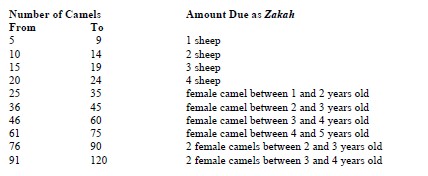
এই নির্ধারিত হারের উপর ইজমা রয়েছে, তবে একটি ব্যতিক্রম আছে: 'আলী (রাঃ) থেকে বর্ণিত একটি রিওয়ায়াত অনুযায়ী ২৫টি উটে পাঁচটি ভেড়া এবং ২৬টি উটে এক বছর থেকে দুই বছর বয়সী একটি মাদী উট যাকাত হিসেবে দিতে হয়।১৯ ইবনুল মুনযির বলেন, এই রিওয়ায়াতের কারণে ঐকমত্য ভঙ্গ হয় না, কারণ 'আলী (রাঃ) থেকে বর্ণিত এই কথাটি সহীহ নয়। এসব পরিমাণ ও হার সম্পর্কে আনাস (রাঃ)-এর বক্তব্যই সঠিক, এবং তার বিষয়বস্তুর উপর ঐকমত্য রয়েছে।২০ ১২০টির বেশি উটের ক্ষেত্রে অধিকাংশ আলিমের মত হলো, প্রতি অতিরিক্ত ৫০টি উটের জন্য যাকাতের অতিরিক্ত অংশ হবে তিন থেকে চার বছর বয়সী একটি মাদী উট, আর প্রতি অতিরিক্ত ৪০টি উটের জন্য যাকাতের অতিরিক্ত অংশ হবে দুই থেকে তিন বছর বয়সী একটি মাদী উট।২১ এটি নিচের সারণিতে দেখানো হলো:
There is ijma on this schedule,l9 except for a report from 'Ali that on 25 camels there is five sheep and on 26 camels there is one female camel between one and two years old.20 Ibn al Mundhir says. The unanimity is net broken, because what is reported from 'Ali is not authentic. The saying of Anas on these quantities and amounts is correct and there is a unanimous agreement on its content.21 For more than 120 camels the majority's view is that for each additional 50 camels the additional amount of zakah is a female camel between three and four years old while on each additional 40 camels the additional amount of zakah is a female camel between two and three years old.22 This is shown in the following table :
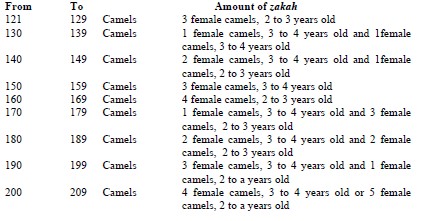
টেবিল থেকে দেখা যায় যে বড় সংখ্যার ক্ষেত্রে দশটির কম উটের বৃদ্ধি যাকাতের পরিমাণকে প্রভাবিত করে না। একবার দশটি বাড়লে, উপরে উল্লিখিত একই নিয়ম অনুযায়ী প্রদেয় যাকাতের পরিমাণে আপনি এক ধাপ উপরে যান। এই দুটি টেবিল থেকে স্পষ্ট যে কারো মালিকানাধীন উটের সংখ্যা পাঁচের কম হলে কোনো যাকাত নেই। পাঁচে পৌঁছালে প্রদেয় পরিমাণ একটি ছাগল। আল-মাবসূতের লেখক একজন আলেমের উক্তি উদ্ধৃত করে বলেন, "এর অর্থ হলো গবাদি পশুর মূল্য বিবেচনা করা হয়। এক থেকে দুই বছর বয়সী উট চল্লিশ দিরহামে এবং একটি ছাগল পাঁচ দিরহামে মূল্যায়িত হতো, সুতরাং পাঁচটি উট ২০০ দিরহামের সমান, আবার ৪০টি ছাগলের সমান। এর থেকে বোঝা যায় যে উট, ছাগল ও রৌপ্য মুদ্রার যাকাতযোগ্যতার সর্বনিম্ন সীমা একই।" ইবনুল হুমাম তাঁর আল-ফাতহ গ্রন্থে এবং ইবনু নুজাইম তাঁর আল-বাহর গ্রন্থে জবাব দেন যে একটি উক্তি আছে যা বলে, "যে ব্যক্তির উপর নির্দিষ্ট বয়সের একটি উট যাকাত হিসেবে দেওয়া বাধ্যতামূলক, কিন্তু সেই বয়সের কোনো উট তার নেই, সে ছাগল না থাকলে গড়ে দশ দিরহাম মূল্যের বিনিময়ে তা পরিশোধ করতে পারে।" এটি আল-সারাখসীর ব্যাখ্যার বিরোধী একটি সুস্পষ্ট বক্তব্য। উক্ত উক্তিটি আল-বাহর গ্রন্থে আনাস (রাঃ) থেকে বর্ণিত হয়েছে।
It is seen from the table that for big numbers, an increase of less than ten camels does not affect the amount of zakah. Once it is increased by ten, then you go one step higher in the amount of zakah due according to the same rule mentioned above. It is obvious from these two tables that if the number of camels owned is less than five then there is no zakah. Once they reach five , the amount due is one sheep. The author of al Mabsut quotes a scholar as saying, "this means that the value of the livestock is considered. Camels between one and two years old used to be priced at forty dirhams and a sheep at five dirhams, so five camels equal 200 dirhams also equal 40 sheep. This implies that the minimum for zakatability of camels, sheep, and silver money is the same. Ibn al Humam in al Fath and Ibn Nujaim in al Bahr reply, there is a saying that states "Whoever is obliged to give as zakah a camel of a certain age group, but does not own any in that age, can pay in substitution on the average of 10 dirhams for a sheep, if he does not have a sheep. This is an explicit text that contradicts the explanation of al Sarakhsi.24 The saying referred to is reported by al Bahr from Anas.
শরী'আত উটের যাকাত হিসেবে ভেড়া নির্ধারণ করে যদি যাকাতযোগ্য উটের সংখ্যা ২৫-এর কম হয়, যদিও সাধারণত যাকাত একই জাতের সম্পদ থেকেই দেওয়া হয় যে সম্পদের যাকাত দিতে হবে।
Shari'ah obligates sheep as zakah on camels if the number of zakatable camels is lees than 25, though usually zakah is paid out of the same kind of the zakated assets.
কারণটি স্পষ্ট: প্রদেয় পরিমাণ একটি উটের চেয়ে কম, অথচ একই সঙ্গে শরীয়ত পাঁচটি উটকে ধনী কে তা নির্ধারণের জন্য যথেষ্ট বলে বিবেচনা করে।25
The reason is obviously that the amount due is less than one camel, but at the same time Shari'ah considers five camels to sufficiently define who is rich.25
আনাস (রা.) বর্ণনা করেন যে, আবু বকর, সত্যবাদী (আস-সিদ্দীক), যখন তাঁকে বাহরাইনে পাঠান, তখন এই বার্তাটি লিখেছিলেন।
Anas narrated that Abu Bakr, the Truthful wrote this message when he sent him to Bahrain:
পরম করুণাময়, অতি দয়ালু আল্লাহ্র নামে শুরু করছি। এটি সেই সাদাকার বাধ্যতামূলক দায়িত্ব, যা আল্লাহ্র রাসূল ﷺ মুসলিমদের উপর আরোপ করেছেন, যেমনটি আল্লাহ্ তাঁকে নির্দেশ দিয়েছেন।
In the name of God, most merciful, most gracious. This is the obligation of sadaqah imposed on Muslims by the Messenger of God (P), as ordained to him by God.
যারা এই নিয়মানুযায়ী যাকাত দিতে বলা হবে, তাদের তা অবশ্যই দিতে হবে, আর যাদের বেশি দিতে বলা হবে, তারা তা প্রত্যাখ্যান করবে। প্রতি ২৪টি উট বা তার কম সংখ্যার ক্ষেত্রে যাকাত ভেড়ায় দিতে হয়। প্রতি পাঁচটি উটের জন্য একটি ভেড়া আবশ্যক। যখন সংখ্যা ২৫ থেকে ৩৫ পর্যন্ত পৌঁছায়, তখন এক থেকে দুই বছর বয়সী একটি মাদী উট আবশ্যক। ৩৬ থেকে ৪৫ পর্যন্ত হলে দুই থেকে তিন বছর বয়সী একটি মাদী উট আবশ্যক।
Whoever is asked to pay it according to these rules must give it, and whoever is asked to pay more should refuse. On each 24 camels or less, zakah is due in sheep. On each five camels, one sheep is required. Once they reach 25 and up to 35 one female camel, one to two years old, is required. From 36 to 45, there is one she-camel two to three years old.
যদি তাদের সংখ্যা ৪৬ থেকে ৬০ পর্যন্ত পৌঁছায়, তবে তিন থেকে চার বছর বয়সী একটি উটনী দিতে হবে, যা গর্ভধারণ করতে সক্ষম। যদি তাদের সংখ্যা ৬১ থেকে ৭৫ পর্যন্ত পৌঁছায়, তবে চার থেকে পাঁচ বছর বয়সী একটি উটনী দিতে হবে। যদি তাদের সংখ্যা ৭৬
If they reach 46 to 60, there is one she-camel three to four years old due, one that can be bred. If they reach 61 to 75, one she-camel four to five years old is due. If they reach 76
৯০ পর্যন্ত (উটের সংখ্যা), দুইটি মাদি উট, যেগুলো দুই থেকে তিন বছর বয়সী, তা দেওয়া আবশ্যক। যদি সংখ্যা ৯১ থেকে ১২০ পর্যন্ত পৌঁছায়, তাহলে দুইটি মাদি উট, যেগুলো তিন থেকে চার বছর বয়সী, দিতে হবে। যদি সংখ্যা ১২০ এর বেশি হয়, তাহলে প্রতি ৪০টির জন্য (একটি করে মাদি উট দিতে হবে)।
to 90, there is two she-camels two to three years old due. If they reach 91 to 120, there are two she-camels, three to four years old due. If they are more than 120, for each 40
প্রতি পাঁচটি উটে একটি দুই থেকে তিন বছর বয়সী উটনী, এবং প্রতি পঞ্চাশটিতে একটি তিন থেকে চার বছর বয়সী উটনী দিতে হয়। যার চারটির বেশি উট নেই, সে স্বেচ্ছায় না দিলে তার উপর যাকাত ধার্য হয় না; কিন্তু উটের সংখ্যা পাঁচে পৌঁছালে তার উপর যাকাত হিসেবে একটি ছাগল ধার্য হয়। ভেড়া-ছাগলের সাদাকাহতে, যদি সেগুলো প্রাকৃতিকভাবে বিনা খরচে চারণভূমিতে চরে এবং সংখ্যায় চল্লিশ থেকে একশো বিশের মধ্যে থাকে, তবে একটি ভেড়া ধার্য হয়। একশো বিশের বেশি এবং দুইশো পর্যন্ত হলে দুটি ভেড়া ধার্য হয়।
১২০টি উটের পরে যাকাতের হারের পার্থক্য
Variance on the Rates after 120 Camels
আমি আগে উল্লেখ করেছি যে যাকাত নিয়ে ১২০টির বেশি উটের ক্ষেত্রে ফকীহদের মধ্যে ভিন্ন মত রয়েছে। মালিক, শাফিঈ, আহমাদ এবং অধিকাংশ আলিম মনে করেন, প্রতি অতিরিক্ত ৫০টির জন্য তিন থেকে চার বছর বয়সী একটি মাদী উট, এবং প্রতি অতিরিক্ত ৪০টির জন্য দুই থেকে তিন বছর বয়সী একটি মাদী উট দিতে হবে। এটি আবু বকর ও উমর (রাযিয়াল্লাহু আনহুমা)-এর নির্দেশনার বার্তায় বর্ণিত হয়েছে, যা আনাস ও ইবনু উমর (রাযিয়াল্লাহু আনহুমা) পরম্পরাক্রমে বর্ণনা করেছেন। একই কথা ইবনু হাযম ও যিয়াদ ইবনু লাবিদ-এর হাদরামাওত অধিবাসীদের উদ্দেশে লেখা বার্তাতেও পাওয়া যায়। নবী ﷺ-এর বাণীতেও এসেছে: "যদি তা ১২০ ছাড়িয়ে যায়, তবে প্রতি ৪০টির জন্য দুই থেকে তিন বছর বয়সী একটি মাদী উট এবং প্রতি ৫০টির জন্য তিন থেকে চার বছর বয়সী একটি মাদী উট।" শেষোক্ত বাণীর কিছু বর্ণনা সংক্ষেপ করে বর্ণনাকারী বলেছেন, "প্রতি ৫০টিতে একটি মাদী উট...", যাতে প্রতি অতিরিক্ত ৪০টির হার উল্লেখ নেই; তবে বিভিন্ন বর্ণনা একে অপরের পরিপূরক।
I pointed out earlier that there are varying views among jurists on zakah on above 120 camels. Malik, Shafi'i, Ahmad, and the majority consider the rate to be one female camel, three to four years old for each additional 50, and one female camel, two to three years old, for each additional 40,39 as mentioned in the message of Abu Bakr and 'Umar narrated successively by Anas and Ibn 'Umar. The same also appears in the messages of Ibn Hazm and Ziad bin Labid to the people of Hadramut,40 in the words of the Prophet (p) "If they exceed 120, then for each 40 one female camel two to three years old, and for each 50 one female camel three to four years old". Some versions of the last saying are summarized by that narrator, as "In each 50 one female camel ..." without mentioning the rate for each additional 40, but the different versions complete each other.
আবু হানীফার মত
Abu Hanifah's view
আন-নাখাঈ, আস-সাওরী এবং আবু হানীফাহ⁴¹ বলেন, "১২০-এর বেশি উটের ক্ষেত্রে আমরা নতুন করে হিসাব শুরু করি, অর্থাৎ অতিরিক্ত ৫ থেকে ২৪টি উটের জন্য প্রতি ৫টি উটে একটি ছাগল, এবং অতিরিক্ত ২৫টি উটের জন্য এক বছর থেকে দুই বছর বয়সী একটি মাদি উট ইত্যাদি যাকাত হিসেবে দিতে হবে।" নিম্নের সারণিতে এই মতানুযায়ী প্রদেয় পরিমাণ দেখানো হলো:
Al Nakha'i, Al Thawri, and Abu Hanifah41 say that "for what is above 120, we start the rates from the beginning, i,e., for an additional five to 24 camels, the rate is one sheep for each 5 camels, and for an additional 25 camels zakah due is one female camel, one to two years old, etc."The following table shows the amount due according to this opinion:
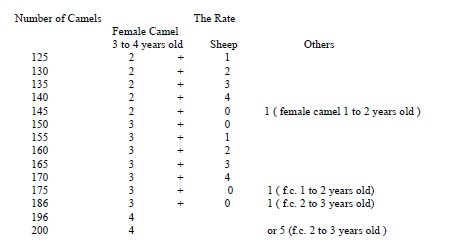
২০০ উটের পর এই হার পুনরাবৃত্ত হয়: প্রতি অতিরিক্ত পাঁচটি উটের জন্য একটি করে ছাগল, এবং প্রতিবার অতিরিক্ত যাকাতযোগ্য উট পঞ্চাশে পৌঁছালে, তার উপর প্রদেয় যাকাত হলো তিন থেকে চার বছর বয়সী একটি মাদি উট।
After 200 the rate repeats itself, one sheep for each additional five camels, and each time the additional zakatable camels reach fifty, the amount of zakah due on it is one female camel three to four years old.
হানাফিরা যুক্তি দেন যে আবু দাউদ মুরসাল হিসেবে বর্ণনা করেছেন [এমন হাদীস যার সনদে বর্ণনাকারী সাহাবীর নাম উল্লেখ নেই], এবং ইসহাক তাঁর মুসনাদে ও আত-তাহাবী তাঁর মুশকিলে হাম্মাদ ইবন সালামা থেকে বর্ণনা করেছেন, যিনি বলেছেন, "আমি কায়স ইবন সা'দকে বললাম, মুহাম্মাদ ইবন হাযমের চিঠিটি আমাকে এনে দিতে। তিনি আমাকে একটি পত্র দিলেন, যা তিনি আবু বকর ইবন মুহাম্মাদ ইবন হাযমের কাছ থেকে নিয়েছিলেন বলে জানালেন। আবু বকর বলেছেন যে নবী (ﷺ) এটি আমার দাদাকে লিখেছিলেন। আমি তা পড়লাম এবং তাতে উটের যাকাতের হার দেখতে পেলাম..." এরপর তিনি বর্ণনাটি এই পর্যন্ত বলেন, "যখন উটের সংখ্যা ১২০ ছাড়িয়ে যায়, তখন প্রতি ৩০টিতে তিন থেকে চার বছর বয়সী একটি মাদি উট দিতে হবে। এর বেশির ক্ষেত্রে হার আবার প্রথম থেকে শুরু হবে, আর ২৫টির কম উটের জন্য যাকাত ছাগল দিয়ে আদায় হবে, প্রতি পাঁচটিতে একটি ছাগল।" এটি যায়লা'ঈ-র নাসবুর রায়াহ গ্রন্থে বর্ণিত হয়েছে। 'আসিম ইবন দামুরাহ 'আলী (রা.) থেকে অনুরূপ একটি বর্ণনা দিয়েছেন, যা নবী (ﷺ) পর্যন্ত সংযুক্ত এবং 'আলী (রা.)-তে সমাপ্ত হয়েছে, এবং ইবন মাসউদ (রা.) থেকেও অনুরূপ কথা বর্ণিত আছে। ইবন রুশদ বলেন, হানাফিরা যুক্তি দিয়েছেন যে এ ধরনের বিষয় নবী (ﷺ)-এর নির্দেশ ছাড়া নির্ধারণ করা যায় না, কারণ এটি কিয়াসের মাধ্যমে নির্ণয় করা যায় এমন কিছু নয়।44
The Hanafites argue that Abu Daud reports as mursal [saying in whose chain the name of the reporting Companion is not mentioned], Ishaq in his Musnad and al Tahawi in his Mushkel from Hmmad bin Salamah, who said, "I told Qais bin Sa'd to get me the message of Mohammad bin Hazm, so he gave me a letter which he said he took from Abu Bakr bin Mohammad bin Hazm, who said that the Prophet (p), wrote it to my grandfather. I read it and found in it the rates of zakah on camels... " and he narrated the saying until, "Once they exceed 120 make due on each 30 one female camel three to four years old. For the increments, restart the rates from the beginning, and for what is less than 25 camel increments, the amount of zakah is due in sheep, one sheep for each five." This is reported in Nasb Al Rayah by al Zaila'i.42 A similar version is narrated by 'Asem bin Damurah from Ali, linked to the Prophet as well as ending at 'Ali,43 and Ibn Mas'ud is reported to have said similar things. The Hanafites are said by Ibn Rushd to have argued that such a thing cannot be decided but by instructions from the Prophet, because it is not anything that can be deducted by analogy.44
অধিকাংশ আলেম হানাফিদের যুক্তিসমূহ অগ্রাহ্য করেছেন এবং তাদের সিদ্ধান্তে দুর্বলতা দেখেছেন। আল বাইহাকি দেখিয়েছেন যে এই বিষয়ে ইবনু মাসউদ থেকে যা বর্ণিত হয়েছে তা সঠিক নয়। নবী ﷺ-এর দিকে সম্পর্কিত আলীর বক্তব্যের বর্ণনাটিও সঠিক নয়, এবং আলীর দিকে সম্পর্কিত বর্ণনাটি নিয়েও মতভেদ রয়েছে। এক বর্ণনায় এটি আবু বকর ও উমারের চিঠির সঙ্গে সামঞ্জস্যপূর্ণভাবে বর্ণিত হয়েছে, অন্য বর্ণনায় ভিন্নভাবে বর্ণিত হয়েছে। এমন ক্ষেত্রে প্রচলিত নীতি হলো, যে বর্ণনাটি বিতর্কিত নয় এমন অন্যান্য সহীহ বক্তব্যের সঙ্গে সামঞ্জস্যপূর্ণ, তাকে অধিক গুরুত্ব দেওয়া। এটি আল হাযিমি উল্লেখ করেছেন। তদুপরি, আসিম থেকে বর্ণিত একই বক্তব্যে এমন একটি বাক্য রয়েছে যা দুর্বলতার কারণে সকল আলেম বর্জন করতে একমত, অর্থাৎ প্রতি ২৫টি উটের জন্য এক বছর বা দুই বছর বয়সী উষ্ট্রীর পরিবর্তে পাঁচটি ভেড়া যাকাত হিসেবে দিতে হবে এই বক্তব্য। অন্যদিকে, সেই ভিন্ন ভিন্ন বর্ণনাগুলোকে এমনভাবে ব্যাখ্যা করা সম্ভব যাতে সেগুলো অন্যান্য সহীহ বক্তব্যের সঙ্গে সামঞ্জস্যপূর্ণ হয়।
আল-তাবারীর মত
The view of Al Tabari
আবু জাফর আল-তাবারী একটি তৃতীয়, সমন্বয়মূলক মত ব্যক্ত করেন, যে দুটি মতই গ্রহণযোগ্য এবং কোন মতটি প্রয়োগ করা হবে তা যাকাত আদায়কারী সংস্থার সিদ্ধান্তের উপর নির্ভর করে।৫২ আমার মতে এই পদ্ধতিটি উত্তম, কারণ নবী (ﷺ)-এর বর্ণিত সমস্ত হাদীসের মধ্যে সমন্বয় সাধনের সামান্যতম সম্ভাবনা থাকলে কোন হাদীসের বক্তব্যকে রহিত ও বাতিল গণ্য করা উচিত নয়। তবে এটি স্মরণে রাখা জরুরি যে, উটের বয়স ও যাকাতযোগ্য উটের সংখ্যা নির্ধারণ করা হয়েছে যাকাত হিসাব, পরিশোধ ও আদায়কে সহজ করার জন্য এবং প্রক্রিয়াগুলোকে সরল করার জন্য, যাতে যাকাত আদায়কারী সংস্থা কিছুটা বিবেচনার সুযোগ পায়। এই দৃষ্টিকোণ থেকে তাবারী-প্রস্তাবিত সমন্বয় নিঃসন্দেহে গ্রহণযোগ্য।
Abu Ja'far al Tabari expresses a third, reconciling view, stating that both opinions are acceptable, and it is up to the zakah collection agency to select which view to apply.52 In my opinion this is a better approach, since one should not consider the content of a saying superseded and annulled if there is the slightest chance of a reconciliation of all the reports from the Prophet (p). The reconciliation proposed by al Tabari is undoubtedly acceptable if we keep in mind that the determination of ages and quantity of camels due as zakah is meant to facilitate zakah calculation, payment, and collection, and to simplify the procedures so that the zakah collecting agency can exercise some discretion.
যাকাতের অক্ষরগুলোর সামান্য পার্থক্য
The slight differences in the letters of zakah
Zakah-র বিষয়ে আল্লাহর রাসূল (ﷺ) এবং তাঁর জ্ঞানী উত্তরাধিকারী খলীফাদের থেকে বর্ণিত বক্তব্যগুলোর বিভিন্ন সংস্করণে কিছু সামান্য পার্থক্য দেখা যায়। একটি উদাহরণ হলো, বিভিন্ন বয়সের উটের মূল্যের পার্থক্য কি দশ দিরহাম (বা দুটি ছাগল/ভেড়া), নাকি বিশ দিরহাম (বা দুটি ছাগল/ভেড়া)—এ নিয়ে মতভেদ।৫৩ 'আলী-র চিঠি এবং আবূ বকর ও 'উমর-এর চিঠির মধ্যকার এই পার্থক্য কীভাবে ব্যাখ্যা করা যায়? এটা জানা আছে যে, নবী (ﷺ)-এর সঙ্গে সম্পর্কিত হিসেবে 'আলী-র বর্ণনাটি সঠিক নয়, তবে এটাও জানা আছে যে, এটি যে 'আলী-র নিজের বক্তব্য, সে সংস্করণটি সঠিক। 'আলী কীভাবে নবী (ﷺ)-এর চিঠির সঙ্গে ভিন্নমত পোষণ করতে পারেন? আবূ বকর ও 'উমর-এর যুগে যিনি বেঁচে ছিলেন, তিনি কীভাবে তাঁদের চিঠি ও তার প্রয়োগ সম্পর্কে অবগত ছিলেন না? তিনি কি বিশ্বাস করতেন যে, তাঁর কাছে এমন তথ্য ছিল যা অন্য চিঠিতে থাকা বিষয়কে অগ্রাহ্য করে?
Looking at the different versions of messages about zakah reported from the Messenger of God (p), and his Wise Successors, one would find some minor differences. An example is whether the difference in value between different age camels is ten dirhams (or two sheep) or twenty dirhams (or two sheep)53. How can the difference between the letter of 'Ali and those of Abu Bakr and 'Umar be explained? It is known that the report of 'Ali is incorrect as linked to the Prophet (p), but it is also known that the version stating that it is a saying of 'Ali himself is correct. How could 'Ali differ with the letter of the Prophet (p)? How could he, who lived the era of Abu Bakr and 'Umar not be aware of their letters and application? Did he believe that he had information which superseded that contained in the other letter?
আমার মতে এই সমস্ত প্রশ্নের উত্তর নেতিবাচক, এবং আমার কাছে মনে হয় এই সামান্য পার্থক্যগুলোর জন্য অন্য ব্যাখ্যা প্রয়োজন। আমার বিশ্বাস, ভেড়ার মূল্যের সঙ্গে রৌপ্যের যে সমতা নির্ধারণ করা হয়েছে, যেমন রৌপ্যের হিসাবে ভেড়ার মূল্য, সেগুলো নবী (ﷺ) রাষ্ট্রপ্রধান হিসেবে নির্ধারণ করেছিলেন। তাঁর সময়ে প্রচলিত মূল্য অনুযায়ী একটি ভেড়া প্রায় দশ দিরহামের সমান ছিল। এটা জানা কথা যে দামের পরিবর্তন হয়, এবং নবী (ﷺ) যখন দুটি ভেড়ার জন্য বিশ দিরহামের অনুপাত উল্লেখ করেছিলেন, তখন তিনি তাঁর যুগের প্রচলিত দামের কথাই বলেছিলেন। আলী (রাঃ)-এর খিলাফতকালে ভেড়ার দাম ভিন্ন ছিল, তাই তিনি দুটি ভেড়ার জন্য দশ দিরহামের কথা বলেছিলেন। এতে নবী (ﷺ)-এর কথার বিরোধিতা হয় না, বরং নবী (ﷺ)-এর প্রয়োগ করা নিয়মই আলী (রাঃ)-এর যুগের উপযোগী করে প্রয়োগ করা হয়েছে। আমার মতে এই ব্যাখ্যা যেকোনো এমন প্রচেষ্টার চেয়ে উত্তম, যাতে ভিন্ন ভিন্ন বর্ণনাগুলোর কোনোটিকে উপেক্ষা করা হয়, যেমন ইয়াহইয়া ইবনু মাঈন যাকাতের হার ও পরিমাণ নির্ধারণ সম্পর্কে এই দাবি করে করেছিলেন যে এ বিষয়ে কোনো সঠিক বর্ণনা নেই। ইবনু হাযম এমন দাবির কঠোর সমালোচনা করেছেন এবং প্রশ্ন তুলেছেন, ইবনু মাঈনের মতো একজন ব্যক্তি বিন্দুমাত্র সমর্থনকারী প্রমাণ ছাড়া কীভাবে এমন কথা বলতে পারেন। শাখত (Schacht)-এর মতো একজন প্রাচ্যবিদ যাকাত সম্পর্কিত সমস্ত সঠিক বক্তব্য প্রত্যাখ্যান করার চেষ্টায় এই দাবিকে চূড়ান্তভাবে অপব্যবহার করেছেন।
In my opinion all these questions are answered negatively and it seems to me that another interpretation of those minor differences is due. I believe that some of these equalities, like the value of sheep in silver, are given by the Prophet (p), in his capacity as the head of the state. Their prices at his time were such that a sheep equaled approximately ten dirhams. It is known that prices vary from time to time, and when the Prophet (p), gave the ratio as twenty dirhams for two sheep he was quoting his period's current prices. At the time of 'Ali's caliphate, prices of sheep were different, and his quotation of those prices were ten dirharms for two sheep. This is not a violation of the Prophet's saying, but rather an application of the rule used by the Prophet (p), to what suits the time of 'Ali. This interpretation is, in my opinion, better than any attempt to disregard any of the differing texts, like what Yahya bin Ma'in did in claiming that nothing correct is reported on the determination of rates and quantities of zakah.55 Ibn Hazm came down very hard on such a claim and asked how a person like Ibn Ma'in could state such a thing without even the slightest supporting evidence.56 An Orientalist like Schacht abuses to the utmost that claim in his attempt to reject all the correct sayings on zakah.
সেকশন তিন: গরুর যাকাত
SECTION THREE ZAKAH ON COWS
গরু, যা মানুষ জমি চাষ, মাংস ও দুধের জন্য ব্যবহার করে, আল্লাহর বান্দাদের প্রতি তাঁর আরেক নিয়ামত। এই প্রাণীর উপকারিতা কোনো কোনো সময় এতটাই বেশি ছিল যে কিছু জাতি, যেমন প্রাচীন মিশরীয় ও সমসাময়িক হিন্দুরা, এই প্রাণীর পূজা করত।
Cows, used by mankind for land cultivation, meat and milk, are another bounty of God on His servants. The usefulness of this species was so great at times that some peoples, such as the ancient Egyptians and contemporary Hindus worshiped this animal.
মহিষকে গরুর সঙ্গে গণ্য করা হয়, এ বিষয়ে সকল মুসলিম আলেম একমত, যেমনটি ইবনুল মুনযির উল্লেখ করেছেন।
Buffalo is counted with the cows by all Muslim jurists, as stated by Ibn al Mundhir.
গরুর যাকাত সুন্নাহ ও ইজমা দ্বারা আবশ্যক। ইমাম বুখারী তাঁর সহীহ গ্রন্থে আবু যার (রা.) থেকে বর্ণনা করেছেন: "আমি নবী (ﷺ)-এর কাছে এলাম, তখন তিনি বললেন, 'সেই সত্তার শপথ, যাঁর হাতে আমার প্রাণ, অথবা সেই সত্তার শপথ, যিনি ছাড়া কোনো ইলাহ নেই, যে ব্যক্তির উট, গরু বা ভেড়া আছে কিন্তু সে তার প্রাপ্য হক আদায় করে না, কিয়ামতের দিন সেগুলো তাকে তার সবচেয়ে বড় ও মোটাতাজা রূপে এসে পদদলিত করবে। সেগুলো খুর দিয়ে তাকে মাড়াবে এবং শিং দিয়ে তাকে আঘাত করবে। যখন শেষটি তাকে অতিক্রম করবে, তখন প্রথমটিকে আবার ফিরিয়ে আনা হবে, যতক্ষণ না মানুষদের মধ্যে বিচার সম্পন্ন হয়।'" ইমাম বুখারী বলেছেন, এটি বাকির, তিনি আবু সালেহ থেকে, তিনি আবু হুরায়রা (রা.) থেকে, তিনি নবী (ﷺ) থেকেও বর্ণনা করেছেন। এই হাদীসে উল্লিখিত "প্রাপ্য হক" বলতে সর্বপ্রথম যাকাতকেই বোঝানো হয়েছে। যাকাত হলো সম্পদের ওপর নির্ধারিত হক, যেমনটি আবু বকর (রা.) যাকাত অস্বীকারকারীদের বিরুদ্ধে যুদ্ধের সময় নির্ধারণ করেছিলেন। উমর (রা.) ও অন্যান্য সকল সাহাবী এই সংজ্ঞা অনুমোদন করেছিলেন (বুখারী ও মুসলিম কর্তৃক বর্ণিত)। মুসলিমের বর্ণনায় "প্রাপ্য হক" শব্দের পরিবর্তে "যাকাত" শব্দ ব্যবহৃত হয়েছে। তদুপরি, মুসলিমরা প্রজন্মের পর প্রজন্ম ঐকমত্যে স্বীকার করে আসছেন যে গরুর ওপর যাকাত আবশ্যক। এ বিষয়ে একজন আলেমও ভিন্নমত পোষণ করেননি। তবে গরুর নিসাব ও যাকাতের হার নির্ধারণে মতভেদ রয়েছে।
Zakah on cows is obligated by Sunnah and Ijma. Bukhari, in his correct collection, reports from Abu Dharr "I came to the Prophet (p)58 and he said 'I swear by He who holds my soul in His hand,' or 'I swear by the one beside whom there is no God. No man who has camels, cows or sheep and does not pay their right due but on the Day of Judgement will be trampled by them at their largest and heaviest. They will be stepping on him with their hooves and ramming him with their horns, and when the last one is done with him the first is brought back until judgement has been given to all people." Imam al Bukhari said "It is also narrated by Bakir from Abu Saleh from Abu Hurairah from the Prophet (p). The "right due" mentioned in the saying means zakah before any other thing. Zakah is the right due on wealth as defined by Abu Bakr at the time of fighting those who rejected zakah, this definition was approved by 'Umar and all other Companions, (reported by al Bukhari and Muslim). In the version reported by Muslim the word "zakah" is used in place of the word "right due", moreover, Muslims through all generations have unanimously confirmed that zakah is obligated on cows. Not a single scholar disagrees.59 There are however, differences in determining nisab and zakah rates on cows.
গরুর যাকাতের নিসাব ও হার
Nisab and rates of zakah on cows
হাদীসে গরুর যাকাতের নিসাব ও হারের ব্যাপারে উটের মতো কোনো সহীহ বর্ণনা পাওয়া যায় না। এর কারণ হতে পারে এই যে, হিজাজ অঞ্চলে (মক্কা ও মদীনার আশেপাশে) গরু ছিল বিরল; আবার এটাও হতে পারে যে, গরু আকার ও মূল্যে উটের কাছাকাছি, তাই নবী ﷺ স্পষ্ট সাদৃশ্যের ধারণার উপর ভিত্তি করে এদের হার নির্ধারণ করেননি। তবে এ বিষয়ে কোনো সহীহ বর্ণনা না থাকার কারণে নিসাব ও হার নির্ধারণে ফকীহদের মধ্যে ভিন্ন ভিন্ন মত সৃষ্টি হয়েছে।
There is no correct saying that provides us with the nisab and rates of zakah on cows as we have seen on camels. This may be because cows were rare in the area of Hijaz (around Makkah and Madinah); it may be also because cows are close in size and value to camels, so the Prophet did not determine their rates on the assumption of their obvious similarity. But the fact that there is no correct saying on the issue left the jurists with varying views on the determination of nisab and rates.
জনপ্রিয় মত: নিসাব হলো ৩০টি গরু।
The popular opinion: Nisab is 30 cows
চার মাযহাবের সুপরিচিত অবস্থান হলো নিসাব হলো ৩০।
The reputed position upheld by the four schools of jurisprudence is that nisab is 30
গরুর কথা বলতে গেলে, ত্রিশটির কম গরুর উপর কোনো যাকাত ফরয নয়। ত্রিশটি গরুর জন্য এক বছর বয়সী একটি বাছুর (তাবী') ফরয হয়। চল্লিশ থেকে উনষাটটি গরুর জন্য দুই বছর বয়সী একটি গরু (মুসিন্নাহ) ফরয হয়। ষাটটি গরুর জন্য দুটি এক বছর বয়সী বাছুর ফরয হয়; সত্তরটির জন্য একটি এক বছর বয়সী ও একটি দুই বছর বয়সী; আর আশিটির জন্য
cows, and there is no obligated zakah on less than 30 cows. For 30 cows, a one-year old cow is due, and for 40 to 59 cows there is one cow, two years old, due. For 60 cows, two one-year-old cows are due; for 70 cows, a one-year-old and a two-year-old; for 80
গরু: ৪০টি গরুর জন্য একটি দুই বছরের বাছুর; ৬০টি গরুর জন্য একটি দুই বছরের বাছুর; ৯০টি গরুর জন্য তিনটি এক বছরের বাছুর; ১০০টি গরুর জন্য একটি দুই বছরের বাছুর ও দুটি এক বছরের বাছুর; ১১০টির জন্য দুটি দুই বছরের বাছুর ও একটি এক বছরের বাছুর, এবং ১২০টি গরুর জন্য তিনটি দুই বছরের বাছুর অথবা চারটি এক বছরের বাছুর।
cows, two two-year olds; for 90 cows, three one- year-olds; for 100 cows, one two-year old and two one-year-olds; for 110, two cows two year olds and one cow one year old, and for 120 cows, three two-year olds or four one-year olds.
এই মতটি আহমদ এবং আত-তিরমিযী, আন-নাসাঈ, আবু দাউদ ও ইবনু মাজাহ-এর সুনান গ্রন্থ চতুষ্টয়ে মাসরূক থেকে, তিনি মু'আয ইবনু জাবাল থেকে বর্ণিত একটি হাদীসের উপর নির্ভরশীল। তিনি বলেন, "আল্লাহর রাসূল ﷺ আমাকে ইয়ামানে পাঠিয়েছিলেন। তিনি আমাকে নির্দেশ দেন, প্রতি ৩০টি গরুর জন্য এক বছর বয়সী একটি বাছুর এবং প্রতি ৪০টি গরুর জন্য দুই বছর বয়সী একটি বাছুর যাকাত হিসেবে গ্রহণ করতে।"৬০ আত-তিরমিযী এই হাদীসটিকে হাসান (উত্তম) বলে গণ্য করেছেন, আর ইবনু হিব্বান ও আল-হাকিম একে সহীহ বলেছেন। ইবনু আব্দিল বার্র বলেন, "এর সনদ সহীহ, অবিচ্ছিন্ন ও প্রামাণ্য।" ইবনু বাত্তাল-ও অনুরূপ মন্তব্য করেছেন। ইবনু হাজার "ফাতহুল বারী"-তে বলেন, "এই হাদীসটির বিশুদ্ধতা সম্পর্কে যে কোনো রায় আমাদের যাচাই করে দেখতে হবে, কারণ তাবিঈ মাসরূক মু'আযের সাথে সাক্ষাৎ করেননি।" আত-তিরমিযী এটিকে উত্তম বলেছেন, কারণ এর সমর্থনে অন্য হাদীসও রয়েছে, যেমন মুওয়াত্তা-য় তাউস থেকে, তিনি মু'আয থেকে বর্ণিত হাদীসটি; কিন্তু তাউসও মু'আযের সাথে সাক্ষাৎ করেননি।61
This opinion relies on the saying reported by Ahmad and the four books of Sunan al Tirmidhi, al Nasa'i, Abu Daud and Ibn Majah from Masruq from Mu'adh bin Jabal who said "The Messenger of God, (p) sent me to Yemen. He instructed me to collect on each 30 cows, a one year-old cow, and on each 40 cows one two-year-old"60. This saying is graded as good by al Tirmidhi and as correct by Ibn Habban and al Hakim, Ibn 'Abd al Barr comments "Its chain is correct, continuous and authentic" and similar statement is made by Ibn Battal. Ibn Hajar said in al Fath "We need to scrutinise any ruling about the correctness of this saying, because Masruq [The follower] did not meet Mu'adh." al Tirmidhi considers it good because there are other sayings that testify with it, such as the one in al Muwatta, from Taus from Mu'adh, but Taus did not meet Mu'adh either.61
আল-তাবারীর মত যে নিসাব হলো ৫০।
The view of al Tabari that nisab is 50
ইবনু জারীর আত-তাবারী যুক্তি দেন যে নিসাব অবশ্যই ৫০টি গরু হতে হবে, এবং এ বিষয়ে সর্বসম্মতভাবে প্রতি ৫০টি গরুতে একটি গরু যাকাত হিসেবে ওয়াজিব। ৫০-এর নিচের যেকোনো সংখ্যা মতভেদপূর্ণ এবং কোনো সুস্পষ্ট নস দ্বারা সমর্থিত নয়।৬৯ ইবনু হাযম তাঁর আল-মুহাল্লা গ্রন্থে আত-তাবারীর একই যুক্তিতে এই মতকে সমর্থন করেন। তিনি মন্তব্য করেন, "যে বিষয়ে মতভেদ রয়েছে এবং যার ওয়াজিব হওয়ার পক্ষে কোনো নস নেই, তা মানুষের উপর আরোপ করা যাবে না, কারণ এতে আল্লাহর পক্ষ থেকে অথবা তাঁর রাসূল ﷺ-এর পক্ষ থেকে সহীহ নস দ্বারা তার ওয়াজিব হওয়ার বিষয়ে নিশ্চিত না হয়েই একজন মুসলিমের সম্পদের একটি অংশ বাজেয়াপ্ত করা হয়।"৭০ তিনি নিজস্ব সনদ-পরম্পরায় 'আমর ইবনু দীনার থেকে বর্ণনা উদ্ধৃত করেন যে, "ইবনু যুবাইর-এর কর্মকর্তাগণ এবং ইবনু 'আওফও প্রতি ৫০টি গরুতে একটি গরু সংগ্রহ করতেন,৭১ প্রতি ১০০টিতে দুটি গরু, এবং তার বেশির ক্ষেত্রে হার ছিল প্রতি ৫০টিতে একটি গরু।"৭২ এই কর্মকর্তাগণ মদীনায় বহু সংখ্যক সাহাবীর উপস্থিতিতে তাঁদের দায়িত্ব পালন করতেন, এবং এই কাজে কোনো আপত্তি করা হয়নি।
Ibn Jarir al Tabari argues that nisab must be 50 cows, that if is undoubtedly unanimous that for each 50 cows there is an obligatory zakah of one cow. Anything below 50 is controversial and not supported by a clear text.69 Ibn Hazm in al Muhalla supports this opinion on the same grounds as al Tabari. He comments "Anything that is controversial and on which there is no text making it obligatory must not be imposed on people, because it means confiscating a part of a Muslim's wealth without being certain about its requirement by virtue of a correct text from God or His messenger (p).70 He went on to quote, through his own chain, from 'Amr bin Dinar, "The commissioners of Ibn al Zubair as well as Ibn 'Auf used to collect one cow from each 50 cows,71 2 cow from each 100 and for more than that, the rate was one cow out of each 50.72 These commissioners were performing their duties in the presence of many, many Companions in Madinah, and this performance was not objected to.
কিন্তু এই মতটিকে দুটি দিক থেকে খণ্ডন করা যায়।
But one may disprove this opinion on two grounds:
ক. বক্তব্যের দৃষ্টিকোণ থেকে। আমর ইবনু হাযম-এর যাকাত সংক্রান্ত দীর্ঘ বর্ণনায় বলা হয়েছে, "এবং প্রতি ত্রিশটি গরুতে একটি এক বছর বয়সী বাছুর, এবং প্রতি চল্লিশটি গরুতে একটি গাভী।" একদল প্রখ্যাত আলিম এই বর্ণনাটিকে হাসান (উত্তম) মানের বলে গ্রহণ করেছেন, এবং আল-তাবারী এটি তাঁর "আল-ইমাম" গ্রন্থে তাকিউদ্দীন ইবনু দাকীকিল ঈদ-এর মতের বিপক্ষে দলিল হিসেবে ব্যবহার করেছেন।73
A. From the point of view of the text. The long saying of 'Amr bin Hazm on zakah says "and from each 30 cows, take one cow one-year-old, and from each 40 cows, one cow". This saying is graded good by a handful of leading scholars and it was used by al Tabari against the view of Taqiy al Din bin Daqiq al 'Id in his book Al Imam.73
এবং মুআয (রাযিয়াল্লাহু আনহু)-এর সেই উক্তি, যে অনুযায়ী প্রতি ত্রিশটি (গরুর) জন্য যাকাত আদায় করা উচিত
ইবনুল মুসাইয়্যাব ও আয-যুহরীর অভিমত
The opinion of Ibn al Musayyeb and Al Zuhri
দুইজন প্রসিদ্ধ আলিম, সাঈদ ইবনুল মুসাইয়্যিব ও মুহাম্মাদ ইবনু শিহাব আয-যুহরী, এবং আবূ কিলাবাহ ও আরও অনেকে গরুর নিসাব উটের নিসাবের সমান মনে করতেন, এবং উটের যাকাতের হারও গরুর ক্ষেত্রে একই হবে, শুধু উটের বয়সের বিবেচনা বাদ দিয়ে সামান্য একটি পরিবর্তনসহ। এ বিষয়ে একই রকম মত বর্ণিত হয়েছে যাকাত সংক্রান্ত উমার ইবনুল খাত্তাবের একটি পত্রের বিবরণে, যা জাবির ইবনু আব্দুল্লাহ ও নবী (ﷺ)-এর যুগে যাকাত আদায়কারী অন্যদের থেকে বর্ণিত। আবূ উবাইদ মুহাম্মাদ ইবনু আব্দুর রহমান থেকে বর্ণনা করেছেন যে, উমার ইবনুল খাত্তাব যাকাত সংক্রান্ত যে নির্দেশাবলি লিখেছিলেন, তার মধ্যে ছিল, "গরু থেকে উটের মতোই গ্রহণ করতে হবে।" আবূ উবাইদ আরও বলেন, "অন্যদের কাছে গরুর যাকাত সম্পর্কে জিজ্ঞেস করা হয়েছিল, তাঁরা উত্তর দিয়েছিলেন যে, এটি উটের মতোই।"
Two leading scholars, Said bin al Musayyeb and Muhammad bin Shehab al Zuhri, along with Abu Qulabah and others view nisab on cows to be the same as nisab on camels, and the zakah rate of camels to be the same for cows with only a minor change, that is, disregarding the ages of camels. A similar opinion is reported as a version of the letter of 'Umar bin Al Khattab on zakah, from Jabir bin 'Abd Allah and others who paid zakah at the time of the Prophet (p). Abu 'Ubaid reported from Mohammad bin 'Abd al Rahman that the instructions 'Umar bin al Khattab wrote on zakah included "from cows one should take the same as from camels." Abu 'Ubaid continues "Others were asked about zakah on cows and the answer was it is the same on camels".
ইবনে হাযম তাঁর নিজস্ব সনদে যুহরী ও কাতাদাহ থেকে বর্ণনা করেন, তাঁরা উভয়েই জাবির ইবনে আবদুল্লাহ থেকে বর্ণনা করেছেন যে তিনি বলেছেন, "প্রতি পাঁচটি গরুতে একটি ছাগল দিতে হবে, দশটিতে দুটি ছাগল, পনেরোটিতে তিনটি ছাগল, আর বিশটিতে চারটি ছাগল দিতে হবে।" যুহরী বলেন, "গরুর যাকাত উটের যাকাতের মতোই, শুধু বয়সের ক্ষেত্রে পার্থক্য রয়েছে। অর্থাৎ, যদি গরুর সংখ্যা ২৫ থেকে ৭৫-এর মধ্যে হয়..."
Ibn Hazm reports with his own chain from al Zuhri and Qatadah, both from Jabir bin 'Abd Allah his saying that "in each five cows there is one sheep due, in ten two sheep, in 15, three sheep, and in 20, four sheep due." Al Zuhri says "zakah on cows is like zakah on camels except for the ages. That is, if the number of cows were between 25 and 75
তার উপর প্রদেয় যাকাতের পরিমাণ হলো একটি গরু; ৭৬ থেকে ১২০ পর্যন্ত দুটি গরু। ১২০-এর বেশি হলে প্রতি অতিরিক্ত ৪০টি গরুর জন্য একটি করে অতিরিক্ত গরু দিতে হবে। আমাদের বলা হয়েছিল যে, "প্রতি ৩০টি গরুতে এক বছর বয়সী একটি গরু এবং প্রতি ৪০টি গরুতে একটি গরু প্রদেয়" - এই বক্তব্যটি ইয়েমেনবাসীদের জন্য কেবল একটি সরলীকরণ ও হার হ্রাস ছিল, যা পরে বাতিল হয়ে যায়। ৭৬. ইকরিমা ইবনু ওয়ালীদ থেকে বর্ণিত, তিনি বলেন: পরবর্তীকালে আমাকে 'ইক্ক'-এর যাকাত আদায়ের দায়িত্ব দেওয়া হলে আমি কয়েকজন বয়স্ক ব্যক্তির সঙ্গে সাক্ষাৎ করি, যারা আল্লাহর রাসূল ﷺ-এর সময়ে যাকাত প্রদান করতেন। তাঁরা মতভেদ করেন: তাঁদের কেউ বলেন, গরুর যাকাত উটের যাকাতের মতো দিতে হবে; কেউ বলেন, প্রতি ৩০টি গরুতে এক বছর বয়সী একটি গরু নিতে হবে; আবার অন্য কেউ বলেন, প্রতি ৪০টি গরুতে দুই বছর বয়সী একটি গরু নিতে হবে। ৭৬. ইবনু হাযম তাঁর নিজস্ব সনদে ইবনুল মুসাইয়্যাব, আবূ কিলাবাহ এবং অন্য এক আলেম থেকে যুহরীর মতের অনুরূপ একটি মত বর্ণনা করেন। তিনি উমর ইবনু আব্দির রহমান ইবনি খিলদাহ আল-আনসারী থেকেও বর্ণনা করেন, "গরুর যাকাত উটের যাকাতের মতোই, কেবল বয়সের ক্ষেত্রে ভিন্নতা রয়েছে।"77
সমর্থনকারী প্রমাণ
Evidence supporting this view
A. এই মতটি আবু উবাইদ তাঁর নিজস্ব সনদে মুহাম্মাদ ইবনু আব্দির রহমান থেকে বর্ণিত একটি হাদীস দ্বারা সমর্থিত, যাতে বলা হয়েছে, "যাকাত সম্পর্কে নবী ﷺ-এর চিঠিতে এবং উমার ইবনুল খাত্তাবের চিঠিতে আছে যে গরুর ক্ষেত্রে উটের মতোই গ্রহণ করতে হবে।"78
A. This opinion is supported by a report of Abu Ubaid with his own chain from Muhammad bin 'Abd al Rahman, "It is in the Prophet's letter on zakah and in the letter of 'Umar bin al Khattab that from cows, one should take the same as from camels."78
এই মতকে সমর্থন করে সেই বর্ণনাটিও, যা 'আবদুর রাযযাক, মা'মার থেকে বর্ণনা করেছেন। তিনি বলেন, "সাম্মাক ইবনুল ফাযল আমাকে নবী ﷺ-এর একটি চিঠি দিয়েছিলেন, যা মালিক ইবনু কুফলান আল-মুস'আবিয়্যীনের উদ্দেশে লেখা ছিল। তাতে আমি পড়েছি, 'এবং গরুর উপরও উটের মতোই যাকাত ধার্য হবে।'"79
Also, this view is supported by what is reported by 'Abd al Razzaq from Ma'mar, who said, " Sammak bin al Fadl gave me a letter from the Prophet, to Malik bin Kuflanis Al Mus'abiyn, in which I read, 'and on cows is due the same as on camels.'"79
বি. এটি সমর্থিত হয় যুহরীর বর্ণনা দ্বারা, যেখানে তিনি বলেন যে এটি ছিল আল্লাহর রাসূল ﷺ-এর সর্বশেষ বর্ণনা, এবং প্রতি ত্রিশটি গরুর জন্য এক বছর বয়সী একটি গরু নেওয়া প্রথম দিকে ইয়ামানবাসীদের প্রতি একটি অনুগ্রহ ছিল। এই বর্ণনাটি মুরসাল, তবে পূর্বের হাদীস এবং কিছু সাহাবীর বক্তব্য দ্বারা এটি সমর্থিত।
B. This is confirmed by what is mentioned by al Zuhri that it was the latest report from the Messenger of God (p), and that taking a one-year-old cow of each 30 cows was, at the beginning, a matter of favor for the peoples of Yemen. This report is mursal, but it is supported by the previous saying and by statements from some Companions.
ইবনু হাযম মন্তব্য করেছেন, "যদি কারও কাছ থেকে মুরসাল বর্ণনা গ্রহণযোগ্য হয়, তবে আয-যুহরী থেকে তা গ্রহণ করাই উচিত, কারণ তিনি সুন্নাহর সুগভীর জ্ঞানের অধিকারী ছিলেন এবং বহু সাহাবীর সাক্ষাৎ লাভ করেছিলেন।"80
Ibn Hazm comments "If a mursal saying would be accepted from anyone, it deserves to be accepted from al Zuhri because he was well versed in Suunah and met a number of the Companions".80
গ. এই মতের পক্ষে সমর্থন আসে সেই সাধারণ নীতি থেকেও, যা ৩নং অধ্যায়ের শুরুতে উল্লিখিত হাদীসে নিহিত: "আর যে ব্যক্তি গরুর মালিক হয় এবং তার প্রাপ্য হক আদায় করে না, কিয়ামতের দিন তাকে শুইয়ে দেওয়া হবে যাতে গরুগুলো তাকে পদদলিত করে।" বলা হয়, এটি একটি সাধারণ বক্তব্য, যা একটি নির্দেশ বা কোনো ইজমা' দ্বারা আরোপিত সীমাবদ্ধতা ছাড়া যেকোনো সংখ্যক গরুকে অন্তর্ভুক্ত করে। আরও বলা হয়, প্রতি ৩০টিতে এক বছর বয়সী একটি গরু এবং প্রতি ৪০টিতে দুই বছর বয়সী একটি গরু ওয়াজিব—এই বক্তব্যও এই মতকে সমর্থন করে, কারণ এটি ৩০-এর কম গরুর যাকাতকে রহিত করে না। এটি কেবল যাকাতের হার বর্ণনা করে।
একটি চতুর্থ মত
A fourth opinion
ইবনু রুশদ আবারও এমন একটি মত উল্লেখ করেন, যার প্রবক্তার নাম বা তার পক্ষের যুক্তি তিনি দেননি: প্রতি দশটি গরুতে একটি ছাগল দিতে হবে, এবং ত্রিশটিতে পৌঁছালে তাতে এক বছর বয়সী একটি গরু দিতে হবে।⁸⁴ আমি দেখতে পাই, ইবনু আবি শাইবাহ তাঁর আল-মুসান্নাফ গ্রন্থে এই মতটি শাহর ইবনু হাওশাব-এর প্রতি সম্বন্ধ করেছেন। তিনি বলেন, যাকাত হবে প্রতি দশটি গরুতে একটি ছাগল, প্রতি বিশটিতে দুটি ছাগল, এবং ত্রিশটিতে এক বছর বয়সী একটি গরু।
Ibn Rushd gives yet another opinion without providing the name of its author nor its argument: On each ten cows there is one sheep due, until they reach 30 cows, on which there is a one-year-old cow due.84 I find that Ibn Abi Shaibah attributes this view to Shahr bin Haushab in his al Musannaf. The latter says "zakah should be one sheep due on each ten cows, two sheep on each twenty cows, and one cow, one year old, on 30
"cows."85 এর অর্থ হলো, গরুর নিসাব হলো দশটি, যেখানে পূর্বে উল্লিখিত মতে তা পাঁচটি। ইবনু আবী শাইবাহ এর পক্ষে কোনো প্রমাণ উপস্থাপন করেননি। এ যুক্তির সমর্থনে এমন একটি হাদীসের কথা মনে আসতে পারে, যেখানে প্রাণহানির ক্ষতিপূরণ একশত উট বা দুইশত গরু নির্ধারণ করা হয়েছে। এটি 'উমার থেকে বর্ণিত, এবং নবী ﷺ-এর দিকেও সম্পৃক্ত করা হয়েছে।86 এতে বোঝা যায় যে একটি উট দুটি গরুর সমান। যদি উটের নিসাব পাঁচটি হয়, তবে গরুর নিসাব অবশ্যই দশটি হওয়া উচিত, আর যদি প্রতি পাঁচটি উটের জন্য যাকাতের পরিমাণ একটি ছাগল হয়, তবে প্রতি দশটি গরুর জন্য একটি ছাগল ওয়াজিব হওয়া উচিত।
cows."85 This means that nisab of cows is ten as compared to five in the previously mentioned opinion. No evidence of support is given by Ibn Abi Shaibah. It may come to mind that this argument can be supported by the saying that estimates the compensation for the loss of life at 100 camels or 200 cows. This is reported as said by 'Umar, as well as linked to the Prophet (p).86 This implies that one camel equals two cows. If nisab for camels is five, that of cows must be ten, and if for each five camels the amount of zakah due is one sheep, there should be one sheep due for each ten cows.
বিশ্লেষণ ও ওজন নির্ধারণ
Analysis and weighing
এই সমস্ত মতামত উল্লেখ করার পর আমার কাছে মনে হয়, প্রতি ৩০ ও ৪০টি গরুর যাকাতের হার সম্পর্কে সংখ্যাগরিষ্ঠ আলিমদের মতটিই অধিক গুরুত্ব বহন করে, কারণ তা মু'আয ও 'আমর ইবনু হাযমের বর্ণনার ভিত্তিতে প্রতিষ্ঠিত। তবে উল্লেখযোগ্য বিষয় হলো, এই দুটি বর্ণনা ৩০টির নিচে কী আছে, তা নেতিবাচক হোক বা ইতিবাচক, সে সম্পর্কে কোনো তথ্য দেয় না; বরং এগুলো নিসাব নির্ধারণ না করে কেবল যাকাতের হার নির্ধারণ করে, তবে বৈপরীত্যের মাধ্যমে ছাড়া। আশ্চর্যজনকভাবে, ইবনু হাযমের বর্ণনাটি আরও বলে, "এবং প্রতি ৪০ দীনারে (স্বর্ণের) একটি দীনার যাকাত দিতে হবে।" সংখ্যাগরিষ্ঠ ফকীহ একমত যে স্বর্ণের নিসাব ২০ দীনার, ৪০ দীনার নয়। এতে বোঝা যায় যে এই বর্ণনাটি যাকাতের হার নির্ধারণের জন্য বলা হয়েছিল, নিসাব নির্ধারণের জন্য নয়, কারণ স্বর্ণের যাকাতের হার আড়াই শতাংশ বা চল্লিশ ভাগের একভাগ।
After listing all these opinions,87 it seems to ms the view of the majority about the rate on each 30 and 40 cows is the one that carries more weight, on the basis of the saying of Mu'adh and Amr bin Hazm. However, it is notable that these two sayings do not give information about what is below 30 cows, whether negative or positive, but only determine the rate of zakah rather than its nisab, except by contrast. Interestingly enough, the saying of Ibn Hazm goes on to state, "And on each 40 dinars (of gold) there is due one dinar". The majority of jurists agree that nisab on gold is 20 dinar and not 40, which indicates that this saying was given to determine the rate of zakah and not necessarily its nisab, since the rate on gold is two-and-half percent or one-fortieth.
এই মতটিকে ইবনুল মুসাইয়্যিব, আয-যুহরি এবং তাঁদের অনুসারী দলের মতের সঙ্গে মিলিয়ে দেখা সম্ভব, যারা গরুর নিসাব পাঁচটি ধরেছেন। বিশেষত, উমর (রা.)-এর যাকাতবিষয়ক পত্রের একটি বর্ণনায় নিসাব পাঁচ বলা হয়েছে, যা সাহাবী জাবির ইবনু আবদিল্লাহ (রা.) থেকে বর্ণিত, এবং কখনো কখনো এটি নবী (ﷺ)-এর পত্রের সঙ্গেও সম্পৃক্ত করা হয়। আবু উবাইদ মন্তব্য করেছেন যে এই মত মানুষের মধ্যে পরিচিত ছিল না, কিন্তু আগে দেখানো হয়েছে যে এটি প্রকৃতপক্ষে একাধিক সাহাবী ও তাবিঈর কাছে পরিচিত ছিল। আরও বলা যায় যে, গরু ও উটের মধ্যে কিয়াস একটি শক্তিশালী কিয়াস, এবং ইবনু হাযমের আপত্তি এই যুক্তিতে বাতিল করা যায় যে তা তাঁর নিজস্ব দৃষ্টিভঙ্গির উপর ভিত্তিশীল, যে তাঁর মতে সব ধরনের কিয়াসই অবৈধ। অধিকাংশ আলিম এই মূলনীতিতে একমত যে সঠিক কিয়াস শারী'আহর একটি দলিল বা উৎস।
It is possible to combine this opinion with that of Ibn al Musayyib, al Zuhri and their group of followers in putting nisab on cows at five, especially since it is put at five in a version of 'Umar's letter on zakah, as a report from Jabir bin 'Abd Allah, a Companion, and is sometimes attributed to the letter of the Prophet (p). Abu 'Ubaid comments that this opinion was not known by people, but it was shown earlier that it was in fact known to a number of Companions and Followers. Additionally, one can argue that the analogy of cows and camels is a strong one and the objection of Ibn Hazm can be disregarded as based on his personal view that all analogy is invalid. The majority of scholars are in accord on the principle that the correct analogy is a source of deduction in Shari'ah.
ষষ্ঠ অনুচ্ছেদ: ছাগল-ভেড়ার যাকাত
SECTION FOUR ZAKAH ON SHEEP
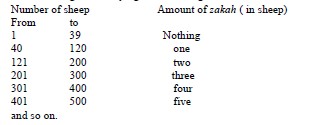
ভেড়ার উপর যাকাত ওয়াজিব হওয়ার বিষয়টি সুন্নাহ ও ইজমা দ্বারা প্রমাণিত। সুন্নাহ থেকে আনাস (রা.) বর্ণনা করেন, পূর্বে উল্লেখিত আবু বকর (রা.)-এর নির্দেশনামায় রয়েছে যে, "ভেড়ার যাকাত হলো, যেগুলো স্বাভাবিকভাবে চারণভূমিতে স্বাধীনভাবে চরে বেড়ায়, প্রতি ৪০টিতে একটি ভেড়া দিতে হবে, ১২০ পর্যন্ত।"
Zakah on sheep is obligating by virtue of Sunnah and Ijma'. In Sunnah, Anas narrates in the letter of instruction of Abu Bakr mentioned earlier that "As for sadaqah on sheep, naturally cost-free pastured, out of each 40 there is one sheep due, up to 120.
যদি সংখ্যা বৃদ্ধি পায়, তবে ২০০ পর্যন্ত দুটি ভেড়া দিতে হবে, এবং সংখ্যা এক বৃদ্ধি পেয়ে ৩০০ পর্যন্ত হলে তিনটি ভেড়া দিতে হবে। যদি ৩০০-এর উপরে হয়, তবে প্রতি অতিরিক্ত ১০০-এর জন্য একটি ভেড়া নেওয়া হবে। আর যদি স্বাভাবিকভাবে, বিনা খরচে চরে খাওয়া ভেড়ার সংখ্যা ৪০-এর কম হয়, এমনকি মাত্র একটি কম হলেও, তবে এর উপর কোনো বাধ্যতামূলক সদাকাহ নেই, যদি না মালিক স্বেচ্ছায় দিতে চান। যাকাত হিসেবে বৃদ্ধ, ত্রুটিযুক্ত, অথবা পাঁঠা গ্রহণ করা উচিত নয়, তবে মালিকরা স্বেচ্ছায় দিলে ভিন্ন কথা। ইবনে উমার-এর বর্ণনায় এবং আরও কয়েকটি বর্ণনায় অনুরূপ কথা এসেছে।
If the number increased, then two sheep are due up to 200, and if the number increases by one up to 300, there are three sheep due. If it is above 300,90 then one sheep is taken for each additional 100. If naturally, cost-free pastured sheep are less than 40, even by only one, there is no obligatory sadaqah on it unless the owner wishes to volunteer, As zakah one should not accept the old, the damaged, or the ram except when volunteered by the owners." Similar statements appear in the saying from Ibn 'Umar and in several others.
ফকীহগণ সর্বসম্মতভাবে একমত যে ভেড়ার উপর যাকাত ফরয। আরও সর্বসম্মত মত রয়েছে যে "গানাম" শব্দটি ভেড়া ও ছাগল উভয়কেই এমনভাবে অন্তর্ভুক্ত করে যে এরা একটি একক বস্তু হিসেবে একত্রে গণ্য হয়।91
Jurists unanimously agree that zakah is obligatory on sheep. There is also unanimous opinion that the word "ghanam" includes both sheep and goats in such a way that they are combined together as one item.91
এই উক্তি অনুযায়ী নিম্নলিখিত সারণিটি অঙ্কন করা যেতে পারে:
According to this saying the following table can be drawn:
আমরা ৬ নং অধ্যায়ে যাকাতের জন্য কোন পশু গ্রহণ করা উচিত, তার আকার, বয়স ও লিঙ্গ সম্পর্কে বিবরণ আলোচনা করব।
We will discuss in section 6 the description of what animal should be taken as zakah as for its size, age and sex.
ভেড়ার যাকাতের হার নিয়ে আলোচনা
Discussion of the rate on sheep
শরীয়ত যে ভেড়া-ছাগলের সংখ্যা বাড়ার সাথে সাথে তার হার কমিয়েছে, তা লক্ষণীয়। পূর্ববর্তী তালিকা থেকে দেখা যায় যে, সংখ্যা ১২০-এর উপরে গেলে হার এক শতাংশে স্থির হয়ে যায়, যা ব্যবসায়িক সম্পদ, টাকা-পয়সা ও অন্যান্য সম্পদের উপর প্রচলিত আড়াই শতাংশের বিপরীত। এই হ্রাসের যুক্তি কী? কিছু সমসাময়িক গবেষক এই হ্রাসকে এই যুক্তি দিয়ে ব্যাখ্যা করার চেষ্টা করেন যে, এই হ্রাসের মাধ্যমে শরীয়ত পশু প্রজননকে উৎসাহিত করতে চায়, কারণ ৪০...
It is notable that Shari'ah reduced the rate on sheep as their number increases. From the previous schedule it is observed that as the number grows above 120 the rate stabilizes at one percent in contrast with the usual two-and-half percent on business assets, money and other assests. What is the rationale for this reduction? Some contemporary researchers92 attempt to explain this reduction with the argument that Shari'ah intends to encourage animal breeding by this reduction, since the rate on 40
ভেড়ার যাকাত আড়াই শতাংশ, আর তা দুইশত পর্যন্ত কমে যায় এবং এক শতাংশে নেমে আসে। কিন্তু প্রশ্ন জাগে, এই ব্যাখ্যা যদি সঠিক হয়, তবে অন্যান্য পশুর যাকাতেও কেন একই নিয়ম প্রয়োগ করা হয় না? উট ও গরু উভয়ের হার বড় সংখ্যায় আড়াই শতাংশের কাছাকাছি স্থির হয়, যা যাকাতের সাধারণ হারের সঙ্গে সামঞ্জস্যপূর্ণ। উপরোক্ত ব্যাখ্যা যদি সঠিক হয়, তবে তা অন্যান্য পশুর ক্ষেত্রেও প্রযোজ্য হওয়া উচিত।
sheep is two-and-half percent and it regresses at 200, going clean to one percent. But one wonders, if this explanation is correct, why the same is not applied on zakah on other kinds of livestock. The rate on both camel and cows stabilizes around two-and half percent on big numbers, which is consistent with the general rate of zakah. If the above-mentioned interpretation is correct, it should apply to other animals as well.
আমার মতে — আল্লাহই ভালো জানেন — যখন ভেড়ার সংখ্যা বাড়ে, তখন ভেড়ার মোট সম্পদের মধ্যে অনেক ছোট মেষশাবক থাকবে, কারণ বেশির ভাগ ভেড়া বছরে একাধিকবার বাচ্চা প্রসব করে। এই বাচ্চাগুলো ভেড়ার সংখ্যার মধ্যে গণনা করা হয়, কিন্তু যাকাত হিসেবে গ্রহণ করা হয় না, যেমনটি পরবর্তী দুটি অনুচ্ছেদে দেখানো হবে। আমার কাছে মনে হয়, এই কারণে ন্যায়বিচারের জন্য হারে কিছু হ্রাস করা প্রয়োজন। পালে অনেক বাচ্চা থাকা অবস্থায় যদি প্রতি ৪০টিতে একটি হার বজায় রাখা হয়, তাহলে প্রকৃত হার অনেক বেশি হয়ে যায়। প্রথম ৪০টির ক্ষেত্রে হার আড়াই শতাংশ, কারণ আশা করা হয় যে পঞ্চম অনুচ্ছেদে ব্যাখ্যা করা হবে, প্রথম ৪০টির মধ্যে বাচ্চাগুলো গণনা করা হবে না।
The way I see it --God knows best-- is that once the number of sheep grows, the total assests of sheep shall contain many baby lambs because most sheep give birth more than once a year, These babies are counted in the number of sheep but not accepted as payment of zakah, as shall be shown in the following two sections. It seems to me that the justice requires certain reduction in the rate for this reason. If the rate is kept at one out of each 40 while the herd contains many babies, the actual rate becomes much higher. As for the first 40, the rate is two-and-half percent because it is expected that babies would not be counted in the first 40, as will be explained in Section five.
সেকশন পাঁচ: শিশু পশু কি যাকাতযোগ্য?
SECTION FIVE ARE BABY ANIMALS ZAKATABLE ?
আহমাদ, আবু দাউদ এবং আন-নাসায়ী সুআইদ ইবনু গাফলাহ থেকে বর্ণনা করেছেন যে, "রাসূলুল্লাহ ﷺ-এর যাকাত আদায়কারী আমাদের কাছে এসেছিলেন। আমরা তাঁর কাছে বসেছিলাম, আর আমি তাঁকে বলতে শুনেছি: 'আমার নির্দেশনায় আছে যে, আমি দুধপানকারী পশু থেকে গ্রহণ করব না'।"94 এ থেকে বোঝা যায় যে, বাচ্চা পশুর উপর যাকাত ধার্য হয় না, এবং এটি একদল প্রখ্যাত আলিমের মত। তবে এই হাদীসের সনদ বিতর্কিত। অন্যদিকে, মালিক তাঁর আল-মুয়াত্তা গ্রন্থে বর্ণনা করেছেন যে, উমার তাঁর যাকাত আদায়কারী সুফিয়ান ইবনু আবদুল্লাহ আস-সাকাফীকে বলেছিলেন, "তাদের মধ্যকার বাচ্চাগুলোও গণনা করো, এমনকি যেগুলো রাখাল তার হাতে বহন করে, কিন্তু সেগুলো যাকাত হিসেবে গ্রহণ করো না।"95 এটি আশ-শাফিঈ ও আবু উবাইদও বর্ণনা করেছেন।96 উমারের এই বর্ণনা পূর্বের বর্ণনার বিরোধী এবং এটি ইঙ্গিত করে যে, বাচ্চা পশুও নিসাবে গণ্য হয় এবং সুতরাং যাকাতযোগ্য। একদল ফকীহ এই মতই গ্রহণ করেছেন, এমনকি যদি সমস্ত যাকাতযোগ্য পশু বাচ্চা হয়, তবে তাদের একটিকে যাকাত হিসেবে গ্রহণ করা যাবে।97 তবে অন্যরা বলেন, যাকাত আদায়ের জন্য মালিককে বাইরে থেকে একটি বড় পশু কিনে আনতে বলা হবে।98
Ahmad, Abu Daud, and al Nasa'i report from Suaid Bin Ghaflah that "the zakah commissioner of the Messenger of god (p), came to us. We sat close to him and I heard him saying 'In my instructions it is pleased that I should not take from nursing animals'.94 This indicates that baby livestock are not zakatable, and this is the opinion of a group of leading scholars. But the chain of this saying is contested. On the other hand, Malik in al Muwatta reports that 'Umar told his commissioner, Sufian bin 'Abd Allah al Thaqafi, to "Count the babies in them, even those carried by the shephered in his hands, but do not accept them in payment."95 This is also reported by al Shafi'i and 'Abu Ubaid.96 This report of 'Umar contradicts the previous report and indicates that baby animals are counted in nisab and consequently zakatable. This is what a group of jurists adopt, to the extent that if all the zakatable animals were babies, one of them would be acceptable as payment,"97 though others say the owner should be asked to buy an older animal from outside to fulfil the payment of the zakah.98
কিছু আলিম 'উমর (রা.)-এর বর্ণনা এবং সুআইদের উক্তির মধ্যে সমন্বয় সাধনের চেষ্টা করেন। তাঁরা বলেন, বাচ্চা পশু যদি নিসাবের সম্পূর্ণ অংশ হয়, তবে তার উপর যাকাত ফরজ হয় না; সুআইদের উক্তি সেক্ষেত্রেই প্রযোজ্য। আর যদি বাচ্চা পশু মায়ের সঙ্গে থাকে, তবে তা গণনায় ধরা হবে। তবে কিছু ফকীহ মনে করেন, বাচ্চা পশু যাকাতযোগ্য মোট সংখ্যায় তখনই গণ্য হবে যখন বড় পশু দ্বারা নিসাব পূর্ণ হয়। এটি আবূ হানীফা, আশ-শাফি'ঈ, ইবনু হায্ম ও অন্যান্যদের মত।৯৯ আমার মতে এটিই ইসলামী ন্যায়বিচারের সবচেয়ে কাছাকাছি এবং এটি অন্যান্য মতের চেয়ে অগ্রগণ্য বলে মনে হয়। যে ব্যক্তি, যেমন, চারটি বৃদ্ধ উট মালিক, তাকে যাকাত থেকে অব্যাহতি দেওয়া এবং যে ব্যক্তি পাঁচটি বাচ্চা উট বা চারটি বাচ্চা ভেড়ার মালিক, তার কাছ থেকে যাকাত আদায় করা ন্যায়বিচারের নীতি লঙ্ঘন করে, কারণ শেষোক্ত ব্যক্তি প্রথমজনের চেয়ে কম ধনী। যখন বড় পশু শুধু গণনা করেই নিসাব পূর্ণ হয়, তখন যাকাতযোগ্য মোট সংখ্যা নির্ধারণে বাচ্চা পশুও গণনা করা যায়। বৃহত্তর সংখ্যার ক্ষেত্রে হারের কাঠামো নিজেই নমনীয়, কারণ তা পরিমাণের স্তরভেদ গ্রহণ করে এবং প্রতিটি স্তরের নিম্ন ও উচ্চ উভয় প্রান্তে একই হার প্রয়োগ করে। এইভাবে পাঁচটি উট একটি ভেড়ার হারে যাকাতযোগ্য, নয়টি উটের মতোই।
অধ্যায় ছয়: যাকাত হিসেবে প্রদত্ত পশুর শর্তাবলি
SECTION SIX CONDITIONS OF ANIMALS GIVEN AS ZAKAH
যাকাত হিসেবে প্রদান করা যেতে পারে এমন পশুর ক্ষেত্রে কিছু শর্ত আবশ্যক, যার মধ্যে রয়েছে:
A few conditions are required of the animals that can be paid as zakah, which include:
১. ত্রুটি ও ক্ষতিমুক্ত হওয়া। পশুটি রোগমুক্ত, হাড় ভাঙা থেকে মুক্ত, বার্ধক্যজনিত দুর্বলতা থেকে মুক্ত এবং জন্মগত বা দুর্ঘটনাজনিত ত্রুটি ও ক্ষতি থেকে মুক্ত হওয়া উচিত। কুরআনে বলা হয়েছে: "এবং তোমরা যা মন্দ তা থেকে ব্যয় করার ইচ্ছা করো না, যাতে তোমরা তা থেকে ব্যয় করতে পারো।"১০০ আর নবী (ﷺ) বলেছেন: "কোনো বৃদ্ধ বা ত্রুটিযুক্ত পশু দেওয়া উচিত নয়, এবং যাকাত আদায়কারীও মেষ গ্রহণ করবে না, যদি না দাতা স্বেচ্ছায় তা দিতে চায়।" এটি আনাস (রাযিয়াল্লাহু আনহু)-এর বর্ণিত হাদীসের একটি অংশ। ক্ষতিগ্রস্ত পশু যাকাত হিসেবে গ্রহণ করা দরিদ্র ও অন্যান্য যোগ্য প্রাপকদের প্রতি ন্যায়সঙ্গত নয়; এটি মালিকের প্রতি পক্ষপাতিত্ব, যা অনুচিত।
1. Free of defects and damage. The animal should be free of illness, bone fracture, old age, or birth and accidental defects or damages. The Qur'an says "and do not aim at getting anything which is bad, in order that out of it ye may spend "100 and the Prophet (p) states "and one should not give an old or defective animal, nor should a collector accept a ram unless the payer wishes to volunteer it". This is part of the saying from Anas. Accepting damaged animals as zakah payment is not fair to the poor and other deserving recipients; it is a bias in favor of the owner, which is improper.
যদিও ত্রুটি বা ক্ষতির সংজ্ঞা সম্পর্কে অধিকাংশ আলেমের মত হল, এটি ক্রয়-বিক্রয় চুক্তিতে ব্যবহৃত সংজ্ঞারই অনুরূপ, তবে কেউ কেউ বলেন যে, কুরবানীর জন্য গ্রহণযোগ্য নয় এমন যেকোনো পশু যাকাতরূপেও গ্রহণযোগ্য নয়।l0l একটি ব্যতিক্রমী ক্ষেত্র উল্লেখ করা উচিত, যেখানে ত্রুটিযুক্ত বা ক্ষতিগ্রস্ত পশুও যাকাতরূপে গ্রহণযোগ্য হয়, তা হল যখন যাকাত দেওয়া হচ্ছে এমন সব পশুর একই ত্রুটি বা ক্ষতি থাকে, যেমন কোনো সাধারণ রোগ। কারণ যাকাতের বিধান যাকাতদাতার মালিকানাধীন বস্তু থেকে প্রদান দাবি করে, যাকাত আদায়ের উদ্দেশ্যে বাইরে থেকে একটি ভালো পশু ক্রয় করতে তাকে বাধ্য না করে।l02
As for the definition of defect or damages, the majority are of the view that it is the same definition used in sales contracts, though some say that anything not accepted for sacrifice is not accepted as zakah.l0l One should mentions unique case where a defected or damaged animal is accepted as zakah, which is if all the animals being zakated have the same defect or damage, such as a common disease. This is because the ordinance of zakah asks payment from what the zakatable person owns without forcing him or her to purchase from outside a good animal only for the payment of zakah.l02
গবাদি পশুর যাকাত ১০১
Zakah on Livestock 101
২. পশুর লিঙ্গ নির্দিষ্টকরণ: যাকাত হিসেবে প্রদত্ত পশুটি অবশ্যই সেই প্রজাতির স্ত্রী পশু হতে হবে। এই বিধান শুধু উটের ক্ষেত্রে প্রযোজ্য, তবে আনাস (রা.)-এর বর্ণিত হাদীসে উল্লেখিত ক্ষেত্রসমূহ ব্যতীত, যেখানে প্রদেয় স্ত্রী পশুর পরিবর্তে উচ্চতর বয়সের একটি পুরুষ পশু গ্রহণ করা হয়।
4. গড় মানের পশু যাকাত সংগ্রাহকের উচিত নয় সর্বোৎকৃষ্ট বা সর্বনিকৃষ্ট মানের পশু গ্রহণ করা, বরং দেয় পশুগুলোর গড় মান অনুযায়ী গ্রহণ করা। ইবনু আব্বাস বর্ণনা করেন, নবী (ﷺ) মু'আয (রাঃ)-কে বললেন, "মানুষের সম্পদের সর্বোত্তম অংশ গ্রহণ থেকে বিরত থাকো, আর নিপীড়িতের বদদুআকে ভয় করো, কারণ তার ও আল্লাহর মাঝে কোনো পর্দা থাকে না।" ইবনু আবী শাইবাহ বর্ণনা করেন, নবী (ﷺ) যাকাতের উটের মধ্যে একটি উৎকৃষ্ট উটনী দেখতে পেলেন। তিনি সংগ্রাহকের প্রতি ক্ষুব্ধ হলেন এবং বললেন, "এটা কী?" সংগ্রাহক উত্তর দিলেন, "আমি এটিকে দুটি নিম্নমানের উটের বিনিময়ে নিয়েছি।" নবী (ﷺ) বললেন, "তাহলে ঠিক আছে।"115
4. The average The zakah collector should not take the best or the worst in quality, but the average of the animals owed. Ibn 'Abbas narrates that the Prophet (p) said to Mu'adh, "Avoid the best of people's wealth, and be fearful of the prayer of the oppressed, for there is no curtain between it and God." Ibn Abi Shaibah reports that the Prophet (p) saw among the camels collected as sadaqah, an excellent she-camel. He was furious at the collector and said, "What is this?" The collector answered "I exchanged it for two lesser quality camels". The Prophet said, "Then it is all right."115
এটি মূলত এ কারণে যে যাকাত দুই পক্ষের, অর্থাৎ যাকাত প্রদানকারী ও গ্রহীতার, প্রতি ন্যায়বিচারের উপর প্রতিষ্ঠিত, আর সেরাটা বা নিকৃষ্টটা নেওয়ার অর্থ হলো এক পক্ষকে সুবিধা দেওয়া। তবে এটি স্পষ্ট যে গবাদি পশুর মালিকের ইচ্ছানুযায়ী মূল্যের ভিত্তিতে সেরা বা নিকৃষ্ট যেকোনো একটি নেওয়া যেতে পারে। আবু দাঊদ নিজস্ব সনদে নবী (প) থেকে বর্ণনা করেন: "তিনটি বিষয় আছে, যে ব্যক্তি সেগুলো পূরণ করবে সে ঈমানের মাধুর্য আস্বাদন করবে: একমাত্র আল্লাহর ইবাদত করা, এই উপলব্ধি নিয়ে যে আল্লাহ ছাড়া কোনো ইলাহ নেই; প্রতি বছর নিজের সম্পদের যাকাত সন্তুষ্ট চিত্তে আদায় করা... এবং বৃদ্ধ, রোগাক্রান্ত বা শিশু পশু, অথবা কম দুধ দেয় এমন ত্রুটিযুক্ত পশু না দেওয়া, বরং নিজের সম্পদের মধ্যম মানের অংশ থেকে দেওয়া। আল্লাহ তোমাদের কাছে তোমাদের সম্পদের সেরাটি চান না, আর তোমাদেরকে সেটির নিকৃষ্টটি দিতেও আদেশ করেন না।"১১৬ যাকাত হিসেবে আদায়কারী দুগ্ধদানকারী পশু, গর্ভবতী পশু, ভেড়ার মধ্যে পাঠা, অথবা যাকাত প্রদানকারীর পরিবারের মাংসের প্রয়োজনে রাখা পশু গ্রহণ করবেন না।১১৭ মালিক তাঁর আল-মুওয়াত্তায় আয়েশা (রা) থেকে বর্ণনা করেন যে, উমর ইবনুল খাত্তাব সাদাকা হিসেবে সংগৃহীত ভেড়ার পাশ দিয়ে যাচ্ছিলেন এবং বড় ওলানওয়ালা একটি ভেড়া দেখে জিজ্ঞেস করলেন, "এটি কী ভেড়া?" তাঁকে বলা হলো, "সাদাকা হিসেবে নেওয়া।" তিনি বললেন, "এর মালিকেরা এটি খুশি মনে দেয়নি, তাই মানুষকে ফিরে যেতে বাধ্য করো না, এবং মুসলমানদের সম্পদের সেরাটি নিও না।"118
This is essentially because zakah is based on fairness to the two parties, payers and recipients, and taking the best or the worst means favoring one of them. However, it is obvious that the worst or the best can be taken on the basis of value at the option of the livestock owner. Abu Daud reports, through his own chain, from the Prophet (p) "There are three things, which whoever fulfills them will taste the sweetness of faith: to worship God alone, realizing that there is no deity but God, to give zakah on your wealth with your soul pleased at paying it year after year... and to give not the old, or the ill or the baby, or the defective animal that give little milk, but to give from the average of your wealth. God does not ask you to give the best of it, nor does He ordain you to give the worst of it."116 As zakah payment, the collector must not take the animal that nurses babies, nor pregnant animals, nor the ram out of sheep, nor the animal that is meant to provide meat for the household of the zakah payer.117 Malik reports in al Muwatta from 'Aishah that 'Umar bin al Khattab passed by the sheep taken as sadaqah, and saw one with big udders and asked, "What is this sheep? "He was answered, "One taken as sadaqah." He replied, "Its owners did not give it pleasantly, so do not force people to turn back, and do not take the best of the wealth of Muslims."118
সপ্তম অনুচ্ছেদ: গবাদি পশুর যাকাতের উপর মিশ্রণ ও অংশীদারিত্বের প্রভাব
SECTION SEVEN THE EFFECT OF MIXING AND PARTNERSHIP ON ZAKAH ON LIVESTOCK
গবাদি পশুর মালিকরা খরচ কমানোর উদ্দেশ্যে প্রায়ই তাদের পশু একত্র করে রাখেন। এক্ষেত্রে কি সমস্ত একত্র করা পশুকে নিসাব ও যাকাতের হার নির্ধারণের জন্য একটি একক হিসেবে গণ্য করা হবে, নাকি প্রতিটি মালিককে আলাদাভাবে বিবেচনা করা হবে?
It is common for livestock owners, to put together their cattles in order to save on overhead expenses. Should all gathered livestock be treated as one unit in determining the nisab and rate of zakah? or should they be considered for each owner alone?
এই প্রশ্নটি বুঝতে হলে প্রথমে লক্ষ্য রাখতে হবে যে সমষ্টিগত পশুপালনের দুটি প্রধান রূপ রয়েছে। একটি হলো, মালিকানা পৃথক রেখে নির্দিষ্ট কিছু খরচে অংশীদার হওয়া, আর অন্যটি হলো, পশুগুলো অংশীদারদের যৌথ মালিকানায় থাকা। দ্বিতীয় রূপে প্রতিটি মালিকের অংশ সংখ্যা দিয়ে নির্ধারিত হয় না, বরং মোটের একটি অনুপাত হিসেবে নির্ধারিত হয়; আর প্রথম রূপে প্রত্যেকের নিজস্ব পশুগুলো আলাদাভাবে চিহ্নিত থাকে। এই দুই ধরনের যৌথ বিনিয়োগ যাকাত প্রদানযোগ্যতার ওপর একই প্রভাব ফেলবে, তা জরুরি নয়।
To deal with this question one should note that there are two leading forms of collective breeding. One involves keeping the ownership separate and sharing in certain expenses, and the other is when the cattle is owned commonly among the partners. In the latter form, the share of each owner is not determined in number but only as a proportion of the total, whereas in the former each person's own animals are distinguished. These two forms of investing together need not have the same effect on zakatability.
ইবনু রুশদ তাঁর *বিদায়াতুল মুজতাহিদ* গ্রন্থে ফকীহগণের মতামতসমূহ নিম্নলিখিতভাবে সংক্ষেপে উপস্থাপন করেছেন:
Ibn Rushd in Bidayat al Mujtahid, summarizes the views of jurists according to the following:
অধিকাংশ ফকীহ মনে করেন যে পশু মিশ্রিত করা যাকাতযোগ্যতাকে প্রভাবিত করে, তবে আবু হানীফা এবং তাঁর শিষ্যগণ ব্যতীত, যাঁরা বিশ্বাস করেন যে পশু মিশ্রিত করার কারণে নিসাব বা প্রযোজ্য হারের উপর কোনো প্রভাব পড়ে না। মালিক, আল-শাফিঈ এবং অধিকাংশ ফকীহ একমত যে যে পশুপালকেরা তাদের গবাদি পশু একসঙ্গে মিশ্রিত করে, তাদের একজন মালিক হিসেবে গণ্য করা হয়। তবে ঐ ফকীহগণ দুটি বিষয়ে মতভেদ করেন: নিসাব নির্ধারণ এবং কার্যকর মিশ্রণের সংজ্ঞা।
Most jurists view mixing animals as affecting the zakatability except for Abu Hanifah and his disciples, who believe that mixing together of animals does not have any effect on nisab or on the applicable rate. Malik, al Shafi'i, and most jurists agree that the group of breeders who mix their cattles together are treated as if they were one owner. Those jurists however differ in two areas: the determination of nisab and the definition of effective mixing together.
এটা মনে রাখা উচিত যে এই ভিন্ন মতামতের কারণ হলো নবী (ﷺ)-এর একটি হাদীসের ভিন্ন ব্যাখ্যা। সাদাকা সংক্রান্ত চিঠিতে নবী (ﷺ)
অষ্টম অধ্যায়: ঘোড়ার যাকাত
SECTION EIGHT ZAKAH ON HORSES
ব্যক্তিগত যাতায়াত ও যুদ্ধের জন্য ব্যবহৃত ঘোড়ার উপর যাকাত নেই।
Horses used for personal transportation and fighting are exempt from zakah.
মুসলমানদের মধ্যে ঐকমত্য রয়েছে যে, ব্যক্তিগত আরোহণ, ব্যক্তিগত বোঝা বহন এবং আল্লাহর পথে জিহাদের উদ্দেশ্যে পালিত ঘোড়াগুলো যাকাতমুক্ত, তা প্রাকৃতিকভাবে চারণভূমিতে চরানো হোক বা খামারে খাওয়ানো হোক, কারণ এগুলো ব্যক্তিগত ও পারিবারিক ব্যবহারের জন্য এবং ব্যক্তিগত প্রয়োজনের অতিরিক্ত বৃদ্ধিশীল সম্পদ নয়।১২৬ অন্যদিকে, যাহিরিয়া ব্যতীত সকল মুসলমান একমত যে, ঘোড়া-ব্যবসায়ীদের মালিকানাধীন ব্যবসায়িক পণ্য হিসেবে রাখা ঘোড়াগুলো যাকাতযোগ্য, তা প্রাকৃতিকভাবে চারণভূমিতে চরানো হোক বা হাতে খাওয়ানো হোক; কারণ ব্যবসায়িক পণ্যের জন্য রাখা ঘোড়া অন্যান্য ব্যবসায়িক সম্পদের মতো পণ্যদ্রব্য।১২৭ এটিও ঐকমত্যপূর্ণ যে, যেসব ঘোড়া মালিক বছরের অধিকাংশ সময় খাওয়ান, এবং যেগুলো উপরোক্ত উদ্দেশ্যসমূহের কোনোটির জন্য পালিত নয়, সেগুলো যাকাতমুক্ত; কারণ সংখ্যাগরিষ্ঠ আলিমের মতে, পশু যাকাতযোগ্য হওয়ার একটি শর্ত হলো প্রাকৃতিক স্বাধীন চারণ।128
It is agreed upon among Muslims that horses owned for the purpose of personal riding, carrying personal loads, and fighting for the sake of God are exempt whether they are naturally pastured or fed in ranches, because they are for personal and household use and are not growing assets in excess of personal needs.126 On the other hand, all Muslims except Zahirites have agreed that horses used as business inventory owned by horses' merchants, are zakatable whether they are naturally pastured or manually fed on the grounds that horses designed for business inventory are commodities, like other business asset.127 It is also agreed upon that horses that are fed by owners most of the year, which are not owned for any of the previously mentioned purposes, are exempt from zakah, because natural free pasturing is a condition for zakatability of animals, according to the majority of scholars.128
প্রাকৃতিকভাবে চারণভূমিতে চরানো, প্রজননের জন্য নির্ধারিত ঘোড়ার যাকাতযোগ্যতা
Zakatability of naturally pastured horses designated for breeding
প্রাকৃতিকভাবে বিনা খরচে চারণভূমিতে চরে খাওয়া, প্রজনন ও বংশবৃদ্ধির জন্য নির্ধারিত ঘোড়ার যাকাতযোগ্যতা সম্পর্কে দুটি মত রয়েছে। আবু হানীফা (রহ.)-এর মতে, এগুলো যাকাতযোগ্য, তবে শর্ত হলো মালিকানাধীন সব ঘোড়া পুরুষ হবে না, কারণ সেক্ষেত্রে এদের দ্বারা বংশবৃদ্ধি সম্ভব নয়। অধিকাংশ আলিম এই ঘোড়াগুলোকে যাকাত থেকে অব্যাহতিপ্রাপ্ত বলে মনে করেন। এই মতটি ইবনুল মুনযির 'আলী (রা.), ইবনু 'আমর আশ-শা'বী, 'আতা, আল-হুসাইন আল-আবদী, 'উমার ইবনু 'আবদুল আযীয, আস-সাওরী, আবু ইউসুফ, মুহাম্মাদ (আবু হানীফার দুই শিষ্য), আবু সাওর, আবু খাইসামা এবং আবু বকর ইবনু শাইবাহ থেকে বর্ণনা করেছেন। অন্যরা এই মতটিকে 'উমার (রা.), মালিক, আল-আওযাঈ, আল-লাইস ও দাউদের দিকে সম্বন্ধিত করেন।130
There are two opinions on the zakatability of naturally cost-free pastured horses that are designated for breeding and growth. Abu Hanifah believe they are zakatable, provided that not all horses owned are males since in this case they cannot breed.129 The majority of jurists consider these horses exempt from zakah, and this is narrated by Ibn al Mundhir from 'Ali, Ibn 'Amr al Sha'bi, 'Ata, al Husain al Abdi, 'Uamar bin 'Abd al Aziz, al Thawri, Abu Yusuf, Muhammad (the two disciples of Abu Hanifah) Abu Thawr, Abu Khaithamah, and Abu Bakr bin Shaibah. Others attribute this opinion to 'Umar, Malik, al Awza'i, al Laith and Daud.130
ঘোড়ার যাকাত না হওয়ার পক্ষে জমহুরের দলিল
Evidence of the majority for the non-zakatability of horses
১. সহীহ দু'টি গ্রন্থে এবং অন্যান্য গ্রন্থে আবূ হুরায়রা (রাঃ) থেকে বর্ণিত হয়েছে যে, নবী ﷺ বলেছেন: "মুসলিমদের দাস ও ঘোড়ীর উপর কোনো সাদাকা ওয়াজিব নয়।"১৩১ এই অব্যাহতির মধ্যে সকল ঘোড়াই অন্তর্ভুক্ত, তা প্রাকৃতিকভাবে চারণভূমিতে চরানো হোক বা না হোক, স্ত্রী হোক বা পুরুষ, কারণ হাদীসটি সাধারণ (ব্যাপক) অর্থবোধক।
1. It is reported in the two correct books and in others from Abu Hurairah that the Prophet (p) said " There is no sadaqah obligated on Muslims on their slaves and mares."131 This exemption includes all horses, naturally pastured or not, female or male because it is general.
২. আহমাদ, আবু দাউদ ও আত-তিরমিযী কর্তৃক আলী (রা.) থেকে বর্ণিত, নবী (ﷺ) থেকে।
2. The report of Ahmad, Abu Daud, and al Tirmidhi from Ali from the Prophet (p)
"আমি তোমাদের জন্য ঘোড়া ও গোলামের উপর সদকা মাফ করে দিয়েছিলাম। রূপার মুদ্রায় সদকা আদায় করো, প্রতি চল্লিশ দিরহামে এক দিরহাম।"132
"I waived for you sadaqah on horses and slaves. Pay sadaqah on silver money, one dirham for each 40."132
৩. নবী (ﷺ)-এর কর্মে ঘোড়ার উপর যাকাত আদায় করার কোনো বিষয় ছিল না, অথচ উট, গরু ও ভেড়া-ছাগলের উপর যাকাত আদায় করা হতো। রাসূল (ﷺ)-ই কুরআনে উল্লিখিত যাকাতের আবশ্যকতার বিস্তারিত বিবরণ দেন, আর তাঁর কথা ও কাজ প্রমাণ করে যে ঘোড়া যাকাতযোগ্য নয়।
3. The actions of the Prophet (p) did not include collecting zakah on horses, even though it was collected on camels, cows and sheep. The Messenger is the one who gives the details of the obligation outlined in the Qur'an, and his word and deed indicate that horses are not zakatable.
৪. তারা আরও যুক্তি দেন যে যাকাতযোগ্য গবাদিপশু স্পষ্টতই ঘোড়া থেকে সম্পূর্ণ আলাদা, এবং ব্যবহার ও এসব ভিন্ন ধরনের পশু মালিকানার উদ্দেশ্যের মৌলিক পার্থক্যের কারণে ঘোড়াকে কিয়াসের মাধ্যমে যাকাতযোগ্য করা যায় না। ঘোড়া সংগ্রহ করা হয় যুদ্ধে ব্যবহার, এই দ্বীন প্রতিষ্ঠা এবং শত্রুর বিরুদ্ধে প্রতিরক্ষার জন্য, তাই মানুষকে এসব উদ্দেশ্যে ঘোড়া সংগ্রহ ও লালন-পালনে উৎসাহিত করা উচিত। আল্লাহ বলেন, "আর তাদের বিরুদ্ধে যথাসাধ্য শক্তি ও প্রস্তুত অশ্ববাহিনী প্রস্তুত রাখো, যা দ্বারা তোমরা আল্লাহর শত্রু ও তোমাদের শত্রুদের ভীত করতে পারো।"১৩৩ যুদ্ধের ঘোড়া যুদ্ধসামগ্রী, অস্ত্র ও অন্যান্য যুদ্ধের সরঞ্জামের মতোই; ব্যবসার পণ্য হিসেবে ব্যবহার না হলে এগুলোর উপর যাকাত নেই।134
4. They also argue that livestock that are zakatable are obviously very different from horses and that horses cannot be made zakatable by analogy because of the basic differences in use and in the purpose of owning these different kinds of animals. Horses are obtained for use in fighting, in establishing this religion, and in defense against enemies, so people should be encouraged to obtain them and keep them for such purposes. God says "Against them make ready your strength to the utmost of your power, including seeds of war.133 Horses of war are fighting equipment, like weapons and like other fighting tools are not zakatable as long as they are not used as a commodity for trade.134
আবু হানীফার মত ও তার দলীল
Abu Hanifah's opinion and its supporting evidence
আবু হানিফা, যিনি বিশ্বাস করেন যে প্রাকৃতিকভাবে চারণভূমিতে চরে খাওয়া ঘোড়ার উপর যাকাত আবশ্যক, তিনি নিম্নোক্ত যুক্তিসমূহ উপস্থাপন করেন:
Abu Hanifah, who believes that naturally pastured horses are zakatable, provides the following arguments:
প্রথমত, ইমাম আল-বুখারী তাঁর সহীহ গ্রন্থে আবূ হুরায়রা (রাঃ) থেকে বর্ণনা করেছেন যে নবী (ﷺ) বলেছেন, "ঘোড়া কোনো ব্যক্তির জন্য পুণ্যের উৎস, কারো জন্য জীবিকার উৎস, আবার কারো জন্য পাপের উৎস। যার জন্য তা পুণ্যের উৎস, সে হলো এমন ব্যক্তি যে আল্লাহর পথে যুদ্ধ করার উদ্দেশ্যে ঘোড়া পালন করে, যুদ্ধে তাতে আরোহণ করে অথবা অন্যকে তাতে আরোহণ করার জন্য দেয়। এ কারণেই তা পুণ্যের উৎস। আর যে ব্যক্তি ব্যক্তিগত বাহনের জন্য ঘোড়া পালন করে, যাতে সে অন্যের মুখাপেক্ষী না হয়, এবং ঘোড়ার পিঠে আল্লাহর হক এবং মানুষের সওয়ারীর অধিকার ভুলে না যায়, তবে তা তার জন্য জীবিকার উৎস। আর যে ব্যক্তি গর্ব ও অহংকারবশত এবং ইসলামের অনুসারীদের বিরুদ্ধে লড়াই করার জন্য ঘোড়া পালন করে, তার জন্য তা পাপের উৎস।" এই হাদীস প্রমাণ করে যে ঘোড়ার উপর আল্লাহর একটি হক রয়েছে, যা হলো যাকাত এবং মানুষকে পিঠে চড়ানো। অন্যান্য ফকীহগণ বলেন, ঘোড়ার উপর আল্লাহর হক বলতে যুদ্ধে ঘোড়ার ব্যবহারকেই বোঝানো হয়েছে।137
Firstly, al Bukhari reports in his correct collection from Abu Hurairah that the Prophet (p) said "Steeds are for a person a source of reward, for another they are a source of sustenance, and for yet another they are a source of sin. He for whom they are a source of reward is the man who owns horses for the purpose of fighting for the sake of God, to ride it in battle or to give it to someone else to ride in battle. That is why they are a source of reward. For one who keeps horses for personal transportation so he does not need others, and does not forget God's right on the horses or the right of people to be given lifts on their backs, they are source of sustenance. And for the person who keeps steeds as a matter of pride and to fight against the people of Islam, they are a source of sin."135 This saying indicates that there is a right of God on horses, zakah and giving lifts on their backs.136 Other jurists argue that what is meant by the right on horses is the use of horses in fighting.137
Secondly, it is reported from Jabir from the Prophet (ﷺ), "On each naturally pastured mare there is due one diner or ten dirhams." It is reported by al-Daraqutni and al-Baihaqi, and they grade it weak. For this reason, the majority of jurists argue that it cannot stand against the correct saying of zakah waiving off horses: "There is no zakah on the slaves and mares of Muslims." Thirdly, by analogy to camels, both are growing and useful animals, and in both the condition for zakatability, natural cost-free pasturing, is fulfilled. The claimed differences between horses and other livestock are no more than those among the other kinds of livestock, since each animal has its unique characteristics. There are many differences between camels and sheep, yet both are zakatable. Abu Hanifah holds to this argument on the basis that the reason for the obligation of zakah is a matter that can be rationalized and not a matter of worship only. This reason is growth or growth potential, and once growth exists in another asset, zakatability must be extended to it.
ঘোড়ার উপর যাকাতের নিসাব ও হার
Nisab and rates of zakah on horses
আবু হানীফাহ ঘোড়ার জন্য কোনো নিসাব নির্ধারণ করেন না। আদ-দুররুল মুখতারের লেখক বলেন, "এটি সুপরিচিত যে আবু হানীফাহ ঘোড়ার নিসাব নির্ধারণ করেন না; এ বিষয়ে তাঁর থেকে আমাদের কাছে কোনো বর্ণনা নেই।"146 ইবনু 'আবিদীন তাঁর ভাষ্যে আল-কাহাস্তানীর উদ্ধৃতি দিয়ে বলেন, "কেউ কেউ নিসাব তিনটি নির্দেশ করেন, আর কেউ কেউ পাঁচটি।"147 মনে হয় যে পাঁচের নির্ধারণটি অধিক সঠিক, কারণ এটি উটের নিসাবের সাথে সাদৃশ্যপূর্ণ। পাঁচ সংখ্যাটি নিসাবে প্রায়ই ব্যবহৃত হয়। উটের নিসাব হলো পাঁচটি উট, রৌপ্যের নিসাব পাঁচ উকিয়্যাহ [যা ২০০ দিরহামের সমান], এবং শস্যের নিসাব পাঁচ ওয়াসক।
Abu Hanifah does not determine a nisab for horses. The author of al Durr al Mukhtar writes "It is best known that Abu Hanifah does not estimate nisab for horses; we have no report from him about that."146 Ibn 'Abidin in his commentary quotes al Qahastani as saying "Some indicate nisab at three and others indicate it at five."147 It seems that the estimation of five is mare correct because of its similarity to that of camels. The number five is often used in nisab . nisab is five camels, five 'uqiyyah of silver [equals 200 dirhams] and 5 wasq of grain.
ইবনু আবিদীন আবু হানিফা (রাহিমাহুল্লাহ) থেকে এই হার ব্যাখ্যা করেছেন: আরবি ঘোড়ার মালিকদের এই বিকল্প দেওয়া হয়েছে যে, প্রতিটি ঘোড়ার জন্য এক দীনার প্রদান করতে পারে, অথবা ঘোড়াগুলোর মূল্য নির্ধারণ করে তার পাঁচ শতাংশ প্রদান করতে পারে।
The rate is explained by Ibn Abidin from Abu Hanifah: Owners of Arabian horses are given the choice of paying one dinar on each or evaluating their horses and paying 5
দিরহাম, প্রতি ২০০ দিরহাম মূল্যের জন্য (যাকাতের হার হলো আড়াই শতাংশ)। আরবি নয় এমন ঘোড়ার ক্ষেত্রে শুধু তার মূল্য বিবেচনা করা হবে।148
dirhams for each 200 dirhams of value - the rate is just two-and-half. For non-arabian horses, only the value is considered.148
I don't see the text to translate yet. Could you please paste the English passage you'd like me to translate into Bengali? Your message currently contains only the heading "Analysis."
Analysis
দুটি দলীল নিয়ে আলোচনা করার পর আমার কাছে মনে হয়, রাসূলুল্লাহ (ﷺ) ঘোড়ার যাকাতের অস্তিত্বকে স্পষ্টভাবে নাকচ করেননি, আবার স্পষ্টভাবে বাধ্যতামূলকও করেননি। আবু হুরায়রা (রাঃ)-এর উক্তি, "মুসলিমের গোলাম ও ঘোড়ার উপর কোনো সাদাকা নেই", এটি ব্যক্তিগত বাহন হিসেবে ব্যবহৃত ঘোড়া এবং যুদ্ধের বাহন ঘোড়া ছাড়া অন্য কিছুর ক্ষেত্রে প্রযোজ্য হয় না। যায়েদ ইবনে সাবিত ও ইবনে আব্বাস (রাঃ)-এর ব্যাখ্যা, যা তাঁর থেকে সঠিকভাবে বর্ণিত, এই অর্থকে সমর্থন করে। হাদীসের "তার গোলাম ও তার ঘোড়া" কথাটিও নিজেই এই অর্থের ইঙ্গিত দেয়। এছাড়া জমহুর ফকীহদের ইজমা রয়েছে যে, যখন গোলাম ও ঘোড়া ব্যবসার পণ্যের অন্তর্ভুক্ত হয়, তখন তাদের উপর যাকাত ফরয। যাহিরীগণ ব্যতীত অন্যরা এতে একমত। আবু হুরায়রা (রাঃ) শব্দের বাহ্যিক অর্থ আঁকড়ে ধরতে আগ্রহী ছিলেন এবং সাহাবীদের মধ্যে তাঁর সুনির্দিষ্ট স্মৃতিশক্তির জন্য পরিচিত ছিলেন, কিন্তু যায়েদ ও ইবনে আব্বাস (রাঃ)-এর মতো বিশ্লেষণ ও বিস্তারিত ব্যাখ্যার জন্য তাঁর খ্যাতি ছিল না। আলী (রাঃ)-এর উক্তি, "আমি তোমাদের জন্য ঘোড়া ও গোলামের সাদাকা মাফ করে দিয়েছি", ইমাম দারাকুতনী সহীহ বলেছেন যখন এটি আলী (রাঃ) পর্যন্ত শেষ হয় এবং রাসূলুল্লাহ (ﷺ)-এর সাথে যুক্ত করা হয় না। আর দারাকুতনী যে এই বিষয়ে বিশেষজ্ঞ, তা সুবিদিত। তবে "মাফ করে দিয়েছি" কথাটি ইঙ্গিত দেয় যে, মূলত এই সম্পদগুলো যাকাতযোগ্য ছিল, কিন্তু কোনো নির্দিষ্ট কারণে রাসূলুল্লাহ (ﷺ) সেগুলোর যাকাত মাফ করেছিলেন। এই কারণ হতে পারে যুদ্ধের ঘোড়ার তীব্র প্রয়োজন, অথবা আরবে ঘোড়া সম্পদের বড় কোনো অংশ ছিল না।
After discussing the two arguments, it seems to me that the Messenger (p) did not negate the existence of zakah on horses in a clear way, but neither did he obligate it clearly. The saying from Abu Hurairah, "There is no sadaqah on a Muslim's slave and mare" does not touch on anything other than the horse used for personal transportation and as a mount for war. This explanation is supported by the interpretation from Zaid bin Thabit and 'Abbas, correctly reported to him. The very words "His slave and his mare" in the saying seem to indicate this meaning. Also, that it is unanimous by Ijma' among jurists -- except Zahirites-- that zakah is obligatory on horses and slaves when they are part of business inventory. Abu Hurairah was inclined to hold to the letters of texts, and was known among the Companions for his precise memory, and did not have a reputation of analyzing and elaborating like Zaid and Ibn 'Abbas. The saying from 'Ali, "I have waived for you the sadaqah on horses and slaves" is noted by al Daraqutni as correct when it ends at 'Ali and is not linked to the Prophet. It is well known that al Daraqutni is the expert on such matters. However the words "waived for you" imply that these assets should be in principle zakatable but the Prophet (p) waived the zakah are them for certain reason.l49 This could be the desperate need for steeds of war or the fact that horses were not a substantial item of wealth in Arabia.
ফিকহুয যাকাহ (প্রথম খণ্ড), ডাঃ ইউসুফ আল কারযাবী ১০৮
Figq al Zakah (Vol. I), Dr. Yusuf al Qardawi 108
বিচ্যুতি: আল্লাহর রাসূল হিসেবে নবী ﷺ-এর আদেশ এবং একজন ইহজাগতিক রাষ্ট্রপ্রধান হিসেবে তাঁর আদেশের মধ্যে পার্থক্য।
Digression: The distinction between orders of the Prophet as a messenger of God orders as a temporal head of state.
পূর্ববর্তী আলোচনা আমাদের এই গুরুত্বপূর্ণ বিষয়ে কয়েকটি অনুচ্ছেদ নিবেদন করতে উদ্বুদ্ধ করছে। নবী (ﷺ)-এর কোনো উক্তি বিবেচনা করার সময় আমাদের সর্বদা সেই পারিপার্শ্বিক অবস্থা এবং উক্তির বিষয়বস্তুর প্রতি লক্ষ্য রাখা উচিত, যাতে দেখা যায় তা পার্থিব, রাজনৈতিক, অর্থনৈতিক, সামরিক বা প্রশাসনিক বিষয় সংশ্লিষ্ট, অথবা ইসলামি জীবনব্যবস্থার মূলনীতির সাথে সম্পর্কিত কি না। কখনো কখনো এমন অন্য কোনো বর্ণনা থাকতে পারে যা কোনো বিশেষ পার্থিব প্রয়োগের স্থায়ী মূলনীতি নির্দেশ করে, অথবা অনুরূপ ঘটনাগুলো ভিন্নভাবে গৃহীত হয়েছে, যা ইঙ্গিত দেয় যে এই আচরণ ধর্মীয় নয়, বরং সাময়িক।
The previous discussion leads us to devote a few paragraphs to deal with this important point. One should always look at the circumstances that surround a statement made by the Prophet (p) and the subject matter of the saying to see whether it relates to temporal, political, economic, military, or administrative affairs, or to the principles of the Islamic way of life. There may exist sometimes another text that indicates the enduring principle of a special temporal application, or similar events may have been differently treated, which indicates this treatment may be temporal rather than religious.
এর একটি উদাহরণ আল-কারাফী তাঁর আল-ইহকাম গ্রন্থে দিয়েছেন, যা এই উক্তি সম্পর্কিত: "যে ব্যক্তি শত্রুপক্ষের কোনো সৈনিককে হত্যা করবে, তার জন্য তার ব্যক্তিগত সম্পদ থাকবে।" মালিক বলেন, এটি নবী ﷺ-এর একজন রাষ্ট্রপ্রধান হিসেবে দেওয়া সিদ্ধান্ত, এটি কোনো সাধারণ নিয়ম নয়। ইসলামী রাষ্ট্রের নেতারা যদি যুদ্ধের শুরুতে এ ধরনের কোনো বিধান ঘোষণা করেন, তবে তা কার্যকর হবে; অন্যথায় যুদ্ধলব্ধ সম্পদ সূরা আনফালে কুরআনের বক্তব্য অনুযায়ী বণ্টন করার সাধারণ নীতিই প্রযোজ্য থাকবে। মালিক এই মতের পক্ষে নিম্নোক্ত যুক্তিগুলো উপস্থাপন করেন:
An example is give by al Qarafi in his al Ihkam about the saying "One who kills an enemy soldier shall have his personal property". Malik says this is a decision by the Prophet (p) as a head of state and is not a general rule. If the leaders of the Islamic state declare such a regulation at the beginning of a war, then it should apply, but otherwise, the general principle that war booty is distributed according to the text of the Qur'an in sura eight (al Anfal) remains applicable. Malik gives the following arguments to support this view:
১. সূরা (আল আনফাল)-এর যুদ্ধলব্ধ সম্পদ বণ্টন সংক্রান্ত আয়াতটি এই হাদীসের সঙ্গে সাংঘর্ষিক।
1. The verse about the distribution of war booties in sura (al Anfal) contradicts this saying.
২. এরূপ বিধান যোদ্ধাদের নিয়তকে বিঘ্নিত করতে পারে এবং তাদের উদ্দেশ্যকে আল্লাহর সন্তুষ্টির জন্য হওয়ার পরিবর্তে শত্রুর সম্পদের প্রতি লোভে পরিণত করতে পারে।
2. Such a regulation may interfere with, and divert the intentions of the fighters from being for the sake of God to being the desire for the enemy's property.
নবম অধ্যায়: অন্যান্য প্রাকৃতিকভাবে চারণযোগ্য গৃহপালিত পশু
SECTION NINE OTHER NATURALLY PASTURED DOMESTIC ANIMALS
এই অধ্যায়টি প্রাকৃতিকভাবে বিনামূল্যে চারণভূমিতে লালিত, মুনাফার উদ্দেশ্যে পালিত গৃহপালিত পশুর সাধারণ ক্ষেত্র নিয়ে আলোচনা করে। আমরা কি এই ধরনের সকল পশুর উপর যাকাতের বিধানকে সাধারণীকরণ করতে পারি, নাকি না? অর্থাৎ, যাকাত কি পূর্বে উল্লিখিত চার প্রকার পশুতেই সীমাবদ্ধ থাকা উচিত, নাকি সকল গৃহপালিত পশুকেই অন্তর্ভুক্ত করা উচিত? বর্তমান যুগের কয়েকজন শীর্ষস্থানীয় ইসলামি বিষয়ের অধ্যাপক, যেমন মুহাম্মাদ আবু যাহরা, 'আবদুল ওয়াহহাব খাল্লাফ ও 'আবদুর রাহমান হাসান, 'উমার (রাযিয়াল্লাহু আনহু)-এর আমল থেকে এই সিদ্ধান্ত গ্রহণ করেন যে, যাকাতের ক্ষেত্রে কিয়াস (সাদৃশ্যমূলক অনুমান) প্রয়োগ করা যায়।
This section deals with the general case of naturally cost-free pastured domestic animals maintained for profit. Can we generalize the case of zakah on all such animals or not? In other words should zakah be restricted to the four previously mentioned species or should it include all domestic animals? Some of today's leading professors of Islamic studies, including Muhammad Abu Zahra, 'Abd al 'Wahab Khallaf, and 'Abd al Rahman Hasan, deduct from the practice of 'Umar that one can apply analogy on zakah.
উমর ইবনুল খাত্তাব (রাঃ) ঘোড়ার উপর কিয়াসের ভিত্তিতে যাকাত আবশ্যক করেছিলেন, এই যুক্তিতে যে ঘোড়া মূল্যবান সম্পদে পরিণত হচ্ছিল। কিয়াসের প্রয়োগে সুপ্রসিদ্ধ ইমাম আবু হানীফাহ (রহঃ) এই মত সমর্থন করেন। যারা ঘোড়ার উপর যাকাত আবশ্যক করেন না, তারা কিয়াসকে অস্বীকার করে তা করেন না, বরং তারা মনে করেন যে গবাদি পশুর খাদ্যোপযোগী হওয়া যাকাতযোগ্য হওয়ার একটি গুরুত্বপূর্ণ কারণ। ঘোড়া খাদ্যোপযোগী নয়, তাই তারা ঘোড়ার উপর যাকাতযোগ্যতা বিস্তৃত করতে অস্বীকার করেন। আল-মুগনী গ্রন্থের লেখক লিখেছেন, "ঘোড়াকে গবাদি পশুর সঙ্গে কিয়াস করা ভুল, কারণ গবাদি পশু এমন বর্ধনশীল সম্পদ, যা দুধ ও মাংসের জন্য ব্যবহৃত হয় এবং কুরবানির জন্যও ব্যবহার করা যায়।" অধিকাংশ আলিম কেবল বর্ধনশীলতার বৈশিষ্ট্যকে যাকাতযোগ্যতার কারণ হিসেবে গণ্য করেন না।
'Umar bin al Khattab obligated zakah on horses by analogy, on the grounds that horses were becoming valuable assets. This is upheld by Abu Hanifah, the master in the application of analogy. Those who do not obligate zakah on horses do not do so in denial of analogy, but because they consider the edible character of livestock an important reason for their zakatability. Since horses are not edible, they refuse to extend zakatability to horses. The author of al Mughni writes "The analogy of horses and livestock is incorrect, because the latter are growing wealth that is used for milking and meat and can be used for sacrifice." The majority of scholars does not consider the character of growth alone the reason for zakatability.
এই তিন অধ্যাপক যোগ করেন: যদি জ্ঞানী খলীফা 'উমার (রাযি.) বৃদ্ধিকে যাকাতযোগ্য হওয়ার অপরিহার্য শর্ত বিবেচনা করে থাকেন এবং আবূ হানীফাহ (রহ.) তাঁর অনুসরণ করে থাকেন, তবে আমরা এর প্রয়োগকে অন্যান্য প্রাণীর ক্ষেত্রেও বিস্তৃত করতে পারি এবং ঘোষণা করতে পারি যে, যে সকল প্রাণী বৃদ্ধি পাচ্ছে এবং স্বাভাবিকভাবে, খরচবিহীন চারণভূমিতে চরে, সেগুলো যদি যাকাতযোগ্য হওয়ার সর্বনিম্ন পরিমাণ (নিসাব) পূর্ণ করে, যা বিশ দীনার, তবে তাতে ২.৫% হারে যাকাত ওয়াজিব। নিসাব স্বর্ণের সাপেক্ষে নির্ধারণ করা হয়, কারণ 'উমার (রাযি.) যাকাত নির্ধারণের জন্য ঘোড়ার মূল্যায়নের নীতি গ্রহণ করেছিলেন, আর বর্তমানে মূল্য স্বর্ণের দ্বারা নির্ধারণ করা হয়।158
সপ্তম অধ্যায়: পূর্ববর্তী অধ্যায়সমূহ থেকে প্রাপ্ত সাধারণ মূলনীতি
SECTION TEN GENERAL PRINCIPLES DERIVED FROM THE PREVIOUS SECTIONS
এই অধ্যায়ের পূর্ববর্তী অনুচ্ছেদগুলোর আলোচনা দীর্ঘ হয়েছে, কারণ শরী'আত নিজেই গৃহপালিত পশুর যাকাত সম্পর্কে এমন অনেক মূলনীতি ও বিধান নির্ধারণ করেছে যা যাকাতের অন্যান্য ক্ষেত্রে ততটা বিস্তারিতভাবে নেই। তাছাড়া এই বিষয়ের দীর্ঘ বিশ্লেষণ এমন গুরুত্বপূর্ণ মূলনীতি উন্মোচন করে, যা সাধারণভাবে যাকাতের প্রকৃত স্বরূপ বুঝতে অত্যন্ত উপকারী। সেই মূলনীতিগুলোর মধ্যে রয়েছে নিম্নরূপ:
The discussion in the previous sections of this chapter has been lengthy because Shari'ah itself dictates many principles and rulings about zakah on livestock that may not be as detailed in other areas of zakah, and because the lengthy analysis of this issue uncovers important principles that will be of great benefit in understanding the essence of zakah in general. Among these principles are the following:
১. যাকাত, যদিও এটি একটি ইবাদত, তবে এটি ইসলামী রাষ্ট্রের তত্ত্বাবধানে পরিচালিত একটি সামাজিক প্রতিষ্ঠানও। যাকাত আদায়ের জন্য কর্মকর্তা নিয়োগ ও প্রেরণ করা ইসলামী রাষ্ট্রের দায়িত্ব।
1. Zakah, although a worship, is also a public institution supervised by the Islamic state. Appointing and sending zakah commissioners is the duty of the Islamic state.
২. যাকাতের বিধানসমূহ একদিকে দরিদ্রদের প্রয়োজন এবং অন্যদিকে ধনীদের স্বার্থের মধ্যে ভারসাম্য রক্ষা করে; এভাবে অল্প পরিমাণ সম্পদকে যাকাত থেকে অব্যাহতি দেওয়া হয়েছে এবং যাকাত হিসেবে কেবল মাঝারি মানের সম্পদ গ্রহণ করা হয়।
2. Zakah regulations balance the concerns of the poor on one hand and the interests of the rich on the other hand, so that small quantities of wealth are exempted from zakah and average quality assets only are accepted as zakah payment.
৩. কোনো সম্পদের ব্যয়বহুল রক্ষণাবেক্ষণ সেই সম্পদের যাকাত কমিয়ে দেয় অথবা তা মওকুফ করে দেয়। এই কারণে অধিকাংশ প্রখ্যাত ফকীহ হাতে খাওয়ানো পশুকে যাকাতমুক্ত গণ্য করেন, এই যুক্তিতে যে এসব পশুর জন্য যতটা ব্যয় হয় মালিকের ততটাই লাভ হয়।
3. The expensive upkeep of an asset reduces zakah or waives it on that asset. For that reason, the majority of leading jurists consider manually fed animals exempt from zakah on the ground that they cost as much as they profit the owner.
৪. বেশিরভাগ আলেমের মতে, বর্ধনশীল সম্পদ যদি লাভের জন্য ব্যবহার থেকে ব্যক্তিগত ব্যবহারে রূপান্তরিত হয়, তবে তা যাকাত থেকে অব্যাহতি পায়। এটি সেই গরু ও উটের ক্ষেত্রে প্রযোজ্য যেগুলো পানি সেচ, চাষাবাদ এবং ব্যক্তিগত বোঝা বহনে ব্যবহৃত হয়।
4. A transformation of a growing asset from its use for profit to personal use exempts it from zakah, according to the majority of scholars with regard to cows and camels used for watering, cultivation, and carrying personal loads.
১. সূরা আন-নাহল, ১৬:৫-৭।
1. Sura al Nahl, 16:5-7.
২. প্রাগুক্ত।
2. Ibid.
৩. প্রাগুক্ত।
3. Ibid.
৪. সূরা ইয়াসীন: ৩৬:৭১-৭৩।
4. Sura Yasin: 36:71-73.
5. আদ-দুররুল মুখতার এবং তার ভাষ্য রাদ্দুল মুহতার, খণ্ড ২, পৃ. ২০-২১।
5. Al Durr al Mukhtar and its commentary, Rad al Muhtar, Vol. 2, p. 20-21.
৬. সূরা আল-আ'রাফ, ৭:১৯৯।
6. Sura al A'raf, 7:199.
৭. সূরা আল-বাকারাহ, ২:২১৯।
7. Sura al Baqarah, 2:219.
৮.. আর-রাওদ আন-নাদির, খণ্ড ২, পৃ. ৩৯৯।
8.. Al Rawd al Nadir, Vol. 2, p. 399.
৯. ঐ, পৃ. ৪০০।
9. Ibid, p. 400.
১০. প্রাগুক্ত, পৃ. ৩৯৯।
10. Ibid, p.399.
১১. আল-আমওয়াল, পৃ. ৩৮০।
11. Al Amwal, p. 380.
১২. নাসবুর রায়াহ, খণ্ড ২, পৃ. ৩৬০।
12. Nasb al Rayah, Vol. 2, p. 360.
১৩. আল আমওয়াল, পৃ. ৩৮০-৩৮২, এবং আর রওদ আন-নাদির, খণ্ড ২, পৃ. ৪০৮।
13. Al Amwal, pp. 380.382, and al Rawd al Nadir, Vol. 2, p. 408.
১৪. আর-রওযুন নাযির, পূর্বোক্ত।
14. Al Rawd al Nadir, Ibid.
১৫. আল আমওয়াল, পৃ. ৩৮১।
15. Al Amwal, p. 381.
১৬. পূর্বোক্ত, পৃ. ৩৮২।
16. Ibid, p. 382.
১৭. প্রাগুক্ত, পৃ. ৩৮১।
17. Ibid, p. 381.
১৮. ইবনু নাজি, শারহ আল-রিসালাহ, খণ্ড ১, পৃ. ৩৩৫।
18. Ibn Naji, Sharh al Risalah, Vol. 1, p. 335.