This chapter was translated automatically from English and may contain mistakes. Read the original
د ۳.۲ فصل: د څارویو زکات
3.2 Chapter Two Zakah On Livestock
by Dr. Yusuf al Qardawi41 min readViewed 199 times
حیواناتو ډلې ته ډیرې ډولونه تعلق لري. انسانانو له دې ډولونو یوازې ځینې کارولي دي. دا هغه څه دي چې عربو ته "الأنعام" په نوم پیژندل شوي دي. اوښان، غواګان، میږې، پسونه او بزان ټول هغه څه دي چې الله یعنی خدای خپلو بندګانو ته ورکړي دي. د دوی ګټې د هغه مقدس کتاب په ډیرو ځایونو کې یادې شوې دي. د سورة النحل کې، چې ځینې وخت سورة الأنعام هم بلل کیږي، خدای فرمائي: «او څاروي یې ستاسو لپاره پیدا کړي، له هغو څخه تاسو ګرمي اخلئ، او ډیرې ګټې لرئ، او له هغو څخه خورئ. او تاسو د هغوي په وجه د ویاړ او ښکلا احساس لرئ کله چې ماښام یې کورته وړئ، او کله چې سهار یې څړیځ ته وړئ. او دوی ستاسو درنې بارونه هغو ځایونو ته وړي چې تاسو پرته له هغو په سختۍ سره ورسیږئ، بېشکه ستاسو رب ډېر مهربان، ډېر رحم کوونکی دی».{1} او همدارنګه: «او په څارویو کې تاسو لپاره د عبرت نښه ده، له هغه څه څخه چې د دوی په بدن کې د ګوهو او وینې تر منځ دی، موږ ستاسو د څښلو لپاره هغه شیدې ورکوو، خالصې او د څښونکو لپاره خوندورې».{2} «او له څاروۍ د پوستکو څخه یې تاسو لپاره خیمې جوړې کړې، چې په سفر او په درولو کې ستاسو لپاره ډېرې اسانې دي، او له هغو د پشم، نرمو ریښتیو او ویښتو څخه د یوې موده لپاره د ټولو اسانتیاوو سامانونه او شیان جوړ کړل».{3} د سورة یاسین کې دي: «ایا دوی ونه ګوري چې موږ د هغو شیانو څخه چې زموږ لاسونو جوړ کړي، د دوی لپاره څاروي پیدا کړي چې دوی ورباندې واکمن دي. او موږ دوی د دوی د کارونې لپاره رام کړل: ځینې یې د سپرۍ لپاره وي او ځینې یې خوري، او دوی ته له هغو څخه نور ګټې هم دي، او دوی شیدې څکي. ایا دوی شکر ادا نه کوي؟».{4} خدای دا څاروي د انسانانو لپاره پیدا کړي، او دوی یې انسانانو ته رام کړي چې پرې سپاره شي او د دوی له پوستکو او ویښتو څخه ګټه واخلي. نو حیرانتیا نه ده چې خدای له انسانانو غوښتنه کوي چې شکر ادا کړي.
The animal kingdom has many species. Mankind has made use of only a few of them. This is what is known by Arabs as al an'am. Camels, cows, buffalo, sheep, and goats, are all part of what God bestowed on His servants. Their benefits are mentioned in several places in His Holy Book. In sura al Nahl - sometimes called sura al An'am (livestock) - God says "and cattle He has created for you, from which ye derive warmth, and numerous benefits, and of their meat ye eat. And ye have a sense of pride and beauty in them as ye drive them home in the evening, and as ye lead them forth to pasture in the morning, And they carry your heavy loads to lands that ye could not otherwise reach except with souls distressed, for your Lord is indeed most kind, moat merciful,"1 Also "and buried in cattle will ye find an instructive sign, from what is within their body between excretions and blood, we produce for your drink, milk, pure and agreeable to those who drink it,"2 "and made for you, out of the skins of animals, tents for dwellings, which ye find so light and handy when in travel and when ye stop, and out of their wool, and their soft fibers, and their hair, furniture and articles for all convenience to serve you for a time"3. In sura Yasin, "See they not that we have created for them among the things which our hands have fashioned, cattle which are under their domination. And that we have subjected them to their use: of them some do carry them and some they eat, and they have other profits from them besides, and they get milk to drink. Will they not then be grateful?".4 God fashioned this livestock for mankind, and He subjects then to humans to ride and to make use of their skin and hair. It is not surprising that God asks people to be thankful.
د قرآن کریم او د پیغمبر ﷺ د پاکې سنت له خوا تر ټولو ښکاره او عملي شکرگزاري، د زکات ورکول دي. د هغه نصاب او کچې ټاکل شوي دي، هرکال د څارویو د خاوندانو لپاره راټولوونکي لیږل کیږي، او هغو کسانو ته خبرداری ورکول کیږي چې د ورکولو څخه انکار کوي. د پیغمبر ﷺ په زمانه کې د عربانو لپاره څارویه، په ځانګړې توګه اوښان، تر ټولو ګټور شتمنۍ وې. له همدې امله سنت د هغوی نصاب او کچې ډیرې روښانه ټاکلې دي. نن په ډیرو هېوادونو کې، په ځانګړې توګه مسلمان هېوادونو کې، څارویه لا هم د ملي شتمنیو او د عاید تر ټولو مهم سرچینو څخه شمېرل کیږي.
The most obvious and practical thankfulness urged by the Holy Qur'an and the purified tradition of the Prophet (p) is the obligation of zakah. Its nisab and rates are determined, collectors are sent every year to owners of cattle, and warning to those who refuse its payment is put forth. Livestock, especially camels, were the most useful asset for the Arabs at the time of the Prophet (p). Consequently, Sunnah determined their nisab and rates very clearly. In many countries today especially Muslim countries, livestock still represent one of the most important national assets and source of income.
د څاروو د زکات په اړه لاندې برخې د دې موضوع بشپړ شرح وړاندې کول غواړي.
The following sections attempt to provide full account of zakah on livestock.
د څارویو په زکات کې عمومي شرطونه
SECTION ONE GENERAL CONDITIONS FOR ZAKAH ON LIVESTOCK
د څارویو زکات د ټولو مقدارونو او ډولونو پر څارویو نه فرض کیږي. د څارویو د زکات وړ کیدو لپاره ځینې شرطونه دي چې دلته یې شمېرل کیږي:
Zakah is not imposed on livestock of all quantity and kind. There are certain conditions that should be fulfilled for the zakatability of livestock which are ennumerated here:
۱۔ د زکات د وړتیا لپاره نصاب (نصاب)
1. The minimum for zakatability (Nisab)
لومړی شرط نصاب دی، ځکه زکات یوازې شتمنو باندې فرض دی، او هر د څاروي خاوند شتمن نه وي. تل داسې یوه حد باید وي چې له هغې پورته خلک شتمن ګڼل کیږي. دغه حد نصاب دی. د پیړیو راهيسې د مسلمانانو په اتفاق سره نصاب پنځه اوښان دي. له پنځو اوښانو لږ هیڅ شي باندې زکات فرض نه دی. د پسونو نصاب څلویښت پسونه دي، دا هم په اتفاق سره. نصاب د نبي ﷺ له فرمانونو، د هغه ﷺ له عملي سنت او د هغه ﷺ د خلیفه ګانو له عمل څخه ټاکل کیږي. د غواګانو نصاب، د فقهي مذهب د انتخاب له مخې، له پنځو څخه تر دېرشو او تر پنځوسو پورې توپیر لري.
The first condition is nisab, since zakah is only on the rich, and not every owner of livestock is rich. There always should be a limit above which persons are considered rich. This limit is nisab. It is five camels by unanimous agreement of Muslims for centuries. There is no obligated zakah for anything below five camel, nisab for sheep is forty sheep, also unanimous. Nisab is determined by sayings of the Prophet (p), by his actual practice and by the application of his successors. Nisab for cows varies from five to thirty-two to fifty, depending upon the school of jurisprudence one adopts.
د یو کال تېرېدل (کلنی)
2. The passage of a Year (Annual)
دا د پیغمبر ﷺ او د هغه د خلفاؤ څخه په صحیح ډول روایت شوی دی چې دوی به هر کال یوځل د زکات راټولوونکي لیږل چې د څارویو شمېر واخلي. په پخوانۍ څپرکۍ کې ښودل شوي و چې غیر ګټور مالونو لپاره د یو بشپړ قمري کال تېریدو شرط په اجماع سره منل شوی دی. دلته دا هم ور زیاتولی شو چې هغه اکثریت چې دا شرط په ګټور عاید باندې ټینګار کوي، د هغو څارویو په اولادونو باندې دا شرط نه لګوي چې د کال په اوږدو کې د تولید له امله زېږیږي، او د اولادې د زکات وړ کال د هغوی د مورونو کال منې.
This is reported authentically from the Prophet (p) and his successors. They used to send zakah collectors once every year to take the count on livestock. It was shown in the previous chapter that the condition of the passage of one full lunar year for non-earned assets is accepted unanimously. One can add here that the majority who assert this condition on earned income do not require it on the offspring of livestock that result from reproduction during the year, and accept the zakatable year for offspring to be that of their mothers.
Pastured livestock are those that are grazed on natural and cost-free pasture land during the major part of the year for the purpose of breeding, milking, and putting on weight.5 The opposite of natural grazing is buying feed.
The condition is satisfied if livestock is pastured naturally most of the year.
چراګاه باید د ودې، د زیږون او د شیدو اخیستلو لپاره وي؛ نو که چراګاه د شخصي سپاره کیدو یا د خوړو لپاره وي، دغه څارویان د زکات وړ نه دي، ځکه داسې ټاکنه څارویان د ودې د شتمنیو له ډلې راوباسي او د شخصي کارونې په ډله کې یې اچوي، کومه چې زکات نه لري، لکه څنګه چې په راتلونکې څپرکې کې به ښودل شي.
Pasturing should be made for the purpose of growth, reproduction, and milking; thus if it is made for the purpose of personal riding or eating, these animals are not zakatable, since such allocation removes animals from being growth assets and put them in the category of personal use which is not zakatable as shall be shown in the next subsection.
The reason for this condition is that zakah is obligated on the surplus, what is easy for persons to pay, in accordance to the verse, "take the surplus"6 and the verse "when they ask you what to spend, say the surplus"7, that is, on what does not cost much and grows rapidly. This can only be fulfilled if the animals pastured cost-free, since artificially fed animals have high cost, which makes it hard for people to give then away as zakah.
په دې شرط کې دا خبره راځي چې احمد، النسائي او ابوداود د بهز بن حکیم څخه، هغه د خپل پلار څخه، هغه د خپل نیکه څخه روایت کوي، چې هغه وویل: ما د خدای رسول ﷺ ته اورېدلي چې د طبیعي (وړیا) مېړې شوو اوښانو په اړه فرمایل: "د هرو څلوېښتو اوښانو کې یو اوښ زکات دی..." او نور. دغه خبره د ځینو مشهورو عالمانو په نزد صحیح ګڼل شوې ده. د "طبیعي، وړیا مېړې شوي" صفت دا معنا لري چې مصنوعي طریقې سره خوړل شوي اوښان زکات ته مکلف نه دي؛ که نه، نو دا صفت ورزیات کول بې فایدې کېږي، او پېغمبر ﷺ بې ځایه خبره نه کوي. دې خبرې څخه څرګنده ده چې هغه اوښان چې د "طبیعي، وړیا مېړې شوي" په صفت متصف دي، د هغو اوښانو په شان نه دي چې دغه صفت نه لري.
۴. د زکات وړ څاروي باید کار کونکي (کاري) څاروي نه وي.
4. Zakatable livestock should not be working animals
دا د غوایانو د زکات وړ کیدو څلورم او وروستی شرط دی. دا پدې معنا ده چې دوی باید د کرنې، اوبو یا بارونو د لیږدولو، سپیرۍ یا نورو کارونو لپاره نه وي کارول شوي. دا شرط یوازې د اوښانو او غواګانو پورې تړلی دی.
ابو عبید د علي رضی الله عنه څخه روایت کوي چې: «په کار کوونکو غواګانو کې صدقه نشته.»
همدارنګه یوه روایت دی چې جابر بن عبدالله ویلي: «هغه څاروي چې په کرنه کې کار کوي، زکات ورنه کیږي.»
ابو داود په خپل سنن کې د زهیر څخه روایت کوي: «موږ ته ابو اسحاق د عاصم بن ضمره او حارث له لارې د علي څخه خبر راکړ، (زهیر ویلي: "زه فکر کوم چې د پیغمبر ﷺ څخه)، چې هغه ویل: "ماته د یوې څلورمې لسمې برخه راوړئ، یعنې د هرو څلویښتو درهمو څخه یو درهم..." او هغه دا خبره دوام ورکړه: "او په کار کوونکو څاروو باندې هیڅ شی نه لازميږي." دا روایت ابن ابي شیبه هم د پیغمبر ﷺ پورې تړلی راوړی دی، او عبدالرزاق په خپل مصنف کې د ثوري او معمر له لارې یوازې د علي څخه روایت کړی دی.»12
This is the fourth and last condition for zakatability of livestock. It means that they should not be used for cultivation, carrying water or loads or riding, etc. This condition only applies to camels and cows. Abu Ubaid reports from 'Ali, that " There is no sadaqah on working cows."There is also a report that Jabir bin 'Abd Allah said "Animals working in cultivation are not zakatable."11 Abu Daud, in his Sunan, reports from Zuhair "We are told by Abu Ishaq from 'Asem bin Damurah and al Harith from 'Ali, (Zuhair said "I think from the Prophet") that he said, "Bring me one-fourth of a tenth, i.e. on each forty dirhams one dirham..." and he continued, "and there is nothing due on working animals." This is reported also by Ibn Abi Shaibah linked to the Prophet, and by 'Abd Al Razzaq, in his Musannaf, via al Thawri and Mamar as from 'Ali only.12
ابراهیم، مجاهد، الزہری، عمر بن عبدالعزیز اور بعض دوسرے تابعین سے بھی اسی طرح کی روایات منقول ہیں۔¹³ یہی رائے ابوحنیفہ، الثوری، الشافعی اور زیدیہ کی ہے۔ گائے کے بارے میں لیث کی بھی یہی رائے ہے۔
Similar reports exist as coming from Ibrahim, Mujahid, al Zuhri, Umar bin 'Abd al Aziz, and some other Followers.13 It is also the view of Abu Hanifah, al Thawri, al Shafi'i, and the Zaidis. It is the opinion of al Layth as far as cows are concerned.
دوه شیان د دې نقلونو او دې نظر ملاتړ کوي. لومړی دا اصل دی چې هغه مال چې د شخصي کارونې او خدمت لپاره ټاکل شوی وي زکات پرې نه لګیږي، او همدې ډول هغه څارویان چې د کرنې یا شخصي سپرلي لپاره ټاکل شوي وي هم زکاتي نه دي. څرګنده ده چې داسې څاروي د وده لپاره په پانګه اچول شوو شیانو کې شامل نه دي.14 دوهم، د ابو عبید هغه روایت دی چې له الزهري څخه نقل شوی، چې هغه غواګانې او اوښان چې د سپرلۍ لپاره کارول کیږي زکاتي نه دي، او همداراز هغه غواګانې چې په کرنه کې کارول کیږي هم زکاتي نه دي.15 دا ټول د کرنې د اوزارو په شان دي. سعید بن عبدالعزیز التنوخي وایي: "هغه غواګانې چې په کرنه کې کارول کیږي زکاتي نه دي، ځکه چې هغه غنم یا حاصل چې زکات پرې ورکول کیږي، د همدې غواګانو په کار تولید شوی.
د اوښانو زکات
SECTION TWO ZAKAH ON CAMELS
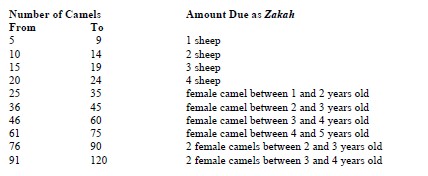
د مسلمانانو متفقه اجماع، همدارنګه د رسول الله ﷺ څو صحیحې ویناوې او د هغه د صحابهګانو روایات دا ښیي چې د اوښانو نصاب او په هغو کې د نصاب مقدارونه داسې دي:
The unanimous agreement of Muslims, as well as several correct sayings of the Messenger of God (p) and reports from his Companions indicate nisab of camels and the rates of nisab on them are as follows:
د دې جدول په اړه اجماع شتون لري، سواد له هغه روایت پرته چې له علي څخه نقل شوی، چې د ۲۵ اوښانو پر ځای پنځه پسونه دي، او د ۲۶ اوښانو پر ځای یوه ماده اوښه چې عمر یې له یو کال څخه تر دوو کلونو پورې وي.
ابن المنذر وايي: اجماع نه ماتېږي، ځکه هغه څه چې له علي څخه روایت شوي صحیح نه دي. د انس ﷺ قول پر دې مقدارونو او اندازو سم دی، او د مضمون په اړه اجماع شتون لري.
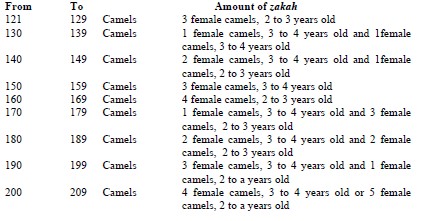
د ۱۲۰ اوښانو څخه زیات په اړه د ډېرو علماؤ نظر دادی: د هرو ۵۰ اضافي اوښانو لپاره د زکات اضافي برخه یوه ماده اوښه ده چې عمر یې له دریو کلونو څخه تر څلورو کلونو پورې وي، او د هرو ۴۰ اضافي اوښانو لپاره د زکات اضافي برخه یوه ماده اوښه ده چې عمر یې له دوو کلونو څخه تر دریو کلونو پورې وي.
دا په لاندې جدول کې ښودل شوي دي:
There is ijma on this schedule,l9 except for a report from 'Ali that on 25 camels there is five sheep and on 26 camels there is one female camel between one and two years old.20 Ibn al Mundhir says. The unanimity is net broken, because what is reported from 'Ali is not authentic. The saying of Anas on these quantities and amounts is correct and there is a unanimous agreement on its content.21 For more than 120 camels the majority's view is that for each additional 50 camels the additional amount of zakah is a female camel between three and four years old while on each additional 40 camels the additional amount of zakah is a female camel between two and three years old.22 This is shown in the following table :
جدول څخه ښکاري چې لوی شمېرو کې، د لس اوښانو څخه لږ زیاتوالی د زکات مقدار نه اغیزمنوي. کله چې لس په اندازه زیات شي، نو د پورتنۍ همدې قاعدې له مخې د ورکړې وړ زکات په مقدار کې یو پړاو لوړ ځئ. د دې دوو جدولونو څخه څرګنده ده چې که د اوښانو شمېر پنځو څخه کم وي نو زکات نشته. کله چې پنځو ته ورسیږي، ورکړې وړ یوه پسه ده. د المبسوط لیکوال یو عالم نقل کوي چې ویلي یې دي: «دا پدې مانا ده چې د څارویو ارزښت په پام کې نیول کیږي. یو تر دوو کلنو عمر پورې اوښان په څلوېښت درهمو او یو پسه په پنځو درهمو بیه کیدل، نو پنځه اوښان ۲۰۰ درهمو سره مساوي دي او ۴۰ پسونو سره هم مساوي دي. دا په دې مانا ده چې د اوښانو، پسونو او سپینو زرو د زکاتي کیدو لږ تر لږه حد یو شان دی.» ابن الهمام په الفتح او ابن نجیم په البحر کې ځواب ورکوي: یو حدیث دی چې وايي: «څوک چې د یوه عمر ګروپ اوښ زکات ورکولو مکلف وي، خو په دې عمر کې هیڅ اوښ ونه لري، هغه کولی شي که پسه ونه لري، د یوه پسه پر ځای د اوسط ۱۰ درهمو په بدل کې ورکړه وکړي.» دا یو څرګند متن دی چې د السرخسي تشریح ته ټکر کوي. دغه ویناه البحر د انس څخه نقل کړې ده.
It is seen from the table that for big numbers, an increase of less than ten camels does not affect the amount of zakah. Once it is increased by ten, then you go one step higher in the amount of zakah due according to the same rule mentioned above. It is obvious from these two tables that if the number of camels owned is less than five then there is no zakah. Once they reach five , the amount due is one sheep. The author of al Mabsut quotes a scholar as saying, "this means that the value of the livestock is considered. Camels between one and two years old used to be priced at forty dirhams and a sheep at five dirhams, so five camels equal 200 dirhams also equal 40 sheep. This implies that the minimum for zakatability of camels, sheep, and silver money is the same. Ibn al Humam in al Fath and Ibn Nujaim in al Bahr reply, there is a saying that states "Whoever is obliged to give as zakah a camel of a certain age group, but does not own any in that age, can pay in substitution on the average of 10 dirhams for a sheep, if he does not have a sheep. This is an explicit text that contradicts the explanation of al Sarakhsi.24 The saying referred to is reported by al Bahr from Anas.
شریعت د اوښانو په زکات کې د میږو (پسونو) ورکول واجب کړي که د زکات وړ اوښان له ۲۵ څخه کم وي، که څه هم عموماً زکات د هماغه ډول مال څخه ورکول کیږي چې زکات پرې واجب دی.
Shari'ah obligates sheep as zakah on camels if the number of zakatable camels is lees than 25, though usually zakah is paid out of the same kind of the zakated assets.
دا ځکه چې واجب شوی مقدار له یو اوښ څخه کم دی، مګر په ورته وخت کې شریعت پنځه اوښان د دې لپاره کافي ګڼي چې څوک شتمن دی یا نه، هغه ټاکي.25
The reason is obviously that the amount due is less than one camel, but at the same time Shari'ah considers five camels to sufficiently define who is rich.25
Anas narrated that Abu Bakr, the Truthful wrote this message when he sent him to Bahrain:
د مهربانه او بښونکي خدای په نوم. دا د هغه صدقې فریضه ده چې رسول الله ﷺ د مسلمانانو باندې لازمه کړې ده، لکه څنګه چې خدای هغه ته حکم کړی و.
In the name of God, most merciful, most gracious. This is the obligation of sadaqah imposed on Muslims by the Messenger of God (P), as ordained to him by God.
هرڅوک چې د دې قاعدو له مخې د زکات ورکولو غوښتنه ورڅخه وشي، باید ورکړي، او هرڅوک چې له دې څخه زیات وغواړي، باید انکار وکړي. د هرو ۲۴ اوښانو او له هغې کمو ته، زکات په پسونو ورکول کیږي. د هرو پنځو اوښانو لپاره یو پسه ورکول اړین دی. کله چې شمېر ۲۵ ته ورسیږي او تر ۳۵ پورې وي، یوه ماده اوښه، یو تر دوو کلنې، ورکول اړین دي. له ۳۶ تر ۴۵ پورې، یوه ماده اوښه، دوه تر درې کلنه، ورکول اړین دي.
Whoever is asked to pay it according to these rules must give it, and whoever is asked to pay more should refuse. On each 24 camels or less, zakah is due in sheep. On each five camels, one sheep is required. Once they reach 25 and up to 35 one female camel, one to two years old, is required. From 36 to 45, there is one she-camel two to three years old.
که دوی ۴۶ څخه تر ۶۰ پورې ورسیږي، نو یوه ماده اوښ چې عمر یې دری څخه تر څلورو کلونو پورې وي ورکول کیږي، یعنی هغه اوښ چې د نسل زیاتولو وړ وي. که دوی ۶۱ څخه تر ۷۵ پورې ورسیږي، نو یوه ماده اوښ چې عمر یې څلور څخه تر پنځو کلونو پورې وي ورکول کیږي. که دوی ۷۶
If they reach 46 to 60, there is one she-camel three to four years old due, one that can be bred. If they reach 61 to 75, one she-camel four to five years old is due. If they reach 76
که د ۹۰ تر، دوه اوښې دري تر دوو کلنې زکات وي. که دوی ۹۱ تر ۱۲۰ پورې شي، دوه اوښې څلور تر دریو کلنې زکات وي. که له ۱۲۰ څخه زیاتې شي، نو د هر ۴۰ لپاره یوه ...
to 90, there is two she-camels two to three years old due. If they reach 91 to 120, there are two she-camels, three to four years old due. If they are more than 120, for each 40
په هر ۴۰ میږو کې یوه میږه، او تر ۱۲۰ پورې همدا حکم دی. له ۱۲۰ څخه زیاتو تر ۲۰۰ پورې دوې میږې دي.
Wait, I must translate faithfully; I should not paraphrase incorrectly. Corrected translation:
د یوه یو کلنې یا دوو کلنې اوښې یوه ماده اوښه ده، او د هر ۵۰ اوښانو لپاره یوه درې کلنه یا څلور کلنه ماده اوښه ده. هغه څوک چې څلور اوښان لري، زکات پرې نه واجب کیږي مګر دا چې په خوښه ورکړي، خو کله چې اوښان پنځو ته ورسیږي، نو په دوی کې یوه ګوسپند د زکات په توګه واجب دی. د ګوسپندو صدقې کې، که دوی په طبیعي ډول، بې له لګښته چراګاه کې وي او شمیر یې له ۴۰ او ۱۲۰ ګوسپندو تر منځ وي، یوه ګوسپند واجب دی. د ۱۲۰ څخه زیات او تر ۲۰۰ پورې، دوه ګوسپندان دي.
د ۱۲۰ اونټانو وروسته د زکات د نرخونو توپیر
Variance on the Rates after 120 Camels
ما پخوا مې یادونه وکړه چې فقها د ۱۲۰ اوښانو څخه پورته زکات په اړه مختلف نظرونه لري. مالک، شافعي، احمد او اکثریت داسې ګڼي چې د هر اضافي ۵۰ اوښانو لپاره یوه ماده اوښه، درې تر څلورو کلنه، او د هر اضافي ۴۰ اوښانو لپاره یوه ماده اوښه، دوه تر درې کلنه، دی، لکه څنګه چې د ابوبکر او عمر ﷺ هغه لیک کې راغلي دي چې انس او ابن عمر ﷺ یو تر بله روایت کړی دی. همدا مطلب د ابن حزم او زیاد بن لبید ﷺ هغو لیکونو کې هم راځي چې د حضرموت خلکو ته لیږل شوي وو، او د پیغمبر ﷺ هغه ارشاد کې هم دی: «که اوښان له ۱۲۰ څخه تیر شي، نو د هر ۴۰ لپاره یوه ماده اوښه دوه تر درې کلنه، او د هر ۵۰ لپاره یوه ماده اوښه درې تر څلورو کلنه». د دې وروستي ارشاد ځینې روایات راڅرګندوي چې راوي یې لنډ کړی او یوازې «په هر ۵۰ کې یوه ماده اوښه ...» ویلي دي، او د هر اضافي ۴۰ لپاره نرخ یې نه دی ذکر کړی، خو بیلابیلې روایات یو بل بشپړوي.
I pointed out earlier that there are varying views among jurists on zakah on above 120 camels. Malik, Shafi'i, Ahmad, and the majority consider the rate to be one female camel, three to four years old for each additional 50, and one female camel, two to three years old, for each additional 40,39 as mentioned in the message of Abu Bakr and 'Umar narrated successively by Anas and Ibn 'Umar. The same also appears in the messages of Ibn Hazm and Ziad bin Labid to the people of Hadramut,40 in the words of the Prophet (p) "If they exceed 120, then for each 40 one female camel two to three years old, and for each 50 one female camel three to four years old". Some versions of the last saying are summarized by that narrator, as "In each 50 one female camel ..." without mentioning the rate for each additional 40, but the different versions complete each other.
د ابوحنیفہ نظریہ
Abu Hanifah's view
النخعی، الثوری اور ابوحنیفہ⁴¹ کہتے ہیں کہ "جو تعداد 120 سے زیادہ ہو، اس پر نصاب کو شروع سے لیا جائے گا، یعنی اضافی پانچ سے 24 اونٹوں پر ہر پانچ اونٹوں کے لیے ایک بکری کی شرح ہوگی، اور اضافی 25 اونٹوں پر زکوٰۃ میں ایک مادہ اونٹ ہوگی، جو ایک سے دو سال کی عمر کی ہو، وغیرہ۔"
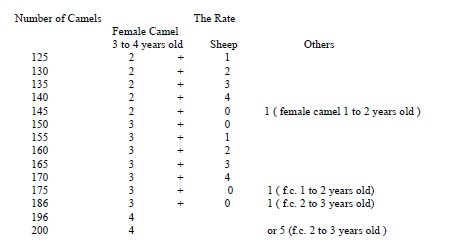
درج ذیل جدول اس رائے کے مطابق واجب ہونے والی مقدار کو ظاہر کرتا ہے:
Al Nakha'i, Al Thawri, and Abu Hanifah41 say that "for what is above 120, we start the rates from the beginning, i,e., for an additional five to 24 camels, the rate is one sheep for each 5 camels, and for an additional 25 camels zakah due is one female camel, one to two years old, etc."The following table shows the amount due according to this opinion:
د ۲۰۰ اوښانو څخه وروسته، دغه کچه بیا تکرار کیږي: د هر اضافي پنځو اوښانو لپاره یوه پسه، او هر ځل چې اضافي زکات ورکولو وړ اوښان پنځوس ته ورسیږي، نو په هغو باندې د زکات په توګه یوه ماده اوښه ده چې درې څخه تر څلورو کلنې وي.
After 200 the rate repeats itself, one sheep for each additional five camels, and each time the additional zakatable camels reach fifty, the amount of zakah due on it is one female camel three to four years old.
حنفی فقیہا دلیل دیتے ہیں چې ابوداؤد دا روایت مرسل [یعنی هغه قول چې د هغې سند کې د روایت کوونکي صحابي نوم ذکر نه وي] کوي، او اسحاق په خپل مسند کې او طحاوي په خپل مشکل کې د حماد بن سلمه څخه روایت کوي، چې هغه وویل: "ما قیس بن سعد ته وویل چې د محمد بن حزم پیغام راته راوړه، نو هغه ماته یو لیک راکړ چې وې ویل دا یې د ابوبکر بن محمد بن حزم څخه اخیستی، چې وې ویل چې نبي ﷺ دا زما د نیکه لپاره لیکلی و. ما دا ولوستل او په کې د اوښانو د زکات نرخونه ومومل..." او هغه قول یې تر دې ځایه بیان کړ چې: "کله چې دوی له ۱۲۰ څخه زیات شي، نو په هر ۳۰ اوښانو کې یوه دریم یا څلورم کلنی ماده اوښ واجب ده. د زیاتوالي لپاره نرخونه له سره پیل شي، او د هغه څه لپاره چې له ۲۵ اوښانو څخه کم وي، د زکات مقدار په پسونو کې واجب دی، د هرو پنځو اوښانو لپاره یو پسه." دا روایت د زیلعي په نصب الرایه کې نقل شوی دی۔ ورته روایت د عاصم بن ضمره له لارې د علي څخه بیان شوی، چې نبي ﷺ ته منسوب دی او تر علي پورې ختمیږي، او ابن مسعود څخه هم ورته خبرې روایت شوې دي۔ ابن رشد وایي چې حنفیانو دلیل ورکړی دی چې داسې مسئله یوازې د نبي ﷺ د لارښوونې په واسطه ټاکل کیدای شي، ځکه دا داسې څه نه دي چې په قیاس سره استنباط شي۔44
The Hanafites argue that Abu Daud reports as mursal [saying in whose chain the name of the reporting Companion is not mentioned], Ishaq in his Musnad and al Tahawi in his Mushkel from Hmmad bin Salamah, who said, "I told Qais bin Sa'd to get me the message of Mohammad bin Hazm, so he gave me a letter which he said he took from Abu Bakr bin Mohammad bin Hazm, who said that the Prophet (p), wrote it to my grandfather. I read it and found in it the rates of zakah on camels... " and he narrated the saying until, "Once they exceed 120 make due on each 30 one female camel three to four years old. For the increments, restart the rates from the beginning, and for what is less than 25 camel increments, the amount of zakah is due in sheep, one sheep for each five." This is reported in Nasb Al Rayah by al Zaila'i.42 A similar version is narrated by 'Asem bin Damurah from Ali, linked to the Prophet as well as ending at 'Ali,43 and Ibn Mas'ud is reported to have said similar things. The Hanafites are said by Ibn Rushd to have argued that such a thing cannot be decided but by instructions from the Prophet, because it is not anything that can be deducted by analogy.44
اکثرو عالمانو د حنفیانو دلیلونه نه منی او د دوی په موندنو کې کمزوری وینی. البیهقي ښیي چې هغه څه چې د ابن مسعود څخه پدې باب کې روایت شوي، سم نه دي۔ ۴۵ د علي هغه قول چې د پیغمبر ﷺ ته منسوب دی هم غلط دی، او د هغه روایت په اړه چې علي ته منسوب دی هم مختلف نظرونه شته دي۔ یوه روایت کې دا روایت د ابوبکر او عمر د لیکونو سره په یوه ډول راغلی دی، پداسې حال کې چې بل روایت کې په بل ډول نقل شوی دی۔ په داسې حالت کې عام قاعده دا ده چې هغه روایت ته زیات وزن ورکول کیږي چې د نورو سمو او نه اختلافي خبرو سره سمون لري۔ دا خبره الحازمي هم یادونه کړې ده۔ ۴۶ سربیره پردې، د همدې قول (د عاصم څخه) په متن کې یو داسې جمله هم ده چې ټول علماء د هغې د ضعف له امله نه منی: هغه دا چې د هرو ۲۵ اوښانو لپاره زکات پنځه پسونه دي، نه د یو یا دوه کلنی ښځینه اوښ۔ له بلې خوا، ممکن ده چې هغه مختلف روایات داسې تفسیر شي چې د نورو سمو خبرو سره سم وي۔
د الطبري نظر
The view of Al Tabari
ابو جعفر الطبری یوه دریم، د جوړونې وړ نظر څرګندوي او وايي چې دواړه نظرونه منل شوي دي، او دا د زکات راټولولو ادارې پورې اړه لري چې کوم نظر پلی کړي.52 زما په نظر دا لاره له نورو ډېره غوره ده، ځکه چې د یوې خبرې مفهوم باید په منسوخ او باطل ونه ګڼل شي، که چېرې د پیغمبر ﷺ ټولو روایتونو د جوړولو لږترلږه امکان هم موجود وي. د الطبری دا جوړونه بې له شکه منل کېدای شي، که دا په زړه کې ونیسو چې د زکات لپاره د اوښانو د عمرونو او شمېر ټاکل د زکات محاسبه، ورکول او راټولول اسانه کولو او کړنلارې ساده کولو لپاره دي، ترڅو د زکات راټولوونکې ادارې ته د پرېکړې یو اندازه واک ورکړل شي.
Abu Ja'far al Tabari expresses a third, reconciling view, stating that both opinions are acceptable, and it is up to the zakah collection agency to select which view to apply.52 In my opinion this is a better approach, since one should not consider the content of a saying superseded and annulled if there is the slightest chance of a reconciliation of all the reports from the Prophet (p). The reconciliation proposed by al Tabari is undoubtedly acceptable if we keep in mind that the determination of ages and quantity of camels due as zakah is meant to facilitate zakah calculation, payment, and collection, and to simplify the procedures so that the zakah collecting agency can exercise some discretion.
د زکات د توریو کې ورو ورو توپیرونه
The slight differences in the letters of zakah
په زکات کې د رسول الله ﷺ او د هغه د ښو خلیفګانو څخه د روایتونو مختلف نسخو ته په کتو سره، یو څوک به ځینې کوچني توپیرونه ومومي. یوه بیلګه دا ده چې د بېلو عمرونو د اوښانو ترمنځ د قیمت توپیر لس درهمه (یا دوه پسونه) دی که شل درهمه (یا دوه پسونه)۵۳. د علي د لیک او د ابوبکر او عمر د لیکونو ترمنځ توپیر څنګه تشریح کېدای شي؟ دا ځکه معلومه ده چې د علي روایت چې رسول الله ﷺ ته منسوب شوی، غلط دی، خو دا هم معلومه ده چې هغه نسخه چې ویلې چې دا د خود علي خبره ده، سمه ده. علي د رسول الله ﷺ د لیک سره څنګه توپیر کولای شو؟ هغه چې د ابوبکر او عمر په زمانه کې ژوند کاوه، د دوی د لیکونو او عملي کیدو څخه څنګه خبر نه و؟ ایا هغه داسې باور درلود چې هغه داسې معلومات لري چې د بل لیک کې شتون لرونکي معلوماتو باندې برتری لري؟
Looking at the different versions of messages about zakah reported from the Messenger of God (p), and his Wise Successors, one would find some minor differences. An example is whether the difference in value between different age camels is ten dirhams (or two sheep) or twenty dirhams (or two sheep)53. How can the difference between the letter of 'Ali and those of Abu Bakr and 'Umar be explained? It is known that the report of 'Ali is incorrect as linked to the Prophet (p), but it is also known that the version stating that it is a saying of 'Ali himself is correct. How could 'Ali differ with the letter of the Prophet (p)? How could he, who lived the era of Abu Bakr and 'Umar not be aware of their letters and application? Did he believe that he had information which superseded that contained in the other letter?
به زما په نظر دا ټول پوښتنې منفي ځوابونه لري، او ماته داسې ښکاري چې د دغو واړو توپیرونو بله تفسیر ته اړتیا ده. زه په دې باور یم چې ځینې دغه برابرۍ، لکه د پسونو ارزښت د سپینو زرو په مقابل کې، د پیغمبر (ﷺ) له خوا د دولت د مشر په توګه ورکړل شوي دي. د هغه په وخت کې د بیو دا حال و چې یو پسه شاوخوا لس درهمو ته برابر و. معلومه ده چې بیې وخت په وخت بدلیږي، او کله چې پیغمبر (ﷺ) د دوو پسونو ارزښت شل درهمه وټاکه، هغه د خپل وخت اوسنۍ بیې بیانولې. د علي د خلافت په وخت کې د پسونو بیې بل ډول وې، او هغه د دوو پسونو ارزښت لس درهمه وټاکه. دا د پیغمبر (ﷺ) د ویناوې سرغړونه نه ده، بلکه هماغه قاعده ده چې پیغمبر (ﷺ) کارولې وه، خو د علي د وخت سره سم تطبیق شوې ده. زما په نظر دا تفسیر د هغو متنونو د ردولو له هرې هڅې څخه غوره دی، لکه هغه کار چې یحیی بن معین وکړ کله چې ویې ویل چې د زکات د نرخونو او اندازو په ټاکلو کې هیڅ سم روایت نه دی راغلی.۵۵ ابن حزم په دې ادعا ډیر سخت نیوکه وکړه او وې پوښتل چې یو سړی لکه ابن معین څنګه داسې خبره کولای شي پرته له لږترلږه ملاتړي دلیل څخه.۵۶ یو مستشرق لکه شاخت دغې ادعا ته تر ډیره حده کار اخیستی ترڅو د زکات ټول سم ویناوې رد کړي.
[۵۵] یحیی بن معین.
[۵۶] ابن حزم، المحلی.
In my opinion all these questions are answered negatively and it seems to me that another interpretation of those minor differences is due. I believe that some of these equalities, like the value of sheep in silver, are given by the Prophet (p), in his capacity as the head of the state. Their prices at his time were such that a sheep equaled approximately ten dirhams. It is known that prices vary from time to time, and when the Prophet (p), gave the ratio as twenty dirhams for two sheep he was quoting his period's current prices. At the time of 'Ali's caliphate, prices of sheep were different, and his quotation of those prices were ten dirharms for two sheep. This is not a violation of the Prophet's saying, but rather an application of the rule used by the Prophet (p), to what suits the time of 'Ali. This interpretation is, in my opinion, better than any attempt to disregard any of the differing texts, like what Yahya bin Ma'in did in claiming that nothing correct is reported on the determination of rates and quantities of zakah.55 Ibn Hazm came down very hard on such a claim and asked how a person like Ibn Ma'in could state such a thing without even the slightest supporting evidence.56 An Orientalist like Schacht abuses to the utmost that claim in his attempt to reject all the correct sayings on zakah.
Cows, used by mankind for land cultivation, meat and milk, are another bounty of God on His servants. The usefulness of this species was so great at times that some peoples, such as the ancient Egyptians and contemporary Hindus worshiped this animal.
امام ابن المنذر ذکر کړي دي چې ټول مسلمان فقیهان مې د غوا سره یو ځای شمیري.
Buffalo is counted with the cows by all Muslim jurists, as stated by Ibn al Mundhir.
د غوایانو زکات د سنت او اجماع له مخې واجب دی. بخاري په خپل صحیح کتاب کې د ابو ذر رضی الله عنه څخه روایت کوي چې: "زه د نبي ﷺ خدمت ته راغلم، هغه وفرمایل: 'هغه ذات ته قسم چې زما روح د هغه په لاس کې دی،' یا 'هغه ذات ته قسم چې له هغه پرته بل معبود نشته: هیڅ سړی چې اوښان، غوایان یا پسې ولري او د هغو حق ورنه کړي، نو په قیامت کې به هغه ته د هغو اوښان، غوایان او پسې د خپلو ښو او لویو بڼو سره راځي، هغه به هغه د خپلو پښو لاندې ږدي او د خپلو شاخونو سره به یې ووهي، کله چې یو ځل یې تیر کړي نو بیا بل ځل راځي، تر دې چې د ټولو خلکو په منځ کې فیصله وشي."
امام بخاري وایي: دا حدیث بکیر له ابو صالح څخه، هغه له ابو هریره ﷺ څخه، هغه له نبي ﷺ څخه هم روایت کړی دی.
د حدیث په "حق" کې مراد هغه زکات دی چې له نورو ټولو شیانو مخکې ورکول کیږي. زکات د مال هغه حق دی چې ابو بکر رضی الله عنه هغه وخت وټاکه چې هغو کسانو سره یې جګړه کوله چې زکات یې نه ورکاوه، دا تعریف عمر رضی الله عنه او د نورو ټولو صحابه کرامو ﷺ له خوا هم تایید شو (بخاري او مسلم روایت کړی). په مسلم کې روایت کې د "حق" پر ځای "زکات" کلمه راغلې ده.
سربیره پر دې، ټول مسلمانان په ټولو نسلونو کې په اتفاق سره تصدیق کړي چې په غواګانو زکات واجب دی، او یو عالم هم له دې سره مخالفت نه دی کړی. په نصاب او د زکات په اندازه کې البته اختلافات شتون لري.
Zakah on cows is obligated by Sunnah and Ijma. Bukhari, in his correct collection, reports from Abu Dharr "I came to the Prophet (p)58 and he said 'I swear by He who holds my soul in His hand,' or 'I swear by the one beside whom there is no God. No man who has camels, cows or sheep and does not pay their right due but on the Day of Judgement will be trampled by them at their largest and heaviest. They will be stepping on him with their hooves and ramming him with their horns, and when the last one is done with him the first is brought back until judgement has been given to all people." Imam al Bukhari said "It is also narrated by Bakir from Abu Saleh from Abu Hurairah from the Prophet (p). The "right due" mentioned in the saying means zakah before any other thing. Zakah is the right due on wealth as defined by Abu Bakr at the time of fighting those who rejected zakah, this definition was approved by 'Umar and all other Companions, (reported by al Bukhari and Muslim). In the version reported by Muslim the word "zakah" is used in place of the word "right due", moreover, Muslims through all generations have unanimously confirmed that zakah is obligated on cows. Not a single scholar disagrees.59 There are however, differences in determining nisab and zakah rates on cows.
د غواګانو نصاب او د زکات مقدارونه
Nisab and rates of zakah on cows
دې ځای کې د ګایانو د نصاب او د زکات د اندازو په اړه داسې کومه صحیحه روایت نشته لکه څنګه چې د اوښانو په اړه موجود دی۔ دا ممکن د دې له امله وي چې د حجاز په سیمه (د مکې او مدینې شاوخوا) کې ګایې ډېرې کمې وې؛ او دا هم امکان لري چې ګایې د اندازې او ارزښت له مخې اوښانو ته ورته وې، نو نبي ﷺ د دوی اندازې د دې فرض پر بنسټ نه دي ټاکلې چې ورته والی ډاډمن و۔ خو د دې موضوع په اړه د صحیحې روایت نشتوالی علماو ته د نصاب او اندازو په ټاکلو کې مختلف نظرونه پریښودي دي۔
There is no correct saying that provides us with the nisab and rates of zakah on cows as we have seen on camels. This may be because cows were rare in the area of Hijaz (around Makkah and Madinah); it may be also because cows are close in size and value to camels, so the Prophet did not determine their rates on the assumption of their obvious similarity. But the fact that there is no correct saying on the issue left the jurists with varying views on the determination of nisab and rates.
مشهور رائے: نصاب ۳۰ گائے ہے
The popular opinion: Nisab is 30 cows
د فقهی مذاہبو پر څلورو مشہورو مکتبونو کا مشہور موقف دا دے چې نصاب ۳۰ دے۔
The reputed position upheld by the four schools of jurisprudence is that nisab is 30
د غواګانو په اړه هم، او له ۳۰ څخه کم غواګانو کې هیڅ زکات نه واجب کیږي. د ۳۰ غواګانو لپاره یوه یو کلنۍ غوایه واجبه ده، او د ۴۰ تر ۵۹ غواګانو پورې یوه دوه کلنۍ غوایه واجبه ده. د ۶۰ غواګانو لپاره دوه یو کلنۍ غواګانې واجبې دي؛ د ۷۰ غواګانو لپاره یوه یو کلنۍ او یوه دوه کلنۍ غوایه؛ او د ۸۰ لپاره
cows, and there is no obligated zakah on less than 30 cows. For 30 cows, a one-year old cow is due, and for 40 to 59 cows there is one cow, two years old, due. For 60 cows, two one-year-old cows are due; for 70 cows, a one-year-old and a two-year-old; for 80
cows, two two-year olds; for 90 cows, three one- year-olds; for 100 cows, one two-year old and two one-year-olds; for 110, two cows two year olds and one cow one year old, and for 120 cows, three two-year olds or four one-year olds.
یوه نظر په هغه حدیث پورې تړلی دی چې احمد او د سنن الترمذي، النسائي، ابوداود او ابن ماجه څلور کتابونه یې د مسروق له لارې، هغه د معاذ بن جبل څخه روایت کوي چې ويې ويل: "د الله رسول ﷺ ما یمن ته واستاوه، او زما ته یې امر وکړ چې د هرو ۳۰ غواګانو څخه یوه یو کلنۍ غوایه، او د هرو ۴۰ غواګانو څخه یوه دوه کلنۍ غوایه واخلم." [۶۰] دا روایت د ترمذي له خوا ښه (حسن) ګڼل شوی دی، او ابن حبان او حاکم دا صحیح بللی دی. ابن عبدالبر ویلي دي: "د دې سند صحیح، متصل او ثابت دی،" او ابن بطال هم ورته خبره کړې ده. ابن حجر په "فتح الباري" کې ویلي دي: "د دې حدیث د صحت په اړه هر حکم باید وڅیړل شي، ځکه مسروق (تابعي) د معاذ سره ملاقات نه دی کړی." ترمذي دا روایت ښه ګڼي ځکه چې نور احادیث هم دې ته شاهدي ورکوي، لکه هغه روایت چې په "موطا" کې د طاوس له لارې د معاذ څخه راغلی دی؛ خو طاوس هم د معاذ سره ملاقات نه دی کړی.61
This opinion relies on the saying reported by Ahmad and the four books of Sunan al Tirmidhi, al Nasa'i, Abu Daud and Ibn Majah from Masruq from Mu'adh bin Jabal who said "The Messenger of God, (p) sent me to Yemen. He instructed me to collect on each 30 cows, a one year-old cow, and on each 40 cows one two-year-old"60. This saying is graded as good by al Tirmidhi and as correct by Ibn Habban and al Hakim, Ibn 'Abd al Barr comments "Its chain is correct, continuous and authentic" and similar statement is made by Ibn Battal. Ibn Hajar said in al Fath "We need to scrutinise any ruling about the correctness of this saying, because Masruq [The follower] did not meet Mu'adh." al Tirmidhi considers it good because there are other sayings that testify with it, such as the one in al Muwatta, from Taus from Mu'adh, but Taus did not meet Mu'adh either.61
د طبري نظر دا دی چې نصاب ۵۰ دی۔
The view of al Tabari that nisab is 50
ابن جریر طبری په دې نظر دی چې د نِصاب اندازه ۵۰ غواګانې دي، او دا چې د ۵۰ غواګانو لپاره په بېشکه متفقعلیه توګه یوه غوا زکات واجب دی. تر ۵۰ کم شمېر پورې موضوع اختلافي ده او د یوه واضح نص په بنسټ نه ده ثابته۔
ابن حزم په "المحلّی" کې د طبري په همدې دلیلونو سره دا نظر تایید کوي. هغه وايي: "هر هغه شی چې اختلافي وي او په کې داسې نص نه وي چې واجب کړي، هغه د خلکو په اوږو نه باید اچول کېږي، ځکه دا د مسلمان د مال څخه د یوې برخې ضبطول دي، پداسې حال کې چې د الله تعالیٰ یا د رسول ﷺ له لوري د صحیح نص په واسطه د هغې د واجب کېدو یقین نه وي۔"
هغه د خپل سند له لارې د عمرو بن دینار څخه دا روایت هم نقل کوي: "د ابن زبیر او ابن عوف عاملان به له هر ۵۰ غواګانو څخه یوه غوا اخیستله، له هر ۱۰۰ څخه دوې غواګانې، او له هغې زیاتو کې به د هر ۵۰ څخه یوه غوا اخیستل کېده۔" دا عاملان په مدینه کې د ډېرو صحابهکرامو په حضور کې دندې ترسره کولې، او د دې عمل په اړه هیچا اعتراض نه کاوه۔
Ibn Jarir al Tabari argues that nisab must be 50 cows, that if is undoubtedly unanimous that for each 50 cows there is an obligatory zakah of one cow. Anything below 50 is controversial and not supported by a clear text.69 Ibn Hazm in al Muhalla supports this opinion on the same grounds as al Tabari. He comments "Anything that is controversial and on which there is no text making it obligatory must not be imposed on people, because it means confiscating a part of a Muslim's wealth without being certain about its requirement by virtue of a correct text from God or His messenger (p).70 He went on to quote, through his own chain, from 'Amr bin Dinar, "The commissioners of Ibn al Zubair as well as Ibn 'Auf used to collect one cow from each 50 cows,71 2 cow from each 100 and for more than that, the rate was one cow out of each 50.72 These commissioners were performing their duties in the presence of many, many Companions in Madinah, and this performance was not objected to.
مگر اس رائے کو دو بنیادوں پر رد کیا جا سکتا ہے:
But one may disprove this opinion on two grounds:
A. د متن له کتنې نظر څخه. د عمرو بن حزم د زکات په اړه اوږده وینا کې راغلي دي: «او د هر ۳۰ غواګانو څخه یوه یو کلنۍ غوا واخله، او د هر ۴۰ غواګانو څخه یوه غوا». دا وینا د یو شمیر مشرو عالمانو له خوا ښه ګرځول شوې ده، او الطبري د خپل کتاب «الإمام» کې د تقي الدین بن دقيق العيد د نظر په وړاندې د دې څخه دلیل اخیستی دی.73
A. From the point of view of the text. The long saying of 'Amr bin Hazm on zakah says "and from each 30 cows, take one cow one-year-old, and from each 40 cows, one cow". This saying is graded good by a handful of leading scholars and it was used by al Tabari against the view of Taqiy al Din bin Daqiq al 'Id in his book Al Imam.73
د معاذ رضي الله عنه هغه قول چې له مخې یې د زکات راټولول د ۳۰ (پر سر) وي
د ابن المسیب او الزہری رائے
The opinion of Ibn al Musayyeb and Al Zuhri
دوه مشهور عالمان، سعید بن مسیب او محمد بن شهاب زهري، سره له ابو قلابه او نورو سره یو ځای، د غواګانو نصاب د اوښانو د نصاب په شان بولي، او د غواګانو د زکات اندازه هم د اوښانو د زکات د اندازې په شان ګڼي، یوازې یو واړه توپیر لري، هغه دا چې د اوښانو د عمرونو توپیر پکې نه ګورل کیږي۔ ورته نظر د عمر بن خطاب د زکات په اړه د لیک په یوه نسخه کې هم راځي، چې د جابر بن عبدالله او نورو له لوري روایت شوی، هغوی چې د پیغمبر ﷺ په وخت کې زکات ورکاوه۔ ابو عبید د محمد بن عبدالرحمن له لارې روایت کوي چې عمر بن خطاب د زکات په اړه هغه لارښوونې ولیکلې چې په کې راځي: "د غواګانو څخه هماغسې واخیستل شي لکه د اوښانو څخه." ابو عبید وايي: نورو څخه د غواګانو د زکات په اړه پوښتنه وشوه، ځواب یې وو: دا په اوښانو باندې ورته ده۔
Two leading scholars, Said bin al Musayyeb and Muhammad bin Shehab al Zuhri, along with Abu Qulabah and others view nisab on cows to be the same as nisab on camels, and the zakah rate of camels to be the same for cows with only a minor change, that is, disregarding the ages of camels. A similar opinion is reported as a version of the letter of 'Umar bin Al Khattab on zakah, from Jabir bin 'Abd Allah and others who paid zakah at the time of the Prophet (p). Abu 'Ubaid reported from Mohammad bin 'Abd al Rahman that the instructions 'Umar bin al Khattab wrote on zakah included "from cows one should take the same as from camels." Abu 'Ubaid continues "Others were asked about zakah on cows and the answer was it is the same on camels".
ابن حزم د جابر بن عبدالله څخه د خپل سند سره، د الزهري او قتادة له لارې روایت کوي چې ويې ویل: "د هرو پنځو غواګانو کې يو میښ (ګوسپند) زکات دی، په لسو کې دوه میښان، په پنځلسو کې درې میښان، او په شلو کې څلور میښان زکات دي." الزهري وايي: "د غواګانو زکات د اوښانو د زکات په شان دی، پرته له عمرونو څخه؛ یعنې که د غواګانو شمېر له ۲۵ او ۷۵ ترمنځ وي..."
Ibn Hazm reports with his own chain from al Zuhri and Qatadah, both from Jabir bin 'Abd Allah his saying that "in each five cows there is one sheep due, in ten two sheep, in 15, three sheep, and in 20, four sheep due." Al Zuhri says "zakah on cows is like zakah on camels except for the ages. That is, if the number of cows were between 25 and 75
د هغې زکات مقدار یو غوا دی، د ۷۶ او ۱۲۰ ترمنځ دوې غواګانې دي. د ۱۲۰ څخه پورته، د هر ۴۰ غواګانو لپاره یوه نوره غوا ده.
موږ ته ویل شوي چې دا ويناوې چې "هر ۳۰ غواګانو کې یوه یو کلنۍ غوا واجب ده، او هر ۴۰ غواګانو کې یوه دوه کلنۍ غوا واجب ده" یوازې یو لنډیز او د یمن خلکو لپاره د نرخونو کمښت وو، چې وروسته له پامه وغورځول شو.
۷۶ همدارنګه د عکرمه بن ولید څخه روایت دی چې ویل: "وروسته زه د عِکّ زکات راټولولو ته وټاکل شوم، او زه ځینې زړه کسان ومومل چې د رسول الله ﷺ په وخت کې زکات ورکاوه. دوی سره اختلاف درلود: ځینو ویل چې د غواګانو زکات باید د اوښانو د زکات په شان وي، او ځینو ویل چې له هر ۳۰ غواګانو څخه یوه یو کلنۍ غوا واخیستل شي، او ځینو نورو ویل چې له هر ۴۰ غواګانو څخه یوه دوه کلنۍ غوا واخیستل شي."
۷۶ ابن حزم د خپل سند له لارې د ابن المسیب، ابو قلابه، او بل عالم څخه د الزهري سره ورته نظر روایت کوي. هغه همدارنګه د عمر بن عبدالرحمن بن خلدة الانصاري څخه روایت کوي: "د غواګانو زکات د اوښانو د زکات په شان دی، پرته له عمرونو څخه."77
د دې نظر ملاتړ کوونکي دلائل
Evidence supporting this view
الف. دې نظر ته د ابو عبيد یوه روایت ملاتړ کوي چې هغه یې په خپل سند سره د محمد بن عبدالرحمن څخه نقل کړې، چې «دا د نبي ﷺ په هغه لیک کې دی چې زکات پورې اړه لري، او د عمر بن الخطاب په لیک کې دی، چې له غواګانو څخه هماغه اخیستل کیږي چې له اوښانو څخه اخیستل کیږي.»78
A. This opinion is supported by a report of Abu Ubaid with his own chain from Muhammad bin 'Abd al Rahman, "It is in the Prophet's letter on zakah and in the letter of 'Umar bin al Khattab that from cows, one should take the same as from camels."78
او دا نظر د هغه روایت له مخې هم تاییدیږي چې عبدالرزاق د معمر څخه نقل کړی، هغه وایي: «سماک بن الفضل ماته د نبي ﷺ یو لیک راکړ چې د مالک بن کفلانس المصابیین ته لیږل شوی و، او په هغې کې ما ولوست: "او غواګانو باندې هماغه زکات واجب دی چې اوښانو باندې دی۔»79
Also, this view is supported by what is reported by 'Abd al Razzaq from Ma'mar, who said, " Sammak bin al Fadl gave me a letter from the Prophet, to Malik bin Kuflanis Al Mus'abiyn, in which I read, 'and on cows is due the same as on camels.'"79
ب. دا هغه څه دي چې د زهري له خوا یې ښودل شوي دي، چې دا د خدای رسول (ﷺ) وروستۍ روایت و، او د یمن د خلکو لپاره د هر ۳۰ غواګانو څخه یوه یو کلنۍ غوایه اخیستل په پیل کې یو احسان و. دا روایت مرسل دی، خو د پخوانۍ وینا او د ځینو صحابهکرامو له بیانونو څخه تاییدیږي.
B. This is confirmed by what is mentioned by al Zuhri that it was the latest report from the Messenger of God (p), and that taking a one-year-old cow of each 30 cows was, at the beginning, a matter of favor for the peoples of Yemen. This report is mursal, but it is supported by the previous saying and by statements from some Companions.
ابن حزم وایي: "که د مرسل قول له کوم چا نه قبول کیدای شي، نو له زهري نه به هم قبول کیدای شي، ځکه هغه په سنت باندې ښه پوهیده او د ډیرو صحابه کرامو سره یې ملاقات کړی و."80
Ibn Hazm comments "If a mursal saying would be accepted from anyone, it deserves to be accepted from al Zuhri because he was well versed in Suunah and met a number of the Companions".80
سی. دا نظر هم د هغه عمومي حکم له مخې تاییدیږي چې د فصل د پیل په یوه حدیث کې راغلی دی: «او هر هغه څوک چې غواګانې لري او د هغو حق نه ورکوي، هغه به د قیامت په ورځ د غواګانو لاندې پړاؤ شي چې هغه پښو لاندې کړي». ویل کیږي چې دا یو عمومي متن دی چې د هغه ټولې غواګانې شامل کوي، پرته له هغو محدودیتونو څخه چې د یوه متن یا اجماع له مخې راغلي دي. نور دا هم ویل کیږي چې هغه حدیث چې وايي په هر ۳۰ غواګانو کې یوه یو کلنه غوا او په هر ۴۰ کې یوه دوه کلنه غوا واجب ده، همدې نظر ته ملاتړ ورکوي، ځکه دا د ۳۰ څخه کم غواګانو څخه زکات نه لري کوي؛ دا یوازې د زکات د نرخ بیان دی.
C. This view is also supported by the general rule implied in the saying mentioned at the beginning of Section 3 "And for anyone who owns cows and who does not pay their right due, he would be laid down for the cows to trample on the Day of Resurerction" It is argued that this is a general text that includes cows of any number except for restrictions brought in by a text or any Ijma'. It is further argued that the saying stating that there is one cow, one year old, due, on each 30, and a two-year-old due on each 40 also supports this opinion because it does not waive zakah from cows below 30. It is only a statement of the rate of zakah.
د څلورم نظر
A fourth opinion
ابن رشد بل یوه بله نظر ورکوي پرته له دې چې د هغه د خاوند نوم یا د هغه دلیل بیان کړي: د هرو لسو غواګانو په اړه یوه پسه ورکول کیږي، تر دې چې دېرش غواګانې ورسیږي، چې په هغه کې یوه یو کلنه غوا ورکول کیږي۔۔۔
زه ګورم چې ابن ابي شیبه په خپل المصنف کې دا نظر شهر بن حوشب ته منسوب کوي. هغه وایي: «د غواګانو زکات دا دی: په هرو لسو غواګانو یوه پسه، په هرو شلو غواګانو دوه پسونه، او په دېرشو غواګانو یوه یو کلنه غوا۔»
Ibn Rushd gives yet another opinion without providing the name of its author nor its argument: On each ten cows there is one sheep due, until they reach 30 cows, on which there is a one-year-old cow due.84 I find that Ibn Abi Shaibah attributes this view to Shahr bin Haushab in his al Musannaf. The latter says "zakah should be one sheep due on each ten cows, two sheep on each twenty cows, and one cow, one year old, on 30
cows."85 هذا يعني أن نصاب البقر عشرة مقابل خمسة في الرأي المذكور سابقاً. ولم يقدّم ابن أبي شيبة أي دليل يدعم ذلك. وقد يتبادر إلى الذهن أن هذا القول يمكن تأييده بالحديث الذي يقدّر دية القتيل بمائة من الإبل أو مائتين من البقر. وقد رُوي ذلك عن عمر، كما نُسب إلى النبي ﷺ.86 وهذا يقتضي أن الجمل يعادل بقرتين. فإن كان نصاب الإبل خمسة، فيجب أن يكون نصاب البقر عشرة، وإن كان الواجب في كل خمس من الإبل شاةً، فيجب أن يكون الواجب في كل عشر من البقر شاةً واحدة.
cows."85 This means that nisab of cows is ten as compared to five in the previously mentioned opinion. No evidence of support is given by Ibn Abi Shaibah. It may come to mind that this argument can be supported by the saying that estimates the compensation for the loss of life at 100 camels or 200 cows. This is reported as said by 'Umar, as well as linked to the Prophet (p).86 This implies that one camel equals two cows. If nisab for camels is five, that of cows must be ten, and if for each five camels the amount of zakah due is one sheep, there should be one sheep due for each ten cows.
تحلیل او وزن کول
Analysis and weighing
بعد ذکر کردن ټول دغه قولونه، ماته داسې ښکاري چې د ډېرو عالمانو نظر په هر ۳۰ او ۴۰ غواګانو باندې د زکات د اندازې په اړه ډېر وزن لري، ځکه چې دا د معاذ او عمرو بن حزم د قول پر بنسټ دی. په دې سره سره، بايد ويل شي چې دا دواړه قولونه د ۳۰ غواګانو څخه لږو په اړه، نه مثبت او نه منفي، څه نه وايي، بلکې يوازې د زکات اندازه ټاکي، نه د نصاب، مګر په مقابله کې. په زړه پورې خبره دا ده چې د ابن حزم قول دا هم وايي: «او په هر ۴۰ دینارو (سرو زرو) کې يو دینار واجب دی». ډېری فقیهان متفق دي چې د سرو زرو نصاب ۲۰ دینار دی، نه ۴۰، او دا ښيي چې دا قول د زکات د اندازې د ټاکلو لپاره راغلی، نه ضروري د نصاب د ټاکلو لپاره، ځکه چې د سرو زرو زکات دوه نیم سلنه يا د ۴۰ برخه ده.
After listing all these opinions,87 it seems to ms the view of the majority about the rate on each 30 and 40 cows is the one that carries more weight, on the basis of the saying of Mu'adh and Amr bin Hazm. However, it is notable that these two sayings do not give information about what is below 30 cows, whether negative or positive, but only determine the rate of zakah rather than its nisab, except by contrast. Interestingly enough, the saying of Ibn Hazm goes on to state, "And on each 40 dinars (of gold) there is due one dinar". The majority of jurists agree that nisab on gold is 20 dinar and not 40, which indicates that this saying was given to determine the rate of zakah and not necessarily its nisab, since the rate on gold is two-and-half percent or one-fortieth.
اس رائے کو ابن المسیب، الزہری اور ان کے ہم خیال تابعین کی اس رائے کے ساتھ ملایا جا سکتا ہے کہ گائے پر نصاب پانچ پر رکھا جائے، خاص طور پر اس لیے کہ عمر کے زکوٰۃ کے بارے میں ایک خط کی روایت میں نصاب پانچ رکھا گیا ہے، جو صحابی جابر بن عبداللہ سے مروی ہے، اور بعض اوقات اسے نبی ﷺ کے خط کی طرف منسوب کیا جاتا ہے۔ ابو عبید کہتے ہیں کہ یہ رائے لوگوں میں معروف نہ تھی، لیکن پہلے یہ دکھایا جا چکا ہے کہ یہ درحقیقت متعدد صحابہ اور تابعین کے ہاں معروف تھی۔ مزید یہ کہ کہا جا سکتا ہے کہ گائے اور اونٹ کا قیاس ایک مضبوط قیاس ہے، اور ابن حزم کے اعتراض کو اس بنیاد پر نظرانداز کیا جا سکتا ہے کہ وہ ہر قیاس کے باطل ہونے کے ان کے ذاتی نظریے پر مبنی ہے۔ اکثر علماء اس اصول پر متفق ہیں کہ صحیح قیاس شریعت میں استنباط کا ایک ماخذ ہے۔
It is possible to combine this opinion with that of Ibn al Musayyib, al Zuhri and their group of followers in putting nisab on cows at five, especially since it is put at five in a version of 'Umar's letter on zakah, as a report from Jabir bin 'Abd Allah, a Companion, and is sometimes attributed to the letter of the Prophet (p). Abu 'Ubaid comments that this opinion was not known by people, but it was shown earlier that it was in fact known to a number of Companions and Followers. Additionally, one can argue that the analogy of cows and camels is a strong one and the objection of Ibn Hazm can be disregarded as based on his personal view that all analogy is invalid. The majority of scholars are in accord on the principle that the correct analogy is a source of deduction in Shari'ah.
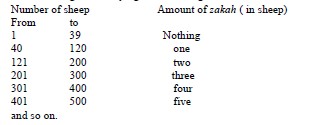
Zakah on sheep is obligating by virtue of Sunnah and Ijma'. In Sunnah, Anas narrates in the letter of instruction of Abu Bakr mentioned earlier that "As for sadaqah on sheep, naturally cost-free pastured, out of each 40 there is one sheep due, up to 120.
که شمیر زیات شي، نو تر ۲۰۰ پورې دوه پسونه واجب دي، او که شمیر یو په یو زیات شي تر ۳۰۰ پورې، درې پسونه واجب دي. که له ۳۰۰ څخه زیات شي، نو د هرو ۱۰۰ اضافي پسونو لپاره یو پسه اخیستل کیږي. که طبیعي طور د ځمکې پر خوړو باندې ځان ساتونکي، بې له لګښته پریښودل شوي پسونه له ۴۰ څخه کم وي، حتی یو هم کم وي، نو په هغو کې صدقه واجب نه ده، مګر دا چې مالک په خوښه ورکول وغواړي. د زکات په توګه باید زوړ، عیبداره، یا نر پسه ونه منل شي، مګر هغه وخت چې مالکان په خوښه ورکړي. دا ډول خبرې د ابن عمر په حدیث او نورو ډیرو روایاتو کې هم راغلي دي.
If the number increased, then two sheep are due up to 200, and if the number increases by one up to 300, there are three sheep due. If it is above 300,90 then one sheep is taken for each additional 100. If naturally, cost-free pastured sheep are less than 40, even by only one, there is no obligatory sadaqah on it unless the owner wishes to volunteer, As zakah one should not accept the old, the damaged, or the ram except when volunteered by the owners." Similar statements appear in the saying from Ibn 'Umar and in several others.
فقهاء په اتفاق سره دا خبره کوي چې په پسونو زکات فرض دی. همدارنګه په دې باندې هم اتفاق دی چې لفظ "غنم" پسونه او بزان دواړه شامل کوي، په داسې طریقه چې دواړه په یوه شی کې یو ځای شمیرل کیږي.91
Jurists unanimously agree that zakah is obligatory on sheep. There is also unanimous opinion that the word "ghanam" includes both sheep and goats in such a way that they are combined together as one item.91
د دې قول له مخې لاندې جدول جوړولی شي:
According to this saying the following table can be drawn:
د زکات لپاره کومه څاروی باید واخستل شي، د هغه د اندازې، عمر او جنس په اړه بحث به مونږ د شپږم څپرکي (برخې) کې وکړو.
We will discuss in section 6 the description of what animal should be taken as zakah as for its size, age and sex.
It is notable that Shari'ah reduced the rate on sheep as their number increases. From the previous schedule it is observed that as the number grows above 120 the rate stabilizes at one percent in contrast with the usual two-and-half percent on business assets, money and other assests. What is the rationale for this reduction? Some contemporary researchers92 attempt to explain this reduction with the argument that Shari'ah intends to encourage animal breeding by this reduction, since the rate on 40
په پسونو کې زکات دوه نیم سلنه دی، او په دوو سوو کې دا بیرته لوېږي او یوه سلنه ته راځي. خو انسان حیران کیږي چې که دا تشریح سمه وي، نو ولې همدا حکم په نورو خاروو کې هم نه پلی کیږي؟ د اوښانو او غواګانو زکات د ډېرو شمېرو په صورت کې هم د دوو نیمو سلنې په شاوخوا ثابت پاتې کیږي، او دا د زکات له عمومي نرخ سره سمون لري. که پورتنۍ تشریح سمه وي، نو باید دا حکم په نورو حیواناتو هم تطبیق شي.
sheep is two-and-half percent and it regresses at 200, going clean to one percent. But one wonders, if this explanation is correct, why the same is not applied on zakah on other kinds of livestock. The rate on both camel and cows stabilizes around two-and half percent on big numbers, which is consistent with the general rate of zakah. If the above-mentioned interpretation is correct, it should apply to other animals as well.
به نظر من ــ خدای دی ښه پوهیږي ــ کله چې د رمېو شمېر زیات شي، نو د رمې ټول مال به ډېر ماشومان لیلې (څرۍ) ولري، ځکه ډېری رمې کلنی له یوځل زیاتې زېږونې کوي. دا ماشومان د رمې په شمېر کې شمېرل کېږي، خو د زکات د ورکړې په توګه نه منل کېږي، لکه څنګه چې په لاندې دوو برخو کې ښودل کېږي. ماته داسې ښکاري چې عدالت د دې دلیل له مخې د نرخ کېدو ته اړتیا لري. که نرخ د هرو ۴۰ څخه یو په توګه وساتل شي، پداسې حال کې چې رمه ډېر ماشومان لري، حقیقي نرخ ډېر لوړ کېږي. ځکه لومړي ۴۰ سرې، نرخ یې دوه نیم سلنه دی، ځکه داسې تمه کېږي چې ماشومان په لومړيو ۴۰ کې نه شمېرل کېږي، لکه څنګه چې په پنځمه برخه کې به تشریح شي.
The way I see it --God knows best-- is that once the number of sheep grows, the total assests of sheep shall contain many baby lambs because most sheep give birth more than once a year, These babies are counted in the number of sheep but not accepted as payment of zakah, as shall be shown in the following two sections. It seems to me that the justice requires certain reduction in the rate for this reason. If the rate is kept at one out of each 40 while the herd contains many babies, the actual rate becomes much higher. As for the first 40, the rate is two-and-half percent because it is expected that babies would not be counted in the first 40, as will be explained in Section five.
د پنځم برخه: آیا د ځناورو وړوکي بچي زکات وړ دي؟
SECTION FIVE ARE BABY ANIMALS ZAKATABLE ?
أحمد وأبو داود والنسائي يرْوون عن سُوَيْد بن غَفَلة أن «مُصَدِّقَ رسولِ الله ﷺ أتانا، فجلسنا إليه، فسمعته يقول: في عهدي أن لا آخذ من راضعِ اللبن»۔ ۹۴ وهذا يدل على أن صغار المواشي لا تجب فيها الزكاة، وهذا قول جماعة من كبار العلماء، لكن سند هذا الحديث مختلَف فيه۔ ومن جهة أخرى، يروي مالك في الموطأ أن عمر أمر عامله سفيانَ بن عبد الله الثقفي بقوله: «اعدُدِ الصغار فيها، حتى ما يُحمل منها الراعي في يده، لكن لا تأخذ منها في الصدقة»۔ ۹۵ ويرويه أيضاً الشافعي وأبو عبيد۔ ۹۶ وهذا الأثر عن عمر يخالف الخبر السابق، ويدل على أن صغار الحيوان تُحسب في النصاب، وبالتالي تجب فيها الزكاة۔ وهذا ما أخذ به جماعة من الفقهاء، حتى إنه لو كانت جميع الحيوانات الزكوية صغاراً، فيُقبل واحد منها في الزكاة۔ ۹۷ بينما يقول آخرون: يُطلب من المالك أن يشتري حيواناً أكبر سناً من خارج ماله ليؤدي به الزكاة۔98
Ahmad, Abu Daud, and al Nasa'i report from Suaid Bin Ghaflah that "the zakah commissioner of the Messenger of god (p), came to us. We sat close to him and I heard him saying 'In my instructions it is pleased that I should not take from nursing animals'.94 This indicates that baby livestock are not zakatable, and this is the opinion of a group of leading scholars. But the chain of this saying is contested. On the other hand, Malik in al Muwatta reports that 'Umar told his commissioner, Sufian bin 'Abd Allah al Thaqafi, to "Count the babies in them, even those carried by the shephered in his hands, but do not accept them in payment."95 This is also reported by al Shafi'i and 'Abu Ubaid.96 This report of 'Umar contradicts the previous report and indicates that baby animals are counted in nisab and consequently zakatable. This is what a group of jurists adopt, to the extent that if all the zakatable animals were babies, one of them would be acceptable as payment,"97 though others say the owner should be asked to buy an older animal from outside to fulfil the payment of the zakah.98
بعضی عالمان د عمر د روایت او د سُوَید د قول تر منځ داسې جوړجاړی کوي چې کله چې زکات د ټولو زکات وړ څاروو په ټولګه کې یوازې د واړه ځناورو په شمېر وي، نو پر واړو ځناورو زکات نه لازموي، او وایي چې د سُوَید قول همدې حالت پورې اړه لري، خو کله چې واړه ځناور د خپلو میندو سره وي، نو هغه په شمېر کې شمېرل کېږي. خو ځینې فقیهان دا نظر لري چې واړه ځناور یوازې هغه وخت د زکات وړ ټول شمېر کې شمېرل کېږي، کله چې د نصاب د پوره کېدو لپاره لوی ځناور کافي وي. دا د ابو حنیفه، الشافعی، ابن حزم او نورو نظر دی۔ زما په اند دا نظر د اسلامي عدالت ته تر ټولو نږدې دی او نورو نظرونو باندې غوره بریښي. دا د عدالت اصول ګډوډوي چې یو څوک چې مثلاً څلور زوړ اوښان لري له زکات معاف شي، خو له هغه چا څخه زکات واخستل شي چې پنځه واړه اوښان یا څلور واړه پسان لري، ځکه دوی د لومړي په پرتله کم شتمن دی۔ کله چې نصاب یوازې د لوی ځناورو په شمېر پوره شي، نو بیا واړه ځناور د زکات وړ ټول شمېر په ټاکلو کې شمېرل کېدای شي۔ د لوی شمېرو لپاره، د نرخ جوړښت پخپله انعطاف لري، ځکه دا شمېرې په طبقو وېشي او په هرې طبقې کې ټیټ او لوړ حد ته یو شان نرخ پلی کوي۔ پس پنځه اوښان د یو پسه په نرخ زکات وړ دي، لکه نهه اوښان چې همدغه نرخ لري۔
A few conditions are required of the animals that can be paid as zakah, which include:
1. د عیب او زیان څخه پاک وی. څارویه باید د ناروغۍ، د هډوکي د ماتیدو، د زوړوالي، او د زیږون یا د پیښې له امله رامنځته شوو عیبونو یا زیانونو څخه پاک وي. قرآن وايي: {او د هغه شي قصد مه کوئ چې بد وي، ترڅو له هغې څخه انفاق وکړئ} [البقرہ: ۲۶۷] او پیغمبر ﷺ فرمايي: «نه باید زوړ یا عیبجن څارویه ورکړل شي، او نه باید ټولوونکی یوه پسه واخلي، مګر دا چې ورکوونکی یې په خوښه وړاندې کړي». دا د انس څخه روایت شوې خبرې یوه برخه ده. تاوان لرونکي څارویو ته د زکات په توګه منل د بېوزلو او نورو مستحقو کسانو سره انصاف نه دی؛ دا د مالک په ګټه تعصب دی، او دا ناوړه دی.
1. Free of defects and damage. The animal should be free of illness, bone fracture, old age, or birth and accidental defects or damages. The Qur'an says "and do not aim at getting anything which is bad, in order that out of it ye may spend "100 and the Prophet (p) states "and one should not give an old or defective animal, nor should a collector accept a ram unless the payer wishes to volunteer it". This is part of the saying from Anas. Accepting damaged animals as zakah payment is not fair to the poor and other deserving recipients; it is a bias in favor of the owner, which is improper.
د عیب یا نقصان تعریف په اړه اکثرو عالمانو دا نظر لري چې دا همغه تعریف دی چې په پلورنې معاملو کې کارول کیږي، که څه هم ځینې وایي چې هر هغه څاروی چې د قربانۍ لپاره نه منل کیږي، د زکات په توګه هم نه منل کیږي۔[1] یو ځانګړی حالت باید یادونه شي چې په هغې کې عیب یا نقصان لرونکی څاروی د زکات په توګه منل کیږي، هغه دا چې ټول هغه څاروي چې زکات ورکول کیږي، ټول په همغه عیب یا نقصان اخته وي، لکه یو عام ناروغي۔ دا ځکه چې د زکات حکم له هغه څه غوښتنه کوي چې زکات ورکوونکی یې مالک دی، پرته لدې چې هغه مجبور شي چې د زکات ورکولو لپاره بهر څخه یوازې یو ښه څاروی واخلي۔[1]02
As for the definition of defect or damages, the majority are of the view that it is the same definition used in sales contracts, though some say that anything not accepted for sacrifice is not accepted as zakah.l0l One should mentions unique case where a defected or damaged animal is accepted as zakah, which is if all the animals being zakated have the same defect or damage, such as a common disease. This is because the ordinance of zakah asks payment from what the zakatable person owns without forcing him or her to purchase from outside a good animal only for the payment of zakah.l02
د مویشیو زکات 101
Zakah on Livestock 101
۲. د حیوان د جنس تعیین: زکات کې ورکړل شوی حیوان باید د خپلې ډلې ماده وي. دا حکم یوازې اوښانو پورې اړه لري، پرته له هغو حالاتو څخه چې د انس د روایت په متن کې یادې شوي دي، چیرې چې د مطلوب ماده پر ځای د لوړې عمر نر قبول کیږي.
4. اوسط مال
د زکات راټولوونکي باید نه غوره مال واخلي او نه ټیټ کیفیت لرونکی، بلکې د واجب شوو څاروو منځنی مال.
ابن عباس روایت کوي چې نبي ﷺ معاذ ته وویل: "د خلکو له غوره مال څخه ډډه وکړه، او د مظلوم له دعا څخه ووېرېږه، ځکه د هغې او الله ترمنځ هیڅ پرده نشته."
ابن ابي شیبه روایت کوي چې نبي ﷺ د صدقې په توګه راټول شوو اوښانو کې یوه ښه ماده اوښه وليده. هغه د راټولوونکي څخه په غوسه شو او وې فرمایل: "دا څه دي؟" راټولوونکي ځواب ورکړ: "ما دا د دوه ټیټ کیفیت اوښانو په بدل کې واخیستله." نبي ﷺ وفرمایل: "نو بیا هیڅ ستونزه نشته."115
4. The average The zakah collector should not take the best or the worst in quality, but the average of the animals owed. Ibn 'Abbas narrates that the Prophet (p) said to Mu'adh, "Avoid the best of people's wealth, and be fearful of the prayer of the oppressed, for there is no curtain between it and God." Ibn Abi Shaibah reports that the Prophet (p) saw among the camels collected as sadaqah, an excellent she-camel. He was furious at the collector and said, "What is this?" The collector answered "I exchanged it for two lesser quality camels". The Prophet said, "Then it is all right."115
دا ځکه چې زکات د پرې ورکوونکو او اخیستونکو دواړو ته د انصاف پر بنسټ ولاړ دی، او ښه یا بد اخیستل د یوه لوری ملاتړ کول دي. په دې حال کې څرګنده ده چې ښه یا بد اخیستل د مال د خاوند په اختیار سره د ارزښت پر بنسټ هم کیدای شي.
ابو داود خپل سند سره د پیغمبر ﷺ څخه روایت کوي: «دری شیان دي، چا چې دا پوره کړل نو د ایمان خوند به یې وڅکي: د یوازې خدای عبادت کول، دا پوهیدل چې له خدای پرته بل معبود نشته، او د خپل مال زکات په داسې حال کې ورکول چې زړه یې راضي وي، کال په کال... او نه بوډا، نه ناروغ، نه ماشوم، نه بد عیب لرونکی حیوان چې لږ شیدې ورکوي ورکول، بلکې د خپل مال له منځنۍ برخې څخه ورکول. خدای تاسو څخه د مال ښه برخه نه غواړي، او نه یې د بدې برخې ورکول امر کړي دي.»
د زکات په توګه، راټولوونکي نه باید هغه حیوان واخلي چې ماشومان شیدې ورکوي، نه حامله حیوان، نه د پسونو نر، او نه هغه حیوان چې د زکات ورکوونکي د کورنۍ د غوښې لپاره ساتل شوی وي.
مالک په الموطا کې د عایشې ؓ څخه روایت کوي چې عمر بن الخطاب ؓ د صدقې پسونو ته تیر شو، او یوه پسه یې ولیدله چې ډیرې تھیتې لري، نو وې پوښتل: «دا پسه څه ده؟» ځواب ورکړل شو: «د صدقې په توګه اخیستل شوې ده.» هغه وویل: «د دې خاوندانو دا خوښې سره نه ده ورکړې، نو خلک د بیرته ګرځیدو لپاره مه مجبوروئ، او د مسلمانانو د مال ښه برخه مه اخلئ.»118
This is essentially because zakah is based on fairness to the two parties, payers and recipients, and taking the best or the worst means favoring one of them. However, it is obvious that the worst or the best can be taken on the basis of value at the option of the livestock owner. Abu Daud reports, through his own chain, from the Prophet (p) "There are three things, which whoever fulfills them will taste the sweetness of faith: to worship God alone, realizing that there is no deity but God, to give zakah on your wealth with your soul pleased at paying it year after year... and to give not the old, or the ill or the baby, or the defective animal that give little milk, but to give from the average of your wealth. God does not ask you to give the best of it, nor does He ordain you to give the worst of it."116 As zakah payment, the collector must not take the animal that nurses babies, nor pregnant animals, nor the ram out of sheep, nor the animal that is meant to provide meat for the household of the zakah payer.117 Malik reports in al Muwatta from 'Aishah that 'Umar bin al Khattab passed by the sheep taken as sadaqah, and saw one with big udders and asked, "What is this sheep? "He was answered, "One taken as sadaqah." He replied, "Its owners did not give it pleasantly, so do not force people to turn back, and do not take the best of the wealth of Muslims."118
د مال د ګډولو او شراکت اغیزه د څاروو په زکات
SECTION SEVEN THE EFFECT OF MIXING AND PARTNERSHIP ON ZAKAH ON LIVESTOCK
د مالداره خاوندانو لپاره دا عام دی چې د خپلو څاروو د مصارفو د کمولو لپاره یې سره یوځای کوي. ایا ټول یوځای شوي څاروي د نصاب او د زکات د نرخ په ټاکلو کې یو واحد ګڼل کېږي؟ که دا چې هر خاوند جلا جلا ګڼل کېږي؟
It is common for livestock owners, to put together their cattles in order to save on overhead expenses. Should all gathered livestock be treated as one unit in determining the nisab and rate of zakah? or should they be considered for each owner alone?
دې پوښتنې ته د ځواب ورکولو لپاره باید پام وشي چې د مالونو په ګډه روزنې کې دوه اصلي ډولونه شتون لري. یو ډول دا دی چې مالکیت جلا ساتل کیږي او یوازې ځینې مصارف ګډ وي، او بل ډول دا دی چې څاروي د شریکانو په ګډه ملکیت کې وي. په دویمه بڼه کې د هر مالک برخه په شمیر نه بلکې یوازې د ټولګي د یوې برخې په توګه ټاکل کیږي، پداسې حال کې چې په لومړۍ بڼه کې د هر سړي خپل څاروي جلا پیژندل کیږي. دا دوه ډوله ګډ پانګونه ضروري نده چې د زکات وړ کیدو په اړه یو شان اغیز ولري.
To deal with this question one should note that there are two leading forms of collective breeding. One involves keeping the ownership separate and sharing in certain expenses, and the other is when the cattle is owned commonly among the partners. In the latter form, the share of each owner is not determined in number but only as a proportion of the total, whereas in the former each person's own animals are distinguished. These two forms of investing together need not have the same effect on zakatability.
Ibn Rushd in Bidayat al Mujtahid, summarizes the views of jurists according to the following:
ډېری فقیهان د څارویو په ګډولو باندې د زکات وړتیا اغیزمنه بولي، پرته له ابو حنیفه او د هغه له شاګردانو څخه، چې دوی وایي د څارویو ګډول د نصاب یا د پلي کېدونکي نرخ باندې هیڅ اغیز نه لري. مالک، الشافعی، او ډېری فقیهان موافق دي چې هغه ډله مالداران چې خپل څارویه یوځای کوي، داسې ګڼل کېږي لکه چې یو مالک وي. دغه فقیهان په دوو برخو کې توپیر لري: د نصاب ټاکل، او د اغیزمن ګډولو تعریف.
Most jurists view mixing animals as affecting the zakatability except for Abu Hanifah and his disciples, who believe that mixing together of animals does not have any effect on nisab or on the applicable rate. Malik, al Shafi'i, and most jurists agree that the group of breeders who mix their cattles together are treated as if they were one owner. Those jurists however differ in two areas: the determination of nisab and the definition of effective mixing together.
دا باید په یاد وساتل شي چې دې مختلفو نظرونو سبب د پیغمبر ﷺ د یوې خبرې مختلفه تفسیر دی. د صدقې په لیک کې پیغمبر ﷺ
It should be noted that the reason for these different opinions is the different interpretation of the saying of the Prophet (p). In the letter on sadaqah the Prophet (p)
Horses used for personal transportation and fighting are exempt from zakah.
په مسلمانانو کې دا خبره متفق علیه ده چې هغه آسونه چې د شخصي سورلۍ، شخصي بار وړلو او د خدای په لاره کې د جهاد لپاره ساتل کیږي، زکات پرې نشته، که څه هم دوی په طبیعي ډول په غرونو او ځنګلونو کې څړیږي یا په فارمونو کې ورته خواړه ورکول کیږي، ځکه دا د شخصي او کورنۍ استعمال لپاره دي او د شخصي اړتیاو څخه زیات ودې وړ شتمني نه ده.126 په بل لوري، د زاهریانو پرته ټول مسلمانانو دې ته اتفاق کړی چې هغه آسونه چې د آسو سوداګرو لخوا د سوداګرۍ د توکو په توګه ساتل کیږي، زکات پرې ور دی، که دوی په طبیعي ډول څړیږي یا په لاسي ډول ورته خواړه ورکول کیږي، ځکه هغه آسونه چې د سوداګرۍ د توکو لپاره ساتل کیږي، د نورو سوداګریزو شتمنیو په څیر توکي دي.127 همدارنګه دا هم متفق علیه ده چې هغه آسونه چې مالکان یې د کال په ډیره برخه کې خواړه ورکوي، او د پورته یاد شوو هدفونو لپاره نه وي ساتل شوي، له زکات څخه معاف دي، ځکه د اکثرو عالمانو په نظر د څارویو د زکات وړ کیدو لازمي شرط دا دی چې دوی په طبیعي ډول او آزادانه څړیږي.128
It is agreed upon among Muslims that horses owned for the purpose of personal riding, carrying personal loads, and fighting for the sake of God are exempt whether they are naturally pastured or fed in ranches, because they are for personal and household use and are not growing assets in excess of personal needs.126 On the other hand, all Muslims except Zahirites have agreed that horses used as business inventory owned by horses' merchants, are zakatable whether they are naturally pastured or manually fed on the grounds that horses designed for business inventory are commodities, like other business asset.127 It is also agreed upon that horses that are fed by owners most of the year, which are not owned for any of the previously mentioned purposes, are exempt from zakah, because natural free pasturing is a condition for zakatability of animals, according to the majority of scholars.128
Zakatability of naturally pastured horses designated for breeding
د ازاد چرېدونکو اسونو د زکات وړ کېدو په اړه، چې د نسل او ودې لپاره ساتل کېږي، دوه نظرونه دي. ابوحنیفه وایي چې دا اسونه زکات وړ دي، په دې شرط چې ټول ساتل شوي اس نرینه نه وي، ځکه په دې صورت کې دوی نسل نشي زېږولی۔ د فقیهانو اکثریت دا اسونه له زکات څخه معاف بولي، او دا نظر ابن المنذر د علي، ابن عمرو الشعبي، عطاء، الحسین العبدي، عمر بن عبدالعزیز، الثوري، ابو یوسف، محمد (د ابوحنیفه دوه شاګردان)، ابو ثور، ابو خیثمه او ابوبکر بن شیبه څخه روایت کړی دی. نور دا نظر عمر، مالک، الاوزاعي، اللیث او داود ته منسوبوي۔130
There are two opinions on the zakatability of naturally cost-free pastured horses that are designated for breeding and growth. Abu Hanifah believe they are zakatable, provided that not all horses owned are males since in this case they cannot breed.129 The majority of jurists consider these horses exempt from zakah, and this is narrated by Ibn al Mundhir from 'Ali, Ibn 'Amr al Sha'bi, 'Ata, al Husain al Abdi, 'Uamar bin 'Abd al Aziz, al Thawri, Abu Yusuf, Muhammad (the two disciples of Abu Hanifah) Abu Thawr, Abu Khaithamah, and Abu Bakr bin Shaibah. Others attribute this opinion to 'Umar, Malik, al Awza'i, al Laith and Daud.130
د اکثریت دلیل د آسونو د زکات نه ورکولو په اړه
Evidence of the majority for the non-zakatability of horses
1. د ابوہریرہ رضی اللہ عنہ څخه روایت دی چې د صحیحینو او نورو کتابونو کې راغلی، چې نبي ﷺ فرمایلي دي: "د مسلمانانو په غلامانو او د ښځینه آسونو باندې صدقه نشته."۱۳۱ دا معافیت ټول آسونه شامل کوي، که دوی په ځنګلونو کې څړیدونکي وي که نه، ښځینه وي که نارینه، ځکه چې حکم عام دی۔
1. It is reported in the two correct books and in others from Abu Hurairah that the Prophet (p) said " There is no sadaqah obligated on Muslims on their slaves and mares."131 This exemption includes all horses, naturally pastured or not, female or male because it is general.
۲۔ د احمد، ابو داود او ترمذي روایت، له علي رضي الله عنه څخه، هغه د نبي ﷺ څخه
2. The report of Ahmad, Abu Daud, and al Tirmidhi from Ali from the Prophet (p)
"I waived for you sadaqah on horses and slaves. Pay sadaqah on silver money, one dirham for each 40."132
۳۔ د نبي ﷺ عمل دا نه و چې د اسونو څخه زکات راټول کړي، سره له دې چې د اوښانو، غواګانو او پسونو څخه زکات راټول شوی و۔ رسول ﷺ هغه څوک دی چې د هغه واجب تفصیلات بیانوي چې په قرآن کریم کې ذکر شوی دی، او د هغه قول او عمل دا ښيي چې اسونه زکات وړ نه دي۔
3. The actions of the Prophet (p) did not include collecting zakah on horses, even though it was collected on camels, cows and sheep. The Messenger is the one who gives the details of the obligation outlined in the Qur'an, and his word and deed indicate that horses are not zakatable.
4. دوی همدا رنګه استدلال کوي چې هغه څاروي چې زکات پرې وړ دی، له آسونو سره په ښکاره ډول توپیر لري، او آسونه د ځانګړو کارونو او د دې ډوله څارویو د ساتلو د موخې له توپیر له امله د قیاس له لارې زکات وړ نشي کیدای. آس د جنګ لپاره، د دې دین د ټينګولو لپاره، او د دښمنانو په وړاندې د دفاع لپاره ترلاسه کېږي، نو خلک باید د داسې موخو لپاره د ترلاسه کولو او ساتلو ته وهڅول شي. خدای فرمایي: {او د هغوی په وړاندې د خپل توان تر پایه ځواک چمتو کړئ، او د جګړې سرحدي آسونه هم.} د جنګي آسونه د جنګ وسایل دي، لکه وسلې او نور جنګي وسایل، تر هغه وخته زکات نه لري څو چې د سوداګرۍ د توکي په توګه ونه کارول شي.134
4. They also argue that livestock that are zakatable are obviously very different from horses and that horses cannot be made zakatable by analogy because of the basic differences in use and in the purpose of owning these different kinds of animals. Horses are obtained for use in fighting, in establishing this religion, and in defense against enemies, so people should be encouraged to obtain them and keep them for such purposes. God says "Against them make ready your strength to the utmost of your power, including seeds of war.133 Horses of war are fighting equipment, like weapons and like other fighting tools are not zakatable as long as they are not used as a commodity for trade.134
د ابوحنیفہ رحمہ اللہ نظر او د هغه دلیل
Abu Hanifah's opinion and its supporting evidence
ابوحنیفہ، جو یہ عقیدہ رکھتے ہیں کہ آزادانہ چرنے والے گھوڑوں پر زکات واجب ہے، درج ذیل دلائل پیش کرتے ہیں:
Abu Hanifah, who believes that naturally pastured horses are zakatable, provides the following arguments:
پس اول، امام بخاری د خپل صحیح کتاب کې د ابوهریرہ رضی الله عنه څخه روایت کوي چې نبي کریم ﷺ فرمایلي: "آسونه د یو سړي لپاره د اجر سرچینه دي، د بل لپاره د رزق سرچینه دي، او د بل لپاره د ګناه سرچینه دي. هغه څوک چې دوی د اجر سرچینه وي، هغه سړی دی چې آسونه د خدای د لاري د جهاد لپاره ساتي، چې په جنګ کې پرې سپور شي یا بل چا ته ورکړي چې په جنګ کې پرې سپور شي. له همدې امله دوی د اجر سرچینه دي. او هغه څوک چې آسونه د شخصي ترانسپورت لپاره ساتي، ترڅو له نورو ته اړتیا ونه لري، او د خدای حق په آسونو کې او د خلکو حق چې د دوی په شاته سپور شي هیر نه کړي، دوی د رزق سرچینه دي. او هغه سړی چې آسونه د فخر لپاره او د اسلام د خلکو په مقابل کې ساتي، دوی د هغه لپاره د ګناه سرچینه دي."135 دا خبره په دې دلالت کوي چې په آسونو کې د خدای حق، زکات او د دوی په شاته د سپورېدو اجازه ورکول شتون لري.136 نور فقها وايي چې د آسونو د حق څخه مراد د جنګ کې د دوی کارول دي.137
Firstly, al Bukhari reports in his correct collection from Abu Hurairah that the Prophet (p) said "Steeds are for a person a source of reward, for another they are a source of sustenance, and for yet another they are a source of sin. He for whom they are a source of reward is the man who owns horses for the purpose of fighting for the sake of God, to ride it in battle or to give it to someone else to ride in battle. That is why they are a source of reward. For one who keeps horses for personal transportation so he does not need others, and does not forget God's right on the horses or the right of people to be given lifts on their backs, they are source of sustenance. And for the person who keeps steeds as a matter of pride and to fight against the people of Islam, they are a source of sin."135 This saying indicates that there is a right of God on horses, zakah and giving lifts on their backs.136 Other jurists argue that what is meant by the right on horses is the use of horses in fighting.137
ثانیاً، د جابر له لارې د پیغمبر ﷺ څخه روایت شوی دی: «په هر خپله خوړونکي مېړۍ (اسپ) باندې یو دینار یا لس درهمه زکات دی.» دا روایت دارقطني او بیهقي نقل کړی دی، او دوی دا ضعیف ګڼلی دی. له همدې امله د ډېرو فقیهانو دا نظر دی چې دا روایت د اسپانو د زکات نه ورکولو په هغه صحیح قول چې «مسلمانانو په غلامانو او مېړیو باندې زکات نشته» مقابله نشي کولای.
دريمه، د اوښانو په قیاس، دواړه وده کوونکي او ګټور حیوانات دي، او په دواړو کې د زکات ورکولو شرط، یعنی خوړل د خپل خوښ په وړیا چراګاه کې، پوره دی. هغه توپیرونه چې د اسپانو او نورو څاروو ترمنځ ادعا کیږي، له هغو توپیرونو زیات نه دي چې د نورو څارویو ترمنځ شتون لري، ځکه هر حیوان خپل ځانګړي صفات لري. د اوښانو او پسونو ترمنځ ډېر توپیرونه دي، خو بیا هم دواړه زکات ورکول کیږي. ابو حنیفه پر دې دلیل ولاړ دی، ځکه چې د زکات د واجب کېدو علت یو عقلي وړ مسأله ده، نه یوازې عبادت. دغه علت وده یا د وده امکان دی، او کله چې وده په بل مال کې هم موجوده شي، نو زکات ورکول هم باید هغې ته وغزول شي.
د آسونو نصاب او د زکات نرخونه
Nisab and rates of zakah on horses
ابو حنیفہ رحمہ اللہ د اسونو لپاره نصاب نه ټاکي۔ د الدر المختار مصنف لیکي: "دا ډیر مشهور دی چې ابو حنیفہ د اسونو لپاره نصاب نه ټاکي؛ زموږ سره د هغه څخه په دې اړه کومه روایت نشته۔"146 ابن عابدین په خپل شرح کې د القهستانی دا قول نقل کوي: "ځینې دریو ته نصاب ټاکي او ځینې پنځو ته۔"147 داسې بریښي چې د پنځو اټکل ډیر سم دی، ځکه چې دا د اوښانو سره ورته والی لري. د پنځه عدد په نصابونو کې ډیر کارول کیږي: نصاب پنځه اوښان دي، پنځه اوقیې ورکه (دا دوه سوه درهمه ده) او پنځه وسق غله۔
Abu Hanifah does not determine a nisab for horses. The author of al Durr al Mukhtar writes "It is best known that Abu Hanifah does not estimate nisab for horses; we have no report from him about that."146 Ibn 'Abidin in his commentary quotes al Qahastani as saying "Some indicate nisab at three and others indicate it at five."147 It seems that the estimation of five is mare correct because of its similarity to that of camels. The number five is often used in nisab . nisab is five camels, five 'uqiyyah of silver [equals 200 dirhams] and 5 wasq of grain.
د ابن عابدین له لارې د ابوحنیفه څخه بیان شوی دی: د عربي اسونو مالکانو ته د هر یو اس په بدل کې یو دینار ورکولو یا د خپلو اسونو ارزښت ټاکلو او د دې ارزښت په اندازه 5 ورکولو اختیار ورکول کیږي.
The rate is explained by Ibn Abidin from Abu Hanifah: Owners of Arabian horses are given the choice of paying one dinar on each or evaluating their horses and paying 5
د هر ۲۰۰ درهمو ارزښت لپاره پنځوس درهمه — نرخ یوازې دوه نیم سلنه دی. د عربي نه وو آسونو لپاره یوازې ارزښت په پام کې نیول کیږي.148
dirhams for each 200 dirhams of value - the rate is just two-and-half. For non-arabian horses, only the value is considered.148
I need the English text you'd like translated into Pashto. Please paste it here, and I'll translate it following the guidelines.
Analysis
بحث دو دلیل را پس از بررسی آنها، به نظر من چنین میرسد که پیامبر ﷺ وجوب زکات بر اسبها را بهروشنی نفی نکرد، و همچنین آن را بهروشنی واجب نساخت. سخن ابوهریره که «بر برده و اسب مسلمان صدقهای نیست»، به هیچ چیزی جز اسبی که برای سواری شخصی و بهعنوان مرکب جنگی به کار میرود، مربوط نمیشود. این تفسیر با تفسیر زید بن ثابت و ابن عباس که بهدرستی از ایشان روایت شده، تأیید میگردد. خود عبارت «بردهاش و اسبش» در این سخن، همین معنا را نشان میدهد. همچنین، فقها به اجماع – به استثنای ظاهریان – اتفاق دارند که زکات بر اسبها و بردگان واجب است، هنگامی که جزء کالای تجاری باشند. ابوهریره بیشتر به ظاهر نصوص پایبند بود و در میان صحابه به دقت حافظه شهرت داشت، اما به تحلیل و توضیح دادن، همچون زید و ابن عباس، شهرت نداشت. سخن علی که «زکات اسبها و بردگان را برای شما بخشیدم» را دارقطنی صحیح دانسته، آنگاه که به علی ختم شود و به پیامبر ﷺ منسوب نگردد. و دارقطنی در این گونه امور، متخصص شناخته شده است. با این حال، عبارت «برای شما بخشیدم» دلالت دارد که این اموال در اصل زکاتپذیر هستند، اما پیامبر ﷺ به دلیلی خاص، زکات آنها را بخشیده است. این دلیل میتواند نیاز شدید به اسبهای جنگی باشد، یا اینکه اسب در عربستان دارایی عمده و قابل توجهی به شمار نمیرفت.
After discussing the two arguments, it seems to me that the Messenger (p) did not negate the existence of zakah on horses in a clear way, but neither did he obligate it clearly. The saying from Abu Hurairah, "There is no sadaqah on a Muslim's slave and mare" does not touch on anything other than the horse used for personal transportation and as a mount for war. This explanation is supported by the interpretation from Zaid bin Thabit and 'Abbas, correctly reported to him. The very words "His slave and his mare" in the saying seem to indicate this meaning. Also, that it is unanimous by Ijma' among jurists -- except Zahirites-- that zakah is obligatory on horses and slaves when they are part of business inventory. Abu Hurairah was inclined to hold to the letters of texts, and was known among the Companions for his precise memory, and did not have a reputation of analyzing and elaborating like Zaid and Ibn 'Abbas. The saying from 'Ali, "I have waived for you the sadaqah on horses and slaves" is noted by al Daraqutni as correct when it ends at 'Ali and is not linked to the Prophet. It is well known that al Daraqutni is the expert on such matters. However the words "waived for you" imply that these assets should be in principle zakatable but the Prophet (p) waived the zakah are them for certain reason.l49 This could be the desperate need for steeds of war or the fact that horses were not a substantial item of wealth in Arabia.
بهرحال، د اسپو د زکات د واجبیدو په اړه د صریح متن نشتوالي دا معنا نه لري چې اسونه زکات ورکولو وړ نه دي. د پیغمبر ﷺ څخه د سرو زرو د زکات د واجبیدو په اړه هیڅ خبره نقل شوې نه ده. ښکاره ده چې د هغه په وخت کې ډیرې پیسې سپینې زر وې او د سرو زرو حکم د دواړو فلزاتو د کارونې په ورته والي له امله د قیاس له لارې اخیستل شوی دی. د عمر او یعلی بن امیه پیښه زما په نظر کې ډېره مهم وزن لري. د عمر لخوا اخیستل شوی اقدام ښیي چې په زکات کې قیاس او اجتهاد مهم ځای لري. دا چې پیغمبر ﷺ د ځینو ډولونو مالونو څخه زکات اخیستی، دا معنا نه لري چې د هغه وروسته مسلمانان د نورو ورته ډولونو څخه زکات نه شي اخیستلی. په حقیقت کې هر هغه مهم وده کوونکی مال چې ارزښت لري، باید زکات ورباندې واجب وي.
د خبرې لاره: د پیغمبر ﷺ د امرونو تر منځ توپیر، هغه په دې حیثیت چې هغه د خدای رسول دی، او هغه په دې حیثیت چې هغه د دنیوي مشر (د دولت د مشر) په توګه دی.
Digression: The distinction between orders of the Prophet as a messenger of God orders as a temporal head of state.
پیشنهاد شده بحث قبلی ما را وادار میکند چند پاراگراف را به این نکتهٔ مهم اختصاص دهیم. همواره باید به شرایط و اوضاعی که پیرامون سخنی از پیامبر ﷺ قرار دارد، و به موضوع آن سخن توجه کرد تا دریافته شود که آیا مربوط به امور دنیوی، سیاسی، اقتصادی، نظامی یا اداری است، یا به اصول شیوهٔ زندگی اسلامی مربوط میشود. گاه ممکن است متن دیگری وجود داشته باشد که بر اصلی پایدار با کاربرد موقتی و ویژه دلالت کند، یا رویدادهای مشابه به شکلی متفاوت برخورد شده باشند، که این نشان میدهد آن برخورد بیشتر جنبهٔ زمانی دارد تا دینی.
The previous discussion leads us to devote a few paragraphs to deal with this important point. One should always look at the circumstances that surround a statement made by the Prophet (p) and the subject matter of the saying to see whether it relates to temporal, political, economic, military, or administrative affairs, or to the principles of the Islamic way of life. There may exist sometimes another text that indicates the enduring principle of a special temporal application, or similar events may have been differently treated, which indicates this treatment may be temporal rather than religious.
د مثال په توګه القرافي په خپل «الإحکام» کې د دې قول په اړه یوه بیلګه راوړې ده: «څوک چې د دښمن یو سرتېری ووژني، هغه باید د هغه شخصي مال واخلي». مالک وايي دا د پیغمبر ﷺ یو فیصله ده د دولت د مشر په توګه، او دا عمومي قاعده نه ده. که د اسلامي دولت مشران د جګړې په پیل کې داسې کوم مقرره اعلان کړي، نو بیا باید پر هغې عمل وشي، خو که نه، نو عمومي اصل پاتې دی چې د جنګي غنیمت ویش د سورت الانفال (اتم سورت) د قرآن متن سره سم کېږي. مالک د دې نظر د تایید لپاره لاندې دلایل وړاندې کوي:
An example is give by al Qarafi in his al Ihkam about the saying "One who kills an enemy soldier shall have his personal property". Malik says this is a decision by the Prophet (p) as a head of state and is not a general rule. If the leaders of the Islamic state declare such a regulation at the beginning of a war, then it should apply, but otherwise, the general principle that war booty is distributed according to the text of the Qur'an in sura eight (al Anfal) remains applicable. Malik gives the following arguments to support this view:
1. The verse about the distribution of war booties in sura (al Anfal) contradicts this saying.
دا ډول حکم ممکن د مجاهدینو نیتونه له دې ځایه واړوي او بدل یې کړي چې د خدای لپاره وي، ډیر کله د دښمن د مال په غوښتنه بدلېږي.
2. Such a regulation may interfere with, and divert the intentions of the fighters from being for the sake of God to being the desire for the enemy's property.
د دې حدیث د ورکولو سبب دا و چې نبي ﷺ په یوه ځانګړې جګړه کې جنګیالیو ته هڅه ورکړه.51
SECTION NINE OTHER NATURALLY PASTURED DOMESTIC ANIMALS
دا بخش د طبیعي توګه د وړیا څړیدونکو کورنیو څارویو عمومي حالت په اړه دی چې د ګټې لپاره ساتل کېږي. ایا کولی شو د دې ډول ټولو څارویو باندې د زکات حکم عمومي کړو یا نه؟ په بل عبارت، ایا زکات باید یوازې د مخکې یادو شویو څلورو ډولونو پورې محدود وي، که چېرې ټول کورني څاروي پکې شامل دي؟ د نن ورځې د اسلامي پوهنې ځينو مشرو استادانو، لکه محمد ابو زهرې، عبدالوهاب خلاف او عبدالرحمن حسن، د عمر رضي الله عنه له عمل څخه دا استنباط کړی چې په زکات کې د قیاس له لارې کار اخیستل کیدای شي.
This section deals with the general case of naturally cost-free pastured domestic animals maintained for profit. Can we generalize the case of zakah on all such animals or not? In other words should zakah be restricted to the four previously mentioned species or should it include all domestic animals? Some of today's leading professors of Islamic studies, including Muhammad Abu Zahra, 'Abd al 'Wahab Khallaf, and 'Abd al Rahman Hasan, deduct from the practice of 'Umar that one can apply analogy on zakah.
عمر بن الخطاب رضی الله عنه د ارزښتناک شیانو په توګه د ښځو کیدو له امله، په قیاس سره د آسونو باندې زکات واجب کړ. دا خبره د قیاس په کارونه کې د استاد ابوحنیفه له خوا تائید شوې ده. هغه کسان چې د آسونو باندې زکات واجب نه ګڼي، دا کار د قیاس د انکار له امله نه کوي، بلکې د چرګانو د ځواکمنې ځانګړنې (د خوړل کیدو وړ والي) په دې ګڼلو چې دا د زکات د واجبیدو یو مهم سبب دی. څرنګه چې آسونه د خوړلو وړ نه دي، نو دوی د زکات واجبیت آسونو ته نه غځوي. د "المغني" لیکوال لیکي: "د آسونو او چرګانو تر منځ قیاس سم نه دی، ځکه چرګان د ودې وړ مال دي چې د شیدو او غوښې لپاره کارول کیږي او د قرباني لپاره هم کارول کیدای شي." د علماوو اکثریت یوازې د ودې ځانګړنه د زکات د واجبیدو سبب نه ګڼي.
'Umar bin al Khattab obligated zakah on horses by analogy, on the grounds that horses were becoming valuable assets. This is upheld by Abu Hanifah, the master in the application of analogy. Those who do not obligate zakah on horses do not do so in denial of analogy, but because they consider the edible character of livestock an important reason for their zakatability. Since horses are not edible, they refuse to extend zakatability to horses. The author of al Mughni writes "The analogy of horses and livestock is incorrect, because the latter are growing wealth that is used for milking and meat and can be used for sacrifice." The majority of scholars does not consider the character of growth alone the reason for zakatability.
دا درې واړه استادان اضافه کوي: که چېرې حکیم خلیفه عمر رضی الله عنه ودانۍ (نمو) د زکات د ورکولو لازمي شرط وګڼي، او ابوحنیفه پر دې نظر تلی وي، نو موږ کولی شو دا حکم نورو څارویو ته هم وغزوو او وواییو چې ټول هغه څاروي چې وده کوي او په طبیعي ډول، د بیې پرته په آزاده څراګاه کې ژوند کوي، که نصاب ته ورسېږي، زکات ورباندې واجب دی، چې نصاب یې شل دیناره دی، په 2.5 سلنه کچه. نصاب د سرو زرو په پرتله اټکل کېږي، ځکه عمر رضی الله عنه د اسونو د ارزښت له مخې زکات ټاکلو اصل ومانه، او ارزښت اوس هم د سرو زرو په پرتله اټکل کېږي.158
د لومړیو برخو څخه اخیستل شوي عمومي اصول
SECTION TEN GENERAL PRINCIPLES DERIVED FROM THE PREVIOUS SECTIONS
د زکات په دې څپرکي کې په مخکنیو برخو کې بحث اوږد شو، ځکه شریعت د څارویو په زکات باندې ډیر داسې اصول او احکام ټاکلي دي چې شاید د زکات په نورو برخو کې دومره تفصیلي نه وي، او د دې موضوع اوږده شننه داسې مهم اصول بې نقابه کوي چې د عموماً زکات د حقیقت په پوهیدو کې ډیر ګټور دي. له دغو اصولو څخه دا دي:
The discussion in the previous sections of this chapter has been lengthy because Shari'ah itself dictates many principles and rulings about zakah on livestock that may not be as detailed in other areas of zakah, and because the lengthy analysis of this issue uncovers important principles that will be of great benefit in understanding the essence of zakah in general. Among these principles are the following:
۱. زکات، با اینکه یوه عبادت ده، یوه عامه ادارې ده چې د اسلامي دولت په نظارت کې چلیږي. د زکات راټولونکي ټاکل او لیږل د اسلامي دولت دنده ده.
1. Zakah, although a worship, is also a public institution supervised by the Islamic state. Appointing and sending zakah commissioners is the duty of the Islamic state.
۲. د زکات احکام یو خوا د فقیرانو اندیښنې او بل خوا د بډاینو ګټې سره توازن ولري، ترڅو کم مقدار مال له زکات څخه معاف وي او د زکات په توګه یوازې منځنۍ کیفیت لرونکي شیان ومنل شي.
2. Zakah regulations balance the concerns of the poor on one hand and the interests of the rich on the other hand, so that small quantities of wealth are exempted from zakah and average quality assets only are accepted as zakah payment.
3. The expensive upkeep of an asset reduces zakah or waives it on that asset. For that reason, the majority of leading jurists consider manually fed animals exempt from zakah on the ground that they cost as much as they profit the owner.
4. A transformation of a growing asset from its use for profit to personal use exempts it from zakah, according to the majority of scholars with regard to cows and camels used for watering, cultivation, and carrying personal loads.
This condition is derived from what is reported by Ahmad, al Nasa'i, and Abu Daud from Bahz bin Hakim from his father from his grandfather, who said: I heard the Messenger of God (p) saying about naturally ( cost-free ) postured camels, for each forty, there is one as zakah ... etc. "This saying is graded correct by a group of leading scholars. The adjective "naturally, cost-free pastured" here implies that artificially fed camels are not subject to zakah; otherwise adding such an adjective becomes meaningless, and the Prophet (p) does not speak in vain. It is obvious from this saying that camels characterised, as naturally, cost-free pastured are unlike those that are not.
الخطابی وائی: «کله چې یو شی دوو صفتونو څخه یوه ولري، او د شریعت حکم یوې صفت ته تطبیق شي، نو بل صفت ته د دې مقابل حکم، په مفهوم سره، تطبیقیږي۔»⁸ د اصول فقه علماوو دا هم منلي دي چې په یو حکم کې د یوې ځانګړې صفت ذکر کول دا معنا لري چې کله چې دا صفت نه وي، نو حکم هم نه تطبیقیږي، یعنې هغه اوښان چې په اخیستل شوې څارو خوړلې وي، له نورو سره توپیر لري۔⁹
Al Khattabi comments, "When something may have either of two characteristics, and a ruling of Shari'ah is applied to one of them, then the opposite ruling applies to the other characteristic, by implication".8 It is also accepted by scholars of the methodology of jurisprudence that giving a specific characteristic in a ruling implies that when the characteristic is absent the ruling does not apply9 i.e., camels fed by purchased feed are treated differently.
دې خبرې ته یوه روایت هم ملاتړ کوي چې د البخاری او نورو په صحیح کتابونو کې د انس رضي الله عنه څخه راغلې دي، چې "که پسان په طبیعي آزاد څړ کې څريږي او شمېر یې ۴۰ ته ورسېږي، نو زکات کې یوه پسه ورکول کېږي". که د پسونو لپاره د طبیعي آزاد څړ شرط ضروري وي، نو په قیاس سره دا شرط د اوښانو او غواګانو لپاره هم باید ضروري وي، ځکه چې دوی ترمنځ هیڅ توپیر نشته. هغه روایتونه چې پدې شرط نه لري، باید د هغو روایتونو په رڼا کې واخیستل شي چې دا شرط په کې راغلی دی.
This saying is further supported by a report is the correct collection of al Bukhari and others from Anas, that "if sheep are naturally (cost-free) pastured, and reach 40 in number, there is one sheep as zakah". If the condition of natural free pasture is required on sheep it should also be, by analogy, required on camels and cows, since there should be no distinction between them. Sayings without such restriction should be taken with reference to those that came with the restriction of natural free grasing.
دا د ډیرو عالمانو نظر دی، خو ربیعه، مالک او اللیث له دې سره اختلاف لري. دوی د ځانګړتیا نه لرونکو حدیثونو ته په کتو سره د سوایي غوایانو (څاروي) باندې هم ځکاة فرض ګڼي، لکه د هغه څاروي په شان چې په طبیعي څړ کې څرېږي. د محدودیت لرونکو حدیثونو تفسیر دا کوي چې "طبیعي یا بې لګښته څړ" عبارت عام توصیف دی، ځکه دا د پیغمبر ﷺ په زمانه کې د څارویو یوه عام صفت و.10
This is the opinion of the majority of scholars, Rabi'ah, Mlaik and al Layth differ on that. They obligate zakah on manually fed livestock the same way it is on naturally pastured, as implied by the sayings that do not have the restriction. Their explanation of the restricting sayings is that the word "natural or cost-free pasture" is a general description because this was a common adjective of livestock at the time of the Prophet (p).10
که د کرنې په بهیر کې کارول شوي څاروي هم زکات ورکړل شي، نو زکات به په کرنه دوه ځله لګیږي، یو ځل د تولید په وسیله باندې او بل ځل د حاصل باندې، لکه څنګه چې ابو عبید په سمه توګه ویلي دي. مالک د اکثرو په دې حکم کې مخالفت کوي، او د هغه په نظر زکات په غواګانو او اوښانو لګیږي، که دوی کار کوي که نه، او که په طبیعي ډول لرګي خوري که نه. کله چې د مالک نظر الثوري ته یادونه شو، هغه وویل: "ما نه فکر کاوه چې څوک داسې وایي."17 په انصاف کې باید دا هم وویل شي چې ځینې مالکي فقیهان د اکثرو نظر ته مایل دي.
Two things support these narrations and this point of view. The first is the principle that assets designated for personal use and service are not zakatable, and by the same token livestock designated for cultivation, or personal transportation should not be zakatable. It is apparent that such animals are not part of the assets invested for growth.14 Secondly, the report of Abu 'Ubaid from al Zuhri, that cows and camels used for carrying riders are not zakatable, and neither are cows used for cultivation.15 All these are like tools for agriculture, Sa'id bin Abd al Aziz al Tanukhi says "Cows used in cultivation are not zakatable, because the grain produced is being zakated, and it involves the work of cows.16 If animals used in the process of farming were to be zakated, zakah would then be double on agriculture, taken once on the means of production and again on the produce, as rightly stated by Abu 'Ubaid. Malik disagrees with the majority on this ruling, and according to him zakah is obligated on cows and camels, working or not, naturally pastured or not. When the view of Malik was mentioned to al Thawri he replied "I did not think that anyone would say that".17 In fairness, one should add that some Malikite jurists lean toward the view of the majority.
ابن ناجي د ابن عبد السلام څخه نقل کوي چې ويلي يې دي: «په دې باب کې د اکثرو قول هغه دی چې انسان ته ډېر اطمینان بخښي.» ابو عمر بن عبد البر ښيي چې د مالکیانو نظر د کار اخستونکو څارویو په اړه د هغو نظر سره په ټکر کې دی چې د شخصي کارونې ګاڼو په اړه يې درلودی؛ دوی وايي چې دغه ګاڼې د زکات وړ نه دي.18
Ibn Naji quotes lbn 'Abd al Salam as saying "In this regard, the view of the majority is the one that one feels more comfortable with." Abu 'Umar bin 'Abd al Barr shows that Maliketes' view on working animals is in conflict with their position on jewelry designated for personal use; the latter is not zakatable, according to them.18
د ټولو ټاکل شویو شمېرو او اندازو سرچینه د رسول الله ﷺ عملي کړنې دي. امام نووي په «المجموع» کې ویلي دي چې د څارویو د زکات اندازې او شمېرې د انس او ابن عمر رضي الله عنهم له هغو دوو روایاتو څخه راځي.26
Numbers and amounts in the above two tables come from the actions of the Messenger of God (p). Al Nawawi in al Majmu' says that the quantities and amounts of zakah on livestock come from the two saying narrated by Anas and Ibn 'Umar.26
there is one she-camel two to three years old, and for each 50 there is one she-camel three to four years old. A person who owns [up to] four camels is not zakatable unless he volunteers, but if they reach five camels, one sheep is due on them as zakah. In the sadaqah on sheep, if they are naturally, cost-free pastured, and number between 40 and 120 sheep, there is one sheep due. For more than 120 and up to 200, there are two sheep.
د ۲۰۰ څخه تر ۳۰۰ پورې ۳ پسونه دي. د ۳۰۰ څخه زیات لپاره، د زکات اندازه هر ۱۰۰ پسه یو پسه ده یا د هغې برخه. که یو سړی له ۴۰ څخه کم پسونه ولري
For more than 200 up to 300 there are three sheep. For more than 300, the amount of zakah is one sheep for each 100 or a fraction therein. If a person owns less than 40
د څړځای پر ازاد پروت پسونو کې صدقه نشته، پرته له دې چې څښتن یې په خپله خوښه ورکړي. د سکې پیسو (زرو) پر مال کې د لسمې برخې څلورمه برخه واجب ده. که یو څوک یوازې ۱۹۰ درهمه ولري، نو پر دې کې هیڅ نشته، پرته له دې چې څښتن په خپله خوښه ورکړي.
naturally cost-free pastured sheep, there is no sadaqah unless the person wishes to volunteer. On mint currency there is one-fourth of one-tenth due . If a person own only 190 dirhams27 there is nothing on them except by the voluntary initiative of the owner".
هغه لیک چې زکات یوه ماده اوښه ده، یو تر دوو کلنۍ، او د دې عمر یوه هم نه لري، مګر د بل پورتنۍ عمر یوه لري، دا منل کیږي، او د زکات راټولونکی ورته توفیر بیرته ورکوي، شلو درهمه یا دوه پسونه. که یو ماده اوښه یو تر دوو کلنۍ پوروړی وي مګر نه یې لري، پر ځای یې د دوو تر دریو کلنۍ نر اوښ منل کیږي. هغه څوک چې د زکات په توګه یوه ماده اوښه څلورو تر پنځو کلنۍ پوروړی وي او په دې عمر کې یې هیڅ نه وي، مګر یوه کلن کشره ماده اوښه ولري، کشره یې د موجودو دوو پسونو یا شلو درهمو سره ورکولی شي. هغه څوک چې د زکات په توګه یوه ماده اوښه درې تر څلورو کلنۍ پوروړی وي او په دې عمر کې یې هیڅ نه وي، د بل پورتنۍ عمر یوه ماده اوښه ورکولی شي، او راټولونکی ورته شلې درهمې یا دوه پسونه بیرته ورکوي. او هغه څوک چې د صدقې په توګه یوه ماده اوښه درې تر څلورو کلنۍ ورکول پر غاړه ولري او یوازې د دوو تر دریو کلنۍ ماده اوښه ولري، دا د دوه پسونو یا شلو درهمو سره له هغه منل کیدای شي. هغه څوک چې صدقه یې یوه ماده اوښه د دوو تر دریو کلنۍ وي او یو کال مشره یې ولري، دا منل شوی بدل دی، راټولونکی ورته شلې درهمې یا دوه پسونه بیرته ورکوي. که د یو چا صدقه یوه ماده اوښه د دوو تر دریو کلنۍ وي او دا یې نه وي، مګر یو کال کشره یې ولري، دا د شلو درهمو یا دوو پسونو سره د زکات په توګه منل کیږي. زوړ، ځپل شوی یا عیب لرونکی حیوان د زکات په توګه نه منل کیږي، او نه باید راټولونکی نر پسه واخلي، مګر دا چې زکات ورکوونکی یې د اضافي صدقې په توګه په خپله خوښه ورکړي. هغه څه چې ویشل شوي نه باید یوځای شي، او هغه څه چې یوځای د زکات وړ واحد وي، باید د زکات د مخنیوي په موخه ونه ویشل شي. د هغو خارویو لپاره چې شریکانو ته تعلق لري، شریکان به د خپلو برخو په تناسب خپل حساب ترمنځ سم کوي. النووي وايي: "دا لیک البخاري په خپل صحیح کتاب کې، د زکات په باب کې په ټول متن کې خپور کړی دی." "ما هغه بیرته یوځای کړ."31 دا روایت احمد، ابو داود، النسائی او الدارقطنی هم نقل کړی دی.
The letter further states, "The person whose zakah is a female camel, one to two years old, and who has none of that age , but one in the next higher age bracket, it is acceptable, and the zakah collector returns to him the difference, twenty dirhams or two sheep. If he owes a she-camel one to two years old but does not have it, a male camel between two and three years old is accepted in its place. A person who owes as zakah one she-camel four to five years old and has none in that age group, but has a she-camel one year younger, may pay the younger along with two sheep if available, or twenty dirhams. A person who owes as zakah one female camel three to four years old and does not have any in that age bracket can pay one female camel in the next higher age bracket and the collector then returns to him 20 dirhams or two sheep. Nor a person who is required to pay sadaqah in the amount of one female camel three to four years old and has only a female camel in the age group of two to three years old, it can be accepted from him, along with two sheep or 20 dirhams. For a person whose sadaqah should be one female camel two-three years old who has one a year older, it is an acceptable substitute the zakah collector returns to him 20 dirhams or two sheep. If a person sadaqah is one female camel two to three years old and he does not have it, but has one a year younger, it is acceptable as zakah along with 20 dirhams or two sheep.28 An old, damaged or defected animal is not accepted as zakah, nor should the collector take a ram unless it is volunteered as extra sadaqah by the zakah payer. What is divided should not be added together, and what is together a zakatable unit must not be divided in order to avoid zakah.29 For cattle owned by partners,30 partners would settle the account among themselves in proportion to their shares. Al Nawawi says "this letter is reported by al Bukhari in his correct collection, scattered throughout the chapter on zakah. I put it back together."31 It is also reported by Ahmad, 'Abu Daud, al Nasai and al Daraqutni.
دې ته دا اضافه شوې ده: «سند صحیح دی او ټول راویان ثقه دي»، لکه څنګه چې په المنتقى کې راغلي دي.32 الشوکانی وايي: دا روایت د الشوکانی، البیهقی او الحاکم لخوا هم نقل شوی دی. ابن حزم وايي دا خبره د صحت له پلوه اعلیٰ درجې ته رسیږي. ابن حبان او نور علماء هم دا روایت صحیح ګڼلی دی.33
The latter adds "The chain is correct and the narrators are all trustworthy," as in al Muntaqa.32 Al Shaukani says "It is also reported by al Shaukani, al Baihaqi, and al Hakim, Ibn Hazm says this message is maximum in correctness. It is also graded correct by Ibn Habban and others.33
د ابن عمر دا قول چې د سفيان بن حسين له لارې، د زهري څخه، د سالم څخه، هغه د خپل پلار عبدالله بن عمر څخه روايت کوي: د الله رسول ﷺ د صدقې په اړه يو ليک ولیکه، خو تر هغه چې ومړ، هغه يې خپلو عاملانو ته نه و لېږلی. هغه يې خپل توره ته وتړه، او کله چې هغه ومړ، ابوبکر تر هغه پورې دا پر عمل کاوه څو چې هغه هم ومړ، بيا عمر تر هغه پورې چې هغه هم ومړ. په دې ليک کې دا وو: "د پنځو اوښانو لپاره يوه پسه ده، د لسو لپاره دوه پسې..." او داسې نور، هماغه نرخونه چې د انس د قول په ډول کې ياد شوي دي. النووي وايي چې دا قول ابوداود او الترمذي روايت کړی، او ترمذي دا د ښه قول په توګه بللی دی. الشوکاني زياتوي: "دا قول داراقطني، الحاکم او البيهقي هم روايت کړی دی."35
The saying from Ibn 'Umar, is narrated by Sufian bin Husain from al Zuhri from Salim from his father, 'Abdullah bin 'Umar: The Messenger of God (p) wrote the message on sadaqah but did not send it to his commissioners until he died. He tied it to his sword, and when he died, Abu Bakr applied it until he died, and then 'Umar, until he died. The letter contains "For five camels there is one sheep due, for ten, two sheep.."etc, continuing with the same rates listed in the saying from Anas. Al Nawawi said it is reported by Abu Daud and al Tirmidhi, who marks it a good saying.34 Al Shaukani adds "This saying is reported also by al Daraqutni, al Hakim and al Baihaq".35
ابن حزم د انس د قول په شرح کې وايي: «دا قول د صحت له لحاظه ډیر پیاوړی دی. صادق ابوبکر دا د ټولو صحابه کرامو په موجودیت کې پلی کړی، او د دوی له جملې څوک هم معلوم نه دی چې په دې کې کومه اختلاف یې کړی وي، سره له دې چې اجماع معمولاً د دې څخه ډیر لږ اتفاق باندې ادعا کېږي.»
د دې امت ډېرې اکثریت علماوو دا روایتونه په قبول سره اخیستي دي او عملاً یې پلی کړي دي، که څه هم یو شمیر مشرو محدثینو، لکه یحیی بن معین، د دوی د صحت په ګڼلو کې تردد کړی دی، او دا د راویانو او د هغوی د تر منځ د اسنادو په پلټنه کې د هغه ځانګړي طریقې سره سم دی.
Ibn Hazm says in his commentary on the saying from Anas "This saying is maximum in correctness. The Truthful Abu Bakr applied it in the presence of all the Companions, and none of them is known to have disagreed at all, although ijma' is usually claimed in much lees unanimitty than this."36 The great majority of scholars of this nation have received these messages with acceptance, and practically apply them, although some of the leading scholars of hadith, such as Yahya bin Ma'in hesitate in considering them correct, in consistency with his special approach in scrutinising narrators and the links among them.
په داسې حال کې چې ښکاري اورینټالیست شاخت د ابن معین په دریځ څخه ناوړه ګټه اخلي، ترڅو د زکات په اړه ټولو ویناوو او د ټول زکات نظام په اړه شک راولي. هغه ادعا کوي چې د فقیهانو نظرونه د وینا په خپل متن کې ځانګړی نښه لري، او زیاته کوي: «په دې اړه موږ په یاد لرو چې د زکات هغه بشپړ نظام چې عموماً ابوبکر ته منسوب دی، ځینې وختونه د پیغمبر ﷺ، د عمر بن الخطاب، یا د علي بن ابي طالب ته هم منسوب شوی دی».۳۷ شاخت د پیغمبر ﷺ د احادیثو په وړاندې د خپلې دښمنۍ له امله مشهور دی.
It seems that the Orientalist Schacht abuses the stand of Ibn Ma'in in order to shed doubt on all the sayings on zakah and the whole institution itself. He claims that the jurists' opinions on the issue have their stamp on the saying itself, and adds "we note, in this respect, that the detailed system of zakah commonly attributed to Abu Bakr is sometimes attributed to the Prophet (p), to 'Umar bin al Khattab, or 'Ali bin Abi Taleb".37 Schacht is known for his hostility toward the traditions of the Prophet (p).
او ډیری وختونه دی د دوی د رد کولو لپاره پلمې جوړوي او لوستونکی یې په اړه شکمن او سرګردانه کوي. په خپلو کتابونو کې هغه ټول بد تعبیرونه، غلط خبرې، جعلي او دروغجنې بیانونه چې د سنت پر ضد دي راټولوي. زه خدای ته شکر ادا کوم چې زما ګران او درناوی وړ ملګری ډاکټر محمد مصطفی اعظمي دغه دروغ د هغه لیکوال مخ ته وغورځاوه، په انګلیسي ژبه د حدیث پر اړه د هغه پراخه څیړنه کې چې د کیمبرج پوهنتون ته د ډاکټرا د تحصیل لپاره وړاندې شوه.38 دا څرګنده کړه چې د انصاف او منطق له مخې، دې مستشرق ته باید دا څرګنده شوې وای چې پیغمبر (ﷺ) به یوه دومره مهمه مسئله، لکه د اوښانو، پسونو او نورو څارویو زکات، پرته له دې چې نصاب او اندازه یې وټاکي، پرېږدي، ځکه چې د هغه وخت د عربانو ډیره شتمني همدې څارویو کې وه. پیغمبر (ﷺ) زکات راټولوونکي او مامورین په واحو او بیابانونو ته لیږل چې هر کال د پراخو قبیلو څخه زکات راټول او ویشي. ډیری روایات شتون لري چې دغه راټولوونکي څنګه لیږل شوي، د زکات ورکوونکو سره یې څنګه چلند باید وشي، څه باید واخیستل شي او څه نه باید واخیستل شي، د څارویو د خاوندانو غبرګون باید څنګه وي او دوی باید د راټولوونکو سره څنګه چلند وکړي. هیڅ انصاف لرونکی او منطقي څیړونکی نشي ویلای چې دا ټولې خبرې د پیغمبر (ﷺ) په نوم جعل شوي دي.
Very often he fabricates reasons to shed doubt on them and to disorient the reader about them. In his books he collects all the misinterpretations and misleading statements and the fabricated and false misrepresentations against the Sunnah. I thank God that my dear and respected colleague, Dr. Muhammad Mustafa al Azami threw these falsehoods back in the face of their author in his extensive study on hadith in English, which was submitted to Cambridge University as his Ph.D. dissertation.38 It showed that to be fair and reasonable, the Orientalist should have realised that it is extremely unlikely that the Prophet (p) would leave such an important issue like zakah on camels, sheep, etc., without determining its minimums and its rates, since this was where the majority of the wealth of the Arabs at his time lay. The zakah collectors and commissioners were sent by him to oasis and deserted areas to collect and distribute zakah every year from the scattered tribesman. There are many reports about sending those collectors and the way they were told to treat zakatable individuals, what to take, what not to take, what the response of cattle owners should be and how they should treat the collectors. No fair and reasonable researcher can claim that all these sayings are fabricated on behalf of the Messenger (p).
د پیغمبر (ﷺ) دا چې د هغو څارويو او نورو وده کوونکو مالونو لپاره چې د هغه په وخت او په هغه چاپیریال کې ډیر ځانګړي وو، نصابونه او د زکات اندازې ټاکلي وې، جوړه نه ده. دا په ابوبکر او عمر د لیکنو په پیغامونو کې هم ثابته ده، او دواړه له پیغمبر (ﷺ) سره تړلي دي. د مخکې ذکر شوي ابوبکر پیغام کې ښودل شوي و چې "دا د هغه صدقې فرض دی چې د خدای پیغمبر (ﷺ) په مسلمانانو لازم کړی و..."۔ هغه لیک چې عمر لیکلی و او د هغه زوی عبدالله روایت کړی دی، داسې وایي: "بیشکه چې د خدای پیغمبر (ﷺ) د صدقې د لارښوونو لیک لیکلی و..."۔ څخه د علي بن ابي طالب د لارښوونو لیک په اړه، علماو ترمنځ دا اختلاف نشته چې ایا هغه له پیغمبر (ﷺ) سره تړلی دی که نه.
It is no surprise that the Prophet (p) sent instructions determining nisabs and rates of zakah on cattle and other growing items of wealth that were most dominant at his time and within his environment. This is testified by the message of instruction of Abu Bakr as well as in that of 'Umar, and both of them are linked to the Prophet (p). It was shown in the previously quoted message of Abu Bakr that "This is the obligation of sadaqah that the Prophet of God (p) imposed on Muslims..,". The letter written by 'Umar, and narrated by his son, Abd Allah reads "Verily the Messenger of God (p) wrote the letter of instructions on sadaqah..." As for the letter of inetruction of 'Ali bin Abi Talib, there is no agreement among scholars about whether or not it was linked up to the Prophet (p).
دا په هرصورت د ابوبکر یا عمر د لیکونو په اندازه مشهور نه دی، او نه د هغوی په شان د سند قوت لري. باید په یاد وساتل شي چې دا یوازینی هغه لیکونه نه وو چې د څارویو په زکات باندې ښوونې کوي، بلکې نور هم ډیر لیکونه شتون لري، لکه د عمرو بن حزم هغه لیک چې د نجران خلکو ته ولیږل شو او د واجب زکات تفصیلات، همدارنګه د ناخواسته مرګ یا د بدن د غړو د له لاسه ورکولو تاوان (دیت) بیانوي. موږ د معاذ لیک هم لرو چې د غواګانو صدقه تشریحوي، او نور څو لیکونه هم شته.
This anyhow is not as famous as the letters of Abu Bakr or 'Umar, nor does it have the same strength of chain they do. It should be noted that these were not the only letters of instructions that provide details of zakah on livestock, There are several other messages, such as that of 'Amr bin Hazm which was addressed to the people of Najran, about the details of obligated zakah, and ransoms compensating accidental deaths or the loss of parts of the body. We have also the message of Mu'adh that delineates sadaqah on cows, and several other letters.
دا خبره د یادولو وړ ده چې دا ټول لارښوونې په ځینو لویو ټکو کې یو له بل سره توپیر نه لري، لکه:
It is worth observing that all these instructions do not differ on certain major points, such as:
په پنځو اوښانو کم کې هیڅ زکات واجب نه دی.
1. There is no zakah obligated on anything less than five camels.
۲۔ د پسونو په هیڅ شمیر کې چې له ۴۰ څخه کم وي، زکات نشته۔
2. There is no zakah on any number of sheep lees than 40.
8. The rate on silver and silver money is one-fourth of one-tenth.
۹. نه تاوان شوي (ځيانی) حیوانات او نه هم غوره کیفیت لرونکي حیوانات د زکات په توګه اخیستل کیږي۔
9. Both damaged animals and the top quality animals are not taken as zakah.
ضروري دا دی چې ځناورې د منځنۍ کیفیت وي.
What is required is animals of about average quality.
هغه لارښونې په یو شمیر وړو او ثانوي تفصیلاتو کې یو له بل سره سمون نه خوري، لکه د اوښانو زکات د ۱۲۰ وروسته. د ابوبکر لارښونې د هر ۴۰ اوښانو لپاره یو ماده اوښ دوه تر دریو کلنۍ او د هر ۵۰ لپاره یو ماده اوښ دریو تر څلورو کلنۍ مقرره کوي، خو د علي او عمرو بن حزم په لیکونو کې لارښونه بیا له ۱۲۵ څخه تر پنځو پورې ورته اندازه په سر پیل کیږي. همدارنګه، دغه لارښونې د مال نورو ډولونو ته، لکه سرو زرو پیسو او غواګانو، اشاره نه کوي. ماته داسې بریښي چې همدا خبره موږ ته د دې ثبوت یوه اضافي بڼه راکوي چې دغه متنونه په سمه توګه نبي ﷺ ته منسوب دي، او دا چې شاخت وایي ته د فقهاو د نظریاتو له خوا اغیزمن شوي نه دي، ځکه د فقهاو ډیری تفصیلي نظریات په دغو لارښونو کې نه ښکاري.
Those instructions do not agree, however, on certain minute and secondary details such as the rate on camels after 120. The instructions of Abu Bakr put the rate at one female camel two to three years old for each 40, and one female camel three to four years old for each 50, while the instructions in the letters of 'Ali and Amr bin Hazm start again with the same rate as that between five and 125. Also, these instructions do not mention some other items of wealth, such as gold money and cows. It seems to me that this itself provides us with some additional proof that these texts are rightly attributed to the Prophet (p), and that they were not influenced by the jurists' opinions as Schacht claims, because many detailed thoughts of jurists do not appear in these instructions.
پیغمبر ﷺ مختلف خلکو ته د هغوی د اړتیاو او حالاتو سره سم عملي لارښوونې لیکلې، هغه د سرو زرو پیسې ذکر نه کړې ځکه چې د هغه وخت عربو په ډیره توګه دا نه کارولې، او غواګان یې ذکر نه کړل ځکه چې په مدینه کې عام نه وې. یوازې هغه وخت چې معاذ ته لارښوونې یې کړې، هغه ته چې یمن ته لیږل کېده، پیغمبر ﷺ غواګان یادې کړل، ځکه چې یمن کې دا ډیره عامه وې.
The Prophet (p) was writing practical instructions to different people according to their needs and circumstances, he did not mention gold money because Arabs of his time did not frequently use it and did not mention cows because they were not common in Madinah. Only in his instructions to Mu'adh, who was being sent to Yemen, did the Prophet mention cows, because they were common in Yemen.
The majority of scholars disapprove of the arguments of the Hanafites and see weakness in their findings. Al Baihaqi shows that whatever is reported from Ibn Mas'ud in this matter is not correct.45 The version of the saying of 'Ali which is linked to the Prophet (p) is also incorrect, and there are also differing opinions on the version that is attributed to 'Ali. In one version it is reported in a consistent manner with the letters of Abu Bakr and 'Umar, while in another version it is reported differently. The usual applicable rule in such a case is that we give more weight to the version that is consistent with other correct sayings which are not disputed. This was noted by al Hazimi.46 Moreover, the same version of the saying (from 'Asem) contains a sentence all scholars agree to disregard because of its weakness. That is the statement that for each 25 camels the zakah due is five sheep instead of a one to two years old she-camel. On the other hand, it is possible to interpret those differing versions in a way that make then consistent with the other correct sayings.
په هغه قول کې چې ابن حزم یې کړی، ځینې عالمان داسې تفسیر کوي چې د نرخونو بیا له سره پیل کول د هغو اضافي څلویښتو یا پنځوسو اوښانو د حساب ته اشاره ده چې د ابوبکر او عمر د دوو قولونو کې راغلي دي۔47 په هرصورت، د ډیرو عالمانو نظر دا دی چې دا نسخه د لاندې دلیلونو له امله ضعیفه ده:
As for the saying of Ibn Hazm, some scholars interpret the starting over of the rates as a reference to the calculation of the rates on additional 40 or 50 camels as mentioned in the two sayings of Abu Bakr and 'Umar.47 However, the majority of scholars are of the opinion that this version is weak because of the following reasons:
د انس څخه صحیح او صریح روایت ته مخالف دی.
A. It contradicts what came correctly in an exact saying from Anas.
ب. دا د هماغه قول نورو روایتونو سره مخالف دی، او هغه نور روایتونه د ابوبکر او عمر د دواړو لیکونو سره سمون لري. هغه نور روایتونه د بیهقي او نورو لخوا ثابت شوي دي.48
B. It is in opposition to other versions of the same saying, and those other versions are consistent with the two letters of Abu Bakr and 'Umar. Those other versions are sustained by al Baihaqi and others.48
C. دا مختلف روایت د زکات راټولولو د عمومي قاعدې سره سمون نه خوري، چې زکات باید د زکات وړ مال په همغه جنس کې ورکړل شي، پرته لدې چې ضرورت وي. د اوښانو هغه حالت چې شمیر یې له ۲۵ څخه کم وي، یو ښکاره ضرورت دی، خو کله چې د زکات وړ اوښان له ۱۲۰ څخه زیات وي، نو د پسونو اخیستل ضروري نه دي. بله بېسمونه دا ده چې دا روایت وایي: کله چې د اوښانو شمیر له ۱۴۵ څخه ۱۵۰ ته پورته شي، نو پنځه اوښان زیات شي، په دې کې زکات د یو کلن یا دوه کلن مادې اوښ څخه د دوه کلن یا درې کلن مادې اوښ ته لوړیږي، چې دا کار په دې کچه کې نسبت د نورو کچو څخه زیات نرخ جوړوي.49
C. This differing version is not consistent with the general rule in zakah collection, that zakah is due in the same kind of the zakatable asset except out of necessity. The case of camels below 25 is an obvious necessity, but it is not necessary to take sheep when the number of zakatable camels is above 120. Another inconsistency in this version is that the increase of five camels from 145 to 150 requires an increase in zakah from a one to two years old female camel to a three to four year old female camel, which makes the rate at this level more than the ratio at other levels.49
دې نظر ته نور علماء د ابن حزم روایت د ابوبکر او عمر د روایاتو له مخې منسوخ ګڼي. ابن تیمیه هم دغه وروستی نظر تایید کوي، ځکه ابن حزم دا لارښوونې هغه وخت ترلاسه کړې چې د نجران والي ټاکل شوی و، د نبي ﷺ له وفات څخه لږ وړاندې، پداسې حال کې چې د ابوبکر الصدیق لیک نبي ﷺ د وفات څخه لږ مخکې ولیکه، او چې هغه ته د خپلو والیانو ته د استولو فرصت ونه موندل شو، نو ابوبکر د هغه وروسته خلافت ته د رسیدو وروسته هغه واستاوه.50 په دې ترتیب ښکاري چې ابن تیمیه د هغو علماوو سره موافق دی چې ابن حزم لارښوونې د ابوبکر او عمر وروستیو لارښوونو له امله لغوه ګڼي، ځکه معلومه ده چې لومړی یې په زمانه کې د وروستیو څخه مخکې دی.
Other scholars consider the report of lbn Hazm superseded by those of Abu Bakr and 'Umar. Ibn Taimiyah supports this last view an the basis that Ibn Hazm was given these instructions when he was appointed governor of Najran, some time before the death of the Prophet (p), while the message of Abu Bakr the truthful was written by the Prophet (p), just before he died, and since he did not have a chance to send it to his governors it was sent by Abu Bakr after he succeeded him.50 Thus it seems that Ibn Taimiyah tends to go along with these who consider the instructions of Ibn Hazm cancelled by the later instructions of Abu Bakr and 'Umar, since it is known that the former preceded chronologically the latter.
د اکثرو نظر، چې احمد، الشافعی او الاوزاعی هم پکې شامل دي، د حنفیانو له نظر څخه خورا قوي دی او دلیلونو لخوا ډیر ښه ملاتړ لري. ځینې انصافپال حنفیان حتی د اکثرو نظر ته زیات وزن ورکوي، لکه مرحوم عبدالعلي اللکنوي، چې د "علومو بحر" په نوم یادیږي، له هند څخه. هغه په خپل کتاب رسائل الارکان الاربعة کې، پاڼې ۱۷۰-۱۷۱، وايي: "هغه څه چې قوي ښکاري، د الشافعی او احمد نظر دی."51
The view of majority, including; Ahmad, al Shafi'i and al Awza'i, is much stronger and better supported by proofs than that of the Hanafites. Some fair Hanafites even give more weight to the majority view, such as the late 'Abd al 'Alyy al Laknawi, known as the "Ocean of knowledge", from India. In his Rasa'il al Arkan al Arba'ah, pp, 170-171, he says: "What seems to be stronger is the view of al Shafi'i and Ahmad.51
ابو داؤد د علي څخه ورته یوه خبره روایت کړې ده۔۶۲ ابن القطان د مسروق له لارې د معاذ څخه روایت پر شرح کې وایي: "دا احتمال لري؛ اکثرو علماوو ته په پام سره باید دا روایت متصل وګڼل شي۔"۶۳ ابن حزم لومړی دا خبره د دې دلیل پر بنسټ ضعیف وګڼله چې مسروق د معاذ سره نه دی لیدلی، خو وروسته یې خپله خبره سمه کړه او وې: "ما وموند چې مسروق یوازې د یمن کې د معاذ د هغه عمل ذکر کړی دی چې د غواګانو د زکات په اړه و۔ هیڅ شک نشته چې هغه د معاذ په زمانه کې ژوند کاوه، د هغه د والیګرۍ شاهد و او د هغه معروف عملونه یې پیژندل۔ له همدې امله د معاذ څخه د هغه روایت منل کیږي، ځکه هغه ډیرو هغو کسانو څخه نقل کوي چې همدا عمل یې لیدلی و، هغه عمل چې د خدای د رسول ﷺ د لارښوونو عکس العمل و؛ نو باید دا روایت ومنل شي۔"۶۴
Abu Daud has a similar saying from 'Ali.62 Ibn al Qattan comments on the narration of Masruq from Mu'adh, "It is probable; it should be considered connected in accordance with the majority's view.63 Ibn Hazm first considered this saying weak on the ground that Masruq did not meet Mu'adh, but he later corrected himself and said. "I found that Masruq merely mentioned the practice of Mu'adh in Yemen regarding zakah on cows; there is no doubt that he lived in Mu'adh's era, witnessed his governorship, and recognized his well-known practices. Consequently his quotation of Mu'adh is accepted, because he is quoting many people that witnessed the same practice, a practice that reflected the instructions of the Messenger of God (p), so we must accept that report"64.
الحافظ ابن حجر په خپل «التلخيص» کتاب کې د ابن عبدالبر څخه، هغه د خپل «الاستذکار» کتاب څخه نقل کوي: «د غواګانو د زکات په اړه روایت، چې د معاذ په قول کې دی، په دې کې د علماوو ترمنځ اختلاف دی. دا هغه نصاب دی چې په اتفاق سره منل شوی دی»۔ د معاذ قول د پیغمبر ﷺ هغه لیک سره تایید کیږي چې عمرو بن حزم ته لیږل شوی و، په دې الفاظو: «او د هرو ۳۰ غواګانو لپاره یوه یو کلنه غوا لازمه ده، او د هرو ۴۰ غواګانو لپاره یوه غوا ده»۔
Al Hafiz Ibn Hajar in his al Talkhis quotes Ibn 'Abd Al Barr from the latter's al Istidhkar, "There is dispute among scholars that the tradition about zakah on cows is what exists in the saying from Mu'adh. That is the agreed upon nisab"65. The saying of Mu'adh is supported by the letter of the Prophet (p) to 'Amr bin Hazm, which says "and on each 30 cows, one cow one-year-old is due, and on each 40 cows, one cow is due".
د حدیث ډیرو عالمانو دا وروستی یو ښه ګڼلی دی۔66
Several scholars of hadith consider this last one good.66
البته باید ویاد شي چې دواړه دا ویناوې په ښکاره ډول د زکات د ور کیدو لپاره لږ تر لږه شمیر ۳۰ نه ټاکي، او د دواړو ویناوو الفاظ داسې نه دي چې د ۳۰ څخه کمو غواګانو باندې د زکات لازمېدو امکان ونه لري. له همدې امله د ابن عبدالبر لخوا ادعا شوی اجماع ردېږي، ځکه معلومه ده چې ابن المسیب، الزهري، ابوقلابه، الطبري او نور ورسره مخالف دي، لکه څنګه چې وروسته به ښودل شي. ابن حجر د حافظ عبدالحق څخه نقل کوي چې ويې ويل: «د غواګانو د نصاب په اړه داسې کومه وينا نشته چې په سمه والي يې اجماع وي.»67
It should be noted, however, that both of these sayings do not explicitly set the minimum for zakatability at 30, and that the wording of these two sayings does not prevent the possibility of imposing zakah on less than 30 cows. Thus any claim of Ijma as that of Ibn 'Abd al Barr is rejected, because it is known that Ibn al Musayyeb, al Zuhri, Abu Qulabah, al Tabari and others disagree, as will be shown later. Ibn Hajar quotes al Hafiz 'Abd al Haqq as saying "There is no saying, about nisab of cows on whose correctness there is agreement."67
د معاذ دا قول هم دا ښيي چې له ۴۰ څخه تر ...
Wait, I must translate faithfully. The sentence is incomplete ("between 40"), so I translate as given.
د معاذ دا قول هم دا ښيي چې د ۴۰ شمېرې په منځ کې هیڅ اضافي زکات نشته
The saying of Mu'adh also indicates that there is no additional zakah on between 40
او ۵۹ غواګانو ته، او دا د هغه روایت لخوا هم تاییدیږي چې مُعاذ ته د غواګانو باندې اضافي زکات راوړل شو او هغه د دې شمېر په اړه له اخیستو انکار وکړ، لکه څنګه چې په المُوطّأ او نورو کتابونو کې راغلي دي. دا د فقهې درې مکتبونو، ابو یوسف، محمد، او د عالمانو د اکثریت نظر دی. ابو حنیفه له دې سره مخالفت کوي او دا نظر څرګندوي چې د ۴۰ غواګانو څخه زیاتې غوایان د یوې دوه کلنې غوا د بیې د دوه نیم سلنې په اندازه زکات لري، د ۴۰ څخه پورته هر اضافي غوا لپاره. الحسن د ابو حنیفه څخه بل روایت لري چې اضافي زکات یوازې هغه وخت واجب کیږي کله چې شمېر ۵۰ ته ورسیږي، په دې صورت کې یو او یو څلورم غوا زکات ګرځي. د ابو حنیفه څخه یو دریم روایت هم شته چې د اکثریت نظر سره سمون لري.68
and 59 cows, and this is also supported by the report that Mu'adh was brought additional zakah on cows and refused to take it on this number, as mentioned in al Muwatta' and other works. This is the opinion of the three schools of jurisprudence, Abu Yusuf, Mohammad, and the majority of scholars. Abu Hanifah disagrees and expresses the view that what is above 40 cows is zakatable at the rate of two-and-half percent of the price of a cow, two years old, for each additional cow above 40. Al Hasan has another report from Abu Hanifah that additional amounts of zakah are due only when the number reaches 50, whereby one-and- one-quarter cow becomes the due zakah. There is still a third report from Abu Hanifah that goes along with the majority's view.68
Additionally, the saying of Mu'adh according to which zakah should be collected on 30
او ۴۰ غواګانې د ځانګړو عالمانو په یوه ډله کې سم بلل کیږي. د همدې قول په برکت ابن حزم خپل نظر اصلاح کړ او د اکثریت نظر ته راستون شو.74
and 40 cows is graded correct by a group of the leading scholars. It is by virtue of this saying that Ibn Hazm corrected himself and reverted to the view of the majority.74
ب. د حکمت له مخې: دا خورا بعید ده چې شریعت، چې تر ټولو عادله او حکیمه ده، د ۵ اوښانو یا ۴۰ پسونو په اړه زکات واجب کړي، خو د غواګانو لپاره د زکات وړ کیدو نصاب ۵۰ وټاکي. غواګان ممکن د اوښانو په اندازه لوی نه وي، خو یقینا له پسونو لوي، ګټور او ارزښتناک دي.
B. From the point of view of the rationale. It is very unlikely that Shari'ah, which is most just and wise, would obligate zakah on only 5 camels or 40 sheep and leave the minimum for zakatability on cows to be 50. Cows may not be as huge as camels, but they certainly are bigger, more useful, and more valuable than sheep.
the amount of zakah due on it is one cow, between 76 and 120 two cows. Above 120, for an additional 40 cows there is one additional cow. We were told that the statement 'in each 30 cow there is one cow due one year old, and in each 40 cows there is due one cow ' was only a simplification and reduction in the rates for the people of Yemen which was disregarded later."76 It is also reported from 'Ikrimah bin Walid his saying: later I was commissioned on the zakah of 'Ikk and I met some old people who paid zakah at the time of the Messenger of God (p). They disagreed: some of them said make zakah on cows like zakah on camels, and some said from each 30 cows you take one cow, one year old, while yet some others said from each 40 cows you should take one two-year-old cow."76 Ibn Hazm reports through his own chain from Ibn al Musayyib, Abu Qulabah, and another scholar a view similar to that of al Zuhri. He also report from 'Umar bin 'Abd al Rahman bin Khildah al Ansari, "Zakah on cows is the same as zakah on camels except for the ages.77
د. دا هم استدلال کیږي چې د قیاس له مخې، غواګانې د اوښانو په شان دي. د مثال په توګه، د عید په قرباني کې یوه غوا د اوه کسانو لپاره کافي ده، لکه څنګه چې یو اوښ. همداراز د حج له وروسته د خدای ج شکر کې د ورکړې شوو قربانیو په اندازه کې هم اوښان او غواګانې یو شان دي، نو د غواګانو زکات هم باید د اوښانو په څیر وي.81
D. It is further argued, by analogy, that cows are similar to camels. In 'Id sacrifice, for example, a cow is sufficient for seven individuals, just as a camel. Also in the gifts of thanks to God after pilgrimage , the rate of camels and cows is the same, so zakah on cows should be like that on camels.81
However, Ibn Hazm refutes these arguments on the basis that the sayings attributed to the Prophet (ﷺ) are not all fully traced back to him, and one may only offer as evidence a saying whose chain of narration is completely connected to the Prophet (ﷺ). He notes that the argument that the saying about zakah on cows is general for any number of cows is binding only on the Hanafites and Malikites, who obligate zakah on trade assets by the generality of texts alone, but not on those who require a specific text for obligating any ruling in the Shari'ah. As for the argument that zakah on cows should be similar to that on camels by analogy, I say that if analogy is accepted as a tool for deducing rulings in the Shari'ah, then this application of it is correct, since I am aware of no agreed-upon difference between camels and cows. Thus, this conclusion must be binding on those who accept analogy, namely the Hanafites, Malikites and Shafi'ites, but I do not.82
However, Ibn Hazm disproves these arguments on the basis that the sayings attributed to the Prophet (p) are not completely linked to him and one can only give as evidence a saying whose chain is completely linked to the Prophet. He notes that the argument that the saying about zakah on cows is general for any number of cows is binding only an the Hanafites and Malikites who obligate zakah on business assests by generality of texts alone, but not those who require specific text for obligating any ruling in Shari'ah. As for the argument that zakah on cows should be similar to that on camels by analogy, I say that if analogy is accepted as a tool in deducting rulings in Shari'ah, then this application of it is a correct one, since I am aware of no agreed-upon difference between camels and cows. Thus, this conclusion must be binding to those who accept analogy--the Hanafites, Malikites and Shafi'ites, but I do not.82
له بل خلاف دې، د معروفو فقهی مذهبونو عالمان وايي چې نصاب د قياس په واسطه نه اخيستل کيږي؛ نصاب بايد يوازې له نص څخه ثابت شي، او ښکاره ده چې د غواګانو د نصاب په اړه هيڅ نص نشته. ابن قدامه زیاتوي چې دا ډول قياس سم نه دی، ځکه چې په قرباني او حج کې، ۳۵ پسونه پنځو اوښانو سره برابر دي، خو ۳۵ پسونه د زکات نصاب نه دي.83
On the other hand, scholars of the known schools of jurisprudence argue that nisab should not be deducted by analogy; nisab should only come from a text, and it is evident that there is no text on nisab of cows. Ibn Qudamah adds that such an analogy is incorrect, since in sacrifice and pilgrimage, 35 sheep equal five camels, but 35 sheep are not nisab in zakah.83
الله بهتر پوهیږي، خو ما ته داسې بریښي چې د رسول الله ﷺ څخه د زکات په ځینو مسئلو کې په قصد سره تعیین او تحدید نه دی شوی، ترڅو د بدلیدونکو حالاتو سره د دې د پلي کېدو کې لچک پاتې شي. دا د اسلامي دولت او د هغه د زکات د ادارې دنده ده چې وخت په وخت هغه تفصیلات وګوري. ممکن غوایان د اوښانو په پرتله ډیر ګران او ګټور شي. په دې صورت کې نصاب پنځه ته ټاکل کېدای شي او د هرو پنځو غواګانو لپاره د یوې پسه نرخ پلی کېدای شي، او کله چې شمیر ۳۰ او ۴۰ ته ورسیږي، نو د معاذ څخه روایت شوی قول پلی کېدای شي. دا نظر هغه وخت ډیر عملي او واضح کېدای شي چې د غواګانو ساتل لوی او ګټور سوداګرۍ ته بدل شي. په ځینو هېوادونو یا وختونو کې ممکن غواګانې د اوښانو په پرتله کمه ارزښت ولري، تر دې حده چې پنځه غواګانې داسې لوی مال نه وي چې د زکات وړ کم اندازه ورباندې ثابته شي، په دې صورت کې نصاب ۳۰ ته ټاکل کېدای شي. دا لچک د الزهري هغه تبصره کې ریښه لري چې ۳۰ غواګانې د نصاب په توګه یوازې د یمن د خلکو د اسانتیا لپاره ټاکل شوې وې. د الزهري د دې خبرې په پام کې نیولو سره، هغه لیکونه چې نصاب یې ۳۰ ټاکلی او هغه چې پنځه ټاکلی، د وخت له پلوه یو بل پسې والی دا ضروري نه کوي چې وروستی لیک لومړني باطل کړي، بلکې دا د رسول الله ﷺ لخوا د دوو مختلفو حالاتو کې مختلف پلي کېدل هم ګڼل کېدای شي، هغه هم د دولت د مشر په توګه نه یوازې د رسول په توګه. له همدې امله، د مختلفو حالاتو لپاره هغه ممکن حتی بل نظر هم ولري.89
God knows best, but it seems to me that the Messenger of God (p), intentionally left certain issues in zakah undefined and undetermined in order to make its application flexible with changing circumstances. It is left to the Islamic state and its zakah institution to draw up those details from time to time. Cows may become more expensive and useful than camels. In this case nisab may be set at five, and the rate of one sheep for each five cows could be applied, and when they number 30's and 40's, the saying from Mu'adh could be applied. This opinion may become more practical and clear when cow raising becomes big and profitable business. In some countries or times, cows may carry lesser value than camels, to the extent that five of them would not be such substantial wealth as to stand as a minimum zakatable, in which case nisab could be put at 30. This flexibility has its root in the comment of al Zuhri that 30 cows as nisab was made only to make things easier for the people of Yemen. Given what al Zuhri said, the sequence in time between letters setting the nisab at 30 and at five does not necessarily imply that the latter annuls the former, but can be interpreted as different applications in two different circumstances by the Prophet (p), in his capacity as head of state and not just as a Messenger. Consequently, for different circumstances he may have even another opinion.89
This shows that the rate of zakah is in fact about constant, not progressive or regressive, which will be discussed at length in the last part of this book. In the commentary on al-Risalah, the late Malikite Sheikh Zarruq writes on the declining rate of zakah on sheep between 40 and 200: "once the numbers of sheep grow, their cost increases, and the desire for accumulation increases too; therefore, the rate on cash assets is as low as one fourth of ten percent, while it goes up to ten percent on other assets."93 I could not appreciate this argument because when wealth increases, its costs decline. This is perhaps why owners of cattle like to pasture together on a large scale, to diffuse the cost of shelter and shepherding. This is known now as the economy of large scale. If the explanation given by Zarruq were correct, it should have applied to all cattle, but we see the rate is not reduced for large quantities of camels and cows.
This shows that the rate of zakah is in fact about constant, not progressive or regressive, which will be discussed at length in the last part of this book. In the commentary on al Risalah, the late Malikkite Sheikh Zarruq writes on the declining rate of zakah on sheep between 40 and 200" once the numbers of sheep grows their cost increases, and the desire for accumulation increases too, therefore, the rate on cash assets is as low as one fourth of ten percent, while it goes up to ten percent on other assets."93 I could not appreciate this argument because when wealth increases its costs decline. This is perhaps why owners of cattle like to pasture together on a large scale, to diffuse the cost of shelter and shepherding. This is known now as the economy of large scale. If the explanation given by Zarruq is correct it should have applied to all cattles but we see the rate not reduced for large quantities of camel and cows.
Some scholars attempt to reconcile the report of 'Umar with the saying of Suaid by not obligating zakah on baby animals if they comprise the entire zakatable, saying that is where the saying of Suaid applies, while counting baby animals if they are with their mothers. However, some jurists consider that baby animals are counted in the total number of the zakatable herd only if older animals make up the nisab required for zakatability. This is the view of Abu Hanifah, al Shafi'i, Ibn Hazm and others.99 It is, in my opinion, the closest to Islamic justice and it seems to outweigh other views. It violates the principle of justice to exempt from zakah a person who owns, for example, four old camels and collect it from a person who owns five baby camels or four baby lambs, since the latter is less rich than the former. Once nisab is fulfilled by counting adult animals alone, then baby animals can be counted in determining the total number subject to zakah. For larger quantities, the rate structure itself is flexible because it takes stratas of quantities and applies the same rate on the lower and the higher ends of each layer. Thus five camels are zakatable at the rate of one sheep, the same as nine camels.
داسې ښکاري چې دا حکم د پیغمبر (ﷺ) له خوا د دې لپاره وټاکل شو چې د وړو څارویو د شتون لپاره ګنجایش پاتې شي. دا خبره په پسونو، په ځانګړې توګه په وزونو کې ډیره ښکاره کېږي، ځکه دوی کال کې له یو ځل زیات زیږون کوي. شاید همدا علت وي چې د لوی شمېر پسونو کې د زکات اندازه کمه ده او د دوه سوه پسونو له شمېر وروسته یو په سلو کې کېږي.
It seems to me that this was purposefully set up by the Prophet (p) in order to give leeway for the presence of baby animals. It seems that this becomes more apparent in sheep, especially goats, which give birth more than once a year. This is perhaps why the rate of sheep is lower at larger quantities, and becomes one percent after the sheep reach 200 in number.
2. Specification of the animal's sex, The animal given as zakah must be a female of the species. This applies only to camels, except in the cases mentioned in the saying from Anas, whereby a male of a higher age group is accepted instead of the due female.
حنفی مذہب کے پیروکار نر جانوروں کی ادائیگی کو ان کی قیمت کے اندازے کی بنیاد پر قبول کرتے ہیں،103
Hanafites accept the payment of male animals on the basis of estimating their value,103
because according to them, the value of the due item can be paid instead of it as shall be discussed, God willing, in Part Five.
په غواګانو کې متن د هر ۳۰ غواګانو لپاره یوه یو کلنۍ غوا، نر یا ماده، واجب کوي، او دا خبره اختلافي نه ده. په دې کې اختلاف پیدا شوی دی چې ایا د هر ۴۰ غواګانو لپاره دوه کلنۍ نر غوا منل کېږي یا نه. اکثریت دا نه مني، خو حنفیان دا مني، په دې دلیل چې نر او ماده غوا په ارزښت کې یو شان دي. حنفیانو ته د ابن عباس رضي الله عنهما څخه د طبراني روایت کړې یوه ويينا هم ملاتړ کوي: "د هر ۳۰ غواګانو لپاره یوه یو کلنۍ غوا، او د هر ۴۰ لپاره یوه پخه، نر یا ماده، واجب ده."104
As for cows, the text requires male or female, one year old, out of each 30, which is not disputed. However, there is a variation on whether to accept a two-year-old male cow, out of each 40. The majority do not approve of that, while the Hanafites accept it on the grounds that male and female cows are similar in value. Hanafites are also supported by a saying reported by al Tabarani from Ibn 'Abbas "For each 30 cows there is due one cow one year old, and for each 40 one older, male or female".104
د پسونو په اړه، حنفیان د نرو او ماديانو ترمنځ توپیر نه کوي، ځکه چې په بیه او په کار کې ورته والی لري، او همدارنګه ځکه چې حدیث په ساده ډول د یوه پسه زکات یادوي، پرته له دې چې نر یا ماده وي.105 مالکیان د پسونو په زکات کې له حنفیانو سره موافق دي، پداسې حال کې چې حنبلیان دا نه منې چې څو مال کې ماديان شته وي، نر پسه د زکات په توګه واخیستل شي. دا حکم د اوښانو پر قیاس بیان شوی دی.107
With regard to sheep, Hanafites do not distinguish between male and female because of the similarity in price and use and also because the text mentions a sheep due, without distinguishing between male and female.105 Malikites go along with the Hanafites on zakah on sheep, while the Hanbalites do not approve of taking the male sheep as zakah as long as there are females in the herd. This is taken in analogy to camels.107
مزید برآں، امام مالک اور امام شافعیؒ زکوٰۃ وصول کرنے والوں پر چھوڑتے ہیں کہ وہ نر یا مادہ جانور کا انتخاب کریں، جو زکوٰۃ لینے والوں کے لیے بہتر ہو۔108 امام نووی لکھتے ہیں: ''اگر نر بھیڑ زکوٰۃ میں دی جائے تو یہ درست ہے، شافعی فقہاء کی اکثریت کے نزدیک۔'' یہی رائے خود امام شافعیؒ کی بھی ہے۔ بعض شافعی فقہاء اس نظریے کو پسند نہیں کرتے، کیونکہ حضرت عمرؓ کی وہ روایت، جو پہلے ذکر ہو چکی ہے، یہ کہتی ہے: ''اور ایک سال سے زیادہ عمر کی مادہ بھیڑ لو۔''109 مختلف رائے پیش کرنے کے بعد میں گائے اور بھیڑ کے بارے میں حنفی مسلک کو اختیار کرتا ہوں، کیونکہ میرے نزدیک اس کا وزن زیادہ ہے اور اس کے دلائل دوسروں کی نسبت زیادہ مضبوط اور قائل کرنے والے ہیں۔
Furthermore, Malik and al Shafi'i leave it to zakah collectors to select the male or the female animal, depending on which is better for zakah recipients.108 Al Nawawi writes, ''If the male sheep is given as zakah, it is alright, according to the majority of Shafi'ites "It is also Shafi'i's opinion himself. Some Shafi'ites do not approve of this view because of 'Umar's report mentioned earlier, which states "and take the female sheep more than one year old".109 After presenting the different opinion, I select the Hanafite's view with regard to cows and sheep because I think it carries more weight and has more convincing evidence than the others.
۳۔ د عمر شرط۔ د احادیثو په کې د اوښانو او غواګانو د زکات لپاره مشخص عمرونه بیان شوي دي، او دا باید پوره شي، ځکه چې د زکات ورکوونکو او اخیستونکو دواړو په اړه لږ یا ډیر اخیستل بې انصافي ده۔ په دې باندې اتفاق دی۔ څارویو ته په اړه، یعنې پسونو کې، د علماوو ترمینځ اختلاف دی۔ مالک وایي چې زکات کې ورکول شوی پسه یا وزه باید لږ تر لږه یو کلن وي، د هغې خبرې سره سم چې «زموږ حق لږ تر لږه یو کلن پسه یا وزه ده»۔ شافعي او احمد وایي چې زکات کې ورکول شوې وزه باید لږ تر لږه یو کلنه، او پسه شپږو میاشتو کنۍ وي۔ دا خبره ابو داود او محمد هم نقل کړې ده، پداسې حال کې چې ابو حنیفه د مالک سره موافق دی، خو د قیمت په بنسټ شپږ میاشتنی پسه ورکول هم جایز ګڼي۔ ۱۱۲ زه د احمد، الشافعي، ابو یوسف او محمد نظر غوره کوم، ځکه چې د هغو دلیلونه قوي دي۔
3. Age requirement. Sayings give specific ages for zakah on camels and cows which must be complied with, on the ground that taking less or more is unfair with either payers or recipients of zakah. This is agreed upon. As for sheep, there is a variation of opinion. According to Malik, sheep accepted in zakah should be at least one-year-old sheep or goat, in compliance with the saying "our right is at the least one-year-old sheep or goat". Shafi'i and Ahmad believe that what is paid as zakah should be at least one year old for goats and six months old for sheep. This is also reported by Abu Daud and Muhammad, while Abu Hanifah agrees with Malik, although he allows giving of six-month-old sheep on the basis of value.112 I select the view of Ahmad, al Shafi'i, Abu Yousuf and Muhammad, because it has strong proofs.
اگر زکات کے لیے ضروری عمر کا جانور میسر نہ ہو اور دوسری عمر کے جانور موجود ہوں تو زکات کیسے ادا کی جائے؟ ابن رشد نے مختلف آراء کا خلاصہ یوں بیان کیا ہے: "امام مالک کے نزدیک زکات دینے والے پر لازم ہے کہ وہ ضروری عمر کا جانور خرید کر دے۔ دوسرے کہتے ہیں کہ دینے والا کم عمر جانور دے اور اس کے ساتھ ہر ایک سال کے فرق کے عوض 20 درہم یا 2 بکریاں معاوضہ دے، جیسا کہ اونٹوں کے بارے میں ابوبکر کے زکات سے متعلق خط میں مذکور ہے، اور اس بارے میں کوئی اختلاف نہیں ہونا چاہیے۔ یہی رائے امام شافعی اور ابوثور کی بھی ہے۔ بعض فقہاء کہتے ہیں کہ میسر عمر کا جانور ادا کیا جائے اور فرق کا معاوضہ دیا جائے۔ ابوحنیفہ کے نزدیک ضروری جانور کی قیمت واجب ہے۔ تاہم میرے نزدیک ابوحنیفہ کی رائے بھی اس حدیث کے مطابق ہے، کیونکہ نبی ﷺ نے عمر کے فرق کا اندازہ بطور حکمران کیا تھا نہ کہ بطور دینی حکم، اور ایسا اندازہ وقت کے ساتھ بدلتا رہتا ہے۔ علیؓ نے بکریوں کی قیمت کا اندازہ نبی ﷺ کے اندازے سے مختلف لگایا تھا۔114
If the age necessary for payment is not available and other ages are available, how should zakah be paid? Ibn Rushd summarizes the several opinions, "according to Malik the zakah payer is required to buy the necessary animal. Others say the payer should pay a lower-age animal plus compensation at the rate of 20 dirhams or 2 sheep for each one year difference in the age of camels, as mentioned in the letter of Abu Bakr on zakah, and there should be no differences about it. This is also the view of al Shaifi'i and Abu Thawr. Some jurists say that payment must be made of the available age and a compensation for the difference should be paid.113 According to Abu Hanifah, the value of the necessary animal is due. It seems to me, however, that Abu Hanifah's view is also consistent with the saying, because the Prophet (p) estimated the difference in age in his capacity as head of state rather than as religious ordinance, and such estimation varies with time. 'Ali estimated sheep at different prices than the estimation of the Prophet (p).114
د دې شرط یوه پایله دا ده چې د ورځو ماشومان حیوانات د زکات په توګه نه منل کیږي. کله چې عمر بن الخطاب سفیان بن عبدالله الثقفي د زکات په راټولولو وټاکه، هغه د وړو پسونو شمېرل پیل کړل. له هغه څخه وپوښتل شو: "ایا تاسو دا ماشومان شمېرئ پداسې حال کې چې تاسو یې د ورکولو په توګه نه منئ؟" کله چې هغه عمر ته راستون شو او دا خبره یې ورته وکړه، عمر وویل: "هو، وړه پسونه هم وشمېرئ، حتی هغه چې دومره وړه وي چې چرواڼ باید یې اوږو ته پورته کړي، خو هغه د ورکولو لپاره مه منئ، او نه هغه څه چې د کورنۍ د غوښې لپاره وي، نه شیدې ورکوونکي میږې، نه حامله میږې، او نه نر. یوازې یو کلن پسه یا وزه واخلئ."
احمد، ابوداود او نسائي د سعر په نوم یو کس څخه روایت کوي، چې د دوو هغو کسانو څخه دی چې د الله رسول ﷺ د زکات راټولولو لپاره وټاکلي. دوی ویل: "د الله رسول ﷺ موږ ته د حامله حیوان اخیستل منع کړي دي." او د سعید بن غفله څخه روایت دی: "د الله رسول ﷺ لخوا یو زکات راټولونکی زموږ ته راغی او ما هغه داسې وایي واورېد: 'په هغه لارښوونو کې چې ماته سپارل شوي، لیکل شوي دي چې ماشومان حیوانات مې نه شمېرل پکار دي'... او کله چې یو سړي وغوښتل چې هغه ته حامله اوښه ورکړي، هغه یې ونه منله."120
As an application of this condition, baby animals are not accepted as zakah. When 'Umar bin al Khattab commissioned Sufian bin 'Abd Allah al Thaqafi on zakah, he started counting the baby sheep and was asked "Are you counting these babies while you don't accept them in payment? "When he came back to 'Umar and told him that, 'Umar said, " Yes, count baby sheep, even those which are so young that they must be carried by the shepherd, but do not accept them in payment, nor should you take that which is meant for meat of the household, nursing mother sheep, pregnant sheep, nor the ram. Take only sheep or goat which are one year old." Ahmad, Abu Daud, and al Nasa'i report from a person named Si'r from the two men commissioned by the Messenger of God (p) to collect zakah. They said "The Messenger of God (p) prevented us from taking a pregnant animal". And from Suaid bin Ghafalah "A zakah collector sent by the Messenger of God (p) came to us end I heard him saying 'In the pledged instructions given to me it was written I should not count baby animals'.. and when a man wanted to give him a pregnant she-camel, he refused to accept it".120
فرمایلي: «هغه څه چې جلا وي، باید په یوځای توګه نه حسابیږي، او هغه څه چې یوځای وي، باید د صدقې د مخنیوي لپاره جلا جلا نه حسابیږي؛ او هغه څه چې د دوو کسانو ترمنځ مشترک وي، دوي باید د خپلې ملکیت په تناسب سره خپل حساب سم کړي.» هغه کسان چې وايي د یوځای کیدو سره زکات نه اغیزمنیږي، دا خبره داسې تفسیروي چې زکات راټولونکی باید د یو کس ملکیت وو څارویو ویشلو ته اړ نه کړي، ترڅو په دې توګه زکات زیات شي.
said, "What is separate should not be counted together, and what is together may not be counted separately in order to avoid sadaqah, and as far what belongs to two persons, they must settle their account in proportion to their ownership". Those who say that mixing together does not affect the zakah interpret this to mean that the zakah collector should not divide herds owned by one person in such a way that would increase zakah.
مثال کې، د یو څوک ملکیت 120 پسونه باید په دریو ډلو ۴۰۴۰ پسونو ویشل نه شي ترڅو د زکات درې پسونه شي پر ځای د یوه پسه. دوی دا هم وایي چې د یو څوک ملکیت باید د بل چا د ملکیت سره په دې موخه ونه نښلول شي چې نصاب پوره شي، لکه دوه کسانو ته تعلق لرونکي هر یو ۲۰ پسونه درلودل، چې د نصاب د پوره کولو لپاره یوځای وشمیرل شي او زکات پرې واجب شي. الشافعی او د هغه شاگردان دا ویینا داسې تفسیروي چې څارویه چې یوځای شي، د نصاب په تطبیق کې او د زکات د اندازې په ټاکلو کې، لکه د یو تن ملکیت وګڼل شي. په بل اړخ کې مالک او د هغه شاگردان دا ویینا داسې تفسیروي چې که هر مالک په ځانګړې توګه د نصاب لږ تر لږه اندازه ولري، نو پلي شوې اندازه د ټولو ملکیت اندازه ده، نه هغه چې په هر مالک په ځانګړې توګه پورې اړه لري.122
For instance, 120 sheep owned by one person should not be divided into three groups of 40 to make zakah three sheep instead of one. They also say that what is owned by one person should not be added to what is owned by another in order to make nisab, such as grouping the herds of two peoples, each with 20 sheep, to make them zakatable as nisab. Al Shafi'i and his disciples interpret this saying to mean that cattle put together are treated as if they were owned by one person, both in the application of nisab and in the determination of the zakah rate. On the other hand, Malik and his students interpret it to mean that if each owner alone has the minimum of nisab then the applicable rate is that of the total and not that which applies on what belongs to each owner alone.122
As for the variation on the definition of mixing together, al Safi'i is of the opinion that mixing animals together means in pasturing, milking, sheltering and watering, to the extent that putting animals together is like partnership. Accordingly, nisab is applied on the total and not on each owner alone. Malik sees effective mix together as where watering, pasturing, sheltering and shepherding are common.123
ابن حزم په المحلی کې دا نظر ډیر سخت نیوکه کوي چې د څارویو ګډول زکات اغیزمن کوي، په دې بنسټ چې دا نظر په حقیقت کې د زکات د اساسي نصوصو سرغړونه پای ته رسوي. د بیلگې په توګه، هغه شخص چې له نصاب څخه لږ مال لري د زکات له ورکولو معاف دی، نو داسې شخص څنګه زکات ورکړل کیدای شي که چېرې خپل څاروي له نورو سره یو ځای کړي؟ دا، د ابن حزم په وینا، د انفرادي مسؤولیت او شخصي ملکیت له اصل سره ټکر لري، او د یوه شخص مال د نورو کسانو په دندو او مکلفیتونو اغیزه کوي. دا د قرآن کریم او سنت سرغړونه ده.۱۲۴
په پای کې باید وویل شي چې د شافعیانو نظر د ډیرو مالکانو د مال د ګډولو د زکات په اغیزې کې تر ټولو پراخ مفهوم لري. دوی تر دې هم وړاندې ځي او زکات نه یوازې په څارویو، بلکې په کښت، میوو، سپینو زرو او ګډ شوو سرو زرو باندې هم اغیزمن ګني.۱۲۵ دا نظر کیدای شي د معاصرو شرکتونو د درملنې لپاره اساس وګرځي، لکه څنګه چې د زکات ادارې ښه ګڼي، ځکه چې دا د کړنلارو سادګي او د راټولولو د لګښتونو کموالی برابروي.
Ibn Hazm in al Muhalla strongly criticizes the opinion that mixing animal, together affects zakah, on the grounds that this ends up in fact violating the essential texts of zakah. For example, a person who owns less than nisab is exempt from paying zakah, so how could such a person be zakated if he puts his cattle with others? This, according to Ibn Hazm, contradicts the principle of individual responsibility and private ownership, making one person's property affect other persons duties and obligations. This is a violation of the Qur'an and Sunnah.124 It should be noted at last that the view of the Shafites has widest concept of the effect on zakah of mixing the wealth of several owners. They go as far as affecting zakah not only on livestock but also on crops, fruits, silver, and gold money that are mixed.l25 This view may serve as a basis for the treatment of contemporary corporations as the zakah agency may find best, because it provides for simplicity in procedures and thrift in collection expenses.
Secondly, it is reported from Jabir from the Prophet (p), "On each naturally pastured mare there is due one diner or ten dirhams." It is reported by al Daraqutni and al Baihaqi, and they grade it weak. For this reason, the majority of jurists argue that it can not stand against the correct saying of zakah waiving off horses." There is no zakah on the slaves and mares of Muslims." Thirdly, by analogy to camels, both are growing and useful animals, and in both the condition for zakatability, natural cost-free pasturing, is fulfilled. The claimed differences between horses and other livestock are no more than those among the other kinds of livestock, since each animal has its unique characteristics. There are many differences between camels and sheep yet both are zakatable. Abu Hanifah holds to this argument on the basis that the reason for the obligation of zakah is a matter that can be rationalized and not a matter of worship only. This reason is growth or growth potential and once growth exists in another asset zakatability must be extended to it.
څلورم، طحاوي او دارقطني د صحيح سند سره د سائب بن يزيد نه روايت کوي چې: «ما خپل پلار وليدی چې خپلو آسونو ته يې ارزښت ټاکلو او د هغو زکات يې د عمر بن خطاب ته ورکاوه.»۱۳۸ عبدالرزاق او بيهقي د يعلی بن اميه نه روايت کوي چې د يعلی ورور عبدالرحمن يو مادګي آس د يمن د يو سړي نه د سلو په بيه واخيست.
Fourthly, al Tahawi and al Daraqutni report, with a correct chain, from al Sa'ib bin Yazid "I witnessed my father evaluating his horses and paying its sadaqah to 'Umar bin al Khattab,138 'Abd al Razzaq and al Bai'aqi report from Ya'la bin Umayah that 'Abd al Rahman, brother of Ya'la, bought a mare from a man in Yemen for the price of 100
اوښان. بیچونکی ته رحم راغی او د عمر ؓ په لور لاړ او شکایت یې وکړ: "یعلی او د هغه ورور زه مجبور کړم چې خپله ماده اسونه وپلورم." عمر ؓ یعلی ته وویل چې راشه او زما سره وګوره. هغه عمر ؓ ته ریښتیا کیسه وکړه. عمر ؓ حیران شو او وې ویل: "آیا په ستاسو سیمه کې یو آس دومره لوړ قیمت ته رسیږي؟ ما هیڅکله دا نه و پوهیدلی چې یوه ماده اس به دومره ارزښت ترلاسه کړي. ایا دا به عادلانه وي چې له هر ۴۰ څاروو څخه یوه پسه واخیستل شي او له اسونو څخه هیڅ ونه اخیستل شي؟ د هر اس لپاره یو دینار واخلئ."
camels. The seller felt sorry and went to 'Umar complaining "Ya'la and his brother forced me to sell my mare. 'Umar asked Ya'la to come and meet with him, and he gave 'Umar the true story. 'Umar wondered "Would a steed reach that high a pries in your area? I never realized that a mare would reach that value. Would it be just to take one sheep out of each 40 and not take anything from horses? Collect one dinar per horse".
هغه بیا په هر اسپ د یو دینار په اندازه زکات مقرر کړ۔ ابن حزم په خپل سند سره د ابن شهاب الزهري څخه روایت کوي چې السائب بن یزید هغه ته ویلي چې هغه به د عمر بن الخطاب لپاره د اسپانو زکات راوړ۔ ابن شهاب زیاتوي: "عمر به د اسپانو زکات راټولاوه۔"
انس بن مالک روایت کوي چې "عمر به په هره ميرې باندې لس درهمه او په هر نر اسپ باندې پنځه درهمه راټولول۔ زید بن ثابت هم د عمر په شان نظر درلود۔ د مروان بن الحکم په دوره کې فقیهانو د هغو اسپانو د زکات په اړه اختلاف وکړ چې په طبیعي ډول په ځنګلي ځمکو کې څړل کیږي۔ کله چې مروان د صحابي ابوهريره څخه پوښتنه وکړه، هغه دا حدیث روایت کړ: "د غلام او د ميرې په اړه صدقه نشته۔" مروان زید بن ثابت ته مخ واړاوه او وې پوښتل: "ای ابو سعید! ته څه وایې؟" ابوهريره وویل: "زه د مروان په حال حیران یم۔ زه هغه ته د رسول الله ﷺ حدیث بیانوم او هغه پوښتي چې ای ابو سعید! ته څه وایې؟" زید ځواب ورکړ: "رسول الله ﷺ ریښتیا وویل، خو مراد یې د هغه مجاهد اسپ وو چې د الله په لار کې وي۔"
He then imposed zakah on horses at the rate of one dinar each.139 Ibn Hazm reports, with his own chain, from Ibn Shihab al Zuhri that al Sa'ib bin Yazid told him that he used to bring 'Umar bin al Khattab zakah on horses. Ibn Shiab adds, "'Umar used to collect zakah on horses."140 Anas bin Malik narrates that "'Umar used to collect ten dirhams on each mare and five on each male horse.141 Zaid bin Thibit had similar views to that of 'Umar. During the reign of Marwan bin al Hakam, jurists disputed the zakatability of naturally cost-free pastured horses, and when Marwan consulted the Companion, Abu Hurairah, he narrated the saying "There is no sadaqah on one's slave and one's mare." Marwan turned to Zaid bin Thabit and asked "What do you say, O Abu Said?" Abu Hurairah said, "I wonder at Marwan. I tell him the saying of the Messenger of God (p) and he asks 'What do you say O Abu Sa'id?" Zaid answered "The Messenger of God (p) verily said the truth, but he meant the horse of a fighter for the sake of God.
یو سوداګر چې د نسل لپاره آسان ساتي، د هغو ځناورو زکات ورکول کیږي۔" مروان وپوښتل: "کم یې څه دي؟" هغه وویل: "په هر آس باندې یو دینار یا لس درهمه۔"142 ابن زنجویه په کتاب الاموال کې د خپل سلسلې سره له طاووس روایت کوي: "ما له ابن عباس څخه وپوښتل: ایا آسان زکات لري؟ هغه ځواب ورکړ: "د جهاد کونکي په آس باندې د الله (ج) په لاره کې صدقه نشته،"143 چې دا دې ته اشاره کوي چې نور آسان زکات لري۔ ابراهیم نخعي، یو تابعي، د عمر او زید سره ورته نظر درلود۔ هغه وویل: "هغه آسان چې په طبیعي ډول وچریږي او د نسل لپاره ساتل کیږي، زکات لري: په هر آس باندې یو دینار یا لس درهمه، یا بیا یې ارزښت وټاکئ او د هرو ۲۰۰ درهمو ارزښت لپاره لس درهمه ورکړئ۔" محمد په الاثار کې یادونه کړې، او ابو یوسف هم ورته قول روایت کوي،l44 او همدارنګه حماد بن ابي سلیمان څخه روایت دی چې هغه وویل: "او آسان زکات لري۔"145
For a merchant who keeps horses for breeding, they are zakatable." Marwan asked "How much?" He replied "One dinar or ten dirhams on each horse".142 Ibn Zanjawaih in Kitab al Amwal reports with his chain from Taus "I asked Ibn 'Abbas, 'are horses zakatable?' and he answered "There is no sadaqah on the horse of the fighter for the sake of God,"143 which implies that other horses are zakatable. Ibrahim al Nakha'i, a Follower, had the same view as 'Umar and Zaid. He said "Naturally pastured horses raised for breeding are zakatable at one dinar or ten dirhams on each horse, or else evaluate them and pay ten dirhams for each 200 dirhams of their value." Mentioned by Muhammad in al 'Athar, Abu Yusuf reports a similar statement,l44 also from Hamad bin Abu Sulaiman that he said and horses are zakatable."145
Anyhow, the lack of a text clearly obligating the zakah on horses does not necessarily mean that they are not zakatable. The Prophet (p) is not reported to have said anything about obligating zakah on gold. It is apparent that most coins used at his time were silver and the ruling on gold is derived by analogy because of the apparent similarity in use of the two metals. The story of 'Umar with Yala bin Umayah has, in my opinion, extremely important weight. The action taken by 'Umar indicates that analogy and ijtihad have an important position in zakah. The fact that the Prophet (p) took zakah from certain kinds of assets does not mean that Muslims after him may not take it from other kinds that are similar. In fact every substantial growing asset must be zakatable.
The rates, wherever there is no text, are subject to ijtihad.
اکثر فقیهان کارِ عمر را اجتهادِ شخصیِ او میدانند که الزامآور نیست. آنان همچنین استدلال میکنند که عمر زکات را بر اسبها واجب کرد، پس از آنکه گروهی که نمایندهی مردم شام بودند از او خواستند. ایشان به او گفتند: «ما مالی به دست آوردهایم که شامل اسبها و بردگان است، و میخواهیم که پاک و مطهر شود.» عمر پاسخ داد: «چگونه کاری را انجام دهم که پیش از من، دو سلفام آن را انجام ندادهاند!» او با یارانِ محمد ﷺ مشورت کرد. علی گفت: «این کار خوبی است، به شرط آنکه پس از تو به یک حقِ مرتب تبدیل نشود که فرمانروایان آن را اجرا کنند.»150
به نظر من این واقعه بر داستانِ مردمِ یمن که پیشتر یاد شد مقدم است. داستانِ یمن منطقِ عمر را توضیح میدهد، که از بهای بالای اسبها در یمن برانگیخته شده بود. سخنان او این بود: «آیا از هر چهل گوسفند یک گوسفند بگیریم و از اسبها هیچ نگیریم؟» آنچه معقول به نظر میرسد این است که ماجرای یمنیها پس از ماجرای شامیها رخ داده است، زیرا در مورد شامیان او تردید داشت و با یار پیامبر ﷺ مشورت کرد، اما در مورد یمنیها مصمم بود، چون پس از مشورت پیشتر تصمیمش را گرفته بود.
The majority of jurists consider the action of 'Umar as his own ijtihad, which is not binding. They also argue that 'Umar obligated zakah on horses after it was requested from him by a group representing the people of Syria who said to him, "We have acquired certain wealth, including horses and slaves, and we would like it to be purified and sancitified." "Umar replied "How could I do a thing which was not done by my two predecessors before me!" He consulted the Companions of Muhammad (p). 'Ali suggested, "It is a good idea as long as it does not become a regular due enforced by rulers after you."150 It seems to me that this incident preceds the above-mentioned story about the people from Yemen. The story of Yemen explains the reasoning of 'Umar, which was spurred by the high prices horses had assumed in Yemen. His words were, "Should we take one sheep out of each forty and take nothing on horses?" What seems reasonable is that the story with the Yemenites took place after that with the Syrians, since with the latter he was hesitant and consulted the Companion, while with the Yemenites he was determined because he had already made up his mind after consultation.
دوسری طرف، عمر (رض) کی مقرر کردہ شرح (ہر گھوڑے پر ایک دینار) ہم پر لازم نہیں معلوم ہوتی، کیونکہ دینار کی قوتِ خرید میں اور گھوڑوں کی قیمتوں میں زمانے اور جگہ کے لحاظ سے تبدیلیاں آتی رہی ہیں۔ میں اپنے زمانے میں النخعی اور ابو حنیفہ کی رائے کی طرف رجوع کرنا پسند کرتا ہوں، جو گھوڑوں کی قیمت کا اندازہ لگانے اور اس پر 2.5 فیصد کی شرح لاگو کرنے کا مشورہ دیتے ہیں۔ ظاہر ہے کہ یہ نقد رقم اور تجارتی اثاثوں پر لازم شرح ہے، اور یہ مویشیوں پر لاگو شرح کے قریب بھی ہے۔ غالب گمان یہ ہے کہ نبی ﷺ نے زکوٰۃ میں بعض امور کو جان بوجھ کر غیر متعین چھوڑا تاکہ آپ ﷺ کے بعد مسلمانوں کے لیے معاملات میں لچک رہے، اور فیصلے کا اختیار متعلقہ زکوٰۃ کے ذمہ دار ادارے کے پاس رہے۔
On the other hand, the rate imposed by 'Umar (one dinar per horse) does not seem to be binding on us because of changes in the purchasing power of the dinar as well as in the prices of horses in both time and place. I prefer at our time to revert to the opinion of al Nakha'i and Abu Hanifah, who suggest the evaluation of horses and the application of the rate 2.5%. Obviously, this is the required rate on money and business assets, it also approximates the rate on livestock. It seems most likely that the Prophet (p) intentionally left certain undetermined areas in zakah in order to make things more flexible for Muslims after him, and in order to leave the freedom of decision to the proper zakah authority.
3. The reason why this saying was given by the Prophet (p) was to encourage the fighters in a particular battle.l51
شیخ دهلوی مرحوم در حجۃ اللہ البالغہ میں ذکر کرتے ہیں کہ جو کچھ نبی ﷺ سے روایت ہوا ہے وہ دو قسموں پر ہے۔ پہلی قسم وہ ہے جو آپ ﷺ نے رسول کی حیثیت سے اللہ کے پیغام کی وضاحت کے لیے فرمایا، اس آیت کے مطابق: {اور جو کچھ رسول تمہیں دیں وہ لے لو اور جس سے منع کریں اس سے رک جاؤ} ﷺ۔ اس قسم میں غیب کے بارے میں تمام اقوال شامل ہیں۔ دوسری قسم میں وہ اقوال ہیں جو آپ ﷺ نے انسان اور سربراہِ مملکت کی حیثیت سے فرمائے، جیسا کہ خود آپ ﷺ نے فرمایا: "میں تو صرف ایک انسان ہوں۔ اگر میں تمہیں کسی چیز کو دین کے طور پر حکم دوں تو اسے لے لو، اور اگر میں اپنی ذاتی رائے سے کوئی بات کہوں تو میں محض ایک انسان ہوں۔" ﷺ اسی قسم میں آپ ﷺ کے طبی ارشادات بھی آتے ہیں، کیونکہ وہ اپنے زمانے کے تجربات اور رواج پر مبنی ہیں، اور وہ اللہ کی اطاعت یا عبادت کی صورت نہیں ہیں۔ اسی قسم میں وہ کام بھی آتے ہیں جو آپ ﷺ نے اتفاق اور حادثے سے کیے، نہ کہ ارادے اور عزم سے۔ دہلوی مزید کہتے ہیں کہ اسی قسم میں وہ اقوال بھی ہیں جو وقتی مصلحتوں سے متعلق ہیں اور جن کا تعلق اس امت کی تمام نسلوں سے نہیں، مثلاً وہ احکام جو آپ ﷺ نے لشکر تیار کرنے اور شعار (علامات) منتخب کرنے کے بارے میں دیے۔ اس طرح کے ضابطے رکھنے والے بہت سے اقوال اسی قسم میں شمار کیے جاتے ہیں، جیسے آپ ﷺ کا یہ فرمان: "جو کسی دشمن سپاہی کو قتل کرے اس کا سامان اسی کا ہوگا،" اور یہ فرمان: "جو مردہ زمین کو آباد کرے وہ اس کا مالک ہوگا۔" مالکیہ کے نزدیک دشمن کو قتل کرنے والا سپاہی اپنے مال کا حقدار ہوتا ہے، جب تک مسلمانوں کا حاکم جنگ سے پہلے یا جنگ کے دوران اس سے منع نہ کرے، اور حنفیہ کے نزدیک مردہ زمین کو آباد کرنے کے لیے اسلامی حکومت کی پیشگی اجازت ضروری ہے۔
The late Shaikh al Dahlawi in Hujjah Allah al Balighah152 mentions that what is reported from the Prophet (p) is of two categories. The first is what he said as a Messenger to explain the message of God, according to the verse "So take what the Apostle assigns to you and deny yourself that which he withholds from you"153 This category includes all sayings about the unseen. The second category includes what he said in his capacity as a human being and a head of state, as he himself stated: "I am only a man. If I ordain something as your religion, you should take it: If I give you something as my personal opinion, then I am merely a man."154 Part of this category are his sayings on medicine, because they are based on experiments and customs of his time, and are not a form of obedience to God or worship. Also in this category is what he did by chance and accident and not by intention and determination. Dahlawi continues that also in this category are those sayings that reflect temporal concerns which do not relate to all generations of this nation, such as the commands he gave in preparing armies and selecting emblems. Many sayings that contain regulations of this kind are considered in this category, such as his sayings" One who kills an enemy soldier shall have his personal property,"155 and, "One who revives a dead land shall own it."156 According to Malikites, the soldier that kills an enemy does deserve his property unless Muslims leaders prohibit that before or during the battle, and according to Hanafites, the rejuvenation of dead land requires prior permission from the Islamic government.
یوں معلوم ہوتا ہے کہ نبی کریم ﷺ کی طرف سے گھوڑوں پر زکوٰۃ کی معافی، اگر یہ روایت درست ہو، بھی اسی زمرے میں آتی ہے، کیونکہ یہ دنیوی مصلحت سے متعلق ہے، یعنی اللہ کی راہ میں جہاد کے لیے گھوڑے پالنے کی ترغیب۔ اس معافی کے الفاظ خود بھی اشارہ کرتے ہیں کہ یہ صرف دنیوی حیثیت رکھ سکتی ہے، کیونکہ ان سے یہ مفہوم نکلتا ہے کہ زکوٰۃ واجب ہوتی مگر "تمہارے لیے" معاف کر دی گئی۔ اس کا مطلب یہ ہے کہ اسلامی ریاست کو عوامی مصلحتوں کے مطابق گھوڑوں پر زکوٰۃ عائد کرنے یا نہ کرنے کا اختیار حاصل ہے۔ اگر گھوڑے مال کا بڑا ذریعہ ہوں تو ان پر زکوٰۃ لگائی جا سکتی ہے تاکہ ہر مالدار شخص پر زکوٰۃ کا اطلاق ہو، اور اگر وہ مال کی کوئی اہم قسم نہ ہوں تو انہیں مستثنیٰ رکھا جا سکتا ہے۔ یہ تشریح حضرت عمرؓ کے عمل اور نبی کریم ﷺ کے فرمان کے درمیان ہم آہنگی پیدا کرتی ہے، اور اصل حقیقت اللہ ہی بہتر جانتا ہے۔
It seems to me that the waiver the Prophet (p) gave of zakah on horses--if correctly reported--is also part of this category, because it is related to temporal benefit, i.e. the encouragement of owning steeds for fighting for the sake of God. The very words of that waiver also indicate that it may only be temporal, because they imply that zakah should have been there but was waived "for you". This means that the Islamic state has the choice of imposing zakah on horses or not according to the public interests. If horses represent substantial wealth, they may be zakated in order to apply zakah on all those who are wealthy, while if they are not an important item of wealth they may be exempted. This interpretation reconciles the action of 'Umar with the saying of the Prophet (p), and God knows best in all cases.
These three professors add: If the Wise Successor 'Umar considered growth the essential requirement for zakatability, and was followed Abu Hanifah, then we can extend their application to other animals and declare that all animals that are growing and naturally, cost-free pastured are zakatable, if they reach the minimum for zakatability (nisab), which equals twenty dinars, at the rate of 2.5%. Nisab is estimated in relation to gold, because 'Umar accepted the principle of evaluating horses to determine zakah, and value is currently estimated in gold.158
دا د دې حقیقت له امله تأیید کیږي چې رسول الله ﷺ کله چې د خره (الحمیر) په زکات پوښتنه وشوه، نو د زکات د واجب کیدو په اړه یې په واضح ډول نفي خبره ونه کړه، بلکې وې فرمایل: «الله تعالی پر ما په دې اړه بل شی نه دی نازل کړی، پرته له دې جامع او دقیقه آیت څخه: ﴿فَمَن يَعْمَلْ مِثْقَالَ ذَرَّةٍ خَيْرًا يَرَهُ وَمَن يَعْمَلْ مِثْقَالَ ذَرَّةٍ شَرًّا يَرَهُ﴾». [159] د ۲.۵٪ کچه د بحز بن حکیم هغه حدیث تایید کوي چې له خپل پلار څخه، هغه له خپل نیکه څخه روایت کوي، چې نبي ﷺ فرمایلي دي: «د هغو اوښانو څخه چې په آزاد ډول څړیږي، په هر څلوېښتو کې یو اوښ دی، چې دوه کلن یا درې کلن وي». دا د هغو اوښانو عمومي نرخ دی چې له ۱۳۰ څخه زیات وي، او د هغو غواګانو لپاره چې له ۴۰ څخه زیاتې وي.
This is supported by the fact that the Messenger (p) when asked about zakah on donkeys did not negate the obligation of zakah in a clear statement but said "God did not send upon me anything on this matter except this comprehensive and precise verse 'Then shall anyone who has done an atom's weight of good see it, and anyone who has done an atom's weight of evil see it'.159 The ratio of 2.5% is supported by the saying from Bahz bin Hakim from his father from his grandfather that the Prophet (p) said "Out of all naturally pastured camels, on each forty there is due one camel, two-three years old". This is a general rate for camels exceeding 130 and for cows exceeding 40.
د نورو هغو څارویو لپاره چې د ګټې لپاره د تربیه کولو په موخه اخیستل کیږي، دا نرخ پلي کول بې شکه یو سم اجتهاد دی، ځکه چې دا د ورته وده کوونکو شتمنیو ترمنځ د قیاس پر بنسټ والړ دی. په همدې اساس، خچر، وزي (بارکښ غوایان) او نور څارویه هم دې مفهوم ته داخل کیږي.
Applying this rate on all other animals acquired for breeding for profit is undoubtedly a correct ijtihad, based on analogy between similar growing assets. Consequently, mules, reindeers, and other animals would be included in this concept.
I disagree with these professors on the estimation of nisab on these animals at 20
د زرو دیناروں په اساس، په دې خبره چې د څارویو نصاب او د پیسو نصاب مساوي کول، زما په نظر کې، سم نه دي. ما مخکې د المبسوط څخه نقل کړي دي چې پنځه اوښان ۴۰ ته مساوي دي.
gold dinars, on the basis that the equalization of nisab on animals and nisab on money is not, in my opinion, valid. I have quoted earlier from al Mabsut that five camels equal 40
د پسونو نصاب د ۲۰۰ درهمو سره برابر دی، او په دې برابرۍ باندې ابن الهمام او ابن نجیم اعتراض کړی دی، ځکه چې صحیح قول داسې دی چې دوه پسان د ۲۰ درهمو سره برابر دي، چې په دې حساب ۴۰ پسان د ۴۰۰ درهمو سره برابر کیږي، یعنې د څارویو نصاب د پیسو د نصاب څو چنده دی. نو که د پیسو نصاب د حوالې په توګه واخیستل شي، د څارویو نصاب باید د پیسو د نصاب دوه چنده وټاکل شي، ځکه چې د پیسو خاوندان د څارویو د خاوندانو په پرتله د انتخاب ډیره ازادي لري.
sheep equal 200 dirham, and noted that Ibn al Humam and Ibn Najaim object to this equation because there are correct saying indicating that two sheep equal 20 dirham, which means that 40 sheep = 400 dirhams, i.e. the nisab on livestock is twice as much as the nisab on money. Thus, if we take nisab on money as a reference, nisab on animals should be estimated at twice as much as that on money, since money owners have more freedom of choice than animal owners.
زه د څارویو نصاب د وده کونکو شتمنیو په توګه ټاکل غواړم، په دوو دلیلونو: لومړی، دا شمیره له پنځو څخه کمه نه شي، ځکه شریعت د پنځو اوښانو، پنځو وسق غلو یا پنځو اوقیې نقدې سپینو زرو څخه کم هیڅ مقدار ته زکات واجب نه کوي. دا په ګوته کوي چې زکات ورکولو لپاره تر ټولو کم مقدار پنځه باید وي. دوهم، د نصاب ارزښت باید د پنځو اوښانو یا 40
I prefer to determine nisab on animals as growing assets on two grounds: Firstly, that this number should not be less than five, because Shari'ah does not obligate zakah on any amount less than five camels, five wasq of grain, or five uqiyyah of silver currency. This indicates that five should be the lowest quantity considered for zakatability. Secondly, that the value of nisab should equal that of five camels or 40
د یوې داسې سیمې پسونه چې نرخونه یې د اوسط سره نږدې وي. د ارزښت اټکل د اوښانو یا پسونو پر بنسټ د پیسو پر بنسټ له اټکل نه غوره دی، ځکه چې (الف) د پیسو د پیرود ځواک عموماً بې ثباته وي، او (ب) د دوو څارویو ترمنځ قیاس ډیر سم دی له دې نه چې د څارویو او پیسو ترمنځ وشي؛ همدارنګه د نوو څارویو نصاب د پخوانیو څارویو په حواله اټکل کول د پیسو په حواله له اټکل نه غوره دي.
sheep in an area where prices are close to average. Estimating value on the basis of the value of camels or sheep is better than estimating on the basis of money, because (a) the purchasing power of money is usually volatile, and (b) it is much more correct to draw an analogy between two animals than between animals and money; likewise it is better to estimate nisab on new animals with reference to old animals than with reference to money.
۶۔ شریعت زکات میں کسی بھی قسم کی حیلہ گری (لوپ ہولز) کو قبول نہیں کرتی، اور زکات کو کم کرنے کی غرض سے مالوں کو جمع کرنے یا جدا کرنے کی اجازت نہیں دیتی۔
6. Shari'ah refuses to accept any loopholes in zakah and does not allow the combination or separation of assets for the purpose of decreasing zakah.
7. قیاس د زکات په برخه کې کارول کیدای شي، ځکه چې د هغې احکامو پشا عقلي علت شتون لري. که دا علتونه په بل مال کې موجود وي، نو زکات هم پراخولای شي. همدې لپاره عمر ؓ په اسونو زکات فرض کړ. زه دا رأی لرم چې د ټولو هغو طبعي، بېلګښته ځنګلي څاروو باندې زکات فرض شي، که څه هم دا څاروي د پیغمبر ﷺ او تابعینو په وخت کې معلوم نه وو.
7. Analogy can be used in zakah because its rulings have rational reasoning behind them. If these reasons exist in another asset, zakah can be extended. That is why 'Umar obligated zakah on steeds. I advocate obligating zakah on all naturally, cost-free pastured animals, even though they may not have been known at the time of the Prophet or the Successors.
۸۔ د پیغمبر (ﷺ) ځینې حکمونه داسې دي چې د اسلامي دولت د مشر له لوري د مقرراتو په توګه ګڼل کیږي، نه دا چې د دین اصول وي چې د هغه د نبوت له حیثیت څخه راځي۔ دا دواړه ډوله حکمونه باید په روښانه ډول وپیژندل شي او سره توپیر شي۔ دا، د مثال په توګه، د هغو لارښوونو ترمنځ د ډیرو وړو توپیرونو څرګندونه کوي چې پیغمبر (ﷺ) او د هغه خلیفګانو ورکړي دي۔
8. Some rulings given by the Prophet (p) can be categorized as regulations coming from the head of the Islamic state and not religious principles coming from within his capacity as a Prophet. These two types of rulings must be clearly known and distinguished. This, for example, explains the slight differences among the letters of instructions given by the Prophet (p) and his Successors.
9. Nisab for animals is twice as much as nisab for money. In correct saying , two sheep are estimated at 20 dirhams, so 40 sheep equal 400 dirhams. It is unamiously known that nisab for money is 200 dirhams.
۱۰۔ زکات، حتی د څارويو په اړه هم، یوه تناسبي فریضه ده. دا هغسې تصاعدي یا مخ په کمېدونکې نه ده لکه څنګه چې ځینې معاصر لیکوالو غلط پوه شوي دي. د غوښې د ډېرو شمېرو لپاره د غوښې د نرخ کمول یو ځانګړي دلیل له مخې کېږي، کوم چې مخکې تشریح شوی دی۔
10. Zakah -- even on livestock -- is a proportional due. It is not regressive as wrongly understood by some contemporary writers. The reduction of the rate for larger quantities of sheep is done for a specific reason explained earlier.
11. The rate of zakah on animals is approximately one-fourth of one-tenth (2.5%) as is obvious in the case of camels and cows and taking into consideration the explanation given earlier in the case of sheep. The rate of zakah on animals is similar to that on money and business asset.
دا اصول د یادولو وړ دي، ځکه چې د خدای په توفیق سره دا به د راتلونکو فصلونو په پوهیدو کې مرسته وکړي.
These principles are worthy of being remembered, for they will help, God willing, the understanding of the following chapters.
۱۷۔ ایضاً، ص ۳۸۱۔
17. Ibid, p. 381.
۱۸. ابن ناجي، شرح الرسالة، ج ۱، ص ۳۳۵۔
18. Ibn Naji, Sharh al Risalah, Vol. 1, p. 335.
19. دا اجماع ابن المنذر او النووي په المجموع کې، ټوک ۴، مخ ۴۰۰ کې نقل کړی دی، او همدارنګه ابو عبید په الاموال کې، مخ ۳۶۳ کې، ابن قدامه په المغني کې، السرخسي په المبسوط کې، او العیني له خوا هم نقل شوی دی. وګورئ: المرقاة، ټوک ۳، مخ ۴۹.
19. This ijma' is quoted by Ibn al Mundhir and al Nawawi in al Majmu', Vol. 4, p. 400, and also by Abu 'Ubaid in al Amwal, p. 363, Ibn Qudamah in al Mughni, al Sarakhsi in al Mabsut, and by al 'Aini. See al Mirqat, Vol. 3, p. 49.
20. المجموع، جلد ۵، صفحہ ۴۰۰۔ النووی فرماتے ہیں: "اس کی تائید عاصم بن ضمرہ کی اُس روایت سے ہوتی ہے جو علیؓ سے ہے اور نبی ﷺ تک متصل ہے، لیکن اس کے ضعف پر اتفاق ہے۔"
21. ایضاً۔
20. Al Majmu', Vol. 5, p. 400. Al Nawawi comments, "It is supported by a saying from 'Asim bin Damurah from 'Ali, linked up to the Prophet (p), but its weakness is agreed upon." 21. Ibid.
۲۲۔ حنفیان، النخعی او الثوری د دې قاعدې استثناءګانې دي، لکه څنګه چې وروسته به یې څرګنده شي۔
22. Hanafites, al Nakh'i and al Thawri are exceptions, as will be shown later.
۲۳۔ السرخسی، فی المبسوط، ج ۲، ص ۱۵۰۔
23.. Al Sarakhsi, in al Mabsut, Vol. 2, p. 150.
24. البحر الرائق، ج ۲، ص ۲۳۰، او فتح القدیر، ج ۱، ص ۴۹۵۔
24. Al Bahr al Ra'iq, Vol. 2, p. 230, and Fath al Qadir, Vol. 1, p. 495.
27. وروسته وګورئ، د زکات باب یا د پیسو باندې زکات.
27. See later, chapter or, zakah on money.
28. الامام النووی المجموع، جلد ۵، صفحہ ۴۰۹ میں الخطابی سے نقل کرتے ہوئے کہتے ہیں: "ایسا معلوم ہوتا ہے کہ نبی ﷺ نے ایک سال عمر کے فرق کے بدلے اونٹوں کے لیے دو بکریاں یا ۲۰ درہم مقرر فرمائے، کیونکہ دور دراز کے ان علاقوں میں جہاں اونٹوں پر زکوٰۃ وصول کی جاتی تھی، مختلف عمر کے اونٹوں کی صحیح قیمت متعین کرنے کے لیے عدالت یا قیمت لگانے والوں کے پاس جانا دشوار تھا۔ نبی ﷺ نہیں چاہتے تھے کہ اس قیمت کا فیصلہ زکوٰۃ وصول کرنے والے پر چھوڑ دیا جائے۔ الخطابی کی رائے ہے کہ دو بکریوں یا ۲۰ درہم کا یہ تخمینہ ایک شرعی حکم کی طرح لازمی ہے۔ یہی امام شافعی، امام احمد اور اہلِ حدیث کے مکتب کی رائے ہے۔"
28. Al Nawawi says in al Majmu', Vol. 5, p. 409, quoting al Khattabi, "It seems that the Prophet (p) made two sheep or 20 dirhams equal the difference in one year of age for camels, because of the difficulty of going to court or to appraisers to determine the exact worth of different age camels in the remote places where zakah was collected on camels. The Prophet (p) did not want to leave this value for the zakah collector to decide. Al Khattabi thinks that this estimation of two sheep or 20 dirhams is binding, like a religious rule. This is the opinion of al Shafi'i, Ahmad, and the school of hadith.
ابن حجر عسقلانی د "فتح الباری" مؤلف لیکي چې له الثوری څخه روایت شوي چې توپیر لس درهمه دي؛ د اسحاق څخه هم یوه روایت شوی. الشوکانی د زید بن علي څخه نقل کوي چې ویلي یې دي: "د یو کال د عمر توپیر یوه پسه یا لس درهمه دي." د مالک په نظر، د اوښانو مالک باید د زکات د پوره کولو لپاره هغه اوښ واخلي چې اړین عمر ولري، پداسې حال کې چې د ابوحنیفه په نظر، دوی باید ارزښت ته مراجعه وکړي. وګورئ: فتح الباری، ټوک ۴، مخ ۶۲، د الحلبي چاپ، او نیل الاوطار، ټوک ۴، مخ ۱۰۹، د الحلبي چاپ.
The author of al Fath writes that it is reported from al Thawri that the difference is ten dirhams; a version is also reported from Ishaq. Al Shawkari quotes Zaid bin 'Ali as saying, "The difference of one year of age equal one sheep or ten dirhams." According to Malik, the owner of camels is required to buy a camel of the necessary age to fulfill zakah, while according to Abu Hanifah, they should resort to evaluation. See al Fath, Vol. 4, p. 62, al Halabi Print, and Nail al Awtar, Vol. 4, p. 109, al Halabi Print.
29. الحافظ د موطأ کې مالک نقل کوي چې هغه ویلي دي: "د دې خبرې معنا دا ده چې که درې کسان وي او هر یو یې څلویښت پسونه ولري، نو هر یو یې د یو پسه زکات ورکوي، خو که دوی خپل څاروي یو ځای کړي، نو د ۱۲۰ پسونو په حساب یوازې یو پسه واجب کیږي. همدارنګه، که دوه کسان یو ځای ۲۰۲ پسونه ولري، نو د درې پسونو زکات ورباندې لازمیږي، خو که دوی خپل رمه په دوو برخو وویشي، نو هر یو یې د یو پسه زکات ورکوي." د دې تفسیر له مخې دا خبره زکات ورکوونکي ته خطاب دی. په مقابل کې امام الشافعی دا خبره د زکات ورکوونکو او زکات راټولوونکو دواړو ته خطاب ګڼي؛ دواړه ته امر دی چې د صدقې د مقدار د بدلولو په نیت مال ونه یوځای کړي او نه ووېشي. زکات ورکوونکی غواړي چې مقدار کم شي، پداسې حال کې چې زکات راټولوونکي غواړي چې مقدار زیات شي. داسې ښکاري چې د خبرې الفاظ زکات ورکوونکي ته خطاب کول منطقي دي، خو الله تعالی ښه پوهیږي.
29. Al Hafiz quotes Malik in al Muwata as saying, "The meaning of this saying is that if you have three people, each owning forty sheep, they are zakated in the amount of one sheep each, but if they add their herds together, there will be only one sheep due on the 120. Also, when two individuals together own 202 sheep, they are zakated the amount of three sheep, but if they divide the herd into two halves, each one of them is zakated in the amount of one sheep." According to this interpretation, this saying is addressed to the zakah payer. Al Shafi'i, on the other hand, considers this saying addressed to both payers and collectors; each of them is ordered not to combine or separate assets in order to influence the amount of sadaqah. The payer would be interested in reducing it, while the collectors would like to increase it. It seems more logical that the words of the saying are addressed to the payer, but God knows best.
36. ابن حزم دا ادعا کوي چې د دې حدیث ټول راویان معتبر دي، او د یحییٰ بن معین نظر چې ضعیف وايي، نیوکه کوي، وایي: «د یحییٰ بن معین یا نورو خبرې هغه وخت منل کیدای شي کله چې د داسې راویانو په اړه وي چې په معتبرۍ مشهور نه وي. خو د هغه دا دعوی چې هغه حدیث ضعیف دی چې راویان یې معتبر دي، د ثبوت پرته ده او د دلیل نشتوالي له امله رد کیږي. الله تعالی فرمايي: "ووایه چې خپل دلیل راوړئ که تاسو رښتیني یاست." وګورئ: المحلّی، ټوک ۵، مخ ۲۰-۲۱.» د ابن حزم دا ټینګار دوه شرطونو سره منل کیږي. یو دا چې ټول راویان د صداقت او ضبط له مخې ښه مشهور وي، او دوهم دا چې حدیث د رد کولو قوي دلیل ونه لري. په پورته حدیث کې عبدالله بن المثنیٰ دی چې منتقدینو پرې خبرې کړي دي. یحییٰ بن معین یو ځل هغه صالح بللی، او یو ځل یې "هیڅ" ویلی دی. ابوزرعه رازي او عجلي هغه قوي راوی ګڼي، خو نسائي وايي چې ډیر معتبر نه دی. عقیلي وايي: «ډیری هغه شیان چې روایت کوي شاهد زنځیر نه لري (یعنې نور زنځیرونه چې روایت یې تایید کړي).» الحافظ ابن حجر وايي: «په دې حدیث کې هغه حماد بن سلمه تعقیب کړی دی، چې له ثمامه روایت کوي چې ثمامه هغه ته یو لیک ورکړ، ادعا یې دا وه چې دا لیک ابوبکر د انس لپاره لیکلی و او د رسول الله ﷺ مهر پرې دی. دا د احمد په مسند کې روایت دی: "ماته ابوکامل خبر ورکړ چې محمد خبر ورکړ، هغه وویل: ما دا لیک له ثمامه بن عبدالله بن انس څخه، له انس څخه واخیست، چې ابوبکر ..." او حدیث یې بیان کړ. اسحاق په خپل مسند کې لیکي: "نضر بن شمیل ماته ووې چې حماد بن سلمه ورته ویلي دي: ما دا لیک له ثمامه څخه واخیست، هغه له انس څخه، له نبي ﷺ څخه روایت کوي، او ټول حدیث یې تکرار کړ." الحافظ وايي: «دا ښکاره ده چې حماد دا له ثمامه اوریدلی و او لیک یې لوستی و، نو دا ادعا چې دا یوازې په لیک لیږل شوی و، او دا ادعا چې عبدالله بن المثنیٰ د نورو زنځیرونو له مخې نه تایید کیږي، و دواړه رد کیږي.» د فتح الباری کتاب و وګورئ، د زکات باب، د پسونو د زکات فصل، ټوک ۴، مخ ۵۹۔ دا خبره د هغه مشهور لیک په واسطه هم تایید کیږي چې د انس بن مالک اولادو ساتلی و او د رسول الله ﷺ د مهر سره مهر شوی و، کوم چې امام البخاري د خپل مجموعې کې د انس د اولادې د یوې لړۍ له لارې روایت کړی دی۔
36. Ibn Hazm upholds that all narrators of this saying are trustworthy, and criticizes the view of Yahya bin Ma'in as weak, commenting, "The words of Yahya bin Ma'in or other may be accepted when they tell about narrators who are not commonly reputed for their trustworthiness. But his claim that a saying whose narrators are trustworthy is weak, unbacked by proof, is rejected for lack of evidence. God says, "Say, bring your proof if you are truthful." See al Muhalla, Vol. 5, p. 20-21. The affirmation of Ibn Hazm is accepted under two conditions. One, that all narrators are well-reputed for their honesty and precision, and two, that the saying must not have a strong reason for being rejected. In the above-mentioned saying, we have 'Abd Allah bin al Muthanna, who is disputed by critics. He is described once by Yahya bin Ma'in as righteous, and once as "nothing." Abu Zar al Hatim, and al 'Ujali consider him a strong link, while al Nasa'i says he is not very reliable. Al 'Aqili comments, "most of what he narrates has no witnessing chain (other chains supporting his narration)." Al Hafiz Ibn Hajar says, "He is followed in this saying by Hamad bin Salamah, who narrates from Thumamah that the latter gave the former a letter, claiming that Abu Bakr wrote it for Anas and it has the seal of the Messenger (p) on it. This is the report by Ahmad in his Musnad: "I am informed by Abu Kamil who is informed by Mammad, who said, "I took this letter from Thumamah bin 'Abu Allah bin Anas, from Anas, that Abu Bakr . . .'" and he narrates the saying. Ishaq writes in his Musnad, "Al Nadr bin Shumail told me that Hammad bin Salamah told him "I took this letter from Thumamah, narrating it from Anas from the Prophet (p), and repeated the whole saying." Al Hafiz says, "It is obvious Hammad heard it from Thumamah and read the letter, so the claim that it was only transmitted in writting and the claim that 'Abd Allah bin al Muthanna was not supported by other chains are both refuted." See Fath al Bari, chapter on zakah, section on zakah on sheep, Vol. 4, p. 59. This saying is also supported by the fact that it quotes a famous letter preserved by the descendents of Anas bin Malik, sealed with the seal of the Messenger of God (p) reported by al Bukahari in his collection through a chain of the descendants of Anas.
37. د اسلام انسایکلوپیډیا، ټوک ۱۰، مخ ۲۵۸، عربي ژباړه.
37. Encyclopedia of Islam, Vol. 10, p. 258, Arabic Translation.
د بیروت په کاتولیک خپرندویه ټولنه کې خپور شوی.
38. Published by the Catholic Press in Beirut.
39. د شمیر په اړه د ۱۲۱ او ۱۲۹ ترمنځ یو لږ توپیر شته. د مالک په وینا، راټولوونکي ته اختیار دی چې یا دوه اوښان واخلي چې درې کلنه وي، یا درې اوښان چې دوه کلن وي، پداسې حال کې چې د شافعي په وینا باید یوازې درې دوه کلن اوښان واخیستل شي. دریمه نظر چې د مالک د شاګردانو له جملې ابن الماجشون ورکړی، دا دی چې راټولوونکي باید یوازې دوه اوښان واخلي چې درې تر څلورو کلنې وي. کله چې اوښان ۱۳۰ شمیر ته ورسیږي، ټول د جدول په پاتې برخه کې موافق دي. وګورئ: بداية المجتهد، ج ۱، ص ۲۲۱، او بلغة السالك مع حاشيته، ج ۱، ص ۲۰۸، او المرقاة على المشكاة، ج ۳، ص ۴۹-۵۰۔ 40
39. There is a slight difference on the quantity between 121 and 129. According to Malik, the collector has a choice of taking two camels that are three years old, or three camels that are two years old, while according to Shafi'i it must be three of the two year old camels only, A third view given by Ibn al Majashaw, a disciple of Malik, is that the collector must only take two camels that are three to four years old. Once the camels reach 130 in number, all agree on the rest of the table. See Bidayat al Mujtahid, Vol. 1, p. 221, and Bulghat al Salik with commentary, Vol. 1, p. 208, and al Mirqat on al Mishkat, vol, 3, p, 49-50. 40
40. الزیلعی، په نصب الرایہ کې دې حروفو ته بشپړ شرح ورکړې ده، ج ۲، ص ۵۳۵–۳۴۵۔
40. Al Zaila'i, in Nasb al Rayah, gives ull account of these letters, Vol. 2, pp. 535-345.
دا درې لومړۍ روایتونه الدارقطني، صفحات ۲۰۸–۲۱۰ کې روایت کړي دي، او الحاکم په المستدرک، ۱ ټوک، صفحات ۳۹۰–۳۹۷ کې، او البیهقي په خپل السنن، ۴ ټوک، صفحات ۸۵–۹۲ کې. وګورئ المرقاة، د المشکاة شرح، ۳ ټوک، صفحه ۵۰.
The first three are reported by al Daraqutni, pp. 208-210, and al Hakim in al Mustadrak, vol, 1, pp. 390-397, and al Baihaqi in his Sunan, Vol. 4, pp. 85-92. See al Mirqat, commentary on al Mishkat, Vol. 3, p. 50.
41. همچنان المهدی در البحر، از علی، ابن مسعود، حماد، الهادی، ابو طالب، المؤید بالله، و ابو العباس نقل کرده است. نگاه کنید به نیل الاوطار، جلد ۴، ص ۱۰۹، و المجموع، جلد ۵، ص ۴۰۰، الهدایہ با شرح آن، جلد ۱، ص ۴۹۵، و خاتمه آن، و الدر المختار با شرح آن رد المحتار، جلد ۲، ص
41. It is narrated also by al Mahdi in Al Bahr, from 'Ali, Ibn Mas'ud, Hammad, al Hadi, Abu Talib, al Mu'ayad bin Allah, and Abu al 'Abbas. See Nail al Awtar, Vol. 4, p. 109, and al Majmu', Vol. 5, p. 400, al Hidayah, with commentary, Vol. 1, p. 495, and afterword, and al Durr al Mukhtar with its commentary, Radd al Muhtar, Vol. 2, pp.
22-23.
22-23.
42. المرقاۃ، ج 3، ص 51، السنن الکبریٰ، ج 4، ص 94، اور اس پر ابن الترکمانی کی حاشیہ آرائی، اور المحلّیٰ، ج 6، ص 33-34، جس پر احمد شاکر کی تعلیقات ص 34 اور 36 پر ہیں۔
42. Al Mirqat, Vol. 3, p. 51, al Sunan al Kubra, Vol. 4, p. 94, and its commentary by Ibn al Turkumani, and al Muhalla, Vol. 6, pp. 33-34, with commentary by Ahmad Shakir on pp. 34 and 36.
43. وګورئ السنن الکبریٰ، ټوک ۴، مخونه ۹۲-۹۴، او المحلّیٰ، ټوک ۶، مخونه ۳۸-۳۹، او المرقاة، ټوک ۳، مخ ۵۲۔
43. See al Sunan al Kubra, Vol. 4, pp. 92-94, and al Muhalla, Vol. 6, pp. 38-39, and al Mirqat, Vol. 3, p. 52.
44. بدایۃ المجتہد، ج ۱، ص ۲۲۲۔
44. Bidayat al Mujtahid, Vol. 1, p. 222.
45. المرقاة، ج 3، ص 52، والمحلّى، ج 6، ص 42.
45. Al Mirqat, vol, 3, p. 52, and al Muhalla, Vol. 6, p. 42.
46. ابن ماجہ۔
46. Ibid.
47. نیل الأوطار، ج ۴، ص ۱۰۹، و المحلّی، ج ۶، ص ۳۷-۳۸.
47. Nail al Awtar, vol, 4, p, 109, and al Muhalla, Vol. 6, pp. 37-38.
د دې وړو توپیرونو په منځ کې، یو داسې توپیر هم شامل کیدای شي چې د ۱۲۰ اوښانو څخه پورته شمیرو پورې اړه لري، یعنې آیا نرخ بیا له پنځو اوښانو څخه پیل کړو لکه څنګه چې دا د هغه وخت وي، یا د ۱۷۸ مخ جدول تعقیب کړو.
54. Among these slight variations, one may include the differences about quantities above 120 camels, that is, whether we start the rate again as if it were from five camels, or we follow the table on page 178.
۵۵۔ ابن حجر، التلخیص، ص ۱۴۳۔
55. Ibn Hajar, al Talkhis, p. 143.
56. المحلّی، ج ۶، ص ۲۱.
56. Al Muhalla, Vol. 6, p. 21.
57. المغنی، جلد ۲، صفحہ ۵۹۴۔
57. Al Mughni, Vol. 2 p. 594.
58. یہ روایت صحیح البخاری میں اسی طرح ثبت ہے اور القسطلانی کے شرح والے نسخے میں بھی یہی ہے، جبکہ ابن حجر کی شرح کے ساتھ چھپے نسخے میں یوں ہے: اس نے کہا، "میں ان کے پاس آیا"، یعنی المعرور نے ابوذر کے بارے میں بات کی۔ اس سے یہ مفہوم نکلتا ہے کہ قول ابوذر پر ختم ہو جاتا ہے اور نبی ﷺ تک متصل نہیں ہوتا۔ تاہم مسلم اور خود البخاری سے یہ ثابت ہے کہ یہ قول نبی ﷺ تک متصل ہے۔ دیکھیے: فتح الباری، جلد 4، صفحات 66-67۔
58. This is the way it is recorded in al Bukhari and in the copy with commentary by al Qastallani, whereas in the copy printed with the commentary of Ibn Hajar, it reads as follows: He said, "I came to him," i.e. al Ma'rur talked about Abu Dharr, which implies the saying ends at Abu Dharr and is not linked up to the Prophet (p). However, it is confirmed by Muslim and al Bukhari himself that the saying is linked up to the Prophet (p). See al Fath, Vol. 4, pp. 66-67.
المغنی، جلد ۲، صفحہ ۵۹۱، او الأموال، صفحہ ۳۷۹۔
59. Al Mughni, Vol. 2, p. 591, and al Amwal, p. 379.
60. المغنی، د شرح سره، ټوک ۲، مخ ۴۶۳۔
60. Al Mughni, with commentary, Vol. 2, p. 463.
۶۱. الشافعی وایی: "طاؤس د معاذ د عمل څخه ښه خبر و، که څه هم هغه د معاذ سره نه و لیدلی، ځکه چې هغه ډیرو خلکو سره ولیدل چې معاذ پیژندل." دا - زما د علم تر کچې پورې - د چا سره په دې کې اختلاف نه دی شوی. البیهقی وایی: "طاؤس معاذ نه دی لیدلی، خو د یمن د اوسیدونکي په توګه د معاذ د ژوندلیک د تفصیلاتو سره ډیر آشنا و، کوم چې په یمن کې په عام ډول پیژندل کیږي." وګورئ: المرقاۃ، ټوک ۳، مخ ۷۱.
61. Al Shafi'i says, "Taus was well aware of Mu'adh action, even though he did not meet with him, because he met many people who knew Mu'adh." This is not--to the best of my knowledge--disputed with anyone. Al Baihaqi says, "Taus did not meet Mu'adh, but as a Yemeni he was very familiar with details about the biography of Mu'adh, which is commonly known in Yemen." See al Mirqat, Vol. 3, p. 71.
62. فتح الباری، ج 4، ص 65-66، نیل الاوطار، ج 4، ص 122، عثمانیہ پرنٹ۔ نصب الرایہ، ج 2، ص 346، اور اس کا ضمیمہ۔ اس حدیث کی حضرت علی کے علاوہ بھی متابعات و شواہد موجود ہیں۔ ان میں حضرت ابن مسعود، ابن عباس اور انس سے مروی روایات ہیں، نیز عمرو بن حزم کی طویل روایت بھی۔ دیکھیے سنن البیہقی، ج 4، ص 98-99، اور مرقاۃ، ج 3، ص 71۔
62. Al Fath, Vol. 4, pp. 65-66, Nail al Awtar, Vol. 4, p. 122, 'Uthmaniyah Print. Nasb al Rayah, Vol. 2, p. 346, and afterword. This saying has supporting follow-up other than that from 'Ali. Among them are reports from Ibn Mas'ud, Ibn 'Abbas, and Anas, and also the long saying from 'Amr bin Hazm. See Sunan al Baihaqi, vol, 4, pp. 98-99, and Mirqat, Vol. 3, p. 71.
63۔ کیونکہ اکثر ناقدین کے نزدیک یہ ضروری نہیں کہ کسی راوی کا اُس شخص سے ملاقات کرنا ثابت ہو جس سے وہ روایت کرتا ہے۔ ان کے ہم عصر ہونے اور آپس میں ملاقات ممکن ہونے کی معلومات کافی ہیں۔ دیکھیے نیل الاوطار، حوالہ مذکورہ، اور المرقاۃ، حوالہ مذکورہ۔ اس کے برعکس، امام البخاری اپنے استاد ابن المدینی کے ساتھ مل کر یہ شرط لگاتے ہیں کہ راویوں کا کم از کم ایک بار ملاقات کرنا معلوم ہو۔
63. Because according to the majority of critics it is not necessary that a report must exist to the effect that a narrator met the person from whom he narrates. Information of them being contemporaries and the possibility of having met together is sufficient. See Nail al Awtar, Ibid, and al Mirqat, Ibid. On the other hand, al Bukhari, along with his teacher, Ibn al Madini, require the knowledge that narrators have met at least once.
دا هغه سبب دی چې البخاري په خپل صحیح کتاب کې د غواګانو د نصاب په اړه هیڅ نه دی روایت کړی. دا خبره د زین بن المنیر څخه نقل شوې ده. وګورئ: الفتح، ټوک ۴، مخ.
This is the reason why al Bukhari does not report in his correct collection anything about nisab of cows. This is quoted from Zain bin al Munir. See al Fatah, Vol. 4, p.
65.
65.
64. المحلّى، ج ۴، ص ۶۵.
64. Al Muhalla, Vol. 4, p. 65.
65. نيل الأوطار، مصدر سابق.
65. Nail al Awtar, op. cit.
66. سنن البیہقی، ج ۴، ص ۸۹-۹۰، او مجمع الزوائد، ج ۳، ص ۷۲۔
66. Sunan al Baihaqi, Vol. 4, pp. 89-90, and Majma' al Zawa'id, Vol. 3, p. 72.
67. نیل الاوطار، پیشین حوالہ، او التلخیص، ص 174۔
67. Nail al Awtar, op. cit., and al Talkhis, p. 174.
المرقاة، ج ۳، ص ۷۰.
68. Al Mirqat, Vol. 3, p. 70.
۶۹۔ دا روایت حافظ ابن حجر په التلخیص کې، ص ۱۷۴ کې ذکر کړی دی۔
69. Mentioned by al Hafiz in al Talkhis, p. 174.
70. المحلّی، ج 6، ص 16.
70. Al Muhalla, Vol. 6, p. 16.
71. هغه طلحہ بن عبداللہ بن عوف دی، د عبدالرحمن بن عوف برلور، او د ابن حزم په وینا، په مدینه کې د مشهورو تابعینو له جملې څخه دی۔ [المحلی، ابن حزم، ځای یې ورته]
71. He is Talhah bin 'Abd Allah bin 'Awf, nephew of 'Abd al Rahman bin 'Awf, and is one of the leading Followers in Madinah, according to Ibn Hazm, al Muhalla, Ibid.
72. المحلّی، ibid، صفحات ۷-۸۔
72. Al Muhalla, Ibid, pp. 7-8.
73. لکه څنګه چې التلخیص، پیشینی ماخذ، او نیل الاوطار، ج ۴ کې دی۔
73. As in al Talkhis, op. cit., and Nail al Awtar, Vol. 4.
۸۶۔ ابوداود نے اپنی سنن میں، دیت کے باب میں، دیت کی مقدار کے بیان کے تحت روایت کیا ہے۔ عمرو بن شعیب سے، وہ اپنے والد سے، وہ اپنے دادا سے روایت کرتے ہیں، انہوں نے کہا: "رسول اللہ ﷺ کے زمانے میں دیت آٹھ سو دینار یا آٹھ ہزار درہم ہوا کرتی تھی۔ ۔ ۔ یہ حکم اس وقت تک نافذ رہا جب تک عمر خلیفہ نہ بنے، تو انہوں نے اعلان کیا: اونٹ مہنگے ہو گئے ہیں، پھر عمر نے دیت ایک ہزار دینار سونا یا بارہ ہزار درہم چاندی، یا دو سو گائیں، یا دو ہزار بکریاں، یا دو سو جوڑے کپڑے مقرر کرنے کا حکم دیا۔ ۔ ۔"
ابوداود عطاء بن ابی رباح سے روایت کرتے ہیں: "رسول اللہ ﷺ نے دیت کا فیصلہ فرمایا۔ جو اونٹوں کے مالک ہیں ان کے لیے سو اونٹ، جو گائیوں کے مالک ہیں ان کے لیے دو سو گائیں، ۔ ۔ ۔" وغیرہ۔ یہ مرسل ہے [اس کی سند میں صحابی کا نام مذکور نہیں]۔
ایک اور روایت میں عطاء، جابر بن عبداللہ سے روایت کرتے ہیں: "رسول اللہ ﷺ نے مقرر فرمایا ۔ ۔ ۔ وغیرہ۔"
86. Reported by Abu Daud in his Sunan, chapter on ransoms, section on the amount of ransom. From 'Amr bin Shu'aib, from his father his grandfather, who said, "The ransom used to be at the time of the Messenger of God (p) 800 dinars or 8000 dirhams . . . this remained in effect until 'Umar took over as Khalifah, and he announced, Camels have become expensive, then 'Umar ordered ransoms to be 1000 dinars of gold or 12000 dirhams of silver, or 200 cows or 2000 sheep or 200 garments . . . " Abu Daud reports from 'Ata bin Aba Rabah, "The Messenger of God (p) gave his judgement on ransome. For those who own camels it is 100 camels, for those who own cows, it is 200 cows, . . " etc. This is mursal [the name of the Companion does not appear in the chain]. In another version, 'Ata narrates from Jabir bin 'Abd Allah, "The Messenger of God imposed . . .etc.
۸۷. شاخت د «دایرةالمعارف الاسلام» په ۱۰ ټوک، ۳۵۹ مخ (عربي ژباړه) کې وایي چې د نصاب اندازه ۲۰ غوایان ده. زه داسې ځای نه پیژنم چې هغه دا رقم له کومه اخیستی وي.
87. Schacht mentions in the Encyclopedia of Islam, vol, 10, p. 359, Arabic translation, that nisab is 20 cows. I am aware of no place where he might have got this figure from.
88. المال، ص ۳۷۹۔
88. Al Amwal, p. 379.
۸۹۔ ہم د دې موضوع ته د دې فصل د اتم برخې په پای کې بیرته راګرځین۔
89. We shall return to this issue at the end of section eight of this chapter.
90. د شرح السنة مؤلف ليکي: "دا د نورو ۱۰۰ زياتيدو معنا لري تر دې چې د پسونو شمېر ۴۰۰ ته ورسيږي. بيا څلور پسونه لازمي دي." دا د ډېرو فقهاوو نظر دی. الحسن بن صالح ښيي چې که شمېر ۳۰۱ شي، نو څلور پسونه لازمي دي. دا د النخعي نظر هم دی. وګورئ: المرقاة، ج ۴، ص.
90. The author of Sharh al Sunnah writes, "This means increase of another 100 until the number of sheep reaches 400. Then four sheep are required." This is the opinion of the majority of jurists. Al Hasan bin Saleh indicates that if the quantity becomes 301, then four sheep are required. This is also the view of al Nakha'i. See al Mirqat, Vol. 4, pp.
144-145، ملتان پرنٹ۔
144-145, Multan Print.
91. د پسونو د زکات په باب ته وګورئ په المجموع کې، ټوک ۵، مخ ۴۱۷، او بیا په المغني کې، ټوک ۲، مخ ۴۷۲، او بیا په بدایة المجتهد کې، ټوک ۱، مخ ۲۲۴، او د البیهقي سنن کې، ټوک ۴، مخ ۹۹، او بیا.
91. See the chapter on zakah of sheep in al Majmu , Vol. 5, p. 417, and afterward, al Mughni, Vol. 2, p. 472, and afterward, Bidayat al Mujtahid, Vol. 1, p.. 224, and Sunan al Baihaqi, Vol. 4, p. 99, and afterward.
92. ده، شوقي إسماعيل دی، په يوه مقاله کې چې سرليک يې "د زکات د حساب سیستم" دی، او په "الاقتصاد والسياسة في ضوء الإسلام" نومې مجلې کې خپره شوې، کومه چې د قاهرې د پوهنتون د سوداګرۍ پوهنځي لخوا له پنځلس کاله څخه ډیر وړاندې خپره شوې وه.
92. He is Shawqi Isma'il, in an article titled, "The Accounting System of Zakah" in al Iqtisad wa al Siyasah fi Daw' al Islam, a review published by the Faculty of Commerce at the University of Cairo more than 15 years ago.
94. په المنتقى کې راغلي دي. الشوکاني تبصره کوي: «دا روایت د دارقطني او بیهقي له خوا روایت شوی دی، او هلال بن خباب د سند یو لړ کې دی، چې له ډیرو عالمانو یې ثقه ګرځولی دی، په داسې حال کې چې ځینې یې د هغه په اړه انتقادي خبرې کړې دي. وګورئ: نیل الأوطار، ټوک ۴، مخ ۱۳۳.»
94. Mentioned in al Muntaqa. Al Shawkani comments, "Reported by al Daraqutni and al Baihaqi, Hilal bin Khabbab is one of the links of the chain, and he is graded trustworthy by more than one scholars, while some speak critically of him. See Nail al Awtar, Vol. 4, p. 133.
95. الموطأ، الجزء ۱، صفحہ ۲۶۵، طبع الحلبي۔
95. Al Muwatta, Vol.1, p. 265, al Halabi Print.
نیل الاوطار، جلد ۴، ص ۱۳۴۔
96. Nail al Awtar, Vol. 4, p. 134.
۹۷۔ الشوکانی تبصره کرتے ہوئے کہتے ہیں: "یہ اس بنیاد پر کیا جاتا ہے کہ کسی نص کے معنی کو محدود کرنا کسی صحابی کی رائے سے درست ثابت ہوتا ہے، لیکن یہ ایک غلط بنیاد ہے۔"
97. Al Shawkani comments, "This is done on the basis that restricting the meaning of a text is validated by the opinion of a Companion, but this is an incorrect basis." Ibid.
98. بدایۃ المجتہد، ج 1، ص 252-254۔
98. Bidayat al Mujtahid, Vol. 1, pp. 252-254.
المحلی، ج ۵، ص ۲۷۴ او وروسته مطلب.
99. Al Muhalla, Vol. 5, p. 274 and afterword.
100. سورة البقرہ، ۲:۲۶۷
100. Sura al Baqarah, 2:267.
101. فتح الباری، ج ۴، ص ۶۳.
101. Fath al Bari, Vol. 4, p. 63.
۱۰۲. المغني، ج ۲، ص ۴۷۳.
102. Al Mughni, Vol. 2, p. 473.
103. "البدائع"، ج ۲، ص ۳۳.
103. "Al Bada'i, Vol. 2, p. 33.
104. د مجمع الزوائد مؤلف، ج ۳، ص ۷۵ کې ليکي: «په سند کې ليث بن ابي سليم دی، او هغه ثقه خو مدلس دی [يعني ممکن ده چې په قصد د سند ځينې نومونه حذف کړي].»
104. The author of Majma' al Zawa'id, Vol. 3, p. 75. writes "Laith bin Abu' Salim is in the chain, and he is trustworthy but mudallis [he may intentionally delete some name in the chain].
109. المجموع، ج ۵، ص ۳۹۷۔ د عمر قول د امام مالک له لارې د صحیح سند سره روایت شوی دی، لکه څنګه چې امام نووي نقل کړی دی۔ موږ به د دې په اړه د دې فصل په راتلونکې برخه کې په تفصیل سره بحث وکړو۔
109. Al Majmu', Vol. 5, p, 397. The statement of 'Umar is reported by Malik with a correct chain as quoted by al Nawawi. We will discuss it in detail latter in this section.
۱۱۰. المغني، ج۲، ص۴۷۹.
110. Al Mughni, Vol. 2, p. 479.
111. الدر المختار مع حاشيته رد المحتار، الجزء ۲، صفحہ ۲۵.
111. Al Durr al Mukhtar with its commentary Radd al Muhtar, Vol. 2, p. 25.
112. ایضاً
112. Ibid.
113. رِدایة المجتهد، ج ۱، ص ۲۲۲-۲۲۳۔
113. Ridayat al Mujtahid, Vol. 1, pp. 222-223.
114. دا د الثوری رایه ده. دا د اسحاق څخه هم منسوب دی، لکه څنګه چې الفتح، ټوک ۴، مخ.
114. This is the opinion of al Thawri. It is also attributed to Ishaq, as in al Fath, Vol. 4, p.
۱۳۱. د «المنتقی» مؤلف د شوکاني له خوا نقل شوی، چې ویلي یې دي: «دا روایت د ټولې ډلې لخوا روایت شوی دی۔» وګورئ: نیل الاوطار، ۴ ټوک، ۱۵۶ مخ۔
131. The author of al Muntaqa is quoted by al Shawkani, "This is reported by all the group." See Nail al Awtar, Vol. 4, p. 156.
132. ایضاً، ص ۱۳۷۔ الترمذی ذکر کرتا ہے کہ البخاری اس قول کو صحیح قرار دیتا ہے، الحافظ اسے حسن قرار دیتا ہے، اور الدارقطنی کہتا ہے: "صحیح روایت علیؓ پر ختم ہوتی ہے۔"
133. سورۃ الانفال، ۸:۶۰۔
132. Ibid, p. 137. Al Tirmidhi mentioned that al Bukhari grades this saying correct, al Hafiz grades it good, and al Daraqutni says "The correct version ends at 'Ali." 133. Sura al Anfal, 8:60.
134. الروض النضیر، شرح مجموع الفقه الکبیر فی الفقه المقارن الزیدی، جلد ۲، صفحات ۴۰۸-۴۰۹.
134. Al Rawd al Nadir, commentary on Majmu' al Fiqh al Kabir on comparative Zaidi jurisprudence, Vol. 2, pp. 408-409.
135۔ یہ الفاظ امام البخاری کے ہیں، کتاب "الشرب" کے باب میں جس کا عنوان ہے: لوگوں اور مویشیوں کے دریاؤں سے پانی پینے کا بیان۔ امام البخاری، السندی کی شرح کے ساتھ، جلد 2، صفحہ 33۔ یہ قول احمد اور مسلم نے بھی روایت کیا ہے۔ دیکھیے نیل الاوطار، جلد 4، صفحہ 117۔
135. These are the words of al Bukhari in the chapter on sharing water, section on drinking from rivers by people and Livestock. Al Bukhari, with commentary by al Sindi, Vol. 2, p. 33. The saying is also reported by Ahmad and Muslim. See aNail al Awtar Vol. 4, p. 117.
149. الطیبی وضاحت کرتے ہیں: "میں نے معاف کیا" کا مطلب ہے کہ میں نے اس سے زکات لینا ترک کر دیا یا نظرانداز کر دیا، اس طرف اشارہ کرتے ہوئے کہ اصل میں یہ چیز زکات کے قابل تھی۔ القاری تبصرہ کرتے ہیں: "اس سے ضمنی طور پر یہ مراد ہے کہ یہ معاملہ نبی ﷺ کے سپرد کیا گیا تھا۔" دیکھیے المرقاة، جلد 4، صفحہ 149۔
149. Al Tibi explains, "I waived' means, I removed or over-looked from taking zakah, refering to the fact that it should originally have been zakatable." Al Qari comments, "It implicitly means that the matter was left to the Prophet (p)." See al Mirqat, Vol. 4, p. 149.
150۔ اسے احمد اور طبرانی نے المعجم الکبیر میں روایت کیا ہے۔ مجمع الزوائد کے مصنف، جلد ۳، صفحہ ۶۹ پر کہتے ہیں: "اس کی سند کے راوی ثقہ ہیں۔" نیز دیکھیے: نیل الاوطار، جلد ۴، صفحہ ۱۵۶۔
150. Reported by Ahmad and al Tabarani in al Mu'jam al Kabir. The author of Majma' al Zawa'id, Vol. 3, p. 69, says, "Men of its chain are trustworthy." See also Nail al Awtar, Vol. 4, p. 156.
151. الاحکام لالقرافی، صفحات ۱۰۶-۱۰۸۔
151. Al Ihkam by al Qarafi, pp. 106-108.
152. حجۃ اللہ البالغہ، جلد ۱، صفحات ۲۷۱-۲۷۲۔ اسی طرح دیکھیے: شیخ محمود شلتوت، الاسلام: عقیدہ و شریعہ، حصہ سوم، وہ باب جس کا عنوان ہے "سنت، قانون سازی ہے اور قانون سازی نہیں"۔
153. سورۃ الحشر، ۵۹:۷۔
152. Hujjat Allah al Balighah, Vol. 1, pp. 271-272. See also Shaikh Mahmud Shaltut, al Islam 'Aqidah wa Shari'ah, Part Three, section entitled "Sunnah, a Legislation and Not a Legislation." 153. Sura al Hashr, 59:7.
154. روایت کړی یې مسلم.
154. Reported by Muslim.
155. ابوقتادہ الانصاری رضی اللہ عنہ سے بخاری، مسلم اور دوسروں نے روایت کیا ہے کہ نبی ﷺ
155. Reported by Bukhari, Muslim and other from Abu Qatadah al Ansari: The Prophet (p)
په حنین په جنګ کې ویلي وو.
said this in the battle of Hunain.
156. د ابو داود او الترمذي له خوا روایت شوی، او الترمذي دا حدیث حسن بللی دی.
156. Reported by Abu Daud and al Tirmidhi, who grades is good.
157. د تفصیلاتو لپاره، وګورئ القرافي، الإحکام فی تمییز الفتاوى من الأحکام، پوښتنه شمېره ۲۵ او د هغې ځوابونه، ۸۶ څخه تر ۱۰۸ مخونو پورې. د خپلې بحث په پای کې هغه وایي: «په شریعت کې د دې څخه پرته نور هم ډیر ورته قضایا شتون لري. باید په هغو کې وپلټل شي، ځکه چې کله چې وموندل شي، دا د هغو کسانو لپاره چې خپل هڅې کوي د علم او ژورتیا پراخه سرچینه ده.»
158. د ټولنیزو علومو سیمینار، دریم برخه، ۲۴۶ څخه تر ۲۴۷ مخونو پورې.
157. For details, see al Qarafi, al Ihkam fi Tamyizal Fatawa min al Ahkam, question number 25 and its replies, pp. 86-108. At the end of his discussion, he comments, "There are several other cases similar to these in Shari'ah. One should search of them, for once found, they are abundant source of knowledge and depth for those who exert their efforts." 158. Seminar on social studies, Third Section, pp. 246-247.
159. روایت شده د احمد او مسلم له خوا. وګورئ: نیل الاوطار، ټوک ۴، مخ ۱۱۷.
159. Reported by Ahmad and Muslim. See Nail al Awtar, Vol. 4, p. 117.