This chapter was translated automatically from English and may contain mistakes. Read the original
فصل دوم: زکات چهارپایان
3.2 Chapter Two Zakah On Livestock
by Dr. Yusuf al Qardawi41 min readViewed 200 times
جهان جانوران گونههای بسیاری دارد. انسان تنها از چند گونه از آنها بهره برده است. این همان چیزی است که عربها آن را «الأنعام» مینامند. شتر، گاو، گاومیش، گوسفند و بز، همه بخشی از آن چیزی هستند که خداوند به بندگانش ارزانی داشته است. فایدههای آنها در چندین جای کتاب مقدس او یاد شده است. در سوره النحل - که گاهی سوره الأنعام (دامها) نامیده میشود - خداوند میفرماید: {و الأنعام خلقها لكم فيها دفء و منافع و منها تأكلون * و لكم فيها جمال حين تريحون و حين تسرحون * و تحمل أثقالكم إلى بلد لم تكونوا بالغيه إلا بشق الأنفس إن ربكم لرءوف رحيم}.[۱] و نیز: {و إن لكم في الأنعام لعبرة نسقيكم مما في بطونه من بين فرث و دم لبنا خالصا سائغا للشاربين}.[۲] و {و جعل لكم من جلود الأنعام بيوتا تستخفونها يوم ظعنكم و يوم إقامتكم و من أصوافها و أوبارها و أشعارها أثاثا و متاعا إلى حين}.[۳] در سوره یس میفرماید: {أولم يروا أنا خلقنا لهم مما عملت أيدينا أنعاما فهم لها مالكون * و ذللناها لهم فمنها ركوبهم و منها يأكلون * و لهم فيها منافع و مشارب أفلا يشكرون}.[۴] خداوند این دامها را برای انسان آفرید و آنها را در اختیار انسان قرار داد تا بر آنها سوار شود و از پوست و موی آنها بهره ببرد. جای شگفتی نیست که خداوند از مردم میخواهد سپاسگزار باشند.
The animal kingdom has many species. Mankind has made use of only a few of them. This is what is known by Arabs as al an'am. Camels, cows, buffalo, sheep, and goats, are all part of what God bestowed on His servants. Their benefits are mentioned in several places in His Holy Book. In sura al Nahl - sometimes called sura al An'am (livestock) - God says "and cattle He has created for you, from which ye derive warmth, and numerous benefits, and of their meat ye eat. And ye have a sense of pride and beauty in them as ye drive them home in the evening, and as ye lead them forth to pasture in the morning, And they carry your heavy loads to lands that ye could not otherwise reach except with souls distressed, for your Lord is indeed most kind, moat merciful,"1 Also "and buried in cattle will ye find an instructive sign, from what is within their body between excretions and blood, we produce for your drink, milk, pure and agreeable to those who drink it,"2 "and made for you, out of the skins of animals, tents for dwellings, which ye find so light and handy when in travel and when ye stop, and out of their wool, and their soft fibers, and their hair, furniture and articles for all convenience to serve you for a time"3. In sura Yasin, "See they not that we have created for them among the things which our hands have fashioned, cattle which are under their domination. And that we have subjected them to their use: of them some do carry them and some they eat, and they have other profits from them besides, and they get milk to drink. Will they not then be grateful?".4 God fashioned this livestock for mankind, and He subjects then to humans to ride and to make use of their skin and hair. It is not surprising that God asks people to be thankful.
واضحترین و عملیترین شکر که قرآن کریم و سنت پاک پیامبر ﷺ به آن فرامیخوانند، وجوب زکات است. نصاب و میزان آن تعیین شده، هر ساله گردآورندگانی به سوی صاحبان چهارپایان فرستاده میشود و هشدار به کسانی که از پرداخت آن خودداری میکنند، داده شده است. چهارپایان، بهویژه شتر، در زمان پیامبر ﷺ مفیدترین دارایی برای عرب بودند. از این رو، سنت نصاب و میزان آنها را بسیار روشن تعیین کرده است. امروزه نیز در بسیاری از کشورها، بهویژه کشورهای مسلمان، چهارپایان همچنان یکی از مهمترین سرمایههای ملی و منبع درآمد به شمار میروند.
The most obvious and practical thankfulness urged by the Holy Qur'an and the purified tradition of the Prophet (p) is the obligation of zakah. Its nisab and rates are determined, collectors are sent every year to owners of cattle, and warning to those who refuse its payment is put forth. Livestock, especially camels, were the most useful asset for the Arabs at the time of the Prophet (p). Consequently, Sunnah determined their nisab and rates very clearly. In many countries today especially Muslim countries, livestock still represent one of the most important national assets and source of income.
زکات چارپایان کے بارے میں مکمل وضاحت پیش کرنے کی کوشش درج ذیل بابوں میں کی گئی ہے۔
The following sections attempt to provide full account of zakah on livestock.
بخش اول: شرایط عمومی زکات دام
SECTION ONE GENERAL CONDITIONS FOR ZAKAH ON LIVESTOCK
زکات تمام تعداد و نوع چارپایان پر واجب نہیں ہوتی۔ چارپایوں کی زکات کے واجب ہونے کے لیے کچھ شرائط ہیں جو یہاں درج کی جاتی ہیں:
Zakah is not imposed on livestock of all quantity and kind. There are certain conditions that should be fulfilled for the zakatability of livestock which are ennumerated here:
۱. حدّ نصاب (نصاب زکات)
1. The minimum for zakatability (Nisab)
اولین شرط نِصاب است، زیرا زکات تنها بر ثروتمندان واجب است و هر صاحب دام ثروتمند نیست. همواره باید حدی وجود داشته باشد که بالاتر از آن افراد ثروتمند شمرده شوند؛ این حد نِصاب است. نصاب پنج شتر است، به اتفاق نظر مسلمانان در طول قرنها. برای هیچچیز کمتر از پنج شتر زکات واجب نیست. نصاب گوسفند چهل گوسفند است که این نیز مورد اتفاق است. نِصاب از سخنان پیامبر ﷺ، از عمل واقعی ایشان و از اجرای جانشینان ایشان تعیین میشود. نصاب گاوها بسته به مکتب فقهی که انسان برمیگزیند، از پنج تا سیودو تا پنجاه متغیر است.
The first condition is nisab, since zakah is only on the rich, and not every owner of livestock is rich. There always should be a limit above which persons are considered rich. This limit is nisab. It is five camels by unanimous agreement of Muslims for centuries. There is no obligated zakah for anything below five camel, nisab for sheep is forty sheep, also unanimous. Nisab is determined by sayings of the Prophet (p), by his actual practice and by the application of his successors. Nisab for cows varies from five to thirty-two to fifty, depending upon the school of jurisprudence one adopts.
۲. گذشت یک سال (سالانه)
2. The passage of a Year (Annual)
این روایت بهطور صحیح از پیامبر ﷺ و جانشینان ایشان نقل شده است که آنان هر سال یک بار کارگزاران زکات را میفرستادند تا شمارش چارپایان را انجام دهند. در باب پیشین نشان داده شد که شرط گذشت یک سال قمری برای داراییِ غیرکسبی، بهاتفاق پذیرفته شده است. میتوان در اینجا افزود که اکثریتی که این شرط را برای درآمد کسبی لازم میدانند، آن را بر بچههای چارپایانی که در طول سال از راه زادوولد پدید میآیند شرط نمیکنند، و سال زکاتپذیری بچهها را همان سال مادرانشان میپذیرند.
This is reported authentically from the Prophet (p) and his successors. They used to send zakah collectors once every year to take the count on livestock. It was shown in the previous chapter that the condition of the passage of one full lunar year for non-earned assets is accepted unanimously. One can add here that the majority who assert this condition on earned income do not require it on the offspring of livestock that result from reproduction during the year, and accept the zakatable year for offspring to be that of their mothers.
۳. آنها باید به صورت طبیعی چرا کنند
3. They should be pastured naturally
چارپایان سائمہ وہ جانور ہیں جو سال کے بیشتر حصے میں قدرتی اور بلاقیمت چراگاہوں میں چرائے جاتے ہیں، تاکہ ان کی نسل بڑھائی جائے، ان کا دودھ دوہا جائے اور ان کا وزن بڑھے۔[5] سائمہ کی ضد یہ ہے کہ جانوروں کو خریدے ہوئے چارے پر پالا جائے۔
Pastured livestock are those that are grazed on natural and cost-free pasture land during the major part of the year for the purpose of breeding, milking, and putting on weight.5 The opposite of natural grazing is buying feed.
شرط این است که دامها بیشتر سال بهطور طبیعی در چرا باشند.
The condition is satisfied if livestock is pastured naturally most of the year.
باید چرای حیوانات با هدف رشد، تولیدمثل و دوشیدن باشد؛ بنابراین اگر برای سواری شخصی یا خوردن در نظر گرفته شود، این حیوانات زکاتپذیر نیستند، زیرا چنین تخصیصی حیوانات را از داراییهای رشدی خارج کرده و در دستهی استفادهی شخصی قرار میدهد که همانطور که در زیربخش بعدی خواهد آمد، زکاتپذیر نیست.
Pasturing should be made for the purpose of growth, reproduction, and milking; thus if it is made for the purpose of personal riding or eating, these animals are not zakatable, since such allocation removes animals from being growth assets and put them in the category of personal use which is not zakatable as shall be shown in the next subsection.
دلیل این شرط آن است که زکات بر مازاد واجب شده است، یعنی آنچه پرداخت آن برای افراد آسان است، بر اساس آیه «خذ العفو» و آیه «یسئلونک ماذا ینفقون، قل العفو»، یعنی بر آنچه هزینه زیادی ندارد و به سرعت رشد میکند. این امر تنها در صورتی محقق میشود که حیوانات بدون هزینه در چراگاه چرا کنند، زیرا حیواناتی که با خوراک مصنوعی تغذیه میشوند هزینه بالایی دارند که دادن آنها به عنوان زکات را برای مردم دشوار میسازد.
The reason for this condition is that zakah is obligated on the surplus, what is easy for persons to pay, in accordance to the verse, "take the surplus"6 and the verse "when they ask you what to spend, say the surplus"7, that is, on what does not cost much and grows rapidly. This can only be fulfilled if the animals pastured cost-free, since artificially fed animals have high cost, which makes it hard for people to give then away as zakah.
این شرط از حدیثی گرفته شده که احمد، النسائی و ابوداود از بَهز بن حکیم، از پدرش، از پدربزرگش روایت کردهاند؛ او گفت: از پیامبر خدا ﷺ شنیدم که درباره شتران سائمه (شتری که از چرای آزاد و بدون هزینه تغذیه میشود) میفرمود: از هر چهل شتر، یک شتر به عنوان زکات است... و این سخن را گروهی از عالمان برجسته صحیح دانستهاند. وصف «سائمه» (چرای آزاد و بدون هزینه) در این حدیث دلالت دارد که شتران تغذیهشده با علوفه مصنوعی مشمول زکات نیستند؛ زیرا در غیر این صورت، افزودن چنین وصفی بیفایده میبود و پیامبر ﷺ بیهوده سخن نمیگوید. از این سخن آشکار است که شتران موصوف به سائمه بودن، با شتران غیرسائمه متفاوتاند.
۴. چارپایانِ مشمول زکات نباید حیوانات کاری باشند
4. Zakatable livestock should not be working animals
این شرط چهارم برای زکاتپذیری چهارپایان است. یعنی نباید برای کشاورزی، حمل آب یا بار، سواری و مانند آن به کار گرفته شوند. این شرط تنها بر شتر و گاو اعمال میشود.
ابو عبید از علی روایت میکند که: «بر گاوهای کارکن صدقهای نیست.»
همچنین از جابر بن عبدالله روایت شده که گفت: «چهارپایانی که در کشاورزی کار میکنند، زکاتپذیر نیستند.»
ابو داود در سنن خود از زهیر روایت میکند: «ابو اسحاق از عاصم بن ضمره و حارث، از علی به ما خبر داد» (زهیر گفت: «گمان میکنم از پیامبر ﷺ») که فرمود: «یکچهارم یکدهم را برای من بیاورید، یعنی بر هر چهل درهم، یک درهم...» و ادامه داد: «و بر چهارپایان کارکن چیزی واجب نیست.» این روایت را ابن ابی شیبه نیز به پیامبر ﷺ منسوب کرده، و عبدالرزاق در مصنف خود از طریق ثوری و معمر، تنها از علی روایت کرده است.12
This is the fourth and last condition for zakatability of livestock. It means that they should not be used for cultivation, carrying water or loads or riding, etc. This condition only applies to camels and cows. Abu Ubaid reports from 'Ali, that " There is no sadaqah on working cows."There is also a report that Jabir bin 'Abd Allah said "Animals working in cultivation are not zakatable."11 Abu Daud, in his Sunan, reports from Zuhair "We are told by Abu Ishaq from 'Asem bin Damurah and al Harith from 'Ali, (Zuhair said "I think from the Prophet") that he said, "Bring me one-fourth of a tenth, i.e. on each forty dirhams one dirham..." and he continued, "and there is nothing due on working animals." This is reported also by Ibn Abi Shaibah linked to the Prophet, and by 'Abd Al Razzaq, in his Musannaf, via al Thawri and Mamar as from 'Ali only.12
مشابه روایاتی نیز از ابراهیم، مجاهد، الزهری، عمر بن عبدالعزیز و برخی دیگر از تابعین نقل شده است۱۳. این نظر ابوحنیفه، الثوری، الشافعی و زیدیه نیز هست. لیث نیز در مورد گاوها همین نظر را دارد.
Similar reports exist as coming from Ibrahim, Mujahid, al Zuhri, Umar bin 'Abd al Aziz, and some other Followers.13 It is also the view of Abu Hanifah, al Thawri, al Shafi'i, and the Zaidis. It is the opinion of al Layth as far as cows are concerned.
دو چیز این روایات و این دیدگاه را تأیید میکند. نخست، این اصل که داراییهایی که برای استفادهی شخصی و خدمت تعیین شدهاند زکاتپذیر نیستند، و به همین قیاس، دامهایی که برای کشاورزی یا وسیلهی حمل و نقل شخصی در نظر گرفته شدهاند نیز نباید زکاتپذیر باشند. آشکار است که چنین حیواناتی جزو داراییهایی نیستند که برای رشد و سرمایهگذاری به کار گرفته شوند.14 دوم، گزارش ابوعبید از زهری که گاوها و شتران سواریگیر زکاتپذیر نیستند، و گاوهای کشاورزی هم نیستند.15 همهی اینها مانند ابزار کشاورزیاند. سعید بن عبدالعزیز التنوخی میگوید: «گاوهای مورد استفاده در کشاورزی زکاتپذیر نیستند، زیرا محصول غلهای که زکات آن پرداخت میشود، حاصل کار گاوهاست.»16 اگر حیواناتی که در فرایند کشاورزی به کار میروند زکات داشته باشند، زکات بر کشاورزی دوبار بار میشد: یک بار بر ابزار تولید و بار دیگر بر محصول، چنانکه ابوعبید به درستی بیان کرده است. مالک در این حکم با اکثریت فقها مخالف است و به باور او زکات بر گاوها و شتران تعلقمیگیرد، چه کار کنند و چه نکنند، و چه در چراگاه طبیعی بچرند و چه نچرند. وقتی دیدگاه مالک به ثوری گفته شد، پاسخ داد: «گمان نمیکردم کسی چنین بگوید.»17 برای انصاف باید افزود که برخی از فقیهان مالکی به دیدگاه اکثریت گرایش دارند.
بخش دوم: زکات شتران
SECTION TWO ZAKAH ON CAMELS
اجماع مسلمانان، و نیز چند حدیث صحیح از پیامبر خدا ﷺ و روایات یارانش، بر نصاب شتر دلالت دارد، و میزان نصابهای آن چنین است:
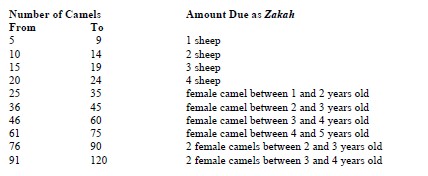
The unanimous agreement of Muslims, as well as several correct sayings of the Messenger of God (p) and reports from his Companions indicate nisab of camels and the rates of nisab on them are as follows:
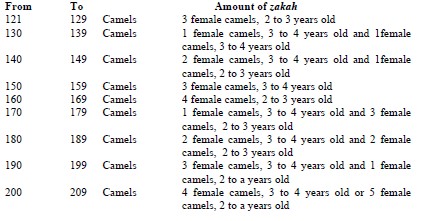
بر اساس این جدول زکات، اجماع وجود دارد، به جز گزارشی از علی که بر اساس آن در بیست و پنج شتر پنج گوسفند و در بیست و شش شتر یک مادهشتر میان یک تا دو ساله واجب است.۲۰ ابن المنذر میگوید: اجماع شکسته نمیشود، زیرا آنچه از علی روایت شده صحیح نیست. سخن انس درباره این مقادیر و میزانها درست است و در محتوای آن اجماع وجود دارد.۲۱ برای بیش از ۱۲۰ شتر، دیدگاه اکثریت این است که به ازای هر ۵۰ شتر اضافی، مقدار زکات افزودهشده یک مادهشتر میان سه تا چهار ساله است، و به ازای هر ۴۰ شتر اضافی، مقدار زکات افزودهشده یک مادهشتر میان دو تا سه ساله است.۲۲ این موضوع در جدول زیر نشان داده شده است:
There is ijma on this schedule,l9 except for a report from 'Ali that on 25 camels there is five sheep and on 26 camels there is one female camel between one and two years old.20 Ibn al Mundhir says. The unanimity is net broken, because what is reported from 'Ali is not authentic. The saying of Anas on these quantities and amounts is correct and there is a unanimous agreement on its content.21 For more than 120 camels the majority's view is that for each additional 50 camels the additional amount of zakah is a female camel between three and four years old while on each additional 40 camels the additional amount of zakah is a female camel between two and three years old.22 This is shown in the following table :
از جدول پیداست که در مورد تعداد بزرگتر، افزایش کمتر از ده شتر بر میزان زکات تأثیری ندارد. وقتی تعداد به اندازه ده شتر افزایش یابد، طبق همان قاعدهای که پیشتر گفته شد، میزان زکات واجب یک پله بالاتر میرود. از این دو جدول آشکار است که اگر تعداد شترهای دارا کمتر از پنج باشد، زکاتی وجود ندارد. وقتی به پنج رسد، میزان واجب یک گوسفند است.
صاحب المبسوط از یکی از دانشمندان نقل میکند که گفته است: «این بدان معناست که ارزش دامها در نظر گرفته میشود. شترهای یک تا دو ساله در گذشته به چهل درهم و گوسفند به پنج درهم قیمتگذاری میشد، بنابراین پنج شتر برابر با ۲۰۰ درهم و نیز برابر با ۴۰ گوسفند است. این یعنی حداقل نصاب زکاتپذیری شتر، گوسفند و پول نقره یکسان است.»
ابن الهمام در «فتح القدیر» و ابن نجیم در «البحر الرائق» پاسخ میدهند که حدیثی وجود دارد که میگوید: «هر که موظف است زکات شتری از سنی معین بدهد، اما شتری در آن سن ندارد، میتواند به جای آن به میانگین ده درهم برای یک گوسفند بپردازد، اگر گوسفندی نداشته باشد.» این متنی صریح است که با توضیح سرخسی مخالف است. حدیثی که به آن اشاره شد در «البحر الرائق» از انس نقل شده است.
It is seen from the table that for big numbers, an increase of less than ten camels does not affect the amount of zakah. Once it is increased by ten, then you go one step higher in the amount of zakah due according to the same rule mentioned above. It is obvious from these two tables that if the number of camels owned is less than five then there is no zakah. Once they reach five , the amount due is one sheep. The author of al Mabsut quotes a scholar as saying, "this means that the value of the livestock is considered. Camels between one and two years old used to be priced at forty dirhams and a sheep at five dirhams, so five camels equal 200 dirhams also equal 40 sheep. This implies that the minimum for zakatability of camels, sheep, and silver money is the same. Ibn al Humam in al Fath and Ibn Nujaim in al Bahr reply, there is a saying that states "Whoever is obliged to give as zakah a camel of a certain age group, but does not own any in that age, can pay in substitution on the average of 10 dirhams for a sheep, if he does not have a sheep. This is an explicit text that contradicts the explanation of al Sarakhsi.24 The saying referred to is reported by al Bahr from Anas.
شریعت بر شتر، اگر تعداد شترهای زکاتپذیر کمتر از ۲۵ باشد، زکات را به صورت گوسفند واجب میکند، هرچند معمولاً زکات از همان جنس اموال زکاتپذیر پرداخت میشود.
Shari'ah obligates sheep as zakah on camels if the number of zakatable camels is lees than 25, though usually zakah is paid out of the same kind of the zakated assets.
دلیلش آشکارا این است که مقدار واجب کمتر از یک شتر است، و در عین حال شریعت، پنج شتر را برای تعیین اینکه چه کسی ثروتمند است کافی میداند.25
The reason is obviously that the amount due is less than one camel, but at the same time Shari'ah considers five camels to sufficiently define who is rich.25
انس روایت کرد که ابوبکر، الصدیق، این نامه را هنگامی که او را به بحرین فرستاد، نوشت:
Anas narrated that Abu Bakr, the Truthful wrote this message when he sent him to Bahrain:
به نام خداوند بخشنده و مهربان. این است واجب بودن صدقه که پیامبر خدا ﷺ آن را بر مسلمانان واجب کرد، همانگونه که خداوند به او دستور داده بود.
In the name of God, most merciful, most gracious. This is the obligation of sadaqah imposed on Muslims by the Messenger of God (P), as ordained to him by God.
هر کس بر اساس این قواعد مکلف به پرداخت آن باشد، باید بپردازد، و هر کس از او بیش از آن خواسته شود، باید امتناع کند. برای هر ۲۴ شتر یا کمتر، زکات به صورت گوسفند واجب است. برای هر پنج شتر، یک گوسفند لازم است. هنگامی که به ۲۵ شتر تا ۳۵ شتر برسند، یک شتر ماده که یک تا دو ساله باشد لازم است. از ۳۶ تا ۴۵ شتر، یک شتر ماده دو تا سه ساله لازم است.
Whoever is asked to pay it according to these rules must give it, and whoever is asked to pay more should refuse. On each 24 camels or less, zakah is due in sheep. On each five camels, one sheep is required. Once they reach 25 and up to 35 one female camel, one to two years old, is required. From 36 to 45, there is one she-camel two to three years old.
اگر تعداد آنها به ۴۶ تا ۶۰ برسد، یک شتر ماده سه تا چهار ساله واجب است که قابل جفتگیری باشد. اگر به ۶۱ تا ۷۵ برسد، یک شتر ماده چهار تا پنج ساله واجب است. اگر به ۷۶
If they reach 46 to 60, there is one she-camel three to four years old due, one that can be bred. If they reach 61 to 75, one she-camel four to five years old is due. If they reach 76
اگر تعداد شتران به ۹۰ برسد، دو شتر ماده دو تا سه ساله واجب است. اگر به ۹۱ تا ۱۲۰ برسند، دو شتر ماده سه تا چهار ساله واجب است. و اگر بیش از ۱۲۰ باشند، برای هر ۴۰ شتر
to 90, there is two she-camels two to three years old due. If they reach 91 to 120, there are two she-camels, three to four years old due. If they are more than 120, for each 40
در هر پنج شتر یک شتر دو تا سه ساله واجب است، و به ازای هر پنجاه شتر یک شتر سه تا چهار ساله. کسی که تا چهار شتر دارد، زکات بر او واجب نیست مگر آنکه داوطلبانه بپردازد، اما اگر به پنج شتر برسند، یک گوسفند به عنوان زکات بر آنها واجب میشود. در صدقه گوسفندان، اگر در چراگاه طبیعی و بدون هزینه چرا کنند و تعدادشان بین چهل تا صد و بیست رأس باشد، یک گوسفند واجب است. برای بیش از صد و بیست رأس تا دویست رأس، دو گوسفند واجب است.
there is one she-camel two to three years old, and for each 50 there is one she-camel three to four years old. A person who owns [up to] four camels is not zakatable unless he volunteers, but if they reach five camels, one sheep is due on them as zakah. In the sadaqah on sheep, if they are naturally, cost-free pastured, and number between 40 and 120 sheep, there is one sheep due. For more than 120 and up to 200, there are two sheep.
تفاوت در نصابها پس از ۱۲۰ شتر
Variance on the Rates after 120 Camels
من پیشتر اشاره کردم که میان فقها درباره زکات شتران بیش از ۱۲۰ شتر اختلاف نظر وجود دارد. مالک، شافعی، احمد و جمهور فقها معتقدند که میزان آن، برای هر ۵۰ شتر اضافی یک شتر ماده سه تا چهار ساله، و برای هر ۴۰ شتر یک شتر ماده دو تا سه ساله است، چنانکه در نامه ابوبکر و عمر که بهترتیب از انس و ابن عمر روایت شده، آمده است.[۳۹] همین حکم در نامههای ابن حزم و زیاد بن لبید به مردم حضرموت نیز آمده است،[۴۰] و در سخن پیامبر ﷺ نیز چنین است: «اگر از ۱۲۰ شتر بیشتر شوند، پس برای هر ۴۰ شتر یک شتر ماده دو تا سه ساله، و برای هر ۵۰ شتر یک شتر ماده سه تا چهار ساله.» برخی از روایات این سخن را بهصورت خلاصه از آن راوی نقل کردهاند که «در هر ۵۰ شتر یک شتر ماده…» و میزان هر ۴۰ شتر اضافی را ذکر نکردهاند، اما روایات مختلف یکدیگر را تکمیل میکنند.
I pointed out earlier that there are varying views among jurists on zakah on above 120 camels. Malik, Shafi'i, Ahmad, and the majority consider the rate to be one female camel, three to four years old for each additional 50, and one female camel, two to three years old, for each additional 40,39 as mentioned in the message of Abu Bakr and 'Umar narrated successively by Anas and Ibn 'Umar. The same also appears in the messages of Ibn Hazm and Ziad bin Labid to the people of Hadramut,40 in the words of the Prophet (p) "If they exceed 120, then for each 40 one female camel two to three years old, and for each 50 one female camel three to four years old". Some versions of the last saying are summarized by that narrator, as "In each 50 one female camel ..." without mentioning the rate for each additional 40, but the different versions complete each other.
دیدگاه ابوحنیفه
Abu Hanifah's view
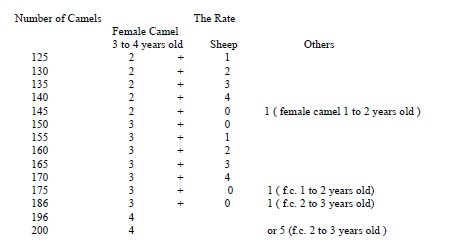
النخعی، الثوری و ابوحنیفه۴۱ میگویند: «برای آنچه بالای ۱۲۰ است، نصابها را از ابتدا آغاز میکنیم، یعنی برای هر پنج شتر اضافی تا ۲۴ شتر، میزان زکات یک گوسفند برای هر ۵ شتر است، و برای ۲۵ شتر اضافی، زکات واجب یک شتر ماده است که یک تا دو ساله باشد، و همینطور ادامه مییابد.» جدول زیر مقدار واجب را بر اساس این نظر نشان میدهد:
Al Nakha'i, Al Thawri, and Abu Hanifah41 say that "for what is above 120, we start the rates from the beginning, i,e., for an additional five to 24 camels, the rate is one sheep for each 5 camels, and for an additional 25 camels zakah due is one female camel, one to two years old, etc."The following table shows the amount due according to this opinion:
پس از ۲۰۰ شتر، این نرخ تکرار میشود: به ازای هر پنج شتر اضافی، یک گوسفند؛ و هر بار که تعداد شترهای زکاتپذیر اضافی به پنجاه میرسد، زکاتی که بر آن واجب میشود یک شتر ماده سه تا چهار ساله است.
After 200 the rate repeats itself, one sheep for each additional five camels, and each time the additional zakatable camels reach fifty, the amount of zakah due on it is one female camel three to four years old.
احناف استدلال میکنند که ابوداود آن را بهصورت مرسل روایت کرده است [حدیثی که در سلسله سندش نام صحابی راوی ذکر نشده است]، و اسحاق در مسندش و طحاوی در مشکلالآثار از حماد بن سلمه روایت کردهاند که گفت: «به قیس بن سعد گفتم پیام محمد بن حزم را برای من بیاورد. او نامهای به من داد و گفت که آن را از ابوبکر بن محمد بن حزم گرفته است، که گفت: پیامبر ﷺ آن را برای جدم نوشت. آن را خواندم و در آن مقادیر زکات شتر را یافتم...» و سخن را ادامه داد تا آنجا که گفت: «هرگاه از ۱۲۰ شتر بیشتر شوند، از هر ۳۰ شتر یک شتر ماده سه تا چهار ساله [زکات] واجب است. برای افزایشها، مقادیر را از آغاز تکرار کنید، و برای آنچه کمتر از ۲۵ شتر است، زکات به صورت گوسفند واجب است، به ازای هر پنج شتر یک گوسفند.» این روایت در نصب الراية زیلعی نقل شده است. روایتی مشابه از عاصم بن ضمره از علی نیز روایت شده که به پیامبر ﷺ نیز منسوب است و به علی ختم میشود، و از ابن مسعود نیز چیزهای مشابهی روایت شده است. ابن رشد گفته است که احناف استدلال کردهاند که چنین حکمی جز با دستور پیامبر ﷺ نمیتواند تعیین شود، زیرا این امری نیست که بتوان آن را از راه قیاس استنباط کرد.44
The Hanafites argue that Abu Daud reports as mursal [saying in whose chain the name of the reporting Companion is not mentioned], Ishaq in his Musnad and al Tahawi in his Mushkel from Hmmad bin Salamah, who said, "I told Qais bin Sa'd to get me the message of Mohammad bin Hazm, so he gave me a letter which he said he took from Abu Bakr bin Mohammad bin Hazm, who said that the Prophet (p), wrote it to my grandfather. I read it and found in it the rates of zakah on camels... " and he narrated the saying until, "Once they exceed 120 make due on each 30 one female camel three to four years old. For the increments, restart the rates from the beginning, and for what is less than 25 camel increments, the amount of zakah is due in sheep, one sheep for each five." This is reported in Nasb Al Rayah by al Zaila'i.42 A similar version is narrated by 'Asem bin Damurah from Ali, linked to the Prophet as well as ending at 'Ali,43 and Ibn Mas'ud is reported to have said similar things. The Hanafites are said by Ibn Rushd to have argued that such a thing cannot be decided but by instructions from the Prophet, because it is not anything that can be deducted by analogy.44
اکثر علما استدلالهای حنفیان را نمیپسندند و در یافتههای آنان ضعف میبینند. البیهقی نشان میدهد که آنچه در این مسئله از ابن مسعود روایت شده، صحیح نیست.۴۵ نسخهای از سخن علی که به پیامبر ﷺ نسبت داده شده نیز نادرست است، و درباره نسخهای که به علی نسبت داده میشود نیز اختلاف نظر وجود دارد. در یک نسخه، روایت با نامههای ابوبکر و عمر هماهنگ است، در حالی که در نسخهای دیگر به شکلی متفاوت نقل شده است. قاعدهی معمولِ قابل اجرا در چنین موردی این است که به نسخهای وزن بیشتری بدهیم که با دیگر سخنان صحیح و مورد اتفاق که اختلافی در آنها نیست، سازگار باشد. این نکته را الحازمی یادآور شده است.۴۶ افزون بر این، همان نسخهی سخن (از عاصم) جملهای دارد که همهی علما به دلیل ضعفش آن را کنار میگذارند: این که برای هر بیست و پنج شتر، زکات پنج گوسفند است به جای یک مادهشتر دو ساله. از سوی دیگر، ممکن است آن نسخههای مختلف را به گونهای تفسیر کرد که با دیگر سخنان صحیح همخوان شوند.
دیدگاه الطبری
The view of Al Tabari
ابوجعفر طبری دیدگاه سومی را بیان میکند که هر دو نظر را با هم جمع میکند و میگوید هر دو قابل قبول است و این بر عهدهی نهاد جمعآوری زکات است که کدام دیدگاه را به کار بندد.۵۲ به نظر من این رویکرد بهتر است، زیرا نباید گفتهای از پیامبر ﷺ را منسوخ و باطل دانست، تا وقتی که کوچکترین امکانی برای جمع میان همهی روایات از پیامبر ﷺ وجود دارد. جمعبندی پیشنهادی طبری بیتردید پذیرفتنی است، به شرط آنکه به یاد داشته باشیم که تعیین سنین و شمار شترانی که به عنوان زکات واجب میشود، برای آسان کردن محاسبه، پرداخت و گردآوری زکات است و برای ساده کردن روشها تا نهاد گردآورندهی زکات بتواند تا حدی اختیار داشته باشد.
Abu Ja'far al Tabari expresses a third, reconciling view, stating that both opinions are acceptable, and it is up to the zakah collection agency to select which view to apply.52 In my opinion this is a better approach, since one should not consider the content of a saying superseded and annulled if there is the slightest chance of a reconciliation of all the reports from the Prophet (p). The reconciliation proposed by al Tabari is undoubtedly acceptable if we keep in mind that the determination of ages and quantity of camels due as zakah is meant to facilitate zakah calculation, payment, and collection, and to simplify the procedures so that the zakah collecting agency can exercise some discretion.
تفاوتهای جزئی در حروف واژهی زکات
The slight differences in the letters of zakah
در بیان تفاوتهای جزئی میان روایتهای گوناگون دربارهی زکات که از پیامبر خدا ﷺ و خلفای راشدین او نقل شده، میتوان با یک نمونه روبهرو شد: آیا تفاوت ارزش میان شتران با سنین مختلف ده درهم (یا دو گوسفند) است یا بیست درهم (یا دو گوسفند)؟ [53] تفاوت میان نامهی علی با نامههای ابوبکر و عمر را چگونه میتوان توضیح داد؟ شناخته شده است که روایت منسوب به علی، بهعنوان سخنی از پیامبر ﷺ، نادرست است، اما همچنین شناخته شده است که نسخهای که آن را سخن خود علی میداند درست است. چگونه ممکن است علی با نامهی پیامبر ﷺ اختلاف داشته باشد؟ و چگونه کسی که در روزگار ابوبکر و عمر زیست، از نامهها و عمل آن دو بیخبر بوده است؟ آیا او میپنداشت که اطلاعاتی دارد که بر آنچه در آن نامهی دیگر آمده، برتری دارد؟
Looking at the different versions of messages about zakah reported from the Messenger of God (p), and his Wise Successors, one would find some minor differences. An example is whether the difference in value between different age camels is ten dirhams (or two sheep) or twenty dirhams (or two sheep)53. How can the difference between the letter of 'Ali and those of Abu Bakr and 'Umar be explained? It is known that the report of 'Ali is incorrect as linked to the Prophet (p), but it is also known that the version stating that it is a saying of 'Ali himself is correct. How could 'Ali differ with the letter of the Prophet (p)? How could he, who lived the era of Abu Bakr and 'Umar not be aware of their letters and application? Did he believe that he had information which superseded that contained in the other letter?
به نظر من، همهٔ این پرسشها پاسخ منفی دارند و بهنظرم تفسیری دیگر از آن تفاوتهای جزئی لازم است. باور دارم که برخی از این برابریها، مانند ارزش گوسفند در برابر نقره، از سوی پیامبر ﷺ و بهعنوان رئیس دولت بیان شده است. بهای آنها در زمان ایشان چنان بود که یک گوسفند تقریباً برابر با ده درهم بود. روشن است که قیمتها از زمانی به زمان دیگر تغییر میکنند، و هنگامی که پیامبر ﷺ نسبت بیست درهم برای دو گوسفند را بیان فرمود، در واقع قیمتهای رایج دوران خود را ملاک قرار داده بود. در زمان خلافت علی، بهای گوسفندان متفاوت بود و ایشان نیز برای دو گوسفند ده درهم را مقرر فرمودند. این با سخن پیامبر ﷺ مخالفت ندارد، بلکه کاربست همان قاعدهای است که پیامبر ﷺ به کار بست، برای آنچه با زمان علی سازگار است. به نظر من این تفسیر از هر تلاشی که یکی از متنهای مختلف را نادیده بگیرد، بهتر است؛ مانند کاری که یحیی بن معین کرد و ادعا نمود که هیچ چیز درستی دربارهٔ تعیین نرخها و مقادیر زکات روایت نشده است. ابن حزم سختانه این ادعا را رد کرد و پرسید که چگونه کسی چون ابن معین میتواند چنین چیزی را بگوید، بیآنکه کوچکترین دلیل پشتیبانیکنندهای داشته باشد. یک خاورشناس مانند شاخت این ادعا را تا حد افراط به کار میگیرد تا همهٔ سخنان درست دربارهٔ زکات را رد کند.
In my opinion all these questions are answered negatively and it seems to me that another interpretation of those minor differences is due. I believe that some of these equalities, like the value of sheep in silver, are given by the Prophet (p), in his capacity as the head of the state. Their prices at his time were such that a sheep equaled approximately ten dirhams. It is known that prices vary from time to time, and when the Prophet (p), gave the ratio as twenty dirhams for two sheep he was quoting his period's current prices. At the time of 'Ali's caliphate, prices of sheep were different, and his quotation of those prices were ten dirharms for two sheep. This is not a violation of the Prophet's saying, but rather an application of the rule used by the Prophet (p), to what suits the time of 'Ali. This interpretation is, in my opinion, better than any attempt to disregard any of the differing texts, like what Yahya bin Ma'in did in claiming that nothing correct is reported on the determination of rates and quantities of zakah.55 Ibn Hazm came down very hard on such a claim and asked how a person like Ibn Ma'in could state such a thing without even the slightest supporting evidence.56 An Orientalist like Schacht abuses to the utmost that claim in his attempt to reject all the correct sayings on zakah.
بخش سوم: زکات گاو
SECTION THREE ZAKAH ON COWS
گاوها که بشر از آنها برای شخم زدن زمین، گوشت و شیر بهره میبرد، نعمت دیگری از جانب خداوند بر بندگان اوست. سودمندی این جانور در برخی زمانها چنان بزرگ بود که برخی از مردمان، مانند مصریان باستان و هندوهای معاصر، این حیوان را میپرستیدند.
Cows, used by mankind for land cultivation, meat and milk, are another bounty of God on His servants. The usefulness of this species was so great at times that some peoples, such as the ancient Egyptians and contemporary Hindus worshiped this animal.
گاومیش توسط همه فقیهان مسلمان با گاو شمرده میشود، چنانکه ابن المنذر بیان کرده است.
Buffalo is counted with the cows by all Muslim jurists, as stated by Ibn al Mundhir.
زکات گاو به موجب سنت و اجماع واجب است۔ بخاری در صحیح خود از ابوذر روایت کرده است که: «نزد پیامبر ﷺ آمدم و فرمود: "سوگند به کسی که جانم در دست اوست" یا "سوگند به کسی که جز او معبودی نیست، هیچ مردی که شتر، گاو یا گوسفند داشته باشد و حق آنها را نپردازد، مگر اینکه در روز قیامت آنها را در بزرگترین و سنگینترین حالتشان میآورند و با سمهای خود او را لگدمال و با شاخهای خود او را میزنند، و هنگامی که آخرینشان از او فارغ شود، اولینشان بازگردانده میشود، تا آنکه میان همه مردم داوری شود.» امام بخاری گفته است: این روایت را بکیر از ابوصالح از ابوهریره از پیامبر ﷺ نیز نقل کرده است۔ «حق» مذکور در این حدیث، پیش از هر چیز دیگر به معنای زکات است۔ زکات حق واجب بر اموال است، چنانکه ابوبکر هنگام جنگ با کسانی که از پرداخت زکات خودداری کردند آن را تعریف کرد، و عمر و سایر صحابه این تعریف را تأیید کردند (به روایت بخاری و مسلم)۔ در روایت مسلم به جای واژه «حق»، واژه «زکات» به کار رفته است۔ افزون بر این، مسلمانان در همه نسلها به اتفاق تأیید کردهاند که زکات بر گاو واجب است، و هیچ عالمی در این مسئله اختلاف ندارد۔ با این حال، در تعیین نصاب و میزان زکات گاو اختلافهایی وجود دارد۔
Zakah on cows is obligated by Sunnah and Ijma. Bukhari, in his correct collection, reports from Abu Dharr "I came to the Prophet (p)58 and he said 'I swear by He who holds my soul in His hand,' or 'I swear by the one beside whom there is no God. No man who has camels, cows or sheep and does not pay their right due but on the Day of Judgement will be trampled by them at their largest and heaviest. They will be stepping on him with their hooves and ramming him with their horns, and when the last one is done with him the first is brought back until judgement has been given to all people." Imam al Bukhari said "It is also narrated by Bakir from Abu Saleh from Abu Hurairah from the Prophet (p). The "right due" mentioned in the saying means zakah before any other thing. Zakah is the right due on wealth as defined by Abu Bakr at the time of fighting those who rejected zakah, this definition was approved by 'Umar and all other Companions, (reported by al Bukhari and Muslim). In the version reported by Muslim the word "zakah" is used in place of the word "right due", moreover, Muslims through all generations have unanimously confirmed that zakah is obligated on cows. Not a single scholar disagrees.59 There are however, differences in determining nisab and zakah rates on cows.
نِصاب و مقدارِ زکات گاو
Nisab and rates of zakah on cows
در هیچ حدیث صحیحی که نصاب و مقدار زکات گاو را مانند آنچه درباره شتر دیدهایم بیان کند، وارد نشده است. شاید علت این باشد که گاو در منطقه حجاز (اطراف مکه و مدینه) کمیاب بوده است؛ و شاید هم به این دلیل باشد که گاو از نظر اندازه و ارزش به شتر نزدیک است، پس پیامبر ﷺ مقدار آن را با این فرض که شباهت آشکار دارد تعیین نفرمود. اما این که هیچ حدیث صحیحی در این موضوع وجود ندارد، باعث شده فقیهان در تعیین نصاب و مقدار زکات، دیدگاههای گوناگونی داشته باشند.
There is no correct saying that provides us with the nisab and rates of zakah on cows as we have seen on camels. This may be because cows were rare in the area of Hijaz (around Makkah and Madinah); it may be also because cows are close in size and value to camels, so the Prophet did not determine their rates on the assumption of their obvious similarity. But the fact that there is no correct saying on the issue left the jurists with varying views on the determination of nisab and rates.
نظر رایج: نصاب، ۳۰ رأس گاو است
The popular opinion: Nisab is 30 cows
مشهور موقف مذاهب فقهی چهارگانه این است که نصاب (در زکات گاو) ۳۰ است.
The reputed position upheld by the four schools of jurisprudence is that nisab is 30
...گاوها است، و بر کمتر از سی گاو زکات واجب نیست. برای سی گاو، یک گوساله یک ساله واجب است، و برای چهل تا پنجاه و نه گاو، یک گاو دو ساله واجب است. برای شصت گاو، دو گوساله یک ساله واجب است؛ برای هفتاد گاو، یک گوساله یک ساله و یک گاو دو ساله؛ و برای هشتاد
cows, and there is no obligated zakah on less than 30 cows. For 30 cows, a one-year old cow is due, and for 40 to 59 cows there is one cow, two years old, due. For 60 cows, two one-year-old cows are due; for 70 cows, a one-year-old and a two-year-old; for 80
برای ۸۰ گاو، دو گوسالهٔ دوساله؛ برای ۹۰ گاو، سه گوسالهٔ یکساله؛ برای ۱۰۰ گاو، یک گوسالهٔ دوساله و دو گوسالهٔ یکساله؛ برای ۱۱۰ گاو، دو گوسالهٔ دوساله و یک گوسالهٔ یکساله؛ و برای ۱۲۰ گاو، سه گوسالهٔ دوساله یا چهار گوسالهٔ یکساله.
cows, two two-year olds; for 90 cows, three one- year-olds; for 100 cows, one two-year old and two one-year-olds; for 110, two cows two year olds and one cow one year old, and for 120 cows, three two-year olds or four one-year olds.
این نظر بر حدیثی استوار است که احمد و کتابهای چهارگانه سنن ترمذی، نسایی، ابوداود و ابن ماجه از مسروق از معاذ بن جبل روایت کردهاند که گفت: «رسول خدا ﷺ مرا به یمن فرستاد و دستور داد از هر سی گاو، یک گوسالهٔ یکساله، و از هر چهل گاو، یک گوسالهٔ دوساله بگیرم.» [۶۰] ترمذی این حدیث را حسن دانسته و ابن حبان و حاکم آن را صحیح شمردهاند. ابن عبدالبر گفته است: «سند آن صحیح، متصل و ثابت است» و ابن بطال نیز سخنی مشابه گفته است. ابن حجر در فتح الباری گفته است: «باید دربارهٔ صحت این حدیث بررسی کرد، زیرا مسروق (که تابعی است) معاذ را ملاقات نکرده است.» ترمذی آن را حسن دانسته، زیرا احادیث دیگری آن را تأیید میکنند، از جمله حدیثی که در موطأ از طاووس از معاذ آمده است، اما طاووس نیز معاذ را ملاقات نکرده است.61
This opinion relies on the saying reported by Ahmad and the four books of Sunan al Tirmidhi, al Nasa'i, Abu Daud and Ibn Majah from Masruq from Mu'adh bin Jabal who said "The Messenger of God, (p) sent me to Yemen. He instructed me to collect on each 30 cows, a one year-old cow, and on each 40 cows one two-year-old"60. This saying is graded as good by al Tirmidhi and as correct by Ibn Habban and al Hakim, Ibn 'Abd al Barr comments "Its chain is correct, continuous and authentic" and similar statement is made by Ibn Battal. Ibn Hajar said in al Fath "We need to scrutinise any ruling about the correctness of this saying, because Masruq [The follower] did not meet Mu'adh." al Tirmidhi considers it good because there are other sayings that testify with it, such as the one in al Muwatta, from Taus from Mu'adh, but Taus did not meet Mu'adh either.61
دیدگاه الطبری مبنی بر اینکه نصاب ۵۰ است
The view of al Tabari that nisab is 50
ابن جریر طبری استدلال میکند که نِصاب باید ۵۰ رأس گاو باشد، و اینکه بدون تردید اتفاق نظر وجود دارد که به ازای هر ۵۰ رأس گاو، زکاتی بهصورت یک گاو واجب است. هر چیزی کمتر از ۵۰ رأس محل اختلاف است و متنی روشن آن را تأیید نمیکند.۶۹
ابن حزم در «المُحلّی» همین دیدگاه را بر همان مبنایی که طبری داشت تأیید میکند. او میگوید: «هر چیزی که محل اختلاف باشد و متنی که وجوب آن را ثابت کند در میان نباشد، نباید بر مردم تحمیل شود، زیرا این به معنای مصادرهکردن بخشی از مال یک مسلمان است، بیآنکه از وجوب آن بهواسطهٔ متنی صحیح از خدا یا فرستادهٔ او (ﷺ) اطمینان حاصل باشد.»۷۰
او سپس با سند خود از عمرو بن دینار نقل میکند که: «کارگزاران ابن زبیر و نیز ابن عوف از هر ۵۰ رأس گاو یک گاو، و از هر ۱۰۰ رأس گاو دو گاو میگرفتند،۷۱ و برای بیش از آن، میزان از هر ۵۰ رأس یک گاو بود.»۷۲ این کارگزاران وظیفهٔ خود را در حضور شمار بسیاری از صحابه در مدینه انجام میدادند و هیچکس بر این عمل اعتراض نمیکرد.
Ibn Jarir al Tabari argues that nisab must be 50 cows, that if is undoubtedly unanimous that for each 50 cows there is an obligatory zakah of one cow. Anything below 50 is controversial and not supported by a clear text.69 Ibn Hazm in al Muhalla supports this opinion on the same grounds as al Tabari. He comments "Anything that is controversial and on which there is no text making it obligatory must not be imposed on people, because it means confiscating a part of a Muslim's wealth without being certain about its requirement by virtue of a correct text from God or His messenger (p).70 He went on to quote, through his own chain, from 'Amr bin Dinar, "The commissioners of Ibn al Zubair as well as Ibn 'Auf used to collect one cow from each 50 cows,71 2 cow from each 100 and for more than that, the rate was one cow out of each 50.72 These commissioners were performing their duties in the presence of many, many Companions in Madinah, and this performance was not objected to.
اما میتوان این نظر را بر دو پایه رد کرد:
But one may disprove this opinion on two grounds:
از نگاه متن: حدیث طولانی عمرو بن حزم دربارهٔ زکات میگوید: «و از هر سی گاو، یک گوسالهٔ یکساله، و از هر چهل گاو، یک گاو» را بگیرد. این حدیث را شمار اندکی از عالمان برجسته «حسن» دانستهاند و طبری آن را در برابر دیدگاه تقیالدین بن دقیقالعید در کتابش «الإمام» به کار گرفته است.73
A. From the point of view of the text. The long saying of 'Amr bin Hazm on zakah says "and from each 30 cows, take one cow one-year-old, and from each 40 cows, one cow". This saying is graded good by a handful of leading scholars and it was used by al Tabari against the view of Taqiy al Din bin Daqiq al 'Id in his book Al Imam.73
و همچنین قول معاذ مبنی بر اینکه زکات باید از هر سی
Additionally, the saying of Mu'adh according to which zakah should be collected on 30
نظر ابن المسیّب و الزُّہری
The opinion of Ibn al Musayyeb and Al Zuhri
دو عالم برجسته، سعید بن المسیّب و محمد بن شهاب الزُّهری، همراه با ابو قِلابہ و دیگران، نِصاب زکات گاو را همان نِصاب شتر میدانند و نرخ زکات شتر را برای گاو نیز همان میدانند، با یک تفاوت جزئی، یعنی بدون توجه به سنّ شتران. نظیر همین دیدگاه، در نسخهای از نامهی عمر بن الخطاب دربارهٔ زکات، از جابر بن عبداللہ و دیگرانی که در زمان پیامبر ﷺ زکات میپرداختند، روایت شده است. ابو عُبید از محمد بن عبدالرحمن روایت کرده است که دستورهایی که عمر بن الخطاب دربارهٔ زکات نوشت، این بود: «از گاوها همان چیزی گرفته شود که از شترها گرفته میشود». ابو عُبید ادامه میدهد: «از دیگران دربارهٔ زکات گاو پرسیده شد و پاسخ دادند که همان حکم شتر را دارد».
Two leading scholars, Said bin al Musayyeb and Muhammad bin Shehab al Zuhri, along with Abu Qulabah and others view nisab on cows to be the same as nisab on camels, and the zakah rate of camels to be the same for cows with only a minor change, that is, disregarding the ages of camels. A similar opinion is reported as a version of the letter of 'Umar bin Al Khattab on zakah, from Jabir bin 'Abd Allah and others who paid zakah at the time of the Prophet (p). Abu 'Ubaid reported from Mohammad bin 'Abd al Rahman that the instructions 'Umar bin al Khattab wrote on zakah included "from cows one should take the same as from camels." Abu 'Ubaid continues "Others were asked about zakah on cows and the answer was it is the same on camels".
ابن حزم با سند خود از الزهری و قتادة، هر دو از جابر بن عبد الله، روایت میکند که گفت: «در هر پنج گاو، یک گوسفند واجب است، در ده گاو، دو گوسفند، در پانزده گاو، سه گوسفند، و در بیست گاو، چهار گوسفند واجب است.» الزهری میگوید: «زکات گاو مانند زکات شتر است، جز در سنها. یعنی اگر تعداد گاوها بین ۲۵ تا ۷۵ باشد...»
Ibn Hazm reports with his own chain from al Zuhri and Qatadah, both from Jabir bin 'Abd Allah his saying that "in each five cows there is one sheep due, in ten two sheep, in 15, three sheep, and in 20, four sheep due." Al Zuhri says "zakah on cows is like zakah on camels except for the ages. That is, if the number of cows were between 25 and 75
مقدار زکاتی که بر آن واجب میشود یک گاو است؛ برای تعداد بین ۷۶ تا ۱۲۰ دو گاو. و بالاتر از ۱۲۰، به ازای هر ۴۰ گاو اضافی یک گاو دیگر.
به ما گفته شده که این عبارت که «در هر ۳۰ گاو یک گوسالهٔ یکساله، و در هر ۴۰ گاو یک گاو دوساله واجب است» تنها یک سادهسازی و تخفیف در نرخها برای مردم یمن بوده که بعدها کنار گذاشته شده است.
از عِکرمه بن خالد نیز روایت شده که گفت: «بعدها مأمور جمعآوری زکات عِک شدم و با برخی از پیرمردانی دیدار کردم که در زمان رسول خدا ﷺ زکات میدادند. آنان در این مسئله اختلاف داشتند: برخی گفتند زکات گاوها مانند زکات شترها باید باشد، و برخی گفتند از هر ۳۰ گاو یک گوسالهٔ یکساله، و برخی دیگر گفتند از هر ۴۰ گاو یک گاو دوساله باید گرفت.»
ابن حزم با سند خود از ابن مسیّب، ابو قلابه و عالمی دیگر، دیدگاهی همانند دیدگاه زُهری روایت میکند. او همچنین از عُمر بن عبدالرحمن بن خلیده انصاری روایت میکند: «زکات گاوها همانند زکات شترها است، جز در سنین (آن حیوانات).»77
دلایل پشتیبان این دیدگاه
Evidence supporting this view
الف. این نظر با روایتی از ابوعبید با سند خودش از محمد بن عبدالرحمن تأیید میشود: «در نامهی پیامبر ﷺ دربارهی زکات و در نامهی عمر بن خطاب آمده است که از گاوها همان چیزی گرفته شود که از شتران گرفته میشود.»78
A. This opinion is supported by a report of Abu Ubaid with his own chain from Muhammad bin 'Abd al Rahman, "It is in the Prophet's letter on zakah and in the letter of 'Umar bin al Khattab that from cows, one should take the same as from camels."78
همچنین، این دیدگاه با آنچه عبدالرزاق از معمر روایت کرده تأیید میشود، که گفت: «سماک بن فضل نامهای از پیامبر ﷺ به مالک بن کفلانیس المصعبیین به من داد، که در آن خواندم: "و بر گاوان همان چیزی واجب است که بر شتران."»79
Also, this view is supported by what is reported by 'Abd al Razzaq from Ma'mar, who said, " Sammak bin al Fadl gave me a letter from the Prophet, to Malik bin Kuflanis Al Mus'abiyn, in which I read, 'and on cows is due the same as on camels.'"79
ب. این موضوع با آنچه زهری نقل کرده تأیید میشود که آن را آخرین روایت از رسول خدا ﷺ دانسته و گفته است که گرفتن یک گوسالهٔ یکساله از هر سی گاو، در آغاز، بهعنوان یک امتیاز و لطف برای مردم یمن بود. این روایت مرسل است، اما با حدیث پیشین و با سخنان برخی از اصحاب پشتوانه میشود.
B. This is confirmed by what is mentioned by al Zuhri that it was the latest report from the Messenger of God (p), and that taking a one-year-old cow of each 30 cows was, at the beginning, a matter of favor for the peoples of Yemen. This report is mursal, but it is supported by the previous saying and by statements from some Companions.
ابن حزم میگوید: «اگر قرار باشد حدیث مُرسَل از هیچکس پذیرفته شود، شایسته است که از الزُّهری پذیرفته شود، زیرا او در سنت تبحر داشت و با شماری از صحابه دیدار کرده بود».80
Ibn Hazm comments "If a mursal saying would be accepted from anyone, it deserves to be accepted from al Zuhri because he was well versed in Suunah and met a number of the Companions".80
این دیدگاه همچنین با قاعدهٔ کلیای تأیید میشود که از حدیثی که در آغاز بخش ۳ آمده برمیآید: «و هر کس که گاو داشته باشد و حق آن را نپردازد، روز قیامت برای اینکه گاوها او را لگدمال کنند، به زمین افکنده خواهد شد.» گفته میشود که این متنی عام است و شامل گاوهای هر تعدادی میشود، مگر آنکه متنی یا اجماعی محدودیتی آورده باشد. افزون بر این، گفته میشود که سخنی که بیان میکند از هر سی گاو یک گاوِ یکساله و از هر چهل گاو یک گاوِ دوساله واجب است نیز این دیدگاه را تقویت میکند، زیرا زکات گاوهای کمتر از سیتا را ساقط نمیکند؛ بلکه تنها بیانگر مقدار زکات است.
C. This view is also supported by the general rule implied in the saying mentioned at the beginning of Section 3 "And for anyone who owns cows and who does not pay their right due, he would be laid down for the cows to trample on the Day of Resurerction" It is argued that this is a general text that includes cows of any number except for restrictions brought in by a text or any Ijma'. It is further argued that the saying stating that there is one cow, one year old, due, on each 30, and a two-year-old due on each 40 also supports this opinion because it does not waive zakah from cows below 30. It is only a statement of the rate of zakah.
نظر چهارم
A fourth opinion
ابن رشد دیدگاه دیگری را ذکر میکند، بیآنکه نام قائل آن یا دلیل آن را بیاورد: «به ازای هر ده گاو، یک گوسفند زکات واجب است، تا آنکه به سی گاو برسند، که در آن صورت یک گوساله یکساله واجب است.»۸۴ میبینم که ابن ابی شیبه در کتاب المصنف این دیدگاه را به شهر بن حوشب نسبت داده است. وی میگوید: «زکات بر هر ده گاو یک گوسفند است، بر هر بیست گاو دو گوسفند، و بر سی گاو یک گاو یکساله.»
Ibn Rushd gives yet another opinion without providing the name of its author nor its argument: On each ten cows there is one sheep due, until they reach 30 cows, on which there is a one-year-old cow due.84 I find that Ibn Abi Shaibah attributes this view to Shahr bin Haushab in his al Musannaf. The latter says "zakah should be one sheep due on each ten cows, two sheep on each twenty cows, and one cow, one year old, on 30
وگاوها."۸۵ این بدان معناست که نصاب گاوها ده رأس است، در مقایسه با پنج رأس در دیدگاه پیشین. ابن أبی شیبہ هیچ دلیل تأییدکنندهای ارائه نمیدهد. ممکن است به ذهن برسد که این استدلال را میتوان با این سخن تأیید کرد که غرامت کشتهشدن را صد شتر یا دویست گاو تعیین میکند. این سخن از عمر نقل شده و همچنین به پیامبر ﷺ منسوب است.۸۶ این یعنی یک شتر برابر با دو گاو است. اگر نصاب شتران پنج باشد، نصاب گاوها باید ده باشد، و اگر برای هر پنج شتر، یک گوسفند زکات واجب باشد، برای هر ده گاو نیز باید یک گوسفند واجب باشد.
cows."85 This means that nisab of cows is ten as compared to five in the previously mentioned opinion. No evidence of support is given by Ibn Abi Shaibah. It may come to mind that this argument can be supported by the saying that estimates the compensation for the loss of life at 100 camels or 200 cows. This is reported as said by 'Umar, as well as linked to the Prophet (p).86 This implies that one camel equals two cows. If nisab for camels is five, that of cows must be ten, and if for each five camels the amount of zakah due is one sheep, there should be one sheep due for each ten cows.
تحلیل و سنجش
Analysis and weighing
پس از ذکر همهٔ این نظرات،۸۷ به نظر من دیدگاه اکثریت دربارهٔ میزان زکات در هر ۳۰ و ۴۰ رأس گاو، که بر اساس سخن معاذ و عمرو بن حزم است، وزن بیشتری دارد. با این حال، شایان توجه است که این دو سخن دربارهٔ آنچه کمتر از ۳۰ رأس گاو است، نه به صورت منفی و نه مثبت، اطلاعاتی نمیدهند، بلکه تنها میزان زکات را تعیین میکنند، نه نصاب آن، جز از راه مقایسه. جالب اینکه سخن ابن حزم ادامه میدهد: «و بر هر ۴۰ دینار (طلا) یک دینار واجب است». اکثر فقها بر این توافق دارند که نصاب طلا ۲۰ دینار است و نه ۴۰، که این نشان میدهد این سخن برای تعیین میزان زکات داده شده و نه لزوماً نصاب آن، زیرا میزان زکات بر طلا دو و نیم درصد یا یکچهلم است.
After listing all these opinions,87 it seems to ms the view of the majority about the rate on each 30 and 40 cows is the one that carries more weight, on the basis of the saying of Mu'adh and Amr bin Hazm. However, it is notable that these two sayings do not give information about what is below 30 cows, whether negative or positive, but only determine the rate of zakah rather than its nisab, except by contrast. Interestingly enough, the saying of Ibn Hazm goes on to state, "And on each 40 dinars (of gold) there is due one dinar". The majority of jurists agree that nisab on gold is 20 dinar and not 40, which indicates that this saying was given to determine the rate of zakah and not necessarily its nisab, since the rate on gold is two-and-half percent or one-fortieth.
این رأی را میتوان با نظر ابن المسیب، زُهری و گروهی از پیروان ایشان، که نصاب گاو را پنج قرار دادهاند، همراستا دانست؛ بهویژه از آن رو که در روایتی از نامهی عمر دربارهٔ زکات، که از جابر بن عبداللّه، صحابی، نقل شده، نصاب گاو پنج ذکر شده است، و گاهی این حکم به نامهی پیامبر ﷺ نسبت داده میشود. ابو عبید گفته است که این رأی نزد مردم شناخته شده نبوده، در حالی که پیشتر نشان داده شد که در واقع نزد شماری از صحابه و تابعین شناخته شده بوده است. افزون بر این، میتوان استدلال کرد که قیاس گاو بر شتر، قیاسی قوی است و اعتراض ابن حزم را میتوان نادیده گرفت، زیرا این اعتراض بر دیدگاه شخصی او مبتنی است که هر گونه قیاسی را بیاعتبار میداند. اکثر علما در این اصل اتفاقنظر دارند که قیاس صحیح، یکی از منابع استنباط در شریعت است.
It is possible to combine this opinion with that of Ibn al Musayyib, al Zuhri and their group of followers in putting nisab on cows at five, especially since it is put at five in a version of 'Umar's letter on zakah, as a report from Jabir bin 'Abd Allah, a Companion, and is sometimes attributed to the letter of the Prophet (p). Abu 'Ubaid comments that this opinion was not known by people, but it was shown earlier that it was in fact known to a number of Companions and Followers. Additionally, one can argue that the analogy of cows and camels is a strong one and the objection of Ibn Hazm can be disregarded as based on his personal view that all analogy is invalid. The majority of scholars are in accord on the principle that the correct analogy is a source of deduction in Shari'ah.
بخش چهارم: زکات گوسفند
SECTION FOUR ZAKAH ON SHEEP
زکات گوسفند، به دلیل سنت و اجماع، واجب است. در سنت، انس روایت کرده است که در نامهی دستوری ابوبکر که پیشتر ذکر شد آمده است: «اما صدقهی گوسفندان که در چراگاه آزادانه میچرند، از هر چهل گوسفند یک گوسفند واجب است، تا صد و بیست گوسفند.»
Zakah on sheep is obligating by virtue of Sunnah and Ijma'. In Sunnah, Anas narrates in the letter of instruction of Abu Bakr mentioned earlier that "As for sadaqah on sheep, naturally cost-free pastured, out of each 40 there is one sheep due, up to 120.
اگر تعداد افزایش یابد، تا ۲۰۰ گوسفند، دو گوسفند واجب است، و اگر تعداد یک گوسفند بیشتر شود و تا ۳۰۰ برسد، سه گوسفند واجب است. اگر بیش از ۳۰۰ باشد، برای هر صد گوسفند اضافی یک گوسفند گرفته میشود. و اگر گوسفندان چراگاهی و بدون هزینهی صاحبشان کمتر از چهل باشد، حتی اگر فقط یکی کمتر باشد، صدقهای بر آن واجب نیست، مگر آنکه صاحبش بهطور داوطلبانه بخواهد بپردازد. و در زکات نباید گوسفند پیر، معیوب یا قوچ را پذیرفت، مگر آنکه صاحبان آنها بهطور داوطلبانه بدهند. مضمونی مشابه در حدیثی از ابن عمر و چند روایت دیگر نیز آمده است.
If the number increased, then two sheep are due up to 200, and if the number increases by one up to 300, there are three sheep due. If it is above 300,90 then one sheep is taken for each additional 100. If naturally, cost-free pastured sheep are less than 40, even by only one, there is no obligatory sadaqah on it unless the owner wishes to volunteer, As zakah one should not accept the old, the damaged, or the ram except when volunteered by the owners." Similar statements appear in the saying from Ibn 'Umar and in several others.
فقها بالاجماع متفقاند که زکات بر گوسفند واجب است. همچنین اجماع وجود دارد که واژه «غنم» هم گوسفند و هم بز را شامل میشود، بهگونهای که این دو در حکم یک جنس با هم جمع میشوند.91
Jurists unanimously agree that zakah is obligatory on sheep. There is also unanimous opinion that the word "ghanam" includes both sheep and goats in such a way that they are combined together as one item.91
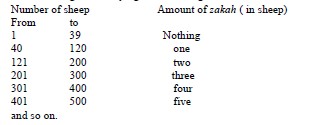
بر اساس این قول میتوان جدول زیر را ترسیم کرد:
According to this saying the following table can be drawn:
در بخش ۶ درباره توصیف آنچه از حیوانات به عنوان زکات گرفته میشود، از نظر اندازه، سن و جنس، بحث خواهیم کرد.
We will discuss in section 6 the description of what animal should be taken as zakah as for its size, age and sex.
بحث دربارهی نِصاب گوسفند
Discussion of the rate on sheep
قابل توجه است که شریعت با افزایش تعداد گوسفندان، نرخ زکات آنها را کاهش داده است. از جدول پیشین مشاهده میشود که وقتی تعداد از ۱۲۰ بیشتر شود، نرخ زکات در یک درصد ثابت میماند، در حالی که نرخ معمول زکات بر داراییهای تجاری، پول و سایر اموال دو و نیم درصد است. دلیل این کاهش چیست؟ برخی از پژوهشگران معاصر [92] کوشیدهاند این کاهش را چنین توضیح دهند که شریعت از طریق این کاهش قصد تشویق پرورش دام را دارد، زیرا نرخ مربوط به چهلتا
It is notable that Shari'ah reduced the rate on sheep as their number increases. From the previous schedule it is observed that as the number grows above 120 the rate stabilizes at one percent in contrast with the usual two-and-half percent on business assets, money and other assests. What is the rationale for this reduction? Some contemporary researchers92 attempt to explain this reduction with the argument that Shari'ah intends to encourage animal breeding by this reduction, since the rate on 40
گوسفند دو و نیم درصد است و با رسیدن به ۲۰۰ [تعداد] کاهش یافته و به یک درصد میرسد. اما این پرسش پیش میآید که اگر این توضیح درست باشد، چرا همین قاعده در زکات سایر انواع چهارپایان به کار نمیرود؟ نرخ زکات شتر و گاو در اعداد بزرگ حول و حوش دو و نیم درصد ثابت میماند و این با نرخ کلی زکات سازگار است. اگر تفسیر یادشده درست باشد، باید دربارهٔ سایر حیوانات نیز صادق باشد.
sheep is two-and-half percent and it regresses at 200, going clean to one percent. But one wonders, if this explanation is correct, why the same is not applied on zakah on other kinds of livestock. The rate on both camel and cows stabilizes around two-and half percent on big numbers, which is consistent with the general rate of zakah. If the above-mentioned interpretation is correct, it should apply to other animals as well.
به نظر من ــ و خدا داناتر است ــ هنگامی که شمار گوسفندان افزایش یابد، کل دارایی گوسفندی شامل بسیاری از برههای نوزاد خواهد بود، زیرا بیشتر گوسفندان بیش از یک بار در سال میزایند. این برهها در شمار گوسفندان حساب میشوند، اما بهعنوان پرداخت زکات پذیرفته نمیشوند، همانگونه که در دو بخش بعدی نشان داده خواهد شد. به نظر من عدالت ایجاب میکند که به همین دلیل میزان زکات اندکی کاهش یابد. اگر میزان زکات یکچهلم در نظر گرفته شود، در حالی که گله شمار زیادی بره دارد، میزان واقعی زکات بهمراتب بیشتر میشود. اما درباره چهل رأس نخست، میزان زکات دو و نیم درصد است، زیرا انتظار میرود که برهها در چهل رأس نخست شمرده نشوند، همانگونه که در بخش پنجم توضیح داده خواهد شد.
The way I see it --God knows best-- is that once the number of sheep grows, the total assests of sheep shall contain many baby lambs because most sheep give birth more than once a year, These babies are counted in the number of sheep but not accepted as payment of zakah, as shall be shown in the following two sections. It seems to me that the justice requires certain reduction in the rate for this reason. If the rate is kept at one out of each 40 while the herd contains many babies, the actual rate becomes much higher. As for the first 40, the rate is two-and-half percent because it is expected that babies would not be counted in the first 40, as will be explained in Section five.
بخش پنجم: آیا حیوانات نوزاد زکاتپذیرند؟
SECTION FIVE ARE BABY ANIMALS ZAKATABLE ?
أحمد، وأبو داود، والنسائي يرويان عن سُويد بن غفلة أنّ "مُصدِّقَ رسولِ اللهِ ﷺ أتانا، فجلسنا قريبًا منه، فسمعتُه يقول: في عهدي أن لا آخذ من راضعِ لبنٍ". هذا يدلّ على أنّ صغار الماشية لا تجب فيها الزكاة، وهذا قول جماعة من كبار العلماء. ولكنّ سند هذا القول مختلف فيه. ومن جهة أخرى، يروي مالك في الموطأ أنّ عمر قال لعامله سفيان بن عبد الله الثقفي: "اعدُد عليهم السخلة، ولا تأخذ السخلة، ولا تأخذ الربى ولا الماخض ولا فحل الغنم". ويروي هذا أيضًا الشافعي وأبو عبيد. وهذا الأثر عن عمر يناقض الأثر السابق، ويدلّ على أنّ صغار الحيوان يُعدّ في النصاب، وبالتالي تجب فيه الزكاة. وهذا ما ذهب إليه جماعة من الفقهاء، حتى إنّه لو كانت جميع الحيوانات الزكوية صغارًا، لقُبل أحدها في الزكاة، وقال آخرون: يُطلب من المالك أن يشتري من خارج ماله حيوانًا أكبر سنًّا ليؤدي به الزكاة.98
Ahmad, Abu Daud, and al Nasa'i report from Suaid Bin Ghaflah that "the zakah commissioner of the Messenger of god (p), came to us. We sat close to him and I heard him saying 'In my instructions it is pleased that I should not take from nursing animals'.94 This indicates that baby livestock are not zakatable, and this is the opinion of a group of leading scholars. But the chain of this saying is contested. On the other hand, Malik in al Muwatta reports that 'Umar told his commissioner, Sufian bin 'Abd Allah al Thaqafi, to "Count the babies in them, even those carried by the shephered in his hands, but do not accept them in payment."95 This is also reported by al Shafi'i and 'Abu Ubaid.96 This report of 'Umar contradicts the previous report and indicates that baby animals are counted in nisab and consequently zakatable. This is what a group of jurists adopt, to the extent that if all the zakatable animals were babies, one of them would be acceptable as payment,"97 though others say the owner should be asked to buy an older animal from outside to fulfil the payment of the zakah.98
بعضی از علما میکوشند گزارش عمر را با سخن سُوَید میانساز کنند؛ بدینگونه که زکات را بر بچهحیوانات واجب نمیدانند، اگر آنها کل نصاب زکاتپذیر را تشکیل دهند، و میگویند سخن سُوَید همانجا کاربرد دارد، اما وقتی بچهحیوانات همراه مادرانشان باشند، آنها را بهحساب میآورند. با این حال، برخی از فقها بر این باورند که بچهحیوانات تنها در صورتی در شمار کل گلهی زکاتپذیر بهحساب میآیند که حیوانات بالغ، نصاب لازم برای زکاتپذیری را تشکیل دهند. این دیدگاه ابوحنیفه، الشافعی، ابن حزم و دیگران است. به نظر من این دیدگاه به عدالت اسلامی نزدیکتر است و بر دیگر دیدگاهها برتری دارد. زیرا با اصل عدالت ناسازگار است که کسی را که مثلاً چهار شتر پیر دارد از زکات معاف کنیم، اما از کسی که پنج شتر بچه یا چهار بره دارد زکات بگیریم، چون این شخص از آن یکی ثروتمندتر نیست. وقتی نصاب با شمردن حیوانات بالغ بهتنهایی تکمیل شود، آنگاه میتوان بچهحیوانات را در تعیین مجموع تعداد زکاتپذیر بهحساب آورد. برای مقادیر بیشتر، خود ساختار نرخها انعطافپذیر است، زیرا مقادیر را به طبقاتی تقسیم میکند و همان نرخ را برای حد پایین و حد بالای هر طبقه اعمال میکند. بدینترتیب پنج شتر به نرخ یک گوسفند زکاتپذیر است، همانگونه که نُه شتر چنین است.
بخش ششم: شرایط حیواناتی که به عنوان زکات داده میشوند
SECTION SIX CONDITIONS OF ANIMALS GIVEN AS ZAKAH
چند شرط برای حیواناتی لازم است که میتوانند بهعنوان زکات پرداخت شوند، از جمله:
A few conditions are required of the animals that can be paid as zakah, which include:
۱. عاری از عیب و آسیب. حیوان باید از بیماری، شکستگی استخوان، پیری، یا عیوب و آسیبهای مادرزادی یا تصادفی به دور باشد. قرآن میفرماید: «و قصد مکنید آنچه را که بد است تا از آن انفاق کنید»۱۰۰ و پیامبر ﷺ فرمودند: «نه باید حیوان پیر یا معیوب داده شود، و نه گردآورنده باید قوچی را بپذیرد، مگر آنکه پرداختکننده خواسته باشد که آن را داوطلبانه بدهد». این بخشی از حدیثی از انس است. پذیرفتن حیوانات آسیبدیده به عنوان پرداخت زکات، برای فقرا و دیگر مستحقان منصفانه نیست؛ این جانبداری از صاحب مال است و نادرست میباشد.
1. Free of defects and damage. The animal should be free of illness, bone fracture, old age, or birth and accidental defects or damages. The Qur'an says "and do not aim at getting anything which is bad, in order that out of it ye may spend "100 and the Prophet (p) states "and one should not give an old or defective animal, nor should a collector accept a ram unless the payer wishes to volunteer it". This is part of the saying from Anas. Accepting damaged animals as zakah payment is not fair to the poor and other deserving recipients; it is a bias in favor of the owner, which is improper.
در مورد تعریف عیب یا نقص، اکثر علما بر این نظرند که همان تعریفی است که در قراردادهای فروش به کار میرود، هرچند برخی گفتهاند که هر چیزی که برای قربانی پذیرفته نمیشود، به عنوان زکات نیز پذیرفته نمیشود.[۱۰۱] باید به مورد خاصی اشاره کرد که در آن حیوان معیوب یا آسیبدیده به عنوان زکات پذیرفته میشود، و آن زمانی است که همه حیواناتی که زکات بر آنها تعلق میگیرد، دارای همان عیب یا آسیب باشند، مانند یک بیماری مشترک. این به آن دلیل است که حکم زکات، پرداخت از آنچه شخص زکاتدهنده مالک آن است را مطالبه میکند، بدون اینکه او را مجبور کند تنها برای پرداخت زکات، حیوان خوبی را از بیرون خریداری کند.[۱]02
As for the definition of defect or damages, the majority are of the view that it is the same definition used in sales contracts, though some say that anything not accepted for sacrifice is not accepted as zakah.l0l One should mentions unique case where a defected or damaged animal is accepted as zakah, which is if all the animals being zakated have the same defect or damage, such as a common disease. This is because the ordinance of zakah asks payment from what the zakatable person owns without forcing him or her to purchase from outside a good animal only for the payment of zakah.l02
زکات چارپایان ۱۰۱
Zakah on Livestock 101
۲۔ تعیین جنسِ حیوان: زکات کے طور پر دیا جانے والا جانور اپنی نوع کی مادہ ہونا چاہیے۔ یہ حکم صرف اونٹوں کے بارے میں ہے، سوائے ان صورتوں کے جو انس رضی اللہ عنہ کی روایت میں ذکر ہوئی ہیں، جن میں مادہ کی جگہ اوپر کی عمر کا نر قبول کیا جاتا ہے۔
4. متوسط بودن: گردآورندهٔ زکات نباید بهترین یا بدترین کیفیت را برگزیند، بلکه باید میانگین حیواناتی را که بر عهدهٔ صاحبشان است، بگیرد. ابن عباس روایت میکند که پیامبر ﷺ به معاذ فرمود: «از بهترین اموال مردم بپرهیز، و از نفرین ستمدیده بترس، زیرا میان آن و خدا پردهای نیست.» ابن ابی شیبه روایت میکند که پیامبر ﷺ در میان شترهایی که بهعنوان صدقه جمعآوری شده بودند، شتر مادهای بسیار خوب دید. ایشان بر گردآورنده خشمگین شد و فرمود: «این چیست؟» گردآورنده پاسخ داد: «آن را با دو شتر کمکیفیتتر عوض کردم.» پیامبر ﷺ فرمود: «پس اشکالی ندارد.»115
4. The average The zakah collector should not take the best or the worst in quality, but the average of the animals owed. Ibn 'Abbas narrates that the Prophet (p) said to Mu'adh, "Avoid the best of people's wealth, and be fearful of the prayer of the oppressed, for there is no curtain between it and God." Ibn Abi Shaibah reports that the Prophet (p) saw among the camels collected as sadaqah, an excellent she-camel. He was furious at the collector and said, "What is this?" The collector answered "I exchanged it for two lesser quality camels". The Prophet said, "Then it is all right."115
این به این دلیل است که زکات بر عدالت میان دو طرف، یعنی پرداختکنندگان و دریافتکنندگان، استوار است، و گرفتن بهترین یا بدترین اموال به معنای جانبداری از یکی از آن دو است. با این حال، روشن است که بهترین یا بدترین را میتوان بر پایه ارزش و به اختیار صاحب دام گرفت. ابوداوود از طریق سند خود از پیامبر ﷺ روایت میکند: «سه چیز است که هر کس آنها را به جا آورد، شیرینی ایمان را خواهد چشید: خدای یگانه را پرستیدن و دانستن اینکه معبودی جز خدا نیست، و زکات مالت را با دلی خشنود سال به سال پرداختن... و نه پیر و بیمار و بچهدار و حیوان معیوبی را که شیر کمی دارد، بلکه از میانگین اموالت بدهی. خدا از شما نمیخواهد که بهترین آن را بدهید و نیز فرمان نداده که بدترین آن را بدهید.» ۱۱۶ گیرنده زکات نباید حیوانی را که بچه شیر میدهد، یا حیوان باردار، یا قوچ گله را، یا حیوانی را که قرار است گوشت خانوادهٔ پرداختکنندهٔ زکات باشد، به عنوان زکات بگیرد. ۱۱۷ مالک در «الموطأ» از عایشه روایت میکند که عمر بن خطاب از کنار گوسفندانی که به عنوان صدقه گرفته شده بودند گذشت و یکی را دید که پستانهای بزرگی داشت. پرسید: «این گوسفند چیست؟» پاسخ دادند: «از صدقه گرفته شده.» گفت: «صاحبانش آن را با خوشی ندادهاند، پس مردم را وادار به بازگشت نکنید، و بهترین اموال مسلمانان را نگیرید.»118
This is essentially because zakah is based on fairness to the two parties, payers and recipients, and taking the best or the worst means favoring one of them. However, it is obvious that the worst or the best can be taken on the basis of value at the option of the livestock owner. Abu Daud reports, through his own chain, from the Prophet (p) "There are three things, which whoever fulfills them will taste the sweetness of faith: to worship God alone, realizing that there is no deity but God, to give zakah on your wealth with your soul pleased at paying it year after year... and to give not the old, or the ill or the baby, or the defective animal that give little milk, but to give from the average of your wealth. God does not ask you to give the best of it, nor does He ordain you to give the worst of it."116 As zakah payment, the collector must not take the animal that nurses babies, nor pregnant animals, nor the ram out of sheep, nor the animal that is meant to provide meat for the household of the zakah payer.117 Malik reports in al Muwatta from 'Aishah that 'Umar bin al Khattab passed by the sheep taken as sadaqah, and saw one with big udders and asked, "What is this sheep? "He was answered, "One taken as sadaqah." He replied, "Its owners did not give it pleasantly, so do not force people to turn back, and do not take the best of the wealth of Muslims."118
بخش هفتم: تأثیر آمیختن و شراکت بر زکات دام
SECTION SEVEN THE EFFECT OF MIXING AND PARTNERSHIP ON ZAKAH ON LIVESTOCK
معمولاً صاحبان دام، برای صرفهجویی در هزینههای جاری، دامهای خود را با هم جمع میکنند. آیا همهی دامهای جمعشده باید در تعیین نصاب و میزان زکات بهعنوان یک واحد در نظر گرفته شوند، یا برای هر مالک بهتنهایی لحاظ شوند؟
It is common for livestock owners, to put together their cattles in order to save on overhead expenses. Should all gathered livestock be treated as one unit in determining the nisab and rate of zakah? or should they be considered for each owner alone?
برای پرداختن به این مسئله باید توجه داشت که دو شکل اصلی پرورش جمعی دام وجود دارد. یکی آن است که مالکیت جدا نگه داشته شود و در برخی هزینهها شریک باشند، و دیگری آن است که دام بهصورت مشترک در میان شرکا باشد. در شکل دوم، سهم هر مالک نه با تعداد، بلکه تنها بهعنوان نسبتی از کل مشخص میشود، در حالی که در شکل نخست، دامهای هر فرد از دیگری متمایز است. این دو شکل سرمایهگذاری مشترک لزوماً تأثیر یکسانی بر وجوب زکات ندارند.
To deal with this question one should note that there are two leading forms of collective breeding. One involves keeping the ownership separate and sharing in certain expenses, and the other is when the cattle is owned commonly among the partners. In the latter form, the share of each owner is not determined in number but only as a proportion of the total, whereas in the former each person's own animals are distinguished. These two forms of investing together need not have the same effect on zakatability.
ابن رشد در کتاب «بدایۃ المجتهد»، دیدگاه فقها را بر اساس موارد زیر خلاصه میکند:
Ibn Rushd in Bidayat al Mujtahid, summarizes the views of jurists according to the following:
بیشتر فقها ترکیب دامها را بر زکاتپذیری مؤثر میدانند، مگر ابوحنیفه و شاگردانش که معتقدند آمیختن دامها بر نصاب یا بر میزان قابلپرداخت هیچ تأثیری ندارد. مالک، الشافعی و بیشتر فقها بر این توافق دارند که گروه پرورشدهندگانی که دامهای خود را با هم آمیختهاند، همچون یک مالک واحد به شمار میروند. با این حال، آن فقها در دو زمینه اختلاف دارند: تعیین نصاب و تعریف آمیختن مؤثر.
Most jurists view mixing animals as affecting the zakatability except for Abu Hanifah and his disciples, who believe that mixing together of animals does not have any effect on nisab or on the applicable rate. Malik, al Shafi'i, and most jurists agree that the group of breeders who mix their cattles together are treated as if they were one owner. Those jurists however differ in two areas: the determination of nisab and the definition of effective mixing together.
لازم به یادآوری است که دلیل این اختلاف نظرها، برداشتهای گوناگون از سخن پیامبر ﷺ است. در نامهای که دربارهٔ صدقه آمده، پیامبر ﷺ
It should be noted that the reason for these different opinions is the different interpretation of the saying of the Prophet (p). In the letter on sadaqah the Prophet (p)
بخش هشتم: زکات اسبان
SECTION EIGHT ZAKAH ON HORSES
اسبهایی که برای حملونقل شخصی و جنگ به کار میروند، از زکات معاف هستند۔
Horses used for personal transportation and fighting are exempt from zakah.
میان مسلمانان اتفاق نظر وجود دارد که اسبهایی که برای سواری شخصی، حمل بارهای شخصی و جهاد در راه خدا نگهداری میشوند، از زکات معافاند، چه در چراگاههای طبیعی چرانده شوند و چه در مزارع پرورشی تغذیه شوند؛ زیرا این اسبها برای مصرف شخصی و خانگیاند و داراییای رشدکننده که بیش از نیاز شخصی باشد، محسوب نمیشوند.126 از سوی دیگر، همه مسلمانان جز ظاهریه اتفاق نظر دارند که اسبهایی که بهعنوان کالای تجاری در مالکیت دلالان اسب قرار دارند، زکاتپذیرند، چه در چراگاههای طبیعی چرانده شوند و چه بهصورت دستی تغذیه شوند، به این دلیل که اسبهایی که برای کالای تجاری در نظر گرفته شدهاند، همچون سایر داراییهای تجاری، کالا به شمار میروند.127 همچنین اتفاق نظر وجود دارد که اسبهایی که بیشتر سال توسط صاحبانشان تغذیه میشوند و برای هیچیک از اهداف پیشگفته نگهداری نمیشوند، از زکات معافند؛ زیرا به گفته اکثر علما، چرای آزاد و طبیعی شرط زکاتپذیری چارپایان است.128
It is agreed upon among Muslims that horses owned for the purpose of personal riding, carrying personal loads, and fighting for the sake of God are exempt whether they are naturally pastured or fed in ranches, because they are for personal and household use and are not growing assets in excess of personal needs.126 On the other hand, all Muslims except Zahirites have agreed that horses used as business inventory owned by horses' merchants, are zakatable whether they are naturally pastured or manually fed on the grounds that horses designed for business inventory are commodities, like other business asset.127 It is also agreed upon that horses that are fed by owners most of the year, which are not owned for any of the previously mentioned purposes, are exempt from zakah, because natural free pasturing is a condition for zakatability of animals, according to the majority of scholars.128
زکاتپذیری اسبهای چرای طبیعی که برای نسلکشی اختصاص داده شدهاند
Zakatability of naturally pastured horses designated for breeding
در مورد زکاتپذیری اسبهای چرندهی آزاد که برای نسلکشی و پرورش در نظر گرفته شدهاند، دو دیدگاه وجود دارد. ابوحنیفه بر این باور است که این اسبها زکاتپذیرند، به شرط آنکه همهی اسبهای مالک از نرها نباشند، زیرا در این صورت نمیتوانند نسلکشی کنند.[129] اکثر فقیهان این اسبها را از زکات معاف میدانند و این دیدگاه از ابن المنذر از علی، ابن عمرو الشعبی، عطاء، الحسین العبدی، عمر بن عبدالعزیز، الثوری، ابویوسف، محمد (دو شاگرد ابوحنیفه)، ابوثور، ابو خیثمه و ابوبکر بن ابی شیبه نقل شده است. برخی دیگر این دیدگاه را به عمر، مالک، الأوزاعی، اللیث و داوود نسبت میدهند.130
There are two opinions on the zakatability of naturally cost-free pastured horses that are designated for breeding and growth. Abu Hanifah believe they are zakatable, provided that not all horses owned are males since in this case they cannot breed.129 The majority of jurists consider these horses exempt from zakah, and this is narrated by Ibn al Mundhir from 'Ali, Ibn 'Amr al Sha'bi, 'Ata, al Husain al Abdi, 'Uamar bin 'Abd al Aziz, al Thawri, Abu Yusuf, Muhammad (the two disciples of Abu Hanifah) Abu Thawr, Abu Khaithamah, and Abu Bakr bin Shaibah. Others attribute this opinion to 'Umar, Malik, al Awza'i, al Laith and Daud.130
دلیلِ جمهور بر عدمِ وجوبِ زکات در اسبان
Evidence of the majority for the non-zakatability of horses
۱. از ابوہریرہ روایت شده است که در دو کتاب صحیح و در دیگر کتب آمده است که پیامبر ﷺ فرمودند: «بر مسلمانان در مورد بردگان و اسبان مادهشان هیچ صدقهای واجب نیست»۔ این معافیت شامل همه اسبها میشود، چه در چراگاه طبیعی چرا کنند یا نه، و چه ماده باشند یا نر، زیرا این حکم عام است۔
1. It is reported in the two correct books and in others from Abu Hurairah that the Prophet (p) said " There is no sadaqah obligated on Muslims on their slaves and mares."131 This exemption includes all horses, naturally pastured or not, female or male because it is general.
۲. روایت احمد، ابوداود و ترمذی از علی، از پیامبر ﷺ
2. The report of Ahmad, Abu Daud, and al Tirmidhi from Ali from the Prophet (p)
«من برای شما صدقه بر اسب و برده را بخشیدم. از پول نقره صدقه بدهید، یک درهم از هر ۴۰ درهم.» ﷺ132
"I waived for you sadaqah on horses and slaves. Pay sadaqah on silver money, one dirham for each 40."132
۳. اعمالِ پیامبر ﷺ شامل جمعآوری زکات از اسبان نمیشد، با وجودی که زکات از شتران، گاوان و گوسفندان گرفته میشد. پیامبر ﷺ همان کسی است که جزئیات فریضهای را که در قرآن آمده بیان میکند، و گفتار و کردار او نشان میدهد که اسبان زکاتپذیر نیستند.
3. The actions of the Prophet (p) did not include collecting zakah on horses, even though it was collected on camels, cows and sheep. The Messenger is the one who gives the details of the obligation outlined in the Qur'an, and his word and deed indicate that horses are not zakatable.
۴. آنان همچنین استدلال میکنند که چهارپایانی که زکات بر آنها واجب است، آشکارا با اسبها تفاوت بسیار دارند، و اسبها را نمیتوان از راه قیاس مشمول زکات دانست، زیرا در کاربرد و در هدف نگهداری این گونههای مختلف حیوانات، تفاوتهای بنیادین وجود دارد. اسب برای به کارگیری در جنگ، در برپاداشتن این دین و در دفاع در برابر دشمنان به دست آورده میشود، پس مردم باید تشویق شوند که آنها را برای چنین اهدافی تهیه و نگهداری کنند. خدا میفرماید: {و در برابر آنان هر چه در توان دارید از نیرو و اسبان آمادهشده برای جنگ فراهم آورید.}[133] اسبهای جنگی ابزار رزماند، و مانند سلاح و سایر ابزار جنگی، تا زمانی که بهعنوان کالای تجاری به کار گرفته نشوند، مشمول زکات نیستند.134
4. They also argue that livestock that are zakatable are obviously very different from horses and that horses cannot be made zakatable by analogy because of the basic differences in use and in the purpose of owning these different kinds of animals. Horses are obtained for use in fighting, in establishing this religion, and in defense against enemies, so people should be encouraged to obtain them and keep them for such purposes. God says "Against them make ready your strength to the utmost of your power, including seeds of war.133 Horses of war are fighting equipment, like weapons and like other fighting tools are not zakatable as long as they are not used as a commodity for trade.134
دیدگاه ابوحنیفہ و دلیل آن
Abu Hanifah's opinion and its supporting evidence
ابوحنیفہ، جو یہ عقیدہ رکھتے ہیں کہ آزادانہ چرنے والے گھوڑوں پر زکات واجب ہے، درج ذیل دلائل پیش کرتے ہیں:
Abu Hanifah, who believes that naturally pastured horses are zakatable, provides the following arguments:
ابتدا، بخاری در صحیح خود از ابوهریره روایت میکند که پیامبر ﷺ فرمود: «اسبها برای یک نفر مایه پاداش هستند، برای دیگری وسیله امرار معاش، و برای فرد دیگری مایه گناه. کسی که اسبها برای او مایه پاداشاند، کسی است که اسب را برای جهاد در راه خدا نگه میدارد تا بر آن در میدان نبرد سوار شود یا آن را به دیگری بدهد تا در نبرد سوارش شود. از این رو، اینها مایه پاداشاند. و برای کسی که اسب را برای حملونقل شخصی نگه میدارد تا به دیگران نیازمند نباشد، و حق خدا را درباره اسبها و حق مردم را برای سوار شدن بر پشت آنها فراموش نمیکند، اسبها وسیله امرار معاشاند. و برای کسی که اسبها را از روی تکبر و برای جنگ با مسلمانان نگه میدارد، آنها مایه گناهاند.»۱۳۵
این سخن نشان میدهد که درباره اسبها حقی برای خدا وجود دارد، یعنی زکات، و همچنین سوار کردن دیگران بر پشت آنها.۱۳۶ برخی دیگر از فقها بر این باورند که مقصود از حق اسبها، استفاده از آنها در جنگ است.137
Firstly, al Bukhari reports in his correct collection from Abu Hurairah that the Prophet (p) said "Steeds are for a person a source of reward, for another they are a source of sustenance, and for yet another they are a source of sin. He for whom they are a source of reward is the man who owns horses for the purpose of fighting for the sake of God, to ride it in battle or to give it to someone else to ride in battle. That is why they are a source of reward. For one who keeps horses for personal transportation so he does not need others, and does not forget God's right on the horses or the right of people to be given lifts on their backs, they are source of sustenance. And for the person who keeps steeds as a matter of pride and to fight against the people of Islam, they are a source of sin."135 This saying indicates that there is a right of God on horses, zakah and giving lifts on their backs.136 Other jurists argue that what is meant by the right on horses is the use of horses in fighting.137
ثانیاً، از جابر روایت شده که پیامبر ﷺ فرمود: «بر هر اسب مادهٔ چرنده (در چراگاه آزاد) یک دینار یا ده درهم زکات است.» این حدیث را دارقطنی و بیهقی روایت کردهاند و هر دو آن را ضعیف دانستهاند. به همین دلیل، اکثر فقها بر این عقیدهاند که این روایت در برابر حدیث صحیح که زکات را از اسبان و بردگان مسلمانان ساقط میداند، تاب مقاومت ندارد: «بر بردگان و اسبان مسلمانان زکاتی نیست.»
ثالثاً، با قیاس بر شتر: هر دو حیوانی رشدکننده و سودمندند و در هر دو شرط زکاتپذیری، یعنی چرا کردن آزادانه و بدون هزینه، محقق است. تفاوتهایی که میان اسب و سایر چهارپایان ادعا شده، بیش از تفاوتهای موجود میان انواع دیگر دام نیست، زیرا هر حیوانی ویژگیهای خاص خود را دارد. میان شتر و گوسفند تفاوتهای بسیاری وجود دارد، با این حال هر دو زکاتپذیرند. ابوحنیفه بر همین استدلال تکیه کرده و گفته است که علت وجوب زکات امری عقلیپذیر است و صرفاً تعبدی نیست. این علت، رشد یا استعداد رشد است، و هرگاه رشد در دارایی دیگری وجود داشته باشد، زکاتپذیری نیز باید به آن تعمیم یابد.
نصاب و زکات اسبان
Nisab and rates of zakah on horses
ابوحنیفہ اسبوں کے لیے نصاب مقرر نہیں کرتے۔ صاحبِ الدر المختار لکھتے ہیں: «معروف یہ ہے کہ ابوحنیفہ گھوڑوں کے لیے نصاب کا تعیین نہیں کرتے؛ ان سے اس بارے میں ہمارے پاس کوئی روایت نہیں۔»146 ابن عابدین اپنی شرح میں القہستانی سے نقل کرتے ہیں کہ اس نے کہا: «بعض نے نصاب تین بتایا ہے اور بعض نے پانچ۔»147 چنانچہ پانچ کا اندازہ زیادہ درست معلوم ہوتا ہے، کیونکہ یہ اونٹوں کے نصاب سے مشابہت رکھتا ہے۔ عدد پانچ نصاب کے بیان میں اکثر استعمال ہوا ہے: اونٹوں کا نصاب پانچ اونٹ ہے، چاندی کا نصاب پانچ اوقیہ [یعنی دو سو درہم] ہے، اور غلے کا نصاب پانچ وسق ہے۔
Abu Hanifah does not determine a nisab for horses. The author of al Durr al Mukhtar writes "It is best known that Abu Hanifah does not estimate nisab for horses; we have no report from him about that."146 Ibn 'Abidin in his commentary quotes al Qahastani as saying "Some indicate nisab at three and others indicate it at five."147 It seems that the estimation of five is mare correct because of its similarity to that of camels. The number five is often used in nisab . nisab is five camels, five 'uqiyyah of silver [equals 200 dirhams] and 5 wasq of grain.
بهنقل ابن عابدین از ابوحنیفه، نرخ زکات چنین بیان شده است: صاحبان اسبهای عربی مخیّرند که بابت هر اسب یک دینار بپردازند، یا اسبهای خود را ارزیابی کرده و ۵
The rate is explained by Ibn Abidin from Abu Hanifah: Owners of Arabian horses are given the choice of paying one dinar on each or evaluating their horses and paying 5
به ازای هر ۲۰۰ درهم ارزش، پنج درهم (با نرخ دو و نیم درصد). در مورد اسبهای غیرعربی، تنها ارزش آنها مورد توجه قرار میگیرد.148
dirhams for each 200 dirhams of value - the rate is just two-and-half. For non-arabian horses, only the value is considered.148
The user's message is just "Analysis" with no other text, and per the instructions I should translate it.
تحلیل
Analysis
پس از بحث درباره دو دلیل، به نظر من پیامبر ﷺ نفی زکات بر اسبها را بهروشنی بیان نکرده، و همچنین آن را بهروشنی واجب نکرده است. سخن ابوهریره که «بر برده و اسب مسلمان صدقهای نیست» جز اسبی را که برای سواری شخصی و بهعنوان مرکب جنگی به کار میرود، شامل نمیشود. این تفسیر با تفسیر زید بن ثابت و ابن عباس، که درست از ایشان نقل شده، تأیید میشود. خود عبارت «بردهاش و اسبش» در این سخن نیز همین معنا را نشان میدهد. همچنین، میان فقیهان به اجماع پذیرفته شده است – جز ظاهریان – که زکات بر اسبها و بردگان، هنگامی که جزو کالای تجاری باشند، واجب است. ابوهریره به ظاهر الفاظ نصوص گرایش داشت و در میان صحابه به دقت حافظه شناخته میشد، اما شهرتی در تحلیل و تفصیل مانند زید و ابن عباس نداشت. سخن علی که «زکات اسبها و بردگان را برای شما بخشیدم» را دارقطنی صحیح دانسته، آنگاه که به علی ختم شود و به پیامبر ﷺ نسبت داده نشود. و معلوم است که دارقطنی در این گونه امور صاحبنظر است. با این حال، عبارت «برای شما بخشیدم» دلالت دارد که این اموال در اصل مشمول زکاتاند، اما پیامبر ﷺ به دلیلی خاص زکات آنها را بخشیده است. آن دلیل میتواند نیاز شدید به مرکبهای جنگی باشد، یا اینکه اسب در عربستان دارایی مهمی به شمار نمیرفت.
After discussing the two arguments, it seems to me that the Messenger (p) did not negate the existence of zakah on horses in a clear way, but neither did he obligate it clearly. The saying from Abu Hurairah, "There is no sadaqah on a Muslim's slave and mare" does not touch on anything other than the horse used for personal transportation and as a mount for war. This explanation is supported by the interpretation from Zaid bin Thabit and 'Abbas, correctly reported to him. The very words "His slave and his mare" in the saying seem to indicate this meaning. Also, that it is unanimous by Ijma' among jurists -- except Zahirites-- that zakah is obligatory on horses and slaves when they are part of business inventory. Abu Hurairah was inclined to hold to the letters of texts, and was known among the Companions for his precise memory, and did not have a reputation of analyzing and elaborating like Zaid and Ibn 'Abbas. The saying from 'Ali, "I have waived for you the sadaqah on horses and slaves" is noted by al Daraqutni as correct when it ends at 'Ali and is not linked to the Prophet. It is well known that al Daraqutni is the expert on such matters. However the words "waived for you" imply that these assets should be in principle zakatable but the Prophet (p) waived the zakah are them for certain reason.l49 This could be the desperate need for steeds of war or the fact that horses were not a substantial item of wealth in Arabia.
بههرحال، نبودِ متنی که صراحتاً زکات را بر اسبها واجب کند، به این معنا نیست که اسبها مشمول زکات نیستند. از پیامبر ﷺ روایت نشده که چیزی دربارهٔ واجب کردن زکات بر طلا فرموده باشد. روشن است که بیشترِ سکههای رایج در زمان ایشان نقره بودند و حکمِ طلا از راه قیاس، به سبب شباهتِ آشکار در کاربرد این دو فلز، استنباط شده است. داستانِ عُمر با یَعلی بن اُمیّه، به نظر من، وزنی بسیار مهم دارد. اقدامی که عُمر انجام داد نشان میدهد که قیاس و اجتهاد در زکات جایگاهی مهم دارند. این که پیامبر ﷺ از برخی انواعِ دارایی زکات گرفته، به این معنا نیست که مسلمانانِ پس از ایشان نمیتوانند از دیگر انواعِ مشابه زکات بگیرند. در واقع، هر دارایی قابلتوجه و رو به رشدی باید مشمول زکات باشد.
استطراد: التمییز میان اوامر پیامبر ﷺ بهعنوان فرستادهٔ خدا و دستورهای او بهعنوان رئیس دولت در امور دنیوی.
Digression: The distinction between orders of the Prophet as a messenger of God orders as a temporal head of state.
پیش از این بحث، لازم است چند پاراگراف به این نکتهٔ مهم اختصاص یابد. همواره باید به شرایط و اوضاعی که پیرامون سخنی از پیامبر ﷺ قرار دارد و به موضوع آن سخن نگریست تا روشن شود آیا آن سخن به امور دنیوی، سیاسی، اقتصادی، نظامی یا اداری مربوط است، یا به اصول شیوهٔ زندگی اسلامی. گاه ممکن است متن دیگری وجود داشته باشد که اصلِ پایداری را نشان دهد که کاربردی خاص و زمانمند دارد، یا رویدادهای مشابه به شیوهای متفاوت با آنها برخورد شده باشد، که نشان میدهد این برخورد بیشتر جنبهٔ دنیوی دارد تا دینی.
The previous discussion leads us to devote a few paragraphs to deal with this important point. One should always look at the circumstances that surround a statement made by the Prophet (p) and the subject matter of the saying to see whether it relates to temporal, political, economic, military, or administrative affairs, or to the principles of the Islamic way of life. There may exist sometimes another text that indicates the enduring principle of a special temporal application, or similar events may have been differently treated, which indicates this treatment may be temporal rather than religious.
بهعنوان نمونه، القرافی در کتاب «الإحکام» خود دربارهٔ این سخن که «هرکس سربازِ دشمن را بکشد، داراییاش از آنِ اوست» مثال میزند. مالک میگوید این حکمی است که پیامبر ﷺ بهعنوان رئیس دولت صادر کرده و قاعدهٔ کلی نیست. اگر رهبران دولت اسلامی در آغاز جنگ چنین مقررهای را اعلام کنند، آنگاه باید اجرا شود، وگرنه همان قاعدهٔ کلی باقی است که غنیمت جنگی بر اساس متن قرآن در سورهٔ هشتم، الأنفال، تقسیم میشود. مالک برای تأیید این دیدگاه دلایل زیر را میآورد:
An example is give by al Qarafi in his al Ihkam about the saying "One who kills an enemy soldier shall have his personal property". Malik says this is a decision by the Prophet (p) as a head of state and is not a general rule. If the leaders of the Islamic state declare such a regulation at the beginning of a war, then it should apply, but otherwise, the general principle that war booty is distributed according to the text of the Qur'an in sura eight (al Anfal) remains applicable. Malik gives the following arguments to support this view:
۱. آیهٔ مربوط به تقسیم غنایم جنگی در سورۀ «الأنفال» با این سخن در تعارض است.
1. The verse about the distribution of war booties in sura (al Anfal) contradicts this saying.
۲. چنین مقرراتی ممکن است در نیت جنگجویان اخلال ایجاد کند و آن را از اینکه برای رضای خدا باشد، منحرف سازد و به میل به مال دشمن تبدیل کند.
2. Such a regulation may interfere with, and divert the intentions of the fighters from being for the sake of God to being the desire for the enemy's property.
۳۔ این سخن از پیامبر (ﷺ) بدین سبب بیان شد که جنگجویان را در نبردی خاص تشویق کند۔51
بخش نهم: سایر حیوانات اهلیِ چرنده که به طور طبیعی در مرتع میچرند
SECTION NINE OTHER NATURALLY PASTURED DOMESTIC ANIMALS
این بخش به حالت کلی حیوانات اهلیای میپردازد که در چراگاهها و بدون هزینهی خوراک نگهداری میشوند و برای سودآوری پرورش داده میشوند. آیا میتوانیم حکم زکات را بر همهی چنین حیواناتی تعمیم دهیم یا نه؟ به بیان دیگر، آیا زکات باید به همان چهار گونهی پیشگفته محدود شود یا شامل همهی حیوانات اهلی میگردد؟ برخی از برجستهترین استادان امروزی مطالعات اسلامی، از جمله محمد ابو زهره، عبدالوهاب خلاف و عبدالرحمن حسن، از رویهی عمر استنباط میکنند که میتوان در زکات قیاس به کار برد.
This section deals with the general case of naturally cost-free pastured domestic animals maintained for profit. Can we generalize the case of zakah on all such animals or not? In other words should zakah be restricted to the four previously mentioned species or should it include all domestic animals? Some of today's leading professors of Islamic studies, including Muhammad Abu Zahra, 'Abd al 'Wahab Khallaf, and 'Abd al Rahman Hasan, deduct from the practice of 'Umar that one can apply analogy on zakah.
عمر بن الخطاب زکات را بر اسبها بر اساس قیاس واجب کرد، بدین دلیل که اسبها در حال تبدیل شدن به داراییهای با ارزش بودند. ابوحنیفه که در کاربرد قیاس استاد است، این نظر را تأیید میکند. کسانی که زکات را بر اسبها واجب نمیدانند، این کار را از روی انکار قیاس انجام نمیدهند، بلکه خوردنی بودن چهارپایان را دلیل مهمی برای زکاتپذیری آنها میدانند. از آنجا که اسبها خوردنی نیستند، آنها زکاتپذیری را به اسبها تعمیم نمیدهند. نویسندهی المغنی مینویسد: «قیاس اسب بر چهارپایان نادرست است، زیرا چهارپایان مال رشدکنندهای هستند که برای شیردوشی و گوشت به کار میروند و میتوانند برای قربانی نیز استفاده شوند.» اکثر علما، صرف ویژگی رشد را دلیل زکاتپذیری نمیدانند.
'Umar bin al Khattab obligated zakah on horses by analogy, on the grounds that horses were becoming valuable assets. This is upheld by Abu Hanifah, the master in the application of analogy. Those who do not obligate zakah on horses do not do so in denial of analogy, but because they consider the edible character of livestock an important reason for their zakatability. Since horses are not edible, they refuse to extend zakatability to horses. The author of al Mughni writes "The analogy of horses and livestock is incorrect, because the latter are growing wealth that is used for milking and meat and can be used for sacrifice." The majority of scholars does not consider the character of growth alone the reason for zakatability.
این سه استاد میافزایند: اگر عمر، خلیفهی راشد، رشد را شرط اساسی زکاتپذیری میدانست و ابوحنیفه از او پیروی کرد، پس میتوانیم دامنهی آن را به سایر حیوانات گسترش دهیم و اعلام کنیم که همهی حیواناتی که رشد میکنند و به طور طبیعی و بدون هزینه در چراگاه میچرند، زکاتپذیرند، در صورتی که به حداقل زکاتپذیری (نصاب) برسند؛ که بیست دینار است، به میزان ۲٫۵٪. نصاب در ارتباط با طلا برآورد میشود، زیرا عمر اصل ارزیابی اسبها برای تعیین زکات را پذیرفت، و ارزش امروزه با طلا سنجیده میشود.158
بخش دهم: اصول کلی برگرفته از بخشهای پیشین
SECTION TEN GENERAL PRINCIPLES DERIVED FROM THE PREVIOUS SECTIONS
بحث در بخشهای پیشین این فصل از این جهت به درازا کشید که شریعت خود اصول و احکام بسیاری را دربارهٔ زکات چهارپایان مقرر کرده است که شاید در سایر بخشهای زکات به این تفصیل نباشد، و نیز به این دلیل که تحلیل مفصل این موضوع، اصول مهمی را آشکار میسازد که در فهم جوهر زکات به طور کلی بسیار سودمند خواهند بود. از جمله این اصول، موارد زیر است:
The discussion in the previous sections of this chapter has been lengthy because Shari'ah itself dictates many principles and rulings about zakah on livestock that may not be as detailed in other areas of zakah, and because the lengthy analysis of this issue uncovers important principles that will be of great benefit in understanding the essence of zakah in general. Among these principles are the following:
۱. زکات، با اینکه یک عبادت است، نهادی عمومی نیز هست که دولت اسلامی بر آن نظارت میکند. تعیین و اعزام مأموران زکات بر عهدهی دولت اسلامی است.
1. Zakah, although a worship, is also a public institution supervised by the Islamic state. Appointing and sending zakah commissioners is the duty of the Islamic state.
۲. مقررات زکات میان نگرانیهای فقیران از یک سو و منافع توانگران از سوی دیگر تعادل برقرار میکند، بدینگونه که اندکمالی از زکات معاف است و در پرداخت زکات تنها داراییهای با کیفیت متوسط پذیرفته میشود.
2. Zakah regulations balance the concerns of the poor on one hand and the interests of the rich on the other hand, so that small quantities of wealth are exempted from zakah and average quality assets only are accepted as zakah payment.
۳. هزینهی سنگین نگهداری یک دارایی، زکات را کاهش میدهد یا آن را از همان دارایی ساقط میکند. به همین دلیل، بیشتر فقیهان برجسته، چهارپایانی را که با دست علف داده میشوند از زکات معاف دانستهاند، با این استدلال که هزینهای که صاحبشان میکند با سودی که از آنها میبرد برابر است.
3. The expensive upkeep of an asset reduces zakah or waives it on that asset. For that reason, the majority of leading jurists consider manually fed animals exempt from zakah on the ground that they cost as much as they profit the owner.
۴. تبدیل یک دارایی در حال رشد از استفاده برای کسب سود به استفادهٔ شخصی، آن را از زکات معاف میکند؛ این دیدگاه بنا بر نظر اکثر علما دربارهی گاوها و شترهایی است که برای آبکشی، کشاورزی و حمل بارهای شخصی به کار میروند.
4. A transformation of a growing asset from its use for profit to personal use exempts it from zakah, according to the majority of scholars with regard to cows and camels used for watering, cultivation, and carrying personal loads.
۵. شریعت مالِ مشترکِ شراکتها را یک واحد به شمار میآورد، و این امر میتواند مبنایی برای رسیدگی به شرکتهای معاصر باشد۔
۱. سورۃ النحل، ۱۶:۵-۷
1. Sura al Nahl, 16:5-7.
۲. همان.
2. Ibid.
۳. همان.
3. Ibid.
۴. سورهٔ یس: ۳۶:۷۱-۷۳
4. Sura Yasin: 36:71-73.
۵. الدر المختار وحاشیتہ ردّ المحتار، ج۲، ص ۲۰-۲۱۔
5. Al Durr al Mukhtar and its commentary, Rad al Muhtar, Vol. 2, p. 20-21.
۶. سورۃ الأعراف، ۷:۱۹۹
6. Sura al A'raf, 7:199.
۷. سورة البقرة، ۲:۲۱۹.
7. Sura al Baqarah, 2:219.
۸.. الروض النضیر، جلد ۲، صفحه ۳۹۹.
8.. Al Rawd al Nadir, Vol. 2, p. 399.
۹. همان، ص ۴۰۰.
9. Ibid, p. 400.
۱۰۔ ایضاً، ص۳۹۹۔
10. Ibid, p.399.
۱۱. الأموال، ص ۳۸۰.
11. Al Amwal, p. 380.
۱۲. نصب الرایة، ج۲، ص۳۶۰.
12. Nasb al Rayah, Vol. 2, p. 360.
۱۳. الأموال، صص ۳۸۰-۳۸۲، و الروض النضیر، ج ۲، ص ۴۰۸.
13. Al Amwal, pp. 380.382, and al Rawd al Nadir, Vol. 2, p. 408.
۱۴. الروض النضیر، المصدر نفسه.
14. Al Rawd al Nadir, Ibid.
۱۵. الأموال، ص ۳۸۱.
15. Al Amwal, p. 381.
۱۶۔ ایضاً، ص ۳۸۲۔
16. Ibid, p. 382.
۱۷. همان، ص ۳۸۱.
17. Ibid, p. 381.
۱۸. ابن ناجی، شرح الرسالہ، ج۱، ص۳۳۵۔
18. Ibn Naji, Sharh al Risalah, Vol. 1, p. 335.
This condition is derived from what is reported by Ahmad, al Nasa'i, and Abu Daud from Bahz bin Hakim from his father from his grandfather, who said: I heard the Messenger of God (p) saying about naturally ( cost-free ) postured camels, for each forty, there is one as zakah ... etc. "This saying is graded correct by a group of leading scholars. The adjective "naturally, cost-free pastured" here implies that artificially fed camels are not subject to zakah; otherwise adding such an adjective becomes meaningless, and the Prophet (p) does not speak in vain. It is obvious from this saying that camels characterised, as naturally, cost-free pastured are unlike those that are not.
الخطّابی میگوید: «هرگاه چیزی بتواند یکی از دو وصف را داشته باشد، و حکمی شرعی بر یکی از آن دو وصف مترتب شود، آنگاه حکم مخالف، به طور مفهومی، بر وصف دیگر بار میشود». همچنین عالمان اصول فقه پذیرفتهاند که ذکر یک وصف خاص در یک حکم، به این معناست که در صورت نبودن آن وصف، حکم اعمال نمیشود؛ یعنی شترانی که با علوفهٔ خریداری شده تغذیه میشوند، با شترانی که چنین نیستند، به شکلی متفاوت معامله میشوند.
Al Khattabi comments, "When something may have either of two characteristics, and a ruling of Shari'ah is applied to one of them, then the opposite ruling applies to the other characteristic, by implication".8 It is also accepted by scholars of the methodology of jurisprudence that giving a specific characteristic in a ruling implies that when the characteristic is absent the ruling does not apply9 i.e., camels fed by purchased feed are treated differently.
این سخن با روایتی دیگر نیز تقویت میشود؛ روایتی که در صحیح بخاری و دیگران از انس نقل شده که «اگر گوسفندان بهصورت طبیعی و بدون هزینه چرا کنند و به چهل رأس برسند، یک گوسفند زکات است». اگر شرط چرای طبیعی و آزاد بر گوسفندان لازم باشد، به قیاس، بر شتران و گاوان نیز لازم خواهد بود، زیرا نباید میان آنها تفاوتی وجود داشته باشد. و سخنانی که بدون چنین قیدی آمدهاند، باید با توجه به آنهایی فهمیده شوند که با قید چرای طبیعی و آزاد همراه بودهاند.
This saying is further supported by a report is the correct collection of al Bukhari and others from Anas, that "if sheep are naturally (cost-free) pastured, and reach 40 in number, there is one sheep as zakah". If the condition of natural free pasture is required on sheep it should also be, by analogy, required on camels and cows, since there should be no distinction between them. Sayings without such restriction should be taken with reference to those that came with the restriction of natural free grasing.
این نظر اکثریت علما است. ربیعہ، مالک و اللیث با آن مخالفاند. آنان زکات را بر دامهایی که با علوفهی دستی تغذیه میشوند همانند دامهایی که در چراگاه طبیعی میچرند واجب میدانند، چنانکه از احادیثی که این قید را ندارند برمیآید. توضیح آنان دربارهی احادیث مقیِّد این است که عبارت «سائمه یا چراگاه بیهزینه» وصفی عام است، زیرا در زمان پیامبر ﷺ این صفت رایج دامها بود.10
This is the opinion of the majority of scholars, Rabi'ah, Mlaik and al Layth differ on that. They obligate zakah on manually fed livestock the same way it is on naturally pastured, as implied by the sayings that do not have the restriction. Their explanation of the restricting sayings is that the word "natural or cost-free pasture" is a general description because this was a common adjective of livestock at the time of the Prophet (p).10
Two things support these narrations and this point of view. The first is the principle that assets designated for personal use and service are not zakatable, and by the same token livestock designated for cultivation, or personal transportation should not be zakatable. It is apparent that such animals are not part of the assets invested for growth.14 Secondly, the report of Abu 'Ubaid from al Zuhri, that cows and camels used for carrying riders are not zakatable, and neither are cows used for cultivation.15 All these are like tools for agriculture, Sa'id bin Abd al Aziz al Tanukhi says "Cows used in cultivation are not zakatable, because the grain produced is being zakated, and it involves the work of cows.16 If animals used in the process of farming were to be zakated, zakah would then be double on agriculture, taken once on the means of production and again on the produce, as rightly stated by Abu 'Ubaid. Malik disagrees with the majority on this ruling, and according to him zakah is obligated on cows and camels, working or not, naturally pastured or not. When the view of Malik was mentioned to al Thawri he replied "I did not think that anyone would say that".17 In fairness, one should add that some Malikite jurists lean toward the view of the majority.
ابن ناجی از ابن عبدالسلام نقل میکند که گفت: «در این باره، دیدگاه جمهور همان است که انسان بیشتر به آن اطمینان خاطر دارد.» ابوعمر بن عبدالبر نشان میدهد که دیدگاه مالکیان دربارهٔ حیوانات کاری با موضع آنان دربارهٔ زیورآلات مخصوص استفادهٔ شخصی در تعارض است؛ زیرا به گفتهٔ ایشان، زیورآلاتِ مخصوص استفادهٔ شخصی زکاتپذیر نیستند.18
Ibn Naji quotes lbn 'Abd al Salam as saying "In this regard, the view of the majority is the one that one feels more comfortable with." Abu 'Umar bin 'Abd al Barr shows that Maliketes' view on working animals is in conflict with their position on jewelry designated for personal use; the latter is not zakatable, according to them.18
اعداد و مقادیر در دو جدول بالا از اعمال رسول خدا ﷺ گرفته شده است. النووی در المجموع میگوید که مقادیر و اندازههای زکات دام از دو حدیث روایتشده از انس و ابن عمر گرفته شده است.26
Numbers and amounts in the above two tables come from the actions of the Messenger of God (p). Al Nawawi in al Majmu' says that the quantities and amounts of zakah on livestock come from the two saying narrated by Anas and Ibn 'Umar.26
برای بیش از ۲۰۰ تا ۳۰۰ عدد، سه گوسفند واجب است. برای بیش از ۳۰۰، میزان زکات یک گوسفند برای هر ۱۰۰ عدد یا کسری از آن است. اگر کسی کمتر از ۴۰
For more than 200 up to 300 there are three sheep. For more than 300, the amount of zakah is one sheep for each 100 or a fraction therein. If a person owns less than 40
طبیعی است که گوسفندان علوفهچر که هزینهای برای علوفه ندارند، صدقهای بر آنها نیست مگر اینکه صاحبش داوطلبانه بپردازد. بر سکّههای نقرهای ضربشده، یکچهلم از یکدهم واجب است. و اگر کسی تنها ۱۹۰ درهم داشته باشد، بر آنها چیزی نیست، مگر به ابتکار داوطلبانهی صاحب آن.
naturally cost-free pastured sheep, there is no sadaqah unless the person wishes to volunteer. On mint currency there is one-fourth of one-tenth due . If a person own only 190 dirhams27 there is nothing on them except by the voluntary initiative of the owner".
نامه همچنین بیان میکند: «کسی که زکاتش یک شتر مادهٔ یک تا دو ساله است و از آن سن ندارد، اما شتری در ردهی سنی بالاتر دارد، پذیرفته است و گردآورندهٔ زکات تفاوت را، بیست درهم یا دو گوسفند، به او بازمیگرداند. اگر کسی یک شتر مادهٔ یک تا دو ساله بر عهده دارد اما آن را ندارد، به جای آن یک شتر نرِ دو تا سه ساله پذیرفته میشود. کسی که بهعنوان زکات یک شتر مادهٔ چهار تا پنج ساله بر عهده دارد و در آن سن ندارد، اما شتر مادهٔ یک سال کوچکتر دارد، میتواند آن شتر کوچکتر را همراه با دو گوسفند، در صورت امکان، یا بیست درهم بپردازد. کسی که بهعنوان زکات یک شتر مادهٔ سه تا چهار ساله بر عهده دارد و در آن ردهی سنی ندارد، میتواند یک شتر ماده از ردهی سنی بالاتر بپردازد و گردآورنده بیست درهم یا دو گوسفند به او بازمیگرداند. و کسی که موظف است یک شتر مادهٔ سه تا چهار ساله صدقه دهد و فقط شتر مادهٔ دو تا سه ساله دارد، همراه با دو گوسفند یا بیست درهم از او پذیرفته میشود. برای کسی که صدقهاش یک شتر مادهٔ دو تا سه ساله است و شتری یک سال بزرگتر دارد، این جایگزین پذیرفته است و گردآورندهٔ زکات بیست درهم یا دو گوسفند به او بازمیگرداند. اگر صدقهٔ کسی یک شتر مادهٔ دو تا سه ساله است و آن را ندارد، اما شتری یک سال کوچکتر دارد، همراه با بیست درهم یا دو گوسفند بهعنوان زکات پذیرفته است.۲۸ حیوان پیر، معیوب یا ناقص بهعنوان زکات پذیرفته نمیشود، و گردآورنده نباید قوچ بگیرد، مگر آنکه پرداختکننده زکات آن را بهعنوان صدقهٔ اضافی داوطلبانه بدهد. آنچه جدا شده است نباید با هم جمع شود، و آنچه با هم یک واحد مشمول زکات است نباید به قصد فرار از زکات تقسیم شود.۲۹ برای دامهایی که مالکیتشان میان شریکان است،۳۰ شریکان حساب را میان خود به نسبت سهمشان تسویه میکنند. النووی میگوید: «این نامه را البخاری در مجموعهٔ صحیحش، پراکنده در سراسر باب زکات، روایت کرده است.» «من آن را دوباره سر جایش گذاشتم.»۳۱ این حدیث را احمد، ابوداوود، النسائی و الدارقطنی نیز روایت کردهاند.
The letter further states, "The person whose zakah is a female camel, one to two years old, and who has none of that age , but one in the next higher age bracket, it is acceptable, and the zakah collector returns to him the difference, twenty dirhams or two sheep. If he owes a she-camel one to two years old but does not have it, a male camel between two and three years old is accepted in its place. A person who owes as zakah one she-camel four to five years old and has none in that age group, but has a she-camel one year younger, may pay the younger along with two sheep if available, or twenty dirhams. A person who owes as zakah one female camel three to four years old and does not have any in that age bracket can pay one female camel in the next higher age bracket and the collector then returns to him 20 dirhams or two sheep. Nor a person who is required to pay sadaqah in the amount of one female camel three to four years old and has only a female camel in the age group of two to three years old, it can be accepted from him, along with two sheep or 20 dirhams. For a person whose sadaqah should be one female camel two-three years old who has one a year older, it is an acceptable substitute the zakah collector returns to him 20 dirhams or two sheep. If a person sadaqah is one female camel two to three years old and he does not have it, but has one a year younger, it is acceptable as zakah along with 20 dirhams or two sheep.28 An old, damaged or defected animal is not accepted as zakah, nor should the collector take a ram unless it is volunteered as extra sadaqah by the zakah payer. What is divided should not be added together, and what is together a zakatable unit must not be divided in order to avoid zakah.29 For cattle owned by partners,30 partners would settle the account among themselves in proportion to their shares. Al Nawawi says "this letter is reported by al Bukhari in his correct collection, scattered throughout the chapter on zakah. I put it back together."31 It is also reported by Ahmad, 'Abu Daud, al Nasai and al Daraqutni.
امّا روایت دیگری که این را اضافه میکند: «سند آن صحیح است و همهٔ راویان مورد اعتمادند»، همانگونه که در المنتقی آمده است.[32] الشوکانی میگوید: این روایت را الشوکانی، البیهقی و الحاکم نیز نقل کردهاند. ابن حزم میگوید: این حدیث در صحت، در بالاترین درجه است. ابن حبان و دیگران نیز آن را صحیح دانستهاند.33
The latter adds "The chain is correct and the narrators are all trustworthy," as in al Muntaqa.32 Al Shaukani says "It is also reported by al Shaukani, al Baihaqi, and al Hakim, Ibn Hazm says this message is maximum in correctness. It is also graded correct by Ibn Habban and others.33
این حدیثِ ابن عمر است که سفیان بن حسین از زهری از سالم از پدرش عبدالله بن عمر روایت کرده است: رسولِ خدا ﷺ نامهای دربارهٔ صدقه نوشت، اما تا زمانی که وفات یافت، آن را به کارگزارانش نفرستاد. آن نامه را به شمشیرش آویخت و چون وفات یافت، ابوبکر تا زمانِ وفاتش به آن عمل کرد، و سپس عمر تا زمانِ وفاتش. این نامه شامل این عبارت است: «برای هر پنج شتر، یک گوسفند واجب است، برای ده شتر، دو گوسفند...» و ادامه مییابد با همان میزانهایی که در حدیثِ انس آمده است. نووی گفته است که این حدیث را ابوداود و ترمذی روایت کردهاند، و ترمذی آن را حدیثی «حسن» دانسته است. شوکانی میافزاید: «این حدیث را دارقطنی، حاکم و بیهقی نیز روایت کردهاند.»35
The saying from Ibn 'Umar, is narrated by Sufian bin Husain from al Zuhri from Salim from his father, 'Abdullah bin 'Umar: The Messenger of God (p) wrote the message on sadaqah but did not send it to his commissioners until he died. He tied it to his sword, and when he died, Abu Bakr applied it until he died, and then 'Umar, until he died. The letter contains "For five camels there is one sheep due, for ten, two sheep.."etc, continuing with the same rates listed in the saying from Anas. Al Nawawi said it is reported by Abu Daud and al Tirmidhi, who marks it a good saying.34 Al Shaukani adds "This saying is reported also by al Daraqutni, al Hakim and al Baihaq".35
ابن حزم در شرح خود بر آن سخن از انس میگوید: «این سخن در درستی به بالاترین حد است. ابوبکر صدیق آن را در حضور همه صحابه به کار برد، و هیچیک از ایشان مخالفتی با آن نشناختهاند، با اینکه اجماع معمولاً در موارد بسیار کماجماعتر از این ادعا میشود.»۳۶ اکثریت قریب به اتفاق عالمان این امت این پیامها را با پذیرش دریافت کردهاند و در عمل به کار بستهاند، هرچند برخی از پیشوایان علم حدیث، مانند یحیی بن معین، در درست دانستن آنها تردید کردهاند، و این با روش خاص او در بررسی راویان و پیوندهای میان ایشان سازگار است.
Ibn Hazm says in his commentary on the saying from Anas "This saying is maximum in correctness. The Truthful Abu Bakr applied it in the presence of all the Companions, and none of them is known to have disagreed at all, although ijma' is usually claimed in much lees unanimitty than this."36 The great majority of scholars of this nation have received these messages with acceptance, and practically apply them, although some of the leading scholars of hadith, such as Yahya bin Ma'in hesitate in considering them correct, in consistency with his special approach in scrutinising narrators and the links among them.
به نظر میرسد که شاخت، خاورشناس، از موضع ابن معین سوءاستفاده میکند تا بر همه احادیث مربوط به زکات و بر خود این نهاد تردید ایجاد کند. او ادعا میکند که آرای فقیهان در این موضوع، نشان خود را بر متن حدیث گذاشته است، و میافزاید: «در این زمینه یادآور میشویم که نظام تفصیلی زکات که معمولاً به ابوبکر نسبت داده میشود، گاهی به پیامبر ﷺ، به عمر بن خطاب، یا به علی بن ابی طالب نیز نسبت داده شده است».۳۷ شاخت به دشمنیاش با روایات پیامبر ﷺ شهرت دارد.
It seems that the Orientalist Schacht abuses the stand of Ibn Ma'in in order to shed doubt on all the sayings on zakah and the whole institution itself. He claims that the jurists' opinions on the issue have their stamp on the saying itself, and adds "we note, in this respect, that the detailed system of zakah commonly attributed to Abu Bakr is sometimes attributed to the Prophet (p), to 'Umar bin al Khattab, or 'Ali bin Abi Taleb".37 Schacht is known for his hostility toward the traditions of the Prophet (p).
او اغلب دلایلی را از خود میسازد تا در آنها شک ایجاد کند و خواننده را درباره آنها سرگردان سازد. در کتابهایش همه تفسیرهای نادرست و عبارات گمراهکننده، و نیز تحریفهای ساختگی و دروغین علیه سنت را گرد میآورد. خدا را شکر میگویم که همکار عزیز و محترمم، دکتر محمد مصطفی اعظمی، این دروغها را در پژوهش گستردهاش درباره حدیث به زبان انگلیسی، که به عنوان رساله دکترای خود به دانشگاه کمبریج ارائه شد، به چهره نویسندهاش بازگرداند.۳۸ آن پژوهش نشان داد که اگر خاورشناس منصف و معقول میبود، باید درمییافت که بسیار بعید است پیامبر ﷺ مسئلهای به این اهمیت، یعنی زکات شتر، گوسفند و مانند آنها را بدون تعیین کمترین حد نصاب و میزان آن رها کند، زیرا بخش عمدهی ثروت عربهای آن زمان در همین اموال بود. ایشان ﷺ گردآورندگان و کارگزاران زکات را هر ساله به واحهها و مناطق بیابانی میفرستادند تا زکات را از قبایل پراکنده گردآوری کرده و توزیع کنند. گزارشهای فراوانی درباره اعزام این گردآورندگان و شیوهی رفتار با صاحبان اموال زکاتی، اینکه چه چیزی گرفته شود و چه چیزی گرفته نشود، واکنش دامداران باید چگونه باشد و با گردآورندگان چگونه رفتار کنند، وجود دارد. هیچ پژوهشگر منصف و معقولی نمیتواند ادعا کند که همهی این سخنان به دروغ به پیامبر ﷺ نسبت داده شده است.
Very often he fabricates reasons to shed doubt on them and to disorient the reader about them. In his books he collects all the misinterpretations and misleading statements and the fabricated and false misrepresentations against the Sunnah. I thank God that my dear and respected colleague, Dr. Muhammad Mustafa al Azami threw these falsehoods back in the face of their author in his extensive study on hadith in English, which was submitted to Cambridge University as his Ph.D. dissertation.38 It showed that to be fair and reasonable, the Orientalist should have realised that it is extremely unlikely that the Prophet (p) would leave such an important issue like zakah on camels, sheep, etc., without determining its minimums and its rates, since this was where the majority of the wealth of the Arabs at his time lay. The zakah collectors and commissioners were sent by him to oasis and deserted areas to collect and distribute zakah every year from the scattered tribesman. There are many reports about sending those collectors and the way they were told to treat zakatable individuals, what to take, what not to take, what the response of cattle owners should be and how they should treat the collectors. No fair and reasonable researcher can claim that all these sayings are fabricated on behalf of the Messenger (p).
شایستهی تعجب نیست که پیامبر (ص) دستورهایی صادر کرد که نصابها و میزان زکات بر چهارپایان و دیگر اموال رشدکننده را تعیین میکرد؛ اموالی که در زمان او و در محیط زندگیاش بیشترین رواج را داشتند. این موضوع را پیامهای دستوری ابوبکر و همچنین عمر گواهی میدهند، و هر دو به پیامبر (ص) منسوباند. در پیام پیشین ابوبکر آمده بود: «این همان فریضهی صدقهای است که پیامبر خدا (ص) بر مسلمانان واجب کرد...». نامهای که عمر نوشت و پسرش عبدالله آن را روایت کرده، چنین است: «همانا رسول خدا (ص) نامهی دستورهای صدقه را نوشت...». اما دربارهی نامهی دستوری علی بن ابیطالب، میان دانشمندان اختلاف است که آیا به پیامبر (ص) منسوب است یا نه.
It is no surprise that the Prophet (p) sent instructions determining nisabs and rates of zakah on cattle and other growing items of wealth that were most dominant at his time and within his environment. This is testified by the message of instruction of Abu Bakr as well as in that of 'Umar, and both of them are linked to the Prophet (p). It was shown in the previously quoted message of Abu Bakr that "This is the obligation of sadaqah that the Prophet of God (p) imposed on Muslims..,". The letter written by 'Umar, and narrated by his son, Abd Allah reads "Verily the Messenger of God (p) wrote the letter of instructions on sadaqah..." As for the letter of inetruction of 'Ali bin Abi Talib, there is no agreement among scholars about whether or not it was linked up to the Prophet (p).
این نامه به اندازهٔ نامههای ابوبکر یا عمر شهرت ندارد و از نظر قوت سند نیز به پای آنها نمیرسد. باید توجه داشت که اینها تنها نامههای دستوری نبودند که جزئیات زکات دام را بیان میکنند؛ نامههای دیگری نیز وجود دارد، از جمله نامهی عمرو بن حزم که خطاب به مردم نجران نوشته شد و جزئیات زکات واجب، و نیز دیههایی که جایگزین خونبهای مرگ ناخواسته یا از دست رفتن اعضای بدن میشود، را بیان میکند. همچنین نامهی معاذ را داریم که صدقهی گاوها را مشخص میکند، و چند نامهی دیگر.
This anyhow is not as famous as the letters of Abu Bakr or 'Umar, nor does it have the same strength of chain they do. It should be noted that these were not the only letters of instructions that provide details of zakah on livestock, There are several other messages, such as that of 'Amr bin Hazm which was addressed to the people of Najran, about the details of obligated zakah, and ransoms compensating accidental deaths or the loss of parts of the body. We have also the message of Mu'adh that delineates sadaqah on cows, and several other letters.
شایان توجه است که همه این دستورات در برخی نکات اساسی با یکدیگر اختلافی ندارند، از جمله:
It is worth observing that all these instructions do not differ on certain major points, such as:
هیچ زکاتی بر چیزی که کمتر از پنج شتر باشد واجب نیست.
1. There is no zakah obligated on anything less than five camels.
۲. هیچ زکاتی بر تعداد گوسفندی کمتر از ۴۰ رأس واجب نیست۔
2. There is no zakah on any number of sheep lees than 40.
۳. بر کمتر از ۲۰۰ درهم نقره زکات واجب نیست۔
3. There is no zakah on less than 200 dirham of silver.
۴. مقدار زکات واجب بر کمتر از ۲۵ شتر، با گوسفند محاسبه میشود۔
4. The amount of zakah that is obligated on less than 25 camels is calculated in sheep.
۵. زکات تا بیست و پنج شتر، برای هر پنج شتر یک گوسفند است۔
5. Zakah on up to 25 camels is one sheep for each five camels.
۶. آنان در مورد سنین و تعداد شتری که به عنوان زکات از مال بیست و پنج تا صد و بیست شتر پرداخت میشود، اتفاق نظر دارند.
6. They agree on the ages and number of camels due as zakah on the wealth of 25 to 120 camels.
۷. آنان همچنین در مورد میزان زکات گوسفند، از چهل تا سیصد رأس، اتفاق نظر دارند و اینکه میزان آن پس از آن، به ازای هر صد رأس یک رأس است.
7. They also agree on the rate of zakah on sheep from 40 to 300, and that the rate afterward is one for each 100.
۸. نرخ زکات بر نقره و پول نقرهای یکچهارم از یکدهم است۔
8. The rate on silver and silver money is one-fourth of one-tenth.
۹. نه حیوانات معیوب و نہ بہترین کیفیت کے حیوانات زکات کے طور پر لیے جاتے ہیں۔
Correction: the Persian reply should be in Persian, not Urdu. Here is the corrected translation:
۹. نه حیوانات معیوب و نه حیوانات اعلیٰترین کیفیت زکات به حساب میآیند و گرفته نمیشوند.
9. Both damaged animals and the top quality animals are not taken as zakah.
آنچه لازم است، حیواناتی از کیفیتی متوسط است.
What is required is animals of about average quality.
این دستورها در برخی جزئیات فرعی و ظریف با یکدیگر هماهنگ نیستند؛ مثلاً در مورد میزان زکات شتر پس از صد و بیست. دستور ابوبکر میزان را یک شتر ماده دو تا سه ساله برای هر چهل شتر، و یک شتر ماده سه تا چهار ساله برای هر پنجاه شتر قرار میدهد، در حالی که دستورهای موجود در نامههای علی و عمرو بن حزم دوباره از همان میزانی آغاز میشوند که میان پنج تا صد و بیست و پنج شتر وجود دارد. همچنین این دستورها به برخی دیگر از اموال زکاتپذیر، مانند پول طلا و گاو، اشاره نمیکنند. به نظر من همین امر خود دلیلی تکمیلی است بر این که این متون به درستی به پیامبر ﷺ نسبت داده شدهاند و تحت تأثیر آرای فقیهان، آنگونه که شاخت ادعا میکند، شکل نگرفتهاند؛ زیرا بسیاری از اندیشههای تفصیلی فقیهان در این دستورها دیده نمیشود.
Those instructions do not agree, however, on certain minute and secondary details such as the rate on camels after 120. The instructions of Abu Bakr put the rate at one female camel two to three years old for each 40, and one female camel three to four years old for each 50, while the instructions in the letters of 'Ali and Amr bin Hazm start again with the same rate as that between five and 125. Also, these instructions do not mention some other items of wealth, such as gold money and cows. It seems to me that this itself provides us with some additional proof that these texts are rightly attributed to the Prophet (p), and that they were not influenced by the jurists' opinions as Schacht claims, because many detailed thoughts of jurists do not appear in these instructions.
پیامبر ﷺ دستورهای عملی را به افراد گوناگون بر اساس نیازها و شرایط آنان مینوشت. او طلا را به عنوان پول ذکر نکرد، زیرا عربهای زمان او چندان از آن بهعنوان پول استفاده نمیکردند، و از گاو یاد نکرد، زیرا گاو در مدینه رایج نبود. تنها در دستورهایی که به معاذ، هنگامی که به یمن فرستاده میشد، داد، پیامبر ﷺ از گاو یاد کرد، زیرا در یمن گاو رایج بود.
The Prophet (p) was writing practical instructions to different people according to their needs and circumstances, he did not mention gold money because Arabs of his time did not frequently use it and did not mention cows because they were not common in Madinah. Only in his instructions to Mu'adh, who was being sent to Yemen, did the Prophet mention cows, because they were common in Yemen.
The majority of scholars disapprove of the arguments of the Hanafites and see weakness in their findings. Al Baihaqi shows that whatever is reported from Ibn Mas'ud in this matter is not correct.45 The version of the saying of 'Ali which is linked to the Prophet (p) is also incorrect, and there are also differing opinions on the version that is attributed to 'Ali. In one version it is reported in a consistent manner with the letters of Abu Bakr and 'Umar, while in another version it is reported differently. The usual applicable rule in such a case is that we give more weight to the version that is consistent with other correct sayings which are not disputed. This was noted by al Hazimi.46 Moreover, the same version of the saying (from 'Asem) contains a sentence all scholars agree to disregard because of its weakness. That is the statement that for each 25 camels the zakah due is five sheep instead of a one to two years old she-camel. On the other hand, it is possible to interpret those differing versions in a way that make then consistent with the other correct sayings.
دربارهٔ گفتهٔ ابن حزم، برخی از عالمان، بازگشتِ مجددِ نصابها را به محاسبهٔ زکات بر شترهای اضافی، چهل یا پنجاه شتر، که در دو قول ابوبکر و عمر آمده است، تفسیر کردهاند.۴۷ با این حال، اکثر عالمان بر این باورند که این روایت به دلایل زیر ضعیف است:
As for the saying of Ibn Hazm, some scholars interpret the starting over of the rates as a reference to the calculation of the rates on additional 40 or 50 camels as mentioned in the two sayings of Abu Bakr and 'Umar.47 However, the majority of scholars are of the opinion that this version is weak because of the following reasons:
این با آنچه که بهطور صحیح در یک حدیث دقیق از انس آمده، در تضاد است.
A. It contradicts what came correctly in an exact saying from Anas.
ب. این قول با روایات دیگر همین حدیث در تعارض است، و آن روایات با دو نامهی ابوبکر و عمر سازگارند. آن روایات دیگر را بیهقی و دیگران نقل و تأیید کردهاند.48
B. It is in opposition to other versions of the same saying, and those other versions are consistent with the two letters of Abu Bakr and 'Umar. Those other versions are sustained by al Baihaqi and others.48
سوم: این روایت مخالف قاعدهی کلی در گردآوری زکات است، یعنی اینکه زکات باید از همان نوع دارایی زکاتپذیر پرداخت شود، مگر در صورت ضرورت. مورد شتر کمتر از ۲۵ تا یک ضرورت آشکار است، اما وقتی تعداد شترهای زکاتپذیر بیش از ۱۲۰ باشد، گرفتن گوسفند ضروری نیست. ناسازگاری دیگر این نسخه این است که افزایش پنج شتر، از ۱۴۵ به ۱۵۰، مستلزم افزایش زکات از شتر مادهی یک تا دو ساله به شتر مادهی سه تا چهار ساله است، که باعث میشود نسبت زکات در این سطح بیشتر از نسبت آن در سطوح دیگر باشد.49
C. This differing version is not consistent with the general rule in zakah collection, that zakah is due in the same kind of the zakatable asset except out of necessity. The case of camels below 25 is an obvious necessity, but it is not necessary to take sheep when the number of zakatable camels is above 120. Another inconsistency in this version is that the increase of five camels from 145 to 150 requires an increase in zakah from a one to two years old female camel to a three to four year old female camel, which makes the rate at this level more than the ratio at other levels.49
دیگر علما گزارش ابن حزم را منسوخشده بهوسیلهٔ گزارشهای ابوبکر و عمر میدانند. ابن تیمیه این دیدگاه اخیر را تأیید میکند، به این دلیل که ابن حزم این دستورات را هنگامی دریافت کرد که به حکومت نجران منصوب شد، مدتی پیش از وفات پیامبر ﷺ؛ در حالی که نامهٔ ابوبکر راستگو را پیامبر ﷺ درست پیش از وفاتش نوشت، و چون فرصت نیافت آن را برای عاملان خود بفرستد، ابوبکر پس از جانشینیاش آن را ارسال کرد.[50] بنابراین به نظر میرسد ابن تیمیه با کسانی همراه است که دستورات ابن حزم را بهوسیلهٔ دستورات بعدی ابوبکر و عمر لغوشده میدانند، زیرا معلوم است که دستورات نخست از نظر زمانی بر دستورات بعدی مقدم بودهاند.
Other scholars consider the report of lbn Hazm superseded by those of Abu Bakr and 'Umar. Ibn Taimiyah supports this last view an the basis that Ibn Hazm was given these instructions when he was appointed governor of Najran, some time before the death of the Prophet (p), while the message of Abu Bakr the truthful was written by the Prophet (p), just before he died, and since he did not have a chance to send it to his governors it was sent by Abu Bakr after he succeeded him.50 Thus it seems that Ibn Taimiyah tends to go along with these who consider the instructions of Ibn Hazm cancelled by the later instructions of Abu Bakr and 'Umar, since it is known that the former preceded chronologically the latter.
دیدگاه اکثریت، از جمله احمد، الشافعی و الاوزاعی، بسیار قویتر است و دلایل آن محکمتر از دیدگاه حنفیها. برخی از حنفیهای منصف حتی به دیدگاه اکثریت وزن بیشتری میدهند، مانند عبدالعلی لکهنوی متوفی که به «دریای دانش» معروف است و اهل هند بود. او در کتاب «رسائل الارکان الاربعه»، صفحات ۱۷۰ و ۱۷۱ میگوید: «آنچه قویتر به نظر میرسد، دیدگاه الشافعی و احمد است.»51
The view of majority, including; Ahmad, al Shafi'i and al Awza'i, is much stronger and better supported by proofs than that of the Hanafites. Some fair Hanafites even give more weight to the majority view, such as the late 'Abd al 'Alyy al Laknawi, known as the "Ocean of knowledge", from India. In his Rasa'il al Arkan al Arba'ah, pp, 170-171, he says: "What seems to be stronger is the view of al Shafi'i and Ahmad.51
ابوداوود نیز روایتی مشابه از علی دارد۔ ابن القطان دربارۂ روایت مسروق از معاذ میگوید: «این روایت محتمل است و بنا بر دیدگاه اکثریت باید متصل شمرده شود۔»۶۳ ابن حزم ابتدا این روایت را به این دلیل ضعیف دانست که مسروق معاذ را درک نکرده است، اما بعدها از نظر خود بازگشت و گفت: «دریافتم که مسروق تنها به رویه معاذ در یمن دربارهٔ زکات گاوها اشاره کرده است؛ هیچ شکی نیست که او در دوران معاذ زیسته، حکومت او را دیده و رویههای مشهور او را شناخته است۔ بنابراین نقل او از معاذ پذیرفتنی است، زیرا او از افراد بسیاری نقل میکند که همان رویه را دیدهاند؛ رویهای که بازتاب دستورهای رسول خدا ﷺ بود، پس باید این گزارش را پذیرفت۔»۶۴
Abu Daud has a similar saying from 'Ali.62 Ibn al Qattan comments on the narration of Masruq from Mu'adh, "It is probable; it should be considered connected in accordance with the majority's view.63 Ibn Hazm first considered this saying weak on the ground that Masruq did not meet Mu'adh, but he later corrected himself and said. "I found that Masruq merely mentioned the practice of Mu'adh in Yemen regarding zakah on cows; there is no doubt that he lived in Mu'adh's era, witnessed his governorship, and recognized his well-known practices. Consequently his quotation of Mu'adh is accepted, because he is quoting many people that witnessed the same practice, a practice that reflected the instructions of the Messenger of God (p), so we must accept that report"64.
الحافظ ابن حجر در «التلخیص» از ابن عبدالبر در «الاستذکار» نقل میکند که: «میان علما اختلاف است که حدیث درباره زکات گاو همان است که در سخن معاذ آمده. این همان نصاب مورد اتفاق است»۶۵. سخن معاذ با نامه پیامبر ﷺ به عمرو بن حزم تأیید میشود که در آن آمده: «و در هر ۳۰ گاو، یک گوسالهٔ یکساله واجب است، و در هر ۴۰ گاو، یک گاو (مادهای دوساله) واجب است».
Al Hafiz Ibn Hajar in his al Talkhis quotes Ibn 'Abd Al Barr from the latter's al Istidhkar, "There is dispute among scholars that the tradition about zakah on cows is what exists in the saying from Mu'adh. That is the agreed upon nisab"65. The saying of Mu'adh is supported by the letter of the Prophet (p) to 'Amr bin Hazm, which says "and on each 30 cows, one cow one-year-old is due, and on each 40 cows, one cow is due".
بسیاری از عالمان حدیث این حدیث اخیر را حَسَن میدانند.66
Several scholars of hadith consider this last one good.66
لازم به ذکر است که هیچیک از این دو حدیث صراحتاً حد نصاب زکاتپذیری گاوها را ۳۰ قرار نمیدهد، و عبارت این دو حدیث، امکان وضع زکات بر کمتر از ۳۰ گاو را نفی نمیکند. بنابراین هر ادعای اجماعی همچون ادعای ابن عبدالبر رد میشود، زیرا معلوم است که ابن المسیب، الزهری، ابو قلابة، الطبری و دیگران مخالفت کردهاند، چنانکه بعداً خواهد آمد. ابن حجر از حافظ عبدالحق نقل میکند که گفته است: «هیچ حدیثی درباره نصاب گاوها نیست که درستی آن مورد اتفاق باشد.»67
It should be noted, however, that both of these sayings do not explicitly set the minimum for zakatability at 30, and that the wording of these two sayings does not prevent the possibility of imposing zakah on less than 30 cows. Thus any claim of Ijma as that of Ibn 'Abd al Barr is rejected, because it is known that Ibn al Musayyeb, al Zuhri, Abu Qulabah, al Tabari and others disagree, as will be shown later. Ibn Hajar quotes al Hafiz 'Abd al Haqq as saying "There is no saying, about nisab of cows on whose correctness there is agreement."67
قول معاذ هذا يدل أيضاً على أنه لا يجب زكاة زائدة فيما بين الأربعين
The saying of Mu'adh also indicates that there is no additional zakah on between 40
و ۵۹ گاو، و این را گزارشی نیز تأیید میکند که بر اساس آن معاذ زکات اضافی گاوها را آوردند و او از گرفتن آن بر این تعداد خودداری کرد، چنانکه در «الموطأ» و آثار دیگر آمده است. این نظر سه مذهب فقهی، ابویوسف، محمد و اکثر عالمان است. ابوحنیفه با آن مخالف است و بر این باور است که آنچه بیش از ۴۰ گاو باشد، به میزان دو و نیم درصد از قیمت یک گاو دو ساله، برای هر گاوی که بیش از ۴۰ گاو باشد، زکاتپذیر است. الحسن از ابوحنیفه گزارش دیگری دارد که بر اساس آن زکات اضافی تنها زمانی واجب میشود که تعداد به ۵۰ برسد، که در این صورت یک گاو و یک چهارم گاو زکات واجب میشود. و گزارش سومی نیز از ابوحنیفه وجود دارد که با دیدگاه اکثریت همسو است.68
and 59 cows, and this is also supported by the report that Mu'adh was brought additional zakah on cows and refused to take it on this number, as mentioned in al Muwatta' and other works. This is the opinion of the three schools of jurisprudence, Abu Yusuf, Mohammad, and the majority of scholars. Abu Hanifah disagrees and expresses the view that what is above 40 cows is zakatable at the rate of two-and-half percent of the price of a cow, two years old, for each additional cow above 40. Al Hasan has another report from Abu Hanifah that additional amounts of zakah are due only when the number reaches 50, whereby one-and- one-quarter cow becomes the due zakah. There is still a third report from Abu Hanifah that goes along with the majority's view.68
و۴۰ گاو، طبق نظر گروهی از برجستهترین علما، صحیح شمرده شده است. به همین حدیث بود که ابن حزم از نظر خود بازگشت و به دیدگاه جمهور علما برگشت.74
and 40 cows is graded correct by a group of the leading scholars. It is by virtue of this saying that Ibn Hazm corrected himself and reverted to the view of the majority.74
ب. از نظر منطق و حکمت تشریع: بسیار بعید است که شریعت، که عادلانهترین و حکیمانهترین است، زکات را بر پنج شتر یا چهل گوسفند واجب کند، ولی حد نصاب زکاتپذیری گاو را پنجاه قرار دهد. گاوها ممکن است به بزرگی شترها نباشند، اما بیشک از گوسفندها بزرگتر، سودمندتر و ارزشمندتر هستند.
B. From the point of view of the rationale. It is very unlikely that Shari'ah, which is most just and wise, would obligate zakah on only 5 camels or 40 sheep and leave the minimum for zakatability on cows to be 50. Cows may not be as huge as camels, but they certainly are bigger, more useful, and more valuable than sheep.
the amount of zakah due on it is one cow, between 76 and 120 two cows. Above 120, for an additional 40 cows there is one additional cow. We were told that the statement 'in each 30 cow there is one cow due one year old, and in each 40 cows there is due one cow ' was only a simplification and reduction in the rates for the people of Yemen which was disregarded later."76 It is also reported from 'Ikrimah bin Walid his saying: later I was commissioned on the zakah of 'Ikk and I met some old people who paid zakah at the time of the Messenger of God (p). They disagreed: some of them said make zakah on cows like zakah on camels, and some said from each 30 cows you take one cow, one year old, while yet some others said from each 40 cows you should take one two-year-old cow."76 Ibn Hazm reports through his own chain from Ibn al Musayyib, Abu Qulabah, and another scholar a view similar to that of al Zuhri. He also report from 'Umar bin 'Abd al Rahman bin Khildah al Ansari, "Zakah on cows is the same as zakah on camels except for the ages.77
د. همچنین با قیاس استدلال میشود که گاو شبیه شتر است. مثلاً در قربانی عید، یک گاو برای هفت نفر کافی است، همانگونه که یک شتر. و همچنین در هدایای شکرگزاری برای خدا پس از حج، میزان شتر و گاو یکسان است، پس زکات گاو هم باید مانند زکات شتر باشد.81
D. It is further argued, by analogy, that cows are similar to camels. In 'Id sacrifice, for example, a cow is sufficient for seven individuals, just as a camel. Also in the gifts of thanks to God after pilgrimage , the rate of camels and cows is the same, so zakah on cows should be like that on camels.81
با این حال، ابن حزم این استدلالها را به این دلیل رد میکند که سخنانی که به پیامبر ﷺ نسبت داده میشوند، بهطور کامل به ایشان متصل نیستند، و تنها میتوان به عنوان دلیل سخنی را آورد که سلسلهٔ سندش بهطور کامل به پیامبر ﷺ متصل باشد. او یادآور میشود که این استدلال که حکم زکات بر گاوها بهطور کلی برای هر تعداد گاو است، تنها برای حنفیها و مالکیها الزامآور است، کسانی که زکات بر داراییهای تجاری را تنها با عمومیت متون واجب میدانند، نه برای کسانی که برای واجب کردن هر حکمی در شریعت، متن خاص لازم میدانند. اما این استدلال که زکات بر گاوها باید از راه قیاس، مانند زکات بر شتران باشد، من میگویم که اگر قیاس بهعنوان ابزاری در استنباط احکام شریعت پذیرفته شود، این کاربرد آن درست است، زیرا من هیچ تفاوت توافقشدهای میان شتران و گاوها نمیشناسم. بنابراین این نتیجه باید برای کسانی که قیاس را میپذیرند، یعنی حنفیها، مالکیها و شافعیها، الزامآور باشد، اما برای من نه.82
However, Ibn Hazm disproves these arguments on the basis that the sayings attributed to the Prophet (p) are not completely linked to him and one can only give as evidence a saying whose chain is completely linked to the Prophet. He notes that the argument that the saying about zakah on cows is general for any number of cows is binding only an the Hanafites and Malikites who obligate zakah on business assests by generality of texts alone, but not those who require specific text for obligating any ruling in Shari'ah. As for the argument that zakah on cows should be similar to that on camels by analogy, I say that if analogy is accepted as a tool in deducting rulings in Shari'ah, then this application of it is a correct one, since I am aware of no agreed-upon difference between camels and cows. Thus, this conclusion must be binding to those who accept analogy--the Hanafites, Malikites and Shafi'ites, but I do not.82
از سوی دیگر، فقهای مذاهب شناختهشدهٔ فقهی استدلال میکنند که نصاب نباید از راه قیاس استنباط شود؛ نصاب تنها باید از نص گرفته شود، و آشکار است که دربارهٔ نصاب گاو نصی وجود ندارد. ابن قدامه میافزاید که چنین قیاسی نادرست است، زیرا در قربانی و حج، سیوپنج گوسفند برابر با پنج شتر است، اما سیوپنج گوسفند در زکات نصاب نیست.83
On the other hand, scholars of the known schools of jurisprudence argue that nisab should not be deducted by analogy; nisab should only come from a text, and it is evident that there is no text on nisab of cows. Ibn Qudamah adds that such an analogy is incorrect, since in sacrifice and pilgrimage, 35 sheep equal five camels, but 35 sheep are not nisab in zakah.83
خدا بهتر میداند، اما به نظر من چنین میرسد که فرستادهٔ خدا (ﷺ) عمداً برخی مسائل زکات را نامعین و نامشخص گذاشت تا کاربستِ آن با تغییر شرایط انعطافپذیر باشد. تعیین آن جزئیات از زمانی به زمان دیگر بر عهدهٔ دولت اسلامی و نهاد زکات آن است. گاو ممکن است از شتر گرانتر و سودمندتر شود. در این صورت نصاب میتواند پنج تعیین شود و قاعدهٔ یک گوسفند برای هر پنج گاو به کار رود، و هنگامی که تعدادشان به سی و چهل برسد، سخنِ معاذ میتواند اعمال شود. این دیدگاه زمانی عملیتر و روشنتر میشود که پرورش گاو تجارتی بزرگ و سودآور گردد. در برخی کشورها یا زمانها، گاوها ممکن است ارزشی کمتر از شترها داشته باشند، تا آنجا که پنج رأس از آنها ثروتی چنان قابل توجه نباشد که به عنوان حداقل مشمول زکات قرار گیرد؛ در این صورت نصاب را میتوان سی قرار داد. این انعطاف ریشه در سخن زهری دارد که گفته است نصاب سی گاو تنها برای آسانگیری بر مردم یمن مقرر شد. با توجه به سخن زهری، ترتیب زمانی میان نامههایی که نصاب را سی و سپس پنج تعیین کردهاند، لزوماً به این معنا نیست که دومی اولی را نسخ میکند، بلکه میتوان آن را کاربستهای متفاوت پیامبر (ﷺ) در دو شرایط متفاوت دانست، در مقام رهبر دولت و نه صرفاً به عنوان فرستاده. بنابراین، برای شرایط گوناگون، ایشان ممکن است حتی رأی دیگری داشته باشند.89
God knows best, but it seems to me that the Messenger of God (p), intentionally left certain issues in zakah undefined and undetermined in order to make its application flexible with changing circumstances. It is left to the Islamic state and its zakah institution to draw up those details from time to time. Cows may become more expensive and useful than camels. In this case nisab may be set at five, and the rate of one sheep for each five cows could be applied, and when they number 30's and 40's, the saying from Mu'adh could be applied. This opinion may become more practical and clear when cow raising becomes big and profitable business. In some countries or times, cows may carry lesser value than camels, to the extent that five of them would not be such substantial wealth as to stand as a minimum zakatable, in which case nisab could be put at 30. This flexibility has its root in the comment of al Zuhri that 30 cows as nisab was made only to make things easier for the people of Yemen. Given what al Zuhri said, the sequence in time between letters setting the nisab at 30 and at five does not necessarily imply that the latter annuls the former, but can be interpreted as different applications in two different circumstances by the Prophet (p), in his capacity as head of state and not just as a Messenger. Consequently, for different circumstances he may have even another opinion.89
هذا يُبيِّن أن نسبة الزكاة في الحقيقة ثابتةٌ تقريباً، لا تصاعدية ولا تنازلية، وسيُناقش ذلك مفصّلاً في الجزء الأخير من هذا الكتاب. وقد كتب الشيخ المالكي الراحل زرّوق، في شرحه على الرسالة، في شأن انخفاض نسبة زكاة الغنم بين الأربعين والمائتين، قائلاً: «إذا كثرت الغنم ازدادت كلفتها، وازدادت رغبة الناس في تكثير المال، ولذلك كانت نسبة الزكاة في النقود ربع العشر، بينما تبلغ العشر في الأموال الأخرى»(93). ولم أستطع أن أقتنع بهذه الحجة، لأن الثروة إذا ازدادت تقلّصت تكاليفها. ولعل هذا هو السبب في أن أصحاب الماشية يحبّون أن يرعوها معاً على نطاق واسع، ليوزّعوا تكلفة المأوى والرعاية الرعوية. وهو ما يُعرف اليوم باقتصاد الحجم الكبير. فإن كان تعليل زرّوق صحيحاً لوجب أن ينسحب على جميع أنواع الماشية، لكننا نرى أن النسبة لا تُخفَّض للأعداد الكبيرة من الإبل والبقر.
This shows that the rate of zakah is in fact about constant, not progressive or regressive, which will be discussed at length in the last part of this book. In the commentary on al Risalah, the late Malikkite Sheikh Zarruq writes on the declining rate of zakah on sheep between 40 and 200" once the numbers of sheep grows their cost increases, and the desire for accumulation increases too, therefore, the rate on cash assets is as low as one fourth of ten percent, while it goes up to ten percent on other assets."93 I could not appreciate this argument because when wealth increases its costs decline. This is perhaps why owners of cattle like to pasture together on a large scale, to diffuse the cost of shelter and shepherding. This is known now as the economy of large scale. If the explanation given by Zarruq is correct it should have applied to all cattles but we see the rate not reduced for large quantities of camel and cows.
Some scholars attempt to reconcile the report of 'Umar with the saying of Suaid by not obligating zakah on baby animals if they comprise the entire zakatable, saying that is where the saying of Suaid applies, while counting baby animals if they are with their mothers. However, some jurists consider that baby animals are counted in the total number of the zakatable herd only if older animals make up the nisab required for zakatability. This is the view of Abu Hanifah, al Shafi'i, Ibn Hazm and others.99 It is, in my opinion, the closest to Islamic justice and it seems to outweigh other views. It violates the principle of justice to exempt from zakah a person who owns, for example, four old camels and collect it from a person who owns five baby camels or four baby lambs, since the latter is less rich than the former. Once nisab is fulfilled by counting adult animals alone, then baby animals can be counted in determining the total number subject to zakah. For larger quantities, the rate structure itself is flexible because it takes stratas of quantities and applies the same rate on the lower and the higher ends of each layer. Thus five camels are zakatable at the rate of one sheep, the same as nine camels.
به نظر من این حکم بهطور عمدی از سوی پیامبر ﷺ تعیین شده تا برای حضور بچهحیوانات گنجایش ایجاد شود. این موضوع در گوسفند، بهویژه بُز، که بیش از یک بار در سال میزاید، آشکارتر به نظر میرسد. شاید به همین دلیل است که نرخ زکات گوسفند در تعداد بیشتر پایینتر میآید و پس از آنکه گوسفندان به ۲۰۰ رأس برسند، به یک درصد تبدیل میشود.
It seems to me that this was purposefully set up by the Prophet (p) in order to give leeway for the presence of baby animals. It seems that this becomes more apparent in sheep, especially goats, which give birth more than once a year. This is perhaps why the rate of sheep is lower at larger quantities, and becomes one percent after the sheep reach 200 in number.
2. Specification of the animal's sex, The animal given as zakah must be a female of the species. This applies only to camels, except in the cases mentioned in the saying from Anas, whereby a male of a higher age group is accepted instead of the due female.
حنفیها پرداخت زکات از حیوانات نر را بر اساس برآورد ارزش آنها میپذیرند،103
Hanafites accept the payment of male animals on the basis of estimating their value,103
چرا که بر اساس نظر ایشان، ارزش مال واجب میتواند به جای خود آن پرداخت شود، همانگونه که إن شاء الله در بخش پنجم بدان پرداخته خواهد شد.
because according to them, the value of the due item can be paid instead of it as shall be discussed, God willing, in Part Five.
در مورد گاوها، متن مقرر میدارد که از هر ۳۰ رأس، یک گوساله یکساله، نر یا ماده، واجب است؛ و این حکم مورد اختلاف نیست. با این حال، دربارۀ پذیرفتن گوسالۀ دوسالهای نر از هر ۴۰ رأس، اختلاف نظر وجود دارد. اکثر فقها این حکم را نمیپذیرند، در حالی که حنفیان آن را میپذیرند بر این مبنا که ارزش گاوهای نر و ماده یکسان است. حنفیان همچنین به حدیثی استناد میکنند که طبرانی از ابن عباس روایت کرده است: «از هر ۳۰ گاو، یک گوسالۀ یکساله، و از هر ۴۰ گاو، یک گاو مسنتر، نر یا ماده، واجب است.»104
As for cows, the text requires male or female, one year old, out of each 30, which is not disputed. However, there is a variation on whether to accept a two-year-old male cow, out of each 40. The majority do not approve of that, while the Hanafites accept it on the grounds that male and female cows are similar in value. Hanafites are also supported by a saying reported by al Tabarani from Ibn 'Abbas "For each 30 cows there is due one cow one year old, and for each 40 one older, male or female".104
در مورد گوسفندان، حنفیها میان نر و ماده تفاوتی قائل نمیشوند، به دلیل شباهت در قیمت و کاربرد، و همچنین به این دلیل که متن از «گوسفند» بهطور کلی یاد میکند، بدون اینکه میان نر و ماده فرق بگذارد. مالکیها در زکات گوسفند با حنفیها همراهی میکنند، در حالی که حنبلیها تا زمانی که در گله ماده وجود دارد، گرفتن گوسفند نر بهعنوان زکات را جایز نمیدانند. این حکم بر اساس قیاس با شتران گرفته شده است.107
With regard to sheep, Hanafites do not distinguish between male and female because of the similarity in price and use and also because the text mentions a sheep due, without distinguishing between male and female.105 Malikites go along with the Hanafites on zakah on sheep, while the Hanbalites do not approve of taking the male sheep as zakah as long as there are females in the herd. This is taken in analogy to camels.107
علاوه بر این، مالک و الشافعی، انتخاب نرینه یا مادینه را به گردآورندگان زکات واگذار کردهاند، بسته به اینکه کدامیک برای دریافتکنندگان زکات بهتر باشد.۱۰۸ النووی مینویسد: «اگر گوسفند نر بهعنوان زکات داده شود، بنابر نظر اکثر شافعیمذهبان جایز است.» این نظر خود شافعی نیز هست. برخی از شافعیمذهبان این دیدگاه را نمیپذیرند، بهسبب گزارش عمر که پیشتر ذکر شد و در آن آمده است: «و مادهگوسفندی را که بیش از یک سال دارد بگیر».۱۰۹ پس از ارائه دیدگاه مخالف، من دیدگاه حنفیها را درباره گاوان و گوسفندان برمیگزینم، زیرا به نظر من وزن بیشتری دارد و دلیل آن قانعکنندهتر از دیگر دیدگاههاست.
Furthermore, Malik and al Shafi'i leave it to zakah collectors to select the male or the female animal, depending on which is better for zakah recipients.108 Al Nawawi writes, ''If the male sheep is given as zakah, it is alright, according to the majority of Shafi'ites "It is also Shafi'i's opinion himself. Some Shafi'ites do not approve of this view because of 'Umar's report mentioned earlier, which states "and take the female sheep more than one year old".109 After presenting the different opinion, I select the Hanafite's view with regard to cows and sheep because I think it carries more weight and has more convincing evidence than the others.
۳. شرط سن: احادیث، برای زکات شتر و گاو سنین مشخصی تعیین کردهاند که باید رعایت شود، به این دلیل که گرفتن کمتر یا بیشتر از آن، برای پرداختکنندگان یا دریافتکنندگان زکات ناعادلانه است. این امر مورد اتفاق است. اما در مورد گوسفند، اختلاف نظر وجود دارد. به گفته مالک، گوسفندی که در زکات پذیرفته میشود باید دستکم یکساله باشد یا بز یکساله، مطابق با این حدیث که «حق ما دستکم گوسفند یا بز یکساله است». شافعی و احمد بر این باورند که آنچه به عنوان زکات پرداخت میشود، برای بز باید دستکم یکساله و برای گوسفند ششماهه باشد. این نظر از ابوداوود و محمد نیز روایت شده است، در حالی که ابوحنیفه با مالک موافق است، هرچند بر اساس ارزش، پرداخت گوسفند ششماهه را جایز میداند.۱۱۲ من دیدگاه احمد، الشافعی، ابویوسف و محمد را برمیگزینم، زیرا دلایل محکمی دارد.
3. Age requirement. Sayings give specific ages for zakah on camels and cows which must be complied with, on the ground that taking less or more is unfair with either payers or recipients of zakah. This is agreed upon. As for sheep, there is a variation of opinion. According to Malik, sheep accepted in zakah should be at least one-year-old sheep or goat, in compliance with the saying "our right is at the least one-year-old sheep or goat". Shafi'i and Ahmad believe that what is paid as zakah should be at least one year old for goats and six months old for sheep. This is also reported by Abu Daud and Muhammad, while Abu Hanifah agrees with Malik, although he allows giving of six-month-old sheep on the basis of value.112 I select the view of Ahmad, al Shafi'i, Abu Yousuf and Muhammad, because it has strong proofs.
اگر سنّی که برای پرداخت لازم است موجود نباشد و سنین دیگر موجود باشند، زکات چگونه باید پرداخت شود؟ ابن رشد نظرات گوناگون را خلاصه میکند: «به نظر مالک، زکاتدهنده موظف است حیوان لازم را خریداری کند. دیگران میگویند پرداختکننده باید حیوانی با سنّ پایینتر بهعلاوهی جبرانی به میزان ۲۰ درهم یا دو گوسفند برای هر یک سال تفاوت در سن شتران بپردازد، همانگونه که در نامهی ابوبکر دربارهٔ زکات آمده است، و در این باره نباید اختلافی وجود داشته باشد. این نظر شافعی و ابوثور نیز هست. برخی فقها میگویند باید از سنّ موجود پرداخت شود و جبران تفاوت داده شود.» ابوحنیفه بر این باور است که ارزش حیوان لازم واجب است. اما به نظر من دیدگاه ابوحنیفه نیز با این حدیث سازگار است، زیرا پیامبر ﷺ تفاوت سنّی را در مقام رهبر دولت تعیین کرد، نه بهعنوان حکمی دینی، و چنین تعیینی با زمان تغییر میکند. علی ﷺ نیز قیمت گوسفندان را متفاوت از برآورد پیامبر ﷺ تعیین کرد.114
If the age necessary for payment is not available and other ages are available, how should zakah be paid? Ibn Rushd summarizes the several opinions, "according to Malik the zakah payer is required to buy the necessary animal. Others say the payer should pay a lower-age animal plus compensation at the rate of 20 dirhams or 2 sheep for each one year difference in the age of camels, as mentioned in the letter of Abu Bakr on zakah, and there should be no differences about it. This is also the view of al Shaifi'i and Abu Thawr. Some jurists say that payment must be made of the available age and a compensation for the difference should be paid.113 According to Abu Hanifah, the value of the necessary animal is due. It seems to me, however, that Abu Hanifah's view is also consistent with the saying, because the Prophet (p) estimated the difference in age in his capacity as head of state rather than as religious ordinance, and such estimation varies with time. 'Ali estimated sheep at different prices than the estimation of the Prophet (p).114
بر اساس همین شرط، حیوانات شیرخوار زکات پذیرفته نمیشوند. هنگامی که عمر بن خطاب، سفیان بن عبدالله ثقفی را برای جمعآوری زکات گماشت، او شروع به شمارش برههای کوچک کرد. به او گفته شد: «آیا این بچهها را میشماری، در حالی که آنها را بهعنوان پرداخت نمیپذیری؟» وقتی او نزد عمر بازگشت و این را به او گفت، عمر گفت: «بله، برهها را بشمار، حتی آنهایی که آنقدر کوچکاند که چوپان باید آنها را حمل کند، اما آنها را بهعنوان پرداخت نپذیر، و آنچه برای گوشت خانواده است، میشهای شیرده، میشهای آبستن و نه قوچ را نیز نگیر. تنها میش یا بز یکساله را بگیر.»
احمد، ابوداوود و نسائی از شخصی به نام سِعر، از آن دو مردی که رسول خدا ﷺ آنها را برای جمعآوری زکات گماشته بود، روایت کردهاند که گفتند: «رسول خدا ﷺ ما را از گرفتن حیوان آبستن منع کرد.» و از سُوَیْد بن غَفَلَه روایت شده که گفت: «مأمور جمعآوری زکات که رسول خدا ﷺ او را فرستاده بود، نزد ما آمد و شنیدم که میگوید: "در دستورالعمل مکتوبی که به من داده شده بود، نوشته شده بود که نباید حیوانات شیرخوار را بشمارم"... و هنگامی که مردی خواست یک شتر ماده آبستن به او بدهد، آن را نپذیرفت.»120
As an application of this condition, baby animals are not accepted as zakah. When 'Umar bin al Khattab commissioned Sufian bin 'Abd Allah al Thaqafi on zakah, he started counting the baby sheep and was asked "Are you counting these babies while you don't accept them in payment? "When he came back to 'Umar and told him that, 'Umar said, " Yes, count baby sheep, even those which are so young that they must be carried by the shepherd, but do not accept them in payment, nor should you take that which is meant for meat of the household, nursing mother sheep, pregnant sheep, nor the ram. Take only sheep or goat which are one year old." Ahmad, Abu Daud, and al Nasa'i report from a person named Si'r from the two men commissioned by the Messenger of God (p) to collect zakah. They said "The Messenger of God (p) prevented us from taking a pregnant animal". And from Suaid bin Ghafalah "A zakah collector sent by the Messenger of God (p) came to us end I heard him saying 'In the pledged instructions given to me it was written I should not count baby animals'.. and when a man wanted to give him a pregnant she-camel, he refused to accept it".120
او فرمودند: «آنچه جدا است نباید به هم حساب شود، و آنچه با هم است نباید برای گریز از صدقه جدا حساب شود؛ و اما آنچه میان دو نفر مشترک است، باید حساب خود را به نسبت مالکیتشان با هم تسویه کنند». کسانی که میگویند آمیختن اموال در زکات تأثیری ندارد، این حدیث را چنین تفسیر میکنند که عامل زکات نباید گلههایی را که مال یک نفر است به گونهای تقسیم کند که زکات را افزایش دهد.
said, "What is separate should not be counted together, and what is together may not be counted separately in order to avoid sadaqah, and as far what belongs to two persons, they must settle their account in proportion to their ownership". Those who say that mixing together does not affect the zakah interpret this to mean that the zakah collector should not divide herds owned by one person in such a way that would increase zakah.
مثلاً، ۱۲۰ گوسفندی که متعلق به یک نفر است نباید به سه گروه ۴۰تایی تقسیم شود تا به جای یک گوسفند، سه گوسفند زکات بدهد. همچنین گفتهاند که آنچه متعلق به یک نفر است نباید به آنچه متعلق به نفر دیگر است افزوده شود تا به نصاب برسد، مانند اینکه گلههای دو نفر، که هرکدام ۲۰ گوسفند دارند، با هم ترکیب شوند تا بهعنوان نصاب مشمول زکات گردند. الشافعی و شاگردانش این حدیث را چنین تفسیر میکنند که دامهایی که با هم جمع شدهاند، هم در اعمال نصاب و هم در تعیین میزان زکات، همانند دامی که متعلق به یک نفر باشد به حساب میآیند. در مقابل، مالک و شاگردانش آن را به این معنا تفسیر میکنند که اگر هر مالک بهتنهایی حداقل نصاب را داشته باشد، میزان زکات قابلاجرا همان میزان مجموع است، نه میزانی که بر دارایی هر مالک بهتنهایی اعمال میشود.122
For instance, 120 sheep owned by one person should not be divided into three groups of 40 to make zakah three sheep instead of one. They also say that what is owned by one person should not be added to what is owned by another in order to make nisab, such as grouping the herds of two peoples, each with 20 sheep, to make them zakatable as nisab. Al Shafi'i and his disciples interpret this saying to mean that cattle put together are treated as if they were owned by one person, both in the application of nisab and in the determination of the zakah rate. On the other hand, Malik and his students interpret it to mean that if each owner alone has the minimum of nisab then the applicable rate is that of the total and not that which applies on what belongs to each owner alone.122
در مورد اختلاف در تعریف «اختلاط»، شافعی بر این باور است که آمیختن دامها به معنای مشترک بودن در چراندن، دوشیدن، جای دادن و آب دادن است، تا جایی که کنار هم قرار دادن دامها همانند شراکت است. بر این اساس، نصاب بر مجموع دامها اعمال میشود و نه بر هر مالک به تنهایی. مالک، اختلاط مؤثر را جایی میداند که آب دادن، چراندن، جای دادن و چوپانی مشترک باشد.123
As for the variation on the definition of mixing together, al Safi'i is of the opinion that mixing animals together means in pasturing, milking, sheltering and watering, to the extent that putting animals together is like partnership. Accordingly, nisab is applied on the total and not on each owner alone. Malik sees effective mix together as where watering, pasturing, sheltering and shepherding are common.123
ابن حزم در «المحلّی» به شدت دیدگاهی را نقد میکند که میگوید آمیختن دامها بر زکات اثر میگذارد، به این دلیل که این دیدگاه در واقع به نصوص اساسی زکات تجاوز میکند. برای نمونه، کسی که کمتر از نصاب دارد از پرداخت زکات معاف است؛ پس چگونه ممکن است چنین کسی زکات داده شود اگر دامهایش را با دامهای دیگران درآمیزد؟ به باور ابن حزم، این امر با اصل مسئولیت فردی و مالکیت شخصی در تضاد است و مال یک نفر را بر تکالیف و تعهدات افراد دیگر اثرگذار میسازد. این خود نقض قرآن و سنت است.۱۲۴
در پایان باید یادآور شد که دیدگاه شافعیان گستردهترین تصور از اثر آمیختن اموال چند مالک بر زکات را دارد. آنان تا آنجا پیش میروند که اثر زکات را نه تنها بر دامها، بلکه بر محصولات زراعی، میوهها، نقره و طلای آمیختهشده نیز میدانند.۱۲۵ این دیدگاه میتواند مبنایی برای برخورد با شرکتهای معاصر باشد، بهگونهای که سازمان زکات آن را مناسبترین بیابد، زیرا سادگی در روشها و صرفهجویی در هزینههای جمعآوری را فراهم میآورد.
Ibn Hazm in al Muhalla strongly criticizes the opinion that mixing animal, together affects zakah, on the grounds that this ends up in fact violating the essential texts of zakah. For example, a person who owns less than nisab is exempt from paying zakah, so how could such a person be zakated if he puts his cattle with others? This, according to Ibn Hazm, contradicts the principle of individual responsibility and private ownership, making one person's property affect other persons duties and obligations. This is a violation of the Qur'an and Sunnah.124 It should be noted at last that the view of the Shafites has widest concept of the effect on zakah of mixing the wealth of several owners. They go as far as affecting zakah not only on livestock but also on crops, fruits, silver, and gold money that are mixed.l25 This view may serve as a basis for the treatment of contemporary corporations as the zakah agency may find best, because it provides for simplicity in procedures and thrift in collection expenses.
Secondly, it is reported from Jabir from the Prophet (p), "On each naturally pastured mare there is due one diner or ten dirhams." It is reported by al Daraqutni and al Baihaqi, and they grade it weak. For this reason, the majority of jurists argue that it can not stand against the correct saying of zakah waiving off horses." There is no zakah on the slaves and mares of Muslims." Thirdly, by analogy to camels, both are growing and useful animals, and in both the condition for zakatability, natural cost-free pasturing, is fulfilled. The claimed differences between horses and other livestock are no more than those among the other kinds of livestock, since each animal has its unique characteristics. There are many differences between camels and sheep yet both are zakatable. Abu Hanifah holds to this argument on the basis that the reason for the obligation of zakah is a matter that can be rationalized and not a matter of worship only. This reason is growth or growth potential and once growth exists in another asset zakatability must be extended to it.
چهارم، طحاوی و دارقطنی با سندی صحیح از سائب بن یزید روایت میکنند که گفت: «پدرم را دیدم که اسبهایش را ارزیابی کرد و زکات آنها را به عمر بن خطاب پرداخت».۱۳۸ عبدالرزاق و بیهقی از یعلی بن امیّه روایت میکنند که عبدالرحمن، برادر یعلی، مادیانی را از مردی در یمن به بهای صد [...] خرید.
Fourthly, al Tahawi and al Daraqutni report, with a correct chain, from al Sa'ib bin Yazid "I witnessed my father evaluating his horses and paying its sadaqah to 'Umar bin al Khattab,138 'Abd al Razzaq and al Bai'aqi report from Ya'la bin Umayah that 'Abd al Rahman, brother of Ya'la, bought a mare from a man in Yemen for the price of 100
شتران. فروشنده دلش برای او سوخت و نزد عمر رفت و شکایت کرد: «یعلی و برادرش مرا وادار کردند که مادیانم را بفروشم». عمر از یعلی خواست که بیاید و با او دیدار کند، و یعلی ماجرای واقعی را برای عمر بازگو کرد. عمر پرسید: «آیا در منطقه شما اسبی به آن قیمت بالا میرسد؟ من هرگز تصور نمیکردم که یک مادیان به آن ارزش برسد. آیا عادلانه است که از هر چهل گوسفند یک گوسفند بگیریم و از اسبها چیزی نگیریم؟ برای هر اسب یک دینار جمعآوری کنید».
camels. The seller felt sorry and went to 'Umar complaining "Ya'la and his brother forced me to sell my mare. 'Umar asked Ya'la to come and meet with him, and he gave 'Umar the true story. 'Umar wondered "Would a steed reach that high a pries in your area? I never realized that a mare would reach that value. Would it be just to take one sheep out of each 40 and not take anything from horses? Collect one dinar per horse".
سپس زکات را بر اسبها به میزان یک دینار برای هر اسب تعیین کرد.۱۳۹ ابن حزم با سند خود از ابن شهاب زهری روایت میکند که سائب بن یزید به او گفت که زکات اسبها را نزد عمر بن خطاب میآورد. ابن شهاب میافزاید: «عمر زکات اسبها را جمعآوری میکرد».۱۴۰ انس بن مالک روایت میکند که «عمر بر هر مادیان ده درهم و بر هر اسب نر پنج درهم میگرفت».۱۴۱ زید بن ثابت نیز همان دیدگاهی را داشت که عمر داشت. در دوران مروان بن حکم، فقها درباره زکاتپذیری اسبهایی که بهطور طبیعی و بدون هزینه در چراگاه میچرند اختلاف کردند، و هنگامی که مروان با صحابی، ابوهریره، مشورت کرد، او این سخن پیامبر ﷺ را روایت کرد: «بر برده و مادیان کسی صدقهای نیست». مروان رو به زید بن ثابت کرد و پرسید: «ای ابوسعید، تو چه میگویی؟» ابوهریره گفت: «از مروان در شگفتم. من سخن رسول خدا ﷺ را به او میگویم و او میپرسد: ای ابوسعید تو چه میگویی؟» زید پاسخ داد: «رسول خدا ﷺ راست گفته است، اما منظورش اسب جنگجوی در راه خدا بوده است».
He then imposed zakah on horses at the rate of one dinar each.139 Ibn Hazm reports, with his own chain, from Ibn Shihab al Zuhri that al Sa'ib bin Yazid told him that he used to bring 'Umar bin al Khattab zakah on horses. Ibn Shiab adds, "'Umar used to collect zakah on horses."140 Anas bin Malik narrates that "'Umar used to collect ten dirhams on each mare and five on each male horse.141 Zaid bin Thibit had similar views to that of 'Umar. During the reign of Marwan bin al Hakam, jurists disputed the zakatability of naturally cost-free pastured horses, and when Marwan consulted the Companion, Abu Hurairah, he narrated the saying "There is no sadaqah on one's slave and one's mare." Marwan turned to Zaid bin Thabit and asked "What do you say, O Abu Said?" Abu Hurairah said, "I wonder at Marwan. I tell him the saying of the Messenger of God (p) and he asks 'What do you say O Abu Sa'id?" Zaid answered "The Messenger of God (p) verily said the truth, but he meant the horse of a fighter for the sake of God.
برای بازرگانی که اسبها را برای پرورش نگه میدارد، آنها زکاتپذیرند.» مروان پرسید: «چقدر؟» او پاسخ داد: «یک دینار یا ده درهم برای هر اسب.»۱۴۲ ابن زنجویه در کتاب الاموال با سند خود از طاووس روایت میکند: «از ابن عباس پرسیدم: آیا بر اسبها زکات است؟ گفت: "بر اسب جنگجو در راه خدا صدقهای نیست"»،۱۴۳ که این خود دلالت دارد بر اینکه دیگر اسبها زکاتپذیرند. ابراهیم نخعی، از تابعین، همان نظر عمر و زید را داشت. او گفت: «اسبهایی که در چراگاه طبیعی پرورش مییابند و برای نسلکشی نگهداری میشوند، زکاتپذیرند؛ به میزان یک دینار یا ده درهم برای هر اسب، یا اینکه آنها را ارزیابی کنند و برای هر دویست درهم از ارزششان، ده درهم بپردازند.» محمد در الآثار آن را نقل کرده است. ابویوسف نیز سخنی مشابه از آن روایت میکند،۱۴۴ و همچنین از حماد بن ابی سلیمان روایت شده که گفت: «و اسبها زکاتپذیرند.»145
For a merchant who keeps horses for breeding, they are zakatable." Marwan asked "How much?" He replied "One dinar or ten dirhams on each horse".142 Ibn Zanjawaih in Kitab al Amwal reports with his chain from Taus "I asked Ibn 'Abbas, 'are horses zakatable?' and he answered "There is no sadaqah on the horse of the fighter for the sake of God,"143 which implies that other horses are zakatable. Ibrahim al Nakha'i, a Follower, had the same view as 'Umar and Zaid. He said "Naturally pastured horses raised for breeding are zakatable at one dinar or ten dirhams on each horse, or else evaluate them and pay ten dirhams for each 200 dirhams of their value." Mentioned by Muhammad in al 'Athar, Abu Yusuf reports a similar statement,l44 also from Hamad bin Abu Sulaiman that he said and horses are zakatable."145
Anyhow, the lack of a text clearly obligating the zakah on horses does not necessarily mean that they are not zakatable. The Prophet (p) is not reported to have said anything about obligating zakah on gold. It is apparent that most coins used at his time were silver and the ruling on gold is derived by analogy because of the apparent similarity in use of the two metals. The story of 'Umar with Yala bin Umayah has, in my opinion, extremely important weight. The action taken by 'Umar indicates that analogy and ijtihad have an important position in zakah. The fact that the Prophet (p) took zakah from certain kinds of assets does not mean that Muslims after him may not take it from other kinds that are similar. In fact every substantial growing asset must be zakatable.
در مواردی که نصّی وجود ندارد، میزانها [یا نرخها] محلِّ اجتهاد هستند.
The rates, wherever there is no text, are subject to ijtihad.
اکثر فقها کار عمر را اجتهاد شخصی او میدانند که الزامآور نیست. آنان همچنین استدلال میکنند که عمر زکات را بر اسبها واجب کرد، پس از آنکه گروهی که نماینده مردم شام بودند از او درخواست کردند. آنان به او گفتند: «ما داراییای به دست آوردهایم، از جمله اسب و برده، و دوست داریم که آن پاک و مقدس شود.» عمر پاسخ داد: «چگونه کاری را انجام دهم که پیش از من، دو سلف من انجام ندادهاند!» او با اصحاب محمد ﷺ مشورت کرد. علی پیشنهاد داد: «این ایده خوبی است، تا زمانی که به یک حق ثابت که حاکمان پس از شما آن را اجباری کنند، تبدیل نشود.»۱۵۰
به نظر من این واقعه پیش از داستان مردم یمن که ذکر شد رخ داده است. داستان یمن استدلال عمر را توضیح میدهد که از بالا رفتن قیمت اسبها در یمن برانگیخته شده بود. سخن او این بود: «آیا از هر چهل گوسفند یک گوسفند بگیریم و از اسبها هیچ نگیریم؟» آنچه معقول به نظر میرسد این است که داستان مردم یمن پس از داستان مردم شام واقع شده است، زیرا در مورد شامیان او تردید داشت و با صحابی مشورت کرد، اما در مورد یمنیها تصمیمش قاطع بود، چون پس از مشورت پیشتر تصمیم خود را گرفته بود.
The majority of jurists consider the action of 'Umar as his own ijtihad, which is not binding. They also argue that 'Umar obligated zakah on horses after it was requested from him by a group representing the people of Syria who said to him, "We have acquired certain wealth, including horses and slaves, and we would like it to be purified and sancitified." "Umar replied "How could I do a thing which was not done by my two predecessors before me!" He consulted the Companions of Muhammad (p). 'Ali suggested, "It is a good idea as long as it does not become a regular due enforced by rulers after you."150 It seems to me that this incident preceds the above-mentioned story about the people from Yemen. The story of Yemen explains the reasoning of 'Umar, which was spurred by the high prices horses had assumed in Yemen. His words were, "Should we take one sheep out of each forty and take nothing on horses?" What seems reasonable is that the story with the Yemenites took place after that with the Syrians, since with the latter he was hesitant and consulted the Companion, while with the Yemenites he was determined because he had already made up his mind after consultation.
از سوی دیگر، نرخی که عمر (یک دینار برای هر اسب) تعیین کرد، به نظر نمیرسد بهسبب تغییرات قدرت خرید دینار و نیز تغییر بهای اسبها در زمان و مکان، برای ما الزامآور باشد. من ترجیح میدهم در زمان خودمان به نظر النخعی و ابوحنیفه بازگردم که ارزیابی اسبها و اعمال نرخ ۲.۵٪ را پیشنهاد میکنند. آشکار است که این همان نرخ واجب بر پول و داراییهای تجاری است، و به نرخ دام نیز نزدیک است. به نظر بسیار محتمل میرسد که پیامبر ﷺ عمداً برخی موارد نامعین را در زکات باقی گذاشت تا کار برای مسلمانان پس از او انعطافپذیرتر باشد، و تا اختیار تصمیم را به مرجع صاحبصلاحیت زکات واگذارد.
On the other hand, the rate imposed by 'Umar (one dinar per horse) does not seem to be binding on us because of changes in the purchasing power of the dinar as well as in the prices of horses in both time and place. I prefer at our time to revert to the opinion of al Nakha'i and Abu Hanifah, who suggest the evaluation of horses and the application of the rate 2.5%. Obviously, this is the required rate on money and business assets, it also approximates the rate on livestock. It seems most likely that the Prophet (p) intentionally left certain undetermined areas in zakah in order to make things more flexible for Muslims after him, and in order to leave the freedom of decision to the proper zakah authority.
3. The reason why this saying was given by the Prophet (p) was to encourage the fighters in a particular battle.l51
شیخ دهلوی فقید در «حجۃ اللہ البالغہ»[152] یادآور میشود که آنچه از پیامبر (ﷺ) روایت شده، دو دسته است. دسته نخست، سخنانی است که او به عنوان پیامبر و فرستادهی الهی برای تبیین پیام خداوند گفته است، بر اساس این آیه: «پس آنچه را پیامبر به شما میدهد بگیرید و از آنچه باز میدارد خودداری کنید»[153]. این دسته، همهی سخنان دربارۀ امور غیب را در بر میگیرد. دستهی دوم، سخنانی است که او به عنوان انسان و رئیس دولت گفته است؛ چنانکه خود فرموده: «من تنها انسانی هستم. اگر چیزی را به عنوان دین شما مقرر کنم، آن را بگیرید؛ و اگر چیزی را به عنوان نظر شخصی خود به شما بدهم، پس من تنها انسانی هستم»[154]. بخشی از این دسته، سخنان او دربارۀ پزشکی است، زیرا این سخنان بر پایۀ تجربهها و عادتهای زمان او استوار است و شکلی از اطاعت خداوند یا عبادت نیست. همچنین در این دسته است آنچه او به تصادف و اتفاق انجام داده، نه از روی قصد و تصمیم. دهلوی ادامه میدهد که در این دسته، سخنانی نیز قرار میگیرد که نگرانیهای زمانی را بازتاب میدهند و به همهی نسلهای این امت مربوط نمیشوند، مانند فرمانهایی که او برای آمادهسازی لشکرها و گزینش نشانها داد. بسیاری از سخنانی که چنین مقرراتی را دربر دارند، در این دسته به شمار میآیند، از جمله سخن او: «هرکس سرباز دشمنی را بکشد، اموال او از آن اوست»[155] و «هرکس زمین مردهای را زنده کند، مالک آن است»[156]. به گفتۀ مالکیان، سربازی که دشمنی را میکشد، سزاوار دارایی او است، مگر آنکه رهبران مسلمانان پیش از نبرد یا در جریان آن این کار را منع کرده باشند؛ و به گفتۀ حنفیان، آباد کردن زمین مرده، نیازمند اجازۀ قبلی حکومت اسلامی است.
The late Shaikh al Dahlawi in Hujjah Allah al Balighah152 mentions that what is reported from the Prophet (p) is of two categories. The first is what he said as a Messenger to explain the message of God, according to the verse "So take what the Apostle assigns to you and deny yourself that which he withholds from you"153 This category includes all sayings about the unseen. The second category includes what he said in his capacity as a human being and a head of state, as he himself stated: "I am only a man. If I ordain something as your religion, you should take it: If I give you something as my personal opinion, then I am merely a man."154 Part of this category are his sayings on medicine, because they are based on experiments and customs of his time, and are not a form of obedience to God or worship. Also in this category is what he did by chance and accident and not by intention and determination. Dahlawi continues that also in this category are those sayings that reflect temporal concerns which do not relate to all generations of this nation, such as the commands he gave in preparing armies and selecting emblems. Many sayings that contain regulations of this kind are considered in this category, such as his sayings" One who kills an enemy soldier shall have his personal property,"155 and, "One who revives a dead land shall own it."156 According to Malikites, the soldier that kills an enemy does deserve his property unless Muslims leaders prohibit that before or during the battle, and according to Hanafites, the rejuvenation of dead land requires prior permission from the Islamic government.
به نظر من، اگر آن معافیت زکات از اسبها که از پیامبر (ﷺ) روایت شده درست باشد، این هم در همان دسته قرار میگیرد، چون به منفعتی موقتی مربوط است؛ یعنی تشویق به نگهداری اسبها برای جهاد در راه خدا. خود عبارت آن معافیت هم این را نشان میدهد که ممکن است فقط موقتی باشد، زیرا مفهومش این است که زکات باید در آنها میبود، اما «برای شما» بخشوده شد. بنابراین حکومت اسلامی میتواند بسته به مصلحت عمومی، زکات را بر اسبها واجب کند یا نکند. اگر اسبها ثروت قابل توجهی باشند، میتوان از آنها زکات گرفت تا زکات بر همه ثروتمندان اعمال شود، و اگر ثروت مهمی به شمار نیایند، میتوان آنها را معاف کرد. این تفسیر، عمل عمر را با سخن پیامبر (ﷺ) سازگار میکند، و خدا در همه احوال داناتر است.
It seems to me that the waiver the Prophet (p) gave of zakah on horses--if correctly reported--is also part of this category, because it is related to temporal benefit, i.e. the encouragement of owning steeds for fighting for the sake of God. The very words of that waiver also indicate that it may only be temporal, because they imply that zakah should have been there but was waived "for you". This means that the Islamic state has the choice of imposing zakah on horses or not according to the public interests. If horses represent substantial wealth, they may be zakated in order to apply zakah on all those who are wealthy, while if they are not an important item of wealth they may be exempted. This interpretation reconciles the action of 'Umar with the saying of the Prophet (p), and God knows best in all cases.
These three professors add: If the Wise Successor 'Umar considered growth the essential requirement for zakatability, and was followed Abu Hanifah, then we can extend their application to other animals and declare that all animals that are growing and naturally, cost-free pastured are zakatable, if they reach the minimum for zakatability (nisab), which equals twenty dinars, at the rate of 2.5%. Nisab is estimated in relation to gold, because 'Umar accepted the principle of evaluating horses to determine zakah, and value is currently estimated in gold.158
این مطلب با این واقعیت تأیید میشود که پیامبر ﷺ هنگامی که درباره زکات الاغها پرسیده شد، وجوب زکات را به صراحت نفی نکرد، بلکه فرمود: «خداوند در این باره چیزی جز این آیه جامع و دقیق بر من نازل نکرده است: "پس هر کس هموزن ذرهای کار نیک کرده باشد آن را خواهد دید، و هر کس هموزن ذرهای کار بد کرده باشد آن را خواهد دید"».[159] نسبت ۲.۵ درصد نیز با حدیثی از بهز بن حکیم، از پدرش، از پدربزرگش تأیید میشود که پیامبر ﷺ فرمود: «از هر چهل شتر چراکنندهی آزاد، یک شتر دوساله یا سهساله واجب است». این حکم کلی برای شترانی است که از صد و سی بیشتر باشند و برای گاوهایی که از چهل بیشتر باشند.
This is supported by the fact that the Messenger (p) when asked about zakah on donkeys did not negate the obligation of zakah in a clear statement but said "God did not send upon me anything on this matter except this comprehensive and precise verse 'Then shall anyone who has done an atom's weight of good see it, and anyone who has done an atom's weight of evil see it'.159 The ratio of 2.5% is supported by the saying from Bahz bin Hakim from his father from his grandfather that the Prophet (p) said "Out of all naturally pastured camels, on each forty there is due one camel, two-three years old". This is a general rate for camels exceeding 130 and for cows exceeding 40.
اعمال این نرخ بر دیگر حیواناتی که برای پرورش و کسب سود خریداری میشوند، بیتردید اجتهادی درست است، زیرا بر پایه قیاس میان داراییِ رو به رشدِ مشابه استوار است. بنابراین، قاطرها، گوزنهای شمالی و دیگر حیوانات نیز در این مفهوم داخل خواهند بود.
Applying this rate on all other animals acquired for breeding for profit is undoubtedly a correct ijtihad, based on analogy between similar growing assets. Consequently, mules, reindeers, and other animals would be included in this concept.
من با این استادان در برآورد نصاب این حیوانات، یعنی بیست (۲۰)، مخالفم.
I disagree with these professors on the estimation of nisab on these animals at 20
دینارهای طلا، بر این مبنا که برابر قرار دادن نصاب حیوانات با نصاب پول، به نظر من درست نیست. من پیشتر از المبسوط نقل کردهام که پنج شتر برابر با ۴۰ [درهم] است.
gold dinars, on the basis that the equalization of nisab on animals and nisab on money is not, in my opinion, valid. I have quoted earlier from al Mabsut that five camels equal 40
گوسفند برابر با ۲۰۰ درهم است. ابن الهمام و ابن نجیم به این برابری اعتراض کردهاند، زیرا روایات صحیحی وجود دارد که دلالت میکند دو گوسفند برابر با ۲۰ درهم است؛ بنابراین ۴۰ گوسفند برابر با ۴۰۰ درهم میشود، یعنی نصاب دام دو برابر نصاب پول است. پس اگر نصاب پول را مبنا قرار دهیم، نصاب دام باید دو برابر نصاب پول برآورد شود، زیرا صاحبان پول در انتخاب و تصرف از صاحبان دام آزادی بیشتری دارند.
sheep equal 200 dirham, and noted that Ibn al Humam and Ibn Najaim object to this equation because there are correct saying indicating that two sheep equal 20 dirham, which means that 40 sheep = 400 dirhams, i.e. the nisab on livestock is twice as much as the nisab on money. Thus, if we take nisab on money as a reference, nisab on animals should be estimated at twice as much as that on money, since money owners have more freedom of choice than animal owners.
من ترجیح میدهم که نصاب حیوانات را بهعنوان داراییهای رشدکننده تعیین کنم، بر دو مبنا: نخست، آنکه این عدد نباید کمتر از پنج باشد، زیرا شریعت زکات را بر هیچ مقداری کمتر از پنج شتر، پنج وسق غله، یا پنج اوقیه نقرهی سکهدار واجب نمیکند. این نشان میدهد که پنج باید کمترین مقداری باشد که برای زکاتپذیری در نظر گرفته میشود. دوم، آنکه ارزش نصاب باید برابر با ارزش پنج شتر یا ۴۰
I prefer to determine nisab on animals as growing assets on two grounds: Firstly, that this number should not be less than five, because Shari'ah does not obligate zakah on any amount less than five camels, five wasq of grain, or five uqiyyah of silver currency. This indicates that five should be the lowest quantity considered for zakatability. Secondly, that the value of nisab should equal that of five camels or 40
در منطقهای که قیمتها نزدیک به میانگین است، ارزیابی ارزش بر پایهی ارزش شترها یا گوسفندها بهتر است تا بر پایهی پول، زیرا (الف) قدرت خرید پول معمولاً نوسان دارد، و (ب) قیاس میان دو حیوان بسیار درستتر است تا قیاس میان حیوانات و پول؛ همچنین، تعیین نصاب بر پایهی حیوانات جدید با مرجعیت حیوانات قدیمی، بهتر است تا با مرجعیت پول.
sheep in an area where prices are close to average. Estimating value on the basis of the value of camels or sheep is better than estimating on the basis of money, because (a) the purchasing power of money is usually volatile, and (b) it is much more correct to draw an analogy between two animals than between animals and money; likewise it is better to estimate nisab on new animals with reference to old animals than with reference to money.
5. Shari'ah treats the common property of partnerships as one unit, which may constitute a foundation for handling contemporary corporations.
۶. شریعت هیچ حیلهای در زکات را نمیپذیرد و برای کاهش زکات، جمع یا تفریق داراییها را روا نمیداند.
6. Shari'ah refuses to accept any loopholes in zakah and does not allow the combination or separation of assets for the purpose of decreasing zakah.
۷. قیاس در زکات جاری است، زیرا احکام آن دارای علت عقلیاند. اگر این علل در دارایی دیگری وجود داشته باشد، زکات میتواند به آن گسترش یابد. به همین دلیل بود که عمر زکات را بر اسبها واجب کرد. من طرفدار آنم که زکات بر همهی چهارپایانی که بهطور طبیعی و بدون هزینه در چراگاهها میچرند واجب شود، هرچند که اینها در زمان پیامبر ﷺ و تابعین شناخته شده نبودهاند.
7. Analogy can be used in zakah because its rulings have rational reasoning behind them. If these reasons exist in another asset, zakah can be extended. That is why 'Umar obligated zakah on steeds. I advocate obligating zakah on all naturally, cost-free pastured animals, even though they may not have been known at the time of the Prophet or the Successors.
۸. برخی از احکامی که پیامبر (ص) صادر کردهاند را میتوان در زمرهٔ مقرراتی دانست که از سوی رئیس دولت اسلامی صادر شده، نه اصول دینی که از جایگاه نبوت ایشان سرچشمه میگیرد. این دو گونه از احکام باید بهروشنی شناخته و از یکدیگر متمایز شوند. برای نمونه، همین امر تفاوتهای اندکی را که میان نامههای دستوری پیامبر ﷺ و جانشینان ایشان دیده میشود، توضیح میدهد.
8. Some rulings given by the Prophet (p) can be categorized as regulations coming from the head of the Islamic state and not religious principles coming from within his capacity as a Prophet. These two types of rulings must be clearly known and distinguished. This, for example, explains the slight differences among the letters of instructions given by the Prophet (p) and his Successors.
۹. نصاب دام دو برابر نصاب پول است. بر اساس قول صحیح، دو گوسفند برابر با ۲۰ درهم برآورد میشود، بنابراین ۴۰ گوسفند برابر با ۴۰۰ درهم است. به اتفاق نظر همهی علما شناختهشده است که نصاب پول ۲۰۰ درهم است.
9. Nisab for animals is twice as much as nisab for money. In correct saying , two sheep are estimated at 20 dirhams, so 40 sheep equal 400 dirhams. It is unamiously known that nisab for money is 200 dirhams.
۱۰. زکات، حتی بر چارپایان، یک مالیات متناسب است. این گونه نیست که، همان طور که برخی نویسندگان معاصر به اشتباه فهمیدهاند، مالیاتی نزولی باشد. کاهش نرخ برای تعداد بیشتر گوسفندان به دلیلی مشخص انجام شده که پیشتر توضیح داده شد.
10. Zakah -- even on livestock -- is a proportional due. It is not regressive as wrongly understood by some contemporary writers. The reduction of the rate for larger quantities of sheep is done for a specific reason explained earlier.
۱۱. میزان زکات در مورد چهارپایان تقریباً یکچهارم یکدهم (۲٫۵٪) است، همانگونه که در مورد شتر و گاو آشکار است و با توجه به توضیحی که پیشتر در مورد گوسفند داده شد. میزان زکات بر چهارپایان مشابه میزان زکات بر پول و دارایی تجاری است.
11. The rate of zakah on animals is approximately one-fourth of one-tenth (2.5%) as is obvious in the case of camels and cows and taking into consideration the explanation given earlier in the case of sheep. The rate of zakah on animals is similar to that on money and business asset.
این اصول شایستهٔ یادآوریاند، زیرا اگر خدا بخواهد، به درک فصلهای بعدی کمک خواهند کرد.
These principles are worthy of being remembered, for they will help, God willing, the understanding of the following chapters.
19. این اجماع را ابن المنذر و نووی در المجموع، جلد ۴، صفحه ۴۰۰ نقل کردهاند، و همچنین ابوعُبید در الأموال، صفحه ۳۶۳، ابن قدامه در المغنی، سرخسی در المبسوط و عینی. نگاه کنید به المرقاة، جلد ۳، صفحه ۴۹.
19. This ijma' is quoted by Ibn al Mundhir and al Nawawi in al Majmu', Vol. 4, p. 400, and also by Abu 'Ubaid in al Amwal, p. 363, Ibn Qudamah in al Mughni, al Sarakhsi in al Mabsut, and by al 'Aini. See al Mirqat, Vol. 3, p. 49.
۲۰. المجموع، جلد ۵، صفحه ۴۰۰. النووی میگوید: «این نظر با روایتی از عاصم بن ضمره از علی که به پیامبر ﷺ متصل شده است تأیید میشود، اما ضعف آن مورد اتفاق است.» ۲۱. همان.
20. Al Majmu', Vol. 5, p. 400. Al Nawawi comments, "It is supported by a saying from 'Asim bin Damurah from 'Ali, linked up to the Prophet (p), but its weakness is agreed upon." 21. Ibid.
۲۲. حنفیہ، النخعی اور الثوری مستثنیٰ ہیں، جیسا کہ آگے واضح کیا جائے گا۔
22. Hanafites, al Nakh'i and al Thawri are exceptions, as will be shown later.
۲۳. السرخسی، در المبسوط، جلد ۲، صفحه ۱۵۰.
23.. Al Sarakhsi, in al Mabsut, Vol. 2, p. 150.
۲۴. البحر الرائق، ج ۲، ص ۲۳۰، و فتح القدير، ج ۱، ص ۴۹۵.
24. Al Bahr al Ra'iq, Vol. 2, p. 230, and Fath al Qadir, Vol. 1, p. 495.
۲۵۔ المبسوط، جلد ۲، صفحہ ۱۵۶۔
25. Al Mabsut, Vol. 2, p. 156.
۲۶. المجموع، جلد ۵، ص ۳۸۲.
26. Al Majmu', Vol. 5, p. 382.
۲۷. بنگرید بعداً، باب یا، زکات بر پول.
27. See later, chapter or, zakah on money.
۲۸. النووی در المجموع، جلد ۵، صفحهٔ ۴۰۹ به نقل از الخطابی میگوید: «به نظر میرسد که پیامبر ﷺ دو گوسفند یا ۲۰ درهم را برابر با تفاوت یک سال سن در شتران قرار داد، بهسبب دشواری رفتن نزد قاضی یا ارزیابان برای تعیین دقیق ارزش شتران با سنین مختلف در مناطق دورافتادهای که زکات شتران در آنها گرفته میشد. پیامبر ﷺ نمیخواست این ارزشگذاری را بر عهدهٔ عامل زکات بگذارد. الخطابی بر این باور است که این برآورد دو گوسفند یا ۲۰ درهم، مانند یک حکم شرعی، الزامآور است. این نظر الشافعی، احمد و مکتب حدیث است.»
28. Al Nawawi says in al Majmu', Vol. 5, p. 409, quoting al Khattabi, "It seems that the Prophet (p) made two sheep or 20 dirhams equal the difference in one year of age for camels, because of the difficulty of going to court or to appraisers to determine the exact worth of different age camels in the remote places where zakah was collected on camels. The Prophet (p) did not want to leave this value for the zakah collector to decide. Al Khattabi thinks that this estimation of two sheep or 20 dirhams is binding, like a religious rule. This is the opinion of al Shafi'i, Ahmad, and the school of hadith.
صاحبِ «الفتح» مینویسد که از الثوری نقل شده که این تفاوت ده درهم است؛ و روایتی نیز از اسحاق نقل شده است. الشوکانی از زید بن علی نقل میکند که گفته است: «تفاوتِ یک سالِ سن برابر با یک گوسفند یا ده درهم است.» به گفتهٔ مالک، صاحبِ شتران موظف است شتری با سنِ لازم برای ادای زکات بخرد، در حالی که به گفتهٔ ابوحنیفه، باید به ارزشگذاری روی آورند. ر.ک: «الفتح»، ج ۴، ص ۶۲، چاپ الحلبی، و «نیل الاوطار»، ج ۴، ص ۱۰۹، چاپ الحلبی.
The author of al Fath writes that it is reported from al Thawri that the difference is ten dirhams; a version is also reported from Ishaq. Al Shawkari quotes Zaid bin 'Ali as saying, "The difference of one year of age equal one sheep or ten dirhams." According to Malik, the owner of camels is required to buy a camel of the necessary age to fulfill zakah, while according to Abu Hanifah, they should resort to evaluation. See al Fath, Vol. 4, p. 62, al Halabi Print, and Nail al Awtar, Vol. 4, p. 109, al Halabi Print.
29. الحافظ از مالک در الموطأ نقل میکند که گفته است: «معنای این سخن این است که اگر سه نفر باشند که هرکدام چهل گوسفند دارند، هرکدام به اندازهٔ یک گوسفند زکات میدهند، ولی اگر گلههایشان را با هم جمع کنند، از ۱۲۰ گوسفند تنها یک گوسفند زکات واجب میشود. همچنین، وقتی دو نفر با هم ۲۰۲ گوسفند داشته باشند، به اندازهٔ سه گوسفند زکات میدهند، ولی اگر گله را به دو نیمه تقسیم کنند، هرکدام به اندازهٔ یک گوسفند زکات میدهد.» بر اساس این تفسیر، این سخن خطاب به زکاتدهنده است. اما الشافعی این سخن را خطاب به هم زکاتدهندگان و هم زکاتگیران میداند؛ یعنی به هرکدام از آنان دستور داده شده که برای تأثیر گذاشتن بر میزان صدقه، داراییها را با هم ترکیب یا از هم جدا نکنند. زکاتدهنده خواهان کاهش آن و زکاتگیران خواهان افزایش آن هستند. به نظر منطقیتر میرسد که عبارات این سخن خطاب به زکاتدهنده باشد، اما خداوند داناتر است.
29. Al Hafiz quotes Malik in al Muwata as saying, "The meaning of this saying is that if you have three people, each owning forty sheep, they are zakated in the amount of one sheep each, but if they add their herds together, there will be only one sheep due on the 120. Also, when two individuals together own 202 sheep, they are zakated the amount of three sheep, but if they divide the herd into two halves, each one of them is zakated in the amount of one sheep." According to this interpretation, this saying is addressed to the zakah payer. Al Shafi'i, on the other hand, considers this saying addressed to both payers and collectors; each of them is ordered not to combine or separate assets in order to influence the amount of sadaqah. The payer would be interested in reducing it, while the collectors would like to increase it. It seems more logical that the words of the saying are addressed to the payer, but God knows best.
ر.ک: الفتح، ج ۴، ص ۲۶.
See al Fath, Vol. 4, p. 26.
۳۰. به بخش هفتم همین فصل مراجعه کنید۔
30. See Section seven of this chapter.
۳۱. المجموع، جلد ۵، ص ۳۸۳.
31. Al Majmu', Vol. 5, p. 383.
۳۲. نَيْلُ الأَوْطَار، الجزء ۴، ص ۱۰۷.
32. Nail al Awtar, Vol. 4, p. 107.
۳۳. همان.
33. Ibid.
۳۴. المجموع، جلد ۵، صفحات ۳۸۳-۳۸۳.
34. Al Majmu', Vol. 5, pp. 383-383.
۳۵. نیل الأوطار، ج ۴، ص ۱۱۲.
35. Nail al Awtar, Vol. 4, p. 112.
۳۶. ابن حزم بر این باور است که تمامی راویان این حدیث مورد اعتمادند، و دیدگاه یحیی بن معین را که آن را ضعیف دانسته، نقد کرده و میگوید: «سخن یحیی بن معین یا دیگران را میتوان پذیرفت آنگاه که درباره راویانی سخن میگویند که به امانتداری شهرت ندارند. اما ادعای او که حدیثی که راویانش مورد اعتمادند ضعیف است، بدون دلیل است و به سبب نبودن شاهد رد میشود. خداوند میفرماید: "بگو دلیل خود را بیاورید اگر راستگو هستید." نگاه کنید به المحلی، جلد ۵، صفحه ۲۰-۲۱.» تأیید ابن حزم در صورتی پذیرفته است که دو شرط داشته باشد: یکی آنکه همه راویان به درستی و دقت شهرت داشته باشند، و دیگر آنکه حدیث دلیل قوی برای رد شدن نداشته باشد. در حدیث یادشده، عبدالله بن المثنی را داریم که منتقدان درباره او اختلاف دارند. یحیی بن معین یک بار او را صالح توصیف کرده و یک بار گفته «هیچ» است. ابوزرعه رازی و ابوحاتم و العجلی او را حلقهای قوی دانستهاند، در حالی که النسائی گفته او چندان قابل اعتماد نیست. العقیلی میگوید: «بیشتر آنچه او روایت میکند شاهد (زنجیرههای دیگری که روایتش را تأیید کنند) ندارد.» حافظ ابن حجر میگوید: «در این حدیث حماد بن سلمه از او پیروی کرده است، که از ثمامه روایت میکند که او نامهای به حماد داده و ادعا کرده که ابوبکر آن را برای انس نوشته و مهر پیامبر (ﷺ) بر آن است.» این است گزارش احمد در مسندش: «برایم ابوکامل نقل کرد که محمد برایش نقل کرده که گفت: "این نامه را از ثمامه بن عبدالله بن انس، از انس، که ابوبکر ..." گرفتم» و حدیث را روایت میکند. اسحاق در مسندش مینویسد: «نضر بن شمیل برایم نقل کرد که حماد بن سلمه به او گفت: "این نامه را از ثمامه گرفتم و آن را از انس از پیامبر (ﷺ) روایت میکرد" و تمام حدیث را تکرار کرد.» حافظ میگوید: «آشکار است که حماد آن را از ثمامه شنیده و نامه را خوانده است، بنابراین هم ادعای اینکه این حدیث فقط به صورت نوشتاری منتقل شده و هم ادعای اینکه عبدالله بن المثنی با زنجیرههای دیگر پشتیبانی نشده، رد میشوند.» به فتح الباری، کتاب الزکاة، باب زکاة الغنم، جلد ۴، صفحه ۵۹ مراجعه کنید. این سخن همچنین با این واقعیت تأیید میشود که نامهای مشهور را نقل میکند که نوادگان انس بن مالک آن را نگه داشتهاند و با مهر رسول خدا ﷺ مهر شده است، و بخاری آن را در مجموعه خود از طریق سلسلهای از نوادگان انس روایت کرده است.
36. Ibn Hazm upholds that all narrators of this saying are trustworthy, and criticizes the view of Yahya bin Ma'in as weak, commenting, "The words of Yahya bin Ma'in or other may be accepted when they tell about narrators who are not commonly reputed for their trustworthiness. But his claim that a saying whose narrators are trustworthy is weak, unbacked by proof, is rejected for lack of evidence. God says, "Say, bring your proof if you are truthful." See al Muhalla, Vol. 5, p. 20-21. The affirmation of Ibn Hazm is accepted under two conditions. One, that all narrators are well-reputed for their honesty and precision, and two, that the saying must not have a strong reason for being rejected. In the above-mentioned saying, we have 'Abd Allah bin al Muthanna, who is disputed by critics. He is described once by Yahya bin Ma'in as righteous, and once as "nothing." Abu Zar al Hatim, and al 'Ujali consider him a strong link, while al Nasa'i says he is not very reliable. Al 'Aqili comments, "most of what he narrates has no witnessing chain (other chains supporting his narration)." Al Hafiz Ibn Hajar says, "He is followed in this saying by Hamad bin Salamah, who narrates from Thumamah that the latter gave the former a letter, claiming that Abu Bakr wrote it for Anas and it has the seal of the Messenger (p) on it. This is the report by Ahmad in his Musnad: "I am informed by Abu Kamil who is informed by Mammad, who said, "I took this letter from Thumamah bin 'Abu Allah bin Anas, from Anas, that Abu Bakr . . .'" and he narrates the saying. Ishaq writes in his Musnad, "Al Nadr bin Shumail told me that Hammad bin Salamah told him "I took this letter from Thumamah, narrating it from Anas from the Prophet (p), and repeated the whole saying." Al Hafiz says, "It is obvious Hammad heard it from Thumamah and read the letter, so the claim that it was only transmitted in writting and the claim that 'Abd Allah bin al Muthanna was not supported by other chains are both refuted." See Fath al Bari, chapter on zakah, section on zakah on sheep, Vol. 4, p. 59. This saying is also supported by the fact that it quotes a famous letter preserved by the descendents of Anas bin Malik, sealed with the seal of the Messenger of God (p) reported by al Bukahari in his collection through a chain of the descendants of Anas.
۳۷. دائرة المعارف الإسلام، المجلد ۱۰، ص ۲۵۸، ترجمه به عربی.
37. Encyclopedia of Islam, Vol. 10, p. 258, Arabic Translation.
۳۸. منتشرشده توسط انتشارات کاتولیک در بیروت.
38. Published by the Catholic Press in Beirut.
39. در مقدار زکات میان ۱۲۱ تا ۱۲۹ شتر اندکی اختلاف وجود دارد. بنا بر نظر مالک، عامل زکات میان دو شتر سهساله یا سه شتر دوساله مختار است، در حالی که بنا بر نظر شافعی باید تنها سه شتر دوساله گرفته شود. دیدگاه سومی که ابن الماجشون، شاگرد مالک، آن را بیان کرده این است که عامل زکات باید تنها دو شتر سه تا چهارساله بگیرد. هنگامی که تعداد شترها به ۱۳۰ برسد، همه در بقیه جدول اتفاقنظر دارند. نگا: بداية المجتهد، ج ۱، ص ۲۲۱؛ بلغة السالك مع الشرح، ج ۱، ص ۲۰۸؛ و المرقاة على المشكاة، ج ۳، ص ۴۹-۵۰۔ 40
39. There is a slight difference on the quantity between 121 and 129. According to Malik, the collector has a choice of taking two camels that are three years old, or three camels that are two years old, while according to Shafi'i it must be three of the two year old camels only, A third view given by Ibn al Majashaw, a disciple of Malik, is that the collector must only take two camels that are three to four years old. Once the camels reach 130 in number, all agree on the rest of the table. See Bidayat al Mujtahid, Vol. 1, p. 221, and Bulghat al Salik with commentary, Vol. 1, p. 208, and al Mirqat on al Mishkat, vol, 3, p, 49-50. 40
۴۰. الزیلعی، در نصب الرایہ، شرح کاملی از این نامهها ارائه میدهد، جلد ۲، صفحات ۵۳۵–۳۴۵.
40. Al Zaila'i, in Nasb al Rayah, gives ull account of these letters, Vol. 2, pp. 535-345.
این سه مورد را دارقطنی، صفحات ۲۰۸-۲۱۰، و حاکم در المستدرک، جلد ۱، صفحات ۳۹۰-۳۹۷، و بیهقی در سنن خود، جلد ۴، صفحات ۸۵-۹۲ روایت کردهاند. نگاه کنید به المرقاة، شرح المشکاة، جلد ۳، صفحه ۵۰.
The first three are reported by al Daraqutni, pp. 208-210, and al Hakim in al Mustadrak, vol, 1, pp. 390-397, and al Baihaqi in his Sunan, Vol. 4, pp. 85-92. See al Mirqat, commentary on al Mishkat, Vol. 3, p. 50.
41. این روایت همچنین توسط المهدی در البحر، از علی، ابن مسعود، حماد، الهادی، ابوطالب، المؤید بالله و ابوالعباس نقل شده است. نگاه کنید به: نیل الاوطار، جلد ۴، ص ۱۰۹، و المجموع، جلد ۵، ص ۴۰۰، الهدایہ با شرح و حاشیہ، جلد ۱، ص ۴۹۵، و الدر المختار با شرح آن، ردّ المحتار، جلد ۲، صص
41. It is narrated also by al Mahdi in Al Bahr, from 'Ali, Ibn Mas'ud, Hammad, al Hadi, Abu Talib, al Mu'ayad bin Allah, and Abu al 'Abbas. See Nail al Awtar, Vol. 4, p. 109, and al Majmu', Vol. 5, p. 400, al Hidayah, with commentary, Vol. 1, p. 495, and afterword, and al Durr al Mukhtar with its commentary, Radd al Muhtar, Vol. 2, pp.
22-23.
22-23.
۴۲۔ المرقاۃ، ج ۳، ص ۵۱؛ السنن الکبریٰ، ج ۴، ص ۹۴، و تعلیق ابن الترکمانی علیہ؛ المحلّیٰ، ج ۶، ص ۳۳-۳۴، مع تعلیق أحمد شاکر على الصفحتین ۳۴ و ۳۶.
42. Al Mirqat, Vol. 3, p. 51, al Sunan al Kubra, Vol. 4, p. 94, and its commentary by Ibn al Turkumani, and al Muhalla, Vol. 6, pp. 33-34, with commentary by Ahmad Shakir on pp. 34 and 36.
۴۳. رجوع کنید به السنن الکبرى، جلد ۴، صفحات ۹۲–۹۴، و المحلّى، جلد ۶، صفحات ۳۸–۳۹، و المرقاة، جلد ۳، صفحه ۵۲.
43. See al Sunan al Kubra, Vol. 4, pp. 92-94, and al Muhalla, Vol. 6, pp. 38-39, and al Mirqat, Vol. 3, p. 52.
۴۴. بدایۃ المجتہد، ج۱، ص۲۲۲۔
44. Bidayat al Mujtahid, Vol. 1, p. 222.
۴۵. المرقاة، ج ۳، ص ۵۲، و المحلّى، ج ۶، ص ۴۲.
45. Al Mirqat, vol, 3, p. 52, and al Muhalla, Vol. 6, p. 42.
۴۶. همان.
46. Ibid.
۴۷. نیل الأوطار، ج ۴، ص ۱۰۹، و المحلّی، ج ۶، صص ۳۷-۳۸.
47. Nail al Awtar, vol, 4, p, 109, and al Muhalla, Vol. 6, pp. 37-38.
[الکبری، السنن للبیہقی، ج ۴، صص ۸۹-۹۰]
48. Al Sunan al Kubra, Vol. 4, pp. 89-90.
۴۹. المغنی لابن قدامہ مع الشرح الکبیر، ج۲، ص۴۵۲۔
49. A1 Mughni with commentary, Vol. 2, p. 452.
۵۰. القواعد النورانیۃ، ص ۸۷.
50. Al Qawa'id al Nuraniyah, p. 87.
۵۱. المرقاة، ج ۳، ص ۵۱.
51. Al Mirqat, Vol. 3, p. 51.
۵۲. المجموع، الجزء ۵، صفحات ۴۰۰-۴۰۱ [A1 Majmu', Vol. 5, pp. 400-401]
52. A1 Majmu', Vol. 5, pp. 400-401.
۵۳. المُحَلّى، ج۶، ص۳۹.
53. Al Muhalla, Vol. 6, p. 39.
۵۴. از جمله این اختلافات جزئی میتوان به اختلافها درباره تعداد شترهای بیش از ۱۲۰ شتر اشاره کرد؛ یعنی آیا نصاب را دوباره از پنج شتر آغاز کنیم، همانگونه که گویی از پنج شتر شروع شده است، یا جدول صفحه ۱۷۸ را دنبال کنیم.
54. Among these slight variations, one may include the differences about quantities above 120 camels, that is, whether we start the rate again as if it were from five camels, or we follow the table on page 178.
۵۵. ابن حجر، التلخیص، ص ۱۴۳.
55. Ibn Hajar, al Talkhis, p. 143.
۵۶. المحلّی، ج ۶، ص ۲۱.
56. Al Muhalla, Vol. 6, p. 21.
۵۷. المغنی، ج ۲، ص ۵۹۴.
57. Al Mughni, Vol. 2 p. 594.
58. اینگونه در صحیح البخاری و در نسخهای که با شرح القسطلانی چاپ شده ثبت شده است، در حالی که در نسخهای که با شرح ابن حجر چاپ شده، چنین آمده است: او گفت: «نزد او آمدم»، یعنی المعرور درباره ابو ذر سخن گفته است؛ که این نشان میدهد سخن در ابو ذر پایان مییابد و به پیامبر ﷺ متصل نیست. با این حال، مسلم و خود البخاری تأیید کردهاند که این سخن به پیامبر ﷺ متصل است. نگاه کنید به فتح الباری، جلد ۴، صفحات ۶۶-۶۷.
58. This is the way it is recorded in al Bukhari and in the copy with commentary by al Qastallani, whereas in the copy printed with the commentary of Ibn Hajar, it reads as follows: He said, "I came to him," i.e. al Ma'rur talked about Abu Dharr, which implies the saying ends at Abu Dharr and is not linked up to the Prophet (p). However, it is confirmed by Muslim and al Bukhari himself that the saying is linked up to the Prophet (p). See al Fath, Vol. 4, pp. 66-67.
۵۹. المغنی، جلد ۲، صفحه ۵۹۱، و الاموال، صفحه ۳۷۹.
59. Al Mughni, Vol. 2, p. 591, and al Amwal, p. 379.
۶۰. المغنی مع الشرح، ج۲، ص۴۶۳.
60. Al Mughni, with commentary, Vol. 2, p. 463.
۶۱. الشافعی میگوید: «طاوس از کار معاذ آگاه بود، هرچند با او دیدار نکرده بود، زیرا با بسیاری از کسانی دیدار کرده بود که معاذ را میشناختند.» تا آنجا که من میدانم، این سخن با هیچکس مورد اختلاف نیست. البیهقی میگوید: «طاوس معاذ را ملاقات نکرده بود، اما به عنوان یک یمنی، با جزئیات زندگینامه معاذ که در یمن بهطور گسترده شناخته شده بود، بسیار آشنا بود.» نگاه کنید به: المرقاۃ، جلد ۳، صفحه ۷۱.
61. Al Shafi'i says, "Taus was well aware of Mu'adh action, even though he did not meet with him, because he met many people who knew Mu'adh." This is not--to the best of my knowledge--disputed with anyone. Al Baihaqi says, "Taus did not meet Mu'adh, but as a Yemeni he was very familiar with details about the biography of Mu'adh, which is commonly known in Yemen." See al Mirqat, Vol. 3, p. 71.
62. الفتح، ج ۴، ص ۶۵-۶۶؛ نیل الاوطار، ج ۴، ص ۱۲۲، چاپ عثمانیہ؛ نصب الرایہ، ج ۲، ص ۳۴۶، و حاشیہ۔ این حدیث، جز آنچه از علی روایت شده، شواهد و متابعاتی دارد. از جمله روایاتی از ابن مسعود، ابن عباس و انس، و نیز حدیث طولانی عمرو بن حزم۔ نگاه کنید به: السنن الکبریٰ للبیہقی، ج ۴، ص ۹۸-۹۹، و مرقاۃ المفاتیح، ج ۳، ص ۷۱۔
62. Al Fath, Vol. 4, pp. 65-66, Nail al Awtar, Vol. 4, p. 122, 'Uthmaniyah Print. Nasb al Rayah, Vol. 2, p. 346, and afterword. This saying has supporting follow-up other than that from 'Ali. Among them are reports from Ibn Mas'ud, Ibn 'Abbas, and Anas, and also the long saying from 'Amr bin Hazm. See Sunan al Baihaqi, vol, 4, pp. 98-99, and Mirqat, Vol. 3, p. 71.
63. زیرا به گفتهٔ اکثر منتقدان لازم نیست گزارشی موجود باشد مبنی بر اینکه راوی با کسی که از او روایت میکند دیدار کرده است. آگاهی از اینکه آن دو معاصر بودهاند و امکان دیدار با یکدیگر را داشتهاند کافی است. نگاه کنید به نیل الاوطار، همان، و المرقاة، همان. از سوی دیگر، البخاری همراه با استادش ابن المدینی، لازم میدانند که دانسته شود راویان دستکم یک بار با هم دیدار کردهاند.
63. Because according to the majority of critics it is not necessary that a report must exist to the effect that a narrator met the person from whom he narrates. Information of them being contemporaries and the possibility of having met together is sufficient. See Nail al Awtar, Ibid, and al Mirqat, Ibid. On the other hand, al Bukhari, along with his teacher, Ibn al Madini, require the knowledge that narrators have met at least once.
به همین دلیل است که البخاری در صحیح خود هیچ چیزی درباره نصاب گاو نقل نکرده است. این مطلب از زین بن المنیر نقل شده است. نگاه کنید به فتح الباری، جلد ۴، ص
This is the reason why al Bukhari does not report in his correct collection anything about nisab of cows. This is quoted from Zain bin al Munir. See al Fatah, Vol. 4, p.
65.
65.
۶۴. المحلّى، ج ۴، ص ۶۵.
64. Al Muhalla, Vol. 4, p. 65.
۶۵. نیل الاوطار، مرجع پیشین.
65. Nail al Awtar, op. cit.
۶۶. سنن البيهقی، ج۴، صص ۸۹-۹۰، و مجمع الزوائد، ج۳، ص۷۲.
66. Sunan al Baihaqi, Vol. 4, pp. 89-90, and Majma' al Zawa'id, Vol. 3, p. 72.
67. نيل الأوطار، مرجع سابق، والتلخيص، ص 174.
67. Nail al Awtar, op. cit., and al Talkhis, p. 174.
۶۸. المرقاة، جلد ۳، صفحہ ۷۰.
68. Al Mirqat, Vol. 3, p. 70.
۶۹۔ ذکر کیا گیا ہے الحافظ (ابن حجر) نے التلخیص میں، صفحہ ۱۷۴۔
69. Mentioned by al Hafiz in al Talkhis, p. 174.
۷۰. المحلّی، ج ۶، ص ۱۶.
70. Al Muhalla, Vol. 6, p. 16.
71. او طلحہ بن عبداللہ بن عوف، برادرزادهٔ عبدالرحمن بن عوف، و از برجستهترین تابعین مدینه است، بنا بر آنچه ابن حزم در المحلی گفته است.
71. He is Talhah bin 'Abd Allah bin 'Awf, nephew of 'Abd al Rahman bin 'Awf, and is one of the leading Followers in Madinah, according to Ibn Hazm, al Muhalla, Ibid.
۷۲. المحلّی، المصدر نفسه، ص ۷-۸.
72. Al Muhalla, Ibid, pp. 7-8.
73. همانطور که در التلخیص، همان مرجع، و نیل الأوطار، جلد ۴ آمده است.
73. As in al Talkhis, op. cit., and Nail al Awtar, Vol. 4.
۷۴. همانگونه که در پایان بخش او درباره زکات گاوها آمده است. نگاه کنید به المحلّی، جلد ۶، صفحه ۱۶.
74. As at the end of his section on zakah on cows. See al Muhalla, Vol. 6, p. 16.
۷۵. الأموال، ص ۳۷۹، و المحلّی، جلد ۶، ص ۲۔
75. Al Amwal, p. 379, and al Muhalla Vol. 6, p.2.
۷۶. المحلّى، جلد ۶، صفحه ۳.
76. Al Muhalla, vol, 6, p, 3.
۷۷ ibid.
77 Ibid.
۷۸. الأموال، ص ۳۷۹، و المحلّى، ج ۶، ص ۴.
78. Al Amwal, p. 379, and al Muhalla, vol, 6, p. 4.
۷۹. المحلّی، همان منبع.
79. Al Muhalla, Ibid.
۸۰. المُحلّى، ج ۶، ص ۹.
80. Al Muhalla, Vol. 6, p. 9.
۸۱. المُحلّى، جلد ۶، ص
81. Al Muhalla, Vol. 6, p.
۸۲۔ همان، ص ۸-۱۱۔
82. Ibid, p. 8-11.
فقه الزکاة (جلد اول)، دکتر یوسف القرضاوی 118
Figq al Zakah (Vol. I), Dr. Yusuf al Qardawi 118
۸۳. المغنی، ج ۲، ص ۴۶۸.
83. Al Mughni, Vol. 2, p, 468.
۸۴. بداية المجتهد، الجزء ۱، ص ۲۲۳.
84. Bidayat al Mujtahid, Vol. 1, p. 223.
۸۵. المصنّف، جلد ۳، ص ۲۲۱، چاپ حیدرآباد.
85. Al Musannaf, Vol. 3, p. 221, Hyderabad Print.
۸۶۔ ابوداود نے اپنی سنن میں، کتاب الدیات، باب دیت کی مقدار کے بیان میں روایت کیا ہے۔ عمرو بن شعیب سے، وہ اپنے والد سے، وہ اپنے دادا سے روایت کرتے ہیں، انھوں نے کہا: "رسول اللہ ﷺ کے زمانے میں دیت آٹھ سو دینار یا آٹھ ہزار درہم تھی… یہی حکم اس وقت تک جاری رہا جب تک عمر بن خطاب خلیفہ نہ بنے، تو انھوں نے اعلان کیا: اونٹ مہنگے ہو گئے ہیں، چنانچہ عمر نے دیت ایک ہزار دینار سونا یا بارہ ہزار درہم چاندی، یا دو سو گائیں، یا دو ہزار بکریاں، یا دو سو جوڑے کپڑے مقرر کی…"
ابوداود عطاء بن ابی رباح سے روایت کرتے ہیں: "رسول اللہ ﷺ نے دیت کے بارے میں فیصلہ فرمایا: جن کے پاس اونٹ ہوں ان پر سو اونٹ، اور جن کے پاس گائیں ہوں ان پر دو سو گائیں…" الخ۔
یہ روایت مرسل ہے [یعنی اس کی سند میں صحابی کا نام مذکور نہیں ہے]۔ ایک اور روایت میں عطاء، جابر بن عبداللہ سے روایت کرتے ہیں: "رسول اللہ ﷺ نے مقرر فرمایا…" الخ۔
86. Reported by Abu Daud in his Sunan, chapter on ransoms, section on the amount of ransom. From 'Amr bin Shu'aib, from his father his grandfather, who said, "The ransom used to be at the time of the Messenger of God (p) 800 dinars or 8000 dirhams . . . this remained in effect until 'Umar took over as Khalifah, and he announced, Camels have become expensive, then 'Umar ordered ransoms to be 1000 dinars of gold or 12000 dirhams of silver, or 200 cows or 2000 sheep or 200 garments . . . " Abu Daud reports from 'Ata bin Aba Rabah, "The Messenger of God (p) gave his judgement on ransome. For those who own camels it is 100 camels, for those who own cows, it is 200 cows, . . " etc. This is mursal [the name of the Companion does not appear in the chain]. In another version, 'Ata narrates from Jabir bin 'Abd Allah, "The Messenger of God imposed . . .etc.
۸۷. شاخت در دائرة المعارف اسلام، جلد ۱۰، صفحه ۳۵۹، ترجمه عربی، میگوید که نصاب ۲۰ گاو است۔ من جایی را نمیشناسم که او این رقم را از آنجا گرفته باشد۔
87. Schacht mentions in the Encyclopedia of Islam, vol, 10, p. 359, Arabic translation, that nisab is 20 cows. I am aware of no place where he might have got this figure from.
۸۸. الأموال، ص ۳۷۹.
88. Al Amwal, p. 379.
۸۹. ما به این موضوع در پایان بخش هشتم این فصل بازخواهیم گشت.
89. We shall return to this issue at the end of section eight of this chapter.
90. صاحب شرح السنة مینویسد: «این یعنی افزایش ۱۰۰ دیگر تا آنکه شمار گوسفندان به ۴۰۰ برسد. آنگاه چهار گوسفند واجب است.» این نظر اکثر فقها است. الحسن بن صالح اشاره میکند که اگر شمار به ۳۰۱ برسد، آنگاه چهار گوسفند واجب است. این نیز دیدگاه النخعی است. نک: المرقاة، جلد ۴، صص.
90. The author of Sharh al Sunnah writes, "This means increase of another 100 until the number of sheep reaches 400. Then four sheep are required." This is the opinion of the majority of jurists. Al Hasan bin Saleh indicates that if the quantity becomes 301, then four sheep are required. This is also the view of al Nakha'i. See al Mirqat, Vol. 4, pp.
۱۴۴-۱۴۵، چاپ ملتان
144-145, Multan Print.
۹۱. نگاه کنید به باب زکات گوسفندان در المجموع، جلد ۵، صفحه ۴۱۷، و پس از آن، المغنی، جلد ۲، صفحه ۴۷۲، و پس از آن، بدایۃ المجتهد، جلد ۱، صفحه ۲۲۴، و سنن البیهقی، جلد ۴، صفحه ۹۹، و پس از آن.
91. See the chapter on zakah of sheep in al Majmu , Vol. 5, p. 417, and afterward, al Mughni, Vol. 2, p. 472, and afterward, Bidayat al Mujtahid, Vol. 1, p.. 224, and Sunan al Baihaqi, Vol. 4, p. 99, and afterward.
۹۲. او شوقی اسماعیل است، در مقالهای با عنوان «نظام حسابداری زکات» در «الاقتصاد والسیاسة فی ضوء الإسلام»، نشریهای که بیش از ۱۵ سال پیش از سوی دانشکده بازرگانی دانشگاه قاهره منتشر شد.
92. He is Shawqi Isma'il, in an article titled, "The Accounting System of Zakah" in al Iqtisad wa al Siyasah fi Daw' al Islam, a review published by the Faculty of Commerce at the University of Cairo more than 15 years ago.
۹۳. شرح الرسالۃ، ج۱، ص ۳۳۷.
93. Sharh al Risalah, Vol. 1, p. 337.
94. در المنتقیٰ ذکر شده است. الشوکانی میگوید: «این حدیث را الدارقطنی و البیهقی روایت کردهاند. هلال بن خباب از راویان این سند است که بیش از یک عالم او را ثقه (مورد اعتماد) دانستهاند، و برخی نیز دربارهاش سخنان انتقادی گفتهاند.» نگا: نیل الاوطار، جلد ۴، صفحه ۱۳۳.
94. Mentioned in al Muntaqa. Al Shawkani comments, "Reported by al Daraqutni and al Baihaqi, Hilal bin Khabbab is one of the links of the chain, and he is graded trustworthy by more than one scholars, while some speak critically of him. See Nail al Awtar, Vol. 4, p. 133.
۹۵. المُوَطَّأ، الجزء ۱، ص ۲۶۵، طبعة الحلبي.
95. Al Muwatta, Vol.1, p. 265, al Halabi Print.
۹۶. نیل الاوطار، ج ۴، ص ۱۳۴.
96. Nail al Awtar, Vol. 4, p. 134.
۹۷. الشوکانی در شرح این مطلب میگوید: «این کار بر این مبنا انجام میشود که تخصیص معنای یک متن، با نظر یکی از صحابه معتبر میشود، اما این مبنایی نادرست است.» همان منبع.
97. Al Shawkani comments, "This is done on the basis that restricting the meaning of a text is validated by the opinion of a Companion, but this is an incorrect basis." Ibid.
۹۸. بداية المجتهد، ج۱، صص ۲۵۲-۲۵۴.
98. Bidayat al Mujtahid, Vol. 1, pp. 252-254.
۹۹. المُحلّى، جلد ۵، صفحه ۲۷۴ و پسگفتار.
99. Al Muhalla, Vol. 5, p. 274 and afterword.
۱۰۰. سورۃ البقرہ، ۲:۲۶۷
100. Sura al Baqarah, 2:267.
۱۰۱. فتح الباری، جلد ۴، صفحه ۶۳.
101. Fath al Bari, Vol. 4, p. 63.
۱۰۲۔ المغنی، جلد ۲، صفحہ ۴۷۳۔
102. Al Mughni, Vol. 2, p. 473.
۱۰۳. «البدائع»، ج ۲، ص ۳۳۔
103. "Al Bada'i, Vol. 2, p. 33.
۱۰۴. مؤلف مجمع الزوائد، جلد ۳، صفحه ۷۵، مینویسد: «در این سند لیث بن ابی سُلَیم قرار دارد، و او مورد اعتماد است، اما مُدلِّس است [یعنی ممکن است عمداً نامی را از سلسله سند حذف کند].»
104. The author of Majma' al Zawa'id, Vol. 3, p. 75. writes "Laith bin Abu' Salim is in the chain, and he is trustworthy but mudallis [he may intentionally delete some name in the chain].
۱۰۵. البدائع، مرجع پیشین.
105. Al Badai', op. cit.
۱۰۶. بلغة السالک، ج ۱، ص ۲۰۹.
106. Bulghat al Salik, Vol. 1, p. 209.
۱۰۷ المغنی، جلد ۲، صفحات ۴۷۳-۴۷۴.
107 Al Mughni, vol, 2, pp. 473-474.
۱۰۸. همان.
108. Ibid.
۱۰۹. المجموع، جلد ۵، ص ۳۹۷. گفتهٔ عمر را مالک با سلسلهٔ سندی صحیح روایت کرده است، چنانکه النووی آن را نقل نموده است. ما در ادامهٔ این بخش، آن را به تفصیل بررسی خواهیم کرد.
109. Al Majmu', Vol. 5, p, 397. The statement of 'Umar is reported by Malik with a correct chain as quoted by al Nawawi. We will discuss it in detail latter in this section.
۱۱۰. المغنی، جلد ۲، ص ۴۷۹.
110. Al Mughni, Vol. 2, p. 479.
۱۱۱. الدر المختار مع حاشيته ردّ المحتار، الجزء ۲، ص ۲۵.
111. Al Durr al Mukhtar with its commentary Radd al Muhtar, Vol. 2, p. 25.
۱۱۲. همان.
112. Ibid.
۱۱۳. بدایۃ المجتہد، جلد ۱، صفحات ۲۲۲-۲۲۳۔
113. Ridayat al Mujtahid, Vol. 1, pp. 222-223.
۱۱۴۔ این نظر ثوری است۔ همچنین به اسحاق نسبت داده شده است، چنانکه در فتح الباری، جلد ۴، ص
114. This is the opinion of al Thawri. It is also attributed to Ishaq, as in al Fath, Vol. 4, p.
62.
62.
۱۱۵. نصب الرایہ، جلد ۲، صفحہ ۳۶۱۔
115. Nasb al Rayah, Vol. 2, p. 361.
116. همین روایت را طبرانی نیز نقل کرده است، و او زنجیره سند آن را نیکو (حسن) دانسته است. نگاه کنید به نیل الأوطار، جلد ۴، صفحه ۱۱۴.
116. The same is reported by al Tabarani too, who grades its chain good. See Nail al Awtar, Vol. 4, p. 114.
117. البدائع، المرجع السابق؛ المغنی، ج۲، ص۴۷۶؛ و المهذب مع شرحه المجموع، ج۵، ص۴۲۶-۴۲۷.
117. Al Bada'i, op. cit., al Mughni, Vol. 2, p. 476, and al Muhadhdhab and its explanation, al Majmu', Vol. 5, pp. 426-427.
فقه الزکاۃ (جلد اول)، دکتر یوسف القرضاوی 120
Figq al Zakah (Vol. I), Dr. Yusuf al Qardawi 120
۱۱۸. الموطأ، ج۱، ص ۲۶۷، باب الزکاۃ، بخش «النهي عن إحراج الناس في الصدقة»
118. Al Muwatta, Vol. 1, p. 267, chapter on zakat, section on preventing embarrassing people in sadaqah.
۱۱۹. نیل الأوطار، ج ۴، ص ۱۳۳.
119. Nail al Awtar, Vol. 4, p. 133.
۱۲۰. همان منبع.
120. Ibid.
۱۲۱. الروضة، ج ۲، ص ۱۷۰.
121. Al Rawdah, Vol. 2, p. 170.
۱۲۲. بُلغۃ السالک، ج ۱، صص ۲۱۰-۲۱۲.
122. Bulghat al Salik, Vol. 1, pp. 210-212.
۱۲۳. بدایۃ المجتهد، صص ۲۵۴-۲۵۶.
123. Bidayat al Mujtahid, pp. 254-256.
۱۲۴. المحلّی، ج ۶، صص ۵۱-۵۹.
124. Al Muhalla, Vol. 6, pp. 51-59.
۱۲۵. الروضة، ج ۲، صص ۱۷۲-۱۷۳.
125. Al Rawdah, Vol. 2, pp. 172-173.
۱۲۶. البدائع، ج ۲، ص ۳۴.
126. Al Bada'i, Vol. 2, p. 34.
۱۲۷. همان.
127. Ibid.
۱۲۸. همان.
128. Ibid.
۱۲۹. ردّ المحتار، جلد ۲، صفحات ۲۵-۲۶.
129. Radd al Muhtar, Vol. 2, pp. 25-26.
۱۳۰. المجموع، جلد ۵، صفحه ۳۳۹.
130. Al Majmu', Vol. 5, p. 339.
۱۳۱. صاحبِ «المنتقی» توسط الشوکانی نقل شده که فرمود: «این را تمامِ آن گروه روایت کردهاند.» نگاه کنید به: «نیل الأوطار»، جلد ۴، صفحه ۱۵۶.
131. The author of al Muntaqa is quoted by al Shawkani, "This is reported by all the group." See Nail al Awtar, Vol. 4, p. 156.
۱۳۲۔ همان، ص ۱۳۷۔ الترمذی ذکر کرده که البخاری این حدیث را صحیح میداند، الحافظ آن را حسن میشمارد، و الدارقطنی میگوید: «روایت صحیح به علی ختم میشود۔»
۱۳۳۔ سورۀ الأنفال، ۸:۶۰۔
132. Ibid, p. 137. Al Tirmidhi mentioned that al Bukhari grades this saying correct, al Hafiz grades it good, and al Daraqutni says "The correct version ends at 'Ali." 133. Sura al Anfal, 8:60.
۱۳۴. الروض النضیر، شرح مجموع الفقه الكبیر في الفقه المقارن الزیدي، ج۲، صص ۴۰۸-۴۰۹.
134. Al Rawd al Nadir, commentary on Majmu' al Fiqh al Kabir on comparative Zaidi jurisprudence, Vol. 2, pp. 408-409.
135. اینها سخنان البخاری است در باب «شرکت در آب»، بخش «نوشیدن از رودخانهها توسط مردم و چارپایان». البخاری، با شرح السندی، جلد ۲، ص ۳۳. این سخن همچنین توسط احمد و مسلم روایت شده است. نگاه کنید به نیل الاوطار، جلد ۴، ص ۱۱۷.
135. These are the words of al Bukhari in the chapter on sharing water, section on drinking from rivers by people and Livestock. Al Bukhari, with commentary by al Sindi, Vol. 2, p. 33. The saying is also reported by Ahmad and Muslim. See aNail al Awtar Vol. 4, p. 117.
۱۳۶. المرقاة، ج ۴، ص ۱۲۲.
136. Al Mirqat, Vol. 4, p. 122.
137. المحلّی، ج ۵، ص ۲۲۸، و نیل الأوطار، ج ۴، ص ۱۱۸.
137. Al Muhalla Vol. 5, p. 228, and Nail al Awtar, Vol. 4, p. 118.
۱۳۸. نصب الراية، الجزء ۲، ص ۳۵۹.
138. Nasb al Rayah, Vol. 2, p. 359.
۱۳۹. همان.
139. Ibid.
۱۴۰. المُحلّی، ج ۵، ص ۲۲۷.
140. Al Muhalla, Vol. 5, p. 227.
۱۴۱. همان، ص ۲۲۶.
141. Ibid, p. 226.
۱۴۲. نصب الرایہ، پیشین منبع۔
142. Nasb al Rayah, op. cit.
۱۴۳. همان، ص ۳۵۷. مفسر یادآور میشود: «الحافظ در الدرایة میگوید که سند آن صحیح است.»
143. Ibid, p. 357. The commentator notes, "Al Hafiz in al Dirayah says that its chain is correct.
۱۴۴. همان، ص ۳۵۹.
144. Ibid, p. 359.
۱۴۵. نیل الاوطار، جلد ۴، ص ۱۳۶.
145. Nail al Awtar, Vol. 4, p. 136.
۱۴۶. رد المحتار، حاشیهای بر الدر المختار، جلد ۲، صفحه ۲۶.
146. Radd al Muhtar, commentary on al Durr al Mukhtar, Vol. 2, p. 26.
۱۴۷۔ ایضاً، ص ۲۵۔
147. Ibid, p. 25.
۱۴۸۔ همان.
148. Ibid.
149. الطیبی توضیح میدهد: «"عفوت" یعنی من آن را از گرفتن زکات معاف کردم یا از آن چشمپوشی کردم، با اشاره به اینکه در اصل باید زکاتپذیر میبود.» القاری در شرح آن میگوید: «این بهطور ضمنی بدان معناست که این مسئله به پیامبر ﷺ واگذار شده بود.» رجوع کنید به المرقاۃ، جلد ۴، صفحه ۱۴۹.
149. Al Tibi explains, "I waived' means, I removed or over-looked from taking zakah, refering to the fact that it should originally have been zakatable." Al Qari comments, "It implicitly means that the matter was left to the Prophet (p)." See al Mirqat, Vol. 4, p. 149.
150. روایت شده توسط احمد و طبرانی در المعجم الکبیر. مؤلف مجمع الزوائد، جلد ۳، صفحه ۶۹ میگوید: «راویان سند آن موثقاند.» همچنین نگاه کنید به نیل الاوطار، جلد ۴، صفحه ۱۵۶.
150. Reported by Ahmad and al Tabarani in al Mu'jam al Kabir. The author of Majma' al Zawa'id, Vol. 3, p. 69, says, "Men of its chain are trustworthy." See also Nail al Awtar, Vol. 4, p. 156.
۱۵۱. الإحكام للقرافی، صص ۱۰۶-۱۰۸.
151. Al Ihkam by al Qarafi, pp. 106-108.
۱۵۲. حجۃ اللہ البالغہ، جلد ۱، صص ۲۷۱-۲۷۲۔ نیز ملاحظہ کیجیے: شیخ محمود شلتوت، الإسلام: عقیدۃ و شریعۃ، بخش سوم، فصلی با عنوان «سنت، قانونگذاری و غیرِ قانونگذاری»۔
۱۵۳. سورۃ الحشر، ۵۹:۷۔
152. Hujjat Allah al Balighah, Vol. 1, pp. 271-272. See also Shaikh Mahmud Shaltut, al Islam 'Aqidah wa Shari'ah, Part Three, section entitled "Sunnah, a Legislation and Not a Legislation." 153. Sura al Hashr, 59:7.
۱۵۴. روایت مسلم.
154. Reported by Muslim.
۱۵۵. روایت از بخاری، مسلم و دیگران از ابوقتادہ انصاری: پیامبر (ﷺ)
155. Reported by Bukhari, Muslim and other from Abu Qatadah al Ansari: The Prophet (p)
فرمود در جنگ حنین:
said this in the battle of Hunain.
۱۵۶. روایت ابوداوود و ترمذی، و ترمذی آن را حسن دانسته است.
156. Reported by Abu Daud and al Tirmidhi, who grades is good.
157. برای جزئیات، نگاه کنید به: القرافی، الإحکام فی تمییز الفتاوى عن الأحکام، سؤال شماره ۲۵ و پاسخهای آن، صص ۸۶–۱۰۸. او در پایان بحثش میگوید: «موارد دیگری نیز شبیه به اینها در شریعت وجود دارد. باید آنها را جستوجو کرد، زیرا وقتی یافت شوند، برای کسانی که تلاش میکنند، منبعی سرشار از دانش و ژرفا هستند.»
158. سمینار مطالعات اجتماعی، بخش سوم، صص ۲۴۶–۲۴۷.
157. For details, see al Qarafi, al Ihkam fi Tamyizal Fatawa min al Ahkam, question number 25 and its replies, pp. 86-108. At the end of his discussion, he comments, "There are several other cases similar to these in Shari'ah. One should search of them, for once found, they are abundant source of knowledge and depth for those who exert their efforts." 158. Seminar on social studies, Third Section, pp. 246-247.
۱۵۹. روایت احمد و مسلم. نگاه کنید به: نیل الاوطار، جلد ۴، صفحه ۱۱۷.
159. Reported by Ahmad and Muslim. See Nail al Awtar, Vol. 4, p. 117.