18 Dola ya Kiislamu ni dola ya kibinadamu, na si dola ya kitheokrasia.
18 The Islamic State Is A Human State And Not A Theocratic State.
Dola ya Kiislamu ni Khilafah, kwani ni nafasi ambayo anayesimamia humo anamiliki uwezo wote wa kutawala na mamlaka, na anachukua kanuni zote bila ubaguzi. Ni uongozi wa jumla juu ya Waislamu wote duniani wa kutekeleza hukumu zote za Shari'a ya Kiislamu, kwa mawazo ambayo ililetwa nayo na kanuni ilizoweka, na wa kubeba da'wah ya Kiislamu kwa ulimwengu, kwa kuwafahamisha Uislamu, kuwaita kwake na jihadi katika njia ya Allah. Pia inajulikana kama Imamah na uongozi juu ya waumini. Ni nafasi ya kibinadamu si ya kiungu, ambayo ipo kutekeleza dini ya Uislamu juu ya binadamu na kueneza miongoni mwao. Hakika si Unabii, kwani Unabii na Utume humaanisha Nabii au Mtume ambaye anapokea Shari'a kutoka kwa Allah (swt) kupitia njia ya wahyi ili kuifikisha kwa watu bila kuzingatia utekelezaji wake. Allah (swt) anasema:
The Islamic State is the Khilafah as it is the position in which the one who supervises it possesses all the competence of ruling and authority, and adopts all the rules without exception. It is the general leadership over all Muslims in the world to implement all the Islamic Shar’a rules, by the thoughts it came with and the rules it legislated, and to carry the Islamic da’wah to the world, by informing them of Islam, calling them to it and jihad in the way of Allah. It is also known as the Imamah and the leadership over the believers. It is a human role not a divine one, which exists to implement the deen of Islam over human beings and to spread it among them. It is definitely not the Prophethood as the Prophethood and Messengership conotates to the Prophet or the Messenger the Shar’a from Allah (saw) via the means of revelation to deliver it to the people without paying attention to his implementing it. Allah (swt) says:
"Hakuna juu ya Mtume isipokuwa kufikisha kwa uwazi." [TMQ 24:54]
"There is nothing upon the Messenger except the clear conveyance " [TMQ 24:54]
Na:
And:
Hakika ni juu yenu kufikisha ujumbe. [TMQ 3:20]
"Verily it is upon you the conveyance " [TMQ 3:20]
Na:
And:
"Hakuna wajibu juu ya Mtume isipokuwa kufikisha ujumbe" [TMQ 5:99].
"There is nothing upon the Messenger except the conveyance" [TMQ 5:99].
Hii ni tofauti na Khilafah, ambayo ni utekelezaji wa Shari'a ya Allah kwa wanadamu. Si sharti kwa Mtume (saw) au Mjumbe (saw) kutekeleza yale ambayo Allah (swt) alimteremshia ili awe Mtume; bali sharti la kuwa Mtume au Nabii ni kwamba Allah amteremshie Shari'a na kumwamuru aifikishe. Musa (as), Isa (as) na Ibrahim (as) walikuwa Manabii na Mitume ingawa hawakutekeleza Shari'a waliyokuja nayo, wala hawakuwa watawala. Kwa hiyo cheo cha Unabii na Utume si cheo cha Khilafah. Unabii ni cheo cha kimungu ambacho Allah humpa amtakaye, ilhali Khilafah ni cheo cha kibinadamu ambacho Waislamu humpa wamtakaye miongoni mwa Waislamu awe juu yao kwa kiapo cha utii. Bwana wetu Muhammad (saw) alikuwa mtawala aliyetekeleza Shari'a aliyokuja nayo; hivyo alikuwa na jukumu la Unabii na Utume, na wakati huo huo alikuwa na jukumu la uongozi wa Waislamu katika kusimamisha hukumu za Kiislamu. Allah (swt) alimwamuru atawale kama alivyomwamuru kufikisha ujumbe, kama alivyomwambia:
This is different from the Khilafah which is the implementation of Allah’s Shar’a upon human beings. It is not a condition upon the Prophet (saw) or Messenger (saw) to implement what Allah (swt) revealed to him in order to be a Messenger, rather the condition to become a Messenger or Prophet is that Allah reveals a Shar’a to him and commands him to convey it. Musa (as), Isa (as) and Ibrahim (as) were Prophets and Messengers though they did not implement the Shariah they came with nor were they rulers. Therefore the post of Prophethood and Messengership is not the post of Khilafah. Prophethood is a divine post which Allah gives to whomever He wills, while the Khilafah is a human post in which the Muslims pledge whomever they wish over them from among the Muslims. Our master Muhammad (saw) was a ruler who implemented the Shari’ah he came with, so he would be in charge of the Prophethood and Messengership while at the same time he would be in charge of the post of leadership of the Muslims in establishing the Islamic rules. Allah (swt) commanded him to rule just like He commanded him to convey the message as He said to him:
"Tawala baina yao kwa yale aliyoteremsha Mwenyezi Mungu" [TMQ 5:47]
"Rule between them by what Allah revealed" [TMQ 5:47]
Na:
And:
Hakika Tumekuteremshia Kitabu kwa Haki ili uwahukumu watu kwa yale aliyokuonyesha Allah. [TMQ 4:105]
"Verily we revealed the Book to you in Truth so that you rule between the people by what Allah showed you" [TMQ 4:105]
Kama vile Yeye (SWT) alivyomwambia:
Just like He (swt) said to him:
"Ewe Mtume, fikisha yale yaliyoteremshwa kwako kutoka kwa Mola wako" [TMQ 5:67]
"O Messenger, convey what has been revealed to you from your Lord "[TMQ 5:67]
Na:
And:
"Qur'ani hii imeteremshiwa kwangu ili niwaonye nyinyi na yeyote ambaye ujumbe wake utamfikia." [TMQ 6:19]
"This Qur’an has been revealed to me so that I warn you and whoever it is conveyed to" [TMQ 6:19]
Na:
And:
"Ee wewe uliyejifunika shuka. Simama na uonye" [TMQ 74:1].
"O you enshrouded in a cloak. Stand up and warn" [TMQ 74:1].
Isipokuwa pale alipokuwa na jukumu la kufikisha ujumbe kwa kauli, kama kufikisha kauli ya Allah:
Except that when he was in charge of conveying the message by speech like conveying Allah’s saying:
Allah ameruhusu biashara na ameharamisha riba" [TMQ 2:275]
Allah has permitted trade and forbidden riba" [TMQ 2:275]
au kwa tendo, kama vile Mkataba wa Hudaybiyya, angekuwa na msimamo thabiti katika kufikisha ujumbe na kutoa amri kwa uthabiti wa kutekeleza tendo hilo; wala asingeshauriana bali angekataa kila maoni pale aliposhauriwa jambo lolote tofauti na lile ambalo wahyi ulikuja nalo. Na pale alipoulizwa kuhusu hukumu ambayo wahyi bado haujateremka kuihusu, angenyamaza kimya wala asijibu mpaka wahyi ukashuka. Ama pale alipokuwa anakusudia kutekeleza jambo, alikuwa akiwashauri watu na kutenda kwa kufuata maoni ya wataalamu au maoni ya wengi hata pale yalipotofautiana na maoni yake; na alipokuwa akihukumu baina ya watu, hakuwa akisema kwa msimamo thabiti kwamba alichohukumu kinalingana na uhalisia, bali alikuwa akihukumu kwa kufuata alichosikia kutoka kwa ushahidi. Surah Bara'ah ilipoteremshwa, Nabii ﷺ alimwamuru Ali bin Abi Talib (ra) aende kukutana na Abu Bakr na akamwamuru atangaze kutokuwa na uhusiano (Bara'ah) kwa watu wakati wa msimu wa Hajj. Hivyo akawasomea Arafah na akazunguka kwa watu mpaka alipokwisha kuifikisha. Alipotia saini Mkataba wa Hudaybiyya, alikataa maoni ya Masahaba wote (ra) na akawalazimisha msimamo wake kwa kuwa ulikuwa ni wahyi kutoka kwa Allah (swt). Jabir alipomwuliza: "Nihukumu vipi kuhusu mali yangu?", hakumjibu mpaka wahyi ukashuka na hukumu. Al-Bukhari amesimulia kupitia kwa bin al-Munkadir aliyesema:
or by action like the Treaty of Hudaybiyya, he would be decisive in conveying and command decisively to undertake the action; nor would he consult but would rather reject all opinion if he was advised anything different from what the revelation came with. And when he was asked of a rule for which no revelation had descended yet, he would keep silent and not reply until the revelation descended. Whereas when he would undertake an action he would consult people and act according to the opinion of experts or the opinion of the majority even where it differed from his opinion, and when he would judge between people he would not be decisive saying that what he judged with conformed with the reality rather he was judging according to what he heard of the evidence. When Surah Bara’ah was revealed, he (saw) commanded Ali bin Abi Talib (ra) to go meet Abu Bakr and commanded him to announce inculpability “Bara’ah to the people during the Hajj period. So he read it to them Arafah and went around to the people until he had conveyed it. When he signed the Treaty of Hudaybiyya he rejected the opinion of all the Sahabah (ra) and compelled his opinion upon them as it was revelation from Allah (swt). When Jabir asked him: “How should I judge over my wealth?", He did not answer him until the revelation descended with the rule. Al-Bukhari narrated via bin al-Munkadir who said:
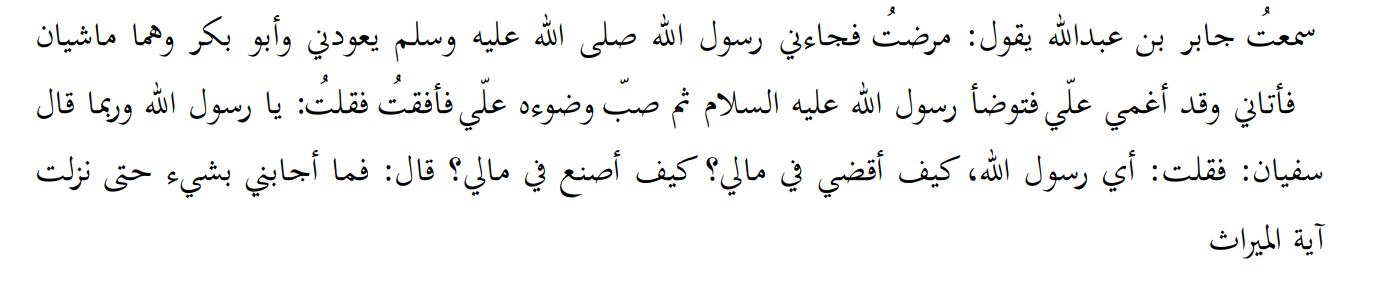
“Nilimsikia Jabir bin Abdullah akisema: Nilikuwa mgonjwa, basi Mjumbe wa Allah ﷺ akaja kunitembelea pamoja na Abu Bakr, wakitembea kwa miguu. Waliniona nikiwa nimepoteza fahamu. Mjumbe wa Allah ﷺ alitawadha kisha akamwagia maji juu yangu. Nilipozinduka nilimwambia Mjumbe wa Allah ﷺ: Ee Mjumbe wa Allah, nifanye hukumu gani juu ya mali yangu? Nifanye nini na mali yangu? Hakunijibu kabisa mpaka ikateremshwa aya ya urithi.”
“I heard Jabir bin Abdullah saying: I was ill so the Messenger of Allah (saw) came to visit me together with Abu Bakr walking. They found me when I was unconscious. The Messenger of Allah (saw) made wudhu then poured some water upon me. I woke up and said to the Messenger of Allah (saw): O Messenger of Allah, how should I judge over my wealth? What should I do with my wealth? He said: He did not answer me at all until the ayah of inheritance was revealed.”
Hii ilikuwa katika kubeba mzigo wa Unabii na Utume na kuufikisha kwa watu, ilhali katika kubeba mzigo wa utawala alikuwa akienda kwa namna tofauti. Katika Uhud alikusanya Waislamu msikitini, akashauriana kuhusu kama wapigane ndani ya Madina au nje; maoni ya wengi yalikuwa kupigana nje, ilhali maoni ya Mtume ﷺ yalikuwa kupigana ndani. Akatenda kwa kufuata maoni ya wengi, akaondoka na kupigana nje ya Madina. Vivyo hivyo, alipowahukumu watu, alikuwa akiwaonya wasimsababishe awahukumie dhidi ya haki ya mtu mwingine. Al-Bukhari amesimulia kutoka kwa Umm Salamah kuhusu Mjumbe wa Allah ﷺ kwamba alisikia mzozo mlangoni mwa nyumba yake, basi akawaendea akasema:
This was in the undertaking of the burden of Prophethood and Messengership and conveying to the people, whereas in undertaking the burden of rule he would behave differently. In Uhud he collected the Muslims in the mosque, consulted over whether to fight inside Madinah or outside; the opinion of the majority was to fight outside while the Messenger’s opinion was to fight inside. He acted upon the majority opinion, left and fought outside Madinah. Similarly when he judged between people, he would warn them from causing him to judge for them against someone else’s due right. Al-Bukhari narrated from Umm Salamah about the Messenger of Allah (saw) that he heard a dispute at the door of his house so he went to them and said:
"Mimi ni binadamu tu, na wagomvi wenye kesi za mzozo huja kwangu. Huenda mmoja wenu akawa mfasaha zaidi kuliko mwenzake katika kuwasilisha hoja yake, hivyo nikadhani kwamba yeye ni mkweli na kutoa hukumu kwa niaba yake. Ikiwa nitatoa hukumu kwa niaba ya mtu fulani kisha akachukua haki ya Muislamu kwa dhuluma, basi kile anachokichukua si chochote ila kipande cha Moto, na ni juu yake kukichukua au kukiacha."
“I am only a human being, and litigants with cases of dispute come to me, and someone of you may happen to be more eloquent (in presenting his case) than the other, whereby I may consider that he is truthful and pass a judgment in his favor. If ever I pass a judgment in favor of somebody whereby he takes a Muslim's right unjustly, then whatever he takes is nothing but a piece of Fire, and it is up to him to take or leave.”
Vivyo hivyo, alisimulia kutoka kwake kwamba yeye ﷺ alisema:
Similarly he narrated from him that he (saw) said:
"Hakika nataka kukutana na Allah ‘azza wa jalla bila mtu yeyote kunidai kwangu dhuluma niliyomtendea, iwe ni ya damu au ya mali."
“Verily I wish to meet Allah ‘azza wa jalla without anyone seeking from me an injustice I committed against him, whether in blood or money.”
Hii inaonyesha kwamba alikuwa atabeba majukumu mawili: nafasi ya Unabii na Utume, na nafasi ya kuwaongoza Waislamu duniani katika kusimamisha Shari'ah ya Allah (swt) iliyoteremshwa kwake. Angepanga utekelezaji wa kila jukumu kulingana na kile ambacho jukumu hilo lilihitaji, hivyo angeendesha moja tofauti na jingine. Alichukua kiapo cha utii cha watu katika utawala, akichukua kutoka kwa wanawake na wanaume, lakini si kutoka kwa watoto wadogo ambao bado hawajafikia balehe, jambo linalosisitiza kwamba ilikuwa ni kiapo cha utawala, si cha Unabii. Kutokana na hapa tunaona kwamba Allah (swt) hakuwahi kumkemea katika jambo lolote lililohusu kufikisha ujumbe au kubeba mzigo wake; badala yake alimwomba asihuzunike kwa sababu ya watu kushindwa kumwitikia, kwa kuwa kubeba mzigo wa ujumbe kulikuwa ni kufikisha tu; hivyo hakuwa na wajibu wowote isipokuwa kufikisha. Allah (swt) amesema:
This goes to indicate that he would undertake two roles: the position of Prophethood and Messengership, and the position of leading the Muslims in this world in establishing the Shari’ah of Allah (swt) which was revealed to him. He would dispose in undertaking each role according to what it required, so he would conduct one differently from the other. He took the pledge of the people in ruling, taking it from both women and men but not from young children who had not yet reached puberty, which emphasises that it was a pledge upon ruling not upon Prophethood. From here we find we find that Allah (swt) never censured him in anything to do with conveying the message or undertaking its burden, rather he would request him not to be troubled due to people’s failure to respond to him as the undertaking of the burden of the message was conveying alone; so there was no duty upon him except to convey. Allah (swt) said:
"Nafsi zenu zisipotee kwa kuwasikitikia (bure)" [TMQ 35:8]
"Let not your souls go out in (vainly) sighing for them" [TMQ 35:8]
Na:
And:
"Usihuzunike kwa yale wanayopanga" [TMQ 16:27]
"Do not grieve over what they are plotting" [TMQ 16:27]
Na:
And:
"Wajibu wako ni kufikisha tu" [TMQ 42:48].
"The only (duty) upon you is conveying" [TMQ 42:48].
Hata hivyo, Allah (swt) alimkemea kwa sababu ya kuchukua jukumu la kutawala, kutokana na matendo aliyoyafanya katika kutekeleza hukumu zilizoteremshwa kwake hapo awali na ambazo tayari alikwisha kuzifikisha. Allah (swt) alimkemea kwa kufanya jambo kinyume na lililo bora. Allah (swt) amesema:
However Allah (swt) censured him over his undertaking of the burden of ruling in the actions he performed in implementing rules previously revealed to him and already conveyed. Allah (swt) censured him over doing something contrary to what was better. Allah (swt) said:
"Haifai kwa Nabii yeyote kuwa na mateka wa vita mpaka awe amefanya mauaji makubwa duniani." [TMQ 8:67]
"It is not for a Prophet to have captives of war until he made great slaughter in the world" [TMQ 8:67]
Na:
And:
"Allah akusamehe! Kwa nini uliwapa ruhusa?" [TMQ 9:43].
"Allah forgive you! Why did you grant them permission?" [TMQ 9:43].
Kutokana na haya yote, ni wazi kwamba nafasi ya viongozi Waislamu katika utawala ilikuwa tofauti na nafasi ya Unabii. Kutokana na hili inadhihirika kwamba Khilafah, ambayo ni uongozi wa jumla juu ya Waislamu wote duniani, ni wadhifa wa kibinadamu si wa kimungu. Kwa kuwa ni nafasi ambayo Mtume ﷺ alikuwa akiisimamia, na ameiacha huku akiwalazimisha Waislamu kuichukua baada yake, ili aishike nafasi ya Mtume wa Allah ﷺ na awe khalifa wake katika kutawala, lakini si katika Unabii. Ni Khilafah kwa Mtume katika kuwaongoza Waislamu kutekeleza hukumu za Kiislamu na kufikisha ujumbe, si katika kupokea wahyi au kuchukua Shari'ah kutoka kwa Allah (SWT).
All this is clear that the role of leading Muslims in the rule was different from the role of Prophethood. From this it becomes clear that the Khilafah, which is the general leadership over all Muslims in the world, is a human post not a divine one. Since it is a role which the Messenger (saw) used to be in charge of and he left it while obliging that a Muslim should take it over for him so that he takes the place of the Messenger of Allah (saw) and be his Khalifah in ruling but not in Prophethood. It is a Khilafah to the Messenger in leading the Muslims to implement the Islamic rules and conveying the message not in receiving revelation or taking a Shari’ah from Allah.
Kuhusu kutokosea kwa Mtume (saw), kunatokana na kuwa yeye ni Nabii, si kwa kuwa yeye ni mtawala. Hii ni kwa sababu kutokosea ni sifa ya lazima kwa Manabii wote na Mitume wote, bila kujali kama wao wenyewe ndio waliowatawala watu kwa Sharia yao na kuitekeleza, au kama walikuwa wamewekewa mipaka ya kuifikisha tu bila kuitawala wala kuitekeleza. Bwana wetu Musa (as), Bwana wetu Isa (as) na Bwana wetu Ibrahim (as) walikuwa hawakosei, kama vile Bwana wetu Muhammad ﷺ alivyokuwa hakosei, kwa kuwa kutokosea ni kwa ajili ya Unabii na Ujumbe, si kwa ajili ya utawala. Kuhusu yeye ﷺ kutofanya kitendo chochote kilichoharamishwa wakati wa kubeba mzigo wa utawala, wala kuacha kitendo chochote cha wajibu, hili lilitokana na kutokosea kwake kuhusiana na Unabii na Ujumbe, si kuhusiana na kuwa kwake mtawala. Kwa hiyo kubeba kwake ﷺ jukumu la utawala hakukuhitaji kuwa na sifa ya kutokosea, lakini kivitendo alikuwa hakosei kwa sababu ya kuwa Nabii na Mtume. Kwa msingi huo, angebeba jukumu la utawala kwa maelezo yake kama binadamu anayewatawala binadamu wenzake. Qur’an imekuja ikisema wazi kwamba yeye ni binadamu. Allah (swt) amesema:
As for the Messenger (saw)’s infallibility, it comes from his being a Prophet not from his being a ruler. This is because infallibility is an obligatory attribute for all Prophets and Messengers, irrespective of whether they themselves were the ones to rule over people by their Shari’ah and implement it or whether they were merely restricted to conveying it without ruling with it or implementing it. Our master Musa (as), our master Isa (as) and our master Ibrahim (as) were infallible just like our master Muhammad (saw) was infallible as the infallibility is for Prophethood and the Message not the rule. As for his (saw) not doing any haram action during his undertaking the burden of ruling nor leaving any obligatory action, this came from his being infallible in relation to Prophethood and the Message not in relation to his being a ruler. So his (saw) undertaking the rule did not require his being characterised with infallibility, but practically he was infallible due to his being a Prophet and Messenger. Accordingly, he would undertake the rule in his description as a human being ruling over human beings. The Qur’an has come explicitly stating that he is a human being. Allah (swt) said:
Sema: "Hakika mimi ni binadamu tu kama nyinyi." [TMQ 18:110]
"Say: Verily I am only a human similar to you" [TMQ 18:110]
Kisha ikafafanua kumtofautisha yeye na watu wengine wote (kwa kusema):
Then it clarified distinguishing him from the rest of humanity (by saying):
"Imefunuliwa kwangu" [TMQ 6:50].
"It has been revealed to me" [TMQ 6:50].
Tofauti yake na watu wengine ni kwamba yeye amefunuliwa wahyi, yaani katika Utume. Mbali na hilo, yeye ni binadamu kama watu wengine. Basi katika utawala ni binadamu kama watu wengine, hivyo yeyote atakayekuwa Khalifah baada yake bila shaka atakuwa binadamu kama watu wengine, kwa kuwa ni Khalifah wake katika utawala, si katika Utume wala katika Ujumbe. Kwa hiyo, kutokuwa na makosa (infallibility) si sharti kwake, kwa kuwa si miongoni mwa mambo yanayohitaji kutokuwa na makosa, ambayo ni Utume pekee unaohitaji hilo. Yeye ni mtawala tu, si zaidi ya hapo, kwa hiyo hakuna nafasi ya kudai kutokuwa na makosa kwa wale wanaosimamia jambo hilo. Kwa kweli, haifai kudai kutokuwa na makosa kwa anayeshika wadhifa huo, kwa kuwa kutokuwa na makosa kumehusishwa na Manabii, na hairuhusiwi kwa wasiokuwa Manabii, kwani kuwepo kwake kwa Nabii na Mtume ﷺ kunahitajika kwa ajili ya kufikisha ujumbe. Hivyo ni kutokuwa na makosa katika kufikisha ujumbe, na kupata kutokuwa na makosa katika kutofanya haramu hufuata kwa kawaida kutokuwa na makosa katika kufikisha, kwani kutokuwa na makosa katika kufikisha hakuwezi kukamilika isipokuwa kwa kutokuwa na makosa katika kutofanya haramu. Jambo linalohitaji hilo ni kufikisha ujumbe. The Islamic Personality Vol 2 95
The distinction from the rest of humanity is that he is revealed to i.e. in the Prophethood. Apart from that he is a human like the rest of mankind. So he is in the rule a human like other people so whoever becomes Khalifah after him would doubtless be a human being like the rest of the people since he is his Khalifah in the rule not in Prophethood or the Message. Therefore infallibility is not a condition for it since it is not one of the matters which require infallibility which is only required for Prophethood. He is a ruler, nothing else, so there is no place for requiring infallibility for those who are in charge of it. In fact, it is not allowed to require infallibility for the one undertaking it as infallibility is restricted to Prophets and it is not allowed for other than Prophets as its existence for the Prophet and Messenger (saw) is required for conveyance. So it is infallibility in conveyance and its acquirement in never performing a haram naturally follows the infallibility in conveyance as the infallibility in the latter cannot be complete save with the infallibility from performing haram. The matter which requires it is the conveyance, The Islamic Personality Vol 2 95
si imani za watu wala kutokuamini kwao, wala kosa la vitendo au kutokuwepo kwake; bali jambo linalohitaji hilo ni kufikisha ujumbe, wala si kingine. Hii ni kwa sababu, asingekuwa amehifadhiwa kutokana na makosa kutoka kwa Allah (SWT), ingewezekana kwake kuficha ujumbe, kuongeza au kupunguza ndani yake, kumsingizia Allah uongo kwa kusema alichokisema asichokisema, au kukosea na kufikisha kingine tofauti na alichoamriwa kufikisha. Yote haya yamekanushwa katika ujumbe kutoka kwa Allah (SWT), na yamekanushwa katika kuwa kwake Mtume ambaye ni lazima aaminiwe. Basi ni lazima Mtume ashifiwe kwa kutokuwa na makosa katika kufikisha ujumbe, na hivyo kutokuwa na makosa katika kufanya haramu kunakuja kwa kawaida kutokana na hili. Kwa sababu hii, wanazuoni walitofautiana kuhusu kutokuwa na makosa kwa Manabii katika kufanya haramu; baadhi walisema yeye amehifadhiwa kutokana na kufanya madhambi makubwa (kabair) pekee, na madhambi madogo (saghair) yanakubalika kutoka kwake, huku wengine wakisema amehifadhiwa kutokana na kufanya madhambi makubwa na madogo. Walisema hivyo kulingana na kama vitendo hivyo vinategemea kukamilika kwa ufikishaji au la. Ikiwa kukamilika kwa ufikishaji kunategemea vitendo hivyo, basi kutokuwa na makosa katika ufikishaji kunavihusu, hivyo Mtume anakuwa amehifadhiwa kutokana navyo ﷺ, kwani ufikishaji hautimii isipokuwa kwa yeye kuwa amehifadhiwa kutokana navyo. Ama ikiwa kukamilika kwa ufikishaji hakutegemei vitendo hivyo, basi kutokuwa na makosa hakuvihusu, hivyo yeye hajahifadhiwa kutokana navyo kwa kuwa ufikishaji unatimia bila hivyo. Kwa msingi huo, hakuna tofauti miongoni mwa Waislamu kwamba Mtume ﷺ hajahifadhiwa katika kutenda vitendo vinavyopingana na lililo bora zaidi, kwa kuwa ufikishaji wa ujumbe hautegemei vitendo hivyo. Hivyo basi, kutokuwa na makosa kunahusu ufikishaji pekee, na kwa hiyo hakupatikani isipokuwa kwa Manabii na Mitume, wala hakuwezekani kwa yeyote asiyekuwa wao.
Hakika ushahidi wa kutokuwa na makosa (ismah) ni wa kiakili na si wa kimaandiko, kwani hakuna matini yoyote ya Shari'ah, iwe ni matini wazi katika Qur'an au katika Hadith, inayothibitisha kuwepo kwa kutokuwa na makosa kwa mtu yeyote, awe ni Manabii, Mitume au wengineo. Kuhusu kauli ya Allah:
Verily the evidence for infallibility is rational not textual as there has not come any Shari’ah texts, whether a clear text in the Qur’an or Hadith, upon the existence of infallibility for anyone whether the Prophets, the Messengers or others. As for Allah’s statement:
"Hakika Allah anataka tu kuwaondolea uchafu (rijs) ninyi watu wa nyumbani, na kukutakaseni kikamilifu" [TMQ 33:33],
"Verily, Allah only intends to remove filth (rijs) from you, the family of the house, and purify you completely" [TMQ 33:33],
Maana yake ni kwamba Yeye (SWT) anakusudia kuondoa kwenu shaka yoyote na tuhuma. Aya hii ni sehemu moja kati ya aya tatu. Allah (SWT) amesema:
Its meaning is that He intends to remove from you any doubt and accusation. This ayah is a piece among three ayat. Allah (swt) said:
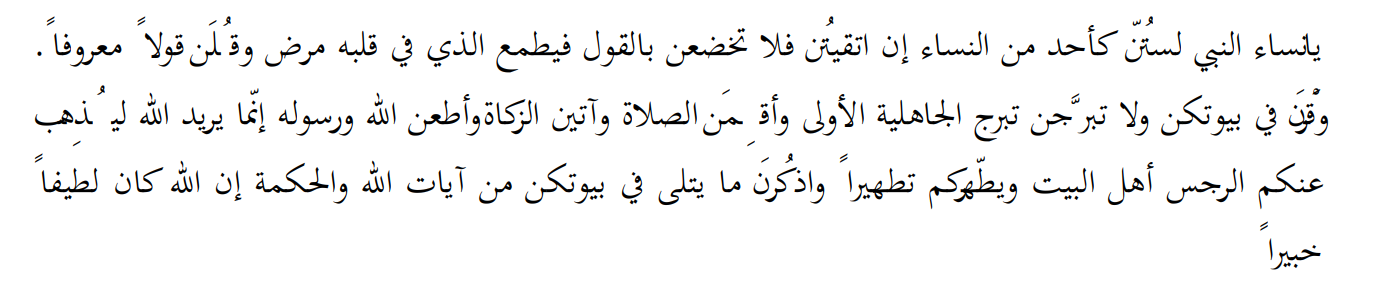
"Enyi wake wa Nabii, nyinyi si kama wanawake wengine. Ikiwa mnamchá (Allah), basi msiwe na upole wa maneno kiasi kwamba yule aliye na ugonjwa moyoni aseme kwa tamaa, bali semeni kauli iliyo ya haki. Kaeni kimya majumbani mwenu, wala msijionyeshe kwa mapambo kama ya zama za ujinga za kwanza. Simamisheni swala, toeni zakat, na mtiini Allah na Mtume Wake. Hakika Allah anataka tu kuwaondolea uchafu, enyi watu wa nyumba, na kuwatakasa kikamilifu. Kumbukeni yanayosomwa majumbani mwenu katika Aya za Allah na Hekima. Hakika Allah ni Mpole, Mwenye kujua yote" [TMQ 33:32-34].
"O wives of the Prophet, you are not like any other woman. If you fear (Allah) then be not too complaisant of speech lest one in whose heart is a disease should be moved with desire but speak a speech (that is) just. And stay quietly in your houses and make not a dazzling display like that of the former times of ignorance, and establish prayer and give the zakat and obey Allah and His Messenger. Verily Allah only wishes to remove filth from you, O family of the house, and purify you completely. And remember what is recited in your homes of the signs of Allah and the Wisdom. Verily Allah is Courteous, All-Knowing" [TMQ 33:32-34].
Hakuna uhusiano wowote kabisa kati ya aya hii na kutokuwa na makosa (infallibility). Haiwezekani kuelewa kutoka kwa kauli Yake "kukuondolea uchafu" kwamba maana yake ni kukufanya usiwe na makosa. Badala yake, kuondoa uchafu ni kuondoa kila aina ya uchafu, na maana hapa ni uchafu wa kimafumbo, yaani shaka na tuhuma, kama ilivyo wazi kabisa kutoka katika sentensi zilizotangulia sentensi hii katika aya mbili. Utakaso hapa ni kusafishwa na shaka na tuhuma, kwa sababu maana za neno uchafu (rijs) ni uchafu wa kimwili, uchafu wa kimafumbo, na hata adhabu, kama lilivyokuja katika Qur'an kwa maana hizo. Allah (SWT) amesema:
There is no relationship between this ayah and infallibility in any way whatsoever. It is not possible to understand from His statement “to remove filth from you” i.e. to make you infallible. Rather the removing of filth is the removing of all dirt and the meaning here is metaphorical filth i.e. doubt and suspicion as is explicitly clear in the sentences before this sentence in the two ayat. The purification here is cleansing from doubt and suspicion because the meaning(s) of the word filth is material filth, metaphorical filth and even punishment as it has come in the Qur’an with these meanings. Allah (swt) said:
Jiepusheni na uchafu wa masanamu [TMQ 22:30]
"Avoid the filth of the idols" [TMQ 22:30]
Na:
And:
Vivyo hivyo Allah huweka uchafu juu ya wale wasioamini. {TMQ 6:125}
"Similarly does Allah ordain the filth upon those who do not believe" [TMQ 6:125].
Katika aya hizi mbili, uchafu ni uchafu wa kimafumbo. Na Allah (SWT) amesema:
In these two ayat, filth is metaphorical filth. And Allah (swt) said:
Au nyama ya nguruwe kwani hakika ni najisi. [TMQ 22:30]
"Or the meat of pig for verily it is filth" [TMQ 22:30]
yaani najisi ya kiibada maana yake ni uchafu wa kimwili. Na Allah (SWT) amesema:
i.e. ritual impurity meaning physical filth. And Allah (swt) said:
Hivyo ndivyo Allah anavyoweka ghadhabu juu ya wale wasioamini. {Hivyo ndivyo Allah anavyoweka ghadhabu juu ya wale wasioamini}
"Thus Allâh puts the wrath on those who believe not" [TMQ 6:125].
Kauli Yake "kuondoa uchafu kutoka kwenu" inamaanisha kuondoa uchafu wa kimafumbo, yaani shaka. Kuhusu kauli Yake "na kuwatakasa kikamilifu", neno yutahirukum (kuwatakasa) na neno utakaso (tatheer) halijawahi kumaanisha kutokosea, si katika lugha, si katika Qur'ani, wala katika Hadithi. Katika lugha, kutakasa (tahara) kitu, utakaso (tatheer) maana yake ni kuondoa uchafu kutoka kwake, na mwanamke yu msafi (tahir) kutokana na hedhi, na (tahira) kutokana na uchafu na kasoro, na (tahara) katika Shari'a ni kuondoa hadath. Ash-Shaari' amesema:
So His statement in the ayah “to remove the filth from you” means to remove metaphorical filth i.e. suspicion. As for His saying: “And purify you completely” verily the word yutahirukum (to purify you) and the word purification never came with the meaning of infallibility, neither in the language, Qur’an or the Hadith. In the language, to purify (tahara) something purification (tatheera) means to remove impurity from it, and the woman is pure (tahir) from menstruation and (tahira) from impurity and defects, and (tahara) in the Shar’a is removing the (hadath). He (saw) said:
"Allah hakubali sala bila twahara (tuhur)."
“Allah does not accept prayer without purity (tuhur)”
Na imekuja katika Qur'ani kwa maana hii. Allah (SWT) amesema:
And it has come in the Qur’an with this meaning. Allah (swt) said:
"Na itakase nguo yako" [TMQ 74:4]
"And purify your garment" [TMQ 74:4]
Na:
And:
Maji ili mpate kujitakasa kwayo [TMQ 8:11]
"Water so that you may be purified by it" [TMQ 8:11]
Na:
And:
Msiwakaribie mpaka wajitakase. [TMQ 2:222]
Do not approach them until they purify themselves [TMQ 2:222]
"Akakuchagua na kukutakasa" [TMQ 3:42
"Chose you and purified you" [TMQ 3:42
yaani kutokana na makosa na pia:
i.e. from faults and also:
"Na ikiwa mmejawa na janaba basi jitakaseni." [TMQ 5:6]
"And if you are (junub) then purify yourselves" [TMQ 5:6]
Yaani kutokana na najisi. Utakaso wa waumini pia ulikuja pale Allah (SWT) alipoyasema:
I.e from the impurity. The purification of the believers also came when Allah (swt) said:
"Allah hataki kukutia uzito (haraj), bali anataka kukutakasa na kukamilisha neema yake juu yako" [TMQ 5:6].
"Allah does not wish to make difficulty (haraj) for you but rather He wishes to purify you and complete His blessing upon you" [TMQ 5:6].
Maandishi haya yote yanabainisha kwamba maana ya aya ni kwamba Allah (SWT) aliwatakasa kutoka kwenye shaka na dhana mbaya, na yanakanusha kwamba maana yake ni kutokuwa na makosa (ismah). Kwa hiyo aya hiyo haionyeshi kutokuwa na makosa.
All these texts specify that the meaning of the ayah is that Allah (swt) cleansed them from doubt and suspicion, and negates that its meaning is infallibility hence the ayah does not indicate infallibility.
Kwa hiyo hakuna ushahidi wa kimaandiko kwa ajili ya kuwepo kwa kutokuwa na makosa kwa mtu yeyote; kuna ushahidi wa kiakili tu juu yake. Akili ndiyo inayolazimisha kuwepo kwa kutokuwa na makosa katika kufikisha ujumbe kwa Nabii na Mtume, kwa kuwa kuwa kwake Nabii na Mtume kunahitaji awe asiye na makosa, vinginevyo hawezi kuwa Nabii wala Mtume. Akili ndiyo inayolazimisha kwamba mtu ambaye hajapewa jukumu la kufikisha ujumbe kutoka kwa Allah (swt) haruhusiwi kuwa asiye na makosa, kwa kuwa yeye ni binadamu, na maumbile (fitra) aliyoumbwa nayo Allah (swt) ni kwamba kosa na usahaulifu vinamtokea. Na mradi hajapewa jukumu la ujumbe kutoka kwa Allah (swt), maana yake ni kwamba hakuna kinachohitaji awe asiye na makosa. Ikidaiwa kwamba yeye ni asiye na makosa, maana yake ni kwamba amepewa jukumu la ujumbe kutoka kwa Allah, jambo ambalo haliruhusiwi kwa kuwa hakuna Nabii baada ya Muhammad, Mtume wa Allah ﷺ. Allah (swt) amesema:
Therefore there is no textual evidence for the existence of infallibility for anyone; there is only rational proof for it. The mind is what compels that there be infallibility in conveyance for the Prophet and Messenger as his being a Prophet and Messenger requires that he be infallible otherwise he cannot be a Prophet or Messenger. The mind is the one which compels that one not given the responsibility to convey a message from Allah (swt) is not allowed to be infallible as he is a human being, and his nature (fitra) with which Allah (swt) created him is that error and forgetfulness occur in him. And as long as he is not given responsibility with a message from Allah (swt), this means there is nothing which requires that he be infallible. If it is claimed that he is infallible, then this means that he is responsible with a message from Allah which is not permitted since there is no Prophet after Muhammad, the Messenger of Allah (saw). Allah (swt) said:
"Lakini yeye ni Mtume wa Mwenyezi Mungu na mhitimishaji wa Manabii" [TMQ 33:40].
" But he is the Messenger of Allah and seal of the Prophets" [TMQ 33:40].
Kudai infallibility kunamaanisha kudai Utume, kwa kuwa Mtume ni mfikishaji kutoka kwa Allah, na ndani yake kuna, kutokana na sifa zake kama binadamu, uwezekano wa kosa na upotofu katika kufikisha kutoka kwa Allah. Kulinda ujumbe wa Allah dhidi ya kosa na mabadiliko katika kuufikisha kunahitaji Mtume awe mwenye kinga dhidi ya kosa na upotofu. Kwa sababu hii pekee, kutokuwa na kosa ni sifa ya Mtume, na yeye peke yake ndiye anayehitaji kutokuwa na kosa. Ikiwa inadaiwa kwa mtu mwingine yeyote, huku ikijulikana kwamba jambo pekee linalohitaji hilo ni kufikisha ujumbe wa Allah, basi ni sawa na kudai kwa mtu huyo mwingine kile kinachohitaji kutokuwa na kosa na sababu yake, yaani kufikisha ujumbe. Hivyo ingekuwa ni kudai kwamba yeye ana wajibu wa kufikisha ujumbe kutoka kwa Allah (swt). Kwa hiyo, haifai kuhitaji kutokuwa na kosa kwa Khalifah, kwa kuwa kuhitaji hilo kunamaanisha kwamba yeye ana wajibu wa kufikisha ujumbe kutoka kwa Allah (swt), na hivyo kumfanya awe mwenye kutokuwa na kosa, jambo ambalo haliruhusiwi.
Claiming infallibility means claiming Messengership since the Messenger is a conveyor from Allah, and there is within him due to his attributes as a human being the potential of error and misguidance in conveying from Allah, protecting the message of Allah from error and change in the conveyance requires that the Messenger be infallible from error and misguidance. For this reason alone, infallibility is an attribute of the Messenger and it alone requires infallibility. If it is claimed for anyone other than him while being known that the only matter requiring it is conveying the message from Allah then it is equivalent to claiming for this other person what requires infallibility and its cause i.e. conveying the message. Thus it would be claiming that he is responsible to convey a message from Allah (swt). Therefore it is not allowed to require infallibility for the Khalifah as requiring it means that he is responsible to convey a message from Allah (swt) thus requiring him to be infallible, and this is not permitted.
Hii inaonyesha wazi kwamba Khalifa ni binadamu anayeweza kukosea au kuwa sahihi, na inaruhusiwa kutokea kwake yale yanayotokea kwa binadamu yeyote ya uzembe na usahaulifu, uongo, udanganyifu, dhambi kwa kuwa yeye ni binadamu na si Nabii wala Mtume. Mtume ﷺ alieleza kwamba inawezekana Imamu kukosea, na alieleza kwamba inaweza kutokea kwake yale yatakayosababisha watu kumchukia na kumlaani kutokana na dhulma, dhambi n.k. Alieleza hata kwamba kufuru dhahiri inaweza kutokea kwake. Muslim amesimulia: Zuhayr bin Harb ametuambia kwamba Shababa ametuambia kwamba Warqa ameniambia kutoka kwa Abu Zayyad kutoka kwa Al-‘Araj kutoka kwa Abu Hurayra kutoka kwa Mtume ﷺ, ambaye alisema:
This makes it clear that the Khalifah is a human being who can make a mistake or be correct, and it is allowed to occur from him what occurs from any human being of neglect and forgetfulness, falsehood, treachery, sins as he is a human being and not a Prophet or Messenger. The Messenger (saw) informed that it is possible for the Imam to err, and he informed that it may occur from him what may cause people the hate him and curse him due to injustice, sins etc. He even informed that clear disbelief may occur from him. Muslim narrated: Zuhayr bin Harb related to me that Shababa related to us that Warqa related to me from Aby Zayyad from Al- ‘Araj from Abu Hurayray from the Prophet (saw) who said:
Kwa hakika Imamu ni ngao ambayo nyuma yake watu hupigana na ambaye kwa yeye hulindwa. Akiamrisha kwa kumcha Mwenyezi Mungu (taqwa) Azza wa Jalla na akatenda haki, basi atapata thawabu kwa hilo. Na akiamrisha kwa jingine tofauti na hilo, basi atapata dhambi ya aina hiyo hiyo.
“Verily the Imam is a shield from behind whom they fight and by whom they are protected. If he commanded with the fear (taqwa) of Allah ‘azza wa jalla and does justice then there is reward for that for him. If he commands with other than that, then there is the same against him.”
Hii inamaanisha kwamba Imamu si mwenye kulindwa na makosa, na inawezekana kwake kuamuru jambo lisilokuwa la kumcha Allah. Muslim pia amesimulia: Uthman bin Abi Sheeba alitusimulia kwamba Jareer alitusimulia kutoka kwa Al-‘Amash kutoka kwa Zayd bin Wahhab kutoka kwa Abdullah aliyesema: Mtume wa Allah ﷺ alisema:
This means that the Imam is not infallible and it is possible for him to command other than the fear of Allah. Muslim also narrated: Uthman bin Abi Sheeba related to us that Jareer related to us from Al-‘Amash from Zayd bin Wahhab from Abdullah who said: The Messenger of Allah (saw) said:
Hakika baada yangu patakuwepo upendeleo usiofaa na mambo mtakayoyakataa. Wakasema: Ee Mjumbe wa Allah, ututake nini mmoja wetu itakapomfikia hayo? Akasema: Timizeni haki zilizo juu yenu, na mwombe Allah yale yaliyo haki yenu.ﷺ
“Verily there will be after me some improper preferences and matters which you will reject. They said: O Messenger of Allah, what would you command anyone of us when that reaches him? He said: Fulfill the rights due from you and ask Allah (for) what is due to you.”
Muslim ameeleta: Ishaq bin Ibrahim Al-Handhalee alituhadithia kwamba Isa bin Yunus alitujulisha kwamba Al-Awza'i alimhadithia kutoka kwa Zayd bin Yazid bin Jabir, kutoka kwa Zareeq bin Hayyan, kutoka kwa Muslim bin Qurta, kutoka kwa 'Awf bin Malik, kutoka kwa Mtume wa Allah ﷺ, ambaye alisema:
Muslim narrated: Ishaq bin Ibrahim Al-Handhalee related to us that Isa bin Yunus informed us that Al-Awza’i related to us from Zayd bin Yazid bin Jabir from Zareeq bin Hayyan from Muslim bin Qurta from ‘Awf bin Malik from the Messenger of Allah (saw) who said:
"Viongozi bora kabisa miongoni mwenu ni wale mnaowapenda nao wanawapenda, mnaowaombea baraka za Mwenyezi Mungu nao wanawaombea baraka zake. Na viongozi waovu kabisa miongoni mwenu ni wale mnaowachukia nao wanawachukia, mnaowalaani nao wanawalaani." Wakaulizwa (na waliokuwepo): "Je, tusiwapindue kwa upanga?" Akasema: "Hapana, mradi wanasimamisha Sala miongoni mwenu. Mkiona kitu cha chuki kwao, chukieni matendo yao, lakini msijitoe katika utiifu wao."
“The best of your rulers are those whom you love and who love you, who invoke God's blessings upon you and you invoke His blessings upon them. And the worst of your rulers are those whom you hate and who hate you and whom you curse and who curse you. It was asked (by those present): Shouldn't we overthrow them with the help of the sword? He said: No, as long as they establish prayer among you. If you then find anything detestable in them. You should hate their administration, but do not withdraw yourselves from their obedience.”
Al-Bukhari alisimulia: “Ismail alitusimulia kwamba Bin Wahhab alinisimulia kutoka kwa Amru kutoka kwa Bukayr kutoka kwa Busr bin Said kutoka kwa Junada bin Abu Umayyah ambaye alisema: Tuliingia kwa ‘Ubadah bin As-Samit aliyekuwa mgonjwa, nasi tukasema: Allah akuponye. Tusimulie hadithi uliyoisikia kutoka kwa Mtume ﷺ ambayo Allah atakusaidia kwayo. Akasema:
Al-Bukhari narrated: “Ismail related to us that Bin Wahhab related to me from Amru from Bukayr from Busr bin Said from Junada bin Abu Umayyah who said: We entered to ‘Ubadah bin As-Samit who was ill and we said: May Allah improve you. Relate to us a hadith which you heard from the Prophet by which Allah will help you. He said:
Nabii ﷺ alituita, basi tukamwapia kiapo cha utii. Akasema katika yale aliyotuchukulia ahadi: kwamba tutamsikiliza na kumtii katika yale yanayotupendeza na yale tunayoyachukia, katika shida na wepesi, na wakati wengine wanapopewa upendeleo juu yetu, na kwamba hatutagombana na wenye mamlaka juu ya uongozi. (Akasema): Isipokuwa mtakapoona ukafiri wa wazi ambao mna uthibitisho wa wazi (sultani) kutoka kwa Allah.
“The Prophet (saw) called us so we gave him a pledge. So he said in what we took from us that we pledged him to hear and obey in what attracts us and what we hate, in hardship and ease, and when others are preferred over us and that we do not dispute the rule with those in authority (He said): Unless you see clear disbelief (kufr bawah) upon which you have from Allah a clear proof (sultan).”
Na kutoka kwa Aisha, aliyesema: "Mtume wa Allah ﷺ alisema:
And from Aisha who said: “The Messenger of Allah (saw) said:
"Epuka adhabu za kisheria kutoka kwa Waislamu kadiri uwezavyo; ikiwa anayo njia ya kutoka, mwache aende na njia yake, kwani kosa la Imamu katika kusamehe ni bora kuliko kosa lake katika kuadhibu."
" Avert the legal penalties from the Muslims as much as possible, if he has a way out then leave him to his way, for if the Imam makes a mistake in forgiving it would be better than making mistake in punishment.”
Tirmidhi amesimulia hadith hii, ambayo inadhihirisha wazi kwamba Imamu anaweza kukosea, kusahau na kutenda dhambi. Pamoja na hayo, Mtume ﷺ ameamuru kuendelea kumtii mradi anatawala kwa Uislamu, na kufuru iliyo wazi haijatokea kutoka kwake, na hajaamuru dhambi. Baada ya habari ya Mtume ﷺ kuhusu Khulafaa kwamba zitakuwepo tabia ambazo Waislamu watazichukia, lakini bado aliamuru utiifu, je, baada ya hayo kuna uwezekano wowote wa kusema kwamba Khalifah lazima awe asiye na makosa, na kwamba haifai kwake yale yanayoruhusiwa kwa binadamu? Hili ni sehemu ya uhalisia wa Khalifah kuhusiana na kukosekana kwa sharti la kutokuwa na makosa, bali hata kukosekana kwa ruhusa ya kulifanya kuwa sharti. Hata hivyo, wale waliosema kwamba ni lazima Khalifah awe asiye na makosa wameleta ushahidi kwa msimamo wao, kwa hiyo ni lazima tuchunguze na kufafanua yaliyomo ndani yake. Ushahidi huu umefupishwa katika dalili nne.
Tirmidhi narrated this hadith which is clear that the Imam can err, forget and sin. Despite that, the Messenger (saw) commanded to continue obeying him as long as he rules by Islam and clear disbelief has not occurred from him and he has not commanded with sin. After the news of the Messenger (saw) about the Khulafaa that there will be some which the Muslims will dislike yet he commanded obedience, is there after that any possibility of saying that the Khalifah must be infallible and that it is not permitted from him what is permitted from human beings? This is from the reality of the Khalifah in relation to the absence of the condition of infallibility, rather even the absence of permission to even make it a condition. However, those who said it is required that the Khalifah be infallible have presented evidences for their view, so we must examine and clarify what is within them. These evidences are summarised in four evidences:
1. Imamu anasimama mahali pa Mtume katika kulinda Shari'ah, kuifikisha na kuifundisha, kusimamia mambo ya raia, kuanzisha haki miongoni mwao, kuwasaidia wanaodhulumiwa, kutekeleza adhabu zilizowekwa na Uislamu (hudood) na adhabu za hiari (ta'zeer), na kutekeleza Uislamu kwa njia ya Shari'ah. Kwa hiyo ni lazima awe asiyekosea na asiye na maovu yote, makubwa au madogo, yawe yametendeka kwa makusudi au kwa kusahau, tangu mwanzo wa maisha yake hadi mwisho wake.
1. The Imam stands in the position of the Messenger in preserving the Shari’ah , conveying and teaching it, supervising the citizens’ affairs, establishing justice among them, assisting the oppressed, establishing the mandatory Islamic punishments (hudood) and discretionary punishments (ta’zeer) and implementing Islam in the Shari’ah way. Therefore it is inevitable that he be infallible and pure from all evil, large or small, whether they occurred deliberately or through forgetfulness, from the beginning of his life to the end.
"Ahadi yangu haihusu wadhalimu" [TMQ 2:124]
"My promise does not include the oppressors" [TMQ 2:124]
Kauli ya Allah (swt) ni ushahidi wa wajibu wa kuwepo kwa Imamu asiyekosea, ambaye ni mlinzi wa Shari'ah. Aya hii iko katika Surat Al-Baqarah. Allah (swt) amesema:
The statement from Allah (swt) is an evidence upon the obligation of an infallible Imam who is a protector of Shari’ah. This ayah is in Surah Al-Baqarah. Allah (swt) said:
Na Ibrahim alipojaribiwa na Mola wake kwa maneno fulani, akayatimiza. Akasema: Hakika nitakufanya kuwa Imamu kwa watu. Akasema: Na katika kizazi changu? Akasema: Ahadi yangu haitawafikia madhalimu. [TMQ 2:124]
"And when Ibrahim was tested by his Lord with certain words which he fulfilled. He said: I will make you an Imam for the people. He said: And of my offspring? He said: My promise will not reach the oppressors" [TMQ 2:124].
Maneno "making him" ni yale yanayomfanya kuwa Imamu, kama aya inayofuata aya hii inavyoonyesha. Ibrahimu aliposikia kauli ya Allah:
The words making him are those making him an Imam as the ayah coming after this ayah give sense to. When Ibrahim heard Allah’s statement:
Hakika nitakufanya kuwa Imamu kwa watu. [TMQ 2:124]
"Verily I will make you an Imam for the people" [TMQ 2:124]
Na akaona ukubwa wa cheo hiki cha heshima; alitamani wazao wake wawe na sehemu yake. Basi Allah (SWT) akasema:
And saw the greatness of this honourable post; he hoped that his descendants would have a share of it. So Allah (swt) said:
"Ahadi yangu haiwafikii madhalimu" [TMQ 2:124].
"My promise does not reach the oppressors" [TMQ 2:124].
Maana yake ni kwamba wadhifa huu hautapewa mtu aliye na kasoro au ambaye atatiwa doa la dhulma, jambo ambalo ni pana zaidi kuliko kuangalia kama huyu ni dhalimu kwa nafsi yake mwenyewe au kwa mtu mwingine, hata kwa muda mfupi tu maishani mwake. Bali wadhifa huo utapewa mtu ambaye hafanyi dhulma yoyote maishani mwake.
Its meaning is that this post will not be given to someone who is blemished or will become stained with injustice, which is more general than whether this one is unjust to his own soul or someone else even if only for a short time in his life. Rather it is given to someone who does not do any injustice in his life.
b) Mwenyezi Mungu (SWT) amesema:
b) Allah (swt) said:
"Je, yule anayeongoza kwenye Haki ana haki zaidi ya kufuatwa, au yule asiyeweza kuongoza isipokuwa aongozwe?" [TMQ 10:35].
"Is the one guided to the Truth of more right to be followed or the one who does not guide unless he is guided?" [TMQ 10:35].
Hii ni dalili ya wajibu wa kuwa Imamu asiye na kosa (ma'soum), kwa kuwa yeye huongoza kwenye ukweli, na yule ambaye kosa linawezekana kwake hawezi kuongoza kwake, ingawa inaweza kutokea kwamba yeye akafikia ukweli.
This is an evidence for the obligation of the infallibility of the Imam as he guides to the truth, and the one from whom an error is possible does not guide to it though it may happen that he achieves the truth.
c) Allah (SWT) amesema:
c) Allah (swt) said:
"Mtiini Mwenyezi Mungu na mtiini Mtume na wenye mamlaka miongoni mwenu" [TMQ 4:59].
"Obey Allah and obey the Messenger and those in authority among you" [TMQ 4:59].
Aya hii ni ushahidi wa kutokosea (infallibility) kwa wenye mamlaka, yaani kutokosea kwa Imamu, kwa sababu Allah (SWT) ameamuru utii kwa wenye mamlaka bila kizuizi, bila kubainisha utii kwa mtu maalum au kwa kipindi maalum. Hii inalazimu kwamba anayetiiwa awe asiyekosea, kwa kuwa mtu anayekosea anaweza kuamuru jambo lenye dhambi na makosa. Ikiwa utii wake ungekuwa wa lazima wakati hali yake ni hiyo, ilhali kitendo hicho ni haramu, basi inalazimu kwamba Mola ambaye jambo lake ni tukufu ameamuru kuunganisha mambo mawili yaliyo kinyume au yanayopingana, jambo ambalo haliwezekani. Basi anayetiiwa lazima awe asiyekosea. Pia, Allah (SWT) amefungamanisha utii kwa wenye mamlaka na utii kwa Mtume (SWT) ﷺ, ambaye utii wake umefungamanishwa na utii Wake (SWT), na hili linahitaji utukufu. Wale wanaokusudiwa kuwa wenye mamlaka hapa ni Maimamu wasiokosea. Haya ndiyo ushahidi wa wanaosema kwamba ni sharti Imamu awe asiyekosea. Jibu la kila moja la hoja hizi limefupishwa kama ifuatavyo.
This ayah is an evidence for the infallibility of those in authority i.e. infallibility of the Imam, because Allah (swt) commanded the obedience of those in authority in an unrestricted manner without specifying the obedience for a specific or period. This requires that the obeyed one is infallible as a fallible one can command with sin and error. If his obedience was obliged while this is (his) situation though it is forbidden, this obliges that the Lord whose matter is glorified has commanded to combine two opposites or contradictory matters which is impossible. The obeyed one must be infallible. Also, Allah (swt) linked obedience to those in authority with obedience to the Messenger (saw) whose obedience is linked to His (swt) obedience which requires exaltation. Those meant in authority here are the infallible Imams. These are the evidences of those who say that it is a condition that the Imam be infallible. The response to each one of this is summarised in the following:
Kwanza: Khalifah anachukua nafasi ya Mtume katika utawala kwa kutekeleza Shari'ah, si kuifikisha kutoka kwa Allah (swt); yeye ni Khalifah wake (saw) katika utawala, si katika kufikisha kutoka kwa Allah (swt). Hili halimlazimu kuwa asiyekosea, kwa kuwa ofisi ya utawala haihitaji kutokukosea, iwe kwa mantiki au kwa Shari'ah. Ni kweli kuwa kuna sifa fulani zinazohitajika kwa Khalifah, nazo ni: Uislamu, kuwa mwanaume, kuwa huru (si mtumwa), kubaleghe (yaani kufikia umri wa kuwa mtu mzima), akili timamu, uadilifu na uwezo. Kila moja ya sifa hizi imehitajika kwa msingi wa dalili ambazo Shari'ah imekuja nazo. Hata hivyo, kuhitajika kwa masharti haya hakumaanishi kwamba Khalifah hana uwezekano wa kuvunja masharti hayo; bali yanamaanisha kwamba anayesimamia wadhifa huu analazimika kuwa na sifa hizi wakati anapoteuliwa, si kwamba hawezi kuzipoteza. Inawezekana kwake kuzipoteza, na katika hali hiyo either anastahili kuondolewa au anaacha Khilafah (yaani hadumu tena kuwa Khalifah). Kuhitaji sifa hizi kwa Khalifah ni kama kuhitaji uadilifu kwa shahidi kuhusiana na maelezo yake ili kukubali ushahidi wake; hii haimaanishi kumtaka asiyekosea kuvunja sifa hiyo. Kwa hiyo nafasi ya Khalifah mahali pa Mtume katika utawala si ushahidi kwamba lazima awe asiyekosea. Kuhusu kufikisha Shari'ah kunakofanywa na Waislamu, hiyo si kufikisha kutoka kwa Allah (swt). Bali ni kutekeleza alichodai Allah (swt) kutoka kwa Waislamu, yaani kubeba da'wah kwa wanadamu, kuwafundisha fikra za Uislamu na sheria zake, na haiwezi kamwe kumaanisha kitu kingine zaidi ya hicho. Si kufikisha kutoka kwa Allah (swt); bali ni mojawapo ya majukumu ambayo Mtume (saw) alikuja nayo, na haifanani na kufikisha kwa Mtume (saw) kutoka kwa Allah (swt). Kwa hiyo haihitaji kutokukosea; kuitekeleza ni kama kutekeleza majukumu mengine ya Shari'ah. Haitakiwi kwa Khalifah kwa nafasi yake kama Khalifah; bali ni wajibu kwa kila Muislamu anayejua Shari'ah. Khalifah ameamrishwa kuifikisha Shari'ah kwa nafasi yake kama Muislamu; hii ni kwa nafasi yake kama mwanachuoni, ikiwa yeye ni mmoja, kwa kuwa kufikisha ni wajibu kwa Muislamu mwenye ujuzi wa Shari'ah katika yale anayoyajua. Kutokuwa na makosa (ismah) si wajibu kwa wafikishaji, wala si sharti kwao. Kuhusu kubeba da'wah ya Kiislamu, ambayo ni wajibu kwa Khalifah kwa nafasi yake kama Khalifah, hili ni wajibu kwake kwa nafasi yake kama mtawala mwenye mamlaka mikononi mwake. Ni wajibu kwake kuibeba kwa njia maalum, yaani jihadi, ambayo haihitaji kutokuwa na makosa. Bali hakuna nafasi ya kuhitaji hilo.
"Hakika watakuwepo viongozi watakaowatawala ninyi. Mtatambua baadhi ya wanayoyafanya, na mtakataa baadhi ya wanayoyafanya. Atakayechukia maovu yao atakuwa hana hatia, na atakayekataa atakuwa salama; lakini atakayeridhika na kuyafuata (hatakuwa hana hatia wala salama)." Wakasema: "Ee Mtume wa Allah ﷺ, je, tusipigane nao?" Akasema: "Hapana, maadamu wanaswali."
“Verily there will be appointed rulers over you. You will recognise (some of what they do) and deny (some of what they do). Whoever dislikes (the munkar from them) will be guiltless, and whoever denies it will be safe; but whoever is pleased and follows (will not be guiltless or safe). They said: O Messenger of Allah, should we not fight them? He said: No, not as long as they prayed.”
Kupitia hili, Shari'a ilibainisha njia ya kumzuia Khalifah asitende dhambi. Si kupitia kuwepo kwa Imam anayemzuia, bali Ummah ndio unaofanya hivyo. Yule anayesema kwamba Khalifah anahitaji Khalifah mwingine ili amzuie asitende dhambi hayaelewi maana ya utawala, wala hana taswira yake sahihi, kwa sababu Khalifah hamzuii Khalifah mwingine, bali anapigana naye kwa ajili ya utawala. Au anamfuata, hivyo akawa gavana au Wali, si Khalifah, au anapigana naye kwa sababu ya uasi. Basi inawezekanaje kufikiria kwamba Khalifah anamzuia Khalifah mwingine asitende dhambi?
Through this the Shar’a clarified the method to prevent the Khalifah form committing sins. It is not via the existence of an Imam who prevents him but rather the Ummah does that. The one who says that the Khalifah requires another Khalifah to prevent him from committing sins does not understand what ruling means and he does not have a vision of it because the Khalifah does not prevent another Khalifah but rather he fights him over for the rule. Or he follows him, thereby becoming a governor or Wali not the Khalifah, or he fights him for rebellion. So how can one imagine that a Khalifah prevents another Khalifah from committing sins?
Tatu: Imamah si wadhifa ya kimungu bali ni ya kibinadamu. Haikuwepo kulinda hukumu za Shari'ah, bali ipo kutekeleza Shari'ah ambayo Allah (swt) aliiteremsha kwa bwana wetu Muhammad ﷺ. Kuhusu ulinzi wa Shari'ah, hakika Allah (swt) anahakikisha kuilinda pale anapohakikisha kulinda Qur'an. Allah (swt) amesema:
Thirdly: The Imamah is not a divine post but a human one. It does not exist to protect the Shari’ah rule but rather to implement the Shari’ah which Allah (swt) revealed to our master Muhammad (saw). As for the protection of the Shari’ah, verily Allah (swt) guarantees to protect it when He (swt) guarantees to protect the Qur’an. Allah (swt) said:
"Hakika Sisi ndio tuliyoiteremsha Ukumbusho, na Sisi ndio tutakaoulinda." [TMQ 15:9]
"Verily We revealed the Remembrance and We will be its protector" [TMQ 15:9].
Lengo la kuanzisha Khalifah si kwamba ateuliwe ili kulinda kila kitu alichokuja nacho Mtume (saw), kiasi kwamba inasemwa ni wajibu kwake kujua hukumu zote na kuwa mlinzi wa zote. Badala yake, lengo la kumuanzisha ni kuweka hukumu za Kitabu na Sunnah, yaani kutekeleza Uislamu na kuulingania ulimwenguni, jambo ambalo halimhitaji yeye kujua hukumu zote na kuzilinda zote. Kwa hiyo si lazima awe asiyekosea, na kwa hiyo kumteua hakupingani kwa lazima na lengo lililomfanya ateuliwe. Kuhusu imani ya watu kwake, kiasi kwamba wachukue hukumu zote kutoka kwake kama hukumu za Allah (swt) kwa kweli bila shaka yoyote inayozuia kuzitekeleza na kuzifuata, hii haitokani na Khalifah kuwa asiyekosea au mwenye kukosea. Badala yake, inatokana na dalili ya hukumu yenyewe. Ikiwa ni dalili ya Kishari'ah na imetolewa kwa istidlal ya Kishari'ah, watu wataamini kwamba hukumu hii ni hukumu ya Shari'ah, wala shaka haitaingia ndani yao katika hali hii inayowazuia kuitekeleza na kuifuata, bila kuangalia Khalifah ni nani, hata kama yeye mwenyewe anatofautiana na hukumu waliyoitoa. Hii ni kwa sababu tofauti ya maoni katika istidlal haifanyi hukumu kuwa halali kwa mujtahid mmoja na haramu kwa mwingine. Badala yake, ni hukumu ya Kishari'ah mbele ya Waislamu wote mradi kuna dalili yenye shubha (shubha daleel) miongoni mwa dalili za Shari'ah mbele ya mtoa hukumu, na inawezekana kwa mujibu wa elimu ya lugha na Shari'ah kutoa istidlal ya aina hii. Kuhusu yeye kuwa mwenye kukosea kutokana na uwezekano wa dhambi na makosa kwake, na hivyo kupelekea kukosekana kwa imani kwake, na kwamba mtu hana hakika kuwa analoliongoza ni sheria ya Allah (swt), suala hapa ni la hukumu na mtawala, yaani hukumu anayoitawalia na kuifikia, na mtawala anayetawala na kufikia. Uaminifu unaoutafutwa si kwamba mtawala anafikia sheria ya Allah (swt) au kwamba anatawala kwa kuifuata au la. Jambo linalozingatiwa ni hukumu tu anayotawala nayo na kuichukua, je, ni sheria ya Kiislamu au la. Haihusiani na mtu anayeitoa, kama yeye ni maasumu au si maasumu. Kinachowafanya watu waiamini hukumu kwa uhakika, ili shaka isiingie ndani yake na kuwazuia kuitekeleza au kuifuata, ni kuangalia kwao hukumu yenyewe, kama ni halali au si halali. Hakitegemei kama Khalifah ambaye wanapokea hukumu kutoka kwake ni maasumu au si maasumu.
The objective in establishing the Khalifah is not that he is appointed to protect all that the Prophet (saw) came with such that it is said that it is obligatory for him to know all the rules and be a protector for all of them. Rather the objective in establishing him is to establish the rules of the Book and Sunnah i.e. to implement Islam and carry its da’wah to the world which does not require from him to know all the rules and protect all of them. Therefore it is not required for him to be infallible so accordingly appointing him does not neccesarily mean contradicting the objective for which he was appointed. As for the people’s trust in him such that they take all rules from him as the rules of Allah (swt) in reality without any doubt which prevents acting upon and following them, this does not come from the Khalifah being infallible or fallible. Rather it comes from the evidence of the rule itself; if it is a Shari’ah evidence and has been deduced by a Shari’ah deduction, the people will trust that this rule is a Shari’ah rule and no doubt will enter into them in this situation preventing them from acting upon and following it without looking to who the Khalifah is, even if he himself differs from the rule they deduced. This is because a difference of opinion in deduction does not make a rule legitimate before a mujtahid and illegitimate before another. Rather it is a Shari’ah rule before all Muslims as long as there is (even) obscure evidence (shubha daleel) from the Shari’ah evidence before the deducer of the rule and it is possible according to the linguistic and Shari’ah knowledge's that one can deduce this type of deduction. As for his being fallible due to the possibility of sin and error upon him leading to lack of trust in him, and that one is not definite that what he leads to is the law of Allah (swt), the issue here is one of the rule and the ruler i.e. the rule he rules by and arrives at and the ruler who rules and arrives at. The trust sought is not whether the ruler arrives at Allah’s (swt) law or whether he rules by it or not. The consideration is only in the rule which he rules by and adopts in relation to it being an Islamic law or not. It is not in relation to the person who gives it as to whether he is infallible or not. That which makes the people implicitly trust the rule so as to prevent doubt entering into it which would prevent them from acting upon or following it is their consideration of the rule itself as to whether it is legitimate or not. It does not depend on whether the Khalifah from whom they take the rule is infallible or not.
"Ahadi yangu haiwahusu madhalimu" [TMQ 2:124],
"My promise does not cover the oppressors" [TMQ 2:124],
Neno Imam katika muktadha huo halimaanishi Ukhalifa au utawala. Neno Imam limekuja katika Qur'an Tukufu katika aya nyingi. Allah (SWT) amesema:
The word Imam therein does not mean the Khilafah or the rule. The word Imam came in the Glorious Qur'an in many ayat. Allah (swt) said:
"Na kabla yake kulikuwa na kitabu cha Musa kama kiongozi na rehema." [TMQ 11:17]
"And before him the book of Musa (as an) Imam and mercy" [TMQ 11:17]
Na:
And:
Na wale wanaosema: "Ee Mola wetu, tupe kutoka kwa wake zetu na watoto wetu faraja ya macho yetu, na utufanye viongozi kwa wachamungu."
"And those who say: O our Lord, grant for us from our wives and our offspring the comfort of our eyes and make us Imams for the pious" [TMQ 25:74].
Maana ya neno Imam katika aya hizi mbili ni kiongozi. Imam Al-Bukhari alisema: "Kauli ya Allah (SWT):
The meaning of the word Imam in these two ayat is a guide. Imam Al-Bukhari said: “The statement of Allah (swt):
"Na tufanye sisi kuwa viongozi kwa wenye taqwa" [TMQ 25:74].
"And make us Imams for the pious" [TMQ 25:74].
Alisema: Viongozi wanaowafuata wale waliotangulia kabla yetu na wanaofuatwa na wale watakaokuja baada yetu.” Neno Imam katika kauli ya Allah:
He said: Leaders who follow those before us and are followed by those after us.” The word Imam in Allah’s statement:
Na Ibrahimu alipojaribiwa na Mola wake kwa maneno fulani, akayatekeleza. Akasema: Hakika nitakufanya kuwa Imamu kwa watu. Akasema: Na wazao wangu? Akasema: Ahadi yangu haiwafikii madhalimu.
"And when Ibrahim was tested by his Lord with some words which he fulfilled. He said: I make you an Imam for the people. He said: And my descendants? He said: My promise does not cover the oppressors" [TMQ 2:124 ].
Maana yake ni Unabii na uigo, kwani aya zinazofuata zinajadili Al-Ka'aba, watu wa Ismail, kisha kupewa Unabii Ibrahim. Hivyo maana inakuwa: Tulikufanya kuwa Imamu ambaye watu wanamwiga, na Nabii ambaye watu wanamfuata. Haiwezekani neno Imamu hapa kumaanisha Ukhalifa au utawala, hasa kwa kuwa Ibrahim hakuwahi kuwa na madaraka ya utawala wala hakuwa mtawala, bali alikuwa Nabii na Mtume. Basi Allah (SWT) alimwambia kwamba cheo hiki, ambacho ni uigo na Unabii, hakiwahusu madhalimu, alipomwomba Yeye (SWT) awaamuru wazao wake kwa yale aliyomwamuru yeye. Hivyo hakuna dalili katika aya hii ya kutokosea kwa Khalifa. Zaidi ya hayo, kinyume cha neno madhalimu ni waaminifu, si watu wasiokosea. Kwa hiyo wale ambao si madhalimu haimaanishi kwamba hawakosei; bali inamaanisha wale wenye sifa ya kutokuwepo kwa dhulma, ambayo ni uadilifu. Kuhusu maandishi ya pili, ambayo ni aya:
The meaning here is Prophethood and example as the ayat which are after it discuss about the Ka’abah, the people of Ismail then the granting of Prophethood to Ibrahim so the meaning becomes: We made you an Imam whom the people imitate and a Prophet whom people follow. It is not possible that the word Imam here means the Khilafah or rule, especially since Ibrahim was never in charge of the rule nor was he a ruler but was a Prophet and Messenger. So Allah (swt) said to him that this post which is the example and Prophethood is not for oppressors when he requested from Him (swt) to ordain for his descendants what He ordained for him. So there is no evidence in the ayah for the infallibility of the Khalifah. Moreover, the opposite meaning for the word oppressors is trustworthy not infallible persons. So those who are not oppressors does not mean that they are infallible; rather it means those who are characterised with the absence of oppression which is justice. As for the second text which is the ayah:
"Je, yule anayeongoza kwenye Haki" [TMQ 10:35],
"Is the one guided to the Truth" [TMQ 10:35],
Maana yake na Allah (swt) ndiye anayejua zaidi ni: Je, yule anayefuata uongofu, yaani Mtume (swt), anastahili zaidi kufuatwa, au yule ambaye hana mwongozo na hawezi kuongoka isipokuwa akiongozwa na mwingine? Mada nzima ni uongofu na kumfuata kiongozi wa uongofu, na haina uhusiano wowote na utawala au Ukhalifa. Imamu anatawala watu, na wajibu wake ni kutawala, si kutoa uongofu; anawaadhibu wale waliopotoka na walioasi, na anapigana na makafiri. Neno "kiongozi wa uongofu" halitumiki hapa isipokuwa kwa Mtume ﷺ. Maana hii haimhusu Khalifa, wala aya hii haina uhusiano wowote na kutokuwa na makosa kwa Khalifa. Je, utawala ni uongofu, au ni utekelezaji wa Shari'ah?
Its meaning and Allah (swt) knows best is: Is the one who is following the guidance i.e. the Messenger (swt) more worthy to be followed or the one who is misguided nor does he guide except if another guides him. The whole subject is guidance and following the guide, and it has no relationship with the rule or Khilafah. The Imam rules the people and his duty is ruling not guidance; he punishes the misguided and disobedient persons, and fights the disbelievers. The word guide is not used here except for the Messenger. The meaning does not apply upon the Khalifah, and there is no relationship between this ayah and Khalifah’s infallibility. Is the rule guidance or the implementation of the Shari’ah ?
I don't see a third text in this conversation. Could you paste the ayah (the English text you'd like translated into Swahili)? Once you share it, I'll translate it.
As for the third text which is the ayah:
"Mtiini Allah na mtiini Mtume na wenye mamlaka miongoni mwenu" [TMQ 4:59],
"Obey Allah and obey the Messenger and those in authority among you" [TMQ 4:59],
Ni amri ya kuwatii watawala, na kuunganisha hilo na kumtii Allah (SWT) na kumtii Mtume ﷺ. Ni ushahidi kwamba hukumu yake ni kama hukumu ya kumtii Yeye (SWT) na kumtii Mtume ﷺ, si jambo lingine. Ilikuja kwa namna ya jumla ndani ya aya hiyo; hata hivyo, imebainishwa na aya nyingine na hadithi nyingi. Ilibainishwa na zile aya na hadithi zinazohusu utiifu katika mambo yasiyo ya maasi na yasiyo ya kufuru; wala haikuishia hapo, bali iliamuru kupigana na Imamu. Aya na hadithi zinazobainisha ni wazi juu ya hili. Allah (SWT) amesema:
It is the command to obey those in authority, and linking this with obedience to Allah (swt) and obedience to the Messenger (saw). It is evidence that its rule is like the rule of obeying Him (swt) and obeying the Messenger (saw), nothing else. It came in practice generally within the ayah; it is, however, specified by other ayat and numerous ahadith. It was specified by those ayat and ahadith related to obedience in other than sin and other than disbelief; and it did not stop there but rather commanded fighting the Imam. The specifying ayat and ahadith are explicit upon this. Allah (swt) said:
"Usimtii yule ambaye moyo wake tumeufanya usahau ukumbusho wetu." [TMQ 18:28]
"Do not obey the one whose heart we have made forget our remembrance" [TMQ 18:28]
Na:
And:
"Msitii watu makafiri" [TMQ 25:52]
"Do not obey the disbelievers" [TMQ 25:52]
Na:
And:
Usitii waongo. [TMQ 68:8]
"Do not obey the liars" [TMQ 68:8]
Na:
And:
"Usimtii kila mwapaji mwenye kudharauliwa" [TMQ 68:10]
"Do not obey each despicable swearer" [TMQ 68:10]
Na:
And:
Usiwatii miongoni mwao mwenye dhambi au mkafiri. [TMQ 76:24]
"Do not obey among them the sinful or the disbeliever" [TMQ 76:24]
Hotuba inayoelekezwa kwa Mtume ﷺ ni hotuba kwa Ummah wake, mradi hakuja dalili yoyote inayoonyesha kuwa imekusudiwa kwake yeye peke yake au ni miongoni mwa sifa zake za pekee. Hapa hakuja dalili yoyote kuwa imekusudiwa kwake yeye peke yake, kwa hiyo ni hotuba kwa Ummah wake. Al-Bukhari amepokea kutoka kwa Nafi', kutoka kwa Abdullah (ra), kutoka kwa Mtume ﷺ, aliyesema:
The speech to the Messenger (saw) is the speech to his Ummah as long as there came no evidence that it is specific for him and among his specificities; no evidence came here that it is specific for him so it is a speech to his Ummah. Al-Bukhari narrated from Nafi’ from Abdullah (ra) from the Prophet (saw) who said:
"Kusikia na kutii ni wajibu kwa Mwislamu katika alichokipenda na asichokipenda, isipokuwa akiamrishwa jambo la dhambi. Akiamrishwa jambo la dhambi, hakuna kusikia wala kutii."
“To hear and to obey is obligatory upon the Muslim person in what he likes and dislikes except if he is commanded with a sin. If he is commanded with a sin, there is no hearing or obedience.”
Na yeye (saw) alisema kuhusu suala la kuwatii makhalifa na viongozi, kama alivyopokea Muslim: Note: the "(saw)" in the original is an honorific marker for the Prophet, so it is rendered here as ﷺ, which the rules require after every mention of him. Corrected translation: Na yeye ﷺ alisema kuhusu suala la kuwatii makhalifa na viongozi, kama alivyopokea Muslim:
And he (saw) said in the matter of obeying the Khalifahs and leaders according to what Muslim narrated:
Walisema: "Je, tusiwapige vita?" Akasema: "Hapana, maadamu wanaswali."
“They said: Should we not fight them? He said: Not as long as they prayed.”
Pia alisimulia:
He also narrated:
Ilisemwa: Ee Mtume wa Allah ﷺ, je, tusiwapinge kwa upanga? Akasema: Hapana, mradi wanasimamisha swala miongoni mwenu. …isipokuwa mkiona ukafiri wazi.
“It was said: O Messenger of Allah, should we not confront them with the sword? He said: Not as long as they establish the prayer over you?” and: “…except if you see clear disbelief.”
Na Al-Bukhari na Muslim walisimulia:
And Al-Bukhari and Muslim narrated:
"Yeyote anayechukia (basi huyo) hana hatia, na yeyote anayekataa (basi huyo) yuko salama, lakini yeyote anayefuata (hana hatia wala hayuko salama)" (Amepokewa na Muslim)
“Whoever dislikes (then he) is guiltless and whoever rejects (then he) is safe, but whoever follows (is neither guiltless nor safe)” (Reported by Muslim)
Aya na hadithi hizi zinabainisha utii kwa Khalifah katika mambo yasiyo dhambi wala kufuru. Kwa hiyo haitokei kauli kwamba mtu asiye mkamilifu anaweza kuamuru dhambi na makosa, hivyo kwamba, ikiwa utii wake ni wa lazima, ingemaanisha kwamba Allah (SWT) ameamuru kuunganishwa kwa mambo mawili yanayopingana, kwa kuamuru utii kwa Khalifah na kukataza dhambi. Kauli hii haitokei kwa sababu hakuna kuunganishwa kwa mambo mawili yanayopingana, kwani Yeye anaamuru utii katika mambo yasiyo dhambi wala kufuru, na anaamuru kutotii katika dhambi na kufuru, na anaamuru kukatazwa dhambi. Hivyo hakuna mgongano katika amri Zake (SWT) katika suala hili. Hii inadhihirisha kwamba aya hii haifai kuwa ushahidi wa kuhitajika kwa kutokuwa na makosa, hivyo hoja inayotolewa kwayo inashindwa.
These ayat and ahadith specify the obedience to the Khalifah for other than sin or disbelief. Therefore the statement does not come that the fallible can command with sin and error such that if his obedience is obliged this would necessarily mean that Allah (swt) has commanded the joining between two contradictory matters by commanding obedience to the Khalifah and prohibiting sins. This statement does not come because there does not exist the joining between two contradictory matters as He commands obedience in other that sin and disbelief, commands with non-obedience in sin and disbelief, and commands the prohibition of sins. So there is no contradiction in His commands (swt) in this issue. This clarifies that this ayah is not suitable as evidence upon the requirement of infallibility so such deduction by it fails.
Hizi ni dalili za wale wanaosema (kuwa ni sharti) ya kuwa asiwe na kosa. Kila moja kati ya hizo imeanguka kutoka daraja la istidlali na haifai kuwa ushahidi. Kwa hiyo imebainika kwamba si sharti kwa Khalifah awe asiye na kosa, bali haijuzu kulazimisha jambo hili, na kwamba Ukhalifa ni wadhifa wa kibinadamu, si wa kimungu. Hivyo Dola ya Kiislamu ni dola ya kibinadamu, na si dola ya kitheokrasia.
These are the evidences of those stating (the requirement) of infallibility. Each one of them has fallen from the rank of deduction and is not suitable as proof. Therefore from this it is clarified that it is not required from the Khalifah that he be infallible rather it is not allowed to entail this and that the Khilafah is a human post not a divine one. Thus the Islamic State is a human state and not a Theocratic state.