2.13 Manabii na Mitume
2.13 The Prophets And Messengers
‘Nabii’ na ‘Rasuli’ ni maneno mawili yanayotofautiana, lakini yanashirikiana katika jambo moja: sharia hufunuliwa kwa wote wawili. Tofauti kati ya Mtume (rasuli) na nabii ni kwamba wa kwanza hupewa wahyu wa sharia ambayo ameamriwa kuieneza, ilhali nabii naye hupewa wahyu, lakini ameamriwa kueneza sharia ya mitume. Kwa maneno mengine, rasuli ameamriwa kueneza sharia mwenyewe, huku nabii akieneza sharia ya mitume.
‘Prophet’ (nabi) and ‘Messenger’ (rasul) are two contrastive terms but they share in the respect that a shari’a is revelaed to both of them. The difference between the Messenger and the prophet is that the former is inspired with a Sharī’ah which he is commanded to propagate, whereas the latter, i.e. the prophet is also inspired, but commanded to propagate the Sharī’ah of the messengers. In other words, the messenger is commanded to propagate the Sharī’ah himself, whilst the prophet propagates the Sharī’ah of the messengers.
Qadi al-Baydawi katika tafsiri yake ya kauli ya Allah,
Qadi al-Baydawi in commentary of the saying of Allah ,
"Hatukumtuma Mtume wala Nabii yeyote kabla yako, ila pindi alipotamani, Shaitani alitia (matamanio yake) katika (matamanio) yake."
"Never did we send an apostle or a prophet before thee, but, when he framed a desire" [TMQ Hajj: 52];
Anasema, ‘Mjumbe hutumwa na Allah akiwa na Sharī’ah mpya au iliyofufuliwa ambayo huwaita watu kuifuata, ilhali nabii hutumwa na Allah ili kuthibitisha Sharī’ah iliyotangulia.’ Hivyo basi, Musa ﷺ alikuwa nabii kwa sababu alipewa wahyi wa Sharī’ah, na alikuwa mjumbe kwa sababu Sharī’ah hiyo ilikuwa kwa ajili ya utume wake. Kwa upande mwingine, ingawa Harun ﷺ naye alikuwa nabii kwa sababu alipewa wahyi wa Sharī’ah, hakuwa mjumbe kwa sababu Sharī’ah aliyofunuliwa haikuwa kwa ajili ya utume wake, bali ilikuwa kwa ajili ya utume wa Musa ﷺ. Vivyo hivyo, Muhammad ﷺ alikuwa nabii na mjumbe kwa sababu alipewa wahyi wa Sharī’ah ambayo ilikuwa kwa ajili ya utume wake.
Says, ‘The messenger is sent by Allah with a revived or new Sharī’ah which he calls people to, whereas the prophet is sent by Allah to affirm the former Sharī’ah.’ Thus, Musa was a prophet because he was inspired with a Sharī’ah and a messenger because this Sharī’ah was for his mission. On the other hand, although Aaron was also a prophet because he was inspired with a Sharī’ah, he was not a messenger because the Sharī’ah, which was revealed to him was not for his mission, rather it was for the mission of Musa . By the same token, Muhammad was a prophet and a messenger because he was inspired with a Sharī’ah, which was for his mission.
Ujumbe ni upatanishi kati ya Allah na waja Wake, kwa lengo la kufafanua na kubainisha njia ya kutimiza mahitaji ya dunia hii na ya Akhera. Hekima inahitaji kutumwa kwa Mitume, kwa kuwa wao huleta sheria na manufaa kwa watu.
The message is the mediation between Allah and the slaves in order to explain and clarify the method of satisfying the needs of this world and the hereafter. Wisdom necessitates the sending of messengers as they bring laws and benefits for people.
Hivyo basi, kutumwa kwa Mitume kumetokea kweli. Mwenyezi Mungu aliwateua Mitume miongoni mwa wanadamu na kuwatuma kama wabeba bishara njema ya Peponi na thawabu kwa watu wa imani na utii. Walikuwa waonyaji wa Moto wa Jahannamu na wa adhabu kwa watu wa kukufuru na uasi, nao walibainisha kwa mwanadamu mahitaji na matakwa ya dunia hii na Akhera. Yote haya ni kwa sababu akili haiwezi kuamua jema na baya, wala kuweza kumfahamu mwanadamu mwenyewe na mambo yake.
Thus, the sending of Messengers has actually occurred. Allah appointed messengers from amongst mankind and sent them as bearers of glad tidings of paradise and reward to the people of belief and obedience. They were warners of the hell fire and punishment to people of disbelief and disobedience and they clarified the needs and requirements of this world and the hereafter for man. All because the mind is incapable of either deciding the good and bad or able to comprehend man himself and his affairs.
Adam alikosea amri ya Mola wake, basi hakupata njia ya kufikia alichokitamani. Baadaye Mola wake alimchagua, akamrudia kwa rehema yake, akamuonyesha njia ya kuwa karibu naye alioipendelea. [TMQ Tā Hā: 121-2]
"Adam slipped the commandment of his Lord then what he had desired, did not get the way to it. Thereafter his Lord chose him and turned to him with his mercy and showed him the way to his favoured nearness" [TMQ Tā Hā: 121-2]
Maana ya Ijtaba katika muktadha huu ni kumchagua yeye. Qur'ani pia inathibitisha kwamba Allah (SWT) alimwamuru Adam mambo fulani na pia alimkataza mambo fulani. Kwa hiyo, Allah (SWT) anasema,
The meaning of Ijtaba in this context means selecting him. The Quran also proves that Allah both commanded and prohibited Adam certain things. Hence Allah says,
"Na tukasema: Ee Adam, kaa wewe na mkeo peponi, mle kwa uhuru humo mahali mpendapo, lakini msiukaribie mti huu, msije mkawa miongoni mwa wakosaji." [TMQ Baqarah: 35]
"And we said, O Adam, dwell you and your wife in paradise and eat freely thereof where you will, but do not approach this tree lest you become of the transgressors" [TMQ Baqarah: 35]
Hii inathibitisha kwa uhakika kwamba hakukuwa na nabii mwingine wakati wake. Kwa hiyo, Adam alikuwa nabii kwa wahyi tu na si kitu kingine. Alikuwa nabii aliyepewa wahyi pamoja na Sharīʿah, kwa kuwa kila amri [amr] au katazo [nahi] ni Sharīʿah. Basi kwa kuwa alipokea wahyi, yeye ni nabii.
This categorically proves that there was no other prophet during his time. Therefore, Adam was a prophet by revelation and nothing else. A prophet who was inspired with a Sharī’ah, as every commandment [amr] or prohibition [nahi] is Sharī’ah. Thus since he received inspiration he is a prophet.
Chanzo cha Pili ni Sunnah. Tirmidhi ameripoti kutoka kwa Abu Said al-Khudri kwamba Nabii ﷺ alisema,
The Second source is the Sunnah. Tirmidhi reported from Abu Said al-Khudri that the prophet said,
"Mimi nitakuwa kiongozi wa wana wa Adam siku ya Kiyama lakini sijivuni. Nitakuwa na bendera ya al-Hamd mkononi mwangu lakini sijivuni, na siku hiyo, manabii wote kuanzia Adam watakuwa chini ya bendera yangu ﷺ."
"I will be the leader of the sons of Adam on the day of resurrection but I do not boast. I will have the banner of al-Hamd in my hand but I do not boast and on that day, all the prophets from Adam will be under my banner."
Mwisho, ijma' ya Maswahaba pia inathibitisha kwamba Adam alikuwa nabii.
Lastly, the consensus of the Sahaba also proves that Adam was a prophet.
Kuhusu unabii wa Muhammad ﷺ, kwa kuwa yeye pia alidai unabii na alileta miujiza, unabii wake unajulikana kwa riwaya za Mutawatir, ambazo zinauthibitisha bila shaka yoyote. Kuhusu muujiza (yaani Qur'ani), ni maneno ya Allah (SWT), ambayo yaliwapa changamoto na kuwashinda wasemaji fasaha na mashuhuri wa Makka. Hawakuweza kupinga hata sura fupi kabisa ya Qur'ani, ingawa walijitahidi kufanya hivyo. Kisha waliacha mbinu zao za kupinga kwa maneno na ufasaha, ingawa walikuwa wataalamu bora na wenye heshima kubwa wa lugha wa zama zao, na wakageukia nguvu na upanga. Hata mmoja wa makafiri hakuwahi kusimulia kwamba kuna mtu aliyewahi kuweza kutoa kitu kama Qur'ani, licha ya kwamba walikuwa na uwezo wa kusimulia habari hiyo iwapo ingehitajika. Yote haya yanathibitisha bila shaka kwamba Qur'ani, yaani muujiza aliopewa Muhammad ﷺ, inatoka kwa Allah (SWT), na bila shaka yoyote inathibitisha madai ya kweli ya Nabii ﷺ.
As for the prophethood of Muhammad , as he also claimed prophethood and brought forth miracles, the prophethood is known by Mutawatir narrations, which substantiates it beyond any doubt. As for the miracle (i.e. the Qur’ān) it is the speech of Allah , which challenged and defied the eloquent and great speakers of Mecca. They were unable to oppose the shortest Sura of the Qur’ān, although they strived to do so. They then abandoned their styles of opposition from talk and rhetoric, even though they were the best and most revered linguists of their time, to force and the sword. Not even one of the disbelieving Kuffars ever related that someone was ever able to produce anything similar to the Qur’ān, despite the fact that they had the means to relate this information if required. All this categorically proves that the Qur’ān, i.e. the miracle given to Muhammad is from Allah and without any doubt verifies the true claim of the prophet .
Idadi ya manabii na mitume haijulikani kwa sababu Allah alimjulisha mjumbe wake,
The number of prophets and messengers are unknown because Allah informs his messenger,
Tulishawatuma Mitume kabla yako, tumekusimulia baadhi ya habari zao, na wengine hatujakusimulia. [TMQ Ghafir:78]
"We have sent messengers before you, we have mentioned some of their stories to you, whilst we have not mentioned others." [TMQ Ghafir:78]
Ingawa idadi hii imetajwa katika baadhi ya Hadith, Hadith husika ni za aina ya Ahad. Kwa hiyo hazina thamani yoyote katika 'aqīdah (imani ya msingi); yaani, hazijumuishwi katika 'aqīdah. Hata kama tukidhania kwamba Hadith ya Ahad imetimiza sharti zote za Usul al-fiqh, bado ingeongoza tu kwenye dhana, na dhana haiwezi kukubalika kuwa sehemu ya imani. Kwa hiyo idadi hiyo inabaki kuwa ya manabii na mitume waliotajwa katika Qur’ān, kwa sababu hilo ni la hakika. Zaidi ya hayo, idadi ya manabii haijatajwa katika Hadith Mutawatir. Kuhusu manabii waliotajwa katika Qur’ān, Allah (SWT) amesema:
Although the number has been mentioned in some Ahadith, the Ahadith in question are of the Ahad category. Thus they do not have any value in ‘aqīdah (creed); i.e. they do not form part of the ‘aqīdah (creed). Assuming that the Ahad Hadith met all the pre-requisites of Usul-al-fiqh, it would only lead to conjecture, and conjecture can not be accepted as part of belief. Therefore the number is limited to the prophets and messengers mentioned in the Qur’ān because that is definite. Moreover, the number of prophets is neither mentioned in the Mutawatir Hadith. In respect to the prophets mentioned in the Qur’ān, Allah says,
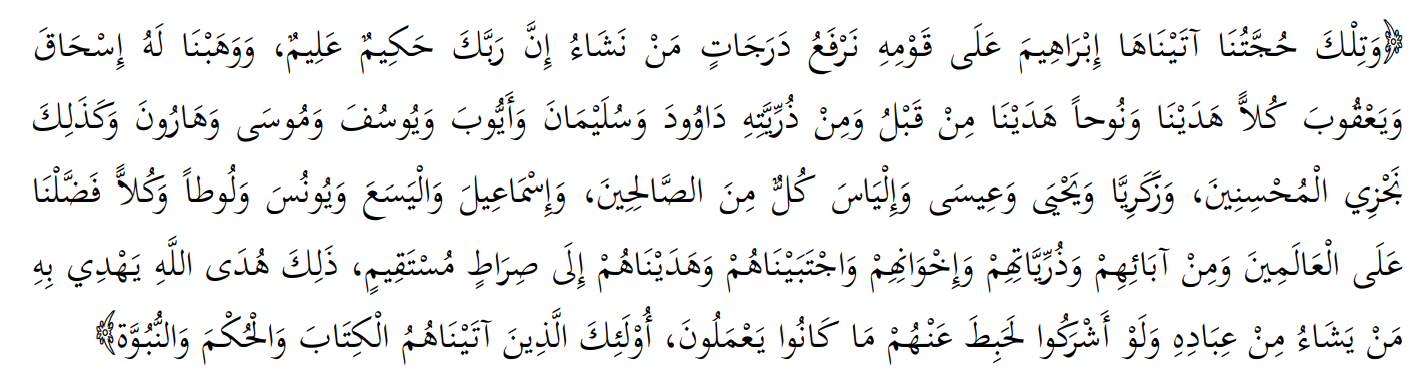
Na huu ndiyo hoja yetu tuliyompa Ibrahimu dhidi ya watu wake. Tunawapandisha vyeo tunaowataka. Hakika Mola wako Mlezi ni Mwenye hekima, Mjuzi. Tukampa Is-haka na Yaqub, na kila mmoja wao tukamuongoza. Na Nuhu tulimwongoza kabla yao, na katika kizazi chake tulimwongoza Daudi na Sulaimani, Ayubu na Yusufu, Musa na Harun. Hivyo ndivyo tunavyowalipa wema wanaotenda mema. Na Zakaria, Yahya, Isa na Ilyasi. Wote hao ni miongoni mwa waja wema. Na Ismaili, Al-Yasa, Yunus na Lutu, na kila mmoja wao tukamfadhilisha juu ya walimwengu wa wakati wake. Na pia baadhi ya baba zao, na vizazi vyao, na baadhi ya ndugu zao; tukawachagua na tukawaongoza kwenye njia iliyonyoka. Huu ndio uongofu wa Mwenyezi Mungu, humwongoza amtakaye miongoni mwa waja wake. Lau wangemshirikisha, bila shaka yangeharibika yote waliyokuwa wakiyatenda. Hao ndio tuliowapa Kitabu, na hukumu, na unabii. [TMQ An’ām: 83-89]
"And this is our argument that we gave to Abraham against his people, we raise in degrees whom we please, undoubtedly, your lord is wise, knowing. And we gave him Ishaq and Yaqub, we showed the path to all of them and showed the path to Nuh before them, and of his progeny, to Daud and Sulaiman and Ayub and Yusuf and musa and Haroon, and thus we recompense the righteous. And to Zakaria, Yahya, Isa and Ilyas. These are all entitled to be our near ones. And to Ismail and Yasa and Yunus and lot, and to each one we preferred above all in his time. And also to some of their fathers and their progeny and some of their brothers, and we chose them and showed them the straight path. This is the guidance of Allah. He gives whom he will of his bondmen, and if they would have committed polytheism, then surely all that they had already done would have been destroyed. These are they to whom we gave the book and order and prophet hood" [TMQ An’ām: 83-89]
Na Ismaili na Idrisi na Dhul-Kifli, wote walikuwa miongoni mwa wenye subira ambao tuliwaingiza katika rehema yetu. Hakika wao ni miongoni mwa watu wema. [TMQ Anbiya: 85-86]
"And Ismail and Idrees and Dhul-Kifl all were from the patient ones who we took into our mercy. Indeed they are from the righteous." [TMQ Anbiya: 85-86]
Na kwa Madyan, tulimtuma ndugu yao Shu'aib. [TMQ Araf: 85]
"And to Madyan, we sent their brother Shu'aib." [TMQ Araf: 85]
Na kwa Thamud, tulimtuma ndugu yao Salih. [TMQ Araf: 73]
"And to Thamud, we sent their brother Salih." [TMQ Araf: 73]
Na kwa Ad, tulimtuma ndugu yao Hud. [TMQ Araf:65]
"And to A'ad, we sent their brother Hud." [TMQ Araf:65]
Na tukasema, "Ee Adamu, kaa wewe na mkeo peponi." [TMQ Baqarah: 35]
"And we said, o Adam dwell you and your wife in paradise." [TMQ Baqarah: 35]
Muhammad ﷺ ni Mjumbe wa Allah. Wale walio pamoja naye ni wakali dhidi ya makafiri, na wenye huruma miongoni mwao wenyewe. [TMQ Fath: 29]
"Muhammad is the messenger of Allah. Those with him are severe on the Kuffar and merciful between themselves." [TMQ Fath: 29]
Manabii wote na mitume walikuwa wapokeaji wa habari kutoka kwa Allah, kwa sababu hii ndiyo maana ya unabii na utume. Wao ni wakweli, na ni waonyaji kwa viumbe, ili kazi na ujumbe usiwe bure; na wamelindwa na kusema uongo na makosa katika kufikisha ujumbe, kama vile walivyolindwa na kutenda dhambi yoyote. Zaidi ya hayo, hakuna ushahidi wa hakika [Qati] katika Qur'ani wala katika Sunnah ya Mtume ﷺ unaoonyesha kwamba manabii walikosea baada ya unabii wao na utume wao. Kila kilichoripotiwa ni either katika hadithi zisizo na uhakika wa usimulizi [dhanni athuboot] au katika aya zisizo na uhakika wa maana [dhanni ad-dalala], na dhanni haiwezi kuutawala ushahidi wa kiakili wa hakika kuhusu kulindwa. Kuhusu yale yaliyoteremshwa kuhusu Adam katika Qur'ani, kwamba alikula kutoka kwenye mti ambao Allah alikuwa amemkataza kula, hilo halipingani na sharti la kulindwa katika kufikisha ujumbe kwa watu wa duniani, kwa sababu kilichotokea kwa Adam kilikuwa peponi, ambayo hekima yake inajulikana kwa Allah peke yake. Kwa hiyo hili ni jambo tofauti (yaani kula kwa Adam tunda la mti), kwa kuwa ulindwaji unahusiana na kufikisha ujumbe kwa watu wa duniani.
All the prophets and messengers were informers from Allah because this is the meaning of prophethood and messengerhood. They are truthful, admonishers to creation lest the mission and message become futile and they are infallible from lying and error in their propagation, just as they are infallible from committing any sin. Further there is no definite [Qati] textual evidence in the Qur’ān or the Sunnah of the prophet informing about the erring of the prophets after their Prophethood of Messengership. Whatever has been reported is either in the ahadith that are indefinite in their transmission [dhanni athuboot] or in the ayat that are indefinite in their evidence [dhanni ad-dalala] and the Indefinite [dhanni] cannot over ride the definite rational evidence on infallibility. As for what was revealed regarding Adam in the Qur’ān about him eating from the tree which Allah had prohibited him to eat from, this does not contradict the requirement of infallibility in the propogation of the message to the people on the earth because what happened from Adam was in the Paradise, the wisdom of which is only known to Allah . Therefore this is separate matter (i.e Adam’s eating of the fruit of the tree) because infallibility is related to the propogation of the message to the people on the earth.