۲.۱ د دلیل جوړښت
2.1 Structure of Daleel
لکه څنګه چې مخکې یادونه وشوه، دلیل د اسلام د کومې عقیدې، مفهوم، حکم یا فکر د ملاتړ لپاره یو ثبوت دی. په هر دلیل کې دوه اړخونه شامل دي: روایت (نقل) او دلالت (معنا).
As mentioned earlier, a Daleel is an evidence for an opinion, concept, ruling, or a thought from Islam. There are two aspects related to any Daleel, Riwayah (reportage) and Dalalah (meaning).
د روایت دا برخه هغه مسایل پوښي چې پدې پورې اړه لري چې معلومات موږ ته څنګه رسیدلي دي، چې دا شامل دي د راویانو شمیر او د دوی صداقت او بشپړتیا.
The Riwayah covers issues related to how the information was relayed to us, which includes the number and the integrity of its reporters.
دلالت هغه تړاو دی چې د دلیل د متن د معنا سره لري. د روایت او دلالت سره تړلي دوه اصطلاحات هم کارول کیږي: قطعي او ظنّي.
The Dalalah is related to the meaning of the text in the Daleel. There are also two terms used in connection with Riwayah and Dalalah; Qata‟i and Dhanni.
قطعي هغه ته ويل کيږي چې قاطع يا ډاډمن وي، پداسې حال کې چې ظني د قطعي مخالف دی او د غير يقيني، ګومانيز يا ناڅرګند معنا لرونکی دی.
Qata‟i is defined as being conclusive or decisive, while Dhanni is the opposite of Qata‟i and means non-definite, speculative or indecisive.
روایت
Riwayah
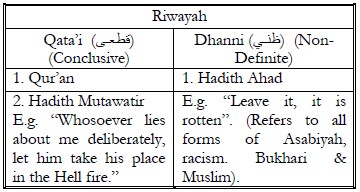
د قرآن کریم هر آیت یا د حدیث متواتر هر روایت د روایت له پلوه قطعي ګڼل کیږي.
Any Ayah from the Qur‟an or Hadith Mutawatir is considered Qata‟i (conclusive) in its Riwayah (report).
قطعی در روایت به این معنا است که دلیل بدون کوچکترین شبههای صحیح و ثابت است۔ این صحت بر اساس روششناسی نقل و انتقال (روایت) تثبیت میشود۔
The Qata‟i in Riwayah implies that the evidence is authentic without any shadow of doubt. This authenticity is established based on the methodology of transmission.
د قرآن کریم د نقل کولو طریقه داسې ده چې په هغې کې د جعل کېدو امکان نه پاتې کېږي. دا روایت نسل په نسل همدغه یوې ورته طریقې سره نقل شوی دی. داسې ممکنه نه ده چې یو ټول نسل د قرآن په مینځپانګه کې جعل وکړي، ړنګ کړي یا اضافه کړي. دا تصور هم ناشونی دی چې د هغه نسل هر یو فرد یوځای شي او په دې باندې موافقه وکړي چې د قرآن ځینې برخې اضافه یا ځړې کړي. د هغه نسل ټول خلک د قرآن یوې او ورته مینځپانګې تلاوت کاوه، او په دې توګه د هغې مینځپانګه تأیید کېده.
The methodology by which the Qur‟an was transmitted to us precludes any possibility of fabrication. The report was transmitted generation by generation in exactly the same manner. It is impossible for an entire generation to fabricate, erase, or add contents to the Qur‟an. It is inconceivable to believe that every single individual in that generation assembled together and agreed to add or delete parts of the Qur‟an. Everyone in that generation was reciting the same contents of the Qur‟an, thus authentifying its contents.
حدیث متواتر د نسل په نسل نه، بلکې د ډیرو خلکو له لارې نقل شوی. ځکه چې دلیل ډیرو راویانو راپور ورکړی، د دوی د اوسیدو ځایونه متفاوت دي، او د دوی ثابته پاکوالی او یقین دومره دی چې دا دلیل د غلطۍ کیدو تصور هم نشي کیدی. د قرآن او حدیث متواتر پرته د بل هر ډول معلومات راپور، لکه حدیث آحاد، ظنّي (غیر قطعي) ګڼل کیږي، یعنې دا امکان شته چې دلیل کې کومه تېروتنه وي. لنډه دا چې:
Hadith Mutawatir was not transmitted generation-by-generation, but rather by a large number of people. Due to the large number of people reporting the Daleel, and their diversity of residence, their established reliability and conviction, it is inconceivable that this Daleel could be wrong. Any report of information other than through the Qur‟an or Hadith Mutawatir, such as Hadith Ahad, is considered Dhanni (non-definite), meaning that there is a minute possibility that the Daleel could contain error. To summarise:
دلالہ
Dalalah
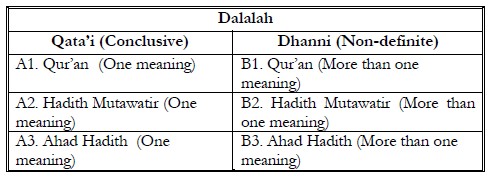
دلیل دوهمه برخه دلالت ده. که د قرآن، حدیث متواتر یا حدیث آحاد متن واضح، ځانګړی او یوازې یو معنا ولري، نو دا قطعي ګڼل کیږي. د قطعي دلیل متن باید یوازې یوه معنا ولري او د بلې هیڅ تفسیر لپاره خلاص نه وي. که متن د یو له څو تفسیرونو وړ وي، نو دا ظني ګڼل کیږي. ځکه تفسیرونه د عربي ژبې له امله رامنځته کیږي، نو هر تفسیر باید د عربي ژبې له مخې ثابت شي. لنډه دا چې:
The second aspect of the Daleel is the Dalalah (meaning). If the text of Qur‟an, Hadith Mutawatir or Hadith Ahad is clear, specific, and has only one meaning, then it is considered Qata‟i. The text of a Qata‟i Daleel has to have only one meaning and cannot be open to any other interpretation. If the text is open to more than one interpretation, then it is considered Dhanni. Since interpretations are due to the Arabic language, any interpretation has to be justified through the Arabic language. To summarise:
د قرآن مجید یوه مثال چې قطعی (یقینی) معنا لري:
A1. Example of Qur‟an with a Qata‟i (conclusive) meaning:
«ستاسو د ښځو څخه چې څه پریږدي، ستاسو لپاره هغه ونډه نیمایي ده، که دوی هیڅ اولاد ونلري.» (د قرآن کریم، سورۀ النساء: ۱۲)
“What your wives leave, your share is a half, if they leave no child”. (TMQ An-Nisa: 12)
هغه کسان چې پاکدامنه ښځې په زنا تورنوي او بیا څلور شاهدان نه راوړي (چې دا تور ثابت کړي)، نو دوی ته اته ویشت کوړې ووهئ. (قرآن کریم، سورۃ النور: ۴)
“Those who accuse chaste woman of zina (adultery) and fail to bring four witnesses (to prove it) flog them eighty stripes.” (TMQ An-Nur: 4)
د دې احکامو کمیتي اړخ، یعنې نیم او اتیا، څرګند دي، له همدې امله دوی ته د بل هیڅ تفسیر امکان نشته.
The quantitative aspect of these rulings, namely one half and eighty are clear and therefore cannot be open to any other interpretations.
A2. د حدیث متواتر د قطعي (یقیني) معنا مثال:
A2. Example of Hadith Mutawatir with Qata‟i (conclusive) meaning:
څوک چې زما پر اړه په قصد سره دروغ وتړي، هغه باید خپل ځای په دوزخ کې ونیسي۔ ﷺ [البخاري او مسلم]
“Whosoever lies about me (Prophet Muhammad saw) deliberately let him take his place in the hell-fire.” (Bukhari & Muslim)
دا متواتر حدیث د خپل موضوع په اړه ډیر روښانه دی؛ له همدې کبله د متن څخه یوازې یو مفهوم اخیستل کیږي، هغه دا چې څوک چې د پیغمبر ﷺ په اړه، په قصد، دروغ وتړي، هغه به دوزخ ته ځي.
This Mutawatir Hadith is very clear in its subject; thus there is only one understanding from the text that whoever lies about what Prophet (saw) said, intentionally, he will go to hell-fire.
د احادیثو احاد د قطعي معنا مثال:
A3. Example of Hadith Ahad with Qata‟i (conclusive) meaning:
روایت شوی دی چې د غیر متواتر حدیث له مخې، نبي ﷺ د شوال په میاشت کې شپږ ورځې روژه نیولې وې. د دې حدیث څخه لاندې قطعي معناوې اخیستل کیږي:
It is reported from a non-Mutawatir Hadith that the Prophet (saw) fasted 6 days in Shawwal. The conclusive meanings from this Hadith are the following:
د شوال په میاشت کې د شپږو ورځو روژه نیولو جواز
a) Permissibility of fasting 6 days in Shawwal.
ب) مګر د شوال په لومړۍ ورځ، ځکه چې دا د اختر ورځ ده، او د اختر په ورځ روژه نیول حرام دي.
b) Except on the first day of Shawwal, since it is the day of Eid, and it is Haram to fast on Eid.
B1. د قرآني آیت د مثال لپاره چې معنا یې ظنّي (غیر قطعي) وي:
B1. Example of Quranic Ayah with a Dhanniy (non-definite) meaning:
الله (سبحانه وتعالى) فرمائی:
Allah (swt) says:
دا هغه ځای دی چې ایمان راوړونکو! کله چې تاسو د لمانځه (صلات) ارادې کوئ، نو خپل مخونه او خپل لاسونه تر ارښتو پورې وينځئ، خپل سرونه مسح کړئ (د لندو لاسونو تېرولو سره)، او خپل پښې تر ټخنو پورې ومینځئ. که تاسو په جنابت کې یاست (يعنې جنسي خارښت مو شوی وي)، نو ځان پاک کړئ (ټول بدن وينځئ). خو که تاسو ناروغ یاست یا په سفر کې یاست، یا له تاسو یو څوک د طبيعي اړتیا له ځایه راځي، یا تاسو له ښځو سره نږدې شوي یاست او اوبه نه مومئ، نو د پاکې خاورې سره تېمم وکړئ او په دې سره خپل مخونه او لاسونه مسح کړئ.
“O you who believe! When you intend to offer As-Salat (the prayer), wash your faces and your hands (forearms) up to the elbows, rub (by passing wet hands over) your heads, and (wash) your feet up to ankles. If you are in a state of Janaba (i.e. had a sexual discharge), purify yourself (bathe your whole body). But if you are ill or on a journey or any of you comes from answering the call of nature, or you have been in contact with women and you find no water, then perform Tayammum with clean earth and rub therewith your faces and hands.” (TMQ Al-Maida: 6)
دا آیت وایی چې که تاسو ښځو ته "لمستم" (یعنې ولاس ورکړئ) نو وضو ماتیږي. د "لمستم" کلمه د دوو معنا لرونکې ګڼل شوې ده.
The verse says if you „lamastum‟ the women, it breaks the Wudhu. The word „lamastum‟ has been interpreted as having two meanings:
الف) چھونا ب) جنسی مقاربت پس اس آیت کی دلالت ظنی ہے، یعنی اس کا مطلب یہ ہوسکتا ہے کہ عورتوں کو چھونا وضو کو توڑ دیتا ہے، یا عورت کے ساتھ جنسی مقاربت وضو کو توڑ دیتی ہے۔
a) Touching b) Sexual intercourse Thus the Ayah has a Dhanni Dalalah, i.e. it could mean touching women breaks the Wudhu, or sexual intercourse with a woman breaks the Wudhu.
B2. د حدیث متواتر د مثال چې ظنّي (غیر قطعي) معنا لري:
B2. Example of Hadith Mutawatir with a Dhanniy (non-definite) meaning:
روایت شوی چې پیغمبر ﷺ به خپل احرام په یوه ځانګړې طریقه پرانیست. خو کله چې صحابه کرامو رضياللهعنهم پیغمبر ﷺ ته وویل چې دوی احرام په داسې طریقه پرانیستی چې د پیغمبر ﷺ له طریقې سره توپیر درلود، نو پیغمبر ﷺ د دوی عمل تصویب کړ. که څه هم دا پیښه متواتره ده، خو د احرام د پرانیستلو احکام ډیر دي.
It was reported that the Prophet (saw) used to take off his Ihram in a specific manner. However, when the Sahabah (ra) told the Prophet (saw) that they took it off in a manner different from the way he (saw) took it off, the Prophet (saw) approved of their actions. Though this incident is Mutawatir, the rules to take off one‟s Ihram are many.
بې۔ د حدیث احاد د ظنی (غیر قطعي) معنی یوه بیلګه:
B3. Example of a Hadith Ahad with a Dhanniy (non-definite) meaning:
د غیر متواتر حدیث له مخې روایت شوي چې پیغمبر ﷺ د شوال په میاشت کې شپږ ورځې روژه نیولې وه. د دې حدیث غیر یقیني (ظني) معناګانې دا دي:
It is reported from a non-Mutawatir Hadith that the Prophet (saw) fasted 6 days in Shawwal. The non-definite meanings of this Hadith are:
د شوال د شپږو ورځو د روژې په اړه دا پوښتنه ده چې ایا دا شپږ ورځې پې در پې (متواتر) وي که نه؟
a) Whether the six days of fasting are consecutive or not?
ب) د شوال کومې برخې کې روژه نیول کېږي؟
b) Fasting in which part of Shawwal?
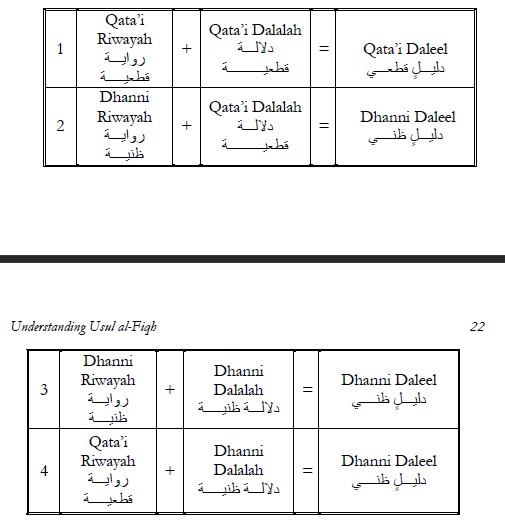
تر دې مخه موږ د روایت او دلالت دواړو قطعي او ظني اړخونه جلا جلا بحث کړي دي. په دې حال کې، د دې معلومولو طریقه چې دلیل (چې په روایت او دلالت دواړو کې وي) قطعي دی که ظني، لاندې ډول ده:
So far we have discussed the Qata‟i and Dhanni aspects of both Riwayah and Dalalah separately. However, the method to determine whether the Daleel (both in Riwayah and Dalalah) is Qata‟i (conclusive) or Dhanni (non-definite) is the following:
هر هغه نظر، مفهوم یا تصور چې د عقیدې سره تړاو لري، باید په قطعي دلیل تکیه وکړي. د مثال په توګه، د فرښتو د شتون عقیده په قطعي دلیل بنا ده، نه په ظني دلیل. همدارنګه، په اصول الفقه کې، د احکامو د استنباط لپاره د یوې سرچینې د ثبوت په اړه، د پیاوړي قول له مخې، دا ضروري ده چې هغه هم په قطعي دلیل بنا وي.
Any idea, thought, or concept related to the „Aqeedah has to be based upon a Qata‟i Daleel. As an example, the concept that Angels exists is based upon a Qata‟i Daleel not Dhanni. Also, in Usul al-Fiqh, to establish a source for extracting rulings according to the strongest view, the source must base upon a Qata‟i Daleel as well.
په دې توګه، که د صحابهوو اجماع (إجماعِ صحابه) د احکامو د سرچینې په توګه ومنل شي، نو د صحابهوو د اجماع د حجیت د ثبوت لپاره دلیل باید په روایت او دلالت دواړو کې قطعي وي، که څه هم یو حکم له قطعي یا ظني دلیل څخه اخیستل کیدای شي.
As an example, to consider Ijma‟ as-Sahabah (consensus of the Companions) as a source of rulings, the Daleel to prove the authority of Ijma‟ as-Sahabah has to be Qata‟i both in Riwayah and Dalalah, though a ruling can be derived from either Qata‟i or Dhanni Daleel.
د قرآن او سنت د متن په پوهیدو کې دا ستونزه ولې دومره پیچلې ښکاري؟
One might wonder why understanding the text of Qur‟an and Sunnah is so complicated?
د قرآن کریم او سنت د متن په کتلو سره انسان لیدلی شي چې دا متن په حجم کې محدود دی. په دې محدود متن سره کیدای شي د هغو ټولو ستونزو لپاره حکمونه واخیستل شي چې موږ ته هرچیرې او هر وخت، تر قیامت پورې اغیزه کوي.
By examining the text of Qur‟an and Sunnah one can see that it is limited in its volume. With its limited text one can generate rulings to any problems affecting us anywhere and anytime until the Day of Judgment.
دا د الله (ج) یو معجزه ده چې د قرآن کریم او سنت متنونو کې داسې ظرفیت شتون لري چې یوه آیت او یوه حدیث څخه ډیر حکمونه بیانوي؛ په داسې حال کې چې د یو متن څخه ډیر معنې پوهیدو ظرفیت د نړۍ د کوم بل قانوني متن کې نه موندل کیږي! ننګونه د هرې نسل مسلمانانو لپاره دا ده چې متن پوه شي او هغه خپلې ژوندانه پورې تړاو ورکړي، ځکه قرآن کریم او سنت د ټولو وختونو او ځایونو لپاره مناسب دي۔
It is a miracle from Allah (swt) that the texts of the Qur‟an and Sunnah have the ability to express numerous rulings from a single Ayah and Hadith; whereas, the ability to understand many meanings from a single text cannot be found in any other legal text in the world! The challenge is for Muslims in each generation to try to understand the text and relate it to their lives since the Qur‟an and Sunnah are relevant to all times and places.
د شرعي حکم سرچینې
Sources of Hukm Shar‟i
په پخوا تعریف شوي شرعي حکمونه هغه احکام دي چې د الله تعالی له خوا زموږ د عملونو په اړه نازلیږي. دغه احکام له ځینو سرچینو څخه اخیستل کیږي، او هغه سرچینې باید په قطعي ادلّو (یقیني دلیلونو) ولاړ وي.
As defined earlier, Hukm Shar‟i are the rulings of Allah (swt) addressing our actions. These rulings are derived from certain sources. The sources, which are used to extract rulings, have to be based on Adilla Qata‟iya (Decisive evidences).
د شرعي حکم څلور قطعي سرچینې دي: قرآن کریم، سنت، د صحابه کرامو اجماع او قیاس. دا به په راتلونکو فصلونو کې وڅیړل شي. وروسته به د هغو مختلف فیه سرچینو لنډ لنډیز وړاندې شي چې علماء پکې اختلاف لري.
The four definitive sources of Hukm Shar‟i are; the Qur‟an, Sunnah, Ijma‟ as-Sahabah and Qiyas. These will be discussed in the following chapters. This will be followed by a brief summary of the disputed sources which the scholars disagree on.