২.১ দলিলের গঠন
2.1 Structure of Daleel
পূর্বে উল্লেখ করা হয়েছে, দলীল হলো ইসলামের কোনো মত, ধারণা, হুকুম বা চিন্তার পক্ষে প্রমাণ। যেকোনো দলীলের সাথে দুটি দিক সম্পর্কিত: রিওয়ায়াহ (বর্ণনা) এবং দালালাহ (অর্থ বা নির্দেশনা)।
As mentioned earlier, a Daleel is an evidence for an opinion, concept, ruling, or a thought from Islam. There are two aspects related to any Daleel, Riwayah (reportage) and Dalalah (meaning).
রিওয়ায়াহ (বর্ণনা) এমন বিষয়গুলো নিয়ে আলোচনা করে যা আমাদের কাছে তথ্যটি কীভাবে পৌঁছেছে, অর্থাৎ এর বর্ণনাকারীদের সংখ্যা ও তাঁদের বিশ্বস্ততা (ন্যায়পরায়ণতা ও সংরক্ষণ-ক্ষমতা) সংক্রান্ত বিষয়।
The Riwayah covers issues related to how the information was relayed to us, which includes the number and the integrity of its reporters.
দালালাহ (Dalalah) সেই অর্থের সঙ্গে সম্পর্কিত যা দালীল (Daleel)-এর মধ্যকার বক্তব্য বহন করে। রিওয়ায়াহ (Riwayah) ও দালালাহ-এর সঙ্গে সম্পর্কিত দুটি পরিভাষাও রয়েছে: কাত‘ঈ (Qata‟i) ও জান্নী (Dhanni)।
The Dalalah is related to the meaning of the text in the Daleel. There are also two terms used in connection with Riwayah and Dalalah; Qata‟i and Dhanni.
কাতঈ (qata‟i) শব্দের অর্থ নিশ্চিত বা চূড়ান্ত, আর যন্নি (dhanni) হলো কাতঈর বিপরীত, যার অর্থ অনিশ্চিত, ধারণামূলক বা অচূড়ান্ত।
Qata‟i is defined as being conclusive or decisive, while Dhanni is the opposite of Qata‟i and means non-definite, speculative or indecisive.
রিওয়ায়াহ
Riwayah
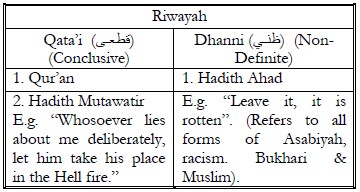
কুরআনের যেকোনো আয়াত বা হাদীসে মুতাওয়াতির তার রিওয়ায়াহ (বর্ণনা) হিসেবে কাত'ঈ (সুনিশ্চিত) গণ্য হয়।
Any Ayah from the Qur‟an or Hadith Mutawatir is considered Qata‟i (conclusive) in its Riwayah (report).
কাতঈ (কাতঈ) ফির রিওয়ায়াহ বলতে বোঝায় যে দলিলটি কোনো প্রকার সন্দেহের অবকাশ ছাড়াই প্রামাণিক। এই প্রামাণিকতা বর্ণনা-সংকলনের পদ্ধতির (মেথডোলজি) ভিত্তিতে প্রতিষ্ঠিত হয়।
The Qata‟i in Riwayah implies that the evidence is authentic without any shadow of doubt. This authenticity is established based on the methodology of transmission.
এই যে পদ্ধতিতে কুরআন আমাদের কাছে পৌঁছেছে, তাতে এর মধ্যে কোনো জালিয়াতির সম্ভাবনা থাকে না। বর্ণনাটি প্রজন্মের পর প্রজন্ম ঠিক একইভাবে বহন করা হয়েছে। কোনো একটি পুরো প্রজন্মের পক্ষে কুরআনের বিষয়বস্তু জাল করা, মুছে ফেলা বা তাতে কিছু যোগ করা অসম্ভব। এটা বিশ্বাস করাও অকল্পনীয় যে, সেই প্রজন্মের প্রত্যেকে একত্র হয়ে কুরআনের অংশ যোগ বা বাদ দেওয়ার বিষয়ে একমত হয়েছিল। সেই প্রজন্মের প্রত্যেক ব্যক্তি কুরআনের একই বিষয়বস্তু তিলাওয়াত করছিলেন, আর এভাবে তাতে এর সত্যতা প্রমাণিত হয়েছে।
The methodology by which the Qur‟an was transmitted to us precludes any possibility of fabrication. The report was transmitted generation by generation in exactly the same manner. It is impossible for an entire generation to fabricate, erase, or add contents to the Qur‟an. It is inconceivable to believe that every single individual in that generation assembled together and agreed to add or delete parts of the Qur‟an. Everyone in that generation was reciting the same contents of the Qur‟an, thus authentifying its contents.
হাদীসে মুতাওয়াতির প্রজন্ম-দর-প্রজন্ম বর্ণিত হয়নি, বরং বিপুল সংখ্যক মানুষের মাধ্যমে বর্ণিত হয়েছে। দলীলটি বর্ণনাকারী বিপুল সংখ্যক মানুষের উপস্থিতি, তাদের ভিন্ন ভিন্ন বাসস্থান, এবং তাদের প্রমাণিত নির্ভরযোগ্যতা ও দৃঢ় প্রত্যয়ের কারণে, এই দলীল ভুল হওয়া কল্পনাতীত। কুরআন অথবা হাদীসে মুতাওয়াতির ব্যতীত অন্য যেকোনো তথ্যের বর্ণনা, যেমন হাদীসে আহাদ, যা "যান্নী" (অনিশ্চিত) হিসেবে গণ্য হয়, অর্থাৎ এই দলীলে ভুল থাকার সামান্য সম্ভাবনা রয়েছে। সংক্ষেপে বলতে গেলে:
Hadith Mutawatir was not transmitted generation-by-generation, but rather by a large number of people. Due to the large number of people reporting the Daleel, and their diversity of residence, their established reliability and conviction, it is inconceivable that this Daleel could be wrong. Any report of information other than through the Qur‟an or Hadith Mutawatir, such as Hadith Ahad, is considered Dhanni (non-definite), meaning that there is a minute possibility that the Daleel could contain error. To summarise:
দালালাহ
Dalalah
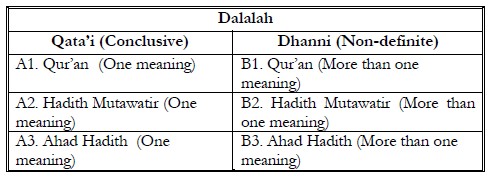
দলীলের দ্বিতীয় দিক হলো দালালাহ (অর্থ বা নির্দেশনা)। যদি কুরআনের আয়াত, মুতাওয়াতির হাদীস কিংবা আহাদ হাদীসের বক্তব্য স্পষ্ট, সুনির্দিষ্ট হয় এবং তার একটিমাত্র অর্থ থাকে, তবে তাকে কাত্ঈ (সুনিশ্চিত) বলা হয়। কাত্ঈ দলীলের বক্তব্যের কেবল একটিই অর্থ থাকতে হবে এবং তাতে অন্য কোনো ব্যাখ্যার অবকাশ থাকবে না। যদি বক্তব্যটি একাধিক ব্যাখ্যার সম্ভাবনা রাখে, তবে তাকে যান্নী (ধারণাভিত্তিক) বলা হয়। যেহেতু ব্যাখ্যা-বিশ্লেষণ আরবী ভাষার উপর নির্ভরশীল, তাই যে কোনো ব্যাখ্যাকে অবশ্যই আরবী ভাষার মাধ্যমে প্রমাণ করতে হবে। সংক্ষেপে বলা যায়:
The second aspect of the Daleel is the Dalalah (meaning). If the text of Qur‟an, Hadith Mutawatir or Hadith Ahad is clear, specific, and has only one meaning, then it is considered Qata‟i. The text of a Qata‟i Daleel has to have only one meaning and cannot be open to any other interpretation. If the text is open to more than one interpretation, then it is considered Dhanni. Since interpretations are due to the Arabic language, any interpretation has to be justified through the Arabic language. To summarise:
A১. কুরআনের কাতঈ (সুনিশ্চিত) অর্থের উদাহরণ:
A1. Example of Qur‟an with a Qata‟i (conclusive) meaning:
"তোমাদের স্ত্রীরা যা রেখে যায়, তার অর্ধেক তোমাদের, যদি তাদের কোনো সন্তান না থাকে।" (তরজমা: তাফহীমুল কুরআন, সূরা আন-নিসা: ১২)
“What your wives leave, your share is a half, if they leave no child”. (TMQ An-Nisa: 12)
“যারা সতী-সাধ্বী নারীর প্রতি ব্যভিচারের অপবাদ আরোপ করে, অতঃপর চারজন সাক্ষী উপস্থিত করতে ব্যর্থ হয়, তাদেরকে আশিটি বেত্রাঘাত করো।” (সূরা আন-নূর: ৪)
“Those who accuse chaste woman of zina (adultery) and fail to bring four witnesses (to prove it) flog them eighty stripes.” (TMQ An-Nur: 4)
এই বিধানগুলোর পরিমাণগত দিকটি, অর্থাৎ অর্ধেক এবং আশি, সুস্পষ্ট; তাই এর অন্য কোনো ব্যাখ্যার অবকাশ নেই।
The quantitative aspect of these rulings, namely one half and eighty are clear and therefore cannot be open to any other interpretations.
A২. কাতঈ (নিশ্চিত) অর্থবোধক হাদীসে মুতাওয়াতিরের উদাহরণ:
A2. Example of Hadith Mutawatir with Qata‟i (conclusive) meaning:
“যে ব্যক্তি ইচ্ছাকৃতভাবে আমার উপর মিথ্যা আরোপ করে, সে যেন জাহান্নামে তার আসন বানিয়ে নেয়।” (বুখারী ও মুসলিম)
“Whosoever lies about me (Prophet Muhammad saw) deliberately let him take his place in the hell-fire.” (Bukhari & Muslim)
এই মুতাওয়াতির হাদীসটি তার বিষয়ে অত্যন্ত স্পষ্ট; সুতরাং এই বক্তব্য থেকে একটিমাত্র অর্থই বোঝা যায়, যে ব্যক্তি ইচ্ছাকৃতভাবে নবী ﷺ-এর বাণী সম্পর্কে মিথ্যা বলবে, সে জাহান্নামের আগুনে প্রবেশ করবে।
This Mutawatir Hadith is very clear in its subject; thus there is only one understanding from the text that whoever lies about what Prophet (saw) said, intentionally, he will go to hell-fire.
A3. হাদীসে আহাদের কাতঈ (সুনির্দিষ্ট) অর্থের উদাহরণ:
A3. Example of Hadith Ahad with Qata‟i (conclusive) meaning:
বর্ণিত আছে, একটি মুতাওয়াতির নয় এমন হাদীস থেকে জানা যায় যে নবী ﷺ শাওয়ালে ছয় দিন রোযা রেখেছিলেন। এই হাদীস থেকে যে সুনির্দিষ্ট অর্থগুলো নিশ্চিতভাবে পাওয়া যায়, তা নিম্নরূপ:
It is reported from a non-Mutawatir Hadith that the Prophet (saw) fasted 6 days in Shawwal. The conclusive meanings from this Hadith are the following:
ক) শাওয়ালে ৬ দিন রোজা রাখার বৈধতা।
a) Permissibility of fasting 6 days in Shawwal.
ب) শাওয়ালের প্রথম দিন ছাড়া, কারণ সেটি ঈদের দিন, আর ঈদের দিনে রোজা রাখা হারাম।
b) Except on the first day of Shawwal, since it is the day of Eid, and it is Haram to fast on Eid.
বি১. কুরআনের আয়াতের উদাহরণ যার অর্থ ধান্নী (অনির্দিষ্ট/সম্ভাব্য অর্থযুক্ত):
B1. Example of Quranic Ayah with a Dhanniy (non-definite) meaning:
আল্লাহ (SWT) বলেন:
Allah (swt) says:
"হে ঈমানদারগণ! যখন তোমরা সালাতের জন্য প্রস্তুত হও, তখন তোমাদের মুখমণ্ডল ও হাত কনুই পর্যন্ত ধৌত করো, মাথা মাসেহ করো (ভেজা হাত বুলিয়ে), এবং পা টাখনু পর্যন্ত ধৌত করো। আর যদি তোমরা জানাবাতের অবস্থায় থাকো (অর্থাৎ যৌন নিঃসরণ হয়ে থাকে), তবে নিজেদের পবিত্র করো (সমস্ত শরীর গোসল করো)। আর যদি তোমরা অসুস্থ হও বা সফরে থাকো, অথবা তোমাদের কেউ প্রাকৃতিক প্রয়োজন সেরে আসে, কিংবা তোমরা নারীদের স্পর্শ করে থাকো এবং পানি না পাও, তবে পবিত্র মাটি দ্বারা তায়াম্মুম করো এবং তা দিয়ে নিজেদের মুখমণ্ডল ও হাত মাসেহ করো।" (তাফহীমুল কুরআন, আল-মায়িদা: ৬)
“O you who believe! When you intend to offer As-Salat (the prayer), wash your faces and your hands (forearms) up to the elbows, rub (by passing wet hands over) your heads, and (wash) your feet up to ankles. If you are in a state of Janaba (i.e. had a sexual discharge), purify yourself (bathe your whole body). But if you are ill or on a journey or any of you comes from answering the call of nature, or you have been in contact with women and you find no water, then perform Tayammum with clean earth and rub therewith your faces and hands.” (TMQ Al-Maida: 6)
আয়াতে বলা হয়েছে, যদি তোমরা নারীদের "লামাস্তুম" করো, তবে ওযু ভেঙে যায়। "লামাস্তুম" শব্দটির দুটি অর্থ গ্রহণ করা হয়েছে।
The verse says if you „lamastum‟ the women, it breaks the Wudhu. The word „lamastum‟ has been interpreted as having two meanings:
a) স্পর্শ করা b) যৌন সম্পর্ক স্থাপন সুতরাং এই আয়াতের দালালাহ যন্নি (ظنّي), অর্থাৎ এটি এমন অর্থ বহন করতে পারে যে নারীকে স্পর্শ করলে ওযূ ভঙ্গ হয়, অথবা নারীর সঙ্গে যৌন সম্পর্ক স্থাপন করলে ওযূ ভঙ্গ হয়।
a) Touching b) Sexual intercourse Thus the Ayah has a Dhanni Dalalah, i.e. it could mean touching women breaks the Wudhu, or sexual intercourse with a woman breaks the Wudhu.
বি২. যন্নী (অনিশ্চিত/ধারণামূলক) অর্থ সহ হাদীসে মুতাওয়াতিরের উদাহরণ:
B2. Example of Hadith Mutawatir with a Dhanniy (non-definite) meaning:
নবী (সা.) কোনো নির্দিষ্ট পদ্ধতিতে তাঁর ইহরাম খুলতেন বলে বর্ণিত হয়েছে। তবে সাহাবাগণ (রা.) যখন নবী (সা.)-কে জানালেন যে তাঁরা তাঁর (সা.) খোলার পদ্ধতি থেকে ভিন্নভাবে ইহরাম খুলেছেন, তখন নবী (সা.) তাঁদের কাজ অনুমোদন করলেন। এই ঘটনাটি মুতাওয়াতির হলেও, ইহরাম খোলার নিয়ম অনেক রকম।
It was reported that the Prophet (saw) used to take off his Ihram in a specific manner. However, when the Sahabah (ra) told the Prophet (saw) that they took it off in a manner different from the way he (saw) took it off, the Prophet (saw) approved of their actions. Though this incident is Mutawatir, the rules to take off one‟s Ihram are many.
বি৩. যান্নী (অনিশ্চিত/ধারণামূলক) অর্থবোধক খবরে ওয়াহিদ (আহাদ) হাদীসের উদাহরণ:
B3. Example of a Hadith Ahad with a Dhanniy (non-definite) meaning:
এক গায়র-মুতাওয়াতির হাদীস থেকে বর্ণিত আছে যে নবী ﷺ শাওয়ালের ৬ দিন রোযা রেখেছিলেন। এই হাদীসের অনিশ্চিত (অ-সুনির্দিষ্ট) অর্থসমূহ হলো:
It is reported from a non-Mutawatir Hadith that the Prophet (saw) fasted 6 days in Shawwal. The non-definite meanings of this Hadith are:
ক) শাওয়াল মাসের ছয়টি রোযা ধারাবাহিকভাবে রাখতে হবে কি না, নাকি বিরতি দিয়ে রাখলেও চলবে?
a) Whether the six days of fasting are consecutive or not?
খ) শাওয়াল মাসের কোন অংশে রোযা রাখা হয়?
b) Fasting in which part of Shawwal?
আমরা এখন পর্যন্ত রিওয়ায়াহ ও দালালাহ—উভয়ের কাতঈ ও যন্নী দিকগুলো আলাদাভাবে আলোচনা করেছি। তবে কোনো দালীল (রিওয়ায়াহ ও দালালাহ উভয় ক্ষেত্রেই) কাতঈ (সুনিশ্চিত) নাকি যন্নী (অনিশ্চিত), তা নির্ধারণের পদ্ধতি নিম্নরূপ:
So far we have discussed the Qata‟i and Dhanni aspects of both Riwayah and Dalalah separately. However, the method to determine whether the Daleel (both in Riwayah and Dalalah) is Qata‟i (conclusive) or Dhanni (non-definite) is the following:
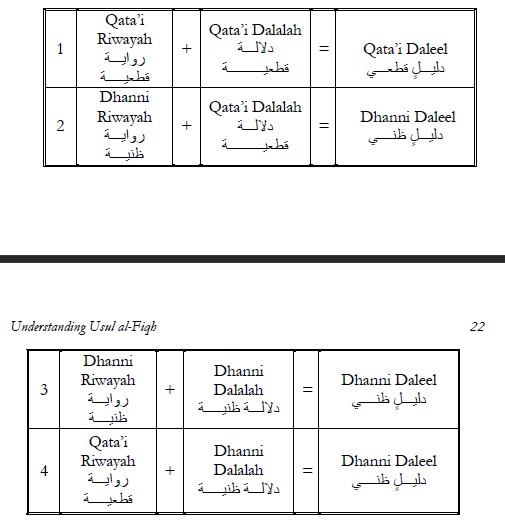
আকীদার সাথে সম্পর্কিত যেকোনো ধারণা, চিন্তা বা বিষয়কে অবশ্যই একটি কাতঈ দলীলের ভিত্তিতে প্রতিষ্ঠিত হতে হবে। উদাহরণস্বরূপ, ফেরেশতাদের অস্তিত্ব আছে - এই বিশ্বাসটি কাতঈ দলীলের ভিত্তিতে প্রতিষ্ঠিত, যন্নী দলীলের ভিত্তিতে নয়। একইভাবে, উসূলে ফিকহে, বিধান আহরণের জন্য কোনো উৎসকে সবচেয়ে শক্তিশালী মত অনুযায়ী প্রতিষ্ঠিত করতে হলে, সেই উৎসকেও একটি কাতঈ দলীলের ভিত্তিতে প্রতিষ্ঠিত হতে হবে।
Any idea, thought, or concept related to the „Aqeedah has to be based upon a Qata‟i Daleel. As an example, the concept that Angels exists is based upon a Qata‟i Daleel not Dhanni. Also, in Usul al-Fiqh, to establish a source for extracting rulings according to the strongest view, the source must base upon a Qata‟i Daleel as well.
উদাহরণস্বরূপ, সাহাবীগণের ইজমা (Ijma‟ as-Sahabah) বা ঐকমত্যকে শরঈ হুকুমের একটি উৎস হিসেবে গ্রহণ করতে হলে, ইজমা‟ আস-সাহাবাহ-এর কর্তৃত্ব প্রমাণকারী দলীলটিকে রিওয়ায়াহ ও দালালাহ উভয় দিক থেকেই কাতঈ হতে হবে, যদিও কোনো হুকুম কাতঈ কিংবা যন্নী (ধারণাভিত্তিক) যেকোনো দলীল থেকেই আহরণ করা যেতে পারে।
As an example, to consider Ijma‟ as-Sahabah (consensus of the Companions) as a source of rulings, the Daleel to prove the authority of Ijma‟ as-Sahabah has to be Qata‟i both in Riwayah and Dalalah, though a ruling can be derived from either Qata‟i or Dhanni Daleel.
কেউ হয়তো প্রশ্ন করতে পারেন, কুরআন ও সুন্নাহর পাঠ বোঝা এত জটিল কেন?
One might wonder why understanding the text of Qur‟an and Sunnah is so complicated?
কুরআন ও সুন্নাহর পাঠ পরীক্ষা করলে দেখা যায় যে এর পরিমাণ সীমিত। এই সীমিত পাঠের মাধ্যমেই আমাদের যেকোনো স্থানে ও যেকোনো সময়ে আক্রান্ত সমস্যাগুলোর জন্য কিয়ামতের দিন পর্যন্ত বিধান প্রণয়ন করা সম্ভব।
By examining the text of Qur‟an and Sunnah one can see that it is limited in its volume. With its limited text one can generate rulings to any problems affecting us anywhere and anytime until the Day of Judgment.
আল্লাহ (সুবহানাহু ওয়া তাআলা) -র এক মহান মুজিজা হলো যে, কুরআন ও সুন্নাহর বাণী একটি আয়াত ও একটি হাদীস থেকে অসংখ্য বিধান প্রকাশ করার ক্ষমতা রাখে; অথচ একটি বাণী থেকে বহু অর্থ উপলব্ধি করার এই ক্ষমতা বিশ্বের অন্য কোনো আইনি গ্রন্থে খুঁজে পাওয়া যায় না! প্রত্যেক প্রজন্মের মুসলিমদের সামনে চ্যালেঞ্জ হলো, এই বাণীকে বোঝার চেষ্টা করা এবং তা নিজেদের জীবনের সঙ্গে সম্পর্কিত করা, কারণ কুরআন ও সুন্নাহ সকল কাল ও সকল স্থানের জন্য প্রাসঙ্গিক।
It is a miracle from Allah (swt) that the texts of the Qur‟an and Sunnah have the ability to express numerous rulings from a single Ayah and Hadith; whereas, the ability to understand many meanings from a single text cannot be found in any other legal text in the world! The challenge is for Muslims in each generation to try to understand the text and relate it to their lives since the Qur‟an and Sunnah are relevant to all times and places.
শারঈ হুকমের উৎসসমূহ
Sources of Hukm Shar‟i
পূর্বে যেমন সংজ্ঞায়িত করা হয়েছে, হুকম শার‘ঈ হলো আল্লাহ (সুবহানাহু ওয়া তাআলা)-র সেই বিধানসমূহ যা আমাদের কর্মকাণ্ডের সাথে সম্পর্কিত। এই বিধানসমূহ কিছু নির্দিষ্ট উৎস থেকে আহরণ করা হয়। যে উৎসগুলো দ্বারা বিধান আহরণ করা হয়, সেগুলোকে অবশ্যই অকাট্য দলীল (Adilla Qata‟iya)-এর ভিত্তিতে প্রতিষ্ঠিত হতে হবে।
As defined earlier, Hukm Shar‟i are the rulings of Allah (swt) addressing our actions. These rulings are derived from certain sources. The sources, which are used to extract rulings, have to be based on Adilla Qata‟iya (Decisive evidences).
চারটি নিশ্চিত উৎস থেকে হুকমে শারঈ নির্ধারিত হয়: কুরআন, সুন্নাহ, ইজমা‘ আস-সাহাবা এবং কিয়াস। এগুলো নিয়ে পরবর্তী অধ্যায়গুলোতে আলোচনা করা হবে। এরপর আলিমগণ যেসব বিতর্কিত উৎসে মতভেদ করেছেন, সেগুলোর একটি সংক্ষিপ্ত সারসংক্ষেপ দেওয়া হবে।
The four definitive sources of Hukm Shar‟i are; the Qur‟an, Sunnah, Ijma‟ as-Sahabah and Qiyas. These will be discussed in the following chapters. This will be followed by a brief summary of the disputed sources which the scholars disagree on.