2.2 Onun Sadeliği ve Tevazuu
2.2 His Simplicity and Humility
Peygamber Efendimiz'in ﷺ sade ve mütevazı yaşantısı, onun davetinin kendi çıkarını gözeten bir davet olmadığının önemli bir göstergesidir; özellikle tarihteki pek çok sahte peygamberin israf ve gösteriş dolu, lüks yaşantılarıyla karşılaştırıldığında bu daha da belirgin hale gelir. Nitekim ömrünün sonunda Arabistan'ın tamamını kontrolü altına alan bir kişiden söz ediyoruz ﷺ. Bundan da önce, Medine'de binlerce takipçisi vardı ﷺ; bu takipçiler ona hayranlıkla bağlıydı ve onun uğruna dünyada yapmayacakları şey yoktu. Buna rağmen onun hayatının hiçbir alanında lüksten bir iz görmüyoruz ﷺ.
The simple, austere lifestyle of the Prophet صلى الله عليه وسلم is a major indication that his mission could not have been self-serving, especially when contrasted with the decadent, extravagant lifestyles of so many false prophets in world history. After all, this was a man who controlled all of Arabia by the end of his life. Even before that, he had thousands of followers in Madinah, followers who obsessed over him and would have done anything in the world for him. Yet, we see no signs of luxury in any sphere of his life.
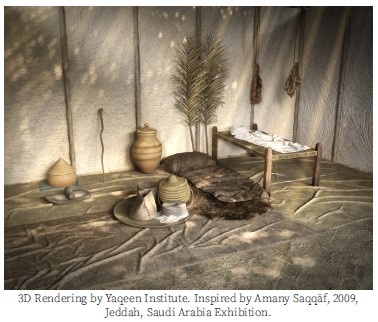
Yaşam alanı o kadar dardı ki namaz kılmak istediğinde ʿĀişe'ye bacaklarını bükmesi için dokunur, böylece secde edebilecek yer açılırdı. İçmek ya da yıkanmak için odasında asılı duran küçük deri su matarasına uzanırdı. Aylarca evinde yemek pişirmek için ateş yakılmaz, ailesi birisi süt hediye etmediği sürece hurma ve su ile yetinirdi. Ömer İbnü'l-Hattab, bir keresinde Allah'ın Elçisi ﷺ'in odasına girdiğini ve onu uzanmış halde bulduğunu, altındaki hasır hasırın kabalığının yan tarafında iz bıraktığını gördüğünü rivayet eder. Bunu, azık dolabındaki arpa ve yaprak azlığını ve köşede asılı deri torbayı fark edince gözleri yaşla doldu. Peygamber ﷺ, "Seni ağlatan nedir, ey Hattab'ın oğlu?" dedi. Ömer dedi ki: "Ey Allah'ın Peygamberi, hasırın yan tarafında bu izleri bıraktığını ve azık dolabında ne kadar az şey olduğunu görüp nasıl ağlamayayım? Sezar ve Kisra meyveler ve su kaynakları içinde yaşıyor, sen ise Allah'ın Elçisi ve seçtiği kulusun, ama halin bu." Peygamber ﷺ şöyle buyurdu: "Ey Hattab'ın oğlu, bunların (nimetlerin) bizim için ahirette, onlar için ise bu dünyada olması hoşuna gitmiyor mu?" Ben, "Elbette" dedim.59 Başka bir rivayette ise cevabına şöyle başlamıştır: "Şüphe mi ediyorsun, ey Hattab'ın oğlu? Bunlar, zevkleri bu dünya hayatında peşin olarak verilmiş bir kavimdir."60
His living quarters were so tight that when he صلى الله عليه وسلم wished to pray, he would tap ‘Āishah to bend her legs to make room for him to prostrate. To drink or bathe, he would reach for the small leather water skin that hung in his room. For months on end, no fire would be kindled for cooking in his home, and his family was content with dates and water unless someone gifted them some milk.58 ‘Umar ibn al-Khattāb reports that he once entered the room of the Messenger of Allah صلى الله عليه وسلم to find him lying down and noticed that the coarseness of the straw mat under him had left marks on his side. Upon noticing that, and the meager rations of barley and leaves, and the leather bag hanging in the corner, his eyes welled with tears. The Prophet صلى الله عليه وسلم said, “What makes you weep, O son of al-Khaṭṭāb?” He said, “O Prophet of Allah, how can I not cry after seeing how the mat has left these marks on your side, and how little you have in your food cupboard? Caesar and Chosroes live surrounded by fruits and springs of water, while you are the Messenger of God and His chosen one, and yet this is your condition.” The Prophet صلى الله عليه وسلم said, “O son of al-Khaṭṭāb, does it not please you that these [luxuries] are for us in the Hereafter and for them in this world?” I said, “Of course.”59 In another narration, he began his response with, “Are you in doubt, O son of al-Khaṭṭāb? These are a people whose pleasures have been expedited in the life of this world.”60
Edward Gibbon (ö. 1794), tarihçi ve İngiltere Parlamentosu üyesi, şunları yazdı: Muhammed'in sağduyusu krallığın gösterişini küçümsedi. Allah'ın Elçisi ev içindeki hizmetkârlık işlerine boyun eğdi; ateşi yakar, yeri süpürür, koyunları sağar, ayakkabılarını ve giysilerini kendi elleriyle onarırdı. Bir münzevinin çileye ve sevaba olan düşkünlüğünü hor görerek, bir Arap'ın ölçülü yemek düzenini ne zorlanarak ne de gösteriş yaparak sürdürdü.
58 el-Buhârî, Sahîhu'l-Buhârî, 8:97 #6459.
58 al-Bukhārī, Ṣaḥīḥ al-Bukhārī, 8:97 #6459.
Müslim, Sahîhu Müslim, 2:1105 #1479.
59 Muslim, Ṣaḥīḥ Muslim, 2:1105 #1479.
60 al-Buhârî, Sahîhu'l-Buhârî, 3:133 #2468.
60 al-Bukhārī, Ṣaḥīḥ al-Bukhārī, 3:133 #2468.
61 Edward Gibbon, Decline and Fall of the Roman Empire: Volume the Fifth (London:
61 Edward Gibbon, Decline and Fall of the Roman Empire: Volume the Fifth (London:
Electric Book Co, 2001), bölüm L, 252.
Electric Book Co, 2001), chapter L, 252.
62 Age., 251-252.
62 Ibid., 251-252.
63 Washington Irving and Bertram R. Davis, The Life of Mahomet (London: G.
63 Washington Irving and Bertram R. Davis, The Life of Mahomet (London: G.
Routledge & Co, 1850), 186-187.
Routledge & Co, 1850), 186-187.
64 Age., 203.
64 Ibid., 203.
65 el-Tirmizî, Sünenü't-Tirmizî, 5:90 #2754; et-Tirmizî'nin yorumlarında sahih olarak değerlendirilmiştir.
65 al-Tirmidhī, Sunan al-Tirmidhī, 5:90 #2754; authenticated by al-Tirmidhī in the comments.
66 Bosworth Smith, Mohammed and Mohammedanism (London: Smith, Elder, and Co., 1874), 235.
66 Bosworth Smith, Mohammed and Mohammedanism (London: Smith, Elder, and Co., 1874), 235.
Müslim, Sahîh-i Müslim, 1:1 #8.
67 Muslim, Ṣaḥīḥ Muslim, 1:1 #8.