2.1 دلیل کی ساخت
2.1 Structure of Daleel
جیسا کہ پہلے ذکر کیا گیا ہے، دلیل کسی رائے، تصور، حکم یا اسلام کے کسی خیال کے لیے ایک ثبوت ہوتی ہے۔ کسی بھی دلیل سے متعلق دو پہلو ہوتے ہیں، روایت اور دلالت۔
As mentioned earlier, a Daleel is an evidence for an opinion, concept, ruling, or a thought from Islam. There are two aspects related to any Daleel, Riwayah (reportage) and Dalalah (meaning).
روايت ان مسائل کا احاطہ کرتی ہے جن کا تعلق اس بات سے ہے کہ معلومات ہم تک کس طرح پہنچیں، جس میں راویوں کی تعداد اور ان کی دیانت داری شامل ہے۔
The Riwayah covers issues related to how the information was relayed to us, which includes the number and the integrity of its reporters.
دلالت کا تعلق دلیل میں موجود متن کے معنی سے ہے۔ روایت اور دلالت کے حوالے سے دو اصطلاحات بھی استعمال کی جاتی ہیں؛ قطعی اور ظنی۔
The Dalalah is related to the meaning of the text in the Daleel. There are also two terms used in connection with Riwayah and Dalalah; Qata‟i and Dhanni.
قطعی کا مطلب ہے حتمی یا فیصلہ کن، جبکہ ظنی قطعی کی ضد ہے اور اس کا مطلب غیر یقینی، گمان پر مبنی یا غیر فیصلہ کن ہے۔
Qata‟i is defined as being conclusive or decisive, while Dhanni is the opposite of Qata‟i and means non-definite, speculative or indecisive.
روایت
Riwayah
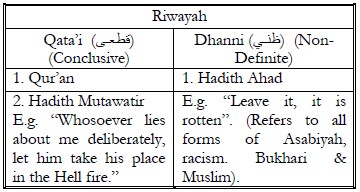
قرآن کی کوئی بھی آیت یا حدیث متواتر اپنی روایت میں قطعی سمجھی جاتی ہے۔
Any Ayah from the Qur‟an or Hadith Mutawatir is considered Qata‟i (conclusive) in its Riwayah (report).
روایت میں قطعی کا مطلب یہ ہے کہ دلیل بغیر کسی شک و شبہ کے مستند ہے۔ یہ مستند ہونے کا ثبوت اس کی روایت کے طریقہ کار کی بنیاد پر قائم ہوتا ہے۔
The Qata‟i in Riwayah implies that the evidence is authentic without any shadow of doubt. This authenticity is established based on the methodology of transmission.
جس طریقے سے قرآن کریم ہم تک پہنچا ہے، وہ کسی بھی قسم کی جعل سازی کے امکان کو ختم کر دیتا ہے۔ یہ روایت نسل در نسل بالکل اسی طریقے سے منتقل ہوتی رہی ہے۔ یہ ناممکن ہے کہ ایک پوری نسل قرآن کریم میں کوئی چیز خود سے بنا لے، اسے مٹا دے یا اس میں کچھ اضافہ کر دے۔ یہ تصور کرنا بھی ناممکن ہے کہ اس نسل کا ہر ایک فرد اکٹھا ہو جائے اور قرآن کے حصوں کو شامل کرنے یا حذف کرنے پر متفق ہو جائے۔ اس نسل کا ہر شخص قرآن کریم کے انہی الفاظ کی تلاوت کر رہا تھا، جس سے اس کے مواد کی صداقت ثابت ہوتی ہے۔
The methodology by which the Qur‟an was transmitted to us precludes any possibility of fabrication. The report was transmitted generation by generation in exactly the same manner. It is impossible for an entire generation to fabricate, erase, or add contents to the Qur‟an. It is inconceivable to believe that every single individual in that generation assembled together and agreed to add or delete parts of the Qur‟an. Everyone in that generation was reciting the same contents of the Qur‟an, thus authentifying its contents.
حدیث متواتر نسل در نسل نہیں، بلکہ لوگوں کی ایک بڑی تعداد کے ذریعے منتقل ہوئی ہے۔ دلیل بیان کرنے والے لوگوں کی کثرت، ان کے مسکنوں کے تنوع، ان کی مستند قابلیت اور یقین کی وجہ سے، یہ تصور کرنا ناممکن ہے کہ یہ دلیل غلط ہو سکتی ہے۔ قرآن یا حدیث متواتر کے علاوہ کسی بھی دوسری قسم کی اطلاع، جیسے کہ حدیثِ احد، کو ظنی (غیر یقینی) سمجھا جاتا ہے، جس کا مطلب یہ ہے کہ اس بات کا معمولی امکان موجود ہے کہ دلیل میں غلطی ہو سکتی ہے۔ خلاصہ یہ ہے کہ:
Hadith Mutawatir was not transmitted generation-by-generation, but rather by a large number of people. Due to the large number of people reporting the Daleel, and their diversity of residence, their established reliability and conviction, it is inconceivable that this Daleel could be wrong. Any report of information other than through the Qur‟an or Hadith Mutawatir, such as Hadith Ahad, is considered Dhanni (non-definite), meaning that there is a minute possibility that the Daleel could contain error. To summarise:
گمراہی
Dalalah
دلیل کا دوسرا پہلو دلالت (معنی) ہے۔ اگر قرآن، حدیث متواتر یا حدیث احد کا متن واضح، مخصوص اور صرف ایک معنی رکھنے والا ہو، تو اسے قطعی سمجھا جاتا ہے۔ ایک قطعی دلیل کے متن کا صرف ایک ہی معنی ہونا چاہیے اور وہ کسی دوسری تشریح کے لیے کھلا نہیں ہو سکتا۔ اگر متن ایک سے زیادہ تشریحات کے لیے کھلا ہو، تو اسے ظنی سمجھا جاتا ہے۔ چونکہ تشریحات عربی زبان کی وجہ سے ہوتی ہیں، اس لیے کسی بھی تشریح کو عربی زبان کے ذریعے ثابت کرنا ضروری ہے۔ خلاصہ یہ ہے کہ:
The second aspect of the Daleel is the Dalalah (meaning). If the text of Qur‟an, Hadith Mutawatir or Hadith Ahad is clear, specific, and has only one meaning, then it is considered Qata‟i. The text of a Qata‟i Daleel has to have only one meaning and cannot be open to any other interpretation. If the text is open to more than one interpretation, then it is considered Dhanni. Since interpretations are due to the Arabic language, any interpretation has to be justified through the Arabic language. To summarise:
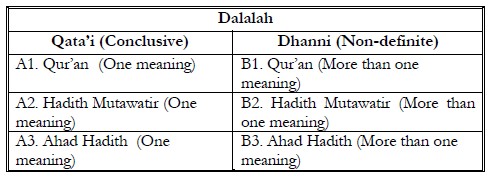
A1. قرآن کی ایک مثال جس کا مفہوم قطعی ہے:
A1. Example of Qur‟an with a Qata‟i (conclusive) meaning:
”اگر تمہاری بیویاں کچھ چھوڑ جائیں تو تمہارا حصہ آدھا ہے، بشرطیکہ ان کا کوئی بچہ نہ ہو“۔ [سورۃ النساء: 12]
“What your wives leave, your share is a half, if they leave no child”. (TMQ An-Nisa: 12)
”جو لوگ پاکدامن عورتوں پر زنا کا الزام لگائیں اور چار گواہ پیش کرنے میں ناکام رہیں، انہیں اسی (کوڑے) کے اسی مارے جائیں۔“ [سورۃ النور: 4]
“Those who accuse chaste woman of zina (adultery) and fail to bring four witnesses (to prove it) flog them eighty stripes.” (TMQ An-Nur: 4)
ان احکامات کا مقداری پہلو، یعنی آدھا اور اسی، بالکل واضح ہے اور اس لیے ان کی کوئی دوسری تشریح ممکن نہیں۔
The quantitative aspect of these rulings, namely one half and eighty are clear and therefore cannot be open to any other interpretations.
A2. حدیث متواتر کی مثال جس کا مفہوم قطعی ہو:
A2. Example of Hadith Mutawatir with Qata‟i (conclusive) meaning:
"جس نے بھی جان بوجھ کر میری طرف جھوٹ باندھا، اسے چاہیے کہ وہ اپنا ٹھکانہ جہنم کی آگ میں بنا لے۔" [البخاری و مسلم]
“Whosoever lies about me (Prophet Muhammad saw) deliberately let him take his place in the hell-fire.” (Bukhari & Muslim)
یہ متواتر حدیث اپنے موضوع میں بہت واضح ہے؛ چنانچہ متن سے صرف ایک ہی مفہوم نکلتا ہے کہ جو شخص جان بوجھ کر نبی ﷺ کی بات کی طرف جھوٹ باندھے گا، وہ جہنم کی آگ میں جائے گا۔
This Mutawatir Hadith is very clear in its subject; thus there is only one understanding from the text that whoever lies about what Prophet (saw) said, intentionally, he will go to hell-fire.
A3. حدیثِ آثار کے قطعی معنی کی مثال:
A3. Example of Hadith Ahad with Qata‟i (conclusive) meaning:
ایک غیر متواتر حدیث سے روایت ہے کہ نبی کریم ﷺ نے شوال کے چھ روزے رکھے۔ اس حدیث سے حاصل ہونے والے قطعی مفاہیم درج ذیل ہیں:
It is reported from a non-Mutawatir Hadith that the Prophet (saw) fasted 6 days in Shawwal. The conclusive meanings from this Hadith are the following:
الف) شوال کے چھ روزے رکھنے کی جواز۔
a) Permissibility of fasting 6 days in Shawwal.
ب) سوائی پہلا شوال کے، کیونکہ یہ عید کا دن ہے، اور عید کے دن روزہ رکھنا حرام ہے۔
b) Except on the first day of Shawwal, since it is the day of Eid, and it is Haram to fast on Eid.
B1. قرآنی آیت کی ایک مثال جس کا مفہوم ظنی (غیر متعین) ہو:
B1. Example of Quranic Ayah with a Dhanniy (non-definite) meaning:
اللہ (سبحانہ و تعالیٰ) فرماتا ہے:
Allah (swt) says:
”اے ایمان والو! جب تم نماز کا ارادہ کرو تو اپنے چہرے دھو لو اور اپنے ہاتھ کہنیوں تک (دھو لو)، اور اپنے سروں کا مسح کرو اور اپنے پاؤں ٹخنوں تک (دھو لو)۔ اور اگر تم جنابت کی حالت میں ہو تو (غسل کر کے) پاک ہو جاؤ۔ لیکن اگر تم بیمار ہو یا سفر میں ہو یا تم میں سے کوئی حاجتِ خلوت سے آ رہا ہو یا تم نے عورتوں سے مباشرت کی ہو اور تمہیں پانی نہ ملے، تو پاک مٹی سے تیمم کر لیا کرو اور اس سے اپنے چہرے اور ہاتھ مل لیا کرو۔“ [سورۃ المائدہ: 6]
“O you who believe! When you intend to offer As-Salat (the prayer), wash your faces and your hands (forearms) up to the elbows, rub (by passing wet hands over) your heads, and (wash) your feet up to ankles. If you are in a state of Janaba (i.e. had a sexual discharge), purify yourself (bathe your whole body). But if you are ill or on a journey or any of you comes from answering the call of nature, or you have been in contact with women and you find no water, then perform Tayammum with clean earth and rub therewith your faces and hands.” (TMQ Al-Maida: 6)
آیت میں ہے کہ اگر تم نے عورتوں کو "لمستم" کیا، تو وضو ٹوٹ جاتا ہے۔ لفظ "لمستم" کی دو معانی میں تفسیر کی گئی ہے:
The verse says if you „lamastum‟ the women, it breaks the Wudhu. The word „lamastum‟ has been interpreted as having two meanings:
الف) چھونا، ب) جنسی ملاپ۔ چنانچہ اس آیت میں ظنی دلالت ہے، یعنی اس کا مطلب یہ ہو سکتا ہے کہ عورت کو چھونے سے وضو ٹوٹ جاتا ہے، یا عورت کے ساتھ جنسی ملاپ سے وضو ٹوٹ جاتا ہے۔
a) Touching b) Sexual intercourse Thus the Ayah has a Dhanni Dalalah, i.e. it could mean touching women breaks the Wudhu, or sexual intercourse with a woman breaks the Wudhu.
B2. حدیث متواتر کی مثال جس کا مفہوم ظنی ہو:
B2. Example of Hadith Mutawatir with a Dhanniy (non-definite) meaning:
یہ روایت ہے کہ نبی کریم ﷺ اپنا احرام ایک خاص طریقے سے کھولا کرتے تھے۔ تاہم، جب صحابہ کرام (رضی اللہ عنہم) نے نبی کریم ﷺ کو بتایا کہ انہوں نے احرام اس طریقے سے کھولا ہے جو آپ ﷺ کے طریقے سے مختلف ہے، تو نبی کریم ﷺ نے ان کے عمل کی تائید فرمائی۔ اگرچہ یہ واقعہ متواتر ہے، لیکن احرام کھولنے کے قواعد متعدد ہیں۔
It was reported that the Prophet (saw) used to take off his Ihram in a specific manner. However, when the Sahabah (ra) told the Prophet (saw) that they took it off in a manner different from the way he (saw) took it off, the Prophet (saw) approved of their actions. Though this incident is Mutawatir, the rules to take off one‟s Ihram are many.
B3. حدیثِ احد کا ایک مثال جس کا مفہوم ظنی ہے:
B3. Example of a Hadith Ahad with a Dhanniy (non-definite) meaning:
ایک غیر متواتر حدیث سے روایت ہے کہ نبی کریم ﷺ نے شوال کے چھ روزے fast کیے، اس حدیث کے غیر قطعی معانی یہ ہیں:
It is reported from a non-Mutawatir Hadith that the Prophet (saw) fasted 6 days in Shawwal. The non-definite meanings of this Hadith are:
الف) کیا چھ روزے لگاتار رکھنا ضروری ہیں یا نہیں؟
a) Whether the six days of fasting are consecutive or not?
ب) شوال کے کس حصے میں روزہ رکھنا؟
b) Fasting in which part of Shawwal?
اب تک ہم نے روایت اور دلالت دونوں کے قطعی اور ظنی پہلوؤں پر الگ الگ بحث کی ہے۔ تاہم، اس بات کا تعین کرنے کا طریقہ کہ دلیل (روایت اور دلالت دونوں میں) قطعی ہے یا ظنی، درج ذیل ہے:
So far we have discussed the Qata‟i and Dhanni aspects of both Riwayah and Dalalah separately. However, the method to determine whether the Daleel (both in Riwayah and Dalalah) is Qata‟i (conclusive) or Dhanni (non-definite) is the following:
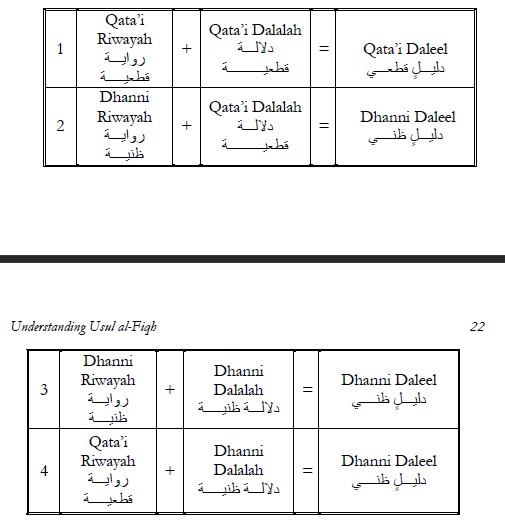
کوئی بھی خیال، سوچ یا تصور اس بات سے متعلق ہے کہ "عقیدہ قطعی دلیل پر مبنی ہونا چاہیے"۔ مثال کے طور پر، یہ تصور کہ فرشتے موجود ہیں، قطعی دلیل پر مبنی ہے نہ کہ ظنی پر۔ نیز، اصول فقہ میں، مضبوط ترین رائے کے مطابق احکام کے استنباط کے لیے کسی ماخذ کو قائم کرنے کے لیے، اس ماخذ کا بھی قطعی دلیل پر مبنی ہونا ضروری ہے۔
Any idea, thought, or concept related to the „Aqeedah has to be based upon a Qata‟i Daleel. As an example, the concept that Angels exists is based upon a Qata‟i Daleel not Dhanni. Also, in Usul al-Fiqh, to establish a source for extracting rulings according to the strongest view, the source must base upon a Qata‟i Daleel as well.
مثال کے طور پر، اجماع الصحابہ کو احکام کے ایک ماخذ کے طور پر تسلیم کرنے کے لیے، اجماع الصحابہ کی اتھارٹی کو ثابت کرنے والی دلیل کا روایت اور دلالت دونوں لحاظ سے قطعی ہونا ضروری ہے، اگرچہ کوئی حکم قطعی یا ظنی دلیل میں سے کسی سے بھی اخذ کیا جا سکتا ہے۔
As an example, to consider Ijma‟ as-Sahabah (consensus of the Companions) as a source of rulings, the Daleel to prove the authority of Ijma‟ as-Sahabah has to be Qata‟i both in Riwayah and Dalalah, though a ruling can be derived from either Qata‟i or Dhanni Daleel.
کوئی یہ سوچ سکتا ہے کہ قرآن اور سنت کے متن کو سمجھنا اتنا پیچیدہ کیوں ہے؟
One might wonder why understanding the text of Qur‟an and Sunnah is so complicated?
قرآن اور سنت کے متن کا جائزہ لینے سے یہ دیکھا جا سکتا ہے کہ یہ اپنے حجم میں محدود ہے۔ اپنے اس محدود متن کے ذریعے، قیامت تک کسی بھی وقت اور کہیں بھی پیش آنے والے مسائل کے لیے احکامات اخذ کیے جا سکتے ہیں۔
By examining the text of Qur‟an and Sunnah one can see that it is limited in its volume. With its limited text one can generate rulings to any problems affecting us anywhere and anytime until the Day of Judgment.
یہ اللہ (سبحانہ و تعالیٰ) کا ایک معجزہ ہے کہ قرآن اور سنت کے متون میں ایک ہی آیت اور حدیث سے متعدد احکامات بیان کرنے کی صلاحیت موجود ہے؛ جبکہ ایک ہی متن سے بہت سے معانی سمجھنے کی یہ صلاحیت دنیا کے کسی دوسرے قانونی متن میں نہیں پائی جاتی! ہر نسل کے مسلمانوں کے لیے چیلنج یہ ہے کہ وہ متن کو سمجھنے اور اسے اپنی زندگیوں سے جوڑنے کی کوشش کریں، کیونکہ قرآن اور سنت تمام زمانوں اور مقامات کے لیے موزوں ہیں۔
It is a miracle from Allah (swt) that the texts of the Qur‟an and Sunnah have the ability to express numerous rulings from a single Ayah and Hadith; whereas, the ability to understand many meanings from a single text cannot be found in any other legal text in the world! The challenge is for Muslims in each generation to try to understand the text and relate it to their lives since the Qur‟an and Sunnah are relevant to all times and places.
حکم شرعی کے مآخذ
Sources of Hukm Shar‟i
جیسا کہ پہلے بیان کیا گیا ہے، حکم شرعی اللہ (سبحانہ و تعالیٰ) کے وہ احکامات ہیں جو ہمارے اعمال سے متعلق ہیں۔ یہ احکامات مخصوص ذرائع سے اخذ کیے جاتے ہیں۔ وہ ذرائع جن سے احکامات کا استخراج کیا جاتا ہے، ان کا ادلہ قطعیہ (یقینی دلائل) پر مبنی ہونا ضروری ہے۔
As defined earlier, Hukm Shar‟i are the rulings of Allah (swt) addressing our actions. These rulings are derived from certain sources. The sources, which are used to extract rulings, have to be based on Adilla Qata‟iya (Decisive evidences).
حکم شرعی کے چار قطعی ذرائع یہ ہیں: قرآن، سنت، اجماع الصحابہ اور قیاس۔ ان پر درج ذیل ابواب میں بحث کی جائے گی۔ اس کے بعد ان متنازعہ ذرائع کا مختصر خلاصہ پیش کیا جائے گا جن پر علماء کا اختلاف ہے۔
The four definitive sources of Hukm Shar‟i are; the Qur‟an, Sunnah, Ijma‟ as-Sahabah and Qiyas. These will be discussed in the following chapters. This will be followed by a brief summary of the disputed sources which the scholars disagree on.