2.1 दलील की संरचना
2.1 Structure of Daleel
जैसा कि पहले उल्लेख किया गया था, दलील (Daleel) इस्लाम के किसी मत, अवधारणा, हुक्म या विचार के पक्ष में प्रमाण होती है। किसी भी दलील से जुड़े दो पहलू होते हैं: रिवायह (Riwayah, वर्णन-परंपरा) और दलालह (Dalalah, अर्थ)।
As mentioned earlier, a Daleel is an evidence for an opinion, concept, ruling, or a thought from Islam. There are two aspects related to any Daleel, Riwayah (reportage) and Dalalah (meaning).
रिवायत उन मसलों से संबंधित है कि यह जानकारी हम तक किस तरह पहुँचाई गई, जिसमें इसके रावियों (वर्णनकर्ताओं) की संख्या और उनकी विश्वसनीयता (अमानत/ईमानदारी) शामिल है।
The Riwayah covers issues related to how the information was relayed to us, which includes the number and the integrity of its reporters.
दलालah का संबंध दलील (प्रमाण) के पाठ के अर्थ से है। रिवायah और दलालah के संबंध में दो शब्द प्रयोग किए जाते हैं: क़तई और ज़न्नी।
The Dalalah is related to the meaning of the text in the Daleel. There are also two terms used in connection with Riwayah and Dalalah; Qata‟i and Dhanni.
क़तई की परिभाषा यह दी गई है कि वह निश्चित या निर्णायक होता है, जबकि ज़न्नी, क़तई के विपरीत है, और उसका अर्थ है अनिश्चित, अनुमानित या अनिर्णायक।
Qata‟i is defined as being conclusive or decisive, while Dhanni is the opposite of Qata‟i and means non-definite, speculative or indecisive.
रिवायत
Riwayah
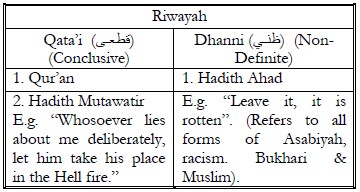
हर आयत जो क़ुरआन से हो, या हदीस-e-मुतवातिर, उसकी रिवायत (नक़्ल) के लिहाज़ से क़तई (निश्चित) मानी जाती है।
Any Ayah from the Qur‟an or Hadith Mutawatir is considered Qata‟i (conclusive) in its Riwayah (report).
रिवायत में "क़तई" का अर्थ है कि दलील प्रामाणिक है, इसमें किसी भी प्रकार के संदेह की कोई गुंजाइश नहीं। यह प्रामाणिकता नक़्ल (वर्णन-पद्धति) के तरीक़े के आधार पर स्थापित होती है।
The Qata‟i in Riwayah implies that the evidence is authentic without any shadow of doubt. This authenticity is established based on the methodology of transmission.
कुरआन जिस तरीके से हम तक पहुँचा है, उसमें किसी भी तरह की मनगढ़ंत बात की गुंजाइश नहीं रहती। यह रिवायत पीढ़ी दर पीढ़ी बिल्कुल एक ही तरीके से आगे पहुँचाई गई है। यह असंभव है कि एक पूरी पीढ़ी कुरआन की आयतों को गढ़ दे, मिटा दे या उनमें कुछ जोड़ दे। यह मान लेना भी समझ से परे है कि उस पीढ़ी का हर व्यक्ति इकट्ठा होकर कुरआन के किसी हिस्से को जोड़ने या हटाने पर सहमत हो गया हो। उस पीढ़ी के हर इंसान के सामने कुरआन की एक ही विषय-वस्तु पढ़ी जा रही थी, और इसी तरह उसकी प्रामाणिकता की पुष्टि होती रही।
The methodology by which the Qur‟an was transmitted to us precludes any possibility of fabrication. The report was transmitted generation by generation in exactly the same manner. It is impossible for an entire generation to fabricate, erase, or add contents to the Qur‟an. It is inconceivable to believe that every single individual in that generation assembled together and agreed to add or delete parts of the Qur‟an. Everyone in that generation was reciting the same contents of the Qur‟an, thus authentifying its contents.
हदीस मुतवातिर वह नहीं है जो पीढ़ी-दर-पीढ़ी एक-एक करके प्रसारित हुई हो, बल्कि वह है जो बड़ी संख्या में लोगों के द्वारा प्रसारित हुई हो। इस दलील को बताने वाले लोगों की बड़ी संख्या, उनके अलग-अलग स्थानों पर रहने, और उनकी स्थापित विश्वसनीयता और दृढ़ विश्वास के कारण यह असंभव है कि यह दलील गलत हो। कुरआन या हदीस मुतवातिर के अलावा किसी भी जानकारी का प्रसारण, जैसे हदीस आहाद, ज़न्नी (अनिश्चित) माना जाता है, यानी इस बात की थोड़ी-सी संभावना रहती है कि इस दलील में त्रुटि हो सकती है। संक्षेप में:
Hadith Mutawatir was not transmitted generation-by-generation, but rather by a large number of people. Due to the large number of people reporting the Daleel, and their diversity of residence, their established reliability and conviction, it is inconceivable that this Daleel could be wrong. Any report of information other than through the Qur‟an or Hadith Mutawatir, such as Hadith Ahad, is considered Dhanni (non-definite), meaning that there is a minute possibility that the Daleel could contain error. To summarise:
दलालाह
Dalalah
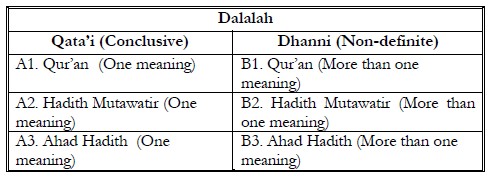
दलील का दूसरा पहलू दलालह (अर्थ) है। यदि कुरआन, हदीस मुतवातिर या हदीस आहाद का पाठ स्पष्ट, विशिष्ट है और उसका केवल एक ही अर्थ है, तो उसे क़तई माना जाता है। क़तई दलील के पाठ का केवल एक ही अर्थ होना चाहिए और उसमें किसी अन्य व्याख्या की गुंजाइश नहीं होनी चाहिए। यदि पाठ एक से अधिक अर्थों की ओर संकेत करता है, तो उसे ज़न्नी माना जाता है। चूँकि व्याख्याएँ अरबी भाषा के कारण होती हैं, इसलिए किसी भी व्याख्या को अरबी भाषा के आधार पर सिद्ध करना आवश्यक है। संक्षेप में:
The second aspect of the Daleel is the Dalalah (meaning). If the text of Qur‟an, Hadith Mutawatir or Hadith Ahad is clear, specific, and has only one meaning, then it is considered Qata‟i. The text of a Qata‟i Daleel has to have only one meaning and cannot be open to any other interpretation. If the text is open to more than one interpretation, then it is considered Dhanni. Since interpretations are due to the Arabic language, any interpretation has to be justified through the Arabic language. To summarise:
A1. क़ुरआन का क़तई (निश्चित) अर्थ वाला उदाहरण:
A1. Example of Qur‟an with a Qata‟i (conclusive) meaning:
"यदि उनकी कोई संतान न हो, तो जो कुछ तुम्हारी पत्नियाँ छोड़ें, उसमें तुम्हारा हिस्सा आधा है।" (सूरह अन-निसा: 12)
“What your wives leave, your share is a half, if they leave no child”. (TMQ An-Nisa: 12)
"जो लोग पाक-दामन औरतों पर ज़िना (व्यभिचार) का इल्ज़ाम लगाएँ और फिर (उसे साबित करने के लिए) चार गवाह न लाएँ, उन्हें अस्सी कोड़े मारो।" (तर्जुमा क़ुरआन, सूरह अन-नूर: 4)
“Those who accuse chaste woman of zina (adultery) and fail to bring four witnesses (to prove it) flog them eighty stripes.” (TMQ An-Nur: 4)
इन फ़ैसलों का मात्रात्मक पहलू, यानी आधा और अस्सी, स्पष्ट है और इसलिए इसकी कोई दूसरी व्याख्या नहीं हो सकती।
The quantitative aspect of these rulings, namely one half and eighty are clear and therefore cannot be open to any other interpretations.
A2. हदीस-ए-मुतवातिर का कतई (निश्चित) अर्थ वाला उदाहरण:
A2. Example of Hadith Mutawatir with Qata‟i (conclusive) meaning:
जो व्यक्ति जानबूझकर मेरे बारे में झूठ बोले, वह अपना ठिकाना जहन्नम की आग में बना ले। (बुख़ारी व मुस्लिम) ﷺ
“Whosoever lies about me (Prophet Muhammad saw) deliberately let him take his place in the hell-fire.” (Bukhari & Muslim)
यह मुतवातिर हदीस अपने विषय में बहुत स्पष्ट है; इसलिए इस पाठ से केवल एक ही समझ निकलती है कि जो कोई जानबूझकर नबी ﷺ के बारे में झूठ बोले, वह जहन्नम की आग में जाएगा।
This Mutawatir Hadith is very clear in its subject; thus there is only one understanding from the text that whoever lies about what Prophet (saw) said, intentionally, he will go to hell-fire.
A3. हदीस आहाद के कतई (निश्चित) अर्थ का उदाहरण:
A3. Example of Hadith Ahad with Qata‟i (conclusive) meaning:
एक गैर-मुतवातिर हदीस से यह रिवायत किया गया है कि नबी ﷺ ने शव्वाल में 6 दिन के रोज़े रखे। इस हदीस से निश्चित अर्थ ये हैं:
It is reported from a non-Mutawatir Hadith that the Prophet (saw) fasted 6 days in Shawwal. The conclusive meanings from this Hadith are the following:
a) शव्वाल में 6 दिन रोज़ा रखने की जायज़ता।
a) Permissibility of fasting 6 days in Shawwal.
ब) शव्वाल के पहले दिन को छोड़कर, क्योंकि वह ईद का दिन है, और ईद के दिन रोज़ा रखना हराम है।
b) Except on the first day of Shawwal, since it is the day of Eid, and it is Haram to fast on Eid.
B1. क़ुरआन की आयत का उदाहरण जिसका अर्थ ज़न्नी (अनिश्चित/अनुमानित) है:
B1. Example of Quranic Ayah with a Dhanniy (non-definite) meaning:
अल्लाह (سبحانه وتعالى) फ़रमाता है:
Allah (swt) says:
"हे ईमान वालो! जब तुम नमाज़ के लिए उठो तो अपने चेहरों को और अपने हाथों को कोहनियों तक धो लो, और अपने सिरों का मसह करो (यानी भीगे हाथ उन पर फेरो), और अपने पैरों को टखनों तक धो लो। और यदि तुम जनाबत की हालत में हो (यानी वीर्य निकलने से अपवित्र हो) तो स्नान करके अपने आप को पवित्र करो। लेकिन यदि तुम बीमार हो या सफ़र में हो, या तुममें से कोई शौच से आया हो, या तुमने स्त्रियों से संपर्क किया हो और तुम्हें पानी न मिले, तो पाक मिट्टी से तयम्मुम करो और उससे अपने चेहरों और हाथों पर मसह कर लो।" (क़ुरआन, अल-माइदा: 6)
“O you who believe! When you intend to offer As-Salat (the prayer), wash your faces and your hands (forearms) up to the elbows, rub (by passing wet hands over) your heads, and (wash) your feet up to ankles. If you are in a state of Janaba (i.e. had a sexual discharge), purify yourself (bathe your whole body). But if you are ill or on a journey or any of you comes from answering the call of nature, or you have been in contact with women and you find no water, then perform Tayammum with clean earth and rub therewith your faces and hands.” (TMQ Al-Maida: 6)
आयत में कहा गया है कि यदि तुमने औरतों को "लमस्तुम" किया, तो इससे वुज़ू टूट जाता है। शब्द "लमस्तुम" के दो अर्थ बताए गए हैं:
The verse says if you „lamastum‟ the women, it breaks the Wudhu. The word „lamastum‟ has been interpreted as having two meanings:
a) स्पर्श करना b) यौन संभोग इस प्रकार इस आयत में ज़न्नी दलालह है, अर्थात यह अर्थ हो सकता है कि स्त्रियों को स्पर्श करने से वुज़ू टूट जाता है, या स्त्री के साथ यौन संभोग करने से वुज़ू टूट जाता है।
a) Touching b) Sexual intercourse Thus the Ayah has a Dhanni Dalalah, i.e. it could mean touching women breaks the Wudhu, or sexual intercourse with a woman breaks the Wudhu.
B2. हदीस-ए-मुतवातिर का ज़न्नी (अनिश्चित) अर्थ वाला उदाहरण:
B2. Example of Hadith Mutawatir with a Dhanniy (non-definite) meaning:
नबी (saw) के बारे में वर्णित है कि वे अपना इहराम एक विशेष तरीके से खोलते थे। परन्तु जब सहाबा (ra) ने नबी (saw) को बताया कि उन्होंने इहराम नबी (saw) के खोलने के तरीके से भिन्न तरीके से खोला, तो नबी (saw) ने उनके कार्य को स्वीकृति दी। यद्यपि यह घटना मुतवातिर है, फिर भी इहराम खोलने के नियम अनेक हैं।
It was reported that the Prophet (saw) used to take off his Ihram in a specific manner. However, when the Sahabah (ra) told the Prophet (saw) that they took it off in a manner different from the way he (saw) took it off, the Prophet (saw) approved of their actions. Though this incident is Mutawatir, the rules to take off one‟s Ihram are many.
बी3. खबर-ए-वाहिद (हदीस आहाद) का उदाहरण जिसका अर्थ ज़न्नी (अनिश्चित) हो:
B3. Example of a Hadith Ahad with a Dhanniy (non-definite) meaning:
इब्न-ए-मुताबातिर न होने वाली एक हदीस में रिवायत किया गया है कि नबी ﷺ ने शव्वाल में 6 दिन रोज़े रखे। इस हदीस के अनिश्चित (गैर-क़तई) अर्थ ये हैं:
It is reported from a non-Mutawatir Hadith that the Prophet (saw) fasted 6 days in Shawwal. The non-definite meanings of this Hadith are:
क) क्या शव्वाल के छह रोज़े लगातार रखना ज़रूरी है या नहीं?
a) Whether the six days of fasting are consecutive or not?
ब) शव्वाल के किस भाग में रोज़ा रखा जाता है?
b) Fasting in which part of Shawwal?
अब तक हमने रिवायत और दलालत, दोनों के क़त'ई और ज़न्नी पहलुओं की अलग-अलग चर्चा की है। लेकिन यह निर्धारित करने का तरीक़ा कि दलील (रिवायत और दलालत, दोनों में) क़त'ई (निश्चित) है या ज़न्नी (अनिश्चित), निम्नलिखित है:
So far we have discussed the Qata‟i and Dhanni aspects of both Riwayah and Dalalah separately. However, the method to determine whether the Daleel (both in Riwayah and Dalalah) is Qata‟i (conclusive) or Dhanni (non-definite) is the following:
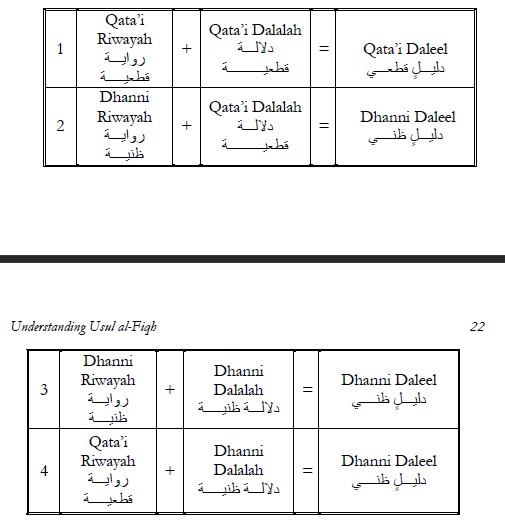
अक़ीदा (‘Aqeedah) से संबंधित कोई भी विचार, धारणा या अवधारणा एक क़त'ई दलील पर आधारित होनी चाहिए। उदाहरण के लिए, फ़रिश्तों के अस्तित्व की अवधारणा एक क़त'ई दलील पर आधारित है, न कि ज़न्नी दलील पर। इसी प्रकार, उसूल अल-फ़िक़्ह में, सबसे मज़बूत मत के अनुसार, अहकाम निकालने के लिए किसी स्रोत को स्थापित करने हेतु उस स्रोत का आधार भी एक क़त'ई दलील पर होना चाहिए।
Any idea, thought, or concept related to the „Aqeedah has to be based upon a Qata‟i Daleel. As an example, the concept that Angels exists is based upon a Qata‟i Daleel not Dhanni. Also, in Usul al-Fiqh, to establish a source for extracting rulings according to the strongest view, the source must base upon a Qata‟i Daleel as well.
उदाहरण के लिए, इज्मा-ए-सहाबा (सहाबा की सर्वसम्मति) को हुक्मों का स्रोत मानने के लिए, इज्मा-ए-सहाबा की हुज्जियत (प्रामाणिकता) साबित करने वाली दलील का रिवायत और दलालत, दोनों के लिहाज़ से क़तई होना ज़रूरी है, हालाँकि कोई हुक्म क़तई दलील से भी निकाला जा सकता है और ज़न्नी दलील से भी।
As an example, to consider Ijma‟ as-Sahabah (consensus of the Companions) as a source of rulings, the Daleel to prove the authority of Ijma‟ as-Sahabah has to be Qata‟i both in Riwayah and Dalalah, though a ruling can be derived from either Qata‟i or Dhanni Daleel.
कोई सोच सकता है कि कुरआन और सुन्नत के पाठ को समझना इतना जटिल क्यों है?
One might wonder why understanding the text of Qur‟an and Sunnah is so complicated?
कुरआन और सुन्नत के पाठ की जांच करने पर स्पष्ट होता है कि इसकी मात्रा सीमित है। इस सीमित पाठ से हम हर स्थान और हर समय पर हमें प्रभावित करने वाली किसी भी समस्या के लिए क़यामत के दिन तक के हुक्म निकाल सकते हैं।
By examining the text of Qur‟an and Sunnah one can see that it is limited in its volume. With its limited text one can generate rulings to any problems affecting us anywhere and anytime until the Day of Judgment.
अल्लाह (سبحانه وتعالى) की ओर से यह एक चमत्कार है कि क़ुरआन और सुन्नत के ग्रंथों में एक ही आयत और एक ही हदीस से अनेक अहकाम निकालने की क्षमता है; जबकि एक ही पाठ से अनेक अर्थ समझने की यह क्षमता दुनिया के किसी भी अन्य विधि-ग्रंथ में नहीं पाई जाती! हर युग के मुसलमानों के लिए चुनौती यह है कि वे इस पाठ को समझने का प्रयास करें और उसे अपने जीवन से जोड़ें, क्योंकि क़ुरआन और सुन्नत हर समय और हर स्थान के लिए प्रासंगिक हैं।
It is a miracle from Allah (swt) that the texts of the Qur‟an and Sunnah have the ability to express numerous rulings from a single Ayah and Hadith; whereas, the ability to understand many meanings from a single text cannot be found in any other legal text in the world! The challenge is for Muslims in each generation to try to understand the text and relate it to their lives since the Qur‟an and Sunnah are relevant to all times and places.
शरई हुक्म के स्रोत
Sources of Hukm Shar‟i
जैसा कि पहले परिभाषित किया गया है, हुक्म शरई वे अहकाम (आदेश) हैं जो अल्लाह (SWT) की ओर से हमारे कार्यों से संबंधित हैं। ये अहकाम कुछ स्रोतों से निकाले जाते हैं। जिन स्रोतों से अहकाम निकाले जाते हैं, उन्हें अदिल्लाह क़त'इया (निश्चित प्रमाणों) पर आधारित होना चाहिए।
As defined earlier, Hukm Shar‟i are the rulings of Allah (swt) addressing our actions. These rulings are derived from certain sources. The sources, which are used to extract rulings, have to be based on Adilla Qata‟iya (Decisive evidences).
हुक्म-ए-शरई के चार निश्चित स्रोत हैं: क़ुरआन, सुन्नत, इज्मा‘-ए-सहाबा और क़ियास। इनकी चर्चा आगे के अध्यायों में की जाएगी। इसके बाद उन विवादित स्रोतों का संक्षिप्त सारांश दिया जाएगा जिन पर विद्वानों में मतभेद है।
The four definitive sources of Hukm Shar‟i are; the Qur‟an, Sunnah, Ijma‟ as-Sahabah and Qiyas. These will be discussed in the following chapters. This will be followed by a brief summary of the disputed sources which the scholars disagree on.