۲.۱ ساختار دلیل
2.1 Structure of Daleel
همانطور که پیشتر گفته شد، دلیل، برهانی است بر یک نظر، مفهوم، حکم یا اندیشهای از اسلام. دو جنبه در هر دلیل مطرح است: الرِّوایة (نقل و روایت) و الدَّلالة (معنا و دلالت).
As mentioned earlier, a Daleel is an evidence for an opinion, concept, ruling, or a thought from Islam. There are two aspects related to any Daleel, Riwayah (reportage) and Dalalah (meaning).
روایت، مسائلی را دربر میگیرد که به چگونگی انتقال این اطلاعات به ما مربوط میشود، از جمله تعداد راویان و درستی (عدالت) آنان.
The Riwayah covers issues related to how the information was relayed to us, which includes the number and the integrity of its reporters.
دلالت به معنای متن در دلیل مربوط است. همچنین دو اصطلاح در ارتباط با روایت و دلالت به کار میرود: قطعی (قطعی) و ظنی.
The Dalalah is related to the meaning of the text in the Daleel. There are also two terms used in connection with Riwayah and Dalalah; Qata‟i and Dhanni.
قطعی بودن به معنای یقینی یا قاطع بودن است، در حالی که ظنی بودن، که نقطهٔ مقابل قطعی است، به معنای غیر یقینی، گمانی یا نامعلوم بودن است.
Qata‟i is defined as being conclusive or decisive, while Dhanni is the opposite of Qata‟i and means non-definite, speculative or indecisive.
روایت
Riwayah
هر آیهای از قرآن یا حدیث متواتر، از نظر روایت (نقل)، قطعی (یقینی) به شمار میرود.
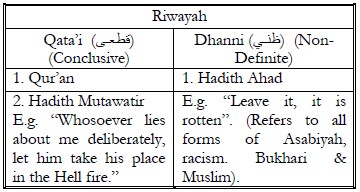
Any Ayah from the Qur‟an or Hadith Mutawatir is considered Qata‟i (conclusive) in its Riwayah (report).
القطعی در روایت به این معناست که دلیل بدون هیچ شائبهای از شک، صحیح و قطعیالصدور است. این قطعیت بر پایهی روششناسی نقل و انتقال حدیث ثابت میشود.
The Qata‟i in Riwayah implies that the evidence is authentic without any shadow of doubt. This authenticity is established based on the methodology of transmission.
روشی که قرآن از طریق آن به ما منتقل شده، هرگونه احتمال جعل را منتفی میسازد. این گزارش نسل به نسل به همان شیوه دقیقاً یکسان منتقل شده است. برای یک نسل کامل محال است که محتوای قرآن را جعل، حذف یا به آن اضافه کند. باور کردن اینکه هر یک از افراد آن نسل گرد هم آمده و توافق کرده باشند که بخشهایی از قرآن را بیفزایند یا حذف کنند، ناممکن به نظر میرسد. همه افراد آن نسل محتوای یکسانی از قرآن را تلاوت میکردند و همین امر، صحت محتوای آن را تأیید میکند.
The methodology by which the Qur‟an was transmitted to us precludes any possibility of fabrication. The report was transmitted generation by generation in exactly the same manner. It is impossible for an entire generation to fabricate, erase, or add contents to the Qur‟an. It is inconceivable to believe that every single individual in that generation assembled together and agreed to add or delete parts of the Qur‟an. Everyone in that generation was reciting the same contents of the Qur‟an, thus authentifying its contents.
حدیثِ متواتر از نسلی به نسل دیگر نقل نشده، بلکه توسط شمار بسیاری از افراد روایت شده است. به سبب شمار بسیار راویانِ این دلیل، و تنوعِ محل سکونتشان، و پایداری و اعتمادپذیری و یقینِ آنان، ناممکن است که این دلیل خطا باشد. هر گزارشی از اطلاعات که از راهِ قرآن یا حدیثِ متواتر نباشد، مانند حدیثِ آحاد، ظنّی (غیرقطعی) به شمار میرود، یعنی احتمالِ بسیار اندکی وجود دارد که این دلیل خطا داشته باشد. بهطور خلاصه:
Hadith Mutawatir was not transmitted generation-by-generation, but rather by a large number of people. Due to the large number of people reporting the Daleel, and their diversity of residence, their established reliability and conviction, it is inconceivable that this Daleel could be wrong. Any report of information other than through the Qur‟an or Hadith Mutawatir, such as Hadith Ahad, is considered Dhanni (non-definite), meaning that there is a minute possibility that the Daleel could contain error. To summarise:
دلالہ
Dalalah
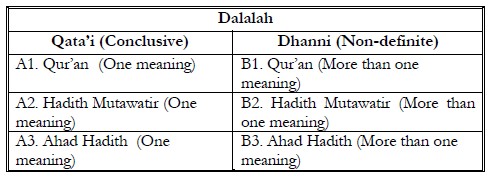
دومین جنبهٔ دلیل، دلالت (معناداری) است. اگر متنِ قرآن، حدیثِ متواتر یا حدیثِ آحاد روشن، مشخص و تنها دارای یک معنا باشد، آنگاه قطعی (قطعیالدلاله) محسوب میشود. متنِ دلیلِ قطعی باید تنها یک معنا داشته باشد و نمیتواند پذیرای هیچ تفسیر دیگری باشد. اگر متن پذیرای بیش از یک تفسیر باشد، ظنی (ظنیالدلاله) محسوب میشود. از آنجا که تفسیرها به زبان عربی وابستهاند، هر تفسیری باید از راه زبان عربی توجیه شود. خلاصه آنکه:
The second aspect of the Daleel is the Dalalah (meaning). If the text of Qur‟an, Hadith Mutawatir or Hadith Ahad is clear, specific, and has only one meaning, then it is considered Qata‟i. The text of a Qata‟i Daleel has to have only one meaning and cannot be open to any other interpretation. If the text is open to more than one interpretation, then it is considered Dhanni. Since interpretations are due to the Arabic language, any interpretation has to be justified through the Arabic language. To summarise:
مثال قرآنی با معنای قطعی:
A1. Example of Qur‟an with a Qata‟i (conclusive) meaning:
«وَلَكُمْ نِصْفُ مَا تَرَكَ أَزْوَاجُكُمْ إِنْ لَمْ يَكُنْ لَهُنَّ وَلَدٌ» (سورة النساء: ۱۲)
“What your wives leave, your share is a half, if they leave no child”. (TMQ An-Nisa: 12)
«و کسانی که زنان پاکدامن را متهم به زنا میکنند و چهار شاهد نمیآورند، آنان را هشتاد تازیانه بزنید.» (ترجمه معانی قرآن کریم، سوره النور: ۴)
“Those who accuse chaste woman of zina (adultery) and fail to bring four witnesses (to prove it) flog them eighty stripes.” (TMQ An-Nur: 4)
این که این احکام از نظر کمّی، یعنی نصف و هشتاد، روشن است، از این رو نمیتواند هیچ تفسیر دیگری را برنتابد.
The quantitative aspect of these rulings, namely one half and eighty are clear and therefore cannot be open to any other interpretations.
مثالی از حدیث متواتر با معنای قطعی (یقینی):
A2. Example of Hadith Mutawatir with Qata‟i (conclusive) meaning:
«هر کس عمداً بر من دروغ ببندد، جایگاه خود را در آتش دوزخ قرار دهد.» (بخاری و مسلم) ﷺ
“Whosoever lies about me (Prophet Muhammad saw) deliberately let him take his place in the hell-fire.” (Bukhari & Muslim)
این حدیث متواتر در موضوعش بسیار روشن است؛ بنابراین از متن جز یک فهم وجود ندارد: هر کس عمداً دربارهٔ آنچه پیامبر ﷺ گفته دروغ ببندد، به آتش دوزخ خواهد رفت.
This Mutawatir Hadith is very clear in its subject; thus there is only one understanding from the text that whoever lies about what Prophet (saw) said, intentionally, he will go to hell-fire.
مثال برای حدیث آحاد با متنِ قطعیالدلالة:
A3. Example of Hadith Ahad with Qata‟i (conclusive) meaning:
روایت شده است از یک حدیث غیرمتواتر که پیامبر ﷺ شش روز در شوال روزه گرفت. معانی قطعی این حدیث به شرح زیر است:
It is reported from a non-Mutawatir Hadith that the Prophet (saw) fasted 6 days in Shawwal. The conclusive meanings from this Hadith are the following:
الف) جواز روزه گرفتن شش روز در ماه شوال
a) Permissibility of fasting 6 days in Shawwal.
ب) مگر در روز اول شوال، زیرا آن روز عید است و روزه گرفتن در عید حرام است.
b) Except on the first day of Shawwal, since it is the day of Eid, and it is Haram to fast on Eid.
B1. نمونهٔ آیهٔ قرآنی با معنای ظنّی (غیرقطعی):
B1. Example of Quranic Ayah with a Dhanniy (non-definite) meaning:
الله (سبحانه و تعالی) میفرماید:
Allah (swt) says:
{ای کسانی که ایمان آوردهاید! هنگامی که قصد نماز دارید، صورتها و دستهای خود را تا آرنج بشویید، و سرهای خود را مسح کنید (با گذراندن دستهای تر بر سر)، و پاهای خود را تا برآمدگی مچ بشویید. و اگر جنب هستید، خود را پاک کنید (تمام بدن را غسل دهید). اما اگر بیمار یا در سفر هستید، یا یکی از شما از قضای حاجت بازگشته است، یا با زنان آمیزش کردهاید و آب نمییابید، آنگاه با خاک پاک تیمم کنید و با آن صورتها و دستهای خود را مسح کنید.} (قرآن کریم، سورۀ المائدہ: ۶)
“O you who believe! When you intend to offer As-Salat (the prayer), wash your faces and your hands (forearms) up to the elbows, rub (by passing wet hands over) your heads, and (wash) your feet up to ankles. If you are in a state of Janaba (i.e. had a sexual discharge), purify yourself (bathe your whole body). But if you are ill or on a journey or any of you comes from answering the call of nature, or you have been in contact with women and you find no water, then perform Tayammum with clean earth and rub therewith your faces and hands.” (TMQ Al-Maida: 6)
آیه میفرماید که اگر با زنان «لامستم» کنید، وضو باطل میشود. واژه «لامستم» به دو معنا تفسیر شده است:
The verse says if you „lamastum‟ the women, it breaks the Wudhu. The word „lamastum‟ has been interpreted as having two meanings:
الف) لمس کرنا ب) جماع کرنا۔ پس اس آیت میں دلالت ظنی ہے، یعنی یہ احتمال رکھتی ہے کہ عورتوں کو چھونا وضو کو توڑ دیتا ہے، یا عورت کے ساتھ جماع کرنا وضو کو توڑ دیتا ہے۔
a) Touching b) Sexual intercourse Thus the Ayah has a Dhanni Dalalah, i.e. it could mean touching women breaks the Wudhu, or sexual intercourse with a woman breaks the Wudhu.
B2. مثالی از حدیث متواتر با معنای ظنّی (غیر قطعی):
B2. Example of Hadith Mutawatir with a Dhanniy (non-definite) meaning:
روایت شده است که پیامبر ﷺ به شیوهای خاص احرام خود را از تن بیرون میآورد. با این حال، هنگامی که صحابه (رضی الله عنهم) به پیامبر ﷺ گفتند که آنان به شیوهای متفاوت از شیوهای که او ﷺ احرامش را بیرون میآورد، احرام خود را از تن بیرون آوردهاند، پیامبر ﷺ کارشان را تأیید کرد. هرچند این ماجرا متواتر است، احکام بیرون آوردن احرام از تن بسیار است.
It was reported that the Prophet (saw) used to take off his Ihram in a specific manner. However, when the Sahabah (ra) told the Prophet (saw) that they took it off in a manner different from the way he (saw) took it off, the Prophet (saw) approved of their actions. Though this incident is Mutawatir, the rules to take off one‟s Ihram are many.
مثالی از حدیث آحاد با معنای ظنّی (غیر قطعی):
B3. Example of a Hadith Ahad with a Dhanniy (non-definite) meaning:
از حدیثی غیرمتواتر نقل شده است که پیامبر ﷺ شش روز از شوال را روزه گرفت. معانی ظنی این حدیث عبارتاند از:
It is reported from a non-Mutawatir Hadith that the Prophet (saw) fasted 6 days in Shawwal. The non-definite meanings of this Hadith are:
آیا شش روز روزه (پس از رمضان) پیاپی باشند یا نه؟
a) Whether the six days of fasting are consecutive or not?
ب) روزه گرفتن در کدام بخش از ماه شوال؟
b) Fasting in which part of Shawwal?
تاکنون، جنبههای قطعی و ظنی هم در روایت و هم در دلالت را جداگانه بررسی کردهایم. با این حال، روش تعیین اینکه دلیل (چه در روایت و چه در دلالت) قطعی است یا ظنی، به شرح زیر است:
So far we have discussed the Qata‟i and Dhanni aspects of both Riwayah and Dalalah separately. However, the method to determine whether the Daleel (both in Riwayah and Dalalah) is Qata‟i (conclusive) or Dhanni (non-definite) is the following:
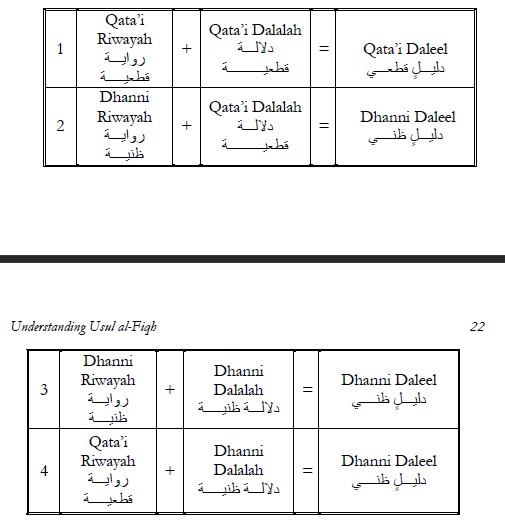
هر اندیشه، باور یا مفهومی که به عقیده (اعتقادات اسلامی) مربوط است، باید بر دلیل قطعی (قطعیالدلالة و قطعیالثبوت) استوار باشد. برای نمونه، این که فرشتگان وجود دارند، بر دلیل قطعی استوار است، نه بر دلیل ظنی. همچنین در اصول فقه، برای اینکه منبعی برای استنباط احکام شرعی به قول قویتر پذیرفته شود، آن منبع نیز باید بر دلیل قطعی استوار باشد.
Any idea, thought, or concept related to the „Aqeedah has to be based upon a Qata‟i Daleel. As an example, the concept that Angels exists is based upon a Qata‟i Daleel not Dhanni. Also, in Usul al-Fiqh, to establish a source for extracting rulings according to the strongest view, the source must base upon a Qata‟i Daleel as well.
برای مثال، برای اینکه اجماع صحابه (Ijma‟ as-Sahabah) بهعنوان منبعی برای احکام شرعی در نظر گرفته شود، دلیلی که حجیت اجماع صحابه را ثابت میکند باید هم از نظر روایت و هم از نظر دلالت قطعی باشد، هرچند که حکم شرعی میتواند از دلیل قطعی یا ظنی استنباط شود.
As an example, to consider Ijma‟ as-Sahabah (consensus of the Companions) as a source of rulings, the Daleel to prove the authority of Ijma‟ as-Sahabah has to be Qata‟i both in Riwayah and Dalalah, though a ruling can be derived from either Qata‟i or Dhanni Daleel.
چرا فهم متن قرآن و سنت اینقدر پیچیده به نظر میرسد، جای تعجب است؟
One might wonder why understanding the text of Qur‟an and Sunnah is so complicated?
با بررسی متن قرآن و سنت میتوان دید که حجم آن محدود است. با این متن محدود میتوان برای هر مشکلی که در هر جا و هر زمان تا روز قیامت بر ما اثر بگذارد، احکامی استنباط کرد.
By examining the text of Qur‟an and Sunnah one can see that it is limited in its volume. With its limited text one can generate rulings to any problems affecting us anywhere and anytime until the Day of Judgment.
این که متون قرآن و سنت توانایی آن را دارند که از یک آیه و یک حدیث احکام متعددی را بیان کنند، معجزهای از جانب الله (سبحانه و تعالی) است؛ در حالی که توانایی فهم معانی بسیار از یک متن واحد را در هیچ متن حقوقی دیگری در جهان نمیتوان یافت! چالش پیش روی مسلمانان در هر نسل این است که تلاش کنند متن را بفهمند و آن را با زندگی خود پیوند دهند، زیرا قرآن و سنت برای همه زمانها و مکانها مرتبطاند.
It is a miracle from Allah (swt) that the texts of the Qur‟an and Sunnah have the ability to express numerous rulings from a single Ayah and Hadith; whereas, the ability to understand many meanings from a single text cannot be found in any other legal text in the world! The challenge is for Muslims in each generation to try to understand the text and relate it to their lives since the Qur‟an and Sunnah are relevant to all times and places.
منابع حکم شرعی
Sources of Hukm Shar‟i
همانطور که پیشتر تعریف شد، حکم شرعی احکامی است از جانب الله (سبحانه و تعالی) که به افعال ما مربوط میشود. این احکام از منابع معینی استنباط میشوند. منابعی که برای استخراج احکام به کار میروند، باید مبتنی بر ادلّه قطعیّه (دلیلهای قطعی) باشند.
As defined earlier, Hukm Shar‟i are the rulings of Allah (swt) addressing our actions. These rulings are derived from certain sources. The sources, which are used to extract rulings, have to be based on Adilla Qata‟iya (Decisive evidences).
چهار منبع قطعی حکم شرعی عبارتاند از: قرآن، سنت، اجماع صحابه و قیاس. این منابع در فصلهای بعدی بررسی خواهند شد. پس از آن، خلاصهای کوتاه از منابع اختلافی که علما در آنها اختلاف دارند ارائه میشود.
The four definitive sources of Hukm Shar‟i are; the Qur‟an, Sunnah, Ijma‟ as-Sahabah and Qiyas. These will be discussed in the following chapters. This will be followed by a brief summary of the disputed sources which the scholars disagree on.