1.1 預言者の必要性における霊的根拠
1.1 The Spiritual Necessity Of Prophethood
私たちの内には、霊的な充足を求める落ち着かない渇望がある。それが無視されると、魂は激しい渇きに襲われ、次から次へと蜃気楼を追い求めることになる。そして、そのたびに束の間オアシスが見えたという希望を抱いては、また新たな失望に突き落とされる。これが人間の悲劇である。外の世界に内なる平安を求めるとき、あるいは肉体的な欲望の追求によって自己実現を図ろうとするとき、人間はそのような対象を超越し、より高い目的のために創られたにもかかわらず、その悲劇に陥るのである。
Within us all is a restless craving for spiritual fulfillment. When ignored, the spirit experiences intense thirsts which send it chasing one mirage after another, each offering it momentary hope of an oasis before yet another letdown. This is the tragedy of the human condition whenever it seeks inner peace from the outer world, or seeks to self-actualize through carnal pursuits, when it was created to transcend all that for a higher purpose:
神への誠実な献身。アッラーはクルアーンの中でこう仰っている。「私が創造したのは、ジンと人間が私を崇拝するためだけである。」16
sincere devotion to God. Allah says in the Qur’an, “And I did not create the jinn and mankind except to worship Me.”16
神への隷属、すなわち単に神の存在を生まれつき認識しているだけではなく、神に仕えることは、義務であるだけでなく、人間にとって根本的な必要でもある。食物や酸素が肉体を養うために必要であるように、魂を養うために必要なのである。それは、私たちが物理的な身体を持つ霊的存在であり、霊的な次元を偶然享受している物理的存在ではないことに、私たちを適合させてくれる。もちろん、創造主が預言者を通じて、神と意味のある関係を持つ方法を私たちに伝えてくださらなければ、そのいずれも不可能である。この伝達がなければ、私たちは神をより深いレベルで知り、愛することができないし、神のために生きることを通して初めて、生きるということが真に何を意味するのかを経験できるのである。預言者ムハンマド ﷺ がかつて言われたとおり、「アッラーを念じる者と念じない者の譬えは、生者と死者のようなものである」。17
Servitude to God, not just the inborn recognition of His existence, is therefore not only a duty but also a fundamental human need. It is necessary to nourish our spirit just as food and oxygen are necessary to nourish our body. It attunes us to our reality as spiritual beings in physical bodies, not physical beings that happen to enjoy a spiritual dimension. Of course, none of that is possible without the Creator communicating to us through prophets how to have a meaningful relationship with Him. Without this communication, we would be unable to know and love Him on deeper levels, and it is only through living for Him that we experience what it truly means to be alive. As the Prophet Muhammad صلى الله عليه وسلم once said, “The similitude of someone who is mindful of Allah and someone not mindful of Allah is that of the living and the dead.”17
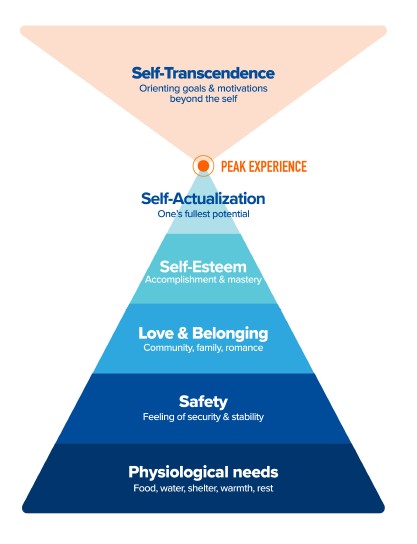
アブラハム・マズロー(Abraham Maslow)が有名な欲求の階層を修正した際、彼は自己超越(self-transcendence)への欲求を、自己実現(self-actualization)よりも上に置き、あらゆる欲求の中で最も強い動機づけとしたのです。18
When Abraham Maslow amended his famous hierarchy of needs, he set the desire for self-transcendence as the greatest motivator of them all, above self-actualization.18
しかし、預言者と神の啓示がなければ、その洞察でさえいくらか教えに乏しいままである。そのため、一元論(宇宙と一体になること)や利他主義(無私であること)が、神への献身と同じように満ち足りたものだと誤って理解されうる。利他的な人々は人生への満足度が高いと報告することが多く、それは当然に予想されることである。なぜなら、無私であることは、定義上、自己中心的であることよりも超越的な目的だからである。
However, without the prophets and divine revelation, even that insight remains somewhat uninstructive. It allows for notions such as monism (being one with the universe) or altruism (being selfless) to be misperceived as equally fulfilling as devotion to God. Altruistic people often report higher life satisfaction, and that is expected since being selfless is, by definition, a more transcendent purpose than being self-centered.
しかし、自己超越への本質的な欲求は、自分以上のもの(人類共同体への奉仕など)へのどのような関わりによっても完全に満たされることはない。唯一の平安は、最も偉大なるお方、全能のアッラーへの献身にかかっている。奉仕は、その一部となりうるが、それに取って代わることは決してできない。アッラーは言われる、「まことに、心が安らぐのはアッラーを想起することによってのみである」と。19 著名なイスラーム神学者であるイブン・アル=カイイム(1350年没)は次のように書いている。「心の中には、神に近づくこと以外では何によっても鎮められない不安が存在する。そして、神の御恵みを味わうこと以外では何によっても取り除かれない孤独が心を覆っている。」
But the essential need to self-transcend will never be fully satisfied by just any involvement in ends greater than oneself (such as serving the human collective). There is a unique tranquillity that hinges squarely on one’s devotion to the absolute greatest: the Almighty. Serving others can be part of that, but can never replace it, as Allah says, “Unquestionably, it is only by the remembrance of Allah that hearts are assured.”19 Ibn al-Qayyim (d. 1350), a renowned Muslim theologian, writes, In the heart, there exists an anxiousness that nothing can calm but drawing nearer to God. And a loneliness overcasts it that nothing can remove but enjoying His
彼と人とが二人きりになる時間。そこには、彼を知る喜びと、彼に真に身を捧げること以外には癒されることのない悲しみが宿っている。また、そこには、彼に専念し、彼のもとへと彼から逃れることによってしか鎮まらない不安がかき乱している。そして、後悔の炎が内でくすぶり続け、それを消すことができるのは、彼の命令、禁止、定めに満足し、その全てを彼に会うまで忍耐強く保ち続けることだけである。さらに、そこには切迫した要求がある。それは、彼だけが追い求めの対象となるまで止むことがない。また、そこには切実な必要がある。それを満たすことができるのは、彼を愛し、絶えず彼を念じ、彼に誠実に帰依することだけである。たとえ人にこの世界の全てと、そこにある全てが与えられたとしても、その必要が満たされることは決してない。20
company in private. And a sadness dwells within it that nothing can alleviate but the joy of knowing Him and genuinely devoting oneself to Him. And a worry unsettles it that nothing can reassure but focusing on Him and fleeing from Him to Him. And the flames of regret continue to flare inside it, and nothing can extinguish them but becoming content with His commands, prohibitions, and destiny, and patiently holding onto all that until the time one meets Him. And in it exists a pressing demand; it will not stop until He alone becomes its pursuit. And in it is a dire need; nothing will satisfy it except loving Him, constantly remembering Him, and being sincerely devout to Him. And if a person were given this entire world and all it contains, it would never fulfill that need.20
したがって、この精神的・霊的な悲劇を回避し、全能の神のために生きるためには、預言者の存在は実存的な必然である。この地球上で生命とそれを支えるものとして私たちが必要とするすべてを与えてくださった、同じ最も慈悲深い神は、預言者を通して、私たちが最も必要とするもの、すなわち神への導きと、この世と来世における神の御心に適うことを確保してくださったのである。
Hence, to avert this psychospiritual tragedy, and to live for Almighty God, prophethood is an existential necessity. The same most compassionate God who afforded us all we need on this planet for life and what sustains it, has ensured for us through prophethood what we need most: guidance to Him and His pleasure in this life and the next.
16 クルアーン 51:56、サヒーフ・インターナショナル訳
16 The Qur’an 51:56, Saheeh International Translation.
17 al-Bukhārī, Ṣaḥīḥ al-Bukhārī, 8:86 #6407; Muslim ibn al-Ḥajjāj al-Qushayrī, Ṣaḥīḥ Muslim (Beirut: Dār Iḥyāʼ al-Kutub al-ʻArabīyah, 1955), 1:539 #779.
17 al-Bukhārī, Ṣaḥīḥ al-Bukhārī, 8:86 #6407; Muslim ibn al-Ḥajjāj al-Qushayrī, Ṣaḥīḥ Muslim (Beirut: Dār Iḥyāʼ al-Kutub al-ʻArabīyah, 1955), 1:539 #779.
18 Lloyd Greene and George Burke, 「自己実現を超えて」, Journal of Health and Human Services Administration (2007): 116-128.
18 Lloyd Greene and George Burke, “Beyond Self-Actualization,” Journal of Health and Human Services Administration (2007): 116-128.
19 ザ・クルアーン 13:28、サヒーフ・インターナショナル訳
19 The Qur’an 13:28, Saheeh International Translation.
20 イブン・カイイム・アル=ジャウズィーヤ『マダーリジュ・アル=サーリキーン――「あなたのみを崇拝し、あなたにのみ助けを求めます」の諸段階の間で』(ベイルート:ダール・アル=クトゥブ・アル=アラビー、1996年)、3:156。
20 Ibn Qayyim al-Jawzīyah, Madārij al-Sālikīn Bayna Manāzil Īyāka Na’budu wa Īyāka Nasta’īn (Beirut: Dār al-Kutub al-ʻArabī, 1996), 3:156.