2.2 彼の質素さと謙虚さ
2.2 His Simplicity and Humility
預言者ムハンマド ﷺ の質素で慎ましい生活は、彼の使命が私利私欲によるものではなかったことを示す重要な証拠です。特に、世界の歴史において贅沢で華美な生活を送った多くの偽預言者たちと比べると、その違いは明らかです。考えてみてください。この人物は、生涯の終わりにはアラビア全土を支配していました。さらにそれ以前から、マディーナには数千人の信奉者がいて、彼らは彼を深く慕い、彼のためなら何でもしたであろう人々でした。それでもなお、彼の生活のどの面にも贅沢の兆しは見られません。 ﷺ
The simple, austere lifestyle of the Prophet صلى الله عليه وسلم is a major indication that his mission could not have been self-serving, especially when contrasted with the decadent, extravagant lifestyles of so many false prophets in world history. After all, this was a man who controlled all of Arabia by the end of his life. Even before that, he had thousands of followers in Madinah, followers who obsessed over him and would have done anything in the world for him. Yet, we see no signs of luxury in any sphere of his life.
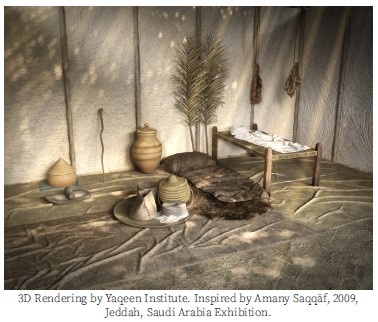
彼の住まいは非常に狭く、礼拝をしようとするとき、彼はアーイシャに足を曲げてもらい、そこに体を伏せるスペースを作らせました ﷺ。飲むときや体を洗うときには、部屋の壁に掛けられた小さな革製の水袋に手を伸ばしました ﷺ。何か月もの間、彼の家では料理のために火が起こされないことがあり、家族は誰かが牛乳を贈ってくれない限り、ナツメヤシと水で満足していました ﷺ。58 ウマル・イブン・アル=ハッターブは、ある時アッラーの使徒 ﷺ の部屋に入ると、彼が横になっており、その下に敷かれた粗いござの跡が脇腹に残っているのに気づいたと伝えています。それに気づき、また乏しい大麦と葉の食料、部屋の隅に掛けられた革袋を見て、彼の目には涙があふれました。預言者 ﷺ は言われました。「アル=ハッターブの子よ、何があなたを泣かせるのか」。彼は言いました。「アッラーの預言者よ、ござがあなたの脇腹にこのような跡を残しているのを見て、そして食料棚にこれほどわずかしかないのを見て、どうして泣かずにいられましょうか。カエサルとケスラーは果実と泉に囲まれて暮らしているのに、あなたは神の使徒であり、神に選ばれた方でありながら、このような状態なのですから」。預言者 ﷺ は言われました。「アル=ハッターブの子よ、これら(の快楽)が来世では私たちのために、そして現世では彼らのためにあるということは、あなたを喜ばせないのか」。私は言いました。「もちろんです」。59 別の伝承では、彼は応答をこう始めました。「アル=ハッターブの子よ、あなたは疑っているのか。彼らは現世の生活において、その快楽を前倒しで受け取った人々である」。60
His living quarters were so tight that when he صلى الله عليه وسلم wished to pray, he would tap ‘Āishah to bend her legs to make room for him to prostrate. To drink or bathe, he would reach for the small leather water skin that hung in his room. For months on end, no fire would be kindled for cooking in his home, and his family was content with dates and water unless someone gifted them some milk.58 ‘Umar ibn al-Khattāb reports that he once entered the room of the Messenger of Allah صلى الله عليه وسلم to find him lying down and noticed that the coarseness of the straw mat under him had left marks on his side. Upon noticing that, and the meager rations of barley and leaves, and the leather bag hanging in the corner, his eyes welled with tears. The Prophet صلى الله عليه وسلم said, “What makes you weep, O son of al-Khaṭṭāb?” He said, “O Prophet of Allah, how can I not cry after seeing how the mat has left these marks on your side, and how little you have in your food cupboard? Caesar and Chosroes live surrounded by fruits and springs of water, while you are the Messenger of God and His chosen one, and yet this is your condition.” The Prophet صلى الله عليه وسلم said, “O son of al-Khaṭṭāb, does it not please you that these [luxuries] are for us in the Hereafter and for them in this world?” I said, “Of course.”59 In another narration, he began his response with, “Are you in doubt, O son of al-Khaṭṭāb? These are a people whose pleasures have been expedited in the life of this world.”60
エドワード・ギボン(1794年没)は、イギリス議会の議員であり歴史家でもあったが、次のように書いている。「ムハンマド(ﷺ)の良識は、王侯の華美を軽蔑していた。神の使徒(ﷺ)は家の雑用に身を屈し、火をおこし、床を掃き、雌羊の乳をしぼり、自分の手で靴や衣服を繕った。隠者の苦行と功徳を退けて、彼はアラブ人の質素な食事を、努力も見栄もなく守っていた。」61
Edward Gibbon (d. 1794), a historian and member of England’s Parliament, wrote, The good sense of Muhammad despised the pomp of royalty. The Apostle of God submitted to the menial offices of the family; he kindled the fire; swept the floor; milked the ewes; and mended with his own hands his shoes and garments. Disdaining the penance and merit of a hermit, he observed without effort or vanity the abstemious diet of an Arab.61
つまり彼ﷺは、質素な生活の粗さに耐えただけでなく、それが彼にとって自然なことだったのです。彼は修道僧的な生き方や禁欲主義を勧めようとしていたわけでも、この質素さを装って賞賛を得ようとしていたわけでもありません。ギボンは続けます。「厳粛な機会には、彼は素朴で気前のよい豊かさで仲間たちをもてなした。しかし、家庭生活においては、預言者ﷺの炉辺に火が灯されない週が幾週も過ぎることがあった。」62
In other words, he صلى الله عليه وسلم not only endured the coarseness of an austere life, but it came naturally to him. He was not trying to encourage monkship or stoicism, nor was he faking this minimalism to earn praise. Gibbon continues, On solemn occasions, he feasted his companions with rustic and hospitable plenty. But, in his domestic life, many weeks would pass without a fire being kindled on the hearth of the Prophet.62
ワシントン・アーヴィング(1859年没)によれば、アメリカの伝記作家であり外交官でもあった彼は、食事においては節制と質素を守り、断食を厳格に守る人であった。衣服に贅沢を凝らすことはなかったが、それは小さな精神の見栄である。また、その質素な服装も見せかけのものではなく、そのような些細な源から生じる区別への本当の無関心の結果であった……63
According to Washington Irving (d. 1859), an American biographer and diplomat, He was sober and abstemious in his diet and a rigorous observer of fasts. He indulged in no magnificence of apparel, the ostentation of a petty mind; neither was his simplicity in dress affected but a result of real disregard for distinction from so trivial a source…63
そして、彼の軍事的勝利は、それが利己的な目的のために成し遂げられたものであったなら生じたであろう誇りや虚栄心を、呼び覚ますことはありませんでした。権勢の絶頂にあっても、彼は逆境の時と同じ質素な振る舞いと身なりを保ちました。王者然とした威厳を装うどころか、部屋に入った時に特別な敬意を示されることさえ、彼は好みませんでした。64
And, His military triumphs awakened no pride nor vainglory, as they would have done had they been effected for selfish purposes. In the time of his greatest power, he maintained the same simplicity of manners and appearance as in the days of his adversity. So far from affecting a regal state, he was displeased if, on entering a room, any unusual testimonials of respect were shown to him.64
「これらの『並外れた敬意の表し方』について、アナス・イブン・マーリクはこう述べています。『教友たちにとって、誰one人として(預言者ﷺ)より愛された者はいなかった』」 Note: I kept "(the Companions)" as "教友たち" and rendered the parenthetical reference to the Prophet as written; the sentence is cut off in the original, so I translated only what was given.
Regarding these “unusual testimonials of respect,” Anas ibn Mālik said, “Nobody was more beloved to them (the Companions)
「メッセンジャー・オブ・アッラー」ではなく、預言者ムハンマド ﷺ の… ——いえ、原文どおりに訳します。 …である使徒 ﷺ よりも、ということです。それにもかかわらず、人々は彼の姿を見ても、彼がそれをひどく嫌っていることを知っていたので、立ち上がって迎えることはしませんでした。65 ボズワース・スミス(1908年没)は、牧師であり著述家でもありますが、次のように書いています。彼は国家の長であると同時に教会の長でもあった。カエサルであり、同時に教皇でもあった。しかし彼は教皇の見栄を持たない教皇であり、カエサルの軍団を持たないカエサルであった。常備軍も、護衛も、警察も、定まった歳入もなしに。もし誰かが神授の権利によって統治したのだとすれば、それはムハンマド ﷺ であった。彼はあらゆる権力を持っていながら、その支えを持たなかったからである。彼は権力の飾りには関心がなかった。彼の私生活の質素さは、彼の公的な生活と調和していた。66
than the Messenger of Allah صلى الله عليه وسلم. Despite that, when they would see him, they would not stand for him, knowing how much he disliked that.”65 Bosworth Smith (d. 1908), a reverend and author, writes, Head of the State as well as the Church; he was Caesar and Pope in one; but he was Pope without the Pope’s pretensions, and Caesar without the legions of Caesar, without a standing army, without a bodyguard, without a police force, without a fixed revenue. If ever a man ruled by a right divine, it was Muhammad, for he had all the powers without their supports. He cared not for the dressings of power. The simplicity of his private life was in keeping with his public life.66
今日に至るまで、イスラム倫理に関する文献や、ムスリムの説教師による毎週の説教は、謙遜の模範としての預言者ﷺの逸話で満ちています。彼は「私は知らない」と言うことを決して恥じなかった教育者でした。67
Until this very day, the canons of literature on Islamic ethics, and the weekly sermons of Muslim preachers, are replete with examples of the Prophet صلى الله عليه وسلم as the paragon of humility. He was the educator who was never ashamed to say “I don’t know,” 67
その馬に他の者を同乗させることを許した将軍68
the general who would allow others to share his riding animal,68
最も多忙な政治家でありながら、社会の最も弱い立場の人々が必要なものを求めて彼の手を取ることを許した人。69 最初のモスクのレンガを運ぶことで若者と競い合った年長者。70 そして、妻が自分に対して不満を抱いていることを示す微妙なサインに気づいた、思いやりのある夫。71 最後に、彼ﷺは神の最も偉大な使徒であり、生涯を通じてこう繰り返し語られた。「私と、私以前の預言者たちとの譬えは、美しく見事な建物を建てた人のようである。その建物の一隅にある一つのレンガを除いて、建設を完成させたのだ。」
the busiest statesman who would allow the weakest members of society to take him by the hand for their needs,69 the elder who would compete with the youth to carry the bricks of the first mosque,70 and the considerate husband who noticed subtle signs of his wife being upset with him.71 Finally, he صلى الله عليه وسلم was the greatest messenger of God who would reiterate throughout his life, “My similitude compared to the prophets before me is that of a person who built a beautiful, brilliant structure—completing its construction save for a single brick in one of its corners.
人々はその周りを歩き回り、その建築の見事さに感嘆したが、こう言った。「もしあの最後の煉瓦が据えられていたなら、完璧だったのに。」私がその煉瓦であり、私は預言者たちの封印である」。72 別のハディースでは、彼は謙虚に戒めて言われた。「マリアの子について、キリスト教徒が称賛で誇張したように、私を持ち上げてはならない。私はただの僕にすぎないのだから、私を神の僕であり神の使徒と呼びなさい」。73
People began to walk around it, admiring its construction, but saying, ‘If only that final brick were set in place, it would have been perfect.’ I am that brick, and I am the seal of the prophets.”72 In another hadith, he humbly cautioned, “Do not aggrandize me as the Christians exaggerated in praising the son of Mary. I am but a slave, so call me the slave of God and His messenger.”73
58 al-Bukhārī、『Ṣaḥīḥ al-Bukhārī』、8:97 #6459。
58 al-Bukhārī, Ṣaḥīḥ al-Bukhārī, 8:97 #6459.
ムスリム『サヒーフ・ムスリム』、2:1105 #1479。
59 Muslim, Ṣaḥīḥ Muslim, 2:1105 #1479.
60 al-Bukhārī、『ṣaḥīḥ al-Bukhārī』、3:133 #2468。
60 al-Bukhārī, Ṣaḥīḥ al-Bukhārī, 3:133 #2468.
61 エドワード・ギボン『ローマ帝国衰亡史 第五巻』(ロンドン:
61 Edward Gibbon, Decline and Fall of the Roman Empire: Volume the Fifth (London:
Electric Book Co, 2001), chapter L, 252.
Electric Book Co, 2001), chapter L, 252.
62 Ibid., 251-252.
62 Ibid., 251-252.
63 Washington Irving and Bertram R. Davis, The Life of Mahomet (London: G. Note: the citation text is a bibliographic reference. Translating faithfully: 63 ワシントン・アーヴィングおよびバートラム・R・デイヴィス『The Life of Mahomet』(ロンドン:G.
63 Washington Irving and Bertram R. Davis, The Life of Mahomet (London: G.
Routledge & Co, 1850), 186-187.
Routledge & Co, 1850), 186-187.
64 Ibid., 203.
64 Ibid., 203.
65 al-Tirmidhī、Sunan al-Tirmidhī、5:90 #2754;アル=ティルミズィーによって注釈の中で真正(ṣaḥīḥ)と認定された。
65 al-Tirmidhī, Sunan al-Tirmidhī, 5:90 #2754; authenticated by al-Tirmidhī in the comments.
66 Bosworth Smith, Mohammed and Mohammedanism (London: Smith, Elder, and Co., 1874), 235.
66 Bosworth Smith, Mohammed and Mohammedanism (London: Smith, Elder, and Co., 1874), 235.
ムスリム『サヒーフ・ムスリム』、1:1 #8。
67 Muslim, Ṣaḥīḥ Muslim, 1:1 #8.
68 al-Bukhārī、『ṣaḥīḥ al-Bukhārī』、8:74 #6228。
68 al-Bukhārī, Ṣaḥīḥ al-Bukhārī, 8:74 #6228.
69 アブー・ダーウード『スナン・アブー・ダーウード』(シドン:al-Maktabah al-‘Aṣrīyah、1980年)、43:46 #4818。
69 Abū Dāwūd, Sunan Abī Dāwūd (Sidon: al-Maktabah al-‘Aṣrīyah, 1980), 43:46 #4818.