Ibara ya 14
Article 14
Vitendo vinafungwa awali na kanuni za Shari'ah. Kwa hiyo, hakuna kitendo kinachopaswa kufanywa isipokuwa hukumu yake imejulikana. Mambo yaliyo upande wa pili ni Mubah (yanaruhusiwa) kwa asili, mradi hakuna dalili inayoweka katazo.
Actions are originally bound by the Shari’ah rules. Hence, no action should be undertaken unless its rule is known. The things on the other side are originally Mubah (permitted) as long as there is no evidence that stipulates prohibition.
Mwislamu ameamrishwa kuendesha matendo yake kwa mujibu wa kanuni za Shari'ah. Allah (SWT) anasema
The Muslim is commanded to conduct his actions according to the Shari’ah rules. Allah (swt) says

“Lakini hapana, naapa kwa Mola wako, hawataamini [kweli] mpaka wakufanye wewe, Ee Muhammad ﷺ, kuwa hakimu katika lile wanalozozana nalo.” (TMQ 4:65). Yeye (swt) pia anasema,
“But no, by your Lord, they will not [truly] believe until they make you, [O Muhammad], judge concerning that over which they dispute among.” (TMQ 4:65). He (swt) also says,

"Na kila alilowapa Mtume ﷺ, basi chukueni; na alichowakataza, basi jiepusheni nacho." (TMQ 59:7).
“And whatever the Messenger (pbuh) has given you - take; and what he has forbidden you - refrain from.” (TMQ 59:7).
Kwa hiyo, msingi ni kwamba Muislamu anajizuia kwa hukumu za Shari'ah. Zaidi ya hayo, kanuni ya Shari'ah inasema: "Hakuna hukumu kabla ya kuja kwa Shari'ah". Kwa maneno mengine, hakuna jambo lolote linalopaswa kupewa hukumu yoyote kabla ya kuja kwa hukumu ya Allah (SWT) inayohusu jambo hilo. Hivyo, kabla ya kuja kwa hukumu ya Allah (SWT), hakuna jambo linalopaswa kupewa hukumu. Hii ina maana kwamba jambo halipaswi kupewa hukumu ya ruhusa (ibaha), kwa kuwa ibaha ni hukumu ya Shari'ah ambayo lazima ithibitishwe kupitia kauli ya Mwenye kutunga Sheria; vinginevyo haiwezi kuchukuliwa kuwa hukumu ya Shari'ah. Hii ni kwa sababu hukumu ya Shari'ah ni kauli ya Mwenye kutunga Sheria inayohusu vitendo vya waja. Kwa hiyo, chochote ambacho hakijatajwa katika kauli ya Mwenye kutunga Sheria hakiwezi kuchukuliwa kuwa hukumu ya Shari'ah. Basi, ruhusa (mubah) si kutokuwepo kwa katazo; bali ni kuja kwa dalili ya Shari'ah inayoweka ruhusa, yaani kuja kwa uchaguzi kutoka kwa Mwenye kutunga Sheria wa kufanya au kujizuia. Kwa hiyo, msingi ni kufuata kauli ya Mwenye kutunga Sheria, si ibaha; kwa sababu hukumu ya ibaha yenyewe inahitaji uthibitisho kutoka kwenye kauli ya Mwenye kutunga Sheria. Kanuni hii ni ya jumla, inahusu vitendo na vitu. Hivyo, endapo Muislamu anataka kufanya kitendo chochote, inamlazimu kufuata hukumu ya Allah (SWT) kuhusu kitendo hicho. Hivyo, lazima atafute hukumu hiyo mpaka aijue na aifuate. Vivyo hivyo, endapo Muislamu anataka kuchukua au kutoa kitu chochote, chochote kile kitu hicho kiwe, inamlazimu kufuata hukumu ya Allah (SWT) kuhusu kitu hicho. Hivyo, lazima atafute hukumu hiyo mpaka aijue na aifuate. Hii ndiyo yale ambayo aya na hadithi zimeashiria kwa maana yake ya wazi na kwa ufahamu wake. Kwa hiyo, ni haramu kwa Muislamu kufanya kitendo chochote au kutenda kwa jambo lolote kinyume na hukumu ya Shari'ah; badala yake, anapaswa kufuata hukumu ya Shari'ah katika kila kitendo anachofanya na katika kila jambo. Baada ya Allah (SWT) kushusha
Therefore, the origin is that the Muslim restricts himself to the Shari’ah rules. Besides that the Shari’ah principle states: “No rule before the advent of Shari’ah”. In other words, no matter should be given any rule whatsoever before the advent of the rule of Allah (swt) pertaining it. Hence, before the advent of Allah’s (swt) rule, no matter should be given any rule. This means that it should not be given the rule of permissibility, for the Ibaha is a Shari’ah rule that must be established through the address of the Legislator; otherwise it cannot be considered a Shari’ah rule. This is so because the Shari’ah rule is the speech of the Legislator related to the actions of the worshippers. Therefore, anything that has not been mentioned in the address of the Legislator cannot be considered a Shari’ah rule. Therefore, permissibility is not the non-advent of a prohibition, it is rather the advent of Shari’ah evidence stipulating the Mubah (permitted); in other words, the advent of the choice from the Legislator to either undertake or abstain. Therefore, the origin is the abidance by the speech of the Legislator, not the Ibahah; because the rule of Ibahah itself requires a confirmation from the speech of the Legislator. This principle is general, covering the actions and the things. So if a Muslim wanted to perform any action, it would be incumbent upon him to abide by the rule of Allah (swt) pertaining that action. Therefore, he must search for that rule until he knows it and abides by it. In the same manner if a Muslim wanted to take or give anything, whatever that object may be, it is incumbent upon him to abide by the rule of Allah (swt) regarding that object. So he must search for that rule until he knows it and abides by it. This is what the verses and the hadith have indicated in their literal indication and their understanding. Therefore, it is forbidden for a Muslim to undertake any action or to act towards anything upon other than the Shari’ah rule; rather he is obliged to abide by the Shari’ah rule in every action he undertakes and in every matter. After Allah (swt) revealed

"Leo nimewakamilishia dini yenu, na nimetimiza neema yangu juu yenu, na nimewaridhia Uislamu kuwa dini." (TMQ 5:3), kisha Yeye (swt) anasema,
“This day I have perfected for you your religion and completed My favor upon you and have approved for you Islam as religion.” (TMQ 5:3), and after He (swt) says,
“Nami tumekuteremshia Kitabu kiwe ufafanuzi wa kila kitu” (TMQ 16:89). Hakuna tendo lolote wala kitu chochote kilichoachwa bila Allah (SWT) kuweka wazi dalili ya hukumu yake, na ni haramu kwa yeyote, baada ya kuelewa aya hizi mbili, kudai kwamba baadhi ya vitendo, baadhi ya vitu au baadhi ya hali havina hukumu ya Shari'ah; yaani, kwamba Shari'ah imeviacha kabisa, hivyo haikuweka dalili wala ishara ya kuvuta umakini wa mwenye kuwajibika kwa uwepo wa hukumu hiyo ya Shari'ah, yaani uwepo wa 'Illah iliyoonyesha hukumu hiyo kwa mtu mwenye wajibu wa kuifuata: je, ni Wajib, au Mandub, au Haram, au Makruh, au Mubah? Dai kama hilo na lolote linalofanana nalo linachukuliwa kuwa ni kuisingizia Shari'ah. Kwa hiyo, ni haramu kwa yeyote kudai kwamba kitendo fulani kinaruhusiwa kwa sababu hakuna hukumu ya Shari'ah iliyotajwa kuhusiana nacho, na kwamba kanuni ni kwamba ikiwa hakuna hukumu ya Shari'ah iliyotajwa basi ni ruhusa; vivyo hivyo, si ruhusa kwa yeyote kusema kwamba kitu fulani ni halali kwa sababu hakuna dalili ya Shari'ah kuhusiana nacho, hivyo asili ni ruhusa ikiwa hakuna dalili ya Shari'ah. Ni haramu kudai hivyo, kwa sababu kila kitendo na kila kitu kina dalili yake katika Shari'ah; ni lazima kutafuta hukumu ya Allah (SWT) inayohusiana na kitendo au kitu hicho ili kuichukua na kuitekeleza, badala ya kukifanya kiwe halali kwa kisingizio kwamba hakuna dalili yake.
“And We have sent down to you the Book as clarification for all things.” (TMQ 16:89), neither one single action, nor one single object has been left except that Allah (swt) has explained the evidence for its rule, and it is forbidden for anyone, having understood these two verses, to claim that some actions, some things or some situations are devoid of the Shari’ah rule; meaning that Shari’ah has completely ignored it and ,therefore, it failed to designate an evidence or a sign to draw the attention of the obligated to the presence of this Shari’ah rule, in other words, the presence of an Illah that indicated the rule to the person obligated to abide by it; is it Wajib, or Mandub, or Haram, or Makruh or Mubah? Such a claim and anything similar is considered a slander against Shari’ah. Therefore, it is forbidden for anyone to claim that such action is permitted because no Shari’ah rule related to it has been mentioned and the principle is that if no Shari’ah rule is mentioned it must be permitted, and in the same way it is not permitted for anyone to say that this object is permitted because there is no Shari’ah evidence related to it so the origin is permissibility if there is no Shari’ah evidence. It is forbidden to claim this because every action and everything has its evidence in Shari’ah; one must search for the rule of Allah (swt) pertaining to the action or the object to take it and apply it as opposed to making it permitted under the pretext that there is no evidence for it.
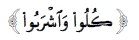
"Kuleni na kunywa" (TMQ 2:60), au imekuja kuhusu kitu bila kutajwa kwa kitendo chochote kabisa, kama vile Allah (SWT) asemavyo
“Eat and drink” (TMQ 2:60), or it has come regarding the object without any mention of the action whatsoever, such as Allah (swt) saying

"Yamekatazwa kwenu: mizoga, damu, na nyama ya nguruwe." (TMQ 5:3). Kwa hiyo, kanuni ya katazo katika mambo haya matatu inahusu tu tendo la mwabudu kwa upande wa kula, kununua, kuuza, kukodi na matendo mengine. Hivyo, kanuni ya Shari'ah inahusika na tendo la mwabudu, iwe hii ni kanuni ya tendo au kanuni ya kitu. Ndiyo maana msingi katika matendo unapaswa kufungwa (kwa kanuni ya Shari'ah) kwa sababu khitabu kinahusiana tu na tendo la mwabudu.
“Prohibited to you are dead animals, blood, the flesh of swine.” (TMQ 5:3). Accordingly, the rule of prohibition in these three things is only in relation to the action of the worshipper in terms of eating, buying, selling and hiring and other actions. Therefore, the Shari'ah rule deals with the action of the worshipper, whether this were a rule for the action or a rule for the object. This is why the origin in actions is to be restricted (to the Shari’ah rule) because the address is only related to the action of the worshipper.
Hata hivyo, kwa kuchunguza kwa undani dalili zilizofafanuliwa za hukumu za Shari'ah, inadhihirika kwamba ndani ya matini zilizokuja kama dalili za hukumu, hali ya matini inayotumika kama dalili ya kitendo ni tofauti na hali ya matini inayotumika kama dalili ya kitu (kilichoathiriwa na kitendo), kwa upande wa namna ambavyo khitabu kinaelekezwa. Katika matini inayohusu kitendo, khitabu huelekezwa kwa kitendo peke yake, bila kujali kama kitu husika kimetajwa au hakijatajwa. Kwa mfano, Allah (SWT) anasema,
However, by scrutinising the elaborated evidences of the Shari’ah rules, it becomes clear that within the texts which have come as evidences of the rules, the state of the text that acts as an evidence for the action is different to the state of the text that acts as evidence for the object, in terms of the manner in which the address is directed. In the text related to the action, the address is directed to the action alone, regardless of whether the object is mentioned or not. For instance, Allah (swt) says,

"Mwenyezi Mungu ameihalalisha biashara na ameharamisha riba." (TMQ 2:275) Na Yeye (swt) anasema,
“Allah has permitted trade and has forbidden interest.” (TMQ 2:275) And He (swt) says,

"Enyi mlioamini, pigeni vita wale walio karibu nanyi miongoni mwa makafiri." (TMQ 9:123) Na Yeye (swt) anasema,
“O you who have believed, fight those adjacent to you of the disbelievers.” (TMQ 9:123) And He (swt) says,
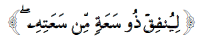
"Mtu mwenye utajiri na atoe katika utajiri wake." (TMQ 65:7) Naye (SWT) anasema,
“Let a man of wealth spend from his wealth.” (TMQ 65:7) And He (swt) says,
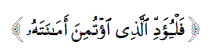
"Na ikiwa mmoja wenu atamwamini mwenzake, basi yule aliyeaminiwa atimize amana yake [kwa uaminifu]." (TMQ 2:283) Na Allah (SWT) anasema,
“And if one of you entrusts another, then let him who is entrusted discharge his trust [faithfully].” (TMQ 2:283) And Allah (swt) says,
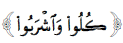
"Kuleni na kunyweni" (TMQ 2:60). Na Mtume wa Allah ﷺ alisema.
“Eat and drink” (TMQ 2:60). And the Messenger of Allah (pbuh) said.
.» الْبَ يِّ عَانِ بِالْخِيَارِ مَا لَمْ يَ تَ فَرَّقَا «.
.» الْبَ يِّ عَانِ بِالْخِيَارِ مَا لَمْ يَ تَ فَرَّقَا «.
“Pande mbili katika muamala wa kibiashara zina haki (ya kuchagua kuufuta) mradi bado hawajatengana.” Imekubaliwa kupitia Ibn Umar na wengine. Na akasema.
“Both parties in a business transaction have the righ (the choice to annul it) so long as they have not separated.” agreed upon through Ibn Umar and others. And he said.
.» أَعْطُوا الأَجِيرَ أَجْرَه «.
.» أَعْطُوا الأَجِيرَ أَجْرَه «.
“Mpe mfanyakazi ujira wake” imepokewa na Ibn Maja kupitia Ibn Umar, na na Al-Bayhaqi kupitia Abu Hurayrah, kwa mnyororo wa wapokezi ambao Al-Baghawi aliuhukumu kuwa ni Hasan. Katika matini zote hizi, amri imeelekezwa kwenye kitendo, na kitu kilichokusudiwa hakijatajwa. Na katika mifano mingine, Allah (SWT) anasema,
“Give the worker his wage” reported by Ibn Maja through Ibn Umar and Al-Bayhaqi through Abu Hurayrah with a chain that was deemed as Hasan by Al-Baghawi. In all of these texts, the address has been directed at the action, and the object has not been mentioned. And in other examples, Allah (swt) says,

"Na kutoka kila kimoja mnakula nyama mbichi." (TMQ 35:12). Na Yeye (SWT) anasema,
“And from each you eat tender meat.” (TMQ 35:12). And He (swt) says,
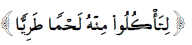
"Ili mle kutoka humo nyama tamu." (TMQ 16:14). Na Yeye (SWT) anasema,
“To eat from it tender.” (TMQ 16:14). And He (swt) says,

“Na ameotesha kutoka humo nafaka, nayo wanakula kutoka humo.” (TMQ 36:33). Na Yeye (swt) anasema,
“And brought forth from it grain, and from it they eat.” (TMQ 36:33). And He (swt) says,

"Hakika wale wanaokula mali ya mayatima kwa dhuluma." (TMQ 4:10).Na Allah (SWT) anasema,
“Indeed, those who devour the property of orphans unjustly.” (TMQ 4:10).And Allah (swt) says,
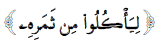
“Ili wapate kula matunda yake.” (TMQ 36:35). Hotuba katika haya yote pia inaelekezwa kwenye kitendo, ingawa kitu kimetajwa, na hili linafanana na hotuba inayohusiana moja kwa moja na kitendo cha mwabudu. Hali hii ni tofauti na hali ya maandishi yanayohusiana na kitu, ambapo hotuba inaelekezwa peke yake kwenye kitu, bila kujali kama kitendo kilitajwa pamoja nacho au la. Kwa mfano, Allah (SWT) anasema
“That they may eat of His fruit.” (TMQ 36:35). The address in all these is also directed at the action, although the object has been mentioned and this is similar to the address related directly to the action of the worshipper. This state is different to the state of the text related to the object, where the address is directed exclusively towards the object, regardless of whether the action was mentioned alongside it or not. For instance Allah (swt) says
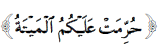
"Mmeharamishwa kwenu ni mizoga." (TMQ 5:3). Allah (SWT) pia anasema
“Prohibited to you are dead animals.” (TMQ 5:3). Allah (swt) also says

Hakika Yeye amewaharamishia tu mizoga, damu, na nyama ya nguruwe. (TMQ 2:173). Allah (SWT) pia anasema
He has only forbidden to you dead animals, blood, the flesh of swine.” (TMQ 2:173). Allah (swt) also says
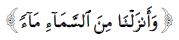
"Na Sisi tumeteremsha maji kutoka mbinguni." (TMQ 23:18). Allah (SWT) pia anasema
“And We have sent down rain from the sky.” (TMQ 23:18).Allah (swt) also says

“Na tukamfanya kila kiumbe chenye uhai kitokane na maji.” (TMQ 21:30). Pia, kauli ya Mtume wa Allah ﷺ kuhusu maji ya bahari:
“And made from water every living thing.” (TMQ 21:30). Also, the saying of the Messenger of Allah (pbuh) (saw) pertaining the sea water:

"Enyi mlioamini, hakika pombe, kamari, mawe ya kuchinjia (yanayosimikwa kwa ajili ya kuabudiwa badala ya Allah), na mishale ya kubashiria ni uchafu tu katika kazi ya shetani, basi jiepusheni nao ili mpate kufaulu." (TMQ 5:90). Allah (SWT) anasema
“O you who have believed, indeed, intoxicants, gambling, [sacrificing on] stone alters [to other than Allah], and divining arrows are but defilement from the work of Satan, so avoid it that you may be successful.” (TMQ 5:90). Allah (swt) says

"Je, mmeiona maji mnayokunywa?" (TMQ 56:68). Allah (SWT) anasema
“Have you seen the water that you drink?” (TMQ 56:68). Allah (swt) says

"Je, mmeona moto mnaouwasha?" (TMQ 56:71). Allah (SWT) anasema
“Have you seen the fire that you kindle?” (TMQ 56:71). Allah (swt) says

"Na katika matunda ya mitende na mizabibu mnapata kileo." {16:67}. Allah (SWT) anasema
“And from the fruits of the palm trees and grapevines you take intoxicant.” (TMQ.16:67). Allah (swt) says

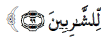
Na hakika, kwenu katika wanyama wa malisho kuna mazingatio. Tunawanywesha yaliyomo matumboni mwao, katikati ya kinyesi na damu, maziwa safi, yenye ladha kwa wanywaji.
“And indeed, for you in grazing livestock is a lesson. We give you drink from what is in their bellies - between excretion and blood - pure milk, palatable to drinkers.” (TMQ 16:66).
Hitaji katika maandiko haya yote linaelekezwa kwa kitu husika, ingawa kitendo kimetajwa. Hitaji la aina hii linahusiana na kitu hicho; hivyo ni kubainisha hukumu inayohusu kitu hicho. Hata hivyo, uhusiano wa hukumu hiyo na kitu unaonekana katika ukweli kwamba inabainisha hukumu yake kuhusiana na kitendo cha mja anayeabudu, si kuhusiana na kitu kilichotengwa na kitendo cha mja, kwa kuwa haiwezekani kitu kiwe na hukumu isipokuwa kinahusiana na mja. Kwa hiyo, tofauti katika hali ya maandiko inadhihirika kwa kuzingatia namna hitaji linavyolenga.
The address in all of these texts is directed at the object, though the action has been mentioned. Such an address is related to the object; thus it is an outlining of a rule pertaining to that object. However, the rule’s relation to the object is reflected in the fact that it outlines its rule vis-à-vis the action of the worshipper, not vis-à-vis the object detached from the action of the servant, since it is inconceivable for a object to have a rule unless it is related to the servant. Therefore, the difference in the state of the text becomes clear with regard to the manner in which the address is targeted.
Tofauti hii inaonyesha kwamba ingawa kanuni ya Shari'ah ni kauli ya Mwenye kutunga sheria inayohusiana na vitendo vya waabudu, baadhi ya kanuni zilizobainishwa kwa vitu zimekuja kueleza kanuni ya vitu hivyo kwa njia isiyo na kikomo, ijapokuwa kanuni yake ilihusiana na mwabudu badala ya kutengwa na mwabudu. Kupitia uchunguzi, dalili hii inatufafanulia kwamba kanuni za vitu zimekuja kupitia dalili ya jumla, ambayo nayo imekuja kufafanua dalili ya vitendo, na kwamba chochote kilichokuja mahsusi kuhusiana na vitu ni kweli ni ubaguzi kutoka kwenye kanuni ya jumla iliyokuja kama dalili yao kupitia dalili ya vitendo. Hii ni kwa sababu uchunguzi wa kina umebainisha kwamba maandiko ya Shari'ah ambamo kauli ilielekezwa moja kwa moja kwenye kitendo yamekuja kwa maneno ya jumla. Kwa hiyo, vitu vyote vinavyohusiana nayo vitakuwa vimehalalishwa, kwa kuwa amri ya kutekeleza au hiari ilikuwa ya jumla, ikijumuisha kila kinachoruhusiwa kwa kuhusiana na amri hii, na kukataza jambo kunahitaji maandiko. Kwa mfano, Allah (swt) anasema:
This difference indicates that although the Shari’ah rule is the speech of the Legislator related to the actions of the worshippers some rules specified to things have however come to outline the rule of these things in an unrestricted manner, even though their rule was in relation to the worshipper as opposed to being isolated from the worshipper. Through scrutiny, this indication outlines to us that the rules of things have come through a general evidence, which in turn has come to outline the evidence of the actions, and that whatever came specifically related to things is in fact an exception from the general rule which had come as evidence for them through the evidence of the actions. This is so because detailed study has revealed that the Shari’ah text in which the address was directly targeted at the action has come in general terms. Therefore, all the things related to it would be permitted because the request to perform or the choice was general, encompassing all that which is permitted vis-à-vis this request, and the prohibition of something requires a text. For instance, Allah (swt) says

"Naye Yeye amekutiishia mbele yenu kila kilichomo mbinguni na kilichomo ardhini - vyote vinatoka kwake." (TMQ 45:13). Hii ina maana kwamba vitu vilivyomo mbinguni na ardhini vimeumbwa na Allah kwa ajili yetu, na hivyo ni halali. Allah (SWT) pia anasema
“And He has subjected to you whatever is in the heavens and whatever is on the earth - all from Him.” (TMQ 45:13). This means that the things in the skies and the earth have been created for us by Allah, and ,therefore, are permitted. Allah (swt) also says
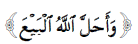
"Mwenyezi Mungu ameruhusu biashara na amekataza riba." (TMQ 2:275) Maana yake ni kwamba Mwenyezi Mungu (SWT) amefanya kuuza na kununua vitu vyote kuwa halali; kwa hiyo, uhalali wa kuuza na kununua chochote kati ya vitu hivi hauhitaji dalili, kwa kuwa dalili ya jumla inajumuisha kila kitu. Hivyo, katazo la kuuza kitu fulani, kama vile pombe kwa mfano, linahitaji dalili. Pia, Mwenyezi Mungu (SWT) anasema
“Allah has permitted trade and has forbidden interest (usury).” (TMQ 2:275) which means that Allah (swt) has made the buying and selling of all things permitted; thus the ibahah of selling and buying any of these things does not require an evidence, because the general evidence comprises everything. So, the prohibition of selling something, such as alcohol for instance, requires evidence. Also, Allah (swt) says
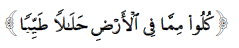
“Enyi watu, kuleni katika vile vilivyomo duniani [ambavyo ni] halali na vizuri.” (TMQ 2:168) ambayo ina maana kwamba kula kila kitu ni halali; kwa hiyo kula kitu fulani mahsusi hakuhitaji dalili ili kukifanya halali, kwa sababu dalili ya jumla imekifanya halali. Kukataza kula kitu fulani, kama vile nyama ya mzoga kwa mfano, kunahitaji dalili. Allah (swt) anasema
“O mankind, eat from whatever is on earth [that is] lawful and good.” (TMQ 2:168) which means that eating everything is Halal (lawful); thus the eating of a specific item does not require an evidence to make it Halal, because the general evidence has made it Halal. The prohibition of eating something, such as dead meat for instance, requires evidence. Allah (swt) says
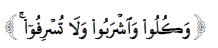
"Kulani na kunywa, lakini msifanye israfu (ufujaji)." (TMQ 7:31) ambayo maana yake ni kwamba unywaji wa kila kitu umeruhusiwa; kwa hiyo unywaji wa kitu fulani maalum hauhitaji dalili ili uwe halali, kwa sababu dalili ya jumla imeshaufanya kuwa halali. Hata hivyo, katazo la kunywa kitu fulani maalum, kama vile vileo kwa mfano, linahitaji dalili.
“And eat and drink, but be not excessive (extravagant).” (TMQ 7:31) which means that the drinking of everything is permitted; thus the drinking of a specific item does not require an evidence to make it permitted, because the general evidence has made it permitted. However, the prohibition of drinking a specific item, such as intoxicants for instance, requires evidence.
Sawa na haya, kuna dalili za jumla zinazoruhusu kila kitu kinachohusiana na vitendo kama kuzungumza, kutembea, kucheza, kunusa, kuvuta pumzi, kutazama na vitendo vingine ambavyo mtu hufanya; hivyo, kuruhusiwa kwa chochote kinachohusiana navyo hakuhitaji dalili, lakini kukatazwa kwa chochote kinachohusiana na vitendo hivi kunahitaji dalili inayokifanya kiwe haramu.
Similar to these, general evidences are found permitting everything related to actions such as talking, walking, playing, smelling, inhaling, looking and other actions which man performs; thus the permission of anything related to them does not require an evidence, but the prohibition of anything related to these actions does require an evidence to make it forbidden.
Kwa hiyo, dalili zilizoletwa na maandiko na zinazolenga vitendo zimeweka wazi hukumu ya mambo kwa njia ya jumla na isiyo na mipaka; kwa hiyo, hazihitaji maandiko mengine kuweka wazi hukumu zake. Hivyo basi, kuja kwa maandiko mahususi yanayohusu mambo, baada ya hukumu ya jumla ya mambo haya kuwa imeshawekwa wazi, ni dalili kwamba hukumu hizi mahususi zimekuja kuyatoa mambo haya katika hukumu ya jumla. Hivyo, maandiko ya Shari'ah yamekuja kuweka wazi hukumu ya Shari'ah kuhusu mambo, yakionyesha kwamba yanaruhusiwa; kwa hiyo, yanaruhusiwa isipokuwepo andiko linalokataza. Ni kwa namna hii ndipo kanuni ya Shari'ah "Asili ya mambo ni ibaha" inapotokana. Hizi ndizo dalili za makala hii.
Therefore, the evidences brought by the texts and targeted at the actions have outlined the rule of things in a general and unrestricted manner; ,therefore, they do not require other texts to outline their rules. Thus, the advent of specific texts related to things, once the general rule of these things had been outlined, serves as evidence that these specific rules have come to exclude the rule of these things from the general rule. Hence, the Shari’ah texts have come to outline the Shari’ah rule pertaining things, denoting that they are permitted; hence, they are permitted unless a text exists to prohibit them. It is in this manner that the Shari’ah principle “The origion of things is ibahah” is derived. These are the evidences for this article.