۱۰.۱۴ نامگذاری افسانهای مکانها توسط شهرکنشینان صهیونیست و صلیبیان لاتینی قرون وسطی
10.14 The Legendary Toponymy Of Zionist Settlers And The Latin Medieval Crusaders
کمیتههای نامگذاری مجدد اسرائیلی از روشهای جغرافیدانان کتابمقدسی مسیحی و باستانشناسان کتابمقدسی قرن نوزدهم، مانند ویکتور گرن و ادوارد رابینسون، پیروی کردند؛ کسانی که، همچون زائران صلیبی لاتین قرون وسطا در کتاب La Topographie légendaire des évangiles en terre sainte: étude de mémoire collective (۱۹۴۱) اثر موریس هالبواکس، نامهای مکانی خاصی را از روایتهای اسطورهای کتابمقدس، تلمود و میشنا «کشف»، تولید و بازتولید کردند.
Israeli renaming committees followed the methods of Christian scriptural geographers and biblical archaeologists of the 19th century such as Victor Guérin and Edward Robinson who, like the Latin medieval Crusader pilgrims in Maurice Halbwachs’ La Topographie légendaire des évangiles en terre sainte: étude de mémoire collective (1941), ‘discovered’, produced and reproduced particular place names from the myth narratives of the Bible, Talmud and Mishna.
توپونیمیسایڈ، تقلید و زدودن عربیت: تصاحب میراث فلسطینی، محو گذشته فلسطینی
Toponymicide, Mimicry And De-arabisation: Appropriating Palestinian Heritage, Erasing The Palestinian Past
فلسطینیها تجربههای مشترکی با دیگر مردمان بومی دارند که حق تعیین سرنوشت و روایتشان انکار شده، میراث مادیشان نابود شده و تاریخشان توسط مهاجران و استعمارگران سفیدپوست اروپایی پاک، بازگویی، بازآفرینی یا تحریف شده است. فرانسیس جنینگز در کتاب «تهاجم به آمریکا» (۱۹۷۵) با اشاره به این نکته که نسلها مورخان از موضع برتری فرهنگی درباره مردمان بومی آمریکا مینوشتند، روایتهای سلطهجویانه مهاجران سفیدپوست اروپایی را برجسته کرد؛ روایتهایی که تاریخ واقعی مردمان بومی و روابط آنان با مهاجران اروپایی را از میان برده یا تحریف کرده بود. در «روششناسیهای نواستعمارزدایی»
The Palestinians share common experiences with other indigenous peoples who had their self-determination and narrative denied, their material culture destroyed and their histories erased, retold, reinvented or distorted by European white settlers and colonisers. In The Invasion of America (1975), Francis Jennings highlighted the hegemonic narratives of the European white settlers by pointing out that for generations historians wrote about the indigenous peoples of America from an attitude of cultural superiority that erased or distorted the actual history of the indigenous peoples and their relations with the European settlers. In Decolonizing Methodologies:
تحقیق و مردم بومی لیندا توهیوای اسمیت، پژوهشگر مائوری، استدلال میکند که تأثیر استعمار شهرکنشینان اروپایی همچنان مردم بومی را آزار میدهد و نابود میکند. وی میگوید که انکار دیدگاههای بومیان نسبت به تاریخ نقش مهمی در تثبیت ایدئولوژی استعماری ایفا کرد؛ تا حدی به این دلیل که دیدگاههای بومیان نادرست یا بدوی تلقی میشد، اما عمدتاً به این دلیل که «آنها با مأموریت استعمار به چالش برمیخاستند و در برابر آن مقاومت میکردند» (اسمیت، ل. ۱۹۹۹: ۲۹). او میگوید:
Research and Indigenous Peoples, Maori scholar Linda Tuhiwai Smith argues that the impact of European settler-colonisation is continuing to hurt and destroy indigenous peoples; that the negation of indigenous views of history played a crucial role in asserting colonial ideology, partly because indigenous views were regarded as incorrect or primitive, but primarily because ‘they challenged and resisted the mission of colonisation’ (Smith, L. 1999: 29). She states:
در دوران استعمار، مردمان بومی با دیدگاه غربی به تاریخ مبارزه کردهاند و در عین حال با آن همراهی نیز داشتهاند. ما اغلب اجازه دادهایم که «تاریخ» ما را دیگران روایت کنند، و سپس وقتی آن روایتها را بازگو میشنیدیم، خود را بیگانه مییافتیم... نقشههای جهان جایگاه ما را در حاشیهٔ جهان تثبیت میکرد، هرچند که همچنان بخشی از امپراتوری به شمار میآمدیم. این امر شامل ناچار شدن ما به آموختن نامهای تازه برای سرزمینهایمان نیز میشد. دیگر نمادهای وفاداری ما، از جمله پرچم، نیز بخش جداییناپذیر برنامهٔ آموزشی امپراتوری بودند. جهتگیری ما نسبت به جهان از پیش در حال بازتعریف بود، زیرا ما بهطور نظاممند از نگارش تاریخ سرزمینهای خود کنار گذاشته میشدیم.
Under colonialism indigenous peoples have struggled against a Western view of history and yet been complicit with the view. We have often allowed our ‘histories’ to be told and have then become outsiders as we heard them being retold ... Maps of the world reinforced our place on the periphery of the world, although we were still considered part of the Empire. This included having to learn new names for our lands. Other symbols of our loyalty, such as the flag, were also an integral part of the imperial curriculum. Our orientation to the world was already being redefined as we were being excluded systematically from the writing of the history of our own lands.
نمونههایی از تصاحب نامهای جغرافیایی عربی و تقلید از آنها
Examples Of Appropriation Of Arabic Toponyms And Mimicry
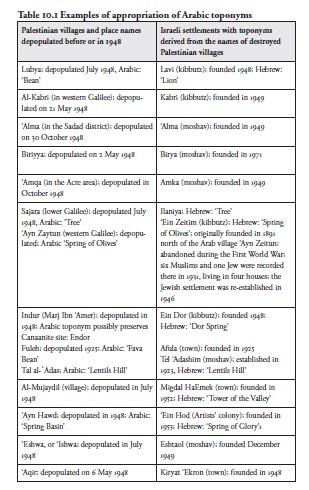
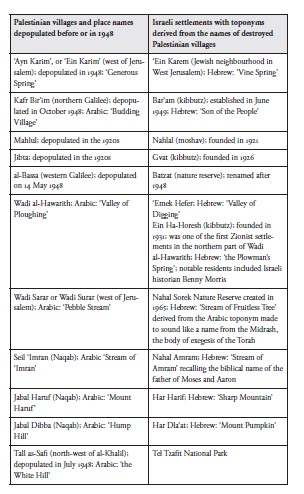
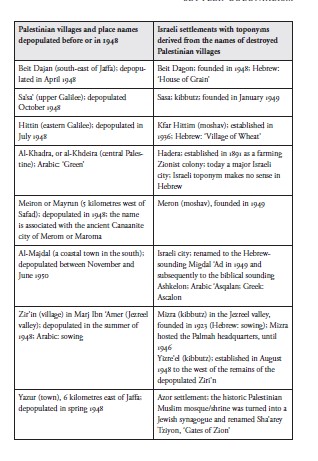
تأثیر نامهای مکانی عربی فلسطینی بر نامهای مکانی اسرائیلی در وامواژههای عربیِ نامهای مکانی، ترجمههای نامهای مکانی عربی و الگوهای صرفی تغییر نام آشکار است. جدول ۱۰.۱ نامهای مکانی تازهای با آوای عبری را نشان میدهد که از نامهای مکانی عربیِ روستاهای فلسطینیای که پیش از ۱۹۴۸ یا در آن سال تخلیه و ویران شدند، گرفته شده، از آنها مشتق شده یا بر الگوی آنها ساخته شدهاند.
The influence of Palestinian Arabic toponyms on the Israeli toponyms are clear in loan Arabic place names, translations of Arabic place names and morphological patterns of renaming. Table 10.1 shows new Hebrew-sounding toponyms based on, derived from or modelled on the Arabic toponyms of Palestinian villages depopulated and destroyed before or in 1948.
پنجاه و شش سال پس از نکبت، در مارس ۲۰۰۴، گیدئون لوی، روزنامهنگار اسرائیلی، نوشت: «حافظه جمعی صهیونیستی هم در چشمانداز فرهنگی ما وجود دارد و هم در چشمانداز فیزیکیمان، با این حال بهای سنگینی که فلسطینیان پرداختهاند – در جانها، در ویرانی صدها روستا، و در وضعیت دشوار مداوم پناهندگان فلسطینی – کمتر در افکار عمومی به رسمیت شناخته میشود» (Levy 2004).
Fifty-six years after the Nakba, in March 2004, Israeli journalist Gideon Levy wrote: ‘The Zionist collective memory exists in both our cultural and physical landscape, yet the heavy price paid by the Palestinians – in lives, in the destruction of hundreds of villages, and in the continuing plight of the Palestinian refugees – receives little public recognition’ (Levy 2004).
لیوی اضافه میکند:
Levy adds:
به این نبات صبر (کاکتوس) نگاه کنید. این پشته سنگها را پوشانده است. این پشته سنگها زمانی یک خانه بود، یا یک آلونک، یا یک آغل گوسفند، یا یک مدرسه، یا یک دیوار سنگی. زمانی – تا ۵۶ سال پیش، یک نسل و نیم پیش – نه چندان دور. این کاکتوس خانهها و یک قطعه زمین را از هم جدا میکرد، یک حصار زنده که اکنون تنها یادگار زندگیای است که زمانی اینجا جریان داشت. به دسته درختان کاج اطراف کاکتوس هم نگاه کنید. زیر آن زمانی یک روستا بود. هر ۴۰۵ خانهاش در یک روز در سال ۱۹۴۸ ویران شد و ۲٬۳۵۰ ساکنش در سراسر جهان پراکنده شدند. هیچکس هرگز این را به ما نگفت. کاجها بلافاصله پس از آن توسط صندوق ملی یهود (JNF) کاشته شد، که ما در کودکی هر جمعه به آن کمک میکردیم، تا ویرانهها را بپوشاند، تا امکان بازگشت را بپوشاند و شاید هم کمی از شرم و احساس گناه را. (لوی ۲۰۰۴)
Look at this prickly pear plant. It’s covering a mound of stones. This mound of stones was once a house, or a shed, or a sheep pen, or a school, or a stone fence. Once – until 56 years ago, a generation and a half ago – not that long ago. The cactus separated the houses and one lot from another, a living fence that is now also the only monument to the life that once was here. Take a look at the grove of pines around the prickly pear as well. Beneath it there was once a village. All of its 405 houses were destroyed in one day in 1948 and its 2,350 inhabitants scattered all over. No one ever told us about this. The pines were planted right afterward by the Jewish National Fund (JNF), to which we contributed in our childhood, every Friday, in order to cover the ruins, to cover the possibility of return and maybe also a little of the shame and the guilt. (Levy 2004)
یک مطالعهٔ عظیم در سال ۱۹۹۲ توسط تیمی از پژوهشگران میدانی و دانشگاهیان فلسطینی، زیر نظارت مورخ فلسطینی ولید خالدی، تخریب صدها روستایی را شرح میدهد که در محدودهٔ خطوط آتشبس ۱۹۴۹
A monumental 1992 study by a team of Palestinian field researchers and academics under the direction of Palestinian historian Walid Khalidi details the destruction of hundreds of villages falling inside the 1949