10.14 الأسماء الأسطورية للمستوطنين الصهاينة والصليبيين اللاتينيين في العصور الوسطى
10.14 The Legendary Toponymy Of Zionist Settlers And The Latin Medieval Crusaders
قامت لجان إعادة التسمية الإسرائيلية بإتباع أساليب الجغرافيين الكتابيين المسيحيين وعلماء الآثار التوراتية في القرن التاسع عشر، مثل فيكتور جيران وإدوارد روبنسون، الذين، شأنهم شأن حجاج الحملات الصليبية اللاتينيين في القرون الوسطى الوارد ذكرهم في كتاب موريس هالبفاكس «الطوبوغرافيا الأسطورية للأناجيل في الأرض المقدسة: دراسة في الذاكرة الجماعية» (1941)، "اكتشفوا" أسماء مكانية بعينها، وأنتجوها وأعادوا إنتاجها، مستمدّة من السرديات الأسطورية الواردة في التوراة والتلمود والمشنا.
Israeli renaming committees followed the methods of Christian scriptural geographers and biblical archaeologists of the 19th century such as Victor Guérin and Edward Robinson who, like the Latin medieval Crusader pilgrims in Maurice Halbwachs’ La Topographie légendaire des évangiles en terre sainte: étude de mémoire collective (1941), ‘discovered’, produced and reproduced particular place names from the myth narratives of the Bible, Talmud and Mishna.
تَسْمِيَةُ الأَمَاكِنِ قَتْلًا، وَالتَّقْلِيدُ، وَإِزَالَةُ الطَّابَعِ العَرَبِيِّ: الاسْتِيلَاءُ عَلَى التُّرَاثِ الفِلَسْطِينِيِّ، وَمَحْوُ المَاضِي الفِلَسْطِينِيِّ
Toponymicide, Mimicry And De-arabisation: Appropriating Palestinian Heritage, Erasing The Palestinian Past
يشترك الفلسطينيون في تجارب مشتركة مع شعوب أصلية أخرى سُلبت حقها في تقرير المصير وروايتها، ودُمّرت ثقافتها المادية، ومُحيت تواريخها أو أُعيد سردها أو اختُرعت من جديد أو شُوّهت على يد المستوطنين والمستعمرين الأوروبيين البيض. وفي كتابه غزو أمريكا (1975) سلّط فرانسيس جennings الضوء على الروايات المهيمنة للمستوطنين الأوروبيين البيض، مبيّنًا أن المؤرخين كتبوا لأجيال عن الشعوب الأصلية في أمريكا من موقف يشعر بالتفوق الثقافي، فمحا ذلك تاريخ هذه الشعوب الحقيقي وعلاقاتها بالمستوطنين الأوروبيين أو شوّهه. وفي كتاب منهجيات إزالة الاستعمار
The Palestinians share common experiences with other indigenous peoples who had their self-determination and narrative denied, their material culture destroyed and their histories erased, retold, reinvented or distorted by European white settlers and colonisers. In The Invasion of America (1975), Francis Jennings highlighted the hegemonic narratives of the European white settlers by pointing out that for generations historians wrote about the indigenous peoples of America from an attitude of cultural superiority that erased or distorted the actual history of the indigenous peoples and their relations with the European settlers. In Decolonizing Methodologies:
البحث والشعوب الأصلية، ترى الباحثة المَاورية لِندا توهيواي سميث أن أثر الاستعمار الاستيطاني الأوروبي ما زال يُلحق الأذى بالشعوب الأصلية ويُدمّرها؛ وأن إنكار الرؤى الأصلية للتاريخ أدّى دورًا حاسمًا في تثبيت الأيديولوجيا الاستعمارية، ويرجع ذلك جزئيًا إلى اعتبار هذه الرؤى خاطئةً أو بدائيةً، لكن السبب الرئيس هو أنها «كانت تتحدّى مهمة الاستعمار وتقاومها» (Smith, L. 1999: 29). وتقول:
Research and Indigenous Peoples, Maori scholar Linda Tuhiwai Smith argues that the impact of European settler-colonisation is continuing to hurt and destroy indigenous peoples; that the negation of indigenous views of history played a crucial role in asserting colonial ideology, partly because indigenous views were regarded as incorrect or primitive, but primarily because ‘they challenged and resisted the mission of colonisation’ (Smith, L. 1999: 29). She states:
تحت الاستعمار، ناضلت الشعوب الأصلية ضد نظرة غربية إلى التاريخ، ومع ذلك كان لها دورٌ في ترسيخ هذه النظرة. فكثيرًا ما سمحنا بأن تُروى "تواريخنا" على ألسنة غيرنا، ثم وجدنا أنفسنا غرباء عنها ونحن نسمعها تُعاد روايتها ... وقد عززت خرائط العالم موقعنا على هامش العالم، مع أننا كنا لا نزال نُعدّ جزءًا من الإمبراطورية. وشمل ذلك إلزامنا بتعلّم أسماء جديدة لأراضينا. كما كانت رموز أخرى لولائنا، كالعلم، جزءًا أساسيًا من المنهج الإمبراطوري. وقد أُعيد تشكيل نظرتنا إلى العالم بالفعل، بينما كنا نُقصى بصورة منهجية عن كتابة تاريخ أراضينا نفسها.
Under colonialism indigenous peoples have struggled against a Western view of history and yet been complicit with the view. We have often allowed our ‘histories’ to be told and have then become outsiders as we heard them being retold ... Maps of the world reinforced our place on the periphery of the world, although we were still considered part of the Empire. This included having to learn new names for our lands. Other symbols of our loyalty, such as the flag, were also an integral part of the imperial curriculum. Our orientation to the world was already being redefined as we were being excluded systematically from the writing of the history of our own lands.
أمثلة على تملّك الأسماء الجغرافية العربية والتقليد
Examples Of Appropriation Of Arabic Toponyms And Mimicry
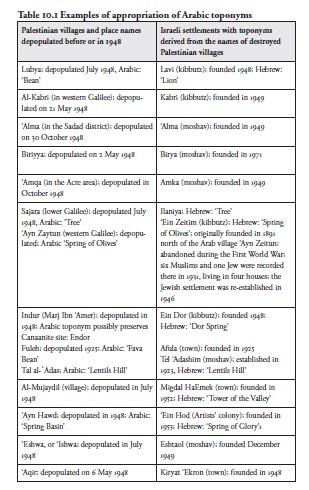
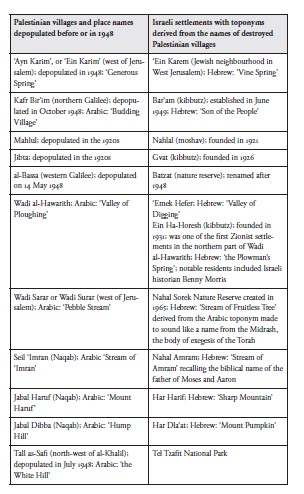
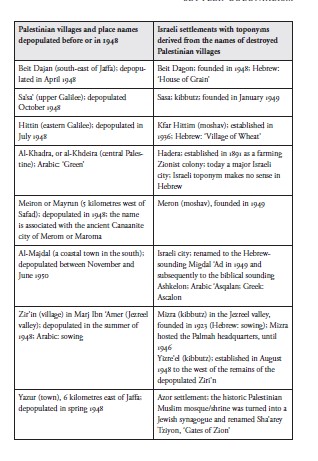
يتضح تأثير الأسماء الجغرافية الفلسطينية العربية في الأسماء الجغرافية الإسرائيلية في الأسماء العربية المستعارة، وفي ترجمات أسماء الأماكن العربية، وفي الأنماط الصرفية لإعادة التسمية. ويُظهر الجدول 10.1 أسماء جغرافية جديدة ذات نغمة عبرية، مستمدة من الأسماء العربية لقرى فلسطينية هُجّر سكانها ودُمّرت قبل عام 1948 أو فيه، أو مبنية عليها، أو مقتبسة عنها.
The influence of Palestinian Arabic toponyms on the Israeli toponyms are clear in loan Arabic place names, translations of Arabic place names and morphological patterns of renaming. Table 10.1 shows new Hebrew-sounding toponyms based on, derived from or modelled on the Arabic toponyms of Palestinian villages depopulated and destroyed before or in 1948.
في مارس 2004، أي بعد ستة وخمسين عامًا من النكبة، كتب الصحفي الإسرائيلي جدعون ليفي يقول: «إن الذاكرة الجمعية الصهيونية موجودة في مشهدنا الثقافي والمادي معًا، ومع ذلك فإن الثمن الباهظ الذي دفعه الفلسطينيون – في الأرواح، وفي تدمير مئات القرى، وفي المعاناة المستمرة للاجئين الفلسطينيين – لا يحظى إلا بقدر ضئيل من الاعتراف العام» (ليفي 2004).
Fifty-six years after the Nakba, in March 2004, Israeli journalist Gideon Levy wrote: ‘The Zionist collective memory exists in both our cultural and physical landscape, yet the heavy price paid by the Palestinians – in lives, in the destruction of hundreds of villages, and in the continuing plight of the Palestinian refugees – receives little public recognition’ (Levy 2004).
ليڤي يضيف:
Levy adds:
هذا الصبّار الشوكي انظروا إليه، إنه يغطّي تلّاً من الحجارة. كان هذا التلّ من الحجارة ذات يوم بيتًا، أو حظيرة، أو زريبة للأغنام، أو مدرسة، أو سورًا حجريًّا. كان كذلك – حتى قبل ست وخمسين سنة، أي قبل جيل ونصف، ليس بعيدًا جدًّا. فصلت شجرة الصبّار البيوت والقطع بعضها عن بعض، سياجٌ حيّ صار اليوم أيضًا النصبَ الوحيدَ الباقي لحياةٍ كانت هنا ذات يوم. وانظروا كذلك إلى بستان الصنوبر المحيط بالصبّار. تحته كانت قرية ذات يوم. دُمّرت جميع بيوتها البالغ عددها أربعمئة وخمسة بيوت في يوم واحد من عام 1948، وتشرّد سكّانها البالغ عددهم ألفين وثلاثمئة وخمسين نسمة في كل مكان. لم يخبرنا أحدٌ بذلك قط. غُرست أشجار الصنوبر مباشرة بعد ذلك من قِبل الصندوق القومي اليهودي (JNF)، الذي كنّا نساهم فيه في طفولتنا، كل يوم جمعة، من أجل تغطية الأنقاض، وتغطية احتمال العودة، وربما أيضًا قليلًا من العار والذنب. (Levy 2004)
Look at this prickly pear plant. It’s covering a mound of stones. This mound of stones was once a house, or a shed, or a sheep pen, or a school, or a stone fence. Once – until 56 years ago, a generation and a half ago – not that long ago. The cactus separated the houses and one lot from another, a living fence that is now also the only monument to the life that once was here. Take a look at the grove of pines around the prickly pear as well. Beneath it there was once a village. All of its 405 houses were destroyed in one day in 1948 and its 2,350 inhabitants scattered all over. No one ever told us about this. The pines were planted right afterward by the Jewish National Fund (JNF), to which we contributed in our childhood, every Friday, in order to cover the ruins, to cover the possibility of return and maybe also a little of the shame and the guilt. (Levy 2004)
في عام ١٩٩٢، أصدر فريق من الباحثين الميدانيين والأكاديميين الفلسطينيين، تحت إشراف المؤرخ الفلسطيني وليد الخالدي، دراسةً ضخمة توثّق تدمير مئات القرى الواقعة ضمن حدود عام ١٩٤٩
A monumental 1992 study by a team of Palestinian field researchers and academics under the direction of Palestinian historian Walid Khalidi details the destruction of hundreds of villages falling inside the 1949