第十四条
Article 14
行为本来都受伊斯兰教法(Shari'ah)规则的约束。因此,在知道某一行为的律例之前,不应去实施它。而在另一方面,事物本来都是允许的(Mubah),只要没有证据规定其为禁止。
Actions are originally bound by the Shari’ah rules. Hence, no action should be undertaken unless its rule is known. The things on the other side are originally Mubah (permitted) as long as there is no evidence that stipulates prohibition.
穆斯林应当依照伊斯兰教法(Shari'ah)的规定来行事。安拉(SWT)说:
The Muslim is commanded to conduct his actions according to the Shari’ah rules. Allah (swt) says

“但不然,以你的主发誓,他们在彼此纷争的事情上,不让你来裁决,他们就不是真正的信士。”(古兰经 4:65)。他(SWT)还说,
“But no, by your Lord, they will not [truly] believe until they make you, [O Muhammad], judge concerning that over which they dispute among.” (TMQ 4:65). He (swt) also says,

“你们无论得到使者(ﷺ)给你们的什么,就拿取;他禁止你们的什么,你们就停止。”({ 古兰经 59:7 })
“And whatever the Messenger (pbuh) has given you - take; and what he has forbidden you - refrain from.” (TMQ 59:7).
因此,原则是穆斯林应当约束自己遵守沙里亚的规定。此外,沙里亚原则称:"沙里亚降临之前无规定。"换言之,在真主(SWT)关于某事的律例降临之前,不应对任何事物给予任何规定。由此可见,在真主(SWT)的律例降临之前,不应对任何事物给予任何规定。这意味着不应赋予其"许可"的规定,因为"允许"(Ibaha)本身是一条必须通过立法者的表述来确立的沙里亚规定,否则它就不能被视为沙里亚规定。之所以如此,是因为沙里亚规定就是立法者关于崇拜者行为的言辞。因此,凡是立法者的表述中未曾提及的事物,都不能被视为沙里亚规定。所以,许可并非不存在禁止,而是存在沙里亚证据规定其为允许(Mubah),换言之,是立法者赋予人选择做或不做的存在。因此,原则是遵从立法者的言辞,而非"允许"(Ibahah),因为"允许"的规定本身也需要立法者的言辞来确认。这一原则具有普遍性,涵盖行为与事物。因此,如果穆斯林想要从事任何行为,他就有义务遵守真主(SWT)关于该行为的律例。所以他必须探寻该律例,直到知晓并遵守它。同样,如果穆斯林想要取得或给予任何东西,无论那是什么物品,他都有义务遵守真主(SWT)关于该物品的律例。所以他必须探寻该律例,直到知晓并遵守它。这正是经文和圣训在其字面指示及其理解中所表明的。 因此,穆斯林不得依据沙里亚律例以外的任何原则采取任何行动,或就任何事情作出行为;相反,他有义务在其所采取的每一项行动和每一件事情中遵守沙里亚律例。真主(SWT)降示之后
Therefore, the origin is that the Muslim restricts himself to the Shari’ah rules. Besides that the Shari’ah principle states: “No rule before the advent of Shari’ah”. In other words, no matter should be given any rule whatsoever before the advent of the rule of Allah (swt) pertaining it. Hence, before the advent of Allah’s (swt) rule, no matter should be given any rule. This means that it should not be given the rule of permissibility, for the Ibaha is a Shari’ah rule that must be established through the address of the Legislator; otherwise it cannot be considered a Shari’ah rule. This is so because the Shari’ah rule is the speech of the Legislator related to the actions of the worshippers. Therefore, anything that has not been mentioned in the address of the Legislator cannot be considered a Shari’ah rule. Therefore, permissibility is not the non-advent of a prohibition, it is rather the advent of Shari’ah evidence stipulating the Mubah (permitted); in other words, the advent of the choice from the Legislator to either undertake or abstain. Therefore, the origin is the abidance by the speech of the Legislator, not the Ibahah; because the rule of Ibahah itself requires a confirmation from the speech of the Legislator. This principle is general, covering the actions and the things. So if a Muslim wanted to perform any action, it would be incumbent upon him to abide by the rule of Allah (swt) pertaining that action. Therefore, he must search for that rule until he knows it and abides by it. In the same manner if a Muslim wanted to take or give anything, whatever that object may be, it is incumbent upon him to abide by the rule of Allah (swt) regarding that object. So he must search for that rule until he knows it and abides by it. This is what the verses and the hadith have indicated in their literal indication and their understanding. Therefore, it is forbidden for a Muslim to undertake any action or to act towards anything upon other than the Shari’ah rule; rather he is obliged to abide by the Shari’ah rule in every action he undertakes and in every matter. After Allah (swt) revealed

“今天,我已为你们完成了你们的宗教,完成了我对你们的恩典,并为你们选定伊斯兰作为宗教。”(古兰经 5:3),然后他(SWT)说,
“This day I have perfected for you your religion and completed My favor upon you and have approved for you Islam as religion.” (TMQ 5:3), and after He (swt) says,
“我已将经典降示你,作为万事的明证”(《古兰经》16:89)。没有任何一件行为或一件事物被遗漏,安拉(SWT)都已阐明了其律例的依据。任何人读懂这两节经文后,都不得宣称某些行为、某些事物或某些情况不具有伊斯兰教法的律例,也就是说,教法对其置之不理,未曾设立任何证据或标志来引起应履行义务者对此律例存在的注意,换言之,没有提出那个指示律例、使应守法者知晓的“伊莱”(Illah)。它究竟是瓦哲卜、曼杜卜、哈拉姆、麦克鲁赫还是穆巴赫?这样的主张及与之类似的说法,都被视为对伊斯兰教法的诽谤。因此,任何人都不得以“未提及相关律例,所以它必然是允许的”为由,宣称某种行为是被允许的;同样,也不得以“没有与之相关的教法证据,所以原则是允许,因为没有证据”为由,宣称某件事物是被允许的。禁止这样的主张,因为每一种行为和每一件事物在教法中都有其依据。人应当探求安拉(SWT)关于该行为或该事物的律例,并加以采纳和遵行,而不是借口“没有证据”就将其视为允许。
“And We have sent down to you the Book as clarification for all things.” (TMQ 16:89), neither one single action, nor one single object has been left except that Allah (swt) has explained the evidence for its rule, and it is forbidden for anyone, having understood these two verses, to claim that some actions, some things or some situations are devoid of the Shari’ah rule; meaning that Shari’ah has completely ignored it and ,therefore, it failed to designate an evidence or a sign to draw the attention of the obligated to the presence of this Shari’ah rule, in other words, the presence of an Illah that indicated the rule to the person obligated to abide by it; is it Wajib, or Mandub, or Haram, or Makruh or Mubah? Such a claim and anything similar is considered a slander against Shari’ah. Therefore, it is forbidden for anyone to claim that such action is permitted because no Shari’ah rule related to it has been mentioned and the principle is that if no Shari’ah rule is mentioned it must be permitted, and in the same way it is not permitted for anyone to say that this object is permitted because there is no Shari’ah evidence related to it so the origin is permissibility if there is no Shari’ah evidence. It is forbidden to claim this because every action and everything has its evidence in Shari’ah; one must search for the rule of Allah (swt) pertaining to the action or the object to take it and apply it as opposed to making it permitted under the pretext that there is no evidence for it.
然而,由于沙里尔(伊斯兰教法)的律令是立法者关于信徒行为的言语,因此这一言语所针对的是信徒的行为,而非客体。这一言语之所以涉及客体,是因为客体与信徒的行为相关联。因此,这一言语原本就是针对信徒的行为而发的,而客体则是作为与信徒行为相连的部分而被提及。无论言语是针对行为本身而未提及任何客体,例如安拉(SWT)说:
However, since the Shari’ah rule is the speech of the Legislator related to the actions of the worshippers, the speech has ,therefore, come to deal with the action of the worshipper, not to deal with the object. This speech has come to deal with the object in consideration of its connection to the action of the worshipper. Thus the speech is originally directed at the action of the worshipper and the object came linked to the action of the worshipper. This is whether the speech was regarding the action without any mention of the object whatsoever, such as Allah (swt) saying
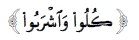
“吃喝吧”(《古兰经》2:60),或者经文只提及对象而完全没有提到动作,例如真主(SWT)说
“Eat and drink” (TMQ 2:60), or it has come regarding the object without any mention of the action whatsoever, such as Allah (swt) saying

“被禁止食用的有:死畜、血液、猪肉。”(《古兰经》5:3)因此,这三样东西的禁令,只与信士的行为相关,即食用、买卖、租赁以及其他行为。所以,沙里亚的律令针对的是信士的行为,无论这是针对行为本身的律令,还是针对对象的律令。这也是为什么行为的本源应当受到限制(须以沙里亚的律令为准),因为其所指向的,只是信士的行为。
“Prohibited to you are dead animals, blood, the flesh of swine.” (TMQ 5:3). Accordingly, the rule of prohibition in these three things is only in relation to the action of the worshipper in terms of eating, buying, selling and hiring and other actions. Therefore, the Shari'ah rule deals with the action of the worshipper, whether this were a rule for the action or a rule for the object. This is why the origin in actions is to be restricted (to the Shari’ah rule) because the address is only related to the action of the worshipper.
然而,通过细致考察伊斯兰教法规则的各项证据,可以清楚地看到:在作为规则证据的经文中,作为行为证据的文本与作为客体证据的文本,在称谓指向的方式上是不同的。在与行为相关的文本中,称谓仅指向行为本身,无论客体是否被提及。例如,安拉(SWT)说:
However, by scrutinising the elaborated evidences of the Shari’ah rules, it becomes clear that within the texts which have come as evidences of the rules, the state of the text that acts as an evidence for the action is different to the state of the text that acts as evidence for the object, in terms of the manner in which the address is directed. In the text related to the action, the address is directed to the action alone, regardless of whether the object is mentioned or not. For instance, Allah (swt) says,

“真主允许买卖,禁止利息。”(《古兰经》2:275)而他(SWT)说,
“Allah has permitted trade and has forbidden interest.” (TMQ 2:275) And He (swt) says,

“{ يَا أَيُّهَا الَّذِينَ آمَنُوا قَاتِلُوا الَّذِينَ يَلُونَكُم مِّنَ الْكُفَّارِ }”(《古兰经》9:123)真主(SWT)说:
“O you who have believed, fight those adjacent to you of the disbelievers.” (TMQ 9:123) And He (swt) says,
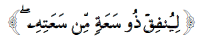
“让富有的人从他的财富中支出。”(《古兰经》65:7)安拉(SWT)说,
“Let a man of wealth spend from his wealth.” (TMQ 65:7) And He (swt) says,
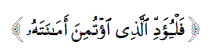
“如果你们中有人信任另一人,那么受信任的人应当忠实地履行他的委托。”(TMQ 2:283)安拉(SWT)说:
“And if one of you entrusts another, then let him who is entrusted discharge his trust [faithfully].” (TMQ 2:283) And Allah (swt) says,
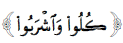
“吃喝吧”(TMQ 2:60)。安拉的使者ﷺ说。
“Eat and drink” (TMQ 2:60). And the Messenger of Allah (pbuh) said.
.» الْبَ يِّ عَانِ بِالْخِيَارِ مَا لَمْ يَ تَ فَرَّقَا «.
.» الْبَ يِّ عَانِ بِالْخِيَارِ مَا لَمْ يَ تَ فَرَّقَا «.
“交易双方在未分开之前,都有权(选择撤销交易)。”这是由伊本·欧麦尔等人共同传述的圣训。他(ﷺ)还说道。
“Both parties in a business transaction have the righ (the choice to annul it) so long as they have not separated.” agreed upon through Ibn Umar and others. And he said.
.» أَعْطُوا الأَجِيرَ أَجْرَه «.
.» أَعْطُوا الأَجِيرَ أَجْرَه «.
“「应当在工人的汗水干透之前付给他工钱」”,由伊本·马哲经伊本·欧麦尔传述,又由拜哈基经艾布·胡莱赖传述,其传述链被巴格awi评定为“哈桑”(可接受)。在所有这些文本中,劝诫都是针对行为本身而发,并未提及宾语。另有例子中,安拉(SWT)说,
“Give the worker his wage” reported by Ibn Maja through Ibn Umar and Al-Bayhaqi through Abu Hurayrah with a chain that was deemed as Hasan by Al-Baghawi. In all of these texts, the address has been directed at the action, and the object has not been mentioned. And in other examples, Allah (swt) says,

“你们从每一种海产中都吃新鲜的肉。”(TMQ 35:12)而他(SWT)说,
“And from each you eat tender meat.” (TMQ 35:12). And He (swt) says,
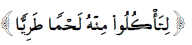
“以便你们从中吃到鲜嫩的肉。”(TMQ 16:14)真主(SWT)说:
“To eat from it tender.” (TMQ 16:14). And He (swt) says,

“并使地上生出五谷,人们从中获取食物。”(古兰经 36:33)真主(SWT)又说:
“And brought forth from it grain, and from it they eat.” (TMQ 36:33). And He (swt) says,

“我们,确实,那些不义地吞食孤儿财产的人。”(TMQ 4:10)。 而真主(SWT)说,
“Indeed, those who devour the property of orphans unjustly.” (TMQ 4:10).And Allah (swt) says,
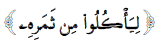
“以使他们食用其果实。”(TMQ 36:35)在所有这些例子中,指向也针对行为本身,尽管对象已被提及,这与直接针对崇拜者行为的指向相似。这种状态不同于与对象相关的经文的状态,在那种情况下,指向完全针对对象,无论行为是否与之一同提及。例如,真主(SWT)说:
“That they may eat of His fruit.” (TMQ 36:35). The address in all these is also directed at the action, although the object has been mentioned and this is similar to the address related directly to the action of the worshipper. This state is different to the state of the text related to the object, where the address is directed exclusively towards the object, regardless of whether the action was mentioned alongside it or not. For instance Allah (swt) says
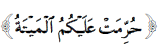
“禁止你们食用死物。”(TMQ 5:3)真主(SWT)也说
“Prohibited to you are dead animals.” (TMQ 5:3). Allah (swt) also says

“他只禁止你们吃死物、血液和猪肉。”(TMQ 2:173)安拉(SWT)还说
He has only forbidden to you dead animals, blood, the flesh of swine.” (TMQ 2:173). Allah (swt) also says
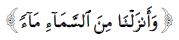
“并且我从天空降下雨水。”(《古兰经》23:18) 真主(SWT)还说
“And We have sent down rain from the sky.” (TMQ 23:18).Allah (swt) also says

“并且我用水造出一切有生命的东西。”(《古兰经》21:30)。另外,先知穆罕默德ﷺ关于海水的圣训:
“And made from water every living thing.” (TMQ 21:30). Also, the saying of the Messenger of Allah (pbuh) (saw) pertaining the sea water:

“信道的人们啊!饮酒、赌博、拜石头和求签的箭,都是秽行,是恶魔的行为,故你们当远离它,以便你们成功。”(TMQ 5:90)安拉(SWT)说
“O you who have believed, indeed, intoxicants, gambling, [sacrificing on] stone alters [to other than Allah], and divining arrows are but defilement from the work of Satan, so avoid it that you may be successful.” (TMQ 5:90). Allah (swt) says

“你们看见所饮的水吗?”({我)… Let me correct that: the faithful rendering of the text is: “你们看见所饮的水吗?”(《古兰经》56:68)。安拉(SWT)说:
“Have you seen the water that you drink?” (TMQ 56:68). Allah (swt) says

“你们看见你们所钻的火吗?”({56:71})真主(SWT)说道。
“Have you seen the fire that you kindle?” (TMQ 56:71). Allah (swt) says

“以及从椰枣树和葡萄树的果实中,你们取得醉人之物。”({《古兰经》16:67})安拉(SWT)说。
“And from the fruits of the palm trees and grapevines you take intoxicant.” (TMQ.16:67). Allah (swt) says

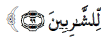
“实在,你们在牲畜身上是有教训的。我使你们饮它们腹中的东西,在粪便与血液之间,是纯净的乳汁,对饮者来说甘美可口。”(TMQ 16:66)
“And indeed, for you in grazing livestock is a lesson. We give you drink from what is in their bellies - between excretion and blood - pure milk, palatable to drinkers.” (TMQ 16:66).
在所有这些文本中,其指向都是针对对象的,尽管提及的是行为。这样的指向与对象相关;因此它是对某一对象所适用规定的阐明。然而,该规定与对象的关联体现在:它是就仆人(崇拜者)的行为而阐明其规定的,而非就脱离仆人行为的对象本身而阐明的,因为对象若与仆人无关,便不可能具有某种规定。因此,文本状态的差异,就指向的方式而言,便清楚了。
The address in all of these texts is directed at the object, though the action has been mentioned. Such an address is related to the object; thus it is an outlining of a rule pertaining to that object. However, the rule’s relation to the object is reflected in the fact that it outlines its rule vis-à-vis the action of the worshipper, not vis-à-vis the object detached from the action of the servant, since it is inconceivable for a object to have a rule unless it is related to the servant. Therefore, the difference in the state of the text becomes clear with regard to the manner in which the address is targeted.
这一区别表明:尽管沙里尔(Shari'ah)的规定是立法者关于信徒行为的言论,但某些针对事物所作的规定,却以不加限定的方式阐明了这些事物的规定,尽管它们的规定是与信徒相关的,而非与信徒相隔绝。经过考察,这一迹象向我们说明:事物的规定是通过一般性证据而来的,而这一般性证据又阐明了行为的证据;凡是专门与事物相关的内容,实际上都是对那一般性规则的例外,而该规则正是通过行为的证据作为其证据的。之所以如此,是因为细致的研究表明,直接针对行为的沙里尔经文是以一般性的措辞出现的。因此,所有与之相关的事物都是被允许的,因为该要求(即命令履行或选择)是一般性的,涵盖了就此要求而言被允许的一切;而禁止某事物则需要经文依据。例如,安拉(SWT)说:
This difference indicates that although the Shari’ah rule is the speech of the Legislator related to the actions of the worshippers some rules specified to things have however come to outline the rule of these things in an unrestricted manner, even though their rule was in relation to the worshipper as opposed to being isolated from the worshipper. Through scrutiny, this indication outlines to us that the rules of things have come through a general evidence, which in turn has come to outline the evidence of the actions, and that whatever came specifically related to things is in fact an exception from the general rule which had come as evidence for them through the evidence of the actions. This is so because detailed study has revealed that the Shari’ah text in which the address was directly targeted at the action has come in general terms. Therefore, all the things related to it would be permitted because the request to perform or the choice was general, encompassing all that which is permitted vis-à-vis this request, and the prohibition of something requires a text. For instance, Allah (swt) says

“并且他为你们制服了天上和地上的一切,都是出于他的恩典。”(TMQ 45:13)这意味着天空与大地上的万物都是真主为我们所造的,因此是被允许的。真主(SWT)还说
“And He has subjected to you whatever is in the heavens and whatever is on the earth - all from Him.” (TMQ 45:13). This means that the things in the skies and the earth have been created for us by Allah, and ,therefore, are permitted. Allah (swt) also says
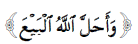
“真主允许买卖,禁止高利贷(利息)。”(TMQ 2:275)这意味着真主(SWT)已使一切物品的买卖得以允许;因此,买卖其中任何物品的许可(ibahah)无需证据,因为这一普遍的经文证据涵盖了一切。所以,禁止售卖某物,例如酒,则需要证据。此外,真主(SWT)说
“Allah has permitted trade and has forbidden interest (usury).” (TMQ 2:275) which means that Allah (swt) has made the buying and selling of all things permitted; thus the ibahah of selling and buying any of these things does not require an evidence, because the general evidence comprises everything. So, the prohibition of selling something, such as alcohol for instance, requires evidence. Also, Allah (swt) says
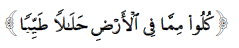
“人类啊!你们应当吃地上所有合法而佳美的食物。”(TMQ 2:168)这意味着,一切食物本来都是合法的(哈拉尔),因此吃某一种具体的食物,并不需要专门的证据来使其合法,因为总的证据已经使其合法。而禁止吃某种东西,例如死物之肉,则需要证据。真主(SWT)说:
“O mankind, eat from whatever is on earth [that is] lawful and good.” (TMQ 2:168) which means that eating everything is Halal (lawful); thus the eating of a specific item does not require an evidence to make it Halal, because the general evidence has made it Halal. The prohibition of eating something, such as dead meat for instance, requires evidence. Allah (swt) says
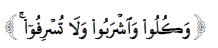
“吃喝吧,但不要过度(奢侈)。”(古兰经 7:31)这段经文的意思是:一切饮品原则上都是允许的;因此,饮用某一特定之物并不需要证据来证明其合法,因为普遍性的经文已经使其合法。然而,禁止饮用某一特定之物,例如酒类,则需要证据。
“And eat and drink, but be not excessive (extravagant).” (TMQ 7:31) which means that the drinking of everything is permitted; thus the drinking of a specific item does not require an evidence to make it permitted, because the general evidence has made it permitted. However, the prohibition of drinking a specific item, such as intoxicants for instance, requires evidence.
与此类似,可以找到普遍性的证据,允许与人所做的各种行为相关的一切事情,比如说话、走路、玩耍、闻嗅、吸气、观看以及其他行为;因此,与这些行为相关的事物被允许,不需要证据;而与这些行为相关的事物被禁止,则需要证据来使其成为禁止之事。
Similar to these, general evidences are found permitting everything related to actions such as talking, walking, playing, smelling, inhaling, looking and other actions which man performs; thus the permission of anything related to them does not require an evidence, but the prohibition of anything related to these actions does require an evidence to make it forbidden.
因此,经文所提出的、针对各种行为的证据,已经以普遍而无限定的方式阐明了事物的律例;所以它们不需要其他经文来阐明其律例。由此,在事物的普遍律例已经阐明之后,出现与某些具体事物相关的特定经文,就证明这些特定的律例已将这些事物排除在普遍律例之外。因此,沙里尔(Shari'ah)经文来阐明与事物相关的沙里尔律例,表明它们是被允许的;故除非有经文禁止,它们便是被允许的。正是依此方式,推导出沙里尔原则"事物的本源是允许(ibahah)"。以上即为本文的证据。
Therefore, the evidences brought by the texts and targeted at the actions have outlined the rule of things in a general and unrestricted manner; ,therefore, they do not require other texts to outline their rules. Thus, the advent of specific texts related to things, once the general rule of these things had been outlined, serves as evidence that these specific rules have come to exclude the rule of these things from the general rule. Hence, the Shari’ah texts have come to outline the Shari’ah rule pertaining things, denoting that they are permitted; hence, they are permitted unless a text exists to prohibit them. It is in this manner that the Shari’ah principle “The origion of things is ibahah” is derived. These are the evidences for this article.