১০.১৪ জায়নবাদী বসতি স্থাপনকারী ও লাতিন মধ্যযুগীয় ক্রুসেডারদের কিংবদন্তিসম স্থাননাম-বিদ্যা
10.14 The Legendary Toponymy Of Zionist Settlers And The Latin Medieval Crusaders
ইসরায়েলি নামপরিবর্তন কমিটিগুলো ঊনবিংশ শতকের খ্রিস্টান শাস্ত্রীয় ভূগোলবিদ ও বাইবেল-প্রত্নতাত্ত্বিকদের পদ্ধতি অনুসরণ করেছিল, যেমন ভিক্তর গেরাঁ ও এডওয়ার্ড রবিনসন। তাঁরা, মরিস আলবাশের La Topographie légendaire des évangiles en terre sainte: étude de mémoire collective (১৯৪১) বইয়ে বর্ণিত লাতিন মধ্যযুগীয় ক্রুসেডার তীর্থযাত্রীদের মতো, বাইবেল, তালমুদ ও মিশনার মিথিক্যাল বর্ণনা থেকে নির্দিষ্ট কিছু স্থাননাম "আবিষ্কার", তৈরি ও পুনরুৎপাদন করেছিলেন।
Israeli renaming committees followed the methods of Christian scriptural geographers and biblical archaeologists of the 19th century such as Victor Guérin and Edward Robinson who, like the Latin medieval Crusader pilgrims in Maurice Halbwachs’ La Topographie légendaire des évangiles en terre sainte: étude de mémoire collective (1941), ‘discovered’, produced and reproduced particular place names from the myth narratives of the Bible, Talmud and Mishna.
টোপোনিমিসাইড, অনুকরণ ও আরবীয়তা-বিলোপ: ফিলিস্তিনি ঐতিহ্যের আত্মসাৎ, ফিলিস্তিনি অতীত মুছে ফেলা
Toponymicide, Mimicry And De-arabisation: Appropriating Palestinian Heritage, Erasing The Palestinian Past
ফিলিস্তিনিরা এমন কিছু অভিজ্ঞতায় অন্যান্য আদিবাসী জনগোষ্ঠীর সঙ্গে অংশীদার, যাদের আত্মনিয়ন্ত্রণের অধিকার ও নিজস্ব বর্ণনা অস্বীকার করা হয়েছিল, যাদের বস্তুগত সংস্কৃতি ধ্বংস করা হয়েছিল এবং যাদের ইতিহাস ইউরোপীয় শ্বেতাঙ্গ উপনিবেশকারী ও ঔপনিবেশিক শাসকদের দ্বারা মুছে ফেলা, নতুন করে বলা, পুনর্নির্মাণ বা বিকৃত করা হয়েছিল। ১৯৭৫ সালে প্রকাশিত *The Invasion of America*-তে ফ্রান্সিস জেনিংস ইউরোপীয় শ্বেতাঙ্গ উপনিবেশকারীদের আধিপত্যবাদী বর্ণনার দিকে আলোকপাত করেন। তিনি দেখান যে বহু প্রজন্ম ধরে ঐতিহাসিকরা সাংস্কৃতিক শ্রেষ্ঠত্বের মনোভাব নিয়ে আমেরিকার আদিবাসীদের সম্পর্কে লিখেছেন, যা আদিবাসীদের প্রকৃত ইতিহাস এবং ইউরোপীয় উপনিবেশকারীদের সঙ্গে তাদের সম্পর্ককে মুছে ফেলেছিল বা বিকৃত করেছিল। *Decolonizing Methodologies*-এ
The Palestinians share common experiences with other indigenous peoples who had their self-determination and narrative denied, their material culture destroyed and their histories erased, retold, reinvented or distorted by European white settlers and colonisers. In The Invasion of America (1975), Francis Jennings highlighted the hegemonic narratives of the European white settlers by pointing out that for generations historians wrote about the indigenous peoples of America from an attitude of cultural superiority that erased or distorted the actual history of the indigenous peoples and their relations with the European settlers. In Decolonizing Methodologies:
রিসার্চ অ্যান্ড ইন্ডিজেনাস পিপলস-এ মাওরি গবেষক লিন্ডা টুহিওয়াই স্মিথ যুক্তি দেন যে ইউরোপীয় উপনিবেশ-স্থাপনকারীদের উপনিবেশ এখনও আদিবাসী জনগণের ক্ষতি ও ধ্বংস করে চলেছে; আদিবাসীদের ইতিহাসবোধকে অস্বীকার করা উপনিবেশিক মতাদর্শ প্রতিষ্ঠায় একটি নির্ণায়ক ভূমিকা পালন করেছিল, যা আংশিকভাবে এই কারণে যে আদিবাসী দৃষ্টিভঙ্গিকে ভুল বা আদিম গণ্য করা হতো, কিন্তু মূলত এই কারণে যে ‘তারা উপনিবেশায়নের মিশনকে চ্যালেঞ্জ করত এবং প্রতিরোধ করত’ (Smith, L. 1999: 29)। তিনি বলেন:
Research and Indigenous Peoples, Maori scholar Linda Tuhiwai Smith argues that the impact of European settler-colonisation is continuing to hurt and destroy indigenous peoples; that the negation of indigenous views of history played a crucial role in asserting colonial ideology, partly because indigenous views were regarded as incorrect or primitive, but primarily because ‘they challenged and resisted the mission of colonisation’ (Smith, L. 1999: 29). She states:
ঔপনিবেশিকতার অধীনে আদিবাসী জনগোষ্ঠী পশ্চিমা ইতিহাস-দৃষ্টিভঙ্গির বিরুদ্ধে সংগ্রাম করেছে, অথচ সেই একই দৃষ্টিভঙ্গির সঙ্গে আমরা অনেক ক্ষেত্রে সহযোগিতাও করেছি। আমরা প্রায়ই নিজেদের 'ইতিহাস' অন্যদের দিয়ে বলিয়েছি, আর তারপর সেই ইতিহাস অন্যদের মুখে নতুন করে বলা হতে শুনে আমরা নিজেদের কাছেই বহিরাগত হয়ে পড়েছি... বিশ্বের মানচিত্র আমাদের বিশ্বের প্রান্তে অবস্থানকে দৃঢ় করেছিল, যদিও তখনও আমাদের সাম্রাজ্যের অংশ হিসেবেই গণ্য করা হতো। এর মধ্যে ছিল আমাদের নিজেদের ভূমির জন্য নতুন নাম শিখতে বাধ্য হওয়াও। আমাদের আনুগত্যের অন্যান্য প্রতীক, যেমন পতাকা, সাম্রাজ্যিক পাঠ্যক্রমেরও একটি অবিচ্ছেদ্য অংশ ছিল। আমরা নিজেদের ভূমির ইতিহাস রচনা থেকে পদ্ধতিগতভাবে বাদ পড়ছিলাম, আর তখনই বিশ্ব সম্পর্কে আমাদের দৃষ্টিভঙ্গি ইতোমধ্যে নতুন করে সংজ্ঞায়িত হচ্ছিল।
উদাহরণ: আরবি স্থাননামের আত্মসাৎকরণ ও অনুকরণ
Examples Of Appropriation Of Arabic Toponyms And Mimicry
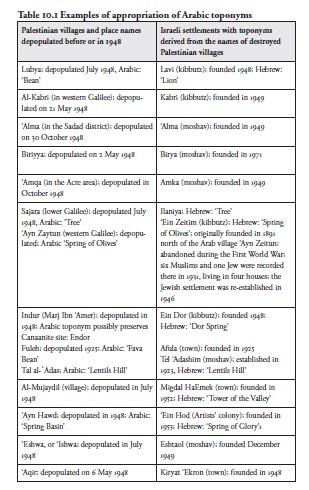
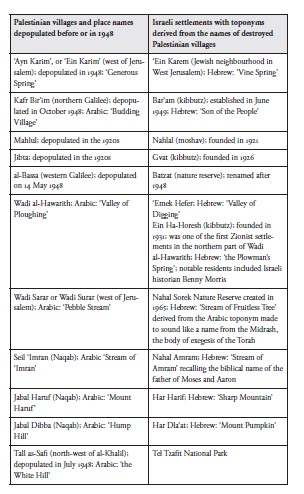
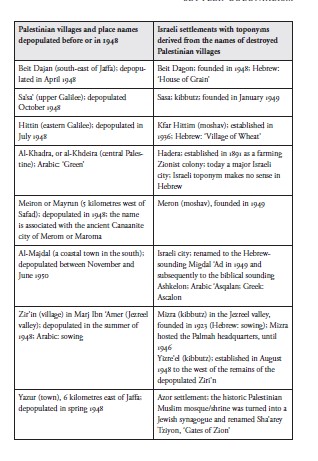
পালেস্তাইনি আরবি স্থাননামের প্রভাব ইসরায়েলি স্থাননামের উপর তিনটি ক্ষেত্রে স্পষ্ট: আরবি স্থাননামের ধার-করা রূপ, আরবি স্থাননামের অনুবাদ, এবং নামান্তরের রূপতাত্ত্বিক ধরন। সারণি ১০.১ দেখায় যে ১৯৪৮ সালের আগে বা ১৯৪৮ সালে বিলুপ্ত ও ধ্বংসপ্রাপ্ত পালেস্তাইনি গ্রামগুলোর আরবি স্থাননামের ভিত্তিতে, সেখান থেকে উদ্ভূত বা সেগুলোর আদলে গড়ে ওঠা নতুন হিব্রু-ধ্বনির স্থাননামগুলো।
The influence of Palestinian Arabic toponyms on the Israeli toponyms are clear in loan Arabic place names, translations of Arabic place names and morphological patterns of renaming. Table 10.1 shows new Hebrew-sounding toponyms based on, derived from or modelled on the Arabic toponyms of Palestinian villages depopulated and destroyed before or in 1948.
১৯৪৮ সালের নাকবার ছাপান্ন বছর পর, ২০০৪ সালের মার্চে, ইসরায়েলি সাংবাদিক গিদিওন লেভি লিখেছিলেন: ‘জায়নবাদী সামষ্টিক স্মৃতি আমাদের সাংস্কৃতিক ও ভৌত উভয় ভূদৃশ্যে বিদ্যমান, তবুও ফিলিস্তিনিদের দেওয়া ভারী মূল্য—প্রাণহানি, শত শত গ্রাম ধ্বংস, এবং ফিলিস্তিনি শরণার্থীদের চলমান দুর্দশা—জনসমক্ষে খুব সামান্য স্বীকৃতি পায়’ (Levy 2004)।
Fifty-six years after the Nakba, in March 2004, Israeli journalist Gideon Levy wrote: ‘The Zionist collective memory exists in both our cultural and physical landscape, yet the heavy price paid by the Palestinians – in lives, in the destruction of hundreds of villages, and in the continuing plight of the Palestinian refugees – receives little public recognition’ (Levy 2004).
লেভি যোগ করেন:
Levy adds:
এই নাগফনি ক্যাকটাসটি দেখো। এটি একটি পাথরের স্তূপকে ঢেকে রেখেছে। এই পাথরের স্তূপটি একসময় একটি বাড়ি ছিল, অথবা একটি ছাউনি, বা একটি ভেড়ার খোঁয়াড়, অথবা একটি স্কুল, কিংবা একটি পাথরের বেড়া। একসময় – ৫৬ বছর আগে পর্যন্ত, দেড় প্রজন্ম আগে – খুব বেশিদিন আগের কথা নয়। ক্যাকটাসটি বাড়িগুলোকে এবং একটি জমির টুকরোকে একটি থেকে অন্যটি থেকে আলাদা করে রাখত, একটি জীবন্ত বেড়া, যা এখন এখানে একসময় থাকা জীবনের একমাত্র স্মারকও। নাগফনির চারপাশের পাইন গাছের ঝোপটিও একবার দেখো। এর নিচে একসময় একটি গ্রাম ছিল। এর ৪০৫টি বাড়ির সবকটি ১৯৪৮ সালের একদিনেই ধ্বংস হয়ে যায় এবং এর ২,৩৫০ জন বাসিন্দা চারদিকে ছিটকে পড়ে। এই বিষয়ে আমাদের কখনো কিছু বলা হয়নি। পাইন গাছগুলো এর পরপরই জুইশ ন্যাশনাল ফান্ড (JNF) দ্বারা রোপণ করা হয়েছিল, যাতে আমরা শৈশবে প্রতি শুক্রবার চাঁদা দিতাম, ধ্বংসাবশেষ ঢেকে দিতে, ফিরে আসার সম্ভাবনা ঢেকে দিতে, এবং হয়তো কিছুটা লজ্জা ও অপরাধবোধও ঢাকতে। (Levy 2004)
Look at this prickly pear plant. It’s covering a mound of stones. This mound of stones was once a house, or a shed, or a sheep pen, or a school, or a stone fence. Once – until 56 years ago, a generation and a half ago – not that long ago. The cactus separated the houses and one lot from another, a living fence that is now also the only monument to the life that once was here. Take a look at the grove of pines around the prickly pear as well. Beneath it there was once a village. All of its 405 houses were destroyed in one day in 1948 and its 2,350 inhabitants scattered all over. No one ever told us about this. The pines were planted right afterward by the Jewish National Fund (JNF), to which we contributed in our childhood, every Friday, in order to cover the ruins, to cover the possibility of return and maybe also a little of the shame and the guilt. (Levy 2004)
১৯৯২ সালে ফিলিস্তিনি মাঠ-গবেষক ও শিক্ষাবিদদের একটি দল, ফিলিস্তিনি ইতিহাসবিদ ওয়ালিদ খালিদীর নির্দেশনায়, একটি যুগান্তকারী গবেষণা প্রকাশ করে, যাতে ১৯৪৯ সালের যুদ্ধবিরতি রেখার ভেতরে পড়া শত শত গ্রামের ধ্বংসের বিবরণ তুলে ধরা হয়েছে।
A monumental 1992 study by a team of Palestinian field researchers and academics under the direction of Palestinian historian Walid Khalidi details the destruction of hundreds of villages falling inside the 1949